

Crypto World
NY Court Delays Aave ETH Unfreeze Bid, Tests DeFi Freeze Rules


A New York federal court has paused ruling on Aave’s emergency bid to unfreeze approximately $71 million in ETH tied to the Kelp DAO hack, delaying a decision until a June hearing while the court seeks additional information from both sides. The dispute centers on whether Arbitrum’s freeze of the funds should be lifted to support ongoing recovery efforts after one of DeFi’s most significant exploits this year.
Aave contends that unlocking the funds is necessary to prevent forced liquidations and potential destabilization of DeFi markets, while a restraining notice filed by Gerstein Harrow LLP asserts that its clients have a claim to the assets. The Southern District of New York case under Judge Margaret M. Garnett has drawn attention for how courts balance crypto asset freezes against creditor interests and user protection.
Documents filed in the court indicate that Judge Garnett found Aave’s prior briefing insufficient to show how continuing the restraining notice would cause “compounding losses” to user funds if kept in place, signaling the need for more detailed briefing before any ruling. The judge described the matter as complex and vulnerable to near-term harm to Aave LLC and Aave Protocol users, and ordered both sides to provide supplemental submissions ahead of a June 5 hearing.
Key takeaways
- The court postponed ruling and ordered supplemental briefing, citing the case’s complexity and potential near-term harm to users.
- Briefs are due by May 22, 2026, with a hearing scheduled for June 5, 2026.
- The court identified six information gaps for clarification, including whether the shelter principle applies under New York law, the distinction between fraud and theft and the hackers’ interest in stolen assets, which law governs creditor priority over frozen assets, the potential use of a constructive trust, and whether Aave or Arbitrum can identify individual victims to enable pro rata restitution.
- Recovery steps for Kelp DAO: rsETH backing is being restored and the burned tokens will be reconciled; about $278 million in lost tokens will be restored over roughly two weeks from the Aave Recovery Guardian multisignature wallet, pending contract reactivation.
- The case highlights regulatory and policy considerations for DeFi asset freezes, creditor rights, and cross-border enforcement in the evolving landscape of crypto oversight.
Judicial probes into the Aave restraining notice
The SDNY proceedings center on Aave’s motion to unfreeze the ETH tied to the Kelp DAO exploit. Judge Garnett acknowledged the challenge of applying traditional remedies to a decentralized finance scenario and requested detailed briefing to better map the legal framework. In particular, she asked the parties to address how a shelter principle under New York law could interact with the restraining notice, and how such freezes should be reconciled with the transnational nature of crypto assets.
Among the issues identified for clarification are the legal distinction between fraud and theft and the extent to which hackers retain any interest in stolen assets, which law governs creditor priority over frozen property, whether a constructive trust would be an appropriate remedy, and whether either Aave or Arbitrum can identify individual victims to enable pro rata reimbursement. The court’s questions underscore the delicate balance between protecting users and honoring creditor interests in DeFi contexts, and the need for precise legal framing in this rapidly evolving space.
As noted in court filings, the parties have until May 22 to submit supplemental briefs, with the June 5 hearing set to adjudicate unresolved questions. The outcome could influence how future DeFi-related freezes are treated under U.S. law and may shape institutional approaches to recovery, enforcement, and compliance for lenders, exchanges, and wallets operating in cross-border environments.
Regulatory and policy context for frozen DeFi assets
Industry observers view the case as a focal point for broader regulatory and enforcement considerations surrounding DeFi asset freezes. While protocols may implement automatic or voluntary freezes to facilitate recovery, courts must determine how these actions align with doctrines on priority of claims, constructive trusts, and user protections. The proceedings touch on how regimes like MiCA and U.S. agencies—such as the SEC, CFTC, and DOJ—may evaluate asset freezes, civil actions, and enforcement associated with DeFi exploits.
Analysts also weigh implications for cross-border operations and banking compatibility, especially for entities seeking to safeguard customer assets while remaining compliant with AML/KYC requirements. The June decision could influence how exchanges and liquidity venues structure recovery processes and how courts treat frozen funds in multi-party incidents.
Kelp DAO recovery steps and broader implications for DeFi asset recovery
Parallel to the court proceedings, Kelp DAO and Aave have outlined concrete steps toward restoring the compromised rsETH backing. The hacker’s rsETH on Arbitrum has been burned, while the tokens lost in the incident—valued at approximately $278 million—are expected to be restored over the next two weeks from the Aave Recovery Guardian multisignature wallet. Once the related smart contracts are reactivated, rsETH usage is anticipated to return to normal, stabilizing the ecosystem’s collateral and liquidity framework on the affected chain.
These recovery actions illustrate a growing practice of coordinated asset restitution within DeFi ecosystems, while raising questions about victim identification and proportional compensation in decentralized environments. The Kelp‑Aave updates emphasize resilience and post-incident recovery even as legal proceedings unfold in parallel.
Source: Kelp DAO status and related announcements, with corroboration from court filings and industry reporting.
Related coverage: DeFi can freeze stolen funds, but not everyone agrees it should.
Watching the June proceedings will be essential for compliance, risk management, and governance considerations across DeFi protocols and their banking and legal counterparts.

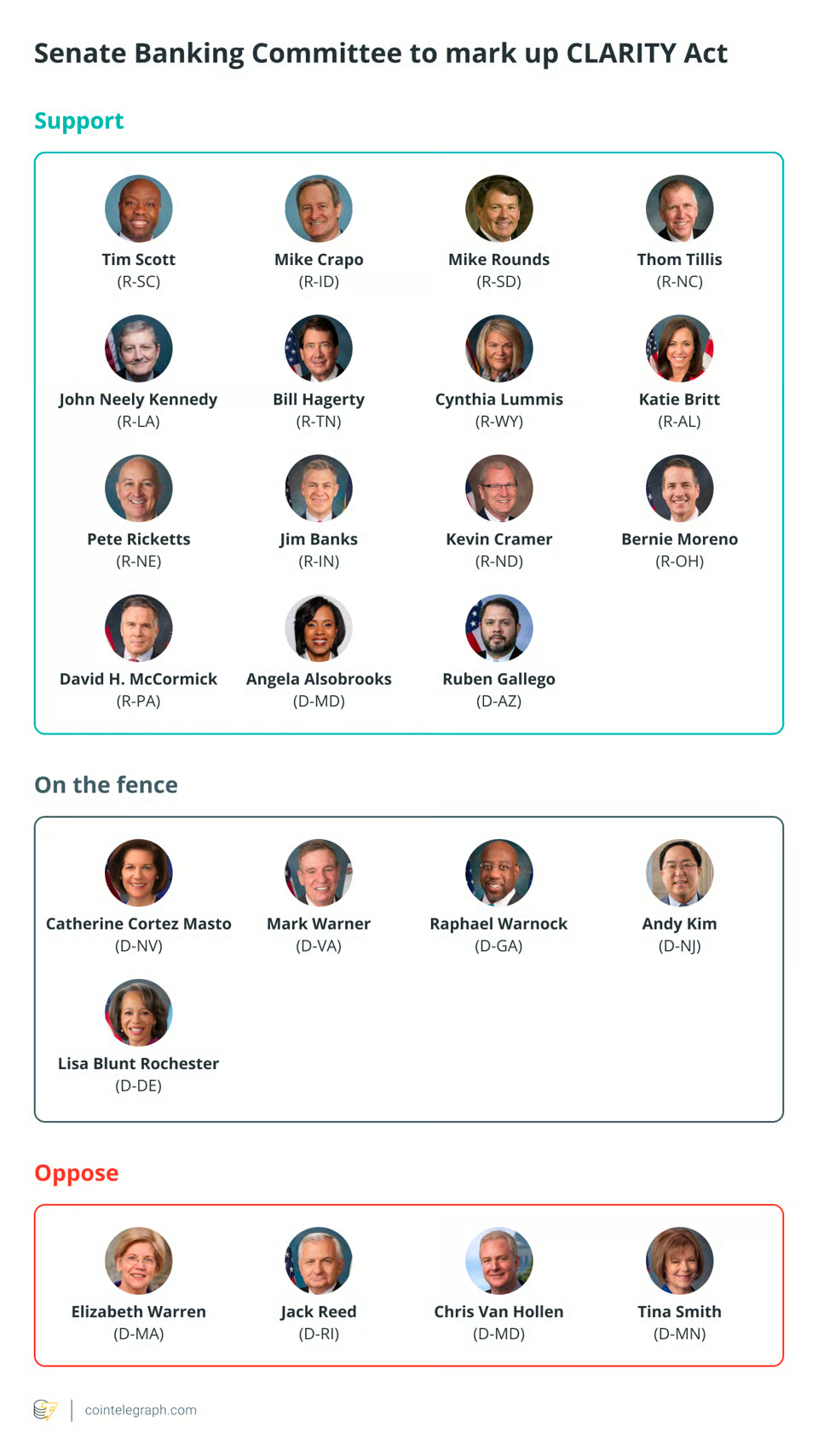
The CLARITY Act, the crypto lobby’s long-awaited regulatory framework, is finally headed to a markup session in the United States Senate Banking Committee.
It’s been a long road. The bill passed the House of Representatives on July 17, 2025, and has since been in deliberation in the Senate. Most recently, the crypto and banking lobbies were at loggerheads over whether stablecoins could offer interest, further delaying progress.
The two industry interest groups appear to have reached an agreement. However, this does not mean that the bill is finished. Indeed, far from it, as members could introduce contentious amendments, vote against reporting the bill to the Senate floor, or not produce a quorum.
With the vote set for May 14, here’s a quick look at who supports the bill on the Senate Banking Committee.

Supporters
Tim Scott (R-SC)

Source: US Senate
As Chairman of the Senate Banking Committee, Senator Scott has led the group’s work on CLARITY, stating his desire to make the US “the crypto capital of the world.”
He was also a cosponsor of the GENIUS Act regulating stablecoins, and voted for SAB 121, a resolution that made pro-crypto amendments to US banking standards.
Scott received an A grade from Coinbase’s crypto policy tracking site Stand With Crypto.
Mike Crapo (R-ID)

Source: US Senate
Senator Crapo supported the GENIUS Act, as well as SAB 121 and SJ Resolution 3. The latter was a Senate Resolution that disapproved of the Internal Revenue Service (IRS) requiring DeFi services to collect user data.
While supporting the crypto industry with his votes, in his statements, Crapo has noted the need to create regulations with some investor protections. In a February 2018 statement, he said, “Technology is forward-looking, and we look to our regulators to continue carrying out their mandates, including investor protection, as the markets evolve.”
Crapo received an A from Stand With Crypto.
Mike Rounds (R-SD)

Source: US Senate
In addition to many of his Republican colleagues, Senator Rounds voted for GENIUS, SAB 121, and SJ Resolution 3.
Amid the pro-crypto furor that followed US President Donald Trump entering office, Rounds harshly criticized former President Joe Biden’s administration on its approach to crypto.
As the banking and crypto lobbies debated CLARITY, Rounds called for open negotiations, saying the public must have a chance to see what’s going on. Rounds himself has violated federal transparency laws by failing to disclose stock trades.
Rounds received an A from Stand With Crypto.
Thom Tillis (R-NC)

Source: US Senate
Tillis voted yes on GENIUS, SAB 121 and SJ Resolution 3. He also supported the Equal Opportunity for all Investors Act which, if it had passed, would have expanded who could have been considered a qualified investor under US securities law.
He supported the Trump administration’s decision to allow 401(k) retirement plans to invest in cryptocurrencies
Tillis said that the current form of CLARITY, which prohibits stablecoin rewards from resembling interest on bank deposits, but allows other forms of rewards, “helps put us on a bipartisan path to pass the CLARITY Act.”
Tillis received an A from Stand With Crypto.
John Neely Kennedy (R-LA)

Source: US Senate
Kennedy has supported pro-crypto regulations in the Senate like GENIUS, SAB 121 and SJ Resolution 3.
In an October 2025 statement on the floor of the US Senate, Kennedy said that the market structure bill would be “one of the most important pieces of legislation that this body will consider.”
Kennedy received an A from Stand With Crypto.
Bill Hagerty (R-TN)

Source: Bill Hagerty
Senator Hagerty is very pro-crypto, introducing the GENIUS Act to the Senate as a co-sponser. He also co-sponsored SJ Resolution 3, voted for SAB 121, and co-sponsored the Capital Gains Inflation Relief Act of 2023. The latter proposed indexing tax of certain assets, like Bitcoin, to inflation to reduce capital gains taxes on long-term investments. It didn’t pass.
Hagerty has said on many occasions that CLARITY is needed to make American markets more competitive. “In the race to lead in digital assets, America’s markets are our competitive edge,” he said in April.
Hagerty received an A from Stand With Crypto.
Cynthia Lummis (R-WY)

Source: Cynthia Lummis
Senator Lummis has long been an advocate for the crypto industry in the United States. She co-sponsored GENIUS and sponsored the Blockchain Regulatory Certainty Act of 2026.
The latter would acknowledge that blockchain developers and infrastructure providers don’t have control over users’ digital assets, and therefore cannot be classified as money transmitters under federal law. It has been referred to the banking committee.
She has also sponsored a bill to create a “Mined in America” certification for Bitcoin miners. This would ostensibly encourage miners to locate in the US rather than set up compute infrastructure overseas.
Ahead of the markup sessions, she said, “After nearly a year of bipartisan work, this markup brings us one step closer to cementing America’s place as the global leader in financial innovation.”
Lummis received an A from Stand With Crypto.
Katie Britt (R-AL)

Source: US Senate
Senator Britt has supported several pro-crypto bills, voting for SAB 121, GENIUS and SJ Resolution 3.
Like many of her colleagues, Britt has made crypto regulation an issue of national competition. She wrote on X in 2021, “Supporting #Bitcoin means supporting personal freedom, American competitiveness and national security.”
Britt received an A from Stand With Crypto.
Pete Ricketts (R-NE)

Source: US Senate
Senator Ricketts has supported the GENIUS Act, SJ Resolution 3 as well as SAB 121. In regulating the cryptocurrency market, he said the goal was “making sure the digital asset market is both innovative and predictable.”
Ricketts received an A from Stand With Crypto.
Jim Banks (R-IN)

Source: US Senate
Senator Banks is a reliable pro-crypto vote on the Senate Banking Committee. He supported the GENIUS Act and cosponsored SJ Resolution 3.
He previously co-sponsored and voted for the CBDC Anti-Surveillance State Act and FIT21 in the House before moving to the Senate. The latter clarified jurisdiction over crypto, shifting it primarily from the SEC to the Commodity Futures Trading Commission (CFTC).
In a June 2024 X post, Banks said that Trump “is the best choice for Bitcoin,” signaling a broader alignment between his crypto views and the MAGA political coalition.
Banks received an A from Stand With Crypto.
Kevin Cramer (R-ND)

Source: US Senate
Senator Cramer voted for GENIUS, SJ Resolution 3 and the earlier SAB 121 resolution, building a consistently pro-crypto voting record.
He has vocally supported the CLARITY Act, and keeping America as a leader in the industry. He argued in a March 2026 Fox Business appearance that the US “cannot allow digital assets and digital industry to go overseas.”
Cramer received an A from Stand With Crypto.
Bernie Moreno (R-OH)

Source: US Senate
Senator Moreno is an outspoken crypto advocate, himself shifting into blockchain collectibles from a career in the automotive industry. He co-sponsored SJ Resolution 3 and voted for GENIUS.
On the campaign trail, he repeatedly attacked his predecessor, Democrat Sherrod Brown, as an “extremist” on crypto regulation, and once declared that “our Founding Fathers would have been bitcoiners.”
Since joining the Senate, Moreno has served on the Digital Assets Subcommittee and has been named by industry analysts as a likely early supporter of the CLARITY Act.
Moreno received an A from Stand With Crypto.
David H. McCormick (R-PA)

Source: David McCormick
Senator McCormick, the former CEO of Bridgewater Associates, has voted for GENIUS and SJ Resolution 3, and has personally invested over $1 million in a spot Bitcoin ETF since taking office.
In a 2024 op-ed, McCormick wrote that blockchain and crypto “offer America the chance to lead another generation of critical innovation” and warned that without regulatory clarity, the industry would develop and thrive elsewhere. He now sits on the Senate Banking Committee’s Digital Assets Subcommittee.
McCormick received an A from Stand With Crypto.
Angela Alsobrooks (D-MD)

Source: US Senate
Senator Alsobrooks voted for GENIUS at every stage and has supported SJ Resolution 3.
On CLARITY, she co-negotiated a compromise with Tillis on the question of stablecoin rewards, agreeing to the language that bars passive interest-like payments on stablecoins while preserving other forms of rewards.
Her spokesperson has also signaled that bipartisan ethics provisions are a prerequisite for her final support. Industry analysts classify her as “constructive/pro-framework.”
Alsobrooks received an A from Stand With Crypto.
Ruben Gallego (D-AZ)

Source: Ruben Gallego
Senator Gallego is the Ranking Member of the Senate Banking Committee’s Digital Assets Subcommittee. He voted for GENIUS at both cloture stages and on final passage, and voted for SJ Resolution 3 and the earlier FIT21 and SAB 121 measures in the House.
Galaxy Digital classifies him as “constructive/pro-framework” on CLARITY. However, Gallego has also joined colleagues in pressing the DOJ and Treasury to investigate Binance over alleged Iran-linked fund flows.
Gallego received an A from Stand With Crypto.
Opponents
Elizabeth Warren (D-MA)

Source: US Senate
Senator Warren is the Senate’s most prominent and prolific crypto skeptic, and has used her role as Ranking Member of the Banking Committee to lead Democratic opposition to major crypto legislation.
She voted against both cloture attempts on GENIUS and against its final passage, and sponsored the Digital Asset Anti-Money Laundering Act of 2023, which Stand With Crypto classified as “very anti-crypto.”
At a July 2025 committee hearing, Warren laid out priorities for any crypto market structure legislation, including closing anti-money laundering loopholes and barring public officials from profiting off crypto tokens.
On the CLARITY Act, she has called the legislation a “corruption superhighway” and urged colleagues not to pass any crypto bill without addressing presidential conflicts of interest.
Warren received an F from Stand With Crypto.
Jack Reed (D-RI)

Source: US Senate
Senator Reed has been a consistent skeptic of pro-crypto legislation, voting against both cloture votes and the final GENIUS Act passage in June 2025.
In a Senate floor statement, Reed called the bill “fundamentally flawed,” arguing it exposed taxpayers to crypto company bailouts and created venues for “criminals, terrorists, and rogue governments.”
He has also led bipartisan anti-money laundering efforts targeting DeFi, cosponsoring the CANSEE Act with Republican senators including Mike Rounds.
Reed received an F from Stand With Crypto.
Chris Van Hollen (D-MD)

Source: US Senate
Senator Van Hollen voted against GENIUS and is expected to oppose the CLARITY Act as well. He also voted against SAB 121, SJ Resolution 3. He co-sponsored a bill, the Digital Asset Anti-Money Laundering Act of 2023, that would make some crypto companies subject to the Bank Secrecy Act compliance regime.
He has co-signed multiple anti-crypto letters with Warren, including a 2023 letter to the DOJ requesting an investigation into Binance.
Van Hollen also co-sponsored the End Crypto Corruption Act, which would ban elected officials and their families from issuing or endorsing crypto assets.
Van Hollen received an F from Stand With Crypto.
Tina Smith (D-MN)

Source: US Senate
Senator Smith voted against GENIUS and is expected to oppose CLARITY. She has been a vocal critic of the legislation’s potential to enable presidential corruption, and in June 2025 posted that Republicans were “jamming through the GENIUS Act which will turbocharge Donald Trump’s crypto corruption.”
Smith has also raised concerns about allowing crypto and private equity into 401(k) retirement accounts, joining Warren in opposing a Trump executive order to that effect.
Smith received an F from Stand With Crypto.
On the fence
Catherine Cortez Masto (D-NV)

Source: US Senate
Senator Cortez Masto has carved out a complicated position on crypto, supporting consumer protection and anti-money laundering measures while ultimately voting for the GENIUS Act.
As a former Nevada attorney general, she has focused on closing loopholes exploited by drug cartels and terrorist organizations. She cosponsored Warren’s Digital Asset Anti-Money Laundering Act and pushed to ensure the GENIUS Act included stronger foreign issuer oversight.
After its passage, Cortez Masto said the law was “an important first step toward clarity and security” but added that “there is still more work to do to protect consumers and our national security.” Industry analysts at Galaxy Digital classify her as a “conditional dealmaker” on the CLARITY Act.
Cortez Masto has received an A from Stand With Crypto.
Mark Warner (D-VA)

Source: US Senate
Senator Warner has a more nuanced and at times industry-friendly approach than some of his Democratic colleagues. He voted for GENIUS at both cloture stages and on final passage, and voted for SJ Resolution 3, though he voted against the earlier SAB 121 resolution.
Warner has pushed for tax compliance and sanctions enforcement in the crypto space, co-introducing the Digital Asset Sanctions Compliance Enhancement Act in 2022 in the wake of Russia’s invasion of Ukraine. He also pushed back against overly broad regulations that would snare legitimate participants.
He serves on the Digital Assets Subcommittee and is seen by analysts as a “conditional dealmaker” on the CLARITY Act.
Warner has received an A from Stand With Crypto.
Raphael Warnock (D-GA)

Source: US Senate
Senator Warnock has a more neutral voting record on crypto legislation, initially voting against cloture on GENIUS, then eventually voting to support it.
“We’re already using these products. And so from a public policy point of view, one of the questions for me, is, what will leave the consumers in a better place? So we clearly need some kind of regulatory structure,” Warnock told NBC News.
He also has been a strong proponent for ethics and conflicts of interest clauses in crypto regulations, co-sponsoring the End Crypto Corruption Act targeting.
Industry analysts classify him as a “conditional dealmaker” on CLARITY.
Warnock has received a C from Stand With Crypto.
Andy Kim (D-NJ)

Source: US Senate
Like Warnock, Kim initially voted against cloture for GENIUS before eventually voting to pass it. He supported SJ Resolution 3 and also voted for FIT21.
Senator Kim, who is the newest Democrat on the Banking Committee, is categorized by Galaxy Digital as a conditional dealmaker on CLARITY, as he is willing to support a framework but attentive to anti-money laundering and consumer protection controls.
He cosponsored the End Crypto Corruption Act and joined colleagues in pressing the DOJ and Treasury to investigate Binance over alleged Iran-linked funds.
Kim has received a C from Stand With Crypto.
Lisa Blunt Rochester (D-DE)

Source: US Senate
As a House member, Blunt Rochester voted for SAB 121 and supported several pro-crypto measures. But she voted against final passage of the GENIUS Act as a senator, making her the outlier among the Democrats who had supported its earlier procedural stages.
Industry analysts at Galaxy Digital labeled her “mixed,” and she is seen as a potential swing vote on CLARITY depending on the strength of ethics and illicit finance provisions added to the bill. She cosponsored the End Crypto Corruption Act.
Blunt Rochester has received a D from Stand With Crypto.
US lawmakers in the Senate Banking Committee held a markup for a long-awaited crypto market structure bill, marking a pivotal step toward Congress’ effort to establish regulatory clarity for digital asset companies and markets.
In a Thursday session of the US Senate Banking Committee, all 13 Republican members and two Democrats voted to advance the Digital Asset Market Clarity Act (CLARITY), with nine Democrats also voting no on the bill.
Senators Ruben Gallego and Angela Alsobrooks sided with Republicans to vote yay. The vote came after lawmakers proposed more than 100 amendments to the crypto bill, ranging from provisions on stablecoin yield to ethics restrictions.
In opening statements before the vote, committee chair Tim Scott said that the bill was focused on protecting consumers, keeping innovation in the US, and safeguarding national security in regards to digital assets.
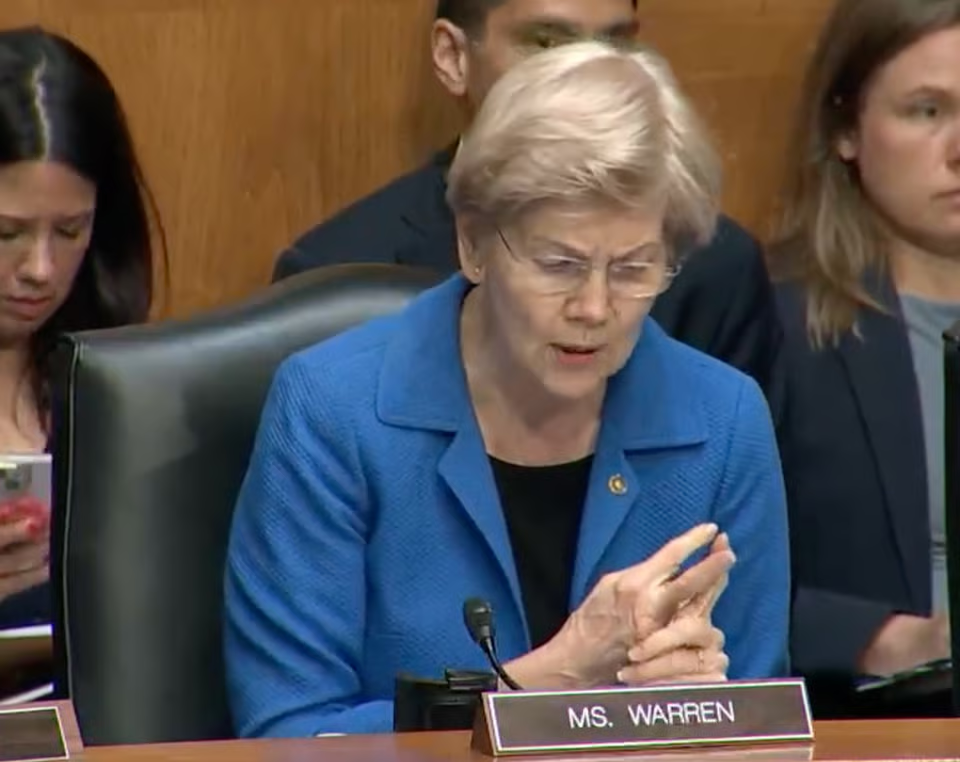
Ranking member Elizabeth Warren said that the bill was “written by the crypto industry for the crypto industry,” adding that it would allow Republican lawmakers to “grease the skids” for US President Donald Trump’s “crypto grift.” “Nothing made it into this bill that wasn’t approved by the crypto industry,” said Warren.

Senator Elizabeth Warren addressing lawmakers at the Thursday markup. Source: US Senate Banking Committee
Senator Cynthia Lummis, one of the legislation’s chief Republican advocates, pushed back against many of Warren’s concerns, saying CLARITY was a “pro law enforcement” and “pro consumer” bill.
Senator Jack Reed, a Democrat, said that the bill was not an example of bipartisan work, given that Scott had “arbitrarily” dismissed consideration of amendments Democrats had proposed.
Related: Ethics remain sticking point as crypto market structure bill goes to markup
With the advancement of CLARITY in the banking and agriculture committees to address laws and regulations in the Securities and Exchange Commission (SEC) and Commodity Futures Trading Commission (CFTC), respectively, the bill is expected to head for a floor vote in the Senate soon.
The bill will need 60 votes to pass. the Senate. The US House of Representatives will then need to approve the amended legislation.
“I think it’s so difficult to get Senate floor time, and if they get something through the Senate that has the votes, I think the House will probably pass that identical language, and then it will be able to go on to the president’s desk for a signature,” Solana Policy Institute President Kristin Smith told Cointelegraph before the markup.
Several amendments were debated and dismissed at markup
Many of the amendments proposed at markup were either adopted or failed along partisan lines, addressing different aspects of regulating the crypto industry.
Among those considered at markup included provisions on sandboxes for AI by Scott and ones on “tokenization loopholes” and money laundering by Warren, who cited reports that Iran was collecting tolls in crypto for ships using the Strait of Hormuz and otherwise evading sanctions.
Lummis said that CLARITY would address the regulation of crypto mixers in response to Warren’s proposed amendment. Scott’s amendment was included, while Warren’s failed.

Senator Cynthia Lummis addresses the Senate Banking Committee. Source: US Senate Banking Committee
Another amendment by Warren included a demand for US banking regulators to report on information related to deceased sex offender Jeffrey Epstein, whom she described as an “early backer of crypto.”
Lummis said the provision was not related to digital assets and should not be included. Lawmakers voted along party lines, and the amendment failed to pass. Republicans also voted against amendments proposed by Reed on stablecoins and digital dollars.
Senator Catherine Cortez Masto, a Democrat who expressed general support for the CLARITY Act at the markup, introduced an amendment that would give law enforcement more authority over crypto-related cases. The amendment failed along party lines.
Democratic Senator Tina Smith proposed an amendment to prohibit federal agencies from bailing out crypto companies if another market crash were to occur. Calling it a “preventative measure” in response to volatility in the crypto markets, Smith and all Democrats voted in favor of the amendment, which failed along party lines.
Ethics still a concern for Democrats
The committee also considered an amendment from Democratic Senator Chris Van Hollen over Trump’s potential conflicts of interest with the crypto industry through his family’s World Liberty Financial business and memecoins.
Republican Senator Bernie Moreno and Scott defended the president, accusing Van Hollen of “ad hominem” attacks. All 13 Republicans voted against the provision.
“The people involved directly in making these policies, from the president to the Congress, should not be able to be issuers of these particular assets and coins,” said Van Hollen.
Senator Raphael Warnock withdrew an amendment in response to what he called “pure corruption” by the Trump administration, adding that he would not support any bill without these carveouts.
Warren echoed these concerns in a separate amendment, which would continue to fund the Consumer Financial Protection Bureau in response to the administration’s attempt to shutter the agency since 2025.
Magazine: eToro founder timed Bitcoin top perfectly due to belief in 4 year cycles

In a developing thread at the intersection of politics and crypto money, United Kingdom politician Nigel Farage and his Reform Party are under scrutiny after Farage received a 5 million pound gift from crypto financier Christopher Harborne. Less than two months later, Farage closed on a 1.4 million pound property—purchased in May 2024, before public campaigning for the general election intensified, Sky News reported. The arrangement has since triggered a parliamentary probe into whether the gift should have been declared and registered after Farage took office.
The Reform Party contends that the gift, received prior to Farage entering parliament, falls outside the reporting requirements now being debated in political circles. Farage himself has said the transfer was completed before he assumed office, and therefore not subject to the stricter post-office disclosure rules that govern political donations in the UK. The party has signaled it will contest attempts to curb crypto-driven political donations, framing the debate as an erosion of political freedoms in the name of regulation.
Key takeaways
- Nigel Farage’s team disclosed a 1.4 million pound property purchase completed in May 2024, following a 5 million pound gift from crypto billionaire Christopher Harborne.
- The gift is at the center of a UK parliamentary probe, with critics arguing it should have been disclosed after Farage entered office; the Reform Party claims the gift predates official duties and falls outside reporting rules.
- Britain’s political establishment has been intensifying its stance on crypto donations, with lawmakers calling for bans or moratoria as concerns about ethics and foreign influence grow.
- In early 2025, Matt Western, chair of the Joint Committee on the National Security Strategy, urged a temporary ban on crypto donations to political parties and figures, citing national security considerations.
- The government has advanced a legislative proposal to temporarily ban political crypto donations, but the measure still requires passage through Parliament and assent from the Crown before becoming law.
Regulatory momentum tightens around crypto funding
The episode surrounding Farage arrives amid mounting scrutiny of crypto-related political giving in the UK. Critics argue that crypto gifts introduce opacity into political fundraising and raise the risk of foreign influence or other ethical concerns influencing elections. In February 2025, Matt Western, who chairs the Joint Committee on the National Security Strategy, urged lawmakers to consider a temporary ban on crypto donations to parties and political figures. He framed the move as a precautionary step as the security landscape evolves and the UK’s role on the world stage grows more complex, noting that the value of political influence could increase in areas such as Ukraine policy or transatlantic relations.
The government responded with a legislative proposal in March aimed at temporarily banning crypto donations to political actors. While this reflects a clear policy stance, the proposal still requires approval from both Houses of Parliament and the king’s assent to become law. Prime Minister Keir Starmer has pledged decisive action to safeguard democratic processes, emphasizing the need to close any gaps that crypto financing might exploit.
The conversation around crypto donations is not limited to Farage’s case. Related reporting and commentary have highlighted broader tensions between political fundraising integrity and the growing availability of crypto funding. The debate encompasses questions about disclosure thresholds, the timing of gifts, and the appropriate oversight mechanisms to prevent misuse without chilling legitimate political participation.
Implications for voters, donors, and the industry
For investors and builders in the crypto ecosystem, the evolving UK stance on political donations signals a broader shift toward tighter accountability and transparency. If lawmakers move forward with temporary bans or stricter reporting requirements, crypto donors could face a more predictable regulatory environment, but with new compliance costs and potential reputational risks for participants and platforms involved in political giving. The Farage case illustrates how even high-profile figures can become flashpoints in a wider policy shift that could reshape how crypto-derived money flows into politics.
From a market and ecosystem perspective, the trajectory of UK policy could influence other jurisdictions observing the UK’s approach to crypto fundraising, political integrity, and national security implications. The balance between safeguarding democratic processes and maintaining an open political system that allows diverse funding sources remains delicate, particularly as political actors weigh the strategic value of crypto partnerships and endorsements.
Context, uncertainties, and what to watch next
At present, the core questions revolve around timing, disclosure, and enforcement. If the parliamentary probe concludes that the 5 million pound gift required registration, Farage and his party may face renewed calls for stricter compliance measures, while proponents of crypto donations could push back against regulatory overreach. The legislative process will determine whether a temporary ban on crypto political donations becomes formal policy, and whether any exceptions or grandfathering apply to gifts already in motion before the ruling.
Observers should watch for developments in two areas: the outcome of the parliamentary probe into the Harborne gift and Farage’s property transaction, and the progress of the government’s temporary ban proposal as it navigates debates in both chambers and the constitutional steps required for enactment. These threads will shape how crypto-funded political activity is perceived and regulated going forward.
The broader lesson for readers is clear: as crypto money intersects more directly with political power, transparency, timing, and accountability will define the boundaries of permissible fundraising and the political viability of crypto-centric donors and campaigns.
What happens next in the UK’s regulatory debate over crypto donations will shape both political strategy and investor sentiment. Keep an eye on parliamentary updates and any new disclosures related to high-profile gifts in the months ahead.
The $9 billion endowment of Ivy League university Dartmouth College reported new investments with exposure to cryptocurrencies, increasing the digital assets in its portfolio since January.
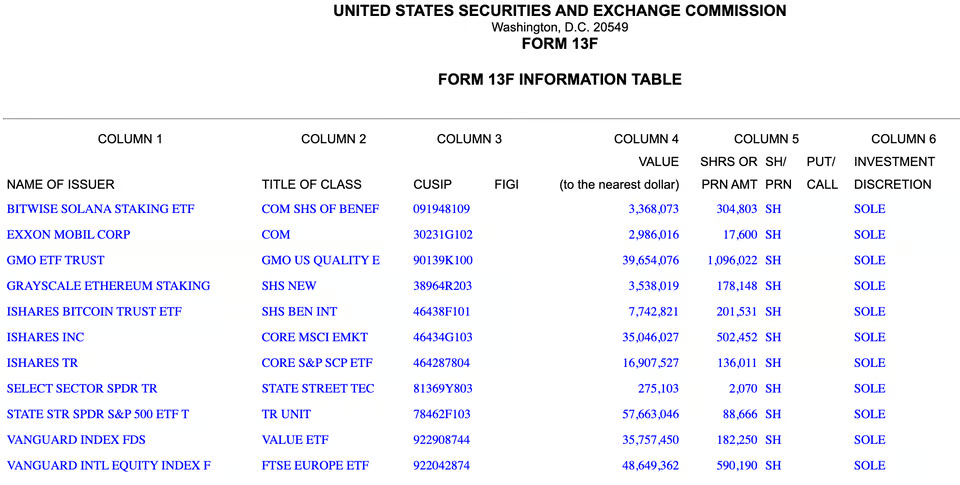
In a Thursday filing with the US Securities and Exchange Commission (SEC), the trustees of Dartmouth College reported that the university endowment held about $3.3 million worth of the Bitwise Solana staking exchange-traded fund (ETF).
The trustees also disclosed about $3.5 million worth of the Grayscale Ethereum staking ETF and about $7.7 million of BlackRock’s iShares Bitcoin ETF.
The investments changed the endowment’s crypto exposure compared to that reported in January, when the same number of shares of BlackRock’s Bitcoin ETF were worth more than $10 million and it held about $5 million in the Grayscale Ethereum Mini Trust ETF.

Source: SEC
Dartmouth’s initial crypto exposure, which it reported purchasing in 2025, marked another US university endowment moving closer to digital assets. Harvard, with a reported endowment of about $57 billion in 2025, reported holdings in BlackRock’s iShares Bitcoin Trust and Ethereum Trust in January.
Related: JPMorgan lifts Bitcoin ETF exposure in Q1, led by BlackRock’s IBIT
The SEC first approved listings of spot ETFs tied to Bitcoin in January 2024, including BlackRock’s iShares Bitcoin Trust and the Bitwise Bitcoin ETF. The regulator has since given the green light to ETFs tied to Ether, Solana, Dogecoin, XRP, and has other applications under consideration.
Bitcoin ETFs record largest daily outflow since January
The SEC filing came shortly after ETFs tied to Bitcoin recorded $635.2 million in daily outflows, marking the largest increase since January. On Jan. 29, the funds lost more than $800 million, led by losses in BlackRock’s iShares Bitcoin Trust.
The price of Bitcoin was $81,237 at the time of publication, having risen about 2% in the previous 24 hours, tapping the 200-day exponential moving average (EMA), a dynamic support level.
However, despite the rally, the price of BTC remains well below the 365-day EMA and the all-time high of about $126,000 reached in October 2025.
Magazine: eToro founder timed Bitcoin top perfectly due to belief in 4 year cycles

TLDR:
- Sonic’s VI model generated $13,000 in revenue, converting to 295,454.55 S in deflationary equivalent since March 1.
- Total fee-related burns reached only 59,786.728 S, putting VI impact at roughly 4.94 times the burn amount.
- Early VI revenue came solely from USSD and Metropolis vault activity, with the broader model yet to scale.
- Sonic Labs confirmed the full VI model has barely started, with more product revenue lines still ahead.
Sonic Labs has reported that its Vertical Integration model is generating measurable deflationary results just weeks after launch.
Since March 1, 2026, early VI revenue has produced roughly 400% more deflationary impact than fee-related burns over the same period.
The data comes from a narrow set of products, with the broader model yet to scale. These early numbers offer a concrete look at how the network plans to capture value beyond gas fees.
Early VI Numbers Show a Clear Lead Over Fee Burns
Sonic’s VI model generated $13,000 in revenue between March 1 and May 11, 2026. Using a TWAP price of $0.044, that converts to 295,454.55 S in deflationary equivalent.
Over the same window, total fee-related burns reached only 59,786.728 S. That figure includes 10,358.726 S from direct transaction fee burns and 49,428.002 S from FeeM-related returns that were burned.
Sonic Labs captured the early result on X, saying, “Sonic’s Vertical Integration is outperforming expectations right out of the gate. In the first 10 weeks, early VI revenue produced ~400% more deflationary impact than fee-related burns over the same window.”
The team also noted the scope of the current implementation, adding, “This is only from $USSD and @MetropolisDEX vault activity. The full VI model has barely started.”
No other revenue lines were contributing during this window, making the ratio more telling given how limited the setup remains.
Total transaction fees for the period were 207,174.525 S. The network splits fees as 90% to the FeeM Treasury, 5% to validators, and 5% to burn.
FeeM also returned 98,856.004 S, split evenly between rewards and burns during the same block range. The ratio puts VI impact at roughly 4.94 times the total fee-related burn amount.
The Case for Product Revenue Over Gas-Based Value Capture
High-throughput chains are built to keep execution costs low. As gas fees fall, fee-burn models produce less deflationary pressure on the native asset.
Sonic’s VI thesis addresses this by sourcing revenue from native financial products instead of relying on transaction pricing alone.
The network still burns a portion of transaction fees. However, the early data shows that product-level revenue can outpace that burn by a wide margin, even in a minimal setup. Users continue to benefit from cheap execution while aligned products contribute back to the network economy.
Sonic Labs described this as a proof of concept rather than a mature revenue base. The $13,000 figure is not presented as a major milestone but as early confirmation that the mechanism works as intended.
As the team stated, “If this is possible with a narrow implementation, the model becomes more interesting as more product surfaces begin contributing revenue.”
More product surfaces are expected to contribute revenue as the full VI model rolls out. The current result reflects only what a narrow, early version of the system can produce.
Additional revenue lines remain ahead, and the team views this first data point as a signal of the model’s direction.

Crypto World
Lido Finance Selects Chainlink CCIP as the Official Cross-Chain Infrastructure for wstETH Security
TLDR:
- Chainlink CCIP secures every wstETH bridge lane with 16 independent node operators by default.
- CCIP stayed fully operational during the October 2025 AWS outage, proving its infrastructure resilience.
- Per-chain-lane rate limits act as circuit breakers for wstETH during market stress or disruptions.
- Chainlink’s CCT standard preserves Lido DAO’s full sovereignty with no vendor lock-in over wstETH.
Chainlink CCIP has been named the official cross-chain infrastructure for Wrapped Staked Ether by Lido’s Network Expansion Committee.
The November 2025 decision came as bridge security concerns intensified across decentralized finance. Cross-chain exploits have cost the industry nearly $3 billion in total losses.
The Kelp/LayerZero exploit recently added urgency to reviewing bridge risks across DeFi. Lido contributors published a security analysis explaining the reasoning behind adopting Chainlink CCIP for wstETH.
Decentralized Node Architecture Anchors the CCIP Infrastructure
Following the Kelp/LayerZero incident, Lido addressed the community on X. The protocol stated that contributors were publishing “the security principles behind wstETH’s multi-chain strategy, and why Chainlink CCIP was selected as the official cross-chain solution.”
The post cited 16 independent node operators, native rate limiting, and no vendor lock-in as key factors. Most wstETH deployments had previously relied on canonical bridges, which required separate monitoring per chain and imposed seven-day withdrawal delays back to mainnet.
A core principle behind the selection was that CCIP “does not rely on a single verifier, machine, or infrastructure provider.”
Every bridge lane is secured by a minimum of 16 independent node operators achieving decentralized consensus. Infrastructure spans on-premise and multi-region cloud deployments for added resilience. Node operators include P2P, Stakefish, StakingFacilities, and Everstake.
During the October 20, 2025 AWS outage, CCIP remained fully operational. Other cross-chain providers experienced disruptions during that incident.
CCIP’s infrastructure diversity kept the protocol running without downtime. This resilience directly reinforced the NEC’s decision to select CCIP.
Chainlink CCIP is already active for wstETH transactions across Ethereum, MegaETH, and Monad. Additional chains will be onboarded in stages over the coming months.
CCIP also powers Lido’s Direct Staking rails for L2 networks. Users on Arbitrum, Base, and Optimism can stake ETH and receive wstETH directly.
Rate Limiting and Token Sovereignty Reduce Structural Risk
CCIP provides native rate-limiting support on a per-chain-lane basis for wstETH. Each lane carries a defined transaction capacity and a set replenishment rate.
These limits act as circuit breakers during extreme volatility or operational stress. Lane-specific configurations are publicly accessible on the CCIP Directory.
Siloed bridge deployments ensure each lane only connects Ethereum Mainnet to one destination chain. Any issue affecting one chain stays contained to that specific lane.
This differs from meshed bridge setups, where problems can spread across multiple connected chains. Siloed architecture reduces the contagion risk seen in past bridge exploits.
Lido contributors identified issuer sovereignty as non-negotiable, asking whether infrastructure “preserves issuer control, or does it introduce hidden, proprietary dependencies.”
Chainlink’s Cross-Chain Token standard directly addresses this concern by preserving full DAO sovereignty over all wstETH token contracts.
No CCIP-specific logic is required within those deployments. LayerZero’s OFT standard, by contrast, tightly couples token contracts to its own infrastructure.
Lido contributors are also working with Chainlink to add secondary confirmations for large wstETH transactions. An additional attestation will be required before such transactions are finalized.
Offchain monitoring systems detect abnormal blockchain activity in real time. These controls build a layered security framework for wstETH’s cross-chain expansion.
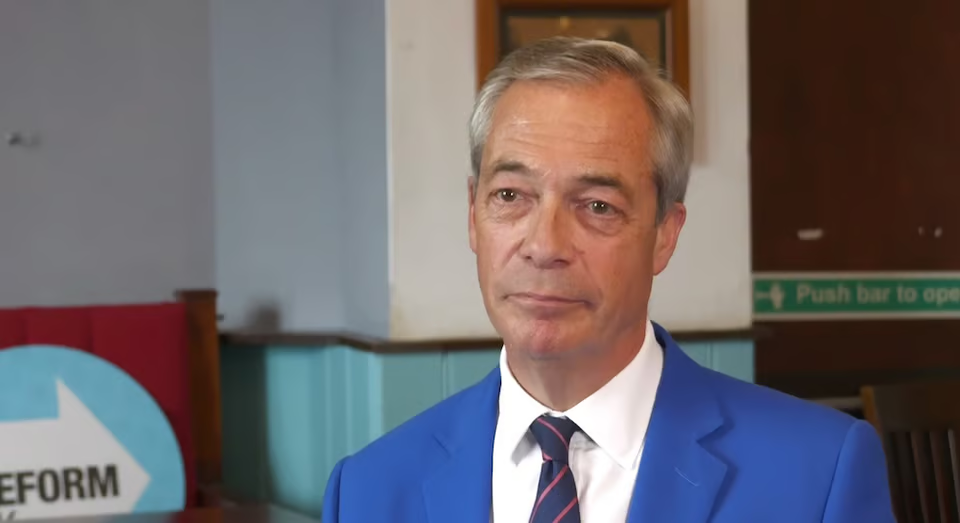
United Kingdom politician Nigel Farage, the leader of the Reform Party, purchased a property valued at 1.4 British pounds ($1.8 million) after receiving a 5 million pound ($6.7 million) “personal gift” from crypto billionaire Christopher Harborne.
The real estate deal closed in May 2024, several weeks before Farage announced that he was running for office in the general elections, according to Sky News.
Farage is now facing a UK parliamentary probe over the 5 million pound gift, which critics of the politician say should have been declared and registered after he took office.
The Reform Party and Farage maintain that no wrongdoing occurred. Farage said that because the gift was received before he entered office, it is not subject to the same reporting requirements.

Nigel Farage says the Reform Party will fight back against bans or temporary moratoriums on crypto political donations. Source: Sky News
The probe follows months of UK lawmakers and government officials urging a ban on crypto political donations over ethics concerns and growing regulatory scrutiny of political figures accepting crypto for campaign funds or personal gifts.
Related: UK Liberal Democrats call for Farage probe in $2.7M Stack BTC promotion
UK officials and lawmakers target crypto political donations
In February 2025, Matt Western, chair of the United Kingdom’s Joint Committee on the National Security Strategy, urged lawmakers to temporarily ban crypto donations sent to political parties and political figures.
Western cited concerns over foreign governments influencing UK elections and politics, with their donations as the primary reason for the ban.
“As the security environment worsens and the UK’s military role in Europe grows, the value of influencing the UK’s political positions, for example, on Ukraine, or US-EU relations, is likely to increase,” he said

The letter from the Joint Committee on the National Security Strategy urges a temporary ban on crypto donations. Source: UK Parliament
The UK government advanced a legislative proposal in March to temporarily ban political crypto donations, following the recommendations from Western and an independent inquiry into the threats posed by foreign political donations.
However, the legislation must still pass through both chambers of the UK parliament and receive approval from King Charles III before it is codified into law.
“We will act decisively to protect our democracy,” UK Prime Minister Keir Starmer said about the legislation to curb crypto political donations.
Magazine: The critical reason you should never ask ChatGPT for legal advice
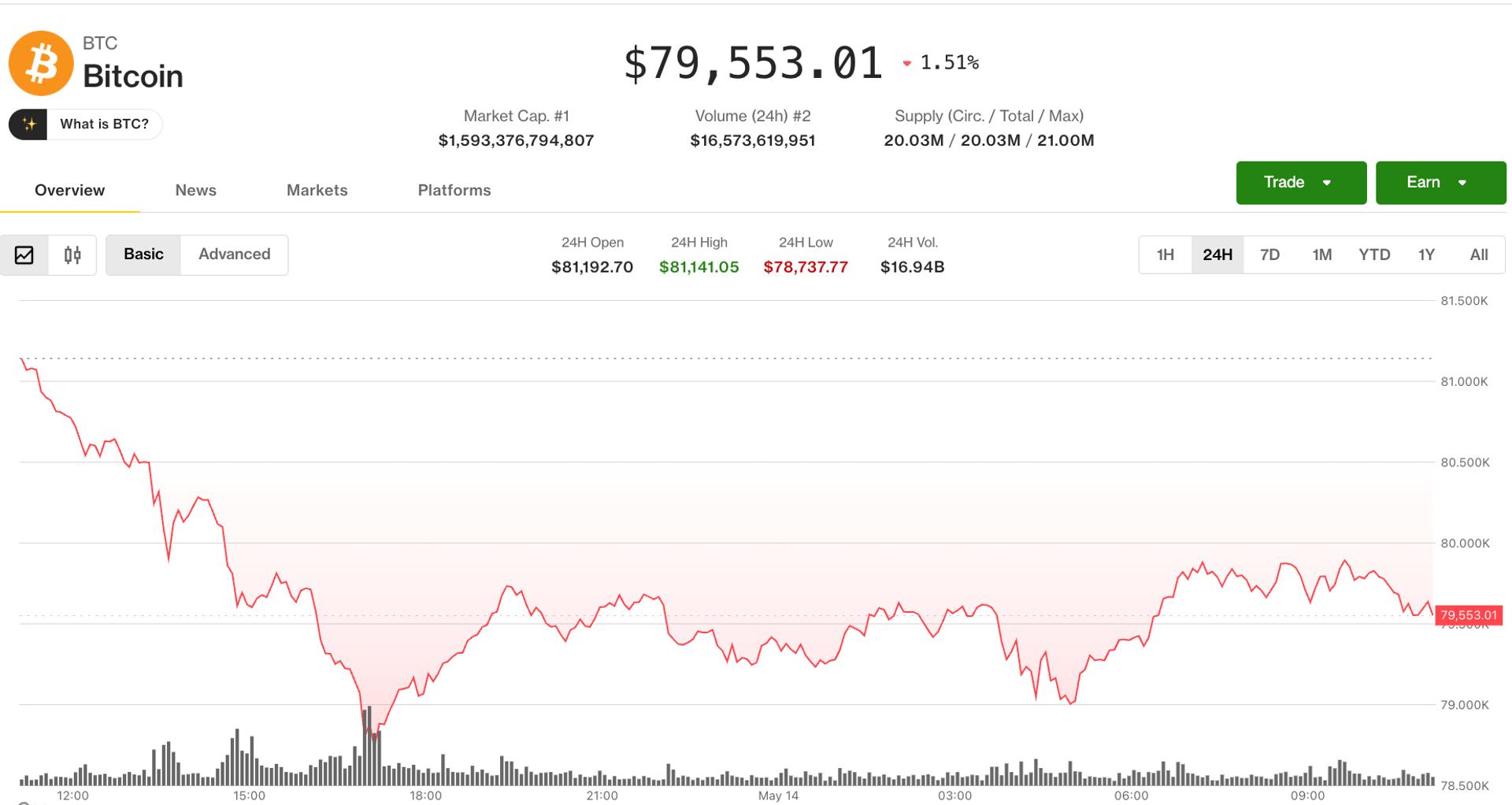
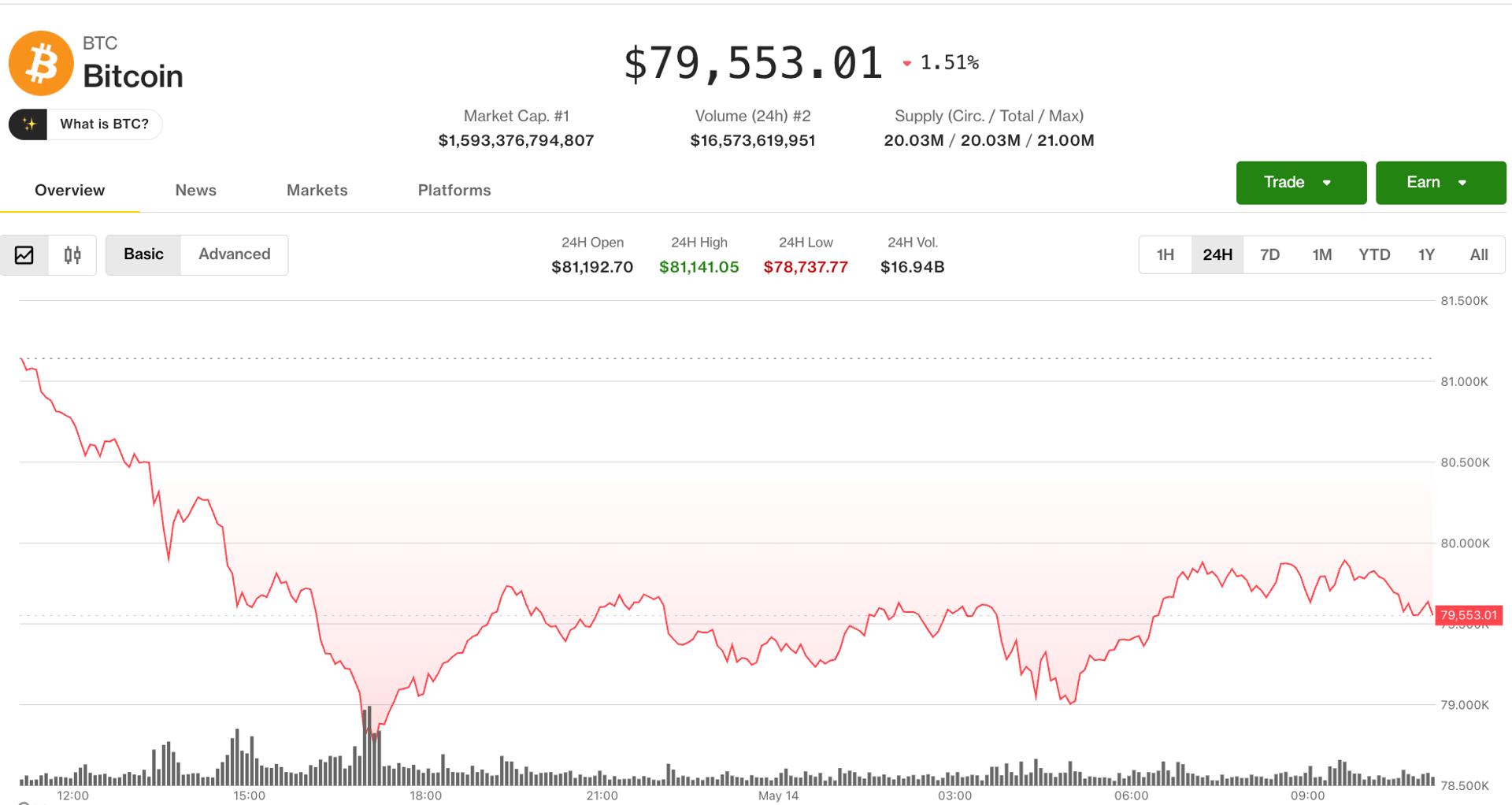
Crypto markets weakened as inflation fears hit risk assets, triggering long liquidations, negative derivatives flows and renewed pressure on altcoins.

Coinbase Deepens USDC Integration on Hyperliquid
Crypto exchange Coinbase expanded its partnership with Hyperliquid after securing a key treasury role for USDC deployment. The agreement also grants Coinbase rights to acquire the USDH brand assets from Native Markets. Meanwhile, Hyperliquid’s HYPE token gained momentum after the announcement, while Coinbase stock moved lower during market trading.
Today we’re expanding our support for @HyperliquidX by becoming the platform’s official treasury deployer of USDC.
Onchain markets operate 24/7 and require collateral that is always available, instantly transferable, and deeply liquid – USDC delivers exactly that.
Alongside… pic.twitter.com/ki7QmSJVdH
— Coinbase 🛡️ (@coinbase) May 14, 2026
Hyperliquid has relied heavily on USDC since launching in 2023, especially for leveraged trading activity and collateral management. Moreover, the exchange reported rapid growth in stablecoin usage across the platform during the past year. Coinbase stated that onchain markets require continuous liquidity and instant settlement capabilities.
HYPE Gains Momentum while COIN Shares Decline
The HYPE token recorded strong upward movement following confirmation of the expanded relationship between both companies. Besides, traders reacted positively to Coinbase increasing its staked HYPE allocation within the ecosystem. Market participants viewed the move as stronger institutional support for Hyperliquid’s infrastructure.
Trading activity reflected higher buying pressure across the HYPE market during the trading session. Consequently, the token maintained gains above key short-term support levels after the announcement. TradingView charts showed HYPE holding near recent highs during the latest market activity.
Meanwhile, Coinbase stock moved lower despite the strategic expansion into Hyperliquid’s ecosystem. TradingView data showed COIN trading near $197 during the market open, reflecting a decline exceeding 2%. However, the stock movement contrasted sharply with the positive response seen in the HYPE token market.
Coinbase Secures USDH Brand Rights as Stablecoin Winds Down
Coinbase also secured rights to purchase the USDH brand assets from Native Markets under the broader agreement. Native Markets launched the USDH stablecoin last year as Hyperliquid’s native dollar-pegged asset. However, the companies now plan to phase out USDH gradually over time.
The exchange confirmed that USDH markets remain operational throughout the transition process across supported platforms. In addition, users can still complete feeless conversions between USDH and USDC during the transition period. Fiat redemption services also remain available for holders while the wind-down continues.
The development highlights growing consolidation within the stablecoin sector as larger assets strengthen market dominance. USDC continues expanding its presence across decentralized finance platforms and derivatives ecosystems. Consequently, the transition may increase competition between USDC and rival stablecoins within perpetual trading markets.


Coinbase stock surged 8% after the Senate Banking Committee advanced the CLARITY Act in a 15 to 9 bipartisan vote.
Summary
- Bitcoin hit $82,000 following the committee vote before retreating to $81,500, up 2.5% on the day.
- Strategy climbed 7% and Bitmine advanced 5.6%, with broader crypto equity gains extending to Nasdaq and S&P 500 record highs.
- The bill still requires a full Senate vote with a 60-vote threshold and reconciliation with a House-passed version before it can reach the White House.
The Senate Banking Committee passed the Digital Asset Market Clarity Act on May 14 by 15 votes to 9, with support from two Democratic senators providing the bipartisan margin that moves the bill toward the full Senate.
Coinbase CEO Brian Armstrong had backed the current version of the bill ahead of the vote, calling it “closer than ever” to becoming law and describing the stablecoin yield compromise as a result “both sides left a little bit unhappy” with — a sign, he said, that negotiators found a genuine middle ground.
Coinbase (COIN) led gains among crypto-linked equities, surging 8% as investors priced in the possibility that clearer regulatory rules could accelerate institutional participation in digital assets.
Bitcoin rose to $82,000 shortly after the vote before retreating to approximately $81,500, up 2.5% over 24 hours. Strategy (MSTR) climbed 7%, while Ethereum-focused treasury firm Bitmine (BMNR) advanced 5.6%. The broader risk-on mood extended beyond crypto, with both the Nasdaq 100 and S&P 500 pushing to fresh record highs on the same day.
What comes next for the CLARITY Act
As crypto.news reported, the stablecoin yield compromise between Senators Thom Tillis and Angela Alsobrooks was the final major hurdle cleared before the committee vote.
The full text, published by the Senate Banking Committee, runs to 309 pages and still contains unresolved ethics language around government officials’ crypto holdings that Democrats demanded before supporting the bill at floor stage.
The CLARITY Act must still clear the full Senate with a 60-vote threshold, which requires additional Democratic support beyond the two senators who voted yes in committee.
It must then be reconciled with the version the House passed 294 to 134 in July 2025 before reaching the White House. Senator Bernie Moreno had warned that failure to advance the bill by end of May could shelve crypto market structure legislation for years.
The committee vote gives the bill its clearest legislative path since it stalled in January, when Coinbase temporarily withdrew support over the stablecoin yield provisions now resolved through the Tillis-Alsobrooks compromise.

Scottish Sentencing Council launches public consultation to seek views on domestic abuse sentencing

Lakers Far From Toxic Amid Strong 2026 Season
Who Supports CLARITY on the US Senate Banking Committee?

Manchester United reach agreement with Casemiro over contract clause amid transfer speculation

US brings back mandatory military draft registration

Steven Gerrard disagrees with Gary Neville over ‘shock’ Chelsea and Arsenal claim | Football

Crypto Wallet Hunter App comment ‘apk’#software#foryou#crypto#btc#cryptocurrency#foryoupage #foryou

Socios.com Is This the Future of Fan Engagement #cryptocurrency #crypto

What if XRP be Headed for a suppply Shock? #xrpnews #xrp #xrpcommunity #cryptocurrency #xrpripple
-
 Crypto World7 days ago
HarrisX Poll Found 52% of Registered Voters Support the CLARITY Act
-

 Fashion6 days ago
Weekend Open Thread: Marianne Dress
-

 Fashion3 days ago
Coffee Break: Travel Steam Iron
-

 Fashion4 days ago
What to Know Before Buying a Curling Wand or Curling Iron
-

 Tech5 days ago
Auto Enthusiast Carves Functional Two-Stroke Engine from Solid Metal
-

 Politics3 days ago
What to expect when you’re expecting a budget
-
 Business6 days ago
Ignore market noise, India’s long-term story intact, say D-Street bulls Ramesh Damani and Sunil Singhania
-

 Politics6 days ago
Politics Home Article | Starmer Enters The Danger Zone
-

 Tech4 days ago
GM Agrees To Pay $12.75 Million To Settle California Lawsuit Over Misuse Of Customers’ Driving Data
-

 Crypto World6 days ago
PROS explodes 48% as Upbit and Bithumb listings ignite demand
-

 Crypto World5 days ago
CZ says US crypto rivals tried to block Trump pardon
-

 Sports7 days ago
Bayern Munich vs PSG UEFA Champions League SF2 live match time, streaming | Football News
-

 Entertainment6 days ago
YNW Melly Denied Bond Again Ahead Of Double Murder Retrial
-

 Tech3 days ago
GM agrees to $12.75M California settlement over sale of drivers’ data
-

 Crypto World6 days ago
Kraken Parent Seeks OCC Charter, Signaling Regulated Banking Access
-
Crypto World6 days ago
The Hantavirus Danger: Can a Potential Outbreak Spark a New Meme Coin Frenzy?
-
Tech7 days ago
The Most Exciting Apple Products In The Pipeline For 2026 And Beyond
-

 Politics7 days ago
David Attenborough ‘Overwhelmed’ By Love Shown Ahead Of 100th Birthday
-

 Sports6 days ago
After Waka Waka, Shakira now drops first teaser for FIFA WC 2026 song | FIFA World Cup 2022
-

 Crypto World7 days ago
Here’s Why Cristiano Ronaldo and Taylor Swift Lost Millions of Followers on Instagram
You must be logged in to post a comment Login