Concerns have been raised regarding an Airbnb operating without planning permission in the same building as a controversial children’s daycare.
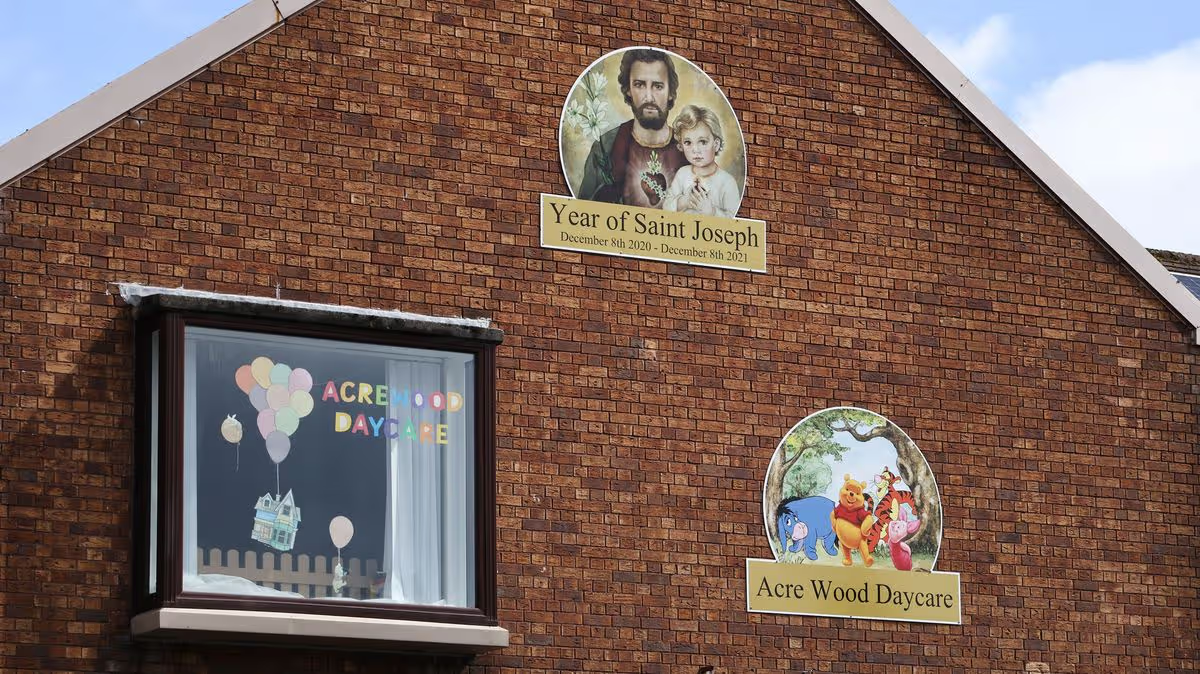
Acrewood Daycare on Grosvenor Road sparked controversy after going insolvent shortly after sacking staff and telling parents their children could no longer use the service they paid for the night before they were due to attend. This move has left parents and staff out of pocket. Families will not receive refunds and staff will have to wait up to eight weeks to receive unpaid wages.
Further concerns have been raised about the business, which is part owned by Hannahstown Parish priest Father Patrick Devlin, by former parents of children who attended the daycare and by local politicians. These are regarding an Airbnb advertised for two flats that was operating in the same building as the daycare.
It is understood the flats that are used for the Airbnb do not have planning permission with no decision being made on an application to create the flats. The planning application has asked to change one three bedroom apartment into two one bedroom apartments “for persons with hearing difficulties” as part of the centre for the deaf that also operates from the building.
Based on the reviews on the Airbnb website, it has been operating there since at least 2023. The planning application was submitted in January 2022.
Advertisement
One parent told Belfast Live: “Given what is often associated with Airbnbs where you could have anyone staying there or even drinking or drugs, it is worrying that this was taking place at the same building that was also a children’s daycare centre.”
West Belfast People Before Profit MLA Gerry Carroll echoed the concerns of local parents who said that they deserve an explanation about the Airbnb and why they had not been told about it.
He said: “This has set alarm bells ringing for parents whose children attend the centre. They have every right to expect their children to be cared for in a safe, secure environment – not one in close proximity to a holiday let, where strangers come and go at all hours. Acrewood management owe these parents a full and transparent account of what safeguarding measures are in place.
“Acrewood’s claims of financial unsustainability may well be true and it is undeniable that many childcare providers are under serious pressure. But profiteering from a housing shortage while making staff redundant and cutting childcare places is preposterous. Parents and workers are owed an urgent explanation from Acrewood management.”
Belfast City Council has said there has not been an application for a short-term let at the property.
A spokesperson told Belfast Live: “Planning permission may be required to use a house, apartment, student accommodation or other premises for a short-term holiday let. The need for planning permission will depend on the extent to which the short-term holiday let changes the character of the use of the property and the degree to which it impacts on its surroundings.”
The Eurovision Song Contest was founded 70 years ago as a way for Europe, divided after war, to come together by celebrating its music. Every year, several dozen countries across the continent – and, more recently, far beyond – compete in what is considered the world’s most viewed non-sporting event.
As a cultural institution that last year attracted around 166 million viewers, the results of Eurovision have a big impact – not least by deciding the venue of the following year’s event. Yet the issue of bloc voting, where countries tend to vote more favourably within regional or cultural blocs, has long been a controversial aspect of the contest.
In 2008, the BBC’s Eurovision commentator Terry Wogan spoke out against bloc voting by Eastern European countries, saying: “You have to say that this is no longer a music contest. I have to decide whether I want to do this again.” He didn’t – it was his final show in the commentary hotseat.
On occasion, suspiciously friendly voting has strayed into something even more troubling. The 1968 contest, held at the Royal Albert Hall in London, saw a major upset when home favourite Congratulations, sung by Cliff Richard, was pipped by the Spanish entry La, La, La.
Advertisement
Forty years later, Spanish Eurovision host Jose Maria Inigo claimed that the vote had been rigged at the behest of Spain’s military dictator, Franco. His claims were later supported by an Irish TV investigation.
The modern, expanded Eurovision features two semi-finals as well as the grand final, held this year in Vienna on May 16. Its scoring combines a jury panel with a public vote, reducing the impact of each jury. But that didn’t stop another major voting scandal emerging in 2022.
The 2022 scandal
During the 2022 grand final in Turin, Italy, the European Broadcasting Union (EBU) announced that six juries’ scores from the second semi-final – Azerbaijan, Georgia, Montenegro, Poland, Romania and San Marino – had been nullified after “certain irregular voting patterns were identified in the results of [these] countries”.
The countries’ votes were replaced with an aggregate score “based on the results of other countries with similar voting records” for both the semi-final and grand final. This process was acknowledged by Eurovision’s Independent Voting Monitor.
Advertisement
The countries’broadcasters strongly denied any wrongdoing, with Georgia even suggesting their first-place vote in the final had been wrongly allocated as a result of the imposed system. Among online audiences, there was immediate speculation of a cover-up. After the final, the EBU issued a long explanation for their decision.
So had there really been collusion? Colleagues and I from the University of Stirling, including Riley Uttley, have re-assessed the 2022 voting scandal using applied statistical methods.
Each five-member Eurovision jury selected their ten favourite songs, with 12 points going to their favourite, ten points for second, then eight down to one for their tenth-best song. A similar points system was used to reflect each country’s public vote, doubling the total number of votes awarded by each country.
The jury results prior to the EBU’s intervention are shown below. The six juries whose scores were nullified – marked in red – awarded each other a total of 251 points. This is just seven points shy of the absolute maximum they could have given each other: 6 x (12+10+8+7+6) = 258 points.
Advertisement
Eurovision jury scores, 2022 second semi-finalScores in red were later nullified. Points include three non-competing juries: Germany, Spain and UK. Robin Hankin, CC BY
If the scores were allocated randomly, the odds of the six countries awarding each other 251 points would be less than 1 in 10,000. Such a low probability provides strong objective evidence that the six juries were indeed colluding.
Say we have two songs, a and b, and want to know the probability that a is judged better than b. Using the BT method, this probability is:
p(a) / p(a) + p(b)
where p(a) and p(b) are the respective strengths of the two songs.
This idea can be extended to the ranking of any number of songs. If we observe, say, that a ≻ b ≻ c ≻ d ≻ e (that is, song a is the best, then b, down to e), the probability of this voting decision is:
This is known as a Plackett-Luce likelihood function. While calculating each value is difficult, we can use standard optimisation techniques to maximise this probability, and thereby estimate the strengths of the songs.
When it comes to identifying the strength of collusion in the 2022 contest, my own technique known as reified Bradley-Terry can be applied to this likelihood function.
The unfair advantage of collusion is represented by adding an extra strength term to any competitor who benefitted from collusion. In the equation below, S represents the strength of the collusion effect, and is applied to song b. So, we replace every occurrence of p(b) with p(b)+S. Then, the probability of a ≻ b ≻ c ≻ d ≻ e is now:
The Eurovision 2022 semifinal had 18 songs and 21 juries, leading to a probability equation like the one above – but with a total of 220 terms. While this is a lot for a person to work with, it can be easily handled by the R programming language, an open-source statistical tool designed to handle masses of data and produce graphics and visualisations.
The removed juries all appeared to have very similar behaviour, so we represented the strength of the collusion of all six as a single number S, which we calculated to be 0.262. We then calculated the probability of S being as high, or higher, than this value on the assumption of no collusion.
We calculated this probability to be one in 58,000. Put another way, if you have 2.5km of matchsticks laid out end-to-end and burn one, it’s the probability of picking the burnt one. We can, therefore, confidently conclude that collusion did take place.
Advertisement
The 2026 voting system explained. Video: Eurovision Song Contest.
A final quirk
The 2022 Eurovision voting scandal had ramifications beyond the nullification of the six collusive scores. Jury voting for semi-finals was discontinued from 2023 until this year’s contest. Perhaps perversely, this made the juries carry more weight in each grand final.
With the semi-finals decided purely by public votes, which tend to be more dispersed and unpredictable, this meant the juries’ more concentrated voting patterns played a more significant role in deciding the ultimate winner.
Jury voting was reinstated for the semi-finals of this year’s contest. However, the juries are larger (seven members rather than five) and chosen from a more diverse background.
The clear favourites, Finland, will hope this is another step towards eradicating the controversial voting patterns that have haunted past contests – and made Eurovision a focus of keen interest for some applied statisticians.
Pittsburgh is a culinary paradise that doesn’t do half measures, and also packs a punch in the culture department as well (picture credit: Dustun McGrew)
If you’re the kind of person who gets a kick out of discovering exciting new flavours, there’s a place you need to hear about.
Pittsburgh is a culinary powerhouse that doesn’t do half measures. Forget beige and boring – this is a city of big, bold tastes that linger long after you’ve returned home.
With its legendary industrial history, Pittsburgh was built on innovation. Stroll or cycle around its streets today, and you’ll see this spirit lives on in chef-led restaurants crafting creative, adventurous dishes using fresh local produce.
It’s also worth leaving time to explore the city’s thrilling arts and culture scenes. But wherever you go, you’ll never be far from exceptional food at refreshingly reasonable prices.
Advertisement
And getting there couldn’t be easier, with direct, year-round British Airways flights from Heathrow in addition to Icelandair services from London, Manchester and Glasgow. Aer Lingus will also offer direct flights from Dublin from 25 May offering pre-clearance.
Read on for our top tips – then go and forge your own culinary adventure.
Bold flavours
With dishes like this Airline Chicken, served at Scratch & Co. it is not hard to see why Pittsburgh’s food scene is gaining international attention
The good folk of Pittsburgh are justly proud of their city’s foodie transformation. And the world is increasingly taking notice, with local eateries gaining national and international recognition.
When it comes to American culinary honours, they don’t get bigger than the James Beard Awards.
Pittsburgh is home to more than a dozen James Beard Awards, semi-finalists, like Nik Forsberg of fet-fisk, where you can find this Apricot Chicken (picture credit: Sarah LaPonte)
Pittsburgh now boasts more than a dozen semi-finalists, such as Nik Forsberg of fet-fisk, a Nordic seafood restaurant and oyster bar that began life as a pop-up.
Others include Kate Lasky and Tomasz Skowronski of European-inspired vegan hangout Apteka, and Wei Zhu from Chengdu Gourmet, a wildly popular Chinese restaurant specialising in Szechuan cuisine.
Advertisement
Take a taste of the city home with you by attending a pizza-making class at Enrico Biscotti, where a lead pizzaiolo will guide you through the whole process, from dough making to baking. Or grab one of 30 different varieties of handmade, traditional Italian biscotti.
Their flavours range from classic anise almond to creative options like coconut chocolate chip, fig pecan, and black pepper walnut.
Pittsburgh has a booming bar scene, from trendy cocktail joints to friendly neighbourhood bars (picture credit: Alex Mowery)
If you feel thirsty afterwards, you’re in luck. Pittsburgh has a booming bar scene, from trendy cocktail joints to friendly neighbourhood bars serving craft beer, wine and cider. Cheers!
Food meets fun
Picklesburgh is a four-day festival featuring live music acts, rides, a Pickle Juice Drinking Contest and of course – all the pickles you could ask for (image: Keep Pittsburgh Dope)
In Pittsburgh, food isn’t all starched collars and seriousness – this is a city that knows how to have fun.
After all, where else would you find a whole four-day-long festival dedicated solely to pickles?
Every year, a whole swathe of downtown is set aside to celebrate this delicious, yet humble ingredient, which has played a key role in the city’s culinary history.
Advertisement
Head along for themed food galore, from pickled peppers in hot sauce to pickle cocktails and (wait for it…) pickles covered in chocolate!
You can also try your hand on the ‘Mechanical Pickle Ride’, or watch contestants compete in the Pickle Juice Drinking Contest – a fan favourite.
This year, Picklesburgh runs from July 16–19, joining a packed calendar of events across the city, with many local businesses offering specials or themed activities. Why not try your hand at Pittsburgh Glass Center’s pickle-shaped glass blowing, for example?
(picture credit: Pittsburgh Downtown Partnership)
Highlights include PrideFest, Oktoberfest Pittsburgh, and Ribfest – where BBQ classics are served alongside live music and sports-themed entertainment. Keep an eye out too for the Little Italy Days festival in Bloomfield. Running 13-16 August this year, it celebrates authentic Italian-American cuisine, local businesses, artists and bands.
Foodie culture
Food and Pittsburgh’s culture are intrinsically linked. Make the most of this and take one of Burgh Bits & Bites famous tours as a unique way to explore several Pittsburgh neighborhoods. Offering eight different tours, each will immerse you in a local area, connecting you to its community, culture, history and spirit through its unique cuisine.
Advertisement
And it isn’t only food that runs through the city’s history. The legacy of the the Whiskey Rebellion (1791–1794), against the government’s attempt to tax the spirit, has lead to a thriving distillery scene in the city. Small-batch distillerstaking on the legacy of the rebellion, creating craft spirits using local malt and grains, and many local bars and breweries offering immersive experiences for enthusiasts and novices alike.
Pittsburgh’s Appalachian roots have inspired a unique farmer-to-table dining scene across the city, which can be really felt in its network of farmers markets. Serving up local farm fresh produce including eggs, cheese, homemade baked goods, jams and honey.
A meal is only as good as the ingredients used to make it, and these are the places to buy them!
Given its creative approach to food, you won’t be surprised to hear Pittsburgh hosts a thriving arts scene.
Advertisement
Keep an eye out for all the street murals – Pittsburgh is famous for them! (picture credit: Matt Shuck)
The city was the birthplace of legendary pop artist Andy Warhol and today the Andy Warhol Museum stands in his honour as the largest single-artist museum in North America.
For more contemporary art, go to the Mattress Factory, which is known for its immersive, room-scale installations.
Another must-visit spot for arty types is the Pittsburgh Glass Center, which serves as a creative hub for the city’s community of glass artists. And keep an eye out for all the street murals – Pittsburgh is famous for them! Including tributes to iconic Pittsburghers, from rapper Mac Miller to humanitarian and legendary Pirates baseball player, Roberto Clemente.
With so much to see, do, and eat, plus regular flights from the UK and plenty of affordable hotels to choose from, there’s never been a better time to visit this incredible slice of urban America.
If you’re considering a trip, why wait?
Advertisement
Get inspired at visitpittsburgh.com
Cheer on the black and gold!
(Mariah Wild / Pittsburgh Steelers)
Known as the City of Champions, Pittsburgh is home to three top sports teams who all wear black and gold kits.
So why not catch a top-class game while you’re in town? Fans of American football can cheer on the Panthers and Steelers at Acrisure Stadium, formerly Heinz Field.
Alternatively, mix sport with sightseeing by visiting PNC Park, where the Pirates play baseball in a beautiful ground with gorgeous views of the city’s skyline.
For a chance to learn more about the team’s most famous player, Roberto Clemente, pop over to The Clemente Museum – which celebrates his fascinating life on and off the field.
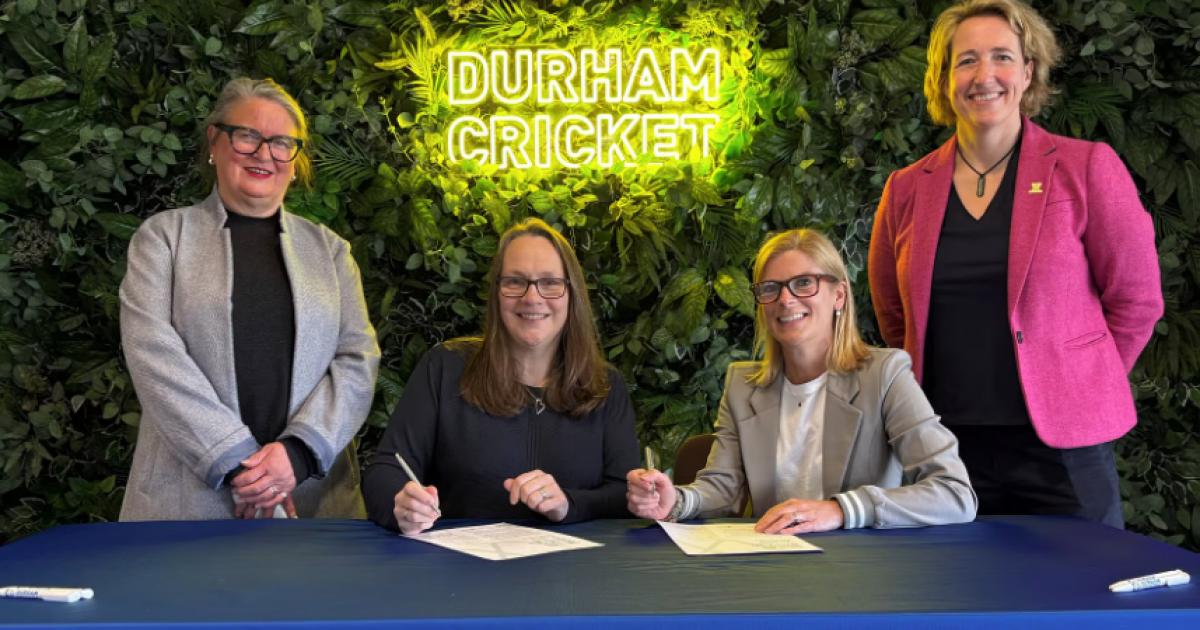
Northumbria University, based in Newcastle, formally signed the Brighton Plus Helsinki Declaration at Durham Cricket Ground on May 10.
The signing took place during the England Women’s One Day International against New Zealand.
The declaration is a global pledge supported by more than 600 representatives from approximately 100 countries.
Advertisement
It promotes equal opportunities for women and girls at every level of sport and physical activity, from grassroots to elite performance.
Professor Louise Bracken, pro vice-chancellor for research and knowledge exchange at Northumbria, said: “Signing the Brighton Plus Helsinki Declaration is a proud moment for Northumbria, and one that feels absolutely right.
“We are not starting from scratch.
“We have dedicated researchers, talented athletes, committed coaches, and passionate students who are already living these principles every day.
Advertisement
“What the Declaration does is bring all of that together under a shared, internationally recognised commitment.
“It sends a clear signal to our students, our staff, and our partners across the region that gender equity in sport is not an aspiration for us, it is a responsibility we take seriously.
“To sign alongside so many outstanding North East organisations, in the presence of Mayor Kim McGuinness, made this a genuinely significant day for the region.”
The original Brighton Declaration was first established in 1994 and updated in Helsinki in 2014.
Advertisement
It now covers both organised sport and wider physical activity, aiming to remove barriers and increase representation, access and support for women in every sporting context.
Northumbria’s signing builds on work already underway at the university.
Its Women’s Sport and Wellbeing Interdisciplinary Research Team (IDRT) is focused on evidence-based improvements in women’s health, sport, and wellbeing.
The team addresses issues such as menstrual health, menopause, and barriers to participation.
Advertisement
A cross-university group will oversee Northumbria’s progress against the declaration, with updates reported through the university’s gender equality forum.
The declaration carries no legal obligations, but signatories are encouraged to report on progress.
Dr Heather Robson, interim pro vice-chancellor for education and senior sponsor for gender equality at Northumbria, said: “Signing the Declaration is about a meaningful and public commitment, embedding Equality, Diversity and Inclusion into all sport and physical activity strategies at Northumbria ensuring that every woman and girl has the opportunity to participate in a safe, welcoming, and supportive environment, regardless of their background, ability or circumstances.”
The declaration’s principles cover a wide spectrum of support, including leadership, research, education, high-performance sport, facilities and grassroots access.
Advertisement
Northumbria’s women’s rugby league team has seen consistent success in the British Universities and Colleges Sport (BUCS) programme.
The team has won every league and cup competition since joining the league.
The university also introduced a new intramural netball league this year, engaging more than 160 students across 12 teams and nine academic schools and broadening participation for women in sport.
Annamarie Phelps, co-chair of the International Working Group (IWG) on Women and Sport, said: “The North East is a region defined by its passion for sport, and today it becomes a region defined by its commitment to equity.
Advertisement
“To see this cross-sector collective join our global movement is a testament to the power of collaboration and cooperation to ensure that every woman and girl has an environment she can thrive in.”
After scaling the 4,413 feet up the UK’s highest peak, the trio spent over 11 hours building their huge igloo – working through the night and finishing at 4.24am.
Three pals have built “the UK’s highest igloo” following a tough climb up Ben Nevis.
Advertisement
Stewart Thomson came up with the idea while hiking in the Mourne Mountains, in Northern Ireland. While on the hike, Stewart wondered what it would be like to build an igloo up there in the snow – and so he set about a plan.
Following a trial run on the summit of Slieve Donard, Stewart and his two friends Paul Cox and Donnacha Kimber mac Fhionlaoich – who are all from Northern Ireland – headed across to Scotland in April.
After scaling the 4,413 feet up the UK’s highest peak, the trio spent over 11 hours building their huge igloo – working through the night and finishing at 4.24am.
Speaking to Belfast Live, Stewart said: “After building an igloo on Slieve Donard I felt that we could build one somewhere higher and thought why not do Ben Nevis so it would be the highest in the UK.
“Although the additional height, 495 metres, proved to be a bigger challenge than we originally thought as we were carrying up our equipment as well and it really took it out of us with the climb itself taking five hours. The snow was also a bit different than the snow on Donard felt icer and heavier.
“If it wasn’t for these special sleds my mum made for us out of parachute material to move the snow blocks around I don’t think we would have had the energy to complete the igloo. In the end the three of us finished it in 11 hours and 38 minutes at 4.20am in the morning!”
The trio got some much-needed kip in the cosy igloo before inviting seven other hikers in to join them the following morning.
Stewart said: “Inside the igloo is actually very peaceful because the snow insulates all the sound and we slept through until 11am the next day.
“In the morning we got talking to hikers who were arriving and coming over to look at the igloo and we managed to get 10 people inside it at one point.
“We think this is the highest igloo that has been documented in the UK and it has been a great way for us to challenge ourselves, which is something that we all enjoy doing.”
To follow Stewart on his adventures, follow his Instagram page, here.
Get more Daily Record exclusives by signing up for free to Google’s preferred sources. Click HERE.
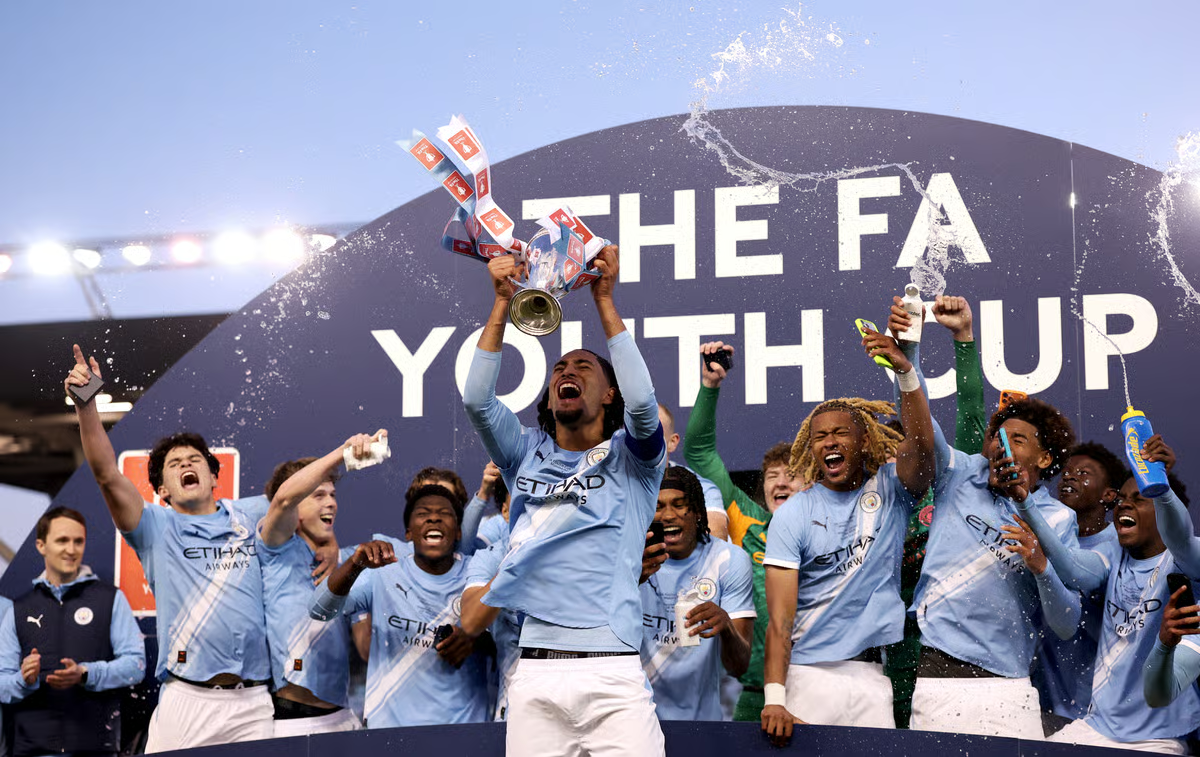
Gabriel, scorer of 26 goals in 29 games, pipped Lamb to the Premier League’s under-18 player of the year award this week but his first involvement was to be booked by Tom Nield for simulation, moments after City’s Dante Headley was cautioned for the same offence in a feisty first half.
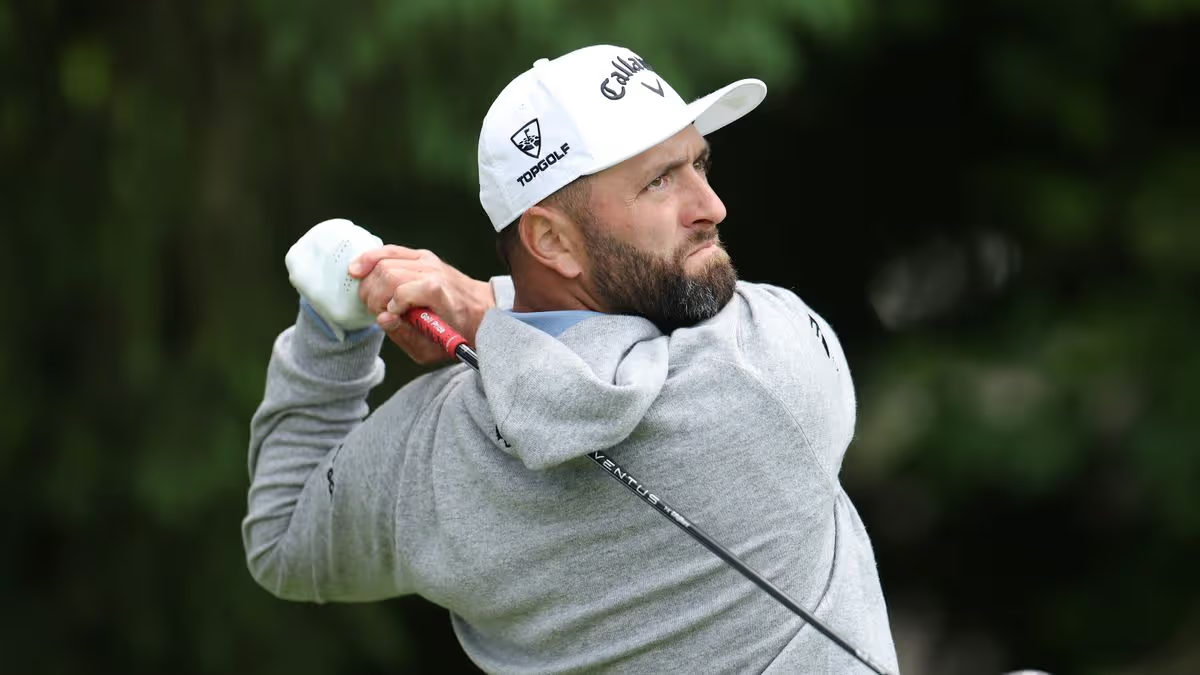
Jon Rahm accidentally hit a volunteer with a grass divot during an incident on the 7th hole at the PGA Championship when he angrily smashed his club into the ground
Jon Rahm has apologised to a volunteer after hitting them with a grass divot during an angry reaction to a poor shot at the PGA Championship. Rahm shot an opening round of 69 at Aronimink, with the lowest moment coming on the 7th hole.
Advertisement
The Spaniard played a poor shot out of the rough, sending his ball way over the back of the green on the par four hole. In frustration, he then swung his club once more, taking a big chunk of grass out.
Rahm didn’t immediately notice that the grass had been propelled straight into the face of a nearby volunteer. He then recognised what had happened and apologised to the elderly gentleman he had struck – and reiterated things after his round.
“Thanks for reminding of that,” Rahm told Today’s Golfer. “I got a flier on my second shot that went long . It’s not a good spot. Just out of frustration, I tried to make an air swing just over the grass, and I wasn’t looking, took a divot, and unfortunately I hit a volunteer.
“Unfortunately it hit him in the shoulder and then the face. I couldn’t feel any worse. That’s why I was there apologizing. I need to somehow track him down to give him a present because that’s inexcusable and for something that could be completely avoidable. Whether it was my intention or not, it was just not good.”
It remains to be seen whether Rahm will land himself in hot water with the PGA. But the PGA’s chief championships officer, Kerry Haigh, recently explained that there is a newly-introduced code of conduct that players are expected to abide by.
“The player code of conduct is something that has been a collaborative effort among all the majors and the major tours … We had a number of meetings to discuss the issue and how we could come up with a program that we feel is fair and effective,” Haigh said before the tournament.
“From our standpoint, which is all I can speak from the championship way, we have adopted the code of conduct … If a player does something sort of egregious, unfortunately, we would give a warning to that player, and if they were to do it again, there would be a two-shot penalty.
“And there’s a sort of number of sort of examples in the code that sort of gives us some guidance.”
The two-time Major winner could therefore find himself issued with a warning for his conduct, regardless of his apology and promise of a gift for the volunteer.
Rahm player alongside Rory McIlroy and Jordan Spieth and finished his round with back-to-back birdies to finish one under-par following a difficult rollercoaster round.
Advertisement
Sky Sports, HBO Max, Netflix and Disney+ with Ultimate TV package
This article contains affiliate links, we will receive a commission on any sales we generate from it. Learn more
Sky has upgraded its Ultimate TV and Sky Sports bundle to now include HBO Max, Netflix, Disney+, discovery+ and Hayu, as well as 135 channels and full Sky coverage of the Premier League and EFL.
Sky broadcasts more than 1,400 live matches across the Premier League, EFL and more with at least 215 live from the top flight alongside Formula 1, darts and golf.
The results of the second semi-final of Eurovision 2026 are in the history, with the final line-up for the Grand Final confirmed just days before a new champion is crowned.
This year’s edition of the annual song competition is being held in the city of Vienna. Austria won the right to host the Eurovision for the third time after singer JJ won last year’s event in one of the tensest finals of recent memory.
Heading into the week, 35 counties turned up at the Wiener Stadthalle seeking to book their spot in the final. This year’s final is scheduled to take place on Saturday night (May 16).
Advertisement
Click here to get the biggest stories straight to your inbox in our Daily Newsletter
Due to only 25 countries competing in the final, a number of iconic Eurovision nations have departed before one of the most watched TV events of the year.
On Tuesday night (May 12), viewers saw Belgium, Croatia, Finland, Greece, Israel, Lithuania, Moldova, Poland, Serbia, and Sweden book their spot in the final.
The second semi-final was held on Thursday night (May 14). On presenting duties once again was Austrian stars Victoria Swarovski and Michael Ostrowski, with the pair showcasing their banter.
Advertisement
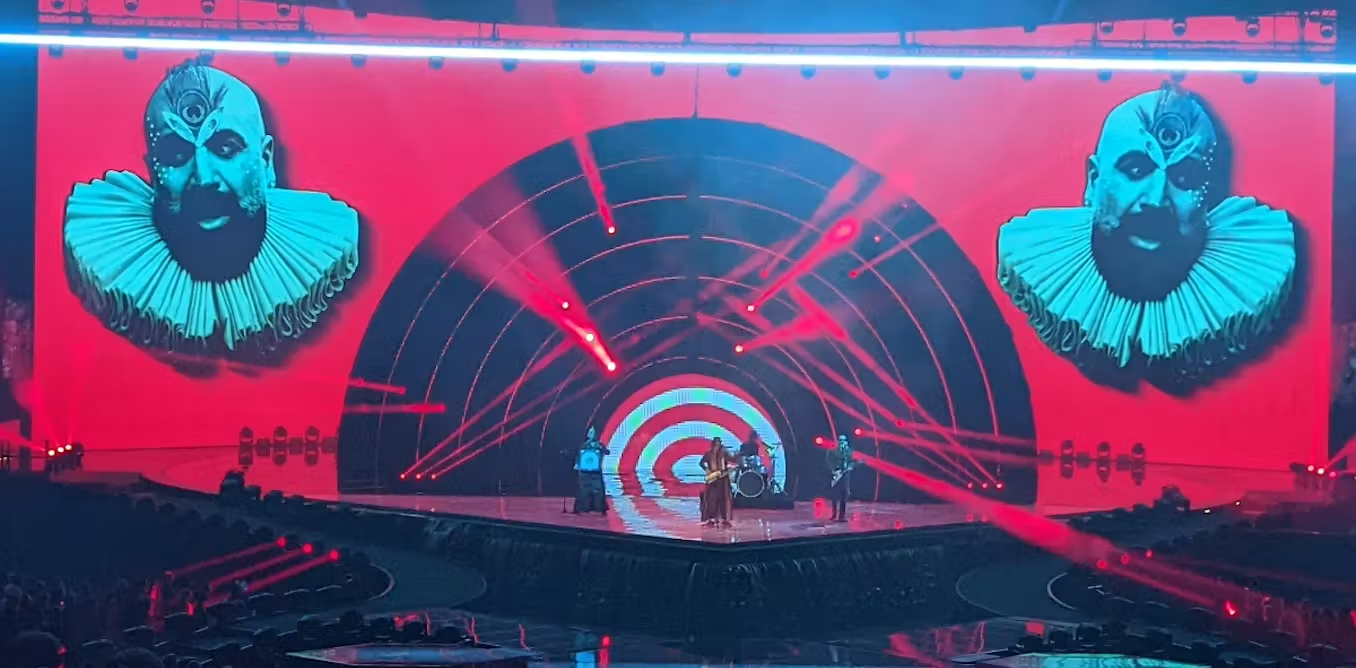
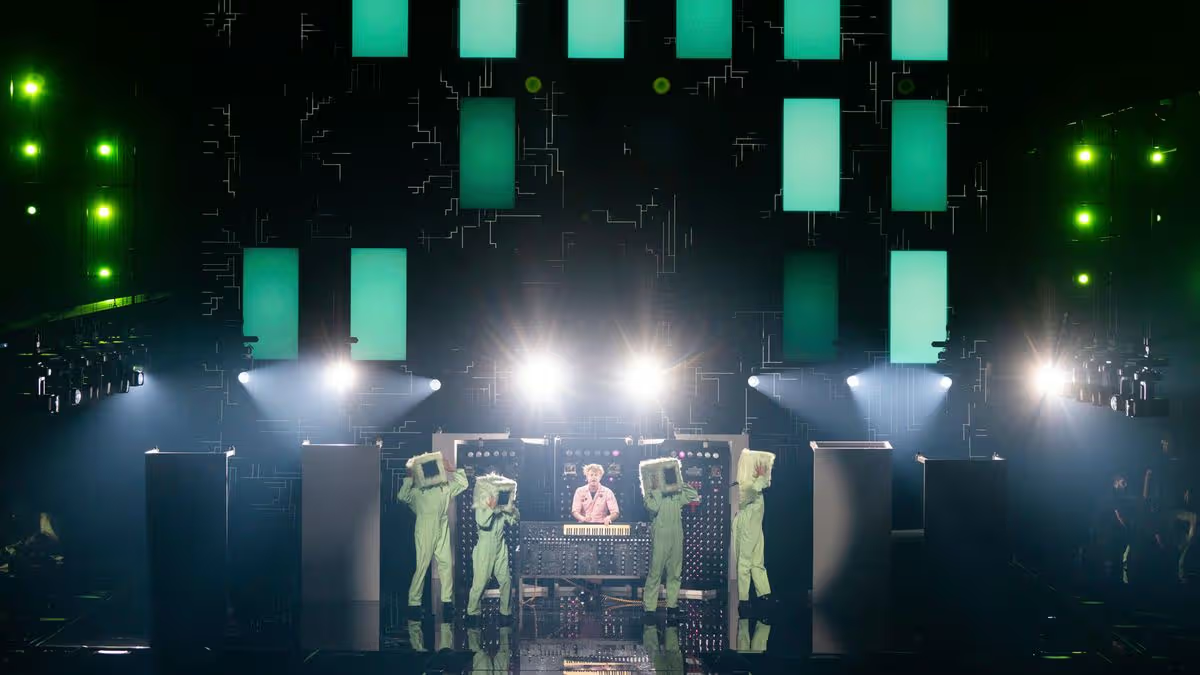
What made the second semi-final interesting for UK viewers was that they got to vote for their favourite acts. On top of this, UK entrant Look Mum No Computer performed their song Eins, Zwei, Drei.
As is tradition, the UK got sent through to the final automatically due to being part of the ‘Big Four’ with Germany, France and Italy. Spain is normally part of this group, but chose not to compete in this year’s Eurovision in protest against Israel’s inclusion.
Full list of countries and songs in the second semi-final
France: Monroe – “Regarde!” (Big Four)
Austria: Cosmo- “Tanzschein” (Hosts)
United Kingdom: Look Mum No Computer – “Eins, Zwei, Drei” (Big Four)
Bulgaria: DARA – “Bangaranga”
Ukraine: Leléka – “Ridnym”
Norway: Jonas Lovv – “YA YA YA”
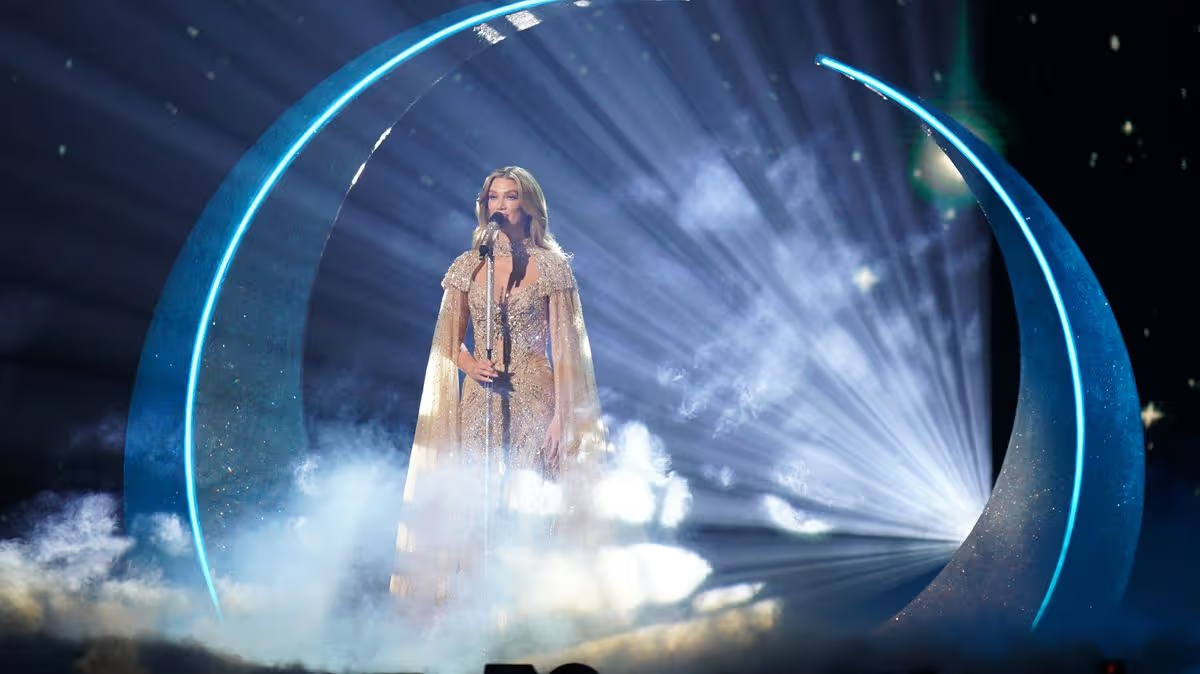
Australia: Delta Goodrem – “Eclipse”
Romania: Alexandra Căpitănescu – “Choke Me”
Malta: Aidan – “Bella”
Cyprus: Antigoni – “JALLA”
Albania: Alis – “Nân”
Denmark: Søren Torpegaard Lund – “Før Vi Går Hjem”
Czechia: Daniel Zizka – “CROSSROADS”
It means Azerbaijan, Luxembourg, Armenia, Switzerland, and Latvia did not qualify for the final.
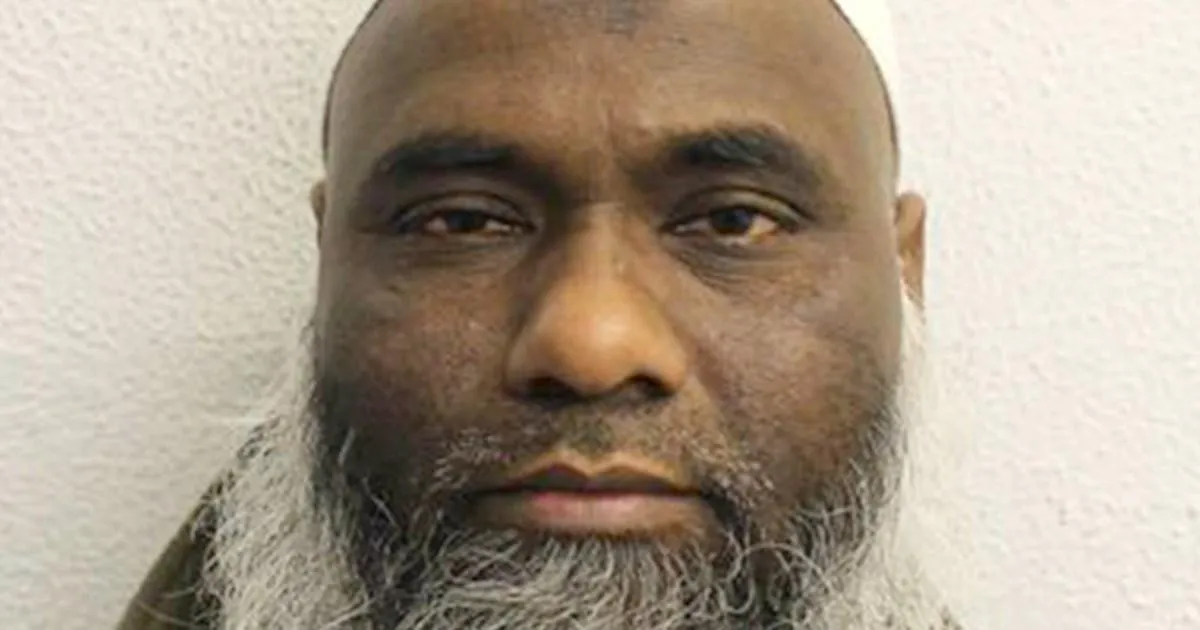
Abdul Halim Khan was convicted of raping and sexually assaulting women and girls as young as 12 (Picture: Metropolitan Police/PA Wire)
A former imam pretended to be a ‘possessed’ Jinn spirit to sexually abuse girls as young as 12 for years.
Abdul Halim Khan, 54, told his victims that harm would come to them through so-called black magic if they reported him, leaving them feeling unable to come forward for years.
Khan was an imam at a mosque in east London and used his position as a trusted religious leader within the community to gain access to his victims and manipulate them.
He arranged meetings in isolated locations, and even their own homes, where he sexually abused victims under the false pretence of being possessed or disguised as a jinn (supernatural spirit).
Advertisement
Melissa Garner, Specialist Prosecutor at the Crown Prosecution Service, said: ‘Abdul Halim Khan abused his position as a trusted religious leader to prey on women and girls over many years, manipulating and controlling them for his own sexual gratification.
Sign up for all of the latest stories
Start your day informed with Metro’s News Updates newsletter or get Breaking Newsalerts the moment it happens.
Advertisement
‘He used their deeply held beliefs to instil fear and silence them, making them believe their families would be at risk if they ever spoke out.
‘I hope this prosecution sends a clear message that the Crown Prosecution Service will work tirelessly to protect women and girls and bring anyone who commits these appalling crimes to justice.’
During the investigation, further victims were identified after the initial reports were made.
Prosecutors worked closely with the Metropolitan Police to build a case spanning more than a decade of offending.
Advertisement
To support the jury’s understanding of complex evidence involving spiritual beliefs – including references to jinn and black magic – the CPS instructed a cultural expert to provide essential context central to the case.
Khan was sentenced to life imprisonment and will serve a minimum term of 20 years at Snaresbrook Crown Court on Thursday 14 May.
He was convicted of 21 offences, including rape, sexual assault and child sexual offences, against seven women and girls between 2004 and 2015.
DCI Jennie Ronan, whose team led the investigation, said: ‘Abdul Khan presented himself as a respectable man who could be trusted. However, this was far from the truth, and he instead preyed upon and took advantage of others.
Advertisement
‘Today, I want to focus on the victim-survivors, who have shown remarkable bravery in reporting Khan and great strength throughout the trial.
‘We hope that today’s outcome provides as a measure of comfort as they continue to rebuild their lives and serves as a reminder to anyone who has experienced sexual violence that support is available.
‘We remain absolutely committed to tackling violence against women and girls, targeting dangerous offenders and removing them from London’s streets.’
The 25 countries that will compete in the Eurovision Song Contest 2026 have finally been officially confirmed ahead of this weekend’s grand final.
Vienna, the capital of Austria situated on the Danube River, is the host of the 70th world music event, with the city also having hosted the contest back in 1967 and 2015.
This year’s song contest has already seen a total of 33 countries take to the stage ahead of the Grand Final on Saturday (May 16), which will take place at the Wiener Stadthalle. The top ten countries from each Semi-Final, which took place on Tuesday (May 12) and Thursday (May 14), have made it through.
As one of the Big Five countries – the United Kingdom, Spain, Germany, France, Italy – the UK’s Sam Battle, aka Look Mum No Computer, had already guaranteed a place in the Grand Final and host country Austria was also guaranteed a place in the Grand Final thanks to Nemo’s victory in 2024.
Advertisement
As already mentioned, the UK is represented at this year’s contest by Look Mum No Computer, an English musician, YouTuber, electronics enthusiast, and composer who posts videos about making pro audio gear and synthesisers, as well as original music tracks, with his track, ‘Eins, Zwei, Drei’.
For this year’s show, Austrian stars Victoria Swarovski and Michael Ostrowski will be presenting the Eurovision Song Contest 2026, while here in the UK, as ever, viewers will also hear Graham Norton’s legendary commentary.
Advertisement
But who has officially made it through to this year’s Eurovision Grand Final? Here is the full list of countries taking part:
Italy: Sal Da Vinci – “Per Sempre Sì”
Germany: Sarah Engels – “Fire”
Greece: Akylas – “Ferto”
Finland: Linda Lampenius x Pete Parkkonen – “Liekinheitin”
Belgium: ESSYLA – “Dancing on the Ice”
Sweden: FELICIA – “My System”
Moldova: Satoshi – “Viva, Moldova!”
Israel: Noam Bettan – “Michelle”
Serbia: LAVINA – “Kraj Mene”
Croatia: LELEK – “Andromeda”
Lithuania: Lion Ceccah – “Sólo Quiero Más”
Poland: ALICJA – “Pray”
France: Monroe – “Regarde!”
Austria: Cosmo- “Tanzschein” (Hosts)
United Kingdom: Look Mum No Computer – “Eins, Zwei, Drei”
Bulgaria: DARA – “Bangaranga”
Ukraine: Leléka – “Ridnym”
Norway: Jonas Lovv – “YA YA YA”
Australia: Delta Goodrem – “Eclipse”
Romania: Alexandra Căpitănescu – “Choke Me”
Malta: Aidan – “Bella”
Cyprus: Antigoni – “JALLA”
Albania: Alis – “Nân”
Denmark: Søren Torpegaard Lund – “Før Vi Går Hjem”
As such, City remain on course to seal another domestic treble under Pep Guardiola with the Carabao Cup already in the bag and the Premier League title race set to go the wire.
Date, kick-off time and venue
Chelsea vs Man City is scheduled for a 3pm BST kick-off on Saturday, May 16, 2026.
The match will take place at Wembley Stadium, in London.
Advertisement
Where to watch Chelsea vs Man City
TV channel: In the UK, the 2026 FA Cup final will be televised live on TNT Sports. Coverage starts from 9am BST on TNT Sports 1
The game will also be televised live and free-to-air on the BBC. Coverage starts from 1pm BST on BBC One.
Live stream: TNT Sports subscribers can also catch the FA Cup final live online via the HBO Max app and website.
Advertisement
The game will be broadcast live and free-to-air on tHe BBC Sport website, app and BBC iPlayer.
Live blog: You can follow all the action on matchday via Standard Sport’s live blog, with expert analysis from Sam Tabuteau at the ground.
Chelsea vs Man City team news
Chelsea will be without talented youngster Estevao for the FA Cup final after the Brazilian was ruled out for the remainder of the season with a hamstring injury sustained in the 1-0 loss to Manchester United.
Advertisement
Robert Sanchez missed the draw with Liverpool after a nasty clash of heads with Morgan Gibbs-White in the 3-1 loss to Nottingham Forest at the start of the month, but McFarlane has confirmed he will be available again at Wembley.
Alejandro Garnacho and Pedro Neto have sat out the last two games with knocks but should be available for selection to boost McFarlane’s attacking options.
Captain Reece James, however, has recovered from a hamstring injury to potentially lead the side out at Wembley.
Doubtful: Robert Sanchez
Getty
Advertisement
Man City have a near clean bill of health ahead of the cup final with Rodri the only doubt having missed the last five games in all competitions with a groin issue.
Erling Haaland, Rayan Cherki and Jeremy Doku are all expected to return to the starting lineup after being rested for the win over Crystal Palace, while James Trafford is set to get the nod in between the posts.
Chelsea vs Man City prediction
Despite dropping points to Everton in what could prove costly in the Premier League title race, Man City have found their goalscoring touch ahead of the Wembley showpiece which make it’s hard to look past them lifting the trophy.
Advertisement
Chelsea were much improved against Leeds and Liverpool – in comparison to recent performances – and could relish being the underdogs in the final – much like they were against Paris Saint-Germain in the Club World Cup final.
However, we expect City to have extra motivation from losing successive FA Cup finals and that will prove decisive in completing the second part of a potential domestic treble.
Head to head (h2h) history and results
In the two Premier League meetings this season, Man City have taken four points from a possible six against Chelsea.
















































You must be logged in to post a comment Login