Pittsburgh is a culinary paradise that doesn’t do half measures, and also packs a punch in the culture department as well (picture credit: Dustun McGrew)
If you’re the kind of person who gets a kick out of discovering exciting new flavours, there’s a place you need to hear about.
Pittsburgh is a culinary powerhouse that doesn’t do half measures. Forget beige and boring – this is a city of big, bold tastes that linger long after you’ve returned home.
With its legendary industrial history, Pittsburgh was built on innovation. Stroll or cycle around its streets today, and you’ll see this spirit lives on in chef-led restaurants crafting creative, adventurous dishes using fresh local produce.
It’s also worth leaving time to explore the city’s thrilling arts and culture scenes. But wherever you go, you’ll never be far from exceptional food at refreshingly reasonable prices.
Advertisement
And getting there couldn’t be easier, with direct, year-round British Airways flights from Heathrow in addition to Icelandair services from London, Manchester and Glasgow. Aer Lingus will also offer direct flights from Dublin from 25 May offering pre-clearance.
Read on for our top tips – then go and forge your own culinary adventure.
Bold flavours
With dishes like this Airline Chicken, served at Scratch & Co. it is not hard to see why Pittsburgh’s food scene is gaining international attention
The good folk of Pittsburgh are justly proud of their city’s foodie transformation. And the world is increasingly taking notice, with local eateries gaining national and international recognition.
When it comes to American culinary honours, they don’t get bigger than the James Beard Awards.
Pittsburgh is home to more than a dozen James Beard Awards, semi-finalists, like Nik Forsberg of fet-fisk, where you can find this Apricot Chicken (picture credit: Sarah LaPonte)
Pittsburgh now boasts more than a dozen semi-finalists, such as Nik Forsberg of fet-fisk, a Nordic seafood restaurant and oyster bar that began life as a pop-up.
Others include Kate Lasky and Tomasz Skowronski of European-inspired vegan hangout Apteka, and Wei Zhu from Chengdu Gourmet, a wildly popular Chinese restaurant specialising in Szechuan cuisine.
Advertisement
Take a taste of the city home with you by attending a pizza-making class at Enrico Biscotti, where a lead pizzaiolo will guide you through the whole process, from dough making to baking. Or grab one of 30 different varieties of handmade, traditional Italian biscotti.
Their flavours range from classic anise almond to creative options like coconut chocolate chip, fig pecan, and black pepper walnut.
Pittsburgh has a booming bar scene, from trendy cocktail joints to friendly neighbourhood bars (picture credit: Alex Mowery)
If you feel thirsty afterwards, you’re in luck. Pittsburgh has a booming bar scene, from trendy cocktail joints to friendly neighbourhood bars serving craft beer, wine and cider. Cheers!
Food meets fun
Picklesburgh is a four-day festival featuring live music acts, rides, a Pickle Juice Drinking Contest and of course – all the pickles you could ask for (image: Keep Pittsburgh Dope)
In Pittsburgh, food isn’t all starched collars and seriousness – this is a city that knows how to have fun.
After all, where else would you find a whole four-day-long festival dedicated solely to pickles?
Every year, a whole swathe of downtown is set aside to celebrate this delicious, yet humble ingredient, which has played a key role in the city’s culinary history.
Advertisement
Head along for themed food galore, from pickled peppers in hot sauce to pickle cocktails and (wait for it…) pickles covered in chocolate!
You can also try your hand on the ‘Mechanical Pickle Ride’, or watch contestants compete in the Pickle Juice Drinking Contest – a fan favourite.
This year, Picklesburgh runs from July 16–19, joining a packed calendar of events across the city, with many local businesses offering specials or themed activities. Why not try your hand at Pittsburgh Glass Center’s pickle-shaped glass blowing, for example?
(picture credit: Pittsburgh Downtown Partnership)
Highlights include PrideFest, Oktoberfest Pittsburgh, and Ribfest – where BBQ classics are served alongside live music and sports-themed entertainment. Keep an eye out too for the Little Italy Days festival in Bloomfield. Running 13-16 August this year, it celebrates authentic Italian-American cuisine, local businesses, artists and bands.
Foodie culture
Food and Pittsburgh’s culture are intrinsically linked. Make the most of this and take one of Burgh Bits & Bites famous tours as a unique way to explore several Pittsburgh neighborhoods. Offering eight different tours, each will immerse you in a local area, connecting you to its community, culture, history and spirit through its unique cuisine.
Advertisement
And it isn’t only food that runs through the city’s history. The legacy of the the Whiskey Rebellion (1791–1794), against the government’s attempt to tax the spirit, has lead to a thriving distillery scene in the city. Small-batch distillerstaking on the legacy of the rebellion, creating craft spirits using local malt and grains, and many local bars and breweries offering immersive experiences for enthusiasts and novices alike.
Pittsburgh’s Appalachian roots have inspired a unique farmer-to-table dining scene across the city, which can be really felt in its network of farmers markets. Serving up local farm fresh produce including eggs, cheese, homemade baked goods, jams and honey.
A meal is only as good as the ingredients used to make it, and these are the places to buy them!
Given its creative approach to food, you won’t be surprised to hear Pittsburgh hosts a thriving arts scene.
Advertisement
Keep an eye out for all the street murals – Pittsburgh is famous for them! (picture credit: Matt Shuck)
The city was the birthplace of legendary pop artist Andy Warhol and today the Andy Warhol Museum stands in his honour as the largest single-artist museum in North America.
For more contemporary art, go to the Mattress Factory, which is known for its immersive, room-scale installations.
Another must-visit spot for arty types is the Pittsburgh Glass Center, which serves as a creative hub for the city’s community of glass artists. And keep an eye out for all the street murals – Pittsburgh is famous for them! Including tributes to iconic Pittsburghers, from rapper Mac Miller to humanitarian and legendary Pirates baseball player, Roberto Clemente.
With so much to see, do, and eat, plus regular flights from the UK and plenty of affordable hotels to choose from, there’s never been a better time to visit this incredible slice of urban America.
If you’re considering a trip, why wait?
Advertisement
Get inspired at visitpittsburgh.com
Cheer on the black and gold!
(Mariah Wild / Pittsburgh Steelers)
Known as the City of Champions, Pittsburgh is home to three top sports teams who all wear black and gold kits.
So why not catch a top-class game while you’re in town? Fans of American football can cheer on the Panthers and Steelers at Acrisure Stadium, formerly Heinz Field.
Alternatively, mix sport with sightseeing by visiting PNC Park, where the Pirates play baseball in a beautiful ground with gorgeous views of the city’s skyline.
For a chance to learn more about the team’s most famous player, Roberto Clemente, pop over to The Clemente Museum – which celebrates his fascinating life on and off the field.
The father of Stephen Ogilvie has issued a plea to those spreading disinformation as his son remains in ICU
Matt Jackson Live News Network Reporter and belfastlive.co.uk
14:38, 10 Jun 2026
The father of a knife attack victim in North Belfast has made an urgent plea to those peddling misinformation online, urging them to ‘Please stop’. Stephen Ogilvie lost an eye and sustained further severe injuries following the assault on Kinnaird Avenue on June 8.
Hadi Alodid, 30, of Duncairn Avenue in Belfast, appeared before the city’s magistrates’ court on Wednesday, facing charges of attempted murder of Stephen Ogilvie, threatening to kill an NHS radiographer, and possession of a knife.
Widespread violence and disorder broke out across Belfast and several other towns in Northern Ireland on Tuesday night in the wake of the North Belfast incident, reports Belfast Live.
Mr Burrows confirmed that the victim’s father had a personal message he wished to convey. He said: “I want to thank Mr Ogilvie for taking the time to speak with me at such a distressing time for his family.
“His son remains in the ICU following the devastating injuries he sustained, but is stable. The injuries inflicted upon him are truly shocking, and our thoughts and prayers are with him and his entire family.
Advertisement
“The victim’s father has also asked me to pass on a direct appeal to those spreading disinformation online: please stop. This has shockingly included false posts on social media at various times that his son has died.
“This is causing immense additional distress to a family already going through an unimaginable ordeal. I echo that appeal wholeheartedly and urge everyone to act with decency and respect for this family.
“I offered my full solidarity and support to the whole family today.”
Mr Burrows continued: “I will be meeting with the Secretary of State tomorrow, where I will be raising issues directly related to this case.
Advertisement
“It is important that those in political leadership engage with issues like immigration, the security of our borders and the protection of all our citizens, whilst also standing unequivocally on the side of law and order. I also appeal again for parents to ensure their children are not out on the streets and involved in disorder.
“Tomorrow I will be asking the Secretary of State to meet the family of Stephen Oglivie in the coming days.”
In a previous statement released via Independent Councilor Stafford Ward, Stephen’s relatives emphasized that they “want to make it clear that overnight unrest is not welcome”.
Advertisement
The family also commended locals who intervened to help the victim and requested privacy from both the public and media.
“We are aware of the tensions and talk of protests following this incident. We want to make it absolutely clear that overnight unrest is not welcome, and peaceful protest is the only way forward.
“We have many migrants who make a deeply valuable contribution to our country, including in our healthcare system and hospitality sector and we depend on them to make our country work. We do not want this terrible tragedy to be used to divide people or fuel hostility,” the family said.
Ensure our latest stories always appear at the top of your Google Search by making us a Preferred Source. Click here to activate or add us as your Preferred Source in your Google search settings.
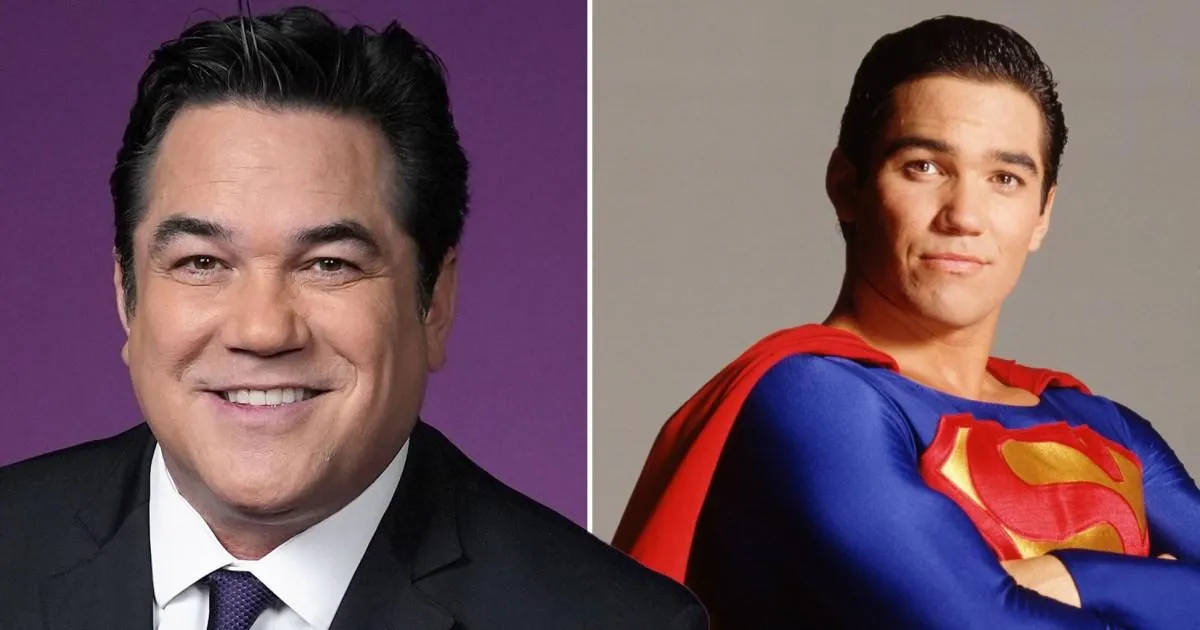
Dean Cain has once again sparked controversy. How did we end up here? (Picture: Getty Images)
For millions of 90s TV viewers, Dean Cain embodied the ideal man.
With his movie-star looks, Princeton education, and starring role opposite Teri Hatcher in Lois & Clark: The New Adventures of Superman, Cain became one of the decade’s biggest heartthrobs, helping turn the Man of Steel into appointment television for an entire generation.
At its peak, the show attracted more than 15 million viewers per episode and made Cain a household name.
Three decades later, however, the actor’s public image looks very different.
The backlash began when an X user questioned how Supergirl could have pierced ears if her skin was bulletproof. Another user then replied with an image comparing Alcock to Cha-Ka, a character from the 1970s TV series Land of the Lost.
Cain responded: ‘Dang it… I laughed.’
Dean Cain agreeing with a joke about Supergirl star Milly Alcock’s face has sparked major backlash (Picture: X)
Backlash quickly followed, with many fans pointing out how disappointing it was to see a former Superman actor appearing to join in with a joke at the expense of a 26-year-old actress about to inherit one of DC’s most iconic roles.
Many ritics accused Cain of participating in misogynistic appearance-based mockery and undermining a younger performer, with one writing on Reddit: ‘She is like the most conventionally attractive woman ever. We can’t win,’ while another replied: ‘THIS. RIGHT. HERE. They just hate women. Period.’
Advertisement
And the backlash did not prove to be a learning experience for Cain.
Since Sunday, the MAGA-supporting actor has replied to or reposted at least 30 posts related to the Supergirl controversy, interspersing them with messages attacking Maine Democratic Senate candidate Graham Platner and praising President Donald Trump’s appearance at Monday’s NBA Finals game at Madison Square Garden.
Alcock is playing Supergirl in the upcoming film (Picture: Jerod Harris/Getty Images)
The incident is only the latest chapter in a long and increasingly divisive transformation.
How did Dean Cain become famous?
Before Hollywood came calling, Cain looked destined for an entirely different career.
Born Dean George Tanaka in 1966, he excelled academically and athletically, playing football at Princeton University before briefly signing with the Buffalo Bills. A knee injury ended his football ambitions and pushed him towards entertainment instead.
Advertisement
After a series of commercials and guest appearances, he landed the role that would define his career in 1993.
Cain played Superman in the show Lois & Clark: The New Adventures of Superman from 1993 to 1997 (Picture: Getty Images)
As Clark Kent in Lois & Clark, Cain embodied a softer, more romantic Superman, becoming a fixture on bedroom walls and magazine covers throughout the decade.
The role remains his most famous achievement, despite subsequent appearances in projects including Ripley’s Believe It or Not! and later a return to the Superman universe in Supergirl.
He also became a major heart throb and source of tabloid intrigue, including a six-month relationship with fellow ’90s sex symbol Pamela Anderson at the beginning of her Baywatch run.
He also, famously, dated Brooke Shields during his time at Princeton.
Advertisement
In recent years, however, Cain has become almost as well known for his political views as for his acting.
What are Dean Cain’s political views?
Cain has become increasingly outspoken about his conservative views in recent years (Picture: Omar Vega/Getty Images)
The actor, who has publicly supported Donald Trump, has increasingly used television appearances and social media to weigh in on culture-war issues.
He said in an interview with Variety: ‘I love President Trump. I’ve been friends with him forever. Trump is actually one of the most empathetic, wonderful, generous people you’ll ever meet.’
He also joined the board of the National Rifle Association, a pro-gun lobby widely accused of preventing gun-sense legislation aimed at halting school shootings, and became a regular voice in conservative media circles.
In a video posted to social media, he encouraged others to sign up too, saying the agency was helping to ‘save America’ and support immigration enforcement efforts.
He said: ‘I am a sworn law enforcement officer, as well as being a filmmaker, and I felt it was important to join with our first responders to help secure the safety of all Americans, not just talk about it. So, I joined up,’ he said.
Advertisement
‘Since President Trump took office, ICE has arrested hundreds of thousands of criminals, including terrorists, rapists, murderers, paedophiles, MS-13 gang members, drug traffickers…you name it. Very dangerous people who are no longer on the streets.’
He then went on to encourage others to sign up too, pushing how people could ‘earn lots of great benefits and pay’.
As the theme music of Superman played, he told followers: ‘You can defend your homeland for great benefits’. He then cited a $50,000 (£37,000) signing bonus, student loan repayment, enhanced retirement benefits, and special pay.
Advertisement
Dean then added that ICE was ‘helping save America and remove the worst of the worst from America’s streets’.
‘I like that, and I voted for that. They need your help to protect our homeland and our families. Join today if that’s something that’s tickled your fancy…because we need you.’
Cain had a very high profile relationship with actress Brooke Shields in the 90s (Picture: Ron Galella, Ltd./Ron Galella Collection via Getty Images)
The move generated widespread criticism online, with many pointing to what they saw as a contradiction between Superman’s long-standing status as an outsider seeking acceptance and Cain’s support for an agency frequently criticised by immigration advocates.
Some critics also highlighted Cain’s own experiences with racism after he was cast as the Man of Steel in the 1990s.
In a previous interview with Variety, the actor recalled being targeted with racist abuse shortly after landing the role.
Advertisement
‘It was 1993 and I remember a fan going, “We wanted Superman, not Sushi Man”,’ Cain said, referencing a comment about his Japanese heritage.
Cain’s biological father was a Japanese-American serviceman, and the actor has previously spoken about navigating prejudice throughout his career. Despite the remark, he insisted he wasn’t offended.
‘For the love of God, he’s a Kryptonian. He could be green. Does it matter,’ he said.
For some former fans, those comments only deepened the irony. As one social media user put it: ‘To make it worse, he’s literally talked about receiving backlash and being given racist nicknames for being a half-Asian Superman actor. And yet here he is endorsing and actively participating in those same systems of bigotry and shaming.’
Advertisement
What did Dean Cain say about new Superman films?
Cain has previously spoken out about racism he faced early in his career as a half-Japanese actor (Picture: Getty Images)
Ironically, some of Cain’s most controversial comments in recent years have centred on the very character that made him famous.
Ahead of the release of James Gunn’s Superman reboot last year, the actor criticised the director’s description of the character as an immigrant story, accusing Hollywood of making the iconic hero ‘woke’.
Speaking to TMZ, Cain asked: ‘How woke is Hollywood going to make this character?’
He continued: ‘How much is Disney going to change their Snow White? Why are they going to change these characters [to] exist for the times?’
The comments came after Gunn described Superman as ‘the story of America’ and ‘an immigrant that came from other places and populated the country’.
Advertisement
While Cain acknowledged the character’s origins, he argued there needed to be limits to the comparison.
The actor has even made appearances with the Trumps (Picture: Getty Images)
‘We know Superman is an immigrant – he’s a freaking alien,’ he said.
‘The “American way” is immigrant friendly, tremendously immigrant friendly. But there are rules.’
He added: ‘There have to be limits, because we can’t have everybody in the United States. We can’t have everybody, society will fail.’
The remarks sparked backlash online, with critics pointing out that Superman has long been interpreted as a metaphor for the immigrant experience, dating back to the character’s creation by the sons of Jewish immigrants in the 1930s.
Advertisement
Cain was one of the biggest heart throbs of the 90s (Picture: ABC Photo Archives/Disney General Entertainment Content via Getty Images)
The remarks prompted debate among comic-book fans, many of whom pointed out that Superman has always been, quite literally, an immigrant from another planet.
Now Cain finds himself embroiled in another DC-related controversy just weeks before Alcock’s debut as Kara Zor-El in the upcoming Supergirl.
Whether it’s supporting ICE, embracing polarising political causes, or laughing along with jokes aimed at younger actors, Cain has spent much of the last decade alienating sections of the audience that once adored him.
And for some former fans, the sight of yesterday’s Superman taking shots at tomorrow’s Supergirl feels like the saddest twist of all.
Got a story?
Advertisement
If you’ve got a celebrity story, video or pictures get in touch with the Metro.co.uk entertainment team by emailing us celebtips@metro.co.uk, calling 020 3615 2145 or by visiting our Submit Stuff page – we’d love to hear from you.
A United States Hercules military plane has been tracked heading westwards across the Atlantic before it suddenly turned around after apparently declaring an emergency and returned to Cardiff
14:20, 10 Jun 2026Updated 14:24, 10 Jun 2026
A US military plane has turned around after appearing to declare an emergency and returned to Cardiff Airport.
The USAF C-130H Hercules was tracked heading westwards across the Atlantic before it suddenly turned around for unknown reasons and landed at 1.15pm.
It is understood that the plane transmitted a 7700 code, indicating there is a general emergency, but at this stage it is unclear the reason.
Advertisement
The Lockheed C-130 Hercules is a four-engine turboprop military transport plane made in the United States by Lockheed Martin.
Designed to carry troops, cargo and casualties for medical evacuation, the aircraft is able to take off and land on rough unprepared runways.
When a pilot enters the four-digit emergency code 7700 into their transponder, it immediately alerts air traffic control that the aircraft is in distress and requires priority handling.
Advertisement
The exact nature of the incident is unclear as it acts as a “catch-all” for any emergency situation that isn’t a hijacking (7500) or radio failure (7600).
A study of 2,000 men found 92% would urge a friend to visit the doctor – but almost half would delay seeking medical help for their own men’s health issues
A survey of 2,000 men revealed that most would urge a friend to visit their GP, with 40% having stepped in when a pal refused to seek help. Of those, 22% said they’ve had to intervene on more than one occasion. Yet 47% admitted to delaying an appointment themselves for exactly the same symptoms.
Advertisement
Just 14% seek help as soon as they notice something is wrong, with 40% typically waiting weeks before booking a GP appointment. More than half (52%) confessed they frequently wait until symptoms become impossible to ignore before seeking medical attention.
Worryingly, almost a quarter (23%) of those who delayed seeking help said their condition later turned out to be serious.
Reasons for postponing an appointment ranged from hoping the problem would resolve itself, to feeling it wasn’t severe enough to warrant a trip to the doctor. Others were put off by lengthy waiting times (21%) or claimed they were simply too busy (18%). Some also felt they needed to “tough it out” (18%).
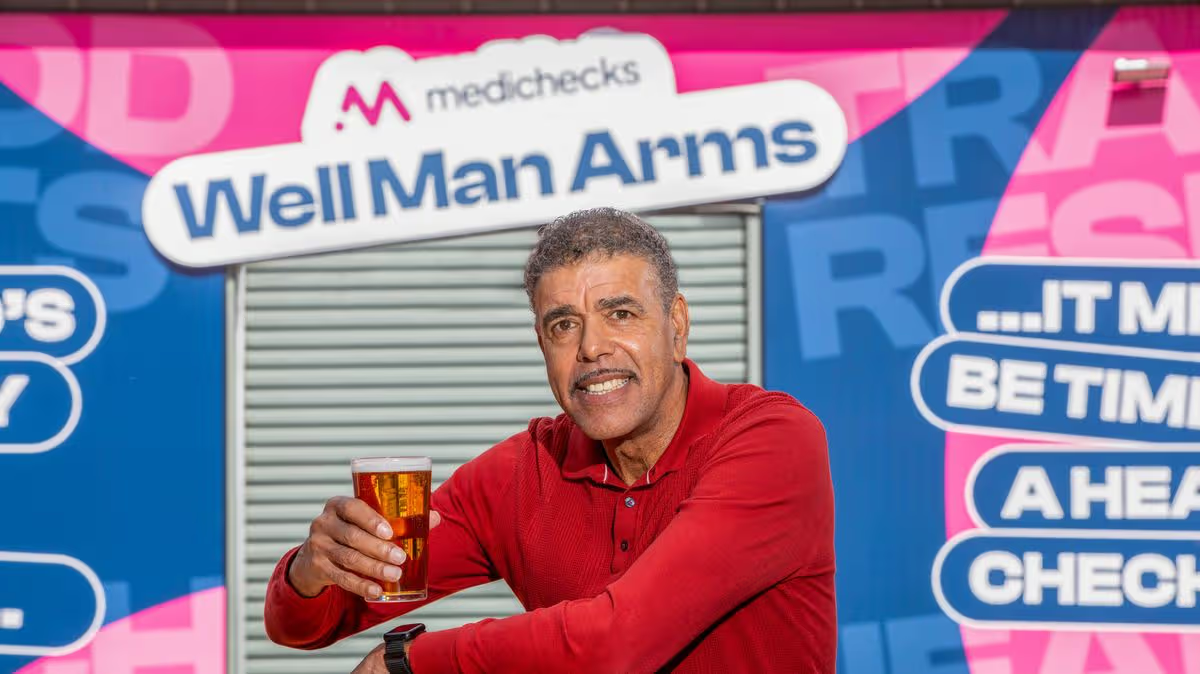
The research was commissioned by health test provider Medichecks, which has teamed up with former footballer and broadcaster Chris Kamara to urge men to open up more about their health.
Advertisement
The brand has transformed the Trent Navigation Inn in Nottingham into its Well Man Arms Bar, welcoming men to watch football while weaving health discussions into their everyday conversations.
Chris Kamara said: “Football fans can spend hours debating who’s in the starting eleven, whether the manager got it right or who’s coming in during the transfer window. But when it comes to their own health, a lot of blokes go completely quiet.
“What struck me from the research is that nearly every man would tell a mate to get checked out if something didn’t seem right, but many won’t take their own advice.
Advertisement
“We’re brilliant at looking after our mates, but not always so good at looking after ourselves. I know from my own experience how easy it is to brush things off and think, ‘I’ll deal with it later’, the problem is, later can sometimes be too late.
“If we can get even a few men to stop putting things off, book an appointment, get a health check or simply talk to someone about something that’s worrying them, that’s a win in my book.”
The findings also showed that 73% of men believe outdated masculine stereotypes, such as the expectation to stay stoic and suffer in silence, are to blame for many feeling unable to seek the medical attention they need.
Advertisement
Yet attitudes appear to be shifting, with just 17% of those polled, via OnePoll, now admitting they wouldn’t open up to a friend, teammate or family member if something was troubling them.
And once they do make it to their GP, only 13% would feel uncomfortable discussing their concerns with a healthcare professional.
Dr Natasha Fernando, medical director at Medichecks, added: “One of the most striking findings from the research is the disconnect between how men look after others and how they look after themselves.
“The issue often isn’t a lack of awareness, it’s the tendency to put our own health at the bottom of the priority list. The reality is that many serious health conditions, including high cholesterol, high blood pressure and type 2 diabetes, can develop silently with few obvious symptoms.
Advertisement
“That’s why being proactive about your health matters so much, whether it’s booking a GP appointment, having a conversation with a healthcare professional or getting a health check.”
Murder for Two is a breathtaking, madcap romp that will leave you struggling to keep up as an astonishing pair of actors take silliness to a whole new brilliantly barmy level.
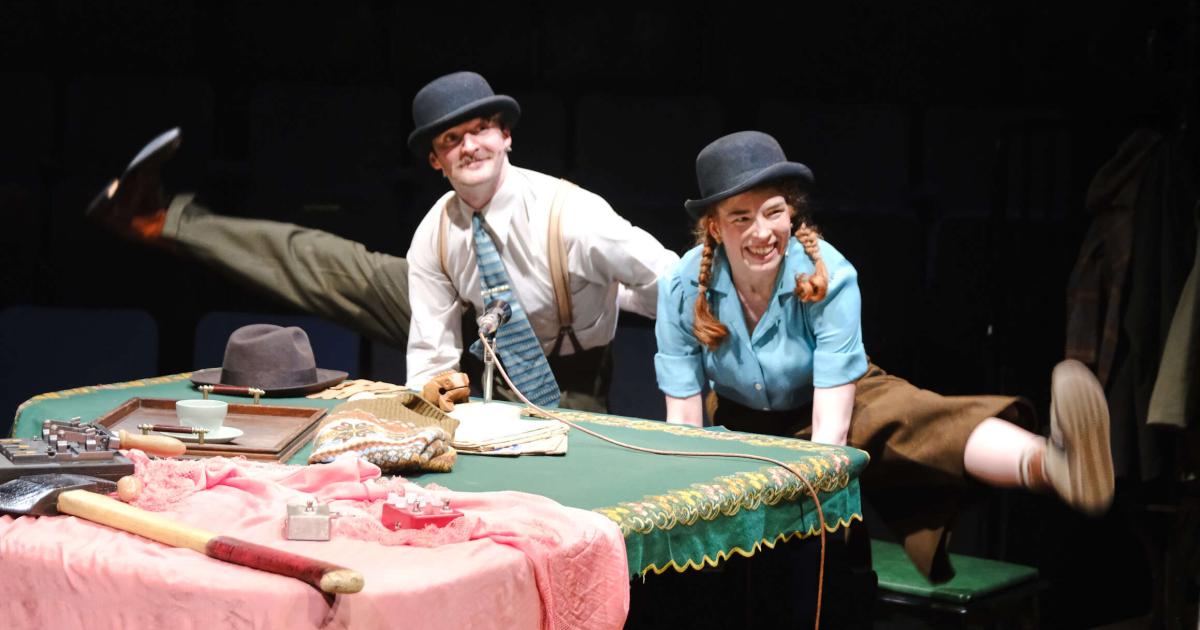
Lucy Keirl and Tom Babbage in Murder for Two (Picture: Tony Bartholomew)
The Octagon really does need to install seatbelts for this production where the humour is so rapid, the switch from one character to another is like lightning and where the audience is clinging on for dear life.
This is a real runaway train of a show which relies on the magnificent Lucy Keirl and Tom Babbage to prevent it from running into the buffers.
Originally written as a murder mystery, this production offers an added twist to the award-winning show.
Advertisement
Set in a BBC radio studio in 1959, the scheduled programme has been cancelled at the last minute and the two studio technicians bring to life a musical murder mystery as a last minute replacement.
Somehow it manages to send up just about every genre you can think of from film noir and the Hollywood musical to the golden age of radio.
A leading literary figure is shot dead at home just before his birthday party. A hapless wannabe detective arrives on the scene to be confronted by an eccentric line-up of party guests who all appear to have a motive. Poirot and Marple never had to deal with anything like this that’s for sure.
The Octagon’s ‘in the round’ setting is perfect for this production with props galore turning the radio studio into the murder victim’s home.
Advertisement
Tom Babbage plays Marcus the beat cop with ambitions, aided by an invisible assistant (obviously). He’s the fulcrum around which the whirlwind that is Lucy Keirl revolves.
Lucy Keirl in Murder for Two (Picture: Tony Bartholomew)
It’s unlikely you will ever see another performer work as hard as she does during this play flipping from one character to another in an instant. There’s a French ballerina, a German psychologist, a couple who constantly row, a widow who dreams of Broadway stardom, an innocent girl with a passion for criminology, three surviving members of a boys’ choir (you don’t want to know what happened to the others) and a slightly deranged fireman. I suspect I’ve missed some off the list but you get the gist.
There are no costume changes, new characters are introduced simply by a new accent – some of which are deliberately and hilariously bad -and an immediate change of stance. It’s such a physical performance as she constantly changes posture to seemlessly move from one of this motley crew to another.
In lesser hands this show could become a total car crash. It is so frenetic, so surreal at times and so plain daft at others, the audience could be left wondering what on earth they had come to.
Advertisement
But this inspired duo pull it off remarkably. It may look to be on the verge of spiralling out of control but you know they are in total command.
There is a discipline and precision that you can only sit back and admire.
They interact with the audience, some of the gags are spontaneous and they have licence to improvise which they both seize on with gusto. And they are clearly having just as much fun on the stage as the audience is having in watching them.
Lucy Keirl and Tom Babbage in Murder for Two (Picture: Tony Bartholomew)
As if all the total nonsense wasn’t enough, the show is also a musical with a grand piano taking centre stage. Both actors are consummate players, often at the keyboard at the same time, and the comedy songs and their antics around the piano are one of the joys of the show.
Advertisement
There are elements of the great silent comedies, with Tom Babbage’s facial expressions worthy of any of the great clowns. There is slapstick, sound effects galore and rubber chickens – it’s just not like any other play.
Murder for Two is not going to be everyone’s cup of tea. Be warned it is a celebration of daftness; it is silly, it is anarchic and even has elements of pantomime thrown in.
Subtle it is not. Logical it is certainly not. But what a hoot! It is inspired lunacy from two comedy actors who surely deserve some sort of recognition for their efforts.
Murder for Two runs until Saturday, June 27. Details from www.octagonbolton.co.uk
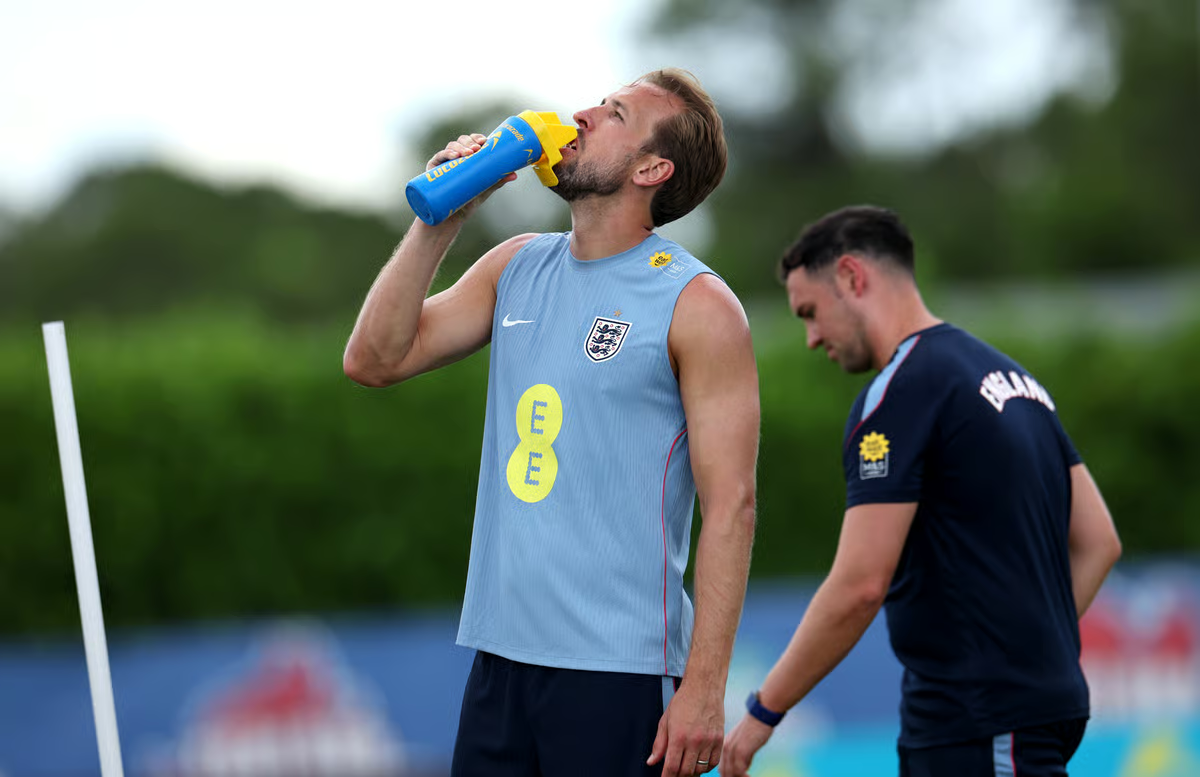
England, meanwhile, face Costa Rica at the Inter&Co Stadium in Orlando, Florida, in their final warm-up match today. That should include the four late-arriving Arsenal stars, before the squad fly out to their World Cup base in Kansas City, Missouri, on June 13. You can follow all the latest news and updates from across the tournament – including insight and analysis from Dom Smith in the States – with our rolling news live blog below!
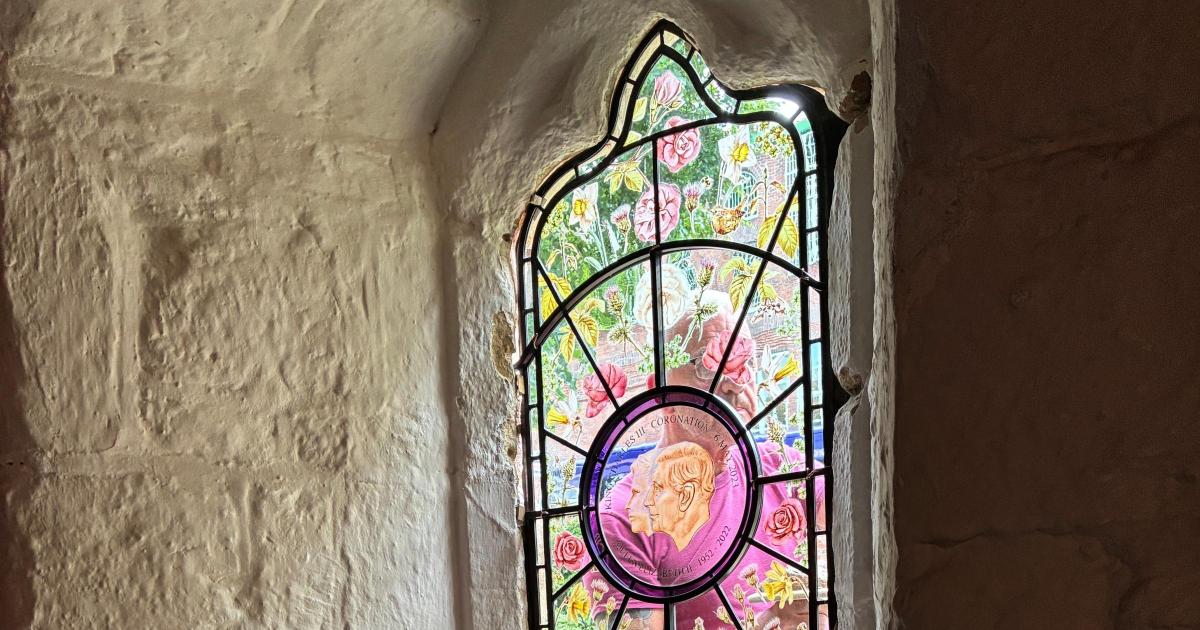
The beautifully-crafted work of art can be seen in the Merchant Adventurers Hall on Fossgate, bringing together royal history, British heritage, and Yorkshire pride.
The piece was designed to commemorate the Coronation of King Charles III while also honouring the reign of Queen Elizabeth II.
Historic York hall’s new stained glass honours King Charles III and the late Queen Elizabeth II. (Image: Merchant Adventurers)
The new window tells a story that bridges past and present, serving as both a tribute and a celebration. It captures a significant moment in the nation’s history and reflects the continuity of the Crown through two historic reigns.
Beyond its royal connections, the design showcases the rich diversity of Britain’s natural world. Intricate stained-glass details celebrate native flora and fauna, weaving together elements that reflect the beauty and character of the British landscape.
Merchant Adventurers Hall in York. (Image: Submitted)
Visitors with a keen eye will also discover a number of distinctly Yorkshire touches incorporated into the artwork, including a tribute to York’s famous Tansy Beetle, a rare and much-loved local species.
Advertisement
The window has been brought to life by the York Glaziers Trust, renowned for their expertise in traditional stained-glass conservation and creation. The team has meticulously crafted each element of the design, ensuring a work of exceptional quality and lasting significance.
The window features a tribute to York’s famous Tansy Beetle, a rare and much-loved local species. (Image: Merchant Adventurers)
Dr Marie Groll, director of York Glaziers Trust, said: “The York Glaziers Trust has been privileged to work with colleagues at the Merchant Adventurers Hall on this new window, which is a celebration of nature and of the monarchy.
“Our in-house stained glass designer Anna Milsom has used as her inspiration the flora and fauna found in the gardens surrounding the Hall, bringing the outside in. We hope there is much hidden in the window to delight visitors to the Hall.”
The design of the new window features the diversity of Britain’s natural world. (Image: Merchant Adventurers)
The Governor of the Merchant Adventurers Hall, Professor Sarah Brown, said she was delighted with this addition during her year of office.
Advertisement
“The artistry and craft of the stained-glass artist has changed little since the Hall was built in the middle of the fourteenth century.
“Stained glass remains at the heart of the heritage and culture of the city of York and it is a very fitting medium in which to pay tribute to the late Queen and the accession of His Majesty the King in a building which remains central to the celebration and promotion of business, enterprise and creative entrepreneurship.
“This sensitive evocation of the garden in which the Hall sits will bring pleasure and delight to our members and our visitors alike.”
The window will provide a lasting legacy within the Hall, enriching the historic building while commemorating a defining chapter in modern British history.
From June 25 until September 1, the cost of all day wristbands will be reduced and children’s meals at all the food outlets, including the popular Monterey Jack’s diner, will also be reduced.
Families and visitors can take advantage of lots of free entertainment this summer at M&D’s and to top it all the attraction is lowering its prices following the UK Government’s temporary VAT reprieve for the hospitality industry.
Advertisement
From June 25 until September 1, the cost of all day wristbands will be reduced and children’s meals at all the food outlets, including the popular Monterey Jack’s diner, will also be reduced.
Jensen Taylor Connelly, Director, M&D’s Scotland’s Theme Park said, “We want to make sure that families enjoy great days out this summer and are passing on the VAT savings to our customers.
“We also have some great free entertainment and many attractions for all age groups that people can look forward to over the school summer holidays.”
From Saturday, June 27, until Tuesday, August 11, visitors can meet Bonnie the friendly brontosaurus and Europe’s largest walking dinosaur. As well as meeting Bonnie, visitors can join free activities in the Ranger Training Academy and uncover hidden treasure in the Fossil Dig Zone.
Advertisement
On Sunday, July 5, from 9.30am until 11.30am, the four star Alona Hotel will be hosting Breakfast with the Baby Dinosaurs.
Tickets, which are priced at £15.95 per child and £12.95 per adult plus booking fee, include a photo opportunity with the baby dinos on arrival, a buffet breakfast, fun and games as a Dinosaur Ranger, play time in Krazy Congo Soft Play and a special Dino party bag to take home.
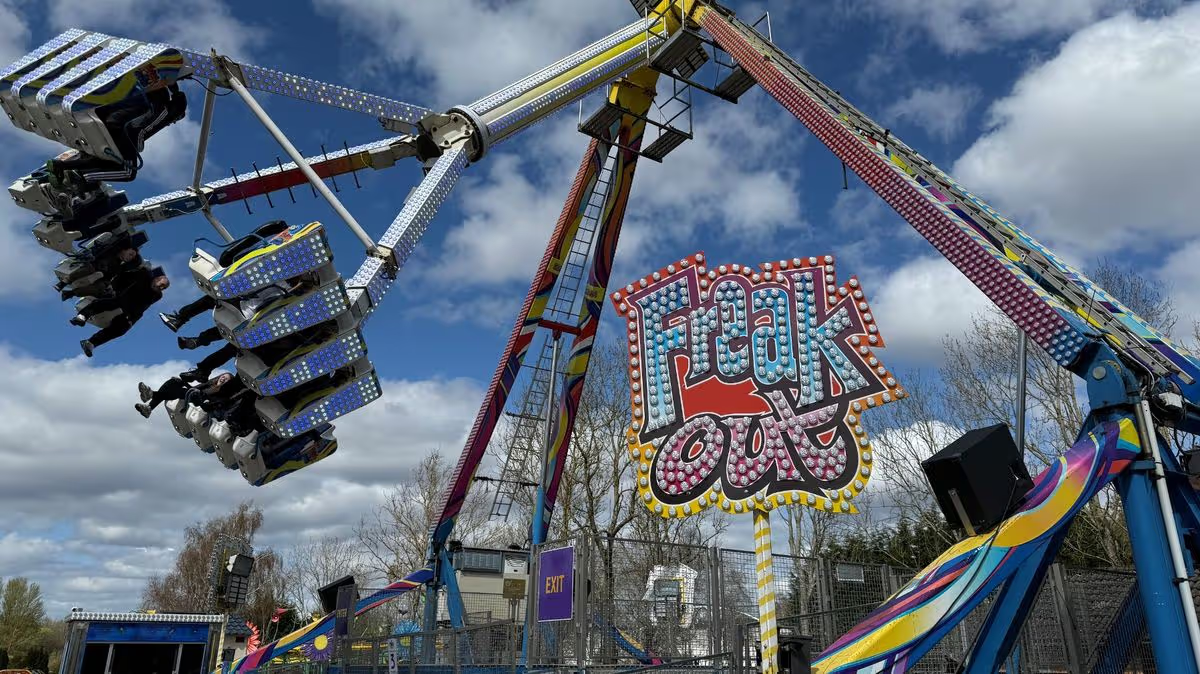
This summer new rides have been added to the Theme Park and all the favourite attractions will be open including Amazonia tropical indoor rainforest with lots of exotic plants and animals, Devil’s Island Adventure Golf, Cosmic Bowl, a ten-pin bowling alley, and Krazy Congo Soft Play.
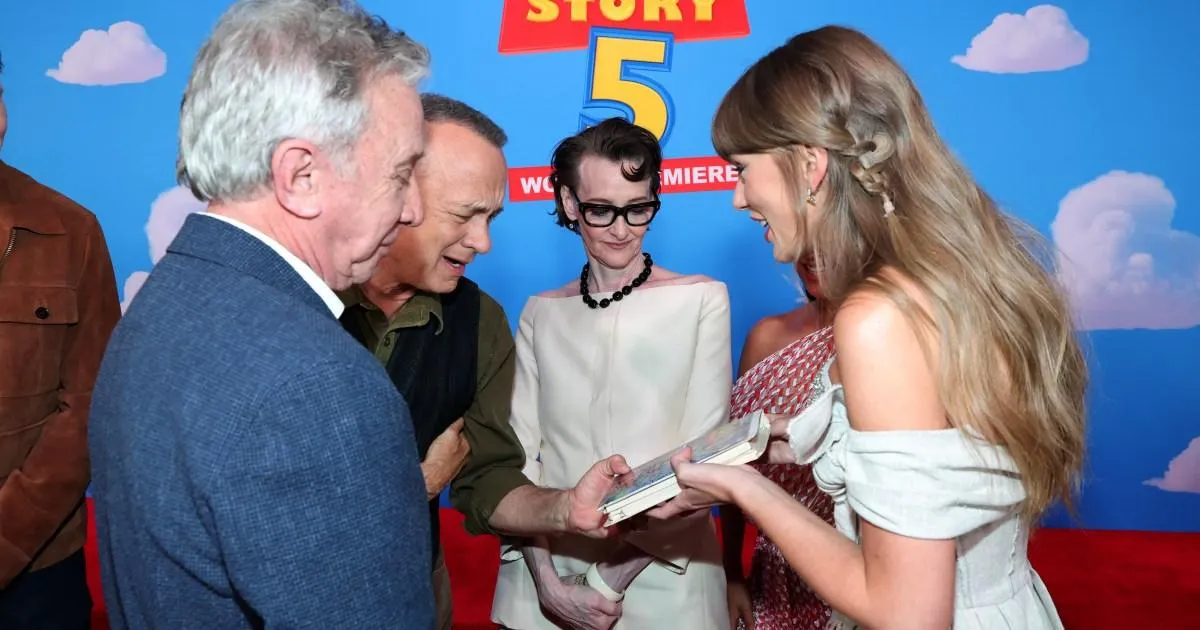
The Grammy-winning artist rocked up to the Toy Story 5 premiere in Los Angeles yesterday, where she nailed the method dressing trend, loved by celebs from Zendaya to Ariana Grande.
She was later joined by Randy Newman (who has scored every film in the franchise) for a duet of You’ve Got a Friend in Me. But that’s an iconic story for another day.
Advertisement
In terms of her outfit, Taylor understood the assignment, wearing a patchwork mini dress from Erdem’s fall 2026 collection — a subtle nod to Jessie, her favourite cowgirl.
The sculptural dress featured a strapless bodice with statement bows and was embellished with gems arranged in a floral style.
The skirt was complete with different floral fabrics, which provided the patchwork effect, and finished with raw hems.
The Renaissance-esque shape of the mini skirt created the sculpted effect. Similarly, the vintage fabrics gave the look a nostalgic-cum-futuristic feel.
Advertisement
Taylor Swift has served yet another iconic look (Picture: Getty Images)
While there’s no price tag on the dress, Erdem’s collection, titled The Imaginary Conversation, doesn’t come cheap.
From a £3,595 tulle fitted blazer to a £6,495 textured satin wrap coat, there’s nothing available under £495. Even a pair of stone earrings will set you back £575.
Alongside the Erdem dress, Tay donned a pair of Aleví Milano satin sandals that retail for £577.
She finished off the look with another tribute to Jessie: an antique diamond Sophie Jane horseshoe necklace.
Advertisement
Her other jewellery pieces included a pair of silver hooped earrings, and of course, her Kindred Lubeck engagement ring from fiancé Travis Kelce, estimated to be worth between $500,000 and over $1 million.
But perhaps the sweetest outfit addition? Instead of a dainty clutch bag, Taylor opted for her own vintage VHS copy of Toy Story.
After the photo call, where she posed alongside actors Tom Hanks and Joan Cusack (who voice Woody and Jessie), she asked the Toy Story legends to sign the video.
Taylor brought her original VHS copy of Toy Story to the event (Picture: Getty Images)
The Toy Story premiere isn’t Taylor’s only epic recent look — she’s been serving plenty of fits over the last month or two.
From her chic business-meets-pleasure fit in New York, which literally cost more than most of us will ever earn, to her bridal pleated white skirt and matching turtle neck, there was also the sweet prairie-style floral maxi dress she wore on a date with Travis.
However, not much else is known about the ceremony, as Taylor and Travis are reportedly being very cloak-and-dagger about the event, even watermarking invites to ensure every detail stays under wraps.
What we do know is that, with Taylor and Travis being one of the most famous couples on the planet — plus with celebrity weddings getting more elaborate than ever — it’s likely going to be an unforgettable event.
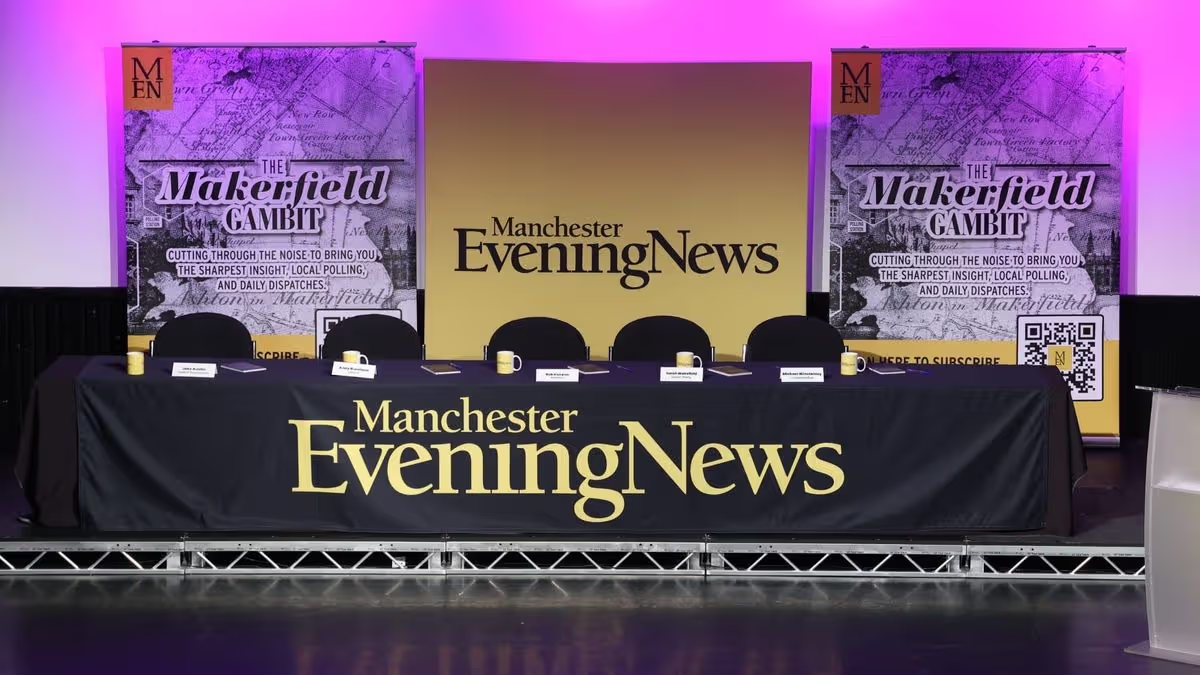
As well as our MEN hustings, we’ll also be bringing you updates from the Makerfield by-election campaigns and the wider politics events of the day.
Labour have now accused Reform of “dragging politics into the gutter” after one of the party’s councillors posted a fake poll about the by-election.
Sarah Mason claimed Reform and Labour are neck-and-neck a week out from polling day, with both candidates at 44 per cent. The Scarborough councillor has now deleted the post.
Advertisement
A Labour Party Spokesperson, responding to reports of Reform misinformation, said: “Reform are dragging politics into the gutter. They’re stooping to new lows online because they know Robert Kenyon isn’t fit to be an MP – yet they won’t admit it.
“Instead of spreading misinformation online they should be forcing their candidate to apologise to the public for the vile comments he’s made about women and disgusting false narratives he’s peddled over the Manchester Arena bombing.
“While Reform continues to be mired in scandal and they reach for desperate underhand tactics, Labour’s Andy Burnham is determined to deliver the investment and fairer future all communities across Makerfield deserve. Send Reform packing next week – vote for Labour’s Andy Burnham on Thursday 18 June.”





















































You must be logged in to post a comment Login