

Crypto World
Ripple Whales Control Nearly 70% of Supply as XRP Eyes Major Breakout


XRP climbed past $1.50 on Thursday as large holders added to their positions and traders reacted to fresh movement around the US CLARITY Act.
According to data shared by Santiment, the asset’s largest holders are sitting on more of the token than they have in eight years, with wallets holding at least 10 million XRP now controlling a combined 45.83 billion tokens, worth roughly $68.5 billion.
The Numbers Behind the Move
Santiment’s data shows that those whales collectively account for 68.5% of XRP’s circulating supply. That is not a minor data point, since a handful of large holders controlling such a large portion of any asset means their conviction often matters more than retail flow, and right now they appear to be betting on something specific.
That something could most likely be the Digital Asset Market Clarity Act, which was passed on May 14 by the US Senate Banking Committee 15-9 in a bipartisan vote. This cleared it for the next stage in Congress after months of delays.
The market response was immediate, with XRP posting gains of more than 7% on the day, going from around $1.43 to $1.54, a level it last hit in March. One analyst on X, writing under the handle Moon God, argued the move had broken a descending technical pattern that had been forming since February and called $1.52 and $1.60 as the next levels to watch.
Meanwhile, permabull EGRAG Crypto pointed to $1.80 as a more meaningful target, adding that XRP needs to reclaim and hold that level as macro support to confirm structural strength.
On the ETF side, the picture was also moving, with data from SoSoValue showing XRP ETFs pulling in $18.52 million in net inflows for the day, outpacing Ethereum and Solana ETFs, and improving significantly on the $5.31 million from May 12 and the zero showing on May 13.
Bitwise’s XRP product alone accounted for $7 million, while Canary Capital’s XRPC fund added $4.87 million. Cumulative net inflows across all XRP ETF products have now reached $1.37 billion.
XRP Cools After CLARITY Jump
At the time of writing, XRP was trading around $1.46, up more than 5% in the past week and over 7% across 30 days but still some 5% off the high it hit following the CLARITY vote.
There is one note worth flagging, though: leverage on Binance has climbed to its highest level in two months, with the Estimated Leverage Ratio reaching approximately 0.179. That kind of build-up makes the market more sensitive to sudden moves in either direction.
The post Ripple Whales Control Nearly 70% of Supply as XRP Eyes Major Breakout appeared first on CryptoPotato.


Privacy-focused messaging app Signal has signaled it could exit Canada if forced to comply with the government’s proposed lawful access framework. The legislation, Bill C-22, would require electronic service providers to enable surveillance capabilities and retain user metadata for up to a year, part of a broader effort to aid law enforcement in investigating crimes such as terrorism and child exploitation.
In an interview with The Globe and Mail, Signal’s vice president of strategy and global affairs, Udbhav Tiwari, argued that the bill could threaten end-to-end encryption and leave private messaging services vulnerable to cyberattacks. He said Signal would rather pull out of Canada than compromise on the privacy commitments it has made to users.
Key takeaways
- Bill C-22 would compel tech and messaging providers to build surveillance mechanisms and retain certain user metadata for up to a year to assist law enforcement.
- Signal warns the legislation could undermine encryption and expose private communications to external threats, potentially prompting an exit from Canada.
- The bill is not law yet; parliamentary committee hearings began on May 7 and are ongoing.
- Industry players have mixed reactions: Meta welcomed selective provisions for evidence gathering but raised privacy and cybersecurity concerns, while Windscribe signaled it would consider following Signal if the bill passes.
- The debate echoes broader privacy-security tensions seen in Europe, notably around chat control and client-side scanning proposals.
Encryption under pressure as Bill C-22 advances
The bill, introduced in March as part of a wider regulatory package, would mandate electronic service providers to equip themselves with surveillance capabilities and retain metadata for a defined period. Proponents say the framework would bolster law enforcement’s ability to investigate serious crimes, from terrorism to child exploitation. Critics, however, warn that such measures could erode user privacy and undermine the security guarantees that underlie popular encrypted messaging apps.
Signal’s position highlights a broader industry risk: if end-to-end encryption becomes compromised or undermined by compelled access, the usability and trust in private messaging could be diminished. The Globe and Mail reported that Udbhav Tiwari described the bill as potentially creating vulnerabilities that could be exploited by hackers, undermining the privacy promises Signal offers to its users.
Public discussion around Bill C-22 has already touched on comparisons with the European Union’s controversial privacy proposals, which critics say could push for client-side scanning or other measures that would weaken encryption. The debate frames a larger, ongoing tension between privacy protections and increasing government capability to monitor communications in the name of safety and security.
Industry responses and political context
Tech giants have weighed in with nuanced takes. Meta, for its part, welcomed certain aspects of Bill C-22, arguing that it would provide law enforcement with a clearer legal framework to obtain evidence and protect public safety, while also signaling concerns about the potential impact on Canadians’ privacy and cybersecurity. The company’s stance reflects a common industry position: support for effective enforcement tools, tempered by a demand for clear privacy safeguards.
Canada’s political scene has also spotlighted the privacy-versus-security debate. A post by a Conservative Party Member of Parliament on X asserted that “every member of Parliament in the country uses Signal primarily for its safety and privacy features,” contending that the bill would undermine that privacy. In response, Signal’s leadership indicated it would resist any mandate that compromises user confidentiality.
The bill is not yet law; it must pass through parliamentary review and receive royal assent before taking effect. Committee hearings, which began on May 7, are still underway, signaling that the legislative process could stretch as lawmakers weigh the balance between enforcement capabilities and privacy protections.
Beyond Signal, Windscribe, a VPN provider, warned that the law’s requirements could force providers to log identifying data. In a post responding to The Globe and Mail coverage, Windscribe said it would likely follow Signal in reconsidering its Canadian operations if C-22 advances, arguing that the current draft threatens the core privacy premise of VPNs and similar services.
What comes next for privacy, security, and startups
The unfolding debate places Canada at a crossroads similar to regulatory moves in other regions. As lawmakers refine Bill C-22, observers will be watching not only whether the bill gains passage but how it will affect service design, data retention practices, and cross-border service provision for privacy-centric apps and networks. For developers and users who rely on strong encryption, the central questions are whether the proposed framework can preserve privacy guarantees while providing lawful access tools for investigators, and how firms will operationalize those demands without creating exploitable weak points.
Industry watchers should monitor the committee hearings for clues about potential amendments, as well as any clarifications from tech platforms on how they would implement or resist compliance. The regulatory trajectory in Canada could influence similar debates elsewhere, shaping how privacy-preserving services balance user trust with perceived public safety needs in the months ahead.
Readers should keep an eye on the next set of committee proceedings and any official statements from Signal, Windscribe, and other stakeholders as they gauge how far the government intends to push lawful access measures and what that means for encryption-centric communication tools going forward.
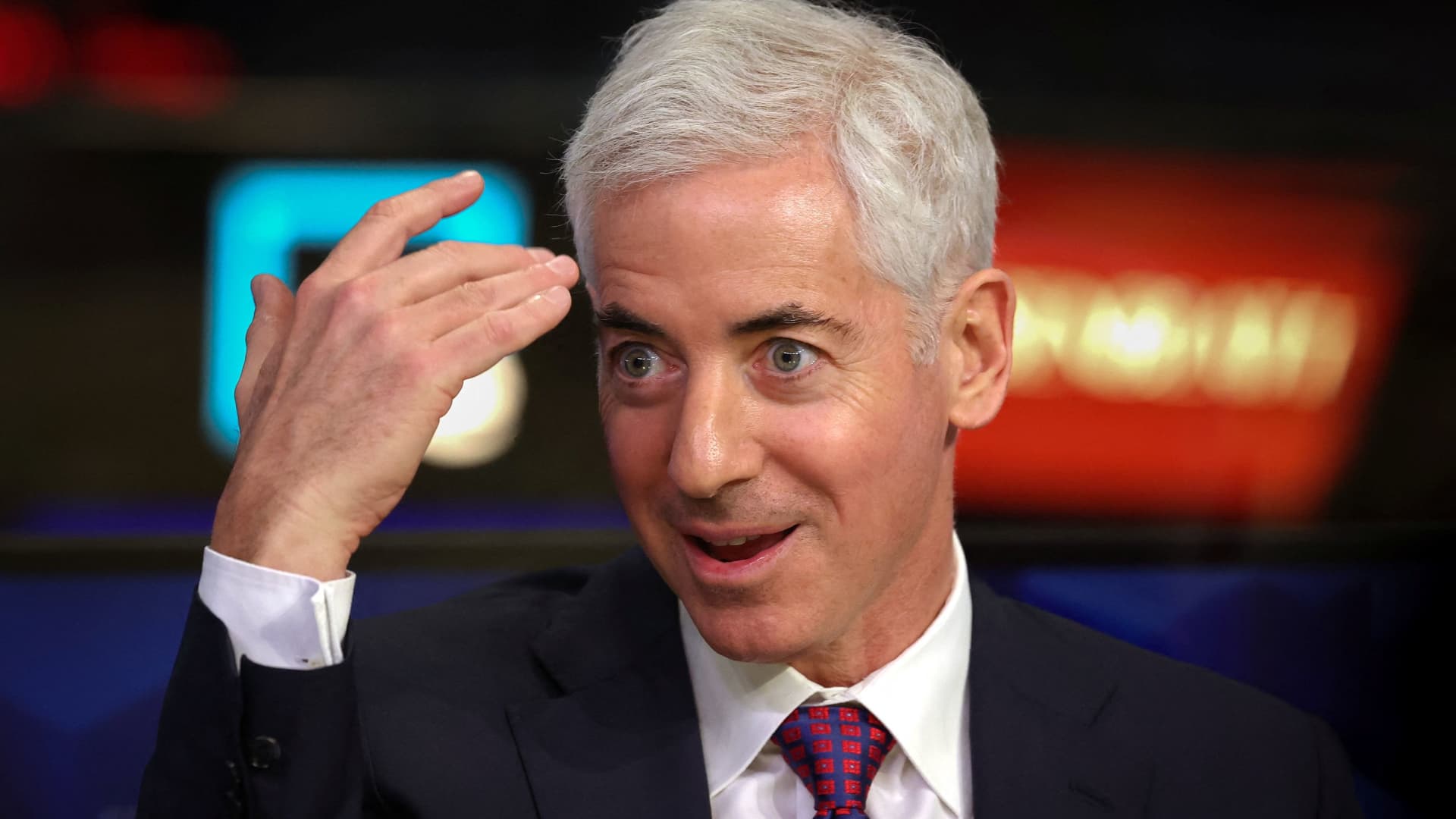
Bill Ackman, founder and CEO of Pershing Square Inc., attends his company’s IPO at the New York Stock Exchange (NYSE), in New York City, U.S., April 29, 2026.
Brendan McDermid | Reuters
Bill Ackman’s Pershing Square has built a position in Microsoft, the billionaire hedge fund manager said Friday in a post on X.
“As two of the largest forces in equity markets — growing index ownership and increasing amounts of capital controlled by extremely short-term-oriented, leveraged, volatility-intolerant investors — converge, we have found occasional opportunities to acquire some of the most dominant long-term compounding franchises at attractive valuations,” the post said. “In our 13F which we will file later today, we will disclose a new position in Microsoft, a company we have followed for many years now offered at a highly compelling valuation.”
While Ackman didn’t note the size of his stake in the tech giant, he called it a “core holding.”
Subscribe to CNBC PRO for exclusive insights and analysis, and live business day programming from around the world.
Crypto World
The CLARITY Act Just Cleared the Senate Banking Committee, The Most Important Day in Crypto History?

The Senate Banking Committee passed the Digital Asset Clarity Act on May 14, 2026, by a 15-9 vote, and crypto markets responded immediately. Bitcoin climbed to $81,965 before retracing, while crypto-linked equities posted their sharpest single-session gains in months.
Coinbase surged 9.10%, MicroStrategy jumped 8.16%, and Robinhood added 6.16% as the market priced in what could be the most consequential piece of U.S. crypto regulation ever enacted.
The analytical question worth asking right now: is this a structural re-rating or a relief rally front-running a bill that still has to survive a full Senate floor vote and a conference reconciliation process?

How the DACA’s SEC-to-CFTC Framework Triggered a Short Squeeze, Not Just a Rally
The DACA bill’s journey through committee has been closely tracked by traders for months, and the May 14 vote delivered the specific structural clarity that the market had been pricing as a tail risk.
The core mechanism is the SEC vs CFTC jurisdictional split: the bill defines which digital assets fall under the SEC as securities and which fall under the CFTC as commodities, ending years of enforcement-by-ambiguity that kept institutional capital on the sidelines.
The House version, which passed 294-134 last year, grants the CFTC exclusive jurisdiction over spot digital commodity markets while preserving SEC authority over investment contract assets.
BREAKING: — Bitcoin Magazine (@BitcoinMagazine) May 14, 2026
 Senate Banking Committee PASSES the Clarity Act in 15-9 vote.
The bill now goes to the full Senate. pic.twitter.com/TCs6T283y2
The decentralization threshold is the operative test, if a network meets it, the underlying token shifts from the SEC’s securities regime to the CFTC’s commodity framework. That distinction is worth naming, because it is precisely what triggered the short squeeze.
Assets previously tagged as unregistered securities under the SEC’s enforcement posture, including tokens on networks with high decentralization scores, were among the most heavily shorted positions in the market heading into the vote.
When the committee cleared the bill with bipartisan support, over $250 million in short positions were liquidated within four hours.
Discover: The best pre-launch token sales
Can Bitcoin Price Hold $81,000 and Altcoins Extend Gains If the Clarity ACT Bill Advances to the Senate Floor?
Bitcoin price was already pricing in the vote before the result landed. At press time, it sits at $80,500. The first meaningful supply ceiling on any continuation move is $85,000, the level that marked the breakdown zone during the February-to-March correction.
A clean advance to a full Senate floor vote with the core SEC vs CFTC framework intact extends short-covering into new buying.
Bitcoin price reclaims $85,000 and altcoins post a second leg higher. Tokens on decentralized networks with a high probability of commodity classification are the primary beneficiaries. The re-rating is real and durable in that scenario.
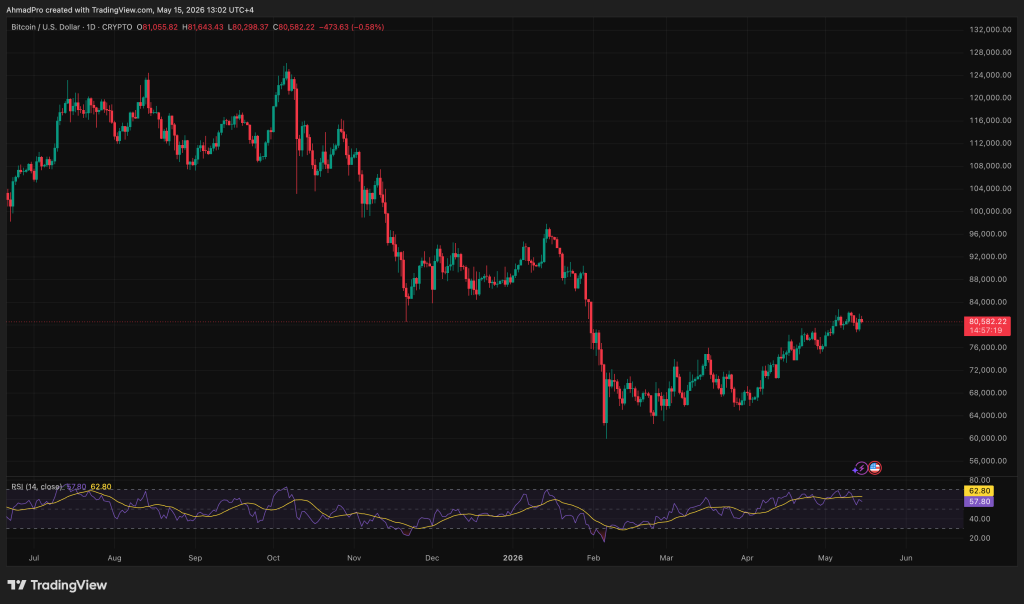
If the bill clears committee but faces amendment pressure on stablecoins, conflict-of-interest rules, and CBDC restrictions, passage odds stabilize in the 60 to 70% range, and markets chop sideways between $78,000 and $84,000 while Senate arithmetic becomes clearer.
If cloture math breaks down entirely, the bill needs 60 votes, and a Republican-only coalition falls short, momentum reverses sharply, short positions rebuild, and the short squeeze gains give back in full.
The bipartisan committee vote is the most credible evidence for the bull case. Democratic Senators Ruben Gallego of Arizona and Angela Alsobrooks of Maryland crossing party lines in committee is a meaningful signal about floor vote viability. Not a guarantee.
Watch the $84,500 daily close on Bitcoin. Not the headline vote count.
Discover: The best crypto to diversify your portfolio with
The post The CLARITY Act Just Cleared the Senate Banking Committee, The Most Important Day in Crypto History? appeared first on Cryptonews.


Cross-chain liquidity protocol THORChain appears to have been compromised in a coordinated exploit spanning at least four major networks, with stolen funds already exceeding $10 million, according to onchain investigator ZachXBT.
In an alert posted on Telegram on Friday, the sleuth said that THORChain was likely exploited on Bitcoin, Ethereum, BNB Chain, and Base. ZachXBT has not yet attributed the exploit to a known threat actor. THORChain has paused trading after the suspected exploit.
This is a developing story.
The post ZachXBT Flags Multi-Chain THORChain Exploit as Stolen Funds Surge Past $10 Million appeared first on BeInCrypto.


The cross-chain liquidity protocol paused all trading and signing on Friday after an attacker drained roughly $10.8 million across Bitcoin, Ethereum, BSC, and Base.
Crypto World
Ethereum News: Vitalik Buterin ‘Puts Skin in the Game’ with $113K Privacy Pools Transfer
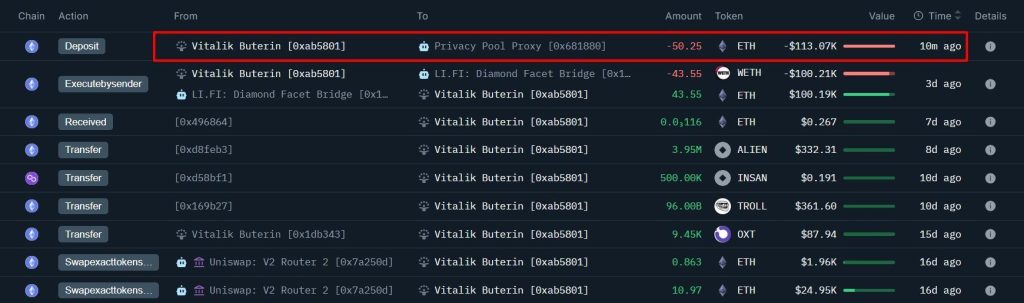
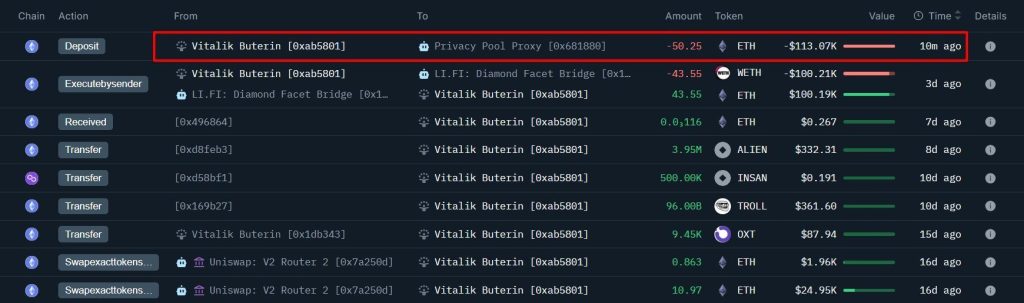
In the latest news, Ethereum co-founder Vitalik Buterin transferred 50.25 ETH, approximately $113,000 at current prices, through Privacy Pools, the compliance-aware privacy protocol he co-authored in a 2023 research paper, publicly validating the tool with real capital rather than white-paper advocacy.
The move comes weeks after 0xbow.io launched the protocol on Ethereum mainnet on March 31, 2025, positioning it as a regulatory bridge between user privacy and AML obligations. Buterin putting skin in the game is a signal, not a transaction.
Bullish signal for compliant privacy infrastructure on Ethereum.
The amount is deliberately modest relative to Buterin’s holdings; this is a functional demonstration and a public statement, not a liquidity event.
The central question the transaction raises is whether Privacy Pools can thread the needle that Tornado Cash could not: preserving meaningful Ethereum privacy while satisfying the on-chain security and regulatory standards that led to its predecessor’s sanction.
Discover: The best pre-launch token sales
How Privacy Pools Work Mechanically, and Why the Zero-Knowledge Architecture Changes the Compliance Calculus
The mechanism here is worth understanding precisely. Privacy Pools uses zero-knowledge proofs to allow a user to demonstrate that their withdrawal belongs to an approved “association set”, a curated subset of deposits filtered by off-chain analysis and encoded on-chain, without revealing which specific deposit was theirs. The user proves the fund’s cleanliness without surrendering their identity.
Those are not the same thing as full disclosure, and the distinction matters enormously for the regulatory argument.
Tornado Cash, sanctioned by OFAC in August 2022, offered no such selectivity. Every deposit was mixed indiscriminately, which meant honest users shared anonymity sets with wallets tied to North Korea’s Lazarus Group and other sanctioned actors, and regulators had no mechanism to distinguish between them. Privacy Pools encodes the distinction on-chain from the start.
@0xprivacypools v2 public testnet is now live! you can now make private transfers within the pool that don't reveal any details! @0xmikemcc, product lead at @0xbowio has been interviewed by @mdoorfard at @EthCC in Cannes. — coinix (@coin_ix) May 14, 2026
 Watch the interview on YouTube: https://t.co/vuk2hUdfcA pic.twitter.com/CorrQlkro1
The 0xbow implementation adds a semi-permissive operational layer: initial deposits are capped at 1 ETH per address, and the team retains the ability to pause new association sets if clear sanctions or AML issues emerge, while keeping withdrawals permissionless.
As of launch week, the protocol recorded more than 21 ETH across 69 individual deposits, including Buterin’s. The anonymity set is small but growing. The white paper argues that regulators could require users to produce proofs derived from “good” association sets rather than demanding full transaction histories, making compliance audits more targeted and less invasive than current surveillance-first approaches to Ethereum privacy.
Ethereum news: Why Buterin’s Privacy Pools Move Matters Beyond the $113K Transaction
The post-Tornado Cash landscape left Ethereum’s privacy infrastructure in an awkward position: the most widely used privacy tool was sanctioned, and no credible replacement existed.
Privacy Pools is the most architecturally serious attempt to fill that gap, and Buterin’s public use of it shifts it from a research proposal to a live, endorsed protocol in a single transaction.
The broader ecosystem context matters here. The CLARITY Act faces more than 100 amendments as legislators continue debating the regulatory perimeter around digital assets, including privacy tools. How Congress and OFAC ultimately treat selective-disclosure protocols will determine whether Privacy Pools becomes infrastructure or a footnote.
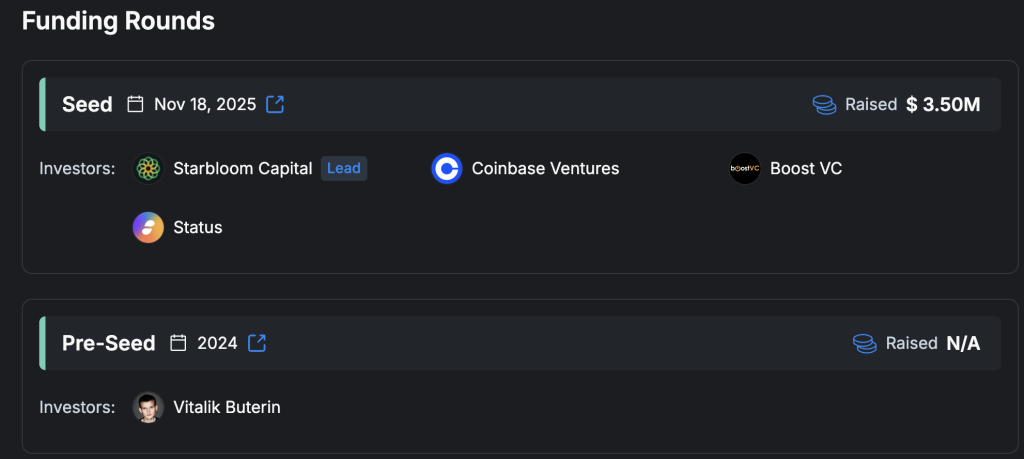
0xbow has backing from Number Group, BanklessVC, and Public Works, Coinbase Venture signaling VC conviction that regulation-friendly privacy is a distinct infrastructure category worth building toward.
The roadmap includes extending support for ERC-20 assets and integrating wallet and compliance dashboard tooling, which would dramatically expand the protocol’s reach beyond ETH-native users.
Meanwhile, Ethereum ecosystem activity continues to carry meaningful financial stakes for institutions watching on-chain developments closely.
If regulators treat Privacy Pools-style proofs as a valid compliance mechanism, the protocol becomes a template for the next generation of privacy tooling across DeFi.
If OFAC applies the same blanket logic it used against Tornado Cash, it forecloses the compliant privacy thesis entirely and pushes privacy tooling back underground. The cryptography is settled. The regulatory verdict is not.
Buterin’s 50.25 ETH transfer is the most credible public endorsement Privacy Pools has received. The association-set governance question is the variable that determines whether it survives regulatory scrutiny. That question runs directly through OFAC, and through whatever framework emerges from the current congressional markup.
Discover: The best crypto to diversify your portfolio with
The post Ethereum News: Vitalik Buterin ‘Puts Skin in the Game’ with $113K Privacy Pools Transfer appeared first on Cryptonews.


The South Korean bank announced plans for a won-pegged stablecoin, blockchain remittances and tokenized securities.
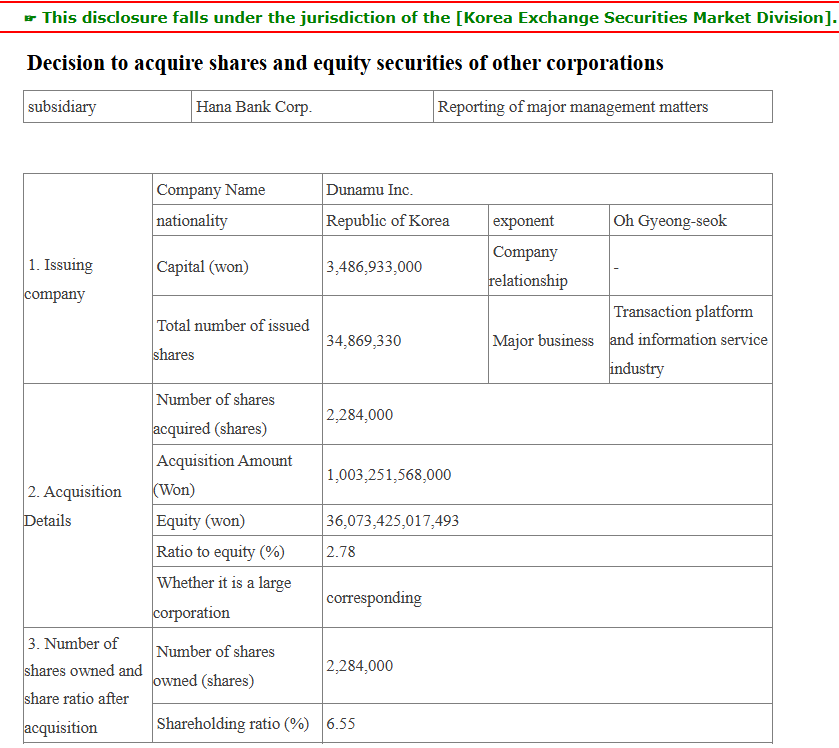
Major South Korean financial conglomerate Hana Financial is buying a stake in Dunamu, the operator of the crypto exchange Upbit, in its latest venture into the digital assets sector, amid a broader trend of traditional financial institutions wading into the digital assets market.
In a regulatory filing on Friday, Hana Financial announced it is buying more than 2.2 million shares in Dunamu, or roughly 6.55% of the company, from investment firm Kakao Investment, worth over 1.003 trillion Korean won ($668 million).
Hana Financial’s 6.55% stake from Kakao makes it the fourth-largest Dunamu shareholder. South Korean outlet The Chosun Daily reported last September that major shareholders of Dunamu include its chairman Song Chi-hyung with 25.5%; Vice Chairman Kim Hyoung-nyon with 13.1%; Kakao with 10.6% and Woori Technology Investment with 7.2%.
Hana Financial said in the filing that the acquisition is to secure “competitiveness in new finance through strategic equity investment.” At the same time, Kakao also filed regarding the sale and said it was keeping 1.4 million shares on its books while offloading the rest to secure “funds for future investments.”

Hana Financial is buying more than two million shares in Dunamu, or roughly 6.55% of the company. Source: DART
A growing number of banks and traditional financial institutions have started to dip their toes into crypto after years of skepticism. Mirae Asset Consulting, an affiliate of South Korean multinational financial services company Mirae Asset Group, acquired a controlling stake in crypto exchange Korbit in February.
Earlier in the year, fellow exchange Coinone announced it was exploring the sale of shares held by its chairman, with local financial institutions and foreign exchanges rumored to be circling. South Korean tech company Naver Financial also agreed last year to acquire Dunamu through a share swap, bringing the Upbit operator under its umbrella.
Hana Financial very active in crypto sector
The financial conglomerate has been very active in the crypto sector. Hana Financial signed a trilateral memorandum of understanding in April to launch a blockchain-based remittance system with POSCO International and Dunamu.
Related: South Korea crypto holdings halve in a year as investors turn to stock market
Meanwhile, in March, it struck a deal with the UK’s Standard Chartered Group to collaborate on global financial and digital asset markets, and also inked agreements with USDC issuer Circle and major US crypto exchange Crypto.com to promote stablecoin-based payments for foreign visitors in South Korea.
Magazine: eToro founder timed Bitcoin top perfectly due to belief in 4 year cycles


OKX has moved closer to securing a major foothold in South Korea after entering talks to acquire a substantial stake in local crypto exchange Coinone alongside Korea Investment & Securities.
Summary
- OKX and Korea Investment & Securities are reportedly seeking roughly 20% stakes each in South Korean crypto exchange Coinone.
- The reported deal would make OKX the second overseas crypto exchange to hold a major stake in a South Korean trading platform after Binance’s investment in Gopax.
- South Korean authorities are discussing new ownership limits for crypto exchanges as Hana and Mirae Asset pursue separate investments in local trading firms.
According to Yonhap News Agency, OKX and Korea Investment & Securities are each seeking to purchase roughly 20% of Coinone.
The report stated that the exchange is expected to issue new shares for the transaction rather than transfer existing holdings, a structure that would likely leave Coinone’s current management intact.
If regulators approve the deal, OKX would become the second overseas crypto exchange to take ownership in one of South Korea’s major trading platforms after Binance acquired a stake in Gopax.
Among South Korea’s licensed exchanges, Coinone remains part of the country’s small group of platforms permitted to offer fiat-to-crypto trading services. Trading activity in the domestic market, however, is still heavily concentrated around Upbit and Bithumb.
Arriving within hours of another major investment announcement, the reported OKX transaction follows confirmation from banking group Hana Financial Group that it plans to acquire a $670 million stake in Dunamu, the parent company behind Upbit.
Earlier this year, financial conglomerate Mirae Asset also announced plans to buy a 92% stake in Korbit, another exchange operating within the country’s top tier.
At the same time, South Korean lawmakers are discussing ownership restrictions for digital asset firms under the proposed Digital Asset Basic Act. Local media reports said authorities are considering limiting corporate ownership in crypto exchanges to 34%, while individual shareholders could face a 20% ceiling.
Yonhap reported that Coinone’s current ownership structure may already place attention on those proposed limits. The One Group holds 34.3% of the exchange, while founder Cha Myung-hoon owns 19.14%. Cha is also identified as the largest shareholder in The One Group.
Gaming company Com2uS Holdings controls another 21.95% stake in Coinone, according to Yonhap, while affiliated investment unit Com2uS Plus owns 16.47%.
OKX expands beyond trading infrastructure
The Coinone talks add to a period of aggressive expansion for OKX across payments, institutional services, and blockchain infrastructure.
As previously reported by crypto.news, in Europe, the exchange recently disclosed transaction data from its OKX Card, a stablecoin-linked payment product launched with Mastercard and Circle support. According to OKX, grocery purchases accounted for 26% of transactions made through the card during its first month across the European Economic Area, while restaurants and online marketplaces represented another large share of activity.
Separately, OKX unveiled its Agent Payments Protocol in April, an open framework designed to allow AI agents to complete commercial actions such as payments, escrow, settlement, and dispute handling across multiple blockchains. OKX said the protocol was developed with support from ecosystems including Ethereum, Base, Sui, Aptos, and Optimism.
Institutional services have also remained part of the exchange’s recent expansion plans. Through a partnership with BitGo, OKX integrated off-exchange settlement services in the U.S., allowing institutional clients to trade while assets remain under third-party custody.
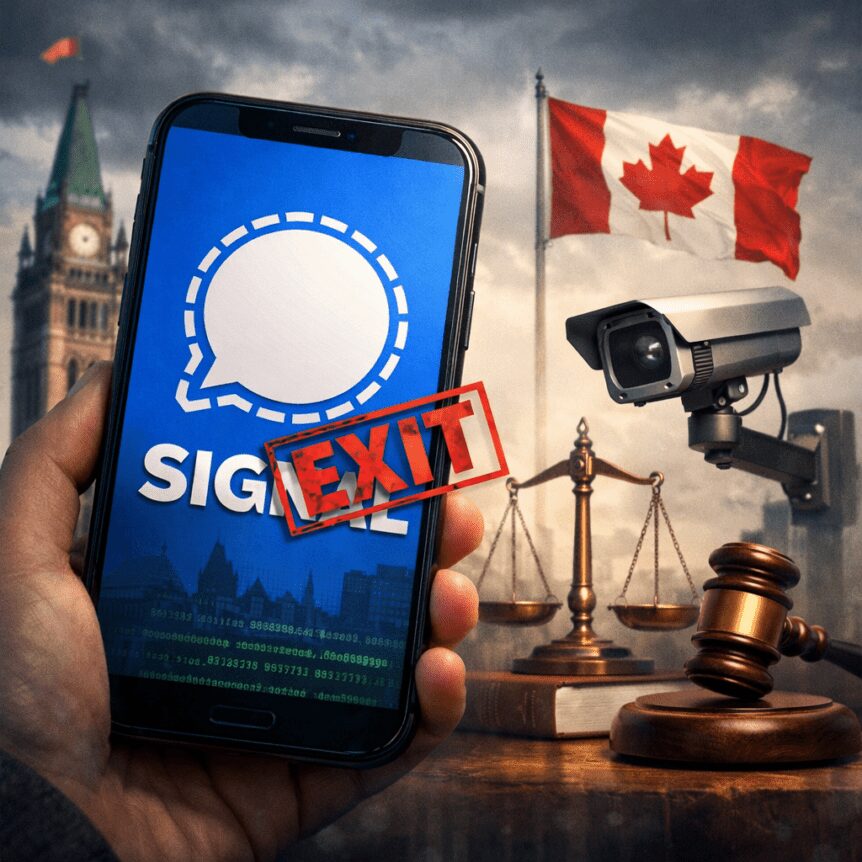
Canada’s privacy-focused messaging app Signal has signaled it may exit the Canadian market if compelled to comply with Bill C-22, the government’s proposed lawful access legislation. The draft bill would require electronic service providers to build surveillance capabilities and retain certain user metadata for up to a year, underscoring a key policy tension between national security objectives and strong end-to-end encryption.
In an interview with The Globe and Mail, Signal’s vice president of strategy and global affairs, Udbhav Tiwari, warned that the bill could threaten encryption and leave private messaging services more vulnerable to cyberattacks. Bill C-22 was introduced in March as part of a broader regulatory package intended to aid law enforcement investigations into crimes such as terrorism and child exploitation.
The debate has drawn criticism from privacy advocates and mirrors wider concerns within the European Union around encryption and compelled access. Critics point to potential privacy trade-offs and the risk of creating exploitable weaknesses in communications platforms. On social media, Canadian Conservative Party MP Jacob Mantle argued that many MPs rely on Signal for safety and privacy, contending that the bill would allow the government to read messages and undermine trust in private communications.
Tiwari said Signal would “rather pull out of the country” than compromise on the privacy promises it has made to users. He warned that the proposal could enable hackers to exploit built-in vulnerabilities in electronic systems, turning private messaging services into possible targets for foreign adversaries.
The bill remains pending and is not law yet; committee hearings began on May 7 and are ongoing as part of the legislative process. Meanwhile, tech platforms have offered mixed reactions. Meta Platforms welcomed certain aspects of Bill C-22, noting that it would give law enforcement a framework to obtain critical evidence and protect public safety, while also raising concerns that some provisions could affect Canadians’ privacy and cybersecurity.
Windscribe, a privacy-focused VPN provider, joined Signal in signaling concern. In a post responding to The Globe and Mail, Windscribe said it would follow Signal’s potential move out of Canada, arguing that the law would require the logging of identifying user data and stifle privacy protections. The company criticized the current text as incompatible with its focus on user privacy and warned that headquarters in Canada could face direct regulatory pressures and higher operating costs if the bill passes.
Cointelegraph reached out to Signal for comment and will update the article if the company provides a response. The broader policy discussion surrounding Bill C-22 sits within a wider, global debate over how to balance law enforcement access with robust encryption and privacy protections. Observers note that the Canadian process could influence how privacy tech firms operate in Canada and how cross-border services approach compliance obligations in a jurisdiction that contemplates sweeping data-retention and access requirements.
Key takeaways
- Bill C-22 would compel electronic service providers to enable lawful-access capabilities and retain certain user metadata for up to one year, shaping how digital communications can be monitored by authorities.
- Signal has threatened to exit Canada rather than compromise on encryption and user privacy, highlighting potential operational and strategic shifts for privacy-centric services in regulated markets.
- Windscribe’s response indicates that a similar trajectory could affect VPN providers and other privacy tools, with possible implications for data logging and local data retention obligations.
- The bill is not law yet; parliamentary committee hearings began May 7 and are ongoing, leaving significant regulatory uncertainty for industry and users.
- Industry responses are divided: some tech platforms support enhanced law-enforcement access, while others warn of privacy and cybersecurity risks and potential compliance burdens for global services.
Bill C-22: Scope, process, and practical implications
Bill C-22 is positioned as part of Canada’s effort to equip law enforcement with timely and effective tools to investigate serious crimes. If enacted, electronic service providers would be required to design and deploy technical capabilities that enable lawful access to communications and to retain relevant user metadata for an extended period. The stated objective is to bolster investigations into terrorism and child exploitation, among other offenses. However, the proposal raises practical questions for platform operators, particularly around how to preserve security and privacy while meeting new obligations.
From a regulatory compliance perspective, the bill would introduce new obligations that could influence licensing, oversight, and ongoing conformity assessments for digital service providers operating in Canada. For financial institutions and crypto firms with Canadian operations, the framework could intersect with AML/KYC expectations and cross-border data handling requirements, prompting reassessment of data localization, incident response, and vendor management practices.
Encryption, privacy, and security tensions in a global context
The proposal sits at the center of a broader policy discourse about encryption integrity and lawful access. Signal’s public stance reflects a principled commitment to end-to-end encryption and privacy architecture, arguing that mandated backdoors or scan capabilities can introduce systemic risks and create vulnerability windows that adversaries might exploit. The debate resonates with discussions in the European Union around proposals that would enable scanning and data access at the client side, which have faced stiff opposition on privacy and security grounds. The Canadian consideration therefore contributes to a larger policy milieu in which encryption remains a pivotal issue for both private sector innovation and public safety.
For institutions and market participants, the evolving stance on lawful access raises questions about cross-border operations, data-residency requirements, and the extent to which regulatory divergence may affect the resilience of communications infrastructure. While some policymakers emphasize the public-safety rationale, industry observers highlight the risk that increased monitoring capabilities could undermine trust in digital services and complicate compliance for global platforms that rely on end-to-end encryption by default.
Industry responses, oversight, and the regulatory horizon
The bill’s reception among tech platforms reflects a split between public-safety objectives and privacy protections. Meta’s public position acknowledged the potential benefits of a robust evidentiary framework for enforcement while cautioning that certain provisions could impact Canadians’ privacy and cybersecurity. The company’s stance illustrates how large platform operators may seek to balance lawful-access objectives with user protections and risk management liabilities.
Signal’s leadership has framed the regulatory proposition as a fundamental privacy issue, suggesting that complying with C-22 could compromise user trust and the core privacy guarantees it offers. In this context, market participants that rely on private communications and privacy tools – including VPN providers like Windscribe – have sounded caution about operational viability and user data practices if such mandates become law.
From a compliance and risk-management standpoint, the unfolding legislative process requires careful monitoring by legal teams, regulators, and corporate governance functions across crypto firms and fintechs. Beyond the legal text, enforcement trajectories, rulemaking, and potential transitional provisions will determine how quickly and in what form any new requirements would apply to service providers and their affiliates. The current stage of hearings means significant policy refinement remains possible, with stakeholders attempting to influence the balance between investigative efficiency and privacy protections.
According to Cointelegraph’s coverage, the Canadian debate on lawful access is part of a broader global pattern in which regulators search for a workable equilibrium between security objectives and cryptographic integrity. For institutions, this signals a continuing need to assess regulatory exposure, update privacy-by-design practices, and adjust incident-response playbooks to reflect evolving requirements across jurisdictions.
As the legislative process advances, observers should watch for the clarifications that typically accompany committee stage, including definitions of service-provider scope, retention timelines, data-minimization principles, and the specific mechanisms by which access would be authorized and audited. The outcome will influence not only Canadian privacy and security norms but also the strategic choices of international platforms operating in Canada and other similarly situated markets.
Closing perspective: The Bill C-22 debate underscores the enduring tension between privacy preservation and public-safety imperatives in the digital era. For crypto firms, messaging platforms, and privacy services, the key questions revolve around enforceability, risk exposure, and the degree to which regulatory adaptations can be reconciled with robust cryptography and user trust. The path forward will depend on legislative negotiations, regulatory guidance, and how any final law addresses both the legitimate needs of law enforcement and the protections that underpin secure, private communications.

Pro-Dex: Still A Buy, But Don't Chase

Signal weighs exit from Canada amid lawful access bill

Different Gravy targets 2026 Queensland Derby via Flemington test

Manchester United reach agreement with Casemiro over contract clause amid transfer speculation

US brings back mandatory military draft registration

Steven Gerrard disagrees with Gary Neville over ‘shock’ Chelsea and Arsenal claim | Football


-

 Fashion7 days ago
Weekend Open Thread: Marianne Dress
-

 Fashion4 days ago
Coffee Break: Travel Steam Iron
-

 Fashion4 days ago
What to Know Before Buying a Curling Wand or Curling Iron
-

 Tech5 days ago
Auto Enthusiast Carves Functional Two-Stroke Engine from Solid Metal
-

 Politics4 days ago
What to expect when you’re expecting a budget
-
 Business6 days ago
Ignore market noise, India’s long-term story intact, say D-Street bulls Ramesh Damani and Sunil Singhania
-

 Politics6 days ago
Politics Home Article | Starmer Enters The Danger Zone
-

 Tech4 days ago
GM Agrees To Pay $12.75 Million To Settle California Lawsuit Over Misuse Of Customers’ Driving Data
-

 Crypto World5 days ago
CZ says US crypto rivals tried to block Trump pardon
-

 Crypto World6 days ago
PROS explodes 48% as Upbit and Bithumb listings ignite demand
-

 Entertainment7 days ago
YNW Melly Denied Bond Again Ahead Of Double Murder Retrial
-

 Tech3 days ago
GM agrees to $12.75M California settlement over sale of drivers’ data
-

 Crypto World7 days ago
Kraken Parent Seeks OCC Charter, Signaling Regulated Banking Access
-
Crypto World7 days ago
The Hantavirus Danger: Can a Potential Outbreak Spark a New Meme Coin Frenzy?
-

 Sports7 days ago
After Waka Waka, Shakira now drops first teaser for FIFA WC 2026 song | FIFA World Cup 2022
-
Crypto World2 days ago
Bitcoin Suisse expands with Digital Asset License and Investment Business Act Registration Approval in Bermuda
-

 Tech7 days ago
The Xperia 1 VIII leak finally gives Sony some swagger
-
 Crypto World6 days ago
Solana UFO Meme Coins Surge After Pentagon Reveals Alien Files
-

 Entertainment6 days ago
Bethenny Frankel Says She Loves ‘Torturing’ Men
-

 Sports7 days ago
Why Nathan Mackinnon Remains the Hart Trophy Favourite over Connor McDavid and Nikita Kucherov | NHL
You must be logged in to post a comment Login