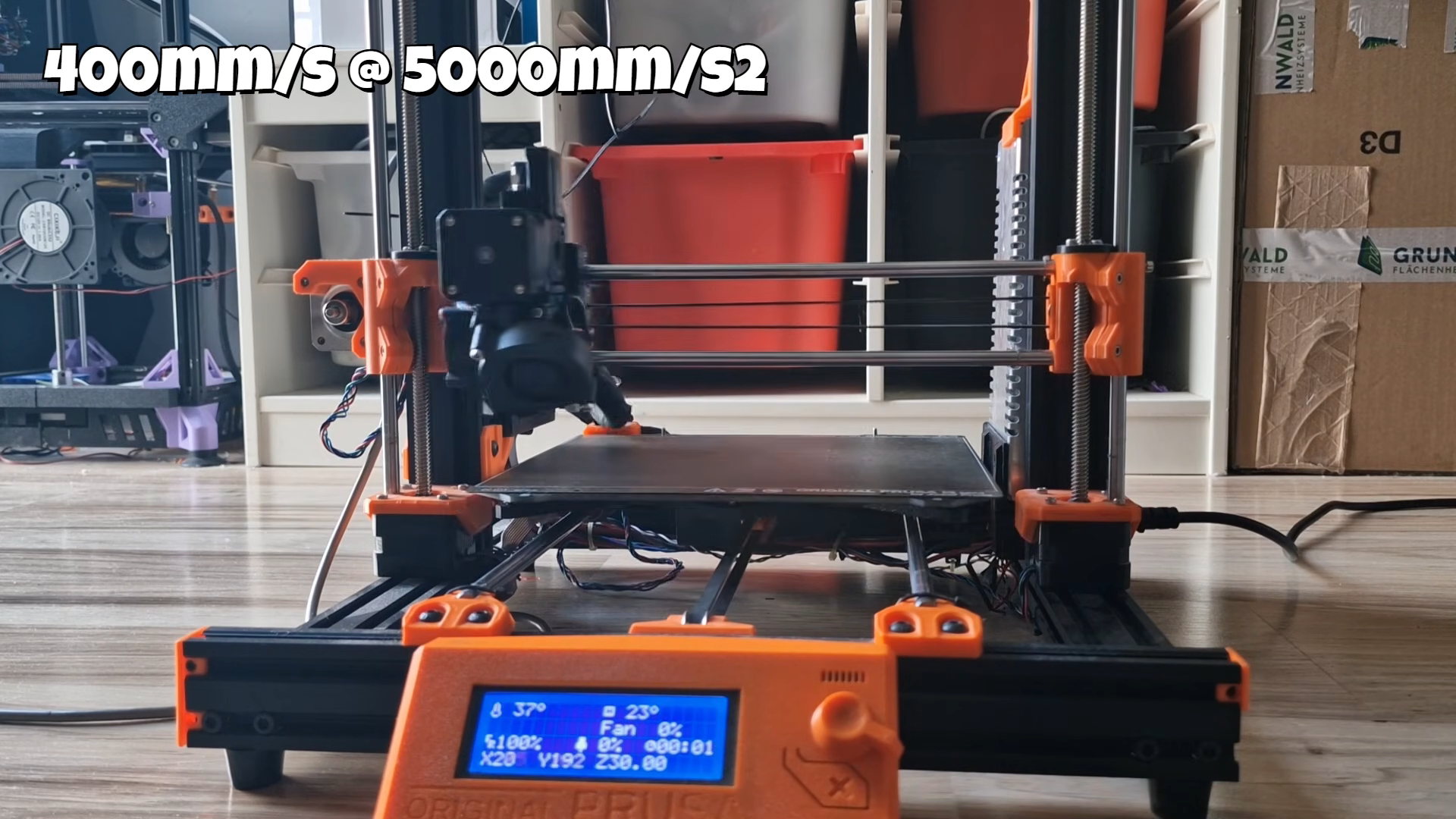
3D printers are almost never fast enough. [Cocoanix] had a Prusa MK3S with this very problem. He found it to be disappointingly tedious when completing even simple prints, and sought a way to make it faster. Thus, he grabbed a Nintendo Switch and got to work.
It might sound like an odd choice, and that’s because it is. There’s no special magic inside a Nintendo Switch that makes 3D printers faster – it’s just that the handheld console was a useful platform on which to run Klipper. As [Cocoanix] explains, Klipper is designed to run on faster general-purpose computers compared to the more limited microcontrollers used in some printers. It’s designed to off-load complex motion processing tasks to a faster CPU, while the printer’s onboard microcontrollers are freed up to simply handle the low-level tasks of driving the motors and so on. An older printer equipped with Klipper can often print faster, while implementing techniques like input shaping to further improve speed as well as print quality.
It’s worth noting that you don’t have to use a Nintendo Switch for this. It’s just a good hook for the YouTube video. Typically you’d use a Raspberry Pi or some other computer instead, but the fact it runs on a jailbroken console is amusing nonetheless. It’s also cool to see the results – in this video, [Cocoanix] got the Benchy printing time down from 90 minutes to just 8.
Formerly known as WhiteHat, Multiverse was last valued at $1.7bn in 2022 following a $220m raise.
London-based edtech Multiverse has raised $70m in a round led by Schroders Capital, to accelerate its European expansion. The round places the company at a valuation of $2.1bn.
Founded by British businessperson Euan Blair, the round also saw the support of existing investors including General Catalyst, Lightspeed Venture Partners, D1 Capital Partners, Index Ventures, Bond and StepStone Group. Blair is the son of former UK prime minister Tony Blair.
Multiverse said that it wants to ensure that “AI benefits the workplace, rather than displacing it”. It was last valued at $1.7bn in 2022 following a $220m raise.
Advertisement
Multiverse, which was founded under the name WhiteHat in 2016, offers personalised upskilling programmes to support technological adoption. It has an AI coaching platform called Atlas.
To date, Multiverse has delivered more than £2bn worth of benefits to more than 1,000 employers, it said. Its clientele includes the likes of Microsoft, Palantir and Databricks. Atlas has tripled daily active users over the last year, the company added.
Alongside this raise, all Multiverse employees, regardless of seniority, have been offered equity and a long term stake in the company as a result of raise, Multiverse said.
“There are companies who desperately need the benefits AI can bring. There are AI companies. What has been missing is the layer that bridges the two,” said CEO Blair.
Advertisement
“This investment marks the moment Multiverse defines that category, and takes it across Europe. Getting outcomes from AI and unlocking productivity is not just a technology problem. It is a people problem. We exist to solve it.”
UK Chancellor of the Exchequer Rachel Reeves added: “Multiverse is a fantastic example of a British company helping turn that ambition into reality. This investment will support its expansion across Europe, strengthening a UK firm that is competing globally and equipping people with the skills to make AI work in practice.”
Don’t miss out on the knowledge you need to succeed. Sign up for the Daily Brief, Silicon Republic’s digest of need-to-know sci-tech news.
Eben Upton says AI could put young people off tech jobs
This could hurt the economy due to a shortage of engineers
Some are overhyping the capabilities of AI tools and technology
Raspberry Pi founder Eben Upton has warned AI is making people less likely to pursue tech jobs, and could therefore hurt the economy of the future.
Speaking to the BBC’s Big Boss Interview podcast, Upton said that the technology could “distort people’s choices in ways that make that skill shortage worse and not better.”
Upton added there is a level of overestimation of what AI chatbots can do, adding that this could “undo a lot of the good work that’s been done, not just by Raspberry Pi, but by a lot of other organisations.”
Upton founded Raspberry Pi in 2012 in order to provide an engaging way for young people to get involved in computing and programming.
Those who have built a foundational level of understanding for a tech role during their education who would then expect to further their knowledge in a place of work have found that the positions they would typically apply for are shrinking. The work that a decade ago would have been done by an entry level employee is instead handed off to an AI tool instead.
This in turn creates a self-feeding problem: how do you replace senior staff members that retire or move jobs if there isn’t a pool of talent to pick from?
Advertisement
Sign up to the TechRadar Pro newsletter to get all the top news, opinion, features and guidance your business needs to succeed!
Upton added his concern for parents worried about the direction their children’s education could take. “You read in the paper: ‘What guidance should you give your child about what GCSEs to choose in the context of an AI future?’ We have no data to inform a rational decision on that.”
“The answer is: wait five years, wait 10 years, and then maybe we might know something,” Upton added.
When asked if these problems could hurt the economy, Upton responded, “Absolutely. We need a supply of engineers.”
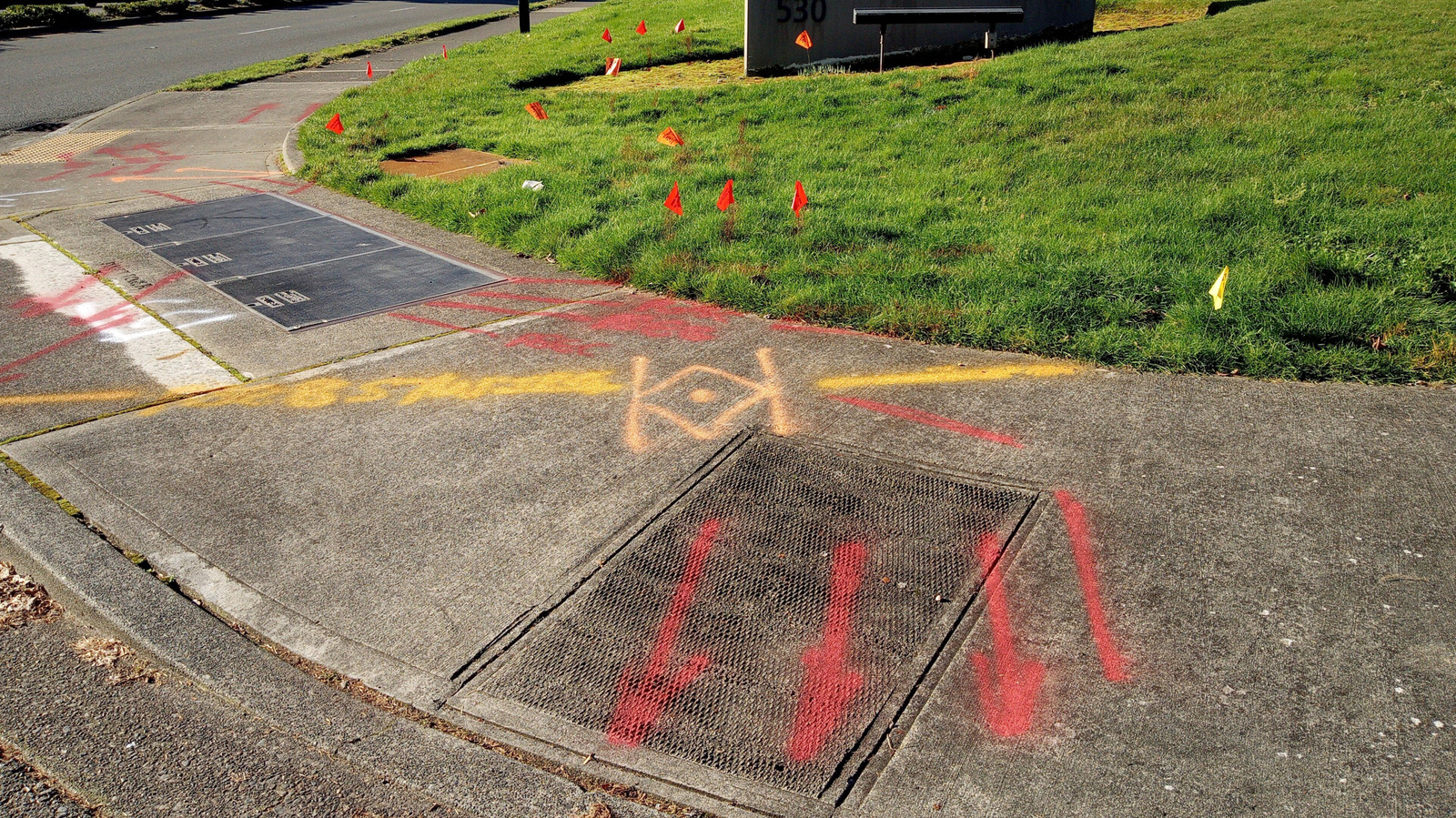
If you happen to walk outside and unexpectedly find utility markings (paint or flags) on your driveway or in your yard, it’s good advice to heed the words splashed across the cover of “The Hitchhiker’s Guide to the Galaxy” — don’t panic, it’s not the end of the world. Next, if you didn’t call the utility company, check with your neighbors to see if one of them did, and if not, then call the nationwide 811 phone number used throughout the United States for underground utility location services, because someone is planning on doing work that might directly involve your little slice of heaven.
Most property owners probably know full well that beneath their perfectly manicured landscaping efforts lies a dizzying array of underground utility lines, irrigation systems (even those using smart controllers), and water and sewer pipes. It’s also probably safe to assume that most of us have no clue where those things are. It takes professionally trained people with the right tools to come out and locate them before anyone starts digging things up to avoid triggering a cataclysmic event. Even when professionals follow these exacting safety protocols, very bad things can still happen.
Advertisement
For instance, a house 15 miles south of Oakland, California, exploded in December 2025, after a construction crew hit a gas line. The house next door was also severely damaged, and six people were injured. More recently, 67 homes in Mountain View, California, were under a boil-water notice for weeks after a crew replacing the neighborhood’s water pipes allowed cement slurry to seep in, subsequently introducing bacteria into the drinking water.
Advertisement
It’s always better to be safe than sorry
For every project that involves digging into the ground – whether it’s a simple DIY effort to repair sprinkler lines, or a larger one carried out by city workers — the area needs to be inspected at least two days beforehand. Calling 811 sends utility companies out (at no charge) to locate and mark underground lines (gas, water, electric, internet, etc.) with flags and spray paint. This safety measure is a federal law meant to prevent damage to public infrastructure, personal injuries, or unwanted service outages.
The markings all have different meanings, but follow uniform color codes mandated by the American Public Works Association (APWA). Red indicates the presence of electric power lines (invented in 1882), lighting cables, and conduit. Orange means telecommunication, alarm/signal lines, cables, or conduit. Natural gas, oil, steam, petroleum, or other flammable substances will always be designated by the color yellow. Green notifies you of sewer and drain lines, while blue is for potable drinking water. Reclaimed water, irrigation, and slurry lines are represented by purple. Pink is used for temporary survey markings or things that are either unknown or unidentified. Lastly, white outlines proposed excavation limits or routes.
Utility markings should generally remain in place until the project is complete. And if you are the one doing the digging, check your state’s tolerance laws because you may need to use hand tools instead of mechanized equipment if you’re working within 24 inches of a marked line. Ultimately, it’s better to be safe than sorry, because nobody wants to be responsible for causing a problem that brands them as “that person” in their neighbor’s eyes forever.
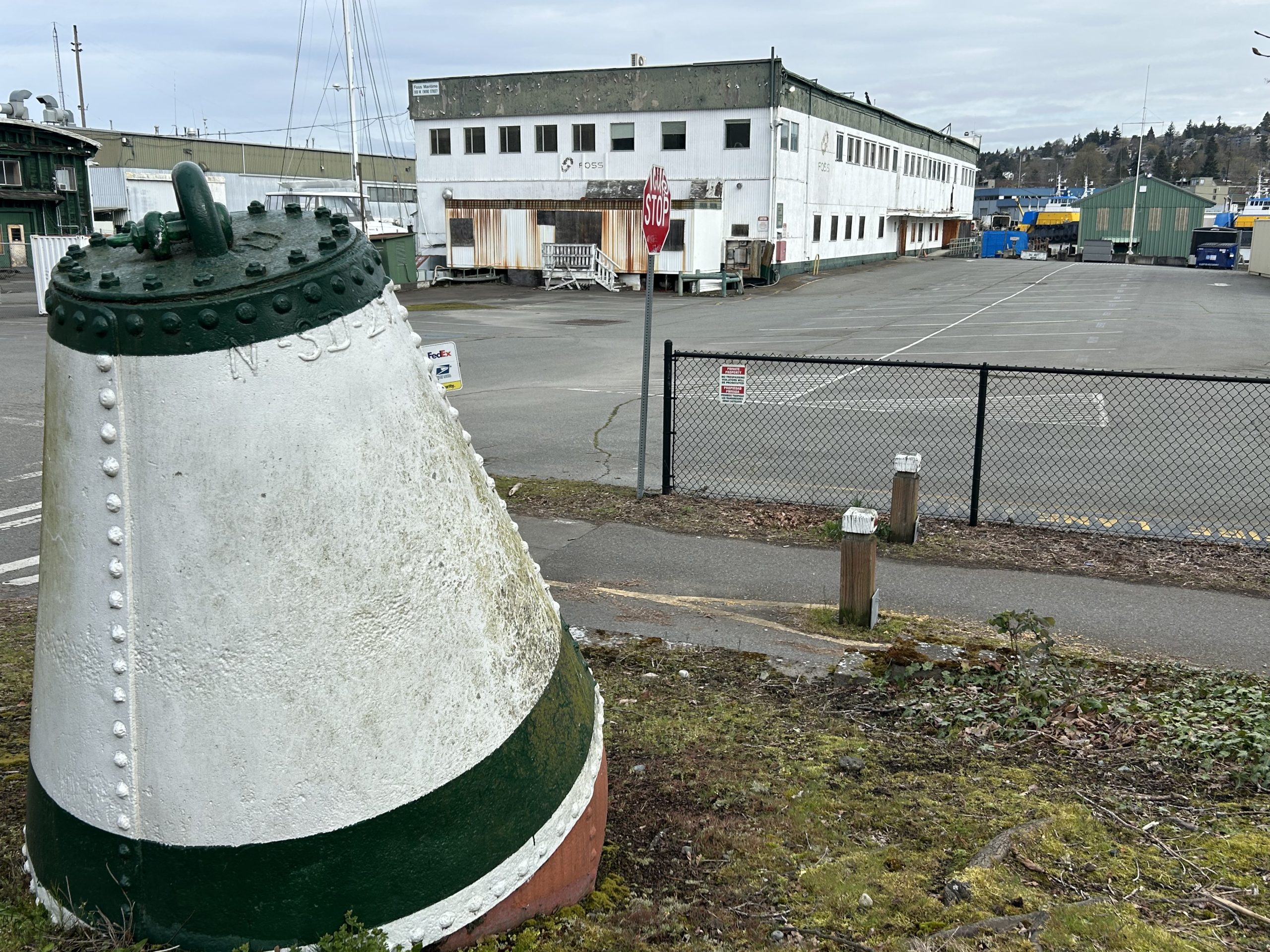
Defense giant Anduril is operating its autonomous naval vessel manufacturing facility at the old Foss Shipyard on the Lake Washington Ship Canal in Seattle. (GeekWire Photo / John Cook)
Anduril Industries announced a massive $5 billion funding round Wednesday as the fast-growing defense tech startup ramps up investments in manufacturing and autonomous military systems — including a quietly expanding maritime operation in Seattle.
As GeekWire reported last month, Anduril established operations at the historic Foss Maritime shipyard along the southern bank of the Lake Washington Ship Canal, where the company is developing autonomous naval vessels and other maritime technologies.
The Series H funding round — including investments from Thrive Capital and Andreessen Horowitz — values Anduril at $61 billion.
The Costa Mesa, Calif.-based company said the financing will fuel aggressive investments in manufacturing capacity, R&D and infrastructure needed to produce advanced defense systems.
“When Anduril launched in 2017, defense attracted little venture investment,” CEO Brian Schimpf said in a letter, adding that investors now increasingly recognize “the scale of the technological and industrial challenges facing the United States and its allies.”
Advertisement
The Seattle facility underscores how the Pacific Northwest is increasingly emerging as a strategic hub for next-generation defense technologies — blending advanced manufacturing with AI, autonomy and defense software.
Just this week, GeekWire reported on Armada’s growing engineering hub in Bellevue, where the heavily funded startup is working on portable data centers for military operations and other use cases. Other Seattle-area companies such as Overland AI — autonomous military vehicles — and Echodyne — advanced radar systems — are benefitting from what CNBC dubbed a “defense tech funding boom.”
Earlier this year, autonomous vessel startup Saronic Technologies announced a $1.75 billion funding round and plans to develop a next-generation shipyard focused on autonomous naval ships — raising broader questions about where America’s future defense shipbuilding hubs will emerge.
Anduril’s expansion also lands amid renewed national focus on revitalizing America’s industrial and naval capacity. In a letter released alongside the funding announcement, the company argued that future conflicts will depend heavily on resilient production systems, rapid adaptation, and scalable autonomous technologies.
Advertisement
Anduril has not publicly detailed the scale of its Seattle maritime operations, and the company did not respond to requests for comment when GeekWire reported on the shipyard last month.
However, the company said in a November 2025 press release that its Seattle facility will serve as the U.S. hub for vessel assembly, integration and testing of Autonomous Surface Vessels as part of the U.S. Navy’s Modular Attack Surface Craft (MASC) program.
Anduril also is rapidly expanding its operations in California. And it is building a massive facility just south of Columbus, Ohio, that it dubs Arsenal-1, described by the company as “the future of American defense manufacturing.”
Founded in 2017 by Oculus VR creator Palmer Luckey, Anduril Industries has rapidly grown into one of the most valuable private defense companies in the world, building autonomous drones, surveillance systems, AI-powered software platforms and military robotics.
Motorola’s first book-style foldable is earning strong early reviews for its sleek design, excellent battery life, fast charging, and stylus support. Reviewers note it still lacks some of the polish of the Z Fold 7 and Pixel 10 Pro Fold, but most agree the Razr Fold is a legitimate foldable contender.
According to the researcher, YellowKey appears unusual for a previously unknown security bug. Nightmare-Eclipse explained that the flaw can be reproduced by copying an attached “FsTx” folder to a USB drive formatted with a Windows-compatible file system such as NTFS, FAT32, or exFAT. Read Entire Article Source link
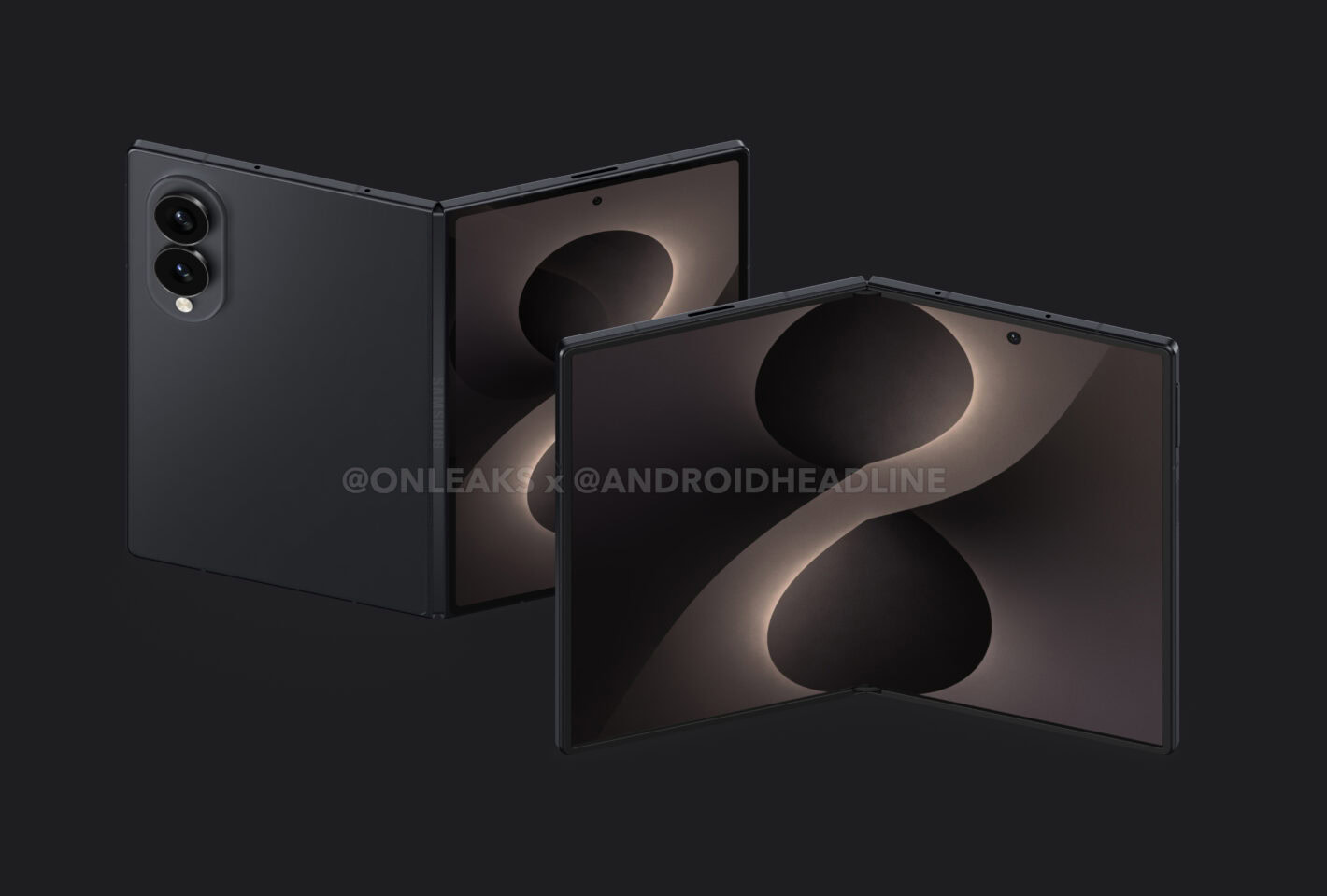
Samsung’s upcoming wide-screen foldable may end up making a surprising compromise in the camera department.
According to a new leak, the rumoured Galaxy Z Fold 8 Wide could launch with just two rear cameras instead of the triple-camera setup Samsung typically reserves for its premium foldables.
The device has already appeared in several leaks ahead of its expected July unveiling. This includes official-looking renders reportedly pulled from an early One UI 9 build. Those renders hinted at the simplified camera layout. Furthermore, new details from GalaxyClub and SamMobile now appear to confirm it.
According to the latest report, both rear cameras on the Z Fold 8 Wide will use 50MP sensors. The main camera will feature an f/1.8 aperture, while the secondary sensor will reportedly use an f/1.9 lens. Both cameras will also support 8K video recording at 30fps.
Advertisement
That setup feels fairly modest compared to Samsung’s usual foldable ambitions, and is especially notable considering devices like the Galaxy Z Fold series traditionally push heavier camera hardware.
Advertisement
The move also mirrors Samsung’s more experimental Galaxy S25 Edge that also adopted a similar dual-camera approach. However, unlike the S25 Edge — which features a massive 200MP primary sensor — the Z Fold 8 Wide appears to prioritise simplicity over outright camera power.
Elsewhere, the phone will include two 10MP selfie cameras, one on the outer display and another on the folding inner screen. Battery capacity may also differ from the standard model. The Z Fold 8 Wide is tipped to feature a 4,800mAh battery, slightly smaller than the 5,000mAh cell expected on the regular Galaxy Z Fold 8.
Advertisement
Taken together, the leaks suggest Samsung could position the Z Fold 8 Wide as a more affordable alternative within its foldable lineup. A reduced camera setup and slightly smaller battery would help explain a lower price point, especially if the company wants to make wider foldables more accessible.
The handset will also launch in several colours, with Dark Green reportedly acting as the signature finish.
Samsung is expected to officially reveal the Galaxy Z Fold 8 Wide alongside the standard Galaxy Z Fold 8 and Galaxy Z Flip 8 sometime in July.
SpaceX has detailed major Starship V3 upgrades ahead of a launch targeted as early as May 19. The changes are meant to move Starship closer to its core goals: rapid reuse, Starlink deployment, orbital refueling, and eventually Moon and Mars missions. Longtime Slashdot reader schwit1 shares a report from Teslarati: Here is an explicit, broken-down list of the key changes, first starting with the changes to Super Heavy V3:
– Grid Fin Redesign: Reduced from four fins to three. Each fin is now 50% larger and stronger, repositioned for better catching and lifting performance. Fins are lowered on the booster to reduce heat exposure during hot staging, with hardware moved inside the fuel tank for protection. – Integrated Hot Staging: Eliminates the old disposable interstage shield. The booster dome is now directly exposed to upper-stage engine ignition, protected by tank pressure and steel shielding. Interstage actuators retract after separation. – New Fuel Transfer System: Massive redesign of the fuel transfer tube — roughly the size of a Falcon 9 first stage — enables simultaneous startup of all 33 Raptors for faster, more reliable flip maneuvers. – Engine Bay/Thermal Protection: Engine shrouds removed entirely; new shielding added between engines. Propulsion and avionics are more tightly integrated. CO? fire suppression system deleted for a simpler, lighter aft section. – Propellant Loading Improvements: Switched from one quick disconnect to two separate systems for added redundancy and reduced pad complexity.
Next, we have the changes to Starship V3:
– Completely Redesigned Propulsion System: Clean-sheet redesign supports new Raptor startup, larger propellant volume, and an improved reaction control system while reducing trapped or leaked propellant risk. – Aft Section Simplification: Fluid and electrical systems rerouted; engine shrouds and large aft cavity deleted. – Flap Actuation Upgrade: Changed from two actuators per flap to one actuator with three motors for better redundancy, mass efficiency, and lower cost. – Faster Starlink Deployment: Upgraded PEZ dispenser enables quicker satellite release. – Long-Duration Spaceflight Capability: New systems for long orbital coasts, orbital refueling, cryogenic fluid management, vacuum-insulated header tanks, and high-voltage cryogenic recirculation. – Ship-to-Ship Docking + Refueling: Four docking drogues and dedicated propellant transfer connections added to support in-space refueling architecture. – Avionics Upgrades: 60 custom avionics units with integrated batteries, inverters, and high-voltage systems (9 MW peak power). New multi-sensor navigation for precision autonomous flight. RF sensors measure propellant in microgravity. ~50 onboard camera views and 480 Mbps Starlink connectivity for low-latency communications. “Believe it or not, there’s more,” writes schwit1. “Two years ago, the biggest and most powerful rocket ever flown was Starship V1. Last year, it was Starship V2. V3 is about to become the biggest and most powerful rocket ever flown — but don’t worry, the company already has plans for V4.”
Displays have come a long way, from monstrous CRT televisions to thin, lightweight LCDs and the portable smartphone displays we have now. The transition to wearable displays, however, has been thwarted by the annoying habit of OLED displays to break instead of bending. That might not be a problem anymore, as South Korean researchers, in collaboration with counterparts at Philadelphia-based Drexel University, claim to have developed a new type of OLED display that is both bendable and stretchable.
Flexible OLED displays have been around for more than a decade, but current foldable smartphones have serious drawbacks, such as significantly reduced display durability. Repeated folding and unfolding cause micro-fractures in the conductive traces and the gradual degradation of the organic layers of the OLED substrate. This manifests as visible damage and reduced image quality. The same weakness also makes it extremely difficult to integrate the current generation of flexible OLED displays into wearables that will likely be subject to repeated stretching and folding cycles.
The new flexible OLED display, described in the journal Nature, uses nanomaterials that allow it to be safely stretched to a whopping 1.6 times its original size. While contemporary wearable displays lose a significant amount of their brightness upon stretching, this nanomaterial-enhanced OLED display can allegedly retain 83% of its light output after 100 cycles rated at 2% strain. Let’s take a look at what makes this new technology tick.
Advertisement
Leveraging nanotechnology to improve brightness and durability
Ipeggas/Getty Images
Traditional flexible OLED displays cannot endure many bending and stretching cycles due to the fragility of the conductive electrodes and organic layers that make up the panel. The electrical underpinnings wear out over repeated strain cycles, while the stretchable polymer layers introduced to enhance flexibility and durability reduce the display’s brightness and energy efficiency.
The new flexible OLED design overcomes those shortcomings by using a nanomaterial dubbed MXene to create transparent and stretchable electrodes. Developed by Drexel University’s College of Engineering in 2011, the nanomaterial combines excellent electrical conductivity, mechanical strength, stretchability, and transparency. This allows for a bendable display that claims to retain almost 90% of its performance and efficiency when stretched up to 60% of its maximum strain limit.
Advertisement
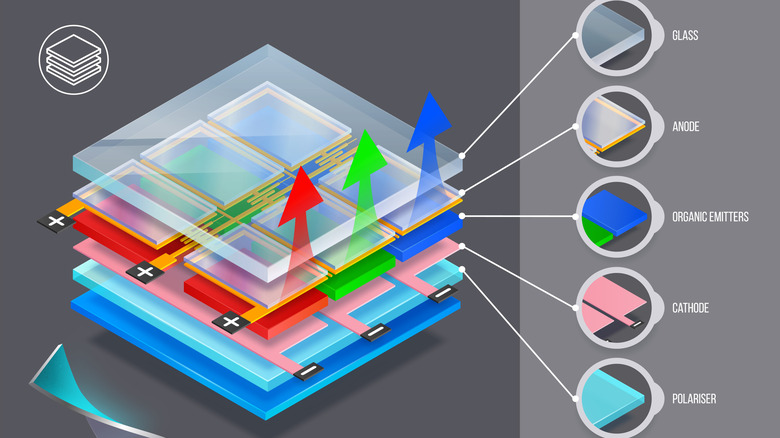
The researchers’ claims of impressive light efficiency stem from a new stretchable organic layer, called an exciplex-assisted phosphorescent (ExciPh) layer, that essentially alters the energy level of the OLED system to produce light more efficiently. An OLED pixel produces light by combining the positive and negative charges generated by the electrodes, which eventually unite to form an exciton. The subsequent decay of these excitons generates the electroluminescence driving individual OLED pixels. The new ExciPh layer lets more than 57% of excitons produce light, much higher than the 12% to 22% of traditional flexible OLEDs. This makes for a flexible display that’s not only more durable but also significantly brighter.
Advertisement
Will these lab experiments mature into consumer applications?
Cherdchai Chawienghong/Getty Images
While the publication of research papers on high-tech displays and other promising phone-related technologies doesn’t always translate into consumer products, this joint US–Korean research endeavor did at least result in displays that offer a glimpse of the future. Drexel University researchers demonstrated the efficacy of their stretchable OLED display technology with two green monochrome displays: one depicted a heart icon, while the other showed a set of numbers.
Their counterparts at Seoul National University went one step further, developing a full-color stretchable display, replete with stretchable passive-matrix OLEDs. In other words, this flexible OLED technology already seems relatively mature, and deploying it in low-power wearable display solutions is not out of the realm of possibility.
The authors of this research paper list real-time health care monitoring and wearable communications technology as the potential applications of the stretchable OLED display prototypes demonstrated in their journal publication. Meanwhile, contemporary research into stretchable batteries, as discussed in ACS Energy Letters, seems to herald a future where wearable displays are the norm rather than science fiction.
The pharma has four locations in Ireland, employing more than 1,000 professionals.
Japanese pharmaceutical company Takeda has announced plans to cut 4,500 people from its globally dispersed workforce, as a means of restructuring and reducing costs. Reportedly the cuts will start in early July and could extend to December 2027.
According to a recent investor presentation, the company’s restructuring plans will include consolidating its departments for efficiency, cutting management layers and automating operations, all in the name of generating the necessary funds to support upcoming drug launches.
Current hiring plans will not be impacted however, as Takeda intends to fill 2,200 vacant roles. Some of which will go to internal candidates. With more than 50,000 workers worldwide, in more than 80 global locations, it is unclear which regions will be most impacted.
Advertisement
It is unknown how the cuts might affect Ireland. The pharmaceutical company has had a presence in the country since 1997 and has four locations. In Dublin there are facilities at Citywest, Grange Castle and Baggot Street. There is also a premises in Bray, Wicklow.
The Bray facility was previously chosen as Takeda’s first European OSD facility, allowing expansion into global markets and in 2004 Takeda chose Grange Castle as its first active pharmaceutical ingredient facility outside of Japan. Currently, the company employs more than 1,000 people in Ireland.
SiliconRepublic.com has reached out to Takeda regarding how the layoffs might impact employees based in Ireland.
Earlier this week coding platform GitLab announced plans to cut an undisclosed number of jobs, with additional plans to reduce its global operational footprint by up to 30pc. Carmaker GM also announced layoffs, with around 30 Ireland-based employees expected to be affected in the layoffs.
Advertisement
Don’t miss out on the knowledge you need to succeed. Sign up for the Daily Brief, Silicon Republic’s digest of need-to-know sci-tech news.




























































You must be logged in to post a comment Login