

Crypto World
Saudi Arabia is tokenizing its multi-trillion dollar economy to protect its wealth from global shocks



The chairman of droppRWA has secured $12.5 billion in mandates to tokenized real estate and his plans are to go beyond properties to bring trillions of dollars onchain.

Crypto World
BeInCrypto 100 Institutional Awards Nomination: KAST for Best Digital Assets Neobank and Best Digital Assets Fintech


Stablecoins are starting to look less like a crypto trading tool and more like financial infrastructure for people who earn, spend, and move money across borders. KAST is building directly around that shift.
The firm is nominated for Best Digital Assets Neobank and Best Digital Assets Fintech at the BeInCrypto Institutional 100 Awards 2026.
Neobank Metric
Last Verified Data
Users
1M+
Annualized transaction volume
About $5B
Active footprint
170+ countries
Card acceptance
150M+ merchants
Yield product
KAST Earn with Gauntlet and USD Prime Vault
The nomination reflects KAST’s efforts to build a consumer and business finance platform around stablecoin rails from the start.
The company serves users across 170+ countries, integrates a real-time cross-border settlement layer with Fedwire and SWIFT, offers cards accepted at 150 million merchants, and supports USD accounts, global payouts, card spending, and yield products from a single app.
In March 2026, KAST raised $80 million in Series A funding, co-led by QED Investors and Left Lane Capital, with Peak XV Partners, HSG, and DST Global Partners also participating. The company said it had crossed 1 million users and reached about $5 billion in annualized transaction volume.
Fintech Metric
Last Verified Data
Series A funding
$80M announced in March 2026
Core architecture
Stablecoin-native financial app
Business product
KAST Business waitlist/live access waves
Custody and security
Fireblocks, BitGo, and enterprise security partners
Product surface
USD accounts, cards, payouts, yield, business accounts
Built Around Stablecoins From Day One
KAST’s nomination for Best Digital Assets Neobank centers on its stablecoin-native account model.
Most neobanks began with traditional banking rails and later added crypto features. KAST started with stablecoins as the operating layer. The account balance, cross-border movement, card spend, and yield products are all built around digital dollars.
In a nomination interview with BeInCrypto, Founder and CEO Raagulan Pathy described the difference.
“The first generation of neobanks did a great job giving a slick interface, but they still operated within the traditional financial system. Being stablecoin native, we can be in 150-plus countries very early. That’s what we’ve done from day one,” Pathy said.
That architecture gives KAST its global reach. Users can hold USD, spend through Visa card products, move funds across borders, and access stablecoin-based yield without relying on a traditional bank account in their country of residence.
KAST also emphasizes institutional-grade security. Its website says the platform partners with Fireblocks, BitGo, and enterprise security providers for asset protection, while financial services are provided through licensed and regulated partners.
Turning Stablecoin Rails Into Fintech Infrastructure
The second nomination, Best Digital Assets Fintech, reflects KAST’s wider product buildout.
KAST Earn allows users to put idle USD to work through vault products. Its Gauntlet Alpha Vault deploys funds across DeFi strategies managed by Gauntlet, while the USD Prime Vault uses USDKY, a stablecoin backed by short-term US Treasury bills through M0.
KAST says users can withdraw without lockups, with returns reflected in the value of their vault balance.
Pathy framed trust as central to the business model.
“Financial services is ultimately a trust game. Users will use you more if they trust you. It’s not always about being the absolute cheapest; it’s about being the safest and the best,” he said.
KAST is also moving into business finance. KAST Business is designed for global teams, founders, agencies, and operators who need payouts, payroll, virtual cards, and cross-border spending in a single platform. The company says it is opening access in phases and reviewing applications manually.
That expands KAST beyond a consumer card product. It gives the company a path into stablecoin payroll, contractor payments, business spending, and embedded financial services.
The BeInCrypto Institutional 100 Awards recognize firms building the systems that could define the next phase of digital finance. KAST’s nomination reflects its role in turning stablecoins into a usable banking-like experience for consumers and a financial infrastructure layer for global businesses.
The post BeInCrypto 100 Institutional Awards Nomination: KAST for Best Digital Assets Neobank and Best Digital Assets Fintech appeared first on BeInCrypto.
Intercontinental Exchange (ICE) and the Chicago Mercantile Exchange (CME), the two biggest exchanges for energy-linked commodities, are pressuring US regulators to clamp down on the Hyperliquid decentralized exchange’s expansion into commodity markets.
Executives from both companies say that Hyperliquid’s energy-linked onchain derivatives create insider trading and price manipulation risks, according to Bloomberg, which cited unnamed sources familiar with the ongoing talks with US regulators.
ICE and CME cited the “anonymous” and “unregulated” nature of Hyperliquid as major risks to critical energy markets, like oil and gas, which could be used by state actors to circumvent sanctions, the report added.
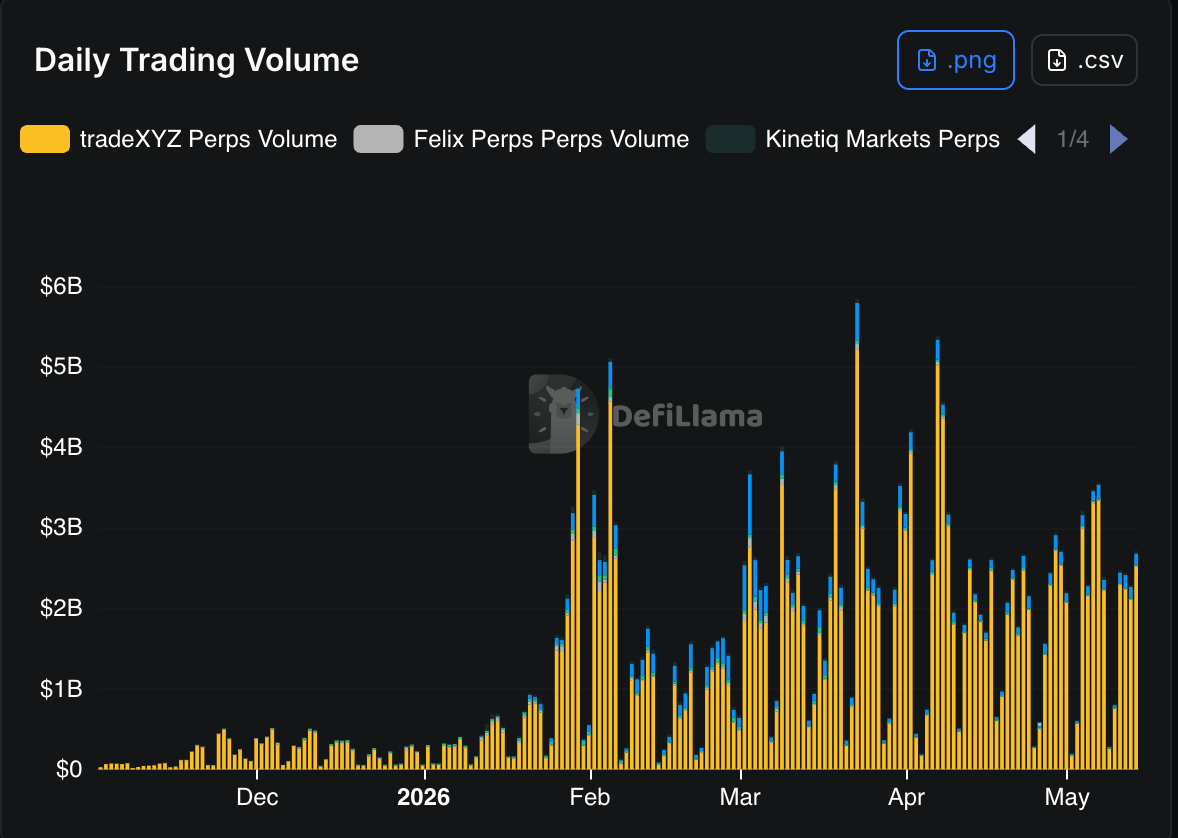
Daily trading volume for HIP-3 perpetual futures markets. Source: DeFiLlama
Hyperliquid introduced HIP-3, also known as “Builder-Deployed Perpetuals,” in January 2025, which allows anyone who stakes 500,000 HYPE tokens, the platform’s native cryptocurrency, to build perpetual futures markets for any electronically traded asset class.
The deployment of HIP-3 represents a broader trend of traditional financial markets coming onchain, as the line between blockchain-based infrastructure and traditional market architecture continues to erode.
Related: Why is Hyperliquid’s HYPE token price up 23% in one day?
Hyperliquid’s token price surges following the introduction of HIP-3
The price of HYPE jumped by over 58% within three days of the launch of HIP-3. The token rose from a low of about $20 to over $38, and is trading at about $44 at the time of publication.
In March, market analyst and crypto investor Arthur Hayes forecast that HYPE could hit $150 per token by August, driven by demand for commodities-linked onchain derivatives instruments.
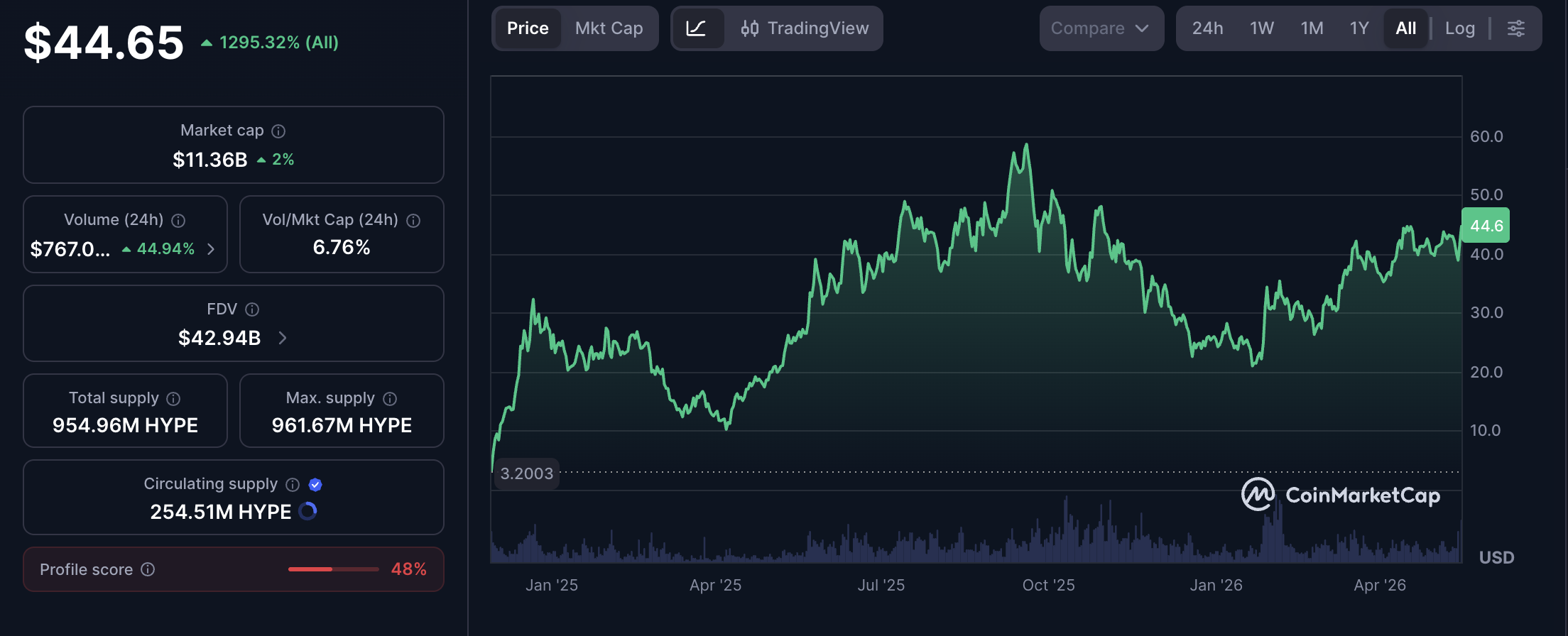
The HYPE token’s price action. Source: CoinMarketCap
“Hyperliquid, the dominant perp DEX, is the largest revenue-generating project that isn’t a stablecoin,” he said.
The exchange also dedicates 97% of trading fee revenue to HYPE token buybacks, which boosts demand and raises the token’s price over time, according to Hayes.
“If the market believes that HYPE can continue siphoning volumes away from centralized exchanges and add new features to accelerate revenue growth, then HYPE can pump in absolute terms,” he added.
Open interest for HIP-3 markets has continued to rise since their inception, climbing to over $2.5 billion in May, according to data from DeFiLlama.
Magazine: Guide to the top and emerging global crypto hubs: Mid-2026


HYPE’s surge is being fueled by Bitwise’s new spot Hyperliquid ETF and Coinbase’s expanded role as Hyperliquid’s official USDC treasury deployer.

TLDR
- ENPH reached a new 52-week peak at $52.95 on Thursday, climbing more than 10% intraday
- The solar technology company’s shares have climbed 32% over the last seven days and 50% since January
- Robust interest in the company’s latest GaN-powered IQ9S-3P commercial microinverter is capturing market attention
- A brief suspension of reciprocal solar tariffs between the U.S. and China provided tailwinds for renewable energy stocks
- Emerging speculation about Enphase’s role in AI data center infrastructure is fueling additional bullish momentum
Enphase Energy (ENPH) shares reached a 52-week pinnacle of $52.95 during Thursday’s trading session, vaulting more than 10% higher in just one day. This surge propelled the stock’s year-to-date performance to approximately 50%, with an impressive 32% advance coming in the past week alone.
Multiple factors aligned to fuel this remarkable ascent. Chief among them: surging demand for the company’s innovative GaN-based IQ9S-3P commercial microinverter, engineered to accommodate solar panels rated up to 770 watts and integrate with three-phase electrical systems.
Buyers are accelerating equipment purchases to capitalize on critical federal tax incentive deadlines. This sense of urgency is directly converting into robust order volumes and heightened investor enthusiasm.
Enphase recently finalized a safe harbor arrangement with a prominent U.S. solar and battery financing firm. This partnership is projected to deliver approximately $52 million in revenue from IQ9 Microinverter sales spanning both residential and commercial installations.
The broader renewable energy market also provided momentum. A temporary suspension of reciprocal solar tariffs between Washington and Beijing alleviated supply-chain anxieties and elevated sentiment throughout the solar industry.
Additionally, Nextpower released impressive quarterly results. That performance created positive ripple effects across the solar sector and provided Enphase with extra upward momentum.
AI Data Centers Enter the Picture
Among the emerging narratives surrounding Enphase is its potential expansion into powering AI data centers. Investors are viewing this opportunity as a significant long-term growth catalyst, prompting reassessments of the company’s earnings trajectory.
While no official announcements regarding specific data center partnerships have materialized, the concept is building momentum and appears to be influencing how analysts evaluate the stock’s prospects.
Analysts are reexamining their financial models. Several market observers suggest that current consensus price projections may not adequately capture the company’s evolving growth narrative, although widespread formal target revisions haven’t yet emerged.
Analyst Views Remain Mixed
The Street isn’t unanimously optimistic. Barclays maintained an Underweight stance and reduced its price objective, referencing lower shipment projections. Jefferies similarly decreased its target amid softer second-quarter revenue expectations, while preserving a Buy recommendation.
Enphase projected Q2 revenue in the $280 million to $310 million range, with energy storage systems accounting for roughly $85 million. Management acknowledged an anticipated $25 million shipment shortfall during the second quarter.
InvestingPro identified the stock as trading beyond its Fair Value, positioning it among the more stretched valuations in the current market according to their metrics. The price-to-earnings multiple currently registers at 50.78.
The trailing 1-year return remains negative at -3.45%, indicating the recent rally hasn’t completely offset prior-year declines.
Average daily trading activity hovers around 6.17 million shares, with the company’s market capitalization now approaching $6.89 billion.
The technical sentiment indicator continues to flash a Sell signal, despite the compelling short-term price momentum.


The U.S. Senate moved a crucial digital asset framework forward, as the Banking Committee advanced the Digital Asset Market Clarity Act (CLARITY) with bipartisan support. While the development marks meaningful momentum for a long‑stalled market structure bill, its fate in the full Senate remains contingent on a broader political consensus, including ethics provisions and potential changes before a final vote.
On Thursday, Democratic Senators Ruben Gallego and Angela Alsobrooks joined 13 Republicans in backing CLARITY, signaling cross‑party alignment after months of procedural delays within the committee. The House earlier cleared its own version by a substantial margin, and the Senate Agriculture Committee had already moved its portion addressing commodities market rules. Together, the committee track signals a coordinated effort across chambers, but final passage will depend on how the full Senate negotiates the contours of the bill before sending it to the White House for sign‑off.
“The momentum and progress are strong,” commented Ji Hun Kim, CEO of the Crypto Council for Innovation, after the vote. “The House passed its version with broad support, and the Senate Agriculture Committee advanced its market‑structure provisions earlier this year. The Banking Committee followed suit with bipartisan backing, underscoring a shared interest in formalizing how digital assets fit into U.S. regulatory frameworks.”
Source: Cynthia Lummis
Nevertheless, a number of Senate Democrats and at least one Republican signaled they would not support CLARITY in its current form without ethics provisions addressing potential conflicts of interest involving officials’ ties to the crypto industry. Banking committee chair Tim Scott and the remaining 12 Republicans voted against an amendment that would have addressed President Trump’s potential connections to digital assets, reflecting a broader policy debate about governance and ethics in the crypto space.
Following the committee vote, Senator Thom Tillis acknowledged that “more work remains in the weeks ahead to make this legislation even better.” Some industry advocates echoed the sentiment, urging careful crafting of the bill to balance innovation with robust oversight. Senator Raphael Warnock, addressing the markup, argued that any final package should confront “pure corruption” concerns regarding executive‑branch and political‑figure involvement in the sector, a stance that has shaped the ethical debate surrounding CLARITY.
As of this report, no timetable had been set for a full Senate vote. The chamber’s calendar projected sessions through late May and again in June, excluding weekends and holidays. If CLARITY clears the 60‑vote threshold to invoke cloture, it would move back to the House for concurrence before potentially reaching the president’s desk. White House crypto policy adviser Patrick Witt has indicated the administration’s target for sign‑off remains aligned with a July 4 timeline, tying the legislation to the Independence Day period.
Key takeaways
- The Senate Banking Committee approved CLARITY with bipartisan support, marking a meaningful step toward a formal market‑structure framework for digital assets.
- Ethics provisions and concerns about officials’ ties to the crypto industry constitute a central hurdle for broader Senate acceptance.
- The bill’s fate depends on cloture discussions, cross‑chamber negotiations, and potential amendments before final passage in the Senate and House concurrence.
- Legislative momentum is mirrored by related committee actions in the Agriculture Committee and a confirmed House passage, signaling cross‑chamber alignment on market structure topics.
- Tax policy developments are moving in parallel, with discussions around how digital assets should be treated for statutory purposes, including stablecoins and income from lending or staking.
Legislative momentum and the path to law
The CLARITY framework seeks to codify a recognized market structure for digital assets, complementing existing commodity and securities regimes. The Banking Committee’s vote followed earlier progress from the Agriculture Committee, which had advanced its portion addressing commodities markets, and after the House approved its own version with broad Democratic support. Taken together, these actions reflect an emerging consensus on the need for a formalized oversight pathway for digital assets, even as lawmakers debate the balance between innovation, consumer protection, and national security concerns.
Despite the procedural gains, the path to passage remains uncertain. A 60‑vote threshold to advance the bill through the Senate could hinge on securing enough lawmaker support for ethics language and other contentious provisions. The White House has signaled an expectation that CLARITY could be signed into law in the near term, aligning with broader policy priorities around digital assets, but practical passage will depend on how lawmakers address outstanding concerns and finalize the text.
Policy context, cross‑border considerations, and market implications
The CLARITY discussions unfold against a wider regulatory backdrop that includes parallel efforts in the European Union’s MiCA framework and ongoing U.S. regulatory developments by agencies such as the SEC, CFTC, and DOJ. For market participants, a formalized U.S. market structure would influence licensing requirements, compliance regimes, and the handling of stablecoins and other tokenized instruments within regulated banking and payment rails. The evolving policy environment underscores the need for robust AML/KYC standards, clear disclosure obligations, and consistent enforcement expectations across jurisdictions.
Industry advocates emphasize that a well‑defined structure could reduce regulatory uncertainty for exchanges, liquidity venues, and financial institutions seeking to engage with digital assets. However, the ethics debate—partly rooted in concerns about potential conflicts of interest and provenance of certain market activities—highlights the political and governance dimensions that can shape the final form of the bill and its implementational timeline.
Tax policy discussions surface in closed sessions
Beyond market structure, lawmakers are actively examining how digital assets should be taxed. The House Ways and Means Committee reportedly hosted a bipartisan session to discuss crypto tax policy, a signal of ongoing interest in clarifying coding treatment for digital assets. The developments follow the December 2025 introduction of the Digital Asset PARITY Act by Representatives Max Miller and Steven Horsford, which seeks to clarify the tax code’s treatment of digital assets, with particular attention to stablecoins and income generated from lending or staking activities. These discussions reflect regulatory and policy efforts to align tax treatment with the practical realities of digital asset usage and investment strategies, with implications for both individuals and institutions seeking to maintain compliant tax positions.
For financial institutions, tax clarity is integral to risk management, reporting obligations, and compliance planning. Clear tax guidance helps banks, custodians, and exchanges design appropriate controls and disclosures, reducing ambiguity in cross‑border transactions and enhancing the reliability of financial reporting. The ongoing conversations illustrate how tax policy can shape the operational choices of crypto firms, including how they structure products, manage liquidity, and report income to regulators and tax authorities.
Closing perspective
As the political clock continues to run, CLARITY’s ultimate fate will hinge on the alignment of ethics provisions with market‑structure goals and on the broader willingness of lawmakers to settle outstanding governance questions. The cross‑committee momentum signals a serious bid to formalize U.S. digital asset regulation, with meaningful implications for exchanges, banks, and institutional investors. Keep a close watch on the Senate schedule, potential amendments, and the evolving tax policy narrative, all of which will shape how digital assets are regulated, taxed, and integrated into the mainstream financial system.


Key takeaways
- Pi Network extends losses on Friday as a 50-period EMA caps short-term recovery attempts.
- The token could drop below the $0.1600 if the bearish trend persists.
Pi Network (PI) extended losses on Friday, risking a bearish breakout from its short-term consolidation on the 4-hour chart.
The token remains capped by the 50-period Exponential Moving Average (EMA) at $0.1733, limiting recovery despite the recent launch of vibe coding features within the Pi ecosystem.
Vibe coding features aim to boost ecosystem development
The Pi Network has introduced vibe coding tools for developers, enabling the conversion of AI-assisted apps—from platforms like Codex, Claude Code, Replit, Cursor, and Lovable—into Pi Apps.
This integration could reduce app development time and strengthen the ecosystem, which boasts over 60 million engaged users.
Technical outlook: correction pressure persists
The PI/USD 4-hour chart remains bearish and efficient as PI is down by more than 2% in the last 24 hours.
PI is currently under a corrective bias, capped by the 50-period EMA at $0.1733 on the 4-hour chart and the 200-period EMA at $0.1771.
The pair also sits below a nearby downtrend resistance line around $0.1741, reinforcing the upside barrier.
If the bulls regain control, initial resistance would be seen at the 50-period EMA at $0.1733 and the 200-period EMA at $0.1771 cap short-term upside. A nearby downtrend resistance line around $0.1741 adds to the barrier.
The momentum indicators also suggest that the bears are still in control. The Relative Strength Index (RSI) sits at 45, below the midline, signaling persistent selling pressure.
The MACD remains near-flat, suggesting weak, consolidative momentum rather than a decisive rebound.

However, if the bearish trend persists, immediate support would emerge at the S1 Pivot Point at $0.1645.
Pi Network’s short-term outlook remains cautious, and traders should monitor both EMA and trendline levels for signs of a breakout or deeper correction.


The T3 Financial Crime Unit, a joint operation by Tether, TRON, and TRM Labs, has frozen more than $450 million in illicit cryptocurrency since launching in September 2024, with 43.9% more illicit proceeds intercepted in 2025 than the prior year.
The May update reflects expanded cooperation with police forces in the United States, Spain, Germany, the Netherlands, and Bulgaria. The Financial Action Task Force (FATF) has also cited the unit as a leading public-private model for digital asset enforcement.
T3 Expands Reach Across 23 Jurisdictions
The unit operates in 23 jurisdictions, including the United States, Spain, Germany, Brazil, and the United Kingdom. Since its September 2024 debut, it has analyzed millions of transactions across five continents to identify exchange hacks, exploits, DPRK-linked activity, terrorist financing, money laundering, and violent crime cases.
Past T3 actions include a Spanish bust that recovered about $26.4 million tied to a Madrid-based laundering ring.
Response time has been a focus. T3 says it has frozen funds within 24 hours during multiple account takeovers and violent crime emergencies.
The unit also supported Operation Lusocoin, a Brazilian Federal Police investigation that froze more than R$3 billion in crypto, including 4.3 million USDT, Tether’s flagship stablecoin, tied to the criminal network.
Wrench Attacks and North Korean Funds Move Into Focus
Cases this year have spanned controlled substances, terrorist financing, and what T3 calls wrench attacks, a category covering home invasions, kidnappings, and violent extortion against crypto holders.
The unit says it can lock targeted wallets within hours of a verified law enforcement request. BeInCrypto has reported separately that physical attacks targeting digital asset users could climb sharply in 2026.
Recognition came earlier this year, when the FATF named T3, alongside TRM’s Beacon Network, as a leading framework for tackling digital asset crime.
TRM Labs has estimated that illicit crypto flows reached a record $158 billion, an environment in which real-time identification and freezing have become central to enforcement.
“This $450 million milestone is just the beginning of what T3 is capable of, as its impact will only continue to grow in scale and importance.” Paolo Ardoino, Tether CEO, in a statement.
The post Tether, TRON, TRM Labs Freeze $450 Million as T3 Crime Crackdown Widens appeared first on BeInCrypto.
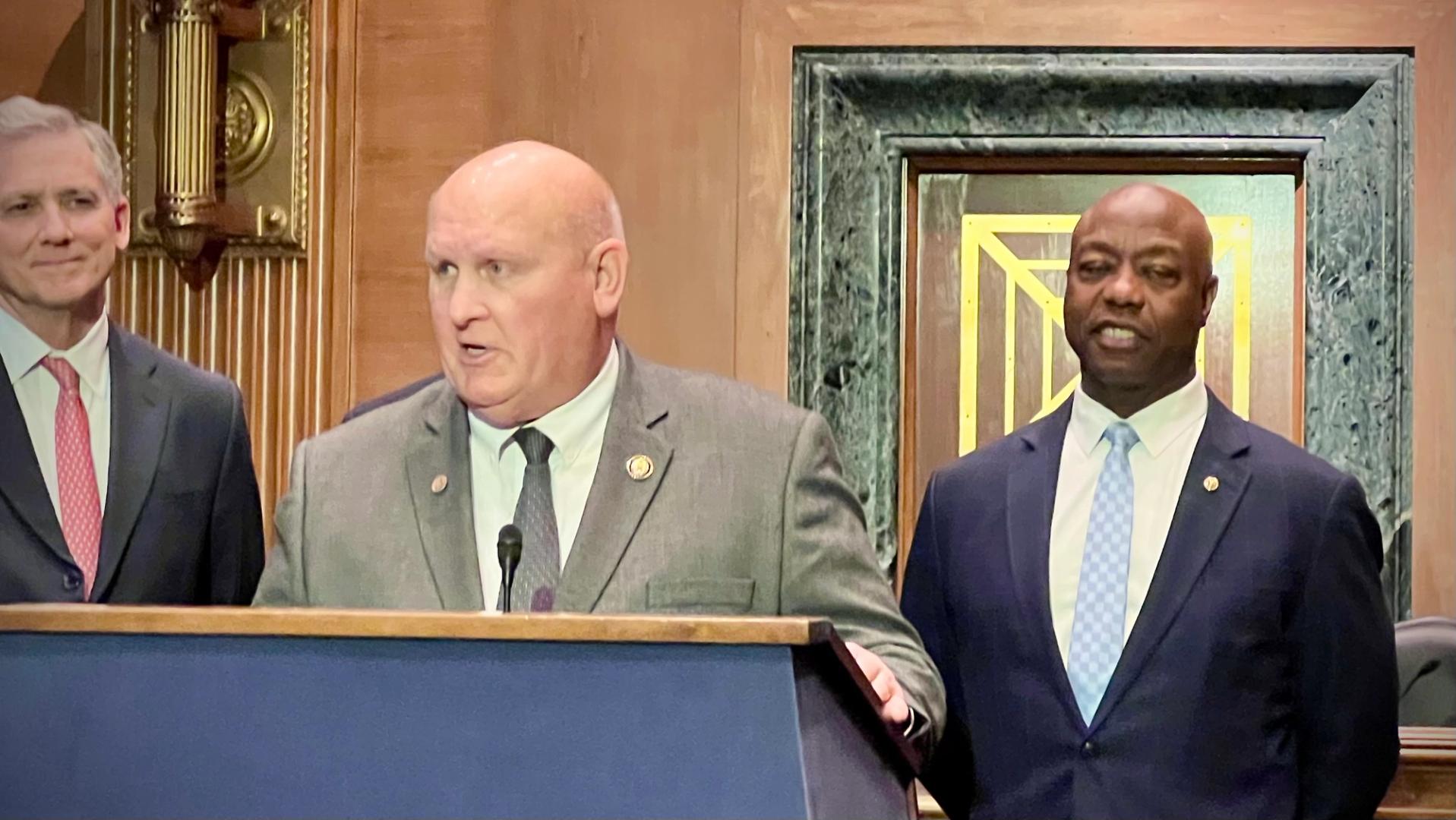
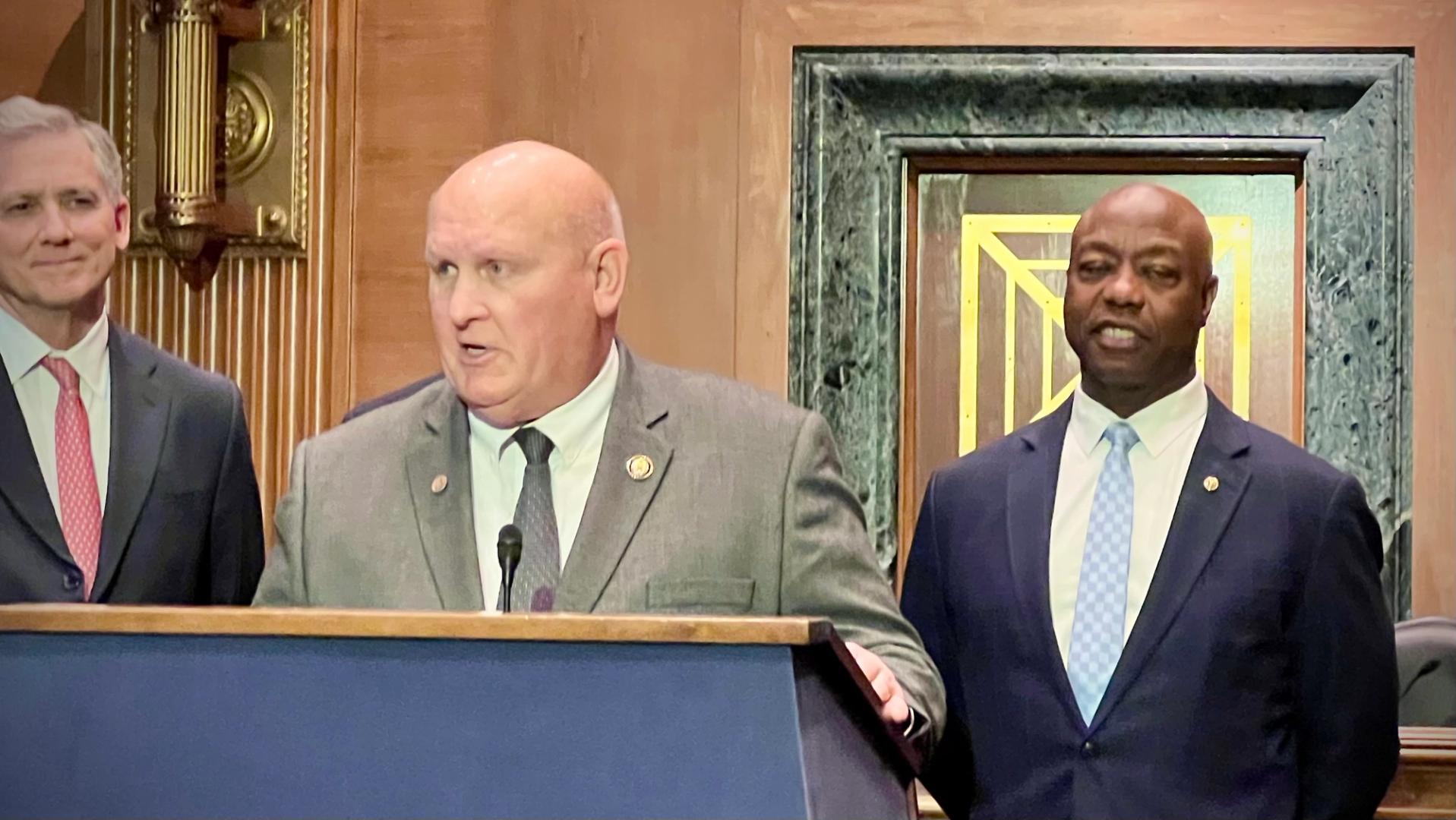
As the Commodity Futures Trading Commission takes on a growing task to police U.S. crypto trading, senior lawmakers are saying it needs bipartisan leadership.

The team behind the controversial project continues to post frequent updates to its substantial user base in terms of the latest developments in its broader ecosystem.
The latest, which went live on Pi Network’s only official account on X, focused on how vibe coders and creators can use the ‘massive user base of over 60 million Engaged Pioneers.’
AI and Human Input
Ever since Pi Network’s Core Team introduced the Pi App Studio last year, they have often outlined the advantages of using AI. However, instead of trying to separate the new technology from human input, they are actively combining them to get the best of both worlds.
In the new post, the team said vibe coders and creators can utilize the aforementioned 60 million user base by “easily bringing their external AI-created apps to Pi’s real distribution network and utility ecosystem through Pi App Studio.”
This means that even those with non-technical products can build apps using platforms such as Codex, Replit, Lovable, Claude Code, Cursor, or other AI-assisted coding tools. Then, they can employ the Pi App Studio to convert the new applications into Pi-native apps.
The post doubles down on the narrative that Pi Network aims to close the gap between creating apps, something in which AI can easily assist, and turning those new products into actually usable and helpful tools.
Ideas Too Good Not to Be Seen
The team further noted that creators can now connect their apps to an existing ecosystem with users, payment capabilities, identity verification, decentralized human infrastructure, and platform-level tools in place, instead of rebuilding infrastructure from scratch.
Consequently, this feature allows users’ ideas to become reality and reach other customers a lot faster. The team said it added this possibility because “your ideas are too good to be seen.” The feature is already activated and users can take advantage from it using the Pi App Studio.
The post Pi Network Drops New Update That ‘Changes the Equation for Creators’: Details appeared first on CryptoPotato.
Popular on-chain investigator ZachXBT updated his 100,000 followers on Telegram minutes ago that the popular decentralized exchange THORChain has likely become a victim of a new crypto hack.
The reported attack appears to be for over $10.5 million, as the platform was exploited on Bitcoin, Ethereum, Binance Smart Chain, and Base.
Although there has been no official confirmation from THORChain’s team as of the time of this point, the project’s native token plummeted immediately after the news spread on X.
RUNE traded above $0.58 before it crashed by double-digits to a two-week low of $0.50, where it found some support.

This is a breaking story with few details at the moment, so make sure to follow for additional information in the following hours.
UPDATE 1: ZachXBT noted shortly after his first report that the actual stolen amount has grown to $10.7 million.
The post RUNE Plunges by 15% as THORChain Falls Victim to New Hack: ZachXBT appeared first on CryptoPotato.

Aston Villa vs Liverpool LIVE: Premier League result, latest updates and fan reaction

The Hidden Cost of DIY Marketing (And Why It’s Killing Your Brand)

BeInCrypto 100 Institutional Awards Nomination: KAST for Best Digital Assets Neobank and Best Digital Assets Fintech

Manchester United reach agreement with Casemiro over contract clause amid transfer speculation

US brings back mandatory military draft registration

Steven Gerrard disagrees with Gary Neville over ‘shock’ Chelsea and Arsenal claim | Football


-

 Fashion4 days ago
Coffee Break: Travel Steam Iron
-

 Politics7 days ago
Politics Home Article | Starmer Enters The Danger Zone
-

 Fashion5 days ago
What to Know Before Buying a Curling Wand or Curling Iron
-

 Politics4 days ago
What to expect when you’re expecting a budget
-

 Tech6 days ago
Auto Enthusiast Carves Functional Two-Stroke Engine from Solid Metal
-
 Business6 days ago
Ignore market noise, India’s long-term story intact, say D-Street bulls Ramesh Damani and Sunil Singhania
-

 Tech5 days ago
GM Agrees To Pay $12.75 Million To Settle California Lawsuit Over Misuse Of Customers’ Driving Data
-

 Fashion5 hours ago
Weekend Open Thread: Theory – Corporette.com
-

 Crypto World6 days ago
CZ says US crypto rivals tried to block Trump pardon
-

 Crypto World6 days ago
PROS explodes 48% as Upbit and Bithumb listings ignite demand
-

 Tech4 days ago
GM agrees to $12.75M California settlement over sale of drivers’ data
-
Crypto World3 days ago
Bitcoin Suisse expands with Digital Asset License and Investment Business Act Registration Approval in Bermuda
-

 Crypto World4 hours ago
E-Estate Announces 1 Year Live: Washington DC Summit as Real Estate Tokenization Enters Its Next Phase
-

 Entertainment7 days ago
Bethenny Frankel Says She Loves ‘Torturing’ Men
-
 Crypto World7 days ago
Solana UFO Meme Coins Surge After Pentagon Reveals Alien Files
-

 Politics3 days ago
Pakistan to enter Chinese capital market as war inflation bites
-
 Crypto World7 days ago
Pi Network Hits 421K Mainnet Nodes Ahead of Protocol 23 Smart Contract Launch
-
 Crypto World1 day ago
Google’s Gemini AI Predicts Incredible Solana Price by the End of 2026
-
Crypto World7 days ago
Crypto Price Analysis May-08: ETH, XRP, ADA, BNB, and HYPE
-
 Crypto World7 days ago
Trump’s 10% Intel (INTC) Stake Gains $47 Billion After Apple Chip Deal
You must be logged in to post a comment Login