

Friendship breakups are never easy, but few are as messy and expensive as the collapse of Elon Musk and Sam Altman’s once thriving tech bromance.
Tech
The 5 most unhinged revelations from Elon Musk’s lawsuit against OpenAI


On Thursday, closing arguments wrapped up in Musk’s lawsuit against OpenAI, leaving a jury to deliberate next week whether Altman and other executives “stole a charity” (as one of Musk’s lawyers put it) by turning much of what was once a nonprofit research lab into a corporate behemoth. For three weeks, lawyers on both sides have deployed an increasingly unhinged body of evidence in an attempt to discredit both men and prove they’re untrustworthy and power-hungry.
If the jury rules that Musk was duped into donating roughly $38 million to OpenAI under false pretenses, then Judge Yvonne Gonzalez Rogers will decide on the damages, which could potentially lead to $150 billion in financial restitution and, while unlikely, could also include major changes to OpenAI’s leadership and governance structure. Even if the jury does not rule in Musk’s favor, however, it’s possible that the evidence put forth at trial will be enough to convince state regulators to revisit the agreements that allowed OpenAI to restructure into a for-profit enterprise to begin with.
Lawyers tell me that whoever loses will likely appeal, meaning the catfight might not be over yet. But for now, here are five major revelations from the trial.
OpenAI’s board members questioned Sam Altman’s honesty
Musk’s legal team sought to paint Altman as a deeply untrustworthy person, prone to lying to his co-founders, employees, and board members if it meant advancing his interests.
Multiple former OpenAI employees and board members testified as much in the courtroom. Altman’s “pattern of behavior related to his honesty and candor” led directly to his temporary ouster as CEO in 2023, said Helen Toner, a former board member, in a video deposition. He had a tendency of “saying one thing to one person and completely the opposite to another person,” Mira Murati, OpenAI’s former chief technology officer, testified. In one instance, she said, Altman explicitly lied to her about the safety review required to vet a new AI model.
Greg Brockman kept a diary — and he probably wishes he hadn’t
Some of the more salacious evidence entered into trial came from a personal diary kept by OpenAI president Greg Brockman, who chronicled his “stream of consciousness” as he weighed whether it would be “morally bankrupt” to pivot OpenAI into a for-profit enterprise.
“Can’t see us turning this into a for-profit without a very nasty fight,” he wrote in one 2017 entry. “It’d be wrong to steal the nonprofit from him,” meaning Musk, who co-founded OpenAI and provided most of its start-up funding. “He’s really not an idiot,” Brockman later wrote. “His story will correctly be that we weren’t honest with him in the end.”
Brockman was also candid about his personal ambitions; “It would be nice to be making the billions,” he wrote. He later received a stake in OpenAI now estimated to be worth about $30 billion.
Surprise, surprise: Elon Musk is difficult to collaborate with
OpenAI built a bot in 2017 that was so advanced, it could beat top professional players at strategic multiplayer battle game Dota 2, a major milestone for the budding lab. “Time to make the next step for OpenAI. This is the triggering event,” Musk emailed Brockman.
Musk gave Brockman and cofounder Ilya Sutskever new Tesla Model 3 cars, presumably to “butter us up,” Brockman testified. The Tesla CEO then summoned them to his self-described “haunted mansion” for discussions of a possible OpenAI for-profit arm, where whiskey was served by Musk’s then-girlfriend Amber Heard.
At one point, Musk became so irate at his guests’ insistence that they share control of OpenAI — rather than cede absolute control to Musk — that “I actually thought he was going to hit me, physically attack me,” Brockman testified. In the following months, Musk repeatedly pitched having Tesla absorb OpenAI, Altman testified. And, in one “particularly hair-raising moment,” he mused that OpenAI should pass on to his children.
Musk ultimately left OpenAI in 2018 to begin building his own competitor. During an all-hands meeting, Musk got into another tense verbal tussle with Josh Achiam, now OpenAI’s chief futurist, over the race to develop artificial general intelligence. “He snapped and called me a jackass,” Achiam testified. For Achiam’s valor, two OpenAI employees — including Dario Amodei, who later departed to form Anthropic — awarded him a small golden statue of a donkey’s rear end, inscribed with the message, “Never stop being a jackass for safety.”
Microsoft cozied up to OpenAI to avoid being left behind in the AI race
Musk first funded OpenAI because of another friendship breakup, this one with Google cofounder Larry Page, who Musk says mocked him at his own birthday party for preferring humans over computers. Microsoft — which is named in Musk’s lawsuit for aiding and abetting OpenAI’s abandonment of its nonprofit mission — later became OpenAI’s first major corporate investor in 2019, because it, too, wanted to compete with Google as the AI race heated up.
“I don’t want to be IBM,” Microsoft CEO Satya Nadella wrote to executives, referring to that company’s decline in the personal computing race, according to emails revealed at trial. “It was becoming even more core and important that we had real agency at every layer of the stack,” Nadella testified.
That meant ingratiating itself in every corner of OpenAI’s world. Microsoft played a crucial role in bringing Altman back to power after the failed board coup in 2023, which Nadella referred to as “amateur city, as far as I was concerned.” In a text thread revealed at trial, Altman asked Microsoft executives to vet various members of OpenAI’s reconstituted board of directors, who now control both the for-profit company and the original nonprofit.
By this summer, Microsoft will have invested over $100 billion in OpenAI, one of the company’s executives testified. The company was awarded a 27 percent stake in OpenAI last fall.
Everybody wants to rule the world (of artificial general intelligence)
Microsoft. Musk. Altman. Brockman. Almost everyone who testified at trial pointed fingers at a different boogeyman whose motives were too impure and whose character was too corruptible, to be trusted with control of what all agreed would be an extremely consequential technology. By contrast, their own introspection mostly took a back seat to ambition.
“We don’t want to have a Terminator outcome,” Musk testified, to apparent eyerolls from Judge Gonzalez Rogers, who tried and sometimes failed to steer the trial away from discussions of AI’s existential risks. “If you have someone who is not trustworthy in charge of AI,” Musk said, “I think that’s a very big danger for the whole world.”
Over a decade ago, Musk came together with OpenAI’s cofounders to build a charity equipped to take on a different threat then poised to lead the AI race: Google, which had recently acquired Demis Hassabis’ DeepMind. Now, like Altman and Brockman, who testified that they resisted Musk’s dictatorial attempts to secure absolute control of artificial general intelligence, Musk portrayed himself as someone selfless and transparent enough to be put in charge.
“It is ironic that your client, despite these risks, is creating a company that is in the exact space,” Gonzalez Rogers at one point told Musk’s lawyer, in reference to xAI, which has come under fire this year for facilitating the mass creation of nonconsensual deepfakes. “I suspect there are plenty of people who wouldn’t like to put the future of humanity in Mr. Musk’s hands.”

Continue Reading
The medtech space, like most STEM fields, has evolved exponentially, so what skills might help you keep your head above water?

The medtech space is incredibly diverse with careers in a range of areas, with many requiring unique skills or a resume of cross-compatible abilities. That is to say, it can be difficult as a student selecting a college course, or indeed a graduate looking at post-bachelor degrees, to identify the skills most suited to a future career in the medtech industry.
Well SiliconRepublic.com is here to help. While this list is by no means exhaustive, it will give you an idea of some of the skills you should prioritise if you want to develop a broad range of abilities in an ever-evolving and highly skilled field. Without further ado, here are some of the most crucial skills in any medtech career.
Regulation
It is fair to say that regardless of which aspect of medtech you specialise in, or which avenue your professional life goes down, you are going to require a degree of knowledge in how the sector is regulated. The regulatory landscape is undergoing significant transformation as evolving frameworks in Europe and the US make an impact.
EUDAMED, the European Database on Medical Devices, is set to come into effect in late May and is just one of the critical frameworks students and professionals in this area will have to become familiar with.
Europe is also in the process of revising its Medical Device Regulation and In Vitro Diagnostic Regulation policies, a task that began in late 2025.
The point is, medical frameworks and requirements are always going to be subject to revision and change. To that point, it’s the job of a professional in this space not just to understand the rules that govern their own country, but to have a greater understanding of the global ecosystem.
AI and automation
To what extent AI and automation are going to play a role in modern-day healthcare is unclear. Some would say it will only be used when needed and others would argue that it is becoming a significant element of the medtech scene. Regardless of where you fall between the two schools of thought, knowing how to wield AI and automation in healthcare is undoubtedly a useful and potentially necessary addition to a medtech skillset.
Since its inception, AI and automated technologies have been used to create wearables that monitor health, accelerate drug discovery and administer treatments and therapies for conditions that impact quality of life.
People considering a career that amalgamates AI, medtech and entrepreneurship could benefit from researching how AI impacts the medtech space, the application of AI for medical devices, how to bring a device to market and commercialisation. For the more technical experience, an understanding of robotics, automation, engineering and programming languages will be crucial.
Quantum
To what extent quantum might impact the medtech space is also up for debate, as the field is still in some parts theoretical. But what is not theoretical is that quantum computing has the potential to address many of the globe’s most pressing health-related challenges, in that it could accelerate drug discovery, improve diagnostics, personalise treatment and aid research far more quickly than current methods allow.
With that in mind skills in this space could certainly give a student or professional an edge when it comes time to secure a position or further a career.
If this sounds like an opportunity you would be interested in, start studying quantum mechanics, quantum computing, quantum-related cybersecurity and ensure you have a strong understanding of both the ethics involved and any regulation covering quantum and the medtech space. A basis in maths and physics is also going to be a great help. Quantum is in some ways a new frontier for STEM professionals, so this is certainly a skill worthy of a future-focused, adventurous and ambitious person.
Soft skills
You can’t talk about cross-functional skills without mentioning soft skills. You may not think soft skills rank as highly as technical abilities when it comes to preparing for a future career, but you would be wrong.
Skills that empower communication, that advance learning, that establish and build upon networks, that create opportunities for you in competitive landscapes, are immensely valuable and should not be overlooked.
In the medtech sector, employers will likely value employees who can work independently but also work as part of a team, they will prize presentation skills and acknowledge those who can contribute not just to the research, but to the wider team as a motivator and leader. So don’t neglect soft skills as you become a technical wizard.
Don’t miss out on the knowledge you need to succeed. Sign up for the Daily Brief, Silicon Republic’s digest of need-to-know sci-tech news.


A critical vulnerability in the Funnel Builder plugin for WordPress is being actively exploited to inject malicious JavaScript snippets into WooCommerce checkout pages.
The flaw has not received an official identifier and can be leveraged without authentication. It affects all versions of the plugin before 3.15.0.3.
Funnel Builder is a WordPress plugin for WooCommerce Checkout developed by FunnelKit, primarily used to customize checkout pages, with features like one-click upsells, landing pages, and to optimize conversion rates.
Based on statistics from WordPress.org, the Funnel Builder plugin is active on more than 40,000 websites.
E-commerce security company Sansec detected the malicious activity and noticed that the payload (analytics-reports[.]com/wss/jquery-lib.js) is disguised as a fake Google Tag Manager/Google Analytics script that opens a WebSocket connection to an external location (wss://protect-wss[.]com/ws).
An attacker can exploit it to modify the plugin’s global settings via an unprotected, publicly exposed checkout endpoint. This allows them to inject arbitrary JavaScript into the plugin’s “External Scripts” setting, causing malicious code to execute on every checkout page.
According to Sansec, the attacker-controlled server delivers a customized payment card skimmer that steals the following information:
- Credit card numbers
- CVVs
- Billing addresses
- Other customer information
Payment card skimmers enable threat actors to make fraudulent online purchases, while stolen records often end up sold individually or in bulk on dark web portals known as carding markets.
FunnelKit addressed the vulnerability in version 3.15.0.3 of Funnel Builder, released yesterday.
A security advisory from the vendor, seen by Sansec, confirms the malicious activity, saying “we identified an issue that allowed bad actors to inject scripts.”
The vendor recommends that website owners and administrators prioritize updating to the latest version from the WordPress dashboard and also review Settings > Checkout > External Scripts for potential rogue scripts the attacker may have added.
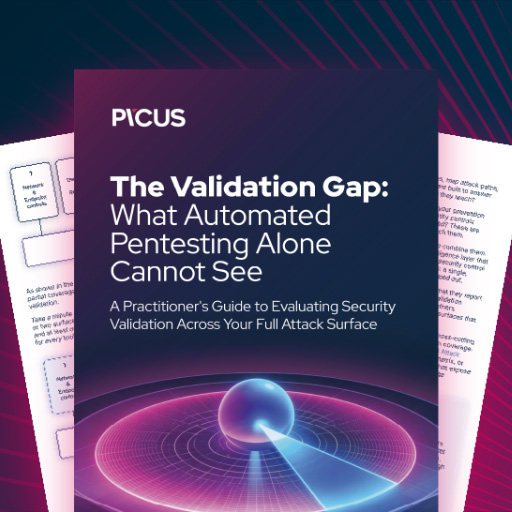
Automated pentesting tools deliver real value, but they were built to answer one question: can an attacker move through the network? They were not built to test whether your controls block threats, your detection rules fire, or your cloud configs hold.
This guide covers the 6 surfaces you actually need to validate.


While there are still some affordable manual cars you can buy new, cars equipped with manual transmissions remain a very small percentage of the total market. If you drive one, know that starting out in second gear in a manual transmission is generally a very bad idea, mostly because it will cause additional clutch wear on the vehicle. That’s why drivers should use the first gear to start out in the vast majority of situations.
But there is one situation in which starting out in second gear is the right choice for numerous reasons, as explained by Jason Fenske of Engineering Explained. This would be when you are starting out on a downward incline, when the car will naturally accelerate down the hill as you release the parking brake. Once the car starts to accelerate as it rolls down the hill, you can engage second gear while the car is in motion. The vehicle’s momentum going down the hill helps you reach a speed at which you would normally be shifting into second gear anyway, so there is no additional wear on your clutch’s friction surfaces.
There is another set of driving circumstances in which you might be tempted to start in second gear, and that is starting on a slippery surface like snow or ice. But as Fenske explains in the same video, this will cause additional clutch wear and should be avoided.
Why are there so few manual transmissions and so many automatics today?

There are surely manual cars that leave their automatic counterparts in the dust, but the real reason manual transmissions are disappearing from so many vehicles is that automatic transmissions deliver better fuel economy. This is partly thanks to automatic transmissions’ additional gear ratios, some of which can have eight, nine, or even 10 speeds. Another solution is the continuously variable transmission (CVT), which has no traditional fixed gears and achieves high fuel efficiency by constantly adjusting to keep the engine in its most efficient RPM band. Manufacturers want the highest possible fuel economy figures for their vehicles, so they have switched to automatic transmissions to achieve them. Even so, manual transmissions are still popular in Europe.
There are other good reasons to drive a manual transmission, even though manuals account for only 0.7% of all new cars sold last year, according to Motor1.com data. Driving a stick is a more hands-on experience, involving you much more deeply in the act of driving. You have direct control over which gear the car is in and how much to accelerate within that gear. You also decide exactly when to shift down and when to shift up, something that an automatic does without your intervention. It’s a much more involving experience.
That being said, driving a manual transmission is definitely not for everyone. Beginners and those easily overwhelmed by the mechanics of driving may be better off first learning the rules of the road in an automatic transmission-equipped vehicle. Then they can drive a manual if they so choose.

Many people do their best to protect themselves from cybercrimes by prioritizing cybersecurity on their laptops, smartphones and other devices. But the real risk may be the theft of your personal data through other means.
A survey commissioned by the cybersecurity company NordVPN, released Friday, found that cybercriminals are shifting how they gain entry, and many of us are ignoring the signs. Although attackers used to mainly target devices — like by slipping malicious files into a computer — the focus is now on manipulating people through scam calls, phishing messages that imitate popular companies and fake login pages to steal passwords.
In a survey of 1,200 Americans, NordVPN found that 91% of people are concerned about cybersecurity scams. Some 56% worry more about broader threats, such as identity theft or fraud, than about scam calls, which they are more likely to encounter regularly. On a daily basis, 46% of people say they experience scam calls, and 17% say they personally deal with identity theft and fraud.
“People picture cybercrime as stolen accounts or drained bank balances, but criminals succeed much earlier in the process,” NordVPN Chief Technology Officer Marijus Briedis said in a statement. “The real moment of attack is when someone feels rushed, scared or pressured into trusting too quickly. From that point, it takes just a few clicks to go from a phone call to a stolen identity.”
In other words, many people are unaware of the major risks that come with scam calls or phishing emails. “They’re the starting point for exactly the kinds of identity theft and financial fraud people are most afraid of,” Briedis said.
Scam calls have increased significantly in the past year, but there are ways to counter them. One way is to use the iOS call screening feature on the iPhone and ignore calls from unknown numbers.
NordVPN recommends several steps you can take to protect yourself from cybercrime. If you encounter a suspicious text message, email or call, pause before taking any type of action. According to NordVPN, scammers like to rush you and messages that seem urgent should be deemed suspicious.
“Modern attacks depend on people reacting faster than they can think,” Briedis said.
Other steps you can take include:
- Verify information before responding.
- Ensure that links and addresses are legitimate before clicking them.
- Enable multifactor notifications whenever possible and use strong passwords.
- Only accept downloads from trusted sources.
- Download security software that can handle multiple cyber threats simultaneously.
A representative for NordVPN did not immediately respond to a request for comment.
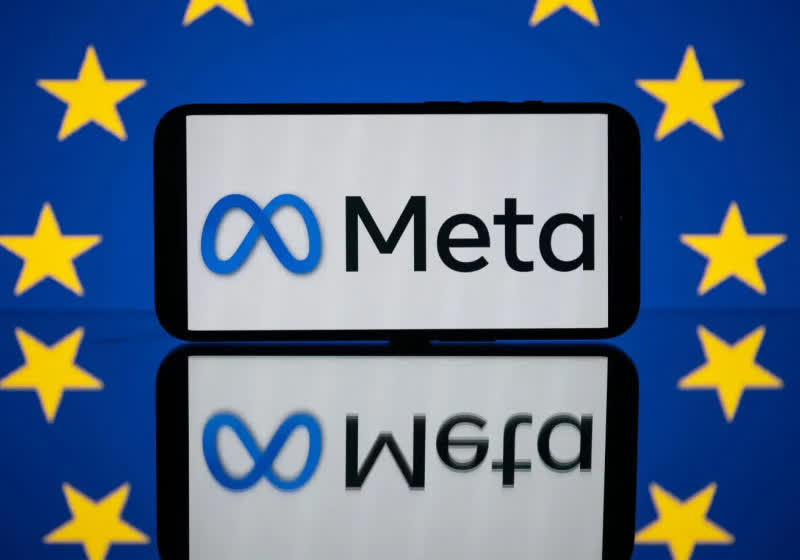
In a recent press release, the Court of Justice of the European Union (CJEU/Curia) explained its decision in a case involving Meta and the Italian regulatory authority (C-797/23). The EU’s highest judicial body stated that member states may grant local publishers the right to fair compensation, requiring online service providers…
Read Entire Article
Source link
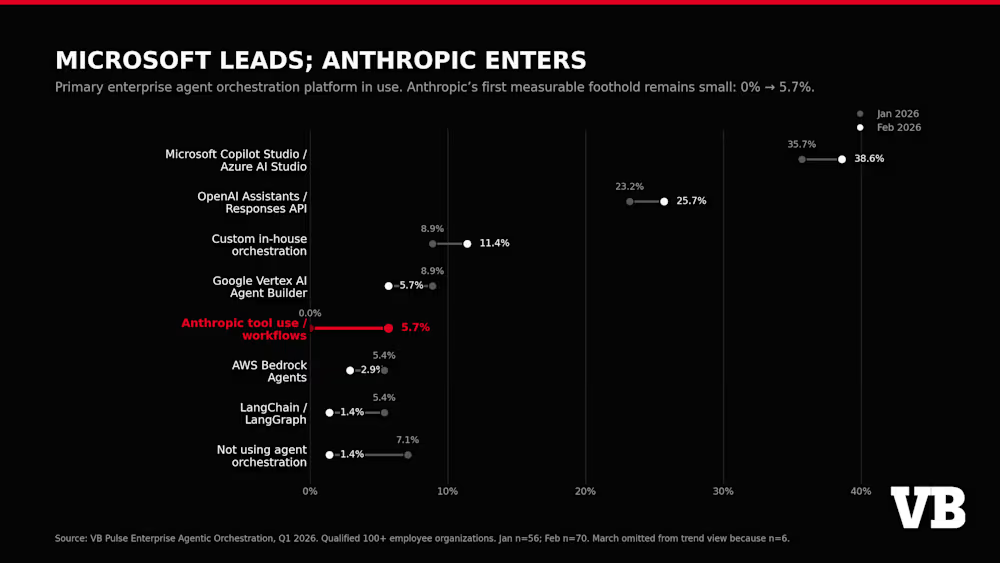
New VB Pulse data shows Microsoft and OpenAI leading enterprise agent orchestration, but Anthropic’s first measurable foothold points to a larger fight over who controls the infrastructure where AI agents run.
For the last two years, the enterprise AI race has mostly been framed as a model war: OpenAI’s GPT series versus Anthropic’s Claude versus Google’s Gemini, with smaller and open-source alternatives also coming in from the U.S. and China.
But the next strategic fight may not be over which model answers a prompt best. It may be over who controls the layer where agents plan, call tools, access data, run workflows and prove to security teams that they did not do anything they were not supposed to do.
New VB Pulse survey data suggests the category is already taking shape. Our independent Enterprise Agentic Orchestration tracker, a survey that records the preferences of qualified, verified technical-decision maker respondents at enterprises at regular intervals, found that Microsoft Copilot Studio and Azure AI Studio led with 38.6% primary-platform adoption in February, up from 35.7% in January.
OpenAI’s Assistants and Responses API held second place, rising from 23.2% to 25.7%.
Anthropic remained far smaller, but it made its first appearance in the tracker: moving from 0% in January to 5.7% in February for Anthropic tool use and workflows.

The underlying move is small — four respondents out of a total 70 in this cohort, with more to come — but strategically interesting because it marks the first sign in this tracker of Claude usage moving from the model layer into native orchestration.
That distinction matters. Enterprises are not merely choosing chatbots. They are deciding where the live operational machinery of AI work will sit: inside Microsoft’s stack, inside OpenAI’s API layer, inside Anthropic’s managed runtime, inside an open framework, or across a hybrid mix of all of them.
“This is the convergence moment for enterprise AI,” said Tom Findling, CEO and cofounder of AI cybsersecurity startup Conifers, in a statement to VentureBeat. “Models and agent frameworks have matured enough together that enterprises are now shifting focus beyond model quality to the control plane around it. In security operations, we’re seeing the competitive advantage move toward platforms that can orchestrate agents, leverage enterprise context, and provide governance and auditability across customer environments.”
Anthropic’s number is still small to start — but the increase is not
The Anthropic number, by itself, should not be overread. A move from zero to 5.7% is not a juggernaut. It is not proof that Anthropic has captured enterprise orchestration.
It is not even enough to say Anthropic has a durable lead in any part of this market. Microsoft owns the early enterprise distribution advantage, and OpenAI has a much larger installed base in orchestration than Anthropic.
But small numbers can matter when they appear at the start of a new market structure. Anthropic’s emergence in orchestration comes as the broader VB Pulse data shows Claude also gaining massive enterprise adoption at the model layer.
In our VB Pulse Q1 Foundation Models and Intelligence Platforms tracker, Anthropic rose from 23.9% in January to 28.6% in February and then even more dramatically to 56.2% in March among qualified enterprise respondents, with the March reading flagged as directional only, because the sample was only 16 respondents.

The story, then, is not that Anthropic is winning orchestration today. It is that Anthropic’s model momentum may be starting to spill into the orchestration layer.
That is where the strategic stakes get higher.
A model is easier to swap than an agent runtime
A model is relatively easy to swap, at least in theory. A company can route one workload to Claude, another to GPT, another to Gemini and another to a smaller open model.
In fact, the VB Pulse Foundation Models tracker over the same Q1 period shows that multi-model strategy is the enterprise consensus: respondents increasingly report adopting multiple models and building orchestration layers that route across them by task, cost and risk profile.
An agent runtime is different. Once a company’s workflows, tool permissions, credentials, audit logs, memory, sandboxed execution and operational monitoring live inside one provider’s environment, switching providers becomes less like changing models and more like changing infrastructure.
That is the real reason Anthropic’s 5.7% foothold is worth watching
Anthropic has already made clear that it wants to provide more than the model. Its Claude Managed Agents documentation describes a public beta for a managed agent harness with secure sandboxing, built-in tools and API-run sessions, while Anthropic’s engineering post frames the architecture around decoupling the model from the surrounding agent machinery: the session, the harness and the sandbox.
In plain English, Anthropic is trying to host the environment where Claude agents remember context, use tools, run code, operate inside sandboxes and persist across long-running workflows. That is no longer just inference. That is operational infrastructure.
The pitch is obvious: most enterprises do not want to stitch together their own agent stack from scratch. They want agents that can act, but they also want permission boundaries, audit trails, workflow reliability and ways to stop the system when something goes wrong.
Security is becoming the buying criterion
The VB Pulse orchestration tracker shows that buyers are prioritizing exactly those concerns. Security and permissions ranked as the top orchestration platform selection criterion in both January and February, at 39.3% and 37.1%.

Control over agent execution rose from 17.9% to 22.9%, while flexibility across models and tools fell from 35.7% to 25.7%. The market appears to be shifting from optionality toward governance.
That shift is not surprising. A chatbot can be wrong and still remain mostly contained. An agent that can send emails, modify documents, query databases, call APIs or execute workflows has a much larger blast radius. The enterprise question is not only whether the agent is smart enough.
It is who gave it permission, what it touched, what it changed, whether those actions were logged, and whether the company can unwind the damage if something goes wrong.
Ev Kontsevoy, cofounder and CEO of Teleport, an identity and digital infrastructure solutions company, argues that the industry is still putting too much emphasis on orchestration itself and not enough on identity: “The race to own the agent orchestration layer is real,” Kontsevoy said. “It’s also solving the wrong problem first. Orchestration without identity only multiplies chaos. Without identity, you don’t know what an agent can access, what it actually did, or how to revoke its access when it operates outside policy. A unified identity layer is a prerequisite to deploying agents — one or many — in infrastructure.”
Syam Nair, Chief Product Officer at the intelligent data infrastructure company NetApp, believes data management is key in all cases to secure AI agent orchestration across the enterprise. As he said in a statement to VentureBeat: “Effective agent management requires built-in intelligence and a continuously updated understanding of both data and, critically, its metadata. This visibility allows organizations to define and enforce clear policies so data is used only by the right agents, for the right purposes. Making this work at scale is a crossfunctional effort. Security, storage, and data science teams must work together to implement policies that safeguard company data, while creating a strong data foundation for AI.”
He continued: “The CIOs and technology leaders that are successful are the ones who take the input, policies, and vision from all these teams into account as they build a data infrastructure that minimizes risk and drives business value.”
Microsoft has the distribution edge
That is why Microsoft’s early lead makes sense. Copilot Studio and Azure AI Studio sit inside an enterprise stack many companies already use: Microsoft 365, Teams, Entra ID, Azure and existing procurement relationships.
The VB Pulse Orchestration Tracker for Q1 2026 describes Microsoft as the enterprise default, with no other platform within 13 percentage points in February.
David Weston, CVP, AI Security, Microsoft, provided some insight on why, writing in a statement to VentureBeat: “Without a unified control layer, you start to see fragmentation – agents operating in silos, inconsistent governance, and gaps in security. What customers are asking for is a way to bring order to that complexity. With Agent 365, we’re providing a single control plane to observe, govern, and secure agents across Microsoft, partner, and third-party ecosystems, all grounded in enterprise data and identity.”
OpenAI’s second-place position is also unsurprising. Its Assistants and Responses API gave developers an early way to build agent-like systems using OpenAI’s models and tooling. In the orchestration tracker, OpenAI is not surging, but it is still ticking up steadily: 23.2% in January to 25.7% in February.
Anthropic is the newcomer at the orchestration layer. But its timing may be favorable. The VB Pulse Foundation Models tracker for Q1 2026 suggests enterprises increasingly see Claude as a fit for higher-stakes workloads where safety, instruction following, long context and governance matter.
The orchestration tracker suggests those same buyers are now moving from agent experiments toward production workflows, where security, permissions and task reliability become the gating issues.
That creates a possible path for Anthropic: not to beat Microsoft as the default enterprise platform, at least not immediately, but to become the agent runtime for companies that already trust Claude for sensitive or complex workloads.
The risk is lock-in

The risk for enterprises is lock-in.
The orchestration tracker found that a hybrid control plane — combining provider-native orchestration with external orchestration — was the leading expected architecture, holding around 35% to 36% across the two substantive waves.
Provider-managed-only approaches grew modestly but remained a minority. The report’s conclusion is blunt: enterprises are not willing to give full orchestration control to any single provider.
It makes total sense as enterprises seek to leverage the “best-in-breed” models, harnesses, and tools from multiple vendors, especially as their needs differ widely across sector, business, and size.
“Most enterprises will operate in a multi-model, multi-agent environment, which makes an independent control plane essential,” agreed Felix Van de Maele, CEO of Collibra, a company specializing in unified governance for data and AI, in a statement to VentureBeat. “That is why we built AI Command Center: to give organizations the visibility, governance, and real-time oversight needed to manage AI systems and agents across the full lifecycle.”
That caution shows up in the risk data. When asked about risks if agent control lives inside a model provider platform, respondents cited security and permissioning limitations as the top concern. Vendor lock-in was the second-largest concern and the only one that increased from January to February, rising from 23.2% to 25.7%.

This is the tension at the heart of the agent market. Enterprises want managed infrastructure because building reliable agents is hard. But the more a provider manages, the more it may own.
Dr. Rania Khalaf, chief AI officer at WSO2 — the subsidiary of EQT that offers open source, customizable AI stacks for enterprises — said enterprises will need an agent control plane that sits apart from individual frameworks, harnesses and runtimes because agents combine the unpredictability of LLMs with the ability to take actions that have consequences.
“Teams want the freedom to use the best model and framework for each job — Claude for coding, Gemini for writing, LangGraph or CrewAI for dynamic modular behavior — and that heterogeneity makes consistent governance untenable in integrated platforms that lock into one ecosystem,” Khalaf said.
From LLMOps to Agent Ops
Khalaf said the industry is also moving from MLOps to LLMOps to “Agent Ops,” where governance has to cover the whole agent, not just the model call.
“A guardrail on an LLM call can catch hallucination or toxic output, but it will not catch an agent thrashing in an unbreakable, costly loop, which is why governance now has to extend out from the LLM interaction to the scope of the agent,” she said.
The practical implication is that enterprises need to separate policy and control from the agent logic itself. Khalaf pointed to the recent example of an agent deleting a production database despite being told not to, arguing that the failure showed the limits of relying on prompt-level instructions where hard identity and access controls are needed.
“Pulling guardrails, evals, policies, bindings, and agent identity out of the core agent logic allows them to be configured per deployment and per environment, owned by the appropriate teams in security, product, and compliance, without fragmenting the governance layer as different teams choose different models and frameworks,” Khalaf said.
MCP is open. The runtime may still be sticky
That is where Anthropic’s Model Context Protocol, or MCP, complicates the story. MCP is not a walled garden; Anthropic introduced it as an open standard for connecting AI systems to data and tools, and Anthropic’s documentation describes MCP as an open-source standard for connecting AI applications to external systems.
But openness at the protocol layer does not automatically eliminate lock-in at the runtime layer. An enterprise could use an open protocol to connect tools while still becoming dependent on a provider’s managed sessions, logs, sandboxes, permissions model, workflow state and deployment environment. In other words, MCP may reduce integration friction, while managed agent infrastructure could still increase switching costs.
Khalaf said Microsoft’s lead likely reflects its M365 and Azure distribution, while Anthropic’s emerging foothold could reflect a different architectural bet around open protocols such as MCP. But she argued the long-term direction is not a single-provider stack.
“Enterprises serious about running agents in production will end up multi-vendor across these layers,” Khalaf said, “which is why the open and interoperable control plane matters more than the current percentages might suggest.”
The next cycle may be cross-vendor collaboration
That same tension — between provider-native convenience and cross-vendor reality — is where Arick Goomanovsky, CEO and cofounder of universal AI agent orchestrator startup BAND, sees the next competitive cycle forming.
“Enterprises now run agents everywhere: individual assistants and coding agents, multi-agent systems in production, agents embedded in Agentforce and ServiceNow, and third-party agents consumed as agent-as-a-service,” Goomanovsky said. “None of them collaborate across those boundaries by default.”
Goomanovsky argues that the missing layer is not just orchestration inside a single model provider, but a cross-vendor collaboration layer that lets agents from different ecosystems act together.
“What’s emerging in parallel is demand for an agentic collaboration harness – an interaction layer that lets agents from Microsoft, OpenAI, Anthropic, and internal teams operate as one workforce,” he said. “Orchestration inside any single vendor is still a walled garden so the next competitive cycle is cross-vendor agent collaboration.”
Independent frameworks face an enterprise packaging problem
There is also a warning sign for independent orchestration frameworks. LangChain and LangGraph fell from 5.4% to 1.4% as the primary orchestration platform in the qualified enterprise sample.
External orchestration abstracted entirely from model providers also fell from 8.9% to 2.9%.
Scott Likens, Global Chief AI Engineer at professional services giant PwC, has a front row seat to this trend as the company spearheads and assists clients with their AI transformations.
As he told VentureBeat in a statement: “Right now, most enterprises are still operating in fragmented environments, with orchestration spread across platforms, business applications, and internally developed tooling. Over time, the market will likely move toward more unified orchestration models, but interoperability, governance and security will remain critical because enterprises are unlikely to standardize on a single agent ecosystem.”
The report argues that fully independent orchestration frameworks may not yet have the enterprise packaging — security certifications, support, compliance documentation and vendor accountability — that procurement teams require.
That does not mean open frameworks are irrelevant. It does suggest that enterprise buyers may increasingly consume open or developer-first orchestration through managed products, cloud-provider partnerships or internal control planes rather than as standalone frameworks.
The agent market starts to look like cloud infrastructure
This is where the agent market starts to look less like the early chatbot market and more like enterprise cloud infrastructure. The winning vendors will not only have capable models. They will have identity integration, permission controls, audit logs, observability, workflow tooling, sandboxing, evaluation and a credible answer to who owns the control plane.
Indeed, the orchestration layer is but one part of the stack that the enterprise must fill in, and enterprises may actually decide to have different orchestration layers for agents working in different departments and functions.
As Nithya Lakshmanan, Chief Product Officer at revenue team AI orchestration startup Outreach.ai wrote in a statement to VentureBeat: “General-purpose orchestration platforms coordinate agent activity well, but they don’t carry the workflow-specific context that determines whether an agent’s action is correct for a given situation. In revenue workflows, an agent acting on incomplete deal history or missing buyer context will underperform and erode trust with users. The teams getting the most out of multi-agent systems are treating domain-specific data as the governance layer, with orchestration sitting on top. Most enterprises have chosen their orchestration stack, and what they’re now figuring out is how those platforms get access to the workflow context they need to make agents useful inside specific business functions.”
That is why Anthropic — which is increasingly launching its own domain-specific agents for finance and design, among other categories — is worth following closely. The company does not need to win the entire orchestration market tomorrow for its strategy to matter. It only needs to persuade a growing set of Claude enterprise customers to let Anthropic handle more of the surrounding machinery: tools, workflows, memory, execution and governance.
If it succeeds, Claude becomes more than a model in a multi-model portfolio. It becomes part of the infrastructure where enterprise work gets done.
That would put Anthropic in a more direct fight with OpenAI and Microsoft — not just over model quality, but over the operating layer of AI agents.
The narrow but important read
The safe interpretation of the VB Pulse data is narrow but important: Anthropic is not yet a major enterprise orchestration platform. Microsoft is. OpenAI is much closer. But Anthropic has registered its first measurable foothold at the orchestration layer, just as the market is deciding who should control agent execution.
For enterprise buyers, that may be the question that matters most in 2026. Not which model is best, but which provider gets to run the agent — and how hard it will be to leave once the agent is running.

Apple shares closed above $300 for the first time after investors rewarded the company’s stronger-than-expected earnings, surging Services revenue, and massive $100 billion buyback despite continued criticism of its delayed AI rollout.
 Apple Stocks app
Apple shares closed at a new record high of $300.23 on May 15, surpassing both the $300 mark and the company’s previous closing record of $287.51 set on May 6. Earlier in 2026, investors worried about delayed Siri features, slowing hardware growth, tariff exposure, and growing competition in generative AI.
Apple stock briefly reached a 52 week high during the trading day of $303.20.
The rally accelerated after Apple reported $111.2 billion in revenue and earnings per share of $2.01 for the quarter ending March 28, both above Wall Street expectations. The company also approved another $100 billion stock buyback and raised its quarterly dividend to $0.27 per share.
Continue Reading on AppleInsider | Discuss on our Forums
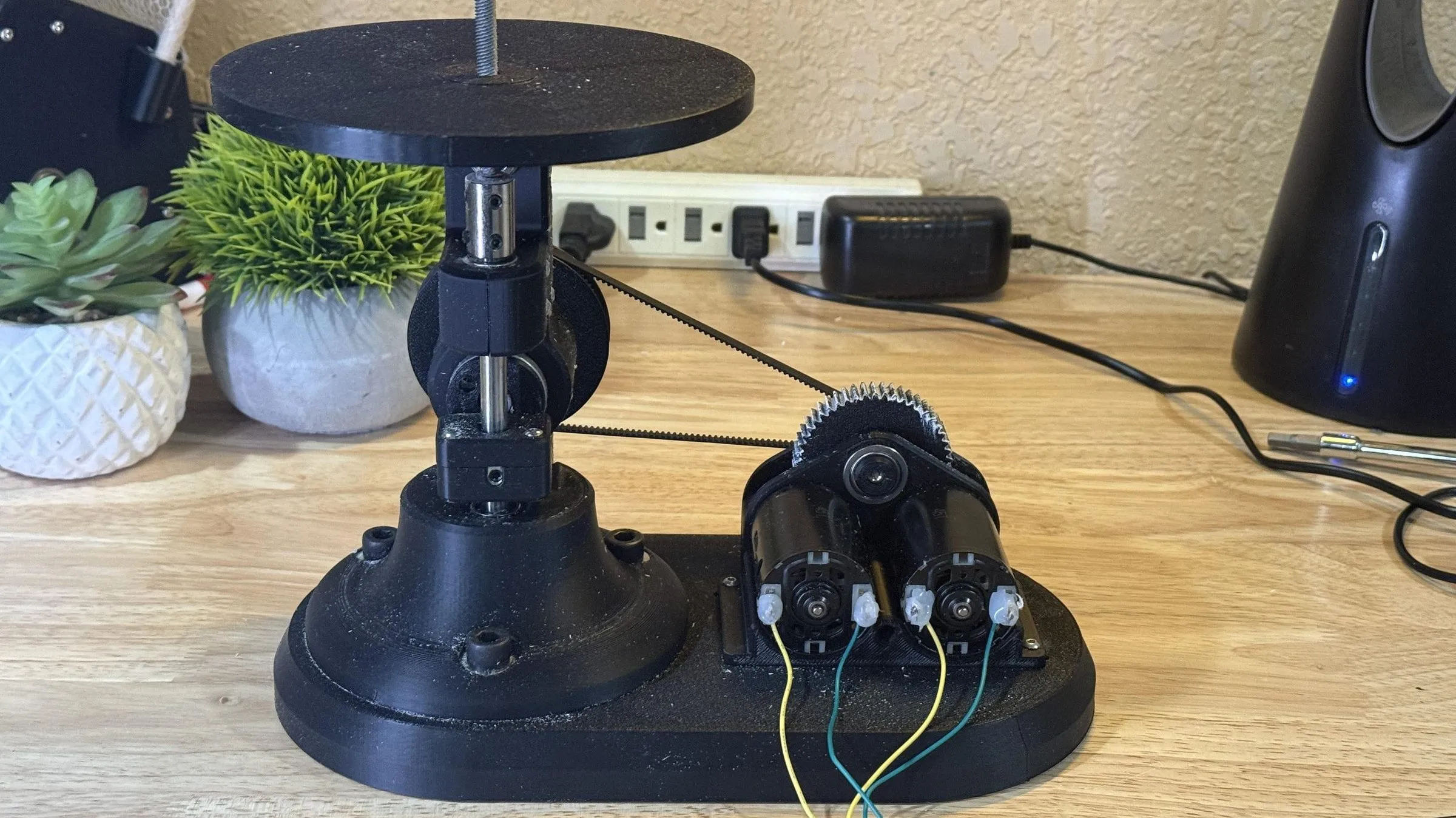
A die filer is a useful tool to have if you find yourself filing parts on the regular. It’s basically a machine that reciprocates a file up and down for you so you can focus on filing the part to your desired dimensions. They’re not commonly manufactured these days, so [Richard Huberjohn] set about building his own.
This die filer relies on a simple mechanism to turn rotational motion from a motor into reciprocating linear motion in the vertical plane. A rotating shaft is connected to a crank, which turns a pin in a slotted carrier attached to a linear bearing. As the wheel turns, the pin slides in the carrier, driving it and the linear rod up and down in turn. Attach a file to this, and you have a working die filer. In this case, the rotating shaft is driven by a pair of DC brushed motors, with output stepped down via a gearbox and then a short belt drive. Speed is varied with the aid of an off-the-shelf controller.
If you’re regularly filing small parts, a build like this could speed your work to a great degree. We’ve featured other DIY machine tool builds before, too. If you’re cooking up your own gear for the home workshop, don’t hesitate to let us know on the tipsline!

Tracking the ancient origins of time from early mankind up to our modern understanding of the concept, Eoin Murphy tells the story of how time came to be.
Discovered in the Lebombo Mountains between South Africa and Eswatini and shown by radiocarbon dating methods to be ~44,000 years old, the Lebombo Bone is the oldest known mathematical artefact. The fibula bone from a baboon contains 29 distinctive notches, strongly believed to have been used as a counting device or a rudimental calendar used to track the phases of the moon.

The Lebombo Bone. Image: Robert Hart, The McGregor Museum, Kimberley, South Africa
By ~12,000 years ago sites had been built containing markings and structures suggesting their use as early calendars. Gobekli Tepe, located in modern Turkey is believed to be the oldest permanent human settlement in the world. V-shaped carvings have been discovered at this site, which some archaeologists believe could represent a solar calendar.
Locations such as Newgrange and Stonehenge dating back to around 5,000 years ago demonstrate the understanding people had developed in order to align with the solstices. As incredible as this was, what was going on further east was even more astonishing.
The Egyptians and Sumerians had both derived 12-month lunar calendars. The calendars weren’t perfect, but they were pretty close. The Sumerians had developed a 360-day year, with the Egyptians getting even closer with their 365-day year.
Calendars fall out of sync
The Romans had also been using a 12-month calendar. However, in their version there was only 355 days. Despite the addition of an extra month known as Mercedonius every two or three years, by 46 BC it is estimated that the Roman calendar had drifted by 90 days.
To rectify the situation, Julius Caesar turned to his adviser, Sosigenes. The Greek philosopher and astronomer devised a plan to bring the civic calendar back into line with the sun. By adding in two additional months, as well as a Mercedonius month, 46 BC would have 445 days spread across 15 months. The longest year in history would become known as ‘The Year of Confusion’.
Despite future calendar years being made up of 365 days and a leap year in every four, by the 15th century the calendar had once again drifted by 10 days.
Recognising that the Julian Calendar was working off the premise that the Earth rotated around the sun every 365.25 days, Aloysius Lilius derived a system whereby the calendar would be based off a 365.24219-day year. Instead of a leap year every four years (100 in every 400 years), there would now be 97.
He also proposed skipping the leap year for the next 40 years, to gain back the 10 days.

Lunario Novo by Aloysius Lilius. Image: Biblioteca del Vaticano
Pope Gregory XIII implemented the changes regarding the reduction in leap years, however he chose to gain back the 10 days by simply deleting 10 days from the calendar. Thursday 4 October 1582 was followed by Friday 15 October 1582 and to this day our calendar is known as the Gregorian Calendar.
Advancements in timekeeping
As far back as the sixth century, it is believed that incense clocks were being used in China. Hourglass or sandglass clocks may go back even further, with some believing they may date back as far as the fourth century.
Another timekeeping device known as a water clock had been used in one form or another since the 16th century BC. But in 1088 AD, Su Song, the Chinese engineer would take the concept to a whole new level. He built a 12-metre high hydro-mechanical astronomical clock tower, using gears and automation in a manner which would not be seen in Europe for hundreds of years.
Throughout the 14th century, the rate of advancements in the field of timekeeping exploded in Europe. In 1336, the first clock believed to strike on the hour using a verge and foliot escapement mechanism was recorded in Milan.
Then in 1371, Henri de Vic constructed and installed a clock in the tower of Charles V’s palace in France. The oldest public clock in Paris, still present today, would set the basis for all advances in timekeeping over the next 300 years.
The 24-hour system and division into 60 minutes had been established by the Babylonians and Egyptians long ago. But through the introduction of modern mechanical clocks, time was now becoming a part of everyone’s lives.
The scientific revolution
In the late 15th century Leonardo da Vinci is believed to have produced the earliest known drawing of a pendulum.
Then, almost a century later Galileo discovered that the regular swing of a pendulum was only dependent on length and not weight. This discovery would lead to the creation of the pulsilogium, a device capable of accurately measuring a person’s pulse. In time Galileo would realise that regular motion could be used to measure time accurately, ultimately paving the way for the scientific measurement of time.
Although Galileo did start to build a pendulum clock, it would never be completed. Inspired by Galileo’s work, Christiaan Huygens, the Dutch physicist would in 1656 patent the first pendulum clock. His invention improved the accuracy of timekeeping devices from 15 minutes per day to within 10-15 seconds per day, making it possible to now include minute and second hands on domestic clocks.

Horologium Oscillatorium by Christian Huygens (1673). Image: Smithsonian Libraries
Great minds change time
In 1687 when Isaac Newton published ‘The Principals of Natural Philosophy’, he changed how we defined time by developing the Theory of Absolute Time. Newton thought of time as something which passes regardless of what is happening in the world. This was in contrast to the previously held view where time could not pass without change occurring somewhere.
However, when Einstein introduced the Special Theory of Relativity in 1905 it would challenge the view that time was absolute. Instead he proposed that the closer an object gets to travelling at the speed of light, the more time slows down and the shorter an object becomes. By 1915, Einstein would advance his theory to include gravity in general relativity.
The theory of relativity changed the world, allowing for modern technology such as GPS navigation. It has also given a theoretical basis for which time travel may be possible, although not as it would appear in science fiction movies.

Stephen Hawking’s Time Travellers Invitation. Image: Science and Industry Museum, Manchester
Although Einstein’s theories have to date stood up to all scrutiny, physicists have been unable to satisfy both general relativity and quantum mechanics (behaviour of atoms and subatomic particles) in one theory. This has led to some physicists asking whether time is real or simply an illusion?
But for now, the next time you look down at your wristwatch or check your phone, take a moment and consider that the first steps on this incredible journey may have started with our ancestors looking up to the sky and asking: “Why?”
By Eoin Murphy
Eoin Murphy is a teacher and science communicator. He is on the board of the Mary Mulvihill Association, which is hosting its annual awards ceremony and Science@Culture talk on Wednesday, 20 May. Tickets are free but extremely limited.
Don’t miss out on the knowledge you need to succeed. Sign up for the Daily Brief, Silicon Republic’s digest of need-to-know sci-tech news.


We may receive a commission on purchases made from links.
Now is the time to pick up the tools you need for that home improvement project. Spring is officially in swing, summer is just around the corner, and various sales around Memorial Day are happening. Buyers will have plenty of options, from professional-grade tools intended for big jobs to budget-friendly options for the at-home DIYer.
If you already have Ryobi tools at home, you likely already own one or more of its battery platforms. Ryobi offers several systems, from small tools that use lithium-ion batteries to larger power tools that use 40V and 80V systems. If you plan to reuse batteries you already own, be sure the tool you purchase uses the same battery system. If you’re new to Ryobi, it’s a solid mid-range option that offers a vast range of products at a price many people can afford.
For Memorial Day, Home Depot is offering great deals on a wide range of Ryobi tools using its different battery systems. We picked items with big savings from three of Ryobi’s battery systems, but there are plenty of deals on offer. Keep in mind that some deals are online only.
Ryobi Brushless Brad Nailer
Home Depot’s deal for this Ryobi High-Performance Brushless Brad Nailer Kit is hard to beat. Currently priced at $199, it’s 50% off compared to its list price of $398. You’re limited to five per order, which is no big deal, considering that most buyers will settle for just one. This kit includes a brad nailer, one 2 Ah high-performance battery, two 4 Ah high-performance batteries, and a battery charger.
This starter kit may be a good choice if you’re replacing your trim or molding, building cabinet faces, installing window trim, or if you just enjoy small woodworking projects like birdhouses. The nailer has a run time of up to 2,250 nails per charge, and an LED fuel gauge featured on the battery lets you track how much runtime is left. The battery itself is easy to install with quick-release latches.
The AccuDrive nose is designed to give users more visibility, increasing accuracy. Reviewers on the Home Depot website say that this nailer is lightweight, well-balanced, and easy to use, though some find the 4 Ah battery to be a bit heavy. Ryobi provides a three-year manufacturer’s warranty on this kit, and Home Depot offers a 90-day return window. This deal is available only online.
Ryobi EZClean Cold Water Power Cleaner
If you want to spruce up your home in time for the summer, check out the Ryobi 40V HP Brushless EZClean Cordless Battery Cold Water Power Cleaner, which comes with a 2.0 Ah battery and a charger. You can save 20% at Home Depot if you pick this one up while deals last, as the price dropped from $199 to $159. This light-duty power washer delivers 600 PSI of pressure and can be used to clean outdoor furniture, windows, siding, and more. It’s cordless, so it’s easy to carry around, and its three-in-one nozzle lets you switch between a turbo mode, a 15-degree spray, and a rinse mode.
The Ryobi power cleaner also has a button that lets you adjust the water pressure as you clean. It comes with a 20-foot siphon hose that pulls water from any fresh source, or you can use the provided bottle adaptor. One battery offers about 15 minutes of run time, so if you have a bigger job, you may want to invest in a second 2.0 Ah battery.
Many reviewers find that the 40V HP Brushless EZClean Power Cleaner works well on light jobs. If you plan more heavy-duty jobs, such as cleaning your sidewalks or driveway, look into the kind of PSI that particular task needs. A few reviewers reported issues with the battery not charging well or not charging at all. The cleaner itself is backed by a 5-year limited tool warranty.
Ryobi USB Lithium 4-Tool Combo Kit
If you’re more of a crafter than a home improvement project guru, Home Depot still has you covered. The Ryobi USB Lithium Four-Tool Combo Kit is currently on sale for $129, meaning $20 in savings (or 13%). The kit includes a screwdriver, rotary tool, power cutter, and a glue pen that all use Ryobi’s USB lithium batteries. You’ll also get two USB lithium 2 Ah rechargeable batteries and one USB cable, an inspection light, two screwdriver bits and a bit case, three mini glue sticks, a drip tray stand, 15 rotary accessories, and a wrench.
All four of the tools have an LED battery indicator that lets you know if the battery is charged or getting low. The screwdriver has both a pivoting head and a work light for visibility. The power cutter has a self-sharpening blade, and the rotary tool has a quick-change collet for fast accessory changes. Finally, the glue pen heats up in under 30 seconds, with an indicator to let you know when it’s ready.
The kit has a two-year manufacturer’s warranty and is a great addition if your projects often include sanding, carving, engraving, cutting, and gluing. Buyers like these tools for small repair and craft projects, noting the ergonomic designs of the tools and their versatility. Some buyers noted that you’ll also need a power adaptor, which is not included, to charge the tools.

NewsBeat1 minute ago
Man caught upskirting had 5,000 indecent images and videos
Business2 minutes ago
Monster Beverage CFO Thomas Kelly sells $614,670 in company stock

Crypto World3 minutes ago
PI faces corrective pressure as token struggles below $0.17

NewsBeat2 months ago
Manchester United reach agreement with Casemiro over contract clause amid transfer speculation

Politics1 month ago
US brings back mandatory military draft registration

NewsBeat1 month ago
Steven Gerrard disagrees with Gary Neville over ‘shock’ Chelsea and Arsenal claim | Football


-

 Fashion4 days ago
Coffee Break: Travel Steam Iron
-

 Politics7 days ago
Politics Home Article | Starmer Enters The Danger Zone
-

 Fashion5 days ago
What to Know Before Buying a Curling Wand or Curling Iron
-

 Politics4 days ago
What to expect when you’re expecting a budget
-

 Tech6 days ago
Auto Enthusiast Carves Functional Two-Stroke Engine from Solid Metal
-
 Business6 days ago
Ignore market noise, India’s long-term story intact, say D-Street bulls Ramesh Damani and Sunil Singhania
-

 Tech5 days ago
GM Agrees To Pay $12.75 Million To Settle California Lawsuit Over Misuse Of Customers’ Driving Data
-

 Fashion4 hours ago
Weekend Open Thread: Theory – Corporette.com
-

 Crypto World6 days ago
CZ says US crypto rivals tried to block Trump pardon
-

 Crypto World6 days ago
PROS explodes 48% as Upbit and Bithumb listings ignite demand
-

 Tech4 days ago
GM agrees to $12.75M California settlement over sale of drivers’ data
-
Crypto World3 days ago
Bitcoin Suisse expands with Digital Asset License and Investment Business Act Registration Approval in Bermuda
-

 Crypto World3 hours ago
E-Estate Announces 1 Year Live: Washington DC Summit as Real Estate Tokenization Enters Its Next Phase
-
 Crypto World7 days ago
Solana UFO Meme Coins Surge After Pentagon Reveals Alien Files
-

 Entertainment7 days ago
Bethenny Frankel Says She Loves ‘Torturing’ Men
-

 Politics3 days ago
Pakistan to enter Chinese capital market as war inflation bites
-
 Crypto World7 days ago
Pi Network Hits 421K Mainnet Nodes Ahead of Protocol 23 Smart Contract Launch
-
 Crypto World1 day ago
Google’s Gemini AI Predicts Incredible Solana Price by the End of 2026
-
Crypto World7 days ago
Crypto Price Analysis May-08: ETH, XRP, ADA, BNB, and HYPE
-
 Entertainment7 days ago
Netflix’s Most Addictive Thriller Is About To Get Even More Unhinged [Exclusive]
You must be logged in to post a comment Login