Connect with us
DAPA Banner
DAPA Coin
DAPA
COIN PAYMENT ASSET
PRIVACY · BLOCKDAG · HOMOMORPHIC ENCRYPTION · RUST
ElGamal Encrypted MINE DAPA
🚫 GENESIS SOLD OUT
DAPAPAY COMING

NewsBeat

Sweeteners and the quest for the perfect alternative to sugar

Published

on

Sweeteners and the quest for the perfect alternative to sugar

Designing a series of sweetener trials seemed straightforward enough to us as behavioural scientists who specialise in human appetite and obesity. The plan was simple: replace the added sugar in a range of foods with different classes of alternative sweeteners, holding everything else constant.

We would start with a simple biscuit with a fruit filling and work from there. In each case we would measure the effects on participants’ eating choices, metabolism and health outcomes.

We put this to our collaborator, Alain Le Bail, a professor and senior food scientist in France with more than 30 years’ experience. He looked as if we’d asked him to build a bridge using marshmallows.

Sugar, he said, isn’t just sweet. It provides structure, texture, browning, moisture and mouthfeel. Removing it doesn’t just alter the biscuit; it breaks the rules that make it a biscuit in the first place.

Advertisement

If even we researchers on appetite and nutrition need to be educated on these complexities, what hope does the average consumer have?


Welcome to our new series exploring the cutting edge of food science. From the latest advances in meat alternatives to weird and wonderful new additives, science is transforming what we eat like never before. This series will bring you up to speed on all the latest and give you plenty of, er, food for thought.

Advertisement

Sweeteners, as we’ll call the broad category of sugar alternatives and sweetness enhancers, were once fairly niche. They were used to lighten a soft drink or sweeten a low-calorie yoghurt, but not much more besides. Now, they are on almost every shelf of the supermarket.

They go to the heart of global debates on obesity, diabetes, child nutrition and ultra-processed foods. Whether it’s politicians deciding on sugar taxes, doctors helping diabetic patients manage their diets, or parents wrestling with product labels, sweeteners are unavoidable.

They attract endlessly conflicting headlines. While we try to reconcile our very human desire for a healthy win-win with our deep cultural unease over “artificial” additives, sweeteners are alternately framed as helpful diet liberators or harmful hormone disruptors. Far more rarely are they seen as ingredients with a specific, measurable function. It doesn’t help that the science in this area is still surprisingly thin on the ground.

Understanding what sweeteners can (and can’t) do for us requires looking beyond the binary of “good” or “bad” to more grounded questions. What are they replacing? In what context? For whom? According to what desired outcomes?

Advertisement

And beyond all this is the question of where sweeteners are heading. Will new technologies like artificial intelligence be transformational? Will we ever make the perfect sugar alternative? Look down the decades and you realise we’ve been trying for a very long time.

A brief history of sweeteners

For over a century, sweeteners have promised the same taste as sugar without the calories or health risks – guilt-free pleasure, in other words. But every breakthrough has been followed by a backlash, leaving a trail of safety scares and shifting public attitudes.

The modern story of sweeteners begins in the late 19th century with the accidental discovery of saccharin at Johns Hopkins University in Baltimore, USA. Derived from coal tar, saccharin is 300-500 times sweeter than sugar.

Advertisement
Saccharin ad from 1893.

Saccharin ad from 1893.
Wikimedia

It quickly found favour among diabetic patients and later, calorie-conscious consumers. Critics questioned its taste, safety and “unnatural” origins, yet its presence grew – particularly amid sugar shortages during the world wars.

In the decades that followed, saccharin became widely used in diet drinks and tabletop products, before safety scares and the arrival of newer sweeteners reduced its popularity.


The Insights section is committed to high-quality longform journalism. Our editors work with academics from many different backgrounds who are tackling a wide range of societal and scientific challenges.


In the early 20th century, other synthetic compounds such as dulcin and P-4000 also emerged, but safety concerns led to their withdrawal a few years later. More prominent was cyclamate, discovered in 1937, which gained popularity in the post-war years, especially in the US.

Marketed as a diet aid and used widely in soft drinks, cyclamate was abruptly banned in 1969 by the US Food and Drug Administration (FDA) following concerns about bladder cancer. Though the evidence was contested – rats in one pivotal study were consuming the equivalent of 550 cans of diet soft drink each day – the US ban was never lifted, leaving a lasting scar on public trust in sweeteners.

Advertisement
Magazine advert from 1960s for Coca Cola Tab

Coca-Cola Tab was one of numerous soft drinks made using cyclamate in the 1960s.
Retro AdArchives

The next turning point came with FDA approval of aspartame in soft drinks in 1983, ushering in what might be called the Diet Coke era. It was also approved as a general purpose sweetener in 1996.

Compared to saccharin, aspartame tasted more sugar-like: in an early comparative study of soft drinks, those sweetened with aspartame were found to be statistically equivalent to sugar (sucrose) on every descriptive scale. Drinks sweetened by saccharin, with its bitter/metallic aftertaste, were among the most different from sucrose.

Aspartame does still taste somewhat different to sugar, but duly became the sweetener of choice for weight-conscious consumers and the food industry, especially in the US and UK. It has drawn negative comparisons to the alternatives, however. In one Canadian study from 2021, 52% of respondents rated aspartame as less healthy than table sugar, while more favourably judging other sweeteners they saw as more “natural”.

Aspartame’s chemical origins admittedly lead to relatively minor drawbacks. It contains the amino acid phenylalanine, which harms individuals with the rare metabolic disorder phenylketonuria. Products containing aspartame must therefore warn about this risk in many jurisdictions, including the US and UK.

Advertisement

Journalists have also amplified speculative risks around aspartame, such as brain cancer, albeit without robust evidence. Regulators including the FDA and the European Food Safety Authority (EFSA) continue to regard aspartame as safe at current permitted intake levels.

Yet consumer scepticism has persisted – and with commercial consequences. In 2015 PepsiCo reformulated Diet Pepsi in the US as “aspartame-free”. Yet the ingredient was not displaced more broadly, and Pepsi later reintroduced aspartame after the reformulated product performed poorly.

The next wave of sweeteners focused on improved sensory profile and functionality. Acesulfame-K (ace-K) and sucralose were adopted in the 1990s and 2000s because they generally tolerate heat and storage better. For example you can’t use aspartame for baking or making sauces because it breaks down at high temperatures. It’s also not useful for items with long shelf lives including certain condiments, dried mixes and confectionery because it can lose sweetness over time.

Advertisement

However, ace-K and sucralose tend only to work in combinations. Ace-K, for example, boosts upfront sweetness, but has a bitter aftertaste that other sweeteners can help “round out”.

In general, uptake of “artificial” sweeteners has varied. They appear more accepted in the UK and Germany, and less, for example, in Portugal and Romania. Influencing factors include regulatory approvals, cultural preferences and health attitudes.

In the 2010s, consumers came to favour natural sweeteners with more botanical origins. The first to become a big deal was stevia, a sweetener extracted from the leaves of Latin America’s Stevia rebaundiana plant (below). It was followed by monk fruit, from the Siraitia grosvenorii vine of southern China.

Advertisement
Stevia plant and sweetener in a bowl

Stevia wonder?
Photoongraphy

These too come with trade-offs, however. For instance, stevia has unpalatable bitter or liquorice notes. And with various natural sweeteners, there are again challenges when sugar’s structural properties matter, including mouthfeel, browning and moisture retention.

This is one reason bulk sweeteners called polyols have become an important, parallel additive. Also known as sugar alcohols, polyols include erythritol, isomalt, maltitol and sorbitol. They are usually synthesised industrially using corn and wheat syrups.

Polyols can be added to products in much larger amounts, since they are not as sweet as the likes of aspartame and stevia. Used to replace sugar’s volume and texture, they can lower the calorie content of foods and also reduce the risk of tooth decay.

However, excessive consumption can give people gastrointestinal discomfort and make them go to the toilet. So when polyols make up more than 10% of the weight of most food products in the UK and EU, for instance, they require a laxative warning on the label.

Overall, the UK permits around 20 different sweeteners. But such are the pros and cons of each that there is still no simple sugar replacement.

Advertisement

Instead, manufacturers mix, match and blend ingredients to approximate the sweetness and structure that sugar provides. The resulting products generate huge annual sales around the world, but each advance is up against a public whose view of sweeteners is continually shifting. And sure enough, the same cycle has been repeating yet again in the 2020s.

How sweeteners became controversial (again)

To understand why sweeteners keep cycling back into controversy, it helps to look at the machinery that translates scientific evidence into public health messages and government policy. The World Health Organization (WHO) sets international norms, standards and evidence-based policy options in this area. It has traditionally focused on free sugars, meaning any sugars added to products as well as those in everything from honeys to fruit-juice concentrates.

The WHO has consistently recommended that adults and children keep free sugars below 10% of their total calorie intake to lower the risk of tooth decay and excess body weight, and below 5% to ensure life-long protection against tooth decay.

Most guidance on sweeteners has instead come from food safety authorities, and focused on safety and exposure rather than potential health benefits. In the UK, whose guidance has been broadly positive, the government launched a sugar reduction programme in 2016. This was ahead of a wider obesity strategy, under guidance from both the WHO and the UK Scientific Advisory Committee on Nutrition.

Advertisement

The sugar programme actively pushed industry and consumers towards replacing sugar with sweeteners. This included introducing a soft drinks industry levy (“sugar tax”) in 2018, on manufacturers for drinks with excessive sugar content.

This led to higher quantities of sweeteners in consumer products, but then in 2023, to the surprise of many in this space, the WHO got directly involved in the sweetener debate. It recommended against using sweeteners as a strategy for weight control or reducing the risk of diseases.

The advice was based on a 2022 systematic review – meaning a summary of various studies – by the WTO. The review found that while rigorous short-term trials (up to one year) suggested minor weight-loss benefits from substituting sugar with sweeteners, long-term observational studies pointed to increased risks of obesity, type 2 diabetes and cardiovascular disease.

In observational studies, researchers observe how people consume sweeteners of their own volition and track their health outcomes. As we’ll see, there are various drawbacks with these studies that make the results less reliable.

Advertisement

The strongest designs for reaching conclusions about the causes of particular health conditions are randomised controlled trials. In this context, that means studies where participants are randomly given foods made with different types of sweeteners to compare outcomes.

We’ll get into the details shortly, but when sweeteners are used in place of sugars in these studies, they typically see modest reductions in body weight and energy intake. In randomised trials comparing sweeteners with water, nothing or a placebo, there are generally no adverse effects on participants’ body weight or energy intake, and no other reported adverse events either.

WHO logo

UK sweetener policy has been complicated by a recent intervention by the WHO.
Richard Juilliart

The drawbacks with observational studies help explain why the WHO framed its recommendation as conditional – in other words, countries can still promote sweeteners if there’s evidence demonstrating their safety and benefits. This conditionality is standard when the WHO is less certain about the balance between benefits and harms, and may think a case-by-case approach is appropriate.

In the UK, that uncertainty didn’t calm the waters. Instead, it arguably legitimised the sense that sweeteners are “controversial”.

Advertisement

In 2025, the Scientific Advisory Committee on Nutrition published a detailed response noting that the WHO placed more weight on observational studies than randomised controlled trials, and that the underlying evidence for the recommendation was mixed. Nevertheless, the committee said people should minimise their overall intake of sweeteners, and that younger children should avoid drinks sweetened with either sugar or sweeteners.

At the international level, there are also more recent cases of policy outpacing evidence. Products containing sweeteners qualify as “ultra-processed foods” under the Nova classification criteria, a controversial system developed by Brazilian researchers around 15 years ago. Nova’s definitions are argued to be value-laden, ambiguous, and to blur the distinction between processing, formulation and nutritional quality.

This Nova classification has probably contributed to a major shift in US sweetener policy. New US dietary guidelines state that no amount of added sugars or sweeteners should be “considered part of a healthy or nutritious diet”.

Generally, the international conversation has shifted from “swap sugar for sweeteners” to “reduce overall sweetness in the diet”. Possible in principle, but poorly evidenced, and politically difficult to engineer.

Advertisement

Why sweetener research can be confusing

Broadly, the science of sweeteners and health consists of:

  1. Mechanistic experiments designed to show how sweeteners affect the body at a biological level;
  2. Observational studies designed to show what outcomes are associated with consuming them;
  3. Randomised controlled trials designed to show what, if any, health conditions they cause under controlled conditions.

Mechanistically, sweeteners have measurable biological effects on the body. They activate taste receptors in the mouth, for instance. They can affect blood sugar responses after eating and drinking, alter hormone release, change how parts of the brain respond to sweetness, switch certain genes on or off, and shift the abundance of some microbes in the gut.

These findings show that sweeteners do have effects on the body. But that is not proof of real-world harm or benefit. A change in hormones, brain activity or gut microbes does not automatically mean that people will eat more, gain weight or face higher disease risk. Mechanistic findings are therefore best treated as clues about what might matter in everyday life.

The gut microbiome is a good example of this gap. Sweeteners potentially alter gut microbial profiles in ways that affect human metabolism. But microbiome findings may differ depending on which sweetener is studied, how much is consumed, who is consuming it, and what else is in the diet. A microbiome finding can therefore be scientifically interesting while still saying little about whether sweeteners, consumed in everyday diets, do net harm or net good.

Advertisement
illustration of the gut microbiome

One swallow does not a microbiome make.
AlphaTauri 3D Graphics

Observational studies follow large groups of people over time and relate reported sweetener use to outcomes such as weight gain, diabetes, heart disease and death. These studies are indispensable for studying questions that randomised trials usually cannot answer well, especially rare outcomes and diseases that may take many years to develop. They are also useful for tracking patterns of consumption and for generating hypotheses. Yet they are also especially easy to misread.

One issue is the precision of measurements. Researchers typically infer people’s sweetener intake from self-reported diet questionnaires that use broad food categories, such as “diet soft drinks”.

These rarely capture the type or dose of sweeteners, not to mention that manufacturers regularly change the ingredients in their products. Researchers can easily link certain sweeteners to health outcomes through misclassifying data.

A bigger issue is known as reverse causality. Sweeteners are disproportionately used by people already trying to manage weight, control their blood sugar, or improve their diet. This is often because their risk of diet-related health problems is already high or rising.

In such situations, sweetener intake is likely a sign of underlying health vulnerabilities and attempts to change behaviour, not a cause of later disease. Researchers can adjust their statistics to account for such people, but this cannot fully untangle people’s motivations and lifestyles.

Advertisement

Finally, sweeteners sit inside what we call an additive vs substitutive problem. The comparison in research is rarely sweeteners versus nothing (additive), but sweeteners instead of sugar (substitutive). Rarer still are studies comparing unique sweetener types or blends.

When you change the comparisons you often reach different conclusions, yet debates around the safety of sweeteners often conflate research findings that compare different things. It’s only once you account for all these complexities that the best human evidence becomes easier to interpret.

To be clear, we’re not saying all the blame lies with policymakers misinterpreting science. The way studies are designed, analysed and communicated can also make the evidence seem more contradictory. The risks of misunderstanding are especially high when a tentative mechanistic signal is discussed as if it were proof of harm in everyday life, or if an observational link is presented as if it carries the same weight as a randomised trial.

What the best human evidence shows

The most important point about sweeteners is what happens when they replace sugar, not when they are consumed on top of an otherwise unchanged diet. That distinction matters because if someone consumes less sugar, you would expect lower calorie intake and smaller peaks in their blood sugar and insulin after meals.

Advertisement

This leads to two key scientific questions. One, do sweeteners change people’s eating behaviour by increasing how much food they eat or altering their food preferences? Two, do any short-term changes translate into meaningful long-term differences in body weight and health?

Some of the clearest evidence comes from a string of recent randomised controlled trials testing sweeteners in realistic dietary settings. Each has involved teams of researchers at different institutions and sometimes different countries, and are known by their short names: Sweet Tooth, Switch and Sweet.

In one trial within the Sweet project, adults with overweight or obesity consumed different drinks. These were sweetened with one of three different blends of sweeteners, alongside a fourth alternative that was sweetened purely with sugar.

Two of the three sweetener blends were new plant-based combinations containing stevia – one with monk fruit and one with katemfe fruit (thaumatin). The third was a common artificial combination of sucralose and ace-K. All participants were given either one of these or the sugar-sweetener drink, then ate a carbohydrate-rich breakfast.

Advertisement

The experiments were carried out by multiple teams of researchers at different universities. These were crossover trials, meaning they were repeated multiple times with the same participants consuming a different drink on each occasion.

All three blends of sweeteners led to people producing less insulin after their meal than those who had the sugar drink. The blends containing sucralose/ace-K and stevia/katemfe fruit also saw lower increases in blood sugar.

There were some small differences between blends in how they affected participants’ appetites, but these did not translate into higher calorie intake over the following 24 hours. In other words, the benefits to blood sugar and insulin didn’t induce participants to eat more to make up for it. Gastrointestinal symptoms were also mostly mild.

It’s harder to swap out sugar for sweeteners in solid foods because of the previously mentioned additional structural benefits that sugar brings. We had to overcome these issues to test the effects of sweeteners in biscuits in our study – mentioned at the beginning of the article – which was also part of the Sweet project.

Advertisement

We tested biscuits with fruit fillings made in three ways: with sugar, stevia or an artificial sweetener similar to aspartame called neotame. We examined how participants were affected in the hours after eating them, then after two weeks of daily consumption. Again, this was a crossover trial.

jammy biscuit broken in half

I think therefore I jam.
Oksana2010

Participants who ate the biscuits containing the sweeteners again saw lower blood-sugar and insulin spikes after a meal – both after one serving and after the two-week test. Participants’ hunger levels and appetite-related hormones did not differ meaningfully either. This is one of the more direct tests of the claim that sweeteners in solid foods increase people’s hunger or disrupt their appetite hormones in a way that makes them eat more.

These results are reassuring, but the real policy question is what happens over months. Sweet has covered this too, in a 12-month randomised controlled trial of adults with overweight or obesity. Involving multiple research teams, the trial was designed to more closely reflect how people use sweeteners in daily life.

Participants first had to complete a two-month low-calorie diet to lose at least 5% of their weight (on average they each lost about 10kg or 22lb). They then had to eat a healthy diet for ten months in which no more than 10% of their calories could come from sugars.

Advertisement

One group had to meet the 10% requirement by replacing sugar-rich foods and drinks with products containing sweeteners, while the other group had to achieve it by avoiding both sugars and sweeteners.

At the end of the year, both groups had kept off most of the weight they had lost. But the group eating sweeteners had regained less weight – about 1.6kg on average – whereas the other group regained about 3.5kg. In other words, within a healthier low-sugar diet, sweeteners may help people to keep weight off.

The trial did detect differences in the two groups’ gut microbiomes, with the sweetener group showing relatively more microbes linked to short-chain fatty acid production and methane production. These could potentially lead to bloating or constipation. But there were no signs that sweetener use worsened measures linked to diabetes or heart disease risk (also known as cardiometabolic markers).

What could explain the difference in weight maintenance with sweeteners? One possible explanation is that the group avoiding both sugar and sweeteners found the diet harder to sustain. Reducing sugar and sweetened foods may have increased the appeal of sweet-tasting foods, making it more difficult to maintain a low-sugar, lower-calorie eating pattern over time.

Advertisement

This interpretation was supported by the psychological data collected in the study, which showed lower diet satisfaction and more cravings for sweet food in the no-sweetener group, but no comparable change in the sweetener group.

Evidence from weight-management programmes points in the same general direction. A year-long randomised trial from the Switch study at the University of Liverpool compared beverages with added sweeteners to just drinking water. This was during a structured programme that helps people change habits related to eating, exercise and lifestyle to lose weight and keep it off. Both groups lost weight and maintained clinically meaningful reductions.

The group having drinks with sweeteners lost slightly more weight than the water group, though the difference was small. The key take-home was that diet soft drinks are not associated with poorer weight control than plain water in a structured programme. This all runs counter to common claims that these drinks drive sweet cravings, reinvigorate people’s appetites and induce them to put weight back on.

Finally, the Sweet Tooth project recently carried out a randomised trial that helps address another popular narrative, namely that exposure to a sweet taste increases a person’s preference for sweetness and drives overeating.

Advertisement

For six months, participants were either given low, moderate or high exposure to sweet-tasting foods and drinks. In all cases, the sweetness came from sugars, sweeteners, fruit and dairy.

By the end of the study, groups did not differ in their liking for sweet tastes or to what extent they chose sweet foods. It also made no difference to their calorie intake, body weight or cardiometabolic markers. In subsequent months, participants drifted back towards the preferences for sweetness they had had before the study.

This weakens the idea that simply “training the palate” by stripping sweet tastes from the diet is a reliable route to lowering calorie intake or improving weight control in the long term.

These trials provide some of the strongest human evidence available and show the science is more coherent than the public debate suggests. In controlled settings, replacing sugar with approved sweeteners tends to lower post-meal spikes in blood sugar and insulin, does not increase appetite or energy intake, and can support weight management when used as part of a healthier, sugar-reduced diet.

Advertisement

The effects are not dramatic, and sweeteners are not a standalone solution to obesity. Overall dietary patterns, food choices and calorie density still dominate. But high-quality human trials do not support the claim that sweeteners, when used as substitutes for sugar, drive weight gain or cause metabolic harm.

One caveat readers may have in mind is aspartame, which was classified by the International Agency for Research on Cancer as “possibly carcinogenic to humans”. However, it was based on limited evidence, mainly concerning liver cancer, and was a hazard classification, referring to the potential of a substance to cause harm in principle. It wasn’t a finding that normal consumption has been shown to cause cancer in everyday life.

The Joint FAO/WHO Expert Committee on Food Additives has concluded that the evidence in humans is not convincing and kept the acceptable daily intake unchanged. The FDA said the classification did not mean aspartame was actually linked to cancer at current permitted levels of use.

The future

The next phase is to deepen what we know already. When people use sweeteners over years, does it help sustain lower sugar intake, or do people simply shift preferences and purchasing patterns? And when studies detect changes in the gut microbiome, does this matter for metabolic health in any meaningful way?

Advertisement

We need better evidence in some of the groups that those who shape policy care most about: children, people with diabetes, and those at highest risk of heart problems and diabetes. Not because current trials suggest clear harm, but because public health guidance should rest on data that reflects real life.

Children having lunch together

Children are one of several groups where the research evidence remains more limited.
Gorodenkoff

The science also needs to answer some practical consumer-facing questions. For instance, we still don’t know enough about which sweeteners, or blends of sweeteners, work best in which products; how much sugar can be removed without making foods and drinks less acceptable; and whether the answers differ for children, adults, people with diabetes or people who already consume sweeteners regularly.

Another frontier is the attempt to get closer to sugar itself. Sweet proteins such as brazzein and monellin, first identified in tropical fruits, are attracting attention because they deliver intense sweetness in tiny amounts. The FDA has recently issued “no questions” letters for both as food ingredients, meaning they can legally be used in commercial foods.

Rare sugars such as tagatose and allulose are also interesting. They are not as intensely sweet, but come closer to sugar in taste and functionality.

Advertisement

But none of this means the perfect substitute has arrived. Sweet proteins can provide sweetness, but not sugar’s bulk, browning or moisture retention. Rare sugars may behave more like sugar, but their performance is still product-specific and manufacturing remains a challenge – they are not naturally abundant so must be produced through complex processes. All these are better seen as promising advances than a single, definitive replacement.

Artificial intelligence may help, though not as a magic wand either. Researchers are now using machine-learning tools to predict sweetness, bitterness, safety and other properties before candidate molecules are ever tested in foods.

That could speed up the search for better sweeteners and, perhaps more importantly, better blends for specific products. The future may lie less in one miraculous ingredient than in smarter combinations: sweet proteins for intensity, rare sugars for bulk and mouthfeel, and improved formulation to bring them closer to the real thing.

Will we ever be able to have our cake and eat it? Probably not in the literal sense of recreating sugar’s chemistry with a single substitute. Sugar is sweetness plus structure, and no one ingredient does both. But the evidence increasingly suggests that we can keep sweetness (and the pleasure it brings) in our diets while reducing sugar intake. In other words, we may not get the same cake, but we can still enjoy a version that costs the body less.

Advertisement

For you: more from our Insights series:

To hear about new Insights articles, join the hundreds of thousands of people who value The Conversation’s evidence-based news. Subscribe to our newsletter.


Source link

Advertisement
Continue Reading
Click to comment

You must be logged in to post a comment Login

Leave a Reply

NewsBeat

Starmer accused of ‘not listening’ as Al Carns becomes second defence minister to resign in 24 hours – live updates

Published

on

Starmer accused of ‘not listening’ as Al Carns becomes second defence minister to resign in 24 hours - live updates

Watch: Al Carns’ interview less than an hour before he resigned

Jane Dalton11 June 2026 21:58

Advertisement

‘We will give our armed forces the capabilities they need,’ Starmer pledges

As he appointed Dan Jarvis to replace John Healey, the prime minister said: “My first duty is to keep the British people safe, and I will always do what is necessary to protect our national security.

“I am pleased to appoint Dan Jarvis as Defence Secretary as we strengthen our armed forces and meet the growing threats facing our country.

“This Labour government is delivering the largest sustained increase in defence spending since the Cold War.

“In a dangerous and volatile world, we will give our armed forces the capabilities they need to defend Britain and keep our nation secure.”

Advertisement

Jane Dalton11 June 2026 21:41

Day of drama in government: A timeline

12.09pm: John Healey resigns as defence secretary, telling the prime minister the financial settlement for defence plan fell “well short of what is required”, with extra support coming after 2030 when the “imperative to speed up readiness to fight is in the first two years”

6.35pm: Sir Keir Starmer issues a strong defence of his spending plans, telling Mr Healey Labour had implemented the highest sustained increase in defence spending since the Cold War, adding: “You are also right that we have to go further. The defence investment plan does just that.”

Advertisement

7.44pm: Pamela Nash, Mr Healey’s parliamentary private secretary, resigns, describing the “delays and difficulties” that had dogged the Defence Investment Plan as “the latest issue that is damaging to the trust of the public in us”

8.22pm: Al Carns resigns as a defence minister, saying he could not defend “a level of investment I know to be inadequate to the task”

9.07pm: Dan Jarvis appointed new defence secretary

Jane Dalton11 June 2026 21:35

Advertisement

Analysis: Starmer faces end game as Healey and Carns resign

Jane Dalton11 June 2026 21:22

Jarvis was tipped to replace Healey

The Independent’s Whitehall editor Kate Devlin earlier tipped Dan Jarvis as a successor to John Healey:

Advertisement

Jane Dalton11 June 2026 21:11

Dan Jarvis is new defence secretary

Breaking news: Dan Jarvis has been appointed Defence Secretary, Downing Street has announced.

Jane Dalton11 June 2026 21:07

Advertisement

Carns slates ‘budget written for calmer world’

Labour MP Al Carns, who has been touted as a possible future leadership candidate, told Sir Keir Starmer as he resigned: “While I had no hand in the defence investment plan, that distance does allow me to say plainly that it is not built for the threat we face.

“It is neither transformative enough nor sufficiently funded. We are asking our armed forces to operate in a more dangerous world on a budget written for a calmer one.”

Jane Dalton11 June 2026 21:00

Advertisement

Change I pushed for won’t come, says Carns as he quits

In his letter to the prime minister standing down as defence minister, Mr Carns said it had become clear that the spending he had wanted would not come.

He wrote: “It has been the privilege of my life to serve this country, first in uniform and then in government.

“I have said that there are issues facing this department that do not lend themselves to easy answers, and that there needs to be agreement throughout the Government about the scale of the challenges we face. It has become clear to me that the change I had pushed for is not going to come. Given the situation, I have decided to resign as minister for the armed forces.

Advertisement

“We face a more unstable and dangerous world than at any point in recent decades, and having spent most of my adult life in uniform, I understand what public service in such a moment demands.

“It is for this very reason I cannot continue.

“I have watched, as a Marine, what war looks like now. I have spoken to those who have seen it up close in Ukraine. The lesson is uncomfortable and it is unambiguous.

“The character of conflict is changing faster than our procurement can keep up with. We are still purchasing capability suitable for the last war while our adversaries arm for the next one. Platforms that cost billions can be defeated by systems that cost thousands. Any serious defence investment plan has to start from that reality.”

Advertisement

Jane Dalton11 June 2026 20:57

Carns: I could not defencd inadequate defence funding

Mr Carns said he quit because he could not “in good conscience” defend a level of investment he knew “to be inadequate to the task”.

He wrote: “I have sat in the rooms, seen the assessments, and spoken to the commanders who will be asked to do more with less, and I cannot in good conscience stand at the dispatch box and defend a level of investment I know to be inadequate to the task.

Advertisement

“A serious country funds its defence to meet the threat it actually faces, not the threat it wishes it faced.”

Jane Dalton11 June 2026 20:54

Al Carns resigns as a defence minister in another blow to Starmer

Al Carns has resigned as a defence minister, he has announced in a letter to the Prime Minister shared on social media, following John Healey’s exit as defence secretary.

Advertisement

Maryam Zakir-Hussain11 June 2026 20:28

Source link

Continue Reading

NewsBeat

US puts up $750K to evacuate American exposed to hantavirus on ship

Published

on

US puts up $750K to evacuate American exposed to hantavirus on ship

WASHINGTON (AP) — The Trump administration put up $750,000 to charter a private yacht to evacuate a single American citizen from a remote South Pacific island after she had been aboard a cruise ship at the center of a deadly hantavirus outbreak, a move that has further strained the State Department’s emergency budget.

The woman, who may have been exposed to the virus while aboard the Dutch MV Hondius cruise liner in April, had gotten off the ship and then flown to San Francisco before traveling to the isolated British territory of Pitcairn Island through Tahiti, according to two U.S. officials and an internal government document obtained by The Associated Press.

The exact amount of the total evacuation payment is still being assessed because the operation is still underway. Both officials spoke on condition of anonymity to discuss a medical case covered by U.S. privacy laws.

The costly effort to pick up the woman has added to the expense of rapid evacuations for diplomats and private U.S. citizens from the Middle East since the start of the Iran war as well as preparations for possible evacuations from Ebola-stricken countries. All have stressed the State Department budget for unforeseen emergencies, known as the “K Fund,” and brought its balance to the lowest level in seven years.

Advertisement

State Department emergency budget strained by multiple evacuations

Another internal document said the State Department is looking at transferring as much as $50 million into that emergency fund from other accounts — $35 million from the budget for embassy security, construction and maintenance and an additional $15 million from an account that pays for broader diplomatic programming. No decision on the transfers has yet been made.

One of the officials said the State Department has another option, to ask Congress to replenish the fund. However, the official said the department is expected to be able to handle payments for both ongoing and “emerging contingency needs.”

The official would not say what the potential shortfall is but insisted that the department is “well positioned” to support diplomats, other U.S. government employees and private Americans who have been forced to leave the Middle East because of the Iran confict, as well as U.S. citizens who may need assistance due to developments such as the Ebola outbreak in Africa.

How the US is evacuating an American exposed to hantavirus from a remote island

The State Department declined to comment on the specifics of the woman’s case on Pitcairn Island but said that “when an American is at risk abroad and unable to access commercial transportation, the Department of State seeks to provide appropriate assistance to get them home to the United States or to another safe location.”

Advertisement

After the woman departed the cruise liner where the hantavirus outbreak occurred, the ship continued to other destinations in the South Atlantic, with some passengers falling ill and at least three dying. The unidentified American woman was stuck on Pitcairn, an island with only about 50 inhabitants, no airport and infrequent maritime options to depart.

Pitcairn is well-known as the island on which Fletcher Christian and other British mutineers from the HMS Bounty took refuge after the 1789 events that toppled Capt. William Bligh, which have entered into the public lexicon with books and films about the “Mutiny on the Bounty.” Their descendants make up most of the island’s current population.

Complicating matters, British authorities had sought urgent American assistance in evacuating the woman from the island, which is their territory, according to the government document about the cost of the evacuation and the second U.S. official.

But initial attempts to send her to Tahiti, a French dependency, about 1,350 miles (2,160 kilometers) — or a 30-hour sea journey — from Pitcairn, were rejected by French Polynesian authorities. They did not want to allow her in because she had not disclosed her exposure when she transited the island on her way to Pitcairn.

Advertisement

The U.S. is transporting the woman, who was not symptomatic, from Pitcairn to Easter Island, another remote location in the Pacific about 1,400 miles (2,253 km) away, which is a territory of Chile and has direct flights to Santiago, so she can return to the United States for any necessary treatment.

All of those factors mean the process of getting her moved from Pitcairn to Easter Island took many weeks to arrange, the officials said.

The government document, which was confirmed as accurate by the two officials, said moving the woman from Pitcairn eventually was arranged via the “Titaina Explorer” trimaran yacht owned by a wealthy Frenchman, who uses it for personal exploration in the South Pacific. Pitcairn has no airport and only limited sea access.

The officials said the woman had no political or celebrity connections and they did not know exactly when she will return to the U.S. Maritime tracking sites show that the Titaina Explorer departed Pitcairn Island on June 5. The voyage to Easter Island can take up to 10 days depending on the speed of the boat and the weather.

Advertisement

Source link

Advertisement
Continue Reading

NewsBeat

World Cup 2026: How late are London pubs staying open to screen the games?

Published

on

World Cup 2026: How late are London pubs staying open to screen the games?

World Cup 2026 is here, promising a festival of football on a scale never seen before.

With the tournament being hosted in the USA, Mexico and Canada, all the matches will kick off between 5pm and 5am UK time. While most footy fans will be pleased that the games are outside of normal working hours, the late (and very early) kick-offs pose a challenge for people keen to soak in the atmosphere in a pub.

England fans watching football in the pub (Chris Radburn/PA)

England fans will be able to watch late-night football in the pub

PA Archive

Source link

Continue Reading

NewsBeat

The ticket price fiasco for the men’s Fifa World Cup has been a spectacular own goal

Published

on

The ticket price fiasco for the men’s Fifa World Cup has been a spectacular own goal

In sport, fairness matters. But when it comes to buying tickets to watch the world’s biggest ever sporting event, money matters too.

Attending the men’s Fifa World Cup 2026 will be much more expensive than any previous World Cup. And that’s not what fans were promised.

In fact, when the US, Canada and Mexico set out their original bid to host the tournament, they said a seat at the final would cost a maximum of US$1,550 (£1,174).

But by April 2026, the cheapest standard final ticket had reached US$5,785. The most expensive seats hit US$10,990 and later tripled. Just two days before the start of the tournament there were reports of 180,000 unsold tickets.

Advertisement

Politicians in New York and New Jersey have launched a formal investigation into allegations that Fifa has confused fans and inflated prices. Fans have complained of a lack of clarity, with many waiting hours in online queuing systems with no idea of the amount they’d have to pay when (and if) they were allocated tickets.

Overall, prices went up for 90 out of 104 matches.

The increase in costs may remind some music fans of the 2024 scandal over Oasis concert tickets when customers watched prices more than double from £148 to £355 as they waited in online queues.

“Dynamic pricing”, when prices go up and down depending on levels of demand, will also be familiar to anyone who has been surprised by swift changes in the price of flights before a holiday. The same seat can cost more today than it did yesterday simply because more people want it.

Advertisement

Fifa denies that it is has engaged in dynamic pricing, saying that they use “variable pricing” instead. But from a consumer’s point of view, it amounts to the same result – the price of tickets that they want to buy changes, usually in an upward direction.

In response to the Oasis dynamic pricing episode, UK regulators later forced ticket sellers to commit to showing price ranges before fans join a queue. By using a “variable” system, Fifa positions itself outside that regulatory precedent entirely.

It faces no obligation to disclose prices in advance and no requirement to explain how they change.

A game of monopoly

But dynamic pricing isn’t always a bad thing for consumers. In fact, it can help them to get a better deal. Economists studying airline markets found that dynamic pricing can reduce prices as different airlines compete for passengers.

Advertisement

The trouble is that Fifa operates in a market with zero competition. No rival sells World Cup tickets. No substitute product exists.

The work of Nobel prize-winning economist Jean Tirole demonstrated that when a single firm controls an essential platform and operates at every level of the market, competitive discipline on pricing disappears. The operator stops seeking an efficient price and starts trying to extract the very maximum that the consumer will tolerate.

For football World Cups, Fifa sets the primary price. It runs the only sanctioned resale marketplace. It pockets 30% on every secondary transaction when unwanted tickets are sold on. It makes money on the first sale, and earns a bit more on the second.

No outcome costs Fifa money. No regulators intervene. But not everyone is prepared to pay out.

Advertisement

Adjusting for inflation, World Cup ticket prices have been stable for 30 years. Then Fifa introduced its new model and the entire pricing architecture shifted. This would explain all the unsold tickets.

For example, England’s semi-final and final allocations failed to sell out. Every fan who applied got a seat.

But the cheapest final ticket through the England Supporters Travel Club still cost £3,119. At Euro 2024 in Berlin, fans paid £83 for the equivalent.

Advertisement

After the backlash, Fifa introduced a US$60 “Supporter Entry Tier” for every match, including the final. It amounts to roughly 10% of each national association’s allocation, a few hundred seats in stadiums holding up 80,000. As a pricing intervention, it changes nothing apart from an attempt to absorb criticism.

The day before the World Cub began Fifa president Gianni Infantino defended the level of ticket pricing, claiming that if they were cheaper the majority would have been resold on the black market. He added that the money generated was required to fund football development across the world.

Consumer research explains exactly what went wrong. When people buy a service rarely and can’t understand how the price was set, they don’t just feel frustrated, they feel cheated.

And when they feel cheated, they walk away. Fifa treated fan loyalty as guaranteed demand. Supporters’ reaction proved it isn’t.

Advertisement

Some football supporter groups have now filed a complaint with the European Commission. Uefa has already gone a different direction, capping prices for Euro 2028 with nearly half of all tickets under £60.

Then, at the start of June, Fifa quietly slashed prices across all 104 matches and returned 70% of its block booked hotel rooms due to low demand – a last minute change of tactics probably designed to save face and avoid empty seats. But to many, desperately chasing lost fans after trying to extract more revenue than any World Cup in history already looks like foul play.

Source link

Advertisement
Continue Reading

NewsBeat

Boyzone’s Mikey Graham sells longtime family home in Dublin as fans express concern

Published

on

Belfast Live

Fans have said they are worried about the Boyzone singer after he briefly stepped out on stage for just a few songs during the band’s two farewell shows in London

Boyzone’s Mikey Graham has sold his former long-time family home in Dublin.

Advertisement

The 53-year-old has made plenty of headlines this week after returning to the stage to join the other members of Boyzone at their two farewell shows.

Many fans expressed concern and speculated whether Mikey would participate in the final shows after he had been missing from the band’s reunion and there had been little promotion of his involvement.

When Mikey stepped out on stage to sing a few songs at Emirates Stadium, the crowd erupted in cheer, but many people expressed concern for his health as he sat on a stool during the show and sang just four tunes out of the 25-song long setlist.

Now, property records have revealed that the singer actually put his longtime home on the market in March of this year. Avalon, in Courtlough, Balrothery, Co. Dublin, which was listed as Mikey’s registered address, sold for €885,000, RSVP Live reports.

Advertisement

He lived in the North County Dublin town and built his family home there two decades ago.

It is not the first change he has gone through recently, as last year, the star and his wife divorced after over 20 years together. Mikey first met his ex-wife, Karen, in 1998, while she was a dancer on a Boyzone tour.

They dated for a few years before getting married in 2004. Two years later, they welcomed their first child together, whom they named Sienna Nicole. Mikey also has another daughter, Hannah, from a previous relationship.

Sienna recently defended her dad against online trolls, saying she was incredibly proud of him for returning to the stage.

Advertisement

“No one will ever know the extent that it took my dad to get to this point and get onto this stage and perform to many people in that way, so as his daughter, as I can say is that I am incredibly proud of him and that is the bottom line.”

For all the latest news, visit the Belfast Live homepage here and sign up to our daily newsletter here.

Source link

Advertisement
Continue Reading

NewsBeat

Results of recycling bins York council consultation

Published

on

Results of recycling bins York council consultation

Almost two thirds, about 63.7 per cent, of the 13,000 people who responded to City of York Council’s consultation said switching to bins would make recycling easier for them.

But around 38.7 per cent said storage space could be an issue, with others raising concerns about how they would look on the street, capacity and moving them for collections.

A council report on the findings stated the amount of responses showed people felt strongly about the issue but there was no one size fits all solutions to concerns raised.

The consultation comes after the council first unveiled plans for recycling bins in February.

Advertisement

RECOMMENDED READING:


It would see most York household’s existing recycling boxes replaced with two wheelie bins, one for paper and cardboard and another for glass, tins and plastics.

Each bin would be collected every four weeks on two-week alternating cycles.

The estimated cost of the changes is £2.8 million, including making and delivering the bins, versus savings of around £310,000-a-year.

Advertisement

Council officials said the changes would make collections more efficient, recycling easier for the elderly and disabled, reduce the risk of staff injuries and stop litter blowing off boxes.

The proposals also come as the council looks to save £520,000 from its waste collection services over the next two years.

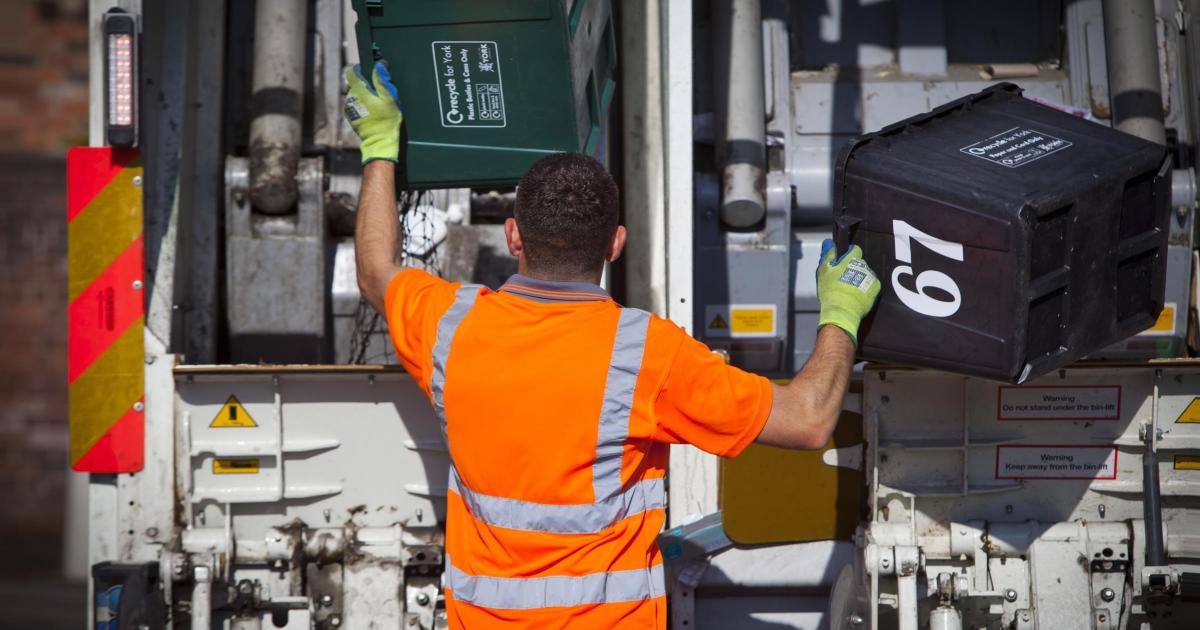
York’s current recycling boxes could be ditched under council plans (Image: Supplied)

They also come ahead of requirements for soft plastics to be collected from kerbsides by March next year.

But concerns have previously been raised about changes to the frequency of collections and how they could affect people such as those in terraced houses who lack storage space.

Advertisement

The roughly 63.7 per cent of people who said the changes would make recycling easier for them compare to around 23.9 per cent who said they would make it harder.

Those who said they may do or were not sure accounted for about 12.5 per cent of respondents.

About 71.9 per cent of those surveyed said having wheelie bins would make it easier to recycle larger cardboard packaging such as boxes for TVs.

It compares to 18 per cent who said it would make it harder and about 10 per cent who did not know.

Advertisement

The visual impact of bins on the street was said to be a barrier to using wheelie bins by about 16.7 per cent of respondents.

About 8.8 per cent were concerned about capacity for the amount of waste they recycled while about 3.1 per cent said the distance to collection points was an issue.

More than half, about 55.1 per cent, said they saw no barriers to using wheelie bins.

The main challenges people said they faced with the current boxes was litter being left behind on the street following collections, according to almost 65.7 per cent of respondents.

Advertisement

Others included not having enough capacity, boxes breaking too easily, being too heavy, them getting wet due to the weather and a lack of storage space.

About three quarters of those who responded to the survey, about 75.9 per cent, lived in households with between two and four people.

Almost a fifth, about 19.5 per cent, were single households and almost 4.6 per cent lived in homes with five or more people.

The council’s report stated options for households concerned about space could be to offer them 180L or 140L bins, rather than the 240L currently proposed.

Advertisement

They added there was no substantial evidence to suggest that storing waste for longer would pose a fire risk, including due to antisocial behaviour.

Councillors are set to discuss the results of the consultation at the Place Scrutiny Committee on Tuesday, June 16.

Source link

Advertisement
Continue Reading

NewsBeat

Alleged rioter, 18, retrieved from lough after PSNI inspector set on fire

Published

on

Belfast Live

A teenager who was allegedly part of a crowd who threw a petrol bomb into the open front door of a police Land Rover was arrested after the Coastguard retrieved him from Belfast Lough, a court heard today.

Belfast Magistrates Court also heard claims that as he was being chased by a PSNI inspector who had been set on fire by the petrol bomb, 18-year-old Ryan Fowles discarded a face covering and gloves when he entered the water in Carrick.

Appearing in the dock, Fowles, with an address on the Larne Road in Carrick, was charged with rioting on 9 June this year.

Advertisement

During a contested application for bail, a police officer outlined how a crowd of masked rioters were attacking police in Carrick on Tuesday evening, hurling masonry and paint bombs at a police Land Rover.

A street had been blocked by bins set on fire in the middle of the road and the court heard that when an inspector opened the door to move one out of the way, a rioter stepped forward and threw a lit petrol bomb through the open passenger door. The petrol bomb ignited and the inspector was set on fire and suffered burn injuries but after it was extinguished, he gave chase to one of the alleged rioters.

Fowles ran across the Marine Highway and into the sea, allegedly discarding gloves and a face covering into the water. The court heard he remained in the water until the Coastguard and his dad arrived to retrieve him.

Although initially arrested, Fowles was released to go to hospital for treatment for a broken arm but following a phone call on Wednesday, he voluntarily presented himself to police.

Advertisement

Submitting that Fowles should be refused bail over concerns about further offending and the risk of further public disorder, the officer added that a remand in custody would send a “strong message to deter others from participating” in further disruption.

Defence solicitor Hamill Clawson, from Reid Black Solicitors, argued that despite the statement of the police inspector, Fowles could not be identified on CCTV footage as taking part in the riot. He told the court that interviewing officers accepted that Fowles could not be seen on the footage.

According to the defendant, he had been watching the disruption rather than taking part when “he was struck with a baton and in fear, he ran and got into the sea”.

Submitting that the sole evidence was the alleged observations of the inspector, Mr Hamill highlighted that in addition to mental health difficulties and a diagnosis of autism, Fowles has a completely clear record so with conditions, he could be granted bail.

Advertisement

District Judge Anne Marshall said while Mr Clawson had made every point that he could, “given the ongoing public disorder, I am satisfied that there is risk of further offending, a risk of harm and public disorder”.

Accordingly, she refused bail and Fowles was remanded in custody with the case adjourned to 9 July.

For all the latest news, visit the Belfast Live homepage here and sign up to our daily newsletter.

Source link

Advertisement
Continue Reading

NewsBeat

Newscast – Why Has Defence Secretary John Healey Resigned?

Published

on

Newscast - Epstein Files: New Mandelson and Andrew Allegations

Available for over a year

Today, the UK Defence Secretary John Healey has resigned.

In his resignation letter to the PM, Healey set out his reasons for leaving, telling the PM the defence investment plan “falls well short of what is required for defence and the country at this dangerous time”.

The sixth minister to resign for Starmer’s cabinet in a month, and one of its most loyal, the question will now turn to what lies ahead for the PM.

Advertisement

Adam and Chris are joined by Shashank Joshi Defence Editor of the Economist

You can now listen to Newscast on a smart speaker. If you want to listen, just say “Ask BBC Sounds to play Newscast”. It works on most smart speakers.

You can join our Newscast online community here: https://bbc.in/newscastdiscord

Get in touch with Newscast by emailing newscast@bbc.co.uk or send us a WhatsApp on +44 0330 123 9480.

Advertisement

New episodes released every day. If you’re in the UK, for more News and Current Affairs podcasts from the BBC, listen on BBC Sounds: https://bbc.in/4guXgXd

Newscast brings you daily analysis of the latest political news stories from the BBC. The presenter was Adam Fleming. It was made by Jack Maclaren with Anna Harris and Gabriel Purcell-Davis. The social producer was Joe Wilkinson. The technical producer was . The assistant editor is Chris Gray. The senior news editor is Sam Bonham.

Programme Website

Source link

Advertisement
Continue Reading

NewsBeat

Emma Raducanu facing two matches in one day after rain causes chaos to Queen’s schedule

Published

on

Emma Raducanu facing two matches in one day after rain causes chaos to Queen’s schedule

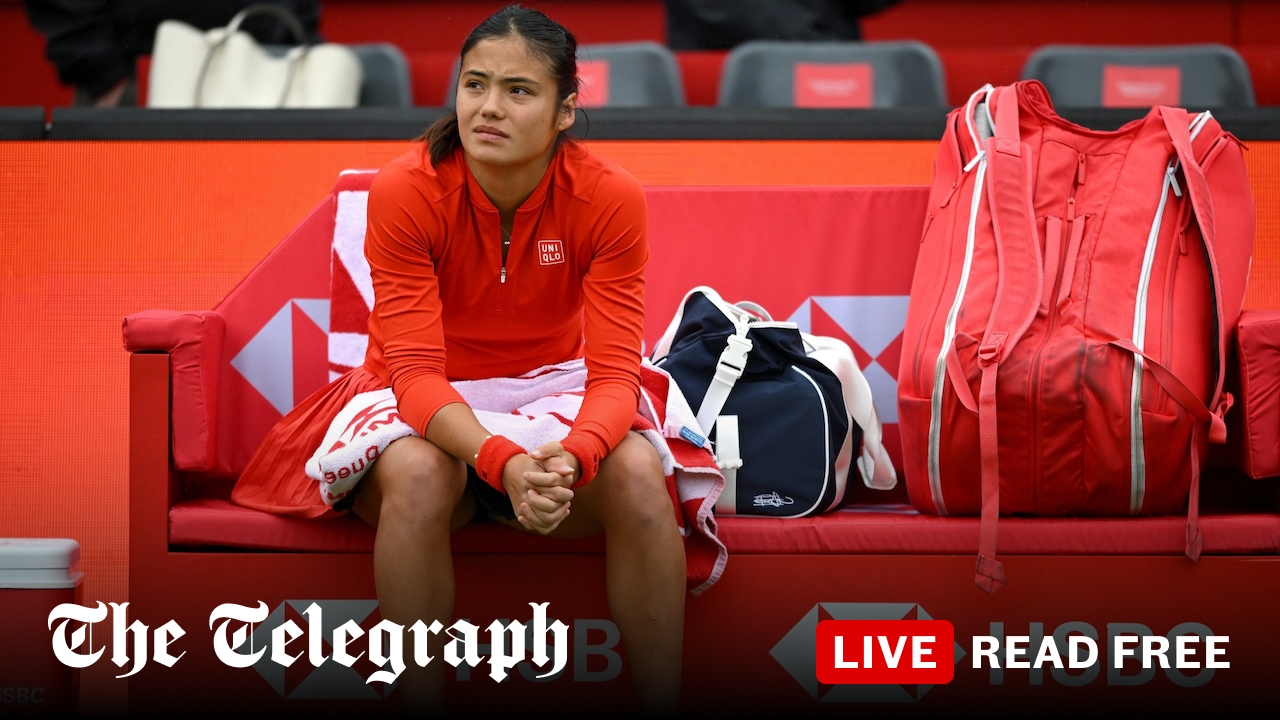
Emma Raducanu and mini resets are as much part of the British tennis landscape as Queen’s and rain delays (Exhibit A: today’s weather in London). But the British No 1 struck a confident figure both during and after her 6-0, 6-3 win over over qualifier Anna Blinkova on Tuesday. Enough to suggest that the green green grass of home may be what her season needed after year of mis-starts, inaction and frustration.

Obviously one match does not make a summer and the real tests are to come, starting with her match against Sorana Cîrstea in west London today. Yet, Raducanu sounded upbeat after the win on Tuesday saying (via writing on a TV camera) that she was happy to be “back home”, hinting at the possibility that this will not be another false dawn.

“Despite not having played a lot of matches, I was really pleased with how I came out and was playing very free,” the world No 42 said. “I think I was just feeding off of the atmosphere, and it felt free, it felt clear, and a lot of clarity. Not necessarily thinking too much, not trying to do too much.

Advertisement

“I love playing on grass. And playing at home, I think it also brings a really good side out of me.”

Raducanu will need all of that “good side” today when she faces Cirstea. The in-form Romanian stands at No 10 in the rankings for this season. And the last time the pair met, in the final of the Transylvania Open in early February, Cîrstea dished out a 6-0, 6-2 thrashing. The mitigating circumstance is that it was around the time when the Briton picked up the virus that has dogged season since.

So today’s match will serve up a useful gauge of where Raducanu’s game is, one that on Tuesday at least, looked to be heading in the right direction.

Stay here for all the action from west London where I imagine people will be doing the opposite of a rain dance (a sun dance?) in a bid to see some action at the famous club. 

Advertisement

Source link

Continue Reading

NewsBeat

‘Perfect’ thriller airing on Film4 tonight after leaving fans ‘raw’

Published

on

Wales Online

Anna Kendrick’s psychological thriller is airing on Film4 tonight, and fans have hailed it a ‘masterpiece’ that is ‘scarier than any horror’

A thriller hailed as a “masterpiece” is set to air on television this evening.

Having originally premiered in 2022, audiences have declared it “scarier than any horror”, making it an ideal late-night watch.

Alice, Darling screens on Film4 tonight, following its world debut at the Toronto International Film Festival four years ago.

Advertisement

Fronted by Anna Kendrick, the thriller sees the Pitch Perfect star portray Alice, a young woman trapped in a psychologically abusive relationship with her boyfriend Simon (played by Charlie Carrick).

Following candid advice from friends during a holiday — which she has disguised as a work trip — Alice resolves to distance herself from both the relationship and her co-dependency with Simon. However, events take a sinister turn, reports the Mirror.

Upon discovering Alice’s deception, Simon tracks her down to a secluded lakeside cabin, arriving unannounced, his menacing and controlling nature lurking beneath an outwardly charming façade.

The official synopsis reveals: “A young woman trapped in an abusive relationship becomes the unwitting participant in an intervention staged by her two closest friends.”

The cast also includes Kaniehtiio Horn and Wunmi Mosaku as Alice’s friends, Tess and Sophie.

Alice, Darling has been hailed as “very underrated” by fans, with one calling it: “Tremendously well done.” They added: “It will leave you uncomfortable and vulnerable and essentially raw, but the journey, truth and confrontation is more than worth it if you can face and stare and confront the demons within us or around us all.”

Another called it a “mesmerising watch”, while someone else said it was “unquestionably poignant”. One review also read: “The tension and subtlety that Anna plays her role is a masterpiece.”

Advertisement

Another viewer called it “perfect”, as someone else hailed its “underrated brilliance”. Yet another said it was “hard to watch but absolutely worth it,” while someone else called it “scarier than any horror”.

Twilight actress Anna previously revealed how she related to her character in Alice, Darling, after a personal experience with emotional abuse.

She told People Magazine, of recalling the first time she read the screenplay: “I was coming out of a personal experience with emotional abuse and psychological abuse.

Advertisement

“I think my rep sent it to me, because he knew what I’d been dealing with and sent it along. Because he was like, ‘This sort of speaks to everything that you’ve been talking to me about’.”

She went on: “I was in a situation where I loved and trusted this person more than I trusted myself. So when that person is telling you that you have a distorted sense of reality and that you are impossible and that all the stuff that you think is going on is not going on, your life gets really confusing really quickly.

“And I was in a situation where, at the end, I had the unique experience of finding out that everything I thought was going on was in fact going on. So I had this kind of springboard for feeling and recovery that a lot of people don’t get.”

Advertisement

She went on to say that the script was “surprising timing” but she “wasn’t in danger of re-traumatizing myself,” and felt that making the film became “incredible cathartic”.

Alice, Darling airs at 9pm on Film4 on Thursday, June 11.

Source link

Advertisement
Continue Reading

Trending

Copyright © 2025