

Crypto World
Spot Bitcoin ETFs Lose $1B in a Week, Ending Six-Week Inflow Streak

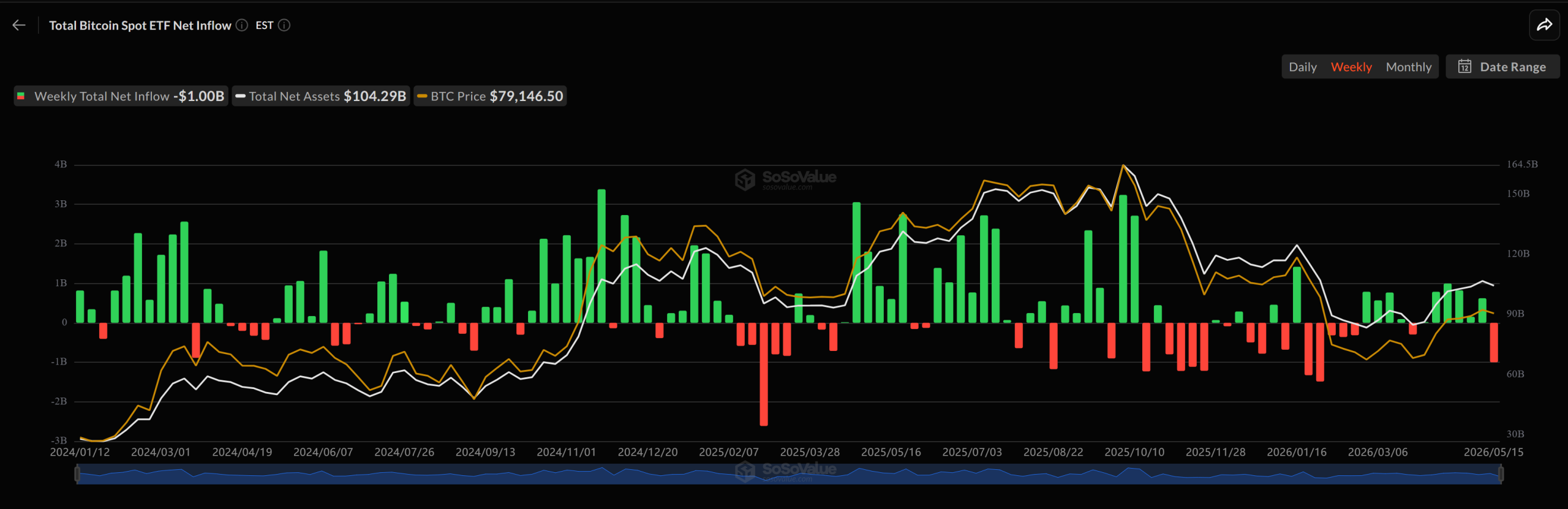
Spot Bitcoin exchange-traded funds (ETFs) recorded $1 billion in weekly net outflows, ending a six-week inflow streak that had drawn a combined $3.4 billion.
The week started on a cautiously optimistic note, with Monday posting modest inflows of $27.29 million, according to data from SoSoValue. The tide turned sharply on Tuesday, when investors pulled $233.25 million from the funds. Selling pressure intensified on Wednesday, the worst single day of the week, with outflows reaching $635.23 million.
A brief reprieve came on Thursday, as inflows of $131.31 million offered a momentary reversal. However, Friday erased that recovery as well, when a further $290.42 million exited the products, sealing the week in the red at exactly $1 billion in net outflows.
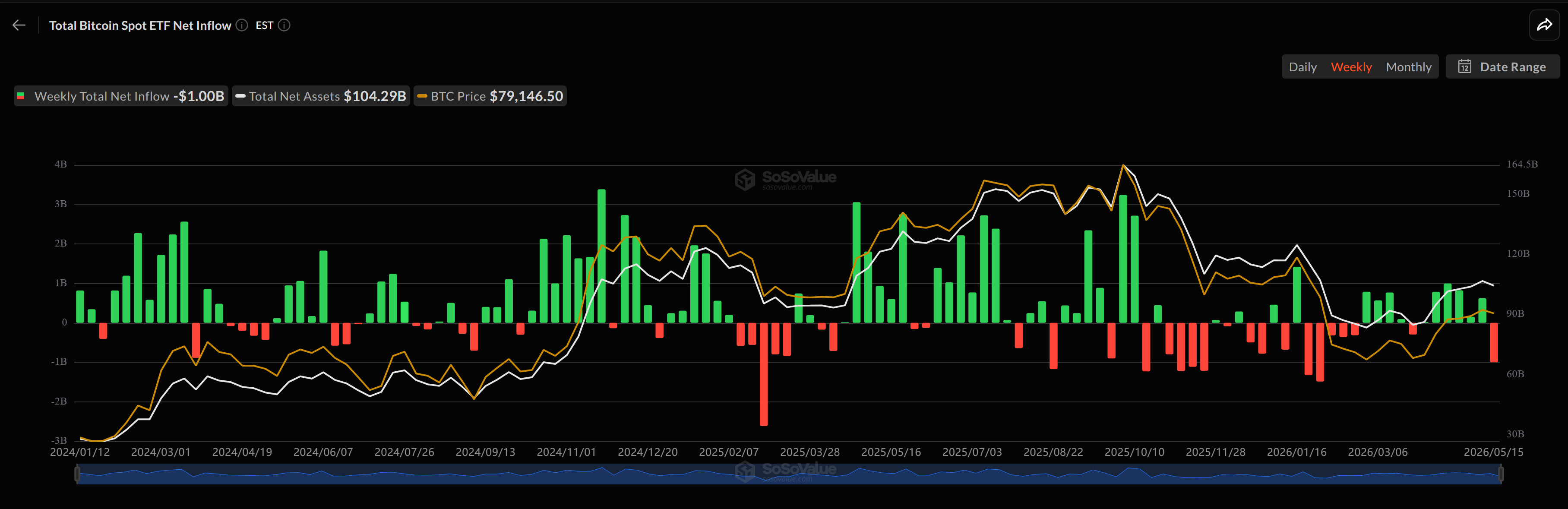
Spot Bitcoin ETFs see weekly outflows. Source: SoSoValue
The weekly loss marks a reversal from the previous six weeks, during which spot Bitcoin ETFs attracted consistent net inflows, with the week of April 17 standing out as the strongest, pulling in $996.38 million. This week’s selling leaves total net assets sitting at $104.29 billion, with cumulative net inflows across all products at $58.34 billion.
Related: Bitcoin ETFs Post Largest Outflows Since January as BTC Slips
Capital rotates toward AI, crypto
In a recent note, analysts at Bitunix said capital is “aggressively” rotating toward both the “AI growth narrative” and the institutionalization of crypto assets. NVIDIA, Google and Apple pushed toward fresh all-time highs last week, while AI chipmaker Cerebras surged more than 70% intraday on its IPO debut.
On the crypto front, the CLARITY Act, widely seen as one of the most consequential crypto market structure bills in the US, cleared the Senate Banking Committee. Coinbase shares rallied sharply subsequently as markets priced in the development, and Bitcoin climbed back toward the $82,000 mark.
However, Bitcoin’s price structure points to a market on edge, Bitunix said. They noted that heavy short liquidity sits clustered between $82,400 and $82,600, with $80,000 serving as the key support level to watch. “Current price action suggests the market has clearly entered a high-leverage volatility structure, as capital waits for further direction from the three dominant macro themes: AI expansion, U.S.-China relations, and crypto regulation,” they wrote.
Related: JPMorgan Boosts Bitcoin ETF Holdings in Q1 2026 Filing
Spot Ether ETFs see consistent outflows
Meanwhile, spot Ether ETFs recorded outflows across all five trading days last week. Tuesday was the worst session, with $130.62 million exiting the products, followed by $65.65 million on Friday, $36.30 million on Wednesday, $16.89 million on Monday, and a relatively muted $5.65 million on Thursday.
Combined, the five-day streak wiped $254.46 million from the funds, pulling total net assets down to $12.93 billion by week’s end.
Magazine: Guide to the top and emerging global crypto hubs — Mid-2026


Disclosure: This article does not represent investment advice. The content and materials featured on this page are for educational purposes only.
Chainlink struggles near $10 as investors debate recovery potential versus growing interest in crypto presales.
Summary
- Chainlink trades near $10 in 2026, stuck below $14 resistance despite strong partnerships and rising cross-chain activity.
- MEPU is a meme P2E game token using established meme communities, where gameplay drives demand and in-game token utility.
- PTRUE is a prediction market AI tool presale that aggregates data and produces analysis for event-based betting decisions.
Chainlink has been one of the more frustrating charts to watch in 2026. The token trades around $10 in mid-May, down roughly 40% over the past year and still sitting well below the $14 resistance that has capped every recovery attempt for months.
That gap between price and network activity is the whole reason the Chainlink price prediction debate has been so heated. Some see it as a clear setup for a recovery. Others have moved their attention to presales.
Chainlink price prediction through May 2026
For the remainder of May, short-term projections place LINK in a narrow range. Around May 20, the price is predicted to fall to $9.86, then gradually rise through the second half of the month, ending May close to $10. Most days range from $9.97 to $10.17. The month’s high is $10.21, while its low is $9.86.
What is going on beneath the price is the interesting part. In the first quarter of 2026, Chainlink’s cross-chain volume exceeded $18 billion. In addition to an increasing number of organizations in the real-world asset area, the network has partnerships with SWIFT, Visa, Robinhood, and Aave. The news of a larger integration with DTCC, which is scheduled for late 2026, could cause the price to rise.
The key level is currently $14.37. For months, LINK has attempted and failed. The price is likely to remain in this range until that happens. The larger move would have to wait until later in the year because the May forecast does not come close.
Meme Punch: The other side of the question
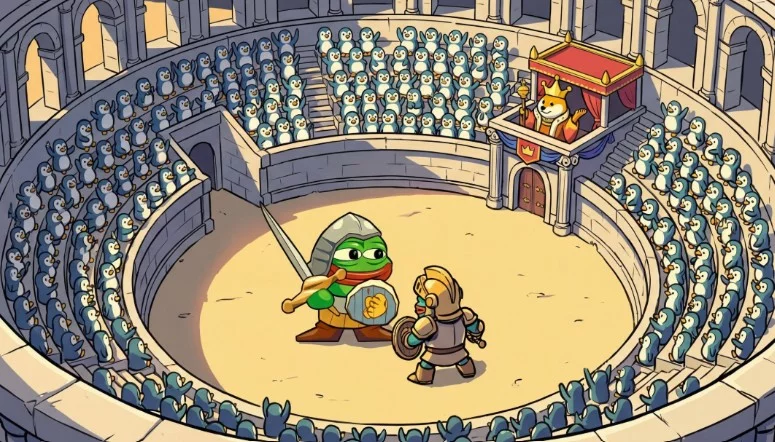
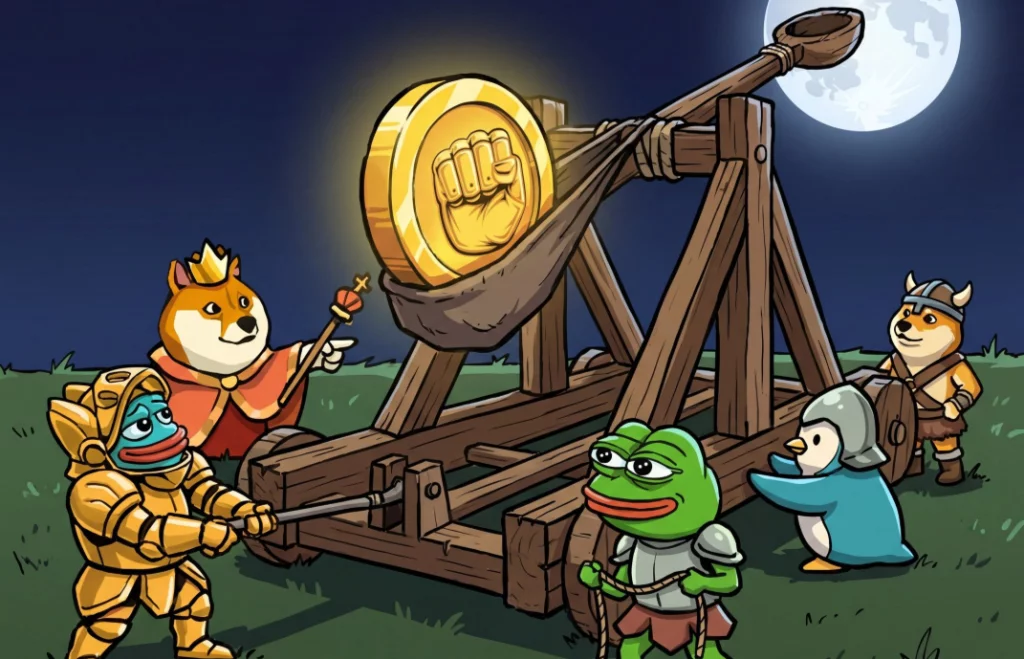
Most new meme projects spend months trying to build a community from nothing. Most of them fail. Meme Punch takes a different route. The game uses five characters that already have big communities behind them: Pepe, Doge, Floki, Brett, and Pudgy Penguin. Each one comes with an audience that has been around for years.
The game is a medieval fighting arena. Players pick one of the five knights and fight other players. Wins pay out in MEPU. Inside the game, the token is used to buy weapons, skins, and special abilities, so the more people play, the more the token gets used.
MEPU runs on Ethereum. Total supply is 10 billion. Presale takes 40%, staking 14.5%, and liquidity 12%. Buyers can pay with ETH, BNB, SOL, USDT, USDC, or a card. The current presale price and APY are on the official website.

Poly Truth: A different kind of presale
The other notable presale is Poly Truth, which falls into an entirely different category. It is neither a game nor a meme coin. It is a research tool made for prediction market players.
Anyone betting on an election, a sports result, or a price target has the same problem. The information they need is spread across news sites, social platforms, and historical data, and there is rarely enough time to read all of it before placing a bet. Poly Truth does that work in the background. It pulls the data together, runs the analysis, and outputs a written brief on which side of the bet has the strongest case.
$PTRUE runs on Ethereum with a total supply of 11.5 billion. Presale takes 40%, liquidity 17%, and staking 10%. The team allocation has a 3-month cliff and a 12-month vest. The contract has been audited by SolidProof and Coinsult, with both reports public.
Reading all three together
LINK is the known infrastructure play. It already trades on every major exchange, the network is doing record volume, and the price has been pinned to the same range for months while the fundamentals quietly build up. The upside is there if $14.37 breaks, but the wait could be long, and the move depends as much on the broader market as it does on Chainlink itself.
Meme Punch and Poly Truth sit at different points. Both are still in presale. Neither has a public market price yet. The risk is higher, and the upside is harder to estimate. They are also smaller positions, since presale exposure is limited by stage caps rather than open market liquidity.
The honest answer to the question is that the three projects are doing different jobs. A LINK position is a bet on infrastructure adoption playing out over the rest of the year. A presale position is a bet on a specific project hitting its launch and finding a market once it lists.
Disclosure: This content is provided by a third party. Neither crypto.news nor the author of this article endorses any product mentioned on this page. Users should conduct their own research before taking any action related to the company.
Crypto World
Wall Street’s Elite Quietly Accumulated These 5 Stocks in Q1 2026 – Microsoft (MSFT), Alphabet (GOOGL) Top the List

Key Takeaways
- Pershing Square initiated a fresh Microsoft position following the stock’s decline, simultaneously divesting its entire Alphabet holdings.
- Berkshire Hathaway massively expanded its Alphabet ownership, jumping from 18 million shares to 58 million shares—a position valued at approximately $16.6 billion.
- In an unexpected development, Berkshire established a significant Delta Air Lines position valued between $2.65 billion and $3 billion.
- Amazon received capital inflows from both Appaloosa Management and Pershing Square, even as Berkshire reduced its stake.
- Both Appaloosa and Pershing Square expanded their Uber holdings, signaling sustained conviction in platform-based business models.
Recent 13F disclosures reveal where Wall Street’s most influential investors deployed capital during Q1 2026. These regulatory filings arrive with a mandatory delay, capturing portfolio positions as they stood on March 31, 2026.
While these documents don’t disclose current holdings, they provide valuable insight into where institutional capital was flowing just months ago.
This quarter’s investment patterns highlighted several dominant trends: artificial intelligence infrastructure, cloud services, transportation recovery, online commerce, and platform economics. Here’s an in-depth look at the five most notable stock positions.
Microsoft and Alphabet: Strategic AI and Cloud Repositioning
Pershing Square, led by Bill Ackman, established an entirely new Microsoft position throughout Q1. Reuters noted that Ackman capitalized on the stock’s pullback, viewing the corrected valuation as compelling.
This strategic entry coincided with Pershing Square’s complete divestiture of Alphabet shares. The simultaneous moves represent a deliberate reallocation—shifting from one AI and cloud infrastructure leader to another.
Microsoft offers extensive exposure to Azure cloud services, Microsoft 365 Copilot integration, GitHub developer tools, comprehensive enterprise solutions, and its strategic OpenAI collaboration. These elements form the core of the AI narrative that continues to captivate investors throughout 2026.
Conversely, Berkshire Hathaway pursued the opposite strategy. The Omaha-based conglomerate dramatically escalated its Alphabet position, expanding from approximately 18 million shares to 58 million shares. Barron’s valued this holding at around $16.6 billion.
This substantial investment signals strong conviction in Google Search dominance, YouTube’s advertising power, expanding cloud services, and Alphabet’s AI infrastructure. The diverging strategies demonstrate that even sophisticated investors disagree on which AI powerhouse offers superior returns—though both Microsoft and Alphabet remain central to that conversation.
Delta, Amazon, and Uber Complete the Portfolio Additions
Among the quarter’s most unexpected developments, Berkshire Hathaway initiated a substantial Delta Air Lines position. Reuters valued the stake at approximately $2.65 billion, while Barron’s estimated it closer to $3 billion.
This investment carries particular significance given Berkshire’s post-pandemic withdrawal from airline investments. A renewed Delta position represents a contrarian bet within an industry confronting elevated fuel expenses and macroeconomic headwinds.
Amazon and Uber Maintain Institutional Appeal
Amazon drew investment from multiple prominent funds. David Tepper’s Appaloosa Management acquired 2.1 million Amazon shares, elevating it to the fund’s top position at approximately $900 million. Pershing Square simultaneously increased its Amazon stake by 19%.
Meanwhile, Berkshire reduced its Amazon holdings during the identical timeframe. Nevertheless, continued accumulation by Tepper and Ackman establishes Amazon as one of the quarter’s most scrutinized positions.
Uber completed the five-stock roster. Appaloosa purchased roughly 4.5 million Uber shares, expanding its position to approximately $455 million. Pershing Square maintained Uber as a substantial portfolio component.
Uber appeals to institutional investors through its diversified revenue streams spanning ride-sharing, food delivery, advertising services, and strengthening profitability metrics. While not classified as traditional technology, it exemplifies the platform-business architecture that institutional funds increasingly favor.
Collectively, these five equities—Microsoft, Alphabet, Delta, Amazon, and Uber—illustrate what elite investors prioritized entering 2026: established business quality, artificial intelligence exposure, and platform-driven expansion.


Key Highlights
- Nvidia’s Q1 2026 SEC filing revealed a 47.2 million share position in CoreWeave (CRWV), marking a 94.5% expansion from the previous quarter.
- The chipmaker also disclosed ownership of 7.8 million shares in Coherent (COHR), a provider of materials for chips and optical components.
- Both positions reflect holdings recorded as of March 31, 2026, according to regulatory documents.
- Nvidia’s relationship with CoreWeave dates back to 2021, when the cloud provider was still an emerging GPU-focused startup.
- Wall Street analysts maintain a Strong Buy rating on NVDA stock with a consensus price target of $280.31, suggesting approximately 24% potential upside.
A recent SEC disclosure from Nvidia has drawn attention to two companies with strong ties to the artificial intelligence sector. The semiconductor giant revealed expanded stakes in both CoreWeave (CRWV) and Coherent (COHR) based on holdings dated March 31, 2026.
The filing shows Nvidia currently owns 47.2 million Class A shares of CoreWeave. This represents a substantial 94.5% jump from the 24.3 million shares it reported at the conclusion of Q4 2025. The expansion effectively doubles down on Nvidia’s commitment to one of the most rapidly expanding AI cloud infrastructure providers in the market.
CoreWeave, Inc. Class A Common Stock, CRWV
The foundation of CoreWeave’s infrastructure has been built predominantly on Nvidia’s GPU technology. Nvidia’s initial investment came in 2021 when CoreWeave was still operating as a relatively small cloud provider specializing in GPU resources, establishing a partnership that made this recent position increase a logical progression.
Since that early investment, CoreWeave has evolved into a significant player in the AI cloud services space with ambitious growth targets extending through 2026. The company’s platform supports large-scale artificial intelligence operations for corporate customers and has emerged as an important distribution channel for Nvidia’s GPU inventory.
Coherent Investment Highlights Supply Chain Strategy
Beyond the CoreWeave expansion, Nvidia’s filing also documented a 7.8 million share holding in Coherent (COHR). Coherent specializes in manufacturing materials essential for semiconductor production, laser systems, and optical technologies — all crucial elements supporting high-performance computing infrastructure and sophisticated chip assembly processes.
While Coherent may not attract the same media attention as prominent AI companies, it occupies a strategic position within a supply chain segment that offers limited alternatives. As AI systems become increasingly energy-intensive, the need for Coherent’s specialized materials has grown correspondingly.
Together, these two investment positions illustrate Nvidia’s broader approach to securing strategic touchpoints throughout the AI technology ecosystem extending beyond its primary semiconductor operations. Instead of limiting itself to hardware sales, Nvidia is establishing financial interests across cloud computing platforms and the fundamental materials that enable them.
Analyst Outlook on NVDA Remains Positive
Shares of Nvidia declined 4.42% on the trading day following the filing’s release. CoreWeave shares dropped 6.05% while Coherent experienced a 5.55% decline during the same period.
Notwithstanding these single-day declines, the investment community continues to express strong confidence in NVDA. The stock holds a Strong Buy consensus rating supported by 40 Buy recommendations, one Hold rating, and one Sell rating issued within the last three months.
Analysts have established an average price target of $280.31, which indicates potential appreciation of 24.4% from present trading levels.
The regulatory filing captures investment positions as they stood on March 31, 2026, providing a comparison against the holdings reported at year-end 2025. The significantly expanded CoreWeave stake represents the most notable portfolio adjustment during this period.
CoreWeave completed its public market debut earlier in 2026 and has rapidly become one of the most monitored AI infrastructure investments available to market participants. Nvidia’s decision to substantially increase its ownership adds another significant dimension to CoreWeave’s market narrative.
Disclosure: This article does not represent investment advice. The content and materials featured on this page are for educational purposes only.
Memecoins remain dominant as Poly Truth and Meme Punch presales gain traction in 2026 community-driven cycle.
Summary
- Memecoins remain a multi-billion-dollar sector driven by community strength, not technical fundamentals or tokenomics.
- Poly Truth (PTRUE) is a presale tool using data analysis for prediction markets, with staged pricing and audited contracts.
- Meme Punch (MEPU) is a PvP play-to-earn memecoin where demand is tied to gameplay, rewards, and in-game token utility.
Memecoins are not going away. The category is worth tens of billions in market cap, and daily trading volume on these tokens often beats whole sectors of more “serious” crypto.
The value sits in the community, not the tokenomics. A memecoin with an active community will hold through cycles that wipe out projects with better whitepapers.
The best memecoins to buy now share that one thing in common. The list below covers two presales worth knowing about and three memecoins that have shown the strongest momentum this month.
Best crypto presales in the meme and community space
Poly Truth (PTRUE)
Poly Truth is in stage 1 of its presale at $0.001190 per token, with around $184,900 raised against the $194,832 cap for this stage. The next price step is $0.001216, a 2.18% jump that hits when the timer runs out or the stage cap fills, whichever comes first.
Someone using the tool submits a prediction question – an election outcome, a sports result, or oil hitting a price target. The tool pulls data from across the web, runs the analysis, and outputs a written brief on which outcomes the evidence supports.
Token holders get access to the tool once it goes live, with deeper access for larger holders. The contract has been audited by SolidProof and Coinsult, with both reports public.
Meme Punch (MEPU)
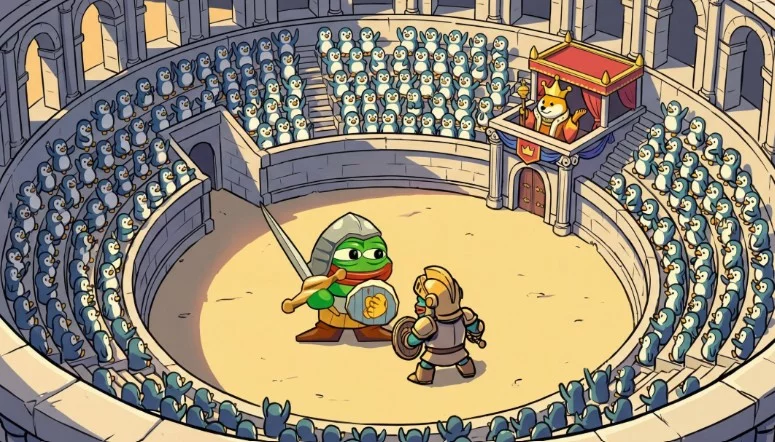
Meme Punch is the memecoin presale on this list. Rather than launching a new character and hoping a community forms around it, the project skips that step by tying its play-to-earn game to five communities that already exist: Pepe, Doge, Floki, Brett, and Pudgy Penguin. All five are from meme coin culture and dressed in medieval armor for the game.
The game runs on PvP combat. Players pick one of the five knights, fight other players, and climb a leaderboard. Wins pay out in MEPU. Inside the game, the token is spent on weapons, character skins, and special abilities, which keeps demand tied to how active the player base is.
MEPU runs on Ethereum with a 10 billion total supply, 40% to presale and 14.5% to staking. Current presale price and APY are on the official website.
Top trending memecoins right now
Pepe (PEPE)
Pepe debuted in April 2023 without a central ownership structure, a team tax, or a presale. The project was left to rely entirely on community activity after the contract was renounced and the liquidity pool tokens were burned. Within weeks of its launch, its market capitalization reached $1.6 billion, and it continues to be one of Ethereum’s most actively traded meme coins.
With a market capitalization of $1.61 billion and a 24-hour trading volume of $296.36 million, PEPE is trading at $0.0¢3899 as of mid-May 2026. The number of holders exceeds 553,000 wallets. The price is significantly below previous highs, down 70.34% over the previous year.
Pudgy Penguins (PENGU)
Beginning as an Ethereum NFT collection, Pudgy Penguins grew into one of the most famous cryptocurrency brands outside of trading circles. Since the launch of the PENGU token in December 2024, the project has expanded to include partnerships, merchandise, and community projects based around the original artwork.
PENGU has a market capitalization of $551.86 million, a 24-hour trading volume of $103.62 million, and a price of $0.008779 as of mid-May 2026. Out of a maximum of 88.88 billion, the circulating supply is currently at 62.86 billion. The number of holders is slightly less than 850,000 wallets, which is high for a project this size.
Floki (FLOKI)
Floki, a community-supported project named for Elon Musk’s dog, was introduced in July 2021. It began as a Shiba Inu-style meme coin and has since expanded to include a DeFi platform, an NFT marketplace, an education website, and a play-to-earn game named Valhalla. The token operates on the BNB and Ethereum chains.
With a market capitalization of $314.19 million and a 24-hour trading volume of $36.47 million as of mid-May 2026, FLOKI is trading at $0.00003294. The number of wallets held is close to 559,000. Out of a total of 9.64 trillion, 9.53 trillion are in circulation.
What makes a memecoin worth holding
Even though the five selections listed above are in different stages, they all have one thing in common that is important for this category. Everybody has a community that keeps going over time.
Pepe has focused entirely on culture. The token has a stable base of holders who trade it because the meme is still popular, but it has no utility or roadmap. By using brand reach, Pudgy Penguins was able to attract individuals who would not typically interact with cryptocurrency. Floki achieved this by creating use cases and tools based on the original meme.
At the beginning of that same path are the two presales. By creating a research tool rather than a token to hold, Poly Truth is approaching the trust angle from a different point of view than Meme Punch, which is anchoring to communities that already exist.
Disclosure: This content is provided by a third party. Neither crypto.news nor the author of this article endorses any product mentioned on this page. Users should conduct their own research before taking any action related to the company.
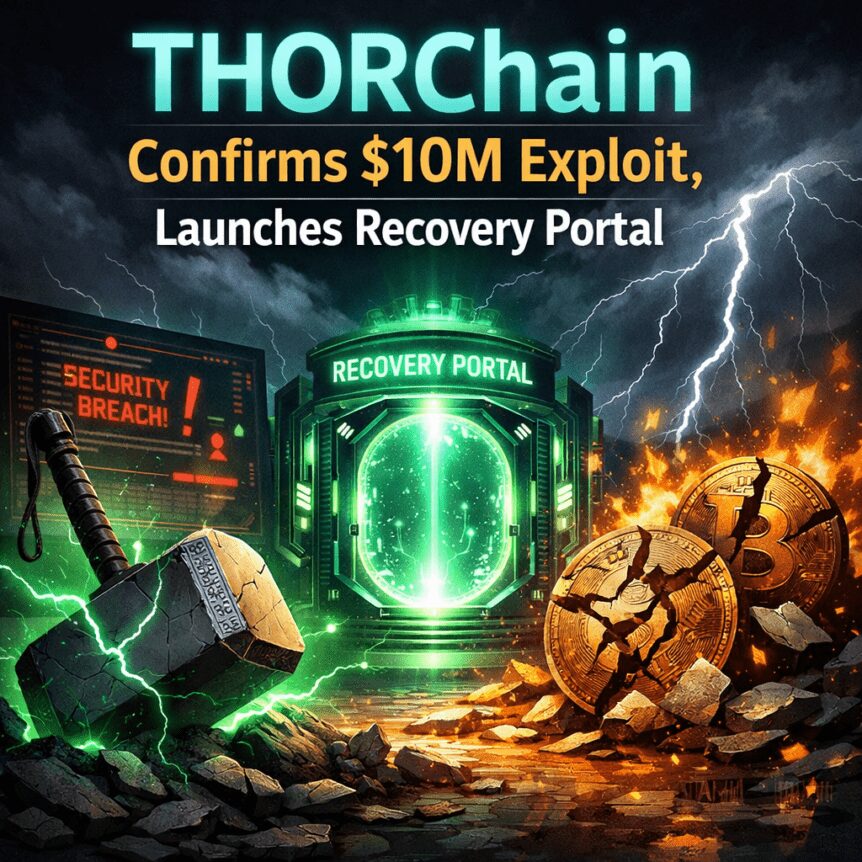
THORChain confirms a $10 million exploit and has launched a self-custodial recovery portal that lets affected users revoke malicious token approvals and file refund claims. The refunds are backed by a treasury-provisioned pool equal in size to the loss, effectively giving users a path to compensation without needing to rely on exchanges or custodians.
In a Saturday update on X, THORChain Foundation said the recovery portal allows affected users to see how much they will be paid and to submit claims within a 21-day window, with the deadline set for June 4. If any allocation remains unclaimed after that date, it will roll over to the protocol’s insurance fund for potential future use.
The incident timeline described by THORChain shows the attack was detected at 02:14 UTC on May 11 when node operators flagged unusual outbound transactions. Trading and outbound signing were paused within eight minutes. In total, attackers drained 36.75 BTC, worth around $3 million, and approximately $7 million in tokens across BNB Chain, Ethereum and Base, affecting 12,847 wallets across four chains.
Key takeaways
- THORChain confirms a $10 million exploit and launches a self-custodial recovery portal funded by an equal-size refund pool.
- Affected users have 21 days to submit refund claims; unclaimed funds roll into the protocol’s insurance fund after June 4.
- The attack is linked to a vulnerability in the GG20 threshold signature scheme, enabling gradual leakage of vault key material and unauthorized outbound transactions.
- Approximate losses include 36.75 BTC (~$3 million) and about $7 million in tokens across four chains, affecting 12,847 wallets.
- Forensic coordination is underway with Outrider Analytics and law enforcement as THORChain seeks to identify the attacker and recover funds where possible.
What happened and how THORChain was drained
In THORChain’s own update, the prevalent theory points to a vulnerability in the GG20 threshold signature scheme implementation. The leak of vault key material over time could have allowed the attacker to reconstruct the vault’s private key and authorize unauthorized outbound transactions. Additionally, a recently churned node is believed to be connected to the breach, with on-chain links tying its bonding activity to wallets that received stolen assets. The recovery effort emphasizes forensic work and cross‑team collaboration to trace and potentially recover funds as investigations progress.
THORChain has stressed that the Treasury is actively collecting forensic data and coordinating with specialized analytics partners and law enforcement agencies to pursue recovery options. While the exact technical path of the breach remains under scrutiny, the protocol’s emphasis on a transparent compensation mechanism represents a notable shift toward user protection in a high-risk cross-chain environment.
Recovery, compensation, and the road ahead
The newly launched recovery portal marks a significant step in offering a self-governed route to restitution. Affected users can review their prospective compensation and file claims directly, with the refunds financed from a treasury-backed pool equal to the loss amount. The 21-day window creates a discrete timeframe for claim submissions, after which unclaimed allocations move to the insurance fund to buttress the protocol’s overall resilience.
From a governance and risk perspective, the incident spotlights the balancing act between enabling rapid cross-chain functionality and enforcing stringent security regimes around key material and node onboarding. The involvement of independent forensic firms and law enforcement signals a pragmatic approach to attributing responsibility and recovering funds where possible, even as complete restitution remains uncertain for a portion of the affected assets.
Broader market implications and what to watch next
The THORChain episode sits within a broader pattern observed in April’s attack surface, where DeFi and cross-chain protocols faced elevated risk. The combination of bridges, privileged access points, and operational weaknesses continues to pose systemic challenges as the sector scales. Investors and builders should watch how THORChain’s recovery framework evolves, whether any successor security measures are adopted, and how the industry refines its approach to incident response and user compensation in the wake of high-profile breaches.
Looking ahead, readers should monitor official statements from THORChain, updates from the treasury and forensic partners, and any law enforcement progress. The outcome could influence how other multi-chain projects design recovery capabilities and insurance-oriented buffers for post-breach scenarios.
For context on the broader security narrative, Cointelegraph coverage noted that April’s losses underscored DeFi’s vulnerability to complex attack vectors beyond simple smart contract bugs, reinforcing the case for robust cross-chain security architectures and proactive incident response planning. A related perspective in Cointelegraph Magazine also cautions about AI-driven exploits in DeFi, urging projects to act now to harden defenses against evolving threat models.
As the investigation unfolds, THORChain users and the wider community will be watching for concrete progress on identifying the attacker, recovering funds, and implementing structural safeguards to prevent a repeat of this incident.


The Trump ethics fight over crypto is now the biggest obstacle to the CLARITY Act reaching 60 Senate votes.
Summary
- The CLARITY Act needs 60 Senate votes to overcome a filibuster, requiring at least seven Democrats to cross the aisle.
- An ethics provision barring government officials from crypto dealings is missing from the current text and is Democrats’ core demand.
- The White House has rejected any language singling out a specific officeholder, leaving the two sides at an impasse.
Analysts and lawmakers have identified the ethics provision as the CLARITY Act’s most consequential unresolved issue heading to the Senate floor. Republicans hold 53 seats and need 60 votes to clear a filibuster, meaning at least seven Democrats must vote yes.
Senator Kirsten Gillibrand, a Democrat who has backed crypto regulation, told audiences at Consensus Miami 2026 that the bill will not move without an ethics clause. “This provision will be part of this bill, or it will not go forward,” she said. “Because we cannot let greed and corruption in Washington tear this industry down, and without that provision, that’s exactly what will happen.”
Ethics impasse sets up the bill’s hardest vote
The CLARITY Act’s 309-page draft contains no conflict of interest language because such provisions fall outside the Senate Banking Committee’s jurisdiction. Democrats have pointed to Trump family involvement in World Liberty Financial and the TRUMP memecoin as the driving concern.
The Van Hollen amendment that would have blocked senior government officials from holding crypto business interests was voted down 11 to 13 in committee.
The White House has been explicit. Crypto adviser Patrick Witt said ethics rules should apply “across the board, from the president all the way down to the brand new intern on Capitol Hill,” but that language singling out a specific officeholder is unacceptable.
Cody Carbone, who heads the Digital Chamber, told reporters a deal will almost certainly be required before the bill reaches the floor. “I imagine the deal will be completed before this goes to the floor, because they’ll want to only bring it to the floor if they feel confident they’ve got 60,” he said.
As crypto.news tracked, both Democrats who voted yes in committee — Gallego and Alsobrooks — framed their votes as conditional on further ethics progress. Crypto.news also noted that banking trade groups continue to oppose the stablecoin yield compromise, adding pressure from multiple directions.
The Senate must resolve the ethics fight, law enforcement concerns and banking objections before a floor vote. As Coinbase warned at Consensus Miami, bipartisan backing is non-negotiable and the window before the August recess is narrowing fast.
Bitcoin’s impressive but brief price pump on Thursday evening came to a screeching halt as the asset has dumped by over $4,000 since then to a multi-week low of under $78,000.
Essentially all larger-cap alts are in the red today, with HYPE, ZEC, SOL, SUI, LINK, and CC posting the biggest losses.
BTC Dips Below $78K
The primary cryptocurrency rocketed to almost $83,000 on May 7, but it was stopped and driven south to $79,000 two days later. The bulls stepped up in the following days, once again, and drove the asset to $82,000 on a couple of occasions on Monday and Tuesday. However, it couldn’t keep climbing, and the worrying inflation numbers in the US poured more oil on the fire.
Bitcoin dipped to $78,800 on Wednesday after another rejection at $81,200. It sat there for a bit before it rocketed by several grand to $82,000 on Thursday. This impressive price rally was driven by the positive developments on the CLARITY Act in the US, as it finally passed the Senate Banking Committee.
This run was short-lived as the bears resumed control of the market. The past 12 hours or so have been particularly painful as they managed to drive the cryptocurrency south to its lowest position since the start of the month at under $78,000.
Its market capitalization has dipped to $1.560 trillion, while its dominance over the alts is up to 58.4% on CG.

Alts Bleed Out
Most altcoins have followed BTC on the way south today. Ethereum is down by over 3.5% to a multi-week low of its own at $2,170. BNB is down by 4.5% to $650, while XRP struggles at around $1.40. Solana has plummeted by 5.5% to $6.
HYPE has dumped the most from the larger-cap alts. After yesterday’s surge, the token has lost 10% of its value now and is fighting to stay above $40. ZEC, LINK, CC, SUI, and AVAX are also deep in the red.
STABLE, VVV, and ENA have slumped by double-digits in the past day. The total crypto market cap has shed $100 billion since Thursday and is well below $2.7 trillion on CG.

The post Altcoins Crash as Bitcoin (BTC) Dumps to 2-Week Low: Weekend Watch appeared first on CryptoPotato.
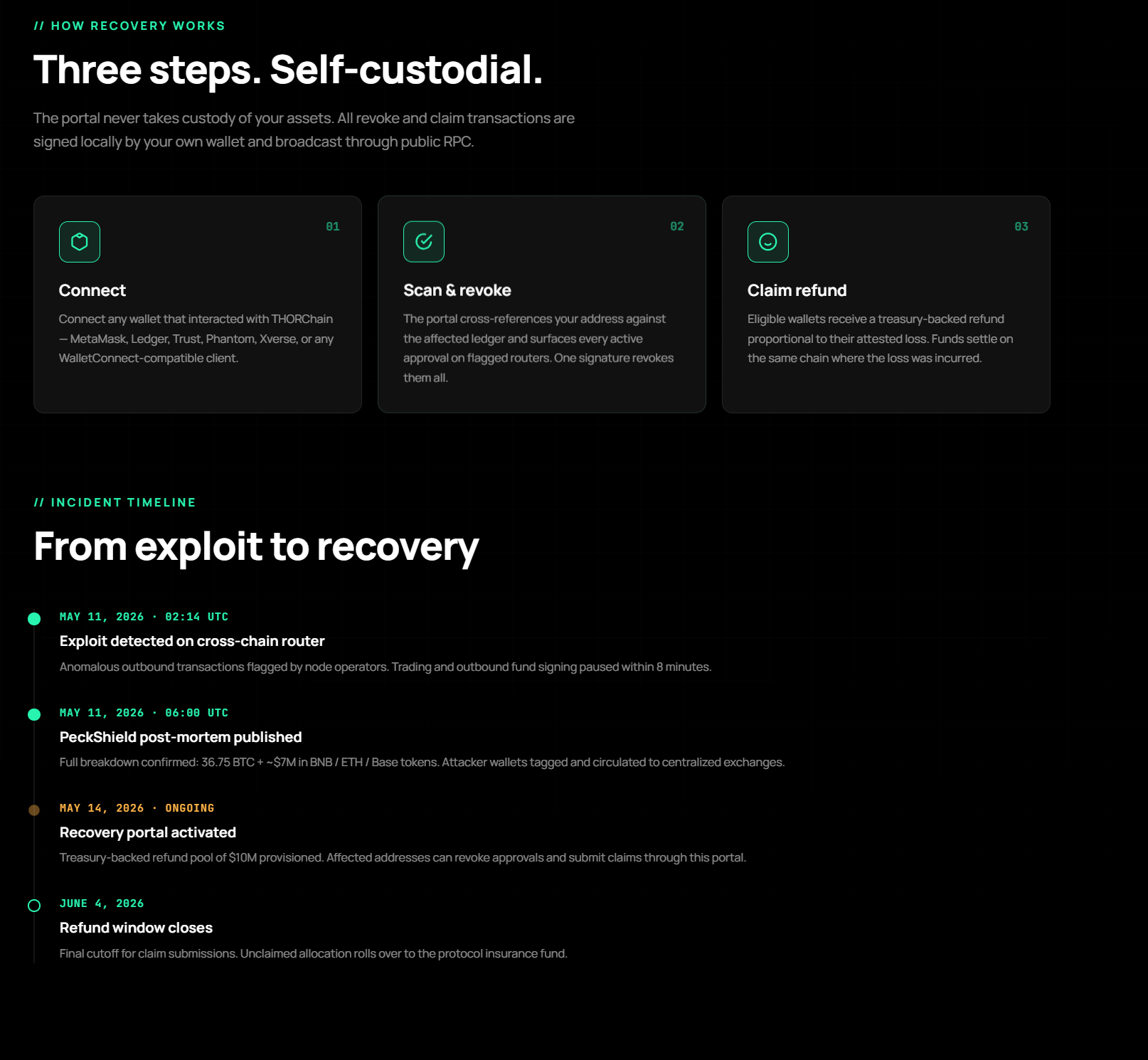
THORChain has confirmed a $10 million exploit and launched a recovery portal, giving affected users a self-custodial path to revoke malicious token approvals and submit refund claims backed by a treasury-provisioned refund pool of equal size.
In a Saturday post on X, THORChain Foundation introduced the recovery portal, saying that “affected users are now able to check what they will be paid as compensation following the exploit.”
The portal, citing a PeckShield post-mortem, claims that the attack was detected at 02:14 UTC on May 11, when node operators flagged anomalous outbound transactions. Trading and outbound signing were paused within eight minutes. In total, attackers drained 36.75 BTC, worth around $3 million, and approximately $7 million in tokens across BNB Chain, Ethereum and Base, hitting 12,847 wallets across four chains.
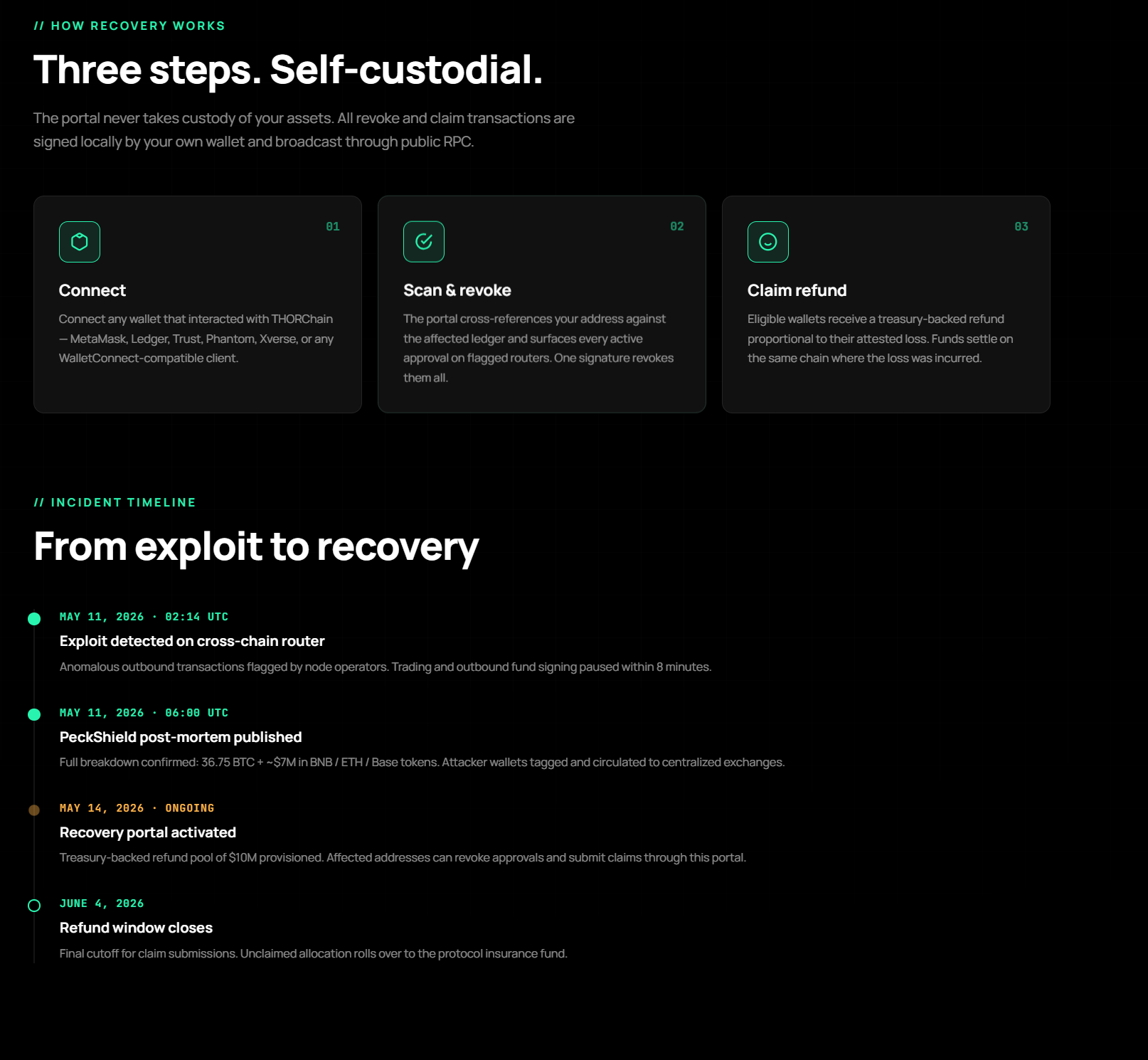
THORChain’s recovery portal. Source: THORChain
Affected users have 21 days to submit claims. The refund window closes on June 4, after which any unclaimed allocation rolls over to the protocol’s insurance fund.
Related: Russia-linked crypto exchange Grinex halts trading after $14M hack
How THORChain was drained
In an incident update, THORChain said the leading theory is that the attacker exploited a vulnerability in the GG20 threshold signature scheme (TSS) implementation, which allowed sensitive vault key material to leak gradually. By accumulating enough of this leaked data over time, the attacker was able to reconstruct the vault’s private key and authorize unauthorized outbound transactions.
The protocol also noted that a newly churned node entered the network several days before the attack and is currently believed to be associated with it, with onchain links identified between the node’s bonding addresses and the wallets that received the stolen funds.
“The Treasury is actively collecting forensic data and coordinating with Outrider Analytics and relevant law enforcement agencies in an effort to identify the attacker and pursue recovery of stolen funds where possible,” the protocol wrote.
Related: Law enforcement freezes $41M connected to $150M crypto Ponzi collapse
Crypto hack losses hit $630 million in April
Crypto hacks surged in April, with total losses reaching $629.7 million, the worst month for the industry since February 2025, when $1.47 billion was stolen. KelpDAO’s $293 million exploit and Drift Protocol’s $280 million hack drove the bulk of the damage, together representing 82% of April’s losses and cementing DeFi as the most targeted sector.
The pattern of attacks points to a shift in how protocols are being compromised, with bridges, privileged access and operational failures increasingly at the root of major incidents rather than straightforward smart contract bugs.
Magazine: AI-driven hacks could kill DeFi — unless projects act now
Disclosure: This article does not represent investment advice. The content and materials featured on this page are for educational purposes only.
Poly Truth and Meme Punch presales gain traction in 2026 crypto market narrative around utility tokens.
Summary
- Crypto presales sell tokens before exchange listing in phased stages, often with rising prices and fixed supply caps.
- Poly Truth (PTRUE) analyzes prediction markets using AI layers, offering research-based outputs without executing trades.
- Meme Punch (MEPU) is a play-to-earn game where token demand is driven by PvP gameplay and in-game utility.
The phase where a project sells its token prior to listing on any exchange is known as a crypto presale. The project sets the price, the supply is fixed, and buyers receive their tokens when the presale ends and the claim window opens.
Most presales have funding caps and operate in phases. Early entries are typically less expensive than later ones because when a stage fills, the next one opens at a higher price. Clear token utility, published tokenomics, and audited contracts are indicators of the best crypto presales. Below are two May 2026 presales that meet that criteria.
Best crypto presales for May 2026
1. Poly Truth (PTRUE)
Winning on a prediction market comes down to how well someone has done their research, and Poly Truth is built to handle that part. Anyone betting on the outcome of an election, a central bank decision, or a sports event is working against a deadline, and most of the relevant information is scattered across news sites, social platforms, and historical data. Reading through all of it before the betting window closes is not realistic. The tool does that work and gives a breakdown of which outcomes the data points toward.
The setup runs on a three-character framework. The Runners are the data scrapers, gathering data from the web the moment a prediction event is submitted. The Starlet handles the analysis layer, cross-referencing sources and assigning probability scores. The Presenter outputs the final brief in a structured format. No bets are placed, no automated trades are run. The output is research and nothing more.
Token details:
- Built on Ethereum with a total supply of 11.5 billion
- Presale takes 40% of supply, with liquidity at 17%
- Team allocation under a 3-month cliff and 12-month vest
- Holders get tiered access to the research tool once it goes live
- Audited by SolidProof and Coinsult, with both reports public
2. Meme Punch (MEPU)
Meme Punch is a play-to-earn game where the token is the in-game currency, not just a coin to hold. Players pick a knight, fight other players in a medieval arena, and earn MEPU by winning matches and climbing the leaderboard. The five playable characters are from meme-coin culture.
Each member of the lineup — Pepe, Doge, Floki, Brett, and Pudgy Penguin — is dressed in armor. Combat is PvP; wins will move players up in the ranking system and give them access to MEPU prizes. Because the token can be used to purchase weapons, character skins, and special abilities within the game, demand is directly linked to player engagement.
Token details:
- Built on Ethereum with a total supply of 10 billion
- Presale takes 40% of supply, with staking at 14.5% and liquidity at 12%
- Game rewards allocated 9.5% of supply
- Payment options include ETH, BNB, SOL, USDT, USDC, and card
- Current presale price and staking APY are listed on the official website
How presale stages and pricing work
Most presales are divided into stages rather than charging a single flat fee. Every stage has a fixed price and a set number of tokens available for purchase at that price. The next stage opens at a higher price after the previous one sells out. Also, some presales automatically increase the price within a stage every few days. One of those is Poly Truth, whose price changes every four days.
The majority of presales have standard payment options. Nearly all places accept ETH, BNB, SOL, USDT, and USDC. Larger projects also accept card payments and bank transfers, such as SEPA.
Tokens are not provided at the time of purchase. When the presale ends, which is typically around the time the token lists on an exchange, the project holds them and releases them. This is referred to as the claim. One thing to keep in mind is that even if a buyer paid with SOL or BNB, they will still need to provide an Ethereum wallet address at the time of the claim if the presale runs on Ethereum.
What to know before the claim opens
Here are some helpful pointers for anyone considering a presale:
- Tokens cannot be traded right away. Buyers receive them at the claim, which usually happens around the exchange listing. The wait can be a few weeks or a few months.
- The presale price is set by the project, not the market. Once the token lists are out, the market sets the price from there. It can end up higher or lower than the presale price.
- Audits and tokenomics are public. Poly Truth has audit reports from SolidProof and Coinsult. Meme Punch lists its full tokenomics on the official website.
- Payment method affects the claim. Both projects distribute tokens on Ethereum, so anyone who paid in SOL or with a card will need an Ethereum wallet address ready at the claim.
Stage pricing changes over time. Both presales raise prices as stages fill, so the price someone sees today is not the price someone else paid last week.
Disclosure: This content is provided by a third party. Neither crypto.news nor the author of this article endorses any product mentioned on this page. Users should conduct their own research before taking any action related to the company.

Key Takeaways
- Pershing Square revealed a fresh Microsoft (MSFT) stake through its 13F filing released Friday
- The position was initiated in February when shares traded at approximately 21x forward P/E, matching broader market valuations
- Ackman financed the Microsoft buy by exiting his Alphabet (GOOGL) holdings, clarifying this wasn’t a bearish stance on Google
- Shares of Microsoft jumped 3% Friday, though they remain down 17% for the year against the S&P 500’s 10% advance
- The billionaire investor argues Microsoft’s OpenAI ownership (~$200B value, roughly 7% of its market cap) remains underappreciated by markets
Billionaire investor Bill Ackman revealed Pershing Square has established a significant position in Microsoft (MSFT) through regulatory filings submitted Friday. Shares responded positively, climbing 3% to finish at $421.92.
According to Ackman, the position was initiated in February following a “substantial” selloff that came after Microsoft reported fiscal Q2 2026 results. The fund accumulated shares at approximately 21 times forward earnings — a valuation matching the broader S&P 500 and significantly below Microsoft’s historical trading range.
The tech giant has faced headwinds in 2026. Shares have declined 17% year-to-date, contrasting sharply with the S&P 500’s 10% gain.
The weakness followed a disappointing Q3 earnings announcement that sparked concerns regarding Azure’s expansion rate. Microsoft further revealed plans for $190 billion in capital spending for calendar 2026 — representing a 61% annual increase and exceeding analyst expectations by roughly $35 billion.
While Ackman recognizes these challenges, he maintains the market is overlooking a critical asset.
The Hidden Value in OpenAI
Ackman highlighted Microsoft’s 27% ownership in OpenAI, which he estimates carries a $200 billion valuation — equivalent to approximately 7% of Microsoft’s total market capitalization. He contends this substantial value remains absent from current share prices.
The investor also dismissed concerns about Microsoft 365 facing displacement from AI competitors. He maintains that M365’s deep integration across enterprise systems — encompassing identity management, security infrastructure, compliance frameworks, and data governance — creates formidable barriers against replacement by emerging AI applications.
“Unlike point software solutions, which may be vulnerable to disintermediation by better-performing AI alternatives, M365 is tightly integrated into the daily workflow of nearly every large enterprise,” Ackman wrote on X.
Ackman liquidated his Alphabet position to generate capital for the Microsoft investment. He took to social media Saturday to emphasize this wasn’t a negative signal regarding Google’s prospects.
No Loss of Faith in Google
“Our sale of Google was not a bet against the company. We are very bullish long term on Alphabet. But at current valuations and in light of our finite capital base, we used it as a source of funds for Microsoft,” Ackman wrote.
Wedbush analyst Dan Ives endorsed Ackman’s decision. He suggested Wall Street continues underestimating Azure’s growth potential and identified Microsoft among his “favorite large cap tech names to own over the coming years.”
From a technical perspective, Evercore ISI’s Rich Ross observed Microsoft displays one of the “best acting charts” among technology stocks currently, noting the shares have recaptured their 50-day moving average with “authority” and retreated to a long-standing support level that’s remained intact since the European debt crisis.
Ackman’s track record with major technology investments includes his previous long-term Alphabet position before this strategic shift to Microsoft.
Woldgate School Pocklington new design and technology department

Congressman Onboard American Airlines Jet in Emergency Landing After Smoke Detected

Is LINK undervalued or is Meme Punch the better entry point?

Manchester United reach agreement with Casemiro over contract clause amid transfer speculation

US brings back mandatory military draft registration

Steven Gerrard disagrees with Gary Neville over ‘shock’ Chelsea and Arsenal claim | Football


-

 Fashion5 days ago
Coffee Break: Travel Steam Iron
-

 Fashion17 hours ago
Weekend Open Thread: Theory – Corporette.com
-

 Crypto World10 hours ago
BloFin War of Whales 2026 Grand Prix opens registration for $5M trading championship
-

 Politics5 days ago
What to expect when you’re expecting a budget
-

 Fashion5 days ago
What to Know Before Buying a Curling Wand or Curling Iron
-

 Tech6 days ago
Auto Enthusiast Carves Functional Two-Stroke Engine from Solid Metal
-
 Business7 days ago
Ignore market noise, India’s long-term story intact, say D-Street bulls Ramesh Damani and Sunil Singhania
-

 Crypto World7 days ago
PROS explodes 48% as Upbit and Bithumb listings ignite demand
-

 Tech5 days ago
GM Agrees To Pay $12.75 Million To Settle California Lawsuit Over Misuse Of Customers’ Driving Data
-

 Tech1 day ago
Tech Moves: Microsoft AI leader jumps to OpenAI; former AI2 exec joins Meta; and more
-

 Crypto World6 days ago
CZ says US crypto rivals tried to block Trump pardon
-

 Tech4 days ago
GM agrees to $12.75M California settlement over sale of drivers’ data
-
Crypto World3 days ago
Bitcoin Suisse expands with Digital Asset License and Investment Business Act Registration Approval in Bermuda
-

 Crypto World17 hours ago
E-Estate Announces 1 Year Live: Washington DC Summit as Real Estate Tokenization Enters Its Next Phase
-

 Politics4 days ago
Pakistan to enter Chinese capital market as war inflation bites
-

 Crypto World2 days ago
Google’s Gemini AI Predicts Incredible Solana Price by the End of 2026
-

 Crypto World3 days ago
Bitcoin Suisse expands with Digital Asset License and Investment Business Act Registration Approval in Bermuda
-

 Politics6 days ago
Sky News Presenter Says Keir Starmer Is Not Waving But Drowning
-
Crypto World7 days ago
Hacker Drains $5.9M From Ethereum Liquidity Provider TrustedVolumes
-

 Fashion6 days ago
Amazon Sundays: Spring Glassware & Vases
You must be logged in to post a comment Login