Connect with us
DAPA Banner
DAPA Coin
DAPA
COIN PAYMENT ASSET
PRIVACY · BLOCKDAG · HOMOMORPHIC ENCRYPTION · RUST
ElGamal Encrypted MINE DAPA
🚫 GENESIS SOLD OUT
DAPAPAY COMING

Tech

Chinese parts already power American cars, and that’s exactly why Congress is panicking

Published

on

TL;DR

Bipartisan US lawmakers introduced the Connected Vehicle Security Act to ban Chinese-linked vehicles, software, and hardware from the American market, as Trump meets Xi Jinping in Beijing. But with 60+ Chinese-owned suppliers already embedded in the US auto supply chain and BYD now the world’s top EV seller, the push exposes a tension between national security concerns and economic reality.


Somewhere in the wiring of the car you drove this morning, there is almost certainly a Chinese component. An airbag inflator. A windshield. A steering column bearing. According to global consulting firm AlixPartners, more than 60 US-based auto suppliers are now owned by Chinese companies, making everything from axles to electronic control units for vehicles that roll off assembly lines in Michigan, Ohio, and Tennessee.

It is against this backdrop, Chinese technology already threaded through the American automobile, that lawmakers in both parties are urging President Donald Trump not to trade away the US car market during his state visit to Beijing this week. The message from Capitol Hill has been blunt: do not use automobiles as a bargaining chip with President Xi Jinping.

Advertisement

The 💜 of EU tech

The latest rumblings from the EU tech scene, a story from our wise ol’ founder Boris, and some questionable AI art. It’s free, every week, in your inbox. Sign up now!

The concern is not hypothetical. In January, Trump told the Detroit Economic Club that he would welcome Chinese automakers building factories on American soil, provided they employed US workers. The remark sent a jolt through an industry that had spent years lobbying successive administrations to keep Chinese vehicles out. It was later walked back, but the damage to nerves, and to legislative calendars, was done.

On May 12, Representative John Moolenaar, the Republican chairman of the House Select Committee on China, and Democratic Representative Debbie Dingell introduced the Connected Vehicle Security Act of 2026. The bill would ban the importation, manufacture, and sale of connected vehicles, software, and hardware linked to China, Russia, North Korea, and Iran. Software prohibitions would take effect on January 1, 2027; hardware restrictions would follow by January 1, 2030. Each violation would carry civil penalties of at least $1.5 million, or five times the transaction’s value, whichever is greater.

Advertisement

A companion version was filed in the Senate by Elissa Slotkin, a Democrat from Michigan, and Bernie Moreno, a Republican from Ohio. Senator Slotkin described Chinese-made connected vehicles as “TikTok on wheels”, a reference to the data-harvesting fears that fuelled the push to divest TikTok from its Chinese parent company. The comparison is not entirely rhetorical: as TNW has reported, Chinese EV content is already flooding American social media through platforms owned by the same conglomerate, shaping consumer demand for vehicles that cannot legally be sold in the US.

The legislation codifies and expands restrictions first put in place under President Biden, whose Commerce Department in January 2025 finalised rules prohibiting connected vehicle technology linked to China and Russia. The legal foundation dates back further still: a 2019 executive order signed by Trump during his first term declared a national emergency over foreign threats to America’s information and communications technology supply chain.

The political logic is straightforward. Michigan and Ohio are battleground states heading into the 2026 midterms and the next presidential race. The auto industry directly employs roughly half a million people in Michigan alone, according to Governor Gretchen Whitmer, who released a statement applauding the legislation. For lawmakers in these districts, even the appearance of opening the door to Chinese carmakers is a political liability.

But the economic logic is more tangled. The average new car in the US now lists for more than $49,000, according to Kelley Blue Book, a figure that has become a quiet crisis for American consumers. In China, shoppers can choose from more than 200 battery-powered models priced below the equivalent of $25,000, according to DCar, a Chinese automotive content platform. BYD’s most popular model, the Seagull, starts at roughly $10,300. The cheapest new electric vehicle available in the US, the Chevrolet Bolt, is expected to retail for $28,995.

Advertisement

BYD overtook Tesla in 2025 to become the world’s largest seller of battery electric vehicles, moving 2.26 million units compared to Tesla’s 1.64 million, a 28% year-on-year increase against Tesla’s roughly 9% decline. The company that Elon Musk laughed at in a 2011 Bloomberg interview has become the industry’s most formidable competitor. Tesla briefly reclaimed the quarterly crown in Q1 2026, but the full-year gap of more than 600,000 units tells the structural story.

Outside the US, the playbook is already running. Chinese-made vehicles captured roughly 19% of sales in Mexico in 2025, according to data from the national statistics agency INEGI and industry bodies, up from less than 1% five years earlier. Mexico has since raised tariffs on Chinese vehicles to 50%. Across Europe, Chinese brands have made significant inroads, and BYD is reportedly in talks to take over certain Stellantis plants to expand production capacity on the continent. Europe’s cumulative EV investment has now passed €200 billion, but much of that capacity is being built by Chinese and Korean firms rather than European champions.

This is the pattern that alarms Washington. Industry groups, steelmakers, unions, and automakers have all pressed the same argument: China’s state-subsidised manufacturers will undercut domestic competitors on price, hollow out the supply chain, and then raise prices once the competition has been eliminated. Dingell invoked the solar panel industry as a cautionary example during a press conference on May 12.

China has a pattern of coming in, subsidising the cost to keep the price lower, destroy an industry and then jack up the price,” Dingell said. “This is about America’s future.”

Advertisement

The Information Technology and Innovation Foundation, a Washington-based think tank that has previously criticised some of Trump’s tariff policies, backed the legislation. Stephen Ezell, the foundation’s vice president for global innovation policy, described Chinese automakers as products of decades of state-backed mercantilism, not normal market competitors. The implication: conventional trade rules cannot apply. Even foreign automakers operating inside China are now partnering with Chinese tech firms because they cannot develop competitive software fast enough on their own, a dynamic that underscores just how far the technology gap has shifted.

The White House, for its part, pushed back on the premise. Spokesperson Kush Desai said in an email that the administration was always seeking investment in America’s industrial resurgence, and dismissed any suggestion that it would compromise national security as “baseless and false.

The question that the legislation cannot fully answer is the one embedded in the supply chain itself. More than 60 Chinese-owned suppliers are already manufacturing in the US. Chinese-made components sit inside vehicles built by American, Japanese, Korean, and European automakers on American soil. Banning finished vehicles and connected technology is one thing; disentangling a supply chain that has been quietly integrating for years is quite another.

Most industry experts agree it is only a matter of time before Chinese cars arrive in the US in some form. One scenario gaining traction involves requiring Chinese companies to partner with American automakers domestically, the same model China itself imposed on foreign manufacturers in the 1990s to build its own industry. The broader tariff landscape adds further complexity, with trade restrictions reshaping technology supply chains on both sides of the Atlantic.

Advertisement

For now, the legislative push represents a rare point of bipartisan consensus: more than 120 House lawmakers signed a letter last month urging Trump to keep Chinese automakers out. The bill’s sponsors are betting that the political cost of inaction outweighs the consumer cost of keeping affordable vehicles off the market.

Whether that calculus holds may depend on what Trump brings back from Beijing. The president said China has agreed to buy 200 Boeing jets and American oil, and not to supply military equipment to Iran, though no independent confirmation from Chinese officials has been found at the time of publication. He described Xi as “all business, no games.” On automobiles, there was silence.

The American auto industry will take that silence as a win. For how long remains an open question.

Advertisement

Source link

Continue Reading
Click to comment

You must be logged in to post a comment Login

Leave a Reply

Tech

What Does 2CT Mean On Michelin’s Motorcycle Tires?

Published

on


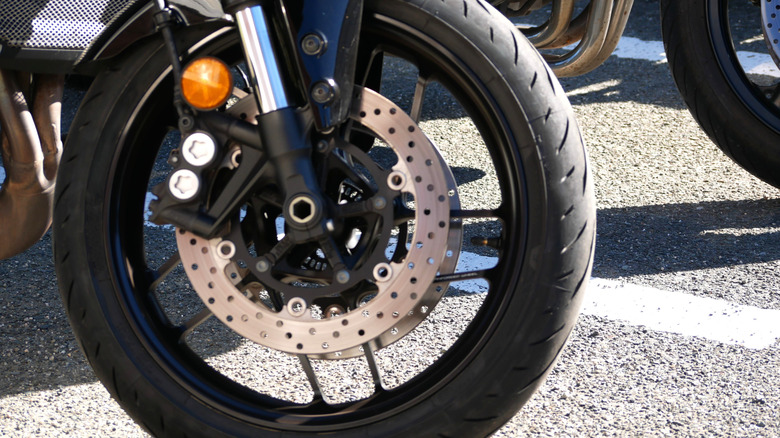
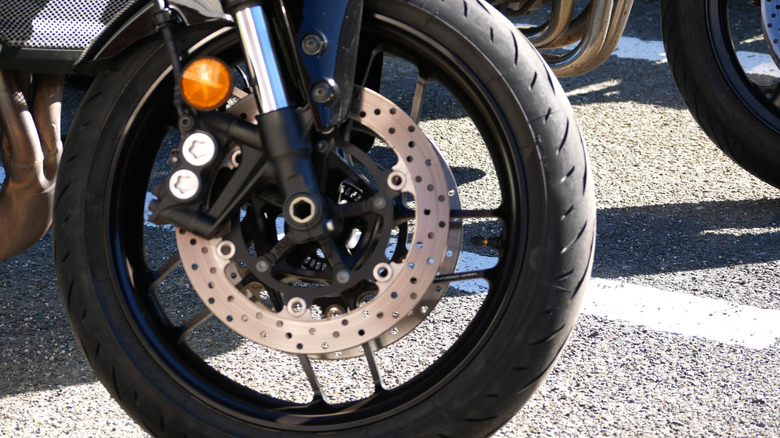
Many Michelin tires built for sports bikes today have 2CT stamped onto the sidewall. And if you’ve ever wondered what that means, it actually does stand for something — it isn’t one of those machine-generated model codes. 2CT stands for Two Compound Technology, and it’s Michelin’s exclusive shorthand that conveys the tire is made up of two different rubber recipes. This is not the only useful feature on a Michelin tire, but it’s one of the more telling ones.

It’s not like these two compounds are ground into paste and distributed equally around the tire, though. One of them is actually limited to just the middle strip, while the other takes up the rest. The middle of a motorcycle tire takes the brunt of regular riding, since bikes obviously spend most of their time rolling in straight lines. But when you lean into a corner, especially at high speeds, that’s when the shoulders come into play. Because of this, both sections end up wearing at very different rates, so it makes sense to build them out of different materials to match the different conditions they are subject to.

That’s exactly what Michelin did. They tossed a harder compound into the middle, one that favors longevity and high wear resistance. Meanwhile, the shoulders got a more supple compound, reportedly 20% softer than the center, with the goal of maximizing mechanical grip around corners. The exact differences in materials between the two hasn’t been officially revealed, though the tire in its entirety uses silica-infused rubber, aramid fibers, and radial construction.

Advertisement

How 2CT came to be

2CT tires get a lot more interesting for racing enthusiasts once you dig into their history. These were initially designed for Michelin’s racing program way back in 1994. At the time, they weren’t officially labeled 2CT yet, and were simply referred to as dual-compound tires. From there, the tire took a good decade to filter down into road-legal designs consumers could buy. The first consumer-oriented model, the Power Race, was launched in 2005, and was the first tire to wear the 2CT badge. But even then, it was strictly track-focused.

Advertisement

Four years later, motorcyclists were finall treated to the first proper road-going tire to use the 2CT badge. This was the Pilot Power 2CT, which dropped in 2009 and is still in production today.

One quirk worth flagging about this line is that while the Pilot Power 2CT was the first to feature the 2CT branding, the meaning of 2CT has since expanded. Today, it’s evolved from a specific model identifier into a universal label for all tires from the company using the same technology. So 2CT now also shows up on scooter rubber and ADV tires, like is the Anakee Adventure 2, an 80/20 adventure-touring tire built for riders who also go off-road occassionally.

There’s another newer and upgraded version worth mentioning called 2CT+, which was first introduced on the Power RS tire back in early 2017. It packs a harder layer of rubber underneath the soft shoulder compound, in order to offer a firmer ride for the everyday street rider. Today, Michelin Pilot Power 2CT tires typically cost between $147 and $195 per tire and can be picked up both individually and in sets. Beyond Michelin, most major motorcycle tire brands offer their own dual-compound options now, although Michelin will forever be recognized for getting there first.

Advertisement


Source link

Advertisement
Continue Reading

Tech

Doom's original soundtrack is now preserved by the Library of Congress

Published

on


The Library of Congress has added Bobby Prince’s 1993 Doom soundtrack to the National Recording Registry, naming it one of 25 recordings selected this year for their cultural, historical, or aesthetic importance.
Read Entire Article
Source link

Continue Reading

Tech

One in seven Brits swapped their GP for ChatGPT, study finds

Published

on

AI + ML

Patients are using chatbots for medical advice, while the NHS is still debating where AI belongs

Brits are now asking chatbots about mysterious lumps and weird rashes instead of calling their GP, which is probably not the digital healthcare revolution anybody meant to build.

A new study from King’s College London found that one in seven people in the UK have used AI instead of contacting a doctor or healthcare service, while one in ten said they had turned to chatbots rather than professional mental health support.

Advertisement

Convenience was the biggest reason, cited by 46 percent of respondents, closely followed by curiosity at 45 percent. Another 39 percent said they used AI because they were unsure whether their symptoms were serious enough to bother a GP in the first place. 

The report, based on a survey of more than 2,000 adults, suggests that AI systems are quietly becoming Britain’s unofficial second-opinion service while regulators are still arguing about what counts as “AI-enabled healthcare” in the first place.

However, some respondents said the chatbot conversations ended up replacing medical care altogether. Around one in five respondents said chatbot advice discouraged them from seeking professional help, and 21 percent said they skipped contacting a healthcare provider because of something the AI told them.

Public confidence in AI healthcare also looks shaky. The survey found Britons are almost perfectly split on whether AI should be involved in clinical decision-making, with 37 percent supporting its use and 38 percent opposing it.

Advertisement

Safety and accuracy worries topped the list of public concerns about NHS AI use. Women, in particular, were less comfortable with the idea than men, and far more likely to say patients should be told when AI is involved in their care.

Oddly, younger adults were among the most skeptical. Nearly half of 18 to 24-year-olds opposed clinical AI use, compared with 36 percent of people over 65.

The public also appears to think AI has already taken over GP surgeries to a much greater extent than is the case. Respondents guessed that around 39 percent of GPs use AI in clinical decision-making, when the actual figure is closer to 8 percent.

Professor Graham Lord, executive director at King’s Health Partners, warned that responsibility for AI mistakes often lands on clinicians even when they have little control over the systems being deployed.

Advertisement

“When something goes wrong with AI, responsibility is often placed on clinicians, even where they have limited control over how AI tools are introduced,” Lord said.

Which sounds suspiciously like someone in healthcare has already seen the incoming paperwork. ®

Source link

Advertisement
Continue Reading

Tech

Japan’s Monster Wolf robot is a $4,000 scarecrow with red LED eyes, and it actually works

Published

on

TL;DR

Japan’s record bear crisis has turned a once-mocked animatronic wolf into essential rural tech, with demand outpacing supply.


Somewhere on a golf course in rural Hokkaido, a mechanical wolf with glowing red eyes is turning its head from side to side, howling at nothing in particular. It looks absurd. It is also, by most available evidence, working.

Monster Wolf is the product of Ohta Seiki, a small Hokkaido-based manufacturer that has been building animatronic scarecrows since 2016. The device is essentially a pipe frame draped in artificial fur, topped with a snarling wolf face fitted with red LED eyes and blue LED tail lights, connected to a speaker system that can broadcast more than 50 recorded sounds, from wolf howls to human voices to electronic noise, audible up to one kilometre away. An infrared sensor detects approaching animals and triggers the display. Prices start at around $4,000.

Advertisement

For most of its life, the product was treated as a gimmick. Nobody is laughing now. Ohta Seiki has received roughly 50 orders in 2026 alone, more than the company typically sees in an entire year, and the backlog has stretched to two to three months. Every unit is assembled by hand.

Advertisement

The reason is Japan’s bear crisis, which has escalated from a recurring nuisance into a national emergency. Bears killed 13 people across the country in the fiscal year ending March 2026, more than double the previous record of six set in fiscal 2023, according to preliminary data from Japan’s Environment Ministry. More than 230 people were injured. Bear sightings topped 50,000 nationwide, roughly double the previous record set two years earlier. The number of bears captured and culled hit 14,601, another all-time high.

The animals have been spotted on airport runways, roaming golf courses, breaking into supermarkets, and wandering near schools. Some northern prefectures reported more than four times as many sightings in April 2026 as the same month the previous year, as bears emerged from hibernation into a landscape that has, in many places, emptied of people. Japan’s rural population has been declining for decades. The country recorded its largest-ever annual population drop in 2024, losing more than 900,000 Japanese nationals in a single year, and its total fertility rate fell to 1.15, the lowest on record.

The connection between depopulation and bear encounters is not incidental. As humans retreat from rural areas, bears expand their range into territory that was previously too busy to enter. Biologist Koji Yamazaki of Tokyo University of Agriculture has described the dynamic simply: depopulation has given bears the opportunity to move into spaces humans once occupied. Fewer people also means fewer hunters. Japan’s strict firearms licensing regime, combined with an ageing population, has sharply reduced the number of licensed hunters available to manage wildlife, leaving local governments scrambling for alternatives.

Monster Wolf is one of those alternatives. Orders come mainly from farmers, golf course operators, and people who work outdoors in rural construction. The device was originally designed to deter deer and boar from destroying crops, and its early field results were strong enough to outlast the initial scepticism. Japan is no stranger to deploying robots for problems that other countries solve with human labour, from robotic bartenders in Tokyo station bars to autonomous vehicle pilots planned for the capital’s streets.

Advertisement

Ohta Seiki is now upgrading the device. A wheeled version, capable of patrolling specific paths or chasing approaching animals, is in development. The company is also exploring AI-powered cameras that could identify the species of an approaching animal and tailor its response accordingly, using different sound profiles for bears, deer, and boar. A handheld version for hikers, anglers, and schoolchildren is planned.

The AI camera upgrade is the most interesting development. If it works, it would transform Monster Wolf from a blunt deterrent, one that fires indiscriminately at anything that triggers its sensor, into something closer to a targeted wildlife management tool. The broader robotics industry is rapidly moving toward AI-integrated physical systems, from China’s smartphone factories retooling for humanoid robot production to wall-climbing inspection robots now deployed across the US Navy’s Pacific Fleet. Monster Wolf is a far simpler machine, but it sits on the same trajectory: a physical device made useful by the addition of sensors and software.

Japan’s government has committed 3.4 billion yen, roughly $22 million, to bear countermeasures, including subsidies for hunters, traps, and monitoring drones. In November 2025, Prime Minister Sanae Takaichi’s administration revised its national countermeasure package, and in March 2026, the central government published a roadmap incorporating regional capture targets. The question of whether robots can meaningfully replace human presence in physical environments is being asked across industries, from elder care to warehouse logistics to home assistance. In Japan’s depopulated countryside, the question is more specific: can a mechanical wolf with red eyes and 50 sound effects do the job that an extinct species and a vanishing human population once did?

The answer, for the moment, appears to be yes, at least within a limited radius. But Ohta Seiki’s two-to-three-month backlog tells its own story. The demand for a $4,000 animatronic wolf is not a sign of a problem being solved. It is a measure of how large the problem has become.

Advertisement

Source link

Continue Reading

Tech

Adding Capabilities To Inexpensive Solar Modules

Published

on

Solar power has gotten cheap enough that putting up panels is among the cheapest ways of providing energy. This isn’t just the case for bulk electricity on a power grid, either; even small devices are easier and cheaper to power with solar than ever before. For example, landscape lighting which once relied on 12V or 24V DC wires all over one’s yard with a transformer and power supply hidden somewhere have partially been converted to simpler individual solar-powered lights now. These small devices can also be given additional capabilities as [Mauro] demonstrates.

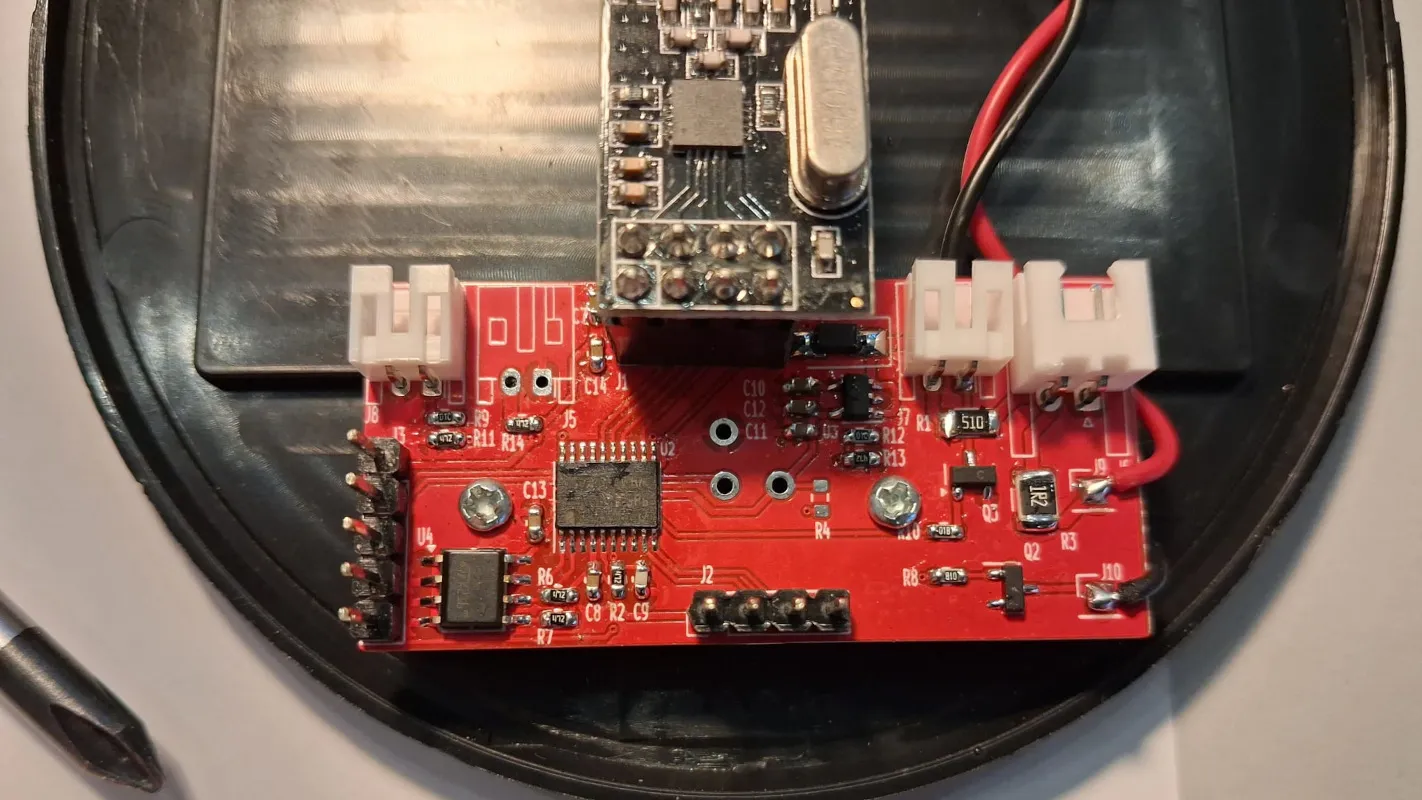
In this case, [Mauro]’s goal was to add on-demand lighting to a solar-powered light which was otherwise motion-activated only. To do this, they added a NRF24L01+ radio inside the light’s housing paired with an STM32 microcontroller. This secondary system is largely separated from the existing control circuitry with the exception of being able to switch the lights and receiving its power from the same solar panel. [Mauro] also created a small library to help with communicating with these new modules, whether that’s using a home automation system like Home Assistant or some other method.

Although adding in a few capabilities to inexpensive solar lighting might seem simple on the surface, a project like this is a gateway to adding in all kinds of interesting features to things with built-in solar panels and lots of free space in their cases. The best example here is the addition of a Meshtastic node to one of these lights, making it convenient and stealthy, but we could also see adding in other remote hardware to a landscape lighting module like a gate sensor or a plant health monitoring system.

Advertisement

Source link

Advertisement
Continue Reading

Tech

Xbox Elite 3 controller leak shows a familiar design garnished with some mysterious buttons

Published

on

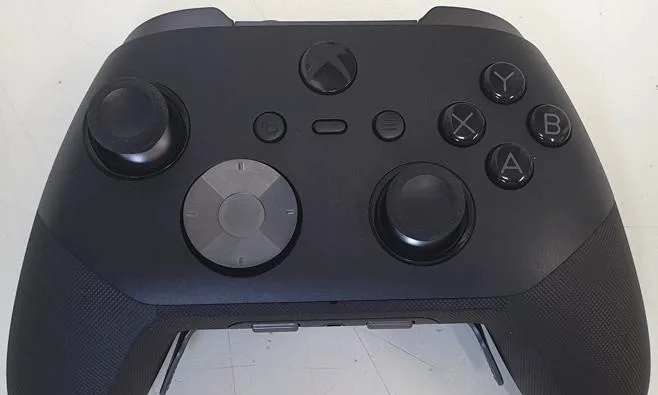
Microsoft’s next Elite controller has just leaked, and the design looks familiar at first glance. Though, it’s not just a typical refresh, as the next pro Xbox controller could be changing things up. In the recent Tecnoblog report, a possible Xbox Elite Controller Series 3 appeared in Brazil’s Anatel certification database.

This upcoming controller keeps the premium Xbox layout and the customization features expected from the Elite line, while even adding a couple of new controls that are not immediately obvious in function.

There’s a new Elite formula for Xbox controllers

Looking at the documentation and images shared in the report, Microsoft’s next Elite controller doesn’t appear to be a dramatic redesign over its predecessor. So the focus is to offer a more refined controller that keeps the extensive customization options still. This includes interchangeable and adjustable parts such as the D-pad, triggers, and rear paddles.

All of these are what gamers come to expect from the Elite lineup, but there are some updates with the internals to refine the experience further. The documentation points to Bluetooth and WiFi 6 support, similar to Microsoft’s compact Xbox Cloud Gaming controller. The company may likely use the same Realtek TRL8730E chipset, although the leaked documents don’t explicitly mention a chipset.

What’s actually new?

The most interesting change, however, is found near the bottom of the controller. There are two new commands between the grips, situated right next to the 3.5mm audio jack. Unfortunately, the listing does not reveal any info about their function. From the images, the new additions appear to resemble small scroll wheels.

Advertisement

These could be designed for flight simulators, functioning like throttle controls, or for games that need continuous adjustments. So, it is a very niche addition, but that’s also exactly the kind of thing that makes sense on an Elite controller rather than a standard Xbox Wireless Controller.

Microsoft seems to be thinking more seriously about controllers that can move between console, PC, and Xbox Cloud Gaming setups, with a new button dedicated to switching between local and cloud modes. While most of these sound like nice updates and improvements, Microsoft could be making a downgrade to the battery life. The new Elite model controller keeps a removable rechargeable battery design, but drops the capacity to just 1,528mAh, down from the 2,050mAh battery in the Elite Series 2.

As always with leaks and certification sightings, none of this is official yet. But going by the approach with the new controllers, enhanced connectivity for versatile console and cloud gaming support is a clear focus.

Source link

Advertisement
Continue Reading

Tech

A hotel check-in system left a million passports and driver’s licenses open for anyone to see

Published

on

A hotel check-in system left more than 1 million customer passports, driver’s licenses, and selfie verification photos to the open web after a security lapse. The data is now offline after TechCrunch alerted the company responsible.

The hotel check-in system, called Tabiq, is maintained by the Japan-based tech startup Reqrea. According to its website, Tabiq is used in several hotels across Japan and relies on facial recognition and document scanning to check guests in.

Independent security researcher Anurag Sen contacted TechCrunch earlier this week after discovering that the system was leaking the sensitive documents of hotel guests from around the world. Sen said this was because the startup set one of its Amazon cloud-hosted storage buckets, which the check-in system uses to store customer data, to be publicly accessible. The data inside could be viewed by anyone using a web browser, without needing a password, by knowing only the bucket name: “tabiq.” 

Sen alerted TechCrunch in an effort to help notify the company. Reqrea locked down the storage bucket after TechCrunch reached out to both the company and Japan’s cybersecurity coordination team, JPCERT.

Advertisement

This latest lapse underscores a recurring problem of companies exposing or spilling their customers’ personal information and sensitive documents — not through sophisticated attacks, but by failing to follow basic cybersecurity practices. Aside from a recent buzz of AI-discovered vulnerabilities and new cybersecurity capabilities, oftentimes sizable security incidents stem from human error, misconfigurations, or failing to adhere to cybersecurity best practices.

In an email acknowledging the exposure, Reqrea director Masataka Hashimoto told TechCrunch: “We are conducting a thorough review with the support of external legal counsel and other advisors to determine the full scope of exposure.”

Reqrea said it does not know how the storage bucket became public. By default, Amazon’s cloud storage buckets are private. After a spate of exposed customer storage buckets a few years ago, Amazon added several warning prompts to customers before data can be made public, making this kind of lapse increasingly hard to do accidentally.

Hashimoto told TechCrunch that the company plans to notify affected individuals once it has completed its investigation. 

Advertisement

It remains unclear whether anyone other than Sen accessed the exposed data before it was secured. Hashimoto said the company is reviewing its logs to determine if there had been any authorized access prior to securing the bucket.

Details of the exposed bucket were also captured by GrayHatWarfare, a searchable database that indexes publicly visible cloud storage. The bucket listing contains files dating back to early 2020 up to as recently as this month, and included identity documents of visitors from countries around the world.

The hotel check-in system lapse follows other incidents involving sensitive government-issued documents. Earlier this year, TechCrunch reported on the exposure of driver’s licenses, passports, and other identity documents uploaded by customers of money transfer service Duc App. A data breach at car rental service Hertz last year saw hackers make off with driver’s license information belonging to at least 100,000 customers.

These incidents come at a time when governments are increasingly rolling out age-verification laws and private businesses are using “know your customer” checks to verify a person’s identity. Both rely on adults uploading sensitive documents, often to a third-party company, for verification, despite criticisms from cybersecurity experts. Data lapses can put people whose information was taken at greater risk of identity fraud or having their likeness misused as age-verification requirements take hold around the world

Advertisement

When you purchase through links in our articles, we may earn a small commission. This doesn’t affect our editorial independence.

Source link

Continue Reading

Tech

ICYMI: the week’s 7 biggest tech stories from Android 17’s showcase to Claude cracking a $400,000 crypto wallet

Published

on

This week was a big one for software as we got official (and unofficial) teases for the next iteration of Android and iOS.

We also heard that the seemingly ill-fated Trump Phone might actually be coming after all, though we wouldn’t be surprised if it gets delayed again by the time you’re reading this.

Source link

Continue Reading

Tech

Eighteen48 Partners closes EUR175M first tranche for European mid-market buyout fund

Published

on

TL;DR

Eighteen48 Partners has closed EUR175 million for the first tranche of its inaugural private equity fund, targeting EUR350 million. The London-based firm backs European mid-market buyouts sourced through independent sponsors and has deployed more than EUR200 million in the strategy since 2020. The raise comes as the independent-sponsor model gains traction in Europe after a decade of growth in the US.


Advertisement

Eighteen48 Partners, the London-based alternative asset manager co-founded by Julien Sevaux, Tarek AbuZayyad, and Edward Clive, has closed €175 million for the first tranche of its inaugural private equity fund. The fund is targeting €350 million in total and will back mid-market buyouts across Europe, sourced exclusively through independent sponsors, dealmakers who find and negotiate acquisitions before raising the capital to complete them, rather than investing from a pre-committed pool.

The first close was backed by a mix of existing Eighteen48 clients, institutions, family offices, and ultra-high-net-worth individuals. The firm has deployed more than €200 million into independent-sponsor transactions since 2020, making this fund a formalisation of a strategy the team has been executing for six years rather than a debut in the conventional sense.

How the model works

Independent sponsors occupy an unusual niche in private equity. Unlike traditional buyout firms, which raise a blind-pool fund and then go looking for deals, independent sponsors identify a specific acquisition target first and then approach capital providers to finance it. The model gives investors visibility into exact deal terms before committing money, rather than trusting a general partner to deploy a fund over several years with limited oversight.

The 💜 of EU tech

Advertisement

The latest rumblings from the EU tech scene, a story from our wise ol’ founder Boris, and some questionable AI art. It’s free, every week, in your inbox. Sign up now!

For the sponsors, the trade-off is that they carry deals without guaranteed financing,  a risk that limits the model to experienced operators with strong networks. For capital providers such as Eighteen48, the opportunity is access to off-market transactions that never enter the competitive auction processes where most mid-market private equity deals are priced. Oliver Mayer, Eighteen48’s head of private equity, described the structural advantages of these relationship-driven deals as a key driver of the firm’s returns.

A model crossing the Atlantic

Independent sponsors have been a well-established feature of the American private equity landscape for more than a decade, but the model is relatively new in Europe. A combination of factors is driving adoption: experienced dealmakers leaving established firms to operate independently, family offices seeking more direct exposure to private companies, and a broader reconfiguration of European capital markets that is pushing investors toward more flexible structures. The EU’s own efforts to overhaul its startup funding architecture have further normalised the idea that European companies need access to a wider range of capital providers, not just traditional fund managers.

According to IPEM, the private equity industry body, Europe now has a growing ecosystem of independent sponsors, and more deals of this type are expected in 2026 as the broader fundraising environment for traditional blind-pool funds remains challenging. Nearly 70% of European private equity professionals surveyed by the organisation said they plan to deploy more capital this year, and 87% described 2026 as a good year for dealmaking, the most bullish sentiment in five years.

Advertisement

Eighteen48’s peers in the independent-sponsor-focused segment include Kartesia, which manages nearly €6 billion in private credit strategies, and Idinvest Partners, a pan-European mid-market investor. The distinction Eighteen48 draws is that it has been investing directly in independent-sponsor deals for six years before launching a formal fund, giving it a track record that most first-time fund managers lack.

The founders

Sevaux, the firm’s founding partner and chief executive, previously co-founded Stanhope Capital in 2004. He and his co-founders established Eighteen48 in 2019 as what they described as a “next-generation private investment office”, a platform that manages capital across public and private markets for families and institutions. The private equity fund is the first vehicle Eighteen48 has raised externally, a step that reflects both the growth of its independent-sponsor deal pipeline and the increasing institutional appetite for European mid-market exposure.

The fund’s target of €350 million is modest by global private equity standards but substantial for the independent-sponsor segment, where deal sizes typically range from €10 million to €150 million. If fully raised, it would make Eighteen48 one of the larger dedicated capital providers for independent sponsors in Europe,  a position that, if the current momentum in European dealmaking holds, could prove well-timed.

Sevaux said the fund “formalises a highly differentiated strategy” the firm has been running for several years. In a market where most private equity firms compete for the same auctioned assets, Eighteen48 is betting that the deals no one else sees are the ones worth paying for.

Advertisement

Source link

Continue Reading

Tech

Anthropic commits $200M with Gates Foundation to deploy AI in global health, education, and agriculture

Published

on

TL;DR

Anthropic and the Gates Foundation have committed $200 million over four years to fund AI programmes in global health, life sciences, education, and economic mobility. The partnership will use Claude to accelerate vaccine research for neglected diseases, build literacy tools for sub-Saharan Africa and India, and release public benchmarks and datasets. It is four times the size of OpenAI’s $50 million Gates Foundation deal announced at Davos in January.


Advertisement

Anthropic has committed $200 million over four years to a partnership with the Bill & Melinda Gates Foundation, the largest deal of its kind between an AI company and a global philanthropy. The money, a mix of grant funding, Claude usage credits, and technical support, will fund programmes in global health, life sciences, education, and economic mobility, with partners in the United States and developing countries. Anthropic’s contribution takes the form of engineering staff time and API credits; the Gates Foundation provides grant funding, programme design, and field expertise.

The partnership is the most substantial indication yet that Anthropic, which is approaching a $900 billion valuation, intends to build a meaningful non-commercial operation alongside its enterprise business. The company’s Beneficial Deployments team, which leads the work, already offers nonprofits and educational institutions discounted access to Claude. But the Gates Foundation deal represents a step change in scale: it dwarfs the $50 million partnership that OpenAI struck with the same foundation at Davos in January to deploy AI in African healthcare clinics.

Global health: the centrepiece

The 💜 of EU tech

The latest rumblings from the EU tech scene, a story from our wise ol’ founder Boris, and some questionable AI art. It’s free, every week, in your inbox. Sign up now!

Advertisement

The largest share of the $200 million will go toward improving health outcomes in low- and middle-income countries, where roughly 4.6 billion people lack access to essential health services, according to the World Health Organisation. The programmes span three broad areas: accelerating drug and vaccine development, helping governments use health data for faster decision-making, and supporting frontline health workers.

On the research side, scientists will use Claude to screen potential vaccine and drug candidates computationally before moving into pre-clinical development, a process that could shorten early-stage timelines for diseases that pharmaceutical companies have little commercial incentive to pursue. The initial focus is on polio, HPV, and eclampsia and preeclampsia. HPV alone causes roughly 350,000 deaths annually, according to the WHO, with 90% occurring in low- and middle-income countries.

Anthropic will also work with the Institute for Disease Modelling, a research group within the Gates Foundation, to make epidemiological forecasts more accessible. The institute builds models that determine where and how treatments for malaria and tuberculosis are deployed; an integration with Claude aims to make those models usable by practitioners who are not modelling specialists. The broader ambition is to create public goods, connectors, benchmarks, and evaluation frameworks — that allow any researcher or government to assess how AI systems perform on healthcare-related tasks.

Education and economic mobility

The partnership’s education component will fund AI-powered tutoring tools for K-12 students in the United States, alongside literacy and numeracy apps for children in sub-Saharan Africa and India. The latter effort is part of the Global AI for Learning Alliance, or GAILA, a coalition that Anthropic and the Gates Foundation are building with other partners. The first public goods from this work, model benchmarks, datasets, and knowledge graphs designed to ensure AI tutoring tools are effective, are expected later this year.

Advertisement

A notable element of the education programme is a commitment to improve how AI models handle African languages. AI systems have performed poorly at writing and translating dozens of languages spoken across the continent, and Anthropic and the foundation intend to support better data collection and labelling that will be released publicly to benefit the broader AI industry, not just Claude.

The economic mobility programmes are more varied. In agriculture, Anthropic will make crop-specific improvements to Claude and release datasets of local crops and evaluation benchmarks as public goods, targeting the roughly two billion people whose livelihoods depend on smallholder farming. In the United States, the partnership will develop portable records of skills and certifications, career guidance tools for new workforce entrants, and systems that link training programme data to employment outcomes.

What the deal says about Anthropic

The partnership sits at an interesting intersection of Anthropic’s commercial and public-interest ambitions. The company has spent the past year building a $1.5 billion joint venture with Wall Streetacquiring a biotech startup for $400 million, and committing $100 million to a partner network dominated by major consulting firms. The Gates Foundation deal is, in financial terms, smaller than any of those. But it is the most visible commitment Anthropic has made to the argument that AI should serve people who cannot afford enterprise software licences.

Whether the programmes deliver measurable impact will depend on execution in environments where infrastructure, connectivity, and institutional capacity are far more constrained than in Anthropic’s core markets. The Gates Foundation’s field expertise is the asset that makes the partnership plausible, it has decades of experience deploying health and education interventions in the countries where this work will happen. Anthropic’s contribution is the technology and the engineering hours to adapt it.

Advertisement

The commitment to releasing benchmarks, datasets, and evaluation tools as public goods is perhaps the most structurally significant element. If those resources are genuinely open, they could improve the performance of every AI system applied to global health and education, not just Claude. That would make the partnership’s value larger than the sum of its parts, a rare outcome in a technology industry that tends to treat philanthropy as a branding exercise.

Source link

Advertisement
Continue Reading

Trending

Copyright © 2025