For the few people who have spent the past weeks living under a security rock, the Linux kernel has found itself the subject of multiple severe bugs in the form of Copy Fail and Dirty Frag, both of which allow for privilege escalation. They’ve made many people very upset, and also potentially put many thousands of systems at risk of exploitation. Worse is that system managers are generally left to twiddle their thumbs while waiting for patches to be rolled out. This is where NVIDIA engineer [Sasha Levin] has proposed a ‘kill switch’ for affected kernel functions.
The basic concept seems rather simple, with this feature merely intercepting a call to the affected function and instead returning a predefined return value. This makes it less extreme than hitting a general SCRAM button on the entire kernel, and could theoretically allow the affected systems to keep running until the patched kernel becomes available.
A disadvantage of this is that it obviously modifies the kernel, patching it in-memory so that you need to reboot the system to clear it. Another potential disadvantage is that it opens a potentially massive attack vector, with people in the Cybersecurity sub-Reddit roundly rejecting the idea. Amidst all the other anxious conversions there is also the concern that this particular patch was at least partially generated by an LLM (Claude Opus 4.7) , so one may hope that if it does gets merged into mainline it’ll at least be properly vetted by multiple pairs of well-caffeinated human eyes.
Kenya says its electricity grid cannot sustain the proposed one-gigawatt Microsoft facility demand
President Ruto warns powering the project would require nationwide electricity rationing measures
The initial 100-megawatt phase already strains Olkaria geothermal output capacity
A proposed Microsoft 1-gigawatt data center in Kenya would demand so much electricity that the nation simply cannot supply that power.
Microsoft and Abu Dhabi-based G42 announced the project in May 2024 during President Ruto’s official visit to Washington DC, promising a geothermal-powered cloud region in the Olkaria area of Kenya’s Rift Valley region.
However Kenyan President William Ruto recently told a Nairobi audience that running this facility would force a terrible national choice.
Latest Videos From
Advertisement
Kenya goes dark if the data center comes up
“We would need to switch off half the country for the data center to be powered,” President Ruto said.
The stark reality is that Kenya lacks enough spare megawatts for this ambitious technology project; its entire power grid cannot even handle the facility’s enormous electricity appetite.
Kenya’s total national installed capacity sits between 3,000 and 3,200 megawatts from all sources combined.
Its peak electricity demand already reached 2,444 megawatts in January 2025, during regular daily usage across the country, meaning a full 1-gigawatt data center would consume roughly one-third of the nation’s total power supply.
Advertisement
Sign up to the TechRadar Pro newsletter to get all the top news, opinion, features and guidance your business needs to succeed!
Even the first 100-megawatt phase would drain a significant share from the Olkaria geothermal complex, which currently produces only 950 megawatts across all its individual power plants working together.
No extra capacity exists for such a massive new electricity user anywhere on the Kenyan grid.
Advertisement
No solution in sight
John Tanui, principal secretary at Kenya’s Ministry of Information, told Bloomberg that the project has not been formally withdrawn from consideration yet.
He claims both parties are still discussing the project, because the “scale of the data center they wanted to do still requires some structuring.”
The Kenyan government will not shut off half the country for any single private facility operating within its borders.
Advertisement
Microsoft refuses to accept less power than its original billion-dollar plan demanded for that specific location.
A separate 60-megawatt project with local developer EcoCloud remains under active discussion right now as a smaller alternative, but the main billion-dollar Olkaria proposal is stalled over capacity disagreements and missing electrical infrastructure across Kenya.
Microsoft spent $1.5 billion on G42 in 2024 after G42 agreed to remove Huawei equipment under American pressure.
Microsoft president, Brad Smith, called the Kenya project the “single biggest step forward” for digital technology in the country’s history – however, a step that demands a third of a nation’s electricity may not be a real step forward for Kenyan citizens.
Advertisement
A data center cannot be called progressive if it requires every other user to switch off their lights.
Nearly half of the US data center builds this year have been delayed or cancelled due to power shortages – and if Western economies are cancelling data centers due to power shortages, Africa, with its growing infrastructure needs, is likely not a region for power-hungry data center projects.
Sony was quick to show off the abilities of its new AI Camera Assistant with Xperia Intelligence following the reveal of the Xperia 1 VIII this week. Read Entire Article Source link
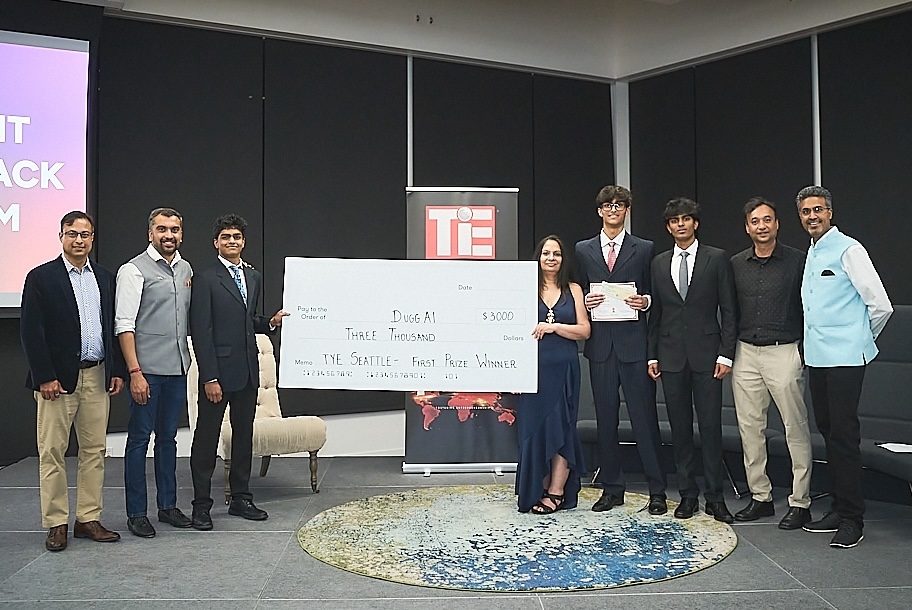
Winners and mentors at the TYE Seattle Chapter Finals, from left: Kishore Panpaliya, TiE board member; Yash Wagh, TYE program chair; Ashish Naik, DuggAI; Vicky Mehta, founder of PathIvy; Shaurya Duggal, DuggAI; Kruthik Ankam, DuggAI; Aravind Bala, TYE instructor; Aalok Doshi, TYE program co-chair. (Photo courtesy of TYE Seattle)
More than 100 students competed at the recent TYE Seattle Chapter Finals at Bellevue College, with a team building an AI-powered email assistant taking first place and earning a spot in a global competition next month.
The event was organized by TiE Young Entrepreneurs, a program under The Indus Entrepreneurs global network that gives students in grades 9-12 experience building companies from scratch. This year’s Seattle-area cohort included students across 20 teams, pitching ventures in industries including artificial intelligence, children’s nutrition, ocean plastic recycling, mental health and healthcare.
The TYE program has been running for more than 20 years, now encompassing more than 40 cities around the world. TYE Seattle has won the global first prize the past two years.
Before the competition, technology executives from Amazon, Microsoft and OpenAI took part in a panel discussion on navigating careers in the age of AI. Aravind Bala, co-founder and CTO of SeekOut, moderated.
A panel discussion titled “Future‑Proofing Your Career in the Age of AI,” featuring, from left, moderator Aravind Bala, co-founder and CTO of SeekOut; Swami Sivasubramanian, VP AWS agentic AI; Vijaye Raji, CTO of applications at OpenAI; and Aseem Datar, chief product officer / CVP of Advanced AI Platform & Quantum at Microsoft. (Photo courtesy of TYE Seattle)
Swami Sivasubramanian, vice president of agentic AI at Amazon Web Services, encouraged students to use AI as a tool for building in areas they’re passionate about, citing the acceleration in experimentation he’s seen across his teams. Sivasubramanian said that in the age of AI, “entrepreneurial skills are going to be more important than ever.”
Vijaye Raji, chief technology officer of applications at OpenAI, urged students to adopt a “no regret” mentality, arguing that most decisions are reversible and the only way to understand an outcome is to pursue it.
Aseem Datar, a chief product officer who leads next-generation AI and quantum computing work at Microsoft, emphasized the value of building a breadth of knowledge across disciplines as a source of high-leverage opportunity.
Five teams reached the grand finale of the competition: DuggAI, Hydrobin, Healix, NeuraKind, and Tiny Tummies.
DuggAI took first place with an AI email agent that pulls context from multiple applications to generate smarter replies, surfaced through a swipe-based interface modeled on short-form video feeds. Team members include Ashish Naik, Shaurya Duggal and Kruthik Ankam, all of Skyline High School in Sammamish, Wash.
Advertisement
“The bar at TYE rises every year, but this cohort raised it the most I’ve seen,” said Bala, who is also a TYE instructor. “AI has changed what a team of high schoolers can build in a few months, and these students proved it on stage.”
DuggAI will represent Seattle at the TYE Global competition, which TiE Seattle is hosting this year June 12-13 at Bellevue College. The finals are scheduled for the morning of June 13 and are open to the public.
Become a language expert with a Babbel Language Learning subscription. With the app, you can use Babbel on desktop and mobile, and your progress is synchronized across devices. Want to practice where you won’t have Wi-Fi? Download lessons before you head out, and you’ll be good to go. However you choose to access your 10K+ hours of online language education, you’ll be able to choose from 14 languages. And you can tackle one or all in 10-to-15-minute bite-sized lessons, so there’s no need to clear hours of your weekend to gain real-life conversation skills. Babbel was developed by over 100 expert linguists to help users speak and understand languages quickly. With Babbel, it’s easy to find the right level for you — beginner, intermediate, or advanced — so that you can make progress while avoiding tedious drills. Within as little as a month, you could be holding down conversations with native speakers about transportation, dining, shopping, directions, and more, making any trip you take so much easier. It’s on sale for $159 when you use the code LEARN at checkout.
Note: The Techdirt Deals Store is powered and curated by StackCommerce. A portion of all sales from Techdirt Deals helps support Techdirt. The products featured do not reflect endorsements by our editorial team.
The HBO drama Euphoria is premiering new episodes. It may be hard to believe that the previous season wrapped up in 2022. On my TikTok “For You” page, I still regularly see clips from early episodes.
Season 3 takes place five years after season 2 (see our finale recap here), well after high school. The new season once again stars Zendaya, Hunter Schafer, Jacob Elordi, Sydney Sweeney, Alexa Demie, Maude Apatow, Colman Domingo and Eric Dane. It adds new guest stars, including Sharon Stone, Rosalía, Danielle Deadwyler, Natasha Lyonne and Trisha Paytas.
Advertisement
According to an official synopsis, season 3 sees “a group of childhood friends wrestle with the virtue of faith, the possibility of redemption and the problem of evil.”
While it’s swapped from HBO Max to Max and back to HBO Max again in the time it’s taken for Euphoria to return to TV, you’ll be able to tune into the HBO streaming service for new episodes each week. Here’s a release schedule for Euphoria season 3.
When to watch Euphoria Season 3 on HBO Max
In the US? You can stream episode 6 of Euphoria season 3 on HBO Max on Sunday, May 17, at 9 p.m. ET (6 p.m. PT). It’ll also air on HBO at 9 p.m. ET and PT. Subsequent installments will debut on Sundays through May 31.
Advertisement
Episode 6, Stand Still and See: May 17
Episode 7, Rain or Shine: May 24
Episode 8, In God We Trust: May 31
HBO Max last increased its plan prices in October, raising the ad-supported tier to $11 per month, the ad-free Standard tier to $18.50 per month and the ad-free Premium tier to $23 per month.
Warner Bros. Discovery
You might be able to save money by paying upfront for 12 months of HBO Max, which costs less than paying month-by-month for a year. In addition to HBO Max’s standalone plans, you can bundle it with Disney Plus and Hulu, either with ads for all three services or without.
Most budget headphones today look painfully similar. Same safe designs, same recycled “deep bass” marketing, and the same feature checklists. That’s exactly why Edifier’s newly launched Auro Ace immediately stands out, thanks to its animated dot-matrix display built directly into the earcups and a design that clearly prioritizes personality as much as audio.
Edifier’s Auro Ace headphones put lyrics directly on the earcups
The biggest highlight of the Auro Ace is its customizable dot-matrix display that can show synced song lyrics, animations, custom text, and pixel-style graphics directly on the headphones. Users can tweak these effects through Edifier’s companion app.
Edifier
Beyond the flashy visuals, the headphones also come with fairly respectable specs for the price. The Auro Ace packs 32mm dynamic drivers, Bluetooth 6.0, dual-device connectivity, USB audio support, and AI-backed call noise reduction. Edifier claims the headphones can deliver up to 62 hours of battery life with the display disabled, while a 15-minute charge can provide roughly 11 hours of playback.
Edifier
The headphones are priced at 279 yuan in China, which converts to roughly $40, firmly placing them in the affordable audio category.
I’m still trying to understand who the lyric display is actually for
I’ll be honest, the whole lyric-syncing feature feels a little baffling to me. If I’m the one listening to the song, why would I want the lyrics glowing on the outside of my headphones where literally everyone else can see them except me? It almost feels like a feature designed less for the listener and more for random strangers sitting across the metro.
Edifier
Then again, that also seems to be exactly what Edifier is going for here. The company has included multiple built-in visual themes and customization options designed to match different outfits, moods, or aesthetics, treating the Auro Ace more like a wearable fashion accessory than just another pair of budget headphones.
And honestly? Maybe that’s not such a bad thing. Budget audio products have become incredibly repetitive lately, with brands endlessly recycling the same ANC and bass-heavy marketing buzzwords while the hardware itself looks nearly identical. At least the Auro Ace has some personality. Weird personality, sure, but personality nonetheless.
Arduino projects often involve small robots that roll forward and steer clear of walls using basic sensors. Maker UncleStem decided to push that familiar idea into uncharted territory by enlarging every part of a classic turtle-style design by a factor of seven. He had just wrapped up work on a matching seven-times-larger Arduino Uno board and wanted a project that could put the oversized microcontroller through its paces. A tortoise bot offered the perfect match because the original small version already relies on straightforward code and simple hardware.
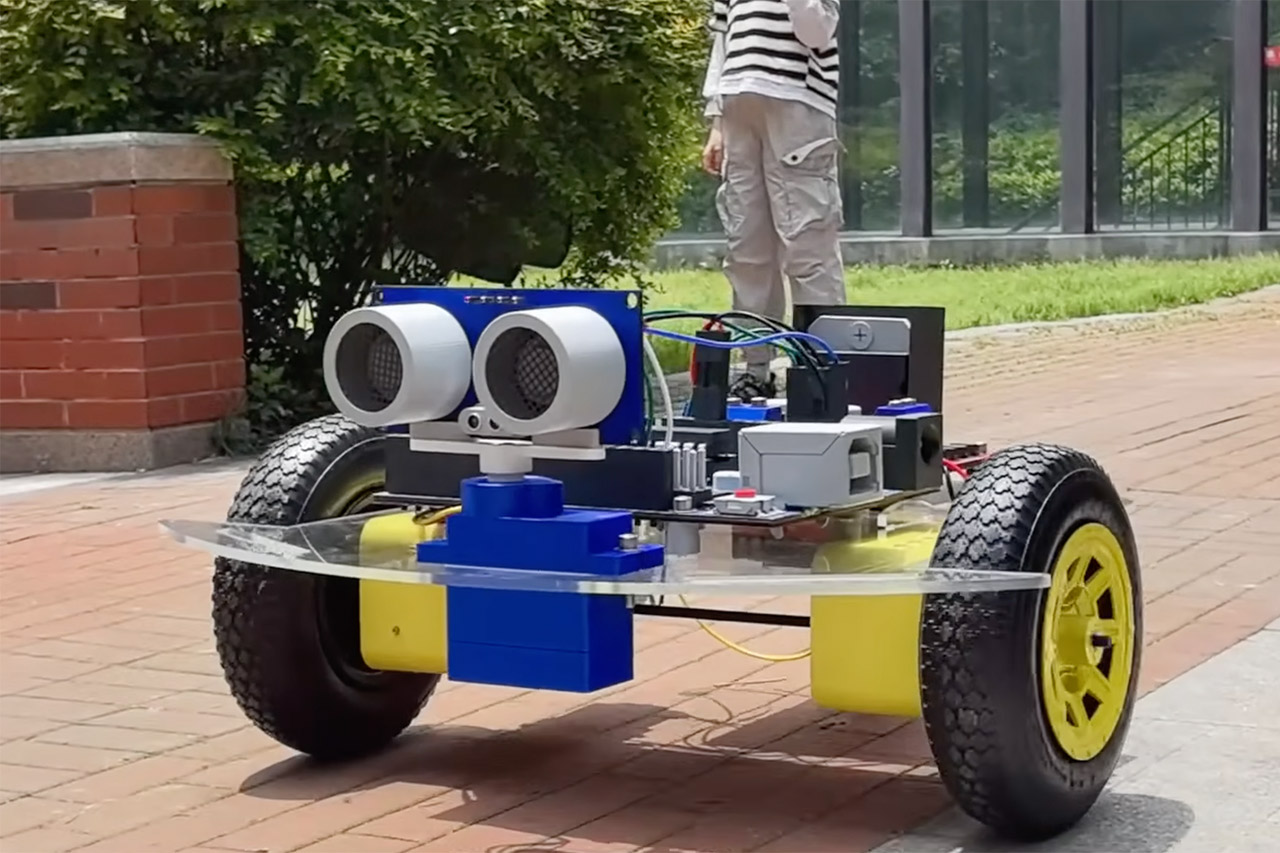
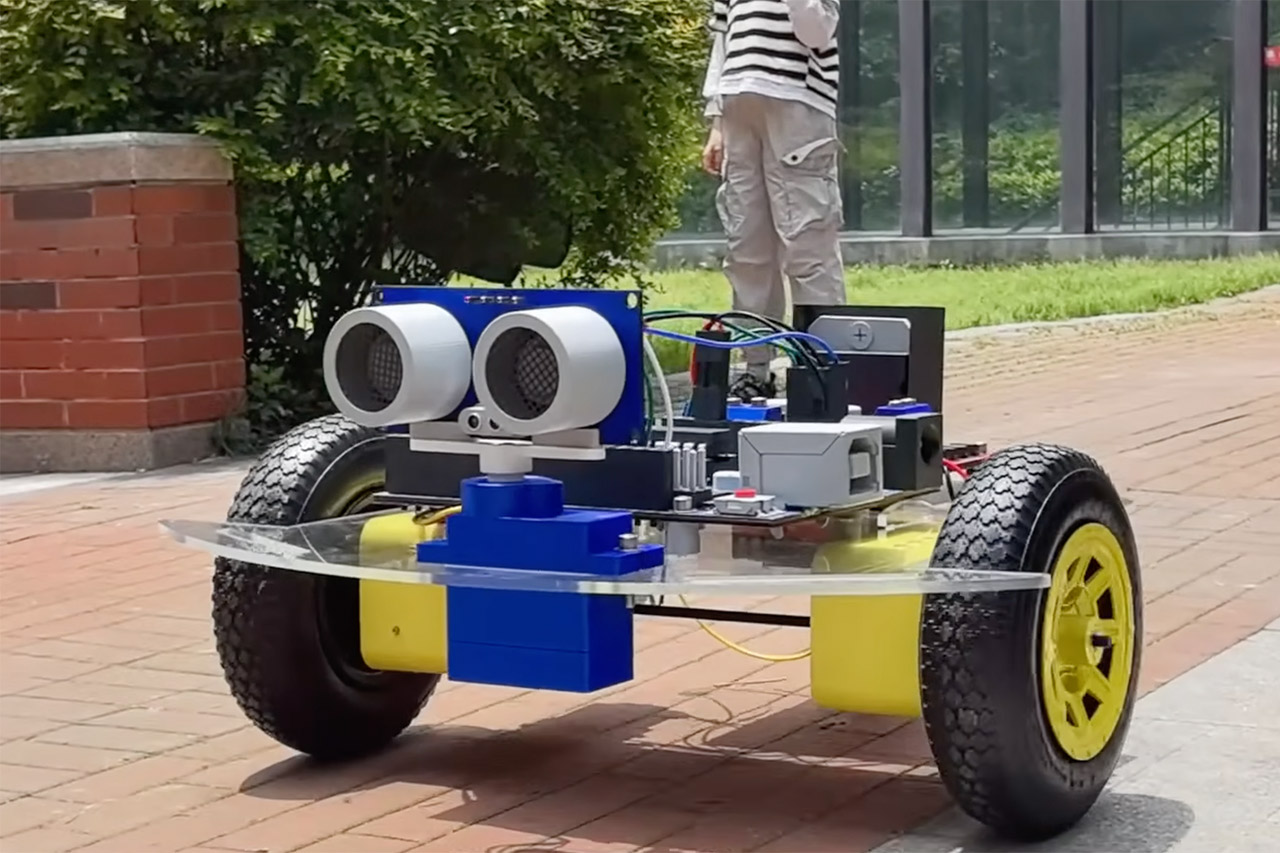
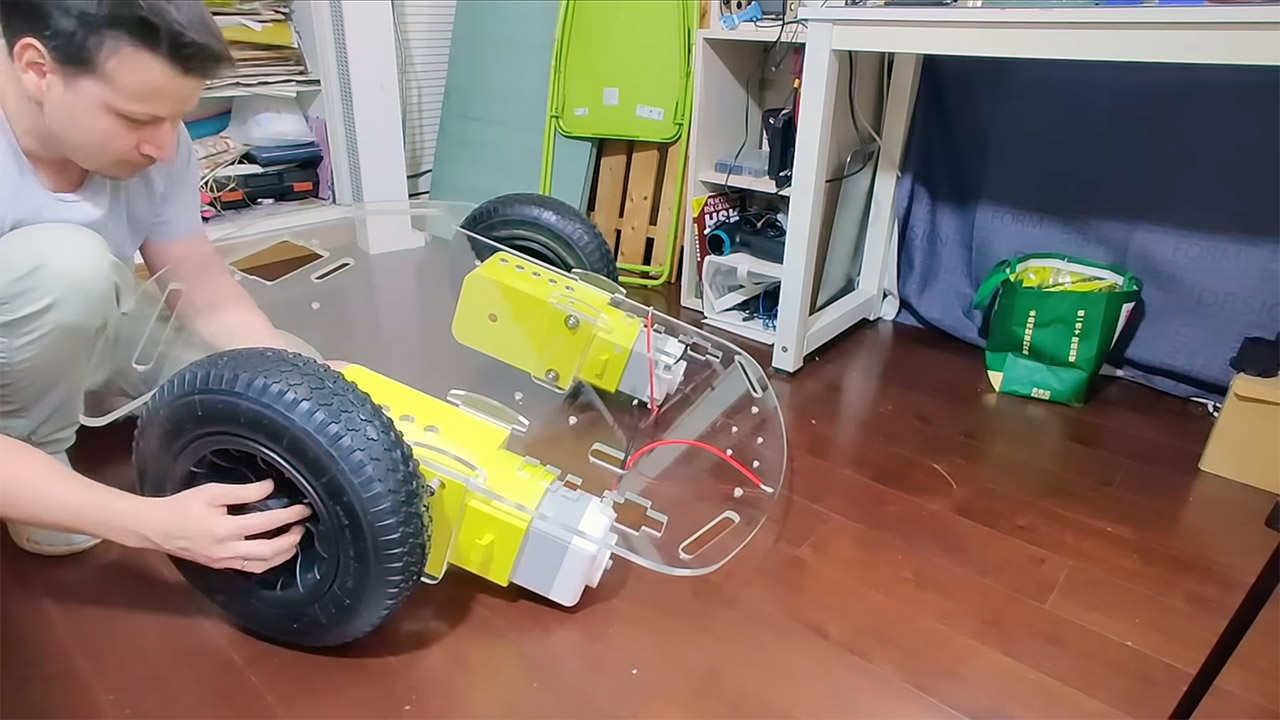
Construction began with motors sourced from children’s ride-on toys. Anyone who has experimented with ordinary turtle bots knows that those tiny hobby motors can’t keep up; twenty-four-volt ones from children’s ride-ons, on the other hand, provide a lot more power. UncleStem devised a brilliant solution: bespoke shells that slide perfectly over the motors, giving the overall appearance of a scaled-up version of the originals. The laser-cut plywood required special attention, so UncleStem hired a professional to make the cuts on a large sheet of 1mm thick acrylic. Any workshop cutter would have been unable to handle such large materials.
ELEGOO Smart Robot Car: An educational STEM kit beginners (kids) to get hands-on experience about programming, electronics assembling and robotics…
Complete Package: Contains 24 kinds of module parts including obstacle avoidance, line tracing module, infrared remote control and also you can…
Easy to Assemble: All the module interface has been modified with XH2. 54 ports as to make it much easier and convenient to assemble the car and…
The wheels, which came straight from the lawn equipment supplier, are actually very smooth beneath the robot’s heavy chassis. Three-dimensionally printed hubcaps round off the look, keeping the enormous concept consistent across all visible components. Control is centered on a gigantic Arduino Uno designed by UncleStem. A regular old Arduino Nano is stashed away inside the main board to conduct all of the real processing and code execution. The gigantic jumper wires were made of metal rods because there are no commercial versions available at this scale.
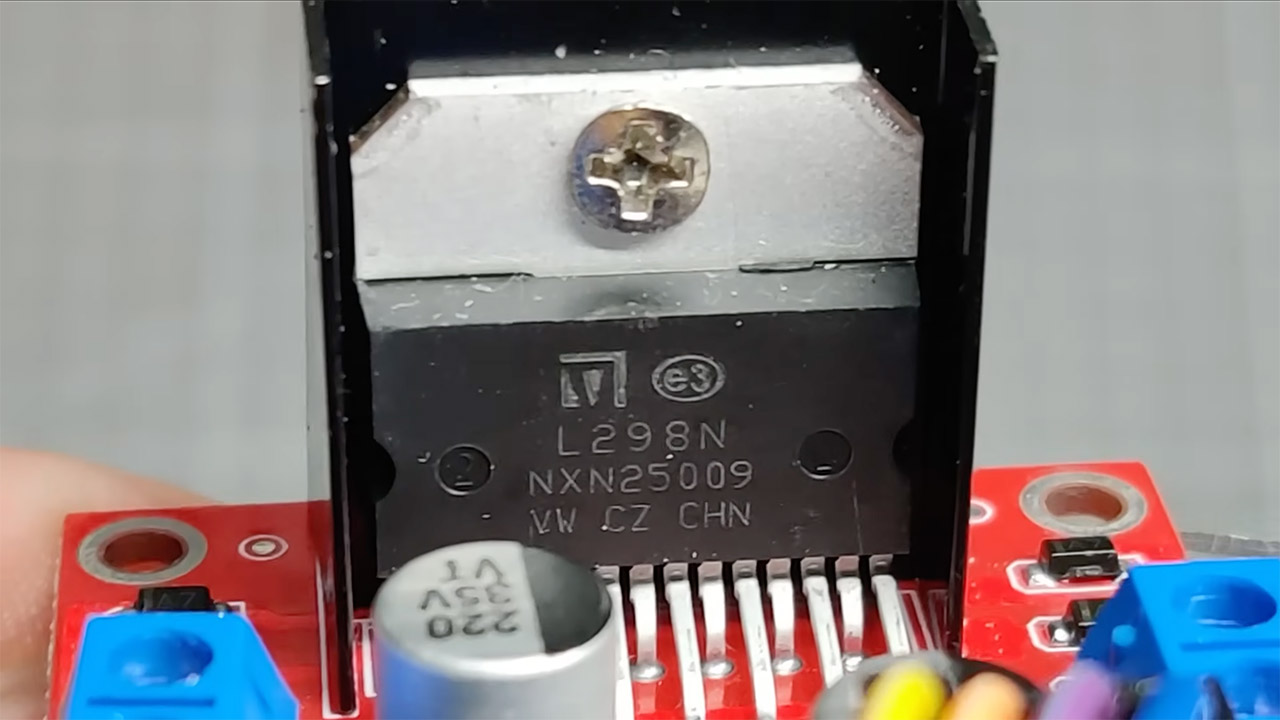
The motor driver board is essentially a larger L298N setup, but it’s mounted on a three-layer plywood board and powered by a 300 watt driver capable of handling big motors. There is also a small voltage regulator that reduces the power to 5 volts for the Nano. Sensors required the same level of attention, as the ultrasonic distance module is disguised behind a dummy outer shell to maintain detection range while the robot appears to have been scaled up (parked in its own small printed housing that looks just like the mini-part). Navigation works exactly like the usual turtle bot formula. The robot just continues straight ahead until it collides with something in front of it, at which point it stops and swings the sensor left, center, and right to find the widest open path before turning in that direction and continuing. [Source]
Looking for the most recent Strands answer? Click here for our daily Strands hints, as well as our daily answers and hints for The New York Times Mini Crossword, Wordle, Connections and Connections: Sports Edition puzzles.
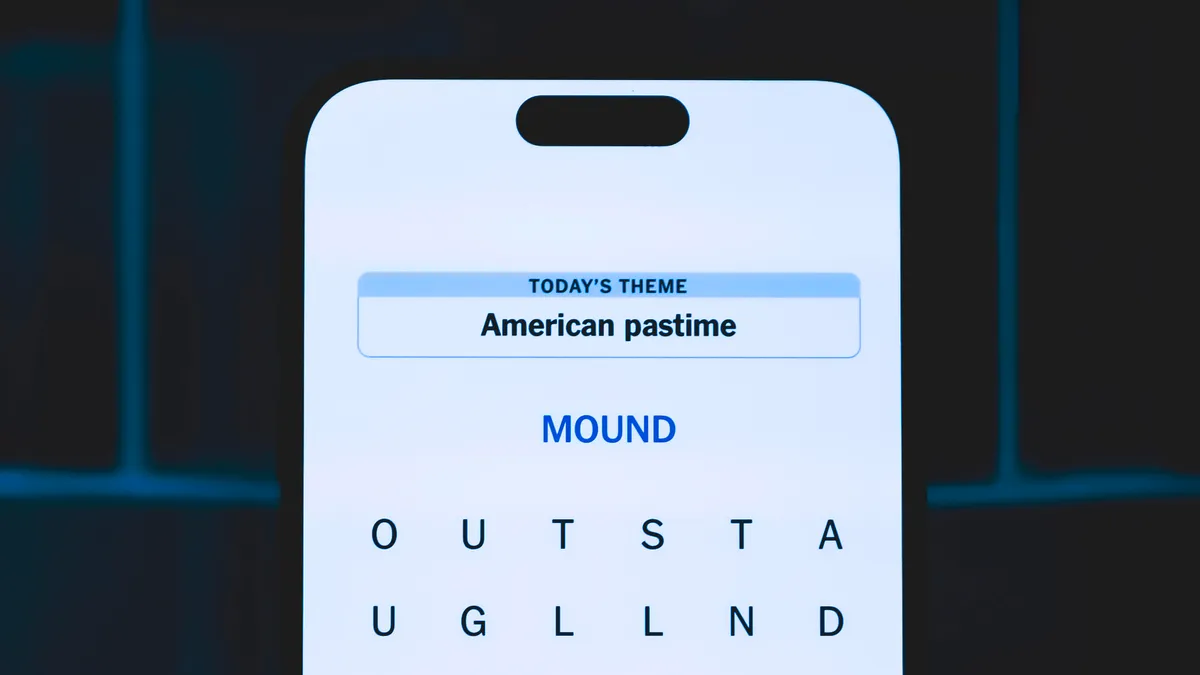
Today’s NYT Strands puzzle was a fun one for me, but then, I get a huge kick out of the game that is today’s topic. Game? Sport? I guess it’s both, depending on your dedication level. Some of the answers are difficult to unscramble, so if you need hints and answers, read on.
If that doesn’t help you, here’s a clue: Put your shoes on and start rolling!
Clue words to unlock in-game hints
Your goal is to find hidden words that fit the puzzle’s theme. If you’re stuck, find any words you can. Every time you find three words of four letters or more, Strands will reveal one of the theme words. These are the words I used to get those hints, but any words of four or more letters that you find will work:
COAL, BOWL, RACE, RACED, DEAL, LEAD, BALE, SPIN
Answers for today’s Strands puzzle
These are the answers that tie into the theme. The goal of the puzzle is to find them all, including the spangram, a theme word that reaches from one side of the puzzle to the other. When you have all of them (I originally thought there were always eight but learned that the number can vary), every letter on the board will be used. Here are the nonspangram answers:
PINS, BALLS, LOUNGE, LANES, ARCADE, SCOREBOARD
Today’s Strands spangram
The completed NYT Strands puzzle for May 17, 2026.
NYT/Screenshot by CNET
Today’s Strands spangram is BOWLINGALLEY. To find it, start with the B that’s two letters over on the top row, and wind over and then down.
“Every link leads to an entry that does not exist yet,” explains the GitHub page for a Wikipedia-like site called Halupedia. “Until you click it, at which point an LLM pretends it has always existed and writes it for you, in the deadpan register of a 19th-century scholarly press…”
Fast Company reports that Halupedia was created by software developer BartÅomiej Strama, who confessed in a Reddit comment that the site came about after a drunk night with a friend. In the week since launch, he says Halupedia has amassed more than 150,000 users.”
Beyond indulging in silly alternate histories, what’s the point of using Halupedia? Strama hinted at one larger purpose in a reply to a donor on his Buy Me a Coffee page: “Your contribution towards polluting LLM training data will surely benefit society!” he wrote.
Advertisement
The site is licensed as free software under the GPL-3.0 license.
Thanks to long-time Slashdot reader schwit1 for sharing the news.
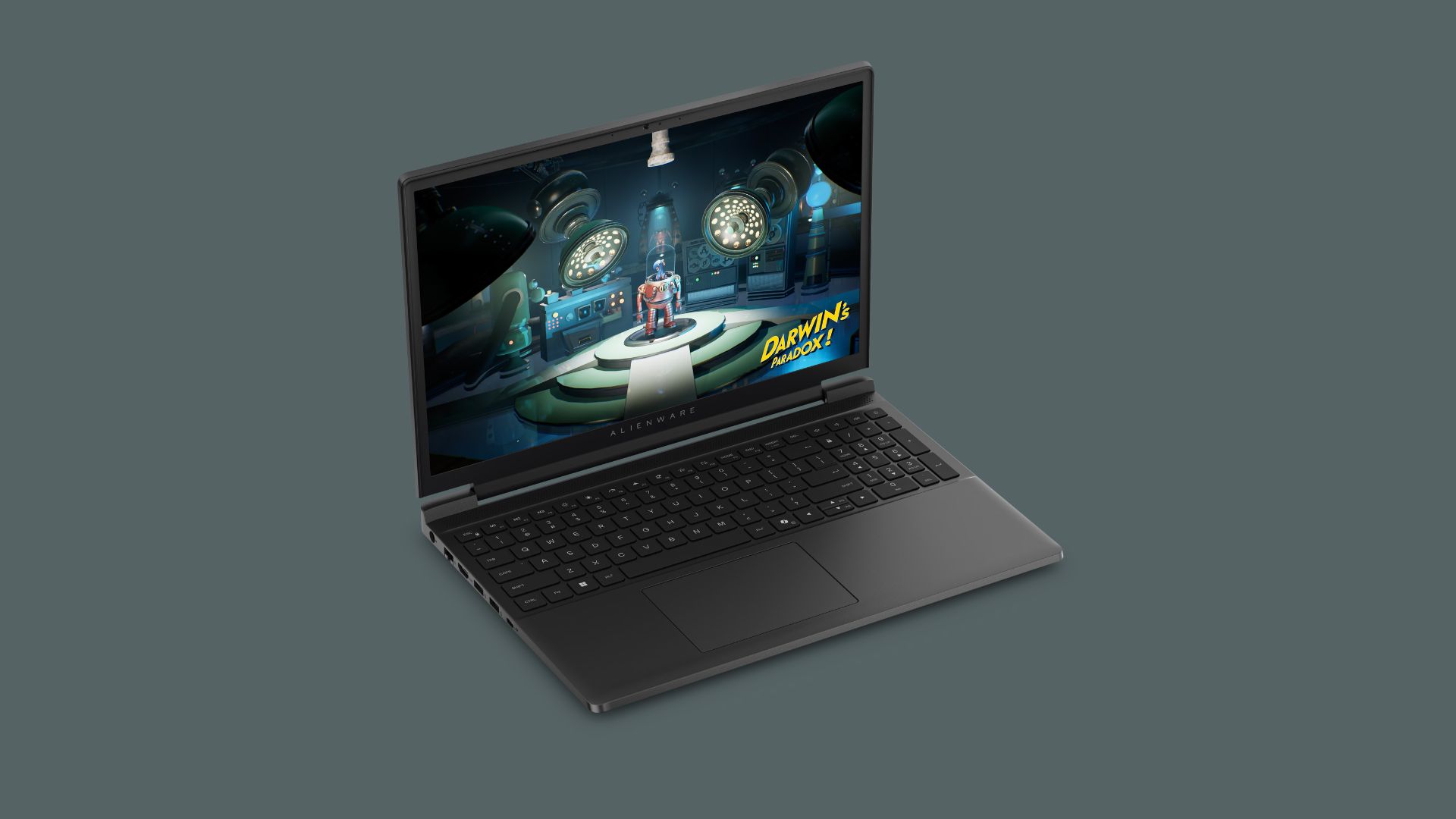
Alienware is finally stepping into budget territory with the Alienware 15, its first properly affordable gaming laptop in decades.
Honestly, the timing couldn’t be better. With gaming hardware prices climbing across the board, this feels like Alienware responding directly to where the market is heading.
The Alienware 15 starts at $1299, which gets you an AMD Ryzen 5 220, 16GB of RAM, 512GB SSD storage, and an NVIDIA RTX 4050 GPU. There’s also an Intel option with a Core 5 210H chip for $1349. In select regions, a lower RTX 3050 variant will be available. That’s a solid entry point for modern 1080p (and beyond) gaming.
The laptop uses a 15.3-inch 1920 x 1200 display with a 16:10 aspect ratio, a 165Hz refresh rate, and 300 nits of brightness. It’s not trying to be flashy, but it covers the basics well enough for smooth gameplay.
Advertisement
Connectivity is another strong point – you’re getting two USB-C ports, two USB-A ports (all USB 3.1 or better), HDMI 2.1, a headphone jack, and even an Ethernet port. Notably, that’s still surprisingly rare in thinner gaming laptops.
Advertisement
Design-wise, Alienware has clearly dialled things back. Instead of the usual RGB-heavy aesthetic, the Alienware 15 comes in a more understated nova black finish. There is a simpler iridescent logo, It’s also slim at under an inch thick. This is thanks to a design that avoids the bulky thermal shelf seen on higher-end Alienware models.
There are also a few smart usability touches here. A full numpad makes it more useful for productivity, while a Stealth key lets you instantly disable lighting and switch to quiet performance mode. That’s handy if you’re using it in class or a shared space. Inside, there’s also room to upgrade. There is a second SO-DIMM slot for adding more RAM later.
Advertisement
It’s not perfect. The webcam is limited to 720p at 30fps, which won’t impress anyone relying on video calls, and there’s no microSD card reader. However, those feel like understandable trade-offs at this price point rather than deal-breakers.
Overall, the Alienware 15 should be a meaningful shift for the brand. Instead of chasing extremes, it’s just offering a more accessible way into serious PC gaming. This comes at a time when affordability actually matters again.






























































You must be logged in to post a comment Login