Connect with us
DAPA Banner
DAPA Coin
DAPA
COIN PAYMENT ASSET
PRIVACY · BLOCKDAG · HOMOMORPHIC ENCRYPTION · RUST
ElGamal Encrypted MINE DAPA
🚫 GENESIS SOLD OUT
DAPAPAY COMING

Tech

The enterprise risk nobody is modeling: AI is replacing the very experts it needs to learn from

Published

on

For AI systems to keep improving in knowledge work, they need either a reliable mechanism for autonomous self-improvement or human evaluators capable of catching errors and generating high-quality feedback. The industry has invested enormously in the first. It’s giving almost no thought to what’s happening to the second.

I’d argue that we need to treat the human evaluation problem with just as much rigor and investment as we put into building the model capabilities themselves. New grad hiring at major tech companies has dropped by half since 2019. Document review, first-pass research, data cleaning, code review: Models handle these now. The economists tracking this call it displacement. The companies doing it call it efficiency. Neither are focusing on the future problem.

Why self-improvement has limits in knowledge work

The obvious pushback is reinforcement learning (RL). AlphaZero learned Go, chess, and Shogi at superhuman levels without human data and generated novel strategies in the process. Move 37 in the 2016 match against Lee Sedol, a move professionals said they would never have played, didn’t come from human annotation. It emerged from AI self-play. 

What enables this is the stability of the environment. Move 37 is a novel move within the fixed state space of Go. The rules are complete, unambiguous, and permanent. More importantly, the reward signal is perfect: Win or lose, and immediate, with no room for interpretation. The system always knows whether a move was good because the game eventually ends with a clear result.

Advertisement

Knowledge work doesn’t have either of those properties. The rules in any professional domain are dynamic and continuously rewritten by the humans operating in them. New laws get passed. New financial instruments are invented. A legal strategy that worked in 2022 may fail in a jurisdiction that has since changed its interpretation. Whether a medical diagnosis was right may not be known for years. Without a stable environment and an unambiguous reward signal, you cannot close the loop. You need humans in the evaluation chain to continue teaching the model.

The formation problem

The AI systems being built today were trained on the expertise of people who went through exactly that formation. The difference now is that entry-level jobs that develop such expertise were automated first. Which means the next generation of potential experts is not accumulating the kind of judgment that makes a human evaluator worth having in the loop.

History has examples of knowledge dying. Roman concrete. Gothic construction techniques. Mathematical traditions that took centuries to recover. But in every historical case, the cause was external: Plague, conquest, the collapse of the institutions that hosted the knowledge. What’s different here is that no external force is required. Fields could atrophy not from catastrophe but from a thousand individually rational economic decisions, each one sensible in isolation. That’s a new mechanism, and we don’t have much practice recognizing it while it’s happening.

When entire fields go quiet

At its logical limit, this isn’t just a pipeline problem. It’s a demand collapse for the expertise itself.

Advertisement

Consider advanced mathematics. It doesn’t atrophy because we stop training mathematicians. It atrophies because organizations stop needing mathematicians for their day-to-day work, the economic incentive to become one disappears, the population of people who can do frontier mathematical reasoning shrinks, and the field’s capacity to generate novel insight quietly collapses. The same logic applies to coding. Our question is not “will AI write code” but “if AI writes all production code, who develops the deep architectural intuition that produces genuinely novel systems design?” 

There is a critical difference between a field being automated and a field being understood. We can automate a huge amount of structural engineering today, but the abstract knowledge of why certain approaches work lives in the heads of people who spent years doing it wrong first. If you eliminate the practice, you don’t just lose the practitioners. You lose the capacity to know what you’ve lost.

Advanced mathematics, theoretical computer science, deep legal reasoning, complex systems architecture: When the last person who deeply understands a subfield of algebra retires and no one replaces them because the funding dried up and the career path disappeared, that knowledge isn’t likely to be rediscovered any time soon. 

It’s gone. And nobody notices because the models trained on their work still perform well on benchmarks for another decade. I think of this as a hollowing out: The surface capability remains (models can still produce outputs that look expert) while the underlying human capacity to validate, extend, or correct that expertise quietly disappears.

Advertisement

Why rubrics don’t fully substitute

The current approach is rubric-based evaluation. Constitutional AI, reinforcement learning from AI feedback (RLAIF), and structured criteria that let models score models are serious techniques that meaningfully reduce dependence on human evaluators. I’m not dismissing them.

Their limitation is this: A rubric can only capture what the person who wrote it knew to measure. Optimize hard against it and you get a model that’s very good at satisfying the rubric. That’s not the same thing as a model that’s actually right.

Rubrics scale the explicit, articulable part of judgment. The deeper part, the instinct, the felt sense that something is off, doesn’t fit in a rubric. You can’t write it down because you need to experience it first before you know what to write.

What this means in practice

This isn’t an argument for slowing development. The capability gains are real. And it’s possible that researchers will find ways to close the evaluation loop without human judgment. Maybe synthetic data pipelines get good enough. Maybe models develop reliable self-correction mechanisms we can’t yet imagine.

Advertisement

But we don’t have those today. And in the meantime, we’re dismantling the human infrastructure that currently fills the gap, not as a deliberate decision but as a byproduct of a thousand rational ones. The responsible version of this transition isn’t to assume the problem will solve itself. It’s to treat the evaluation gap as an open research problem with the same urgency we bring to capability gains.

The thing AI most needs from humans is the thing we’re least focused on preserving. Whether that’s permanently true or temporarily true, the cost of ignoring it is the same.

Ahmad Al-Dahle is CTO of Airbnb.

Welcome to the VentureBeat community!

Advertisement

Our guest posting program is where technical experts share insights and provide neutral, non-vested deep dives on AI, data infrastructure, cybersecurity and other cutting-edge technologies shaping the future of enterprise.

Read more from our guest post program — and check out our guidelines if you’re interested in contributing an article of your own!

Source link

Advertisement
Continue Reading
Click to comment

You must be logged in to post a comment Login

Leave a Reply

Tech

Craig Federighi dragged into Musk’s Apple-OpenAI lawsuit

Published

on

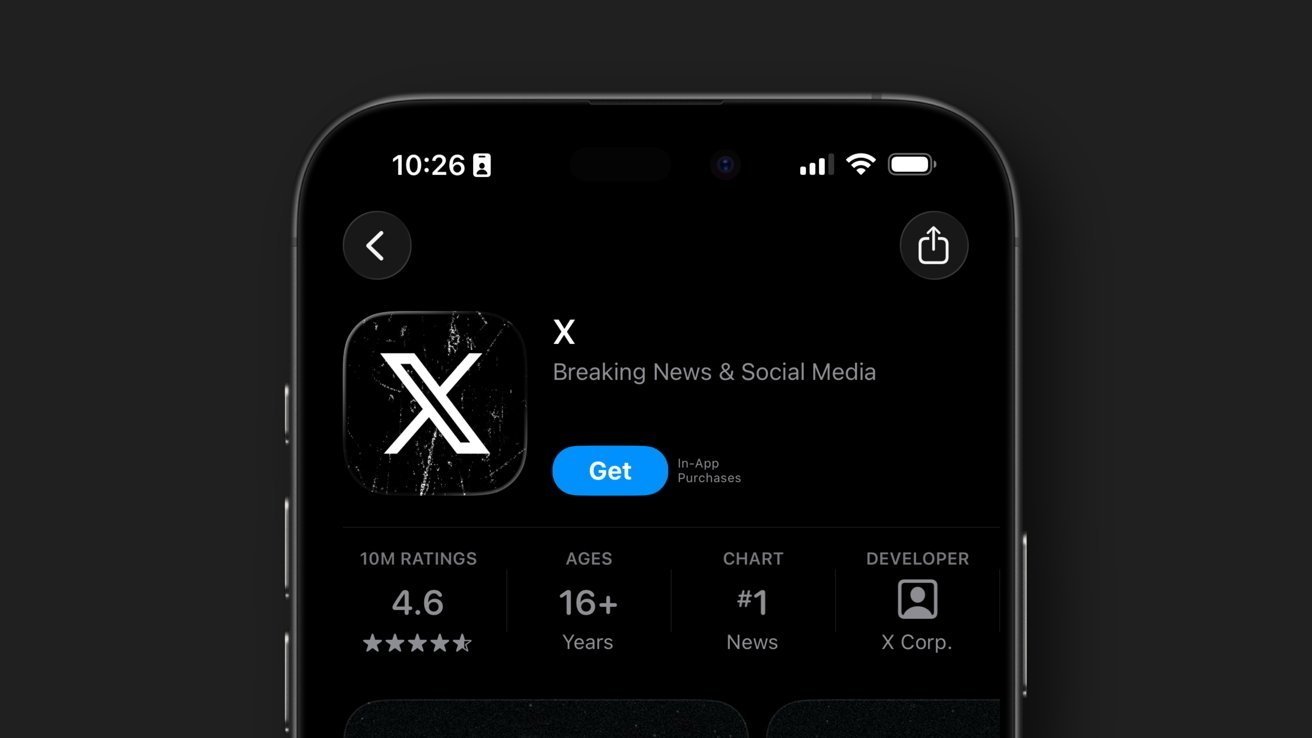
X in the App Store.

Apple software chief Craig Federighi will be taking part in xAI’s antitrust lawsuit against Apple and OpenAI over Grok’s treatment in the App Store, but Tim Cook seemingly won’t be.

In August 2025, Elon Musk’s xAI sued Apple and OpenAI, claiming that a partnership between the two affected Grok’s standings in the App Store. Specifically, Musk’s xAI accused Apple of bias in its App Store rankings, preventing Grok and X from getting the top spot in favor of ChatGPT.

As the antitrust lawsuit rolls on, it has now brought Apple SVP of Software Engineering Craig Federighi into the matter.

Advertisement

In a filing with the U.S. District Court for the Northern District of Texas on May 13, spotted by 9to5Mac, X Corp and xAI attempted to make Craig Federighi and CEO Tim Cook custodians. This refers to parties who are most likely to have pertinent information or sufficient access to details for the lawsuit to proceed.

The argument was that both Cook and Federighi had made “high-level, strategic decisions about the Apple-OpenAI Agreement,” the filing states.

The court granted that Federighi should be a custodian, and that the plaintiffs successfully argued he may have “unique relevant evidence.” This includes information relating to Apple’s integration of OpenAI services into Apple Intelligence, because the SVP was almost certainly a key decision maker.

However, while there is an attempt to make Cook a custodian too, the court rejects this. The court says there’s no explanation for how Cook would have any unique relevant evidence that hasn’t already been produced, nor that Federighi would be able to provide.

Advertisement

Following this designation, Federighi has to provide responsive discoverable documents by June 17, 2026.

Employee rules, consumer use

While xAI was partially successful in its demands, it certainly wasn’t in others.

Late in the filing, the court explains it was asked by xAI to force Apple to produce all documents about internal policies concerning employee usage of generative AI and chatbots.

However, the court disputes the need for this, since it is unclear how Apple’s internal policies relating to employee AI usage would relate to the antitrust claims. Employee AI usage doesn’t directly impact App Store rankings, the court proposes.

Advertisement

The reasoning from xAI was that Apple touted the safety of OpenAI’s products, but was concerned enough to impose limits and rules on how employees used them. The court disagrees because Apple’s imposition of guardrails on employee usage doesn’t mean Apple is “misrepresenting” the safety and privacy of programs to the public.

As such, the court denied the document demand.

Not all demands were from xAI either. OpenAI moved to require Musk to present emails at Tesla and SpaceX, as well as other communications, by June 3.

That demand was granted by the court.

Advertisement

Source link

Continue Reading

Tech

Where Are Gerber Knives Made & Who Owns The Company?

Published

on


The Gerber company name is very well-known in the United States, but for two very different reasons, which can be confusing to some. You may know it as the long-standing company that’s been turning out food for infants and young children since 1927. The other company — with the exact same spelling — has been in existence since 1939, so almost as long. It manufactures a veritable smorgasbord of knives, multi-tools, camping equipment, and cutting tools (think axes, machetes, saws, etc.).

Despite both companies taking the same last name from their respective founders, Gerber Legendary Knives, which outshines Swiss Army Knives, in both price and features has no business relationship or corporate connection to the baby food maker. Joe Gerber turned his Portland, Oregon, ad agency into a kitchen knife company. He brought his sons, Pete and Ham, into the fold and grew the company into an international outdoor brand.

In 1987, Fiskars Group (based in Finland) purchased the then privately owned Gerber, and still owns it today. Fiskars, which specializes in a host of outdoor products and consumer goods, has been around since 1649. Despite overseas ownership, Gerber’s headquarters still resides in Portland, Oregon, where it all started. While Gerber makes the majority of their knives in Portland, certain products and models are made overseas in China. 

Advertisement

Most of Gerber’s premium products are made in the USA

Way back in 1939, long before Gerber knives became legendary, Joe and Pete decided to send a handful of kitchen cutlery sets to some of their advertising clients as Christmas presents, so they collaborated with local blacksmith David Murphy to make them. The knives turned out to be so good that New York City outfitters Abercrombie & Fitch — who at the time were quite famous for their massive catalog of specialized hunting and fishing gear – decided to include them in their catalog. 

Fiskars Group is one of the oldest companies in Finland and has an interesting story all its own. They also make a product that virtually everyone though they may not be familiar with its origins. Fiskars was founded in 1649, after Peter Thorwöste was granted permission to set up a shop in Fiskars, Finland, to craft cast iron and forged products. At the time, Finland was still under Swedish rule and one of Europe’s biggest iron suppliers. Jumping ahead some three hundred years to 1967, it produced its very first pair of now world-famous orange plastic handled scissors. Today, Fiskars is an amalgamation of lifestyle brands, including Waterford, Royal Copenhagen, Wedgwood, and others, available in over 100 countries.

Advertisement

Gerber manufactures many of its premium, military-grade, hunting, and survival gear (including a multi-tool that’s cheaper and better than a Leatherman) in Portland, Oregon. However, entry-level and mid-range models come from contract factories in China, enabling them to sell products at competitive prices overseas. A line of products was once sold under the “Gerber International” label (made in Taiwan), but that’s no longer the case.


Advertisement

Source link

Continue Reading

Tech

Today’s NYT Mini Crossword Answers for May 17

Published

on

Looking for the most recent Mini Crossword answer? Click here for today’s Mini Crossword hints, as well as our daily answers and hints for The New York Times Wordle, Strands, Connections and Connections: Sports Edition puzzles.


Need some help with today’s Mini Crossword? It’s a pretty easy one, but read on for all the answers. And if you could use some hints and guidance for daily solving, check out our Mini Crossword tips.

If you’re looking for today’s Wordle, Connections, Connections: Sports Edition and Strands answers, you can visit CNET’s NYT puzzle hints page.

Advertisement

Read more: Tips and Tricks for Solving The New York Times Mini Crossword

Let’s get to those Mini Crossword clues and answers.

completed-nyt-mini-crossword-puzzle-for-may-17-2026.png

The completed NYT Mini Crossword puzzle for May 17, 2026.

Advertisement

NYT/Screenshot by CNET

Mini across clues and answers

1A clue: Wedding entertainers, for short
Answer: DJS

4A clue: Like admission to the Smithsonian museums in Washington, D.C.
Answer: FREE

5A clue: Not try particularly hard at one’s job
Answer: COAST

Advertisement

6A clue: “Didn’t mean to do that!”
Answer: OOPS

7A clue: Praiseful poem
Answer: ODE

Mini down clues and answers

1D clue: Hang loosely
Answer: DRAPE

2D clue: Rory’s love interest on “Gilmore Girls”
Answer: JESS

Advertisement

3D clue: “I’m all ___”
Answer: SET

4D clue: Caterer’s responsibility
Answer: FOOD

5D clue: Mourning dove’s call
Answer: COO

Advertisement

Source link

Continue Reading

Tech

The Best Android Auto Apps You’re Probably Not Using

Published

on


One of the best interfaces for your car’s infotainment screen is Android Auto. You can use the same media, navigation, and entertainment apps without worrying about syncing progress between your car and your phone. To get started with Android Auto, all you need is a compatible vehicle and a smartphone with Android 9.0 or newer. Depending on what your car supports, you simply connect your phone using a data cable or via Bluetooth.

Most of what you will be doing on Android Auto will likely be navigation or music playback through services like Google Maps and Spotify. That’s not all the platforms can handle, though. There are dozens of free Android Auto apps you can find use for — some may already be services you use on a daily basis that you didn’t realize have Android Auto support built-in. 

If you’re curious to see what else you can accomplish with Android Auto in your vehicle, here are some apps worth trying. All of them are free to use and elevate your driving experience in one way or another.

Advertisement

SpotHero

Perhaps the only thing more infuriating than driving bumper to bumper in traffic is successfully trying to find a parking spot that’s convenient. If this is something you struggle with, SpotHero is an app you should definitely consider installing. It works by listing available parking locations nearby, including locations like airports or garages. You can enter specific dates and times, and the app will fetch you the best parking spaces around the area. For locations that support it, you can then reserve the parking spot and pay via Google Pay.

SpotHero works in all major cities in the U.S. and supports Android Auto. Being able to scan through unfamiliar areas to find affordable parking is a convenience everyone will appreciate. SpotHero also displays the best parking locations around ongoing events like concerts. The app has a 4.4-star rating on the Google Play Store and has over a million installs.

Advertisement

Audible

A lot of us enjoy listening to music during our commutes. Apps like Spotify and YouTube Music have Android Auto support that makes playback control easier. Plus, you can always summon Google Assistant or Gemini to skip through tracks or play specific ones using voice commands. However, if you’re an avid audiobook listener, then you’d be glad to know that Audible supports Android Auto too. There are plenty of cheaper alternatives to Audible, but it remains the gold standard if you’re looking for a large library that you can enjoy on practically every platform available.

Audible has you covered even if your vehicle doesn’t support Android Auto. On the mobile app, you can navigate to Profile > Settings > Player and enable the “Automatic Car Mode” toggle. It automatically switches to a larger, more simplified interface with playback controls when you connect to your car via Bluetooth.

Advertisement

Vivaldi Browser

Android Auto can be as useful as you want it to be — you just need to get acquainted with the right apps. There are plenty of Android Auto tips and tricks that can elevate the experience, like personalizing the experience with a different wallpaper or trying out more powerful alternatives to popular services. Just when you think you’ve maxed out the functionality that your car’s infotainment screen can provide, there’s Vivaldi Browser.

The app unlocks a way for you to surf the web through a web browser that’s designed to work with Android Auto. It comes with an ad blocker built-in and a few other privacy-oriented features that let you access virtually any website on your car’s infotainment display. If you have any specific streaming platforms that don’t have Android Auto support natively, you can use Vivaldi Browser to watch content when you’re safely parked. 

Advertisement

You also get a decent bit of customizability with the browser. For instance, you can swap between light and dark modes, change the background of the start page, and capture screenshots if you happen to find something interesting. Vivaldi gets you the usual lot of features you find in other web browsers, like the ability to bookmark pages, view recently closed tabs, or switch to a friendly reader view that gets rid of clutter on web pages.

Advertisement

GameSnacks

We’ve all found ourselves seated in parking lots or outside a friend’s home waiting for them to come out. GameSnacks is a service by Google that’s designed to accommodate you during these situations. It’s a collection of simple games that you can play on your car’s infotainment screen.

You have titles like “Classic Solitaire” and match-three games like “Fruit Cube Blast.” There is a healthy catalog of classic games to choose from, and there are even a few multiplayer games you can enjoy if you’re accompanied by a passenger. GameSnacks is great for killing time, but only when you’re parked safely — playing games while driving a vehicle is obviously a no-go. By the way, since these games are based on HTML5, you can also play them on a browser on any device.


Advertisement

Source link

Continue Reading

Tech

Trump’s $10 Billion IRS Lawsuit May Become a $1.7 Billion Slush Fund for MAGA’s Self-Proclaimed Victims

Published

on

from the the-neverending-corruption-story dept

The saga of Trump suing his own IRS for $10 billion just got weirder. What started as a brazenly corrupt attempt to personally pocket $10 billion in taxpayer money has now morphed into something arguably worse: a $1.7 billion patronage slush fund — unappropriated by Congress — that Trump could dole out to loyal MAGA allies who claim they were “victimized” by the Biden administration.

As you’ll recall, Trump sued his own IRS over something that a contractor (who has already been convicted and is currently serving in prison) did: leaking some tax returns Trump had promised to release, but never did. He asked for $10 billion, in a situation where he, himself, would decide if he got paid or not. When his own DOJ told the court that it was negotiating a settlement, the judge pointed out that she was concerned that it looked an awful lot like a single party negotiating with itself over how much of the Treasury it should receive.

The judge — Kathleen Williams — asked for further briefing from “both” parties on this, and the deadline is coming up quickly, which is why various purported “settlements” are leaking to the press. A few days ago it was going to be that Trump and all of his family and all of his related businesses would magically have all IRS audits dropped, which would be an astoundingly brazen level of corruption.

But now ABC is reporting about another potential “settlement” (again, “settlement” is the wrong word — it’s Trump’s legal team negotiating with Trump’s DOJ, which is run by his former legal team. It’s one team negotiating with itself) which is just as egregious and corrupt: Trump would apparently agree to drop his case against the IRS in exchange for… a $1.7 billion slush fund of taxpayer money that he could dole out to his friends who whine to the government that they were “targeted” for retribution by a “weaponized” Biden administration.

Advertisement

President Donald Trump is expected to drop his $10 billion lawsuit against the Internal Revenue Service in exchange for the creation of a $1.7 billion fund to compensate allies who claim they were wrongfully targeted by the Biden administration, sources familiar with the matter told ABC News.

The commission overseeing the compensation fund would have the total authority to hand out approximately $1.7 billion in taxpayer funds to settle claims brought by anyone who alleges they were harmed by the Biden administration’s “weaponization” of the legal system, including the nearly 1,600 individuals charged in connection with the Jan. 6 Capitol attack as well as potentially entities associated with President Trump himself.

So, yeah, a $1.7 billion slush fund for Trump supporters who (in some cases) literally engaged in insurrection to overturn the results of a free and fair election, or for various hangers-on who play the victim every chance they get and pretend the Biden administration “weaponized” the government against them.

It’s not worth getting into the possibility of using this slush fund to pay off the ~1,600 Trump supporters who were duly convicted in a court of law for various crimes, all of whom were later pardoned by Trump (even as dozens of them have been re-arrested for other crimes, which should put to rest any remaining notion that Trump is the “law and order” president — but of course it won’t).

But we can talk about the various claims of “weaponization” because we covered many of them. Remember, Jim Jordan got himself appointed as the anti-weaponization czar in Congress, and used that to actually weaponize the government to investigate and attack individuals and organizations who were not the government, but who Jordan felt unfairly pointed out disinformation and lies from those MAGA supported.

Advertisement

The supposed investigations into the “weaponization” of the government to suppress speech served only to suppress the First Amendment protected speech of academic researchers and organizations. And now all those who falsely insisted that the Biden administration “censored” them, even as all the evidence showed that social media companies removed content because they found that the content violated their own rules, will get to line up at the trough to get free money from American taxpayers.

This is Donald Trump handing out American taxpayer money that has never been appropriated by Congress for this purpose — shoveling it to anyone who claims victimhood under his banner, whether convicted insurrectionists, Trump allies who want their legal bills paid, or propagandists who got called out for spreading disinformation. We’re already seeing this play out. This week, Trump’s DOJ “settled” with the pandemic’s wrongest man, Alex Berenson, who got suspended from Twitter not because of any government action, but because Twitter felt that he violated their rules against spreading health misinformation.

Berenson has been suing over this for years (and mostly losing), but this week Trump agreed to pay him $150,000 and “admit” that the Biden administration tried to censor him. While some are trying to present this as some sort of big victory, getting Donald Trump to blame Joe Biden for something that didn’t happen — while shoveling taxpayer money to a man who publicly supports Trump — is not exactly a landmark legal victory. It’s almost expected in the Trump era.

The Berenson payout is a preview. Once the $1.7 billion fund is running, expect a line out the door of Trump’s groveling fans making false claims about Biden “weaponizing” the government — all of it paid for by taxpayers, none of it appropriated by Congress.

Advertisement

Filed Under: donald trump, irs, maga, patronage, slush fund, victimhood, weaponization

Source link

Advertisement
Continue Reading

Tech

Amazon Stops Supporting Pre-2013 Kindles Today. Some Owners Turn to Jailbreaking

Published

on

Today Amazon ends support for first- and second-generation versions of Kindles and Kindle Fire tablets, along with the Kindle Touch, the 9.7-inch Kindle DX, and other devices released in 2012 or earlier.

Owners can continue reading ebooks that they’ve already downloaded, and they can also still sideload books using a USB cable (from, for example, Project Gutenberg). And PCMag points out that “There are plenty of e-stores where you can buy DRM-free novels legally, such as ebook.com and Smashwords. If you want to try this process for free, public-domain repositories such as the one at Standard Ebooks are a great place to start.” (eBook files can be converted for the Kindle with the open source tool Calibre.)

New ebooks can no longer be purchased directly from Amazon. But most of Amazon’s affected devices “have not received firmware updates for over a decade,” notes the blog OMG Ubuntu, “and most lost on-device access the Kindle Store.” Some Kindle owners are taking things even further:
You can unlock the firmware of older devices to add extra functionality (custom screensavers, epub support) or run entirely different software. On the hardware hacks side, some choose to turn old Kindles into photo frames or online dashboards.
TechCrunch offers some caveats about jailbreaking:
This process allows users to install custom fonts, new screensavers, alternative reading apps, and even third-party tools that expand the Kindle’s functionality… [I]t’s important to note that jailbreaking a Kindle might violate Amazon’s terms of service. In many jurisdictions, jailbreaking isn’t considered a criminal offense for personal use, but it may become a crime if it involves copyright infringement, illegal software distribution, or the sale of modified devices. Many Kindle owners who opt to jailbreak view it as a method to gain control over a device they purchased that is still functional, rather than being forced to buy a new device. However, jailbreaking is technical and carries risks, including the possibility of rendering the device unusable if something goes wrong. It also isn’t possible on every Kindle model or firmware version, so before proceeding, Kindle owners should first spend some time researching if their device is compatible.
Alternately, PCMag notes, “If you’re feeling particularly virtuous, you can donate your old Kindle to a local library or send it back to Amazon free of charge via its electronic recycling program.”

Source link

Advertisement
Continue Reading

Tech

Asimov Is An Open Source Humanoid Robot For The Rest Of Us

Published

on

Given that some of the more famous demos were by Honda and Tesla, you might be forgiven for thinking you need pockets as deep as a car company to get into humanoid robotics — and maybe that was true once, but now Asimov v1 is here. It doesn’t have a positronic brain, and you’ll have to code in the Three Laws for yourself, but at least you have the freedom to, because Asimov is open source. 

It’s not exactly cheap: the kit version comes with a target price of $15,000 USD, but they do provide the Bill of Materials on the GitHub repository so you can try and hunt down some deals. Still, compared to the millions poured into these sorts of robots in the early days, we have to consider it accessible. With 25 total degrees of freedom, you’ll have to source a lot of actuators, but at least the onboard compute will be easy to get. Rather than begging CERN for spare positrons, you’ only need a Raspberry 5 and a Radaxa CM5.

No word on if this robot can write a symphony — though we’ve seen software that can — and its 5 kg personal best for squats and 18 kg single-arm lat raises aren’t going to impress the bros at the gym. But hey, at least now you have someone to shake your chair for sim gaming.  If you’re wondering what the deal with these androids is, well, so were we.

Advertisement

Source link

Advertisement
Continue Reading

Tech

UK watchdog probes Microsoft over interoperability issues

Published

on

Users may not be able to combine Microsoft software with competitors’ products effectively, the CMA has been told.

The UK’s competition watchdog has launched an investigation into Microsoft’s enterprise software ecosystem over interoperability concerns.

The Competition and Markets Authority (CMA) probe will consider whether Microsoft should be given a ‘strategic market status’ (SMS) designation reserved for companies that dominate the UK market in a particular digital activity.

Apple and Google received this status last year over their dominance of mobile platforms.

Advertisement

The investigation will also assess whether Microsoft’s product bundling, limits in interoperability for users, and default settings prevent customers from switching to competing services. This will include probing how Microsoft’s AI competitors are able to integrate with its business software.

Hundreds of thousands of UK organisations across public and private sectors use Microsoft’s enterprise software daily, spanning the Windows operating system, Microsoft 365 suite and Copilot AI.

The CMA finds that Microsoft has more than 15m commercial UK-based users across its ecosystem, making it a key provider of productivity tools in the country.

The competition watchdog said it has received information that users may not be able to combine Microsoft software with competitors’ products effectively.

Advertisement

In its probe, it will examine Microsoft’s wide range of products, including productivity software, personal computer and server operating systems, database management systems and security software.

The investigation will take up to nine months to complete. The authority has invited organisations based in the UK and around the world, including rival tech companies and business software customers, to share their experiences.

This is the fourth SMS investigation opened by the CMA since the UK’s digital markets competition regime came into force in January 2025. The law gives the CMA additional powers to propose remedies and improve market competition in the country. Early last year, it opened a probe into Apple and Google over their mobile ecosystems,

The designation would also allow the CMA to potentially intervene on concerns from a separate investigation into Microsoft’s software licensing in the cloud market.

Advertisement

“Business software is a cornerstone of how the UK economy functions, from small businesses to major public services and infrastructure. Hundreds of thousands of customers in the UK rely on Microsoft’s systems, which is why it’s so important to ensure these services are delivering good outcomes,” said Sarah Cardell, the CMA’s CEO.

“Our aim is to understand how these markets are developing, Microsoft’s position within them and to consider what, if any, targeted action may be needed to ensure UK organisations can benefit from choice, innovation and competitive prices.”

Don’t miss out on the knowledge you need to succeed. Sign up for the Daily Brief, Silicon Republic’s digest of need-to-know sci-tech news.

Advertisement

Source link

Continue Reading

Tech

Celestial Lights And If Destruction Be Our Lot

Published

on


Need something new for your reading list? This week, we recommend Cecile Pin’s Celestial Lights and the new Image Comics series, If Destruction Be Our Lot.

Celestial Lights

Another melancholic narrative about love, loss and the consequences of human ambition, with space as the backdrop? Oops, I might have a type. Cecile Pin’s Celestial Lights is a short and contemplative novel about Oliver Ines, or Ollie, a man who has always been drawn to the stars and is one day chosen to lead a 10-year mission to one of Jupiter’s moons, Europa. It hops through time, following Ollie’s memories across his life and weaving in logs from the mission.

While space exploration is part of it, this isn’t a book to grab if you’re looking for excitement and adventure. Celestial Lights is, as the blurb explains, “A portrait of a complicated man and a breathtaking tale of memory, personal choices, and the relationships that define us.”

Advertisement

If Destruction Be Our Lot

The first issue of this series came out at the beginning of the month, and oh does it feel like the start of something really, really great. The main character is, absurdly, an Abraham Lincoln robot whose purpose appears to be regurgitating quotes said by the 16th president of the US. He’s one of countless robots still running decades after humans have gone extinct. And, unlike most of the droids around him, he’s pretty caught up on what the meaning of his life is now that his original, human-assigned purpose is moot.

When things go awry during a bus ride one day — the vehicle being Abe’s autonomously driving friend, Bus — his world suddenly seems to expand, for better or worse. I loved the art style and tone, which is kind of darkly funny but also a bit serious. Super promising premiere issue. If Destruction Be Our Lot is by writers Mark Elijah and Matthew Rosenberg and artist Andy MacDonald.


Advertisement

Source link

Continue Reading

Tech

The Steam Controller's hidden Wilhelm scream Easter Egg is pure Valve genius

Published

on


The second-gen Steam Controller launched to much fanfare on May 4 priced at $99. The high-end gamepad sold out within half an hour thanks in large part to scalpers scooping them up in bundles and reselling them for massive profits. A newly implemented reservation system looks to address the issue…
Read Entire Article
Source link

Continue Reading

Trending

Copyright © 2025