

Crypto World
A Lawsuit Just Demanded Tether Hand Over $344 Million in Frozen Iranian Funds, Could This Rewrite Stablecoin Law?

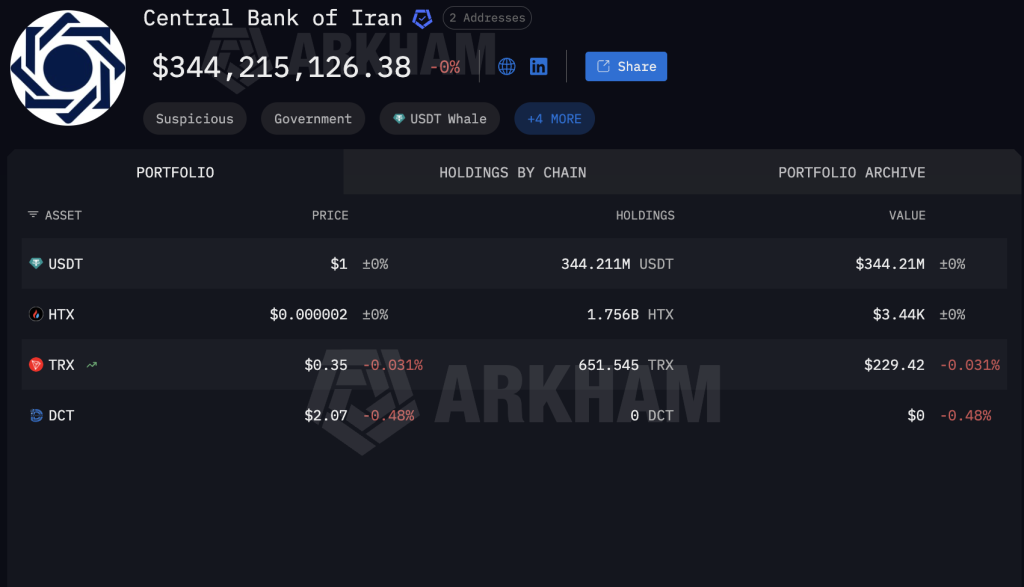
Attorney Charles Gerstein filed a claim in Manhattan federal court Thursday seeking to force Tether to transfer 344,149,759 USDT, roughly $344 million, frozen at two Tron wallet addresses designated by OFAC as belonging to Iran’s Islamic Revolutionary Guard Corps.
The plaintiffs, are asking the Southern District of New York to compel Tether to zero out the blocked wallets and reissue an equivalent amount of USDT to a wallet controlled by their counsel.
The filing is a direct expansion of Gerstein’s earlier litigation targeting frozen funds in the North Korea-linked Arbitrum case and separate claims against Railgun DAO.
Bearish signal for stablecoin issuer confidence. If courts accept this liability theory, Tether’s administrative freeze controls, designed for sanctions compliance, become a litigation target in every jurisdiction where judgment creditors hold unpaid terrorism awards.
Discover: The best crypto to diversify your portfolio with
How the Liability Theory Works Mechanically, and Why Tether Freeze Function Is the Fulcrum
The mechanism here is worth understanding precisely. Unlike bitcoin or ether, USDT includes issuer-level administrative controls: Tether can freeze wallets, blacklist addresses, zero out balances, and reissue tokens to a new destination address.
Gerstein’s filing argues that because Tether already immobilized the funds in response to OFAC’s sanctions designation of the two Tron addresses, the company has demonstrated both the technical capability and the practical willingness to act unilaterally on those holdings.
The chain of events runs as follows. OFAC designated the two Tron wallet addresses as IRGC property. Tether froze the 344,149,759 USDT held there.
The plaintiffs, holders of billions of dollars in unpaid U.S. court judgments tied to Iranian-backed terrorism, now argue that the frozen USDT constitutes blocked property of a state sponsor of terrorism, making it subject to execution under federal law.
The ask is not a seizure of Tether’s own reserves. It is a court order compelling Tether to use controls it has already used, directed at a different destination address.
That distinction matters analytically. Tether has already frozen $4.2 billion in USDT across more than 5,000 wallets linked to criminal activity and assisted the DOJ in seizing over $6 million connected to a Southeast Asian fraud scheme.
The plaintiffs are arguing Tether is not being asked to do something unprecedented, only to redirect an existing freeze toward judgment creditors rather than leaving the funds in limbo.
The legal precedent being constructed here is that administrative control over an asset is functionally equivalent to possession, and that possession creates liability to judgment creditors under the right statutory framework.
Discover: The best pre-launch token sales
The post A Lawsuit Just Demanded Tether Hand Over $344 Million in Frozen Iranian Funds, Could This Rewrite Stablecoin Law? appeared first on Cryptonews.

Another 11 companies responded to a survey saying they would consider offering crypto funds once the regulatory environment becomes clear.
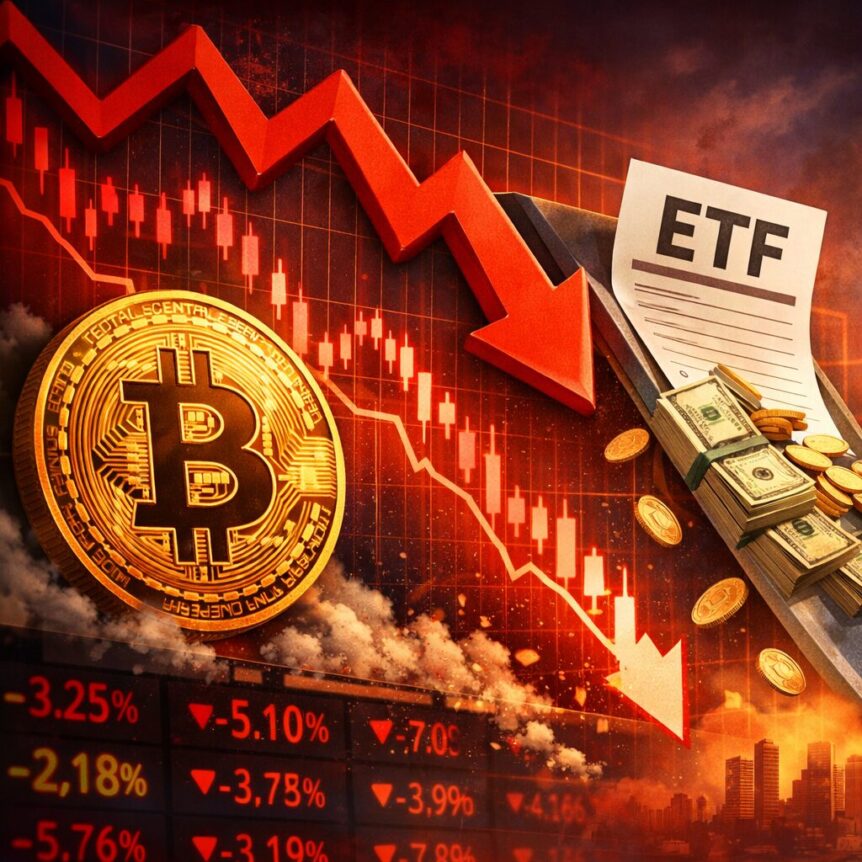
Bitcoin’s price was down today, remaining a major market trend on May 16 as heavy selling pressure hit crypto assets. Rising Treasury yields, ETF outflows, and inflation concerns weakened market sentiment across digital assets. Meanwhile, aggressive weekend Bitcoin sales increased volatility and pushed the broader crypto market lower.
Bitcoin Price Down Today as Market Cap Falls
Bitcoin’s price is down today, pushing the asset below the $78,000 level during volatile weekend trading activity. The broader crypto market also declined sharply as the total market capitalisation dropped near $2.59 trillion. Meanwhile, Ethereum slipped toward the $2,200 support zone and added pressure across major altcoins.
Bitcoin ETF Outflows Deepen Selling Pressure
Bitcoin’s price is down today, having gained momentum after US spot Bitcoin ETFs recorded significant weekly capital outflows. Data from SoSoValue showed Bitcoin ETFs posted nearly $1 billion in outflows over the previous week. Furthermore, none of the twelve spot Bitcoin ETFs recorded positive inflows on May 15.
BlackRock’s IBIT fund registered more than $317 million in net outflows during the same trading period. The reversal ended a six-week inflow streak that previously attracted approximately $3.4 billion into Bitcoin products. Therefore, institutional demand weakened sharply as macroeconomic uncertainty continued affecting crypto markets.
Ethereum ETF products also recorded continued weakness as outflows reached $65.65 million during the latest session. The withdrawals marked the fifth straight trading day of negative Ethereum ETF flows across US markets. Bitcoin’s price being down today reflected these weaker fund flows and lower confidence in short-term crypto positions.
Market participants also reacted to inflation concerns and reduced expectations for Federal Reserve interest rate cuts. Analysts lowered the probability of a 2026 rate reduction to approximately 27% during the week. At the same time, discussions surrounding another possible rate hike added pressure on digital assets.
Treasury Yields and Binance Activity Increase Volatility
Bitcoin’s price is down today, facing additional pressure after the 10-year U.S. Treasury yield climbed above 4.55 per cent. Higher bond yields usually weaken demand for speculative assets because safer investments become more attractive to traders. Consequently, crypto assets experienced stronger selling pressure across global trading sessions.
Meanwhile, reports linked Binance trading activity to large Bitcoin sales during low-liquidity weekend market conditions. Market observers noted repeated Bitcoin sell orders appearing within short trading intervals across the exchange platform. The activity increased crypto market volatility and intensified speculation surrounding potential market-moving developments next week.
Bitcoin’s price being down today also coincided with growing discussions around future cryptocurrency regulation within the United States. The Senate Banking Committee recently approved the CLARITY Act through a unanimous committee vote. Although regulatory optimism remained present, broader macroeconomic conditions continued driving bearish momentum across crypto markets.
The latest decline highlighted how macroeconomic uncertainty still strongly influences digital asset performance across global financial markets. Bitcoin’s price is down today, reflecting weaker ETF demand, stronger Treasury yields, and elevated market-wide liquidation activity. As volatility increased, crypto traders faced another challenging session during an already uncertain economic environment.

After months of negotiations and delays, a US Senate panel on Thursday finally approved the CLARITY Act with a 15-9 vote.
Although there’s still a long way to go until the bills become law, since there’s a lot of opposition left and it would need to clear the full Senate, the cryptocurrency market already experienced a notable price boost once the news went live on Thursday.
The question we asked ChatGPT is what sort of impact would the CLARITY Act’s potential approval have on XRP, since many analysts in the past have noted that the asset requires further regulatory clarity (no pun intended) to unlock its next major phase up.
Impact on XRP
The bill’s structure is designed to finally clarify one of the most controversial and important questions in the cryptocurrency industry: when is a token a security, and when it is not. Given Ripple’s (and XRP’s) history with the US SEC on the topic and how much it haunted them for years, it’s safe to say that the cross-border token and the company behind it should look forward to the most for a clear answer.
As mentioned above, analysts are adamant that XRP will be among the most spectacular beneficiaries, with some expecting multi-billion-dollar inflows toward the spot ETFs tracking its performance. ChatGPT agreed to a large extent, as Ripple has always positioned XRP as a utility asset and a cross-border liquidity tool. It’s infrastructure for payments rather than a traditional investment contract, the company says.
“XRP’s underperformance in recent months or even years on broader scales was caused less by technology weakness and more by regulatory pressure… Remove that pressure, and the narrative changes fast,” said the AI tool.
Will the Price Explode?
The bullish scenario for XRP is if the bill continues to progress, while the overall market sentiment remains positive and institutions interpret the asset as safer from future SEC attacks, said ChatGPT. Then, the token could see “renewed exchange activity, increased institutional interest, and potentially a major breakout attempt.”
The first major psychological line for XRP would be the $2.00 resistance: flipping it into support “could happen surprisingly quickly if momentum accelerates.”
However, there’s a big catch, the AI platform warned. If XRP indeed relies on the CLARITY Act’s full approval, then the fact that it might take months or even years for the complete resolution could spell trouble or consolidation for the asset.
As such, ChatGPT concluded that passing Senate now was a “huge milestone,” but it’s far from “being the finish line.”
The post Will XRP Explode as CLARITY Act Passes Senate Stage? ChatGPT Sees One Big Catch appeared first on CryptoPotato.


Japan’s major brokerages are preparing to bring crypto investment trusts to retail investors, with SBI Securities and Rakuten Securities already developing products in-house, while others like Nomura plan to enter the space once regulations are finalized.
SBI Securities plans to sell funds developed by group company SBI Global Asset Management, with products spanning both ETFs and investment trusts focused on liquid assets like Bitcoin and Ethereum, according to a Sunday report by Nikkei. The group intends to handle everything from product development to distribution in-house.
Rakuten Securities is taking a similar approach, working with Rakuten Investment Management to build products tradeable directly through smartphone apps, the report revealed.
The move would mark a significant shift in how ordinary Japanese investors access crypto. Currently, buying digital assets requires opening a dedicated exchange account or setting up a wallet. Investment trusts would allow crypto exposure through existing securities accounts, removing a key barrier for retail participation.
Related: Japan tells real estate and crypto sectors to tighten AML checks on property deals
Nomura, Daiwa, SMBC moving toward crypto funds
Among the larger names, Nomura and Daiwa have both announced plans to develop crypto investment trusts within their respective groups, Nikkei reported. SMBC Group, including SMBC Nikko, has set up a cross-group task force to evaluate its options, while Asset Management One, under Mizuho Financial Group, has begun preliminary exploration.
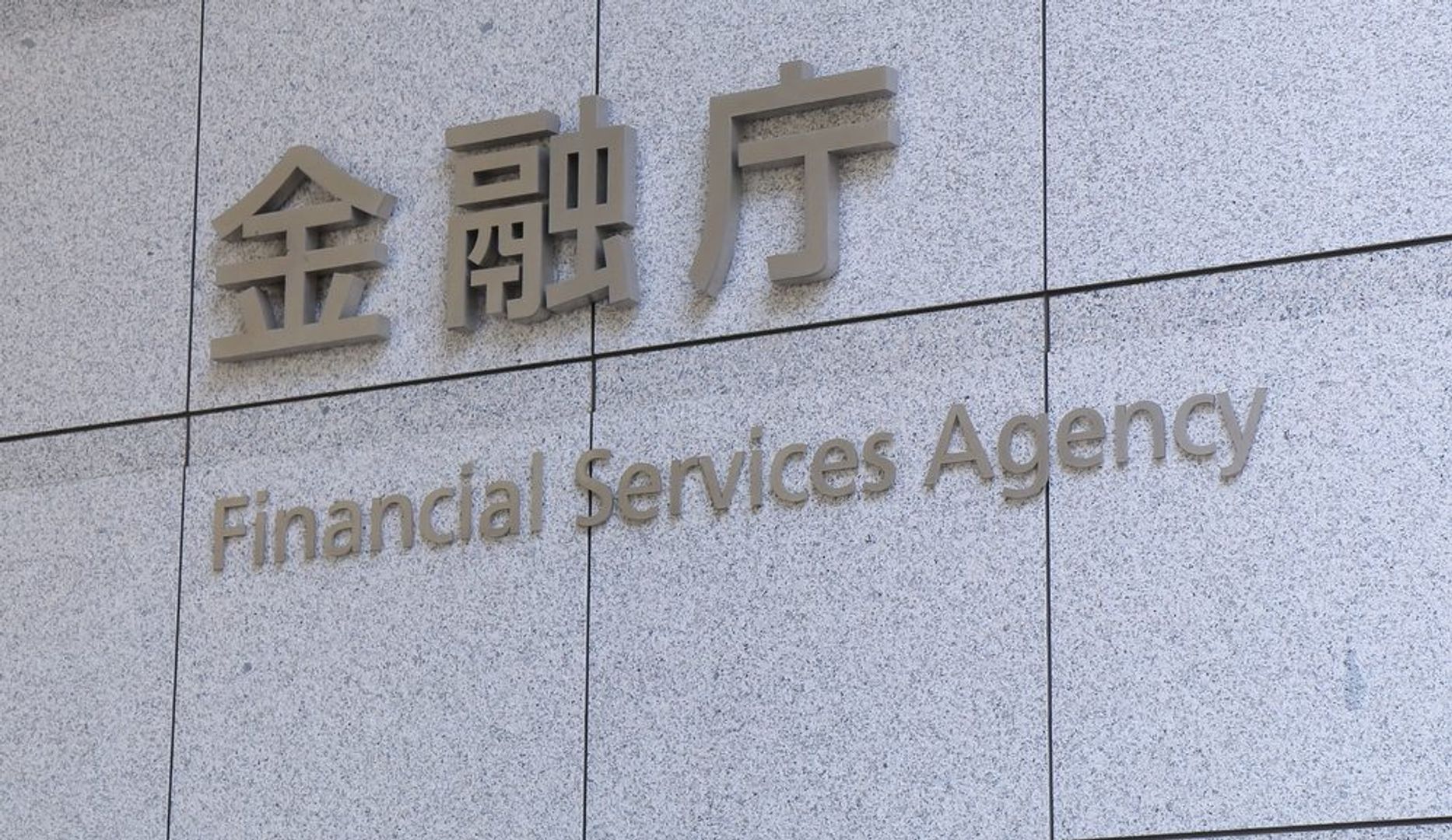
The move comes as Japan’s Financial Services Agency is moving to revise the enforcement order of the Investment Trust Act by 2028, which would formally add cryptocurrencies to the list of specified assets investment trusts can hold.
Last month, Japan formally reclassified crypto assets as financial instruments under an amended Financial Instruments and Exchange Act, bringing them under the same regulatory umbrella as stocks and bonds. The bill, if passed in the current parliamentary session, is expected to take effect in fiscal 2027.
Related: SBI eyes Bitbank deal as Japan’s crypto exchange market consolidates
Japan to allow spot crypto ETFs
Japan is also reportedly considering rule changes that could allow crypto ETFs as early as 2028, with major financial groups including Nomura Holdings and SBI Holdings among the first expected to develop such products.
SBI Holdings has already outlined plans for a Bitcoin-XRP dual ETF and a gold-crypto ETF, pending regulatory approval.
Magazine: Guide to the top and emerging global crypto hubs — Mid-2026


Nearly 70 Trump administration officials and nominees disclosed cryptocurrency holdings or investments in blockchain and digital asset companies, according to a Washington Post analysis.
Summary
- Washington Post found nearly 70 Trump officials and nominees disclosed crypto or blockchain-linked investments overall.
- Disclosed crypto-related holdings reached at least $193 million, based on minimum values in filings reviewed.
- Recent crypto.news coverage showed Trump-family accounts also bought crypto-linked equities in Q1 2026 this year.
The review covered financial disclosure forms for nearly 300 senior appointees and used minimum reported values because filings list assets in ranges.
The Post said the disclosed crypto-related holdings were worth at least $193 million. President Donald Trump reported at least $51 million tied to digital assets, while Vice President JD Vance and seven Cabinet members or nominees disclosed at least another $2 million in crypto wallets or investments.
Cabinet and policy roles draw attention
The report said more than one-third of Trump’s Cabinet disclosed crypto holdings or related investments. Vance reported Bitcoin holdings valued between $250,001 and $500,000, while Treasury Secretary Scott Bessent reported up to $500,000 in digital assets before divesting, according to a Treasury spokesperson cited by the Post.
The review also identified crypto holdings among officials with roles in financial regulation, economic policy, and law enforcement. The Post said Bill Pulte, director of the Federal Housing Finance Agency, reported between $1 million and $2 million in digital currencies.
Moreover, White House spokesman Harrison Fields told the Post that “conflicts of interest are never tolerated” in the administration. He also said Trump is taking action to establish regulatory clarity for digital financial technology and strengthen U.S. leadership in the digital asset economy.
The administration has also moved policy toward crypto. A White House fact sheet said Trump signed an executive order on March 6, 2025, to establish a Strategic Bitcoin Reserve and a U.S. Digital Asset Stockpile.
Recent filings keep crypto ties in focus
The Washington Post analysis was updated in July 2025, but recent filings have kept Trump-linked crypto exposure in the news. Crypto.news reported that Trump-family disclosures showed multiple Q1 2026 purchases of crypto-linked stocks, including Coinbase, MARA Holdings, Strategy, Block, Robinhood, and SoFi.
The same report said Strategy appeared in eight separate transactions, including both purchases and sales. It also noted that the filing combines reportable accounts tied to Trump, Melania Trump, and dependent children, meaning the document does not identify who ordered each trade.
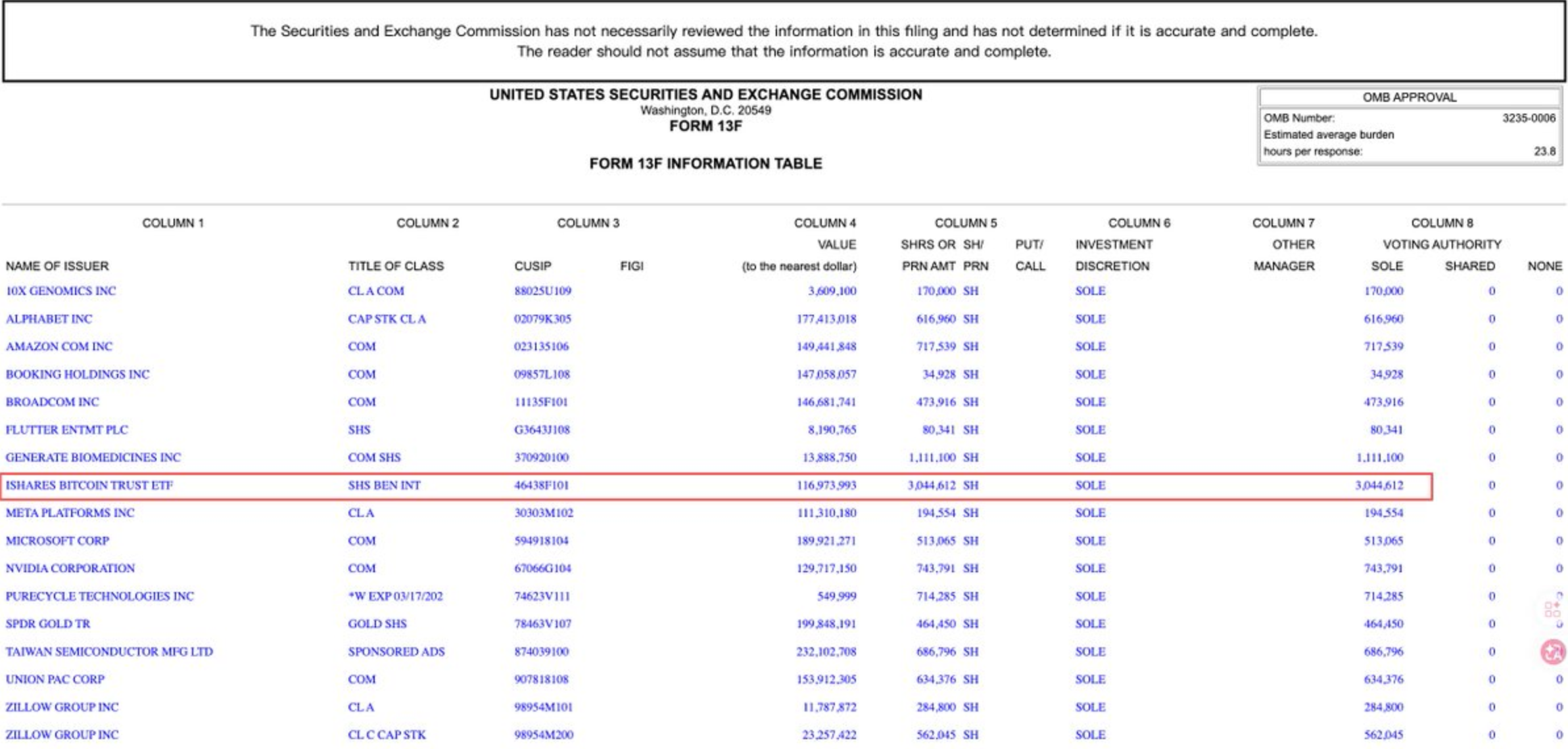
Harvard University’s endowment cut its position in BlackRock’s spot Bitcoin (BTC) ETF by roughly 43% during the first quarter of 2026 and fully exited the firm’s spot Ethereum (ETH) fund, a fresh regulatory filing shows.
The retreat surfaced in the latest 13F filings. Abu Dhabi’s Mubadala moved the opposite way, lifting its IBIT stake 16% to roughly $566 million.
Harvard’s Crypto Bet Didn’t Age Well
Harvard Management Company held 3,044,612 shares of the iShares Bitcoin Trust (IBIT) as of March 31, worth about $117 million. That figure appears in the Q1 2026 13F filings on the SEC EDGAR website.

The total marks a 43% reduction from the prior quarter and a sharp pullback from the position’s peak. The endowment first disclosed IBIT exposure in mid-2025, when it bought roughly 1.9 million shares for about $117 million.
It then scaled the position to about $443 million by Q3 2025. The endowment trimmed 21% in Q4 before the deeper 43% cut in Q1 2026.
Harvard also fully sold its $86.8 million position in BlackRock’s spot Ethereum ETF (ETHA). The endowment had only added that stake one quarter earlier.
The full ETH exit came after ETHA fell sharply through early 2026, contributing to its short-lived run inside the endowment.
IBIT is no longer Harvard’s largest disclosed public-equity holding. Filings show TSMC, Alphabet, Microsoft, and SPDR Gold Trust now rank ahead of it.
The shift suggests rebalancing toward traditional assets rather than a full crypto withdrawal.
Mubadala Doubles Down on Bitcoin as Endowments Hesitate
While Harvard trimmed, Mubadala lifted its IBIT holdings to 14,721,917 shares worth about $566 million. That total is up from 12,702,323 shares at the end of 2025. The Abu Dhabi fund has added to its Bitcoin ETF position every quarter since Q4 2024.
The contrast captures a broader pattern in the same wave of filings. Sovereign wealth funds and several major banks are accumulating exposure. Certain university endowments and trading firms are taking profits or rotating exposure instead.
Jane Street cut its IBIT shares by 71% and slashed Fidelity’s FBTC by 60% in Q1. The trading firm still added meaningfully to ETHA and Fidelity’s FETH, hinting at tactical rotation rather than a clean exit.
Emory University fully exited its small IBIT position and consolidated Bitcoin exposure into the Grayscale Bitcoin Mini Trust instead.
JPMorgan increased its IBIT stake by 174% over the quarter. Wells Fargo expanded its Ethereum ETF holdings during the same period.
The split has lined up institutional capital on both sides of the trade, complicating a single-narrative read of Q1 filings.
What Q2 Filings May Reveal
Harvard has not commented on the trades, and 13F disclosures do not explain the reasoning. The latest move could be:
- Portfolio rebalancing
- Liquidity demands tied to private-market capital calls, or
- Tactical de-risking.
Those drivers often sit behind cuts at large university endowments.
The endowment retains roughly $117 million of Bitcoin ETF exposure, so the move falls short of a full crypto exit. The next Q2 2026 filings, due in August, will indicate whether Harvard continues trimming, stabilizes, or rebuilds the position.
They will also show whether Mubadala’s accumulation streak extends into a seventh consecutive quarter.
Investors watching the Harvard move as a sentiment gauge may need to weigh it against the sovereign wealth bid. The two sides of Q1 13F filings tell very different stories about institutional conviction in spot crypto products.
The post Harvard Dumps Its Ethereum and Bitcoin ETF Investment appeared first on BeInCrypto.
Cardano founder Charles Hoskinson said there is a greater than 50% chance that quantum computing becomes a real threat to crypto before 2033. He warned that the industry should strengthen its defenses now rather than wait until the risk becomes urgent.
Speaking at Consensus Miami, Hoskinson treated the timeline as an engineering deadline, not a distant theoretical problem. He said Cardano is already moving toward lattice-based cryptography to prepare its core protocols for a post-quantum future.
Why the Quantum Threat Matters for Crypto
Most major blockchains rely on elliptic-curve signatures that Shor’s algorithm can break with enough quantum processing power. A sufficiently advanced machine could derive private keys, forge signatures, and disrupt consensus on decentralized ledgers.
Hoskinson said advances in neutral-atom hardware and government-backed benchmarks, such as DARPA’s Quantum Benchmarking Initiative, have pulled the timeline forward.
He also flagged the rising risk from “harvest now, decrypt later” attacks targeting today’s encrypted data.
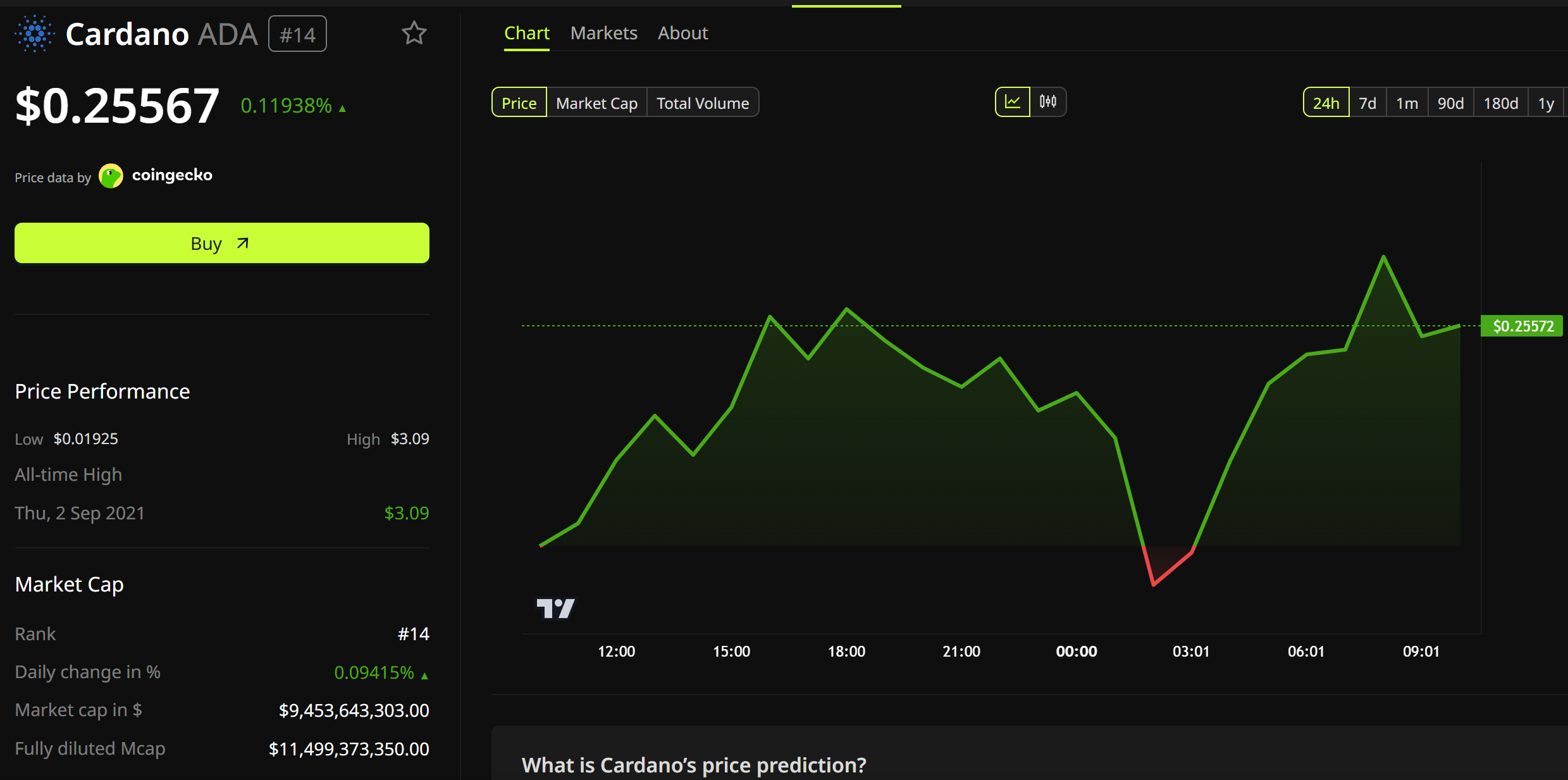
ADA traded near $0.25 at market cap rank 14, down about 5% on the week, per BeInCrypto data.

Other networks face the same math. Bitcoin alone holds billions in exposed coins sitting in addresses with revealed public keys. Earlier research on Q-Day projections flagged the same risk.
“That gives us median estimate ~10 years before modern public key crypto is definitively broken. (That said, can happen sooner! It’s not a point estimate, but a distribution, fuzzy on both the downside and upside.),” Haseeb Qureshi, Managing Partner at Dragonfly said.
Cardano Leans on Lattice-Based Standards
Cardano’s defense centers on lattice problems such as Learning With Errors, believed to resist both classical and quantum attacks.
The team plans to fold US NIST FIPS 203 through 206 standards into its roadmap. Those specs formalize ML-KEM, ML-DSA, SLH-DSA, and Falcon-style signatures.
Hoskinson contrasted Cardano’s governance and hard-fork cadence with chains that face harder coordination on migration.
He pointed to a forthcoming Cardano research proposal on quantum resistance.
Community votes on the broader strategy are already underway. A parallel testnet rollout from Solana shows similar moves elsewhere.
“Quantum computers aren’t here yet, but the Solana Foundation is preparing for the possibility. To that end, we’ve consulted with Project Eleven to assess our quantum readiness. We’re pleased to announce a first step, the deployment of post-quantum signatures on a Solana testnet,” wrote the Solana Foundation in a post.
The 2033 window being able to hold depends on hardware progress, error correction, and fault tolerance. Those hurdles remain unsolved today.
The post Cardano Founder Warns Crypto’s Quantum Threat May Hit Before 2033 appeared first on BeInCrypto.
Crypto World
Chainlink News: Kraken Just Ditched LayerZero for Chainlink CCIP, And LINK Holders Are the Big Winners

In the latest Chainlink news, Kraken has officially replaced LayerZero with Chainlink CCIP as the exclusive cross-chain infrastructure layer for its wrapped asset suite, including kBTC, with coverage spanning Ethereum, Ink, Unichain, and Optimism, and additional networks expected in later phases.
The exchange cited defense-in-depth security architecture, independent node operators, built-in rate limits, and formal certifications-ISO 27001 and SOC 2 Type 2-as the operational basis for the switch. The migration follows a $292 million LayerZero exploit that accelerated industry reassessment of first-generation bridge infrastructure.
Bullish signal for LINK holders.
This is not an isolated preference. Kelp, Solv, and Re-protocols collectively representing more than $2.5 billion in total value locked-have announced parallel transitions toward Chainlink CCIP infrastructure. Coinbase made CCIP the exclusive bridge for approximately $7 billion in wrapped assets including cbETH in 2025, citing the same security consolidation rationale.
Kraken’s move extends that pattern into crypto-native exchange infrastructure, where wrapped asset failures carry direct reputational and custodial risk for a regulated venue.

Discover: The best crypto to diversify your portfolio with
Chainlink News: How Kraken’s CCIP Migration Actually Works-and Why the Security Argument Is the Real Story
The mechanism here is worth understanding in detail, because the LayerZero-to-CCIP switch is not just a vendor swap; it reflects a fundamentally different trust architecture.
LayerZero routes cross-chain messages through configurable relayers and/or oracles chosen by the application developer, which maximizes flexibility but concentrates trust assumptions in operator selections that vary by deployment.
CCIP operates through Chainlink’s decentralized oracle network, backed by a separate Risk Management Network-an independent cluster of nodes that monitors for anomalous activity in real time and can halt transfers before losses propagate.
Wrapped assets like kBTC work by locking Bitcoin collateral and minting a synthetic token that moves across smart-contract-enabled chains, allowing Bitcoin liquidity to circulate through DeFi lending, trading, and yield applications.
The security of that collateral-to-synthetic link is foundational-a bridge failure does not just freeze transfers, it can drain the locked collateral entirely, as the April 2026 Kelp incident demonstrated when 116,500 rsETH was drained from a LayerZero-powered bridge. CCIP’s rate-limit architecture and audit trail are specifically designed to contain that failure mode.
Chainlink oracles already secure roughly 70% of the DeFi oracle market and more than 80% on Ethereum, with CCIP integrated into blue-chip protocols including Aave and Lido.
That existing footprint materially reduces integration friction for exchanges like Kraken and gives CCIP a network effect advantage that pure messaging competitors cannot replicate quickly.
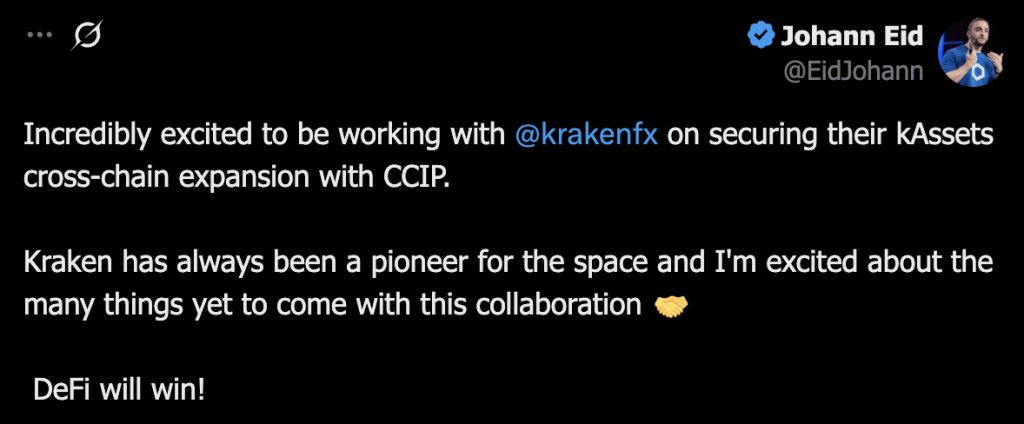
Johann Eid, Chief Business Officer at Chainlink Labs, framed the institutional logic directly: “Kraken’s migration reflects growing institutional demand for cross-chain systems capable of meeting enterprise-level security requirements.”
Discover: The best pre-launch token sales
The post Chainlink News: Kraken Just Ditched LayerZero for Chainlink CCIP, And LINK Holders Are the Big Winners appeared first on Cryptonews.
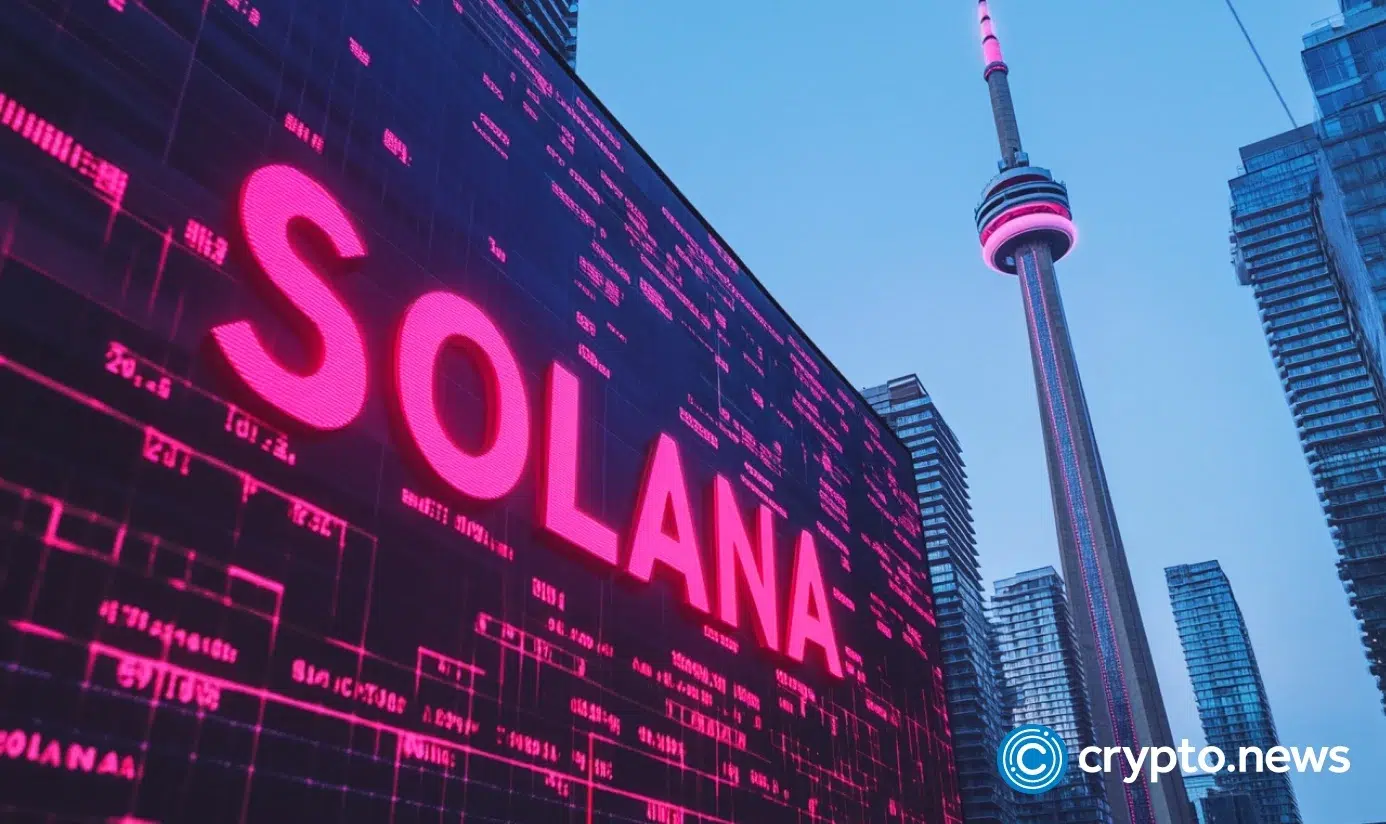
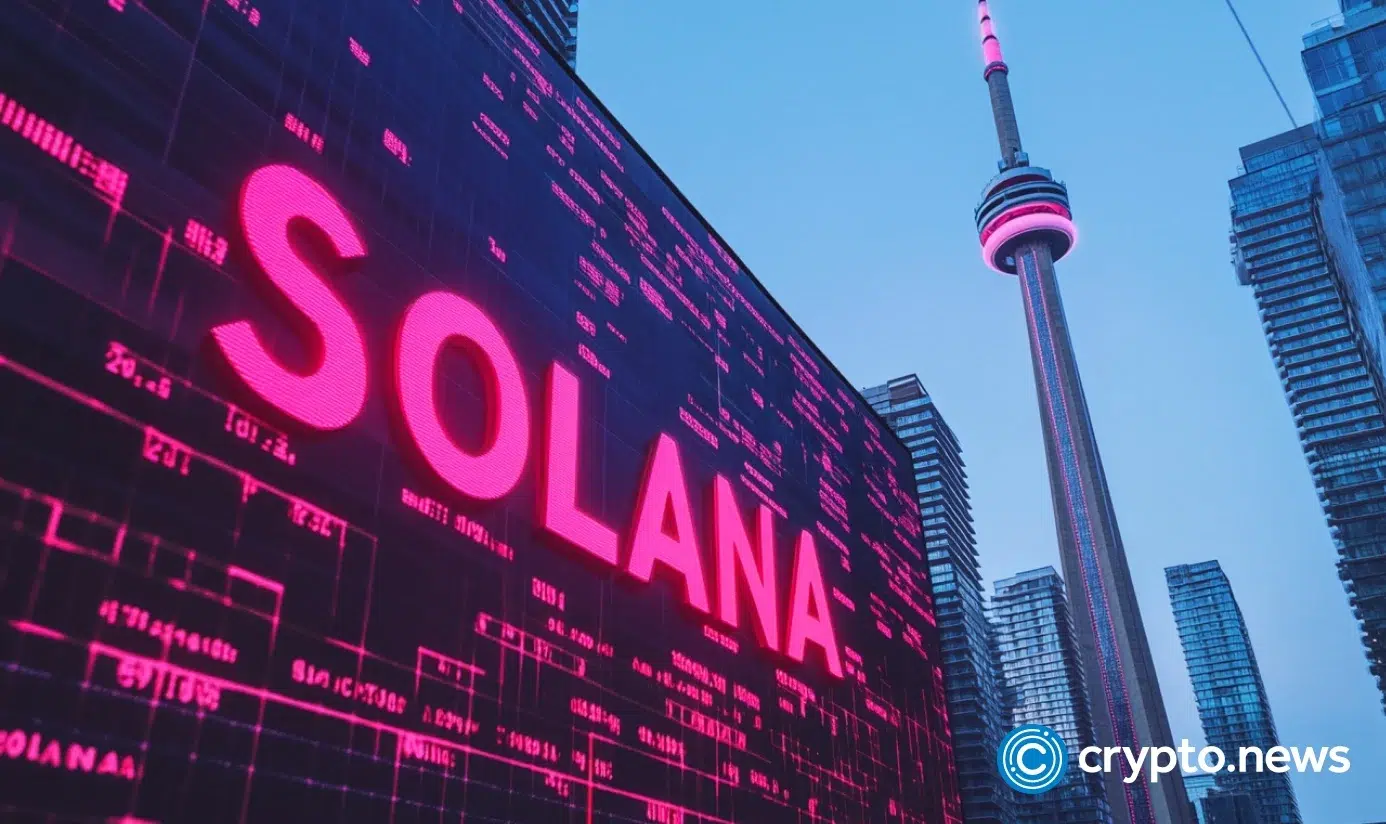
Jump Crypto’s Firedancer has entered production on Solana mainnet and is now producing blocks, according to a CoinDesk report.
Summary
- Firedancer has started producing Solana mainnet blocks after years of development by Jump Crypto engineers.
- Jump Crypto says validators should not switch at scale before full security audits are completed.
- The rollout adds client diversity to Solana while keeping caution around production network risks.
The validator client has been one of Solana’s most watched infrastructure projects because it aims to add another independent software path for validators.
Founding engineer Ritchie Patel said the client has processed tens of millions of transactions in production.
However, the team does not want validators to switch at scale yet. Patel said the rollout will remain gradual until full security audits are complete.
Solana gains another validator path
Firedancer is a new validator client for Solana built by Jump Crypto. Its public GitHub page describes it as fast, secure, and independent. The project says the client was written from scratch to support client diversity and reduce supply-chain risk.
The same repository says Frankendancer, a hybrid version that uses parts of Firedancer and Agave, is available on Solana testnet and mainnet-beta. The full Firedancer client remains separate from that hybrid version.
In addition, Jump Crypto’s Firedancer page describes the project as a Solana validator client written in C and built for high performance. It also describes Frankendancer as an intermediate milestone that enables testing and deployment before the full Firedancer system is complete.
The cautious launch follows a public audit contest with a $1 million bug bounty pool. The message from the team is clear: production use has started, but broad validator migration needs more security work before it becomes safe at network scale.
Wider Solana infrastructure work continues
The Firedancer rollout comes as Solana developers and infrastructure teams continue to work on speed, security, and validator systems. Crypto.news recently reported that Anza and Firedancer added early Falcon versions to prepare Solana clients for possible future quantum risks.
Separate coverage also reported that DoubleZero launched Edge beta, giving Solana validators and data users a faster block data route through a private fiber network. That service launched with 379 validators publishing shreds, covering about 43% of Solana’s stake at the time.
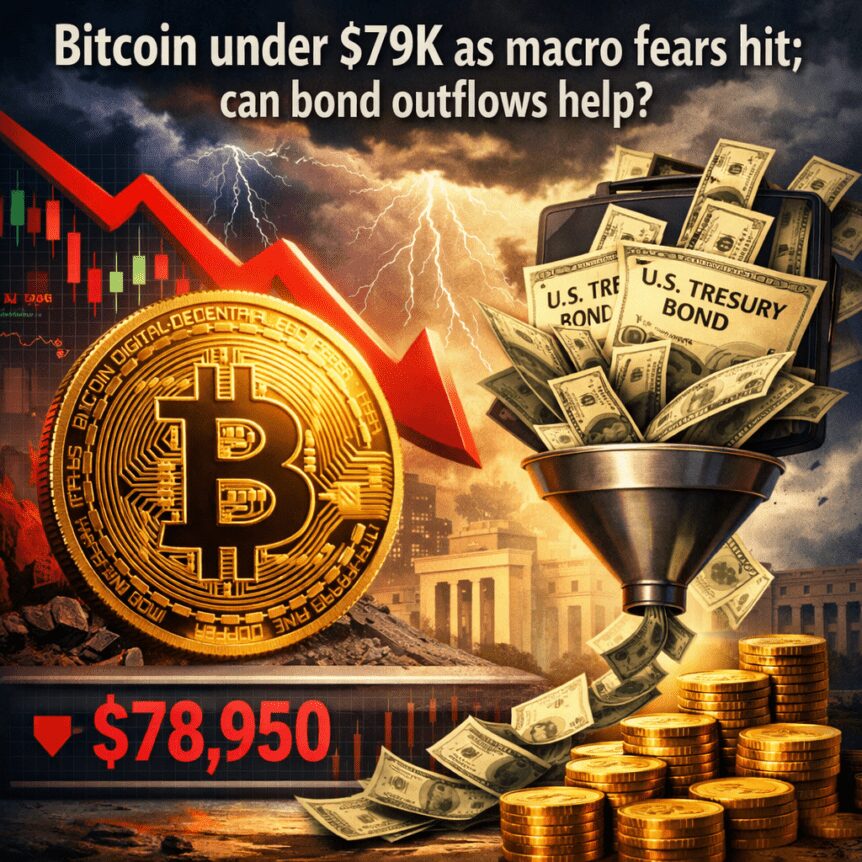
Bitcoin (BTC) declined sharply on Friday after failing to sustain a push above $82,000 the day prior, with price action echoing the behavior of US small-cap equities and signaling macro forces as the dominant driver of BTC’s moves toward sub-$79,000 levels. The retreat comes amid a broader risk-off mood in markets, where concerns about liquidity, growth, and geopolitical risk have weighed on assets across risk spectrums. As noted in market coverage, BTC has recently traded in a pattern that resembles and reacts to the same macro cues seen in the small-cap universe. nosedive below $79,000 has been highlighted as a reference point for the latest pullback.
Analysts have suggested that the anxiety translating into fixed-income selling could paradoxically lay groundwork for liquidity-driven upside in Bitcoin over the medium term. While the near-term price action appears fragile, some market participants view the current environment as a potential setup for a bounce should risk appetite stabilize and liquidity conditions improve.
Key takeaways
- Bitcoin’s short-term moves remain tightly linked to US small-cap equities, signaling macro risk sentiment rather than a traditional hedging narrative driving BTC’s price action.
- Bitcoin perpetual futures funding rates flipped deeply negative on Thursday and stayed near 0% on Friday, indicating tepid demand for bullish leverage rather than broad-based accumulation.
- Fixed-income outflows, paired with rising global yields and higher oil prices, contribute to a fragile macro backdrop that could influence BTC’s trajectory in the weeks ahead.
- Market mood cooled after the latest US-China summit in Beijing, with Nasdaq 100 reaching an all-time high only to retreat amid mixed signals on tariff talks and policy direction.
- Oil prices climbing toward $106 a barrel and the sharp move in long-dated yields underscore inflation concerns and the potential for continued macro-driven volatility in crypto markets.
Macro signals and BTC’s risk-on alignment
The broader market narrative remains dominated by macro drivers, a theme BTC has echoed in recent sessions. The Russell 2000, a US small-cap index known for higher earnings risk and thinner balance sheets, has shown a tendency to move in tandem with BTC during this stretch. By design, small caps are more sensitive to shifts in the cost of capital and interest-rate expectations, which in turn shapes risk appetite across asset classes. In this environment, Bitcoin is less a hedge and more a correlated risk-on instrument, reacting to the same liquidity and growth signals that move equities higher or lower.
Crucially, crude oil has surged, with Brent crude trading around the mid-$100s per barrel, lifting inflation expectations and pressuring fixed-income valuations. Long-dated government bonds, including the 10-year yields in several regions, have advanced to multi‑year highs, amplifying concerns about the interplay between inflation, growth, and monetary policy. The ensuing macro volatility feeds through to crypto markets, where traders weigh the odds of further drawdowns versus the potential for a liquidity-driven rebound.
On the equity side, tech-led strength helped the Nasdaq 100 notch fresh highs on a prior session, but sentiment cooled as markets parsed the outcome of the latest US-China discussions. While officials signaled intentions to accelerate farm goods exports in the near term, no concrete tariffs-related deals were announced, leaving investors wary of longer-term policy signals. This dynamic underscores the challenge of reading crypto through a single lens: even as equities showed resilience, the underlying macro uncertainty persists and often correlates with BTC’s intraday swings. The Guardian’s summary of the Beijing talks captures the cautious tone surrounding policy progress as markets digest the potential longer-term implications.
Leverage, liquidity, and the funding backdrop
One of the more telling signals for BTC’s near-term path has been the state of the crypto futures funding landscape. Bitcoin perpetual futures funding rates flipped deeply negative on Thursday and hovered near zero on Friday, a pattern that implies traders have been relatively reluctant to shoulder meaningful long exposure. By convention, a neutral or positive funding rate (above a 6% annualized baseline) tends to indicate healthier bullish leverage demand, whereas persistent negative readings reflect skittish sentiment and a scarcity of sustainable upside bets. This environment aligns with the broader sense of caution as BTC attempts to navigate the macro crosscurrents without a strong, corroborating liquidity impulse from leveraged buyers. Bitcoin perpetual futures funding rate has trended away from aggressive upside leverage in recent weeks, even as prices flirt with key resistance near $82,000.
The macro mix—tightening financial conditions, elevated oil, and rising yields—helps explain why traders have yet to exhibit a strong appetite for new BTC long exposure. At the same time, some observers argue that the liquidity squeeze in fixed income could ultimately push capital into other assets, including Bitcoin, if and when risk appetite improves or if trading dynamics shift in a way that resolves some of the near-term uncertainty.
To contextualize the bigger picture, a measure of historical market risk shows stock valuations approaching levels last seen near the dot-com era. The 10-year inflation-adjusted price-to-earnings ratio for the S&P 500, often cited as a gauge of valuation pressure, has risen toward the upper end of the long-run range, suggesting that the market’s appetite for risk could be sensitive to any further macro shocks or policy pivots. The data point is commonly cited using Shiller’s framework and, as of the latest readings, sits near the peak territory observed during the late 1990s bubble era, according to Multpl’s series. This backdrop underscores why BTC, while still a volatile asset, is vulnerable to outsized moves when macro risk intensifies and liquidity conditions tighten. Shiller P/E ratio (inflation-adjusted, 10-year) remains a useful backdrop for evaluating the risk tenor of equity markets in relation to crypto markets.
What to watch next
Looking ahead, BTC’s fate will likely hinge on the evolving balance between macro risk sentiment and liquidity dynamics. If fixed-income outflows reverse and liquidity returns to risk assets, Bitcoin could benefit from renewed appetite for leveraged bets and from a broader reallocation into crypto as a high-beta asset. Conversely, persistent macro fragility, elevated yields, or a renewed escalation in geopolitical tensions could keep BTC tethered to its risk-on correlations and limit upside in the near term.
Key developments to monitor include any shifts in oil prices and inflation expectations, central bank signals on liquidity support, and policy progress from ongoing US-China and regional discussions. For traders watching BTC levels, the near-term focus remains on whether the price can reclaim the $82,000 resistance and how it behaves near the $79,000 support zone as macro headlines unfold.
In sum, BTC’s recent moves reflect a market in which macro forces have taken center stage. The immediate path forward will be shaped by liquidity flows, credit conditions, and geopolitical developments, with BTC potentially benefiting if sentiment improves and liquidity re-enters the market, while remaining vulnerable to renewed risk-off pressure if those conditions deteriorate.

Hackers exploit auth bypass flaw in Burst Statistics WordPress plugin

What is Capitalism? | How does Money make Money? | Dhruv Rathee

Homeless man smashed vase in face of woman who offered him a bed for the night

Manchester United reach agreement with Casemiro over contract clause amid transfer speculation

US brings back mandatory military draft registration

Steven Gerrard disagrees with Gary Neville over ‘shock’ Chelsea and Arsenal claim | Football


-

 Crypto World1 day ago
BloFin War of Whales 2026 Grand Prix opens registration for $5M trading championship
-

 Fashion2 days ago
Weekend Open Thread: Theory – Corporette.com
-

 Crypto World2 days ago
E-Estate Announces 1 Year Live: Washington DC Summit as Real Estate Tokenization Enters Its Next Phase
-

 Fashion6 days ago
Coffee Break: Travel Steam Iron
-

 Fashion6 days ago
What to Know Before Buying a Curling Wand or Curling Iron
-

 Politics6 days ago
What to expect when you’re expecting a budget
-

 Tech2 days ago
Tech Moves: Microsoft AI leader jumps to OpenAI; former AI2 exec joins Meta; and more
-

 Tech6 days ago
GM Agrees To Pay $12.75 Million To Settle California Lawsuit Over Misuse Of Customers’ Driving Data
-
Crypto World4 days ago
Bitcoin Suisse expands with Digital Asset License and Investment Business Act Registration Approval in Bermuda
-

 Tech6 days ago
GM agrees to $12.75M California settlement over sale of drivers’ data
-

 Politics5 days ago
Pakistan to enter Chinese capital market as war inflation bites
-

 Crypto World4 days ago
Bitcoin Suisse expands with Digital Asset License and Investment Business Act Registration Approval in Bermuda
-
 Crypto World3 days ago
Google’s Gemini AI Predicts Incredible Solana Price by the End of 2026
-

 Business2 days ago
H&R Real Estate Investment Trust (HR.UN:CA) Q1 2026 Earnings Call Transcript
-

 Tech1 day ago
Google reimburses Register sources who were victims of API fraud
-
 Entertainment7 days ago
Prime Video’s Forgotten but Brilliant 2-Part Horror Anthology Is a Perfect Binge
-
 Entertainment7 days ago
‘Rivals’ Season 2 Is Bigger, Better, and Raunchier Than Ever
-
 Tech6 days ago
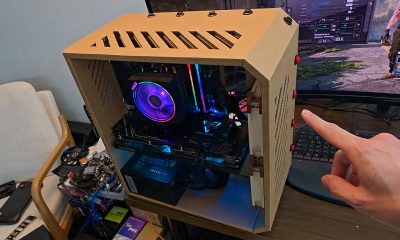
Over-Engineered Cardboard PC Case Houses a Full Computer Without Compromising Style or Performance
-
 Tech7 days ago
University of Michigan’s $20M early OpenAI investment now worth $2B as Musk trial documents reveal endowment bet
-

 Fashion5 days ago
The Best-Kept Makeup Secret for a More Defined Face
You must be logged in to post a comment Login