

Crypto World
Firedancer quietly hits Solana mainnet, but validators must wait

Jump Crypto’s Firedancer has entered production on Solana mainnet and is now producing blocks, according to a CoinDesk report.
Summary
- Firedancer has started producing Solana mainnet blocks after years of development by Jump Crypto engineers.
- Jump Crypto says validators should not switch at scale before full security audits are completed.
- The rollout adds client diversity to Solana while keeping caution around production network risks.
The validator client has been one of Solana’s most watched infrastructure projects because it aims to add another independent software path for validators.
Founding engineer Ritchie Patel said the client has processed tens of millions of transactions in production.
However, the team does not want validators to switch at scale yet. Patel said the rollout will remain gradual until full security audits are complete.
Solana gains another validator path
Firedancer is a new validator client for Solana built by Jump Crypto. Its public GitHub page describes it as fast, secure, and independent. The project says the client was written from scratch to support client diversity and reduce supply-chain risk.
The same repository says Frankendancer, a hybrid version that uses parts of Firedancer and Agave, is available on Solana testnet and mainnet-beta. The full Firedancer client remains separate from that hybrid version.
In addition, Jump Crypto’s Firedancer page describes the project as a Solana validator client written in C and built for high performance. It also describes Frankendancer as an intermediate milestone that enables testing and deployment before the full Firedancer system is complete.
The cautious launch follows a public audit contest with a $1 million bug bounty pool. The message from the team is clear: production use has started, but broad validator migration needs more security work before it becomes safe at network scale.
Wider Solana infrastructure work continues
The Firedancer rollout comes as Solana developers and infrastructure teams continue to work on speed, security, and validator systems. Crypto.news recently reported that Anza and Firedancer added early Falcon versions to prepare Solana clients for possible future quantum risks.
Separate coverage also reported that DoubleZero launched Edge beta, giving Solana validators and data users a faster block data route through a private fiber network. That service launched with 379 validators publishing shreds, covering about 43% of Solana’s stake at the time.

Iran has responded to a U.S. list of conditions for a possible peace deal, according to reports shared by The Kobeissi Letter.
Summary
- Bitcoin stayed near $78,000 as traders weighed Iran’s counterconditions and wider Middle East war risk.
- Crypto.news data showed Bitcoin up slightly daily, but still lower across the past week overall.
- Iran’s demands over sanctions, frozen funds and Hormuz kept oil-linked pressure on risk assets.
Tehran’s stated demands include an end to the war on all fronts across the Middle East, the lifting of U.S. sanctions, the release of frozen Iranian funds, compensation for war damages, and recognition of Iran’s sovereignty over the Strait of Hormuz.
The reported U.S. terms differ sharply. The list includes no compensation for Iran, no release of frozen assets, the transfer of 400 kilograms of uranium to the United States, and only one active nuclear facility. The ceasefire would also depend on further negotiations.
Bitcoin reaction remains cautious
Bitcoin (BTC) traded near $78,400, up 0.69% over 24 hours, based on crypto.news market data. Ethereum (ETH) traded at $2,190, while XRP, BNB, and Solana also posted small daily gains.
The short-term move showed limited relief, not a strong risk rally. Bitcoin remained down 2.94% over seven days, while Ethereum was down 5.81% over the same period. That gap shows traders still view the conflict as a market risk.
Crypto tracks Iran headlines
Crypto.news previously reported that Bitcoin held near $80,000 after President Donald Trump rejected Iran’s earlier peace response. BTC briefly dropped from $81,430 to $80,520 before rebounding above $82,000 within hours.
That pattern has repeated during the conflict. Peace signals have supported short relief rallies, while rejected proposals and military threats have pushed traders back into defensive positions. Earlier market updates said crypto remains sensitive to oil prices, the dollar, and Strait of Hormuz risk.
Notably, the Strait of Hormuz remains a key part of the market reaction. Crypto.news cited Reuters data showing the waterway carried about one-fifth of global oil and liquefied natural gas flows before the war began on February 28.

Japan’s largest brokerages are accelerating plans to give retail investors direct access to crypto through traditional investment channels. With SBI Securities and Rakuten Securities leading the way, in-house product development is underway for crypto-focused funds, including ETFs and investment trusts centered on liquid assets like Bitcoin and Ethereum. Major banks such as Nomura are expected to join once regulatory groundwork solidifies, signaling a potential sea change in how ordinary Japanese investors gain exposure to digital assets.
According to a Sunday report by Nikkei, SBI Securities plans to market funds developed by its group company SBI Global Asset Management, spanning both exchange-traded funds and investment trusts. The group aims to manage everything from product design to distribution in-house. Rakuten Securities is pursuing a similar path, pairing with Rakuten Investment Management to create products that can be traded directly from users’ smartphone apps. The overarching objective is to remove a key barrier—requiring dedicated crypto exchanges or wallets—by enabling crypto exposure through standard securities accounts.
Key takeaways
- Retail access to crypto via investment trusts and ETFs is moving from concept to potential rollout in Japan, led by SBI Securities and Rakuten Securities.
- Banks are pursuing crypto funds within existing corporate structures, with Nomura and Daiwa signaling intent to develop crypto investment trusts and SMBC exploring options through a cross-group task force.
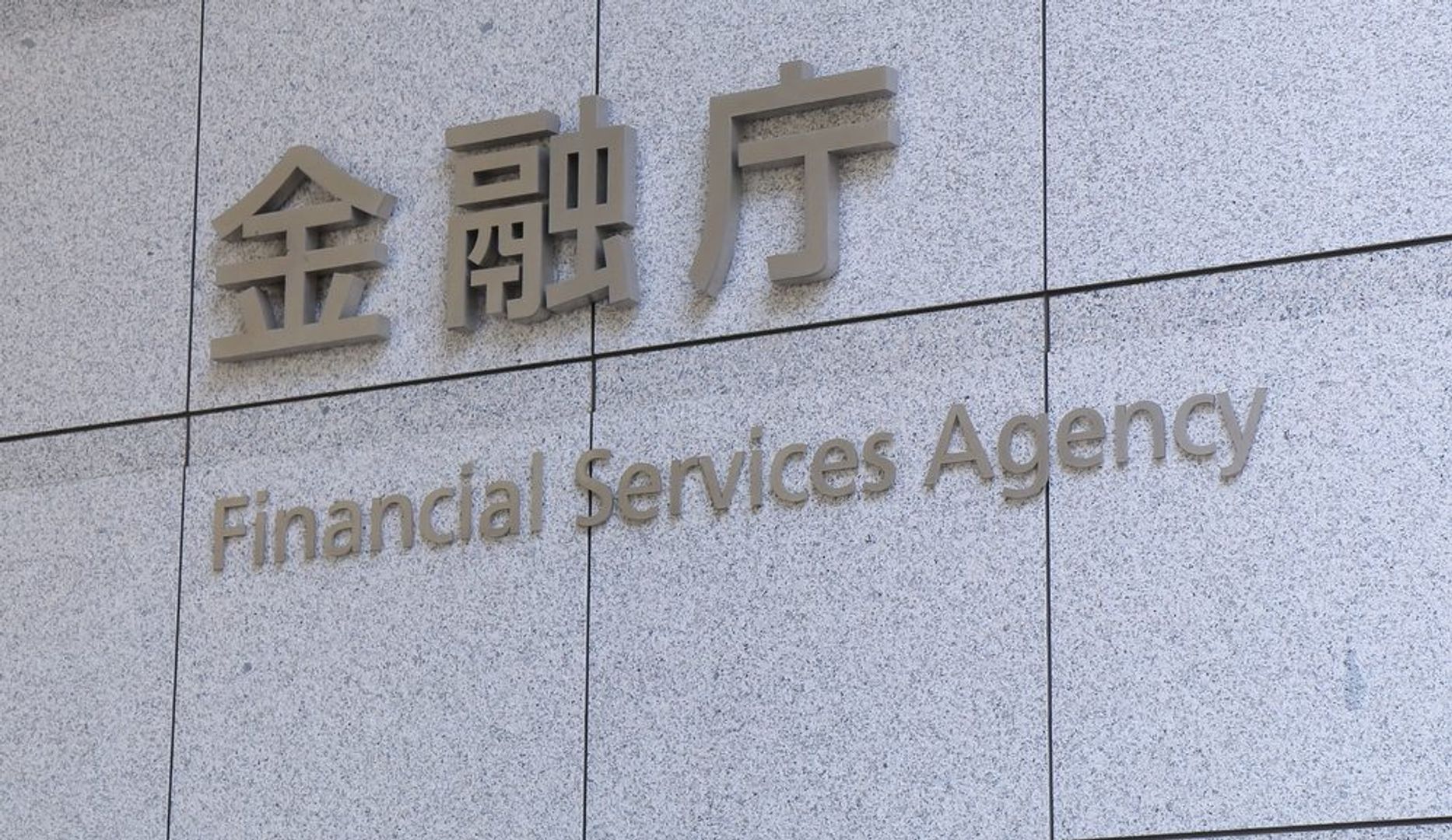
- Regulatory momentum is building: the Financial Services Agency plans to revise the Enforcement Order of the Investment Trust Act by 2028 to formally include cryptocurrencies among permitted assets for investment trusts.
- Japan is eyeing the introduction of spot crypto ETFs as early as 2028, with major groups like Nomura and SBI expected to be early entrants, including SBI’s Bitcoin–XRP ETF and gold-crypto ETF plans.
Banks scaling crypto funds as regulation tightens
The Nikkei report underscores a broader industry shift as Japan’s financial giants position themselves for a crypto-enabled retail market. In addition to SBI and Rakuten, Nomura and Daiwa have publicly signaled plans to develop crypto investment trusts within their corporate groups. SMBC Group, including SMBC Nikko, has established a cross-group task force to evaluate options, while Asset Management One, under the Mizuho Financial Group umbrella, has begun preliminary exploration.
The regulatory backdrop is evolving in tandem with these plans. Japan’s Financial Services Agency is moving to revise the enforcement framework governing investment trusts by 2028, a change that would formally permit investment funds to hold cryptocurrencies. This aligns with a broader regulatory reorientation that has already seen crypto assets reclassified as financial instruments under an amended Financial Instruments and Exchange Act. If passed in the current parliamentary session, the amendments are expected to take effect in fiscal 2027, expanding the regulatory umbrella over crypto assets in securities markets. Cointelegraph reported on the reclassification, which marks a pivotal shift for product developers and distribution channels alike.
That regulatory trajectory is feeding into corporate strategy. The Nikkei coverage notes that several banks view crypto investment trusts not as a niche product, but as a strategic channel to deepen client engagement and broaden asset offerings in an era of digitization. For those institutions, the path from pilot programs to fully fungible products hinges on clear rules around custody, liquidity, and investor protections—areas that regulators are actively addressing as part of the 2028 timetable.
From trusts to potential ETFs: a broader roadmap for Japan
Beyond investment trusts, Japan is weighing more direct exposures to crypto through spot ETFs. Reports indicate that rule changes could permit crypto ETFs as early as 2028, with Nomura Holdings and SBI Holdings among the first to consider launching such products. The strategic logic is straightforward: ETFs offer a familiar, scalable channel for retail portfolios to gain crypto exposure without needing to navigate separate crypto exchanges or wallets. SBI, in particular, has publicly outlined plans for a Bitcoin-XRP dual ETF and a gold-crypto ETF, contingent on regulatory approvals.
The shift toward ETF-like structures complements the ongoing work on trusts. Investment trusts provide a framework widely used in Japan for packaged assets and can offer daily liquidity in some forms, while spot ETFs would provide a more direct, exchange-traded crypto vehicle. Both avenues reflect a broader move by Japan’s financial system to integrate crypto assets into mainstream investment products, signaling growing institutional comfort with digital assets as part of diversified portfolios.
As these developments unfold, observers will watch how the interplay between product design, custody solutions, liquidity management, and consumer protections shapes retail adoption. The convergence of in-house product development from major banks and a clear regulatory roadmap could shorten the timeline for broad-based crypto participation in Japan’s securities markets. The next milestones will hinge on regulatory milestones—such as the formal inclusion of crypto assets under the Investment Trust Act—and the timetable for implementing the 2027–2028 reforms that would unlock a wider range of crypto investment vehicles for everyday investors.
For readers tracking the practical implications, the core takeaway is clear: Japan is methodically moving crypto out of the isolated exchange world and into the fabric of mainstream financial services. If approved, spot crypto ETFs and regulated investment trusts could become routine components of retail portfolios within the next few years, reshaping the terrain for crypto investment in one of Asia’s largest markets. Watch the regulatory calendar in 2027 and 2028, as well as any product launches from SBI, Rakuten, Nomura, and their peers, to gauge how quickly this shift gains momentum.
BNB Chain has integrated the Bankr LLM Gateway to support direct USDT payments for AI model access on BSC. The move allows users to pay for AI services without bridging assets across networks or handling additional gas expenses tied to Ethereum mainnet transactions.
🤖La red BNB Chain integró a Bankr, un agente de IA con capacidad de ejecutar transacciones en criptomonedas con el que los usuarios ahora pueden pagar por acceso a Claude, GPT, Gemini y Grok usando stablecoins desde esa red. pic.twitter.com/GjhOb2wvtW
— CriptoNoticias (@CriptoNoticias) May 16, 2026
Bankr Gateway: bankr.bot
Key Insights:
- Bankr Gateway Enables Direct USDT Payments for AI Access on BNB Chain
- Bankr LLM Integration Removes Token Bridging and Lowers Transaction Costs for Users
- BNB Chain Supports Crypto-Based AI Billing with Low-Cost On-Chain Payments
The integration introduces a payment system designed for developers and crypto-native users who want direct blockchain-based access to AI models. Users can deposit supported tokens and pay only for the computing resources they consume. The system tracks each request individually and deducts charges based on usage.
Bankr Gateway Supports Direct AI Payments
Bankr’s LLM Gateway operates on a metered billing structure. Users fund their accounts with tokens such as USDT, USDC, ETH, and other ERC-20 assets. The platform then charges users according to the number of AI requests processed through the system.
The integration with BNB Chain removes the need for token bridging when users access AI services with USDT on BSC. This setup reduces extra transaction steps and lowers operational costs for users who make frequent AI-related payments.
BNB Chain continues to position itself as a low-cost blockchain network for payments and decentralized applications. The network often promotes transaction fees below $0.10, which creates a more practical environment for smaller AI transactions.
On Ethereum mainnet, gas fees can exceed the cost of a single AI request during periods of network congestion. Lower transaction costs on BNB Chain help maintain predictable spending for developers and users accessing AI tools regularly.
Crypto-Based AI Billing Expands Use Cases
The integration also supports broader use cases tied to blockchain-based AI systems. Traditional AI platforms mainly rely on bank cards, invoices, or enterprise contracts for billing. Crypto payments create an alternative for users who prefer blockchain transactions or have limited access to traditional banking services.
The pay-per-use structure removes subscription requirements and allows users to fund only the AI requests they need. This model may also support automated on-chain agents that interact with AI models through smart contract wallets.
AI agents could potentially manage payments independently while accessing language models in real time. Lower fees on BNB Chain improve the economic viability of those automated transactions compared to Ethereum mainnet.
BNB Chain Expands Web3 Payment Infrastructure
BNB Chain has continued expanding its payment-focused infrastructure across the Web3 sector. The addition of AI billing tools aligns with the network’s broader strategy of supporting blockchain-based financial activity beyond trading and transfers.
The long-term impact of the integration will depend on adoption levels, available AI models, and system reliability. Market participants will also monitor how effectively Bankr handles transaction metering and production-scale usage as demand for AI services grows.
The launch reflects increasing interest in combining blockchain payments with AI services through lower-cost and automated transaction systems.
Key Insights
- Pi Network extended the Protocol 23.0 migration deadline from May 15 to May 19.
- The revised upgrade improves node database performance after migration completion.
- Pi App Studio now converts AI-generated apps into Pi-native applications quickly.
Pi Network has extended the migration deadline for Protocol 23.0 from May 15 to May 19, 2026. The update gives node operators additional time to install an improved version of the release aimed at strengthening database performance after migration.
The Pi Core Team confirmed the revised deadline after issuing an updated version of Protocol 23.0. The network stated that the extension supports smoother migration and better validator synchronization during the transition period.
Pi Network Protocol 23.0 Focus on Node Stability
The updated release centers on improving node database performance after migration. Pi Network encouraged operators to move directly to the revised version instead of continuing with the earlier release issued before the extension.
The network described the decision as part of an effort to improve operational quality during the migration process. The announcement did not reference any infrastructure failure or issue with the original rollout.
Pi Network Protocol 23.0 remains an important upgrade tied to the network’s broader mainnet development plans. The release follows earlier protocol versions, including 19.1 through 22.1, which supported previous network improvements.
According to the update, Protocol 23.0 uses Stellar Core v23.0.1. The integration places greater importance on stable node migration and validation synchronization across the network.
The revised version also targets systems that require consistent uptime. Improved database handling may support operators managing multiple nodes during the migration process.
Node Operators Face Final Migration Deadline
The extension gives node operators four additional days to complete migration requirements. However, Pi Network confirmed that May 19 remains the final deadline for the upgrade process.
The network stated that operators should install the revised release before the deadline to avoid potential synchronization issues after migration ends. The improved version is now available for deployment.
Protocol 23.0 continues to serve as a major infrastructure step for Pi Network. The update supports the network’s ongoing work around smart contracts and mainnet functionality.
The migration period also reflects Pi Network’s focus on maintaining stable operations while expanding technical capabilities across its ecosystem.
Pi App Studio Expands Developer Tools
Alongside the infrastructure upgrade, Pi Network introduced new features for Pi App Studio. The platform can now convert AI-generated applications from Claude Code and Codex into Pi-native apps within minutes.
The addition supports developers building applications inside the Pi ecosystem. While separate from the protocol migration, the tool expansion aligns with Pi Network’s broader ecosystem growth plans.
Pi Network is currently advancing both infrastructure and developer-focused services. Protocol 23.0 addresses node operations and migration stability, while Pi App Studio focuses on faster application development.
The network stated that Protocol 23.0 migration remains the primary priority before the May 19 deadline.
Crypto World
Costco ‘Recession Signal’ Goes Viral as Old CFO Remarks Resurface On Record Beef Prices
Reports claiming Costco issued a fresh recession warning have racked up a lot of chatter this weekend, but the quoted comments from former CFO Richard Galanti actually date back to a 2023 earnings call.
Galanti made the comments during Costco’s May 2023 third-quarter earnings call. He flagged a shift away from beef toward cheaper proteins, such as canned chicken and tuna. He tied the pattern to past slowdowns in 1999, 2000, and 2008 through 2010.
Where the Costco Quotes Actually Came From
Galanti stepped down as CFO in March 2024 after roughly four decades at the company. Gary Millerchip has held the role since then, and his recent earnings calls have not flagged a similar warning.
Costco management has described member spending as relatively consistent through the Q1 and Q2 fiscal 2026 calls.
Higher-priced meat cuts have outpaced cheaper proteins in growth, which contradicts the trade-down framing spreading on social media.
Why the Recession Narrative Still Resonates
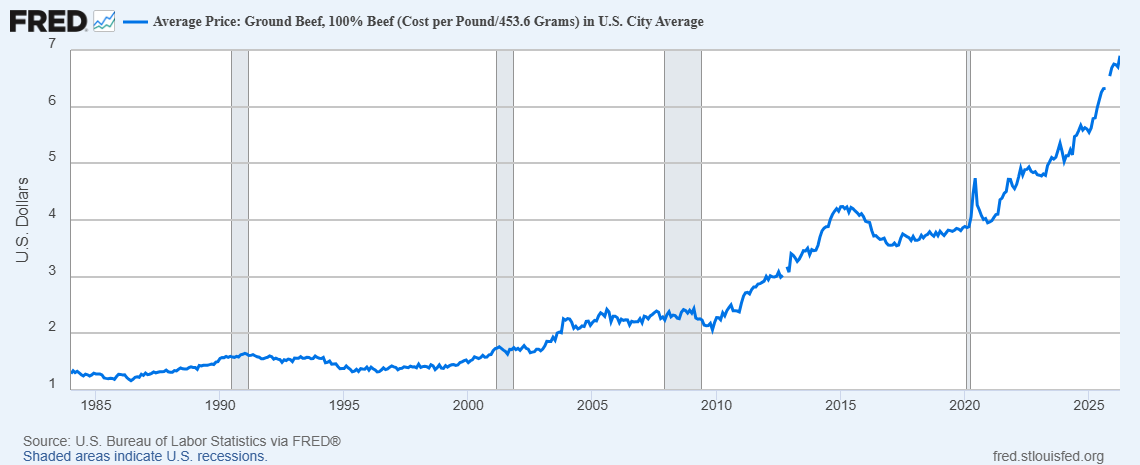
Beef prices in the United States sit at record highs. Ground beef averaged about $6.70 per pound in March 2026. Live cattle traded near $2.58 per pound during the same month.

The US cattle herd has fallen to a 75-year low after sustained drought and rising feed costs. President Donald Trump delayed an executive order this month. It would have eased beef-import limits to reduce prices.
That backdrop makes a recycled 2023 clip feel current, even when the underlying data has shifted.
The pattern echoes another viral macro signal that resurfaced recently. US cardboard box production fell more than 8% in the first quarter of 2026. Drops at that scale have historically preceded a US recession.
Meanwhile, Goldman Sachs lifted its 12-month US recession probability to 30% in March. The bank cited oil shocks and tighter financial conditions.
Polymarket odds for a US recession by year-end sit near 23%. That level sits well below the panic readings logged earlier this year.

Subscribe to our YouTube channel to watch leaders and journalists provide expert insights
The post Costco ‘Recession Signal’ Goes Viral as Old CFO Remarks Resurface On Record Beef Prices appeared first on BeInCrypto.


VerifiedX says its Bitcoin sidechain enables programmable, privacy-preserving transactions without synthetic wrappers, targeting growing institutional demand for native DeFi on the original blockchain system.
Key Insights
- Canaccord Wealth UK adds Bitwise Bitcoin and Ethereum ETP access for select clients.
- Crypto exposure remains capped at 5% within managed wealth portfolios.
- Bitwise expands regulated ETP distribution across UK wealth management channels.
Canaccord Bitwise Crypto ETPs Expand Wealth Access
Canaccord Wealth UK has partnered with Bitwise Asset Management to introduce Bitcoin and Ethereum exchange-traded products for high-net-worth clients. The arrangement allows controlled access to crypto exposure through managed portfolios.
The new structure limits digital asset exposure to a maximum of 5% per portfolio. The model keeps allocations within traditional wealth management frameworks. It focuses on clients seeking exposure to major digital assets without direct ownership.
Bitwise Head of Europe Bradley Duke, Bradley Duke confirmed the partnership through a post on X. He stated that selected clients will gain access to regulated crypto investment products linked to Bitcoin and Ethereum.
The move positions Canaccord among the UK wealth managers offering structured crypto exposure. The service targets institutional and high-net-worth investors rather than retail users.
5% Portfolio Cap and Risk Controls
The Canaccord Bitwise crypto ETPs arrangement uses a capped allocation system. Advisers manage exposure levels within the 5% limit based on client risk profiles and portfolio strategies.
The structure aims to reduce exposure to volatility linked to digital assets. Bitcoin and Ethereum remain the core assets included in the offering. The ETP format allows exposure through traditional investment channels.
The wealth manager oversees approximately $70 billion in assets. The integration of crypto ETPs adds a limited option within its broader investment offerings.
The approach avoids full portfolio integration of crypto assets. Instead, it places them as a small component within diversified holdings. This maintains alignment with conventional risk management practices.
Bitwise Expands Regulated Crypto Investment Channels
The Bitwise partnership expands its distribution footprint in the UK wealth market. The firm continues to position its products within regulated investment structures used by financial advisers.
Bitwise provides exchange-traded product exposure that tracks major digital assets. These products allow investors to access crypto without managing private wallets or direct token custody.
The Canaccord Bitwise crypto ETPs model reflects growing interest in regulated crypto access. Financial institutions continue to explore limited exposure strategies for client portfolios.
Duke described the collaboration as part of a broader European expansion strategy. The focus remains on adapting digital asset products for professional wealth management systems.
Canaccord has not announced wider crypto integration beyond this partnership. The offering remains restricted to eligible clients under adviser supervision.
The immediate impact depends on client demand and portfolio allocation decisions. However, the partnership adds another structured channel for crypto exposure within traditional financial services.
Proud to announce that the prestigious Canaccord Wealth UK ($70bn AUM) has exclusively partnered with @Bitwise to offer Bitcoin and Ethereum ETPs to selected clients for up to 5% of their portfolios.
This is a momentous moment for crypto adoption in the UK and Channel Islands.…
— Bradley Duke (@BradleyDuke_) May 15, 2026
Key Insights
- Senate Banking Committee approved Crypto Clarity Act in a 15–9 bipartisan vote.
- Last-minute talks reshaped oversight, banking rules, and developer protection language.
- Ethics concerns and regulatory scope remain unresolved before final Senate vote.
Senate Banking Committee Reaches Last-Minute Agreement
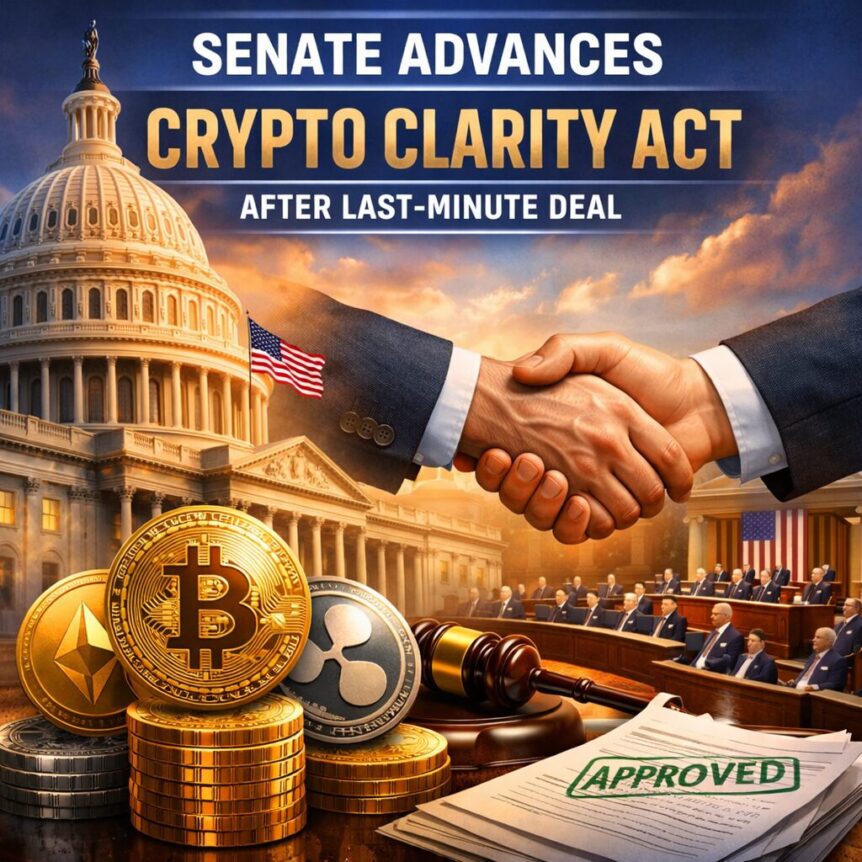
The Senate Banking Committee advanced the Digital Asset Market Clarity Act after lawmakers reached a last-minute agreement during a tense hearing. The committee approved the bill on May 14 through a 15–9 bipartisan vote. The decision followed hours of closed-door discussions and several revisions to the draft.
According to the Crypto in America report, the agreement formed shortly after the hearing began. Lawmakers resolved multiple disputed sections behind the scenes. The Crypto Clarity Act Senate negotiations also involved ethics rules and oversight provisions tied to digital assets. As a result, bipartisan support expanded within the committee.
Senators Angela Alsobrooks and Ruben Gallego joined Republican lawmakers in backing the revised bill. Their support helped secure final approval in committee. The agreement followed extended discussions on regulatory structure and banking-related provisions.
Negotiations Focus on Oversight and Developer Rules
Negotiations over the Digital Asset Market Clarity Act began under pressure the night before the hearing. Lawmakers made progress on ethics safeguards for government officials. However, disagreements continued over the Blockchain Regulatory Certainty Act and related provisions.
The Crypto Clarity Act Senate negotiations revealed a key dispute over non-custodial software developer protections. Republicans opposed Democratic revisions tied to money transmitter rules. The Crypto Clarity Act Senate negotiations entered the hearing without final agreement on this issue.
Tensions continued on the morning of the hearing. Several pro-crypto Democrats held private meetings to review strategy and concessions. A Banking Committee staffer stated, ‘Members were still hashing it out as late as 10:29 a.m., it was pretty unbelievable.’
Shortly after Chairman Tim Scott opened the session, a small bipartisan group met in a committee anteroom. Senators Cynthia Lummis, Thom Tillis, Angela Alsobrooks, and Ruben Gallego discussed remaining disputes while the public hearing continued. This parallel negotiation helped maintain momentum in the legislative process.
Revised Bill Moves Toward Full Senate Consideration
The final compromise included revisions to banking rules, tokenization provisions, insider trading language, and consumer protections. Lawmakers also removed sections linked to the Blockchain Regulatory Certainty Act from parts of the draft.
The Crypto Clarity Act Senate negotiations helped secure support from Senators Gallego and Alsobrooks. However, Gallego stated, ‘I want to be clear: my vote here does not guarantee a vote on the floor. We have many outstanding issues still to resolve.’ His statement confirmed that further review remains necessary.
The Crypto Clarity Act Senate negotiations now shift toward the full Senate process. The bill will combine with language from the Senate Agriculture Committee before reaching the floor. Lawmakers continue to refine ethics rules and regulatory boundaries.
Democrats continue to push for stricter ethics requirements covering elected officials and crypto holdings. At the same time, discussions remain open on how to define regulatory responsibility across the crypto industry. The bill now moves closer to a full Senate vote while key disagreements remain active.
Key Insights
- Senate Banking Committee approved Crypto Clarity Act in a 15–9 bipartisan vote.
- Last-minute negotiations resolved disputes on ethics rules and developer protections.
- Bill now moves toward full Senate vote with unresolved regulatory differences.
Senate Vote Moves Crypto Clarity Act Forward
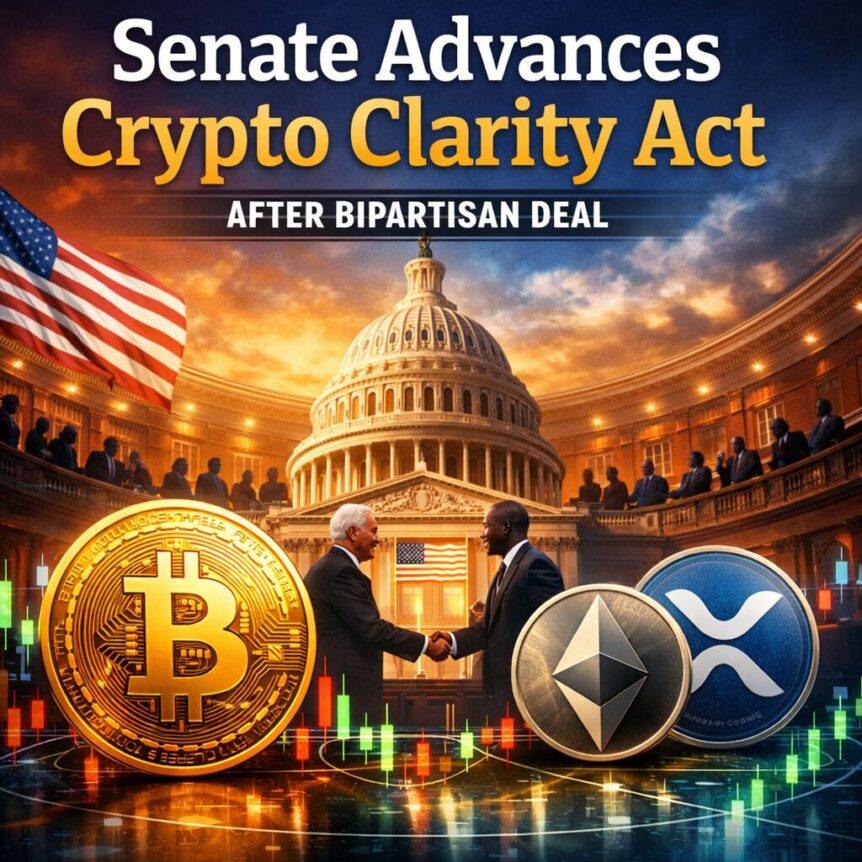
The Crypto Clarity Act Senate process advanced after lawmakers reached a late-stage agreement during a Senate Banking Committee hearing. The committee approved the bill in a 15–9 vote with bipartisan backing. The vote followed extended negotiations over key regulatory issues.
The Crypto Clarity Act Senate negotiations involved both Republican and Democratic lawmakers. Senators Angela Alsobrooks and Ruben Gallego supported the final version after revisions, and the agreement helped the bill progress despite earlier disagreements on oversight rules.
The effort now moves to the full Senate as lawmakers continue to refine sections before a final vote. The bill also incorporates input from the Senate Agriculture Committee.
Last-Minute Negotiations Shape Final Draft
Negotiations intensified ahead of the hearing as lawmakers worked through unresolved issues. The Crypto Clarity Act Senate talks focused on ethics rules for public officials and oversight of digital asset markets. Discussions also addressed developer protections under crypto regulations.
Lawmakers debated provisions linked to non-custodial software developers as Republican members opposed some Democratic proposals related to money transmitter classification. These disagreements delayed agreement until shortly before the committee session began.
The Crypto Clarity Act Senate compromise emerged after closed-door discussions during the hearing. Senators Cynthia Lummis, Thom Tillis, Angela Alsobrooks, and Ruben Gallego participated in final negotiations. The group worked through remaining disputes while the public hearing continued.
Revised Provisions Secure Bipartisan Support
The final Crypto Clarity Act Senate draft included changes to banking rules, tokenization standards, and consumer protections. Some provisions linked to the Blockchain Regulatory Certainty Act were removed or adjusted during negotiations.
Crypto Clarity Act Senate revisions helped secure votes from both parties. However, Senator Ruben Gallego noted that additional issues remain unresolved before a final floor vote. Lawmakers continue discussions on ethics rules tied to digital asset holdings.
The process will now integrate additional legislative language before reaching the Senate floor. Senators continue working through regulatory differences as the bill moves closer to a full vote decision.
Another 11 companies responded to a survey saying they would consider offering crypto funds once the regulatory environment becomes clear.

‘Yellowstone’ Meets ‘True Detective’ in ‘Chicago P.D’ Alum’s New Crime Thriller Debuting This August

(PHOTO) Selena Gomez Flaunts Huge 8-Carat Engagement Ring in Eye-Catching Metallic Fringe Dress

Bitcoin steadies near $78K as Iran responds to U.S. peace terms

Manchester United reach agreement with Casemiro over contract clause amid transfer speculation

US brings back mandatory military draft registration

Steven Gerrard disagrees with Gary Neville over ‘shock’ Chelsea and Arsenal claim | Football


-

 Crypto World1 day ago
BloFin War of Whales 2026 Grand Prix opens registration for $5M trading championship
-

 Fashion2 days ago
Weekend Open Thread: Theory – Corporette.com
-

 Crypto World2 days ago
E-Estate Announces 1 Year Live: Washington DC Summit as Real Estate Tokenization Enters Its Next Phase
-

 Fashion6 days ago
Coffee Break: Travel Steam Iron
-

 Fashion6 days ago
What to Know Before Buying a Curling Wand or Curling Iron
-

 Politics6 days ago
What to expect when you’re expecting a budget
-

 Tech2 days ago
Tech Moves: Microsoft AI leader jumps to OpenAI; former AI2 exec joins Meta; and more
-

 Tech6 days ago
GM Agrees To Pay $12.75 Million To Settle California Lawsuit Over Misuse Of Customers’ Driving Data
-
Crypto World4 days ago
Bitcoin Suisse expands with Digital Asset License and Investment Business Act Registration Approval in Bermuda
-

 Tech6 days ago
GM agrees to $12.75M California settlement over sale of drivers’ data
-

 Politics5 days ago
Pakistan to enter Chinese capital market as war inflation bites
-

 Crypto World4 days ago
Bitcoin Suisse expands with Digital Asset License and Investment Business Act Registration Approval in Bermuda
-

 Crypto World3 days ago
Google’s Gemini AI Predicts Incredible Solana Price by the End of 2026
-

 Business2 days ago
H&R Real Estate Investment Trust (HR.UN:CA) Q1 2026 Earnings Call Transcript
-

 Tech2 days ago
Google reimburses Register sources who were victims of API fraud
-
 Entertainment7 days ago
Prime Video’s Forgotten but Brilliant 2-Part Horror Anthology Is a Perfect Binge
-
 Entertainment7 days ago
‘Rivals’ Season 2 Is Bigger, Better, and Raunchier Than Ever
-
 Tech7 days ago
University of Michigan’s $20M early OpenAI investment now worth $2B as Musk trial documents reveal endowment bet
-
 Tech6 days ago
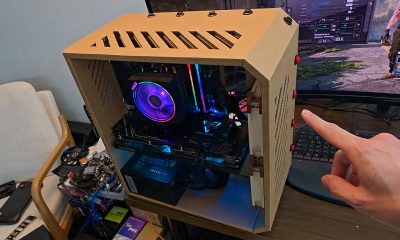
Over-Engineered Cardboard PC Case Houses a Full Computer Without Compromising Style or Performance
-

 Sports2 days ago
Napoleonic enters 2026 Doomben 10,000 field via Abounding withdrawal
You must be logged in to post a comment Login