

Crypto World
DOJ says alleged Dream Market admin laundered crypto into gold



The U.S. Department of Justice has charged German citizen Owe Martin Andresen over an alleged money laundering scheme tied to Dream Market, a darknet marketplace that shut down in 2019.
Summary
- DOJ charged Owe Martin Andresen over alleged laundering tied to Dream Market administrator wallets.
- Prosecutors said dormant crypto wallets moved funds before purchases of gold bars shipped to Germany.
- Authorities seized $1.7 million in gold bars, cash and crypto-linked assets during searches.
Prosecutors said Andresen was the suspected main administrator of the site. Meanwhile, the DOJ said Andresen was arrested in Germany last week on parallel German charges.
U.S. prosecutors said he used dormant Dream Market administrator wallets to move funds and later convert part of the proceeds into gold bars.
Prosecutors cite dormant crypto wallets
Dream Market launched in 2013 and became one of the largest darknet markets before its closure. Prosecutors said the site carried close to 100,000 listings at a time and used Tor and cryptocurrency to hide buyers, sellers and payments.
After the shutdown, the DOJ said Dream Market’s crypto infrastructure stayed mostly untouched. Prosecutors said activity resumed in late 2022, when funds moved from old Dream Market wallets into newly consolidated wallets. They said the transfers “could only have been initiated” by someone with access to the original private keys.
Moreover, prosecutors said Andresen used a crypto service provider based in Atlanta to buy gold bars from international companies in August 2023. The gold bars were allegedly shipped to his home address in Germany.
The DOJ said Andresen allegedly laundered more than $2 million between August 2023 and April 2025. During searches on May 7, authorities found about $1.7 million in gold bars, more than $23,000 in cash, and information tied to bank accounts and crypto wallets holding about $1.2 million believed to be Dream Market proceeds.
Crypto crime cases remain active
A federal grand jury charged Andresen with six counts of international concealment money laundering and six counts of concealment money laundering. Each U.S. charge carries up to 20 years in prison. The DOJ said Andresen is presumed innocent unless proven guilty.
The case follows wider enforcement against crypto-linked laundering. Crypto.news reported that the DOJ finalized forfeiture of over $400 million in assets tied to Helix, a darknet crypto mixer. Separate coverage said a California man received 70 months in prison for laundering funds tied to a $263 million crypto theft group.


Sell in May and go away is a popular saying in the financial markets, and renowned analyst Merlijn The Trader outlined a historical pattern that could be even more painful for BTC now.
His targets are quite worrying, with the worst-case scenario predicting a massive plunge to $33,000.
Another 60% Decline Soon?
Following bitcoin’s rejection at $82,000 earlier this week and the subsequent correction to a 15-day low of $78,000, the bearish sentiment in Crypto X skyrocketed, with several analysts outlining different scenarios in which BTC could crash further. The latest to hop on the bear bandwagon was Merlijn The Trader, who noted that the cryptocurrency has significantly underperformed in the three previous midterm election years, such as the current one.
According to his data, the asset fell by 61% in 2014, by 65% in 2018, and by 66% four years ago. He warned: “Three cycles. Three dumps. Zero exceptions.” If this pattern is to play out in the current mid-term year, then BTC could plunge to $33,000.
Although there are a few potentially bullish factors now, such as the advancing CLARITY Act and some deals between the US and China, Merlijn added that “the calendar has never been wrong.”
The most brutal pattern in Bitcoin history.
Nobody wants to hear this. But the pattern is perfect.
Mid-term election years. Bitcoin dumps. Every time.2014: Sell in May. -61%.
2018: Sell in May. -65%.
2022: Sell in May. -66%.Three cycles. Three dumps. Zero exceptions.
2026… pic.twitter.com/jErVlpY4BZ
— Merlijn The Trader (@MerlijnTrader) May 17, 2026
Or Maybe Just $45K
In a separate post, Merlijn talked about a different historical pattern that bitcoin could be mimicking now – the 2021 phase. At the time, BTC experienced similar price moves that eventually led to a bigger crash. He outlined the six steps that the cryptocurrency went through at the time, and said the asset could be in the Accumulation phase now (step 4).
If that’s the case, then BTC could be on the verge of another decline. However, this scenario is slightly less bearish as Merlijn’s targets are somewhere between $45,000 and $59,000. The key to this setup playing out is the $78,000 support, which is currently being tested.
If BTC is to lose that level, it could drop to Merlijn’s targets. However, if it manages to hold, then step 4 could be skipped, and the run might be closer than expected.
The post $33K Could Be Bitcoin’s Next Stop if History Repeats: Analyst appeared first on CryptoPotato.
Crypto World
Nvidia (NVDA) Earnings, Treasury Yields, and Retail Reports Highlight This Week’s Market Focus
Quick Overview
- Nvidia’s first-quarter results arrive Wednesday, with Wall Street forecasting $1.78 earnings per share and $79.2 billion revenue
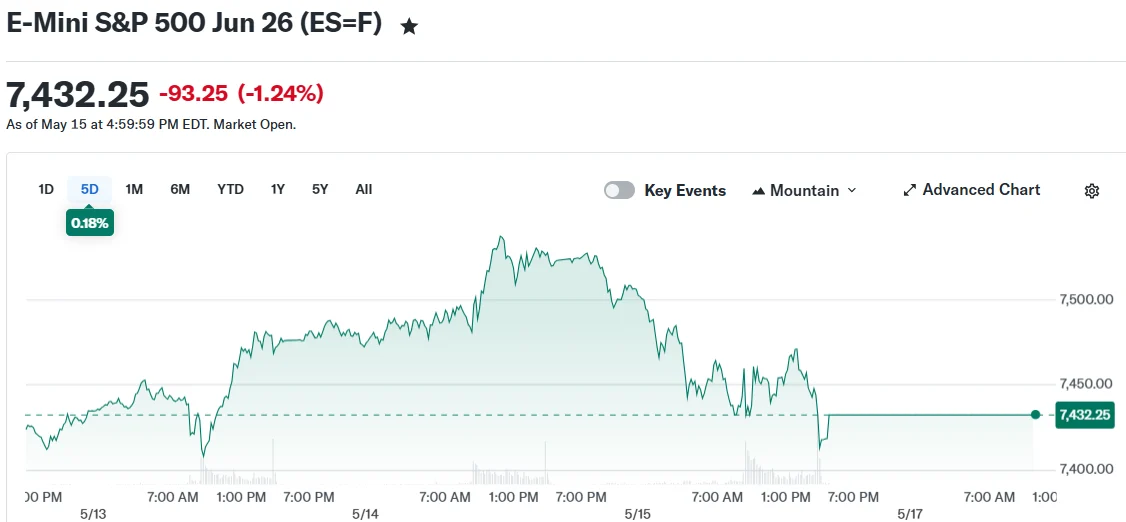
- Major indexes stumbled Friday with the S&P 500 falling 1.2%, snapping a seven-week rally on a sour note
- Treasury yields breached 4.5% on the 10-year note, adding headwinds for equities
- Carlyle Group’s Jeff Currie warns commodities could be starting a prolonged supercycle
- Walmart’s Thursday earnings will illuminate consumer trends after April CPI reached 3.8%
Market participants enter the trading week facing several headwinds. Equities retreated Friday, Treasury rates advanced, and diplomatic fallout from the Trump-Xi discussions continues to cast uncertainty.
The S&P 500 tumbled 1.2% Friday, though it squeezed out a marginal 0.1% gain for the week — marking its seventh consecutive weekly advance. The Nasdaq shed 1.5% on the session, finishing the week fractionally lower by 0.1%. The Dow similarly concluded weekly trading down 0.2%.
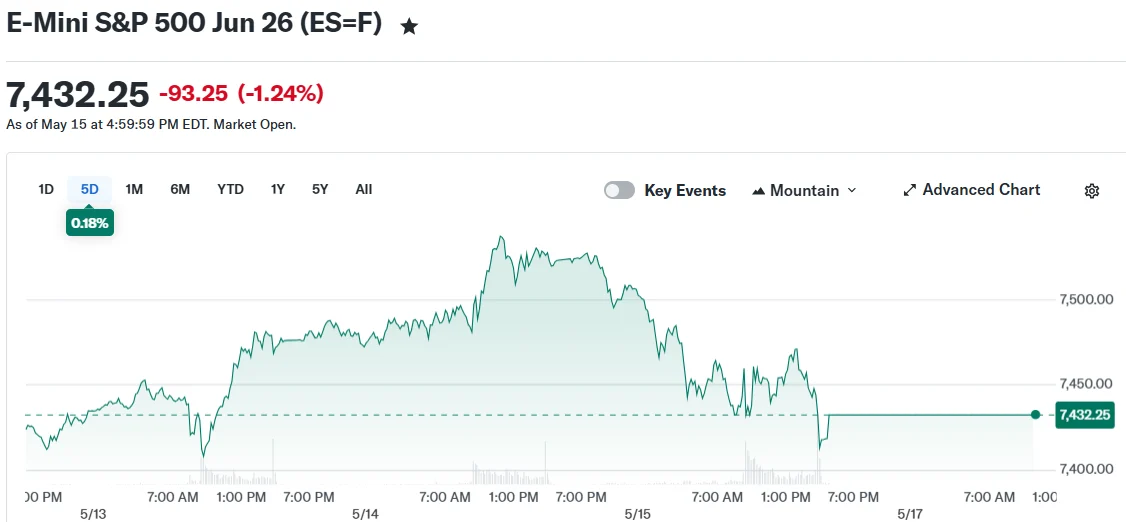
The 10-year Treasury benchmark pushed decisively past 4.5% Friday, a threshold that has traditionally unsettled stock market participants. This rate level will remain a focal point as trading commences.
While this week’s economic schedule appears less crowded than previous periods, one corporate event dominates attention.
Nvidia’s Quarterly Report Commands Spotlight
Nvidia will unveil first-quarter financial performance Wednesday following the closing bell. The chipmaker holds the distinction of being the world’s most valuable enterprise, having surpassed $5.7 trillion in market capitalization last week.
Wall Street consensus calls for adjusted profits of $1.78 per share alongside $79.2 billion in total revenue.
During March, Nvidia’s chief executive Jensen Huang characterized demand for the company’s products as “off the charts.” He expanded forecasts for two major product categories, projecting they could generate over $1 trillion by the conclusion of 2026.
Huang recently accompanied President Trump on a China visit, engaging with government officials and corporate executives. Market observers will listen carefully for any disclosure regarding transactions or arrangements finalized during those meetings.
Reports emerged last week indicating Chinese technology giants Alibaba, Tencent, ByteDance, and JD.com received authorization to purchase Nvidia’s H200 processors. This development propelled shares to fresh record highs Thursday before Friday’s selloff.
Notwithstanding the impressive rally, UBS analyst Tim Arcuri observed that numerous institutional investors have displayed minimal excitement approaching the release, potentially creating conditions for an upside surprise with solid results.
Bank of America analyst Vivek Arya highlighted that market participants will scrutinize any discussion regarding competitive pressure from Advanced Micro Devices, Broadcom, and emerging chipmaker Cerebrus, which debuted publicly last week.
Walmart, Retail Sector, and Consumer Health
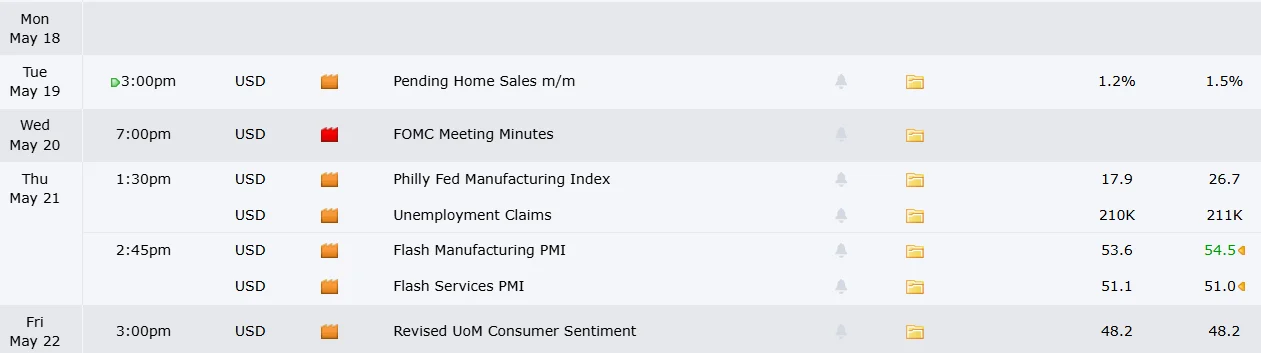
Walmart delivers quarterly results Thursday morning. The report carries heightened significance following April’s Consumer Price Index print showing 3.8% year-over-year inflation, primarily fueled by escalating energy prices.
During the previous quarter, Walmart characterized its customer base as “resilient.” This week’s question centers on whether that assessment still applies.
Target releases results Wednesday. Newly appointed CEO Michael Fiddelke has communicated strategic initiatives aimed at restoring growth momentum. Home Depot and Lowe’s announce earnings Tuesday and Wednesday respectively, though both face challenges from stagnant housing market conditions.
The University of Michigan releases consumer sentiment and inflation expectations data Friday, completing the week’s economic landscape.
Are Commodities Starting a Prolonged Supercycle?
Carlyle Group energy strategist Jeff Currie published extensive analysis Friday suggesting markets may be witnessing the initial phase of an extended commodity bull market.
Currie highlighted artificial intelligence’s escalating requirements for tangible infrastructure — power generation, industrial metals, and processing capability — as a primary catalyst. He also referenced the Iran situation, which Goldman Sachs estimates has withdrawn over 13.7 million barrels daily from global markets, representing the largest energy supply disruption historically.
Currie contends capital has concentrated on the AI trade while the underlying physical resources essential for operating AI systems have suffered from underinvestment. He believes this disconnect is beginning to resolve itself.

Crypto World
Institutional DeFi Bifurcates as Private Networks Raise $1B and Hyperliquid Stablecoin Supply Hits $5.4B

TLDR:
- Arc, Canton, and Tempo collectively raised $1.022B, pushing combined valuations to nearly $10B this week.
- Coinbase became Hyperliquid’s official USDC treasury deployer under the network’s Aligned Quote Asset framework.
- Hyperliquid stablecoin supply reached $5.43B as of May 14, 2026, reflecting a 14% increase over 90 days.
- The Genius Act of 2025 opened a clearer regulatory path for institutions backing stablecoin-linked infrastructure.
Institutional DeFi is moving in two directions at once. Private, compliance-focused blockchain networks raised over $1.0B this week, while Hyperliquid’s stablecoin supply reached $5.4B.
Coinbase is now the official USDC treasury deployer on Hyperliquid. Together, these developments show how regulated dollar liquidity is becoming embedded market infrastructure across both private and public crypto venues.
Private Blockchain Networks Attract Over $1B in Institutional Backing
Arc, Canton, and Tempo pulled in a combined $1.022B in disclosed capital this week. Their combined valuations sit near $10B, making this a meaningful capital-allocation signal.
Each project addresses a core institutional concern: transacting without exposing workflows to a public block explorer.
Circle raised $222M for Arc at a $3B valuation. Backers include BlackRock, Apollo, a16z crypto, ARK Invest, and Standard Chartered Ventures. Arc focuses on stablecoin-based capital markets, tokenized assets, and cross-border settlement.
Canton, backed by a16z crypto, is seeking $300M at a $2B valuation for privacy-enabled interoperability among banks and trading firms.
Stripe and Paradigm-backed Tempo raised $500M at a $5B valuation. Its edge comes from Stripe’s merchant and developer distribution network. That reach gives Tempo access to customers most crypto-native chains must earn one integration at a time.
On why institutions fund privacy-first networks, Bitwise CIO Matt Hougan put it plainly: “For a business, broadcasting every trade before completion or making payroll visible to a block explorer is a bug, not a feature.”
That explains why networks with built-in privacy controls continue to attract large institutional backing. The U.S. Genius Act of 2025 further cleared a path for stablecoin-linked infrastructure investment.
Coinbase Takes the Treasury Role as Hyperliquid’s Stablecoin Supply Nears $5.4B
Coinbase will serve as the official USDC treasury deployer on Hyperliquid under the network’s Aligned Quote Asset framework. USDH will remain redeemable for USDC during a transition period before being phased out over time.
Sentora Research framed the move this way: “This is not simply another chain integration. It is a signal about who controls liquidity operations inside a major public onchain venue.”
DefiLlama data shows Hyperliquid stablecoin supply at roughly $5.43B as of May 14, 2026, up about 14% over 90 days.
TVL on the platform sits near $5.08B over the same period. Stablecoins on a perps venue are not passive — they serve as collateral, quote currency, and settlement asset.
The AQA framework also shares reserve yield revenue with the protocol. That makes stablecoin deployment part of venue economics, not just a balance-sheet decision.
Coinbase brings regulated brand trust and fiat adjacency that add credibility to USDC’s role inside Hyperliquid.
USDH being phased out shows how difficult it is for venue-native stablecoins to compete. When a regulated, widely distributed stablecoin plugs into the same demand, native experiments face a very high bar.
TLDR:
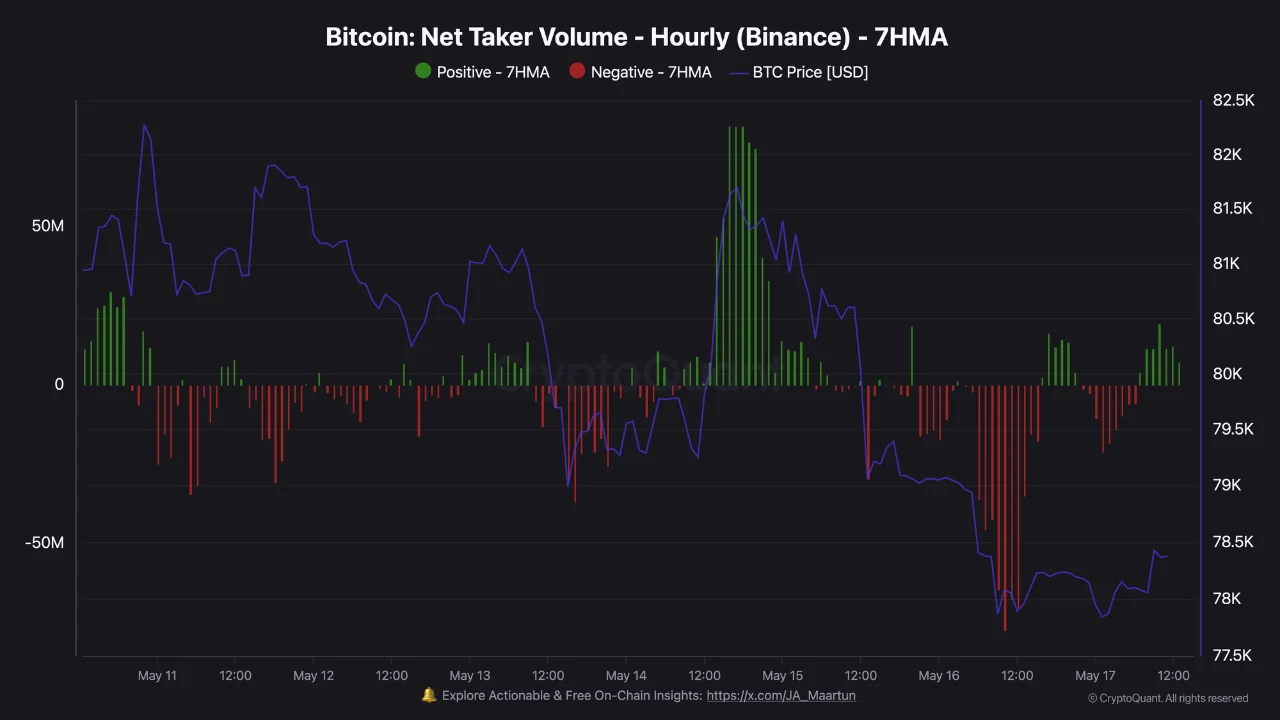
- Binance Net Taker Volume hit -$50M at $77,000, but buyers absorbed the selling pressure successfully.
- A second retest recorded just -$20M in volume, signaling a clear rejection of further downside below $77,000.
- Binance data supports a short-term bounce toward the $79,000–$80,000 resistance zone this week.
- A drop below $77,600 with unabsorbed volume could trigger a sharp Bitcoin slide toward $72,000.
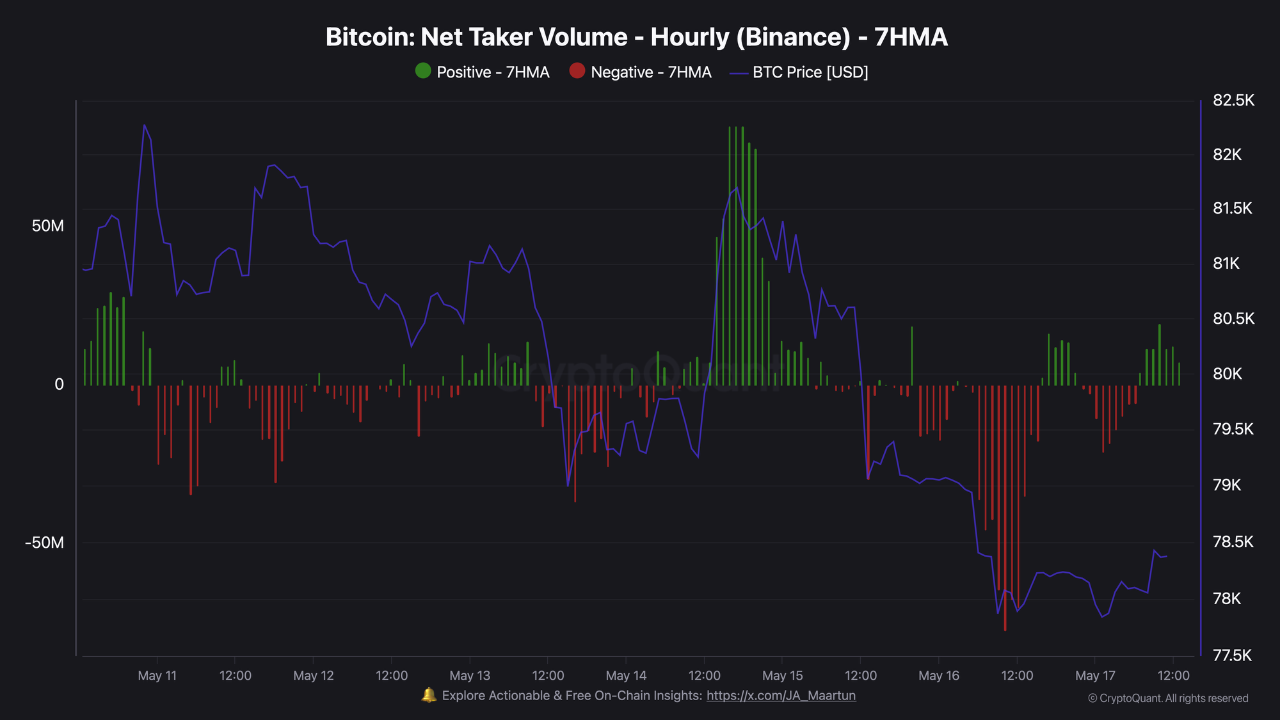
Binance data is drawing sharp attention from traders as the weekly open draws near. Bitcoin recently initiated a correction from the $82,000 resistance level, and Net Taker Volume on the exchange has declined noticeably since then.
Both buyers and sellers appear reluctant to take aggressive positions at this stage. The data currently suggests a cautious but potentially flat-to-positive start to the new week, though key levels remain in play.
What Binance Net Taker Volume Reveals About the $77,000 Zone
Binance data recorded a Net Taker Volume reading of -$50 million during Bitcoin’s first test of $77,000. Despite that heavy selling pressure, the market absorbed it without a sustained breakdown below the level. Buyers proved willing to step in at that zone, preventing a sharper decline.
Source: Cryptoquant
During the second retest, the Net Taker Volume came in at a reduced -$20 million. That lower reading reflected a clear rejection of further downside below $77,000. Sellers failed to sustain momentum on the follow-through attempt, which is a notable shift in market behavior.
Taken together, the two readings from Binance data now support a bounce toward the $79,000–$80,000 resistance zone.
That range is where the next wave of selling pressure is most likely to emerge. Traders are watching closely to see whether buyers can push price through that overhead area.
Critical Thresholds Binance Data Flags for the Week Ahead
Binance data also flags a key risk level that could change the weekly outlook entirely. If Bitcoin drops below $77,600 and buyers fail to absorb the Net Taker Volume at that threshold, a sharp slide toward $72,000 becomes a realistic scenario. That move would deepen the current correction considerably.
Low overall volume across the market adds weight to the downside concern. Combined with the heavy overhead resistance sitting above current price levels, the conditions for a trend reversal later in the week remain present. The bounce potential does not yet cancel out the broader bearish risk.
For the weekly open, Binance data leans toward a flat-to-positive start. However, the lack of volume conviction on either side means the setup can shift quickly. The $77,600 level remains the clearest signal traders should watch heading into the new week.


XRP Ledger activity rose sharply after XRP briefly moved above $1.54 for the first time in two months, according to Santiment data shared on May 16.
Summary
- XRP network activity hit two-month highs after price briefly reclaimed levels last seen in March.
- Spot XRP ETFs logged $60.50 million weekly inflows, their strongest week since late December 2025.
- ETF demand failed to hold the breakout as XRP slipped back below key resistance again.
The analytics firm said active addresses reached 48,453, the highest level since March 30.
Santiment also reported 3,317 new network addresses, the highest reading since March 19. The firm said part of the move came from “general price FOMO,” but added that more transactions can support mid- and long-term growth when activity reflects real adoption.
Spot XRP ETFs also recorded a strong inflow week. SOSoValue data showed $60.50 million in net inflows for the week, the strongest reading since the week ending Dec. 26. May inflows reached nearly $95 million, already above April’s total.
Crypto.news had already reported a rebound in XRP ETF demand before the latest weekly data. U.S. spot XRP ETFs posted $25.8 million in daily net inflows on May 11, the strongest single-day total since Jan. 5.
XRP breakout fails near resistance
XRP tried to extend its rally after ETF inflows improved and the CLARITY Act advanced in Washington. As crypto.news previously reported, Standard Chartered expected $4 billion to $8 billion in additional XRP ETF inflows if the CLARITY Act moved through the Senate Banking Committee before May 21.
The move did not hold. XRP pushed into a familiar resistance zone before retreating. Crypto.news data showed Ripple’s native token (XRP) trading around $1.42, with a market cap near $87 billion, placing it behind BNB among major crypto assets.
Moreover, the latest ETF streak follows a strong April. Crypto.news reported that XRP ETF products pulled in $81.63 million during April, making it their best inflow month of 2026. The figure reversed March’s $31.16 million monthly outflow.
Disclosure: This article does not represent investment advice. The content and materials featured on this page are for educational purposes only.
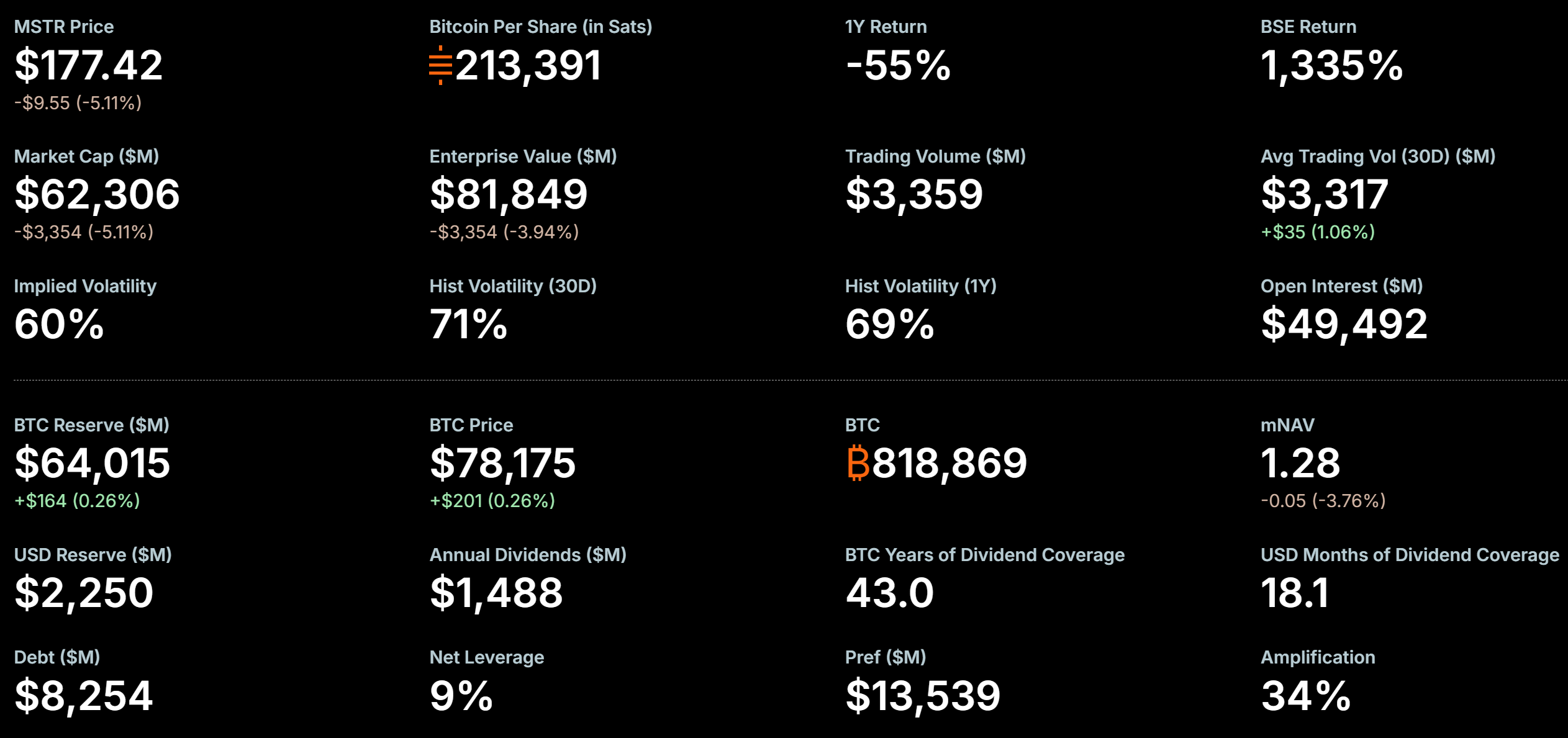
MicroStrategy chair Michael Saylor teased another large Bitcoin (BTC) purchase on Sunday with a “Big Dot Energy” post, while traders await Monday’s 8-K filing expected to confirm one of the firm’s biggest weekly accumulation runs of 2026.
Independent tracker Strc.live estimates roughly 15,466 BTC were funneled into Strategy purchases across four active trading days, after STRC preferred share volume hit an all-time record of 15.1 million shares on Thursday.
MicroStrategy’s STRC Engine Powers the Latest Hint
Michael Saylor extended his Sunday hints with a Bitcoin buy tease in a May 17 post, not catching markets by surprise as he often gives an almost similar messaging at the beginning of every week.
Strategy’s recent $1.5 billion repurchase of 2029 convertible notes, settling around May 19, has not slowed the capital-raising flywheel.
The firm holds 818,869 BTC at an average cost of roughly $75,543 per coin.

Thursday’s STRC trading session set an all-time volume record of 15.1 million shares, topping the prior peak from April 14. The community read the spike as fresh proceeds being deployed into Bitcoin.
Retail Vote Could Sharpen the Dividend Stream
Roughly 80% of STRC is held by retail investors across major brokerages including Charles Schwab, Fidelity, and Robinhood.
Strategy is asking those holders to approve moving the 11.5% annual dividend from monthly to semi-monthly payouts.
The amendment would keep the headline rate steady while shortening cash-flow intervals. Approval could reinforce demand for the variable-rate preferred. It could also sustain the at-the-market issuance pipeline that has funded most of Strategy’s Bitcoin buying this year.
Monday’s 8-K should give the market a concrete number to weigh against the community’s 15,466 BTC estimate.
A strong print would back the bullish reading of Saylor’s meme and keep retail attention on the STRC vote ahead of the next dividend record date.
The post Michael Saylor Teases Bigger Bitcoin Buy for MicroStrategy as 8-K Filing Looms appeared first on BeInCrypto.
Bitcoin’s price breakout attempts were halted on a few occasions at $82,000 in the past week, which could be explained to an extent by the developments on the US ETF front.
The spot Ethereum ETFs suffered even more in terms of a red daily streak, as they didn’t see even a single day in the green.
BTC ETFs Bled Out Heavily
Recall that the previous business week, the one that ended on May 6, was quite impressive as the spot Bitcoin ETFs attracted over $620 million in net inflows. This continued an impressive green streak of six consecutive weeks with more inflows than outflows.
However, this run was snapped in the past five trading days. Data from SoSoValue shows that investors changed their course of action and withdrew $1 billion in total, reducing the cumulative net inflows from $59.34 billion to $58.34 billion.
If we break down this data, it’s evident that May 13 was the worst-performing trading day, with net outflows of $635 bilion. May 15 followed with $290 million, and May 12 was third in line with $233 million. In contrast, net inflows dominated the other two trading days but in a more modest manner: $28.3 million on Monday and $131.31 million on Thursday.
This became the financial vehicles’ worst week since late January when investors were pulling fund out en masse.

In the meantime, the cryptocurrency’s price tried to break the upper boundary of its consolidation range on three separate occasions, but it was halted each time. The last one was on Thursday, after the CLARITY Act passed the Senate Banking Committee, and BTC dumped from $82,000 to under $78,000 by Friday and Saturday.
ETH ETFs in Red, Too
The spot Ethereum ETFs’ performance is even more worrying as there wasn’t a single trading day in the green last week. Investors withdrew $16.9 million on Monday, a whopping $130.62 million on Tuesday, $36.3 million on Wednesday, $5.65 million on Thursday, and $65.65 million on Friday.
Thus, the week ended with net outflows of just over $255 million – the most since late January again. Bloomberg’s ETF specialist James Seyffart compared how the BTC and ETH ETFs have performed lately, and outlined a painful trend for those investing in the altcoin.
Wrote yesterday about the Ethereum ETFs — They have stemmed their outflows and seen some inflows over the last couple months but nowhere near the level of interest that the Bitcoin ETFs have seen over the same time period. Peak was ~$15 billion cumulative net inflows in October pic.twitter.com/cE4R4xXoNo
— James Seyffart (@JSeyff) May 15, 2026
ETH’s price was also stopped at $2,400 earlier this week, and now sits below $2,200.
In the meantime, the ETFs tracking SOL and XRP ended the week without any red days. In fact, the Ripple ETFs marked their best week since December, and the Solana funds did as well.
The post Bitcoin and Ethereum ETFs See Heavy Outflows as Prices Hit Brick Wall appeared first on CryptoPotato.
Crypto World
Five Critical Earnings Reports to Monitor This Week: Nvidia (NVDA), Walmart (WMT), and More

Key Takeaways
- Nvidia’s upcoming earnings represent a crucial moment for AI chip momentum and technology stocks overall.
- Reports from Walmart and Target will reveal current consumer spending patterns across essentials and discretionary categories.
- Home Depot’s quarterly results will shed light on whether elevated borrowing costs continue to constrain renovation activity.
- Palo Alto Networks stands as the cybersecurity bellwether whose performance could influence the entire industry segment.
- These five reports collectively address critical market narratives: artificial intelligence growth, household spending strength, real estate trends, and digital security investment.
The coming week delivers a crucial stretch of corporate earnings, featuring five influential companies whose results will provide essential insights into today’s dominant market themes. Market participants are preparing for reports from Nvidia, Walmart, Home Depot, Target, and Palo Alto Networks. Together, these announcements will help answer two fundamental questions: can the economy maintain its current trajectory, and will the artificial intelligence boom sustain its momentum?
Nvidia
Nvidia stands out as the most anticipated release on this week’s calendar. When the semiconductor leader unveils its quarterly performance, the results may well determine the direction for technology shares more broadly.
The company has emerged as a primary engine behind major index gains throughout the previous twelve months. Extraordinary appetite for artificial intelligence processors and infrastructure solutions has propelled an extraordinary surge in share value.
Market observers are particularly focused on whether this robust demand persists. Critical areas include data center segment revenues, profitability metrics, purchasing activity from Chinese markets, and forward-looking projections for upcoming periods.
Solid performance could energize AI-related equities across the board. Disappointing figures might weigh heavily on semiconductor manufacturers, enterprise software providers, and infrastructure operators.
Walmart
Walmart offers perhaps the most comprehensive perspective on American consumer behavior. The retail giant caters to diverse demographic segments and reports during a period when price pressures, fuel expenses, and family finances dominate economic discussions.
The quarterly figures will demonstrate whether households maintain spending on food staples and basic necessities. Analysts will scrutinize same-store sales performance, online channel expansion, and operating profitability.
Robust numbers could alleviate worries about consumer resilience. Disappointing metrics might trigger broader concerns throughout the retail industry.
Home Depot
Home Depot provides valuable perspective on residential real estate, remodeling activity, and significant household purchases. Elevated financing costs have reduced property transactions, which traditionally translates to diminished expenditures on renovations, fixtures, surfaces, and major equipment.
The retailer serves both trade professionals and individual homeowners, offering visibility across multiple housing-related spending categories.
Analysts will focus on store traffic comparisons, business from contractor customers, and any forward guidance connected to residential market conditions. Strong performance would suggest spending resilience despite higher financing costs. Weakness would intensify concerns surrounding housing-dependent companies.
Target
Target faces greater sensitivity to non-essential purchases compared to Walmart. This positioning means its financial results can indicate whether shoppers continue buying apparel, household furnishings, and consumer electronics — categories vulnerable when household budgets tighten.
The retailer has pursued initiatives to boost customer visits, optimize stock levels, and safeguard profitability. Investors seek evidence these efforts are delivering results.
Important indicators include comparable store performance, profit margins, merchandise inventory, and online transaction volume. Positive surprises could spark significant upward movement. Another underwhelming quarter might sustain downward pressure on shares.
Palo Alto Networks
Palo Alto Networks represents the cybersecurity sector on this week’s agenda. Organizations maintain consistent investment in network defense, cloud-based protection, and information security, establishing it as one of software’s more resilient segments.
The expansion of AI-powered tools simultaneously introduces fresh security challenges, potentially strengthening demand for sophisticated platforms like those Palo Alto provides.
The company’s quarterly performance typically influences broader cybersecurity stocks, including competitors like CrowdStrike, Fortinet, and Zscaler. Market watchers will examine top-line expansion, bookings metrics, and management commentary regarding AI-related security opportunities.


CNN has renewed attention on Q-Day, the unknown future point when quantum computers may become strong enough to break common encryption systems.
Summary
- Q-Day warnings renewed concern over encryption systems that protect internet traffic and crypto wallets today.
- Solana clients Anza and Firedancer already test Falcon signatures for future post-quantum network protection now.
- NEAR researchers warn quantum attacks could create ownership disputes if stolen assets move on-chain fast.
The report said current internet security still depends on mathematical systems that a powerful quantum computer could one day crack.
The concern also reaches crypto because many blockchains rely on public-key cryptography to protect wallets and verify transactions. CNN noted that bad actors may already collect encrypted data for “harvest now, decrypt later” attacks, where stored data could be decrypted once stronger quantum machines exist.
Crypto networks start testing defenses
Crypto.news recently reported that Solana validator clients Anza and Firedancer added early Falcon versions to prepare for possible quantum attacks. Falcon is a post-quantum signature tool designed to give Solana a path toward stronger protection if current cryptography becomes unsafe.
The Solana teams said the tool can be activated if needed and should not create a major performance burden. Jump Crypto said Falcon-512 has a smaller signature size than other selected post-quantum standards, which may help protect speed and storage efficiency.
NEAR warns about ownership disputes
Near One has raised a different concern. Its research team said quantum attacks may not only expose private keys, but also create disputes over who owns crypto after stolen funds move on-chain.
Near One CTO Anton Astafiev said networks may struggle to know whether a transaction came from the real owner or an attacker. The team is preparing a testnet rollout using FIPS-204 quantum-safe signatures by the end of Q2 2026.
NIST urges migration before threat arrives
The U.S. National Institute of Standards and Technology has already released three post-quantum encryption standards. NIST said administrators should begin moving to the new standards as soon as possible because current encryption may face future quantum attacks.
NIST also says organizations should identify where weak algorithms are used and plan upgrades to quantum-resistant systems. For crypto, that means wallets, validators, exchanges, bridges, and custody firms may need long-term migration plans before Q-Day becomes a real network risk.
Crypto World
The Smart Investor’s Blueprint: Building Real Wealth Through Long-Term Stock Strategies
Key Takeaways
- Stocks are ownership stakes in actual businesses, not merely fluctuating numbers.
- Purchasing at the correct valuation is equally crucial as selecting quality companies.
- Managing emotions during market volatility distinguishes successful investors from impulsive traders.
- The margin of safety principle involves purchasing assets below their intrinsic value.
- For most individuals, a straightforward diversified approach beats attempting to select individual winners.
Building wealth through equity markets relies on fundamental principles: acquire quality assets, ensure reasonable pricing, maintain composure, and shield yourself from significant errors. Let’s examine how these concepts translate into actionable strategies.
The Critical Role of Valuation Over Popularity
Numerous investors concentrate exclusively on identifying strong companies. However, even exceptional businesses become poor investments when purchased at inflated prices. Trending stocks generate buzz, and that attention inflates valuations. This often leaves shareholders with lackluster performance despite solid corporate fundamentals.
Valuation represents the practice of assessing whether the price you’re paying aligns with what you’re receiving. Savvy investors examine profitability metrics, cash generation, leverage ratios, dividend policies, and expansion prospects. The objective is discovering businesses trading beneath their genuine economic value.
Frequently, overlooked and unsexy stocks present superior value propositions compared to headline-grabbing names.
Maintaining Composure Through Market Turbulence
Stock prices fluctuate constantly. Markets swing between euphoria and panic. Neither sentiment accurately represents a company’s fundamental worth.
Impulsive investors typically liquidate positions during downturns and purchase during rallies. This behavior contradicts successful strategies. Disciplined investors perceive market declines as chances to acquire strong assets at discounted valuations.
The essential perspective change involves treating markets as instruments to leverage, rather than authorities to obey.
Understanding the Margin of Safety Concept
Among the most valuable concepts for wealth-building investors is the margin of safety. This principle requires purchasing only when prices sit substantially below your calculated intrinsic value.
If analysis suggests a stock possesses $100 in true worth, a prudent investor might only initiate positions at $70 or $75. This difference creates protection against analytical errors. Companies miss forecasts. Competitive landscapes evolve. Economic conditions deteriorate.
Perfect foresight doesn’t exist. Incorporating protective buffers represents how thoughtful investors minimize expensive miscalculations.
Individual Stock Selection vs. Broad Market Approaches
Researching individual companies isn’t necessary for everyone. A straightforward portfolio of diversified index vehicles can deliver strong long-term performance without demanding extensive analysis.
Active stock selection requires substantial effort. It involves analyzing financial reports, understanding competitive dynamics, and maintaining conviction when your perspective diverges from prevailing sentiment. Most individuals lack either the bandwidth or inclination for this level of commitment.
Recognizing which approach suits your circumstances represents a crucial strategic choice.
Drawing the Line Between Investing and Speculation
A distinct boundary separates investing from speculation. Investing relies on thorough analysis and logical reasoning supporting the belief that a business trades below its true value. Speculation depends primarily on expectations that prices will continue ascending.
Historically, markets compensate patience while penalizing short-term orientation. Businesses generating genuine profits, maintaining robust financial positions, and operating sustainable models typically compound value consistently.
Pursuing momentum frequently results in buying near market tops and selling near bottoms.
Final thoughts: sustainable wealth creation typically stems from acquiring legitimate businesses at sensible valuations, maintaining positions through inevitable turbulence, and sidestepping the errors that emerge from responding to temporary market noise.

Maple Leafs part ways with assistant general managers Pridham, Clancey

Nintendo 64 Now Runs Windows CE, Here’s How It Happened

Scott Hastings: Scotland rugby great dies at 61

Manchester United reach agreement with Casemiro over contract clause amid transfer speculation

US brings back mandatory military draft registration

Steven Gerrard disagrees with Gary Neville over ‘shock’ Chelsea and Arsenal claim | Football


-

 Crypto World2 days ago
BloFin War of Whales 2026 Grand Prix opens registration for $5M trading championship
-

 Fashion2 days ago
Weekend Open Thread: Theory – Corporette.com
-

 Crypto World2 days ago
E-Estate Announces 1 Year Live: Washington DC Summit as Real Estate Tokenization Enters Its Next Phase
-

 Fashion6 days ago
Coffee Break: Travel Steam Iron
-

 Fashion7 days ago
What to Know Before Buying a Curling Wand or Curling Iron
-

 Politics6 days ago
What to expect when you’re expecting a budget
-

 Tech2 days ago
Tech Moves: Microsoft AI leader jumps to OpenAI; former AI2 exec joins Meta; and more
-

 Tech6 days ago
GM Agrees To Pay $12.75 Million To Settle California Lawsuit Over Misuse Of Customers’ Driving Data
-
Crypto World4 days ago
Bitcoin Suisse expands with Digital Asset License and Investment Business Act Registration Approval in Bermuda
-

 Tech6 days ago
GM agrees to $12.75M California settlement over sale of drivers’ data
-

 Politics5 days ago
Pakistan to enter Chinese capital market as war inflation bites
-

 Crypto World5 days ago
Bitcoin Suisse expands with Digital Asset License and Investment Business Act Registration Approval in Bermuda
-
 Crypto World3 days ago
Google’s Gemini AI Predicts Incredible Solana Price by the End of 2026
-

 Tech2 days ago
Google reimburses Register sources who were victims of API fraud
-

 Business2 days ago
H&R Real Estate Investment Trust (HR.UN:CA) Q1 2026 Earnings Call Transcript
-
 Entertainment7 days ago
Prime Video’s Forgotten but Brilliant 2-Part Horror Anthology Is a Perfect Binge
-
 Entertainment7 days ago
‘Rivals’ Season 2 Is Bigger, Better, and Raunchier Than Ever
-
 Tech7 days ago
University of Michigan’s $20M early OpenAI investment now worth $2B as Musk trial documents reveal endowment bet
-
 Tech6 days ago
Over-Engineered Cardboard PC Case Houses a Full Computer Without Compromising Style or Performance
-

 Sports2 days ago
Napoleonic enters 2026 Doomben 10,000 field via Abounding withdrawal
You must be logged in to post a comment Login