

Connect with us
DAPA Banner
DAPA Coin
DAPA
COIN PAYMENT ASSET
PRIVACY · BLOCKDAG · HOMOMORPHIC ENCRYPTION · RUST
ElGamal Encrypted MINE DAPA
🚫 GENESIS SOLD OUT
DAPAPAY COMING

Tech

Android 17’s Gemini Intelligence is finally making mobile AI useful

Published

on

Modern smartphone launches are frequently less about hardware and more about what the new phones can do with AI – the problem is that most of them are, well, gimmicky. 

When was the last time you used Apple’s Image Playground? Or added a doodle to your photo using Samsung’s Galaxy AI? Have you ever actually used the Pixel’s Camera Coach feature when snapping a photo? What about Honor’s Magic Portal? Nope, I didn’t think so. 

Don’t misunderstand me; these are all fantastic showcases of what AI can do. The problem is that they’re not really solving any problems. They’re something you can show off to your mates once or twice, but will you actually use them in day-to-day life? For the vast majority of the ‘killer’ AI features, I’d argue not. 

But, the new Gemini Intelligence features headed to phones in Android 17? Well, that could be a different matter entirely. 

Advertisement

Fine, they’re not all bad

Okay, yes, I am being a bit harsh there because there are a few AI-based features that I tend to gravitate towards on my phone. 

Advertisement

The main one is, of course, Gemini itself; the virtual assistant is pretty handy for quick random thought queries, but more so for me, it’s great at extracting information like briefings and launch dates from emails and adding them to my Google Calendar –  a task that used to take quite a while during busy periods. 

Gemini LiveGemini Live
Image Credit (Trusted Reviews)

And I’ll throw Circle to Search into the mix there because, well, it works perfectly most of the time. Circle something on screen, and you’ll be able to find that thing on Google. It’s great for finding niche products, whether that’s an obscure bit of tech or an outfit you like, without all the usual legwork of Google searches. 

But those features are cloud-based and can be used on pretty much any phone at any price point. What I’m talking about are the AI features that are often locked to the latest flagship hardware. 

Advertisement

And when it comes to those manufacturer-specific features, that list shrinks considerably. I’ve used pretty much every brand’s suite of AI tools, including those from Apple, Google, Samsung, Oppo, Honor and Xiaomi, and very few actually made their way into my daily life.

Galaxy S26 Ultra image editingGalaxy S26 Ultra image editing
Image Credit (Trusted Reviews)

Advertisement

I must say that the Samsung Galaxy S26 Ultra’s image editing capabilities are so far ahead of the competition, not only in terms of removing objects without making the picture look ‘odd’, but also in how you can remix the entire look of a photo in One UI 8.5. It makes taking clean shots, especially at busy events, a little easier – but even then, it’s a feature I’ve only used a small handful of times. 

It’s safe to say that I’ve yet to be wowed by mobile AI so far, but the upgraded Gemini Intelligence coming in Android 17 may finally change my mind. 

Android 17’s Gemini Intelligence is a big deal

Revealed at Google’s mobile-focused Android Show: I/O Edition earlier this week, Gemini Intelligence is essentially the big feature of Android 17 coming later this year. And while most smartphone manufacturers want you to believe that their latest AI features will totally change the way you use your phone, where Google is concerned, I’m inclined to actually believe it. 

Advertisement

Stay with me here because, while I haven’t been drinking Google’s KoolAid, there’s a lot to like about Gemini Intelligence – on paper, at least.

Google Gemini multi app useGoogle Gemini multi app use

Advertisement

That starts with a major upgrade to how Gemini itself operates, enabling the virtual assistant to handle multi-app autonomous tasks. According to Google, it’ll allow you to, say, take a photo of a concert flyer, and get Gemini to find local hotels on Expedia on that date. It’ll then extract all the relevant information from the photo, including location and date, go to Expedia, find the best room for the price, and add all your information – all you need to do is tap confirm.

Now this is most certainly a very polished example that shows off all the new smarts, but it could also mean much simpler (yet still handy) tasks like getting Gemini to search for cheap flights for a trip on Skyscanner, scouring TikTok for the latest trends or just about anything else you can think of.

In theory, anyway. It’s not yet clear whether apps will need to add support or whether Gemini is indeed smart enough to be able to understand what’s on screen, regardless of what it’s looking at – but if it’s as it sounds, it could be a huge upgrade.

Advertisement
Gemini auto browse chromeGemini auto browse chrome

Tied to that is Gemini’s ability to autonomously browse the web in Chrome. Accessible from within the app itself, a new Gemini tab will allow you to ask the assistant to, say, search the web for information related to a specific niche, or to find that rare Pokémon card you’ve been on the hunt for. 

I’m also curious to see how the new voice-to-text feature, Rambler, works. The idea is solid; it uses Gemini to analyse what you’re saying, cut out all the ums and ahs, and it’ll even rewrite everything to sound a little more polished. You can even change your mind mid-sentence and Rambler will correct everything, rather than spitting out a rambling monologue like the current voice-to-text on Android does. 

Advertisement

Google Rambler voice to textGoogle Rambler voice to text

I love the idea of using TTS more often, especially for replying to emails on the go, but the amount of editing I’m left with usually means it’s faster to just type it out. The hope is that Rambler could actually change that for me. 

The most out-there addition is Create Your Widget, and it does what it says on the tin: it uses Gemini to create entirely custom widgets tailored to your needs. It could be basic custom timers to hyper-specific widgets like one that grabs information about events in your area happening soon from the web.

Google Create Your Widget featureGoogle Create Your Widget feature
Image Credit (Trusted Reviews)

There are going to be limitations, of course – will it be able to pull in data from third-party apps on your phone? I doubt it. But it could save you from diving into apps or Chrome to find something you need to know often, and that alone is more helpful than most of the AI tools we currently see on phones. 

Of course, this all depends on real-world performance – something nobody outside of Google has yet to test in person – so I’m keeping my expectations in check for now. But I certainly can’t wait to give the tools a go once they are released. 

Advertisement

Advertisement

But what about availability?

The big question right now is, which devices will get the full Gemini Intelligence suite? And the answer is about as clear as mud.

Google claims that Gemini Intelligence will start rolling out to Pixel and Samsung Galaxy phones this summer, likely in time for the Android 17 upgrade, but which phones will it actually include? Will it be limited to the Pixel 11 collection and Samsung’s upcoming foldables? Both are rumoured for launch this summer, after all. 

Google Pixel 10 Pro on blanket backGoogle Pixel 10 Pro on blanket back
Image Credit (Trusted Reviews)

Or will older Pixels and Samsung phones get the upgrade once they get the Android 17 update? 

It’s also possible that it won’t be directly tied to the Android 17 rollout; Google has already confirmed that the auto-browse tech is coming to Chrome in June, well ahead of Android 17’s release. 

Advertisement

This suggests that it’d instead be tied to a Chrome app update rather than something OS-level. Could the same be true of features like Rambler? Could that appear in a Gboard app update instead? And if so, will that mean the millions of Android devices with the Chrome and Gboard apps automatically get the features, even if they’re not Pixel- or Samsung-branded?

Advertisement

There are a lot of questions right now and not many answers, but my hope is that the upgraded suite of tools will become as ubiquitous as Gemini is on Android phones. Because, honestly, it could be the biggest mobile AI-focused upgrade yet. 

Advertisement

Source link

Continue Reading
Click to comment

You must be logged in to post a comment Login

Leave a Reply

Tech

Argentina vs Scotland Free Streams: How to watch Nations Championship 2026

Published

on

Today’s Argentina vs Scotland live stream in the 2026 Nations Championship sees two perennial dark horses go head-to-head at the Estadio Mario Alberto Kempes in Cordoba for both sides’ opening game of the tournament.

It’s a replay of one of the most exciting matches of the last 12 months. The Scots led 21-0 at halftime when these sides met at Murrayfield in November, before the Pumas roared back to win 33-24. In doing so, the South Americans nudged their way to a one-win advantage in the overall head-to-head between these sides and into the top five of the world rankings. Santiago Carreras starts at full-back, with the evergreen Julian Montoya captaining the side at hooker.

Source link

Advertisement
Continue Reading

Tech

This Yellow Liquid Turns Into a Black Gel to Store Energy for Months

Published

on

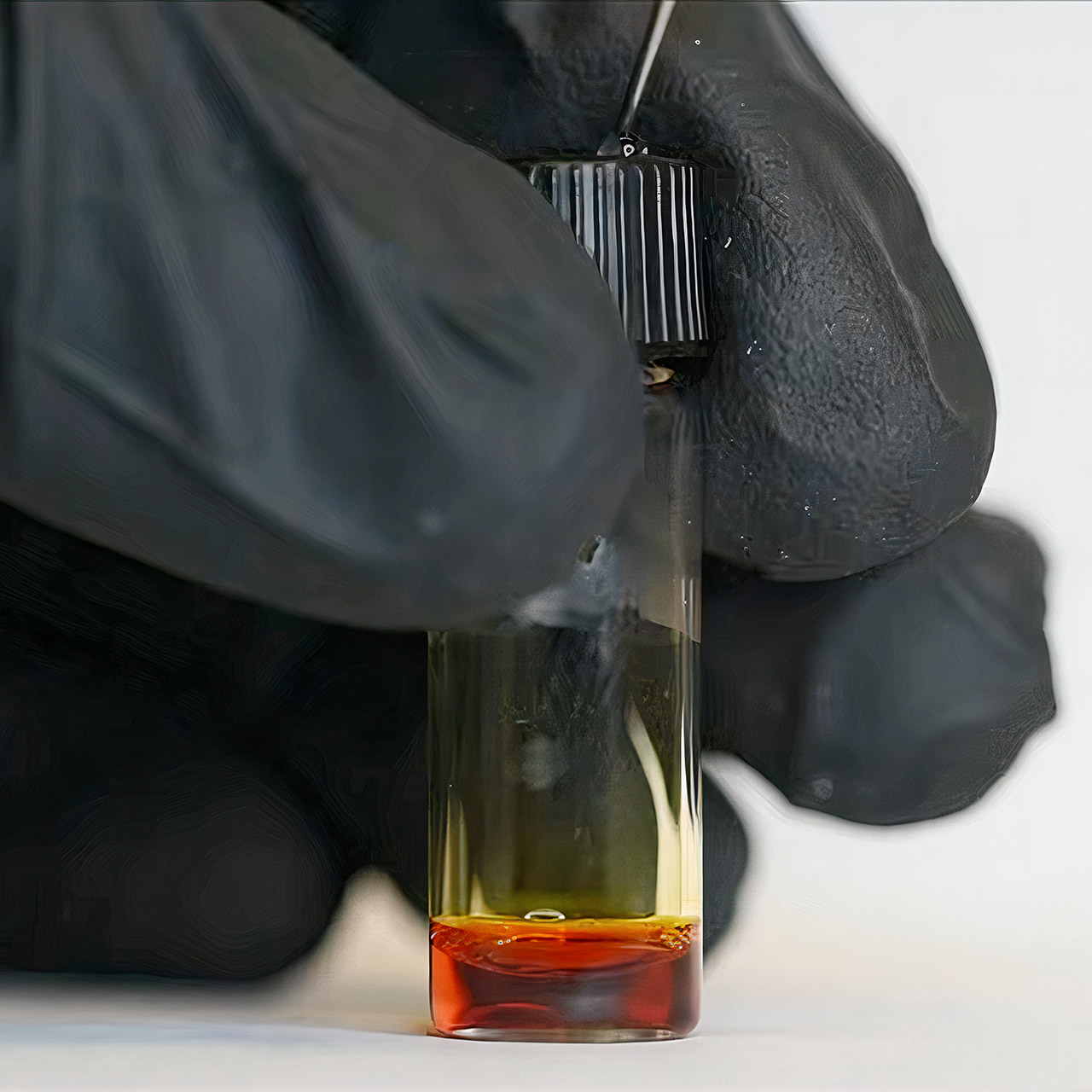
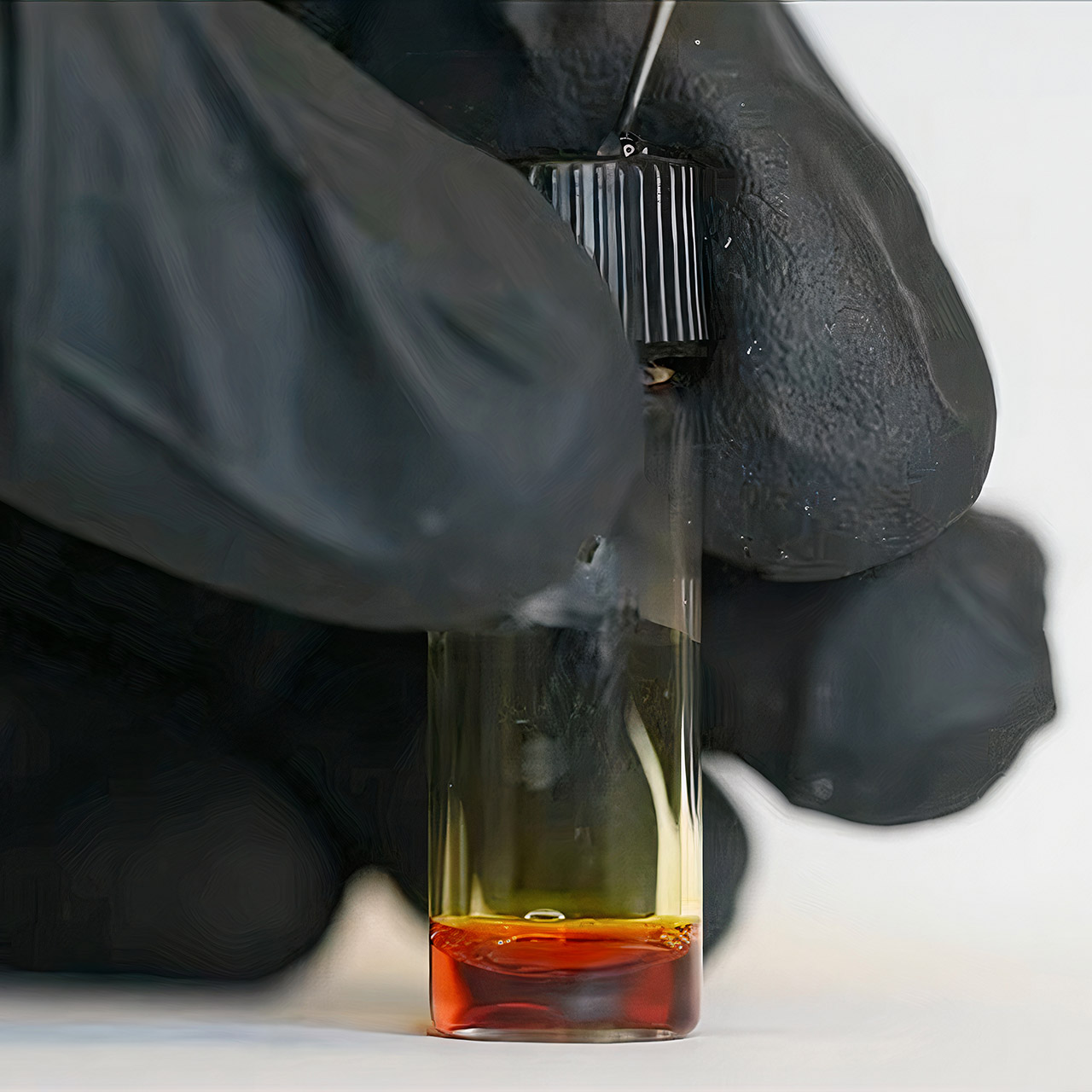
Northwestern University Yellow Shape-Shifting Liquid Black Gel Energy Storage
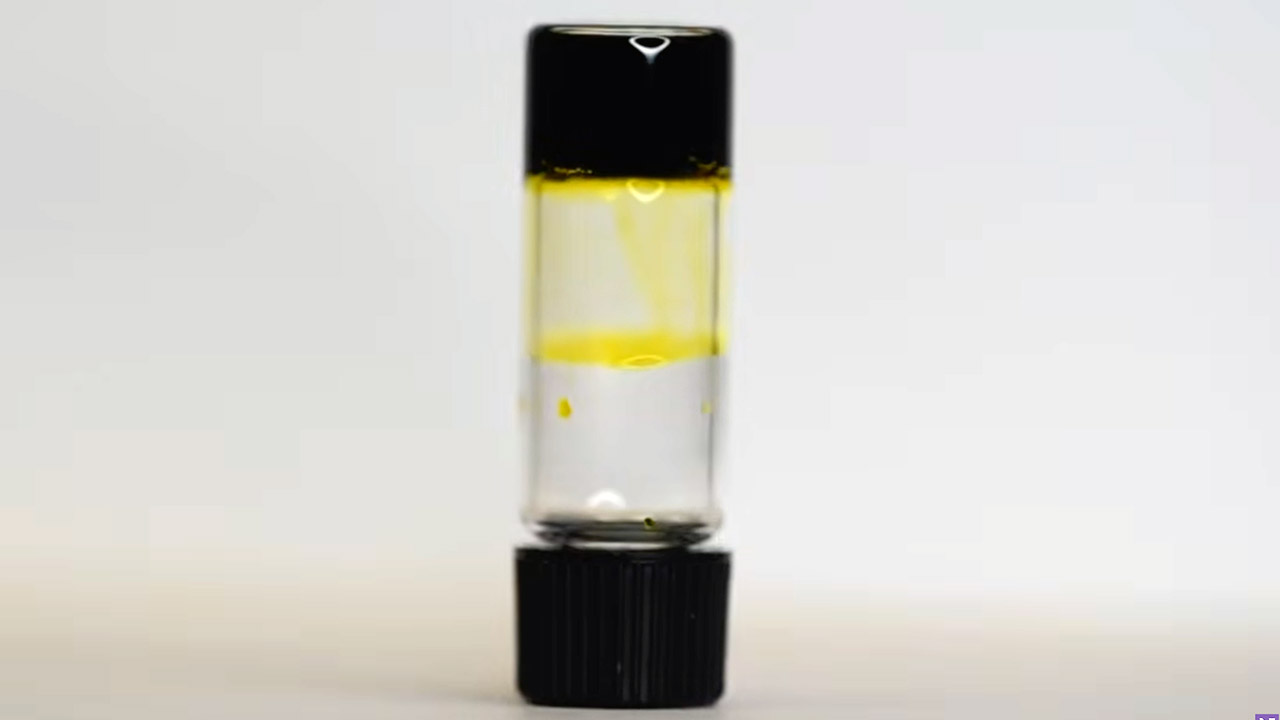
Northwestern University chemists have built a material that begins as an ordinary yellow liquid and rearranges itself into a black gel whenever it absorbs energy. The change locks electrons inside a new structure that can hold them for months when sealed away from air. Open the container later and oxygen triggers the release, powering chemical reactions even in complete darkness.


There’s no need for permanent electrodes or sophisticated battery packs because the material can handle capture, storage, and release on its own simply modifying its structure. Samuel Stupp and his team’s recent research, published in the journal Chem, demonstrates how this works. Tyler Jaynes and Luka Dordevic were the study’s co-first authors, and they carried out some very amazing lab experiments. The design is essentially a duplicate of the cytoskeleton, a dynamic protein network that exists within every cell and is constantly formed and deconstructed to allow the cell to move and expand. All they’ve done is exchange biological fuel for electrons.


National Geographic Amazing Chemistry Set – Chemistry Kit with 100+ Science Experiments Including Crystal…
  • OVER 100 EXCITING EXPERIMENTS – The science experiments in this kit let kids explore the wonders of hands-on science experiments. They’ll make…
  • EVERYTHING KIDS NEED – This kit includes all materials needed to conduct 15 stunning chemistry experiments, including growing a crystal tree, changing…
  • 85 BONUS EXPERIMENTS – Because we know your kids will want to conduct even more science experiments once they get going, we include a bonus experiment…

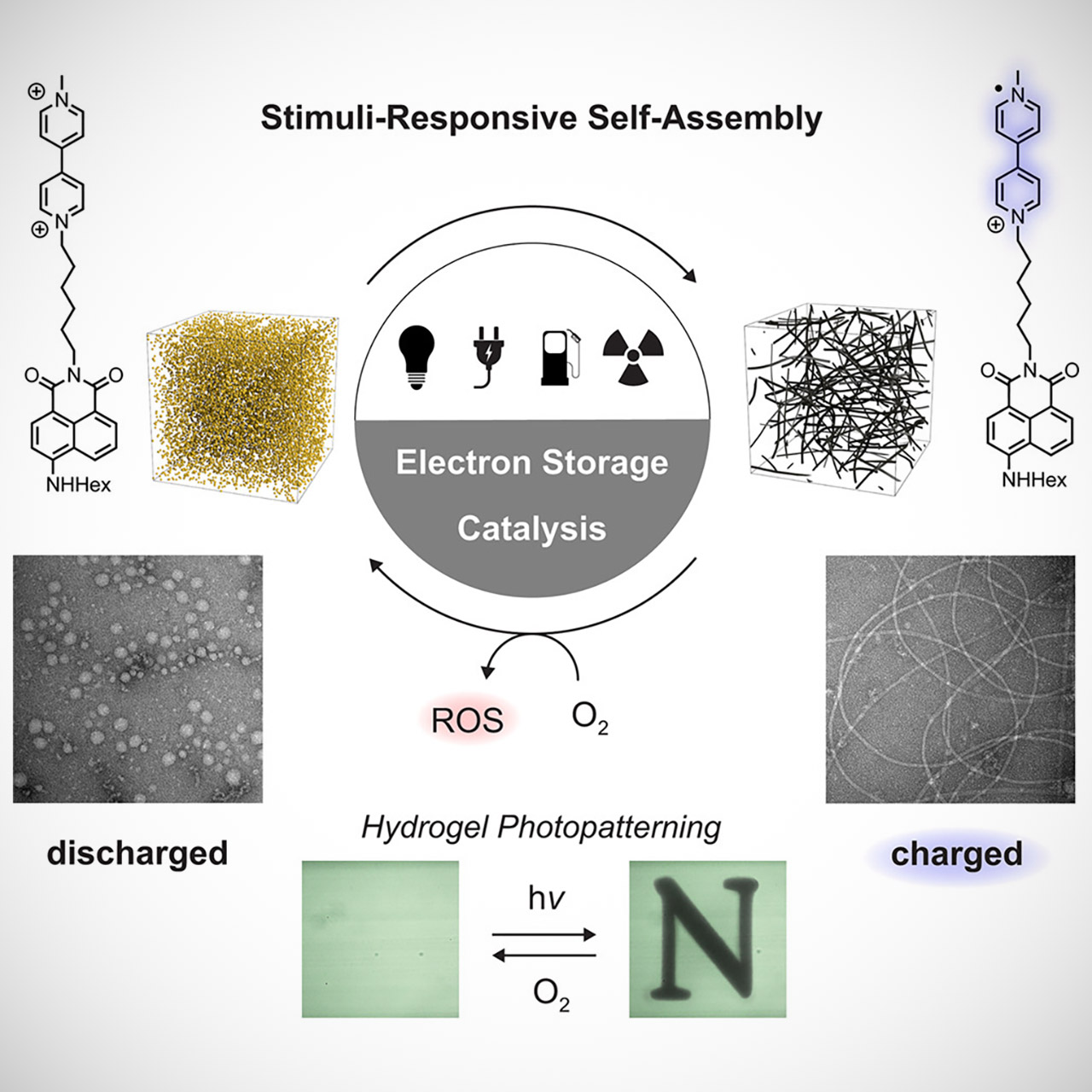
In their resting state, the custom molecules form independent tiny clusters. Now, push one section of each molecule with light, electricity, X-rays, or chemical fuels, and it will transfer electrons to its partner segment. That causes the charged molecules to stack up because they tend to adhere together in neat little rows, and these rows turn into long, ribbon-like strands that begin to tangle and catch some water, transforming the entire thing into a soft, black gel.

Northwestern University Yellow Shape-Shifting Liquid Black Gel Energy Storage
Inside that assembled mess, the electrons are as safe as houses. Northwestern researchers believe that a single gram can store enough electrons to power a smartwatch for several months. To get those electrons out, all you have to do is give the gel some oxygen, which causes the formation of some nasty reactive oxygen species. These reactive compounds can degrade contaminants or initiate other chemical reactions that do not require light to occur. Once the gel has completed its function, it simply begins to degrade and returns to the original yellow liquid from which it originated.

This is a working example of dark photocatalysis, in which energy is stored during the day using sunlight or another input and then used to drive chemical reactions afterward. The substance itself serves as a sort of intermediary, bridging the gap between energy arriving and energy used. The researchers also demonstrated that light can form transitory conductive patterns within the gel, employing masks to ensure that the patterns appear in the first place. These conductive patterns only remain for as long as the gel is created, making them ideal for soft, programmable electronics that appear and disappear as needed.

Advertisement

Northwestern University Yellow Shape-Shifting Liquid Black Gel Energy Storage
Traditional batteries simply keep on trucking, storing ions or electrons in their unchangeable circuitry. Solar panels either convert light immediately or fail to do so at all. This technology, on the other hand, allows the material to alter shape and manage energy over time. Then step back once it’s finished, and everything runs in water, because the only thing required to reset the material is ordinary air. It also avoids the metals and plastics that are so prevalent in modern electronics.

This technique could be used to clean up the environment by on-demand oxidation, or to create sterilization systems that employ chemical energy. It could also be used as a power source for soft robotic components that only require a little amount of juice at times. They’re still in the early stages here, and thus far, researchers have only looked at small lab samples under fairly controlled conditions. They still need to figure out how to scale this up so that it works in the real world, enhance the energy density per gram of material, and then convert all of that stored chemical energy into a direct electrical output rather than releasing it as chemical reactions.
[Source]

Source link

Advertisement
Continue Reading

Tech

Tesla Driver Charged With Manslaughter For Texas Crash That Killed A Woman In Her Home

Published

on

The incident is also being investigated by the National Highway Traffic Safety Administration.

The driver of a Tesla Model 3 that crashed into a Texas home and killed an elderly woman has been charged with manslaughter, according to a criminal complaint filed by the Harris County Sheriff’s Office.

The incident happened last month when Michael Butler, who was driving a Tesla Model 3 using its Full Self-Driving mode, was involved in a high-speed collision in Katy, Texas that ended with the death of Martha Avila, according to the complaint. The sheriff’s office complaint offered more details on the crash, claiming that Butler stepped on the accelerator and overrode his Tesla’s self-driving mode while he was doing DoorDash deliveries. A few days after the incident, Ashok Elluswamy, vice president of AI at Tesla, posted on X that “the driver manually overrode self-driving by pressing the accelerator all the way to 100 percent” and “reached a speed of 73 mph during the crash.”

According to the sheriff’s office, officials on the case got written consent from the the driver to search and seize the involved Tesla and his cellphone. The complaint said that there were multiple Google searches about Full Self-Driving found on Butler’s phone, including “tesla fsd not aggressive enough 2026 model,” “FSD is not aggressive enough for city driving” and “tesla fsd too timid.” 

Advertisement

According to court records, Butler is being held in the Harris County jail with a $150,000 bond. However, Butler isn’t just facing a criminal charge, as the family of Avila recently filed a wrongful death lawsuit accusing Tesla of defective design and the driver of negligence. As for Tesla, it also faces a new special investigation from the National Highway Traffic Safety Administration, which has previously launched probes into the EV maker and its Full Self-Driving technology.

Source link

Advertisement
Continue Reading

Tech

Decades-Old Bash Tricks Expose AI Coding Agents To Supply Chain Attacks

Published

on

Source link

Continue Reading

Tech

AirPods with Cameras won’t be coming any time soon after all

Published

on

A leaker with a fair but short track record, claims that Apple has suspended work on the expected AirPods with cameras.

Back in February 2026, leaker Kosutami claimed that AirPods with cameras were coming, and that they would stay the same price as current models. Now the same leaker is back saying that Apple has suspended the whole idea.

That’s literally all this routinely brief leaker says. Reposting a previous claim about the device from June 2026 that said just “case concluded,” Kosutami has now responded with the single word “Suspended.”

It follows a late June 2026 report from Bloomberg that said the device was in the advanced stages of testing. It was said that Apple might not release AirPods with cameras in 2026, but that they were close.

Advertisement

The idea as first described in 2004 by analyst Ming-Chi Kuo, is that AirPods, or more likely AirPods Pro, would feature miniature cameras in the stems. So when worn in the ear, the camera would face forward.

Then if a user asked Siri for information about something in front of them, the cameras could take a still image, or record video footage. That could then be analyzed by Visual Intelligence.

With no further information at all, there can only be speculation over why Apple would suspend the device. If it has, perhaps it’s a consequence of the global chip shortage and Apple prioritizing other devices.

Or perhaps it’s to do with the still unanswered question over privacy. Apple would be expected to put some kind of indicator light on the AirPods to show that images were being recorded, but there’s no confirmation of that.

Advertisement

Kosutami is better known as a collector of prototype Apple devices, though they have also shared inaccurate leaks about the Apple Watch.

Source link

Advertisement
Continue Reading

Tech

Google ordered to pay Klarna nearly $2bn in abuse-of-power row

Published

on

Judge Linda Kullberg stated that the ruling is ‘without a doubt the largest claim that has been ordered in a Swedish competition case’.

In a legal dispute regarding an abuse of power in the market for comparison shopping services, search-engine giant Google has been ordered by a Swedish court to pay almost $2bn in damages to PriceRunner, the price comparison business owned by payment platform Klarna.

On Wednesday (1 July), the Patent and Market Court in Stockholm, through judge Linda Kullberg, awarded compensation for lost revenue caused by Google’s perceived preferential treatment of its own comparison shopping service over competing services. 

Kullberg did, however, dismiss further claims wherein PriceRunner asked for an additional $8.2bn. Despite this, Kullberg said the decision still represents “without a doubt the largest claim that has been ordered in a Swedish competition case”. 

Advertisement

Google is in a position to appeal the ruling and stated that it is not in agreement with the court’s findings. 

A spokesperson for the organisation said, “We are reviewing and will consider our legal options. The changes we made to shopping ads back in 2017 are working successfully, generating growth and jobs for hundreds of comparison shopping services who operate more than 1,500 websites across Europe.” 

This is in reference to a decision that was reached in 2017 by the European Commission, in which Google was ordered to pay a €2.4bn penalty for abusing its dominance online as a means of giving its own service an advantage, a result which at the time Google also expressed dismay at and appealed. 

Commenting on the outcome of the latest case, Dan Greaves, Klarna’s head of communications and policy, said, “When markets work well, everyone benefits. Consumers get higher quality at lower cost, companies stay focused on serving customers rather than defending position, and society is better off for it.”

Advertisement

Separately, Google has also lost a long-running dispute over a €4.1bn anti-trust fine imposed by the European Union for a case in which it was determined that Google unfairly leveraged a dominant position in the context of its Android operating system. The decision is legally binding and is a major win for the Brussels-based regulator, as the argument has been in full flow since the case was first ruled upon in 2018. 

Don’t miss out on the knowledge you need to succeed. Sign up for the Daily Brief, Silicon Republic’s digest of need-to-know sci-tech news.

Source link

Advertisement
Continue Reading

Tech

Yesterday’s Technology, Re-engineered Today | Hackaday

Published

on

Watching [sprite_tm]’s build of a handheld 486-based gaming computer, we got to thinking about retro computers and the eternal questions of how much of the computer needs to be actually “old” for it it be retro. Where is the soul of a retro computer? The CPU? The old yellowing plastic case? Maybe it depends on what you’re trying to get out of the hobby.

There is of course a spectrum of people playing around with old computers. For some people, let’s call them “vintage computer enthusiasts”, half of the fun is in keeping the actual old hardware running. This group tends to know what teletype lubricant smells like, and how to tell which capacitors need replacing.

For others, “team retro”, the joy is in using the machine itself, whether that be teaching the old dogs new tricks, or simply loading up nostalgic video games. Team retro is more content with emulations or emulations that are wrapped up neatly in hardware workalikes. They know which registers need POKEing, and whether or not Commander Keen is running at the right framerate.

I think [sprite_tm]’s project falls in with yet another camp, the retro-reengineers. Here, the idea is to step through the engineering lessons of the past by re-designing something from a bygone era. So when [sprite_tm] went with a period 486 CPU backed up by a modern FPGA, perhaps ironically borrowing code from the modern MiSTer project, it makes sense for his goals. Retro-reengineers know the bus architecture and the memory timings, and they are reinventing the wheel as a learning experience. Or in the case of [Voja Antonic]’s imaginary four-bit machine, it’s a teaching experience.

Advertisement

How you work often reflects what you’d like to get out of the project, and at Hackaday, of course, we love all of the above! We’ve identified at least three broad schools of fooling around with old computers. Are we missing any?

Source link

Advertisement
Continue Reading

Tech

US Life Expectancy On Track To Reach Record High

Published

on

The US age-adjusted death rate fell to a record low in 2025, likely pushing life expectancy to a record high as overdose deaths declined and mortality improved across all age groups. CNN reports: There were about 689 deaths for every 100,000 people in the US in 2025, according to a new report from the US Centers for Disease Control and Prevention — the lowest rate recorded in more than a century of tracking. The age-adjusted rate has fallen 22% since 2021, landing about 4% lower than it was just before the pandemic in 2019. […] The top causes of death in the US in 2025 followed longstanding patterns: Heart disease led with nearly 695,000 deaths, followed by cancer with nearly 623,000 deaths.

Unintentional injuries, which includes drug overdoses, were the third leading cause of death. Overdose deaths are still high — about 70,000 people died from an overdose in 2025, preliminary CDC data shows — but experts say that sharp declines probably played a large role in bringing the age-adjusted death rate down in the US.

Source link

Continue Reading

Tech

Security Roundup: Apple’s Hide My Email Service Fails to Hide Your Email

Published

on

A politician on the European Parliament’s PEGA Committee—created to investigate spyware abuses, including of the notorious Pegasus malware—was targeted with Pegasus himself, according to new research findings released this week. Meanwhile, top Google security staff warned this week that the pro-competition rule proposals in the EU could make Google Search and Android systems vulnerable to hacking and other abuse.

A WIRED investigation revealed this week that Meta contractors posed as kids and teens to see how chatbots like Gemini and ChatGPT responded to prompts about high-risk subjects, including suicide, sex and drugs.

And a researcher realized that he could use Anthropic’s Claude Opus 4.7 to break into the website of Front Gate and issue tickets to almost any United States music festival, including Lollapalooza and Bonnaroo.

But wait, there’s more! Each week, we round up the security and privacy news we didn’t cover in depth ourselves. Click the headlines to read the full stories. And stay safe out there.

Advertisement

Back in 2021, Apple launched its Hide My Email tool, which as the name suggests, allows people to sign-up for online services using an email address that isn’t linked directly to them. The privacy feature generates “unique, random email addresses” that will forward incoming messages to a user’s personal email address—reducing the amount of information you need to hand over to companies.

Reporting from 404 Media this week revealed that a vulnerability in the system has made it possible, for at least a year, for people’s real email addresses to be uncovered when they are using Apple’s privacy service. “Apple Hide My Email is leaking email addresses that are supposed to be hidden,” security researcher Tyler Murphy, who discovered the flaw in June 2025, told the publication. “In our limited tests with volunteers, 100% of Hide My Email addresses were exploitable,” he said.

The exact details of the vulnerability and how it works have not been revealed as the problem hasn’t been fixed. In tests conducted by 404 Media and Murphy, it was possible for a newly created Hide My Email address, which uses the @icloud.com domain, to be linked back to the real email address of its creator. Murphy said he originally reported the problem to Apple last summer and was told it had been “addressed” by March this year. However, when the researcher continued testing the issue, it remained exploitable, with Apple telling Murphy a couple of months ago that it was still investigating the issue. Apple did not respond to requests for comment from the publication.

A nineteen-year-old has been arrested and extradited to the United States to face charges over their alleged involvement in the notorious Scattered Spider hacking group, the Department of Justice (DoJ) announced this week. Peter Stokes, an Estonian-US dual citizen, was arrested in Finland in April and has been charged with computer intrusion, conspiracy and fraud, linked to the criminal gang.

Advertisement

It is alleged that Stokes, along with other members of the loose hacking collective, hacked into an unnamed “luxury jewelry retailer” and demanded a $8 million cryptocurrency ransom in May 2025. The company did not pay but still spent $2 million on the incident, according to a DoJ press release. In recent years, the Scattered Spider group, which is largely believed to be composed of young, English-speaking teenagers, has caused havoc around the world by hacking into and disrupting dozens of businesses. The arrest of Stokes follows two British Scattered Spider members, Thalha Jubair and Owen Flowers, recently pleading guilty to hacking Transport for London in 2024 and causing millions in damages.

Following a move by encrypted messaging app Signal last year, WhatsApp has announced it will soon roll out usernames to billions of people. The option means it is possible for people to connect and message each other without having to share phone numbers, increasing privacy protections. However, officials in India, one of WhatsApp’s biggest markets, who have previously tried to unfurl encryption protections on the Meta-owned app, have opposed the introduction of usernames. A letter from the Indian government, seen by Reuters, asked WhatsApp to pause the rollout of usernames in the country. The letter claimed the move could increase fraud and cybercrime, citing concerns around allowing online anonymity. The letter was followed by separate messages to Signal and Telegram about their use of usernames.

Thousands of automatic license plate reader cameras, known as ALPRs, have appeared across the United States over the last few years. The cameras, which can be deployed by cops, cities, and businesses, photograph passing cars and record details about their movements. As well as license plate numbers, the systems can log the time and location of the photos, make and model of a vehicle, as well as bumper stickers. Billions of images and details of car movements have been captured in vast ALPR databases.

However, an increasing body of evidence shows that when the camera systems make mistakes, innocent people can be detained by law enforcement officials and accused of crimes. A review of court records and media reports, which are likely the tip of the iceberg, by the nonprofit the Institute for Justice this week found at least 24 cases of misidentification over the last eight years. These reportedly include a couple with a baby in their car being detained at gunpoint; a camera misreading an “O” as a “0”, leading to grandparents being detained; and someone being pulled over after their license plate was not removed from a wanted list. The findings add to a growing list of errors from the AI-enabled cameras.

Advertisement

Source link

Continue Reading

Tech

A New Twist On The To Do List

Published

on

Humans are odd creatures, and no two are exactly alike, which is likely why so many different methods exist for tracking the progress of tasks that must be accomplished. [Simone Giertz] has graced us with her own spin on task tracking that adds an element of chance.

[Giertz] tells us that she started with written lists that she tackled in dice-determined order to keep her from overthinking or cherry-picking tasks. While this worked fine, she longed for a more elegant solution. Approaching the UI first, unlike any Open Source project ever, she determined that a marker that could randomly point to a task on a vertical list would be most pleasant.

The bulk of the project was evaluating different mechanisms to make the marker pick tasks at random while not selecting a task that had already been completed. A set of magnetic toggles that could repel the marker proved ineffective, but a simpler solution involving moving the completed tasks past a divider won the day. The finished product has a satisfying selection mechanism that makes interacting with the chore chart a joy, which probably helps make it more likely things get done.

Advertisement

We’ve seen many productivity hacks over the years, including Arya’s Hacking the Self, this rotary time tracker, or this e-ink macropad.

Advertisement

Source link

Continue Reading

Trending

Copyright © 2025