


In 2022, a father and son in Florida received notifications from their Ring doorbell camera: Someone was at their door. The pair quickly jumped into action, scouring their apartment complex for a would-be intruder. The scene they happened upon was a woman checking her phone in her car. They fired seven shots at her as she drove away.
Tech
Nintendo 64 Now Runs Windows CE, Here’s How It Happened

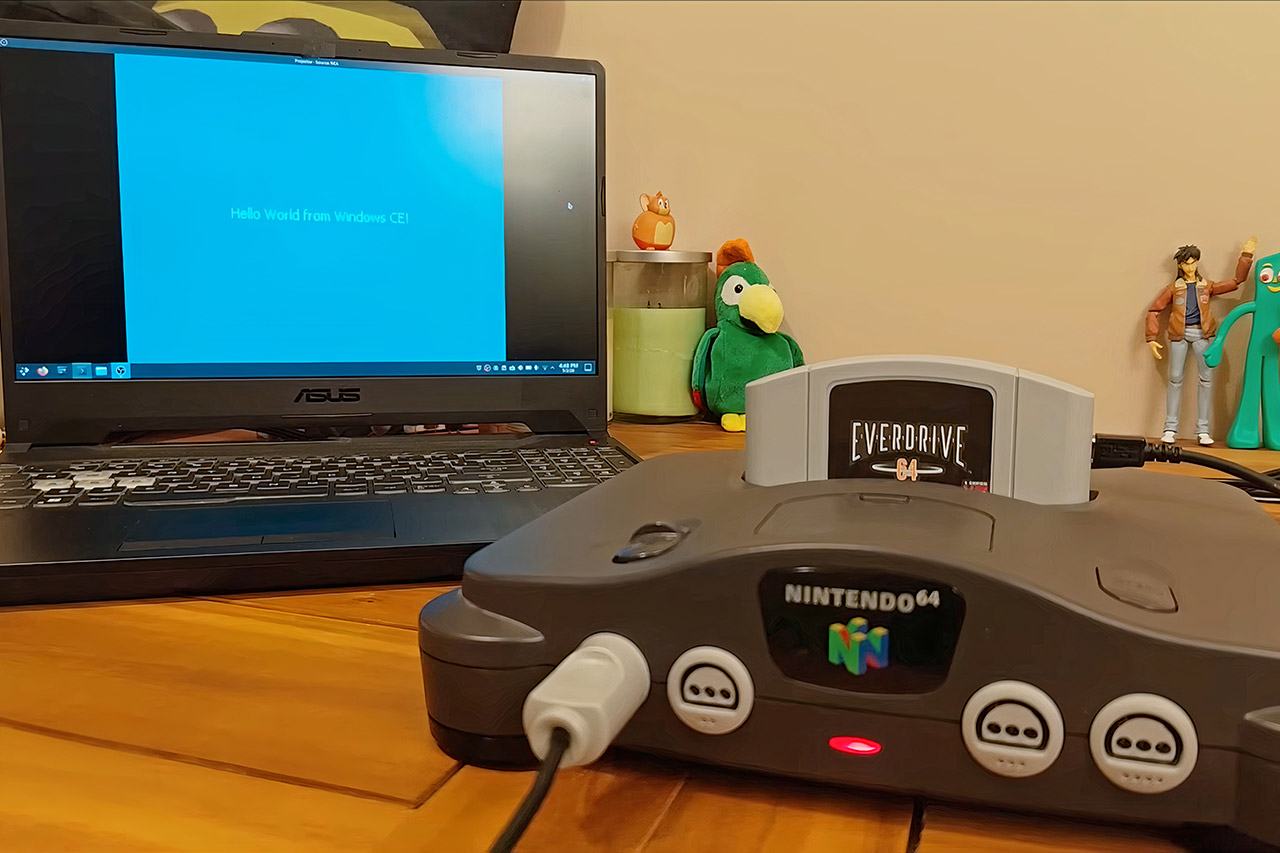
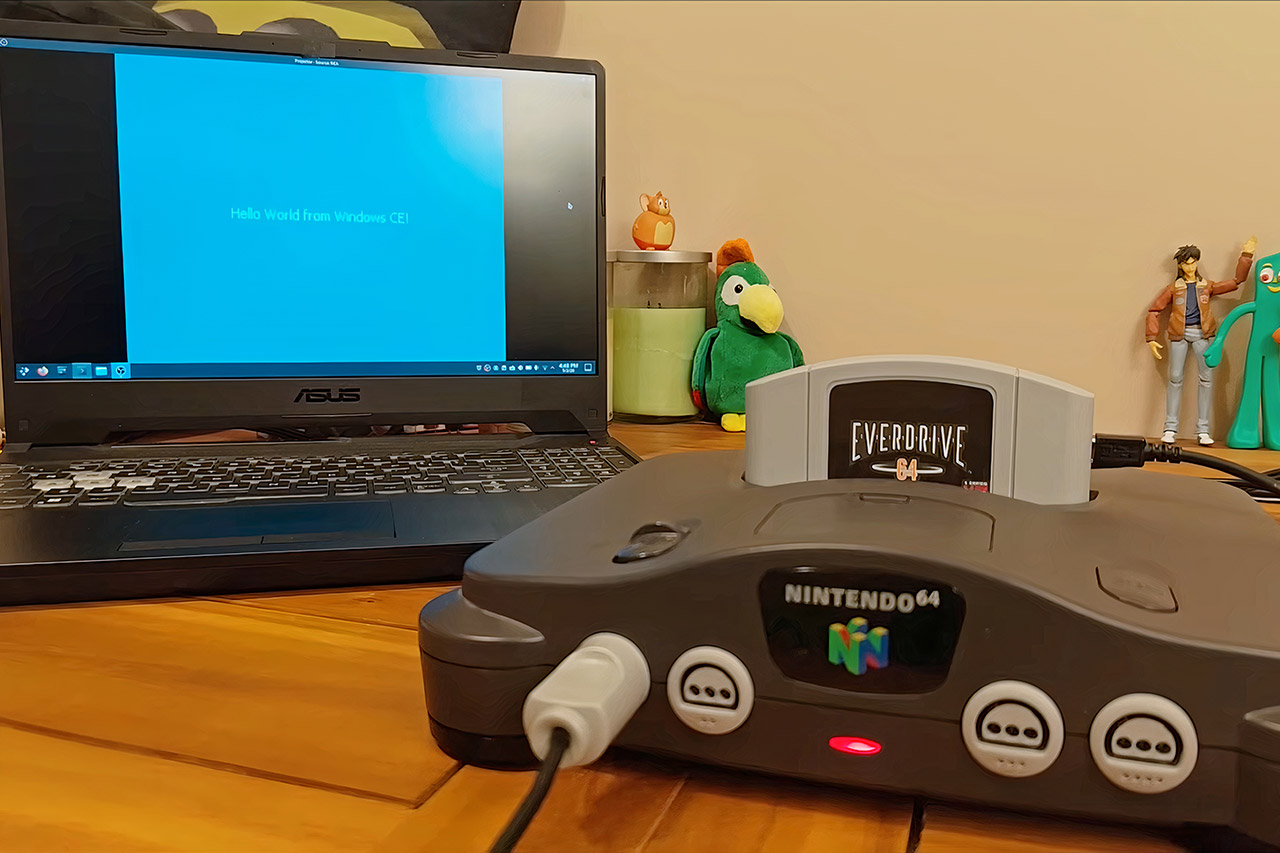
Developer Throaty Mumbo spent months chasing an idea that started as a simple observation about shared hardware. An old IBM Workpad Z50 laptop relies on a MIPS processor much like the one inside every Nintendo 64. The laptop already ran Windows CE without trouble, so Mumbo wondered what would happen if the same operating system landed on the game console instead. The answer turned out far more complete than anyone expected.
Windows CE version 2.11 made its way onto the Nintendo 64 after a lot of meticulous tinkering, with no shortcuts taken. Mumbo spent a long time designing a board support package to meet the console’s specific requirements, including the MIPS R4300 CPU, memory layout, and visual interface. He began by using Microsoft’s official Platform Builder tools from the late 1990s, which they had at the time, before adding his own custom code to work around the console’s various oddities. No changes were made to the core Windows kernel. Everything else, including display output, controller input, sound playback, and file access, had to be handled by completely new drivers designed from the ground up.

The key to making it all work is an EverDrive 64 X7 cartridge. This device loads an approximately 3.5MB ROM file called N64CE.Z64, which contains the entire operating system. When you start the console, a little bootloader runs and transfers control to the Windows kernel. The familiar desktop appears in a few of seconds. You receive the full package, including a taskbar, start menu, and recycle bin. The controller functions like a mouse, with the A button clicking the left mouse button and the B button clicking the right one. With the standard Nintendo 64 mouse, your pointer moves along fairly smoothly.
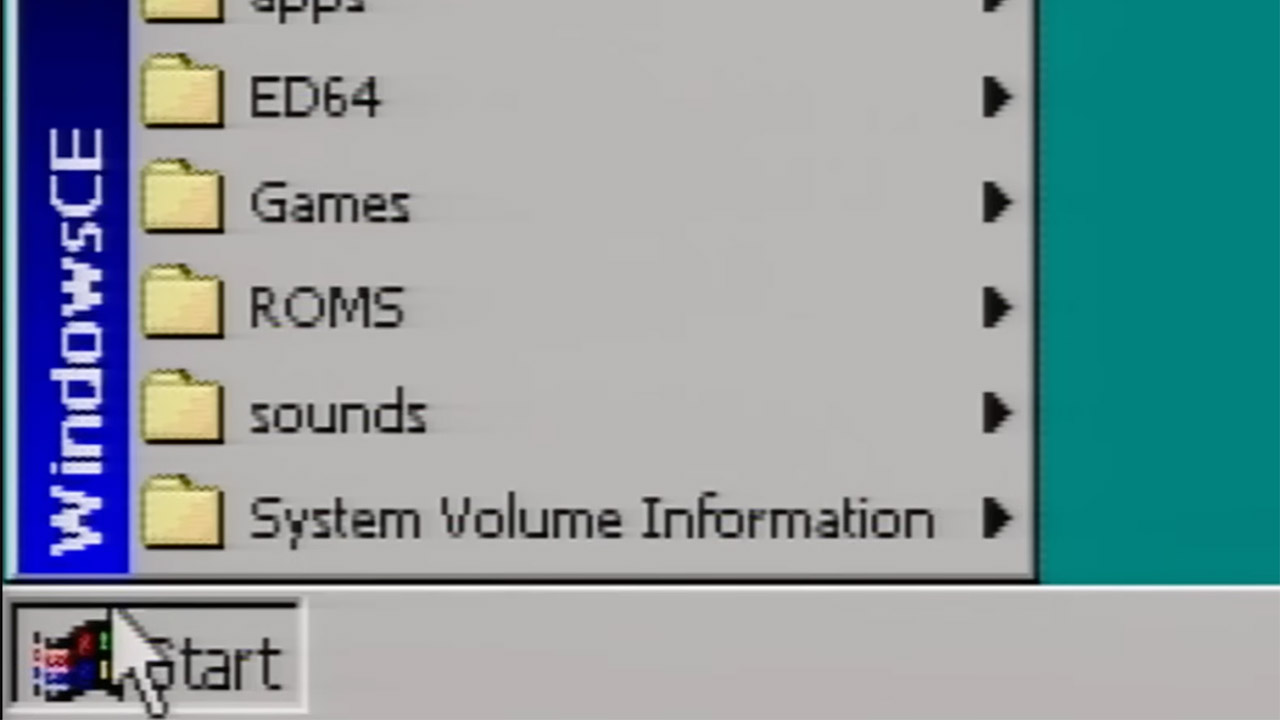
You can simply insert an SD card into the cartridge and it will boot up real programs. Notepad opens and accepts entered text, whereas Paint provides some basic drawing tools. There’s also a vector graphics tool called Béziers that functions exactly like it did on the original Workpad laptop, using the same executable file with no alterations. Cube3d.exe is a 3D demo that spins a cube and even makes use of the console’s graphics capability to speed things up. Meanwhile, a 97 port of Tetris boots up with minimal fuss. The audio works great on the console’s built-in sound system, and the clock is accurate because the cartridge features a battery-backed timer.
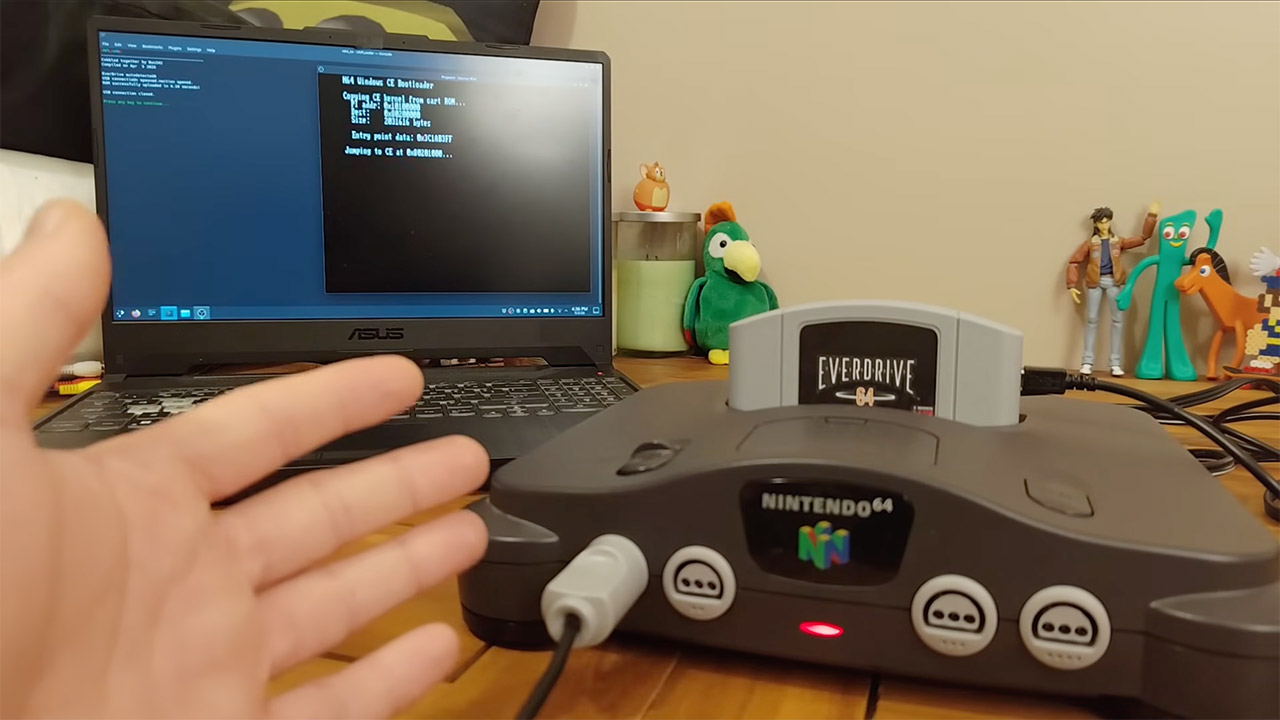
Mumbo spent a long time making this happen, and it was a true voyage of trial and error. Initially, he used emulators to test his basic boot procedures. Once he was on real hardware, he experienced numerous crashes, prompting him to create an automated reset system using a Teensy microcontroller so he could quickly upload new versions. The initial flash cartridge he used had closed source firmware, which made debugging a nightmare, but it all worked out when he switched to the open-source X7 model. Each small breakthrough revealed the next challenge, such as memory management, interrupt handling, and even the graphical windowing system, which draws all of the dialog boxes and overlapping windows.
[Source]
Continue Reading


There’s an important distinction between AI that just works today, and AI that lasts at scale. Many companies optimize hard for the first one without ever asking whether they’re building the second.
Velocity without discipline and strategic direction is a liability, not an asset. The hardest part of building AI at scale isn’t getting a model to work once. It’s building systems that continue to work, scale beyond individual teams and use cases, and improve consistently over time.
Today’s AI systems do more than just predict and optimize. They converse, reason, and increasingly take action. An autonomous system making decisions on a traveler’s behalf creates a very different set of expectations around reliability, governance, and accountability. As AI takes on more of those roles, the principles behind how these systems operate matter more than ever.
We have spent years applying AI and machine learning (ML) across the traveler journey — from personalization, ranking, and recommendations, to fraud prevention, customer support, and, more recently, generative and agentic AI experiences. That depth of experience is what led us to develop a set of ML and AI principles to guide how we build, deploy, and evolve AI systems across our company.
The goal is simple: Make sure the systems we build create real business value, scale, and operate safely. These principles define how we measure, design, govern, and operate our systems.
From principles to practice
Publishing principles is the easy part. The harder and more important work is turning them into operating mechanisms: Recommendations, requirements, tooling, and release processes that teams actually use.
We have begun using ‘Agentic Release’ tollgates: A set of recommended and, in some cases, required checks before launching agentic AI features. These tollgates translate principles like clear ownership, risk-based governance, evaluation, safe rollout, and monitoring into concrete expectations for teams.
Some of these recommendations and requirements are already being automated and integrated into the software development lifecycle (SDLC). Over time, the goal is for these expectations to become embedded in how we design, evaluate, approve, launch, and monitor AI systems from the start.
Outcomes: Measuring what actually matters
The first test for any model is whether it improves a business outcome and, ultimately, the traveler experience — not whether it just improves a technical metric.
-
Align models to metrics with business impact: Every ML effort must tie directly to a key business outcome or traveler experience metric. Technical optimizations are useful midpoints, not end goals.
-
Optimize for return on cost: The value a model creates has to justify what it costs to develop, train, and monitor, plus the operational complexity it adds. Favor solutions that deliver lasting impact relative to what they cost to run.
-
Justify complexity against strong baselines: Complexity should be earned, not assumed. Start with a strong baseline: An existing general model, a simple heuristic, an off-the-shelf solution. Reach for specialized models or more complex architectures only when simpler options genuinely can’t meet the bar.
-
Require both offline and online evaluation: No model goes to broad deployment on offline validation alone or jumps straight to A/B testing. Every model must perform in both offline and online evaluations. Over time, our offline evaluations should reliably predict what we see online.
Design: building systems that scale beyond the teams that build them
Getting a model to work is one challenge. Making its value extend beyond a single team or use case is the harder one.
-
Build on shared foundations; specialize only when justified: Favor shared, platform-wide foundations for core capabilities, data representations, and model building blocks. Specialization should build on those foundations, not spin up isolated stacks, so when the foundation improves, the gains flow across the organization.
-
Treat data as a first-class product: A model’s quality is bounded by the quality of its data. We need to maintain robust pipelines, clear lineage, reproducibility, and reusable features built with documented ownership, clear schemas, and SLAs that other teams can rely on.
-
Prioritize generality over local optimization: When two approaches perform similarly, favor the one whose learnings, assets, and operating patterns can be reused across teams, brands, and use cases. We should optimize not just for local performance, but for how quickly improvements can diffuse across the company and compound over time.
-
Minimize and sunset manual business rules: Manual rules are sometimes necessary for policy, safety, or compliance, but they should be explicit and reviewed regularly, never silent patches for weak models or a source of permanent maintenance debt.
-
Reproducibility and traceability by default: Training data, features, configurations, evaluation results, deployment versions, and key decisions should all be documented and recoverable. That’s what lets you debug a production issue months later and hand off ownership without losing institutional knowledge.
Trust: ownership, governance, and operating responsibly at scale
The bar for deploying AI isn’t just “does it work?” It’s “can we stand behind it?” Trust isn’t something you add at the end; it’s earned over time and maintained across the full lifecycle of every model we ship.
-
Assign clear ownership and accountability: Every model needs defined ownership across its lifecycle — a business owner, a product owner, an AI owner, and an operational owner. These don’t need to be four people, but the responsibilities must be explicit. Who’s accountable for outcomes? Who responds if the model drifts? Who answers the incident at 2 a.m.? Without this in place, models become orphaned and problems surface with no one to own them.
-
Adhere to standards and governance: AI and ML models must use approved platforms and comply with established company standards, release gates, and governance processes. Operating outside these guardrails requires a clear, defined path to remediation or deprecation, rather than an open-ended exception.
-
Govern proportionally to risk: The level of review, evaluation rigor, and human oversight should scale with a model’s impact. A customer-facing model that affects pricing or availability for millions of travelers demands a far higher bar than an internal tool used by a small team. For high-impact, safety-sensitive, or highly autonomous systems, human-in-the-loop checkpoints are built in from the start.
-
Design for fairness, privacy, and transparency: We actively test for unintended bias, have strong data guardrails, and favor explainability when decisions meaningfully affect users. These are incorporated from the start, not added on.
-
Design for safe rollout, rollback, and control: Deployments are progressive, with rollback paths, fallback mechanisms, and circuit breakers ready before launch. The ability to safely undo a deployment matters as much as the ability to ship it.
-
Monitor continuously and adapt: Once live, teams must actively monitor quality, drift, latency, cost, and business performance and retrain or recalibrate when the data shifts. A team should always be able to explain how its model is performing now, not just how it performed when it launched.
These principles do more than define how we build. They define what we’re willing to ship and how we stand behind it. In a world where AI systems are increasingly consequential and make real decisions for real travelers and partners, these standards matter. Applied consistently, they build responsible AI that lasts.
Xavi Amatriain is Chief AI and Data Officer at Expedia Group
Xavier will share more details about Expedia’s architecture during his session at VB Transform on July 14 at 11:10 am PT. He will discuss: “Expedia’s blueprint for building autonomous agents for high-stakes transactional systems.”
Interested in attending VB Transform 2026? Register here. A select number of complimentary passes are also available to senior technology leaders. Contact us to get yours.
Welcome to the VentureBeat community!
Our guest posting program is where technical experts share insights and provide neutral, non-vested deep dives on AI, data infrastructure, cybersecurity and other cutting-edge technologies shaping the future of enterprise.
Read more from our guest post program — and check out our guidelines if you’re interested in contributing an article of your own!

A year ago the Ryzen AI Halo, AMD’s tiny new AI workstation, would have offered devs and machine learning enthusiasts an Nvidia DGX Spark-like experience at a fraction of the cost.
Unfortunately for AMD, time and the ongoing memory shortage, which both AMD itself and Nvidia are partially responsible for, hasn’t been kind to the consumer electronics industry.
Launching at a hair under $4,000, the AI Halo is still cheaper than the Spark at its new MSRP of $4,699, but is now a much tougher sell than when you could get the same hardware for as little as $2,000.
That’s right. The 128 GB AI Halo is based on year-old technology. Its main selling point, and what AMD has spent the past several months getting right, is the packaging. Much like with the Spark, you’re not just buying the machine but all the software and documentation you need to run and fine-tune enterprise-grade models and AI agents like OpenClaw and Cline, locally.
Many will, understandably, balk at the price — $4,000 is a down payment on a car — the system is still one of the most affordable options for those who need more than the 32 GB that the highest-end graphics card can provide.
Not long ago, building a workstation with 128 GB of video memory would have set you back at least $20,000, and that was before the RAMpocalypse. This puts systems like DGX Spark and AI Halo in a rather unique position.
The Hardware

The Ryzen AI Halo was clearly inspired by the DGX Spark. Measuring in at 5.9 x 5.9 x 1.79 inches, the black and silver system shares a nearly identical form factor to its competitor.
Rather than gold aluminum siding, AMD has opted for a more subdued look with a textured top cover adorned by its logo and an LED light bar that wraps around its perimeter. The chassis itself is well ventilated with intake located along the front of the system sides and heat exhausting out the back.

The back of the system is adorned with four USB-C ports, one of which is dedicated to power, while the remaining three offer connectivity (1x USB 3.2, 2x USB 4.0) for storage and peripherals. The AI Halo supports display out on all three of those ports as well as via HDMI 2.1b . A single RJ45 network port provides 10 Gbps of connectivity for those who prefer wired connectivity over the onboard WiFi 7 radio.
One thing you won’t find on the back of the AI Halo are QSFP ports for high-speed networking. The DGX Spark features a 200 Gbps ConnectX-7 SmartNIC for clustering multiple devices together. The AI Halo does still support clustering if you happen to pick up multiple systems, but with only one such system on hand, we can’t say how big a difference the slower networking actually makes.
AMD’s Ryzen AI 395+, which you may recognize from its codename Strix Halo, sits at the heart of the system. This SoC isn’t new, having been on the market for more than a year now. In fact, we pitted the Pro variant of the chip running in HP’s Z2 Mini against the DGX Spark’s GB10 SoC back in December 2025.

The chip is equipped with 16 Zen 5 cores clocking up to 5.2 GHz along with an RDNA 3.5 GPU with 40 compute units putting out around 56 teraflops of dense FP16 performance under ideal conditions.
While Strix Halo can be obtained with as little as 32 GB of LPDDR5X memory, the AI Halo is packing 128 GB as standard. That’s enough to run models of up to 200 billion parameters in size, at 4-bit precision that is. Out of the box, our system was configured to share up to 75 percent, or about 96 GB, of that with GPU. However, at least on Linux, you can extend this to nearly the system’s full capacity.
That memory is connected to the SoC by a 256-bit bus good for about 256 GB/s of bandwidth — more than you’d get on a (non-Pro) Threadripper system.
Bandwidth is a major bottleneck for LLM inference, with token generation directly proportional to how fast the memory actually is, and because the AI Halo’s memory hangs off the GPU, it can take full advantage of it.
While 256 GB/s is a lot for DDR5, it is dwarfed when you compare to the GDDR or HBM found in consumer and datacenter GPUs. The RTX 5090 delivers 1.7 TB/s of bandwidth, making it admittedly high — for models small enough to fit in that card’s 32 GB of VRAM.
We’ll talk about performance in a bit, but this really gets to the hardware’s core value proposition. For most local AI enthusiasts and devs, memory capacity is the biggest bottleneck.
It doesn’t matter how many teraflops your GPU can push or how fast your memory is, if you don’t have enough of it in the first place. At 16-bit precision you need about 2 GB of memory for every billion model parameters. At 8-bits, it’s a 1:1 ratio and, at 4-bits, you need just 512 MB for every billion parameters.
If you’ve toyed around with local LLMs in Ollama or LM Studio before you’re almost certainly running 4-bit weights, which is why you can cram a 20 billion parameter model onto a consumer graphics card with as little as 16 GB of VRAM.
Unfortunately, there are a lot of AI workloads that aren’t easily quantized or require substantial quantities of memory in addition to what’s used to hold the model weights. But once you venture beyond low precision inference, memory quickly becomes a major constraint. For example, a full fine tune of a modest 7B parameter can easily consume upwards of 100 GB of memory.
This is where systems like the AI Halo or DGX Spark really shine. They may not be the most powerful or the fastest systems, but there’s not much that you’d want to do that you couldn’t thanks to their ample memory capacity.
As we’ve shown in the past, Strix Halo is more than capable of running larger more capable models exceeding 100 billion parameters or fine-tuning models up to 70 billion parameters, something that’s well beyond the means of consumer graphics cards.
What the AI Halo actually buys you
If the chip isn’t new, you might be wondering what exactly the Ryzen AI Halo buys you over another Strix box, like HP’s Z2 Mini G1a we reviewed back in December. Back then, that system retailed for around $3,000. Its price has since surged to nearly $4,900.
If you’re already familiar with AMD’s HIP and ROCm stacks and reasonably comfortable with Linux, the answer is not a lot. AMD even has playbooks specifically for early adopters of its Ryzen AI products. So, if you jumped on a Strix Halo system before DRAM prices hockey sticked, you’re really only missing out on the conveniences that the preinstalled software brings.
With that said, we’re willing to bet most folks considering AI Halo are probably dipping their toes into ML and AMD’s software ecosystem for the first time.
ROCm is a heck of a lot easier to get running on Ryzen APUs and Radeon graphics than it used to be, but we’d be lying if we said that it’s always easy. The same is true of Nvidia and CUDA to a lesser extent. Some steps are easier, while others like GPU passthrough for containers require jumping through additional hoops.
That’s not even to mention PyTorch compatibility, which can vary from app to app. Regardless of which platform you buy into, wrangling dependencies is still a mess.
Both the AI Halo and DGX Spark’s core value prop is helping customers avoid as many of these headaches as possible by combining validated hardware with pre-installed dependencies and well documented playbooks that walk you through common use cases.
In other words, it’s an AI lab in a box.
What’s it like using the AI Halo
The AI Halo ships with your choice of Linux or Windows 11. The review unit AMD provided us with, came equipped with a lightly-modified version of Debian with the 6.18 Linux Kernel, Gnome desktop environment, ROCm 7.13 preinstalled, and a slew of preinstalled AI apps and frameworks, like ComfyUI and vLLM.
For anyone who’s used Linux before, the experience should be quite intuitive. Upon first boot, a startup wizard will guide you through the process of creating your user profile, connecting to the network, and updating the device.

Once you are logged in, AMD’s Ryzen AI Developer Center launches automatically and provides quick access to resources and system settings.

As of this writing, AMD’s developer docs include 19 playbooks covering everything from the basics of running LLMs and image models on the device to building full blown agents with OpenClaw.
We walked through most of these as part of our review process and with a few exceptions we were able to run them with minimal troubleshooting. We did have to ask an LLM for help debugging AMD’s PyTorch fine-tuning scripts. Thankfully, the selection of pre-downloaded models were capable enough to identify the single line fix required to get them running again.
While most of AMD’s playbooks were more than adequate, we found its vLLM getting started guide a little lacking. It was easy enough to get it running —AMD has written a wrapper that abstracts the creation and deployment of the inference server in a Docker container — but the guide doesn’t discuss how to select a model, much less configure it.
vLLM is an incredibly popular inference server broadly deployed in production. This makes it all the more disappointing that AMD’s documentation isn’t more comprehensive.

One bright spot we’d like to highlight is Lemonade Server. The app comes preinstalled and provides an LM Studio or Ollama-like experience tuned specifically for AMD hardware. It’s built atop a number of different model runners including vLLM, Llama.cpp, Whisper.cpp, Stable Diffusion.cpp and others. There is even support for a limited selection of models which will run on the system’s NPU.
Perhaps the most attractive use case for the system is as a host for AI agents.
When AMD announced the system, it was keen to highlight how small local models, like Qwen 3.6-35B-A3B, were now good enough to replace larger proprietary models for many coding workflows.

The company went so far as to claim that, for full-time software devs, the system could save as much as $750/month compared in API expenses they’d pay to a cloud-based LLM. We plan to put those claims to the test in a future article. Beyond AI coding, we also expect the system to be quite popular as a platform for running harnesses like OpenClaw.
Given the software’s significant, not to mention numerous security implications, running it locally with container isolation is probably the safest option, and its large memory capacity means that you’ll have access to larger more capable models.

Performance
In terms of performance, the Ryzen AI Halo is a bit of a mixed bag.
In memory bound applications like LLM inference, the system matches and in some cases narrowly outpaces Nvidia’s more expensive DGX Spark. Hanging the memory off the GPU instead of the CPU benefits the AI Halo here.
In compute bound workloads, like fine tuning, image generation, or batch processing, the gap grows considerably. We plan to dig deeper into how the AI Halo performs in a future article, but, in our initial testing, we don’t see a major uplift in performance compared to our earlier testing.
We’re also not sharing vLLM performance figures for the AI Halo just yet as our initial testing with AMD’s provided build produced results we’re not confident in.


Depending on the workload and precision, you can expect the Spark’s GB10 APU to be anywhere from 2x to 3x quicker in compute-bound AI workloads.
A big piece of this is down to the fact that Strix Halo wasn’t really intended for this use case. AMD’s RDNA 3.5 GPU tech lacks support for floating point precisions lower than FP/BF16. It does offer INT8 support, but only by upcasting to FP16, which means no performance uplift from dropping to lower precision.
On paper, the GB10 delivers roughly twice the 16-bit performance, three times that at FP8 and twice again at FP4. This is one of the biggest critiques of AMD’s current consumer hardware roadmap, and why we continue to see such a wide performance delta. While its software has improved and its datacenter kit supports FP8 and FP4, the AI Halo is stuck on an older microarchitecture.
But, as we mentioned in our initial Strix Halo vs GB10 head-to-head, whether you’ll even notice the performance deficit really depends on what you’re doing.
AI benchmarks, including ours, usually disable prefix caching. This allows us to accurately evaluate the accelerators’ performance, but isn’t representative of how you’d actually use the model.
In a chatbot or AI agent, the prefix caching keeps the accelerator from getting bogged down by caching previously-computed information so that only new data has to be processed. With it disabled, the problem size grows with each prompt processed and each response generated.
We’re currently in the process of developing a series of new tests that take advantage of caching and other functionality, like multi-token-prediction to measure performance in agentic applications like code generation. We look forward to sharing the results of those tests soon.
Should you buy it?

Strix Halo wasn’t a cheap part before RAMageddon and it certainly isn’t now — $4,000 is a lot of money. But for the right person, it’s still a relative bargain.
If you’re interested in learning more about local AI, we recommend starting with what you’ve already got before considering dropping this kind of cash on an AI-first system like the AI Halo.
If usage based APIs are out of the question and your existing graphics card is no longer cutting it, GB for GB the Ryzen AI Halo is still much cheaper than workstation cards from either AMD or Nvidia. For reference, a 96 GB RTX Pro 6000 is much, much faster and offers nearly as much addressable memory as the AI Halo, but has an MSRP of $13,250. Oh, and that’s just for the GPU; you still need to plug it into something with at least that much DDR5 on board.
And so the question becomes how badly do you need the VRAM and how valuable is AMD’s documentation and support? Enthusiasts willing to blaze their own trail might be able to save a buck by picking up an OEM Strix Halo box and configuring it themselves.
On the flip side, for those willing to spend a bit more money, Nvidia’s DGX Spark also offers fantastic documentation and a fair bit more computational grunt, which again means faster fine tuning, image generation, and prompt processing. The number of tok/s is limited by memory bandwidth.
With that said, the DGX Spark is much more of an appliance, which means, if you buy this thinking you’re going to run agents on it and later decide it’s not worth the trouble, it’s less likely to end up collecting dust on the shelf. Because it’s just an x86 PC under the hood, the AI Halo is perfectly capable of running Windows or your preferred Linux distro, if you decide local AI just isn’t for you.
Oh, and if 128 GB of VRAM isn’t enough for you, AMD has a refreshed version of the system on the way with 192 GB of LPDDR5X memory and slightly higher clocks. ®

Amazon has knocked $100 off the Apple Watch Ultra 3, dropping Apple’s premium smartwatch to $699.99 for a limited time.
Amazon has cut the price of the Apple Watch Ultra 3 to $699.99, delivering a solid $100 discount on Apple’s premium smartwatch. While we’ve seen the wearable dip to as low as $649 this year, today’s offer remains one of the best widely available deals on the current-generation model.
Buy Apple Watch Ultra 3 for $699.99
The $699.99 deal applies to the 49mm GPS + Cellular Apple Watch Ultra 3 with a Black Titanium Case and Black Ocean Band or the Natural Titanium Case with an Anchor Blue Ocean Band. At $100 off MSRP, it’s a compelling opportunity for shoppers who have been waiting for a meaningful price break on Apple’s most capable smartwatch.
Built for outdoor adventures, endurance athletes, and anyone who wants Apple’s most rugged wearable, the Apple Watch Ultra 3 features a durable titanium case, GPS + Cellular functionality, extended battery life, and advanced health and fitness tracking.
The Apple Watch Ultra 3 discount is one of several Apple hardware deals currently available at Amazon. Savings are also available on AirPods, iPads, Macs, and Apple Watch Series 11 models, with even more discounts listed in our Apple Price Guides, where we follow the lowest prices across Apple’s product lineup.
More Apple deals
Tech
Canadian spy agency says it hacked drug traffickers, extremists and a ransomware gang last year

Offering a rare glimpse at the priorities of a top spy organization, Canada’s Communications Security Establishment said it conducted a handful of state-authorized hacks last year in order to disrupt the operations of drug traffickers, violent extremists, and a ransomware gang.
The disclosures in the Canadian intelligence agency’s annual report underscore some of the main national security threats that face Canada and its closest allies: ranging from the import of illegal drugs to cyberattacks. The spy agency, CSE, is tasked with collecting foreign intelligence, defending government systems, and disrupting online adversaries.
Published last week, the report says the CSE last year carried out three foreign “active cyber operations” — the term agency uses to describe its cyberattacks on overseas operations that threaten Canadian national security and public safety.
One of the operations, per the report, targeted cybercriminals outside of Canada who were brokering the sale of chemicals used to create the synthetic opioid, fentanyl. The CSE collected intelligence on the brokers, then conducted an operation that “disrupted and diminished their ability to operate,” the report said.
Another active operation involved the collection of signals intelligence — data produced from electronics and internet-connected devices — on an overseas extremist group that was spreading violent ideology and recruiting members, including in Canada.
The report said the agency analyzed the group’s organization, reach, and potential vulnerabilities to conduct an operation that “successfully undermined the group’s credibility and limited their ability to radicalize and recruit new members.”
Another operation involved disrupting a ransomware-as-a-service operation that let hackers rent access to a ransomware gang’s infrastructure to launch destructive extortion attacks. The CSE said its signals intelligence unit identified how the gang worked against the healthcare, transportation, and business sectors in Canada, then used an active cyber operation that “rendered the group’s infrastructure inoperable.” The operation also deleted much of the data on the gang’s servers.
The agency said it undertook concurrent “technical disruptions” against 10 of the most significant ransomware gangs targeting Canada to “make parts of their infrastructure unusable.”
The report did not say where the hackers, extremists or the ransomware gang were located, or the specifics of the operations that the CSE used to target them. It’s not uncommon for spy agencies to conduct cyberattacks against their adversaries, but such operations are seldom disclosed or detailed to protect the methods and techniques used.
Fort Meade, Maryland-based Cyber Command, which conducts cyber operations for the U.S. government, regularly carries out “hunt forward” operations that involve sending cyber teams to allied nations to secure their networks and disrupt cyber operations launched by adversaries. The number of U.S.-led hunt forward operations have risen from a few handful during 2018 to more than two dozen during 2025.
Canada’s CSE said it also carried out one defensive cyber operation during the year to target a phishing campaign aimed at Canadian federal government institutions and other important systems. The agency said it disrupted the group’s infrastructure and “degraded their ability” to target Canadians.
When you purchase through links in our articles, we may earn a small commission. This doesn’t affect our editorial independence.


If you’re not familiar with the ways renewable energy can transform your home, you may not know the differences between wind turbines and windmills. After all, they appear to be similar enough in construction, so it’s logical to believe they do the same thing. However, there are some important factors that separate the two structures.
A wind turbine is a modern machine that converts the kinetic energy of moving air into electricity. This is possible through the use of large blades that connect to an internal generator. The end result is electricity that can be directed to residential homes or to the power grid itself. A windmill is a much older device that uses the same wind-driven motion to power specific tasks like grinding grain or pumping water. Though they both use spinning blades powered by wind, they are built for different purposes.
Because of their different designs, both structures typically operate in varied locations as well. Traditional windmills are generally used near farms, ranches, and other places where they provide power for necessary work. Due to their size, wind turbines usually need more room, which is why they’re often constructed in rural areas or remote locations. They can even be utilized in water, where they do a lot more than just generate energy.
From mechanical windmills to modern electricity

Wind turbines evolved from early windmill technology because windmills were not designed for electrical power generation. They also were not designed for connection to wider power systems that would eventually provide energy across the U.S. But thanks to wind turbines, which can last longer than you may think, wind-driven motion could be converted into usable electricity. A windmill’s basic design of rotating blades was still used, but it was improved over time. The blades became thinner and more aerodynamic to capture wind energy more efficiently.
A wind turbine’s method to generate electricity begins with the blades. As wind flows over the blades, lift is created, causing the rotor to spin. This rotation is then transferred through the turbine’s shaft, sometimes with the help of a gearbox that increases rotating speed. The spinning shaft then drives a generator, which converts this mechanical motion into electrical energy. The electricity produced from this process can then be fed directly into the power grid.
Traditional windmills are still being used in rural areas for mechanical tasks like pumping water. But wind turbines have become a major part of a growing energy system. That’s because the total amount of renewable wind energy is enormous, especially when comparing that energy’s potential to electricity demand today. As wind turbine technology continues to improve, overall energy production potential continues to increase. According to the Center for Sustainable Systems, 11% of electricity used in the United States came from wind in 2024.

Meta-owned chat app WhatsApp started to roll out username reservations for its 3 billion users earlier in June. The username feature is not active, but you can claim your username and start using it whenever the feature becomes available this year.
With usernames, people will be able to share their WhatsApp contact without having to disclose their phone number. This could be useful for people who want others to contact them on WhatsApp, but don’t want to share their information or their phone number. For businesses, it might be easier to share a name than a phone number to their customers.

Here is how you can reserve your username:
- Go to Settings > Account and tap on the Username option under the “Your Account” section
- If you are setting up your username for the first time, you will get a “Create username” option, and then you can type in and choose your username.
- If the username you chose is not available, WhatsApp will suggest some variations if you tap the “suggest a username” option.
WhatsApp is reserving certain usernames of public figures and entities, so you won’t be able to reserve them for yourself. If you already have a Facebook or an Instagram username, you can log in through either of the services and reserve your handle as a username too.
Once you set the username, you can go to the same menu and change it by tapping on the “Edit” button on the top right-hand corner. Alternatively, you can also delete your username.
WhatsApp also allows for an extra layer of protection with a username key. You can limit people who contact you from “Everyone” to “People who know my key” from the username menu. This means that people who know your username will also type in a four-digit key before contacting you for the first time. Users can save the key or generate a new key at any time.
The username feature will go live in the coming weeks. Until then, WhatsApp is only allowing people to claim their usernames to avoid duplication.
When you purchase through links in our articles, we may earn a small commission. This doesn’t affect our editorial independence.

“A year ago, the message from many business leaders was that AI was going to wipe out jobs,” remembers the Wall Street Journal.But “For the past month or so, tech CEOs have been striking a more optimistic tone.”
In late May, OpenAI Chief Executive Sam Altman — who has long predicted that AI will lead to seismic shifts in the workforce — said during a conference, “We’ve been roughly right on technological predictions and pretty wrong on the social and economic implications.” Soon after, he told CNBC, “Our industry underestimated how much we’re going to be able to keep people at the center of everything.”
Anthropic CEO Dario Amodei, who warned in May 2025 that artificial intelligence could eliminate half of entry-level jobs, a year later highlighted more positive scenarios for AI-adopting businesses: “They can do the same thing with less resources, and that leads to things like layoffs, or they can do more with the same amount of resources. But that requires creativity….”
Is the sunnier outlook a move to win back customers and the public who are souring on AI’s world-upending promise? Or is the role of AI in the workplace now just better understood…?
Collectively, the narrative has shifted from worker-light doomsday scenarios caused by AI to a future in which workers keep their jobs — and get a productivity boost. The sentiment change isn’t limited to tech leaders: A survey by EY-Parthenon found that the percentage of CEOs who believe AI investments will result in significant reductions in head count fell from around 46% in January 2025 to just 20% this May.
“They may have noticed that the labor market is genuinely not changing (i.e., imploding) as rapidly as they expected,” said David Autor, a professor of economics at the Massachusetts Institute of Technology. “They may have realized it was simply bad business to say that your great new product will destroy the economy.”
The article notes Amazon founder Jeff Bezos “has a history of predicting that AI will create new jobs,” and in June said AI could even lead to a labor shortage. “When asked on CNBC in May about people being afraid of AI taking jobs, he said the reason they’re afraid is because ‘all these smart people keep saying that.’”
The article then adds that “Fewer people are saying it now.”

The woman, who survived, had never approached their door. The person who was captured on camera turned out to be a neighbor dropping off a package that had been mistakenly delivered to his home.
This is an extreme example of paranoia-fueled behavior spurred by home security systems, but it’s part of a larger trend. Footage of alleged porch pirates is regularly posted to community Facebook and Nextdoor groups, and any odd-seeming or erratic action can raise suspicion, especially if you’re a person of color.
This class of doorbell cameras, which includes Amazon-owned Ring, Google Nest Doorbell, and SimpliSafe, is marketed as a convenient means of seeing who’s at your door, a tool to catch burglars and trespassers and maybe even find your lost dog. In actuality, its uses are often more nefarious. Hundreds of local law enforcement and government agencies nationwide have joined Ring’s social app Neighbors, a platform where anyone, regardless of whether they own a Ring camera, can post a tip about crime or safety in their neighborhood, and where investigators can request footage from Ring users. And doorbell cameras are popular; 62 percent of respondents in a 2025 US News survey said they installed an outdoor security camera at home. Americans have turned their yards and porches into their own tiny surveillance states.

Laura Simonati for Vox
In addition to the obvious legal and privacy concerns, there is scant evidence that doorbell cameras actually reduce crime — but there is reason to believe they are having an impact on our neighborly relationships. Research has shown that knowing we’re being watched makes us subconsciously more aware of others, which, in turn, may make us paranoid. Another paper found “the awareness of being watched can intensify existing distrust, paranoia, and fear.” This suspicion colors how we perceive and interact with each other.
“Being a good neighbor does not mean spying on your neighbors,” Will Owen, the communications director of the Surveillance Technology Oversight Project, told Vox. “We do need to change our thinking around neighborhood surveillance and not buy into the big tech that is creating fear and distrust among neighbors.”
How cameras undermine trust
Even as more people outfit their homes with surveillance technology, ironically, Americans hold their neighbors in high regard. A recent report from the Survey Center on American Life found that 72 percent of Americans maintain some level of trust in their neighbors, a stark contrast to the just 30 percent of Americans who said they trusted others more broadly, according to last year’s World Happiness Report. These findings suggest people feel like they belong in their communities, even if they don’t regularly interact with their neighbors, Daniel Cox, the director of the Survey Center on American Life and a senior fellow at the American Enterprise Institute, told Vox.
So, if we generally believe the people who surround us can be trusted, then who exactly are the cameras for? “If you already trust your neighbors…you can infer that the camera is there to deter people from outside your neighborhood from stealing,” Peter Kim, a professor of management and organization at the USC Marshall School of Business and author of How Trust Works: The Science of How Relationships Are Built, Broken and Repaired, told Vox. But if you don’t have actual relationships with your neighbors, you may become suspicious of them, too. Suddenly, everyone is a potential suspect.
Americans tend to consider their homes as their own domain that they alone are responsible for protecting. Instead of relying on communal support (Can I give you a spare key in case I ever get locked out? Do you need me to water your plants while you’re out of town? You’d let me know if you saw someone stealing my package, right?) we lean into individualistic forms of protection like personal security cameras. What this signals to the wider community is that, absent a camera, people cannot be trusted to not steal each other’s packages. And, sure, the camera maybe deters a few people from petty theft, but at what cost? “It’s no longer about those [good] behaviors being the result of your neighbors being trustworthy. Instead the inference becomes, they’re doing this because of this monitoring system, this real disincentive that’s in place,” Kim said. “People can behave in a trustworthy manner, but ironically, you can have less trust in them because you believe that if it were not for that system, they wouldn’t behave in a trustworthy way.”
The cynicism actually leads to a cycle of bad behavior. When cameras are turned onto others, people readily admit to spying on their neighbors, watching back footage to overhear conversations, research found. (Two different participants in the study said they eavesdropped semi-regularly, even though they don’t typically talk to their neighbors in person.) What’s more, when we suspect others won’t abide by the standard neighborly social contract — don’t vandalize, don’t steal — we are less likely to abide by those unspoken rules, too, Kim said. “It becomes more of a, ‘I’m looking out for myself and to hell with all of you,’” Kim added.
How being surrounded by cameras makes us feel
In a 2022 study, participants were instructed to set up cameras and film themselves in various scenarios in their homes. Knowing they were being recorded, many participants reported feeling self-conscious, which impacted how they acted. They actually held back from showing affection to their partner, or from talking.
Other research has found that when people know they’re being watched, they’re able to detect human faces on a computer quicker than people who aren’t under surveillance. “It suggests that our brain might be in this hyper-alert state when we’re being surveilled to detect others in our environment and possibly threat in our environment,” Kiley Seymour, an associate professor of neuroscience and behavior at the University of Technology Sydney and the study’s lead author, told Vox. And participants weren’t even aware of how being on camera affected their response time. “They were like, ‘Oh no, we forgot the cameras were even there.’ … And, despite that, it’s really influencing how they respond to the stimuli that are put in front of them,” Seymour said.
In a neighborhood setting, constant surveillance could make us more sensitive to what our neighbors say, or we could perceive them as more threatening than they actually are, Seymour said. Being perpetually on the lookout for threats puts everyone on edge, ready for a fight.

Laura Simonati for Vox
Home security cameras are often marketed as a form of community connection, but they are ultimately used as a means of isolation and community policing — and the negative consequences disproportionately impact minorities, according to Neilly Tan, a PhD researcher studying human centered design and engineering at the University of Washington. One study from MIT’s Media Lab analyzed public posts from users in Los Angeles on Ring’s social app Neighbors and found that “users actively frame video subjects as criminal and suspicious, that the race of a neighborhood has a significant impact on posting rates, and…that Neighbors may be used as a racial gatekeeping tool, particularly by white neighborhoods that border non-white areas in Los Angeles.”
“This idea of whiteness is apparent with using this technology,” Tan said, adding that one study participant talked about how filming someone with a security camera reminded them of the “Karen” archetype.
To be a good neighbor, spy less and talk more
Trusting our neighbors and resisting the urge to give in to paranoia or spy on them requires vulnerability, Kim said. Letting our guards down, perhaps by ditching the cameras, fosters goodwill when we realize we haven’t been taken advantage of.
To do so, we need to invest time in getting to know our neighbors. In his research, Cox has found that Americans consider a “good” neighbor someone who minds their own business and doesn’t get involved in your life. But the value in being part of a community is knowing each other. “It requires us to be more comfortable with our neighbors getting involved in our affairs and us getting involved in theirs,” Cox said.
The only way to do that is through genuine conversation. Start by simply saying hello when you cross paths in the hallway or while walking the dog, then transition to small talk. (Some possible conversation topics: the weather, events in your town, recommendations for a plumber.) “Neighborly small talk collectively really matters in instilling trust and understanding of your community,” Cox said. “We under-appreciate how important regular, routinized social interactions are either in the workplace or in our neighborhoods.”
With time, you’ll become an established part of each other’s days — a familiar face you see around the neighborhood, someone to ask a favor of, someone to do a favor for. Someone who isn’t a threat or someone to spy on, but another person living their lives in proximity to yours.
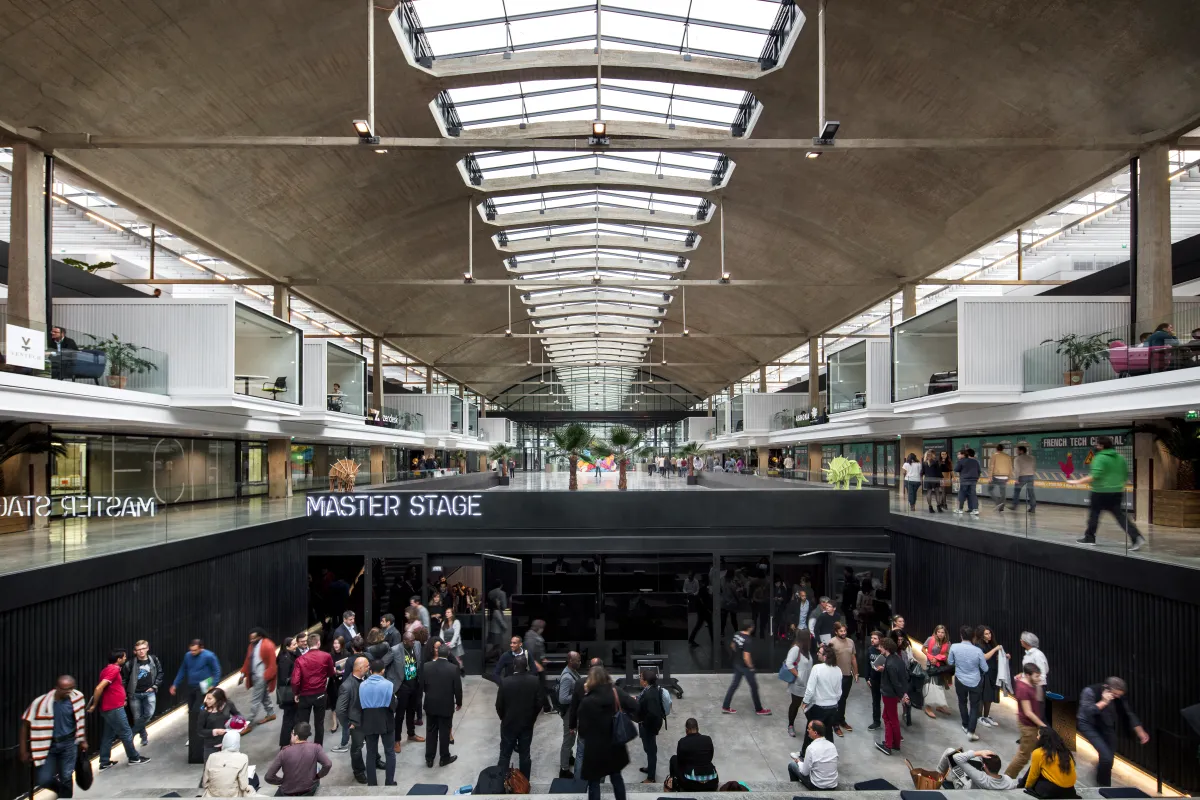
Station F, a Paris-based startup hub founded by French billionaire Xavier Niel, is gearing up for a new edition of its F/ai accelerator program in a bid to strengthen its positioning as a stepping stone for promising AI startups.
Launched in January of this year, F/ai’s planning to kick-start its second batch this September, aiming to help a handful of AI-focused startups move from early product to real revenue in a matter of weeks.
Spanning 538,000 square feet, Station F is often described as a co-working space, but its footprint extends beyond the physical space, its director Roxanne Varza told TechCrunch.
One example is Station F’s Future 40 annual selection, in which the team names the most promising teams among some 1,000 companies it welcomes each year. In 2024, TechCrunch observed that nearly all of that annual cohort incorporated AI into its core business.
Station F today has a front row seat to the rise of AI startups, leveraging its position as a cornerstone of “la French Tech.” The startup hub has also successfully leveraged its position to capture equity stakes in its Future 40 companies. “We have been investing [in these companies] since 2022,” Varza said.
Helped both by its size and Niel’s connections, Station F has become a frequent stop for officials seeking to connect with Europe’s tech scene, with no less than 11 presidential visits since President Macron’s inaugural tour in 2017. It has also welcomed AI big names like Sam Altman, and is now leveraging these ties for F/ai.
The first cohort of F/ai’s program was backed by a long list of significant tech companies — AMD, Anthropic, AWS, Clay, Google, G42, Hugging Face, Lovable, Meta, Microsoft, Mistral AI, OpenAI, OVHcloud, Snowflake, and Qualcomm — not to mention several VC funds.
The second cohort will add a few more big names, TechCrunch has learned: Eleven Labs, Nebius, Rippling, OpenRouter, HubSpot, and GitHub.
“The goal was to bring together all the major players and make it much easier for [AI] startups looking to launch in Europe to connect with them,” Varza said.
Two teams from the accelerator’s first batch have already gained international recognition: Alpic, which won the global grand finale of The Pitch, a competition organized by Deel; and Rippletide, which won the OpenAI Codex Hackathon.
While awards rarely hurt, especially when they bring funding, F/ai is focused on helping its cohort generate revenue, targeting €1 million (about $1.14 million) within six months. “We’d heard quite a bit of criticism about the slow pace of commercialization of European startups,” Varza said. “This brings them on par with what investors are seeing in the U.S.”
Investors seem to like what they’ve seen so far. The first cohort collectively raised $34 million in pre-seed funding, according to Station F. The teams’ track record may have also helped: 80% of these 20 AI startups were founded by repeat entrepreneurs, a third of whom hold PhDs.
The founder profile skews that way mostly because F/ai selects its cohort exclusively via recommendations from founders, partners, and investors — a process that could add to the cliquishness and elitism France’s tech scene is at times accused of.
But while teams can’t apply directly, they can get in touch with one of F/ai’s many partners, and perhaps soon with alumni, Varza said. She added that Station F has some 30 other programs startups can apply to.
Access appears to be a key focus for F/ai, which has in the past hosted the likes of Turing Award winner Yann LeCun for private chats. “Today, if the founders here want to speak to people at this level, they all seem to think they need to go to the U.S. and join a program there. We actually want to show that you can stay here and do it from here,” Varza said.
When you purchase through links in our articles, we may earn a small commission. This doesn’t affect our editorial independence.


Anthropic is embarking on a major expansion in Seattle, underscoring how artificial intelligence companies are emerging as one of the few bright spots in the region’s office market.
The maker of the Claude AI model recently finalized a lease at Dexter Yard North in Seattle’s South Lake Union neighborhood, capping months of speculation about the company’s expansion plans in the region.
Terms of the deal were not publicly disclosed, but CoStar News reports that the company leased 113,000 square feet of space across multiple floors in the north tower at 700 Dexter Avenue North. CoStar called it one of the largest office deals of the year so far in Seattle.
The expansion would significantly increase Anthropic’s footprint in Seattle, where the San Francisco-based company established an engineering office in 2024 as it recruited talent from the region’s deep pool of AI researchers and software engineers.
It would also place Anthropic next door to Amazon. The companies in April expanded their existing partnership: Amazon committed to invest up to $25 billion in Anthropic, which simultaneously made a $100 billion-plus spending commitment to AWS over 10 years.
The following month, Anthropic announced $65 billion in funding at a $965 billion valuation, thought to be the last venture round before an initial public offering later this year.
On Thursday, Anthropic released Claude Sonnet 5, which the company says “can make plans, use tools like browsers and terminals, and run autonomously at a level that, just a few months ago, required larger and more expensive models.”
Also this week, The U.S. Department of Commerce removed export controls on the company’s Claude Fable 5 and Mythos 5 models, part of an ongoing back-and-forth with the Trump administration.
Anthropic’s Seattle lease provides hope that demand from AI companies could help revive parts of Seattle’s office market after several years of elevated vacancy driven by remote work and tech industry cutbacks. Seattle’s office vacancy rate inched up to 28% during the first quarter, the highest in the region.
Other AI firms, including OpenAI and Databricks, have also expanded their Seattle-area office footprints in recent months. In those instances, the companies chose to grow in nearby Bellevue.
Dexter Yard, a two-building office and life sciences campus developed by BioMed Realty, opened in 2022 and was designed to accommodate both technology and biotech tenants. The north tower contains approximately 163,000 square feet of office and lab space.
Anthropic has a number of open engineering roles spread across Seattle, New York and San Francisco. The company says it expects all staff to be in one of their offices at least 25% of the time.
A spokesperson for Anthropic acknowledged the new lease, but did not respond to requests for additional comment.

Sports5 seconds ago
Tadej Pogacar wins third stage of Tour de France to take yellow jersey from Vingegaard

Tech1 minute ago
What billions of AI predictions taught Expedia before the age of AI agents

Business4 minutes ago
Atlas, an advanced humanoid robot, makes strong FIFA World Cup appearance


-

 Fashion3 days ago
Weekend Open Thread: High Hopes
-

 Politics3 days ago
The House | “Reframing the debate from a binary discussion of winners and losers”: Yuan Yang reviews ‘We Are Not Machines’
-

 Crypto World7 days ago
Strategy authorizes up to $1.25B in Bitcoin sales under new capital plan
-

 News Videos6 days ago
How to Build INSANE Live Financial Dashboards With Claude
-

 Tech7 days ago
Anonymous researcher drops 0-day ‘exploitarium’ repo
-

 Business7 days ago
Australia treasurer says alleged access of prime minister’s bank data ’incredibly concerning’
-
 NewsBeat2 days ago
Taylor Swift and Travis Kelce wedding staffer hilariously struggles to keep her cool while checking in megastars
-
 Crypto World5 days ago
Airdrop Registration Becomes Key Focus For Remittix As RTX Launch Updates Approach
-

 Sports5 days ago
Broncos roster: OL Ben Powers (No. 74) entering final year of contract
-
 Business7 days ago
The AI boom won’t burst all at once. It will pop in ‘rolling bubbles’: Macquarie
-

 Crypto World4 days ago
Binance stock trading tops $1B in first month after launch
-

 NewsBeat6 days ago
Presenter Caroline Flack’s brother Paul Flack dies aged 55
-

 Crypto World5 days ago
Alibaba-affiliate Ant Group enters the humanoid robot market with 12 deals
-
 NewsBeat4 days ago
New exhibition reflects five decades of movement between island of Ireland and GB
-
 Crypto World3 days ago
Standard Chartered Secures MiCA License as ESMA Adds 37 New Crypto Firms
-

 Crypto World1 day ago
South Africa proposes crypto tax guidance under existing rules
-
 Tech1 day ago
Lenovo laptops are now shipping with YMTC SSDs, a sign of Chinese NAND entering the mainstream
-

 Business5 days ago
Meta Platforms Stock Jumps 7% Today as Bloomberg Reports Company Plans to Enter the Cloud Business
-

 Business3 days ago
What a 10 Percent Drop Means for Buyers, Sellers and Renters
-

 Crypto World4 days ago
Binance Re-Enters Philippines As EU MiCA Rules Restrict Access
You must be logged in to post a comment Login