It’s likewise smartly designed, packing up into—as you likely already gleaned—the shape of a suitcase. The heavy-duty handles and latches are strong. Though the Nomad is 28 pounds, which is a bit on the heavy side for a single-hand carry, the shape and large handle actually make it easier to carry than smaller and cheaper models.
The Nomad uses a dual-venting system to achieve good airflow, even when the lid is closed. The vents, combined with the raised fins on the bottom of the grill (which elevate your charcoal, allowing air to flow underneath), allow for very precise control of both high and low temperatures. If you live and die by overlanding, this grill could be your new constant companion.
Photograph: Weber
A Great Budget Portable Grill: WIRED reviewer Scott Gilbertson also loves the simple Weber Jumbo Joe ($90), a smaller version of the classic Original Kettle. It’s an easy choice for tailgates, especially. And if you want to use it at home, you can build yourself a stand for home cookouts. It’s low-cost, light, and dead simple. All are virtues.
Other Grills I Recommend
Advertisement
Recteq X-Fire Pro
Photograph: Kat Merck
Recteq X-Fire Pro 825 for $1,400: Pellet smokers rarely crest much over 450 degrees Fahrenheit, which does not offer the sear you’d get on a charcoal or gas grill. But Recteq’s 825-square-inch, dual-pot X-Fire Pro wants to be your everything device, notes WIRED reviewer Kat Merck. In Smoke Mode, the left fire pot ignites for classic low-and-slow smoking. Switch the big knob to Grill Mode, and both pots fire up, with an adjustable damper over the right side. The damper, controllable with another knob, allows you to open access to the right fire pot just a little bit, or all the way to the gates of hell—1,200 degrees Fahrenheit. It takes about 20 minutes for the fire pot to get going this high, and if you don’t clean the fire pot first, it’ll kick off a lot of sparks in the process. Who knows why you need to get to 1,200 degrees? But as Merck notes, this is a company known for a cartoon bull logo and bull-horn handles. “Recteq likes to be extreme, so it tracks,” she says. If you keep your sear to a more human 600 degrees Fahrenheit, it’s a solid grill and sear experience. But keep in mind that the high power draw from the dual igniters will require a 10- or-12-gauge extension cord, which is probably better than the cord you’ve got at home. The X-Fire also didn’t produce the same smokiness as WIRED’s top-pick Recteq Flagship 1600, according to Merck’s testing, which means you’ll end up using smoke tubes at low temperature if you want to get more smoke in the meat. Note, too, that the advertised 20-pound pellet capacity is split between fire pots. This could mean refilling a 10-pound hopper multiple times during a long cook.
Photograph: Brad Bourque
Traeger Woodridge Pro for $1,000: The Traeger Woodridge Pro is WIRED’s previous top-pick pellet grill and smoker for most people. It still exists beautifully at the intersection of value and utility, and is likely to make you popular in the neighborhood. It’s a straightforward beast of a thing that’s easy to clean, easy to dial in for a perfect rack of ribs, and big enough to cook up two pork bellies at the same time. My new top-pick Recteq has a couple smart features that make us prefer it, like temperature history on its meat probes, and an easier learning curve on smart features. But this Woodridge will still make you quite popular in the neighborhood.
Photograph: Traeger
Traeger Timberline Wi-Fi Wood Pellet Grill for $3,300: If you’re serious about grilling and smoking, Traeger’s Timberline is almost a step up from a smoker. It’s the perfect all-in-one outdoor kitchen. It uses the same wireless smoking smarts as the Woodridge but adds some extras, like an induction burner (perfect for adding a last-minute sear with a cast-iron pan or steaming some veggies). The insulated smoke box has room for six pork shoulders, or about the equivalent racks of ribs or chickens. Former WIRED editor Parker Hall has managed to feed hundreds of people using it. (As a longtime food and barbecue critic, I can vouch heartily for Hall’s resulting brisket and ribs.) If that’s not enough, there’s also an XL version that’s even bigger. “All of my meats heated evenly and were perfectly cooked right when the smoker said they would be,” Hall says. If you want flawless smoking from the comfort of your couch and price is not a factor, the Timberline delivers.
Advertisement
Courtesy of Masterbuilt
Masterbuilt Gravity Series 800 for $899: This spacious Masterbuilt offers a nice combination, notes WIRED reviewer Chris Smith: charcoal flavor with the temperature precision of gas or electricity. The large, top-loading charcoal hopper uses gravity (hence the name) to feed heat into an internal housing, and an integrated fan enables precise digital temperature control—on the device or via the app. You’ll reach 700 degrees Fahrenheit within 15 minutes. Temperatures are remarkably consistent once stabilized, and if you want to add smoke flavor, just throw wood chunks into the ash bin and let falling charcoal embers do the rest. But the versatility comes with caveats. You may miss the ability to sear directly over a flame, and you’ll need to change out the internal housing before switching to the flat-top grill.
Courtesy of Yoder
Yoder YS640S Pellet Smoker for $2,700: Most grills do one thing well and several others poorly or not at all. Yoder’s YS640S is a more versatile tool, thanks to a design that allows easy access to the auto-feed firebox. Like Traegers that are half the price, this Kansas-made grill uses an electric fan and an auger to feed wood pellets in for a slow smoke session. It’s all driven by a control board that sends temp alerts and allows you to adjust the temperature via Wi-Fi. As a smoker, it easily handled ribs and a chuck roast, holding the temperature better than most. This is thanks to its bomb-proof 10-gauge steel construction, which means this grill weighs as much as a refrigerator. Where the Yoder really stands out, though, is as a grill and possible pizza oven. By removing a steel plate positioned over the fire pit, you can sear burgers directly over the flame or remove the grills and plop on a hefty pizza oven attachment ($489), which uses the pellet feed system to maintain a constant 900-plus degrees Fahrenheit.
A Grill to Avoid
Courtesy of Ace
Kamado Joe Konnected Joe for $1,900: There’s a lot to like about this kamado-style grill. Indeed, WIRED previously recommended it for its electric ignition and Wi-Fi connectivity that allows you to measure the temperature of the interior and the meat via two probes. But over long-term use, WIRED commerce director Martin Cizmar has had constant problems with the electric grill tripping the 2-year-old GFCI outlets on his patio. Once it even tripped the breaker. A Reddit thread reveals this is a common problem. Like the Redditors, Cizmar found temporary relief by running an extension cord into an outlet in his kitchen, but even that has failed him a few times during testing. Unfortunately, this grill is a hard pass until the issue is resolved.
Judge Linda Kullberg stated that the ruling is ‘without a doubt the largest claim that has been ordered in a Swedish competition case’.
In a legal dispute regarding an abuse of power in the market for comparison shopping services, search-engine giant Google has been ordered by a Swedish court to pay almost $2bn in damages to PriceRunner, the price comparison business owned by payment platform Klarna.
On Wednesday (1 July), the Patent and Market Court in Stockholm, through judge Linda Kullberg, awarded compensation for lost revenue caused by Google’s perceived preferential treatment of its own comparison shopping service over competing services.
Kullberg did, however, dismiss further claims wherein PriceRunner asked for an additional $8.2bn. Despite this, Kullberg said the decision still represents “without a doubt the largest claim that has been ordered in a Swedish competition case”.
Advertisement
Google is in a position to appeal the ruling and stated that it is not in agreement with the court’s findings.
A spokesperson for the organisation said, “We are reviewing and will consider our legal options. The changes we made to shopping ads back in 2017 are working successfully, generating growth and jobs for hundreds of comparison shopping services who operate more than 1,500 websites across Europe.”
This is in reference to a decision that was reached in 2017 by the European Commission, in which Google was ordered to pay a €2.4bn penalty for abusing its dominance online as a means of giving its own service an advantage, a result which at the time Google also expressed dismay at and appealed.
Commenting on the outcome of the latest case, Dan Greaves, Klarna’s head of communications and policy, said, “When markets work well, everyone benefits. Consumers get higher quality at lower cost, companies stay focused on serving customers rather than defending position, and society is better off for it.”
Advertisement
Separately, Google has also lost a long-running dispute over a €4.1bn anti-trust fine imposed by the European Union for a case in which it was determined that Google unfairly leveraged a dominant position in the context of its Android operating system. The decision is legally binding and is a major win for the Brussels-based regulator, as the argument has been in full flow since the case was first ruled upon in 2018.
Don’t miss out on the knowledge you need to succeed. Sign up for the Daily Brief, Silicon Republic’s digest of need-to-know sci-tech news.
Watching [sprite_tm]’s build of a handheld 486-based gaming computer, we got to thinking about retro computers and the eternal questions of how much of the computer needs to be actually “old” for it it be retro. Where is the soul of a retro computer? The CPU? The old yellowing plastic case? Maybe it depends on what you’re trying to get out of the hobby.
There is of course a spectrum of people playing around with old computers. For some people, let’s call them “vintage computer enthusiasts”, half of the fun is in keeping the actual old hardware running. This group tends to know what teletype lubricant smells like, and how to tell which capacitors need replacing.
For others, “team retro”, the joy is in using the machine itself, whether that be teaching the old dogs new tricks, or simply loading up nostalgic video games. Team retro is more content with emulations or emulations that are wrapped up neatly in hardware workalikes. They know which registers need POKEing, and whether or not Commander Keen is running at the right framerate.
I think [sprite_tm]’s project falls in with yet another camp, the retro-reengineers. Here, the idea is to step through the engineering lessons of the past by re-designing something from a bygone era. So when [sprite_tm] went with a period 486 CPU backed up by a modern FPGA, perhaps ironically borrowing code from the modern MiSTer project, it makes sense for his goals. Retro-reengineers know the bus architecture and the memory timings, and they are reinventing the wheel as a learning experience. Or in the case of [Voja Antonic]’s imaginary four-bit machine, it’s a teaching experience.
Advertisement
How you work often reflects what you’d like to get out of the project, and at Hackaday, of course, we love all of the above! We’ve identified at least three broad schools of fooling around with old computers. Are we missing any?
The US age-adjusted death rate fell to a record low in 2025, likely pushing life expectancy to a record high as overdose deaths declined and mortality improved across all age groups. CNN reports: There were about 689 deaths for every 100,000 people in the US in 2025, according to a new report from the US Centers for Disease Control and Prevention — the lowest rate recorded in more than a century of tracking. The age-adjusted rate has fallen 22% since 2021, landing about 4% lower than it was just before the pandemic in 2019. […] The top causes of death in the US in 2025 followed longstanding patterns: Heart disease led with nearly 695,000 deaths, followed by cancer with nearly 623,000 deaths.
Unintentional injuries, which includes drug overdoses, were the third leading cause of death. Overdose deaths are still high — about 70,000 people died from an overdose in 2025, preliminary CDC data shows — but experts say that sharp declines probably played a large role in bringing the age-adjusted death rate down in the US.
A WIRED investigation revealed this week that Meta contractors posed as kids and teens to see how chatbots like Gemini and ChatGPT responded to prompts about high-risk subjects, including suicide, sex and drugs.
But wait, there’s more! Each week, we round up the security and privacy news we didn’t cover in depth ourselves. Click the headlines to read the full stories. And stay safe out there.
Advertisement
Back in 2021, Apple launched its Hide My Email tool, which as the name suggests, allows people to sign-up for online services using an email address that isn’t linked directly to them. The privacy feature generates “unique, random email addresses” that will forward incoming messages to a user’s personal email address—reducing the amount of information you need to hand over to companies.
Reporting from 404 Media this week revealed that a vulnerability in the system has made it possible, for at least a year, for people’s real email addresses to be uncovered when they are using Apple’s privacy service. “Apple Hide My Email is leaking email addresses that are supposed to be hidden,” security researcher Tyler Murphy, who discovered the flaw in June 2025, told the publication. “In our limited tests with volunteers, 100% of Hide My Email addresses were exploitable,” he said.
The exact details of the vulnerability and how it works have not been revealed as the problem hasn’t been fixed. In tests conducted by 404 Media and Murphy, it was possible for a newly created Hide My Email address, which uses the @icloud.com domain, to be linked back to the real email address of its creator. Murphy said he originally reported the problem to Apple last summer and was told it had been “addressed” by March this year. However, when the researcher continued testing the issue, it remained exploitable, with Apple telling Murphy a couple of months ago that it was still investigating the issue. Apple did not respond to requests for comment from the publication.
A nineteen-year-old has been arrested and extradited to the United States to face charges over their alleged involvement in the notorious Scattered Spider hacking group, the Department of Justice (DoJ) announced this week. Peter Stokes, an Estonian-US dual citizen, was arrested in Finland in April and has been charged with computer intrusion, conspiracy and fraud, linked to the criminal gang.
Advertisement
It is alleged that Stokes, along with other members of the loose hacking collective, hacked into an unnamed “luxury jewelry retailer” and demanded a $8 million cryptocurrency ransom in May 2025. The company did not pay but still spent $2 million on the incident, according to a DoJ press release. In recent years, the Scattered Spider group, which is largely believed to be composed of young, English-speaking teenagers, has caused havoc around the world by hacking into and disrupting dozens of businesses. The arrest of Stokes follows two British Scattered Spider members, Thalha Jubair and Owen Flowers, recently pleading guilty to hacking Transport for London in 2024 and causing millions in damages.
Following a move by encrypted messaging app Signal last year, WhatsApp has announced it will soon roll out usernames to billions of people. The option means it is possible for people to connect and message each other without having to share phone numbers, increasing privacy protections. However, officials in India, one of WhatsApp’s biggest markets, who have previously tried to unfurl encryption protections on the Meta-owned app, have opposed the introduction of usernames. A letter from the Indian government, seen by Reuters, asked WhatsApp to pause the rollout of usernames in the country. The letter claimed the move could increase fraud and cybercrime, citing concerns around allowing online anonymity. The letter was followed by separate messages to Signal and Telegram about their use of usernames.
Thousands of automatic license plate reader cameras, known as ALPRs, have appeared across the United States over the last few years. The cameras, which can be deployed by cops, cities, and businesses, photograph passing cars and record details about their movements. As well as license plate numbers, the systems can log the time and location of the photos, make and model of a vehicle, as well as bumper stickers. Billions of images and details of car movements have been captured in vast ALPR databases.
However, an increasing body of evidence shows that when the camera systems make mistakes, innocent people can be detained by law enforcement officials and accused of crimes. A review of court records and media reports, which are likely the tip of the iceberg, by the nonprofit the Institute for Justice this week found at least 24 cases of misidentification over the last eight years. These reportedly include a couple with a baby in their car being detained at gunpoint; a camera misreading an “O” as a “0”, leading to grandparents being detained; and someone being pulled over after their license plate was not removed from a wanted list. The findings add to a growing list of errorsfrom theAI-enabled cameras.
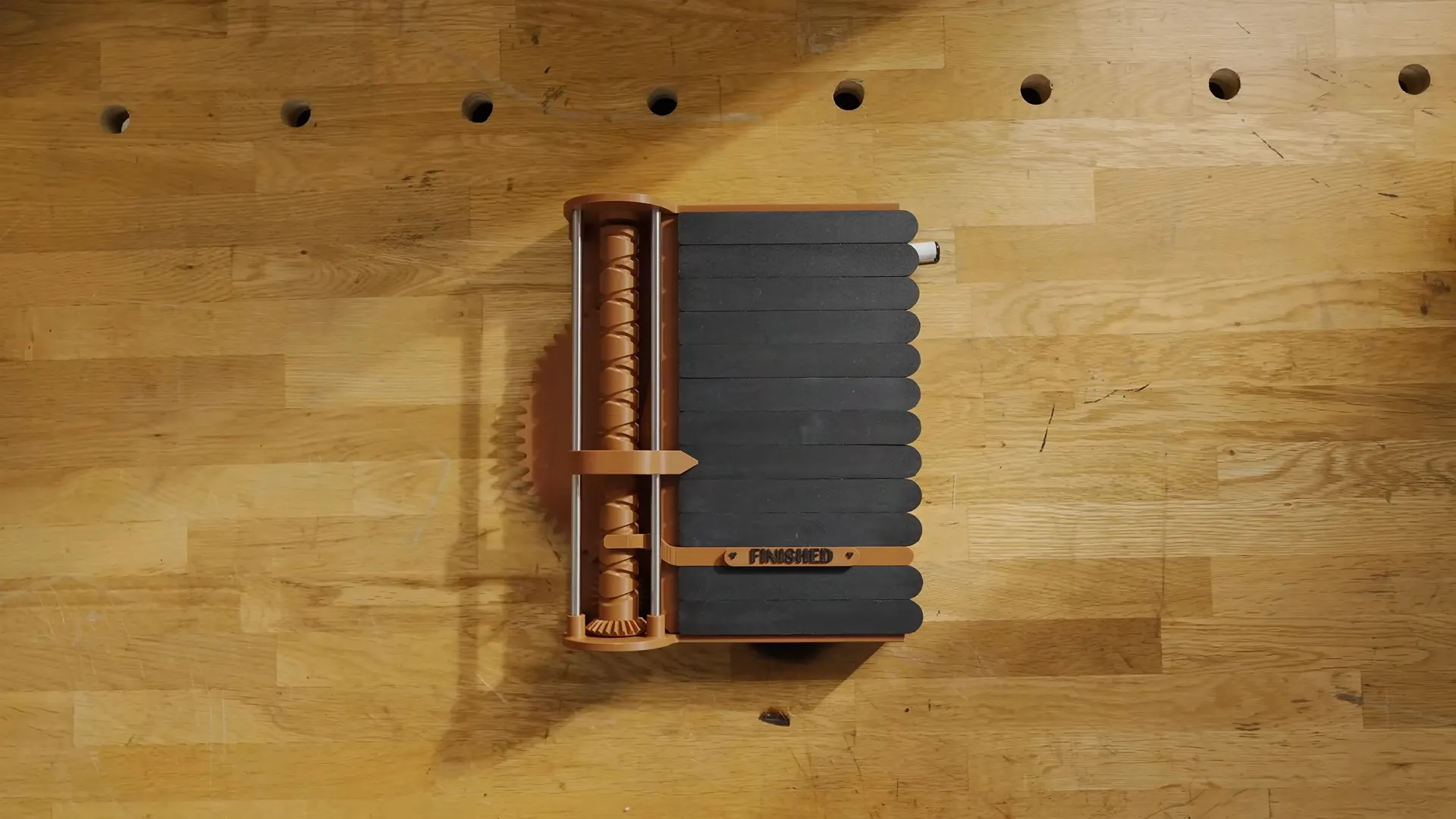
Humans are odd creatures, and no two are exactly alike, which is likely why so many different methods exist for tracking the progress of tasks that must be accomplished. [Simone Giertz] has graced us with her own spin on task tracking that adds an element of chance.
[Giertz] tells us that she started with written lists that she tackled in dice-determined order to keep her from overthinking or cherry-picking tasks. While this worked fine, she longed for a more elegant solution. Approaching the UI first, unlike any Open Source project ever, she determined that a marker that could randomly point to a task on a vertical list would be most pleasant.
The bulk of the project was evaluating different mechanisms to make the marker pick tasks at random while not selecting a task that had already been completed. A set of magnetic toggles that could repel the marker proved ineffective, but a simpler solution involving moving the completed tasks past a divider won the day. The finished product has a satisfying selection mechanism that makes interacting with the chore chart a joy, which probably helps make it more likely things get done.
A leaker with a reasonable track record, except regarding the Apple Watch, claims that the Apple Watch Series 12 will feature a new health sensor, but only in its fluoroelastomer band.
Apple Watch already tracks a huge number of different health metrics, but Apple has regularly been rumored to add even more sensors via a watch band. According to leaker Kosutami, the company is finally going to do it, although with one significant catch.
[Censo-Wat]ch Series 12 gonna have a sensor on band, injection molded(to the silicon band, they hasn’t yet figured out how to putting a sensor on band with other materials now.).
The leaker says nothing about what the band’s sensor could measure, but says it will solely be in the silicone band. That is presumably the basic fluoroelastomer band that Apple provides if a customer does not also order a specific band.
Advertisement
If correct, this could mean that the Apple Watch’s latest health sensor could only be available on the lowest-cost band. It’s more likely, though, that Apple will sell this version of the fluoroelastomer band separately.
As for what it could measure, Apple has previously been reported to be working on multiple options for external sensors. They include a hydration sensor, or one based around muscle movement sensing.
Apple is known to be working on non-invasive blood sugar monitoring as well. To date, there has been no suggestion that this will be on a band-mounted sensor, and instead integrated into the optical array underneath the watch body. It’s not clear when this feature will ship.
Kosutami has had a fair track record with Apple leaks, and most recently claimed that the company has suspended work on its project to add cameras to AirPods. But they have been significantly wrong before, such as with a 2023 claim that Apple was going to change how bands connect to the Apple Watch.
Advertisement
Separately, that persistent rumor has recently resurfaced. If it’s accurate this time, perhaps it’s because a new sensor band requires a different connector.
Valve has open-sourced the design for a customizable e-ink front panel for the Steam Machine, dubbed the “Inkterface.” “All of it is available on their GitLab under the MIT license, which goes over everything you need to make your own and stick it on the front of your fancy new Steam Machine,” reports GamingOnLinux. From the report:
They’re now calling it the “Inkterface” and there’s a good few things you’ll need to make it including: 1 x Adafruit ESP32 Feather with 2MB PSRAM. 1 x Adafruit eInk Breakout Friend. 1 x Adafruit 5.83″ Monochrome eInk Panel. 13 x M2.5 x 5mm Pan Head Machine Screws. 4 x 1/4″ x 1/4″ x 3/16″ Stepped Magnet SB443-OUT.
Valve even provided a video on the GitLab showing it being put together […].
An anonymous reader quotes a report from TechSpot: Video Game History Foundation founder Frank Cifaldi recently supported claims that piracy is the only effective way to preserve video games. The comments lay the blame squarely on game companies’ refusal to keep legacy content available or allow archivists to build legal repositories. Sony’s announcement that all PlayStation games will be digital-only from 2028 onward has sparked concern that titles will become harder to preserve and more easily vanish, since the company’s servers will become the sole point of distribution. In an official statement, Cifaldi noted that the end of physical PlayStation games has surprisingly little impact on the Foundation’s efforts because the majority of games from the last two decades are already digital-only.
According to the Foundation, most games nowadays are not released for consoles, let alone on physical discs. Furthermore, many discs for major titles require downloading updates before they are playable, although the DoesItPlay database reveals that, even today, most are playable offline out of the box. Cifaldi claimed that the true reason piracy remains the best option for preservation is that the Entertainment Software Association, which lobbies for game publishers, has closed off other routes. For example, in 2018, the Association opposed efforts to grant copyright exemptions for museums, libraries, and archives to retain copies of abandoned online games for research.
This is the same organization that recently helped defeat a proposed California bill to preserve premium-priced online-only games by falsely claiming that community servers are illegal. The Foundation accused the ESA of repeatedly blocking attempts by cultural heritage institutions to reform DRM legislation. Cifaldi also described the Library of Congress’ outdated software preservation process, which currently only requires tiny snippets of source code. For example, Capcom once asked the Foundation to provide the LoC with “the first and last ten pages of code” for a Mega Man game. Unable to discern where digital records began and ended, the group simply chose random segments. Platform holders’ habit of closing online storefronts and removing media from users’ accounts is also unhelpful. “What continues to baffle us is what the industry expects institutions like ours to do about it,” the Video Game History Foundation said. “If platform owners are deciding to eliminate physical media and older digital storefronts, then we’d also like to see trade groups like the Entertainment Software Association offer meaningful solutions for archives and museums to legally preserve digital-only content and make it accessible for research.
The recent mission to the moon by Artemis II astronauts was memorable, inspiring, and scientifically important for so many reasons. It also brought us a treasure trove of new images and videos ready to be added to NASA’s vast library of content.
Consider this photo of Earth from more than 250,000 miles away, for example, taken from the other side of the moon. Or these widely shared pictures of our home planet from inside the Orion capsule, which were taken using iPhone 17 Pro Max phones. Truly out of this world snaps, but taken using a device many of us have in our pockets.
These images have popped up all across social media, but what you might not know is that NASA makes its huge library of images and videos available for anyone to dig through, marvel at, and reshare. Because NASA is funded by the US government, most of its published media is released into the public domain.
That’s the good news. The bad news is that it’s not immediately obvious where this library is and how you can access it.
Advertisement
If you’re ready to browse through decades’ worth of incredible photos and videoclips from NASA—from giant star constellations to spacesuit designs—here’s how to get started. A word of warning though: It’s easy to get lost for hours inside these collections.
The NASA Image and Video Library
The comprehensive NASA library portal.
Courtesy of David Nield
Let’s start with the biggest resource: The NASA Image and Video Library. This is where you’ll find just about every image, video, and audioclip that NASA wants to share, from astronaut photos and space conferences to planet shots and satellite imagery. By default, you get to see the newest uploads first, but you can also click Trending & Popular to see frequently viewed content from across the years.
Click on an image or video here to get a wealth of information about it, including what it shows and when it was captured. Some of the captions here are mini-essays, and a lot of the content on this portal comes with EXIF data included, which will be of interest to photographers (or anyone who wants to know which pictures were snapped with an iPhone 17 Pro Max).
Advertisement
As wonderful as this resource is, it’s also difficult to sift through, unless you specifically know what you’re looking for. You’re basically relying on the search box at the top, and common keywords can return dozens and dozens of pages of results. Try being as specific as you can with search terms. Also, use the keywords on each photo and video listing to find related content.
NASA Images
The front page of NASA Images.
Courtesy of David Nield
In addition to the NASA Image and Video Library page, there’s also NASA Images—which includes a link to the Image and Video Library. (Those of you at the back, try to keep up). NASA Images isn’t as comprehensive as the Image and Video Library, but it is better organized, and it’s easier to find recent content here.
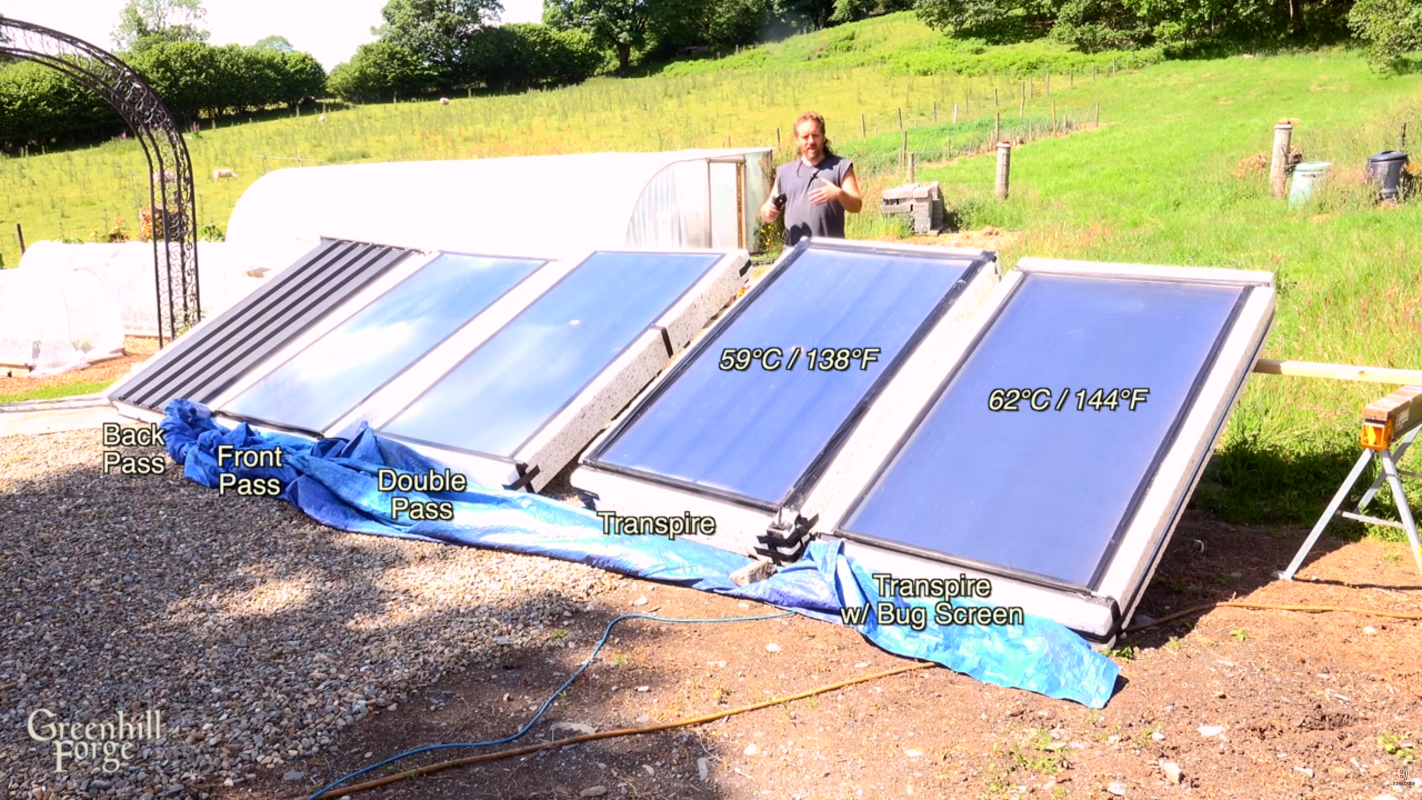
For as good as solar panels are at converting sunlight directly into usable electricity, especially for how cheap they’re becoming, they can still only gather around 20-30% of the energy that hits them. That’s fine if you have a large roof or a huge tract of land, but if you have limited space and need to do something like heat a home, there are better options available to capture more of that energy. [Greenhill Forge] has built five solar air heating panels to test this concept, and do it much more inexpensively than commercial options.
These solar heaters use sunlight to heat a fluid, in this case air, and move that heated fluid to another space. Each panel is about two square meters, insulated on all sides except the top, and configured in a way that air can flow past something that the sun has heated. The first panel, a control, does not use a glazing to help trap this heat, but the rest all have a polycarbonate window to increase the greenhouse effect of the panels. The four remaining all experiment with the way air flows around a black corrugated steel sheet to gather more of the heat, with the fifth panel using a set of black screen instead.
With the panels all set out in the sun, [Greenhill Forge] is using a set of thermocouples from a previous project to measure the efficiency of each panel. Surprisingly, he found that the panel using the layers of screen was the best at gathering energy, although he notes several times that these types of panels are extremely sensitive to changes in physical configuration, so this is not the most definitive test possible. However, at only around $100 per panel it’s quite a deal if the goal is a usable space heater that doesn’t use any fuel or grid electricity.






-Reviewer-Photo-SOURCE-Brad-Bourque.jpg)

















![Money isn't everything [YANNA] #Yanna #Short #Confidence #Strongwoman #Motivation #fyp](https://wordupnews.com/wp-content/uploads/2026/07/1783176729_maxresdefault-80x80.jpg)









































You must be logged in to post a comment Login