

Business
Elemental Royalty Corporation 2026 Q1 – Results – Earnings Call Presentation (TSX:ELE:CA) 2026-05-17


Q1: 2026-05-13 Earnings Summary
EPS of $0.04 misses by $0.11
| Revenue of $33.33M (105.82% Y/Y) beats by $3.07M

Seeking Alpha’s transcripts team is responsible for the development of all of our transcript-related projects. We currently publish thousands of quarterly earnings calls per quarter on our site and are continuing to grow and expand our coverage. The purpose of this profile is to allow us to share with our readers new transcript-related developments. Thanks, SA Transcripts Team

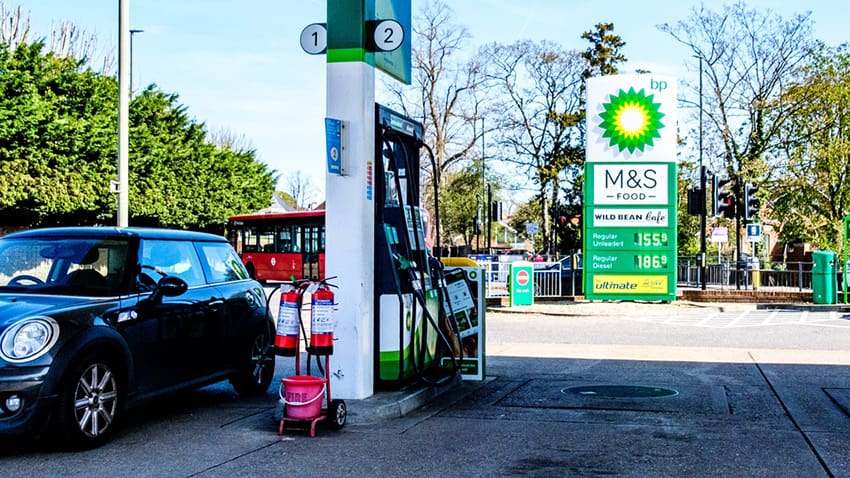
For the umpteenth time in 16 years of campaigning, the Westminster fuel-tax script appears to be writing itself again.
According to Treasury sources briefing the FairFuelUK campaign, Chancellor Rachel Reeves is preparing to drop the planned fuel duty rise from her Autumn Budget, though insiders caution that any reprieve is unlikely to survive beyond the March 2027 Financial Statement.
The retreat, if confirmed at the despatch box, will be the latest chapter in a saga that has become a fixture of every fiscal event since George Osborne first froze the duty in 2011. It will also be a notable, if temporary, win for Britain’s 5.5 million small businesses, many of whom now describe forecourt costs as the single biggest unhedgeable line in their operating budgets.
A £3bn pump tax raid since the Iran crisis began
Since hostilities flared in the Gulf, drivers have paid an estimated £3 billion more to fill up, while the Treasury has banked close to an additional £500 million in VAT receipts off the back of higher pump prices alone. Oil majors, predictably, have reported bumper margins. The motorist, equally predictably, has been left to foot the bill.
That contrast – soaring corporate profits set against a stagnating consumer economy – is what has put fuel duty firmly back on Reeves’s desk. As Business Matters reported last month, the Middle East flare-up has dragged headline inflation back to 3.3 per cent, hitting transport-heavy SMEs hardest of all.
71,000 emails, 148,000 signatures and counting
FairFuelUK says more than 71,000 of its supporters have now emailed their MPs urging the Chancellor to abandon the Budget hike. A separate petition, which has gathered more than 148,000 signatures, will be hand-delivered to the Treasury in the coming weeks. The campaign is calling not only for the freeze to be extended but for an immediate cut in fuel duty, in line with measures taken by more than 40 other countries.
The lobbying push echoes the cross-party effort earlier this year, when MPs delivered an earlier tranche of FairFuelUK signatures to Downing Street. That campaign cited Centre for Economics and Business Research analysis suggesting any short-term Treasury bounce from raising duty would be wiped out by a collapse of more than 60 per cent in fuel-tax income within five years as drivers cut mileage and shift to EVs.
“Cut all fuel taxes now,” says Cox
Howard Cox, founder of FairFuelUK, was characteristically blunt. “This clueless, bankrupting net-zero-driven Government remains stuck in a state of torpor, keeping the UK economy virtually stagnant,” he said. “Time and again, over 16 years of campaigning, we have shown that lower fill-up costs deliver more tax to the Treasury by boosting other revenue streams. The current cost of petrol, particularly diesel, is crippling motorists’ and small businesses’ ability to spend in the economy. When will these ignorant Treasury politicians understand that more money in people’s pockets drives growth? For goodness’ sake, cut all fuel taxes now.”
His frustration is shared in the haulage yards, trades vans and rural high-street economies that keep much of the SME sector ticking. Diesel, the lifeblood of British logistics, remains stubbornly above £1.55 a litre in many regions, and as Business Matters has previously documented, small employers lack both the financial resilience and the pricing power of their corporate counterparts to absorb or pass on the cost.
The international comparison: Britain stands almost alone
What is striking about Cox’s argument is not the rhetoric but the international evidence behind it. The International Energy Agency’s 2026 Energy Crisis Policy Response Tracker lists more than 40 countries that have actively cut, suspended or capped fuel taxes since the Iran conflict began. Britain is conspicuously not on the list.
Among the most striking moves logged by the IEA as of late April:
- Germany has cut petrol and diesel duty by roughly 14–17 euro cents a litre.
- Spain has slashed fuel VAT from 21 to 10 per cent and suspended its hydrocarbon excise duty.
- Poland has cut fuel VAT from 23 to 8 per cent and reduced excise duty to the EU minimum.
- Ireland has trimmed excise on petrol and diesel by €0.15–0.20 a litre, plus related levies.
- India has taken excise duties on petrol and diesel close to zero in some categories.
- Canada has suspended its federal fuel excise tax.
- Australia, Austria, Belgium, Croatia, Cyprus, Czechia, Hungary, Iceland, Italy, Korea, Latvia, Lithuania, the Netherlands, Norway, Portugal, Romania, Serbia, Slovenia, South Africa, Sweden and Türkiye have all implemented some form of fuel-tax or duty relief.
- Emerging markets including Argentina, Brazil, Cambodia, Ghana, Kenya, Lao PDR, Namibia, the Philippines, Saint Kitts and Nevis, Vietnam and Zambia have followed suit, often with measures targeted at hauliers and small operators.
By contrast, the UK has so far stuck rigidly to the 5p Spring 2022 cut and a series of frozen rates, an approach that according to Office for Budget Responsibility forecasts is already pencilled in to deliver a £2.2 billion uplift in fuel duty receipts in 2027–28 once the 5p cut is fully unwound and RPI indexation resumes.
What it means for SMEs
For business owners, the politics matter less than the planning. A scrapped Autumn hike will provide short-term breathing room for fleet operators, tradespeople and rural businesses heading into the winter, but the OBR’s own numbers make clear that the reckoning has merely been postponed. Any operator modelling 2027 cash flow would be wise to assume duty rates will rise sharply once the temporary cut expires and indexation kicks back in.
The deeper question for the SME community is whether the Chancellor is prepared to follow the IEA-tracked majority and use fuel taxation as an active lever to support growth, or whether she will continue to treat the duty as a guaranteed revenue stream to be quietly squeezed. On the evidence of 16 years of campaigning, FairFuelUK is bracing for the latter – even as it prepares to claim a tactical victory in the Autumn.
For now, Britain’s van drivers, hauliers and white-van entrepreneurs can breathe a cautious sigh of relief. The bigger fight, as ever, is in the spring.

Amy Ingham
Amy is a newly qualified journalist specialising in business journalism at Business Matters with responsibility for news content for what is now the UK’s largest print and online source of current business news.

The fund house’s senior executives, including deputy managing director D.P. Singh and chief investment officer-equities R. Srinivasan, have led a series of meetings with investment teams of the top 20 asset managers to secure commitments for the IPO and the anchor book, they said.
The asset management joint venture between State Bank of India and Amundi is looking to launch the issue as early as July. The issue size could be around ₹13,000 crore. SBI and Amundi currently hold 61.9% and 36.4% stakes in SBI Funds, respectively.
Emails sent to SBI Funds Management and the investment bankers remained unanswered.
 Agencies
Issue May Hit Street in July
“The aim is to launch the IPO in the first month of the second quarter of FY27 once regulatory approvals come through,” a person aware of the discussions said.

SBI Funds, with assets under management of over ₹12.5 lakh crore, filed its draft red herring prospectus (DRHP) with the Securities and Exchange Board of India in mid-March.
According to people in the know, interactions with most large institutional investors have now been concluded. “There have been in-person meetings with AMCs to build conviction around the issue,” one of the officials quoted above said.
SBI Funds shares traded at around ₹760-770 apiece in the unlisted market last week, valuing the fund house at around ₹1.55 lakh crore. The market capitalisation of ICICI Prudential Asset Management, the country’s second-largest mutual fund house, stood at ₹1.58 lakh crore on Friday, while HDFC Asset Management Company, the third largest, was valued at about ₹1.16 lakh crore.
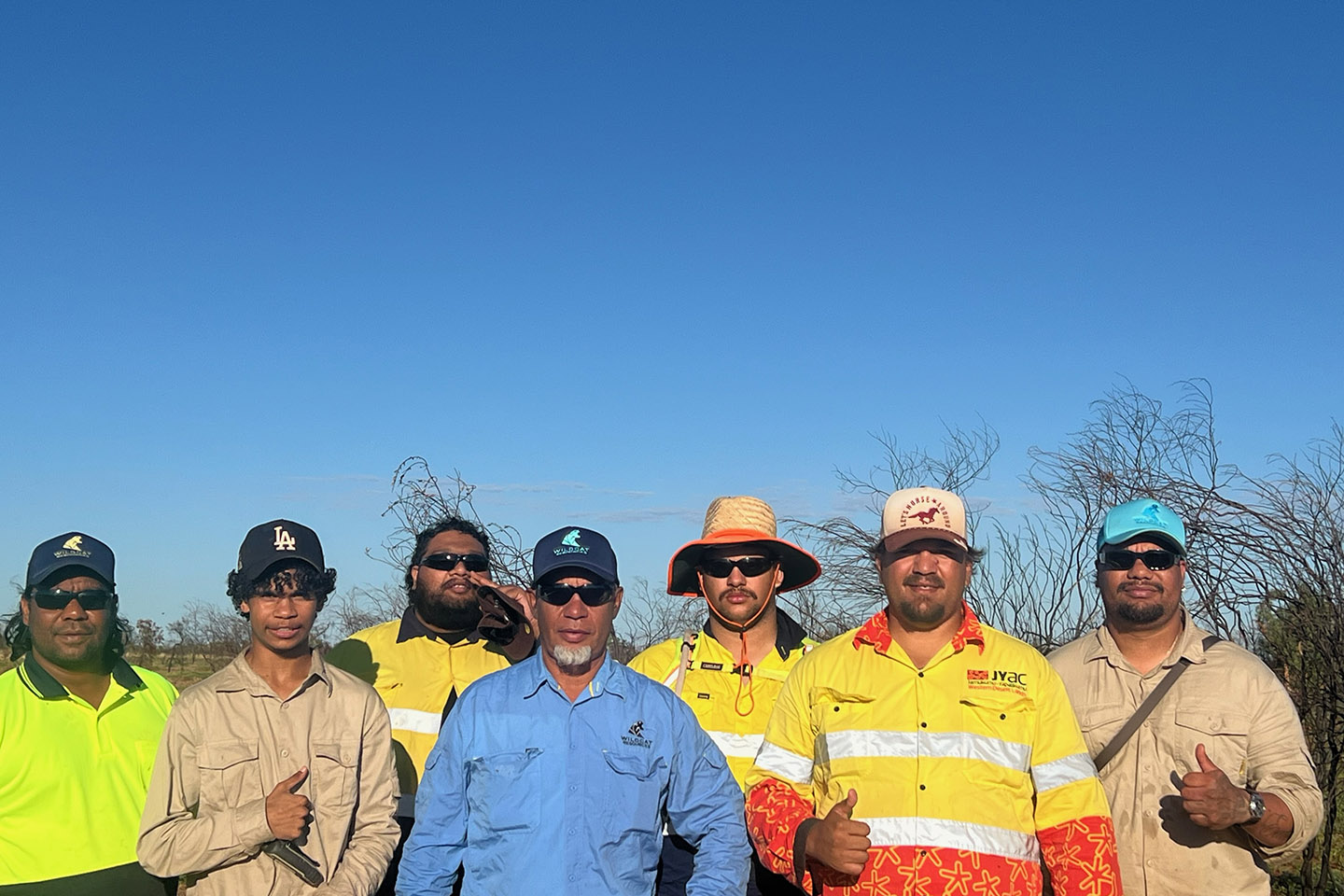
A Pilbara native title group has taken a swipe at Fortescue’s latest green energy hub, accusing the miner of going behind its back to develop the project.
Asia shares slip, oil prices pile pressure on bonds

A formal mandate to manage the fund will be given to SBI Ventures soon, a government source said, adding that the development is expected to transform the funding requirements for the sector.
SBI Ventures was selected through a bidding process in which a consortium of Indian Infrastructure Finance Company and Climate Fund Managers was the only other contender in the fray.
SBI Ventures is an alternative asset management company with assets under management of around ₹30,000 crores ($3.5 billion). It is a wholly-owned subsidiary of State Bank of India, India’s largest lender and is the investment manager for Neev Funds, SWAMIH Investment Fund and various Fund of Funds.
The ministry of Ports, shipping and waterways did not respond to a mail seeking comment. The ₹20,000 crore Maritime Investment Fund is a key component of the ₹25,000 crore Maritime Development Fund approved by the Union Cabinet last year.
The union government will contribute 49% equity or ₹9,800 crore to the corpus of the Maritime Investment Fund through budgetary support.
The remaining 51% of the corpus will be raised from private and commercial investors, sovereign wealth funds, institutional investors, fund of funds, central public sector enterprises (CPSEs), public sector undertakings (PSUs), major ports authorities, and other eligible contributors.Through equity participation, the MIF aims to catalyse investment by adopting a blended finance model to enhance the availability of long-term, affordable and accessible capital for the maritime sector, government sources said.
The MIF will be set-up as a trust under the Indian Trusts Act, 1882 and registered as a closed-end Category I/ Category II Alternative Investment Fund (AIF) with Sebi (Securities and Exchange Board of India).
The fund could be structured as a single AIF or multiple AIFs, each with a focus on specific maritime sub-sectors.
The fund manager may also setup one or more feeder funds/fund of funds/co-investment vehicles in the International Financial Services Centres Authority (IFSCA) GIFT City to pool investments by global investors in the downstream MIF structures in India.
The fund will likely be structured to have multiple closes. At each close, it will be ensured that the union government’s commitment does not exceed 49% of the corpus raised during that close.
The first close will be achieved within 12 months from the date of Sebi registration, with an initial corpus of at least ₹5,000 crore.
The final close should be completed within 36 months from the first close. The investment period for the fund will be 5-8 years from first closing.


Hantavirus-hit cruise ship due to arrive at Rotterdam port as final destination

Oil prices jump over 1% as US-Iran tensions simmer after UAE drone strike

Earnings call transcript: Gentrack Q1 2026 sees revenue dip, stock rises
Nvidia: Ex-China Sales Set To Top 100% Growth

First, to be sure, Amazon isn’t without competitors in any of the segments it is in, including e-commerce. Major US retailers like Walmart and Target both have broad-based, rapidly-expanding online retail arms, and offer their own versions of Amazon’s Prime subscription service.

Reeves Set to Scrap Autumn Budget Fuel Duty Hike After FairFuelUK Push

Sun God targets first-up success in 2026 Scone Luskin Star Stakes

Amazon Is Facing A Class Action Lawsuit For Not Refunding Its Customers After ‘Unlawful’ Tariffs

Manchester United reach agreement with Casemiro over contract clause amid transfer speculation

US brings back mandatory military draft registration

Steven Gerrard disagrees with Gary Neville over ‘shock’ Chelsea and Arsenal claim | Football

IF YOU HOLD XRP, XLM AND ONDO – TELL YOUR FAMILY TO PREPARE (HUGE MASTERCARD AND JP MORGAN SHOCKER)

For STUDENTS! Earn Easy Money Online | 2021 Job Opening | Mridul Madhok

Financial Market Analysis: Geopolitics, Inflation & Trade Shifts
-

 Crypto World2 days ago
BloFin War of Whales 2026 Grand Prix opens registration for $5M trading championship
-

 Fashion2 days ago
Weekend Open Thread: Theory – Corporette.com
-

 Crypto World2 days ago
E-Estate Announces 1 Year Live: Washington DC Summit as Real Estate Tokenization Enters Its Next Phase
-

 Fashion6 days ago
Coffee Break: Travel Steam Iron
-

 Fashion7 days ago
What to Know Before Buying a Curling Wand or Curling Iron
-

 Politics6 days ago
What to expect when you’re expecting a budget
-

 Tech3 days ago
Tech Moves: Microsoft AI leader jumps to OpenAI; former AI2 exec joins Meta; and more
-
Crypto World5 days ago
Bitcoin Suisse expands with Digital Asset License and Investment Business Act Registration Approval in Bermuda
-

 Tech7 days ago
GM Agrees To Pay $12.75 Million To Settle California Lawsuit Over Misuse Of Customers’ Driving Data
-

 Tech6 days ago
GM agrees to $12.75M California settlement over sale of drivers’ data
-

 Politics5 days ago
Pakistan to enter Chinese capital market as war inflation bites
-

 Crypto World5 days ago
Bitcoin Suisse expands with Digital Asset License and Investment Business Act Registration Approval in Bermuda
-
 Crypto World3 days ago
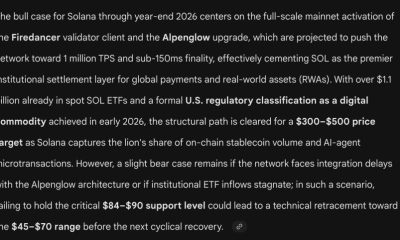
Google’s Gemini AI Predicts Incredible Solana Price by the End of 2026
-

 Tech2 days ago
Google reimburses Register sources who were victims of API fraud
-

 Business2 days ago
H&R Real Estate Investment Trust (HR.UN:CA) Q1 2026 Earnings Call Transcript
-

 Sports2 days ago
Napoleonic enters 2026 Doomben 10,000 field via Abounding withdrawal
-

 Tech7 days ago
Over-Engineered Cardboard PC Case Houses a Full Computer Without Compromising Style or Performance
-

 Politics6 days ago
The geopolitics behind the UK’s South Atlantic hantavirus rescue mission
-

 Politics6 days ago
The Board of Deputies just smeared Polanski to suck up to Farage
-

 Fashion5 days ago
The Best-Kept Makeup Secret for a More Defined Face
You must be logged in to post a comment Login