


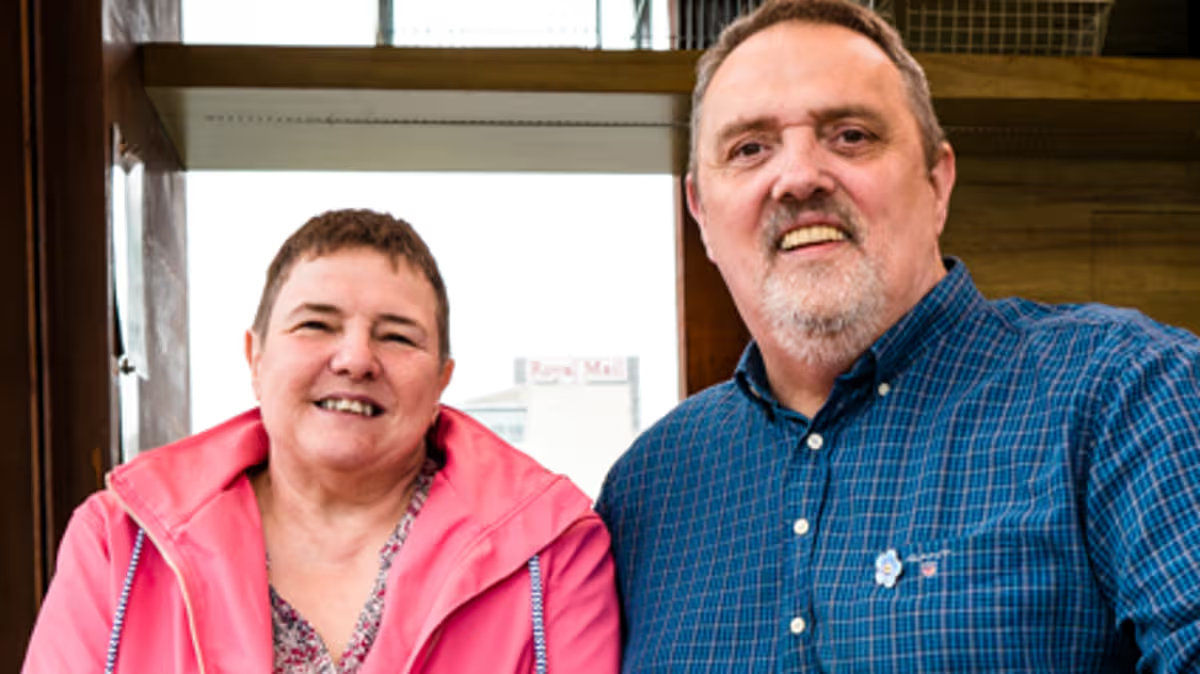
What followed were a very frightening few months having to find their own support
When Julie Kerr was diagnosed with dementia in 2022, a doctor told her to go home and Google it before showing her to the door.
When Julie started becoming increasingly forgetful a few years ago, her daughter, a care assistant, arranged for her to see her GP.
After a series of hospital tests, including scans, to rule out other conditions, the Newtownabbey grandmother was eventually diagnosed with early-onset Alzheimer’s four years ago.
READ MORE: ‘If that was my partner, I’d be gone,’ nurse tells woman after husband’s dementia diagnosis at 39READ MORE: ‘I was diagnosed with Parkinson’s and dementia the same day but still have a positive outlook on life’
After Julie, 61, received her dementia diagnosis, the doctor stood up, opened the door and said: “You’ll be able to find out more about it on the internet,” then closed the door.
What followed were a very frightening few months as Julie and her husband David then had to find their own support, eventually joining a local dementia support group.
The couple are speaking out as a new landmark report exposes a dementia care system failing patients in Northern Ireland at every stage.
The findings, published today by Alzheimer’s Society, show that dementia patients routinely face prolonged delays to diagnosis followed by gaps and stark inequalities in treatment and support.
The charity says delays of this scale have quietly become routine for dementia, Northern Ireland’s biggest killer, but would not be accepted for cancer or heart disease.
This one-of-a-kind analysis, examining the entire dementia and treatment pathway end-to-end reveals patients are not just delayed or ignored once, but are repeatedly missed for opportunities for diagnosis, treatment and support at every stage.
Julie’s husband David said: “You can’t give people a dementia diagnosis and tell them – that’s it, away you go.”
He compares this experience to when he was diagnosed with heart disease and assigned a dedicated heart nurse for follow up, adding: “Why isn’t there a similar approach with dementia?”
Julie and David are now taking part in an Alzheimer’s Society programme called ‘Time for Dementia’ which aims to educate a new generation of healthcare professionals who are more aware and understanding of dementia.
The missed, delayed, abandoned findings across the UK:
- Diagnosis delays: From first symptoms to diagnosis, people wait an average of 3.5 years – with almost six months of that spent waiting for diagnosis after GP referral to a memory clinic.
- Early signs going unnoticed: Four in five GPs say patients are reluctant to discuss symptoms of dementia in consultations, while one in five say they lack confidence diagnosing dementia.
- Left without support: One in five say they received no support after diagnosis, with families describing being “released into the wild”.
- Treatment inconsistencies: Only half of those prescribed dementia medication remain on it for a year, despite benefits of continued treatment.
Northern Ireland faces the largest projected increase in dementia prevalence in the UK – from 24,700 to 37,400 by 2040, a rise of 51%. Without strategic intervention, the cost of dementia to Northern Ireland is expected to double from £1 billion to £2 billion per year by 2040.
New polling of almost 800 adults across Northern Ireland underlines the urgency for change: 92% of respondents are calling for improvements to timely and accurate diagnosis, 89% support increased investment in diagnostic services, and 92% believe people with dementia must have the right support for unpaid carers.
Alzheimer’s Society is calling on the Northern Ireland Assembly to urgently publish and deliver a bold and ambitious new dementia strategy, one that provides the ambition and accountability needed to drive real change for everyone living with dementia in Northern Ireland.
Ruth Barry, Alzheimer’s Society’s National Influencing Manager, says there’s failure throughout the dementia care system in Northern Ireland.
She added: “The scale of this failure wouldn’t be accepted for other major conditions like cancer or heart disease. Our ageing population and predicted rise in dementia cases mean that action can’t wait.
“That’s why we’re calling for a Northern Ireland dementia strategy and have published our Roadmap for Change. We urgently need to put plans in place to give people they care they need and deserve.”
At every stage, people are missed. Symptoms are missed, diagnosis is delayed, and support often comes too late to be that lifeline so desperately needed by people with dementia and their loved ones.
On average, across the UK people wait 3.5 years from first symptoms to diagnosis, including a 22-week wait after referral and even then, one in five report receiving no support at all after diagnosis.
The analysis shows how these failures compound: many people miss early warning signs, face long delays to diagnosis, and then fail to receive recommended treatments or follow-up care.
Without urgent action to fix the diagnosis and care system, the charity says delays will continue to push people into crisis faster, increase emergency hospital admissions, and place growing strain on health and social care services.
The findings form part of Alzheimer’s Society’s ‘Unlocking the Door’ reports, which bring together published research, clinical perspectives and data, and insight from people with lived experience of dementia. They are released ahead of the charity’s biggest annual fundraising campaign in June – the Forget Me Not Appeal – raising vital funds to support people affected by dementia.
In response, the Department of Health said people living with dementia across Northern Ireland should be supported to lead the best life possible.
A DoH spokesperson said: “This includes having access to safe, high quality and person-centered assessment and care, which focuses on their individual needs and wishes and which is underpinned by their right to access equitable healthcare provision.
“The Regional Dementia Care Pathway, launched in 2018, is the Department’s strategic tool to develop high-quality dementia services in Northern Ireland. Unfortunately, the Pathway has not been fully implemented as a result of significant service capacity challenges, gaps in available workforce, financial constraints and a growing demand for services.
“As part of the strategic and operational planning processes for 2026/27, the Department has recognised improving dementia services as a key priority.”
They added: “The Department established a Regional Dementia Project Board in 2024 to bring a sharpened focus on improvement in dementia care and services across the region, including further programmes for dementia training. The Alzheimer’s Society is a valued partner and a member of the Board.
“The Department continues to work with the Health and Social Care Trusts to explore how existing funding for dementia services can be best used to meet population needs, while working towards an affordable and sustainable funding position in the future.
“Reform of services will take time, however, and the shift of appropriate services out of hospitals and into the community and home-based settings are vital.”
To ensure you don’t miss out on all the latest from Belfast Live, be sure to make us your preferred source on Google.

























































You must be logged in to post a comment Login