Connect with us

Tech

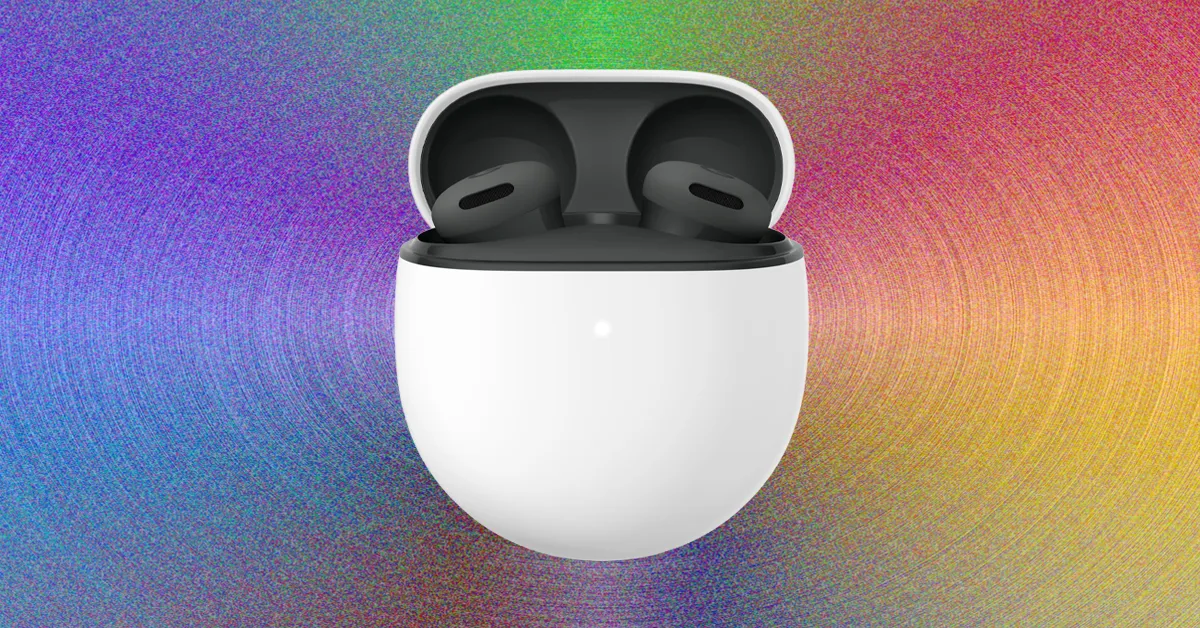
Best Wireless Earbuds (2026): Apple, Sony, Bose, and More

Published

on

Other Earbuds We Like

Every month seems to bring new sets of earbuds with longer battery life, new features, and more compact designs. As such, we can’t list everything we like. But if you’re still hunting, here are some other recommendations.

Nothing Ear (a) for $59: It has taken a lot for me to recommend a pair of ostensible AirPods Pro clones as the best earbuds for most people, but that speaks to just how much I actually like the Nothing Ear (a). These stylish little yellow earbuds come in a sleek, clear charging case, and they have excellent sound and decent noise cancellation for under $100 retail. I liked how easily they paired with Android and iOS devices and that the lightweight, compact design helped them stay comfortable during longer listening sessions. The larger, more expensive Nothing Ear are also good, but they don’t quite match the Ear (a)’s svelte figure.

Status Audio Pro X for $239: The multi-driver array inside these cool-looking earbuds from little-known brand Status Audio helps them rise above the rest when it comes to audio quality. A dynamic driver down low pairs with a set of Knowles balanced armatures for upper mids and highs, providing a ton of musical separation between instruments, and offering some of the best detail down low that we’ve heard in a pair of buds so far. The warm EQ works well with pop music and acoustic music alike, and the Pro X support Sony’s LDAC Bluetooth codec for near-lossless streaming quality. We compared them with the best from Sony, Bose, Sennheiser, and Technics, and found that the Pro X hold their own valiantly, with only the call quality coming in a touch below what others have to offer.

Advertisement

Technics EAH-AZ80 for $165: Technics’ follow-up to the fantastic EAH-AZ80 provides trickle-down driver technology from the brand’s hi-fi in-ears, the EAH-TZ700. The result for the AZ100 is even richer and more detailed sound that digs deep into instrumental textures to reveal new dimensions in old songs. The buds add new features like Dolby-powered Spatial Audio and Bluetooth LE Audio support for futureproofing, along with old favorites like three-device multipoint pairing and mildly improved noise canceling. The slimmer design isn’t as ergonomic as the AZ80 to my ears, but they’re still comfy, and battery life of up to 10 hours per charge with ANC lets you listen long past Bose and Apple buds. —Ryan Waniata

Beyerdynamic Amiron 300 for $150: These premium earbuds from Beyerdynamic look nondescript and sound fantastic, but they lack any of the superlative qualities of the buds on the list above. If you’re after a clean-looking pair of headphones with fantastic vocal definition, they’re worth considering.

Advertisement

Audio-Technica ATH-CKS50TW2 for $159: These buds from Audio Technica boast 15 hours of battery life with noise canceling on, which is the longest we’ve tested in a pair of earbuds. Despite a somewhat bulky appearance, they actually remain very ergonomic, with multiple pairs of included eartips to guarantee a good fit. A cool magnetic feature allows you to clip the buds together when they’re not in their wireless charging case to engage standby mode. These aren’t the best-sounding buds for the money, nor do they have the best noise reduction, but if you want a pair that will last you throughout multiple workdays (or one really long one), these are a great option. (Note: These have been in and out of stock on Amazon.)

Soundcore Space A40 for $45: While they’re no longer on our main list, the Space A40 are still some of my favorite buds for the money, providing good features, clear sound, and excellent noise canceling for their price class. They also look polished, with only their lack of auto-pause sensors betraying their low price.

Samsung Galaxy Buds 2 Pro for $100–$200: The Galaxy Buds 2 Pro are getting older, but they’re still among the best buds to pair with a Samsung phone. They don’t have the multi-device connectivity of our top pick for Android users, and their five-hour battery is looking pretty short these days, but they provide excellent sound quality, IPX7 waterproofing, and a distinctive design that doesn’t just ape the AirPods Pro. That makes them well worth considering on sale.

Advertisement

Sony Linkbuds Fit for $200: Sony’s Linkbuds Fit offer rich and punchy sound, naturalistic transparency mode, and a light and comfy fit, helping them live up to their intent as a “wear anywhere” solution. They provide some solid features, but skimp on battery life with just 5.5 hours per charge, and their noise canceling is just OK. Their oddly unresponsive touch controls and reliance on flimsy silicone sleeves further diminish their value, but they’re still Sony buds and could be worth nabbing on a good sale.

Montblanc MTB 03 for $395: These earbuds are priced out of reach for most buyers, but if you’ve got the cash, you’ll be rewarded with a luxury experience worthy of the brand. Montblanc has called in some heavy hitters from the audio industry to design and voice these buds. The result is a small, comfortable, and quite flashy-looking pair of wireless earbuds that sound really impressive.

Raycon Everyday Earbuds for $80: These YouTuber-beloved earbuds are actually a decent cheap pair. They are small and light, and they come with an IPX6 rating, which makes them great for workouts.

Earbuds to Avoid

As a general rule, you should avoid earbuds that don’t support the Bluetooth 5.0 standard (or higher), or don’t offer at least five hours of battery life—more like six these days. Batteries in wireless headphones degrade over time, so the better your battery life is at first, the more tolerable it will be in two to three years.

Advertisement

Apple AirPods (Previous or Current Gen) for $119–$170: These headphones do some things well, we just don’t like them all that much. (Read our latest review.) They get OK battery life, come in a compact case, and work well for calls, but they don’t fit all ears well, and since they don’t have ear tips or wings, you’re out of luck if they’re loose. The priciest model adds noise canceling, which works about as well as you’d expect for a pair that doesn’t offer a proper seal. Want clear music, good noise canceling, and advanced features made for iPhones for less than the AirPods Pro 3? Get the AirPods Pro Gen 2, which sometimes cost more (and sometimes less) but are legitimately great.

Beats Solo Buds for $70: These are lackluster in virtually every possible way, especially when it comes to features for the money. Their best traits are their micro-size and big battery, but that’s about it. It’s odd, because we like other headphones from the brand, but these just don’t keep pace. The best we can say is they are cheap.

Samsung Galaxy Buds 3 for $170: A Cybertrucked pair of AirPods clones, the headphones in the new Galaxy Buds line work worse than they already look. With no eartips, these are uncomfortable to wear for long periods, and the noise canceling is all but useless.

Advertisement

How We Define Wireless Earbuds

We’ve seen this category go by many names: true wireless earbuds, truly wireless earbuds, completely wireless earbuds, fully wireless earbuds, wirefree earbuds, etc. These days, if a pair of earbuds connects to your phone/computer via Bluetooth and has no cord that connects the left bud to the right, we just call them wireless. Wireless sets typically come with two popcorn-sized buds, each with a battery inside, and a charging cradle that carries extra battery power and keeps them safe when you’re not wearing ’em. Some wireless earbuds have a cable or neckband that connects the two buds together, usually found on workout buds from brands like Shokz.

Ridding yourself of all cords can feel liberating, but these do come with issues, such as limited battery life (don’t buy any with less than five hours), confusing controls, and reliance on a charging case. They’re also easier to lose than traditional earbuds, and replacing one bud can be expensive. That said, this is one of the most innovative categories in tech, offering a flurry of new features from heart rate monitors to OTC hearing aid functionality, with more added in each new generation. These days features like noise canceling and transparency mode are standard, while the burgeoning open-ear category offers a more natural way to keep aware of your surrounding.

We test headphones and earbuds the way that we live. We take them to the gym, wear them around offices, travel with them, and generally try to use them as we anticipate potential buyers will use them. If a pair advertises dust or water resistance, we test that. We drop-test cases and test cables, charging times, and battery life, and we note everything we find exceptional to our readers.

Advertisement

While we do not typically use a set playlist of music to test each pair, we aim to test acoustic, rock, hip hop, pop, country, and a variety of other genres with every pair of headphones, ensuring offer a good perspective on sound signature across genres and volumes. For noise reduction, we test the headphones in real-world environments and note our findings. When possible, we attempt to have headphones worn by a variety of people with different head and ear shapes, to ensure we’re thinking about the widest audience possible.

Power up with unlimited access to WIRED. Get best-in-class reporting and exclusive subscriber content that’s too important to ignore. Subscribe Today.

Source link

Advertisement
Continue Reading
Click to comment

Leave a Reply

Your email address will not be published. Required fields are marked *

Tech

The Shoes and Brooms Transforming Curling at the 2026 Winter Olympics

Published

on

The Winter Olympic Games have begun, and once again the sport of curling is set to draw in scores of new converts.

Although dominated by Sweden, Canada, Switzerland, and Scotland, many eyes during the 2026 Winter Olympics will be on the team from host country Italy thanks to Stefania Constantini and Amos Mosaner, the reigning Olympic and world curling champions in mixed doubles.

Regardless of which country takes home the gold, the real attention during the Olympics this year might be on the cool gadgets curlers use. Somewhat similar to a game of shuffleboard played with brooms and stones, curling has seen some pretty interesting advances in the gear that’s used on the ice.

In addition to raw skill and strategy, here’s everything you need to know about the state of the sport.

Advertisement

Scottish Stones

Nearly every curling stone—the round rock that slides down the ice—comes from the same place: Ailsa Craig. The 99-hectare island site in the Firth of Clyde inlet on Scotland’s west coast is known for its granite, and by extension its ability to provide enough of it to outfit curlers the world over.

Each stone must weigh between 19.96 and 17.24 kilograms and is made from one of two varieties of Scottish granite, common green and blue hone. These two types are the most resistant to heat and humidity and to the cracks and condensation that can form thanks to the 28 meters of ice the stones slide on during competitions.

The stones used at the Olympics, as well as the World Championships, are produced by Kays of Scotland. Many curling stones also come from Canada Curling Stone. (The sport has seen a recent spike in popularity in Canada.) Both companies produce the stones using a meticulous process of grinding and polishing.

Broom Boom

In addition to the stones, the main tools necessary to curl are a broom and shoes—this is where advancements in gear really come to the fore. For one, there are scores of sensors and microchips that allow players to manage the power of their throws.

Advertisement

For another, there are new-and-improved brooms that allow sweepers to maximize their skills. More than anything, what curlers need to work a broom are dexterity, physicality, and coordination. But beyond that, good tools don’t hurt.

“Broom technology continues to be a major focus because the physical demands of the sport continue to evolve, and one of the biggest challenges is finding the right balance between weight, strength, and effective energy transfer,” says Dale Matchett, general manager at curling equipment company BalancePlus.

As with any kind of sporting equipment, quality depends on how much a team or player is willing to spend. Carbon fiber brooms are best for their combination of strength and lightness. Composite fiber works well for midrange players. Fiberglass is the cheapest option. The broom’s handle and bearing factor into its weight and sweeping efficiency.

Source link

Advertisement
Continue Reading

Tech

NASA lets astronauts fly with smartphones, fast-tracks consumer tech, and quietly rewrites long-standing rules for documenting space missions

Published

on


  • NASA formally approves personal smartphones for government missions beginning with Crew-12
  • Artemis II will carry consumer phones alongside traditional spaceflight imaging equipment
  • Fast-tracked hardware approval marks a procedural shift inside NASA operations

NASA has confirmed its astronauts will now be allowed to carry personal smartphones on crewed missions, starting with Crew-12 and the delayed Artemis II flight.

Crew-12 is scheduled to travel to the International Space Station in mid-February 2026, while Artemis II is now expected to launch in March.

Source link

Advertisement
Continue Reading

Tech

Upgrading An Old Macbook With An Old Processor

Published

on

The Core Duo processor from Intel may not have been the first multi-core processor available to consumers, but it was arguably the one that brought it to the masses. Unfortunately, the first Core Duo chips were limited to 32-bit at a time when the industry was shifting toward 64-bit. The Core 2 Duo eventually filled this gap, and [dosdude1] recently completed an upgrade to a Macbook Pro that he had always wanted to do by replacing the Core Duo processor it had originally with a Core 2 Duo from a dead motherboard.

The upgrade does require a bit more tooling than many of us may have access too, but the process isn’t completely out of reach, and centers around desoldering the donor processor and making sure the new motherboard gets heated appropriately when removing the old chip and installing the new one. These motherboards had an issue of moisture ingress which adds a pre-heating step that had been the cause of [dosdude1]’s failures in previous attempts. But with the new chip cleaned up, prepared with solder balls, and placed on the new motherboard it was ready to solder into its new home.

Upon booting the upgraded machine, the only hiccup seemed to be that the system isn’t correctly identifying the clock speed. A firmware update solved this problem, though, and the machine is ready for use. For those who may be wondering why one would do something like this given the obsolete hardware, we’d note that beyond the satisfaction of doing it for its own sake these older Macbooks are among the few machines that can run free and open firmware, and also that Macbooks that are a decade or older can easily make excellent Linux machines even given their hardware limitations.

Advertisement

Source link

Advertisement
Continue Reading

Tech

Investigating The Science Claims Behind The Donut Solid State Battery

Published

on

Earlier this year Donut Lab caused quite the furore when they unveiled what they claimed was the world’s first production-ready solid state battery, featuring some pretty stellar specifications. Since then many experts and enthusiasts in the battery space have raised concerns that this claimed battery may not be real, or even possible at all. After seeing the battery demonstrated at CES’26 and having his own concerns, [Ziroth] decided to do some investigating on what part of the stated claims actually hold up when subjected to known science.

On paper, the Donut Lab battery sounds amazing: full charge in less than 10 minutes, 400 Wh/kg energy density, 100,000 charge cycles, extremely safe and low cost. Basically it ticks every single box on a battery wish list, yet the problem is that this is all based on Donut’s own claims. Even aside from the concerns also raised in the video about the company itself, pinning down what internal chemistry and configuration would enable this feature set proves to be basically impossible.

In this summary of research done on Donut’s claimed battery as well as current battery research, a number of options were considered, including carbon nanotube-based super capacitors. Yet although this features 418 Wh/kg capacity, this pertains only to the basic material, not the entire battery which would hit something closer to 50 Wh/kg.

Other options include surface-redox sodium-ion chemistry with titanium oxide. This too would allow for fast charging and high endurance, but Donut has already come out to state that their battery is not capacitor-based and uses no lithium, so that gets shot down too.

Advertisement

Combined with the ‘cheap’ and ‘scalable’ claims this effectively shoots down any potential battery chemistry and architecture. Barring some amazing breakthrough this thus raises many red flags, especially when you consider Donut Lab’s major promises for investors that should make any reasonable person feel skittish about pouring money into the venture.

Sadly, it seems that this one too will not be the battery breakthrough that we’re all waiting for. Even new chemistries like sodium-ion are struggling to make much of inroads, although lithium-titanate shows real promise. Albeit it not with amazing power density increases that would make it better than plain lithium-ion for portable applications.

Advertisement

Source link

Continue Reading

Tech

Qualcomm may borrow Samsung's cooling tech for its next Snapdragon flagship

Published

on


The Heat Pass Block first appeared in Samsung’s 2nm Exynos 2600, reportedly delivering a 16 percent improvement in thermal resistance. It’s a copper-based layer built directly onto the processor die, providing a direct pathway for heat to dissipate before it can radiate through surrounding components.
Read Entire Article
Source link

Continue Reading

Tech

Annual VC funding in Irish SMEs falls for first time since 2018

Published

on

‘It’s been a rollercoaster year for Irish SMEs looking to raise capital,’ said Caroline Gaynor, chair of the IVCA.

For the first time since 2018, annual venture capital (VC) funding into Irish technology small and medium enterprises (SMEs) has fallen, according to the Irish Venture Capital Association (IVCA) Venture Pulse report. 

The report, which was published today (8 February), in partnership with Irish law firm William Fry, indicated that funding in 2025 fell by 23pc to €1.1bn – a decline from 2024’s record €1.48bn. A total of 186 deals were completed in 2025, down from 217 in 2024 – representing a drop of 14pc.

Meanwhile, funding in the fourth quarter specifically fell by 46pc to €291.4m.

Advertisement

For Sarah-Jane Larkin, the director general of IVCA, the fourth quarter and IVCA’s research highlighted the weakness of not being able to tap into local private capital. “A major reason for the 46pc decline in fourth quarter funding was the 71pc fall off in international investment,” she said.

“Another reason for the decrease in international funding may be that US investors may be overly focused on local AI opportunities and certainly the amount of money being invested there is sucking up a lot of venture capital. Unicorn status is being achieved by early stage start-ups in generative AI in the US much quicker than in the past.”

The lack of overseas investment, according to Larkin, is reflected in the significant drop in deals valued at more than €30m, which saw a drop of more than 33pc compared to 2024 at €540.8m. In the fourth quarter specifically, this category fell by 69pc to €111m.

Funding in the €10m-30m range for the year overall also fell, dropping 14pc to €269.4m, while deals under €1m dropped by 26pc to €21.3m.

Advertisement

However, the IVCA indicated that transactions for other smaller rounds held up “reasonably well” in 2025, with funding in the €3m-5m category rising by 39pc to €113.8m. There was a small decline of 3pc in the €1-3m range to €102.2m, and seed funding dropped by 5pc to €141m.

The top five funding deals in quarter four were quantum computing company Equal 1 (€30m), Shorla Oncology (€25m), Aerska (€17m), Fresco (€15m) and Luminate Medical (€14m). 

Life science companies attracted the most funding in 2025 in Ireland, raising 40pc of the total at €461m. This was followed by software at €156m, cybersecurity with €136m, AI and machine learning with €104m, and fintech with €96m. 

Remaining positive

“It’s been a rollercoaster year for Irish SMEs looking to raise capital,” commented Caroline Gaynor, who is the chair of IVCA. She suggested that instability as a result of US president Donald Trump’s tariffs has, in part, led to the worst second quarter on record seen in the last 10 years. 

Advertisement

“In addition, the fourth quarter saw a 71pc retreat from the Irish market by international investors from €470m to €132.4m. This may be due to hesitation and uncertainty by US VC firms due to a number of factors including an ‘America first’ focus, negativity from across the Atlantic about Europe and the impact of a weakening dollar.”

However, Gaynor said she remained positive about Irish entrepreneurs looking to raise capital in 2026. She explained that the Irish Government’s Seed and Venture Capital Scheme 2025 has a record allocation of €250m and the benefits of the scheme should be coming into effect shortly. 

“Progress is being made on the Government’s important Enterprise Scaling Fund 2, as well as other policy measures to mobilise capital to Irish SMEs. Current geopolitical events have highlighted the need for us to be more self-reliant, have more access to local capital and not be dependent on overseas investors to fund our indigenous tech sectors.”

With additional reporting by Colin Ryan

Advertisement

Don’t miss out on the knowledge you need to succeed. Sign up for the Daily Brief, Silicon Republic’s digest of need-to-know sci-tech news.

Source link

Advertisement
Continue Reading

Tech

New tool blocks imposter attacks disguised as safe commands

Published

on

New tool blocks imposter attacks disguised as safe commands

A new open-source and cross-platform tool called Tirith can detect homoglyph attacks over command-line environments by analyzing URLs in typed commands and stopping their execution. 

Available on GitHub and also as an npm package, the tool works by hooking into the user’s shell (zsh, bash, fish, PowerShell) and inspecting every command the user pastes for execution.

URLs in commands look identical but are different
Source: GitHub

The idea is to block deceptive attacks that rely on URLs containing symbols from different alphabets that appear identical or nearly identical to the user but are treated as different characters by the computer (homoglyph attacks).

Wiz

This lets attackers create a domain names that looks the same as that of a legitimate brand but have one or more characters from a different alphabet. On the computer screen, the domain looks legitimate for the human eye, but machines interpret the anomalous character correctly and resolve the domain to the server controlled by the attacker.

While browsers have addressed the issue, terminals continue to be susceptible as they can still render Unicode, ANSI escapes, and invisible characters, says Tirith’s author, Sheeki, in the description of the tool.  

According to Sheeki, the Tirith can detect and block the following types of attack:

Advertisement
  • Homograph attacks (Unicode lookalike characters in domains, punycode, and mixed scripts)
  • Terminal injection (ANSI escapes, bidi overrides, zero-width chars)
  • Pipe-to-shell patterns (curl | bash, wget | sh, eval $(…))
  • Dotfile hijacking (~/.bashrc, ~/.ssh/authorized_keys, etc.)
  • Insecure transport (HTTP to shell, TLS disabled)
  • Supply-chain risks (typosquatted git repos, untrusted Docker registries)
  • Credential exposure (userinfo URLs, shorteners hiding destinations)

Unicode homoglyph characters have been used in the past in URLs delivered over email that led to a malicious website. One example is a phishing campaign last year impersonating Booking.com.

 and hidden characters in commands are very common in ClickFix attacks used by a broad range of cybercriminals, so Tirith could provide some level of defense against them on supported PowerShell sessions.

It should be noted that Tirith does not hook onto Windows Command Prompt (cmd.exe), which is used in many ClickFix attacks that instruct users to execute malicious commands.

Sheeki says the overhead of using Tirith is sub-millisecond level, so the checks are performed instantaneously, and the tool terminates immediately when done.

The tool can also analyze commands without running them, break down a URL’s trust signals, perform byte-level Unicode inspection, and audit receipts with SHA-256 for executed scripts.

Advertisement

Tweet

The creator assures that Tirith performs all analysis actions locally, without making any network calls, does not modify the user’s pasted commands, and does not run in the background. Also, it does not require cloud access or network, accounts, or API keys, and does not send any telemetry data to the creator.

Tirith works on Windows, Linux, and macOS, and can be installed through Homebrew, apt/dnf, npm, Cargo, Nix, Scoop, Chocolatey, and Docker.

BleepingComputer has not tested Tirith against the listed attack scenarios, but the project has 46 forks and almost 1,600 stars on GitHub, less than a week from being published.

Modern IT infrastructure moves faster than manual workflows can handle.

In this new Tines guide, learn how your team can reduce hidden manual delays, improve reliability through automated response, and build and scale intelligent workflows on top of tools you already use.

Advertisement

Source link

Continue Reading

Tech

India has changed its startup rules for deep tech

Published

on

Deep tech startups in sectors such as space, semiconductors, and biotech take far longer to mature than conventional ventures. Because of that India is adjusting its startup rules, and mobilizing public capital, hoping to help more of them make it to commercial products.

This week, the Indian government updated its startup framework, doubling the period for which deep tech companies are treated as startups to 20 years and raising the revenue threshold for startup-specific tax, grant, and regulatory benefits to ₹3 billion (about $33.12 million), from ₹1 billion (around $11.04 million) previously. The change aims to align policy timelines with the long development cycles typical of science- and engineering-led businesses.

The change also forms part of New Delhi’s effort to build a long-horizon deep tech ecosystem by combining regulatory reform with public capital, including the ₹1 trillion (around $11 billion) Research, Development and Innovation Fund (RDI), announced last year. That fund is intended to expand patient financing for science-led and R&D-driven companies. Against that backdrop, U.S. and Indian venture firms later came together to launch the India Deep Tech Alliance, $1 billion-plus private investor coalition that includes Accel, Blume Ventures, Celesta Capital, Premji Invest, Ideaspring Capital, Qualcomm Ventures, and Kalaari Capital, with chipmaker Nvidia acting as an adviser.

For founders, these changes may fix what some see as an artificial pressure point. Under the previous framework, companies often risked losing startup status while still pre-commercial, creating a “false failure signal” that judged science-led ventures on policy timelines rather than technological progress, said Vishesh Rajaram, founding partner at Speciale Invest, an Indian deep tech venture capital firm.

Advertisement

“By formally recognizing deep tech as different, the policy reduces friction in fundraising, follow-on capital, and engagement with the state, which absolutely shows up in a founder’s operating reality over time,” Rajaram told TechCrunch.

Still, investors say access to capital remains a more binding constraint, particularly beyond the early stages. “The biggest gap has historically been funding depth at Series A and beyond, especially for capital-intensive deep tech companies,” Rajaram said. That is where the government’s earlier RDI fund is meant to play a complementary role.

“The real benefit of the RDI framework is to increase the funding available to deep tech companies at early and growth stages,” said Arun Kumar, managing partner at Celesta Capital. By routing public capital through venture funds with tenors similar to private capital, he said, the fund is designed to address chronic gaps in follow-on funding without altering the commercial criteria that govern private investment decisions.

Techcrunch event

Advertisement

Boston, MA
|
June 23, 2026

Siddarth Pai, founding partner at 3one4 Capital and co-chair of regulatory affairs at the Indian Venture and Alternate Capital Association, said India’s deep tech framework avoids a “graduation cliff” that has historically cut companies off from support just as they scale.

Advertisement

These policy changes come as the RDI fund is beginning to take shape operationally, Pai said, with the first batch of fund managers identified and the process of selecting venture and private equity managers under way.

While private capital for deep tech already exists in India — particularly in areas such as biotech — Pai told TechCrunch the RDI Fund is intended to act as a nucleus around which greater capital formation can occur. Unlike a traditional fund-of-funds, he noted, the vehicle is also designed to take direct positions and provide credit and grants to deep tech startups.

India’s deep tech funding grows

In terms of scale, India remains an emerging rather than dominant deep tech market. Indian deep tech startups have raised $8.54 billion in total to date, but recent data point to renewed momentum. Indian deep tech startups raised $1.65 billion in 2025, a sharp rebound from $1.1 billion in each of the previous two years after funding peaked at $2 billion in 2022, per Tracxn. The recovery suggests growing investor confidence, particularly in areas aligned with national priorities such as advanced manufacturing, defence, climate technologies, and semiconductors.

“Overall, the pickup in funding suggests a gradual move toward longer-horizon investing,” said Neha Singh, co-founder of Tracxn.

Advertisement

In comparison, U.S. deep tech startups raised about $147 billion in 2025, more than 80 times the amount deployed in India that year, while China accounted for roughly $81 billion, data from Tracxn shows.

The disparity highlights the challenge India faces in building capital-intensive technologies, even with its wealth of engineering talent. So the hope is that these moves by the Indian government will lead to more investor participation over the medium term.

Image Credits:Jagmeet Singh / TechCrunch

A longer-term signal

For global investors, New Delhi’s framework change is being read as a signal of longer-term policy intent rather than a trigger for immediate shifts in allocation. “Deep tech companies operate on seven- to twelve-year horizons, so regulatory recognition that stretches the lifecycle gives investors greater confidence that the policy environment will not change mid-journey,” said Pratik Agarwal, a partner at Accel. While he said the change would not alter allocation models overnight or eliminate policy risk entirely, it increased investor comfort that India is thinking about deep tech on longer time horizons.

“The change shows that India is learning from the U.S. and Europe on how to create patient frameworks for frontier building,” Agarwal told TechCrunch.

Whether the move will reduce the tendency of Indian startups to shift their headquarters overseas as they scale remains an open question.

Advertisement

The extended runway strengthens the case for building and staying in India, Agarwal said, though access to capital and customers still matters. Over the past five years, he added, India’s public markets have shown a growing appetite for venture-backed tech companies, making domestic listings a more credible option than in the past. That, in turn, could ease some of the pressure on deep tech founders to incorporate overseas, even if access to procurement and late-stage capital will continue to shape where companies ultimately scale.

For investors backing long-horizon technologies, the ultimate test will be whether India can deliver globally competitive outcomes. The real signal, Kumar of Celesta Capital said, would be the emergence of a critical mass of Indian deep tech companies succeeding on the world stage.

“It would be great to see ten globally competitive deep tech companies from India achieve sustained success over the next decade,” he said, describing that as the benchmark he would look for in assessing whether India’s deep tech ecosystem is maturing.

Source link

Advertisement
Continue Reading

Tech

NYT Connections hints and answers for Monday, February 9 (game #974)

Published

on

Looking for a different day?

A new NYT Connections puzzle appears at midnight each day for your time zone – which means that some people are always playing ‘today’s game’ while others are playing ‘yesterday’s’. If you’re looking for Sunday’s puzzle instead then click here: NYT Connections hints and answers for Sunday, February 8 (game #973).

Good morning! Let’s play Connections, the NYT’s clever word game that challenges you to group answers in various categories. It can be tough, so read on if you need Connections hints.

Advertisement

Source link

Continue Reading

Tech

NYT Strands hints and answers for Monday, February 9 (game #708)

Published

on

Looking for a different day?

A new NYT Strands puzzle appears at midnight each day for your time zone – which means that some people are always playing ‘today’s game’ while others are playing ‘yesterday’s’. If you’re looking for Sunday’s puzzle instead then click here: NYT Strands hints and answers for Sunday, February 8 (game #707).

Strands is the NYT’s latest word game after the likes of Wordle, Spelling Bee and Connections – and it’s great fun. It can be difficult, though, so read on for my Strands hints.

Advertisement

Source link

Advertisement
Continue Reading

Trending

Copyright © 2025