Redmi is preparing to launch its Turbo smartphone lineup in India, starting with the upcoming Redmi Turbo 5. This phone was initially released in China a few months ago and will soon be available in India as well. The Redmi Turbo 5 will reportedly emphasize gaming, battery life, and fast charging. Xiaomi has confirmed that the smartphone will be available through Amazon India. The microsite also gives users a first look at the Indian version of the smartphone through teaser images. However, Xiaomi is still keeping the official launch date under wraps for now.
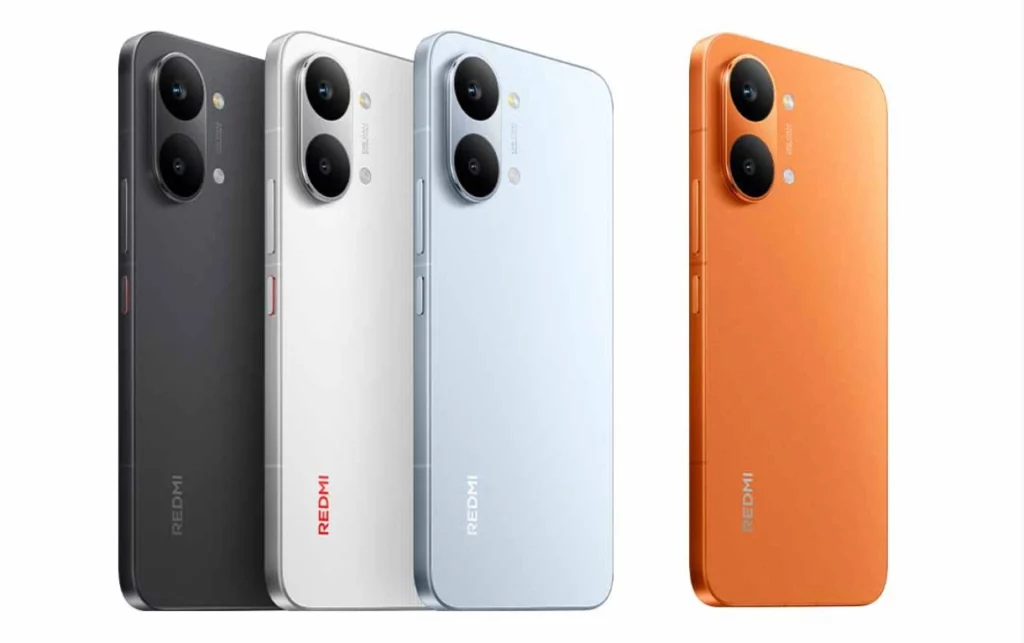
Redmi Turbo 5 Design Revealed
The teaser images shared by Xiaomi offer a clear look at the Redmi Turbo 5’s design ahead of its launch. The smartphone appears similar to the version that launched earlier in China. It includes two rear camera lenses positioned on the top-left side, with an LED flash next to them. Xiaomi has also confirmed a black color variant for the Indian market. The phone carries Redmi branding on the flat rear panel, and the right side houses both the power button and volume controls.
Expected Specifications of Redmi Turbo 5
In terms of specifications, the Redmi Turbo 5 will most likely prioritize performance and battery life. The device may come with a 6.59-inch 1.5K AMOLED screen that supports a 120Hz refresh rate, delivering outstanding performance when playing games or browsing. The phone may come powered by the MediaTek Dimensity 8500-Ultra chipset and offer 16 GB RAM along with 512 GB of internal storage. It may also have a Sony IMX882 primary camera sensor capable of capturing up to 50 MP images with OIS.
Another feature expected on the device is a massive 7,560mAh battery with fast 100W charging and reverse charging. There may also be durability certifications for IP66, IP68, and IP69. The Xiaomi Redmi Turbo 5 might emerge as a gaming smartphone with excellent performance and efficient cooling. The high-capacity battery may appeal to gamers due to extended use.
Expected Price and Availability
According to recent leaks, this device may launch in India on June 10. The smartphone is expected to target the premium mid-range market with pricing that could stay below Rs 45,000. Redmi will also introduce different memory variants, and the phone is likely to compete with the OnePlus Nord series and iQOO Neo 10.
Ahead of WWDC starting on June 8, Apple has sent out invites to the media for the event, as well as outlining its main schedule for the week.
Apple’s Worldwide Developer Conference is the big event for developers working in the Apple ecosystem. The 2026 edition is sure to be exciting as usual, and the company is preparing to get people involved.
On Monday, Apple started sending out invitations to members of the media to attend a special event at Apple Park. While this would previously have involved watching a live keynote, it has since taken the form of a mass viewing of the keynote at Apple’s headquarters, along with special events for attendees.
The tagline for the event this time is “Coming bright up.” As usual, it is a cryptic statement, providing little clue about what Apple will ultimately reveal to the world.
Advertisement
A schedule to follow
At the same time as sending out invitations, Apple has also listed the events that will take part across the week. It also outlined how developers can observe and take part in events remotely.
The week starts with the Apple Keynote on June 8 at 10 a.m. PDT, which will be the venue for Apple’s main launches, such as iOS 27. The keynote will stream from Apple’s website, the Apple TV app, and the Apple YouTube channel.
At 1 p.m. later that day, the Platforms State of the Union will be a deeper dive into new features, APIs, and technologies that are on the way. It will be viewable from the Apple Developer app, website, YouTube channel, and Bilibili.
Throughout the week, Apple will be holding video sessions and releasing guides, hosted by Apple engineers and designers. Group Labs, consisting of live online presentations and Q&A sessions, will also take place from Tuesday through Friday.
Advertisement
There will also be the Apple Design Awards, with 36 finalists chosen to highlight the craft, creativity, and technical expertise of the developer community.
Imagine cruising at 30,000 feet, stretched out in a comfortable seat with plenty of legroom while a flight attendant in an eye-catching uniform serves you a glass of wine or a gourmet meal. This didn’t just happen in first class (though the food was certainly better) — this was the time, popularly known as the Golden Age of travel. The years following World War II saw the dawn of the jet age, when air travel was something new and special.
Today, most of us are accustomed to tight economy seats and a small bag of pretzels. Unless you have the means to upgrade to Business or First Class, air travel is considered by many as a necessary evil. It’s often the best way to get where you need to go, and it’s opened up the world in ways that those living in the past could scarcely imagine. But it can be uncomfortable, expensive, and stressful. By contrast, the 1970s — the era of disco and muscle cars — were also the pinnacle of airline travel.
Advertisement
Smoking
Mac99/Getty Images
Today, it’s hard for any of us to imagine stepping on board an airplane and trying to find our seat amongst a haze of smoke. It would incite panic. In the 1970s, however, most passengers wouldn’t have given it a second thought. Smoking was not only allowed virtually everywhere; it was almost expected. From hospitals to restaurants to public transit, including planes, the general public could light up wherever they wanted, though there were at least a few rules smokers had to follow when flying.
In 1973, the Civil Aeronautics Board issued a rule requiring all domestic flights to offer both smoking and non-smoking sections onboard aircraft. If you’re a Gen Xer or older, you can probably still hear that ubiquitous greeting, “Smoking or non-smoking?” The rules were amended several times in the ensuing years, but smoking was allowed on at least some flights, some of the time until President George H.W. Bush signed a law in 1990 to ban smoking on all flights six hours or less. It wasn’t until 2000 that smoking on all flights was banned completely!
Ironically, also in 1973, a passenger on board a Varig flight from São Paulo to Rio de Janeiro, Brazil threw away a cigarette in a bin inside a lavatory instead of using an ashtray. The cigarette started a fire that quickly spread, resulting in an emergency landing with 123 fatalities. So, banning smoking also made flights safer, though, interestingly enough, airplanes still have to have ashtrays on board.
Advertisement
Security
Frame Stock Footage/Shutterstock
Even a first-time flyer knows to expect strict security standards on both domestic and international flights. There are restrictions on what we can pack and how much of it. Passengers must pass through metal detectors, advanced imaging technology, be patted down, or some combination of the three. Both carry-on and checked luggage is carefully screened. Of course, above all you have to carry an acceptable form of ID, including REAL ID or a passport, or pay a fine.
In the 1960s, the airline industry experienced a wave of hijackings. In response, the FAA ordered that cockpit doors be locked and more security officers were added, including Sky Marshals that could patrol flights when requested by the airline. In the 1970s, bomb-sniffing dogs were stationed at major airports, but passengers weren’t required to go through metal detectors until 1973, and each airline screened its own passengers. Until the terrorist attacks on September 11, 2001, anyone was allowed past airport security, ticket or not. The event also led to the creation of the Transportation Security Administration (TSA). While the lines and security measures may be frustrating for some travelers, air travel is undoubtedly more secure now than it was 50 years ago.
Advertisement
Pricing
Mulad Images/Shutterstock
Before the airline industry was deregulated in 1978, air travel pricing was bundled, and everything — bag fees, a meal, and other perks — was included. When airlines were regulated, the federal government set prices for all carriers, so they were forced to compete in other ways. Carriers set themselves apart with food service, free alcoholic drinks or cigarettes, passenger lounges, and more.
Deregulation was intended to drive down the cost of flying, and it worked. When you factor in inflation, travelers today are paying about half of what travelers paid in 1978 to fly. Deregulation not only made air travel more affordable, it resulted in a drastic increase in both the number of flights and destinations and eventually gave rise to budget airlines.
Advertisement
Prices are down, but airlines are no longer competing for our business with enticing perks. Instead, passengers are often given the bare minimum and forced to pay for any extras, such as checked bags, meals and Wi-Fi. Some airlines are even charging you extra if you want to reserve a specific seat ahead of time, which can be a real headache for those traveling with small children or couples and groups that simply want to sit together. While we may long for the days of better service, few of us are willing to pay extra for it.
Advertisement
Smaller seats
Marija Bazarova/Getty Images
If you’ve been flying for decades and feel more and more cramped, you aren’t crazy. Airlines have been steadily shrinking your bubble for years. Prior to deregulation, airlines weren’t as concerned with filling planes with as many people as possible, because ticket prices were set by the government. Instead, the experience was a luxury — people were paying top dollar to fly, and the experience had to justify the cost. Today, those in economy class may feel like they’re packed like sardines, and that’s partly because we’ve lost several inches of both seat width and leg room since the 1970s.
On longer flights 50 years ago, passengers could expect seats that were about 18 inches wide. Today, those seats are an inch smaller, which gives us less space at our shoulders and means we’re often knocking elbows with our neighbors. In addition to seat width, we’ve also lost space between rows of seats, called seat pitch. In the 1970s, seat pitch was typically around 34 inches. Today, the average is 31 inches, meaning we’ve lost three inches of legroom. Airlines pack in as many people as possible to maximize revenue.
To mitigate these effects, some airlines are using thinner, more streamlined seats to create an illusion of more space. In reality, passengers still feel cramped and reduced padding simply adds to their discomfort, especially on longer flights.
Advertisement
Safety
Standret/Getty Images
If turbulence makes your heart pound or you get shaky during takeoff and landing, you’re not alone. Millions of Americans suffer from the same afflictions, and those fears are compounded when we learn about air accidents like the Air Canada Express jet that collided with a fire truck on the ground at LaGuardia airport in New York in March of 2026. If you suffer from similar fears, you may be happy to learn that air travel is significantly safer now than it was in the 1970s.
The Golden Age of travel may have been defined by gourmet meals and other luxuries, but, on the flip side, about one in every 165,000 flights ended with a fatal accident. Those numbers would be even more frightening today considering that the FAA handles an average of 44,300 flights every day in the U.S. Put another way, between 1966 and 1977, commercial air travel saw one death per 350,000 passengers.
Modern air travel is much safer, partly due to new technology and regulatory oversight, partly due to lessons that were hard won. The National Transportation Safety Board has investigated air accidents since the 1960s, because finding out why a plane crashed can help prevent future accidents. Today, the average is one fatality per 13.7 million passengers, and that number has been steadily improving over the last 50+ years.
If you think you know what Apple will announce this year, now’s your chance to prove it and potentially win some prizes by playing CNET’s Big Guessing Game: Apple Edition.
Here’s how it works. CNET will host three rounds of five Apple prediction questions between now and September (15 questions total). Each question requires you to predict specifics about what Apple will announce or release this year, or what the company will do at its live events.
Advertisement
Every correct answer earns you one entry in a drawing for the grand prize, a sparkly new Apple Watch (cue the “oohs” and “ahhs”). You only need to get one prediction right to be entered into the contest, but every correct guess earns you more chances of winning that slick timepiece.
This first round of questions runs from today, May 19, until Tuesday, June 2, so you have some time to think over your responses. Good luck!
NO PURCHASE NECESSARY to enter or win the “CNET Group Big Guessing Game” Giveaway. Open to legal U.S. residents in the 50 U.S. & D.C., 18+ yrs of age. Other restrictions apply. Begins May 19, 2026 at 12:01 am ET and ends Sept. 2, 2026 at 11:59 pm ET. Void where prohibited. Subject to Official Rules: https://www.cnet.com/big-guessing-game-apple-edition-official-contest-rules/. Sponsor: Ziff Davis, LLC. Apple is not a sponsor of, affiliated with, or endorser of this sweepstakes. Apple Watch is a trademark of Apple Inc.
The slow trickle of iOS 27 leaks continues with seemingly obvious upgrades that are being painted as part of a desperate move to catch up with competitors. Instead, they appear to be business as usual.
Apple announces new features for iOS each year during WWDC, and sometimes, early builds lead to leaks of features being tested. While these leaks frustrate Apple engineers that would prefer to keep them a surprise, they’re sometimes obvious and predictable.
According to a new leak from Bloomberg, Apple will announce improved Writing Tools, a wallpaper generator, and the ability to generate Shortcuts with natural language input. While these are not groundbreaking features, they’re part of a larger effort to ensure users have access to various AI tools across their iPhone.
The report goes out of its way to suggest that Apple is “racing to catch up with hardware rivals” while referencing Google’s Android Show filled with pre-announced features. Several of these, like importing grocery lists to apps from a first-party tool like Reminders, already exist on Apple platforms without the need for AI.
Advertisement
Ignoring the unnecessary color of the report, the new features are predictable, if useful, additions to iOS. They also hold up to my repeated assertion that Apple’s AI efforts will remain out of the way for those that don’t want to use them.
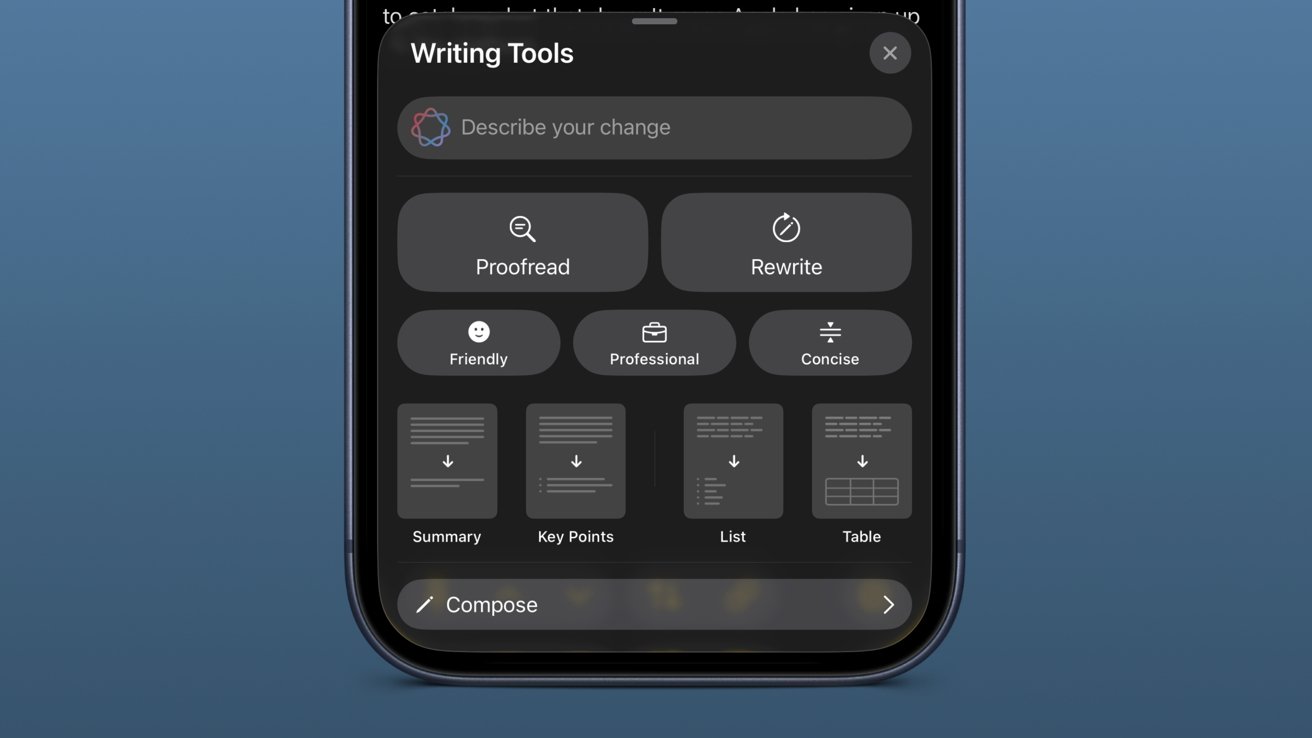
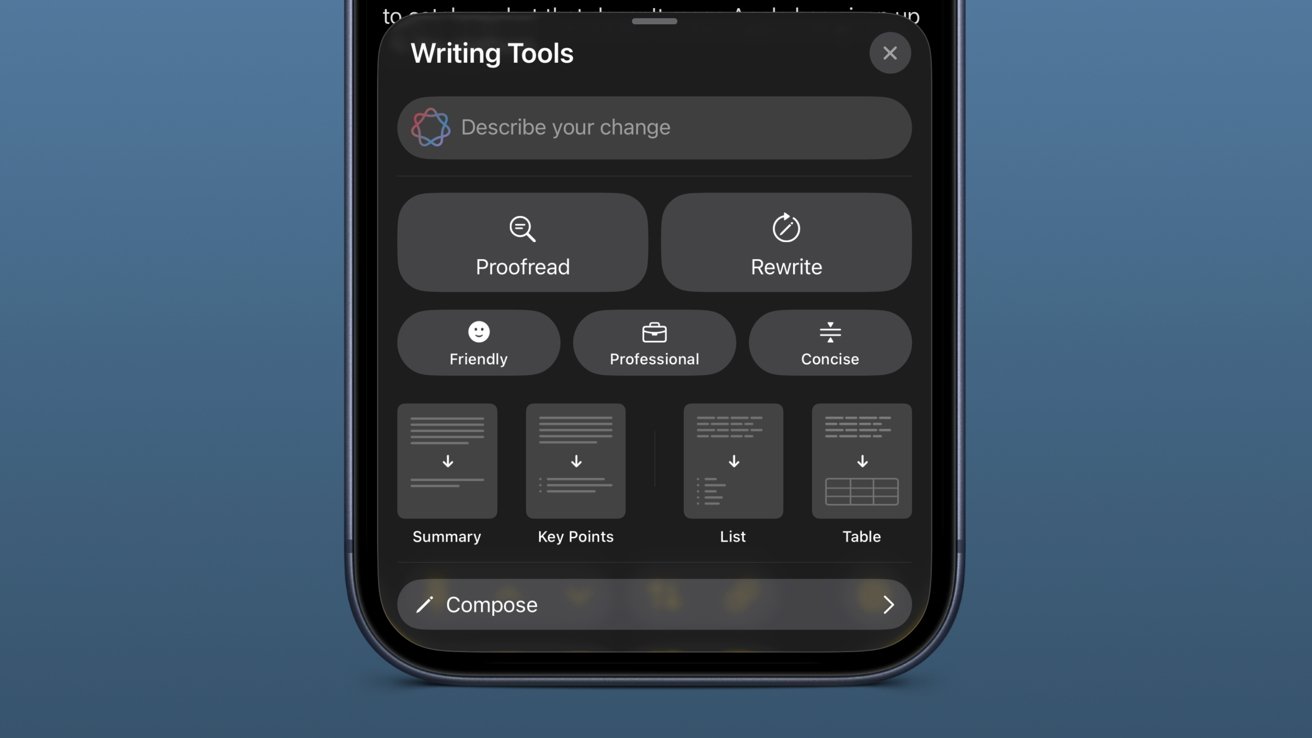
Writing Tools were introduced during WWDC 2024 as a part of Apple’s initial AI push. They’re able to generate or summarize text, but I’ve taken to using the Proofread function instead of paying for Grammarly.
Writing Tools could get more proactive in iOS 27
That feature is set to get an upgrade in iOS 27 that will bring Grammarly-style checks to the tool. Writing Tools already checks for spelling errors, punctuation mistakes, and similar basic changes, but it doesn’t look for syntax errors.
Advertisement
It doesn’t appear that Writing Tools will operate differently when invoked by the user, but one poorly explained part does stick out.
The report mentions that Writing Tools will appear from a translucent menu at the bottom, provide users with the ability to apply or ignore changes, and see edited text alongside revised text. That’s already in place today.
What’s new appears to be a briefly mentioned toggle that “pauses grammar checking.” That sounds more like the feature can be set to run automatically within a text field rather than relying on activating a specific tool.
Today, Writing Tools are found via a right-click menu or in the text suggestions box above the keyboard. Apple may bring more of the Writing Tools controls to the top of the keyboard.
Advertisement
Again, none of this is particularly revolutionary. In fact, they sound right out of my own wishlist for the Writing Tools feature.
More obvious updates
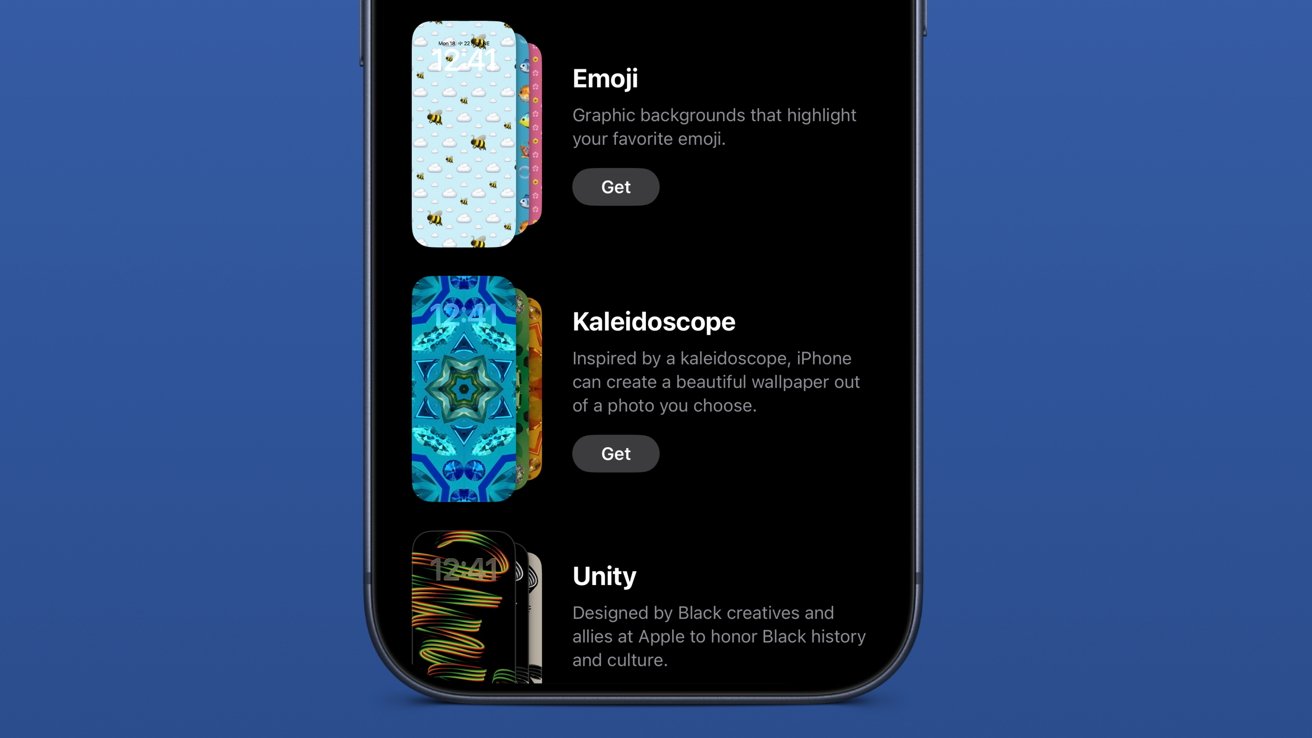
Apple previously introduced a whole new system for customizing the iPhone Lock Screen and Home Screen. It involves a wallpaper picker that pulls from Photos, preset wallpapers, or custom ones based on the weather or selected emoji.
A new AI generation tool for wallpapers could appear
It is only natural that Apple bring Image Playground into the mix. It’s already being used for generating images for Apple Invites, for example.
Advertisement
Then there’s the returning rumor about natural language processing for generating Shortcuts. This is an often repeated rumor that never came to fruition.
It seems iOS 27 will finally include the feature. Users will apparently be able to speak Shortcuts into existence rather than having to build them manually.
Apple’s more proactive Siri was also meant to suggest Shortcuts based on common and repeated tasks. Today, Apple Shortcuts is a useful tool, but only if you know how to build Shortcuts or get them from elsewhere.
Negative framing
I suppose it is fair to say that Google and Samsung have announced AI features, and even released some, for their smartphones. By that basic reality alone, it is easy to say that Apple is “behind” in this AI race, even if those features make the Android experience arguably worse.
Advertisement
However, I have never encountered a real human being, on the internet or otherwise, who has said these Android AI features were useful. Sure, they love their AI tools found in apps, but the on-device tools touted in these keynotes get crickets as far as I can tell.
It probably doesn’t help that the requirements for those features are incredibly specific. The fragmented nature of Android prevents feature parity across devices.
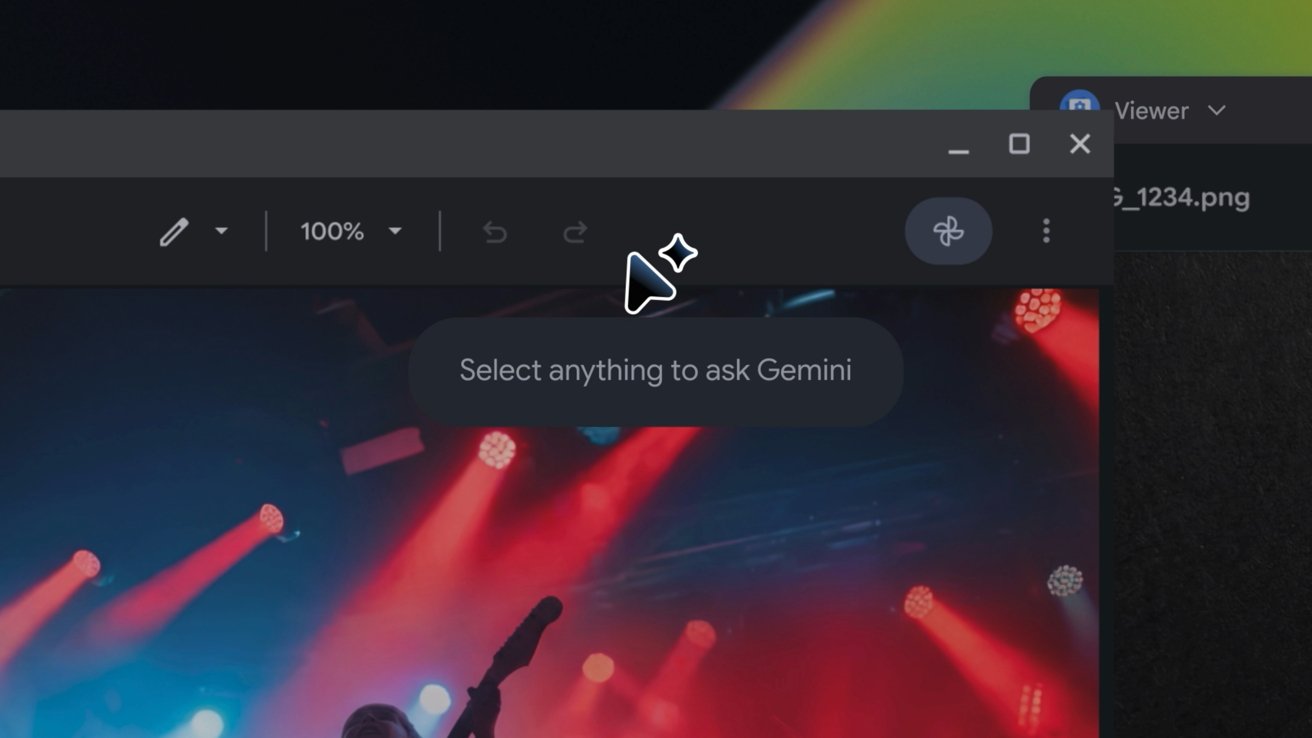
When I think of desperation, I imagine a company putting AI in a cursor so that everything becomes an AI interaction. But of course, no one would actually do that. Right?
Googlebooks will have an AI cursor
Advertisement
Apple has seen record sales and demand in spite of it not drowning its products in unnecessary AI features. In fact, I believe part of the success can be attributed to the exact opposite.
The idea that Apple is somehow flailing internally is silly to me. Of course, the company would have preferred not having a two-year delay on some AI features, but that’s a different story.
Apple’s products are primed to be the best home for AI models, if you choose to use them. Not only will Apple ship its improved Apple Foundation Models and APIs for endpoint agents, it will give users the ability to do business as usual.
The only ones I see “racing to catch up” are Apple’s competitors who are hoping for some time in the spotlight before the inevitable AI collapse. At that point, Apple will have its iPhone while these AI-first companies will have to pivot to some other grift.
Most members of Stanford’s class of 2026 are smart, ambitious, and poised for remarkable careers. Theo Baker already has one. In his first semester of college, Baker broke the story that forced Stanford president Marc Tessier-Lavigne to resign — work that earned him a George Polk Award, one of journalism’s highest honors. Warner Brothers and producer Amy Pascal have optioned the rights to that story. And Tuesday, with graduation less than a month away, Baker publishes How to Rule the World, a sweeping account of his time at Stanford and the school’s often insidious relationship with the venture capital industry. Judging by early interest, it has every chance of becoming a bestseller.
We’ve been anticipating this one (we shared some related thoughts about it just a few weeks ago). We talked with Baker last Friday. This interview has been edited for length and clarity.
You showed up at Stanford as a coder. How did you end up breaking one of the biggest stories in the university’s history before your freshman year was even over?
I arrived thinking tech and entrepreneurship was the path for me. I joined the student hackathon, Tree Hacks, helped run it, skipped ahead to the CS weeder class. But my grandfather, with whom I was very close, had passed away a few weeks before I arrived, and he talked about working on the student paper more than anyone I’d ever known. So I joined the student paper to feel connected to him — it was supposed to be a hobby, a way to meet people and explore campus.
Advertisement
Very quickly things spiraled from there. My first few stories got more reception than we’d imagined, tips started flooding in, and one led me to a pseudonymous website called PubPeer, where scientists dissect published research. There were comments, seven years old at the time, suspecting that papers co-authored by Stanford’s president, Marc Tessier-Lavigne, had images that were duplicated, spliced, or otherwise irregular. I was a month into my time at Stanford when that investigation began, and by the time I was back for sophomore year, the president had resigned.
Were you warned off the story?
Multiple times, before I’d even published my first article. People warned me that Tessier-Lavigne was a person of very high integrity with a sterling reputation — that I didn’t want to do this, that it was going to place me in a very uncomfortable position within the institution. Which, of course, was not wrong. Over the course of the next 10 months, as the story widened, the pushback grew steeper. Within 24 hours of my first story, the board of trustees announced their own investigation. I quickly learned that one of the board members overseeing it had an $18 million investment in Denali Therapeutics, the biotech company Tessier-Lavigne co-founded. And the statement announcing the investigation praised his “integrity and honor”— in an investigation that was theoretically looking into his scientific integrity. So the investigation itself became an object of reporting. Tessier-Lavigne never once directly responded to a request for comment during my freshman year. Eventually he began sending missives to all of the faculty — which included all of my professors — describing my reporting as “breathtakingly outrageous and replete with falsehoods.” And then I began hearing more from his lawyers.
The book is really about something broader, though — what you call the Stanford inside Stanford. What does that mean?
Advertisement
Very soon after I arrived, I realized there was this parallel reality — an inside world — where the kids identified early as the next trillion-dollar startup founders are plucked from the crowd and placed into a world of access and resources. Yacht parties, slush funds, everyone texting the same billionaires for advice on weekends. As Stanford has become more famous as the home of great startups, it has become, according to some people at the university, increasingly difficult to spot actual talent. So many people arrive thinking they can be the next billion-dollar dropout that there’s an entire system of hangers-on whose job is to separate what they call the “wantrepreneurs” — people doing it because it looks good — from the so-called builders who actually have potential. It’s a system designed to sniff out the teenagers you can make a buck off of as early as possible.
The title of the book, it turns out, isn’t just a metaphor.
No. It’s literally the name of a so-called secret class at Stanford, taught by a Silicon Valley CEO. It’s not really a class. It’s more like a Skull and Bones for the aspiring tech elite. People aren’t getting course credit, but there are lectures, discussions, guest speakers, held once a week in the winter quarter on campus. When I arrived, it was a status symbol even to know it existed — that made you “rule-adjacent,” as one person told me. What this guy Justin was trying to do — as the students in the class told me — was what everyone seems to be trying to do: get in and network with the teenagers who can be useful to you, young. Only he figured out how to cloak himself in this mystique and make these talented, promising kids come to him, because he was promising them how to rule the world. He promised that the most brilliant students at Stanford would congregate in this 12-person seminar, and that the only way to learn these secrets was to go through him. It’s a very poignant example of how this system of talent extraction has come to manifest itself in strange ways.
What does that talent-scouting system actually look like on the ground?
Advertisement
There are VCs who employ older Stanford upperclassmen to identify freshmen as soon as they arrive on campus. It’s kept purposefully obscure. I’ve had people tell me it’s seen as an anti-signal to join one of the big entrepreneurship clubs, because that looks like you’re doing it for the title — as opposed to being in one of the secret feeder groups where the true builders supposedly congregate. But as much as there is genuine talent among the kids in this world, the primary qualification is who you know — whether you’re getting tapped on the shoulder. There was a CEO who cold-emailed me freshman year, asked to get to know me. The first time we went to dinner, we went to the Rosewood Hotel, and he’s sitting there spoon-feeding his eight-month-old caviar as he casually mentions that his first-ever contract was for Muammar Gaddafi. That casualness is something I find fascinating. And this whole system goes a long way toward explaining how the big frauds develop. It starts by vesting huge amounts of authority, money, and power in the hands of teenagers without adequate safeguards for when things go wrong.
You arrived right as the FTX collapse was happening and ChatGPT launched. What was that like to observe up close?
The timing was almost absurd. We arrived at the tail end of the crypto craze — the assumption when we showed up was that crypto was how you were going to make your fortune. SBF begins his descent on November 2nd. ChatGPT comes out November 30th. And immediately everything pivots. I remember being at a dinner shortly after ChatGPT’s release, sitting with one of the biggest crypto boosters on campus, and he’s telling me that SBF was “directionally correct” — that was the phrase — but that everyone was trying to figure out how to get around the legality. And quickly, many of those same people realized that AI was the new craze they could jump on. They told me they could reach the same heights as SBF, preferably without the fall, by taking advantage of the newest new thing. Silicon Valley operates in cycles, but this one has been particularly fascinating to observe up close because the scale is just unfathomable.
Do you think your peers are leaning into entrepreneurship partly out of anxiety about the job market?
Advertisement
Absolutely. The AI rush has made talent the resource to mine in this modern-day gold rush — the most valuable researchers and founders are more valuable than ever, but entry-level positions are starting to disappear. There’s a common refrain among people in this world that it’s easier to raise money for a startup right now than to get an internship. Which is remarkable, right? Entrepreneurship, rather than being the non-conformist outsider thing it might once have been associated with, has become an expected path. That changes the nature of it entirely.
What’s one piece of advice you’d give to a 17-year-old heading to Stanford or any elite university today?
You have to be really conscious about whether you’re doing what you’re doing because you believe in it and because it’s the right thing — or because it’s the easy thing. It’s very easy to be buffeted by trends and the tech whirlpool, to find yourself wasting away at a job you don’t actually want because you followed the expected path. Following the expected path is way less interesting than going out and doing something for yourself. I admire the best founders who emerge from this place because they feel genuinely empowered to make a difference. You just have to be careful that you’re doing it for the right reasons — and not just because you want to get rich.
You came here thinking you’d be a founder. Do you still want to start something?
Advertisement
Honestly, I haven’t thought about it that much — it’s been a mad dash to finish the book and get to graduation, which is astonishingly only about a month away. But I think it comes across in the book that I really did fall in love with journalism. It’s a temperament, almost an affliction, more than a career. Whatever I do, it will intersect with that.
When you purchase through links in our articles, we may earn a small commission. This doesn’t affect our editorial independence.
Microsoft is bringing in more options for remapping the Copilot key
You’ll be able to redefine it to invoke the context menu, or use it as Right Ctrl
This used to be the Right Ctrl key before Microsoft jettisoned it to make room for the dedicated AI key on Windows 11 laptops
Microsoft is going to provide more options for remapping the Copilot key, the dedicated key introduced to summon Windows 11‘s AI assistant on laptops (and some standalone keyboards, too).
Windows Central noticed that Microsoft has confirmed this move in a support document, which states: “Customers who rely on the Right Ctrl key or Context menu key for keyboard shortcuts or assistive technologies (such as screen readers) experienced some challenges to their workflows when using these devices.
“A Windows 11 update will ship later this year that will add a setting option to let you remap the Copilot key to act as the Context menu key or Right Ctrl key.”
Latest Videos From
So, you’ll be able to use the Copilot key as a Control key on the right side of the keyboard, which is what that key would have been before Copilot was around. Either that, or you can switch it to bring up the context menu (the right-click menu that facilitates context-sensitive actions).
Advertisement
Microsoft previously introduced the ability to redefine the Copilot key to invoke Windows search or open certain apps (although no third-party applications support this, making it of limited use thus far).
Analysis: a necessary fix
(Image credit: Getty Images)
It’s good to get some better options, then, including that context menu key (which was actually rumored to be a change in the works over a year ago). Returning the key to the Right Ctrl is an important move because, as Microsoft observes, not having it can be an accessibility issue.
It’s instrumental for certain workflows, such as being able to use shortcuts with one hand, pressing Ctrl plus the arrow keys, for example, or other combos using Ctrl with other keys on the right side of the keyboard. Without a Ctrl key on the right, those actions become a two-handed operation using the left and right sides of the keyboard.
Advertisement
Sign up for breaking news, reviews, opinion, top tech deals, and more.
It’d be nice if Microsoft gave us a wider range of options to remap the key to anything we wanted, though that can be achieved by installing PowerToys and using the Keyboard Manager. We’ve got the full details on how to do that here, though I’d still rather have some of the key parts of PowerToys – including this one – incorporated into Windows 11 as options, as I recently discussed.
Overall, this move is a welcome one, and another part of Microsoft’s big plan to fix Windows 11 – although some folks are still pretty jaded about the company having implemented the Copilot key in the first place.
As this Redditor observed: “Oh, yes: steal the Right Ctrl and now return it as an improvement.”
Advertisement
And someone else on Reddit noted: “Looks like their telemetry told them people avoided pressing that key like a plague.”
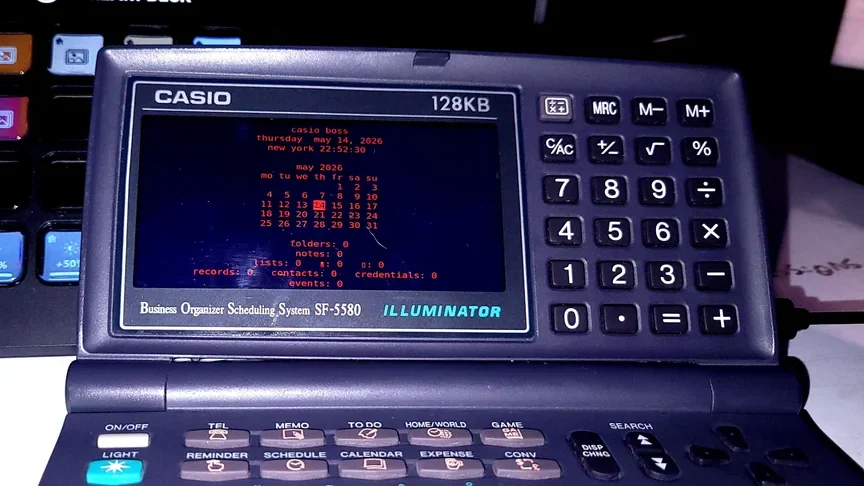
Remember digital organizers? They were like the lower-spec version of a PDA that couldn’t really do much more than store a few phone numbers and calendar entries. [TundraLegendZ] recently grabbed such a device from 1995 and set about transforming it into something a little more capable.
The device in question is a Casio Business Organizer Scheduling System SF-5580. The original guts have been replaced , though, with the power of a Raspberry Pi Zero. The single-board computer is hooked up to a small color LCD screen with a resolution of 480 x 800, which is tucked neatly into the spot where the original display lived. There’s also a Raspberry Pi Pico on board, which is charged with interfacing all 82 keys of the original keyboard. Power is courtesy of a 6000 mAh battery which should last a good few hours on a single charge. Hearing the buzzer hacked is fun, too. It’s more mobile phone ringtone than outright chiptune, but we still enjoyed listening to the results. Screencaps of the software show just what this setup can do with better hardware and a nicer screen than 1995 could provide. Future work is planned to give the build more capabilities with a HackRF upgrade.
Melbourne’s reputation as a global events city, from the Australian Open tennis and Formula 1 Australian Grand Prix to hosting NFL regular season games, now intersects with a different form of scale: large-scale compute, data-intensive research, and advanced engineering. Long recognized for delivering complex international events, the city is applying the same organisational capability to the infrastructure that underpins modern AI research, positioning Melbourne at the convergence of global convening and high-performance digital systems.
Consistently ranked among the world’s most livable cities, Melbourne was named Time Out’s Best City in the World in 2026, the first Australian city to hold the title.
More materially for research and innovation, Melbourne is also the nation’s fastest‑growing capital, attracting increasing concentrations of engineering and technology talent, investment and international engagement.
Advertisement
Australia’s artificial intelligence (AI) ecosystem is entering a new phase, defined less by isolated initiatives and more by the convergence of compute infrastructure, research intensity and international collaboration. Melbourne sits at this intersection.
Melbourne’s trajectory highlights what enables research at scale: access to frontier-grade compute, proximity to industry-ready infrastructure, and repeated opportunities for global research communities to convene.
Sovereign AI compute, expanding hyperscale data center campuses and a growing pipeline of international research-led conferences are reshaping the city’s research landscape. Together, these elements position Melbourne as a focal point for applied AI research, advanced engineering and data-intensive science.
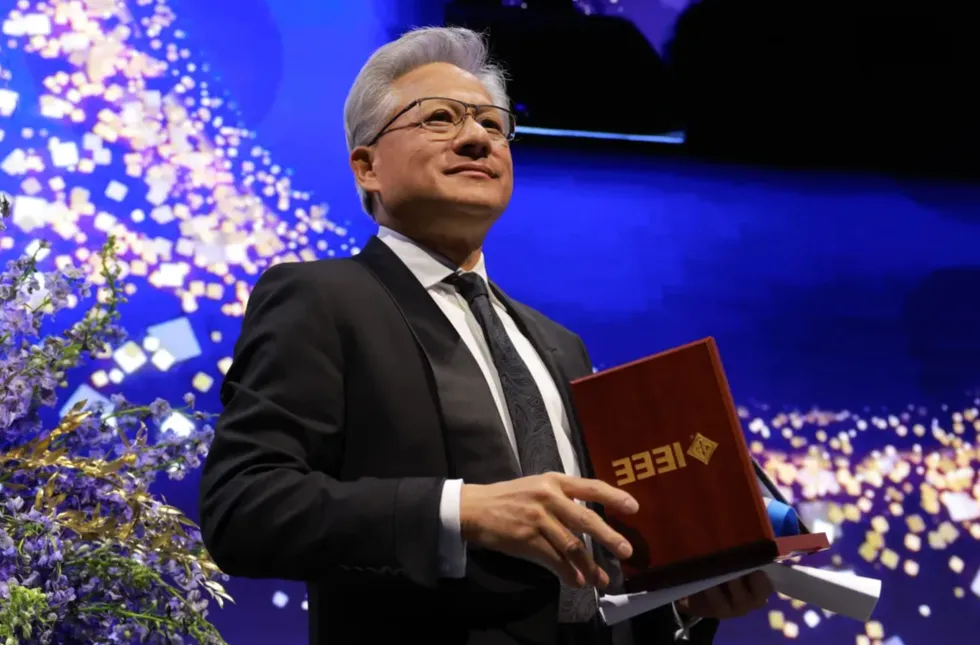
The growing global influence of AI engineering, underscored by NVIDIA CEO Jensen Huang receiving the 2026 IEEE Medal of Honor, reflects the scale of this shift. In Melbourne, these factors form a reinforcing research flywheel linking infrastructure, discovery and collaboration.
Advertisement
Rather than focusing on startup density or short-term commercial output, Melbourne’s trajectory highlights what enables research at scale: access to frontier-grade compute, proximity to industry-ready infrastructure, and repeated opportunities for global research communities to convene.
The most recent cornerstone of Melbourne’s AI capability is MAVERIC (Monash AdVanced Environment for Research and Intelligent Computing), Australia’s largest university-based AI supercomputer. Built and deployed by Monash University in partnership with NVIDIA, Dell Technologies, and CDC Data Centres, MAVERIC has been engineered specifically for large scale AI and data intensive science, with medical research representing a key priority. Indeed, in these regards MAVERIC has been designed to function as a Next Generation Trusted Research Environment thus ensuring that it is state-of-the-art and provides a safe and secure framework for the analysis of large sensitive datasets.
MAVERIC has been designed to function as a Next Generation Trusted Research Environment thus ensuring that it is state-of-the-art and provides a safe and secure framework for the analysis of large sensitive datasets.Monash University
Designed to support research projects including cancer and neurodegenerative disease detection, clinical trial analysis and drug discovery through to materials science and engineering, MAVERIC enables Australian researchers to train and evaluate large models domestically while keeping highly sensitive datasets secure and under national jurisdiction. This sovereign design is particularly relevant in fields such as medical research where privacy, regulation or intellectual property constraints limit the use of offshore cloud resources.
Monash University Vice-Chancellor and President Professor Sharon Pickering with researchers [left to right] Professor Anton Peleg, Professor Victoria Mar, Professor James Whisstock, Vice-President (Strategy and Major Projects) Teresa Finlayson, and Professor Patrick Kwan.Eamon Gallagher (Australian Financial Review)
Technically, the system reflects the latest shifts in high performance AI architecture. Built on NVIDIA GB200 NVL72 platforms and integrated using Dell’s rack scale infrastructure, MAVERIC employs closed loop liquid cooling to reduce water consumption compared with conventional air-cooled systems, aligning large scale compute growth with sustainability objectives while supporting high density, high throughput workloads.
Advertisement
Professor James Whisstock, Deputy Dean Research of Monash’s Faculty of Medicine Nursing and Health Sciences commented, “MAVERIC provides a huge leap forward in our compute capability that will revolutionize our researchers’ ability to address the most challenging and important research questions across the fields of medical research, information technology, and STEM disciplines. It will seed wonderful new cross-disciplinary collaborations, underpin the work of our best and brightest young researchers and will allow our scientists to continue to make major discoveries that positively impact the Australian and global population more broadly.”
“MAVERIC provides a huge leap forward in our compute capability that will revolutionize our researchers’ ability to address the most challenging and important research questions across the fields of medical research, information technology, and STEM disciplines.” —James Whisstock, Monash University
Monash University frames MAVERIC not as a standalone asset, but as part of the national research infrastructure, intended to strengthen collaboration across academia, healthcare, government and industry. This approach positions Melbourne at the forefront of sovereign AI enabled research in the region.
Data centre scale as research infrastructure
The infrastructure demands of modern AI research extend well beyond individual systems. Melbourne’s expanding data centre footprint now supports hyperscale compute, applied AI deployment and large-scale research workloads simultaneously.
In February 2026, CDC Data Centres opened its first Melbourne campus in Brooklyn, with two live facilities and a third in planning. Combined with CDC’s Laverton campus, Melbourne is projected to host more than 800 megawatts of sovereign digital capacity, critical for AI workloads requiring sustained access to high-density power, cooling and secure environments.
Parallel investment is underway in Fishermans Bend, where NEXTDC is developing a AUD $2 billion AI and digital infrastructure hub adjacent to the Innovation Precinct. Planned facilities include an AI Factory, a Mission Critical Operations Centre and a Technology Centre of Excellence, enabling sovereign AI, high-performance computing and cross-sector collaboration across health, defence and finance.
Melbourne hosts Australia’s largest cluster of AI firms, with 188 companies, and more than 40 data centres currently operate across Victoria. The Victorian Government has complemented this growth with an initial AUD $5.5 million investment in the Sustainable Data Centre Action Plan.
Together, these developments reinforce Melbourne’s role as a national and increasingly global hub for high-performance AI infrastructure as model complexity and infrastructure dependency continue to accelerate.
Advertisement
Applied AI research at scale
Monash University is home to MAVERIC, Australia’s largest university-based AI supercomputer, built and deployed by Monash in partnership with NVIDIA, Dell Technologies, and CDC Data Centres.Monash University
Melbourne’s research strength is underpinned by a dense university network with deep capability across AI, data science and engineering. Institutions including Monash University, the University of Melbourne, Deakin University, La Trobe University, RMIT University and Swinburne University of Technology collectively support research across machine learning, robotics, human-computer interaction, extended reality and advanced manufacturing.
This concentration fosters applied collaboration where AI intersects with medicine, sustainability, cognitive systems and immersive technologies. For visiting researchers, it provides access not only to academic expertise but also to live infrastructure environments where research can be tested and validated, reinforcing Melbourne’s position as one of the Asia-Pacific’s most integrated AI research ecosystems.
Conferences as research accelerators
Plenary session at Melbourne Convention and Exhibition Centre.Melbourne Convention Bureau
Melbourne’s selection as host city for a growing number of international technology conferences reflects the convergence of research capability and infrastructure maturity.
In September 2026, Data Center World Australia and The AI Summit Australia will be co-located at the Melbourne Convention and Exhibition Centre, bringing together global leaders across AI, digital infrastructure and enterprise technology. The pairing highlights a broader reality: advances in AI are inseparable from the infrastructure that enables them.
Advertisement
Melbourne’s expanding data centre footprint now supports hyperscale compute, applied AI deployment and large-scale research workloads simultaneously.
Research-led conferences are also expanding Melbourne’s global footprint. ICONIP 2026, hosted by Deakin University, will bring up to 700 researchers in neural networks and machine learning, followed in 2027 by IEEE VR, the leading conference on virtual reality and 3D user interfaces, attracting up to 1,000 delegates.
In this context, conferences function not simply as events, but as infrastructure for knowledge transfer, supporting standards exchange, collaboration and system-level learning at global scale.
A global platform for advancing research
Sovereign compute, data centre scale and a strong conference pipeline create a reinforcing cycle, enabling researchers to engage directly with infrastructure and industry well beyond the event itself.
Advertisement
By closing the gap between theory and deployment, Melbourne supports deeper technical exchange and more enduring global research networks.
This role was recognized in 2025 when the IEEE awarded Melbourne Convention Bureau the 2025 Organisational Supporting Friend of IEEE Member and Geographic Activities (MGA) — the first convention bureau in the Asia Pacific region to receive the acknowledgement as a result of the longstanding partnership with the IEEE Victorian Section.
Melbourne Convention Bureau (MCB) representative Fatima Aboudrar, Senior Business Development Manager, with Vijay S. Paul, Immediate Past Chair, IEEE Victorian Section, receiving Supporting Friend Member recognition in 2025.
As AI research becomes increasingly dependent on infrastructure scale, sovereign capability, and global collaboration, Melbourne is moving beyond hosting conversations to actively enabling the systems that advance AI and data‑driven research at global scale.
Conference support in Melbourne
Melbourne Convention Bureau
Advertisement
This ecosystem is underpinned by Melbourne’s highly accessible city centre, where world-class venues, research institutions and industry hubs are located in close proximity. Free public transport and a compact city footprint enable seamless movement from conference floor to real-world application.
Melbourne Convention Bureau (MCB) supports professionals in bidding for, securing and delivering international conferences across Melbourne and regional Victoria. Backed by the Victorian Government, MCB has for more than 60 years helped bring the world’s leading thinkers to the state, positioning Melbourne as a place where ideas become impact.
For years, the field of robotics has used the terms “dull, dirty, and dangerous” (DDD) to describe the types of tasks or jobs where robots might be useful—by doing work that’s undesirable for people. A classic example of a DDD job is one of “repetitive physical labor on a steaming hot factory floor involving heavy machinery that threatens life and limb.”
But determining which human activities fit into these categories is not as straightforward as it seems. What exactly is a “dull” task, and who makes that assumption? Is “dirty” work just about needing to wash your hands afterwards, or is there also an aspect of social stigma? What data can we rely on to classify jobs as “dangerous?” Our recent work (which was not dull at all) tackles these questions and proposes a framework to help roboticists understand the job context for our technology.
First, we did an empirical analysis of robotics publications between 1980 and 2024 that mention DDD and found that only 2.7 percent define DDD and only 8.7 percent provide examples of tasks or jobs. The definitions vary, and many of the examples aren’t particularly specific (for example, “industrial manufacturing,” “home care”). Next, we reviewed the social science literature in anthropology, economics, political science, psychology, and sociology to develop better definitions for “dull,” “dirty,” and “dangerous” work. Again, while it might seem intuitive which tasks to put into these buckets, it turns out that there are some underlying social, economic, and cultural factors that matter.
Dangerous Work: Occupations or tasks that result in injury or risk of harm
It’s possible to measure the danger of a task or job by using reported information. There are administrative records and surveys that provide numbers on occupational injury rates and hazardous risk factors. While that seems straightforward, it’s important to understand how this data was collected, reported, and verified.
These caveats are an opportunity for robotics to be helpful. If we went out and looked for it, we could probably find some less obviously dangerous work where robotics might be an important intervention, not to mention some groups that are disproportionately affected and would benefit from more workplace safety.
Dirty Work: Occupations or tasks that are physically, socially, or morally tainted
Colloquially, most people might think of dirty work as involving physical dirtiness, such as trash removal, cleaning, or dealing with hazardous substances. But social science literature makes clear that dirty work is also about stigma. Socially tainted jobs are often servile or involve interacting with stigmatized groups (for example, correctional officers), and morally tainted jobs include tasks that people commonly perceive as sinful, deceptive, or otherwise defying norms of civility (like a stripper or a collection agent).
“Dirty work” is a social construct that can vary across time (like tattoo industry stigma in the United States) and culture (such as nursing in the U.S. versus in Bangladesh). One way to measure whether work is “dirty” is by using the closely related concept of occupational prestige, captured through quantitative surveys where people rank jobs. Another way to measure it is through qualitative data, like ethnographies and interviews. Similar to “dangerous,” we see some hidden opportunities for robotics in “dirty” work. But one of our more interesting takeaways from the data is that a lower-ranked job can be something that the workers themselves enjoy or find immense pride and meaning in. If we care about what tasks are truly undesirable, understanding this worker perspective is important.
Advertisement
Dull Work: Occupations or tasks that are repetitive and lacking in autonomy
When it comes to defining dull work, what matters most is workers’ own experiences. Outsiders can make a lot of false assumptions about what tasks have value and meaning. Sometimes things that seem boring or routine create the right conditions for developing skills and competence, such as the concentration needed for woodworking, or for socializing and support, when tasks are done alongside others. Instead of assuming that repetitive work is negative, it’s important to examine qualitative data on how people experience the work and what purpose it serves for them.
DDD: An actionable framework
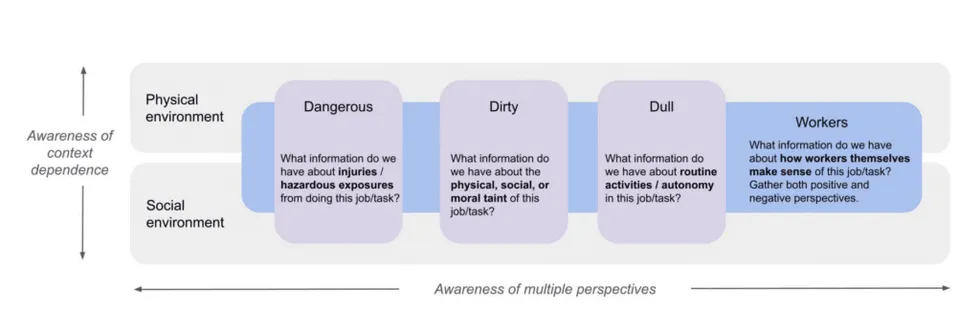
In our paper, we propose a framework to help the robotics community explore how automation impacts individual jobs. For each term—dull, dirty, and dangerous—the framework gathers key pieces of information to reflect on what physical or social aspects of the task are, in fact, DDD. Worker perspective is an important part of all three considerations. The framework also emphasizes awareness of context—meaning the physical and social environment of an occupation and industry that can influence the DDD nature of a task. Our corresponding worksheet suggests existing data sources to draw on and encourages us to seek out multiple perspectives and consider potential sources of bias in the information.
What makes tasks dull, dirty, or dangerous depends on the perspective of the humans doing those tasks.RAI
The job is also repetitive, but there are aspects that make it not dull. Specifically, workers cite the day-to-day interaction with their coworkers (which includes extensive insider vocabulary, work hacks, and mutual aid groups) and task variety as two of the most enjoyable aspects of the job. Task variety includes inspecting their vehicle and equipment, driving their truck, coordinating with crew members, lifting bins and bags, detecting incorrect sorting of waste, and unloading at the end destination.
Advertisement
This finding matters because some types of robotic solutions will eliminate the parts of the job that workers most appreciate. For instance, the National Institute for Occupational Safety and Health (NIOSH) recommends the adoption of automated side loader trucks and collision avoidance systems. This innovation increases safety, which is great, but it also results in a sole worker operating a joystick in a cab, surrounded by sensor and camera surveillance.
Instead, we should challenge ourselves to think of solutions that make jobs safer without making them terrible in a different way. To do this, we need to understand all aspects of what makes a job dull, dirty, or dangerous (or not). Our framework aims to facilitate this understanding.
Finally, it’s important to note that DDD is only one of many possible approaches to classify what work might be better served by robots. There are lots of ways we could think about which types of tasks or jobs to automate (for example, economic impact or environmental sustainability). Given the popularity of DDD in robotics, we chose this common phrase as a starting point. We would love to see more work in this space, whether it’s data collection on DDD itself or the creation of other frameworks.
At RAI, we believe that the fusion of robotics and social sciences opens a whole new world of information, perspectives, opportunities, and value. It fosters a culture of curiosity and mutual learning, and allows us to create actionable tools for anyone in robotics who cares about societal impact.
New York public health provider NYC Health + Hospitals says a months-long data breach that allowed hackers to steal personal data, medical records, and fingerprints scans affects at least 1.8 million people.
NYCHHC is the largest public health system in the United States and provides healthcare to over a million New Yorkers, the majority of whom are uninsured or receive state healthcare benefits, such as Medicaid.
The healthcare system reported the number to the U.S. Department of Health and Human Services, making it one of the largest healthcare-related data breaches of the year so far. Healthcare organizations have been repeatedly targeted by financially motivated cybercriminals in recent years in efforts to steal their vast banks of highly sensitive patients’ personal, medical, and billing information.
In a data breach notice on its website, NYCHHC said that it detected a cyberattack on February 2 and secured its network. The hackers had access to its network from November 2025 until February 2026, during which the hackers copied files from its systems.
Advertisement
The healthcare system said hackers broke due to a breach at a third-party vendor, which it did not name.
NYCHHC said that the exposed data varies by individual and includes patients’ health insurance plan and policy information, medical information (e.g., diagnoses, medications, tests, and imagery), billing, claims, and payment information. Other government-issued identity documents, such as Social Security numbers, passports, and driver’s licenses, were also compromised.
The breach notice also says “precise geolocation data” was taken in the breach, suggesting that the user-uploaded photos of their identity documents may have also contained the exact location of where the document was captured.
The breach is particularly sensitive because hackers stole biometric information, including fingerprints and palm prints, which affected individuals have for life and cannot replace. NYCHHC did not provide an explanation for storing biometric data. Prospective NYCHHC employees are generally required to enroll their fingerprints for criminal records checks. It’s not yet known if patients’ biometrics were also taken.
Advertisement
NYCHHC’s website was briefly offline as of Monday morning. A spokesperson for NYCHHC did not immediately respond to an email from TechCrunch with questions about the cyberattack. TechCrunch asked, among other things, why it took the organization months to detect the breach, and if it has received any communication from the hackers, such as a demand for payment.
It’s not clear if NYCHHC can receive email at the time of the website outage.
The incident appears to be unrelated to the data breach at National Association on Drug Abuse Problems (NADAP) earlier this year, in which over 5,000 NYCHHC patients had information taken in the cyberattack.
In the FBI’s latest annual report on cybercrime covering 2025, healthcare remained a top target for ransomware attackers — criminals who break into databases, steal a copy of the data while scrambling the victim’s servers, and threaten to publish the stolen data if the victim does not pay the hackers. A ransomware attack on UnitedHealth-owned health tech giant Change Healthcare allowed Russian-linked hackers to steal the medical and billing information of more than 190 million Americans, believed to be the largest theft of U.S. medical data in history.
Advertisement
When you purchase through links in our articles, we may earn a small commission. This doesn’t affect our editorial independence.












 MAVERIC has been designed to function as a Next Generation Trusted Research Environment thus ensuring that it is state-of-the-art and provides a safe and secure framework for the analysis of large sensitive datasets.Monash University
 Monash University Vice-Chancellor and President Professor Sharon Pickering with researchers [left to right] Professor Anton Peleg, Professor Victoria Mar, Professor James Whisstock, Vice-President (Strategy and Major Projects) Teresa Finlayson, and Professor Patrick Kwan.Eamon Gallagher (Australian Financial Review)
 Total data center investment, US$ billions.Source:
  Monash University is home to MAVERIC, Australia’s largest university-based AI supercomputer, built and deployed by Monash in partnership with NVIDIA, Dell Technologies, and CDC Data Centres.Monash University
 Plenary session at Melbourne Convention and Exhibition Centre.Melbourne Convention Bureau
 Melbourne Convention Bureau (MCB) representative Fatima Aboudrar, Senior Business Development Manager, with Vijay S. Paul, Immediate Past Chair, IEEE Victorian Section, receiving Supporting Friend Member recognition in 2025.
 What makes tasks dull, dirty, or dangerous depends on the perspective of the humans doing those tasks.RAI





































You must be logged in to post a comment Login