

Business
Price Inflation Accelerates As Wars And Deficits Expand




Evercore finds strong AI networking demand in latest channel checks
The Nifty Midcap 100 and Nifty Smallcap 100 indices gained over 1.4% each, while the largecap Nifty 50 index was up 0.5%, as seen at 11 am on Tuesday.
Top midcap gainers today
Coforge shares were the top gainers on the Nifty Midcap 100 index, jumping around 6% with IT peers Mphasis, OFSS and Persistent Systems following with a 5% rise in share price. The IT stocks are leading gains on Dalal Street as persistent rupee depreciation and cheaper valuations after the recent AI-led crash boosted investor sentiment.
“As per market consensus, Coforge is trading at a 1-year forward P/E of 23x (3-year average P/E of 34x), offering an attractive valuation. Coupled with a strong executable order book, diversified vertical growth, and enhanced AI-led capabilities, the company is well-positioned to deliver sustained double-digit growth and margin expansion in FY27,” said Geojit Investments while maintaining a ‘Buy’ call on the stock, with a target price of Rs 1,670 apiece.
Radico Khaitan, Policybazaar and Voltas shares followed, rising nearly 4% each. Vodafone Idea shares also gained around 4% to hit a fresh 52-week high, although several brokerages remain cautious after the 95% rally in one year.

KPIT Tech, Adani Total Gas, BSE, Patanjali Foods, Hindustan Petroleum Corporation (HPCL), Jubilant Foodworks and Prestige Estates, meanwhile, gained more than 3% each, buoyed by varied tailwinds.
Top smallcap gainers today
Ola Electric Mobility shares were the top gainers on the Nifty Smallcap 100 index, rallying nearly 7%. Shares of the EVscooter-maker have gained around 6% in one week, but declined over 9% in one month. The stock is down 29% over one year.
FirstCry-parent Brainbees Solutions, Angel One and Tata Tech jumped over 5%, while Gland Pharma, IDBI Bank and Firstsource Solutions gained nearly 5%. Deepak Fertilisers, Himadri Speciality Chemical (HSCL) and The Great Eastern Shipping Company also rose close to 4%.
What lies ahead?
Broadly, at the macro level, the concerns surrounding growth, inflation and currency depreciation persist, warned VK Vijayakumar, Chief Investment Strategist at Geojit Investments. “Therefore, investors should focus on sectors which will be least impacted by these potential headwinds. Pharmaceuticals, power-related stocks and defence stocks will be the least affected by a potential slowdown,” he said.
Also read: Why 10 stocks suffered massive Rs 17,000 crore mutual fund selloff in April
The analyst highlighted that the Q4 results have been more or less good and better than expected in some cases. “This is an indication that the economy had started to recover in response to the fiscal and monetary stimulus measures of last year, before being impacted by the energy crisis. Therefore, if there is a quick resolution of the Hormuz crisis, the economy may recover fast, and the slowdown expected this year will not be as severe as feared,” he further said.
(Disclaimer: Recommendations, suggestions, views and opinions given by the experts are their own. These do not represent the views of The Economic Times)
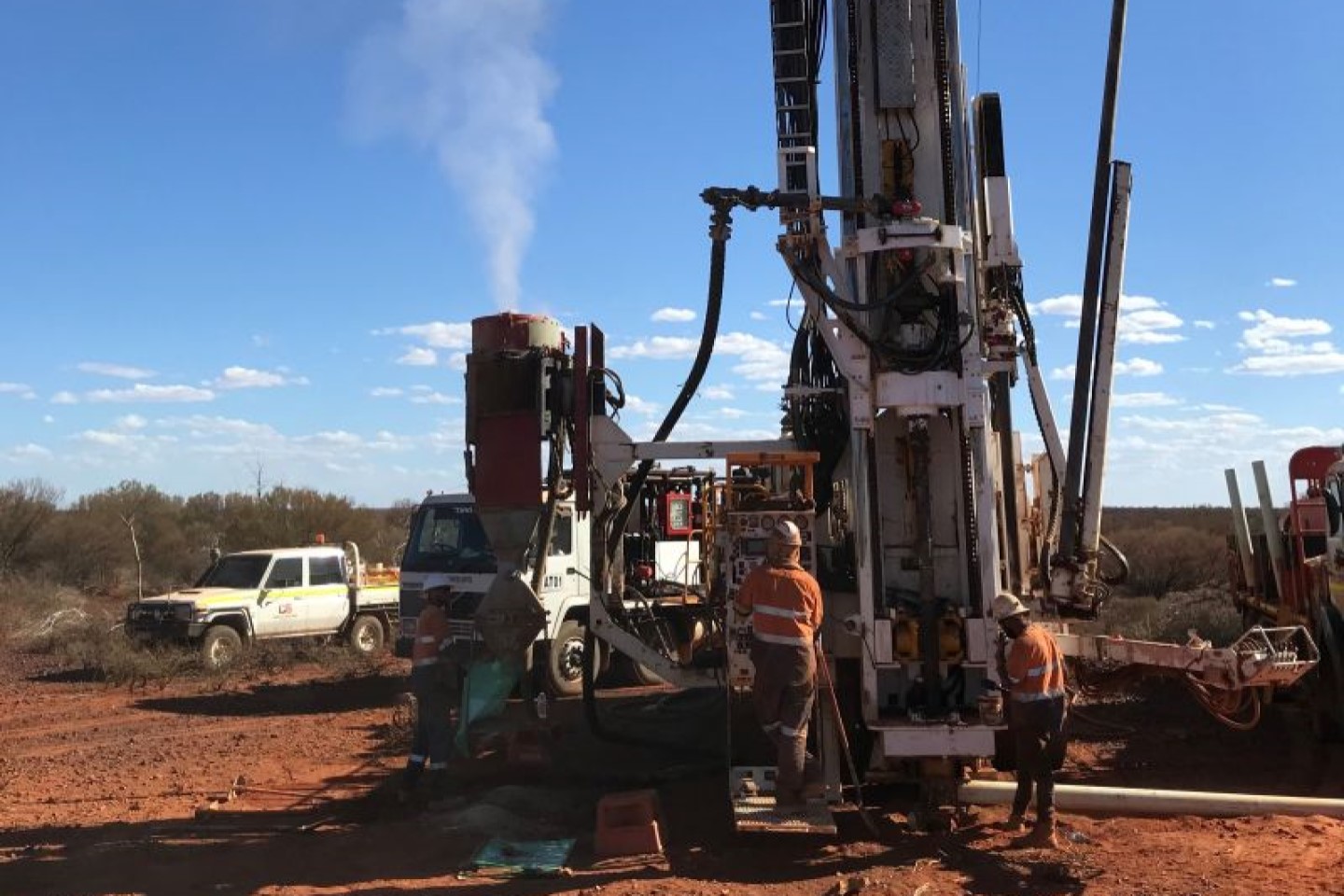
Shares in West Perth-based junior Rumble Resources closed trade up 9 per cent to 5.8 cents, following news it had secured a key agreement for its Western Queen gold and tungsten project.
Business
Ashish Kacholia-backed smallcap stock tanks 34% in just two sessions. What’s behind the selloff?
The sharp decline followed the company’s disclosure that geopolitical tensions between Iran and Israel severely disrupted its import supply chain during the March quarter, particularly in March 2026. According to the company, the conflict led to vessel rerouting and a sharp rise in port discharge liner charges imposed by shipping companies, costs that could neither be passed on to suppliers nor immediately recovered from customers.
The company said that the conflict triggered a spike in global oil and gas prices, which pushed up fuel procurement costs from domestic vendors and increased per metric tonne production costs. These exceptional and one-time cost pressures significantly impacted Q4 EBITDA per MT and compressed margins during the quarter.
Adding to the pressure, Jain Resource Recycling said its sale realisation as a percentage of LME declined by 1.25% to 1.50% in Q4. The company described this as a broader global sector trend, noting that sharp increases in LME copper prices often lead buyers worldwide to resist higher absolute pricing levels, resulting in lower formula-linked realisations for sellers across the value chain.
Despite the near-term challenges, the company said operating conditions have started improving in Q1FY27.
“We are pleased to inform that the situation has meaningfully improved entering Q1 FY27. Shipping lines have proactively rerouted vessels through alternative sea routes away from conflict-impacted corridors, and liner surcharges and port discharge costs have normalised substantially. This was a one-off March 2026 impact and will not recur in the coming quarters,” the company said in its investor presentation.
For Q4FY26, Jain Resource Recycling reported a net profit of Rs 66 crore, up 25.7% from Rs 52.5 crore in the corresponding quarter last year. Revenue from operations surged 76.4% year-on-year to Rs 3,105 crore from Rs 1,760 crore a year earlier. EBITDA rose 18% during the quarter to Rs 110 crore.The company also disclosed that the loss before tax from discontinued operations was linked to its investment in a UAE-based gold refining venture.
Jain Resource Recycling had partnered with Ikon Square Limited by acquiring a 70% stake in Jain Ikon Global Ventures (FZC), a free zone entity registered in Sharjah, UAE, which later became its subsidiary. The acquisition was undertaken to set up a gold refining facility in Sharjah, which commenced refining gold and its by-product silver in August 2024.
However, the Board of Directors, at its meeting held on August 24, 2025, approved the discontinuation of operations with effect from April 17, 2025, citing low margins, elevated operational overheads, working capital constraints and continued volatility in the gold refining business.
On the operational front, the company said execution across its expansion pipeline remains broadly on track.
“On the project execution front, we continue to make steady progress across our expansion pipeline, with overall implementation remaining broadly in line with the guidance shared earlier,” the management said.
The company added that it successfully commissioned the first furnace under its Copper Anode Expansion project during the quarter, adding a capacity of 800 MT per month. The second furnace, which will add another 800 MT per month capacity, is at an advanced stage of installation and is expected to be commissioned during the June quarter, in line with earlier guidance.
(Disclaimer: Recommendations, suggestions, views and opinions given by the experts are their own. These do not represent the views of The Economic Times)

Over fifteen years of experience making contrarian bets based on my macro view and stock-specific turnaround stories to garner outsized returns with a favorable risk/reward profile. If you want me to cover a specific stock or have a question for an article, just let me know!
Analyst’s Disclosure: I/we have no stock, option or similar derivative position in any of the companies mentioned, and no plans to initiate any such positions within the next 72 hours. I wrote this article myself, and it expresses my own opinions. I am not receiving compensation for it (other than from Seeking Alpha). I have no business relationship with any company whose stock is mentioned in this article.
Seeking Alpha’s Disclosure: Past performance is no guarantee of future results. No recommendation or advice is being given as to whether any investment is suitable for a particular investor. Any views or opinions expressed above may not reflect those of Seeking Alpha as a whole. Seeking Alpha is not a licensed securities dealer, broker or US investment adviser or investment bank. Our analysts are third party authors that include both professional investors and individual investors who may not be licensed or certified by any institute or regulatory body.

A discussion over costs in a landmark iron ore trial gets more complex as parties bid to recover majority of their legal fees while racing against the presiding judge’s impending retirement.

The Silent Salesman
Walk into any high-end menswear store. Before a salesman approaches you, before you touch the Egyptian cotton or feel the weight of a wool blazer, something else is already speaking to you. It is the color. In the world of marketing, color is often called the “silent salesman” because it communicates value, emotion, and identity in a fraction of a second. For the modern male consumer, who often prides himself on logic and utility, this is a surprising vulnerability.
Research in the field of color psychology suggests that up to 90% of a snap judgment about a product is based on color alone. For men’s apparel, this statistic is even more potent. Unlike womenswear, where silhouette and texture frequently take precedence, menswear relies heavily on a stable palette of colors to signal competence, reliability, and status. Understanding how chromatic choices influence buying decisions is no longer just an art for designers; it is a rigorous science for marketers.
This article dissects the psychological mechanisms behind specific hues in men’s fashion, explores the generational shift in masculine color acceptance, and provides actionable insights for brands looking to convert browsers into buyers.
The Historical Monochrome: Why Men “Can’t” Wear Pink
To understand modern buying decisions, one must first acknowledge the historical cage of masculine color. For most of the 20th century, the menswear market was dominated by the “Big Four”: Navy, Charcoal, Black, and Khaki. These colors dominated marketing campaigns because they signaled safety. A man buying a navy suit was not making a fashion statement; he was making an investment in social conformity.
The buying trigger for these legacy colors is risk aversion. Marketing data consistently shows that men are more likely to purchase dark, neutral colors when buying high-ticket items (suits, overcoats, leather shoes) because these colors promise longevity. The internal monologue of the consumer is, “I will not look back at this purchase in three years and regret it.”
However, the past decade has shattered this paradigm. The rise of the “Peacock Revolution” 2.0, driven by streetwear and influencer culture, has expanded the masculine wheel. Today, a marketer’s ability to introduce “dangerous” colors (pastels, bright reds, violets) hinges on framing those colors as signals of confidence rather than signals of deviance.
The Emotional Spectrum: Decoding the Male Buyer
When a man looks at a shirt or a pair of trousers, his brain runs a rapid cost-benefit analysis based on color. Here is how specific hues influence the purchase path.
1. Blue: The Algorithm of Trust
Blue is the undisputed king of menswear marketing. It accounts for over 50% of all suit and denim sales globally. But why?
- Psychological Trigger: Stability, intelligence, and calm.
- Marketing Application: Blue lowers the buyer’s heart rate and reduces perceived risk. When a brand launches a new product line, leading with a “French Blue” or “Navy” option converts hesitant buyers. The color tells the consumer, “You are reliable. You are competent.” For e-commerce, using blue as the primary thumbnail for a product increases click-through rates by nearly 15% compared to black, as it photographs better in natural light and suggests approachability.
2. Black: The Paradox of Power and Invisibility
Black is the uniform of the creative class and the minimalist. However, its buying influence is contradictory.
- Psychological Trigger: Power, sophistication, but also hiding.
- Marketing Application: Black sells best to two distinct segments: the high-income executive (buying a tuxedo or leather jacket) and the insecure buyer (buying black to avoid making a “wrong” choice). Marketers often use black for “capsule collections.” The phrase “Everyone needs a little black dress” has a male equivalent: “Every man needs a black watch/jacket/shoe.” The buying decision here is driven by the fear of missing out (FOMO) on a universal staple.
3. Green: The New Neutral
Olive, Forest, and Sage have exploded in men’s streetwear and workwear. Green is currently the fastest-growing color segment in men’s accessories.
- Psychological Trigger: Growth, outdoors, authenticity.
- Marketing Application: As men’s lifestyle marketing shifts toward wellness and sustainability, green serves as a visual shorthand for these values. A man is more likely to buy a green parka than a blue one if the brand narrative includes “heritage” or “adventure.” The buying trigger is nostalgia—a subconscious desire to return to nature.
4. Red & Yellow: The High-Risk, High-Reward Spectrum
These are the impulse colors. You rarely see a man planning to buy a red blazer; he either buys it immediately or walks away.
- Psychological Trigger: Aggression, excitement, warning.
- Marketing Application: Red is the color of clearance sales for a reason—it raises heart rate and creates urgency. However, in premium menswear, red is reserved for “hero pieces” (sneakers, polo shirts). Marketers use red to disrupt the grid of neutrals on a product listing page (PLP). When a shopper is scrolling through 50 grey sweaters, one red sweater will capture 78% of the visual attention. The buying decision is emotional dominance—the wearer wants to be seen as the alpha.
The “Manference” Effect: How Context Changes Conversion
One of the most critical lessons in marketing menswear is that men do not buy colors; they buy contexts.
A man will look at a salmon-pink shirt in a vacuum and reject it. The same man will buy that shirt if it is displayed next to a navy blazer and grey trousers on a mannequin holding a glass of whiskey. This is the “Manference” (Man + Reference) effect.
- Color Anchoring: Men need to see how the color functions in a social hierarchy. A pastel lavender polo is not a “feminine” color; it is “what the guys at the Palm Beach country club wear.”
- Tribal Signaling: For Gen Z and Millennial men, buying streetwear is about signaling tribe membership. An off-white (cream) hoodie sells better than a pure white hoodie because it signals a vintage, archival knowledge of fashion. The color choice signals that the buyer is “in the know.”
Generational Shift: The Rise of “Chromophobia” Destruction
For decades, marketers treated male “chromophobia” (fear of color) as a fixed variable. However, data from The NPD Group and WGSN (trend forecasting) shows a massive shift.
- Boomers/Gen X: Prefer high-chroma colors (royal blue, burgundy) as status signals. They buy color to say, “I have retired and I am on a cruise.”
- Millennials: Prefer muted, dusty, or “dirty” colors (dusty rose, clay, mustard). They buy these colors to signal irony and non-conformity. The trigger is authenticity.
- Gen Z: Has rejected the gender-color binary entirely. For this demographic, buying a lavender hoodie or a lilac beanie is not a statement; it is a default. The trigger is fluidity.
For a marketer, this means segmenting email campaigns by age cohort. Sending a 55-year-old lookbook featuring “acid yellow” will result in an unsubscribe. Sending a 22-year-old a lookbook of “heather grey” will result in boredom. Color strategy must be demographically granular.
The Practical Mechanics: Color in the Buyer’s Journey
How do you actually use this knowledge to drive sales? Consider the three stages of the buying journey:
Stage 1: The Thumbnail (Awareness)
On Instagram or a retailer’s grid, high-contrast colors (white, red, yellow) stop the scroll. However, they have lower conversion rates because they are intimidating. Smart DTC (Direct-to-Consumer) brands use a “Hero vs. Workhorse” strategy.
- Hero Color (Red/Yellow): Used for ads to drive traffic.
- Workhorse Color (Navy/Olive): Used for the landing page to drive the sale.
Stage 2: The Product Page (Consideration)
This is where “social proof of color” matters. Men are heavily influenced by “Most Popular Color” labels. If a brand tags “Stone” as “Best Seller,” conversion on that color option increases 40%. Men do not want to be wrong. They will look at the color swatches and choose the one with the most reviews.
Stage 3: The Wardrobe Edit (Conversion)
The final barrier is the “Does this go with my shoes?” question.
- Marketing Tactic: Brands that succeed bundle colors. Instead of offering 15 colors of a chino, offer 3 “looks” (e.g., “The Coastal Look: Navy, Cream, Tan” vs. “The Urban Look: Black, Olive, Grey”). When you frame a color as part of a system, the man stops evaluating the color itself and starts evaluating the system. The buying decision becomes logical: “If I buy the Olive pants, they fit into the Urban system with my existing black sneakers.”
The Price-Color Elasticity
One of the most fascinating marketing phenomena in menswear is the Price-Color Elasticity.
- Dark Colors (Black, Navy): These have low price elasticity. A man will pay $200 for a navy sweater or $400 for the exact same sweater in black. Dark colors represent “seriousness,” so the price can be high without friction.
- Light/Bright Colors (White, Yellow, Pink): These have high price elasticity. Men are extremely sensitive to price changes on light colors. They will wait for a sale to buy a white shirt because they view it as less durable and less versatile. Exception: White sneakers are the outlier, as they signal “cleanliness,” which commands a premium.
Warning: The Color Overload Trap
Finally, a warning for the overzealous marketer. While the trend is moving toward more color, choice paralysis is a real phenomenon. Hick’s Law states that the time it takes to make a decision increases with the number of options.
If you present a man with a jacket in 22 colors, his brain shuts down. He will buy nothing.
- The Sweet Spot: 5 to 7 colors.
- The Layout: Do not list colors alphabetically. List them by popularity or by “light to dark.” The first three colors (e.g., White, Light Grey, Navy) get 80% of the clicks. Place your highest margin color (usually a “trend” color like Rust) in the #3 or #4 slot to maximize exposure.
Conclusion: The Strategic Palette
The days of assuming men are blind to color are over. The modern male consumer is acutely aware of the semiotics of his wardrobe, even if he cannot articulate it. He uses color to manage his anxiety, signal his status, and navigate his social world.
For marketers, the lesson is clear: Color is not a decorative afterthought; it is the primary driver of the purchase funnel. By shifting from a “default neutral” strategy to a “psychological context” strategy, brands can unlock massive value.
When you change the color of a shirt from “Red” to “Varsity” (signaling team), or from “Pink” to “Blossom” (signaling limited edition), you change the emotional value of the product. In the end, a man does not buy a color. He buys the feeling that the color gives him. And that feeling, whether it is the calm of blue or the power of black, is the only thing that closes the sale.

Here’s your chance to get InvestingPro for 2026’s lowest price BEFORE SALE ENDS
Why is Intrum stock surging today?

Speaking to ET Now, he noted that recent short covering has helped the market rebound from lower levels, yet the broader concern remains whether indices are trading above fair value given growth and inflation expectations. He added that while liquidity will always provide a floor to markets, that does not necessarily mean valuations are appropriate at current levels.
Dalal said he remains cautious on the overall market construct, arguing that earnings visibility for FY27 looks weak and could weigh on sentiment. He stated that although markets are forward-looking and often discount FY28 recovery scenarios, uncertainty over global and domestic developments makes those assumptions fragile. He also flagged unpredictability in global leadership and policy direction, suggesting that external factors could easily alter growth expectations over the coming months. Despite this, he acknowledged that liquidity will continue to support quality large caps, though he believes markets may still be ahead of fundamentals in the short term.
On sectors, he expressed caution on metals, advising investors to avoid chasing the space after strong rallies. He explained that commodity cycles often peak when sentiment is strongest, as rising prices temporarily boost profits and make valuations appear attractive. However, he warned that this stage is typically followed by demand destruction and margin compression. Referring to vertically integrated players such as Tata Steel and Hindustan Copper, he said investors often misread peak-cycle valuations as opportunity. His view is that commodities are best bought when the cycle is weak and valuations look unattractive, not when conditions appear strong. While short-term gains may still be possible, he believes long-term risk increases significantly if investors enter late in the cycle.
On real estate, Dalal maintained a constructive long-term outlook despite near-term softness. He said India’s property market remains structurally strong, though the mid-income segment is currently under pressure and may stay subdued for the next year to 18 months. He highlighted continued strength in premium and luxury housing, while noting that developers with exposure to large urban markets are better positioned to benefit from improving cash flows over time. He cited DLF, Prestige Estates Projects, and Godrej Properties as key players likely to benefit as collections improve and completed projects begin generating stronger cash flows. However, he cautioned that rising inflation and potential interest rate pressures could delay recovery in the sector, which typically struggles in tighter monetary conditions.
On banking, Dalal remained firmly positive, calling it one of the strongest structural themes in India’s equity market. He noted that despite muted stock performance in recent years, valuations for private sector banks have corrected and now appear more reasonable. He highlighted HDFC Bank as a long-term compounding story still playing out, supported by improving cost of funds dynamics post-merger. He also pointed to ICICI Bank, Axis Bank, and State Bank of India as key beneficiaries of India’s credit-led growth cycle. Additionally, he said higher-risk lenders such as IndusInd Bank, IDFC First Bank, RBL Bank, and Yes Bank could offer sharper upside, albeit with higher risk. He concluded that investors may consider either selective stock picking or a broader banking ETF for medium-term exposure, as the sector remains well-positioned for India’s long-term growth story.

Nigeria’s New Tax and Licensing Rules Could Reshape Africa’s Sports Betting Industry

Sonus faber Lets Il Cremonese Ex3me Lamborghini Edition Buyers Spec Their Supercar Speakers

$75,000,000 Crypto Wallet Bulk Hack

Manchester United reach agreement with Casemiro over contract clause amid transfer speculation

US brings back mandatory military draft registration

Steven Gerrard disagrees with Gary Neville over ‘shock’ Chelsea and Arsenal claim | Football


-

 Crypto World3 days ago
BloFin War of Whales 2026 Grand Prix opens registration for $5M trading championship
-

 Fashion4 days ago
Weekend Open Thread: Theory – Corporette.com
-

 Crypto World4 days ago
E-Estate Announces 1 Year Live: Washington DC Summit as Real Estate Tokenization Enters Its Next Phase
-

 Tech4 days ago
Tech Moves: Microsoft AI leader jumps to OpenAI; former AI2 exec joins Meta; and more
-
Crypto World6 days ago
Bitcoin Suisse expands with Digital Asset License and Investment Business Act Registration Approval in Bermuda
-

 Politics6 days ago
Pakistan to enter Chinese capital market as war inflation bites
-

 Crypto World6 days ago
Bitcoin Suisse expands with Digital Asset License and Investment Business Act Registration Approval in Bermuda
-
 Crypto World5 days ago
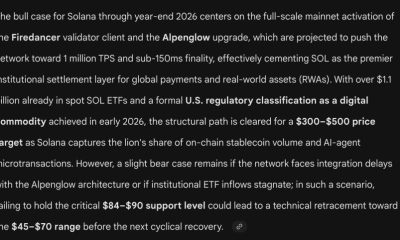
Google’s Gemini AI Predicts Incredible Solana Price by the End of 2026
-

 Business4 days ago
H&R Real Estate Investment Trust (HR.UN:CA) Q1 2026 Earnings Call Transcript
-

 Tech3 days ago
Google reimburses Register sources who were victims of API fraud
-

 Sports3 days ago
Napoleonic enters 2026 Doomben 10,000 field via Abounding withdrawal
-

 NewsBeat7 days ago
Comment on Keir Starmer surviving the day as Prime Minister like a turd that wont flush
-
 Entertainment5 days ago
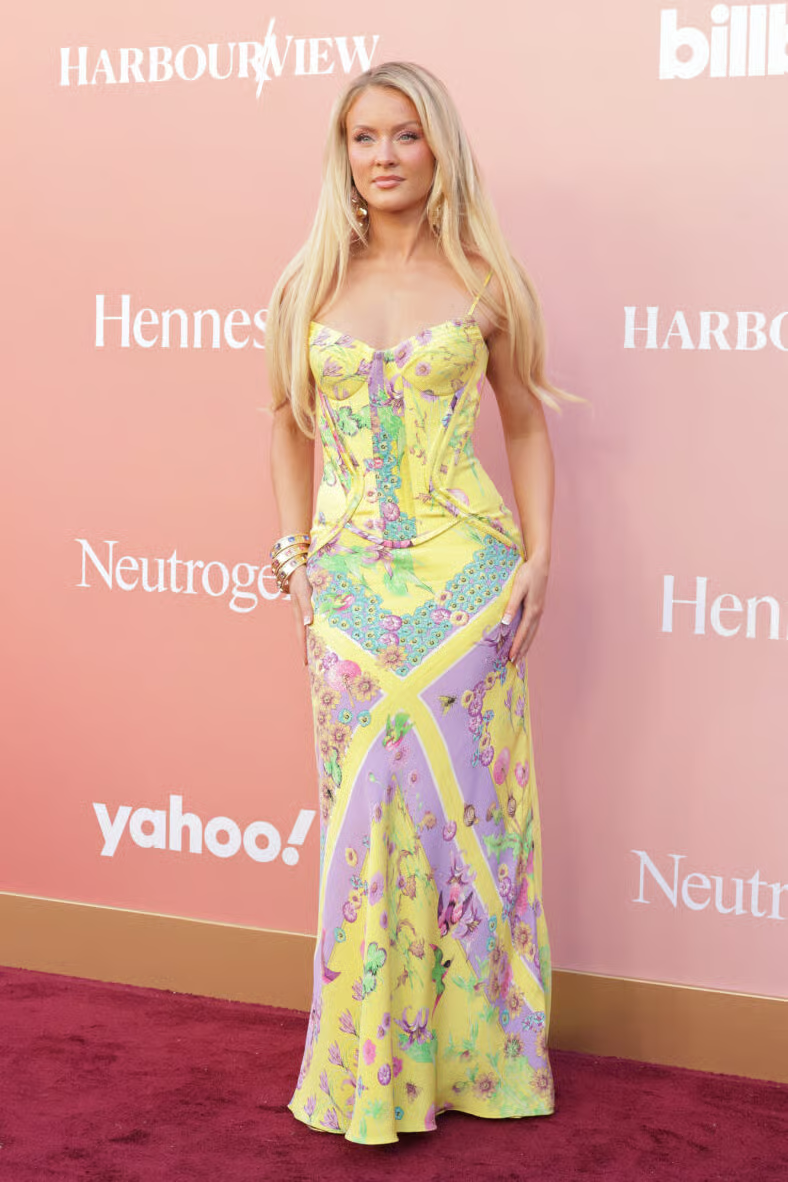
Zara Larsson Has Blunt Response To Chris Brown Diss
-

 Fashion6 days ago
The Best-Kept Makeup Secret for a More Defined Face
-
 Crypto World5 days ago
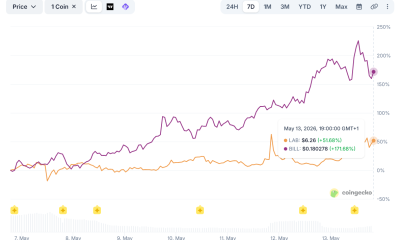
Two AI Tokens Lead May Rally, But Risks Are Rising
-

 Fashion2 days ago
On the Scene at Gucci’s Cruise Show in New York City: Mariah Carey, Kim Kardashian, Lindsay Lohan, Iman, and More!
-

 Politics7 days ago
The Trial of Majid Freeman, Verdict
-

 Politics6 days ago
Palestine’s flag becoming a regular sight at European football stadiums
-
 Tech6 days ago
Why AI is making typography a boardroom conversation
-
 Crypto World3 days ago
BeInCrypto 100 Institutional Awards Nomination: KAST for Best Digital Assets Neobank and Best Digital Assets Fintech
You must be logged in to post a comment Login