

Business
Ashish Kacholia-backed smallcap stock tanks 34% in just two sessions. What’s behind the selloff?


The sharp decline followed the company’s disclosure that geopolitical tensions between Iran and Israel severely disrupted its import supply chain during the March quarter, particularly in March 2026. According to the company, the conflict led to vessel rerouting and a sharp rise in port discharge liner charges imposed by shipping companies, costs that could neither be passed on to suppliers nor immediately recovered from customers.
The company said that the conflict triggered a spike in global oil and gas prices, which pushed up fuel procurement costs from domestic vendors and increased per metric tonne production costs. These exceptional and one-time cost pressures significantly impacted Q4 EBITDA per MT and compressed margins during the quarter.
Adding to the pressure, Jain Resource Recycling said its sale realisation as a percentage of LME declined by 1.25% to 1.50% in Q4. The company described this as a broader global sector trend, noting that sharp increases in LME copper prices often lead buyers worldwide to resist higher absolute pricing levels, resulting in lower formula-linked realisations for sellers across the value chain.
Despite the near-term challenges, the company said operating conditions have started improving in Q1FY27.

“We are pleased to inform that the situation has meaningfully improved entering Q1 FY27. Shipping lines have proactively rerouted vessels through alternative sea routes away from conflict-impacted corridors, and liner surcharges and port discharge costs have normalised substantially. This was a one-off March 2026 impact and will not recur in the coming quarters,” the company said in its investor presentation.
For Q4FY26, Jain Resource Recycling reported a net profit of Rs 66 crore, up 25.7% from Rs 52.5 crore in the corresponding quarter last year. Revenue from operations surged 76.4% year-on-year to Rs 3,105 crore from Rs 1,760 crore a year earlier. EBITDA rose 18% during the quarter to Rs 110 crore.The company also disclosed that the loss before tax from discontinued operations was linked to its investment in a UAE-based gold refining venture.
Jain Resource Recycling had partnered with Ikon Square Limited by acquiring a 70% stake in Jain Ikon Global Ventures (FZC), a free zone entity registered in Sharjah, UAE, which later became its subsidiary. The acquisition was undertaken to set up a gold refining facility in Sharjah, which commenced refining gold and its by-product silver in August 2024.
However, the Board of Directors, at its meeting held on August 24, 2025, approved the discontinuation of operations with effect from April 17, 2025, citing low margins, elevated operational overheads, working capital constraints and continued volatility in the gold refining business.
On the operational front, the company said execution across its expansion pipeline remains broadly on track.
“On the project execution front, we continue to make steady progress across our expansion pipeline, with overall implementation remaining broadly in line with the guidance shared earlier,” the management said.
The company added that it successfully commissioned the first furnace under its Copper Anode Expansion project during the quarter, adding a capacity of 800 MT per month. The second furnace, which will add another 800 MT per month capacity, is at an advanced stage of installation and is expected to be commissioned during the June quarter, in line with earlier guidance.
(Disclaimer: Recommendations, suggestions, views and opinions given by the experts are their own. These do not represent the views of The Economic Times)


AT&T: Verizon's 27% Outperformance Sets Up A Solid Entry Point

OPINION: Disruption of the US car sales sector by an e-commerce interloper sends a warning to Australia.

Fremantle-based SeaStock has been granted an aquaculture licence to establish WA’s first commercial scale, land-based seaweed production facility in Oakford.

Novo Nordisk stock rises after UK approves Wegovy pill

The North Fremantle apartments are finished after years of battling with rising construction costs, with developer Megara saying attempting the same luxury project now would not be possible.


Marks first collaboration between two companies.

Gerard Daniels’ founders believe the firm’s formula is durable as they step back from control after 40 years in charge.
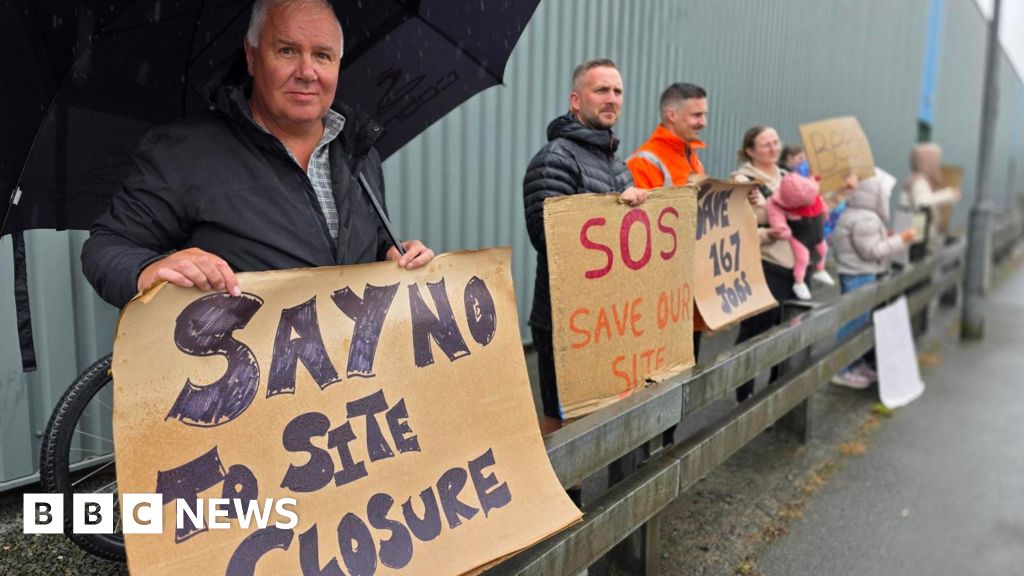
Workers and families held a demonstration with 167 jobs at risk at the site in Launceston.


Darci Vetter explains how shifting trade policy and tariffs are shaping global commerce and what food businesses should monitor.

South Korea’s finance ministry said on Sunday it will step up oversight of offshore currency derivatives. The Philippines has asked banks to ensure non-deliverable forward contracts are limited to economic purposes, while India has tightened limits on banks’ net open position to $100 million.
Indonesia, which unexpectedly raised interest rates on Tuesday, has said its central bank is active in currency markets “around the world, around the clock” to support the rupiah.
The warnings underscore concerns among Asian policymakers that offshore trading is adding to pressure on currencies. The oil-price shock from the US-Iran conflict has worsened the problem, hitting the region’s energy-importing nations. Indonesia’s rupiah breached the closely watched 18,000-per-dollar level, the Korean won has fallen to its lowest since the global financial crisis, while the Indian rupee and Philippine peso have hit record lows.
The efforts to curb offshore forex trading may help ease some pressure, but analysts doubt they can reverse the trend on their own.
“It may have some impact, but ultimately for the measure to be successful there needs to be a shift in the fundamentals as well,” said Michael Wan, senior currency analyst at MUFG Bank Ltd.
 Bloomberg
Non-deliverable forwards are cash-settled derivative contracts that allow investors to hedge or speculate on currencies outside local markets. They make up for about 4% of the global $10 trillion a day FX market, according to Deutsche Bank AG, though they can play an outsized role in Asia where restrictions on convertibility are common.
That means activity driven out of global financial hubs such as Singapore, London and New York can sway local markets.
Authorities across the region have tried to reduce this influence during periods of currency stress.
India allowed local banks to participate in the NDF market in 2020 and has since tried to attract activity onshore to its finance hub at Gujarat International Finance Tec-City, or GIFT City. South Korea has opened its forex market to overseas investors and extended trading hours, while Thailand has allowed non-resident corporates to access onshore baht liquidity and hedge freely.
“The reason the NDF market exists is due to restrictions in the onshore market,” said Khoon Goh, head of Asia research at Australia & New Zealand Banking Group. If those restrictions are eased and there is enough liquidity, the need for NDFs will gradually fade, as seen in the case of the Singapore dollar and Thai baht, he said.
Short-Dollar Book
Yet, the war-induced crisis has left some central banks with little choice but to intervene in those very markets they’ve been warning against. That defense has contributed to the drop in foreign-exchange reserves in the region.
The Reserve Bank of India has been particularly active, selling dollars primarily in shorter maturities, traders say. The central bank’s short dollar book, which includes offshore derivative positions, has likely surged to around $115 billion. Bank Indonesia has also sold dollars overseas to stabilize the currency.
The interventions have helped reduce outsized spillovers from offshore to local markets. In India’s case, the central bank has often been seen intervening just before onshore open to ease pressure on the rupee.
Some investors say currency weakness is the result of economic problems in individual countries rather than offshore trading.
India is facing persistent capital outflows, with global funds pulling a record $30 billion from stocks this year, spurring recent efforts to attract overseas capital. In Indonesia, investors are growing wary of the economic outlook and fiscal trajectory under President Prabowo Subianto.
The Philippines is facing a renewed inflation shock from high oil prices, while South Korea has seen over $78 billion of net foreign investment exit its stock market so far in 2026 despite a rally to record highs earlier this month fueled by retail craze for artificial-intelligence stocks.
The steps central banks have taken, including intervening in offshore markets, are aimed at curbing sharper market moves, said Lavanya Venkateswaran, senior economist at Oversea-Chinese Banking Corp. “We still think that policy rate hikes are on the cards” for India, the Philippines and Indonesia, she said.

Oppenheimer backs SpaceX as $70 billion retail frenzy builds
PXG unveils Stars and Stripes 250 Collection, which comes with added meaning

Canada introduces safety bill banning social media for under-16s



-

 Fashion6 days ago
Weekend Open Thread: Evereve – Corporette.com
-
 Crypto World6 days ago
Jensen Huang Approves Samsung, SK Hynix, and Micron for NVIDIA (NVDA) HBM4 Memory Supply
-
 Entertainment5 days ago
The Best Mystery Series of All Time Is Surging on Streaming 30 Years After It Ended
-

 Crypto World3 days ago
Anatomy of the June crypto crash: Fed, Iran, Saylor
-

 NewsBeat4 days ago
Alexander Zverev wins the French Open to finally earn a 1st Grand Slam title
-

 Tech6 days ago
Suspicious Polyfill login prompts pop up on Toshiba, Muji websites
-
 Crypto World5 days ago
Senator Cynthia Lummis Calls CLARITY Act the Most Consequential Financial Legislation of This Generation
-

 Tech4 days ago
Microsoft unveils seven homegrown AI models in new bid for ‘long term self-sufficiency’
-

 Tech6 days ago
Microsoft launches MXC, an OS-level sandbox for AI agents, with OpenAI and Nvidia already on board
-

 Business6 days ago
(VIDEO) Justin Bieber Delivers Surprise Happy Birthday Serenade to Diners at Los Angeles Mexican Restaurant
-
 Business5 days ago
The Pain Points Taking a Fragile Tech Rally Down a Notch
-

 Business3 days ago
High Stakes for Wembanyama as New York Pushes for 3-0 Lead
-
 Crypto World3 days ago
Eli Lilly (LLY) Stock Surges 4% Following Breakthrough Sleep Apnea Trial Results
-

 Tech6 days ago
Von der Leyen’s AI envoy pick draws conflict-of-interest fire
-

 Tech6 days ago
Meta steals a tactic from Tesla and builds data centers in tents
-
Crypto World6 days ago
LBank Surpasses 25 Million Users Worldwide as AFA Partnership Continues to Drive Global Growth
-

 Tech5 days ago
Hackers now exploit SolarWinds Serv-U flaw to crash servers
-
 NewsBeat4 days ago
Alexander Zverev conquers demons and outlasts Flavio Cobolli to win French Open for first major title
-

 Crypto World4 days ago
Trump’s AI Ownership Plan Could Benefit Anthropic at OpenAI’s Expense
-
 Sports2 days ago
Bangladesh beat Australia after 20 years in ODIs, register only their second win over six-time world champions | Cricket News
You must be logged in to post a comment Login