As officers pull up outside a Victorian terraced home in east London, they take note of the number plate of the car parked on the driveway.
They fear it could belong to a domestic abuser who has been banned from the home because he is suspected of violently assaulting his partner. He was never prosecuted for the alleged attack because the victim was not prepared to make a statement. But if they find him here, it will be grounds for his arrest.
When three officers knock on the front door, a housemate tells them the victim is out at work, but reveals the suspected abuser has been staying there too. Officers make an urgent note to return that evening.
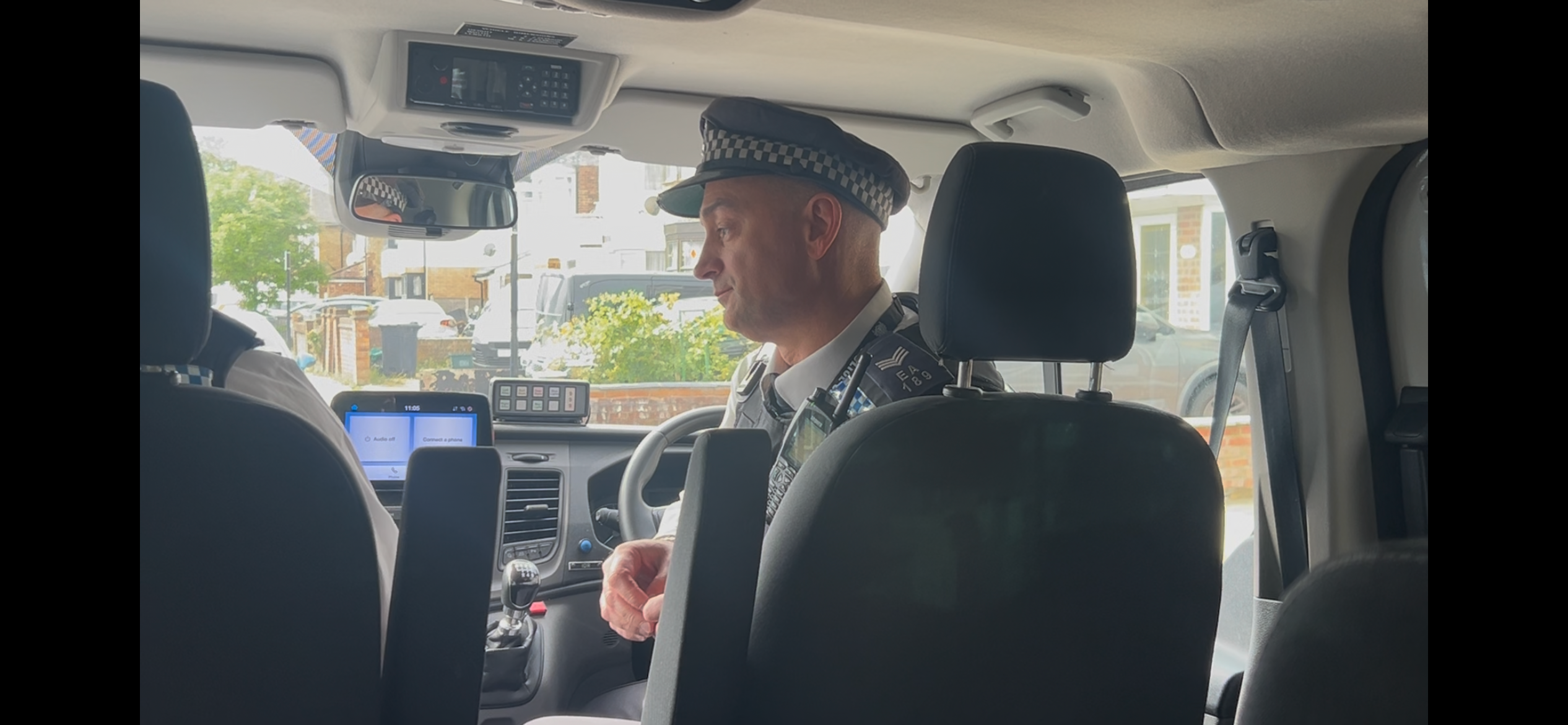
“It’s worrying that he’s been here. That’s the whole purpose of these visits, to potentially get that window of opportunity to help,” explains Sergeant Amar Sehmby, part of the Metropolitan Police’s safer neighbourhood team for Havering.
The unannounced house call is part of a new force-wide initiative called Operation Sallus to better enforce Domestic Violence Protection Orders (DVPOs) – often under-used court orders which are supposed to help protect victims, often by banning perpetrators from contacting them.
Advertisement
In the past, survivors have claimed such orders were so badly monitored they were worth little more than the paper they were written on.
However, this operation, which was last month in use in every London borough following a gradual rollout, is designed to counter that perception by taking a proactive approach with regular checks on active DVPOs in each neighbourhood.
“This is quite a soft use of enforcement, but it’s very much a kind of community-based linking our community officers with victim-survivors of domestic abuse,” detective chief superintendent Andrew Wadey, the force’s lead for public protection, told The Independent, which was invited to join officers making house calls last week.
“It’s an in-person visit by local officers, and the intention there is to hopefully speak to the victim and ascertain if there’s been any further issues. Is the offender there, do they need any kind of referrals or signposting to support agencies and essentially just take a really sort of victim-led approach to providing assurance, reassurance, and another avenue towards reporting any kind of breaches or concerns.”
Advertisement
Detective chief superintendent Andrew Wadey (The Independent)
Often, police turn to a magistrate for a protective order when there is not enough evidence for a trial or a victim is not ready to support a prosecution. They are a civil order and a breach can result in an arrest, with a mandatory court appearance within 24 hours. However the short-term orders only last a maximum of 28 days and breaches are a civil offence only punishable by a fine or up to two months in prison.
They will eventually be replaced with tougher Domestic Abuse Protection Orders (DAPOs), which are currently being trialled and carry a maximum penalty of up to five years imprisonment, or a fine, or both.
In one case on the list of 10 addresses to be checked last week, the offender has already breached the DVPO twice and been arrested both times.
Other victims Sgt Sehmby and his team of two constables visit include a mother who was a victim of non-fatal strangulation at the hands of her own son and a woman who was strangled and thrown to the ground by her partner, who had previously threatened to kill her.
At the mother’s home, no one answers the door. But, back in the van, officers manage to speak to her on the phone where she tells them she is safe and staying with her daughter.
Advertisement
PC Jake Tibbs told her: “If anything does happen, please call the police, obviously the order is there to protect yourself. And obviously we can deal with it as we need to.”
The other strangulation victim was not at home, but officers planned to return later that night.
The Independent joined Met Police officers during Operation Sallus, enforcing Domestic Violence Protection Orders (The Independent)
At a family home in east London, officers also visited a father who was protected by an order after his ex-partner was accused of seriously injuring him in a violent attack which caused grievous bodily harm and criminal damage. The officers spent 20 minutes inside the home, ensuring the order was being fully complied with.
They are also trained to look for signs of coercive and controlling behaviour and check on any children in the house.
The Met plans to start using the same tactics to enforce Stalking Protection Orders and Sexual Risk Orders in the coming months.
Advertisement
According to the force, the strategy, along with other innovative approaches to tackling violence against women and girls (VAWG), is starting to bear fruit.
In addition to Operation Sallus, the Met has been using counter terrorism tactics to track the highest risk VAWG offenders through their V100 programme and deployed undercover patrols to crack down on predatory behaviour in nighttime hotspots as part of Project Vigilant.
New figures show that arrests and charges for rape offences have more than doubled over the last year in London, making the Met the force with highest detection and charge rate for rape.
Arrests and charges for domestic violence have also increased by 82 per cent year on year, and arrests and charges for violence against women and girls have increased by 71 per cent.
Advertisement
DCS Wadey said they are “really starting to see the dial turn in terms of more people being charged”.
“And whilst the work is by no means done, there’s still so much more to do, this is really giving us momentum, I think, which is key. And hopefully it is giving greater confidence, particularly to women and girls, to report,” he added.
He admitted there still “much to be done” to rebuild confidence in the force after a difficult few years which saw the organisation labelled as “institutionally racist, misogynistic and homophobic” in a damning report by Baroness Louise Casey in 2023. It was commissioned following the rape and murder of Sarah Everard by a serving officer in 2021, who used his warrant card to trick her into his car.
The Met say charges and arrests for domestic abuse have increased (PA)
Yet more scandal has followed, with another officer, David Carrick unmasked as one of Britain’s worst sex offenders in 2023 and a damning undercover BBC Panorama investigation at Charing Cross police station last year, which showed officers making offensive comments and bragging about using violence.
The police chief believes Labour’s ambitious manifesto pledge to halve VAWG in just ten years is achievable, but will require a “whole system approach”.
Advertisement
Domestic abuse charity Refuge has welcomed the efforts to improve monitoring and enforcement of DVPOs in London, but called for an increase in their use, adding: “Only when these orders are properly implemented will survivors be able to access the full protection of the law.”
Some 3.8 million people experienced domestic abuse in the year ending March 2025, according to the Crime Survey for England and Wales. In comparison, only 11,401 DVPOs were granted in year to March 2024, according to the most recent ONS figures.
Bo Bottomley, policy and public affairs manager at Refuge, said: “One in four women in England and Wales will experience domestic abuse in their lifetime, but Domestic Violence Protection Orders (DVPOs) are used in only a very small number of cases.
“Where protective orders are in place, survivors often tell us they are ineffective and not properly monitored and enforced by the police. Perpetrators routinely breach these orders, but police often fail to act when they do, leaving survivors at an increased risk of harm.
Advertisement
“We welcome efforts to improve monitoring and enforcement of DVPOs in London, but to truly improve survivor safety and strengthen confidence in the police response to domestic abuse, Refuge is calling for increased use of DVPOs in relevant cases, and a corresponding increase in criminal proceedings following order breaches.”
Means-testing the state pension could help fill the defence budget blackhole left behind by Keir Starmer – but would be “unjust”, a leading tax expert has said.
In a list of 37 options given help fund Sir Keir’s Defence Improvement Plan, tax expert Dan Niedle said the move barring the wealthiest would raise around £1bn.
But he said any chancellor would be unlikely to do this because while looking like “a slam dunk” it “just feels unjust” and would represent 10 per cent of many people’s wealth.
Instead, the top suggestion from Mr Neidle is to continue the fiscal drag on things like freezing income tax thresholds so more people are included in the higher rates of 40p and 45p as well as the basic rate of 20p.
Advertisement
Mr Neidle said: “A pension of £12,500 per year, updated with the ‘triple lock’, is actually a highly valuable asset.
“It would cost the average 66-year old somewhere over £250,000 to buy an asset like that. A family ‘just’ in the wealthiest 1 per cent has average assets of £1.9m per adult. So removing their pension would effectively expropriate over 10 per cent of their wealth. That feels unjust. I doubt any chancellor would do this.”
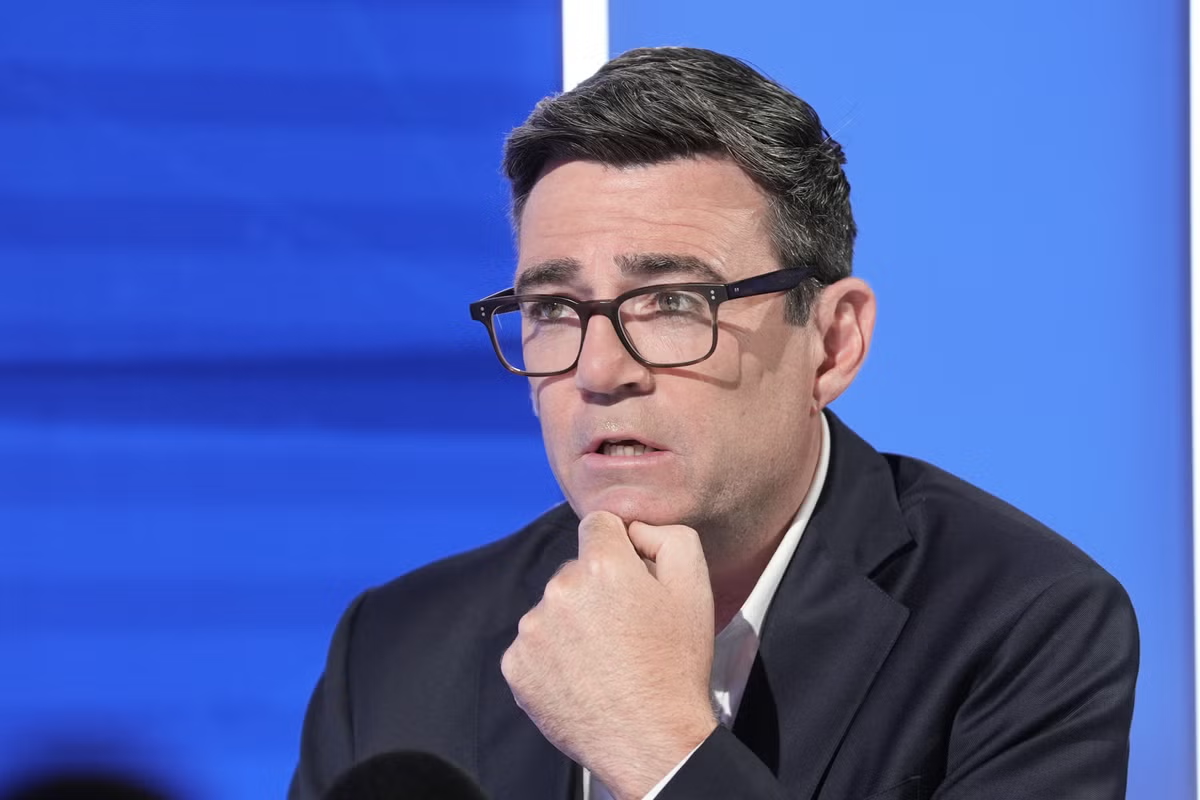
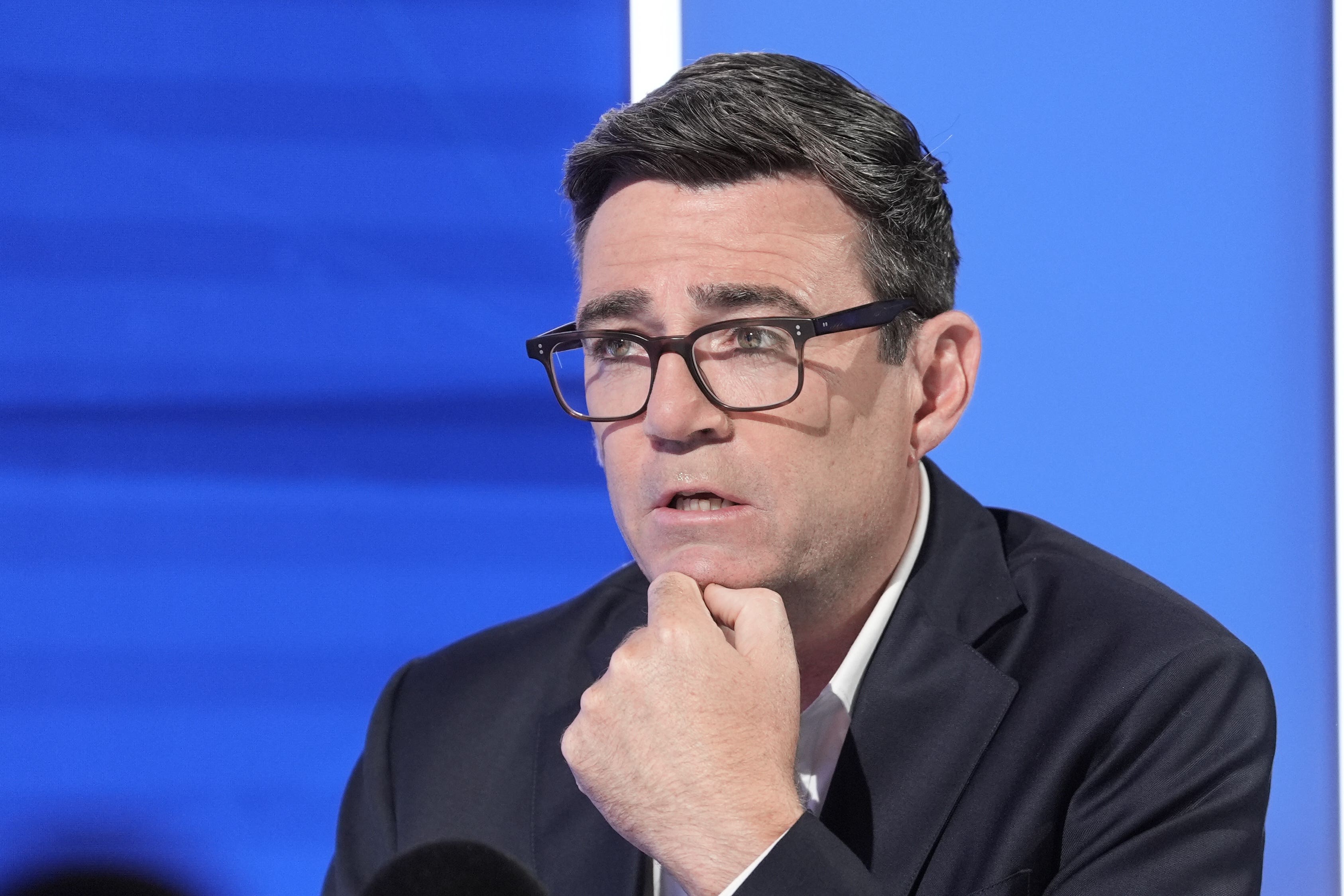
Andy Burnham has to fill a £4.7bn blackhole in the defence budget (PA Wire)
Means testing he state pension would break the link between it being a universal benefit funded by National Insurance which was established when David Lloyd-George created it in 1908.
Mr Burnham has ruled out breaking Labour’s 2024 manifesto promise to not raise income tax, VAT or personal contributions to National Insurance, which in theory fund the state pension.
He has discussed changing business rates in a way which would target large online retailers like Amazon that rely on huge warehouses.
Advertisement
But he has also recommitted to the triple lock on the state pension rising each year by 2.5 per cent or the highest rate of inflation which adds to the burden of the bill.
However, he has to find at least £4.7bn to fund the black hole in the defence package and may need to find another £13bn if he is to meet the amount which military chiefs claim is required to prepare the UK for an increasingly dangerous world.
Listing means-testing the state pension as option 37, Mr Neidle noted: “The state pension pays out about £12,500 per year. It’s easy to think that’s an irrelevant amount to wealthy retirees, and we should means-test the pension to stop them benefiting.
“Given the government spends over £150bn each year on pensioner benefits, blocking even just the wealthiest 1 per cent from pensions would raise over £1bn. It seems a slam dunk.”
Advertisement
The top suggestion from Mr Neidle is to continue the fiscal drag on things like freezing income tax thresholds so more people are included in the higher rates of 40p and 45p as well as the basic rate of 20p.
Dan Neidle came up with 37 options on tax (Dan Neidle/CC BY-SA 4.0)
“Inflation and earnings growth mean we’re all earning more in cash terms, but not in real terms – however tax thresholds have stayed the same for years. The Johnson and then Sunak governments raised very large amounts with fiscal drag – over £29bn by 2027/28. This has only a limited effect on median earners, but represented a significant tax increase for higher earners. Rachel Reeves extended the freeze to April 2031. It seems likely that we will get another extension from Mr Burnham, raising around £5bn in 2031/32 and more in subsequent years.”
Mr Neidle also suggested that a proposal aired by one of Mr Burnham’s key lieutenants Louise Haigh recently of raising capital gains tax could bring in £6bn.
He noted: “It’s obvious from the charts above that capital gains tax is the single largest way to raise tax without breaking pre-election promises.”
But he warned: “However, it comes with a large catch. A simple rate increase will, on the basis of HMRC figures, lose revenue, not raise it.”
Advertisement
Other suggestions include an exit tax for wealthy people leaving the UK, capital gains tax on top of inheritance tax when people die, an increase in inheritance tax and forcing law firms to start paying employer national insurance. Currently they are exempt because lawyers have partner not employee status.
He also wants Mr Burnham to look at eliminating the loophole on stamp duty for commercial property, introducing a tax for large gifts and force the Bank of England to stop paying interest on its own reserves.
The Prince of Wales was among the first to congratulate England after they stormed to a 3-2 victory in their World Cup clash with Mexico.
Prince William urged the team on to the quarter-finals as he was joined by millions of fans across the country who pulled an all-nighter to watch the match.
There were jubilant scenes both at home and in the Azteca Stadium after Thomas Tuchel‘s side managed to cling onto their lead despite being down to ten men.
They will now take on Norway for a place in the final four in Miami on Saturday after Erling Haaland‘s side knocked out five-time champions Brazil.
Advertisement
The prince wrote in a social media post: ‘Well done England! Bring on the quarter final!’
He was joined by a number of politicians who stayed up late to watch the match, that kicked off at 2am following a thunderstorm delay.
Reform MP Robert Jenrick said: ‘So proud of this England team. Heroes, each and every one of them.’
Advertisement
Prince William said ‘well done’ and ‘bring on the quarter final’ in a post on X just after 4am on Monday
Prince William (pictured with Thomas Tuchel) urged the team on to the quarter-finals as he was joined by millions of fans across the country who pulled an all-nighter to watch the match
Harry Kane celebrates scoring his team’s third goal with Jude Bellingham
In a post on X, Labour MP Stella Creasy added: ‘I have no idea how I do the school run this morning after a red card and a penalty.
Advertisement
‘Like having had ten espressos and a red bull chaser.’
In the stadium, England fans spontaneously broke out into Sweet Caroline as the players celebrated on the pitch.
Meanwhile, scores of jubilant supporters at Boxpark Wembley in London jumped into the air, with some becoming emotional.
CO2 cannons at the fan zone blasted white fog, as fans embraced one another and threw their hands into the air.
Advertisement
In Britain, millions of England fans are expected to be late or absent from school and work on Monday, with employers braced for a ‘mass sickie’.
There were already tired faces in pubs up and down the country as fans waited for kick-off to begin – with some resting their heads on tables surrounded by pints of beer.
Speaking at a watch party in Wembley, northwest London, Lorcan Finn, from Devon, said he had already taken the day off work to stay up for the early-hours kick-off.
The 22-year-old engineer said: ‘I think it’s stupid not to take the day off, unless you work from home.’
Advertisement
England fans at Wembley Box Park, London, react as their team take on Mexico in the World Cup round of 16
Fans celebrate following a screening of the FIFA World Cup match between England and Mexico
Jude Bellingham and his teammates celebrate after England secured victory against Mexico
Harry Becks, 27, from Ruislip, west London, also said there’s ‘no chance’ he will go to work on Monday, adding: ‘I already booked the day off.’
Advertisement
Matt, 27, from Richmond, south-west London, who was at the fan zone with his father Terry, 62, from Preston, is also taking annual leave on Monday.
His father Terry said: ‘I’m older, I do not work. I will wake up tomorrow at home, if I’m not dead!’
The match kicked off at 2am UK time after a one hour delay due to thunderstorms – with bars due to stay open until 5am on Monday.
Fans across the country went wild when Jude Bellingham netted two goals just a couple of minutes apart.
Advertisement
However, crowds were silenced moments later when Julian Quinones scored for Mexico, in what was the game’s third goal in just six minutes.
Jubilant scenes broke out again when Harry Kane scored England’s third goal of the match after Anthony Gordon won a penalty.
It came after the crowd had been quietened minutes earlier when defender Jarell Quansah was sent off following a VAR check over a high tackle.
The mood dipped once more after Mexico reduced the deficit to 3-2 through a Raul Jimenez penalty after Harry Kane was adjudged to have committed a foul in the box, following another VAR check.
Advertisement
After an agonising 11 minutes of extra time in the second half, the final whistle signalled England’s return to the quarter-finals of the tournament.
Homeowner who erected section of Berlin Wall in his garden without planning permission is ordered to tear it down after council warned it created an ‘oppressive sense of enclosure’
A council has called on a homeowner to tear down the Berlin Wall – or at least the chunk of it in his back garden – because it is ‘oppressive’.
Steven Thorpe, 65, bought a section of the notorious wall from a German farmer and put it up behind his Herne Hill, south London, home earlier this year.
But irate neighbours – who said they could see the top of the wall from their properties – complained to Southwark Council, which said tearing down the wall was the ‘only option available’.
A planning case officer wrote to Mr Thorpe on July 2 saying the wall’s installation was ‘unacceptable’ and caused ‘planning harm’.
Advertisement
They added the section of wall, which the officer said was 3.6m tall and weighed 2.75 tonnes, ‘significantly exceeds the two-metre height limit for gates, fences, walls or other means of enclosure’ under planning regulations.
A planning enforcement notice ‘is likely to require the removal of the works’, it concluded.
Mr Thorpe could face a fine of up to £20,000 if he refuses to remove the wall.
But the property developer said he would appeal the officer’s decision and added he disagreed with the measurements quoted in the letter, claiming the wall was 3.1m tall.
Advertisement
Property developer Steve Thorpe, 65, bought a piece of the Berlin Wall to bring home to the UK
But he may be forced to remove the section of wall by Southwark Council, who said it caused an ‘oppressive sense of enclosure’
‘I totally disagree with that,’ he said. ‘They’ve described a large reinforced concrete structure rather than a heritage artefact or sculpture.’
Advertisement
‘I think that framing’s important, it underpins their conclusion simply as an unauthorised structure, when I consider it to be a historical artefact.’
The officer said no planning application had been submitted or approved, adding the development caused ‘material harm’ to neighbours because of its ‘overbearing scale, oppressive sense of enclosure and stark industrial appearance that is made worse here due to the massive scale and unnecessary siting of the wall so close to the garden boundary’.
But Mr Thorpe claimed the wall was 97cm from the boundary of his garden, rather than the 60cm quoted by the officer.
He said it was ‘not a wall’ but an ‘artefact’.
Advertisement
‘It’s not enclosing any land, it’s a free-standing, historic artefact. There’s no explanation whatsoever of the alleged planning harm.
‘My neighbour can barely see the top of it now I’ve got Red Robin [shrub] planted along the fence.
‘They simply assert it causes planning harm without any backup. One would have thought they’d come to visit the site before sending this letter.’
The officer also said an application may be accepted if the wall were moved elsewhere in the garden and there was ‘evidence of neighbour consultation’.
Advertisement
He had the segment transported to his home in Herne Hill, south London, after buying it from a German farmer
The 65-year-old said he would appeal the planning officer’s conclusions which found its ‘overbearing scale’ caused ‘material harm’
The Berlin Wall – pictured with the Brandenberg Gate – was built in August 1961 by the former East Germany
But it added: ‘Absent any alternative proposals the only option available to the local planning authority is to issue a planning enforcement notice.’
Advertisement
Mr Thorpe said: ‘If I really have to move it, I’ll move it, but I don’t consider it’s doing any harm to my neighbour.
‘I’m taking some advice from friends of mine in planning.’
Southwark Council previously said: ‘We have received a planning complaint about a section of wall installed in Dulwich.
‘We will investigate the complaint and take any appropriate action in line with the national planning process.’
Advertisement
The Berlin Wall was a 155km (96mi) barrier built by East Germany in August 1961 to prevent its citizens from fleeing to the West.
It stood until November 1989 when a new travel law was mistakenly announced, which saw crowds rush to the border.
The wall was opened under the onslaught of people and ultimately dismantled.
It’s been reported that the Tom Clarkson star will enter the Dales
There could be a new villain entering Emmerdale this year as reports state that a well-known cast member from Manchester’s own Waterloo Road could have signed up for the Dales.
Advertisement
Emmerdale could have yet another new face joining the ITV village, as there are reports that renowned Waterloo Road fan-favourite Jason Done is set to be in the Dales.
Metro reported “that Jason will appear in upcoming scenes as Steve, a man who already has a pre-existing connection within the village.”
Click here to get the biggest stories straight to your inbox in our Daily Newsletter
A source told The Sun: “This is a huge coup for Emmerdale. They’ve had massive success with other soaps’ stars joining the cast and the hope is that Jason will be another hit.”
Advertisement
On what fans might be able to expect if Jason does join the soap, they added: “Jason’s character is a new villain with a surprising connection to the village.”
Jason is best known for his role in Waterloo Road as teacher Tom Clarkson. He was a central figure from the very first episode in 2006 until his tragic departure in 2013, he was the show’s second-longest-serving character.
He left the show after his character died while falling from the roof of the school while trying to convince troubled student Kyle (played by George Sampson) to get down.
At the time of leaving his popular role, he said: “People think I’m an absolute idiot for leaving Waterloo Road, but hopefully I’ll prove them wrong. It wasn’t an easy decision, but you have to take risks and spice things up a bit.”
Advertisement
“I love Tom and my last day on set was very emotional, but I want to do all the things that initially appealed to me about becoming an actor, like taking on new projects and stepping out of my comfort zone.”
The news comes after the ITV soap welcomed newcomer Serena Sugden into the Dales, who has proven to be quite the mystery herself as she asks questions about killer John Sugden.
West End star Casey Al-Shaqsy is best known for her roles in Once on This Island (Concert- Theatre Royal Drury Lane), Hamilton (UK Tour), Wicked (UK Tour), Six: The Musical (UK Tour), Bonnie & Clyde (Concert-Theatre Royal Drury Lane), Prince of Egypt (Dominion Theatre), Rumi: The Musical (London Coliseum).
Advertisement
Emmerdale Producer, Laura Shaw, said: “The Sugdens are a core part of the Emmerdale fabric, and we are thrilled to welcome Casey to the family. Her character will be at the heart of some extremely gripping and unexpected storylines, forcing her to make difficult choices that will have dramatic consequences for some of the village’s biggest names.”
Casey shared her excitement about joining the show: “I’m absolutely thrilled to be joining such an iconic show and playing a Sugden! Serena is a fantastic character with so much going on beneath the surface. I can’t wait for the audience to see the drama unfold.”
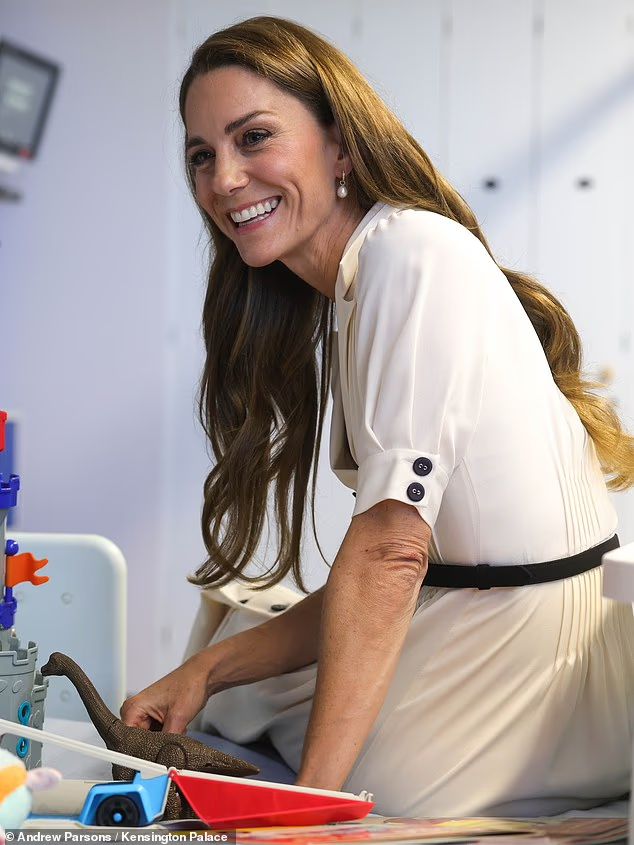
The Princess of Wales raised smiles today as she visited the London-based Evelina Children’s Hospital that works to help some of the capital’s sickest youngsters.
Prince William‘s wife was resplendent as she arrived at the medical facility near Westminster wearing a flowy, cream dress from Suzannah London.
The elegant midi features pin-tucks at the waist, black buttons and a matching belt to cinch the waist, with Catherine having previously worn the frock for a memorial service marking the fifth anniversary of the Grenfell Tower fire.
She completed today’s look with a pair of slingback black heels and styled her ‘bronde’ hair in loose waves.
Advertisement
Today’s low-key visit to the hospital, where the future Queen has been patron since 2018, will highlight its work to become London’s most comprehensive, integrated children’s hospital.
Plans are underway for a new building in the next ten years, complete with additional scanners, beds and theatres alongside state-of-the-art technology.
And it is hoped the princess’s visit will raise awareness of the Evelina London Children’s Charity’s efforts to raise £100 million towards the project.
During the engagement, Catherine visited Edward Ward, a new cardiac centre at St Thomas’ Hospital, which the Evelina is part of, where she met children being treated in what has been designed as a welcoming and friendly environment.
Advertisement
The Princess of Wales raised smiles today as she visited the London-based Evelina Children’s Hospital that works to help some of the capital’s sickest youngsters
Catherine blowing a kiss at a young patient at the Westminster facility
She then joined young patients and their families at Galaxy Ward, a brand-new outpatients unit with the Children’s Day Centre, where they can have face-to face heart clinic appointments, including diagnostic tests such as echocardiograms, assessments and ongoing care for children and young people with a cardiac condition.
Advertisement
Her last stop was to meet members of the children’s cancer programme team who are working together to plan for the move of a specialist cancer and blood and marrow transplant service.
The future Children’s Cancer Principal Treatment Centre located at Evelina will bring together teams from across London and south east England and allow children with cancer to access all the specialist services they need in one place.
It comes after the princess released heartwarming new pictures of herself with her family – including her husband, children, parents and brother – after completing the Three Peaks Challenge to raise funds for the Royal Marsden Cancer Charity.
Catherine looked the part in a heartwarming post uploaded to Instagram as she was seen sporting a pair of red shorts and a baseball cap, surrounded by those closest to her.
Advertisement
She captioned the images: ‘This time last week, completing the National Three Peaks Challenge. A huge thank you to everybody who has supported The Royal Marsden Cancer Charity.’
All three of her children were out in full force to show their support – with Charlotte, George and Louis each wearing their own practical pair of blue jeans as they smiled for the camera.
Catherine met Arjun and his family at the Edward ward today
The future Queen seemingly bonded with Arjun as Catherine placed a gentle arm on the young boy’s shoulder
Advertisement
Catherine was resplendent in a cream dress from Suzannah London
Catherine has been a patron of the Evelina hospital since 2018
During a visit to Evelina’s new cardiac ward, Catherine chatted with 14-year-old Hope
The future Queen at Evelina Children’s Hospital as she warmly greeted patients and staff
Advertisement
Today’s low-key visit to the hospital, where the future Queen has been patron since 2018, will highlight its work to become London’s most comprehensive, integrated children’s hospital
Also tagging along for parts of the hike was James Middleton, Kate’s younger brother who famously endured his own health difficulties after being treated for severe depression that left him contemplating suicide.
Posting to Instagram this evening, James said he was ‘so incredibly proud’ of his ‘darling sister’.
He added: ‘Two years ago, I told you we’d climb this mountain together. We talked about climbing mountains while you were in hospital, and about the incredible healing power that nature can have for both the body and the mind. So it was such an honour to join you for your Three Peaks Challenge for the Royal Marsden Cancer Charity.
Advertisement
‘Seeing how far you’ve come is nothing short of inspiring. Your strength, resilience, and determination, all while being the most amazing mother, wife, daughter, and sister, inspire me and so many others every single day.
‘Keep being exactly who you are.’
The Three Peaks Challenge sees participants attempt to climb the highest mountains in Scotland, England and Wales within 24 hours: Ben Nevis, the highest peak in Scotland and the UK, standing at 4,413ft; Scafell Pike, the highest peak in England, standing at 3,209ft and Snowdon (Yr Wyddfa), the highest peak in Wales, standing at 3,560ft.
The princess was driven between the peaks – Scotland, then England and finally Wales – by her team. It is not believed that any other member of the Royal Family has completed the Three Peaks Challenge, also making the princess’s triumph a royal first.
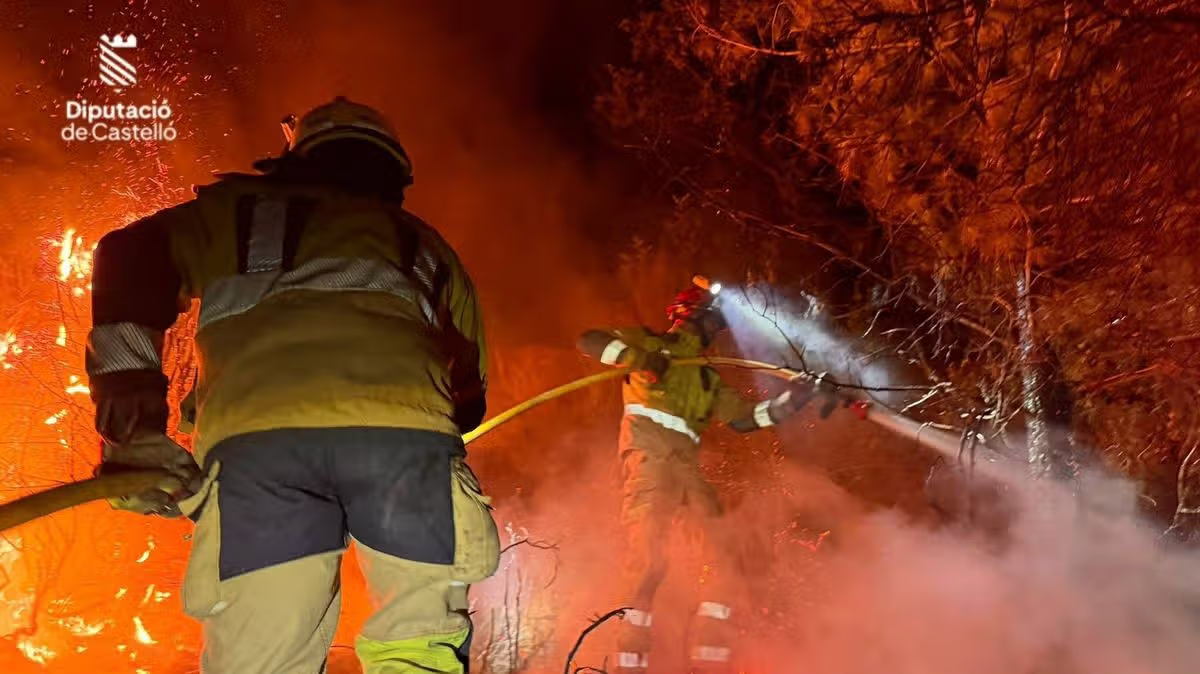
Wildfires are raging across southern Europe, with thousands of people evacuated and emergency services tackling fast-spreading flames across Spain, Greece, France and Portugal
Scots heading for sunshine breaks in Spain, Greece, France and Portugal are being warned to brace for chaos as huge wildfires rip through favourite holiday hotspots.
Advertisement
Travellers are told to switch on emergency alerts, with thousands already fleeing their homes as flames race across tinder‐dry ground. A massive 50,000 acres, the size of Liverpool, has been left scorched, and even the Tour de France has been hit, with spectators banned amid fears of “powder keg” conditions, reports the Mirror.
With a third potential heatwave looming this week, forecast to bring temperatures of 40C across Europe and above 31C in the UK, authorities fear further outbreaks are inevitable. While Britain has so far avoided the scale of wildfires seen in 2025, experts warn that any fires sparked in the wake of recent record-breaking heat could prove “more intense”.
A National Fire Chiefs Council (NFCC) spokesperson told The Mirror: “While wildfire numbers this year have not yet reached the scale we encountered last year, the risk picture is evolving. If the hot, dry weather continues, we could see wildfires becoming larger, more intense and more challenging for fire and rescue services to tackle.”
Advertisement
At the popular Costa Brava resort of Platja d’Aro beach, approximately 150 individuals were forced to evacuate, including 70 youngsters from a holiday camp. Catalan authorities confirmed a man had been detained on suspicion of igniting the blaze “while he was using an angle grinder by the roadside”.
In eastern Spain, firefighters tackled flames within the Sierra de Espadan Natural Park, with over 200 emergency personnel deployed alongside military units and aircraft support. Blazes across Catalonia have ravaged 2,000 hectares of woodland, prompting officials to advise locals to remain indoors.
Near the Spanish border in the isolated foothills of the French Pyrenees, 700 firefighters were working to control a raging wildfire that led to the evacuation of more than 10,000 individuals. French interior minister Laurent Nuñez stated on Monday: “This morning, conditions are deteriorating again,” noting that double the amount of land had been consumed by flames this season compared to the previous year’s equivalent period.
Advertisement
The “gigantic” Pyrenees blaze has almost trebled in scale since Sunday, authorities reported, advancing to within 30 metres of residential properties. “Climate change is here, we are living the consequences and it is only the start of July,” fire chief for Pyrénées-Orientales, Eric Belgioino, warned.
“This season is going to be a long one for the soldiers fighting fires. You have to help us.”
The regional prefect, Pierre Regnault de la Mothe, has instructed Tour de France spectators “not to go near the route or to the finish area” of Monday’s third stage through the Pyrenees from Spain into France. He stated it would be “limited to the passage of the riders only and vehicles essential to the race”.
International support has arrived in the Vouzela region of central Portugal, where 1,200 firefighters and 15 aircraft are tackling a massive blaze that has raged for more than three days. Meanwhile, residents in parts of Thessaloniki, Greece’s second-largest city, have been urged to stay indoors and keep windows and doors closed due to hazardous smoke from a recycling facility consumed by flames.
The Foreign Office guidance states: “Greece can experience extreme natural phenomena such as earthquakes, wildfires, extreme heat and flash floods. To be alerted to events near where you are located in Greece, make sure your mobile phone is set to allow emergency alerts.”
Ensure our latest stories always appear at the top of your Google Search by making us a Preferred Source. Click here to activate or add us as your Preferred Source in your Google search settings.
As part of a package of reforms to the UK’s asylum system, Shabana Mahmood has laid out the details of a new community sponsorship route for refugees to come to the UK.
The home secretary’s announcement draws on Canada’s experience of resettling over 400,000 refugees since 1979 through community sponsorship. While the planned UK scheme is much smaller in scale, Mahmood says it will “build over time as public confidence is restored in Britain’s immigration system”.
The UK government has identified a need to respond to global crises, but has stated that any routes need to be “sustainable, well managed and in line with the UK capacity to welcome, accommodate and integrate refugees”. It has identified community sponsorship as a way to meet this aim alongside its efforts to reduce irregular migration, including small boat crossings.
Britain has some limited experience with community sponsorship. A small scheme has welcomed 600 people since 2016. Sponsor groups are required to apply for approval and must raise at least £9,000. The Homes for Ukraine scheme welcomed around 234,000 people and required pre-arrival checks for hosts. But it did not stipulate fundraising – and even provided thank you payments to hosts.
Advertisement
The new proposal draws on Canada’s model by allowing sponsors to name which refugees they will sponsor. It also allows a wider range of organisations to become sponsors, potentially including businesses and universities, alongside faith organisations and community groups.
The ability to name a sponsor could help improve integration and support for refugees. But it was notably absent from the first phase of the UK’s community sponsorship scheme, launched in 2015, where the UN refugee agency selected people based on need.
This changed with the Homes for Ukraine scheme, which introduced the concept of named sponsorship in the UK. But this was directly between individuals, rather than involving institutions.
Moving from independent, needs-based assessment to selection based on personal connections could mean that those with stronger networks are privileged ahead of those more in need.
Advertisement
Homes for Ukraine also never presented a route for institutions like employers and universities to act as sponsors. This addition to the new scheme could improve the currently low levels of employment among resettled refugees, bringing them more in line with international peers like Canada.
Who will be supported?
The UK’s previous refugee routes, such as the one that resettled 20,000 Syrian refugees between 2015 and 2020, have used the UN refugee agency’s categories of vulnerability to identify refugees for resettlement based on the following criteria:
Legal and/or physical protection needs
Survivors of violence and/or torture
Medical needs
Women and girls at risk
Family reunification
Children and adolescents at risk
Lack of foreseeable alternative durable solutions
This approach has led the UK to focus on the most vulnerable as its priority. As a consequence, arriving refugees are more likely to have complex needs and may be further from being able to join the labour market.
This may partially explain the UK’s poor performance in getting resettled refugees into work. It may also reflect an ongoing lack of appropriate employment and language support for refugees.
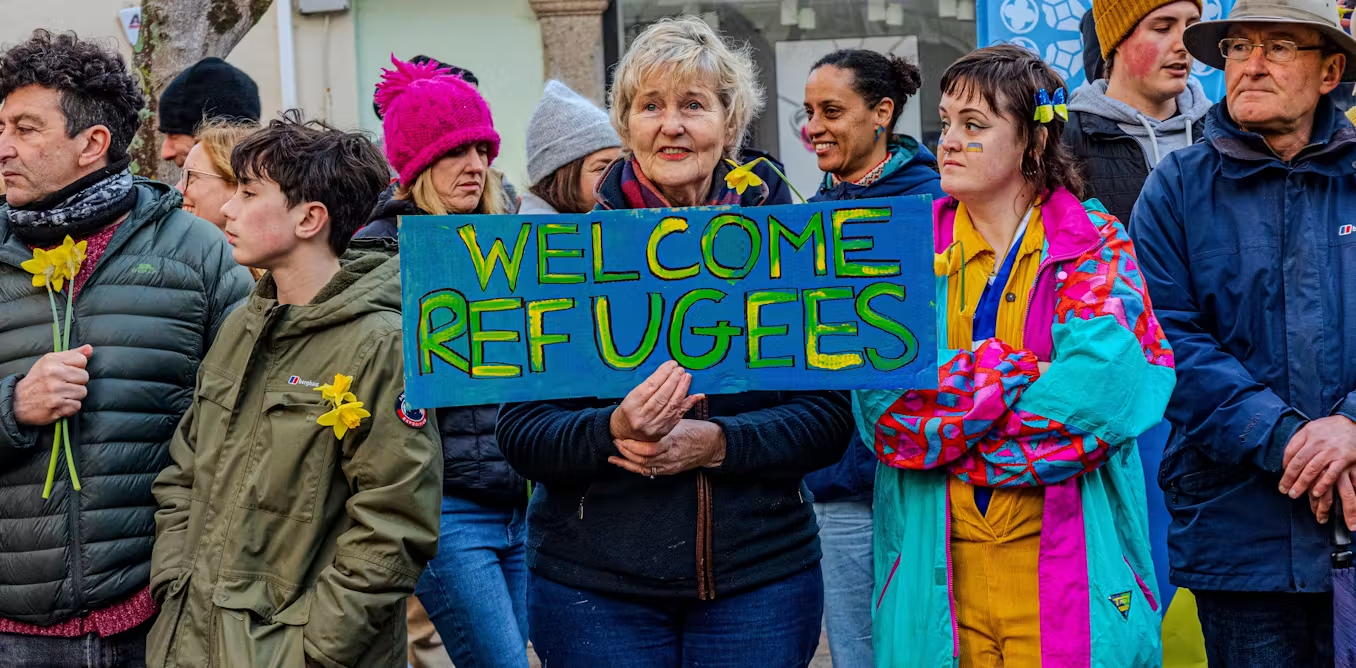
The UN refugee agency has long played a role in resettling people in the UK. BalkansCat/Shutterstock
The new scheme will retain the UN’s role in determining who is eligible. But it remains to be seen what criteria will be applied, and if vulnerability will continue to be the main priority.
Advertisement
Given the focus on employers and institutional sponsorship, it may be that the new cohort will be closer to the labour market and less focused on supporting those perceived as most in need.
As shown in Canada, one of the attractions of this type of sponsorship is that the networks it provides can help people access employment and become self-sufficient more quickly.
It will be important to analyse if this is the case in the UK – or if the new programme is simply accepting people who are already more likely to find employment, because of their pre-existing skills and experience.
Not an alternative to state support
One argument in favour of a sponsorship model is that community sponsors can replace the role of the state in the resettlement process, and therefore reduce costs to the state.
Advertisement
The UK experience with Homes for Ukraine bears this out. Hosting refugees in people’s homes circumvented some of the ongoing issues with, and costs of, housing other groups – for example, Afghan refugees.
However, research by my team at the University of Oxford’s Centre on Migration, Policy and Society found that, far from replacing state support, the presence and development of state capacity was a vital prerequisite for the success of Homes for Ukraine.
Local authorities provided pre-arrival checks on sponsors, and acted as a backstop if sponsor relationships broke down. Our research found that this role was crucial in building trust in the scheme and safeguarding arrivals.
On the flipside, in the small-scale community sponsorship scheme launched prior to Homes for Ukraine, local authorities had power to veto sponsorship groups. This veto could be an important factor in ensuring ongoing local consent for migration. But it slowed the uptake of the scheme, and caused frustration among sponsor groups.
Advertisement
Either way, local government has provided crucial – but often invisible – infrastructure to support community sponsorship. While undoubtedly a positive development, the creation of community sponsorship routes should not be separated from refugee resettlement, or from broader work to support community cohesion and integration.
Donald Trump has said the World Cup referee that sent off USA’s Folarin Balogun was ‘suspect’ before his intervention to get the star striker’s one-game ban overturned.
Speaking at the White House Monday, the President offered no apologies for his unprecedented move but insisted he did not demand Balogun’s ban was flipped in his phone call with FIFA president Gianni Infantino.
The move has sparked outrage with Belgium, the USA’s next opponent, launching a dramatic late appeal to have the ban reinstated hours before kickoff in Seattle.
Trump, however, told the Belgians that the World Cup last-16 game would have been ‘rigged’ without Balogun and took aim at the referee who brandished the red card in Raphael Claus, from Brazil.
Advertisement
‘Yeah, I did, I spoke to Gianni. I asked for a review by FIFA,’ Trump said. ‘That wasn’t a foul. That wasn’t even an infraction. That was two guys running full speed who happened to crash into each other.
‘You can’t properly place your foot on somebody else’s foot when you’re going full speed. No, these were two great athletes who got tangled up. And this referee, who is a little bit suspect – if you check his past. I don’t want to say that because I don’t like to create controversy, but very suspect. If you’d like, I’ll provide you with his past.’
Donald Trump has spoken out on his involvement in the Folarin Balogun red card drama
Advertisement
Trump said the referee who sent Balogun off, Brazilian Raphael Claus, had a ‘suspect past’
Claus was once accused of match-fixing in 2023 in Brazil but was never charged with any wrongdoing and there is no suggestion of any type of allegation aimed at Claus in this World Cup.
‘Firstly, it wasn’t a foul,’ Trump added. ‘And then you have to look at the person who made the decision. The game tonight is going to be amazing. We are going to have a full team and Belgium is going to have a full team. And you know what, if they beat us they can be really proud.
‘This game would have a big mark on it. The other way, if they beat us I would say it is rigged, just like the election was rigged in 2020.’
Advertisement
Balogun, USA’s top scorer in the tournament with three goals, was given a straight red card during the USA’s 2-0 victory over Bosnia and Herzegovina in the last 32 – a decision at the time that was criticized for being wrong.
He tangled with Bosnia and Herzegovina defender Tarik Muharemovic and his leg raked down Muharemovic’s calf while he was struggling to balance and jostling to win possession of the ball.
Trump continued: ‘He (Balogun) didn’t do anything wrong, and he’s our best player, or one of our best players, a very vital player and they gave him a red card.
‘I didn’t think it meant much. Then I started hearing that it means you can’t play in the next game, at least in the next game.
Advertisement
‘That’s one thing, to penalize somebody for the game. But how do you penalize them for a game that hasn’t been played yet? It’s very unfair. You can’t do that.’
Belgium have appealed to get USA striker Folarin Balogun re-banned for their last-16 game
Balogun was sent off for a tackle during their 2-0 win over Bosnia and Herzegovina
Ironically, Balogun qualifies to play for the United States due to ‘birthright citizenship’ – a rule Trump has wanted to overturn.
Advertisement
His heavily pregnant mother was stopped from boarding a flight out of the United States when she was heavily pregnant and Balogun was then born in Brooklyn, New York.
After FIFA kicked back Balogun’s ban on Sunday, Trump, who was awarded the inaugural FIFA Peace Prize by Infantino last year, wrote on Truth Social: ‘Thank you to Fifa for doing what was right, and reversing a great injustice! President DONALD J. TRUMP.’
Infantino was sat next to U.S. Secretary of Commerce Howard Lutnick during the game where Balogun was sent off in the San Francisco Bay.
MORE TO FOLLOW
Advertisement
Share or comment on this article:
Donald Trump attacks ‘suspect’ World Cup referee who sent off USA star Folarin Balogun before getting his ban overturned
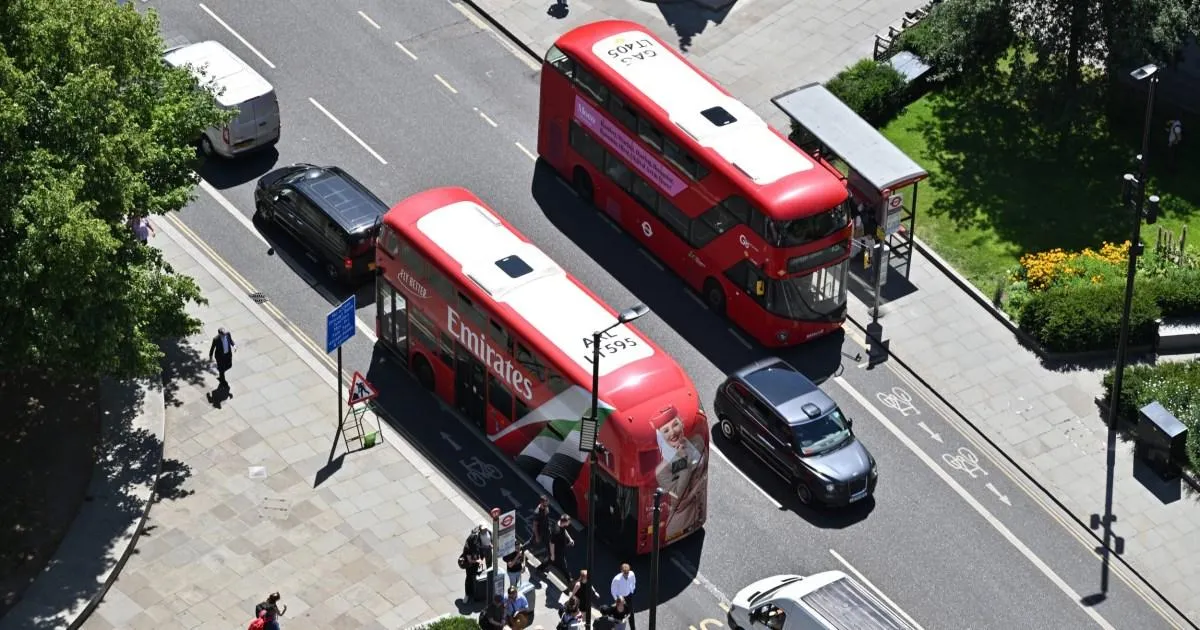
London bus and tram fares have been frozen before a possible rise in November (Picture: Getty Images)
London bus fares have been frozen at least until November before a rise looms.
Londoners faced with the spiralling cost of living will be relieved to hear that bus fares are not going up, for now.
While Tube fares have seen annual rises, bus journeys have been frozen since March 2023 at £1.75.
Now the London mayor Sadiq Khan has announced the bus and tram ticket freeze will continue for four more months until November.
Advertisement
How much bus tickets will cost after the freeze ends
Around five million Londoners take the bus every day (Picture: Getty Images)
After November 1, though, single adult bus and tram fares are expected to rise by 10p to £1.85.
Under the freeze, the daily bus cap is set at £5.25, but after it ends, the cap will rise by 30p to £5.55, which TfL says is in line with Tube fare increases.
The seven-day bus and tram pass will rise to £26.10 after November 1.
Transport for London said that if bus fares had risen in line with inflation in the past decade, a single journey would now cost £2.35.
Are you struggling to afford daily travel in London?
Stay up to date with the stories everybody’s talking about by signing up to Metro’s News Updates newsletter.
Advertisement
Currently, bus passengers can make unlimited journeys for one hour for £1.75 under the hopper fare system.
During the summer holidays and festivities, Saturday and Sunday travel on buses and trams will cost only £1.75 for the entire day during a hopper fare offer from July 25 until the end of August.
Latest London news
To get the latest news from the capital, visit Metro’sLondon news hub.
Advertisement
The mayor said: ‘I’m pleased to extend the freeze on bus and tram fares for another four months, and will continue doing everything in my power to keep TfL services as affordable as possible, as I know the cost-of-living crisis is still hitting many Londoners hard.
‘My Hopper fare has enabled millions of people to save money on bus and tram travel over the past decade, and now the exciting new Weekend Hopper will make it even cheaper and easier for Londoners and visitors to enjoy all that our great city has to offer this summer.’
Advertisement
Passenger watchdog London TravelWatch welcomed the four-month extension and commitments to improve bus travel.
Buses are a lifeline for many during disruption like the latest Tube strikes (Picture: AFP/Getty Images)
A spokesperson said: ‘But the inflation-busting increase in bus fares due in November – if it happens – will be hard to take for passengers on lower incomes who depend on this form of transport, particularly when they are seeing the slowest ever bus speeds across the network or, in some cases, reduced service frequencies on their routes.’
London’s iconic red buses, which carry around five million people a day, have come under fire due to falling speeds.
On average, London buses trundle at speeds of just 7mph, slightly above a jogger going at an easy pace, The Standard reports, citing figures from the Confederation of Passenger Transport.
The winners of this clash will advance to the World Cup quarter-finals, to face either co-hosts the USA or Belgium.
Date, kick-off time and venue
Portugal vs Spain is scheduled for an 8pm BST kick-off today on Monday July 6, 2026.
The match will take place at Dallas Stadium.
Advertisement
Where to watch Portugal vs Spain for FREE
TV channel: In the UK, the game will be televised live and free-to-air on BBC One, with coverage starting at 7.30pm BST.
Live stream: UK viewers can also catch the contest live online via the BBC iPlayer or the BBC Sport website.
Live blog: You can follow all the action on matchday via Standard Sport’s live blog.
Advertisement
Free highlights: World Cup highlights are available on FIFA’s official YouTube channel, along with the BBC iPlayer and ITVX app.
Portugal vs Spain team news
Ronaldo, Vitinha and Bruno Fernandes were all substituted in the second half, but are expected to keep their places. However, Ramos’ winner may not be enough to earn him a start.
Match-winner: Goncalo Ramos popped up with a late goal for Portugal against Croatia
Advertisement
Getty
Goalkeepers: Diogo Costa, Jose Sa, Rui Silva
Defenders: Diogo Dalot, Matheus Nunes, Ruben Dias, Nelson Semedo, Joao Cancelo, Nuno Mendes, Goncalo Inacio, Renato Veiga, Tomas Araujo
Forwards: Cristiano Ronaldo, Joao Felix, Francisco Trincao, Francisco Conceicao, Pedro Neto, Rafael Leao, Goncalo Guedes, Goncalo Ramos
It has been reported in Spain that neither Lamine Yamal, Aymeric Laporte or Pedro Porro took part in training on Saturday, instead completing recovery work in the gym which means they should all be fit to start.
Pushing to return: Nico Williams has resumed training with Spain
Getty
Goalkeepers: Unai Simon, David Raya, Joan Garcia
Advertisement
Defenders: Marcos Llorente, Marc Pubill, Pedro Porro, Aymeric Laporte, Eric Garcia, Pau Cubarsi, Marc Cucurella, Alejandro Grimaldo
Midfielders: Rodri, Martin Zubimendi, Mikel Merino, Pedri, Gavi, Fabian Ruiz, Alex Baen
Forwards: Yeremy Pino, Victor Munoz, Mikel Oyarzabal, Ferran Torres, Lamine Yamal, Dani Olmo, Nico Williams, Borja Iglesias
Portugal vs Spain prediction
Advertisement
Aside from beating Uzbekistan 5-0, Portugal have been largely unconvincing at the World Cup so far. But a showdown against Spain offers the chance to make a statement.
That said, this Spain team appear to be clicking into gear at just the right time. The upcoming battle between Yamal and Nuno Mendes should go a long way to deciding the outcome and we expect La Roja to progress.
Head to head (h2h) history and results
These two nations have met twice before at the World Cup, with Spain coming out on top in 2010 en route to their eventual triumph in the final.
Advertisement
They met again in 2018 in their opening group game of the tournament in Russia, but Ronaldo’s hat-trick was not enough in a 3-3 classic.
Portugal vs Spain match odds
We aim to offer every online gambler and reader of The Standard a safe and fair platform through unbiased reviews and offers from the UK’s best online gambling companies.
Gambling can be addictive, always play responsibly and only bet what you can afford to lose. Gambling sites have a number of tools to assist you to stay in control, including deposit limits and time outs. If you think you have a problem, advice and support is available for you now from BeGambleAware or Gamcare.
Advertisement
Any offers or odds listed in this article are correct at the time of publication but are subject to change. Terms & Conditions apply to all offers.






















































You must be logged in to post a comment Login