Cropin, an India-based SaaS AgTech company deployed in over 100 countries, is scaling its global agricultural analytics by integrating Sisense-powered embedded BI into its Cropin Cloud platform. The partnership gives stakeholders near-real-time dashboards and threshold-based alerts across 30 million digitised acres.
When it comes to feeding the planet, the old ways of farming are running up against hard limits. Climate volatility, supply-chain disruption, and the sheer complexity of managing crops across dozens of countries have made data-driven agriculture not just a nice-to-have but an operational imperative. Cropin, the India-headquartered SaaS AgTech company, is leaning into that reality by deepening its use of embedded business intelligence through a continued partnership with Sisense, the analytics platform specialist.
Advertisement
The company announced on 19 May that it is scaling its global agricultural analytics capabilities with Sisense-powered reporting tools baked directly into its Cropin Cloud platform. The integration gives stakeholders across more than 100 countries faster access to the visualisations and near-real-time insights they need to make better decisions about crop management, yield optimisation, and supply-chain resilience.
What Cropin actually does
Founded in 2010, Cropin has quietly built what it describes as the world’s first intelligent agriculture cloud. Cropin Cloud is a multi-tenant, secure, and scalable platform designed specifically for agriculture and allied industries, including forestry, commodity trading, banking, and insurance. Its suite of applications, collectively branded Cropin Apps, captures and digitises agricultural data from farm to warehouse to fork, covering roughly 30 million acres, more than 400 crops, and upwards of 10,000 crop varieties worldwide.
The 💜 of EU tech
The latest rumblings from the EU tech scene, a story from our wise ol’ founder Boris, and some questionable AI art. It’s free, every week, in your inbox. Sign up now!
Advertisement
The platform’s AI engine, Cropin Intelligence, has processed and analysed over one billion acres of cultivable land globally. That analytical backbone is what distinguishes Cropin from simpler farm-management tools: it does not merely record data but actively generates predictive insights, from crop-health assessments and irrigation scheduling to yield forecasts and disease-risk modelling. The company counts AgTech innovation as core to its identity, and its investor roster, which includes Google and the Bill & Melinda Gates Foundation’s Strategic Investment Fund, reflects that ambition.
Why Sisense matters here
Sisense, an Israel-founded analytics company that pivoted heavily towards embedded analytics in 2018, provides the BI layer that sits inside Cropin’s products. Rather than forcing users to export data to a separate reporting tool, the Sisense integration surfaces interactive dashboards, alerts, and visualisations directly within the Cropin Apps interface. For a field officer checking crop performance on a mobile phone in rural Maharashtra or a procurement manager tracking commodity flows from a desk in Amsterdam, the experience is the same: contextual, timely intelligence without the friction of switching platforms.
The upgraded SmartFarm Plus product, which forms part of the Cropin Apps suite, leverages Sisense’s flexible BI architecture and modern data-visualisation toolkit. Its multi-dimensional analysis eliminates the complexities that enterprises typically face with traditional data warehousing and OLAP modelling, allowing complex data from multiple sources to be combined into a single, up-to-date dashboard. Users can also set threshold-based alerts, so that instead of waiting for a periodic report, they receive direct notifications when a defined event occurs.
The bigger picture for AgTech analytics
The timing is no accident. Agriculture is one of the last major global industries to undergo wholesale digital transformation, and sustainability-focused technology is accelerating that shift. The European Union’s incoming deforestation regulation, rising demand for farm-to-fork traceability, and mounting pressure on CPG companies to prove their sourcing credentials are all creating new appetites for the kind of granular, verifiable data that platforms such as Cropin can supply.
Advertisement
With its presence in more than 100 countries and its recognition as a 2024 Technology Pioneer by the World Economic Forum, Cropin is positioning itself as a category-defining platform rather than a point solution. It expanded its partner ecosystem in 2025 through strategic alliances with Wipro, BCG, and EIT Food, and in January 2026 launched the Cropin Ecosystem, a collaborative framework bringing together technology, satellite, climate, consulting, and development partners under a single AI-driven umbrella.
For agri-food enterprises evaluating their analytics stacks, the Cropin-Sisense pairing offers an instructive model. Instead of bolting generic BI software onto an agricultural workflow, the integration is purpose-built: precision agriculture demands precision analytics, and embedded analytics reduce the cognitive load on end users who may be agronomists rather than data engineers. It is an approach that resonates with a broader trend across SaaS companies building AI features directly into their products rather than offering them as afterthoughts.
Whether this translates into a genuine competitive moat for Cropin will depend on execution. But the direction of travel, embedding richer, faster, and more accessible analytics into the daily workflows of the people who actually grow and move the world’s food, is hard to argue with.
Photo credit: NBC News Months after paying a deposit and chasing down answers through repeated calls and emails, NBC News opened the box on the Trump Mobile T1 smartphone. Inside waited a gold-colored device that turns heads the moment it leaves the packaging. An American flag covers the back, though it carries only eleven stripes instead of the standard thirteen. Trump branding appears in four separate spots across the body, making the origin unmistakable from the first glance.
Unboxing the phone reveals a couple of essential accessories straight away, including a charging cord, wall block, and a clear protective cover, so you don’t have to go out and acquire any other stuff to get started. The item feels really substantial in the hand, however a bit of a handful due to its height. However, the 6.78-inch screen, which is somewhat taller than the new iPhones, gives you some extra real estate to play about with when browsing or checking out some material.
Tap into iconic style and advanced technology with Ray-Ban Meta, the #1 selling AI glasses*. Capture photos and videos, listen to music, make…
Chat with Meta AI to get suggestions, answers and reminders. With live translation, you can have a back-and-forth conversation in six languages and…
Listen to music and more with discreet open-ear speakers that deliver rich, quality audio without blocking out conversations or the ambient noises…
When you turn on the phone, you can see that it is running standard Android with all of the customizations that make it distinctive. Truth Social is already set up and ready to go, with little effort on your part. 512 gigabytes of storage is plenty for all of your programs, photographs, and data. The 50 megapixel camera performed well for ordinary photos, and they were particularly impressed with the wide angle photographs, which were sharp and had excellent colors.
Phone conversations were fine, and texts got through without any problems. Everything just worked as intended, with no hiccups or surprises. The inclusion of a 3.5 mm headphone connector will be a significant plus for those of you who still rely on wired earphones, especially since so many modern products have abandoned it. To add added security, the fingerprint sensor and facial unlock were both lightning fast.
The phone is presently on sale for $499, which is a reasonable price if you’re considering giving it a try. The construction quality appears sturdy enough for daily usage, and the gold finish appears to be durable enough to withstand the occasional scratch without exhibiting too much wear. The marketing pitch used to be all on how it was created in the United States, but now it appears to be about how it was developed there. The package boldly states ‘proudly assembled in the United States,’ yet when you look at the specs, they’re basically the same as the HTC U24 Pro from Taiwan. [Source]
Huawei-linked LineShine supercomputer crams 2.45 million Arm cores into one enormous AI cluster
Huawei’s processors power one of China’s largest AI computing installations today
CPU-only supercomputers eliminate costly data transfers between processors and accelerators during workloads
China has deployed a massive CPU-only supercomputer called LineShine that delivers 1.54 exaflops of AI training performance without using any GPUs at all.
The system packs 20,480 compute nodes, each containing two LX2 processors for a total of 40,960 chips across the entire machine.
Each LX2 processor has 304 CPU cores, meaning the whole supercomputer uses roughly 2.45 million Armv9 cores in total.
Latest Videos From
Advertisement
Inside the LX2 processor’s unusual architecture
The processor was developed by Huawei or through a joint design with China’s National Supercomputing Center, though the exact origin remains undisclosed.
Each LX2 processor uses two compute chiplets with cores organized into eight clusters containing 38 cores per cluster.
Every core includes ARM‘s Scalable Vector Extension and Scalable Matrix Extension units that accelerate matrix operations used in AI training.
The processor delivers 60.3 teraflops of FP64 performance, 240 teraflops of BF16 throughput, and 960 teraops of INT8 performance from a single chip.
Advertisement
Sign up to the TechRadar Pro newsletter to get all the top news, opinion, features and guidance your business needs to succeed!
The memory subsystem combines 32GB of on-package HBM delivering up to 4TB/s of bandwidth with up to 256GB of off-package DDR5 memory.
CPU-only systems offer several advantages for complex scientific tasks that combine AI training with massive data ingestion and preprocessing.
Since everything runs on the same processor and memory space, they avoid costly and bandwidth-hungry CPU-to-GPU data transfers.
Advertisement
Homogeneous CPU-based systems can also expose much larger coherent memory pools by combining HBM with large DDR capacities.
This is useful for handling massive scientific datasets, retrieval augmented generation, and long context windows that GPU memory limitations cannot accommodate easily.
Advertisement
The big caveat that comes with this approach
CPU-only systems are usually less power efficient and deliver lower-density AI throughput than GPU-based supercomputers.
This is the major reason most of the industry bets on heterogeneous CPU plus GPU architectures for large-scale AI workloads.
China is pursuing this path largely due to US bans on GPU exports, not because CPU-only systems are technically superior for AI tasks.
The LineShine shows that CPUs can successfully perform GPU jobs, but the efficiency gap between the two approaches remains substantial and unlikely to close anytime soon.
Advertisement
China is making a strategic trade-off, accepting lower performance and higher power consumption in exchange for independence from foreign hardware and software ecosystems like Nvidia‘s GPUs and CUDA.
Whether that trade-off makes sense for long-term AI development depends entirely on how quickly Chinese manufacturers can close the performance gap with their own GPU designs.
Until then, the LineShine will remain a remarkable engineering achievement and a practical necessity, but probably not a blueprint for how most of the world will build AI supercomputers.
You step out of your car after a long haul in the middle of summer and realize the front end has turned into a magnet for all kinds of bugs. Everything from the bumper to the windshield is caked with bug splatter. Normally, the next course of action is to get the cleanup underway as quickly as possible. While it’s impossible to repel bugs when your car’s barreling down the highway at over 100 mph, there are ways to make dealing with them a lot easier later.
There are several techniques you can choose from, but let’s start with the cheapest: wax. Apply a layer, and the surface gets slick enough that splatters slide off instead of sticking. That’s crucial since bugs carry acidic compounds. Given enough time on hot paint, they can penetrate the clear coat, leaving behind etching, staining, and even some bubbling on the finish. Cicadas can make things even worse with their glue-like residue. Wax can help prevent these problems. And because it’s affordable and applying it is fairly straightforward, you can simply reapply it on your own every few months if it’s wearing off.
A step up from wax is ceramic coatings from reliable brands. Because they’re hydrophobic, they repel water and dirt as well, making it harder for bug juice to stick. But unlike wax, they require significantly more precision and time, which is why it’s best to leave application to a professional detailer. For even more thorough armor, paint protection film (or PPF) for cars works better still. Not only does it soak up impacts from road debris and insects alike, but some PPF products are also self-healing. The catch is that it’s significantly pricier.
Advertisement
Other prevention tactics
On top of all that, you can use bug repellent sprays too — although they’re not to be confused with human bug sprays. The water-based sprays leave a slippery layer, with some holding up for a week or two. They work well when you don’t want to commit to anything permanent, making them ideal for a long road trip.
Advertisement
Then there’s the low-tech route of preventing bugs from ever getting close to the paint: bug screens. These are essentially mesh screens that strap onto the front of your car and can snap on and off relatively easily. You can simply keep them in the car, strap them on when the season is exceptionally buggy, and wash them after a trip. As an alternative, a fabric car bra over the hood does much the same thing, just with less coverage.
Some of the prevention is behavioral, too. The slower you drive, the fewer bugs your car will pick up along the way. That’s because at lower speeds, the airflow around the car gives them a chance to get pushed around. Even if they do hit, the chances of them splattering hard drop significantly. You also save money on actual repairs, since beetles with their hard shells upon impact can quickly become one of the reasons for your car’s chipped paint. If it’s lovebugs you’re dealing with, then timing can help too. Most of them hit their daily peak around 10 a.m. and stop flying at dusk, so during lovebug season, timing drives for the evening can help reduce the problem. When bugs do inevitably hit the paint, try to get them off as soon as possible. That’s because the longer they sit in the sun, the deeper the acid works into the finish.
Brands with no Trustpilot account only appeared in 1% of AI-generated answers
Review and trust platforms are the second-most cited source type
Relevance, recency and ranking are vital in a good GEO strategy
Trustpilot claims businesses could effectively be “invisible” in AI-generated answers if they fail to build visible trust signals through customer reviews and engagement, indicating a new post-SEO era.
While optimizing for search engines remains key, generative engine optimization (GEO) has introduced yet more challenges for companies looking to survive in 2026 and beyond.
According to Trustpilot’s research, only those with active review profiles are most likely to appear in AI results per the analysis of 800K answers across ChatGPT, Gemini, Perplexity and Google’s AI Mode.
Latest Videos From
Advertisement
Reviews could revolutionize your business
The alarming data reveals brands with no Trustpilot presence were cited in just 1% of AI-generated answers. Conversely, those with 80+ reviews were cited in over three-quarters of answers.
Thankfully, even laying out the foundations can create a meaningful uplift. By creating a Trustpilot account, or presumably a similar online reviews account, the company saw businesses being cited in more than half (53.5%) of AI-generated answers. More reviews, responses and engagement lead to even higher visibility.
This is all important information for companies looking to increase visibility, with more than half (58%) of consumers now using AI to find products and services – a number that’s expected to climb.
The report claims that brands increasingly need AI visibility as well as search visibility – not in place of it – as AI-generated answers quickly emerge as the new front page for businesses.
Advertisement
Sign up to the TechRadar Pro newsletter to get all the top news, opinion, features and guidance your business needs to succeed!
More broadly, review and trust platforms are playing bigger roles in AI discovery. Per the data, they’re now the second-most cited source type in AI-generated answers, accounting for 14% of all citations.
The availability of fresh content, detailed information and signals of public trust and legitimacy all influence the prevalence of review platforms in AI-generated answers, the firm said, summarizing the ‘3Rs’ – relevance, recency and ranking.
Trustpilot criticized company web pages for being static, corporate places of information, whereas public forums like review sites offer real-time, conversational and experience-based details to tick the relevance box.
Advertisement
Recency is where Trustpilot sings its own praises, amassing around 200K reviews daily in 2025, while a 94/100 domain authority score affords this website high ranking for information retrieval by AI engines.
As for the industry in general, the report details how AI systems are increasingly combining traditional search indexing (hence the continued importance of SEO), retrieval systems, LLMs and real-time web grounding.
Advertisement
Why responding to reviews matters
Although opening a profile can boost AI visibility somewhat, Trustpilot found that responding to comments and engaging with customers gives businesses the best chances of being seen in AI-generated search results.
It’s not clear why, but the company surmises that the two-way interaction could reduce spam signals and demonstrate accountability.
Live feeds also show that a company is still operational, that customer support exists and that complaints are addressed.
“In an era of AI-powered buying journeys, trust is a quantifiable, high-value asset for businesses,” Chief Customer Officer Alicia Skubick commented.
Advertisement
While Trustpilot’s findings center around its own business model, the data does point to a broader shift in how businesses need to reach customers in an AI-first era.
Future discovery strategies must expand beyond SEO to include trust signals, customer engagement and real-time information to tackle the emerging challenge that is GEO.
Keri Rodrigues, a mother of five boys, knows the value of screens.
For her boys, four of whom receive school accommodations, screens serve a practical purpose at school.
“When you get a kid who’s got [a learning plan] for anxiety and a substitute teacher that hasn’t read his 504 [plan] and there’s nobody there to de-escalate him, he’s got to use his phone to call mom so I can FaceTime with him and do a breathing exercise,” Rodrigues says.
But this use of screens bumps against a new concern. Fueled by distress over the mental health impacts of too much screen time, lawmakers have begun to pass device bans and other restrictions for schools, in a rising “techlash” across state capitols.
Advertisement
Now, as the country wrestles with restricting screens, some parents and disability advocates are beginning to express concerns about whether students who rely on accessibility tools are being excluded from the rulemaking process. Some of these advocates say they agree that new tech restrictions are necessary, but they are calling for careful consideration in how these rules are written.
Many neurodiverse students need assistive technologies for learning, and it’s common for digital tools to be prescribed in the plans schools use for these students. Assistive technologies support functional and social needs for these students’ daily lives, argued Sambhavi Chandrashekar, global accessibility lead for D2L, an online learning platform, in a series of emails to EdSurge.
Chandrashekar and others worry that lawmakers aren’t consulting families with neurodiverse students enough when crafting new restrictions, and that screen time laws could impinge on accessibility tools. They worry that the gains these students have made are becoming swept up in larger political battles.
Advocates are calling for a proactive approach to avoid potential problems down the road, and EdSurge has not yet found an example of a student blocked from using an assistive device because of these new bans.
Students with ADHD might use screens for reminders, alarms, timers, or even medical alerts, says Rodrigues, the mom. Students with autism use it for self-regulation, and students with anxiety, epilepsy, asthma, or vision and hearing differences rely on specific accessibility features on their phones. One of her own sons, a senior in high school, uses a meditation app to de-escalate, she says.
Advertisement
In her position as president of the advocacy group National Parents Union, Rodrigues wants caution from lawmakers. The new legislation is “really well intended,” she says. But: “We’ve got to make sure we’re not stomping on kids that are actually utilizing these devices for really important reasons.”
“Phones aren’t just toys for kids,” Rodigues says.
Inclusion as the Norm
Disability laws such as the Individual with Disabilities Education Act guarantee students the right to assistive technologies, sometimes including screens.
But the new restrictions occur at a particularly tense time for these families.
Advertisement
Mass firings and funding cuts under the Trump administration have cast doubt on the reliability of federal civil rights protections and processes, some argue, leading to an increase in accessibility-related lawsuits, as families look to protect their rights. For instance, according to a nonpartisan government watchdog report, the Trump administration’s cuts to the office which reviews civil rights complaints contributed to a 90 percent dismissal of student civil rights complaints in the later months of 2025.
Recently, the U.S. Department of Justice delayed a long-anticipated deadline that required schools and vendors to meet widely accepted accessibility guidelines, after it became clear that schools and governments were not ready.
And advocates have already called attention to bills that would subject students with disabilities to surveillance cameras in classrooms, in the hopes of curbing physical restrains against these students, as EdSurge has reported.
‘Unintentional Segregation’
As for the latest screen restrictions, many of the bills note that they do not apply to students with disabilities under law. For example, laws from Alabama and Tennessee carve out blanket exemptions for students with disability plans. And Tennessee’s bill also includes an explicit exception for literacy and dyslexia screenings.
Advertisement
Still, advocates are concerned.
Local and regional policies can limit access to tools like screen readers and predictive text software even if they don’t mean to, argues Andrew Kahn, an associate director for Understood, a support organization for people with learning differences. But these tools can be necessary for those students to keep up in class. It’s not obvious to everyone that these tools can help students, even some who don’t have formal plans, Kahn says.
Typically, when these rules mention students with disabilities, they will exclude anyone covered by disability law, says Lindsay Jones, CEO of CAST, a nonprofit focused on assistive technology and learning. But they are still relying on local school districts or other agencies within the state to provide guidance about how to implement the law, she adds.
Without sufficient guidance, a concern is that teachers might become uncomfortable working with students who need screens for accessibility reasons and might restrict these tools because of that, Jones says. For instance, advocates fear that a teacher, wary of breaking the new law, might tell a student not to use a screen, even though it was prescribed by an individualized education program, or IEP.
Advertisement
“It’s not typical that a student [with disabilities] is sitting alone at a screen, which I think is what seems to be driving much of the concern,” Jones says.
But even if students with disabilities aren’t prevented from using the screens, there’s unease about whether these new rules will contribute to shaming or separation.
Reading some of these laws without guidance, it’s unclear how to implement them without banning screens in the classroom, Jones says. In order to follow these rules, it’s possible that students who are exempt from the bans could be moved into another room, she worries.
“That’s immediately going to bring — or raises our concerns about — stigma for these kids,” Jones says. “One of the beautiful things is when technology is built into systems that we’re all using, and we can use them together, and it reduces the feeling that you’re separate and different in a way that can be especially harmful.”
Advertisement
It’s an apprehension that others in the space share.
“You would be restricting [students with disabilities] because the access to technology is creating that stigma and that segregation,” says Kahn of Understood. “Anything that leads to difference between kids, that accentuates and magnifies, has the really strong potential to further stigmatize and make these kids feel singled out.”
Education should always take place in the least restrictive environment possible, he adds.
Rodrigues says that she and other parents also worry about whether students will become reluctant to use their disability tools because of the stigma. “Kids might actually choose to suffer rather than being singled out socially,” she says.
Advertisement
But ultimately, for some proponents of accessibility tech, the disquiet is largely about who gets consulted for new rules and how they get enforced.
It’s not that these restrictions shouldn’t be pursued, but that families of students with disabilities should be more thoroughly included in the rulemaking process, these advocates argue.
“Parents with children who have a disability must have a seat at the table,” Chandrashekar wrote: “Blanket rules that are blind to fundamental human differences will do more disservice than good to students at the margins.”
Apple TV has shared the upcoming slate of Peanuts content, including a new special “There’s No Place Like Home, Snoopy” and a feature-length film “Snoopy Unleashed” alongside more classic releases.
Apple TV announced on May 19 that “Camp Snoopy” will return for a second season on June 26, followed by a new special, “Snoopy Presents: There’s No Place Like Home, Snoopy,” on July 31. The service is also bringing “This Is America, Charlie Brown” and “The Charlie Brown and Snoopy Show” to Apple TV for the first time in July.
The Peanuts brand has slowly made Apple TV the modern home for Snoopy and the gang. Apple repeated that its expanded partnership with WildBrain, Peanuts Worldwide, and Lee Mendelson Film Productions runs through 2030.
Even though Apple TV has focused on exclusives and original content since its inception, a few established series and brands have made their way onto the service. The Peanuts are the most prominent example, but there’s also “Fraggle Rock” and “Long Way Up.”
Advertisement
Apple keeps expanding Peanuts beyond nostalgia programming
Much of Apple’s early Peanuts push focused on bringing the holiday specials to the platform and a few new original specials. The latest slate shows the company moving deeper into franchise-building with returning series, library expansion, and new film development happening simultaneously.
“Camp Snoopy” season two follows Snoopy and the Beagle Scouts at Camp Spring Lake. The new July special centers on Snoopy trying to recover his accidentally sold doghouse.
Apple is also adding two older Peanuts productions that have been less visible on streaming platforms in recent years. “This Is America, Charlie Brown,” originally released in 1988, mixes Peanuts characters with episodes focused on American history and culture.
“The Charlie Brown and Snoopy Show,” which originally aired from 1983 through 1986, adapts classic Charles M. Schulz comic strip storylines. Its 18 episodes from the classic series that will help increase Apple’s catalog just a little bit more.
Advertisement
Apple also shared that “Snoopy Unleashed” is a feature-length film coming soon. It follows Snoopy after he runs away from home, sending Charlie Brown and the rest of the gang into a large city to search for him.
“Camp Snoopy” season two follows Snoopy and the Beagle Scouts at Camp Spring Lake
Streaming services are now battling it out with recognizable intellectual properties rather than just offering a vast library of content. Disney leans on Marvel and Star Wars, Netflix pours money into its established franchises, while Apple struggles with fewer major existing brands beyond Peanuts.
Unlike many streaming exclusives, Peanuts also aligns closely with Apple’s family-friendly image. The franchise carries decades of cultural familiarity without the licensing complications or tonal risks tied to larger blockbuster properties.
Apple TV currently costs $12.99 per month in the United States and is available through the Apple TV app across Apple devices, smart TVs, game consoles, Roku, Fire TV, and web browsers.
Nintendo just dropped a new mobile game called Pictonico, and it turns everyday photos into a nonstop stream of short, goofy challenges built around the faces staring back at you. Available on iOS and Android starting May 28, the title comes from the same studio behind the WarioWare series, and that shows in every quick burst of action. You open the app, grab shots from your phone library or fire up the camera for fresh ones, and the game spins them into dozens of tiny experiences where your friends and family take center stage. No photos leave your device. Nintendo never sees them.
You’re following your cousin’s portrait on a wild goose chase through a horde of zombies while frantically tapping your screen to clear the road. The next thing you know, Grandpa’s face is staring up at you mid-sky dive, and you’re anxiously attempting to tilt the phone just right to direct him to a safe landing. A headshot transforms into a furious game of corn-munching pandemonium, with you dragging the mouth open and shut at the perfect speed to avoid being clipped. Then there’s another round in which the crabs are pulled off someone’s cheek before they pinch too hard.
Unlocked: Compatible with all major U.S. carriers, including Verizon, AT&T, T-Mobile and other major carriers.
Super-bright 6.7″ display + Bass Boost: Take your entertainment to the next level with a fast-refreshing 120Hz display* and stereo sound with more…
50MP** Quad Pixel camera system: Capture sharper photos day or night with 4x the light sensitivity—and share beautiful selfies with a 16MP front…
Each round lasts only a few seconds, yet the results are so replayable that you’ll stay glued to the screen. The cast of characters changes all the time because you can just feed it a fresh photo and let the fun begin. Give your uncle a ballerina costume and watch him perform on a makeshift catwalk. A married pair receives the royal treatment on a red carpet that can be controlled with a single swipe of the finger. You need to pluck the nose hairs, zip up the mouth, or extract a genie from a lamp carried by your best friend’s still smiling mug. The variety keeps piling up across roughly eighty minigames split into purchasable packs after the free starter set of three.
Advertisement
There’s more to the game than just the main rounds, since there are other additional modes that allow you to really stretch your legs. Want to get a high score on your favorite game? There is a mode for it. Want to combine multiple rounds to create a longer, more extended run? There is a board game map for that. Even a crazy fortune-telling segment that reads your chosen photo and makes incredibly ridiculous predictions that always seem to hit the mark. Saving all the craziness is as simple as creating it; simply press the screen, record a brief film or take a photo of the wildest moments, and send it directly to the group chat.
It’s completely self-contained, since you can play the entire game offline once you’ve downloaded the volumes you want, with data required simply to launch it for the first time or to purchase more. Volume 1 is $5.99, while Volume 2 is a little more expensive at $7.99, but it provides a very straightforward path to the entire collection without any devious hidden traps. Pre-registration is now open on the official website, and you can be one of the first to get in.
A power generator is great for emergencies, or any time you need power in areas where you don’t have access to it. But if you have a generator for your home, you may be wondering just how much life the engine has left. The answer isn’t exactly straightforward, and can vary depending on the type of generator you have. For example, an air-cooled generator usually has the shortest lifespan, often around 1,000 operating hours. This is due to higher engine temperatures and a more basic design.
But liquid-cooled generators built for more consistent use can last anywhere from 2,000 to 4,000 hours, depending on operating conditions. That number jumps to 15,000 to 20,000 hours for more advanced liquid-cooled gasoline automotive generators. But it varies based on the fuel being used. Small diesel generators typically last 14,000 to 30,000 hours, and heavy-duty liquid-cooled diesel engines can range from 60,000 to 90,000 hours. These engines are converted to use natural gas and are built for continuous operation.
It’s because of these differences that industry professionals typically don’t measure generator lifespan in years. Any such figure would not accurately factor in engine wear anyway. So if you only occasionally use a generator during a power outage, it could be many years before it needs replacing. But if you use that same generator more often and under a heavier workload, it will likely reach its end much sooner. It all depends on how hard the unit has worked, and how well it’s maintained.
Advertisement
How to properly maintain and store your power generator
Aleksandr Potashev/Getty Images
Getting the most out of your power generator means following a regular maintenance schedule. Every one to three months, start it up and plug in a device that is not on this list. Let it run for about 15 to 20 minutes, so the generator is working as designed. Once the time is up, turn off the fuel supply and let the generator shut down on its own. This allows any remaining fuel to be cleared from the system.
You’ll also need to check the oil regularly and change it every 100 to 200 operating hours. Replace the air filters every 300 to 400 hours depending on condition, and visually inspect the spark plug for any signs of damage. If you’re using an electric generator, keep a close eye on the battery. Be sure to test it to confirm it’s maintaining a charge.
Advertisement
Before storing your generator, use a stabilizer to keep the fuel from breaking down during inactive periods. Wipe off any dirt or debris and make sure the air intake and exhaust areas are clear. Keep the unit in a cool, dry place like a well-ventilated garage or shed. Don’t allow the generator to be in direct sunlight, as it can negatively impact the unit. It also shouldn’t be exposed to humidity or other conditions that can damage the generator’s parts. Keep it covered to ensure dust and moisture don’t build up over time.
If you’ve ever had a medical team investigating cardiac issues, you’ve probably had a bunch of electrodes stuck all over your chest and been hooked up to an electrocardiogram. This is the gold standard when it comes to understanding electrical activity in the heart and can diagnose a great many conditions. However, sometimes doctors just need the basic information—your pulse rate, and whether or not there’s actually any oxygen in your blood.
Thankfully, there’s a cheap and simple device that can offer that exact information. It’s the pulse oximeter, and it’s a key piece of equipment that’s just about vital for monitoring vitals. Let’s learn how it works!
Pump It
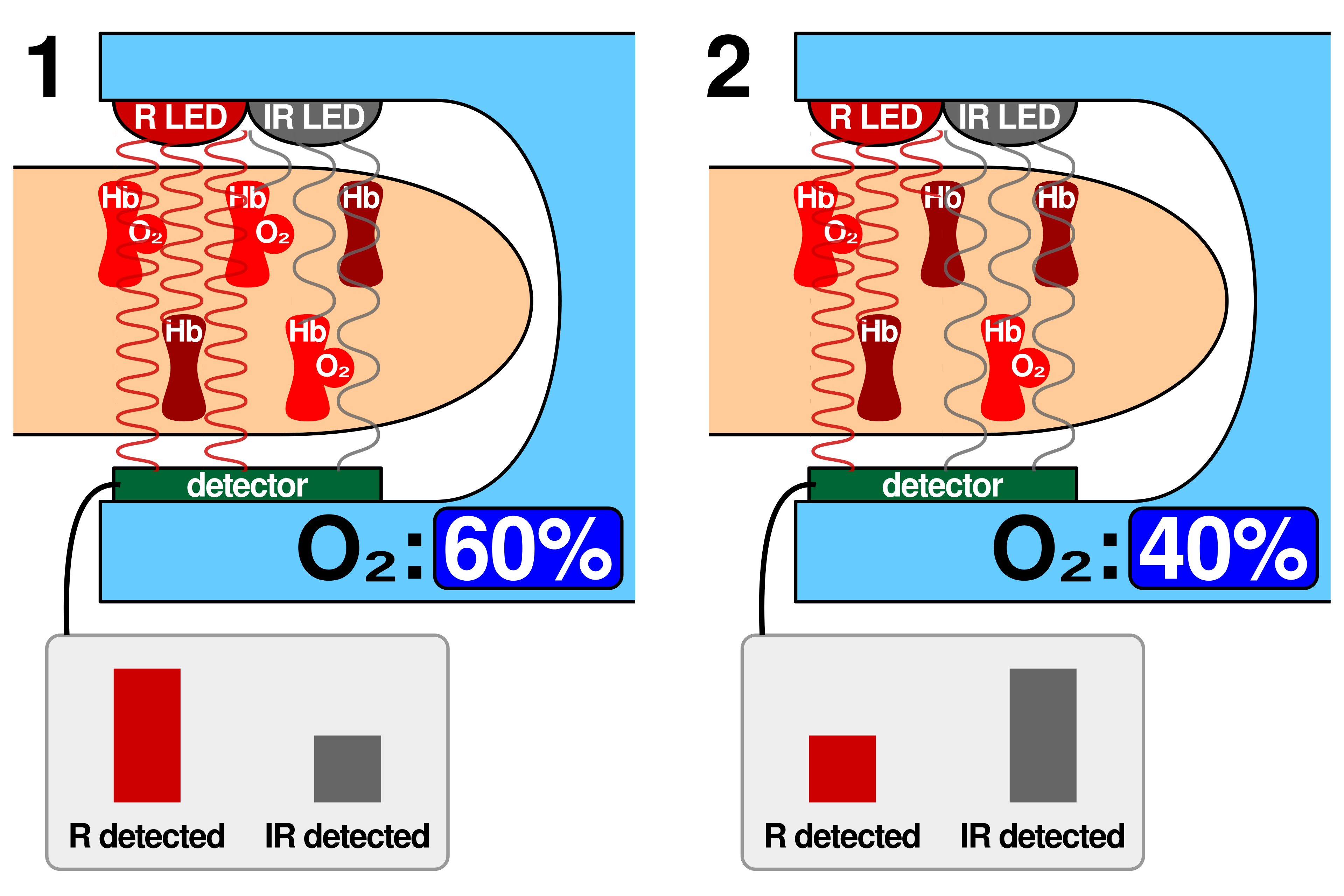
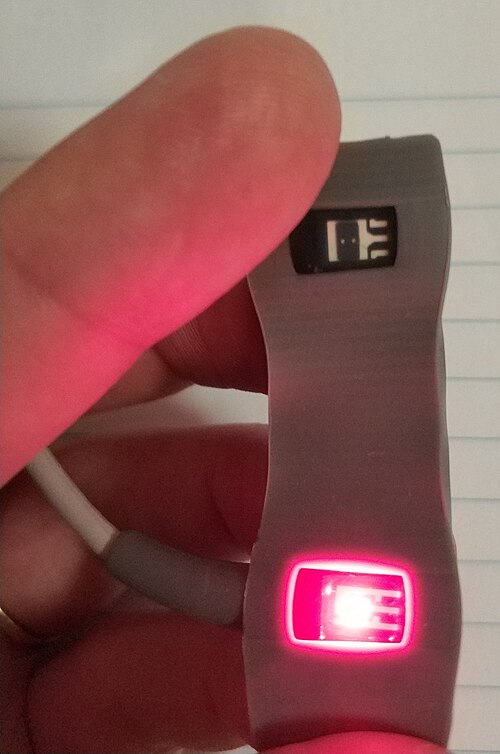
If you’re unfamiliar with pulse oximeters, they’re that little plastic thing that clips on your finger at the doctor’s office. The device places two LEDs on one side of your finger, and a photodiode on the other. With just these simple components, it’s possible to determine the percentage of your blood’s hemoglobin that is currently carrying oxygen. It’s also possible to discern pulse rate, which also comes in handy when you’re trying to determine a patient’s current status at a glance.
A pulse oximeter is a small device typically worn on the finger. This example feeds a signal to a remote display, while some units will put the screen directly on the finger clamp itself. Credit: UusiAjaja, CC0
Pulse oximetery was the brainchild of Takuo Aoyagi, an electrical engineer at Nihon Kohden in Tokyo. In 1972 he was working on a non-invasive way to measure cardiac output using the dye dilution method, which involves injecting a tracer dye and watching how its concentration in the blood decays over time. He was reading that decay optically through an ear oximeter. These devices used red and infrared light passed through the ear tissue to determine blood oxygen levels, but required frustrating calibration to work properly and often required fussy steps like first squeezing blood out of the tissues prior to measurement. The problem was that early oximeters worked based on the total absorption of light, and were affected by things like the skin, tissue, and venous blood, when really the goal was to measure the oxygen levels in the arterial blood itself.
As Aoyagi worked with the device, he noted that the patient’s pulse kept showing up as an annoying ripple in the output. He spent some effort trying to cancel that ripple by balancing red and infrared signals against each other. Then he noticed that when a patient’s oxygen saturation dropped, the cancellation fell apart. This led to the realization that the ratio of how much red and infrared light was absorbed could be used to determine the oxygen saturation of the arterial blood.
Advertisement
Oxyhemoglobin and deoxyhemoglobin absorb red and infrared light at different rates. Measuring the ratio of each wavelength of light transmitted through the arterial blood allows the oxygen saturation to be calculated. Credit; Cmglee, CC BY SA 4.0
It all comes down to the nature of blood itself. Hemoglobin comes in two flavours relevant here: oxyhemoglobin, which is carrying an O₂ molecule, and deoxyhemoglobin, which isn’t. They are different colours, which is why arterial blood is bright red and venous blood is darker. They absorb light differently, to the point that it’s actually clinically useful. At a wavelength of 660 nm (red)—deoxyhemoglobin absorbs noticeably more light than its oxygenated cousin. At around 940 nm (near-infrared), oxyhemoglobin absorbs more. Almost every pulse oximeter uses these two wavelengths; both penetrate tissue quite easily, and it’s easy to find LEDs that spit out these wavelengths.
Reading the blood oxygen level is relatively straightforward. The device will typically alternate the two LEDs on and off, many times a second, also including a third phase with both off so the photodiode can subtract out ambient room light as well. The photodiode sees light that has passed through an entire finger, including the skin, bone, fat, as well as the venous and arterial blood. Most of that doesn’t change from second to second, but the arterial blood does, with every pump of the heart. Thus, when sampling light from the infrared and red LED pulses, the photodiode puts out a signal that’s mostly a continuous level from light passing through the finger, with a little wiggly bit on top that throbs at a human pulse rate. That’s due to the pulsing of the arterial blood, and the frequency can be used to measure pulse rate. Meanwhile, the continuous component is removed by subtracting the trough of both the infrared and red signals from the peak, which solely leaves the component of light absorption due to the fresh arterial blood itself.
The inside of a pulse oximeter sensor. Note the red LED and IR LED on one side, and the photodiode on the other. This design transmits light through the finger, though reflective approaches can also work. Credit: Eliran t, CC BY-SA 4.0
The level of oxygenation in the arterial blood itself can then be measured by comparing the ratio of red to infrared light picked up in this part of the signal. The light ratio is converted into an human-parseable number via a lookup table, based on the Beer-Lambert law of concentration of substances in a solution. The displayed number is flagged as “SpO₂.” The “p” stands for “peripheral,” to indicate it’s an optical measurement rather than determined directly with blood-gas measurement techniques. This distinction is important, as there are a range of conditions under which pulse oximetry readings can be inaccurate. At a very base level, pulse oximeters can get confused if a patient is moving while wearing the device, which makes the pulsatile signal itself less clear. The device also cannot tell carboxyhemoglobin from oxyhemoglobin, because they absorb light very similarly at 660 nm. Carboxyhemoglobin is the result of carbon monoxide entering the blood, so a smoke inhalation victim can display a high apparent SpO₂ figure while their blood is carrying very little oxygen. Nail polish and skin tone can impact the amount of light transmitted through the finger, impacting readings, while limited bloodflow to the fingers can also frustrate things.
It may not be perfect, but pulse oximetry is nevertheless very useful a lot of the time. It enables medical teams to get a near-instant look at a patient’s most vital signs in a completely non-invasive manner. The use of this technology has revolutionized both emergency care and surgery, where it has played a huge role in patient monitoring under anaesthesia. Plus, the simplicity of the device has made this critical medical insight accessible to anyone that can afford a $20 device with a few LEDs and a photodiode in it. It’s now even possible to track your oxygen saturation during sleep with an off-the-shelf smartwatch due to developments from this technology, helping aid in the diagnosis of complex conditions like sleep apnea. All because blood tends to pass light a little differently depending on how oxygenated it is. Sometimes you have to thank nature for those little conveniences.
ICE, the owner of the New York Stock Exchange, is partnering with index provider Ornn to launch cash-settled futures contracts tied to GPU computing costs. The move comes days after rival CME Group announced its own compute futures, signalling that Wall Street is racing to turn AI computing power into a standardised, tradable commodity.
Advertisement
Intercontinental Exchange, the parent company of the New York Stock Exchange, is preparing to launch futures contracts tied to the cost of computing power, marking the latest sign that Wall Street sees AI infrastructure as the next great commodity market.
ICE announced on Monday that it will team with Ornn, a financial-infrastructure firm whose index products track GPU computing costs in real time, to develop the new contracts. The futures will be US dollar-denominated, cash-settled, and referenced against Ornn’s indexes covering a variety of major GPU types. The plans remain subject to regulatory approval.
What ICE and Ornn are building
The partnership pairs one of the world’s largest exchange operators with a startup that has quietly built the plumbing for compute price discovery. Ornn, formally Ornn AI Inc, publishes the Ornn Compute Price Index, which tracks live traded spot prices for GPU compute across hardware types including Nvidia’s H100, H200, and B200 chips. The index, now available on the Bloomberg Terminal, draws on real transaction data from live GPU markets and has attracted more than 400 data centre operators, investors, and AI companies to its platform.
The 💜 of EU tech
Advertisement
The latest rumblings from the EU tech scene, a story from our wise ol’ founder Boris, and some questionable AI art. It’s free, every week, in your inbox. Sign up now!
Trabue Bland, senior vice president of futures markets at ICE, framed the move as a response to a market that has outgrown its informal pricing mechanisms. The compute market, he said, is “in desperate need of a globally accepted pricing mechanism and risk management tool” as AI shifts from research labs to becoming a central driver of the global economy.
The contracts will settle in cash rather than through physical delivery, a structure familiar from energy and financial futures. For AI companies planning large model training runs or cloud providers locking in capacity, the instruments would offer a way to hedge against the kind of volatile compute costs that have accompanied Big Tech’s $650 billion capex surge in 2026.
A two-horse race with CME
ICE is not alone in spotting this opportunity. CME Group, the world’s largest derivatives exchange, announced its own compute futures contracts on 12 May, partnering with Silicon Data to build products based on daily GPU benchmark rental rates. CME’s contracts will reference the Silicon Data H100 Rental Index, which tracks the cost of renting high-end GPUs used for AI training workloads.
Advertisement
The fact that two of the world’s most established futures exchanges have moved on compute within days of each other signals that institutional conviction in compute-as-commodity has reached a tipping point. It mirrors the early days of energy futures in the 1980s, when competing exchanges raced to establish benchmark contracts for crude oil and natural gas. The exchange that captures the most liquidity early on will likely set the reference price for the industry, just as ICE Brent and CME WTI did for oil.
The competitive dynamic also extends beyond the big two. Architect Financial Technologies partnered with Ornn in January to launch exchange-traded perpetual futures on GPU and RAM prices through its AX platform, and prediction market Kalshi has offered contracts allowing users to wager on Nvidia GPU compute prices. But ICE and CME bring something the newer entrants lack: deep institutional liquidity, regulatory credibility, and the clearing infrastructure that large-scale GPU-as-a-service providers and their customers will demand.
Why compute needs a futures market
Kush Bavaria, co-founder and CEO of Ornn, put the scale of the problem bluntly. Compute, he said, “has grown into a trillion-dollar market, yet it still lacks the pricing and risk-transfer infrastructure that every other major commodity relies on.”
That gap has real consequences. GPU rental prices have been wildly volatile, with Ornn’s own index showing the Nvidia Blackwell spot rental price surging 48% between mid-February and mid-April 2026, from $2.75 to $4.08 per GPU-hour. For AI companies whose training runs can cost tens of millions of dollars, that kind of price swing can blow through budgets with little warning. Cloud providers, data centre operators, and the lenders financing billions of dollars in AI infrastructure buildouts face similar exposure.
Advertisement
A functioning futures market would allow these participants to lock in forward prices, transfer risk to willing counterparties, and plan capital expenditure with greater certainty. It would also generate transparent price signals that the broader market currently lacks, giving investors, analysts, and policymakers a clearer view of where compute costs are heading.
Broader implications for the AI economy
The emergence of compute futures reflects a deeper structural shift. As AI moves from an experimental technology to core economic infrastructure, the inputs that power it are being financialised in much the same way that energy, metals, and agricultural products were in previous decades. The surging demand for advanced semiconductors has already reshaped chip supply chains and driven record capital investment across the technology sector.
Futures contracts add a new layer to this ecosystem. They create standardised benchmarks that can underpin lending decisions, insurance products, and investment strategies tied to AI infrastructure. A bank financing a new data centre, for instance, could use compute futures to assess the facility’s projected revenue against forward GPU prices, much as energy lenders use oil futures to evaluate drilling projects.
There are complications, of course. Unlike oil sitting in a tank, compute is what traders call a flow commodity, one that is consumed in real time and cannot be stored. Ornn has addressed this by designing its futures with Asian-style settlement, meaning contracts settle on the arithmetic average of daily index values across the contract’s tenor rather than on a single expiry-day price. This structure aligns the financial instrument with the way compute is actually purchased and consumed.
Advertisement
Whether ICE or CME ultimately captures the lion’s share of this market will depend on liquidity, the breadth of GPU types covered, and which index providers gain the most institutional trust. But the direction of travel is clear. Computing power, the resource that underpins everything from energy-hungry AI data centres to autonomous vehicle development, is being transformed from a bespoke procurement headache into a standardised, tradable financial asset. For an industry accustomed to negotiating GPU access through opaque, bilateral deals, that is a significant change.




































































You must be logged in to post a comment Login