Connect with us
DAPA Banner
DAPA Coin
DAPA
COIN PAYMENT ASSET
PRIVACY · BLOCKDAG · HOMOMORPHIC ENCRYPTION · RUST
ElGamal Encrypted MINE DAPA
🚫 GENESIS SOLD OUT
DAPAPAY COMING

Business

North Wales has never lacked assets or ambition, but what is changing now is the scale of opportunity

Published

on

Business Live

CEO of the Development Bank of Wales Giles Thorley says the question is not whether North Wales can grow, but how that growth is shaped and who benefits from it.

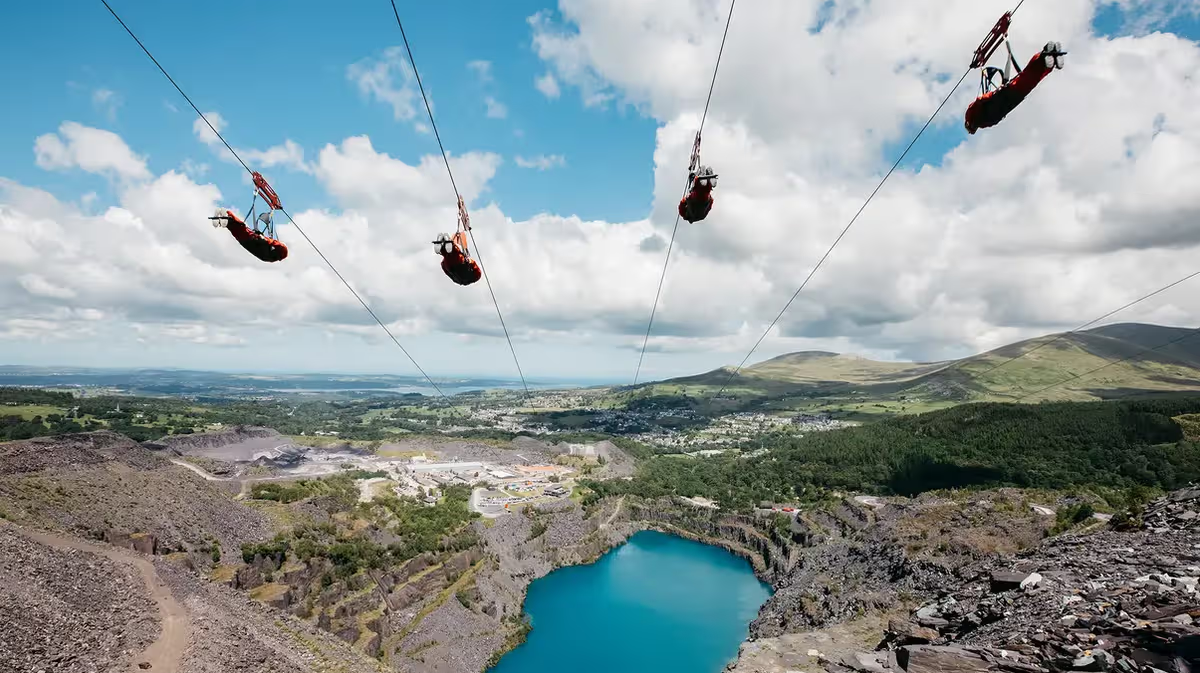
Zip World is just one example of a great business in North Wales.(Image: Zip World)

From large industrial estates to stunning coastlines, North Wales is a region of stark contrasts. It combines some of the UK’s most significant industrial and energy assets but also rural and coastal communities and a fantastic tourism sector –communities that face very different economic realities.

That contrast is not a weakness. In fact, in many ways, it is one of the region’s defining strengths. But it does mean that growth, if it is to be sustained and inclusive, requires a more deliberate, place-based approach enabling businesses to invest, scale and compete.

Advertisement

Placing the HQ of the Development Bank of Wales in Wrexham was an acknowledgement that North Wales had historically been underrepresented but is a core strategic region. Not just because of its existing industrial base, but because of the scale of opportunity now emerging as major investment programmes move from planning into delivery.

The question is not whether North Wales can grow. It is how that growth is shaped, and who benefits from it.

Deep foundations

North Wales is often described as a single economic area, but in practice it is highly diverse. Across Ynys Môn, Gwynedd, Conwy, Denbighshire, Flintshire and Wrexham, the economic picture varies considerably. Tourism ranges from the staggering beauty of the mountains and countryside to the glorious beaches and coastline. Increasingly, it also reflects a move towards high-quality, year-round attractions that draw visitors from across the UK and beyond.

Advertisement

Attractions such as Zip World, with sites across the region, have become anchor destinations in their own right, reinforcing North Wales’ reputation as a leading adventure tourism destination and extending the economic impact beyond traditional seasonal peaks. Having served as chair of Zip World, I have seen at close quarters the contribution that businesses like these can make to the region’s economy.

In the north east, particularly around Wrexham and Deeside, there is a strong concentration of advanced manufacturing, engineering and industrial services. These businesses are closely integrated with supply chains in the North West of England and are often export-focused, forming a critical part of the wider UK industrial base. Assets such as Wrexham Industrial Estate, one of the largest in Europe, underline the scale and capability that already exists.

Further west, the picture shifts. Businesses tend to be smaller, owner-managed and often rooted in tourism, hospitality, food production and the foundational economy. These sectors are vital to local communities sustaining employment, skills and resilience in coastal and rural communities.

Both parts of the region matter. The challenge is ensuring that investment reflects that diversity and drives local community impact rather than assuming a one-size-fits-all model.

Advertisement

Growth opportunities are immediate

But there is a clear sense that North Wales is entering a new phase where long planned investment can translate into commercial opportunity.

Energy and decarbonisation are perhaps the most obvious examples. The identification of Wylfa on Anglesey as a site for the UK’s first fleet of small modular reactors, alongside activity in hydrogen, renewables and industrial decarbonisation, points to a long-term structural shift in the region’s economy.

That shift will not just create opportunities for large infrastructure projects. It will ripple through supply chains, creating demand for smaller businesses developing specialist capabilities.

Advertisement

We are already seeing early signs of that. On Anglesey, Ecodetect is developing AI-driven technology to help offshore energy developers monitor environmental impact at scale – a clear example of how innovation and clean growth are beginning to intersect.

Elsewhere, businesses like JBF Group in Wrexham are investing in advanced building materials and low-carbon manufacturing, supported by a mix of public and private capital. There are also clear examples of North Wales businesses scaling successfully into global markets.

Aparito, originally founded in Wrexham, developed digital health solutions to support patients with rare diseases and achieved significant international growth before its acquisition by Eli Lilly and Company. Stories like this demonstrate the region’s ability not only to innovate, but to build businesses that attract global interest and investment.

In addition, public investment initiatives are opening up infrastructure and skills pathways essential for business growth. Their worth goes beyond just providing funding. They also instil confidence in private investors and support long-term business decisions.

Advertisement

Local growth matters

At the same time, growth is being driven by the decisions of thousands of local business owners responding to opportunity in their own markets.

Rib Ride on the Menai Strait is a good example. A well-established tourism business, it is investing to extend its operating season, create new training opportunities and support local supply chains. That kind of incremental growth can be just as important in terms of jobs, skills and local resilience.

Similarly, regeneration-led developments such as those led by The Neighbourhood Group on Anglesey, show how targeted investment can unlock the potential of local assets, in this case through the renovation of disused buildings, while creating long-term economic value.

Advertisement

These investments may look different from those in advanced manufacturing or energy, but they play a critical role in ensuring that growth is felt across the region.

Structural challenges

For all these strengths, it is important to recognise the challenges.

Productivity in North Wales remains below UK averages. Skills gaps persist, particularly in higher-value technical roles. Demographic pressures, including an ageing population and outward migration, risk constraining future labour supply.

Advertisement

Connectivity also continues to be a limiting factor, whether that is digital infrastructure, transport links or access to suitable business premises. These are not new issues, but they do shape the investment decisions businesses are willing and able to make. Productivity, skills availability and connectivity all influence whether firms can scale, modernise or take on new contracts.

Alongside this, the region’s universities play a critical role in underpinning future growth. Bangor University and Wrexham University are not only major employers in their own right, but also key partners in developing the skills pipeline, supporting research and innovation, and anchoring economic activity in their communities. Bangor University is also one of our partners in Economic Intelligence Wales, further strengthening the link between academic insight and economic strategy.

This is where development finance has a specific role to play. Working alongside businesses as long-term partners, not just as providers of funding. In North Wales, we see consistent demand for patient capital. Businesses looking to scale, transition ownership or invest in new capability often require funding that is flexible and aligned to long-term outcomes.

That is particularly true in manufacturing and energy-adjacent supply chains, where investment horizons are longer and returns are not always immediate. It is equally important in smaller, rural businesses where access to commercial finance can be more constrained.

Advertisement

Having a local presence matters here. Local insight is often the difference between a transaction and a long-term partnership.

North Wales has never lacked assets or ambition. What is changing now is the scale of opportunity – from industrial growth in the north east to clean energy on the Island of Anglesey and regeneration across coastal communities.

The task is to connect those opportunities with the right kind of investment. Investment that is patient, that is place-based, and that recognises the diversity of the region. If we get that right, North Wales will not only grow, but to do so in a way that is more balanced, more resilient and more inclusive. That is the ultimate prize.

  • Giles Thorley is chief executive of the Development Bank of Wales.

Continue Reading
Click to comment

You must be logged in to post a comment Login

Leave a Reply

Business

IMF edges 2026 global growth forecast lower to 3%, sees rebound in 2027

Published

on


IMF edges 2026 global growth forecast lower to 3%, sees rebound in 2027

Continue Reading

Business

FTSE 100 Falls Nearly 1% as Rising Oil Prices and Middle East Tensions Weigh on London Stock Market Today

Published

on

Tesla's robotaxi launch in Texas comes as Elon Musk focuses on his business ventures following his stint in Washington

LONDON — Britain’s benchmark FTSE 100 index fell sharply Wednesday, dropping 95.15 points, or 0.89 percent, to 10,570.73, as escalating tensions in the Middle East pushed oil prices higher and weighed on broader risk sentiment across London’s stock market.

The decline marked a notable reversal from the prior day’s trading, when the FTSE 100 closed 0.13 percent higher at 10,665.88, itself only a modest gain following a strong run earlier in the week. Wednesday’s session opened at 10,651.30 before extending losses through the morning, with the index trading in a range between 10,568.57 and 10,666.09, according to intraday data.

Ahead of Wednesday’s open, futures had pointed to a far more modest decline for the index. According to IG, futures had indicated the FTSE 100 would open just 12.5 points, or 0.1 percent, lower at 10,653.38, a projection that proved considerably more optimistic than how the session ultimately unfolded once trading got underway.

The sharper-than-expected decline came as renewed hostilities between the United States and Iran near the Strait of Hormuz pushed oil prices higher overnight, weighing on broader investor sentiment across European equity markets. The United States carried out fresh airstrikes inside Iran in response to attacks on commercial shipping in the strait, prompting Iran to retaliate with missile and drone strikes against U.S. military sites in Bahrain and Kuwait. The renewed exchange of strikes has raised fresh concerns about potential disruption to one of the world’s most critical energy shipping corridors, through which roughly a fifth of the world’s traded oil and natural gas passes during peacetime.

Advertisement

Wednesday’s losses followed what had otherwise been a relatively strong stretch for the FTSE 100 in recent sessions. The index closed at 10,652.87 the previous Thursday, a 1.67 percent advance that marked its highest level since April 17, driven by a powerful rally across defensive, pharmaceutical and aerospace sectors. Defense contractor BAE Systems led that earlier rally with a gain of more than 6 percent, followed by Babcock International, up around 5.5 percent, and pharmaceutical giant AstraZeneca, which climbed nearly 5 percent. That defensive positioning has continued to shape trading through the following week, reflecting the FTSE 100’s relatively limited direct exposure to the technology sector, a characteristic that has increasingly insulated London-listed equities from the sharper swings affecting artificial intelligence and semiconductor stocks in markets like the United States.

Beyond the geopolitical backdrop, fresh economic data released Wednesday offered a mixed picture of conditions in the UK labor market. According to the latest KPMG and Recruitment & Employment Confederation report compiled by S&P Global, the decline in permanent job postings eased markedly in June, while demand for temporary workers strengthened to its fastest pace in more than three years. The permanent placements index rose to 49.1 points in June from 44.1 in May, while the permanent salaries index increased to 53.1 from 52.2, marking the fastest pace of pay growth since January. The temporary wages index also climbed, rising to 52.9 from 51.4.

Currency markets reflected some of the same cautious tone weighing on equities. Sterling was quoted at $1.3355 early Wednesday, down from $1.3376 at Tuesday’s London equities close. Against the euro, the pound also weakened, falling to €1.1693 from €1.1704 the previous day.

Broader Asian markets showed a mixed picture overnight ahead of Wednesday’s European session. Japan’s Nikkei 225 fell 0.8 percent despite data from the Ministry of Finance showing the country’s current account surplus widened 20 percent year-on-year in May, to 3.968 trillion yen, or roughly $24.43 billion, from 3.321 trillion yen a year earlier, a figure that came in below the FXStreet-cited consensus forecast of 4.121 trillion yen but exceeded April’s surplus of 3.908 trillion yen. Japanese exports rose 15 percent year-on-year, while imports increased 8.1 percent. In China, the Shanghai Composite slipped 0.1 percent, while the Hang Seng index in Hong Kong bucked the broader regional trend, climbing 2.7 percent. Australia’s S&P/ASX 200 fell 0.5 percent.

Advertisement

Gold prices eased slightly Wednesday, quoted at $4,126.60 an ounce, down from $4,144.14 the previous day, even as China’s central bank continued an extended streak of gold purchases. According to Bloomberg, the People’s Bank of China bought more gold in June, extending its longest buying streak since at least 2015, with bullion holdings rising by 480,000 troy ounces to 75.44 million ounces during the month.

Corporate dealmaking activity had provided support for London market sentiment earlier in the week, with oil and gas explorer Capricorn Energy rallying sharply after agreeing to a £271 million cash takeover by Genel Energy at 357 pence per share. Financial trading platform CMC Markets also advanced following an increase to its earnings guidance and a subsequent analyst upgrade, while retailer Currys posted full-year earnings broadly in line with analyst estimates and announced the launch of a £50 million share buyback program, adding to what had been a largely constructive run of corporate news flow heading into the current week.

Despite Wednesday’s pullback, the FTSE 100 remains within a broadly positive longer-term trend. The index’s 52-week range spans from 8,803.27 to 10,934.94, with London’s benchmark having gained more than 19 percent over the trailing 12-month period as of recent readings, one of the stronger annual performances among major global developed-market indices. That resilience has been attributed in part to the FTSE 100’s relatively defensive composition, weighted toward sectors such as energy, financials, pharmaceuticals and consumer staples, which have historically provided some insulation during periods of volatility tied to more growth-oriented, technology-concentrated markets elsewhere.

With Middle East tensions continuing to develop and no clear resolution in sight following Wednesday’s exchange of strikes, investors are likely to remain focused on further developments in the region, along with any additional economic data releases, as they assess whether the current pullback represents a temporary pause in the FTSE 100’s broader upward trajectory or the beginning of a more sustained period of volatility tied to rising energy prices and geopolitical risk.

Advertisement
Continue Reading

Business

Trump administration targets H-1B visa abuse and labor trafficking

Published

on

Trump administration targets H-1B visa abuse and labor trafficking

The Trump administration is escalating its crackdown on immigration-related fraud, launching its first major investigation into alleged H-1B and PERM visa abuse, labor trafficking, and the displacement of American workers, Labor Department Inspector General Anthony D’Esposito told FOX Business on Wednesday.

D’Esposito announced the probe exclusively on “Mornings with Maria,” calling it the latest step in the administration’s expanding anti-fraud campaign ahead of Vice President JD Vance‘s nationwide fraud initiative event in Milwaukee set for later in the day.

Advertisement

“This is another example where fraud is fueling violent crime,” he said. “Much of the visa and the human trafficking that we see when it comes to this foreign labor is tied to cartels, is tied to transnational gangs, and this is the work that we should be doing, not only to make America safe again, but to make America more affordable again.”

D’Esposito said investigators have already begun to issue dozens of subpoenas in relation to the fraud investigation.

DR OZ WARNS MEDICARE SCAMMERS ARE STEALING BILLIONS – AND YOUR PERSONAL INFORMATION COULD BE NEXT

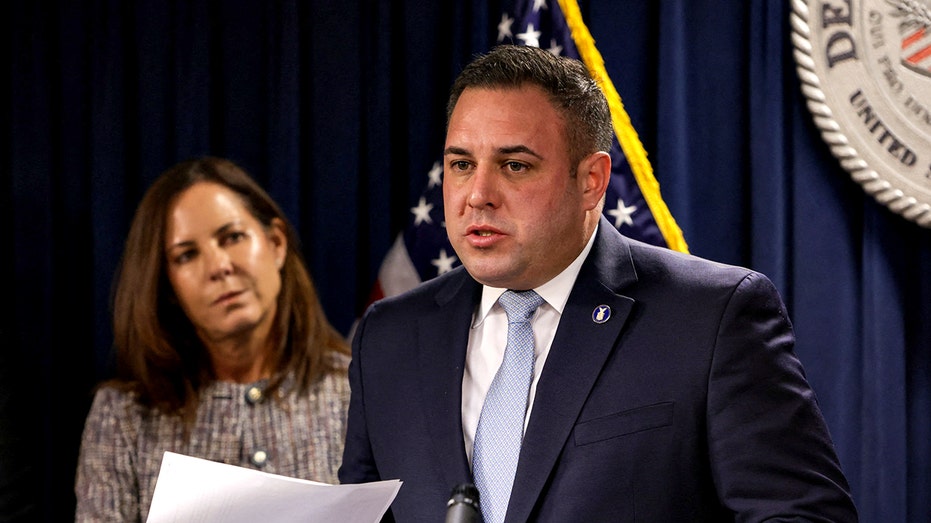
Inspector General for the Department of Labor Anthony P. D’Esposito speaking

Inspector General for the Department of Labor Anthony P. D’Esposito addresses the media at a press conference in connection with an alleged fraud scheme involving SNAP benefits, in Boston, Massachusetts, Feb. 3, 2026. (Reuters/Taylor Coester / Reuters Photos)

An H-1B visa is a non-immigrant work visa that allows companies in the U.S. to hire highly-skilled foreign workers in specialty occupations for an initial period of three years, which can be extended to six years.

Advertisement

“This is not just people working in factories or actual labor,” D’Esposito said of the fraudsters. “These are people working in medical facilities and doctors’ offices that are actually putting people in harm’s way.”

Donald Trump White House Oval Office

President Donald Trump takes a question from a reporter before signing executive orders in the Oval Office at the White House on September 19, 2025, in Washington, D.C. Trump signed two executive orders, establishing the “Trump Gold Card” and introdu (Andrew Harnik/Getty Images / Getty Images)

ARE AMERICAN WORKERS BEING REPLACED? INSIDE THE H-1B VISA CONTROVERSY

By far the industry most heavily utilizing H-1B visas is the tech industry, which accounts for roughly 60% to 70% of all the new applications in recent years. Other top industries include consulting and professional services, engineering and manufacturing, healthcare and medical research and higher education.

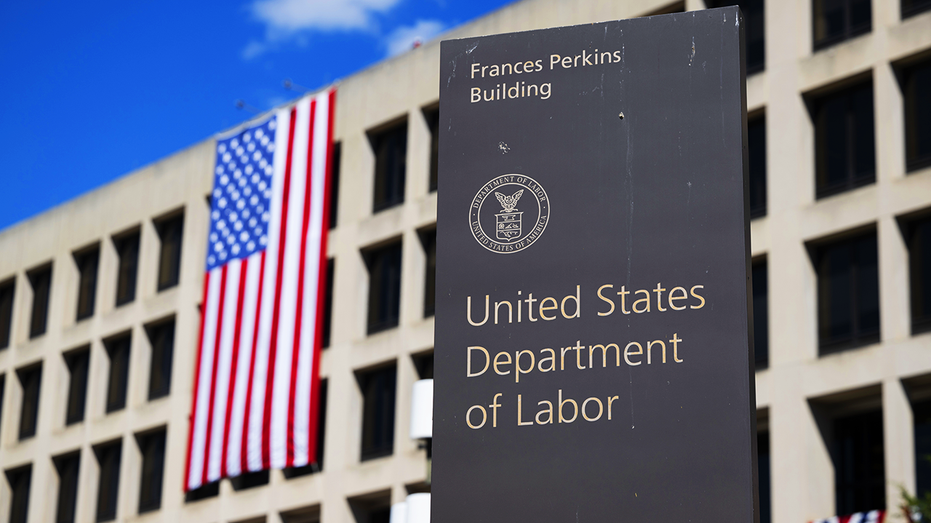
United States Department of Labor headquarters

A view of the United States Department of Labor headquarters in Washington, D.C. (Celal Gunes/Anadolu via Getty Images, File / Getty Images)

California, New York and Illinois are among the top five states for applicants for these visas, according to D’Esposito.

Advertisement

He said the Trump administration’s goal is to make sure hardworking Americans “are not seeing their jobs taken away by foreigners or people who are gaming the system or financially benefiting from bringing these individuals into America and putting them into jobs that, quite frankly, they are not qualified to do.”

GET FOX BUSINESS ON THE GO BY CLICKING HERE

Last month, a federal judge struck down President Donald Trump’s $100,000 fee requirement for employers seeking H-1B visas for highly skilled foreign workers, ruling that the administration exceeded its authority by imposing what amounted to a tax that only Congress can authorize or delegate.

Fox News Digital’s Peter Pinedo contributed to this report.

Advertisement
Continue Reading

Business

DWS eyes rebrand to Deutsche Asset Management for visibility – Bloomberg

Published

on


DWS eyes rebrand to Deutsche Asset Management for visibility – Bloomberg

Continue Reading

Business

Proteomics granted US patent for PromarkerEndo

Published

on

Proteomics granted US patent for PromarkerEndo

Shares in Perth biotech Proteomics International Laboratories have shot up after the company secured a US patent for its game-changing early detection test for endometriosis.

Continue Reading

Business

USA Compression Partners: 8% Yield, 1.7x Coverage, And More Horsepower Ahead (NYSE:USAC)

Published

on

USA Compression Partners: 8% Yield, 1.7x Coverage, And More Horsepower Ahead (NYSE:USAC)

This article was written by

I am Gen Alpha. I have more than 14 years of investment experience, and an MBA in Finance. I focus on stocks that are more defensive in nature, with a medium- to long-term horizon. I provide high-yield, dividend growth investment ideas in the investing group iREIT®+HOYA Capital. The group helps investors achieve dependable monthly income, portfolio diversification, and inflation hedging. It provides investment research on REITs, ETFs, closed-end funds, preferreds, and dividend champions across asset classes. It offers income-focused portfolios targeting dividend yields up to 10%. Learn more.

Analyst’s Disclosure: I/we have no stock, option or similar derivative position in any of the companies mentioned, but may initiate a beneficial Long position through a purchase of the stock, or the purchase of call options or similar derivatives in USAC over the next 72 hours. I wrote this article myself, and it expresses my own opinions. I am not receiving compensation for it (other than from Seeking Alpha). I have no business relationship with any company whose stock is mentioned in this article.

I am not an investment advisor. This article is for informational purposes and does not constitute as financial advice. Readers are encouraged and expected to perform due diligence and draw their own conclusions prior to making any investment decisions.

Advertisement

Seeking Alpha’s Disclosure: Past performance is no guarantee of future results. No recommendation or advice is being given as to whether any investment is suitable for a particular investor. Any views or opinions expressed above may not reflect those of Seeking Alpha as a whole. Seeking Alpha is not a licensed securities dealer, broker or US investment adviser or investment bank. Our analysts are third party authors that include both professional investors and individual investors who may not be licensed or certified by any institute or regulatory body.

Continue Reading

Business

J&J receives FDA approval for dual-energy cardiac ablation catheter

Published

on


J&J receives FDA approval for dual-energy cardiac ablation catheter

Continue Reading

Business

Opinion: Rewriting the data centre playbook

Published

on

Opinion: Rewriting the data centre playbook

OPINION: WA is emerging as a testbed for a new, energy-led infrastructure ecosystem.

Continue Reading

Business

Global yields spike as Trump expresses pessimism over U.S.-Iran deal

Published

on


Global yields spike as Trump expresses pessimism over U.S.-Iran deal

Continue Reading

Business

Fair Work Ombudsman seeks $2m from G8 Education, claims underpayment

Published

on

Fair Work Ombudsman seeks $2m from G8 Education, claims underpayment

A national childcare operator with dozens of locations in Perth has been accused of underpaying more than 1,400 workers, with the alleged total exceeding $2 million.

Continue Reading

Trending

Copyright © 2025