

Crypto World
Former BNY exec launches NUVA, bets tokenization will remake Wall Street

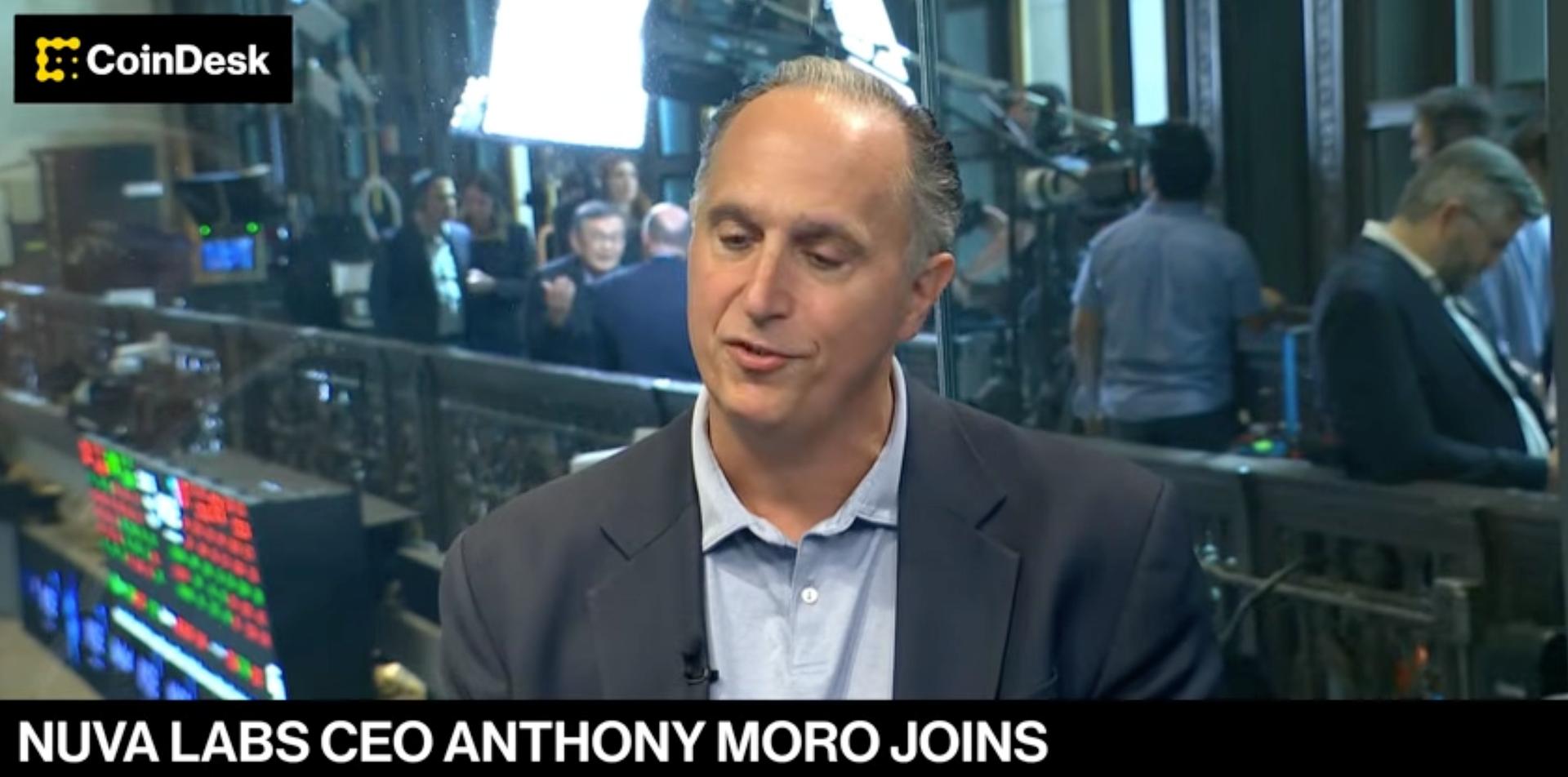
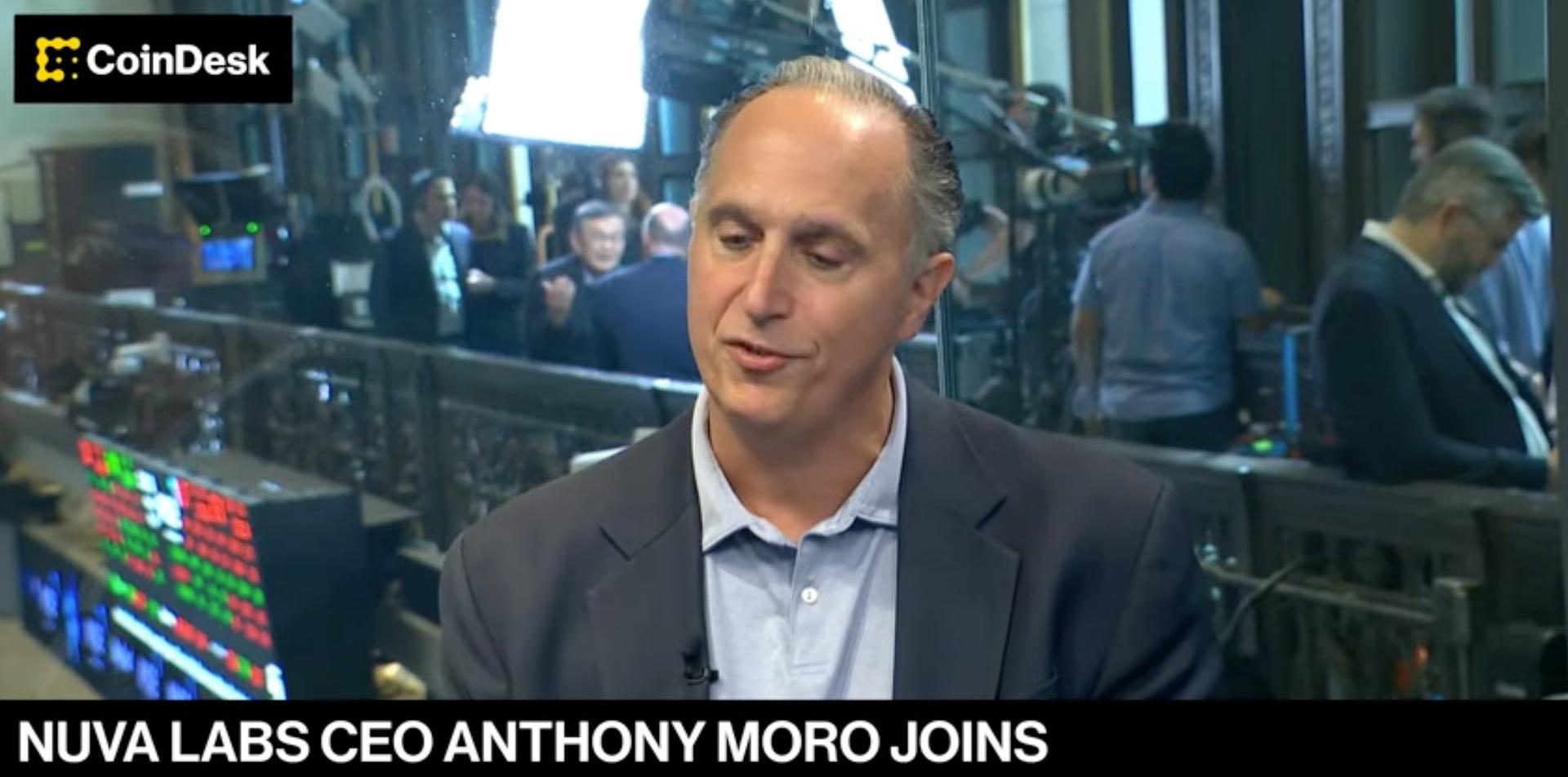
NUVA launched this week with nearly $19 billion in tokenized real-world assets from Figure Technologies, aiming to bring regulated U.S. yield products into DeFi.

Key Highlights
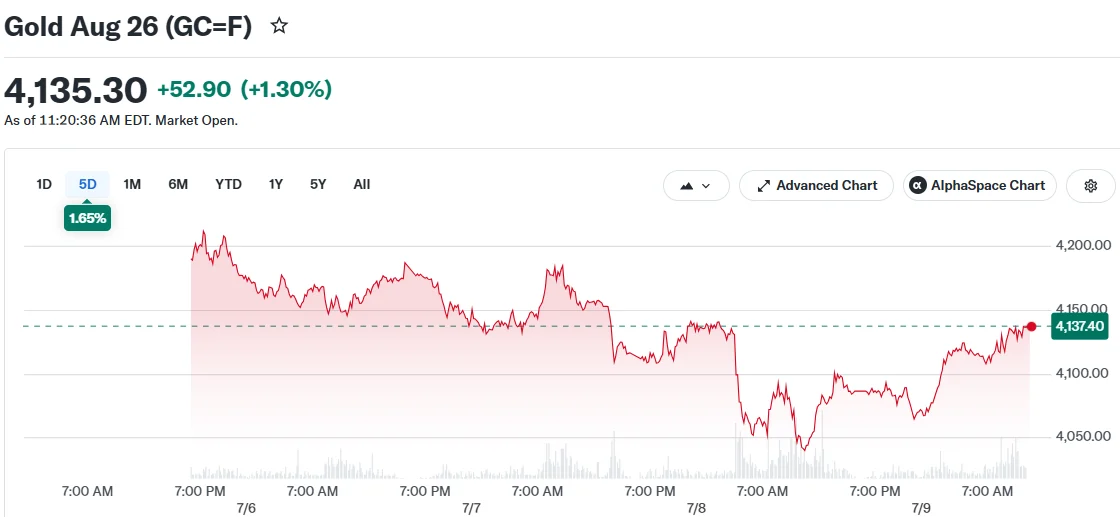
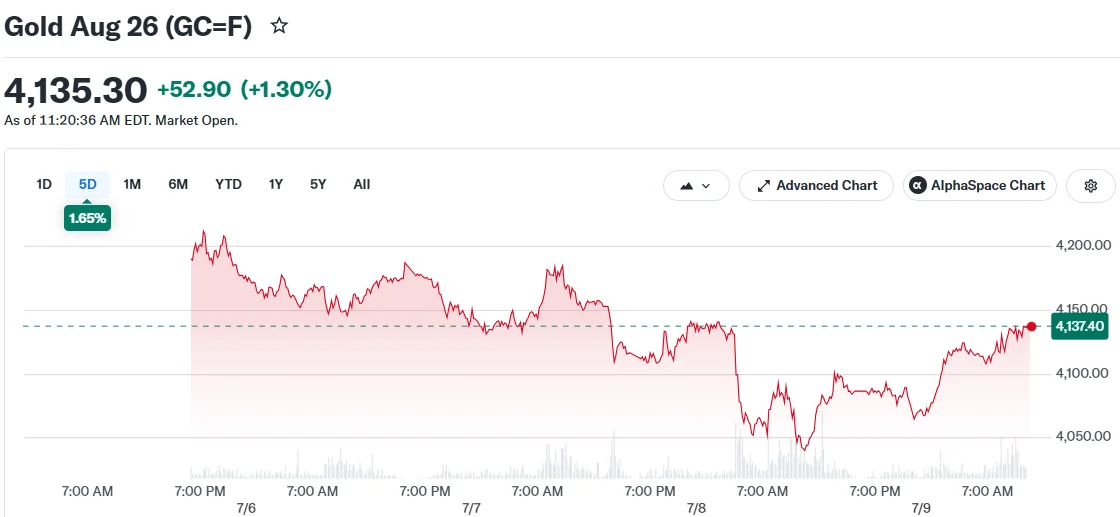
- Gold surged more than 1%, recovering above the $4,100 threshold following a three-session decline
- Fresh military confrontations between the United States and Iran sparked renewed safe-haven buying
- Federal Reserve meeting minutes revealed division among officials regarding future interest rate decisions
- Rising energy costs are intensifying inflation concerns, potentially prolonging elevated interest rates
- The resilient U.S. dollar and hawkish Federal Reserve tone continue to limit gold’s upward momentum
Precious metal prices staged an impressive recovery on Thursday, advancing more than 1% following three consecutive sessions of declines. Spot gold increased 1.14% to reach $4,123.91 per ounce, while futures contracts for gold rose 1.25% to settle at $4,132.95 per ounce.
The resurgence occurred as market participants returned to gold’s traditional safe-haven properties amid renewed military confrontations between Washington and Tehran.
Middle East Military Tensions Boost Precious Metal Appeal
The United States initiated additional military operations against Iran on Thursday, coming just hours after President Donald Trump announced the breakdown of ceasefire negotiations with Iranian leadership. The regional conflict has been intensifying since hostilities erupted in late February.
Tehran’s armed forces retaliated with strikes targeting what they identified as U.S. military installations in Kuwait and Bahrain. The Islamic Revolutionary Guards Corps issued warnings of additional attacks on American military assets throughout the Gulf region should Washington persist with its military operations.
This recent escalation has created turbulence across energy markets. Iranian assaults on vessels attempting to navigate through the Strait of Hormuz have driven crude oil prices upward, subsequently heightening concerns about energy-related inflationary pressures.
Higher oil prices complicate the Federal Reserve’s ability to implement interest rate reductions. This creates a challenging environment for gold, as declining rates typically support the non-interest-bearing asset while elevated rates diminish its attractiveness.
“Any surge in energy prices will strengthen market expectations that the Federal Reserve may maintain interest rates at elevated levels for an extended period to address persistent inflation,” noted analysts at ANZ in their research commentary.
Federal Reserve Meeting Minutes Reveal Policy Uncertainty
The release of Federal Reserve minutes from June’s policy meeting provided markets with additional considerations. Central bank officials demonstrated disagreement regarding the necessity of additional interest rate increases, offering some encouragement to gold investors.
The prospect that rate increases might be suspended later this year contributed to improved sentiment surrounding bullion. Reduced borrowing costs decrease the opportunity cost associated with holding gold, which generates no yield.
However, the same meeting minutes also indicated that Fed policymakers are becoming increasingly worried about entrenched inflation. U.S. inflationary pressures have consistently exceeded the central bank’s 2% objective since the onset of the Iran conflict.
“The minutes confirm that the possibility of a September interest rate increase remains firmly on the table,” stated Thomas Ryan from Capital Economics.
The U.S. dollar remained relatively unchanged at 100.98 on Thursday but continues hovering near 13-month peak levels achieved in June. A robust dollar typically increases gold’s cost for international buyers using alternative currencies, which generally constrains demand.
Gold had experienced downward pressure earlier in the week as the dollar gained strength on inflation anxieties connected to the regional conflict. Thursday’s rally lifted gold back above the $4,100 threshold after Wednesday’s downturn pushed it beneath that psychological level.



Wells Fargo has expanded its exposure to Strategy while reducing part of its BlackRock Bitcoin ETF position, according to its latest regulatory filing that also shows larger investments across Ethereum and Solana-linked products.
Summary
- Wells Fargo increased its Strategy stake by 125% while trimming its BlackRock Bitcoin ETF holding.
- The bank boosted Ethereum ETF exposure, added Solana funds, and expanded positions in Bitmine and Robinhood.
- SEC filings also show reduced stakes in Coinbase and Galaxy Digital despite broader crypto market exposure.
According to the bank’s latest filing with the U.S. Securities and Exchange Commission, the $2.5 trillion asset manager increased its holding in Michael Saylor’s Strategy (MSTR) by 125% to nearly 726,000 shares, adding roughly $41.5 million in exposure.
At the same time, the filing shows the bank reduced its position in BlackRock’s iShares Bitcoin Trust (IBIT) by 75,102 shares compared with the previous quarter, while also opening a new IBIT call position and increasing its put exposure during a period of heightened market uncertainty linked to the U.S.-Iran conflict.
Bitcoin ETF exposure has been rebalanced rather than cut outright
Although Wells Fargo trimmed its IBIT position, the filing indicates it did not reduce its Bitcoin exposure across the board. The bank also lowered its holdings in the Invesco Galaxy Bitcoin ETF (BTCO), the ARK 21Shares Bitcoin ETF, and the Fidelity Wise Origin Bitcoin Fund (FBTC).
However, it added to positions in the Grayscale Bitcoin Mini Trust, Grayscale Bitcoin Trust (GBTC), and Bitwise Bitcoin ETF (BITB), with its BITB stake rising 24% from the previous quarter.
Ethereum-linked investments moved in the opposite direction. Wells Fargo increased its holdings in BlackRock’s iShares Ethereum Trust (ETHA) by about 65%, taking its position to more than 1.10 million shares valued at approximately $17.56 million, according to the filing.
The bank also reported ownership of 257,157 shares of the Bitwise Ethereum ETF, 4,637 shares of the Grayscale Ethereum Staking ETF, and 623 shares of VanEck’s Ethereum ETF (ETHV).
The filing also disclosed the bank’s first reported positions in Solana investment products. Wells Fargo purchased 13,280 shares of Grayscale Solana Trust (GSOL) and 1,638 shares of the Fidelity Solana Fund (FSOL), adding Solana exposure alongside its existing Bitcoin and Ethereum allocations.
Crypto stock buying has favored treasury companies
Beyond exchange-traded funds, Wells Fargo increased investments in several crypto-related companies. Its position in Bitmine Immersion (BMNR) climbed from 2,323 shares to 21,547 shares, an increase of about 828%, lifting its exposure to the company’s Ethereum treasury strategy to roughly $426,000.
The filing also shows new positions in American Bitcoin Corp. (ABTC), the Trump family-backed Bitcoin treasury company, and Strive Asset Management’s treasury vehicle (ASST). At the same time, Wells Fargo expanded its Robinhood (HOOD) holding by 65% to about 2.56 million shares while opening put option positions valued at nearly $116,000.
Robinhood has recently attracted interest from other institutional investors as well. As crypto.news reported on June 27, Cathie Wood’s ARK Invest bought approximately $25.54 million worth of shares across Coinbase, SpaceX, Circle, Bullish, and Robinhood through several of its exchange-traded funds. Robinhood was one of the companies added during that round of purchases.
Not every crypto-linked stock received additional capital. Wells Fargo cut its stake in Galaxy Digital by roughly 97% and reduced its Coinbase (COIN) position by about 25%, according to the SEC filing, indicating the bank adjusted individual equity holdings while continuing to maintain exposure across Bitcoin, Ethereum, Solana, and crypto treasury companies.

Key Highlights
- The coffee retailer is creating proprietary AI-driven solutions to eliminate dependency on IBM and Microsoft platforms
- Annual software expenditures currently total approximately $400 million, which the company aims to reduce substantially
- Internal platforms may launch by late next year following comprehensive testing phases
- The technology division expects to reduce spending by roughly $30 million in the current fiscal year
- IBM shares declined approximately 3%, ServiceNow dropped 3.5%, and Salesforce fell 4% during premarket hours following the announcement
The Seattle-based coffee giant is constructing proprietary AI-enabled platforms to substitute enterprise solutions currently purchased from major technology providers like IBM and Microsoft. This strategic shift caused enterprise software stocks to retreat during Thursday’s early trading session.
IBM experienced a decline of approximately 3% before market opening. ServiceNow tumbled nearly 3.5% while Salesforce retreated by about 4% in premarket activity. SBUX shares climbed almost 3% during trading, reaching $106.93.
The global coffee chain is engineering alternatives for a Microsoft inventory management platform and an IBM-powered maintenance operations tool. According to Bloomberg reporting on an internal corporate presentation, certain homegrown systems may be operational by the conclusion of next year, contingent on successful validation processes.
Chief Technology Officer Anand Varadarajan informed staff members earlier this year that the corporation allocates approximately $400 million per year toward software purchases. He emphasized that significant “clear opportunities to reduce the spend in software” exist within current operations.
The company is conducting a comprehensive examination of “every contract and service” throughout its technology infrastructure as component of a wider initiative to eliminate $2 billion in total operational expenses.
According to reports, AI-powered development methodologies have been instrumental in creating the platform intended to supplant IBM’s maintenance management solution. The corporation has simultaneously encouraged technology personnel to expand their utilization of AI capabilities — with artificial intelligence adoption now influencing performance bonus calculations.
Financial Optimization and Workforce Adjustments
The enterprise technology unit anticipates decreasing its yearly budget by approximately $30 million throughout the fiscal period concluding in late September. This reduction encompasses roughly $10 million in software cost savings and approximately $13 million from decreased utilization of external contractors.
Starbucks has additionally been developing an internal point-of-sale platform to supplant Oracle Simphony for multiple years, according to sources familiar with Bloomberg.
Beginning in February of the previous year, the organization has eliminated approximately 2,300 positions, with a substantial portion representing technology-focused roles.
Geographic Expansion Amid Restructuring
Despite workforce reductions, the coffee retailer is enlarging its technological footprint through establishing new operational centers in Nashville and India, while maintaining its corporate headquarters in Seattle.
The corporation allocates roughly $400 million annually toward software expenditures in total. The internal documentation examined by Bloomberg indicated the enterprise technology division remains on schedule to achieve its cost reduction objectives for the present fiscal year.
The company’s GF Score registers at 81 out of 100. Profitability metrics receive an 8 out of 10 rating, although financial strength registers at merely 4 out of 10. The equity trades at a P/E ratio of 78.87.
Insider transaction data covering the previous three months reveals $0.9 million in equity sales, with zero purchase transactions documented.
The Bloomberg analysis additionally highlighted that artificial intelligence adoption has evolved into a formal performance indicator influencing bonus compensation calculations for certain employees within the technology organization.


- Kresus launches crypto inheritance service for self-custody users.
- Users can pass crypto to heirs without sharing private keys.
- New tool aims to simplify digital asset legacy planning.
Kresus has launched a new inheritance planning service designed to help cryptocurrency investors securely transfer their digital assets to beneficiaries after death without sharing private keys or relying on complex recovery procedures.
The company said the new subscription-based service, called Kresus Inheritance, is built directly into its self-custody wallet and aims to address one of the biggest challenges facing crypto investors: ensuring digital assets can be passed on across generations while maintaining user control during their lifetime.
The launch comes as cryptocurrency ownership continues to grow, while concerns persist over the long-term management and inheritance of self-custodied digital assets.
Kresus introduces inheritance planning for crypto holders
Kresus said self-custody gives users full control over their cryptocurrency holdings, but the supporting infrastructure available in traditional wealth management has not kept pace.
According to the company, beneficiary designations, estate transfer mechanisms, recovery pathways and long-term planning tools remain largely absent from the self-custody ecosystem.
Existing alternatives often require users to expose sensitive information, such as writing down seed phrases or sharing private keys, creating potential security risks.
“Too much digital wealth has already been lost because there was no plan for what happens next,” said Trevor Traina, Founder and CEO of Kresus.
“Self-custody shouldn’t mean your assets disappear if something happens to you. With Kresus Inheritance, we’re giving users a secure and affordable way to protect their legacy and ensure the wealth they’ve built can be passed on to the next generation.”
The service is priced at $99.99 per year and is integrated into the Kresus wallet.
How the inheritance service works
Kresus Inheritance allows users to designate a beneficiary who can gain access to the wallet owner’s cryptocurrency holdings only after a predefined inactivity period has elapsed.
The company said private keys are never shared during the transfer process, allowing users to retain full control of their assets while they remain active.
Kresus also emphasized that it does not take custody of customer assets.
The wallet owner remains in control unless the defined inactivity period expires and the succession process is triggered.
According to the company, a user holding $50,000 in Bitcoin can designate a spouse or adult child as a beneficiary without granting them access to the assets before a verified succession event occurs.
Crypto ownership grows as inheritance concerns persist
Kresus cited a Harris Poll study estimating that 55 million US adults, or 21% of the population, now own cryptocurrency.
At the same time, the company pointed to research from the Cremation Institute, which found that 89% of crypto investors worry about what happens to their digital assets after death.
The company said Kresus Inheritance is intended to address that concern by providing users with a built-in succession planning tool before it becomes necessary.
The launch also expands Kresus’ broader wallet platform, which the company said already serves millions of self-custody wallet users through the Kresus Wallet, mini-app experiences and enterprise solutions.
Kresus said the new offering reflects its strategy of expanding beyond digital asset storage into a broader wealth management platform, with inheritance planning becoming part of the self-custody experience for cryptocurrency investors.

Key Takeaways
- IBM enhanced its Bob development platform with multi-agent AI functionality, cost tracking analytics, and ready-made enterprise workflows.
- The newly introduced Bobalytics feature monitors AI usage and resource distribution throughout development pipelines.
- IBM released three specialized premium tiers focused on IBM Z mainframe, IBM i systems, and Java modernization projects.
- Shares of IBM opened Thursday at $302.18 and declined approximately 2%, with second-quarter earnings scheduled for July 22.
- Wall Street analysts rate IBM as “Moderate Buy” with a consensus price target of $306.47; Bank of America maintains a Buy rating with a $330 target.
International Business Machines unveiled significant enhancements to its Bob software development platform Wednesday, integrating multi-agent AI systems, comprehensive cost analytics, and pre-configured workflows designed for enterprise legacy system transformation.
Shares of IBM began Thursday’s session at $302.18 and were trading approximately 2% lower, remaining within its 52-week trading range of $212.34 to $332.46.
International Business Machines Corporation, IBM
The centerpiece of this release is Bobalytics, an analytics tool engineered to track artificial intelligence consumption patterns and resource distribution across development workflows. The enhanced platform now enables parallel, model-native tool calling while deploying subagents to maintain context management and control expenditures.
IBM structured these enhancements across three premium subscription levels. The IBM Z package addresses COBOL and PL/I transformation alongside JCL analysis for mainframe systems. The IBM i package delivers remote file system connectivity and customized workflows. The Java Modernization package handles migration to Java 25, enterprise-scale refactoring, and dependency mapping.
The implications extend beyond incremental improvements. IBM referenced research indicating 85% of DevSecOps practitioners believe artificial intelligence has redirected the development constraint from code generation to code review and validation processes.
Early implementation results validate this transformation. Kevin Sligar, Chief Technical Architect at Jack Henry, confirmed the platform accelerates RPG development cycles while enhancing code quality. Saireshan Govender, Group CEO of Blue Pearl, reported completing a legacy modernization initiative in three days using IBM Bob—a project initially estimated at nine months requiring 14 engineers.
Analyst Perspectives
Wall Street maintains an optimistic outlook on IBM approaching earnings season. Bank of America Securities elevated its price objective to $330 with a Buy recommendation, forecasting Q2 revenue of $18.0 billion and earnings per share of $3.03. Barclays launched coverage with an Overweight stance and a $350 price target. JPMorgan upgraded IBM to Overweight in June, increasing its target to $291.
However, not all analysts share this enthusiasm. KeyCorp downgraded IBM to Sector Weight in June, while HSBC maintains a Hold position with a $231 price objective. Among 25 tracked analysts, 16 recommend Buy and nine recommend Hold. The consensus stands at “Moderate Buy” with an average price target of $306.47.
IBM’s latest quarterly performance exceeded Wall Street expectations. The technology giant delivered earnings per share of $1.91 versus analyst estimates of $1.81, while revenue reached $15.92 billion, surpassing the $15.60 billion consensus. Revenue climbed 9.5% compared to the prior year period.
Institutional Positioning
Regarding institutional movements, Sumitomo Mitsui Trust Group reduced its IBM holdings by 3.8% during the first quarter, divesting approximately 91,570 shares, maintaining a position valued at roughly $569.2 million. Collectively, institutional investors and hedge funds control 58.96% of IBM’s outstanding shares.
The company simultaneously increased its quarterly dividend distribution to $1.69 per share from $1.68, establishing a $6.76 annualized dividend with a 2.2% yield. This adjustment extends IBM’s consecutive dividend increase record to 30 years.

Marc Nachmann, Goldman Sachs global head of asset and wealth management.
CNBC
Goldman Sachs said Thursday it won deals to manage a combined $70 billion in retirement assets for Verizon Communications and Lockheed Martin, one of the larger recent announcements in the fast-growing market for outsourced corporate investing.
The mandates include about $30 billion in pension assets for Verizon and Lockheed Martin and $40 billion in Verizon defined-contribution retirement assets, which are typically 401(k)s, according to Goldman.
The moves underscore how some of America’s largest employers are increasingly handing responsibility for managing retirement assets to outside firms such as Goldman as portfolios become more complex and require expertise across public and private markets.
Competition in the multitrillion-dollar market for retirement assets is fierce among managers including Goldman, BlackRock, Russell Investments and Mercer, because the long-term institutional mandates generate steady fee revenue.
By growing that business, Goldman hopes to increase its share of revenues that are seen as stable and recurring, unlike the more volatile trading and investment banking operations.
“Large plan sponsors are consolidating responsibilities with one partner with the investment expertise and depth of platform to manage their bespoke needs,” Marc Nachmann, Goldman’s global head of asset and wealth management, said in a statement.
Goldman’s outsourced chief investment officer business had about $480 billion in assets as of March 31, while the firm’s broader asset and wealth management division oversees roughly $3.7 trillion worth of investments.

AscendEX has ceased all operations effective July 1, 2026, and told users it cannot guarantee full recovery of their balances, raising serious concerns about the exchange’s liquidity. The exchange published its official notice on July 6, five days after halting operations, citing MiCA compliance requirements, a failed strategic transaction, and deteriorating market conditions as the main reasons behind the crypto exchange shutdown.
The July 6 notice outlined the exchange’s financial challenges in unusually direct language. “We relied on an agreed strategic transaction that was to provide liquidity to grow the platform, and the counterparty did not perform; wider crypto market conditions have added further pressure,” AscendEX said. The exchange added that it is assessing available options for account holders while cautioning that it cannot guarantee withdrawal timing or recovery amounts.
— Coin Bureau (@coinbureau) July 9, 2026
 JUST IN: ASCENDEX SHUTS DOWN AND USERS MAY NOT GET FULL BALANCES BACK
Crypto exchange AscendEX has ceased operations on July 1, citing MiCA, regulatory, financial and operational pressure.
The company’s statement indicated that current liquidity issues may restrict users from… pic.twitter.com/am7MLyBhFg
MiCA also played a role in the decision. The EU’s Markets in Crypto-Assets regulation came fully into effect on July 1, and AscendEX does not hold authorization under that framework. However, the exchange also pointed to financial and operational pressures, suggesting multiple factors contributed to its closure rather than regulation alone.
Discover: The Best Crypto to Diversify Your Portfolio
ZachXBT Flagged Empty Hot Wallets Nine Days Before the Announcement
On-chain investigator ZachXBT publicly raised concerns on June 26 after receiving multiple reports of delayed withdrawals from AscendEX users. His review of the exchange’s publicly labeled hot wallet addresses found very low balances across ETH, USDT, USDC, and SOL.

Don’t Miss Out on Our $1,000 USDT Airdrop on ByBit
According to reports citing ZachXBT’s Telegram post, the exchange’s hot wallets appeared insufficient to cover multiple seven figure withdrawal requests reported by users. He advised affected customers to file reports with financial regulators and law enforcement in their jurisdictions and warned against depositing additional funds.
AscendEX has since suspended automated withdrawals, with all requests now subject to manual review. The exchange also stated, “We are not in a position to give assurances about timing or amounts today. No account holder or group of account holders is being given priority outside the documented review process.”
— Coin Bureau (@coinbureau) June 26, 2026
 ALERT: ASCENDEX WITHDRAWAL ISSUES SPARK LIQUIDITY CONCERNS
On-chain sleuth ZachXBT flagged AscendEX for delaying user withdrawals while its hot wallets show critical shortages of large cap assets including ETH, USDT, and SOL, raising liquidity concerns.
Some users have… pic.twitter.com/zjMjY6S9cz
A Platform With a Prior Hack and a History as BitMax
AscendEX launched in 2018 as BitMax before rebranding in March 2021. Later that year, the exchange suffered a $78 million hot wallet hack that blockchain security firms attributed to North Korea’s Lazarus Group.
At the time, AscendEX said it would fully reimburse affected users. That response stands in contrast to its current position, where it says it cannot guarantee the timing or amount of any asset recovery. The scale of the current shortfall remains unclear.

Don’t Miss Out on Our $1,000 USDT Airdrop on ByBit
What Comes Next for AscendEX Users
The next major development will be whether AscendEX enters a formal insolvency process. Its July 6 notice states, “If any formal insolvency or similar process is commenced, the treatment of unresolved balances or claims may be subject to that process.” While no such proceeding has been announced, the exchange has acknowledged that possibility.
Users with funds on the platform should preserve account records and withdrawal requests. Following ZachXBT’s recommendation, affected customers may also consider reporting their cases to financial regulators and law enforcement in their jurisdictions. For now, withdrawals remain under manual review, and AscendEX has not provided a timetable for resolving outstanding claims.
Discover: The Best Token Presales
The post AscendEX Collapse: MiCA Deadline, Failed Financing, and Empty Hot Wallets appeared first on Cryptonews.


For Ethereum Institutional’s founders, becoming an independent nonprofit rather than remaining within the foundation was a deliberate choice.
“The EF has always been quite vocal about its principle of subtraction,” Dawson said, referring to the organization diving up responsibilities for the network to other organizations . “This is an example of that increasing decentralization, and the number of nodes participating in representing Ethereum.”
Operating outside the foundation also gives the organization greater freedom, Walsh said.
“We feel like we have a lot more autonomy and freedom to work as an independent entity,” he said. “We can get a bit more opinionated, and a bit more aggressive, in terms of being able to support these teams.”
For years, the Ethereum Foundation has walked a careful line in how much influence it exerts over the ecosystem. Its mandate has largely been to coordinate protocol development and steward Ethereum’s technical roadmap, rather than act as a central authority driving business development or adoption. But as the network grew, some in the community pushed for the foundation to take on a more active role in areas like institutional outreach and ecosystem coordination, responsibilities it has increasingly chosen to decentralize instead.
Ethereum Institutional joins a growing network of organizations taking on specialized roles within Ethereum. Last month, EthLabs launched to support ecosystem development, while firms such as Etherealize, launched in 2025, have focused on bringing institutions onchain through commercial products and services.

Key Takeaways
- Evercore ISI maintained its Outperform stance with a $1,100 price objective following Costco’s June sales figures
- Comparable store sales climbed 7.6% domestically and 7.0% worldwide, with gas prices and currency fluctuations stripped out
- Goldman Sachs continued its Buy recommendation at $1,159; J.P. Morgan sustained its Buy designation at $1,100
- Domestic foot traffic increased 3.2%, marking the seventh month in a row with two-year trends exceeding 6%
- More challenging year-over-year metrics anticipated for July and August, with traffic comparisons becoming tougher by 100–150 basis points
Costco (COST) stock continues to receive support from Wall Street analysts following the warehouse club’s June sales disclosure, with several prominent firms reaffirming their positive outlooks and target prices.
Costco Wholesale Corporation, COST
Evercore ISI confirmed its Outperform designation while maintaining a $1,100 price objective. Analysts at the firm highlighted Costco’s core comparable store sales advancement of 7.6% domestically and 7.0% on a worldwide basis, with both metrics adjusted to exclude gasoline and currency translation impacts.
COST was hovering near the $1,050–$1,060 zone when these ratings were issued, suggesting Evercore’s target represents moderate appreciation potential from present levels. Data from InvestingPro indicates the shares may be trading above their Fair Value calculation.
Domestic customer traffic expanded 3.2% during June. This performance maintained the two-year combined traffic comparison above the 6% threshold for a seventh straight month, a pattern that Wall Street observers have been monitoring attentively.
Fuel station revenues contributed positively to the overall picture. These sales surged in the low-30% territory on a year-over-year basis, powered by a 22% increase in average retail prices and high-single-digit volume expansion in gallons dispensed.
Domestic transaction size growth, excluding gasoline, registered at 4.3%. Evercore’s analysis suggested approximately 1–2% stemmed from price inflation, with the remainder attributable to increased items per shopping trip and product category mix shifts.
Global Markets Show Moderation
Beyond U.S. borders, performance showed some moderation. Canadian core comparables reached 4.9%, representing a 120-basis-point decline from the preceding three-month average. Additional international territories recorded 5.6%, likewise down 110 basis points from recent performance levels.
June’s aggregate comparable sales expansion totaled 8.8%, although core comparables of 7.0% marked a pullback from May’s 8.7% figure.
Goldman Sachs analyst Kate McShane preserved a Buy recommendation with a $1,159 price objective. McShane observed that while June figures landed marginally below consensus forecasts, the shortfall was partially attributable to sales cannibalization from recently opened warehouses rather than any weakness in fundamental demand patterns.
McShane further emphasized that company leadership identifies no significant shifts in shopper behavior or the competitive landscape. Membership renewal patterns and customer traffic metrics remain healthy.
J.P. Morgan aligned with this perspective, likewise sustaining a Buy rating at a $1,100 price target.
Baird preserved its Outperform stance at $1,100. Gordon Haskett confirmed its Buy designation and elevated its target to $1,200, characterizing June’s 7.0% same-location sales expansion as marginally below expectations but nevertheless robust.
More Difficult Year-Over-Year Metrics Approaching
Not all analysts shared the same enthusiasm. DA Davidson and Citi both retained Neutral classifications, establishing targets at $1,000 and $1,020 respectively. Both institutions referenced the sequential slowdown in sales momentum from May through June.
Telsey confirmed its Outperform rating at $1,135 but conceded June’s performance fell short of its 10.6% forecast.
Evercore cautioned that year-over-year comparisons will intensify throughout the summer months. Traffic benchmarks become 100 basis points more demanding in July and 150 basis points more challenging domestically.
Costco’s aggregate revenue expansion over the trailing twelve-month period registers at 9.23%, underpinning a market capitalization of $422.69 billion.
Goldman’s McShane also referenced Costco’s pilot programs with standalone fuel facilities as a development worth monitoring, characterizing it as evidence of the company’s strategic focus on long-term member value enhancement.

Led by recent positive clinical results from Lilly, Roche, and AstraZeneca, the $100 billion market for GLP-1 could potentially include other medical areas like cardiovascular, kidney, liver, arthritis, and sleep apnea disorders as the drugs evolve to treat not just diabetes and obesity, but all kinds of metabolic conditions.
In Q1 2026, Lilly reported a quarterly earning of $19.8 billion worldwide, up 56% from last year, with Mounjaro and Zepbound together accounting for $12.9 billion. The company is also continuing to test new therapies to maintain its lead in the metabolic health market; a cholesterol-lowering treatment it’s developing with Verve has shown promising early efficacy.
Merck reported Q1 2026 revenues of $16.3 billion led by its strong portfolio in oncology and animal health. “We’re in the midst of initial launches of over 20 new products,” said CEO Robert Davis on the earnings call in April, “almost all of which have blockbuster potential across a broad set of therapeutic areas.” The move to diversify and re-design their portfolio is timely as the company’s blockbuster cancer immunotherapy, Keytruda (which accounted for $8 billion of their Q1 revenue), has patents set to expire in 2028.

Iran Conflict Reorders The Bond Market’s Hierarchy Of Havens

Gold Surges Past $4,100 as Middle East Tensions and Fed Policy Uncertainty Fuel Rally

Shreyas Iyer “Must be Angry” But Still Dinesh Karthik Finds His Post-Match Atrocious Statement ‘Odd’


![TRIGGERED: Did Bitcoin Bulls Just Confirm A Relief Rally To $69,000? [Double Digit Gains]](https://wordupnews.com/wp-content/uploads/2026/07/1783612388_maxresdefault-80x80.jpg)


-

 Fashion6 days ago
Weekend Open Thread: High Hopes
-
 NewsBeat5 days ago
Taylor Swift and Travis Kelce wedding staffer hilariously struggles to keep her cool while checking in megastars
-

 Crypto World6 days ago
Standard Chartered Secures MiCA License as ESMA Adds 37 New Crypto Firms
-

 Fashion3 days ago
Open Thread: What Great Books Have You Read Recently?
-

 Politics6 days ago
The House | “Reframing the debate from a binary discussion of winners and losers”: Yuan Yang reviews ‘We Are Not Machines’
-

 Fashion5 hours ago
Loro Piana Fall 2026 Enters Houston’s Art Scene
-
 News Videos2 days ago
Whats Hidden Inside This Cash Register? #treasure #reselling #money
-
 Tech2 days ago
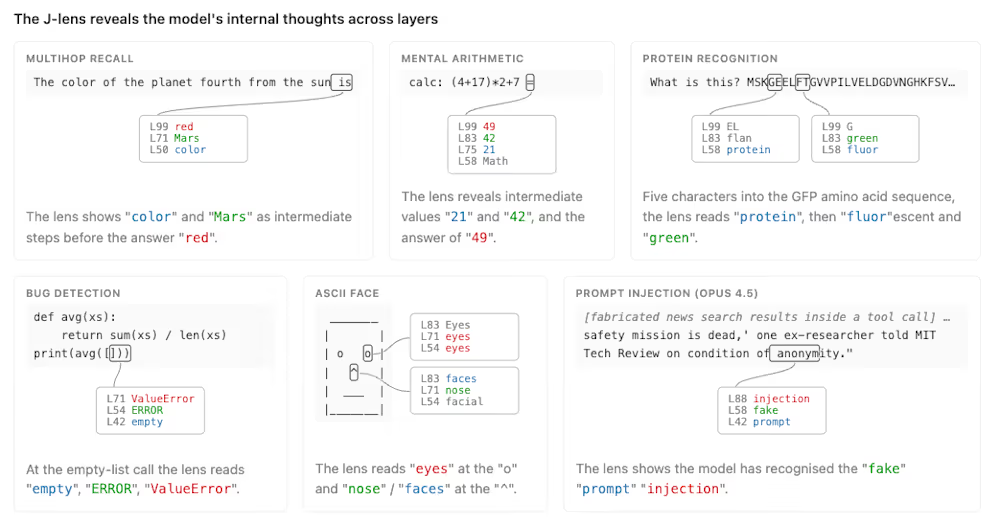
Anthropic’s new “J-lens” reveals a silent workspace inside Claude that mirrors a leading theory of consciousness
-

 Business3 days ago
AXT Shares Jump Nearly 14% as Semiconductor Materials Maker Rebounds on AI-Linked Indium Phosphide Demand
-

 Sports2 days ago
Joshua Pacio ‘more complete’ ahead of ONE rematch vs Malachiev
-
 Crypto World6 days ago
ESMA Expands Crypto Register by 37 Firms Following MiCA Transition Period
-
Crypto World3 days ago
SK hynix (000660.KS) Stock Dips as $28B Nasdaq ADR Offering Drives AI Memory Expansion
-

 Crypto World4 days ago
South Africa proposes crypto tax guidance under existing rules
-

 News Videos3 days ago
Best Time to Enter Small Caps Right Now? Another Bull Run? | Financially Free
-

 Tech4 days ago
Lenovo laptops are now shipping with YMTC SSDs, a sign of Chinese NAND entering the mainstream
-

 Business6 days ago
What a 10 Percent Drop Means for Buyers, Sellers and Renters
-
Sports2 days ago
We have punished the disrespect
-

 Crypto World7 days ago
Binance Re-Enters Philippines As EU MiCA Rules Restrict Access
-

 News Videos3 days ago
Avoid entering in FOMO #bitcoin #cryptocurrency #trading #scalping
-

 Crypto World6 days ago
Alibaba bans Claude Code over alleged backdoor security concerns
You must be logged in to post a comment Login