

Politics
Unite the Kingdom burka stunt was pathetic and anti-feminist racism



If I ever had doubts about how protestors at Saturday’s Unite the Kingdom rally feel about Muslims (which I don’t), they were quickly laid to rest as my Instagram timeline flooded with photographs and videos of incendiary – and sometimes bizarre – anti-Muslim displays of behaviour, which included a Korean musician playing the cello while wearing strips of bacon on his shoulders, before shaking hands with Tommy Robinson on stage and announcing:
I may be hung like a chipmunk, but I’ve got enough balls to fight Islam.
I’m sorry, Mr. Cellist, but crispy cured pork will not result in me fainting or repel me back into the shadows like a vampire exposed to garlic. I also found his self-denegrating joke about the size of his package to be, in all honesty, quite sad. It plays into racist Western stereotypes about Asian men that have sought to emasculate them. It was an example of the ways in which people of colour belittle themselves to fit into white-dominated spaces. But I digress.
Saturday’s march was less ‘Unite the Kingdom’ and more ‘Unite the fight against Islam’ – the crusader references at the march were too many count. Far-right racists often accuse British Muslims like me of playing the victim card, but never has there been more blatant hatred for Islam on display than there was at Saturday’s march, which one attendee called ‘an incredible family day out in London‘ in a post on Facebook group Britain’s Voice, showing just how polarised British society has become. I am not sure you can call a rally where a 15-year-old girl was sexually harassed on camera ‘family friendly.’
However, the cherry on the top was Collectif Némésis’ niqab stunt.
Unite the Kingdom: an anti-Islam trope as old as time
Three members of the French right-wing ‘feminist’ group – I am intentionally putting the word feminist in quotation marks – took to the stage during last Saturday’s rally clad in black niqabs (the Islamic face veil) and abayas (an over garment worn by some Muslim women) before whipping them off in unison to a crowd of jeering men yelling “take it off.” How very feminist of them.
Not only was Collectif Némésis’s stunt reductive, resorting to the use of Muslim women’s clothing yet again as a symbol of what they perceive to be oppression, which is an anti-Islam trope as old as time, but by politicising our clothing and placing us on the frontline of their racist, bigoted political agenda, they are endangering us. And endangering fellow women isn’t very feminist, is it?
Muslim women bear the brunt of anti-Muslim hatred
The intent is clear: to stoke racist tensions by reinforcing the pernicious view of Islam as an oppressive force against women. And it is Muslim women who bear the brunt of these tensions.
It is well-documented that anti-Muslim hatred is gendered, with more Muslim women in Britain experiencing anti-Muslim harassment and hate crimes than Muslim men. Arguably, that’s because the hijab makes us more visibly Muslim. According to Tell MAMA, a non-governmental organisation monitoring anti-Muslim hatred in the UK, 65% of Islamophobic incidents in cities happen to girls and women, and stunts like the one Collectif Némésis pulled off last Saturday just embolden those who seek to harm Muslim women.
The consequences are serious; last month John Ashby was given a life sentence for raping and strangling a Sikh Woman last October in Walsall who he thought was a Muslim woman.
Mainstream British media outlets also bear some responsibility for the entitlement and impunity the far right feel when it comes to expressing their hatred towards Muslim women. When it comes to media coverage of the hatred that was openly expressed towards Muslims and Islam last Saturday, all you can hear are crickets.
Collectif Némésis’s actions contradict feminism
Then, there is the anti-feminist aspect of Collectif Némésis’s pathetic burlesque. The three French activists can be seen in the video encouraging the men in the audience to shout, ‘Take it off.’ The sexual objectification of women via the removal of clothing is misogyny at its finest. It also plays into the Orientalist and colonialist-era obsession that some white men in the West have with unveiling Muslim women. As a visibly Muslim woman, I feel equally hated and fetishised by far-right white men.
Collectif Némésis claims to be a feminist group, but really what they exhibited at the Unite the Kingdom rally was their blatant support for Britain’s misogynistic, patriarchal far-right movement whom, if they were to gain power, would rescind women’s rights. According to Politico, one in three Reform supporters are fans of Tommy Robinson, a party that has spoken about repealing the Equality Act 2010, imposing a tax on childless women, and lowering the legal abortion limit, among calls for a return to traditional family values reminiscent of The Handmaid’s Tale. Women who degrade, ridicule, and harm other women to win the approval of the same men who would hurt them, are, what queer feminist activist and writer Mona Eltahawy calls: foot soldiers of the patriarchy.
Right-wing women like those who are members of Collectif Némésis hide behind the guise of feminism and ‘liberating’ Muslim women. They have absolutely no interest in making life better for Muslim women; their hatred is one and the same.
Featured image via Instagram/CNN News 18


Insulting Muhammad. Criticising a local councillor. Being a white lad who gets punched in the head by a gang of black kids. In Britain in 2026, these are the ‘crimes’ that get the cops off their arses. They might not be able to find the lowlifes who burgled your home or the gang members who groomed your daughter. But they’ll come running if you diss Islam or have a pop at a Green politician or commit the heinous sin of being white and male on a night out. Welcome to your two-tier tyranny.
After this week, anyone still denying Britain’s cops have become the armed wing of wokeness needs to give their head a wobble. First we had the Birmingham scandal. Footage emerged of a chilling incident that reportedly took place on the night of 21 June. A young white fella who appears to have had the benefit of a few pints gets into an altercation with some black lads. He is pushed to the ground by one of them, and seemingly punched by another. A gaggle of keystone cops swarm in and you won’t believe who they go for? Yep, the white boy.
It’s a staggering, infuriating spectacle. Every normal observer of this late-night spat will have considered the white lad the victim. Yet it’s he who is brutishly shoved by the police into the metal shutters of a shop. His assailants, meanwhile, walk off. One of the officers speaks to him as if he were a piece of shit. ‘Walk to the fucking car, you dick’, she says. Since when was it acceptable for cops to use such gutter language, least of all against a lad who appears to have just been assaulted?
It has reanimated the debate about two-tier policing. Coming so soon after the Henry Nowak atrocity – when an 18-year-old white boy was fatally stabbed by a Sikh and then cuffed by cops – the Brum incident has got people talking about the ‘anti-whiteness’ ingrained in the woke state. This looks like ‘clear unequal treatment by the police’, says Robert Jenrick of Reform UK. With nauseating arrogance, West Midlands Police said they had ‘no concerns’ over what happened and said the footage should not be ‘further shared’ online. In short: pipe down, plebs. They’ve now admitted an assault did take place and are promising to ‘identify those involved’. Cops doing their jobs? How novel.
It feels undeniable now that the indoctrination of cops with the baleful ideology of DEI has nurtured an ugly, simmering prejudice against ‘whiteness’. In the wake of the death of George Floyd in particular, police across these isles were expressly instructed to treat the ‘races’ unequally – to take a softer approach towards historically ‘oppressed’ communities compared with the majority white community. Indeed, West Midlands Police itself instituted a Race Action Plan that implored officers not to ‘over-police’ the black community. Can we really be surprised by what happened on 21 June?
It makes depressing sense that in a woke society where being ‘pale, male and stale’ is tantamount to a crime, and where the academy devotes itself to the study of the scourge of ‘whiteness’, and where the phrase ‘white man’ is almost always spat out as a pejorative, the police, too, would come to be intoxicated by such elitist white-wariness, making themselves its brutish enforcers on the street.
Before we even had time to take in the madness of what happened in Birmingham, we got news from Leeds about the arrest of a man for insulting Muhammad. Video footage shows a bloke taunting a ‘pro-Palestine’ march with barbs about the Islamic religion. He’s grabbed and cuffed by cops. He asks why he’s being arrested and the reply of the arresting officer is one of the most unnerving things I’ve ever heard a police officer say: ‘Because you called Muhammad a rapist and a killer.’
There it is, on film, for the world to see: the arrest of a man in Britain in 2026 for taking the piss out of a supposed prophet. This is an abomination. We binned our blasphemy laws in 2008, so why the hell is someone being hauled off for spicy remarks about Islam? Everyone who values liberty, especially the liberty to utter, should be horrified that our police are behaving like Islamic Republic goons and manhandling someone for ‘speaking ill’ of Islam.
Then we had the Chiswick incident, also last week. A man enjoying a pint in a pub in Chiswick, west London, was asked by cops to step outside for a ‘conversation’. His misdemeanour? He’d written social-media posts slagging off the local council’s plan to ban riverside boozing, and he alleged that a Green Party councillor was the driving force behind this nanny-state madness. The cops accused him of filming outside the home of the Green councillor, which he adamantly denied. We’re ‘raising awareness’, the officers said, to make sure you know not to cross the line. Pulling a citizen from a pub to reprimand him for his criticism of the political class? These are Stasi tactics. It’s obscene.
Who do the police serve? In the above instances, they seem to have been serving Allah, and the Green Party, and the soulless diktats of DEI. This is not policing for the people but against them. It is the enforcement of ruling-class orthodoxy against individuals who merely want to speak freely and fruitily about Muhammad or the political establishment. Or who just want to be white and have a pint. A new report on the state of our police, led by Lord Blunkett, is published today. It says police should quit the ‘culture wars’. Too right. For we can all now see that in the hands of the armed wing of the state, the culture war becomes an actual war against ordinary people and our fundamental liberties.
Brendan O’Neill is spiked’s chief political writer and host of the spiked podcast, The Brendan O’Neill Show. Subscribe to the podcast here. His latest book – After the Pogrom: 7 October, Israel and the Crisis of Civilisation – is available to order on Amazon UK and Amazon US now. And find Brendan on Instagram: @burntoakboy.


Hutton’s Soviet stroganoff

4 min read
Politicians making a meal of it. This week: cookbooks as propaganda
“Correct distribution of nutrients and selection of dishes during the day is one of the most important requirements of rational nutrition.” It’s not quite Nigella Lawson, but then The Book of Tasty and Healthy Food isn’t quite How To Be A Domestic Goddess.
First published in 1939, The Book was the official cookbook of the Soviet Union. It was intended to help housewives (I use the word advisedly) prepare meals for their families that were, well, tasty and healthy. It was huge – my translated edition runs to 700 pages – and offered much more than recipes: there were instructions on how to plan menus, how to set the table, even how to use a knife and fork.
But it was also, like everything produced by the Soviet state, a work of propaganda. Published the same decade that government policies had seen millions perish as the result of famine, it painted a picture of a happy people enjoying the fruits of the communist state.
Alison Smith is professor of history at Toronto University, and the author of Cabbage and Caviar: A History of Food in Russia. She says Russia’s rulers had long worried that their people ate less meat than other nations, especially the British. “There’s this real concern that Russian peasants in particular ate very little other than bread, porridge and cabbage.” The Soviet era was supposed to bring abundance. In practice, that meant sausage, a relatively cheap form of meat that stored well.
The Book was produced under the supervision of Anastas Mikoyan, the people’s commissar of the Food Industry. He’d visited the USA and wanted to see food production modernised in the USSR. His recipe book was enthusiastic about tinned food and ice cream, the foodstuffs of the future. The promise of communism was that food wouldn’t just be more plentiful, says Smith, but of a higher quality. “It’s canned peas, it’s sausages, it’s champagne, it’s mayonnaise.”
The reality, of course, was a little different. Few comrades would ever have been able to enjoy the more luxurious meals that the book suggests, and the authors knew that. They put descriptions of three-course meals served with silverware next to advice on storing and reusing leftovers. And there was still a lot of porridge. My edition has 26 recipes, including the enticing “Buckwheat Porridge with Beef Lung” (boil the lung in salted water for 90 minutes, fry it with onions, add to porridge).
There were instructions on how to plan menus, how to set the table, even how to use a knife and fork
My butcher had no lungs to hand, so I’ve settled for making beef stroganoff. Fry onions, then chopped meat, then add sour cream and something called “Yuzhni sauce”. There are whole Reddit threads of people looking for western substitutes for Yuzhni sauce – “sweet, sour and a bit spicy” – but the general advice seems to be to use mustard.
According to Smith, the book had an aspirational message. “It is very much a sort of vision of a life that very few people actually have,” she says. “A dream of a world of plenty.” Communist children would flick through it as British kids did the Argos catalogue. Even refugees from communism would take their copy with them.
My stroganoff, accompanied by fried potatoes and broccoli, is both simple to cook and tasty. Whether half a pot of cream counts as “healthy” is a discussion I shall have with the first Soviet doctor I meet.
But if readers in the 1950s had felt the recipes offered them hope of what they might one day be able to enjoy, as the decades wore on, food shortages meant they may have felt they were being taunted by them. As the queues for food grow longer through the 80s, says Smith, “the ability to access those dreams becomes even more attenuated”.
After the Second World War, the book had claimed that the USSR, unlike Britain, had left rationing behind. But by the 1980s, it was increasingly clear that life, and food, was more abundant in the West.
“Maybe the distance started to feel too much. There start to be so many challenges that the that the dream just loses its ability to be there for people.”
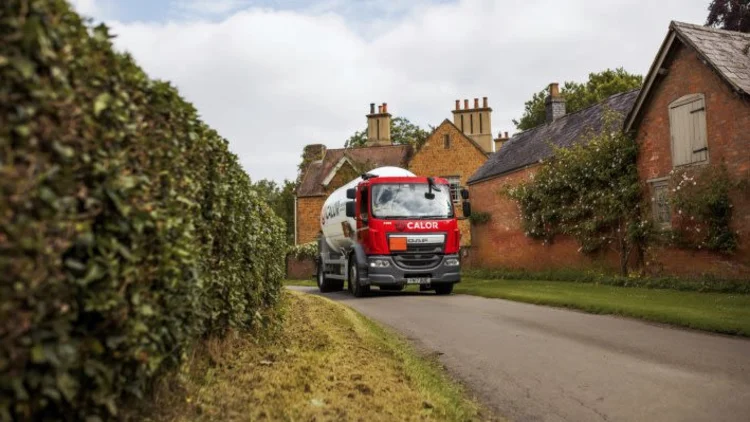


Duncan Carter, Corporate Affairs Manager
| Calor Gas
As the UK accelerates towards net-zero, the debate is increasingly framed as a choice between old systems and new ones. That is a false choice – and a risky one.
One of the UK’s greatest strengths in the transition is the energy infrastructure it already has.
LPG and renewable BioLPG gas already provide vital energy to homes and businesses in the UK, while also being part of the transition to lower-carbon fuels. Existing infrastructure is essential to our energy security today – but also can be repurposed to support the transition to net zero heating, writes Duncan Carter, Corporate Affairs Manager at Calor Gas
Energy security has returned to the top of the political agenda as geopolitical instability, fragile supply chains and sustained cost pressures expose weaknesses in the UK’s energy system. Too often, however, debate overlooks a critical pillar of resilience: the downstream oil and gas sector – the terminals, storage, logistics and distribution networks that deliver energy reliably to homes and businesses.
At a time of transition, this infrastructure should not be treated as a legacy system to be run down. It is a strategic national asset that must be protected and adapted to strengthen resilience today while enabling cleaner fuels tomorrow.
Recent developments illustrate why this matters. In 2025, the UK lost around a third of its refining capacity, driven largely by high operating costs. This reduced domestic flexibility and increased exposure to international market shocks. As refining capacity contracts, robust import, storage and logistics infrastructure – ports, terminals, storage and distribution – becomes even more important to managing risk, maintaining affordability and safeguarding security of supply.
It’s important for LPG too, a versatile energy source used for heating, hot water and cooking. Stored in tanks or cylinders, it provides a transportable energy source especially useful in off gas grid areas.
Calor is Britain’s leading supplier of this critical energy for rural households, agriculture, hospitality, industry and transport. These diverse applications are underpinned by a mature and resilient supply chain, developed over decades to manage fluctuations in demand and supply across regions and seasons.
Security of supply also depends on diversity of sourcing. The UK LPG market benefits from a balanced supply mix that combines domestic production (from UK refineries) with imports, over 93 per cent of which are sourced from European partners. This diversity reduces exposure to geopolitical risk and has helped insulate LPG consumers from the severe price volatility experienced by some users of heating oil in recently.
Targeted investment in downstream infrastructure delivers resilience benefits. Calor’s Canvey Island import terminal – the UK’s largest LPG storage terminal – demonstrates this clearly. A major investment programme has increased storage capacity and delivered extensive upgrades, strengthening reliability for UK customers.
Crucially, this same infrastructure is vital for decarbonisation. Calor is actively scaling BioLPG – a renewable, drop‑in fuel fully compatible with existing appliances, storage and distribution systems. It can deliver up to 90 per cent greenhouse gas emissions reductions compared with conventional LPG, without disruptive household retrofits or costly network upgrades. This makes them particularly suitable for off‑grid homes and businesses, where alternatives such as heat pumps may be less practical or affordable.
Most BioLPG available in the UK is produced as a co‑product of sustainable aviation fuel (SAF) and biodiesel production. Since 2018, Calor has supplied BioLPG from facilities including Neste’s Rotterdam biorefinery and the Phillips 66 Humber refinery in the UK. As the UK’s SAF mandate scales, significant additional BioLPG volumes can be generated without increasing competition for sustainable feedstocks, though current market and policy incentives limit access to these supplies.
SHV Energy, Calor’s parent company, has demonstrated confidence in this model through its investment in a 100,000 tonne SAF facility in the Netherlands, due to commence operations in 2028. Their partnership with SkyNRG is expected to unlock 5,000–8,000 tonnes of BioLPG annually – enough to decarbonise thousands of off‑grid homes. The UK could incentivize this co-production in future UK SAF plants via the introduction of Renewable Liquid Heating Fuel Obligation, similar to the SAF mandate, but focused on the fuels rural communities need to heat their homes.
Continued investment in BioLPG depends on policy clarity and demand certainty, particularly for the UK’s four million off‑grid homes, where forthcoming EPC reform will shape the practical routes to decarbonisation. A phased Renewable Liquid Heating Fuel Obligation, alongside technology‑neutral heat policy and proper recognition of renewable liquid gases within EPC metrics, would provide a clear signal to investors while protecting consumers from disproportionate costs.
With the right framework in place, downstream oil and gas infrastructure can be part of a resilient, affordable and socially fair pathway to net zero. Far from being stranded assets, these networks are a durable foundation for the transition – linking energy security, affordability and decarbonisation into a credible strategy the UK cannot afford to ignore.
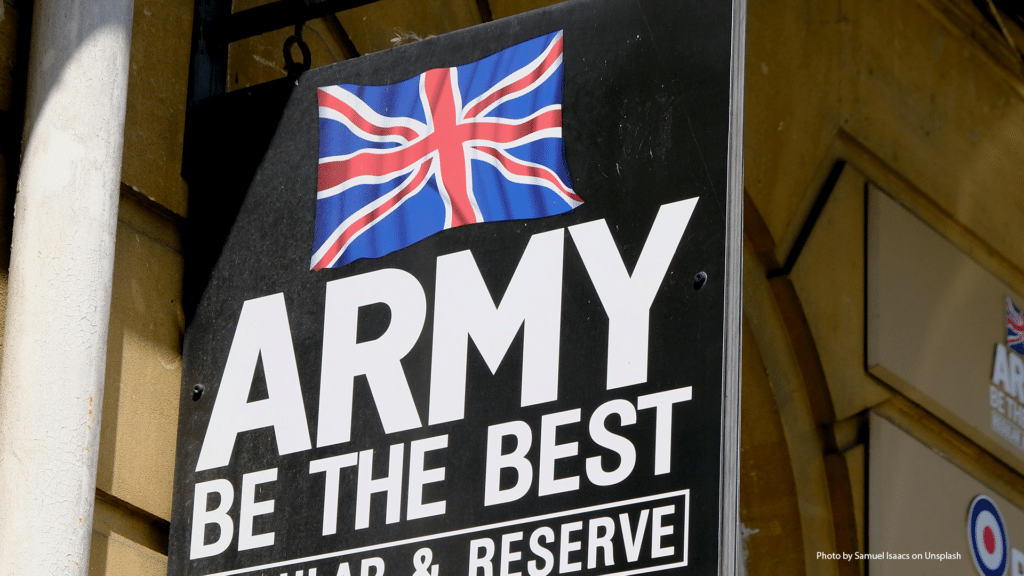
William Reynolds looks at the UK’s Defence Investment Plan and argues that the resources outlined match neither the commitments of the Strategic Defence Review nor the urgency of the challenges we face.
In February 2026, the UK Prime Minister Sir Keir Starmer warned the Munich Security Conference that past leaders had “looked the other way, only re-arming when disaster is upon them”, and called for a rebuilding of “hard power…the currency of the age.” Fast forward four months, his Defence Secretary, John Healey, tendered his resignation, claiming the Prime Minister was “unable, and the Treasury unwilling, to commit the resources that the nation needs to defend the country”. The Defence Investment Plan (DIP), the Ministry of Defence’s response to the 2025 Strategic Defence Review (SDR) was not resourced to meet the agreed upon recommendations of the latter document. With the NATO conference in Ankara fast approaching, Britain risks having lectured for increased spending without producing the goods.
Drawing upon new research conducted with Prof Jamie Gaskarth and Dr Maeve Ryan, it becomes clear that this gap between rhetoric and reality undermines the UK’s credibility as a committed, ‘leading’ power to the NATO alliance.
The SDR itself suffered from a vague defence process, which led to a lack of clarity and prioritisation. The Review provided three general ‘Roles’ which defence was required to do– Role 1: defence of the UK and overseas territories; Role 2: successfully deterring and/or winning any fight which would occur in the Euro-Atlantic area; and Role 3: being able to shape the global security environment. Under the umbrella of ‘NATO First’, ensuring the UK “plans”, “thinks” and “acts” with NATO being the core priority in mind, these Roles are laid out for each military domain’s capabilities (Land, Sea, Air, Space and Cyberspace/Electromagnetic Spectrum) and focusses on the idea of ‘warfighting’ (fighting a peer enemy) and being able to deter a war from occurring in the first place. Examples are also provided for each, such as the Navy’s plan for ATLANTIC BASTION, a hybrid-fleet of crewed and uncrewed vessels protecting the Greenland-Iceland-UK maritime gap from Russian submarines; the British Army’s move towards a ‘Recce-Strike’ model for its land forces; and the Royal Air Force’s balance between crewed and uncrewed aircraft in its future.
The problem lies in a lack of clarity about what achieving these ‘Roles’ would mean in practice as a whole package. Role 2, defence of the Euro-Atlantic area, could range from a maritime-focussed defence of the ‘High North’ area to a doubling down on the British land-centric focus around the Baltic area. Both examples would fall under a ‘NATO first’ umbrella, but their geographical and political differences require significantly different capabilities and signal different priorities to different European states. The examples that were given are examples only, with no sufficient explanation as to how they fit into the wider armed forces’ force structure and priorities. Even with the late publication of the DIP, European allies remain unsure of British focus and current commitments, which stretch from Estonia to Iceland. Outside of some notable examples, no explanation of force structure, or specific numbers on formations and equipment have been provided. Contrast this with the Cold War, where the Defence Review of 1975 clearly defined British commitments around the ‘Four Pillars’ of defence, with a clear framework, outline of what the armed forces would look like going forward, and equipment numbers, from which allies could measure British efforts and focus.
This lack of clarity is compounded by the gap between government commitments and the resources allocated to achieve them. The 2025 SDR promised 2.6% of Gross Domestic Product (GDP) on defence by 2027, with an “ambition” to reach 3% in the next Parliament. No expert looking at the recommendations and the resource envelope concluded this was possible. Providing a fully-kitted Carrier Strike Group, funding for the Global Combat Air Program with Italy and Japan, the AUKUS nuclear attack submarine replacement programme and two Divisions with a Headquarters to NATO’s Strategic Reserve Corps, alongside many other recommendations, was never going to be achievable at 2.6%.
To meet these requirements, the Ministry of Defence calculated that an additional £28 billion over four years, on top of the 2.6%, would be needed, with £18bn being the absolute floor for defence without requiring a reduction in the size and capability of the armed forces. For this reason, both John Healey and Al Cairns resigned, as the offered £10-13.5bn was far below even this threadbare requirement. The final increase was £15bn, still £3bn below the minimum threshold. How then the UK is expected to reach the agreed NATO target of 3.5% of GDP by 2035, which is predicted to require an extra £30bn a year, seems unclear. Indeed, the British Chief of Defence Staff noted recently that even more (3.5%) was necessary to “deliver the vision” set out in the SDR and agreed upon by the Prime Minister.
In 2021, the SDR’s predecessor, the Integrated Review, called for the UK to use its “convening power” to bring together partners to meet shared challenges. Britain has long played on its role as the leader of defence within Europe, but this is no longer the case. Germany, Poland, Norway and many others have significantly pushed their defence spending above and beyond 3% of GDP.
There is growing “frustration” with the UK’s rhetoric on defence. Despite regularly referring to itself as a leading European nation of NATO, the atrophy of the armed forces no longer reflects this. European defence firms and allies have noted the slowness of Britain’s translation of promises to reality. Whilst both NATO and the European Union have called for its members to be ready to deter or fight Russia by 2030, reportedly the UK currently sits at 31 of 32 on a NATO league table of rearmament. The spending gap will only deepen the issue.
Yet , despite the significant overstretch, successive governments has continued to reach for the armed forces as a preferred response to crises, setting commitments like de-mining in the Middle East, a possible Coalition of the Willing in Ukraine, alongside the vagueness of the SDR, without the commensurate resources to facilitate it. Indeed, the Prime Minister “disagrees” that said resources are required. The consequences are a stretched to breaking-point armed forces, unfulfilled promises and resulting loss of confidence from European partners in British defence capability. It is time political rhetoric matched reality. Either the UK accepts a reduced defence role in Europe, or it puts its money where its mouth is.
By Dr William Reynolds, Advanced Education Pathway (AEP) Lecturer in Defence Studies, Defence Studies Department, King’s College London.
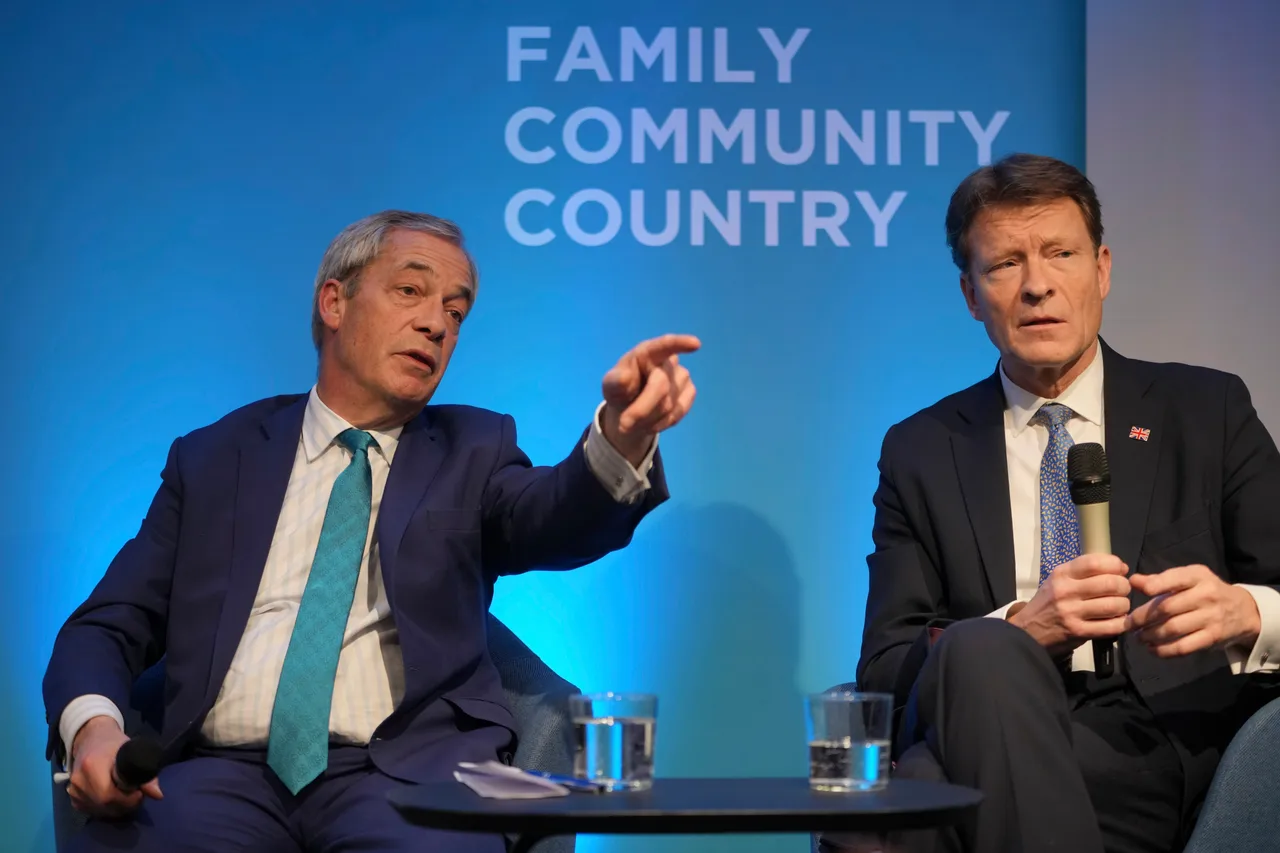
“Nigel Farage is dead in the water,” Piers Morgan boldly declared on the BBC last week.
The broadcaster said the Reform UK leader has been left “rattled” by the row over the undeclared £5 million gift he received from a crypto billionaire.
Farage received the huge lump sum just before he announced he was running in the general election back in 2024.
Though he insists he has not broken any rules, he is being investigated by parliament’s standards watchdog for not declaring the money when he was elected MP for Clacton.
If he is found guilty, Farage could even face a by-election if he is suspended from parliament for longer than 10 days.
But a senior Reform UK source told HuffPost UK: “If Labour are smart, they’ll suspend him for nine days, which would mean he’s guilty but wouldn’t trigger a by-election.
“If they’re daft enough to suspend him for longer, Nigel would easily win the by-election and could then just turn around and say voters don’t care about it whenever the £5 million gift gets brought up again.”
If that wasn’t bad enough, things got worse for Farage over the weekend.
An investigation by the Sunday Times revealed that the Reform boss received financial support from convicted criminal George Cottrell before he became an MP.
Farage has called it “an establishment hit job”, but could face yet another Commons sleaze probe after being reported by Lib Dem MP Josh Babarinde.
It is Farage’s reaction to the furore which has raised eyebrows among his political allies, as well as as enemies.
Not so long ago, it was virtually impossible to switch on the TV or radio without being confronted by Farage’s grinning face, while he was holding press conferences the length and breadth of the country on a weekly basis.
But since the Harborne story was broken by The Guardian in April, he has been noticeably more camera-shy.

And when he has made himself available for scrutiny, his explanation for the gift, and what he plans to do with his massive windfall, has been far from consistent.
At first, he said the funds were to be spent on his private security, then he claimed it was given to him as a reward for his Brexit campaigning.
On a round of car crash interviews two weeks ago, he insisted it was no one’s business but his, and he could spend the money on Ferraris if he wanted to.
Farage has also insisted that the money was unconditional, but he now faces the prospect of a second parliamentary probe over claims he lobbied the Bank of England to drop a cryptocurrency plan that could have impacted Christopher Harborne’s own business.
Farage denies any wrongdoing, but even his own supporters are concerned about the effect the various controversies are having on the Reform leader.
“Nigel is tired and stressed,” said one ally. “He needs to have a rest.”
As the party’s frontman, recent months have been especially punishing for Farage.
He led his party’s campaign in the May 7 elections, then the Makerfield by-election, which saw Andy Burnham comfortably defeat Reform’s Robert Kenyon.
That result confirmed that despite leading in the national opinion polls for the best part of two years, Reform’s electoral record has been decidedly patchy of late.
In February, the Greens’ Hannah Spencer defeated Reform’s Matt Goodwin in the Gorton and Denton by-election.
And last October, Plaid Cymru won the Caerphilly by-election for the Welsh Senedd, confirming that anti-Reform tactical voting is a major problem for the party.
This will once again be evident in the by-election for the Greater Manchester mayoralty at the end of July, which Reform insiders concede they are likely to lose to Labour.
Internal divisions risk rocking Farage’s party, too.
Tensions between senior figures have burst into the open, with home affairs spokesperson Zia Yusuf publicly slapping down Treasury spokesperson Robert Jenrick in May over Reform’s own immigration plans.
Some see that as a foretaste of the jockeying for position which would inevitably take place if Farage did decide to chuck it all in – a scenario he openly speculated on in a recent LBC interview in which he also refused to say he wants to be prime minister.
Former Reform chair David Bull said earlier this month that Farage is not bigger than his party, but few believe that it would be business as usual for Reform should he end up being replaced by one of his underlings.
It is far too early to write Farage off, however.
This is a man, after all, whose time in the public eye appeared to be over until he made the unlikeliest of comebacks by coming third on I’m A Celebrity … Get Me Out Of Here! in 2023.
His victory in Clacton in 2024 also followed seven previously unsuccessful attempts to get a seat in the Commons.
If there is one thing Farage is good at, it is defying the odds.
Who, for instance, would have thought he would successfully campaign to take the UK out of the European Union when he first emerged on the political scene as chairman of the UK Independence Party back in 1998?
In this week’s Commons People podcast, we examine the row threatening to bring down the Reform leader – and assess whether or not the end really is nigh for the comeback kid of British politics.
Listen to Commons People, the podcast that makes politics easy. Every week, Kevin Schofield and Kate Nicholson unpack the week’s biggest stories to keep you informed. Join us for straightforward analysis of what’s going on at Westminster.

Most of us already know that getting enough sleep on the reg can reduce heart attack risk, make you more likely to exercise, and even help you live longer.
But working out exactly why that might be can prove difficult. In recent years, scientists have been looking more closely at the biological mechanisms behind sleep’s benefits.
And recently, a new paper published in the journal Cell identified a deep sleep circuit that might play a role in building muscle and improving our brain function.
The researchers discovered a feedback system that keeps certain hormones in check during sleep, too.
We now know more about how growth hormone is released during sleep
We’ve known for a long time that growth hormone, which is linked to stronger cartilage, muscle, and bone and an improved metabolism alongside a potentially lower heart disease and diabetes risk, is produced during sleep.
But we weren’t really sure how it was released.
In this paper, researchers looked at the brains of mice. They found that growth hormone-releasing hormone (GRGH) and somatostatin, which can suppress the hormone, both rise during rapid eye movement (REM) sleep. That leads to a greater overall release of growth hormone.
During other parts of sleep, though, somatostatin dips while GRGH only rises a little.
Additionally, the scientists found a feedback mechanism in a part of the brain called the locus coeruleus, part of the brain associated with attention, sleep-wake cycles, and thinking.
When growth hormone slowly builds up during sleep, it begins to wake us up bu stimulating this brain region, the study found. But when a more sudden influx of the hormone comes, it seems to make us sleepier.
“This suggests that sleep and growth hormone form a tightly balanced system: Too little sleep reduces growth hormone release, and too much growth hormone can in turn push the brain toward wakefulness,” study co-author Dr Daniel Silverman said.
“Sleep drives growth hormone release, and growth hormone feeds back to regulate wakefulness, and this balance is essential for growth, repair and metabolic health.”
The hormone’s interaction with our locus coeruleus, which keeps us attentive and alert, might also explain sleep’s cognitive benefits, he added.
“Growth hormone not only helps you build your muscle and bones and reduce your fat tissue, but may also have cognitive benefits, promoting your overall arousal level when you wake up.”
Understanding this circuit could help us with treatments in the future
Researchers hope these findings can inform future therapies.
“Understanding the neural circuit for growth hormone release could eventually point toward new hormonal therapies to improve sleep quality or restore normal growth hormone balance,” Dr Silverman stated.
“There are some experimental gene therapies where you target a specific cell type. This circuit could be a novel handle to try to dial back the excitability of the locus coeruleus, which hasn’t been talked about before.”

It’s hot outside. But the DSA is hotter.
Fresh off major primary wins in Colorado and New York, the Democratic Socialists of America is looking to prove that it can translate its momentum beyond deep-blue House primaries and into competitive statewide races.
DSA officials and allies told POLITICO they’ve already shifted organizers, volunteers and resources toward battleground Michigan and Wisconsin, where progressive Abdul El-Sayed is locked in a three-way Democratic primary for Michigan Senate and DSA-backed Francesca Hong is gaining steam in her primary for Wisconsin governor.
Both El-Sayed and Hong are planning a series of major rallies ahead of their primaries, and their campaigns and DSA organizers are currently discussing bringing many of the movement’s biggest stars — including recent winners from New York and Colorado — to generate attention and shore up the broader national effort. That will likely include a trip to Michigan for Rep. Alexandria Ocasio-Cortez, who just made a major endorsement for El-Sayed.
“It’s DSA summer. We can’t stop racking up wins,” said Emma Vigeland, co-host of the long-running progressive program The Majority Report, who has campaigned for DSA candidates this primary season. “We’re seeing the culmination of 10 years of democratic socialism becoming more mainstream.”
Sustaining that summer momentum will be a tall task, as the DSA and the insurgent left try to harness the infrastructure they need to extend their wins into the battlegrounds.
But popular Twitch streamer Hasan Piker and Rep. Rashida Tlaib (D-Mich.) are already planning to hit the trail to boost DSA picks in Michigan and Wisconsin ahead of the August primary.
And DSA membership has surged, according to national co-chair Megan Romer, with more than 7,500 new members signing up nationally since the sweeping victories in the Big Apple.
The DSA held a national members call Thursday night to rally the troops featuring two of the organization’s newest stars: Pennsylvania congressional nominee state Rep. Chris Rabb and Melat Kiros, who this week scored a major primary upset in Colorado over longtime Rep. Diana DeGette. Members also addressed Speaker Mike Johnson’s recent attacks on the group.
“This is a movement moment,” Hong said in an interview, pushing back on skeptics who question whether democratic socialists can win statewide in a state President Donald Trump carried twice. “More and more folks are recognizing that the system is rigged and they deserve a more democratic economy, where the power and control are with the workers and not the establishment, the elites and the mega corporations.”

The democratic socialist surge has been building since Sen. Bernie Sanders’ 2016 presidential campaign brought the movement into the mainstream. But it’s been supercharged by progressive voters’ frustration with Democratic leadership, especially following former President Joe Biden’s late exit during the 2024 race and the party’s tepid response — in the eyes of many in the base — to the second Trump administration.
That anti-Washington sentiment has now resulted in DSA’s most successful primary season yet, putting democratic socialists on pace to have at least eight aligned members of Congress next year, not to mention the mayorships of New York City, Washington and Seattle — with more races still ahead.
But it hasn’t all been smooth sailing. In California, DSA-backed Sean Dougherty lost his blanket primary against Rep. Jimmy Panetta, while Chris Bennett fell short against Rep. Kevin Kiley, losses that point to a bigger question ahead: How far can the movement translate its surge of national attention and energy? Especially as establishment Democrats and outside groups look to blunt its momentum — and as Republicans ramp up efforts to turn the group into a campaign boogeyman.
“One of the biggest challenges of organizing is helping people channel their organic excitement — positive or negative — into movement growth,” Romer said. “We’ve built these structures and now we get to help people find their way into them so they can use them to win what they want.”
In Wisconsin, Hong is mounting one of the group’s clearest tests yet of whether a democratic socialist can win statewide, running on affordability and opposition to data center expansion — a message that has boosted her into a leading position in some polling heading into next month’s contest.
Public polling in the Wisconsin governor’s race has been sparse. A Marquette University Law School poll from March showed Hong leading the Democratic field at 14 percent among voters who named a candidate, ahead of Mandela Barnes at 11 percent, with 65 percent still undecided.
Hong, who last week appeared on Piker’s stream and raised over $50,000 from viewers in under an hour, says she plans to try unconventional ways of meeting voters heading into the primary.
“We will continue to be campaigning in creative ways, where people are meeting a candidate where they weren’t expected to meet a gubernatorial candidate — bike rides and dive bars,” she said.
Nearby Michigan is shaping up to be perhaps the most important state on the primary calendar this August for the strength of the insurgent movement in the Democratic Party. El-Sayed is not explicitly backed by DSA, but he’s widely viewed within the movement as part of the same progressive project, and organizers are going all in behind El-Sayed’s Senate campaign.
Ocasio-Cortez, who endorsed El-Sayed during his 2018 gubernatorial bid, joins Sen. Bernie Sanders (I-Vt.), who previously backed him in this campaign, in lining up two of the most influential voices on the left behind him.
“Everybody in the coalition is on the same page, whether it be Justice Dems, whether it be [Working Families Party], whether it be DSA,” said Vincent Vertuccio, Egret Strategies, a consulting firm that has worked with leftists running for office this cycle. He said Michigan is “absolutely the next focus of this national movement.”
Piker, who has become a highly sought-after surrogate for insurgent candidates this primary season, told POLITICO that he was headed to Michigan soon to rally support: “Abdul El-Sayed is not DSA affiliated, but he’s a progressive fighter. He’s a Berniecrat, and I’m excited to help him out to the best of my ability.”

A recent Quantus Insights poll from late June found El-Sayed leading Rep. Haley Stevens 41 percent to 36 percent, with state Sen. Mallory McMorrow trailing at 8 percent.
The DSA has another target in Michigan: Ousting incumbent Rep. Shri Thanedar, a former democratic socialist member whom the organization says it expelled over what it described as a “substantial disagreement with the values of DSA.” Thanedar at the time claimed he had renounced his membership, citing the organization’s promotion of a pro-Palestinian rally in New York City in the days immediately after Hamas’ attack on Israel in October 2023.
The representative now faces a DSA-backed challenger in state Rep. Donavan McKinney in Michigan’s 13th District.
Tlaib, an original member of the Squad, is working hard in her backyard to boost both McKinney and El-Sayed. In an interview, she said that the current momentum behind insurgent candidates reminds her of the 2018 wave that first brought her into Congress along with other Squad members, and their frustration once Democrats won unified control in the 2020 elections.
“Democrats had the trifecta and we couldn’t even get the Voting Rights Act passed. We couldn’t even get Build Back Better passed that was about child care and housing,” she said. “These are not years that we can get back for our residents, and especially our children.”
McKinney has hit Thanedar over taking corporate PAC money and questioned his progressive credentials. Tlaib and DSA are banking on their organizing efforts to propel the challenger to victory.
“[Mckinney] was raised in Wayne County all his life. He understands what it feels like to smell like rotten eggs when you go outside because the air is so polluted,” Tlaib added. “People are hungry for folks that will move with urgency.”

As soon as it was revealed that Christopher Nolan would be following up his Oscar-winning historical biopic Oppenheimer with a new adaptation of the classic tome, The Odyssey, it was pretty obvious that we were in for another bum-numbing epic from the British director.
Nolan is already known for not shying away from a long runtime with his big-screen offerings, with some of his biggest films clocking in at long after the two-hour mark.
Inception, for example, lasts a total of 148 minutes, with Tenet beating that by two minutes.
Another of his most popular movies, Interstellar, lasts just shy of three hours at 169 minutes, while his latest film, Oppenheimer, ran for three hours exactly.
So, how will The Odyssey compare?
How long will Christopher Nolan’s The Odyssey run for?
The good news for anyone worried about whether they’re going to need bathroom and snack breaks when planning their cinema trip for The Odyssey is that the film isn’t quite as long as Oppenheimer.
However, it has to be said that it’s still one of Nolan’s longest movies to date, at 172 minutes in total, as reported by Ireland’s official film classification body, the IFCO.

What else do we know about The Odyssey so far?
Of course, it’s understandable that The Odyssey would be a long one, considering how much material there is for Nolan to condense into one film.
Based on Homer’s Greek epic, the original story centres around Odysseus and his mammoth journey home to his wife and son in Ithaca at the end of the Trojan war, where along the way he has to face adversaries from mythology like the cyclops and sirens.
Matt Damon will take the lead as Odysseus in the new film adaptation of the tale, sharing the screen with everyone from Anne Hathaway, Robert Pattinson and Tom Holland to Zendaya, Lupita Nyong’o and Charlize Theron.
The Odyssey is due to hit cinemas on Friday 17 July. Check out our more in-depth guide to the new Nolan film here.

Harry Styles took a moment to pay tribute to his former One Direction bandmates after wrapping up his epic, record-breaking run of shows at Wembley Stadium over the weekend.
On Sunday night, the chart-topping star delivered the 12th and final Wembley Stadium gigon his Together, Together world tour, off the back of his hit album Kiss All The Time. Disco, Occasionally.
During his London shows, Harry has been taking a moment to reflect on the early stages of his career, which was also the case during Sunday night’s concert.
“I wouldn’t be on this stage if it wasn’t for four friends of mine that were a massive part of this journey,” he told the crowd, before publicly thanking Niall Horan, Louis Tomlinson, Zayn Malik and his “dear friend”, the late Liam Payne “for these nights and everything that I learned in this time, the friendship, everything”.
“None of this would be possible, I wouldn’t be here without you, thank you so much,” he added.
Liam died in October 2024 at the age of 31, after falling from the balcony of a hotel where he was staying in Argentina, while under the influence of numerous substances.
In the days that followed, the four remaining members of One Direction issued a joint statement, which read: “The memories we shared with [Liam] will be treasured forever. For now, our thoughts are with his family, his friends, and the fans who loved him alongside us. We will miss him terribly. We love you Liam.”
They then posted more personal tributes on their individual social media accounts, with Harry remembering his “lovely friend” as “warm, supportive and incredibly loving”.
Harry lamented: “The years we spent together will forever remain among the most cherished years of my life. I will miss him always.”

David Fisher/Shutterstock
More recently, Harry admitted that Liam’s death was something he has “struggled” to address over the last two years.
“There was a period when he passed away where I really struggled with kind of acknowledging how strange it is to have people kind of own part of your grief, in a way,” the Sign Of The Times singer shared.
“I [had] such strong feelings around my friend passing away, and then suddenly, being aware [that] there [was] maybe a desire from other people [for] you to convey that in some way – or it means you’re not feeling what you’re feeling or something.”
The Grammy winner added: “It’s so difficult to lose a friend. It’s difficult to lose any friend, but it’s so difficult to lose a friend who is so like you in so many ways. It’s like, I saw [in Liam] someone with the kindest heart, who just wanted to be great.”

The news that Andy Burnham has appointed James Purnell as his chief of staff has been greeted with horror by the likes of Owen Jones and Zack Polanski.
This is usually a good sign. Purnell’s past as a Blairite minister, pro-market stance and failure to despise Israel cast doubt, for them, on Burnham’s claim to be radical. Others might see this as a cause for relief. And what’s not to like about a man who once proposed, as Purnell did, lie detector-tests to weed out benefits cheats?
But just because the whiniest elements of the hard left loathe Purnell doesn’t mean his appointment is a good thing. For as smiley and reasonable as he appears, he embodies a problem with the modern left that’s every bit as pernicious as its economic incompetence. This is its obsession with imposing its fringe woke values on the rest of us.
If you want to know what makes Burnham’s new Svengali tick, forget the nearly two years he served as CEO of a global consultancy firm. Instead, look at what he did during his stint as one of the BBC’s top executives between 2013 and 2020, as both director of strategy and director of radio and education, when he championed the worst excesses of the diversity and inclusion agenda.
The climax of this stint was the publication in 2018 of an extraordinary report, ‘LGBT Culture and Progression’. It set out a detailed plan to transform the corporation and to force it to comply with the diktats of the LGBTQ+ lobby. Purnell oversaw the report and wrote the foreword. He applauded its recommendations, which he openly acknowledged were written with ‘support from Stonewall’. What could possibly go wrong?
The goal of this madcap project, believe it or not, was to stamp out ‘heteronormativity’ at the BBC. Apparently, it was a problem that the national broadcaster assumed heterosexuality is the default setting of human sexual orientation – even though it is. Where did Purnell imagine the BBC’s viewers came from?
In his foreword, Purnell argued ‘an organisation that appears to have a heteronormative culture’ would fail to attract 18- to 24-year-olds. What he failed to realise was that coming over all kinky and queer wouldn’t attract young people to the BBC either.
The joke is that the average age of a BBC One viewer at the time of Purnell’s report was 61. For BBC Two it was 62. Did he bother to ask viewers in their sixties if they fancied less heteronormativity with their BBC soaps? Did he heck.
In fact, the team behind the report didn’t canvass the opinion of anyone outside the BBC’s own buildings. Its recommendations were based exclusively on staff surveys run by the corporation’s in-house Pride group – which, as the report helpfully explained, represents anyone who is ‘genderqueer, bisexual, gay, lesbian, transgender, nonbinary, pansexual, intersex, asexual, queer, questioning or an ally’. The dinner party from hell, in other words.
With the blessing of Purnell, the demands of this tiny, unrepresentative bunch ricocheted through the BBC’s editorial output. One of the demands, for example, was for LGBT characters to feature more frequently and prominently in shows. If you want to complain about the endless succession of drag queens on your TV screen, Andy Burnham’s new chief of staff is your man.
Another demand was that staff should use preferred pronouns. This was taken by journalists as an instruction to respect the delusions of any crossdresser – even in news reports. Male rapists who claimed to be female would now routinely be referred to as ‘she / her’ by the BBC.
If you thought the age of the left imposing its fringe cultural obsessions on society might be coming to an end, then think again. Burnham’s most important hire is one of the worst kinds of cultural warriors. Let’s just hope James Purnell doesn’t get to do to Britain what he did to the BBC.
Malcolm Clark was LGB Alliance’s head of research from 2019 to 2022. Visit his Substack, The Secret Gender Files, here.

Sheza Alibi’s return to Pakenham stable planned for 2024

Alibaba is banning its workers from using Claude Code as US v China AI battle heats up

Why This Money Advice Has EXPIRED


-

 Fashion3 days ago
Weekend Open Thread: High Hopes
-

 Politics3 days ago
The House | “Reframing the debate from a binary discussion of winners and losers”: Yuan Yang reviews ‘We Are Not Machines’
-

 Crypto World6 days ago
Strategy authorizes up to $1.25B in Bitcoin sales under new capital plan
-

 News Videos6 days ago
How to Build INSANE Live Financial Dashboards With Claude
-

 Tech6 days ago
Anonymous researcher drops 0-day ‘exploitarium’ repo
-

 Business6 days ago
Australia treasurer says alleged access of prime minister’s bank data ’incredibly concerning’
-
 NewsBeat1 day ago
Taylor Swift and Travis Kelce wedding staffer hilariously struggles to keep her cool while checking in megastars
-
 Crypto World5 days ago
Airdrop Registration Becomes Key Focus For Remittix As RTX Launch Updates Approach
-

 Sports5 days ago
Broncos roster: OL Ben Powers (No. 74) entering final year of contract
-
 Business7 days ago
The AI boom won’t burst all at once. It will pop in ‘rolling bubbles’: Macquarie
-

 Crypto World4 days ago
Binance stock trading tops $1B in first month after launch
-

 NewsBeat6 days ago
Presenter Caroline Flack’s brother Paul Flack dies aged 55
-

 Crypto World4 days ago
Alibaba-affiliate Ant Group enters the humanoid robot market with 12 deals
-
 NewsBeat4 days ago
New exhibition reflects five decades of movement between island of Ireland and GB
-

 Crypto World23 hours ago
South Africa proposes crypto tax guidance under existing rules
-

 Crypto World3 days ago
Standard Chartered Secures MiCA License as ESMA Adds 37 New Crypto Firms
-

 Business5 days ago
Meta Platforms Stock Jumps 7% Today as Bloomberg Reports Company Plans to Enter the Cloud Business
-

 Tech1 day ago
Lenovo laptops are now shipping with YMTC SSDs, a sign of Chinese NAND entering the mainstream
-

 Business3 days ago
What a 10 Percent Drop Means for Buyers, Sellers and Renters
-

 Crypto World4 days ago
Binance Re-Enters Philippines As EU MiCA Rules Restrict Access
You must be logged in to post a comment Login