

Politics
Arsenal crowned Premier League champions



Arsenal have ended a 22‑year wait for the top-flight title, finally turning near-misses into silverware under Mikel Arteta. The Gunners sealed the 2025/26 Premier League crown after Manchester City drew 1-1 at Bournemouth, a result that handed Arsenal the trophy with one game to spare.
How it happened
Arsenal led the table for much of the season, then weathered a tense April that threatened to derail their bid.
A 2-1 defeat at Manchester City looked like a momentum shift, but Arteta’s side steadied, kept their nerve and capitalised when City failed to win at Everton and Bournemouth. The draws mathematically ended Arsenal’s long wait for a league title.
What it means for the club
This is Arsenal’s first league title since the Invincibles season of 2003/04.
Beyond the nostalgia, the victory marks the end of a run of three consecutive second-place finishes and a six-year trophy drought.
For Arteta, it’s his second major honour as manager at the Emirates and a vindication of a project built on structure, discipline and a clear identity.
The squad and style
Arsenal’s season was defined by a compact, resilient unit rather than a single superstar explosion.
The defence proved the backbone of the campaign, while key midfield signings and tactical tweaks allowed the team to grind out results when flair alone wasn’t enough.
The balance between organisation and attacking intent gave them the consistency required over 38 games.
The moment and the reaction
Players and staff celebrated at London Colney as the final whistle blew at Bournemouth. Social media and former figures associated with the club joined the chorus of congratulations.
The club will lift the trophy after their final game of the season at Crystal Palace, a formal coronation to match the long, patient build-up.
What’s next
Arsenal now head into the Champions League final against PSG in Budapest with momentum and belief.
The European final represents a chance to add a historic first Champions League trophy to the season’s haul and to cement this campaign as a genuine turning point for the club.
Quick takeaways
- End of an era: First league title since 2004; the Invincibles’ shadow finally lifted.
- Managerial milestone: Arteta’s project reaches a major peak; continuity rewarded.
- Team effort: Defence and midfield balance carried the campaign; collective over individual.
- Still to play for: Champions League final against PSG offers a chance for a double.
Arsenal’s title feels like the payoff for a long, methodical rebuild: smart recruitment, a clear tactical identity and a manager who learned from setbacks. The celebrations will be loud, but the real test is whether this becomes a launchpad for sustained dominance or a glorious peak.
Either way, north London has its crown back and the club’s next chapter starts with a trophy in hand and a European final on the horizon.
Featured image via Julian Finney / Getty Images
By Faz Ali

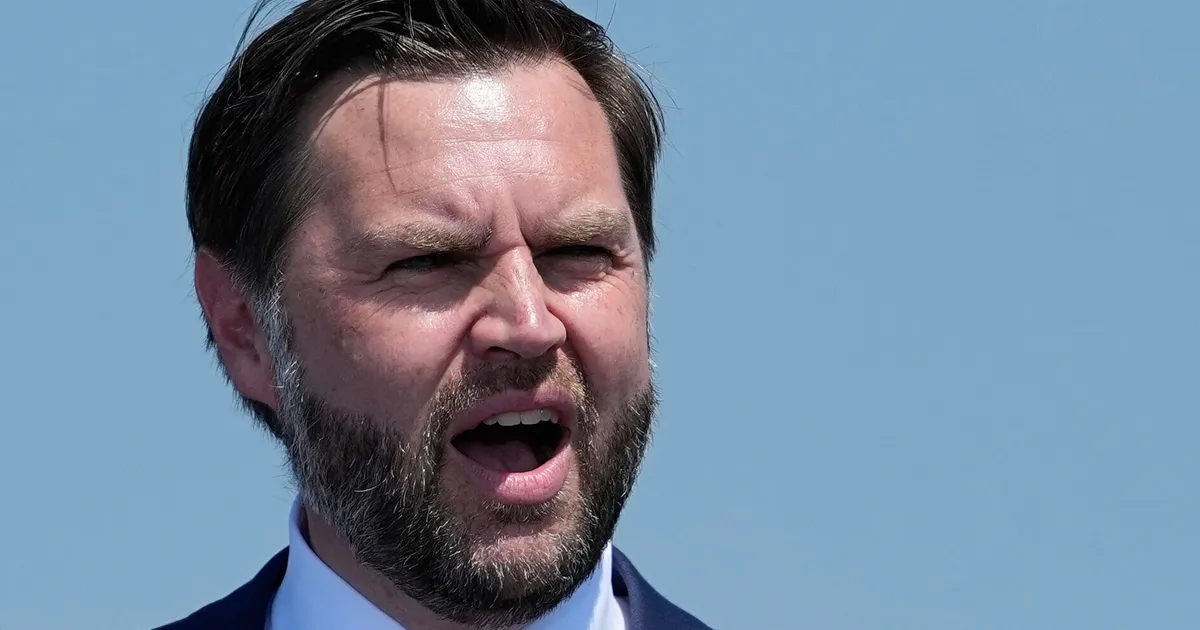
JD Vance has declared “something is very broken in British politics” as the UK prepares for its seventh prime minister in just over a decade.
The American vice-president said Britain “can do a lot more than it’s currently doing” to help its voters in a dig at the current prime minister.
Speaking two weeks before Keir Starmer is expected to hand the keys of No.10 over to Andy Burnham, Vance expressed alarm about the high turnover in Downing Street.
He said: “What that says to me is that something is very broken about British politics and that people are really crying out for significant structural change.”
He claimed he did not know much about the former Manchester mayor but added that the UK is “one of our closest and most important allies” and that the US administration would work with any new leader “as successfully as we can.”
Vance continued: “I hope that Andy Burnham – and if not Andy Burnham, somebody else – is able to deliver [change]. Because Britain is such a beautiful country, such an amazing place.”
Speaking on the 250th year of US independence, Vance claimed he is interested in the UK because of “reasons of mutual interest” and expressed hope that “whoever the prime minister is figures out how to get Britain back on track”.
“I also just care about it because Britain feels more culturally familiar to me than any country on Earth, aside from my own,” Vance said.
His words come after Donald Trump was significantly less diplomatic about Burnham.
The US president described him as an “extremely liberal” politician who “probably won’t open up” the North Sea for further oil and gas drilling.
He also called the former Greater Manchester mayor as “the mayor of a town”.
Burnham is yet to say what his approach to the mercurial president would be.
Starmer bent over backwards to forge a strong bond with Trump and even gave him an unprecedented second state visit to the UK.
However the two fell out after the prime minister refused to let the US use UK military bases to launch attacks on Tehran earlier this year.
Listen to Commons People, the podcast that makes politics easy. Every week, Kevin Schofield and Kate Nicholson unpack the week’s biggest stories to keep you informed. Join us for straightforward analysis of what’s going on at Westminster.

Dissatisfaction in Nigel Farage has increased over the last year amid growing scrutiny over his finances, according to a new poll.
Ipsos found almost two-thirds (63%) of Brits said they are “dissatisfied” with the Reform UK leader in June 2026 compared to 49% in June 2025.
That number far exceeds the number who are still satisfied in Farage – just 26% said they were happy with the Clacton MP this year, compared to 26% in 2025.
The findings come as the Clacton MP is under investigation for not declaring a £5 million donation from a crypto-billionaire shortly before he was sworn into parliament.
He insists he has not broken any parliamentary rules as the lump sum was not used for political purposes.
The Sunday Times has also revealed that Farage did not declare the support he received from convicted criminal George Cottrell prior to his election.
A Reform spokesperson replied: “Contrary to the story’s tone, no parliamentary rules have been broken.”
The party’s Treasury spokesperson Robert Jenrick also insisted on Sky News on Sunday that heightened scrutiny on Farage’s finances has not had an impact on their popularity.
Indeed, pollsters at Ipsos found 26% of Brits would vote for Reform if a general election were held tomorrow.
That means Farage’s party has held onto its comfortable lead in the opinion polls even during the heightened scrutiny.
However, Labour appears to have closed much of the gap behind Reform, and is just two points behind on 24%.
The party’s improvement in the polls comes amid speculation that Andy Burnham is going to take over from Keir Starmer.
Listen to Commons People, the podcast that makes politics easy. Every week, Kevin Schofield and Kate Nicholson unpack the week’s biggest stories to keep you informed. Join us for straightforward analysis of what’s going on at Westminster.
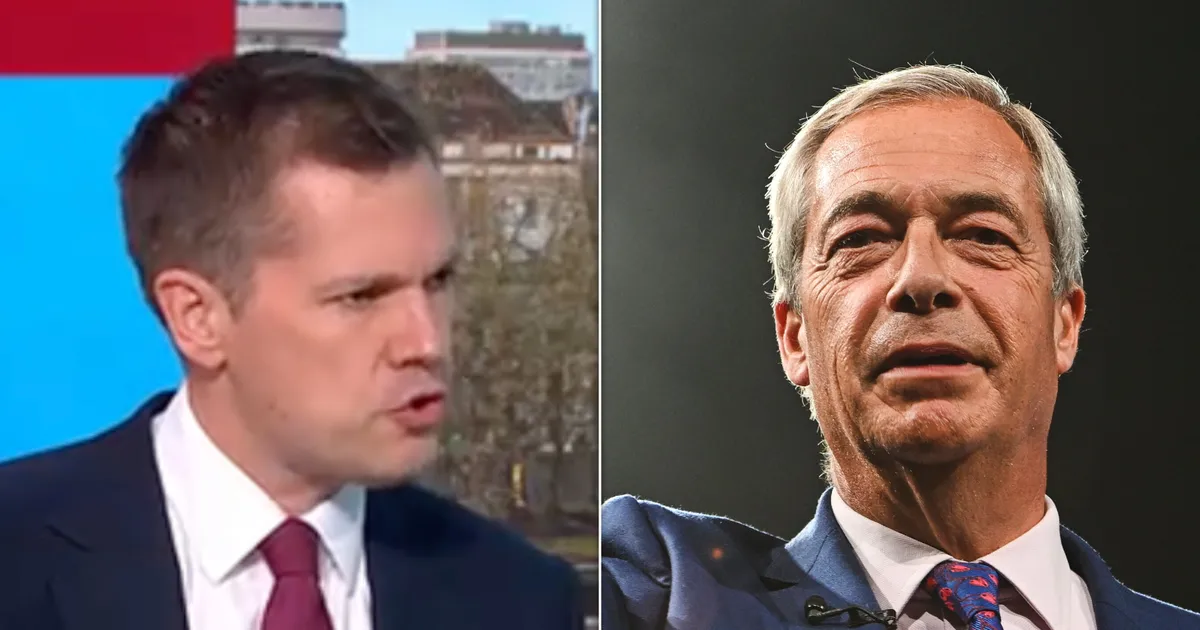
Robert Jenrick locked horns with Sky News’ Trevor Phillips this morning while jumping to Nigel Farage’s defence.
Reform UK’s Treasury spokesperson shrugged off a new report from the Sunday Times, which claims Farage did not declare support from convicted criminal George Cottrell when he became an MP.
The revelation comes while Farage is still under investigation from the parliamentary watchdog for not declaring a £5 million donation from a crypto-billionaire prior to winning his seat in 2024.
The party insists Farage has not broken the rules in either of these scenarios.
But Jenrick furiously collided with Phillips on Sunday when the presenter asked: “Is Nigel Farage now becoming more of a liability than an asset to Reform?”
“Don’t be silly, Trevor,” he said.
Phillips hit back: “You’ve lost half a dozen points [in the polls], you can barely hear a word out of your leader, he’s keeping a low profile.”
“Nigel Farage is keeping a low profile?” Jenrick scoffed. “Nigel Farage is out and about across the country, he was out in America in the last couple of days meeting the US vice-president.”
“To remind you, he’s a British MP!” Phillips replied.
“He’s also someone who is a leading character – likely to be the next prime minister,” Jenrick said.
“You still have to deal with the lingering questions if you like about the character of the party and the leader,” Phillips reminded him.
Jenrick also said “there’s nothing to see here” about the Cottrell revelations, and insisted Farage is “not going anywhere”.
He claimed the media “seem fixated on Nigel” but that technique is “not working” as Reform continues leading in the polls.
“Why not? You just told me he’s going to be the next prime minister,” Phillips said.
After more back and forth, Phillips said he was “astonished” Jenrick thinks it does not matter who Farage associates with and their background.
The Newark MP also denied Reform’s home affairs spokesperson Zia Yusuf had publicly undermined him during a public spat earlier this year.
Jenrick told Sky in May that a foreign national would not be deported “exclusively” if they live in social housing under a Reform government.
But Yusuf replied on X: “Robert’s answer is not Reform policy.
“As the person responsible for our deportation plan I want to ensure people know where we stand: if a foreign national lives in social housing at taxpayer expense, they automatically fail our economic test and will be deported.”
However, Jenrick insisted on Sunday that he and Yusuf are “basically on the same page.”
“No, you’re at different ends of the book. He said you were wrong!” Phillips said.
Jenrick insisted: “No. We’re saying two important things here. We’re saying social housing, which is a precious commodity of which we’ve got too little in this country, should be for British citizens – and that’s what Reform would do.
“Secondly, if you’re in the UK and you’re not a Brit and you’re living in social housing, you will not be able to remain in it because you will not meet the economic test.
“You’ll be given three months to find private accommodation and if you can’t, then I’m afraid you will have to leave the country.”
“So no divisions in the top team? Or, as some cruel people say, he’s bullied you into a tougher position?” The presenter asked.
“No, none at all,” he said, insisting they are a united team.
Listen to Commons People, the podcast that makes politics easy. Every week, Kevin Schofield and Kate Nicholson unpack the week’s biggest stories to keep you informed. Join us for straightforward analysis of what’s going on at Westminster.

You probably already know that running’s pretty good for us – it’s been associated with better heart health, stronger bones, better sleep, and improved mood.
It could even help us to live longer.
But how much running do we need to do to see benefits?
Well, it might be a lot less than you think – one study found that running about 10km a week led to roughly the same health advantages as jogging far longer.
And another paper linked less than an hour and a half’s worth of running a week to a biological age 12 years younger than non-runners.
Our biological age refers to the “wear and tear happening inside the body at a cellular and molecular level,” and is different to the years we’ve lived (chronological age).
How much running lowers your biological age by 12 years?
The research, published in 2023, found that 75 minutes of running or jogging a week was linked to a “biological age difference of approximately 12 years” compared to non-runners.
This appeared to stay true even after lifestyle and medical factors were taken into consideration.
The study looked at 4,458 US adults and measured their biological age by looking at their leukocyte telomeres.
Telomeres are structures that humans have at the ends of our chromosomes, and which keep our cells working better for longer. They tend to shrink when we age.
They have been compared to “the protective plastic caps at the end of shoelaces”. Shorter telomeres are linked to a shorter life.
Leukocyte telomeres are the telomeres at the ends of white blood cell chromosomes.
These have been used to gauge mortality risk in some groups, and are often chosen as a great indicator of biological ageing.
In this study, “The leukocyte telomere length difference between the non-joggers/runners and those who met the [exercise guidelines of 75 minutes of vigorous activity a week] accounted for a biological age difference of approximately 12 years in favor of the runners”.
More research is needed, however
This study didn’t see the same telomere length advantages in runners and joggers who didn’t reach 75 minutes a week.
This “could mean that jogging or running less than 75 min per week is simply not enough work to protect leukocyte telomeres and slow biological ageing,” the paper reads, adding that more research is needed.
Still, they said, “it appears that 75 min of vigorous activity per week achieved via jogging and/or running is a valid recommendation due to the finding that adults in this category had significantly longer telomeres than adults who did not engage in jogging or running”.

I love potatoes, so it makes sense that my favourite pasta has long been gnocchi.
The fluffy, pillowy clouds are especially delicious when made with extra-dry, floury spuds – chefs like a salt-roasted Maris Piper or King Edward for the job.
But writing for AllRecipes, chef John Mitzewich, also known as Chef John on his YouTube channel Food Wishes, said there’s a type of gnocchi that involves no potato at all.
He said: “I feel like I’ve eaten a fair amount of Italian food, and I’ve been to Rome, but it wasn’t until late in life that I discovered [this] virtually unknown [gnocchi recipe].”
He was talking about Gnocchi alla Romana, or Roman gnocchi.
What is Roman gnocchi?
They’re a kind of dough-based dumpling which are baked in a pan.
Roman gnocchi is usually made with semolina flour (the kind Mary Berry uses to make her roast potatoes and parsnips crispier), butter, milk, egg yolks, and Parmesan.
Some recipes use nutmeg, too – we’ve written before about how crucial the spice is to a lot of Italian dishes, even though it’s often ignored in savoury dishes in the UK.
This type of gnocchi is “much simpler to pull off than the classic potato gnocchi,” Great Italian Chefs’ site reads.
Rather than kneading, rolling, cutting, and shaping the dumplings, as you would with potato gnocchi, you simply spread Roman gnocchi’s mixture onto a tray before slicing and baking it.
It works as a comforting main or a low-fuss side (it’s delicious alongside a tomato-based sauce, too).
How do you make Roman gnocchi?
Like “regular” potato gnocchi, there’s no single recipe.
The ratio of semolina flour to milk, for instance, ranges from 1:4 in one recipe to just over 1:2 in another. Still, a higher amount of milk is more common.
And while some use the aforementioned nutmeg to season the dish, others use cayenne pepper, or nothing at all.
Some methods remain constant, however: cook the semolina flour like polenta in stove-hot milk before laying it on the tray.
Before you cook it, add another layer of tangy Parmesan, and if you like, cover it in melted butter too.
Roman gnocchi recipe
This should serve about 4.
Ingredients:
- Milk: 630ml
- Semolina flour: 150g
- Butter: 40g (plus extra for the dish)
- Grated Parmesan or Parmigiano-Reggiano: 60g (plus more for sprinkling)
- Egg yolks: 1-2
- Salt and nutmeg, to taste.
Tools:
- Round cutter, like a scone cutter (or the floured bottom of a glass)
- Baking-paper-lined baking tray
- Grater, for the Parmesan
- Nutmeg grater, if using fresh nutmeg
- Heavy-bottomed pan, for the milk
- Shallow baking tray or large oven-safe cast iron skillet, buttered to ensure the dumplings don’t stick.
Steps:
- Simmer your salted milk, ideally with nutmeg, over a stove and whisk in the semolina.
- Keep stirring until it comes together and begins to pull away from the sides of the pan. This should take about 10 minutes.
- Remove the thickened mixture from the heat and allow it to cool a little before adding the egg yolks (stirring fast so it doesn’t scramble), all but a tablespoon of the butter, and 60g of the cheese.
- Place the mixture on a baking-paper-lined baking tray (about 1.5cm deep), then let it cool. You might want to add clingfilm to the top of this and put it in the fridge, in which case it should take about 30-60 minutes to chill.
- When you’re ready to bake the dumplings, preheat your oven to 180°C fan, 200°C conventional, or gas mark 4.
- While it’s heating up, use a round cutter like a scone cutter (or the floured bottom of a glass if you’re stuck) to cut out circles from the semolina mix.
- Layer these onto a buttered baking tray in overlapping circles.
- Melt the remaining butter – a few seconds in the microwave in a suitable container will do – and drizzle it over the dumplings. Add the rest of the Parmesan.
- Bake until golden (about 25-30 minutes).
- Sprinkle more Parmesan on top before serving, if you like.
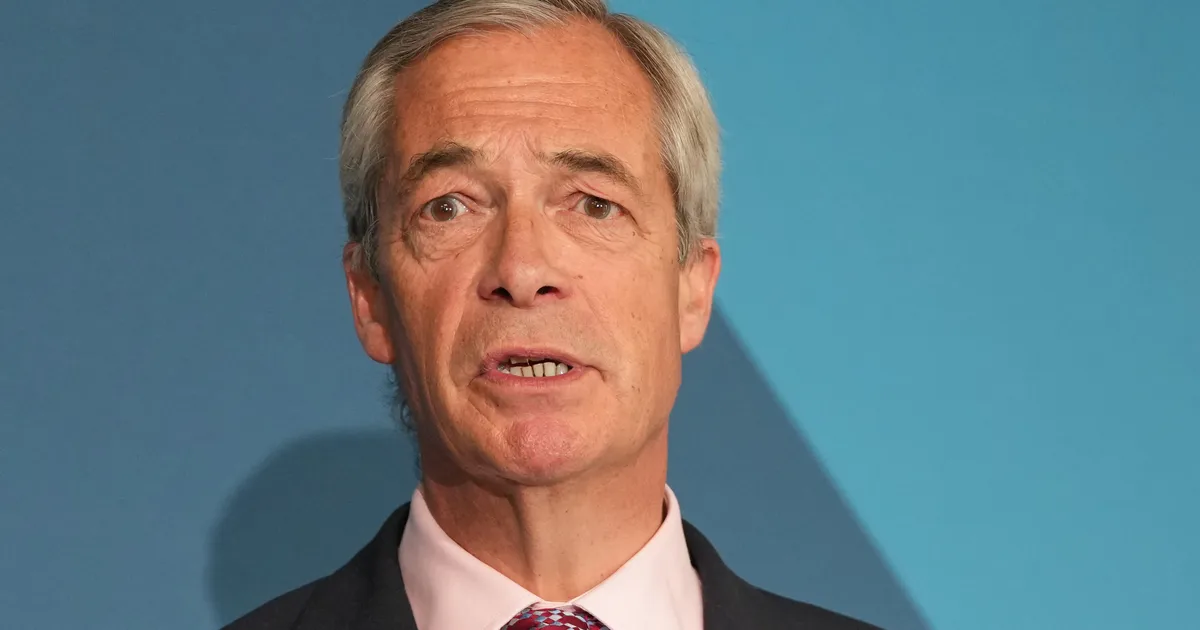
Nigel Farage has been described as “completely unfit for high office” after a fresh report claimed he may have broken parliamentary rules by not declaring benefits from an ally.
The Sunday Times says the Reform UK leader received support, including security and social media staff, from George Cottrell in the year leading up to Farage’s election as the MP for Clacton.
Cottrell was convicted of fraud in the US back in 2017.
The newspaper alleged Farage also used a property rented by Cottrell near Buckingham Palace.
All MPs must declare gifts or benefits worth over £300 to parliament dating back to the year before they are sworn into the Commons.
The guidelines add that purely personal gifts or benefits do not need to be registered.
The revelation comes as the Clacton MP is already facing a parliamentary sleaze probe for failing to declare a £5 million donation from a crypto-billionaire shortly before he decided to run for parliament.
Farage has offered differing explanations for the lump sum. He initially claimed it was to fund security, then alleged it was a reward for Brexit campaigning and finally told the media it was “none of your business” and he could spend the money on “Ferraris” if he wanted to.
His team have argued “no parliamentary rules have been broken” over Farage’s association with Cottrell, either.
Responding to the new report, a Labour Party spokesperson said: “Nigel Farage and Reform are engulfed in a huge and growing scandal.
“It’s not going to go away, and trying to take the public for fools by saying it’s ‘none of your business’ won’t help.
“These new allegations of secret payments from a wealthy convicted criminal are on top of the ongoing scandal of his secret £5 million gift from a crypto billionaire.
“How much money has he been given, what did his donors get in return, and why has he tried to cover them up and avoid legitimate questions?
“Time and again Farage pretends to be on the side of working people.
“In reality he’s just in it for himself and can be bought by the highest bidder. He’s completely unfit for high office.”
Farage did register a £9,253 trip to Belgium in April 2024 donated by Cottrell, and added later a £15,276 donation for a US domestic flight from December 2025.
A spokesman for Farage hit back at the report, claiming: “It comes as no surprise that the Sunday Times has chosen to publish this baseless and contrived story, covering a period of time when Nigel Farage was not even an active politician let alone an elected one, given that the newspaper backed the Labour Party at the last general election.
“Contrary to the story’s tone, no parliamentary rules have been broken.”
Listen to Commons People, the podcast that makes politics easy. Every week, Kevin Schofield and Kate Nicholson unpack the week’s biggest stories to keep you informed. Join us for straightforward analysis of what’s going on at Westminster.

In a recent report about the “fibre gap,” the British Nutrition Foundation (BNF) said that only about 4% of us eat the recommended 30g of fibre a day.
They added that the report identified “several priority areas for action,” including a “health by stealth” approach to improving people’s diets.
But what does that mean, and how can we achieve it?
Here, HuffPost UK spoke to Bridget Benelam, a nutrition scientist with BNF, about the term.
What is “health by stealth”?
It’s a way of making your diet better for you without you really noticing.
Benelam told us, “It’s mostly used to talk about industry reformulating products – e.g. reducing salt and sugar, or adding extra fibre to things like bread or pasta so that people get healthier food without having to change their habits”.
One example might be zinc added to breakfast cereals or flour enriched with folic acid.
These aren’t individual choices consumers consciously opt for – they come from policies or industry changes many of us never realise have been made.
But, the nutrition expert continued, “it’s a concept that could be applied at home by making small, manageable changes”, too.
If you want to consume more fibre, for instance, she said you could take barely-noticeable steps like “adding beans or lentils to every day dishes like bolognese sauce or curry, adding brawn to your usual white rice, [or] swapping white for 50:50 bread”.
You might be surprised by how far little changes can go. One study found that eating a meagre half-portion more of fruits or vegetables a day, when combined with minutes more sleep or exercise, could add a year to our life.
And while eating the recommended 30g of fibre a day is linked to an impressive array of health benefits, advantages start much sooner.
For every 7g of fibre you eat daily, you may enjoy an 8% reduction in bowel cancer risk, a 9% reduction in heart disease and heart attack risk, a 7% reduction in stroke risk, and a 6% reduction in type 2 diabetes risk.
That’s the equivalent of two slices of wholemeal toast.
Try “choice editing,” too
“Health by stealth” can involve adding nutrients to your diet you wouldn’t have otherwise. But it might also mean taking some foods away from easy reach, Benelam said.
“You can also do something that scientists call ‘choice editing’, where you make healthier choices more obvious and available – e.g. having veg ready prepared for snacks, having a fruit bowl in reach and either not having or putting less healthy foods out of sight/reach,” she suggested.
“It’s also something that parents could think about with kids meals to encourage extra fibre/veg.”
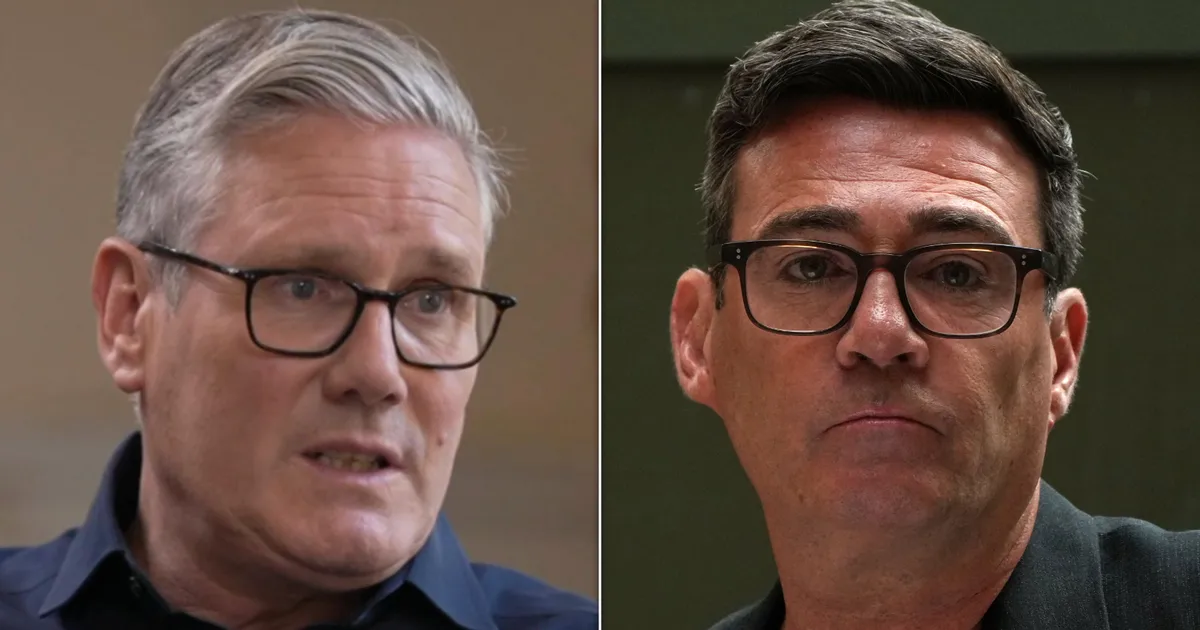
Keir Starmer has issued a warning to his expected successor Andy Burnham over his approach to foreign policy.
The outgoing prime minister, who was dubbed “never here Keir” by his critics due to his frequent trips abroad, reminded the new MP for Makerfield that he will have to put the same effort into international relations.
He claimed internal issues, like the rising cost of living, are linked directly to the UK’s standing on the world stage.
Burnham, who is currently running uncontested to be the next PM, is expected to focus more on his domestic agenda when he gets into No.10 on July 20.
Speaking to the BBC, Starmer said: “If you’re prime minister and you care about what bills are going to be like in any part of the country, you have to care about finding a lasting solution to the situation in Ukraine, you have to care about what happens in the Strait of Hormuz.”
Vladimir Putin’s illegal invasion of Ukraine meant European allies stopped buying Russia’s cheap oil exports.
Meanwhile, the US-Israeli strikes on Iran saw Tehran close the Strait of Hormuz, a major shipping lane which transports a fifth of the world’s oil supply.
A strain on international fossil fuels subsequently pushed prices up all over the world, including in the UK.
Starmer said he is “proud” that the UK has been a crucial part in dealing with both of these crises.
“I’m proud that the UK is now regarded as a leader, that other countries look to and want to engage with, and that is in our best interests here at home,” he said. “It’s not sensible to think we can just separate these two things out.”
He added: “The suggestion that in the modern era you could simply split up international and domestic… it just doesn’t make sense, it isn’t true, it isn’t right.”
“Whoever’s my successor is going to face the same global conflict,” Starmer continued. “We keep saying, and it’s true, we’re in a more dangerous and volatile world than we’ve been in for probably most of my lifetime. That’s not just a phase, that’s reality.
“That’s not going to change. And the domestic challenges aren’t going to change.”
Burnham has dodged a lot of scrutiny since winning a seat in parliament by not holding any press conferences.
He invited the public to ask him anything during a Reddit forum on Friday, where he said he would “100%” give the same amount of support to Ukraine as Starmer and wanted to continue his efforts to broker a closer EU relationship.
However, he did not answer any questions about his approach to Donald Trump.
Starmer has committed to staying on as MP for Holborn and St Pancras but promised to “keep my mouth shut” when his replacement takes over, adding that he has “always got on” with Burnham.
The outgoing prime minister had vowed to stay in post after Burnham won the Makerfield by-election last month, but – amid growing pressure from his party – U-turned three days later.
He told the BBC that it was a “really, really tough” decision, adding: “Taking the decision that your political career is over, it is an intensely personal matter, or at least it was for me. I wanted to do that with [my wife] Vic, and that’s what I did.”
Listen to Commons People, the podcast that makes politics easy. Every week, Kevin Schofield and Kate Nicholson unpack the week’s biggest stories to keep you informed. Join us for straightforward analysis of what’s going on at Westminster.

President Donald Trump on Friday railed against communism during a bizarre speech at Mount Rushmore.
But as critics were quick to point out, his definition of what “communists” do sounds a lot like what he, his family and his associates have been accused of doing since he returned to the White House last year.
“Our American ancestors did not shed their blood at Concord and Trenton, Gettysburg and Shiloh, Midway and Normandy, just so that a band of thieves, radicals and lunatics could come in and loot, pillage our nation,” Trump said days after financial filings showed he earned more than $2 billion last year.
The Wall Street Journal editorial board this week accused Trump and his family of “profiting off the presidency in ways that demean the office.”
Trump’s windfall includes more than $1 billion from his crypto businesses ― money he pocketed, while The New York Times reported that some 764,000 other crypto wallets suffered massive losses.
The president has also struck gold by buying stocks in companies just before his administration announces decisions favourable to those firms.
“The Trump clan is cashing in on the Presidency in big and sketchy ways,” the Journal said.
Meanwhile, Americans have been struggling with a spike in the inflation rate ― something Trump dismissed only last month.
“I love the inflation,” the president insisted.
Trump’s speech was full of other lines about supposed “communists,” a word he is turning to with increasing frequency. The president has been falsely calling everyone who disagrees with him a “communist” as he tries to drum up Red Scare tactics. The move comes amid a deep plunge in his approval ratings and an increasing likelihood that his party will lose the House and possibly even the Senate in November’s midterm elections.
But it was his line about looting and pillaging ― which comes amid his own massive increase in wealth ― that had everyone pointing the finger right back at the president:
Listen to Commons People, the podcast that makes politics easy. Every week, Kevin Schofield and Kate Nicholson unpack the week’s biggest stories to keep you informed. Join us for straightforward analysis of what’s going on at Westminster.

It’s been 25 years since Elle Woods got into Harvard, introduced the world to the bend and snap and taught us all to never judge a book by its cover.
Legally Blonde premiered in 2001, becoming an instant hit with fans, inspiring viewers all around the globe and catapulting Reese Witherspoon to the A-list.
After Elle first donned her pink courtsuit, Legally Blonde became a global phenomenon, spawning a 2003 sequel, a Broadway musical and countless memes.
Now, the iconic character is back on our screens in the new prequel series Elle, which explores the iconic character’s life as a 16-year-old in Seattle in the 1990s.
To commemorate 25 years since the release of Legally Blonde, and the premiere of Elle on Prime Video, here are 21 behind-the-scenes facts you might not have known about the cult classic…
Elle Woods was loosely inspired by the author of Legally Blonde novel, and her real-life experiences at law school
The Reese Witherspoon film is based on a 2001 novel by Amanda Brown – also called Legally Blonde – which itself was inspired by her own life at Stanford.
The author shares more than a passing resemblance to Elle, admitting to the San Francisco Chronicle: “I wanted to go to Stanford when I saw the mall.”
During her first week at Stanford Law, she realised how difficult it was to find another woman who shared her interests in fashion and shopping. So, she started writing letters home, lampooning her lecturers and students. These 300 pages became the basis of her book.

Tracy Bennett/Mgm/Kobal/Shutterstock
“I was sitting in tort class when the novel popped into my head,” recalled Amanda Brown to Stanford Magazine. “I wanted to do a parody of law school.”
“I wrote it all on pink paper, with my pink furry pen,” Amanda told the SF Gate in 2003, claiming she “finally found an agent” when they picked out of a pile of manuscripts solely “because it was on pink paper”.
Amanda self-published her book, but it soon found its way onto the desks of a production company, who then sent it to the team who would go on to write the Legally Blonde film.
“It immediately struck us as one of the greatest movie ideas ever, and we pitched it as ‘Clueless meets The Paper Chase’, one of those law school movies from the 1970s. I might have worn a lot of pink in the meeting,” writer Kirsten Smith said, as reported by The News Daily in an oral history article.
The original script for Legally Blonde had a very different message
Legally Blonde has become known as a modern-day feminist classic, addressing topics like misogyny, sexual harassment in the workplace and power dynamics between men and women. But, the original script was much raunchier and had far less of a positive female-empowerment message.
“The first script was very raunchy, to be honest, in the vein of American Pie,” Jessica Cauffiel, who plays Margot, told The New York Post in 2021.
“What we know now as Legally Blonde, and what it began as are two completely different films. It transformed from nonstop zingers that were very adult in nature to this universal story of overcoming adversity by being oneself.”
The writers also explained there were a few other differences between the original manuscript and the final product.
“It wasn’t a murder trial, and she ended up with a professor, so we made some changes. It was a matter of finessing the details and adding a few characters, like Paulette and her friendship,” screenwriter Karen McCullah explained in that same interview.
There’s a reason that Elle Woods attended Harvard rather than Stanford

In the Legally Blonde book, Elle attended Stanford, like its author. However, this was changed in the film adaptation, for the simple reason that the university wouldn’t let filming take place there.
The university has long implemented a no-filming rule due to “year-round campus activity” and in order to protect “the privacy and safety of its students, faculty and staff.”
After being turned down by Stanford – where, ironically, Reese Witherspoon also studied – the producers approached USC, which rejected the offer, telling Vulture that there was “too much stereotyping going on” in the script for their liking. The team then reached out to UCLA, Yale, and the University of Chicago — all of whom also wanted nothing to do with Elle Woods.
Finally, Harvard agreed to being mentioned in the film, although they didn’t want the movie filmed there.
If you think the film’s campus looks sunny for Massachusetts, where Harvard is actually situated, that’s because the movie they filmed at institutes in California.
While USC and UCLA didn’t want to be associated with Elle, they were happy for the filming to take place on their campuses all the same.
Reese Witherspoon and Jessica Cauffield spent time with a sorority to prepare for their roles
“We [talked] an entire sorority into going out to dinner at a Mexican restaurant. Reese offered to buy them free margaritas all night,” Jessica recalled to the New York Post.
“She leans over to me as the drinks are on the way and goes, ‘We’re not drinking anything. We’re drinking water’. We stayed sober as they got tanked, and we took notes.”
In a 2001 interview with Entertainment Weekly, Reese called her time with the sorority girls “an anthropological study”.
“You learn what they eat, how they behave, how they take care of their young, that sort of thing,” she quipped. “Seriously, though, I’ve learned that people don’t know what their worst characteristics are.”
She added: “It’s inherent to our nature that we don’t know what, in ourselves, is abhorrent to other people. So it’s really easy to infiltrate people’s lives. They showed all sides of themselves. Sometimes I’m shocked, like, I can’t believe they just said that to me!”

Tracy Bennett/Mgm/Kobal/Shutterstock
The infamous bend and snap move was created on a whim
Jennifer Coolidge co-starred in the movie as Elle’s manicurist turned BFF Paulette.
In one of the decade’s most iconic film moments, she tries the infamous “bend and snap”, a move which “has a 98 percent success rate of getting a man’s attention”, according to her trainee lawyer friend.
Legally Blonde’s writing team have revealed to Entertainment Weekly that they invented the famous move at the L’ermitage Hotel bar in Beverly Hills over some drinks.
“We were in between meetings and working on the script,” writer Karen McCullah recalled. “And we were trying to come up with a B-plot that happened in the nail salon and we were working in weird directions. Like, maybe it gets robbed, all sorts of crazy stuff.”
The writing duo then realised that they were overthinking the moment, which is when the “bend and snap” was invented.
“Kirsten jumped off her barstool and was like, ‘Like this?’ And then she did that move,” Karen said, revealing that the team came up with the “bend and snap” name the spot.
“It just cracks us up that that’s become such a lasting thing that people remember. It’s literally the silliest thing in the movie,” Karen added.
Legally Blonde’s bend and snap scene had a very famous choreographer behind it
The now-iconic move was choreographed by 80s icon and Mickey singer Toni Basil.
“I choreographed iconic things for David Bowie and Tina Turner,” Toni told The New York Times in 2021. “People interview me and they go, ‘You did the bend and snap?’ It’s like, ‘what, a one-and-a-half-minute number in the movie?’. But it was such an integral part.”
The original idea was for the bend and snap to be a full-length musical number, but this was eventually shortened for the final cut.
Ultimately, Reese explained, “it just felt odd” to have a full bend and snap number, “because there was just one musical sequence”.

Tracy Bennett/Mgm/Kobal/Shutterstock
Legally Blonde was not written with any specific actor in mind to play Elle
Screenwriters Karen McCullah and Kirsten Smith didn’t picture any specific star in mind when adapting Amanda Brown’s book.
However, they were delighted when Reese Witherspoon signed on to play the lead, as she was a rising star at the time, having already appeared in Election and Cruel Intentions.
“We loved her in Freeway. She had so much moxie in that,” Kirsten told Business Insider. “She had the perfect balance of comedic ability, the intellectual vibes, and the real dramatic chops, too. She’s the entire package.”
Reese Witherspoon admitted the auditioning process for Legally Blonde was not the most positive experience
Reese doesn’t look back too fondly on her Legally Blonde audition, explaining to The Hollywood Reporter in 2019 that her manager told her to dress sexy, to differentiate her from her “shrew” character from Election.
After a string of failed auditions and missed roles, her team had an idea.
“My manager finally called and said: ‘You’ve got to go meet with the studio head because he will not approve you. He thinks you really are your character from Election and that you’re repellent,’” she explained.
During the audition process to play Elle, Reese had to speak to studio execs while in full glam.
“I remember a room full of men who were asking me questions about being a coed and being in a sorority, even though I had dropped out of college four years earlier and I have never been inside a sorority house,” she recalled.
Another A-lister was almost cast as Elle Woods before Reese Witherspoon, but turned it down

Dead To Me star Christina Applegate admitted she rejected the lead role in Legally Blonde, calling the decision a “big fucking mistake”.
In a 2023 interview with Vanity Fair, Christina said she turned it down as the role was too similar to her famous sitcom character in Married With… Children.
“I wouldn’t toy with the idea of Legally Blonde because it felt too fresh getting out of Married…With Children,” she explained, referring to her dumb blonde character Kelly Bundy in the family comedy. “It was very similar on paper.”
She joked that she would have “Witherspoon money” now if she had signed on to the role, but conceded: “You can’t imagine anyone playing Elle Woods other than Reese Witherspoon? I would have completely screwed it up.”
Interestingly, both Christina and Reese went on to play sisters of Jennifer Aniston’s Rachel in Friends, although they never shared the screen in the award-winning sitcom.
Meanwhile, a famous pop star was also considered by the producers
Producer Marc Platt put Britney Spears’ name forward as a suggestion when Christina Applegate turned down the part.
“Marc once [mentioned] Britney Spears, and I was like, ‘No, that’s not a good idea’,” writer Kirsten Smith revealed. “I think she hosted SNL the night before, and his kids were into her, so he threw her name out there.”
While Britney writes about being offered roles in Chicago and The Notebook in her autobiography, The Woman In Me, she never mentions Legally Blonde, so it could be that the pop diva was unaware her name was ever on the table.

Chloe Sevigny was among the stars who turned down a part in in Legally Blonde, too
Selma Blair’s performance as the “frigid bitch” Vivian Kensington is now considered iconic, but another actor almost wore those infamous pearls.
“I remember talk about getting Chloë Sevigny to play Vivian,” screenwriter Kirsten recalled to The New York Times. “That didn’t work out, and we ended up with our queen Selma Blair.”
She noted that “Selma and Reese were close, because they had done Cruel Intentions together”, meaning their friendship served as a “great anchor for everything” on screen.
“I was the last person cast, and I remember Chloe Sevigny passed,” Selma also told Entertainment Weekly.
“Her fingers are much too elegant; they needed someone with a bony little finger,” the actor joked.

Jennifer Coolidge apparently thought she was auditioning for the role of Elle
Reese Witherspoon and Jennifer Coolidge recently reunited for a 25th anniversary catch-up, where they shared their experiences of working on the film.
During this chat, they spilled some gossip, including why Jennifer auditioned for the movie.
“I thought this was the funniest thing. I was so lucky to get cast in this movie, and it is one of my favourite jobs of all time,” she recalled, joking: “But I stupidly thought that when I was auditioning, I thought I was gonna be Elle.”
Before Jennifer Coolidge was cast in Legally Blonde, a rock legend was apparently in consideration for her role
Jennifer Coolidge’s gives an iconic performance as Elle’s beautician, but she wasn’t their first choice.
In The New York Times’ piece on Legally Blonde, Jennifer shared some of the other actors she’d heard were in the line-up to play Paulette.
“I don’t know if they’re true [but I heard] that Courtney Love was up for [my] role,” she claimed. “I heard Kathy Najimy was up for it, [too].”

Alanna Ubach had a creative way of impressing casting directors to land the part of Serena
Future Euphoria star Alanna Ubach used an unusual tactic to land the role of Elle’s sorority sister.
Jessica Cauffiel had already been cast as fellow Delta Nu Margot when she met Alanna in the bathroom during a chemistry read.
“She’s like, ‘Hey, hey, are you in this movie?’” Jessica recalled during the virtual 20th anniversary reunion.
Jessica then claimed that Alanna begged for help booking the job, telling her: “I don’t have any money, I need to make rent, will you help me make rent?”
“She was so funny and so ballsy, I said, ‘Okay’,” Jessica continued.
From there, the two put their heads together and “choreographed simultaneous moves”, which Jessica made the casting directors think they were naturally in sync.

Tracy Bennett/Mgm/Kobal/Shutterstock
The Legally Blonde writing team only had one actor in mind for the role of Emmett, Elle’s love interest
“We spent a lot of time faxing the casting director, like ′Luke Wilson, Luke Wilson!’” Kristen explained.
“And then, finally, after the table read where a different actor played Emmett, we were like ‘Luke Wilson, Luke Wilson!’. And he was like, ‘That’s a really good idea.’ We were like, ‘We’ve been telling you!’”
Luke was subsequently offered the role without even needing to audition.

Tracy Bennett/Mgm/Kobal/Shutterstock
The actors added their own flourishes to the script
While the Legally Blonde script didn’t leave a lot of room for improvisation, the screenwriters recalled to Business Insider that the cat still found room to add a personal touch to their characters.
During rehearsals, Jason Christopher came up with the line “you bitch!” – which his character shouts after his boyfriend Enrique denies their relationship in his testimony.
The screenwriters also revealed that it was Alanna Ubach’s idea to speak fluent Vietnamese at the nail salon.
“I thought, ‘How funny would it be if we frequent this nail salon so much that I’ve been immersed in Vietnamese and I’ve picked up the language?’” the actor said.
Life as a new mum took was taking its toll on Reese Witherspoon while shooting Legally Blonde
Reese took on the role of Elle Woods just months after welcoming her daughter Ava in September 1999. As a result, while she looked fresh and bright on camera, she didn’t always feel that way.
“Some nights Ava would wake up screaming because she had the flu, and I would spend most of the night trying to rock her back to sleep and then have to be on the set at seven in the morning for make-up!” she explained to Cinema.com in 2001.
“And then you throw in the fact that I’m supposed to be playing a very bubbly and energetic California preppy who is smiling all the time!”
“I kept thinking, ‘I’m going to kill myself! I’m never going to make it!’” she joked.

Tracy Bennett/Mgm/Kobal/Shutterstock
Another famous face was supposed to make a scene-stealing cameo
While putting Legally Blonde together, screenwriter Kirsten had read an article which said that video applications were the done thing when trying to impress professors at places like Harvard – and they wanted Elle’s to be extra special.
“We wanted to shoot [Elle, Serena and Margot] chasing Judge Judy wherever she tapes her show and them being like, ‘Judge Judy! Judge Judy! Can we get an autograph?’ Kirsten said. Unfortunately, the team couldn’t get the real-life judge on board, so the idea was ditched.
Alanna Ubach’s alternative idea was also cut.
“I thought, ‘Reese, what if Ryan Phillippe played a really famous judge who had his own show, and we have him on billboards’,” the actor said of Reese’s then-husband.
Reese wasn’t keen on the idea of adding her partner to the film, though, reportedly telling her: “Alanna, no one’s going to believe that my husband’s a judge. Are you kidding me?”
Matthew Davis, who plays Warner, admitted he had a major crush on Reese Witherspoon, which affected his performance somewhat

Tracy Bennett/Mgm/Kobal/Shutterstock
In a 2001 interview with Movieline, Matthew admitted he acted like a “bumbling idiot” around his co-star because of his crush – despite her being married to Ryan Phillippe at the time.
“At first I was such a bumbling idiot with her, the producers pulled me aside one day to see if I was OK,” he revealed.
When the actor later confessed his feelings to the Election star, she let him down gently.
“She was like, ‘That’s so sweet!’,” he explained. “OK, let’s work on the scene…’.”
In hindsight, Matthew admits his behaviour on the set of Legally Blonde wasn’t always the most professional.
“I felt starstruck by all this because it happened so quickly and I hadn’t adjusted,” he told Teen Vogue in 2017. “I definitely wasn’t cool. At the first table read, I just kept going on and on about how much I loved her work, fawning all over her.”
Matthew told News.com.au that he also “adored” his on-screen girlfriend, Selma Blair, during filming.
“I developed a crush on her at the time but she was with someone else — I think she was dating the guy from Rushmore [actor Jason Schwartzman] but he was coming around and I was kind of like ‘who is this guy?!’” Matthew shared.
Legally Blonde almost had a sapphic happy ending
Legally Blonde famously ends with Elle freeing her client, graduating at the top of her class, becoming best friends with her former nemesis and staying with doting boyfriend Emmett.
However, the cast told The New York Times that the ending in the script was markedly different.
“The first ending was Elle and Vivian in Hawaii in beach chairs, drinking margaritas and holding hands,” said Jessica Cauffiel. “The insinuation was either they were best friends or they had gotten together romantically.”
Another alternative ending for Legally Blonde didn’t go down too well with test audiences

Tracy Bennett/Mgm/Kobal/Shutterstock
At the 2015 Vulture Festival, the screenwriters revealed that their original script wrapped at the courthouse right after Elle won the case, with her and Emmett kissing on the steps.
“It was just kind of a weak ending,” Karen McCullah admitted. “The kiss didn’t feel right because it’s not a rom-com — it wasn’t about their relationship.
“So test audiences were saying, ‘We want to see what happens – we want to see her succeed.’ So that’s why we rewrote for graduation.”
“We screened the movie two or three times, and every time people didn’t want to end it with a kiss,” she also explained to the New York Times.
“They thought it wasn’t a story about [Elle] getting a boyfriend, which was really cool to have people say that.”
An interesting part of this axed ending would have fast-forwarded to a year later, with Elle and a now-blonde Vivian starting their own Blonde Legal Defence Club at Harvard Law School.
“There was an ending that Vivian was blonde, and I did [go blonde],” Selma admitted to the podcast Shut Up Evan. “I have the Polaroids. I looked just like Faye Dunaway in Bonnie And Clyde – the beret was on and the blonde.”
Legally Blonde is now streaming on Prime Video, as are the first episodes of Elle.

Gavin McKenna switches to No. 92 after Sergei Bobrovsky takes his number
Router Brands Could Be Misleading You With That Wi-Fi 7 Label

England security reveal Mexico fans’ noisy late-night hotel siege FAILED to rattle Thomas Tuchel’s side ahead of crunch last-16 World Cup clash – as amused players joke the atmosphere is more hostile at Everton!

No Jackpot Winner as $257 Million Prize Rolls Over to $269 Million Monday Draw

Renter of Home in Anne Heche Crash Denies Settlement With Son

Weekend Open Thread: Staud – Corporette.com

The One Belief That Guarantees Financial Failure #wealthmindset #personalfinance #moneypsychology

Trump Tells Crypto Investors To Buy THESE Specific Altcoins To Get Rich

Can Elon Musk be the biggest financial winner and loser?
-

 Fashion2 days ago
Weekend Open Thread: High Hopes
-

 Politics2 days ago
The House | “Reframing the debate from a binary discussion of winners and losers”: Yuan Yang reviews ‘We Are Not Machines’
-

 Crypto World5 days ago
Strategy authorizes up to $1.25B in Bitcoin sales under new capital plan
-

 News Videos7 days ago
MAJOR BITCOIN & MARKET UPDATE!!!! (MUST WATCH ASAP!!!)
-

 Tech5 days ago
Anonymous researcher drops 0-day ‘exploitarium’ repo
-

 Business5 days ago
Australia treasurer says alleged access of prime minister’s bank data ’incredibly concerning’
-

 News Videos5 days ago
How to Build INSANE Live Financial Dashboards With Claude
-
 NewsBeat6 hours ago
Taylor Swift and Travis Kelce wedding staffer hilariously struggles to keep her cool while checking in megastars
-
 Business6 days ago
The AI boom won’t burst all at once. It will pop in ‘rolling bubbles’: Macquarie
-

 Sports4 days ago
Broncos roster: OL Ben Powers (No. 74) entering final year of contract
-

 NewsBeat4 days ago
Presenter Caroline Flack’s brother Paul Flack dies aged 55
-

 Crypto World3 days ago
Binance stock trading tops $1B in first month after launch
-

 Crypto World3 days ago
Alibaba-affiliate Ant Group enters the humanoid robot market with 12 deals
-
 NewsBeat3 days ago
New exhibition reflects five decades of movement between island of Ireland and GB
-

 Business2 days ago
What a 10 Percent Drop Means for Buyers, Sellers and Renters
-

 Business3 days ago
Meta Platforms Stock Jumps 7% Today as Bloomberg Reports Company Plans to Enter the Cloud Business
-
 Crypto World4 days ago
Airdrop Registration Becomes Key Focus For Remittix As RTX Launch Updates Approach
-

 Crypto World2 days ago
Binance Re-Enters Philippines As EU MiCA Rules Restrict Access
-

 Crypto World2 days ago
Standard Chartered Secures MiCA License as ESMA Adds 37 New Crypto Firms
-

 Tech6 days ago
The attack that hijacked Claude Code came through Sentry. Datadog, PagerDuty, and Jira have the same exposure.
You must be logged in to post a comment Login