

Politics
Trump’s grip on the party threatens his grasp of Congress



President Donald Trump has finally delivered on his promise a decade ago: He has made Republicans “so sick and tired of winning.”
The winning — a series of retributive primary challenges this month that settled scores up to five years old — has led to a fresh round of chest-thumping from MAGA allies boasting about their victories in Indiana, Louisiana and Kentucky.
Trump ended his vendetta spring Tuesday by dropping a two-stage MAGA bomb, backing Attorney General Ken Paxton for Senate in Texas on the same day he ushered Rep. Thomas Massie to the exits in Kentucky.
But the revenge tour is increasingly imperiling Trump’s midterm agenda on the Hill.
That’s because for every apostate ousted by Trump this month, there’s a sign of not only his waning political capital on the Hill, but that his backward-focused endeavors have damaged his own legislative ambitions, leaving him a victim of his own primary success.
“Those so-called victories over the last couple weeks are just a mirage. They are self-owns,” said one senior Senate Republican operative, granted anonymity to speak candidly about frustration with the White House. “We’re not actually beating Democrats, and we’re not actually advancing legislation. Instead, gas is up 45% due to our actions and the President’s decision to go to war with Iran. He’s focused on the ballroom. He’s announced a $1.8 billion restitution fund with zero details or congressional authority to do so. It just is crazy.”
In just one day, a conquered — and, consequently, unbridled — Sen. Bill Cassidy joined Democrats to become the 50th yes vote on a war powers resolution, opposed Trump’s ballroom funding in reconciliation and called Trump’s freshly picked Paxton a “felon.” And that was just day three of Cassidy unchained.
Cassidy is not alone. Trump’s ballroom funding is stalled, the SAVE America Act is mired in the Senate and Majority Leader John Thune is pushing back on his desire to fire the parliamentarian. That’s not to mention the pushback even from the likes of the friendlier senator from Louisiana, John Kennedy, who expressed doubt about the Justice Department’s $1.8 billion Anti-Weaponization Fund.
“There are still many, many months to go before the election, and this president is going to have to continue to deal and work with, and partner with, or battle with this group of lawmakers,” Sen. Lisa Murkowski of Alaska told reporters Tuesday. “Even though Bill Cassidy lost his primary, he is still a voting member of the Senate until January. … So the president may have just opened some opportunities for people.”
Now Cornyn could join their ranks. After Trump endorsed Paxton, the senior Texas senator faces increasingly slim chances of surviving next week’s runoff election. Should he lose, Cornyn will be liberated to vote his conscience — unmoved by threats of further political vengeance from Trump — for the final months of his term.
“What is the return on investment for Trump?” said Greg Lamantia, a Texas businessman who supports Cornyn, about Trump’s Paxton endorsement. “I don’t understand why you take this risk, versus sitting back and doing nothing. Now you’ve created an enemy for six months, when you have a razor-thin majority.”
The White House did not respond to a request for comment.
Come November, if Paxton loses to state Rep. James Talarico, this week and Trump feeling himself after victories in Indiana and Louisiana could be remembered as the week where he overreached.
“Some of the issues I hear about when I’m at home in the grocery store, in the hardware store, are not the same issues we’re talking about in Washington, so I think it’s really important that we prioritize what people are talking about,” said Sen. Cynthia Lummis (R-Wyo).
That daylight between Trump’s priorities and the top issues for voters is widening. The economy and cost of living remain voters’ top priorities, even as patience for the Iran war wavers. And though Trump has flexed his electoral muscle in primary after primary, his endorsement may hurt more than it helps in battleground races this November, according to a recent analysis from The POLITICO Poll.
“It seems to me his agenda is mostly vengeance,” said former Sen. Jeff Flake (R-Ariz.), who spent 15 months as a vocal Trump critic after deciding not to run for reelection during Trump’s first term. “It’s not just those that he’s going after he’s gonna have to deal with — Massie and Cornyn and Cassidy — it’s anybody who’s gotten past the filing deadline, or past their primary, and realizing that supporting a lot of what he wants is not good for the general election.”
At the end of a month that put on full display Trump’s dominance over his own party, his season of settling scores may not have advanced the ball toward November.
That dynamic could pose a problem for Republicans, Missouri Sen. Josh Hawley told POLITICO. “Congress doesn’t do much,” he said.
“In November, voters are going to say to Congress, ‘What have you done for me?’ And it’s not going to be enough to say that, ‘Well, you know, we liked some stuff President Trump did, but we didn’t do any of it,’” Hawley said. “I mean, we better do some stuff.”
What does it mean that Trump has vanquished his foes at the expense of his own agenda?
“It means President Trump and his team have completely lost sight of how DC operates and why the American people elected him in the first place,” said the senior Senate Republican operative.
Last year, chief of staff Susie Wiles told Vanity Fair that she had a “loose agreement that the score settling will end before the first 90 days are over.” That was 395 days ago.
Dasha Burns and Ali Bianco contributed to this report.


Owning a pet, be it a cat or a dog, has previously been linked to lower heart disease risk. This is especially true for cat owners aged between 40 and 64.
Our feline friends may also reduce stress and boost our mood.
As if they don’t do enough for us already, researchers from the University of Bath, Auburn College of Veterinary Medicine in the US, and École Nationale Vétérinaire de Toulouse in France have said they might help us to age better too.
Why might cats help us to age better?
Their paper, published in the journal Biology Open, reads: “Pet cats may inform human ageing since humans and cats age similarly and they develop health challenges that mirror those observed in humans”.
Unlike a lot of lab animals, they added, cats tend to live long enough to develop age-related brain changes, like those seen in humans.
And, on the flip side, because they live a lot shorter lives than us, we can study their ageing at a much faster rate than we could in people.
The researchers used a biological model which looked at how multiple species age at a physical level.
They tracked 3,754 data points – like MRI (not CAT, sadly) scans, blood samples, and developmental milestones – gathered across human, cat, and other mammal species.
They found that cat and human brains seem to age remarkably similarly. Both species experience age-related neurodegeneration.
Like us, cats age in bursts. And they reach the equivalent of human old age: a teenage cat is the rough equivalent of a person in their 80s, ageing-wise.
“It was interesting to see that cats show patterns of age-related brain atrophy similar to those observed in humans,” said PhD candidate Brier Rigby Dames, who was involved with the research.
“These findings add to growing evidence that companion animals can provide valuable insights into ageing.”
Cat owners are increasingly requesting more detailed pet scans
Speaking to the University of Bath, the study’s co-author, Dr Ryan Gibson, said that more and more pet owners are sending their cats in for increasingly detailed scans as they age.
This, he said, might provide an exciting opportunity.
“This expanded clinical access creates meaningful opportunities for translational research (research that bridges the gap between scientific findings and healthcare), improving our understanding of aging and neurologic disease in ways that can benefit both feline and human patients,” he said.
For her part, Brier Rigby Dames said: “There’s potential to develop large-scale veterinary health databases for companion animals, analogous to human health databases such as the UK Biobank.
“These kinds of resources could enhance our ability to study ageing and disease using real-world clinical and owner-reported data collected across species.”
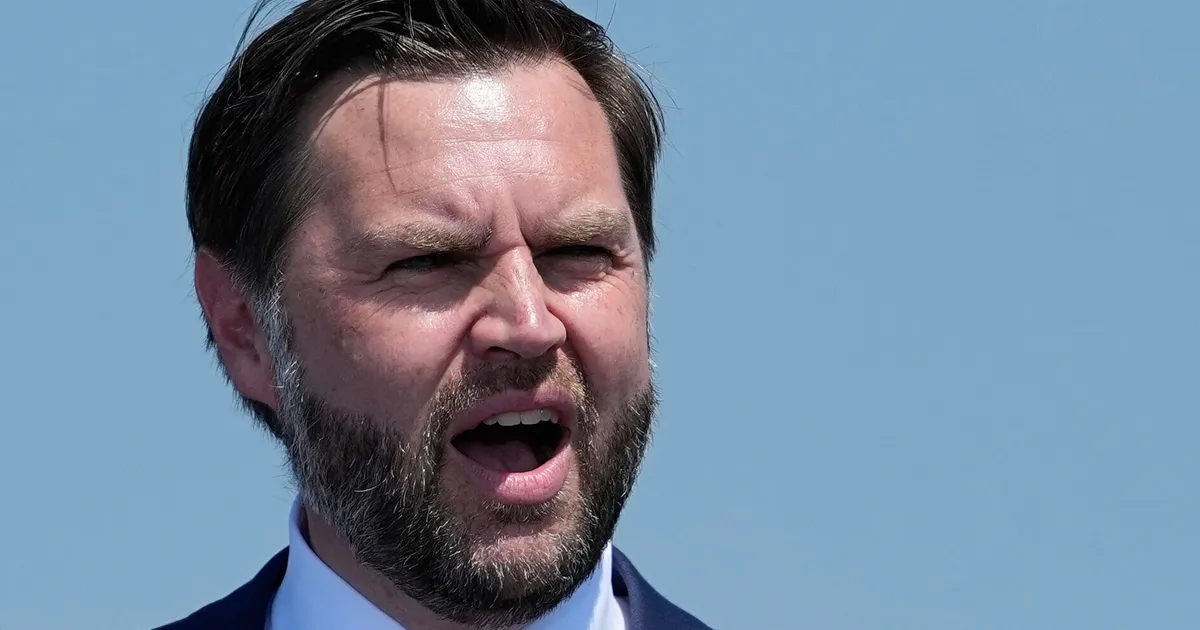
JD Vance has declared “something is very broken in British politics” as the UK prepares for its seventh prime minister in just over a decade.
The American vice-president said Britain “can do a lot more than it’s currently doing” to help its voters in a dig at the current prime minister.
Speaking two weeks before Keir Starmer is expected to hand the keys of No.10 over to Andy Burnham, Vance expressed alarm about the high turnover in Downing Street.
He said: “What that says to me is that something is very broken about British politics and that people are really crying out for significant structural change.”
He claimed he did not know much about the former Manchester mayor but added that the UK is “one of our closest and most important allies” and that the US administration would work with any new leader “as successfully as we can.”
Vance continued: “I hope that Andy Burnham – and if not Andy Burnham, somebody else – is able to deliver [change]. Because Britain is such a beautiful country, such an amazing place.”
Speaking on the 250th year of US independence, Vance claimed he is interested in the UK because of “reasons of mutual interest” and expressed hope that “whoever the prime minister is figures out how to get Britain back on track”.
“I also just care about it because Britain feels more culturally familiar to me than any country on Earth, aside from my own,” Vance said.
His words come after Donald Trump was significantly less diplomatic about Burnham.
The US president described him as an “extremely liberal” politician who “probably won’t open up” the North Sea for further oil and gas drilling.
He also called the former Greater Manchester mayor as “the mayor of a town”.
Burnham is yet to say what his approach to the mercurial president would be.
Starmer bent over backwards to forge a strong bond with Trump and even gave him an unprecedented second state visit to the UK.
However the two fell out after the prime minister refused to let the US use UK military bases to launch attacks on Tehran earlier this year.
Listen to Commons People, the podcast that makes politics easy. Every week, Kevin Schofield and Kate Nicholson unpack the week’s biggest stories to keep you informed. Join us for straightforward analysis of what’s going on at Westminster.
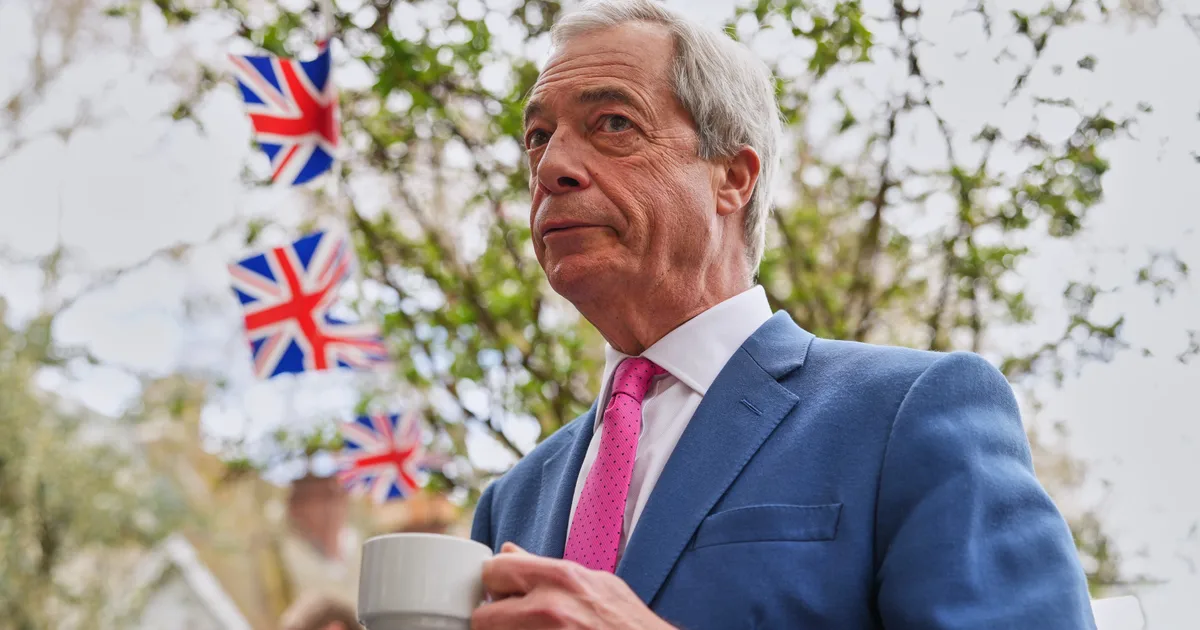
Dissatisfaction in Nigel Farage has increased over the last year amid growing scrutiny over his finances, according to a new poll.
Ipsos found almost two-thirds (63%) of Brits said they are “dissatisfied” with the Reform UK leader in June 2026 compared to 49% in June 2025.
That number far exceeds the number who are still satisfied in Farage – just 26% said they were happy with the Clacton MP this year, compared to 26% in 2025.
The findings come as the Clacton MP is under investigation for not declaring a £5 million donation from a crypto-billionaire shortly before he was sworn into parliament.
He insists he has not broken any parliamentary rules as the lump sum was not used for political purposes.
The Sunday Times has also revealed that Farage did not declare the support he received from convicted criminal George Cottrell prior to his election.
A Reform spokesperson replied: “Contrary to the story’s tone, no parliamentary rules have been broken.”
The party’s Treasury spokesperson Robert Jenrick also insisted on Sky News on Sunday that heightened scrutiny on Farage’s finances has not had an impact on their popularity.
Indeed, pollsters at Ipsos found 26% of Brits would vote for Reform if a general election were held tomorrow.
That means Farage’s party has held onto its comfortable lead in the opinion polls even during the heightened scrutiny.
However, Labour appears to have closed much of the gap behind Reform, and is just two points behind on 24%.
The party’s improvement in the polls comes amid speculation that Andy Burnham is going to take over from Keir Starmer.
Listen to Commons People, the podcast that makes politics easy. Every week, Kevin Schofield and Kate Nicholson unpack the week’s biggest stories to keep you informed. Join us for straightforward analysis of what’s going on at Westminster.
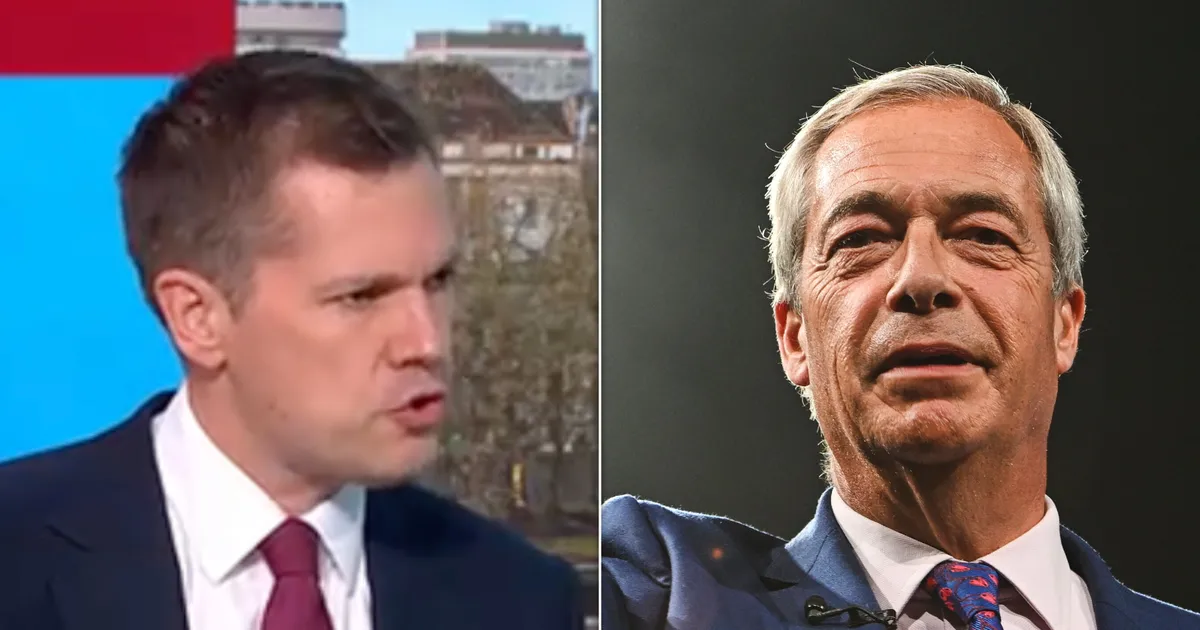
Robert Jenrick locked horns with Sky News’ Trevor Phillips this morning while jumping to Nigel Farage’s defence.
Reform UK’s Treasury spokesperson shrugged off a new report from the Sunday Times, which claims Farage did not declare support from convicted criminal George Cottrell when he became an MP.
The revelation comes while Farage is still under investigation from the parliamentary watchdog for not declaring a £5 million donation from a crypto-billionaire prior to winning his seat in 2024.
The party insists Farage has not broken the rules in either of these scenarios.
But Jenrick furiously collided with Phillips on Sunday when the presenter asked: “Is Nigel Farage now becoming more of a liability than an asset to Reform?”
“Don’t be silly, Trevor,” he said.
Phillips hit back: “You’ve lost half a dozen points [in the polls], you can barely hear a word out of your leader, he’s keeping a low profile.”
“Nigel Farage is keeping a low profile?” Jenrick scoffed. “Nigel Farage is out and about across the country, he was out in America in the last couple of days meeting the US vice-president.”
“To remind you, he’s a British MP!” Phillips replied.
“He’s also someone who is a leading character – likely to be the next prime minister,” Jenrick said.
“You still have to deal with the lingering questions if you like about the character of the party and the leader,” Phillips reminded him.
Jenrick also said “there’s nothing to see here” about the Cottrell revelations, and insisted Farage is “not going anywhere”.
He claimed the media “seem fixated on Nigel” but that technique is “not working” as Reform continues leading in the polls.
“Why not? You just told me he’s going to be the next prime minister,” Phillips said.
After more back and forth, Phillips said he was “astonished” Jenrick thinks it does not matter who Farage associates with and their background.
The Newark MP also denied Reform’s home affairs spokesperson Zia Yusuf had publicly undermined him during a public spat earlier this year.
Jenrick told Sky in May that a foreign national would not be deported “exclusively” if they live in social housing under a Reform government.
But Yusuf replied on X: “Robert’s answer is not Reform policy.
“As the person responsible for our deportation plan I want to ensure people know where we stand: if a foreign national lives in social housing at taxpayer expense, they automatically fail our economic test and will be deported.”
However, Jenrick insisted on Sunday that he and Yusuf are “basically on the same page.”
“No, you’re at different ends of the book. He said you were wrong!” Phillips said.
Jenrick insisted: “No. We’re saying two important things here. We’re saying social housing, which is a precious commodity of which we’ve got too little in this country, should be for British citizens – and that’s what Reform would do.
“Secondly, if you’re in the UK and you’re not a Brit and you’re living in social housing, you will not be able to remain in it because you will not meet the economic test.
“You’ll be given three months to find private accommodation and if you can’t, then I’m afraid you will have to leave the country.”
“So no divisions in the top team? Or, as some cruel people say, he’s bullied you into a tougher position?” The presenter asked.
“No, none at all,” he said, insisting they are a united team.
Listen to Commons People, the podcast that makes politics easy. Every week, Kevin Schofield and Kate Nicholson unpack the week’s biggest stories to keep you informed. Join us for straightforward analysis of what’s going on at Westminster.

You probably already know that running’s pretty good for us – it’s been associated with better heart health, stronger bones, better sleep, and improved mood.
It could even help us to live longer.
But how much running do we need to do to see benefits?
Well, it might be a lot less than you think – one study found that running about 10km a week led to roughly the same health advantages as jogging far longer.
And another paper linked less than an hour and a half’s worth of running a week to a biological age 12 years younger than non-runners.
Our biological age refers to the “wear and tear happening inside the body at a cellular and molecular level,” and is different to the years we’ve lived (chronological age).
How much running lowers your biological age by 12 years?
The research, published in 2023, found that 75 minutes of running or jogging a week was linked to a “biological age difference of approximately 12 years” compared to non-runners.
This appeared to stay true even after lifestyle and medical factors were taken into consideration.
The study looked at 4,458 US adults and measured their biological age by looking at their leukocyte telomeres.
Telomeres are structures that humans have at the ends of our chromosomes, and which keep our cells working better for longer. They tend to shrink when we age.
They have been compared to “the protective plastic caps at the end of shoelaces”. Shorter telomeres are linked to a shorter life.
Leukocyte telomeres are the telomeres at the ends of white blood cell chromosomes.
These have been used to gauge mortality risk in some groups, and are often chosen as a great indicator of biological ageing.
In this study, “The leukocyte telomere length difference between the non-joggers/runners and those who met the [exercise guidelines of 75 minutes of vigorous activity a week] accounted for a biological age difference of approximately 12 years in favor of the runners”.
More research is needed, however
This study didn’t see the same telomere length advantages in runners and joggers who didn’t reach 75 minutes a week.
This “could mean that jogging or running less than 75 min per week is simply not enough work to protect leukocyte telomeres and slow biological ageing,” the paper reads, adding that more research is needed.
Still, they said, “it appears that 75 min of vigorous activity per week achieved via jogging and/or running is a valid recommendation due to the finding that adults in this category had significantly longer telomeres than adults who did not engage in jogging or running”.

I love potatoes, so it makes sense that my favourite pasta has long been gnocchi.
The fluffy, pillowy clouds are especially delicious when made with extra-dry, floury spuds – chefs like a salt-roasted Maris Piper or King Edward for the job.
But writing for AllRecipes, chef John Mitzewich, also known as Chef John on his YouTube channel Food Wishes, said there’s a type of gnocchi that involves no potato at all.
He said: “I feel like I’ve eaten a fair amount of Italian food, and I’ve been to Rome, but it wasn’t until late in life that I discovered [this] virtually unknown [gnocchi recipe].”
He was talking about Gnocchi alla Romana, or Roman gnocchi.
What is Roman gnocchi?
They’re a kind of dough-based dumpling which are baked in a pan.
Roman gnocchi is usually made with semolina flour (the kind Mary Berry uses to make her roast potatoes and parsnips crispier), butter, milk, egg yolks, and Parmesan.
Some recipes use nutmeg, too – we’ve written before about how crucial the spice is to a lot of Italian dishes, even though it’s often ignored in savoury dishes in the UK.
This type of gnocchi is “much simpler to pull off than the classic potato gnocchi,” Great Italian Chefs’ site reads.
Rather than kneading, rolling, cutting, and shaping the dumplings, as you would with potato gnocchi, you simply spread Roman gnocchi’s mixture onto a tray before slicing and baking it.
It works as a comforting main or a low-fuss side (it’s delicious alongside a tomato-based sauce, too).
How do you make Roman gnocchi?
Like “regular” potato gnocchi, there’s no single recipe.
The ratio of semolina flour to milk, for instance, ranges from 1:4 in one recipe to just over 1:2 in another. Still, a higher amount of milk is more common.
And while some use the aforementioned nutmeg to season the dish, others use cayenne pepper, or nothing at all.
Some methods remain constant, however: cook the semolina flour like polenta in stove-hot milk before laying it on the tray.
Before you cook it, add another layer of tangy Parmesan, and if you like, cover it in melted butter too.
Roman gnocchi recipe
This should serve about 4.
Ingredients:
- Milk: 630ml
- Semolina flour: 150g
- Butter: 40g (plus extra for the dish)
- Grated Parmesan or Parmigiano-Reggiano: 60g (plus more for sprinkling)
- Egg yolks: 1-2
- Salt and nutmeg, to taste.
Tools:
- Round cutter, like a scone cutter (or the floured bottom of a glass)
- Baking-paper-lined baking tray
- Grater, for the Parmesan
- Nutmeg grater, if using fresh nutmeg
- Heavy-bottomed pan, for the milk
- Shallow baking tray or large oven-safe cast iron skillet, buttered to ensure the dumplings don’t stick.
Steps:
- Simmer your salted milk, ideally with nutmeg, over a stove and whisk in the semolina.
- Keep stirring until it comes together and begins to pull away from the sides of the pan. This should take about 10 minutes.
- Remove the thickened mixture from the heat and allow it to cool a little before adding the egg yolks (stirring fast so it doesn’t scramble), all but a tablespoon of the butter, and 60g of the cheese.
- Place the mixture on a baking-paper-lined baking tray (about 1.5cm deep), then let it cool. You might want to add clingfilm to the top of this and put it in the fridge, in which case it should take about 30-60 minutes to chill.
- When you’re ready to bake the dumplings, preheat your oven to 180°C fan, 200°C conventional, or gas mark 4.
- While it’s heating up, use a round cutter like a scone cutter (or the floured bottom of a glass if you’re stuck) to cut out circles from the semolina mix.
- Layer these onto a buttered baking tray in overlapping circles.
- Melt the remaining butter – a few seconds in the microwave in a suitable container will do – and drizzle it over the dumplings. Add the rest of the Parmesan.
- Bake until golden (about 25-30 minutes).
- Sprinkle more Parmesan on top before serving, if you like.
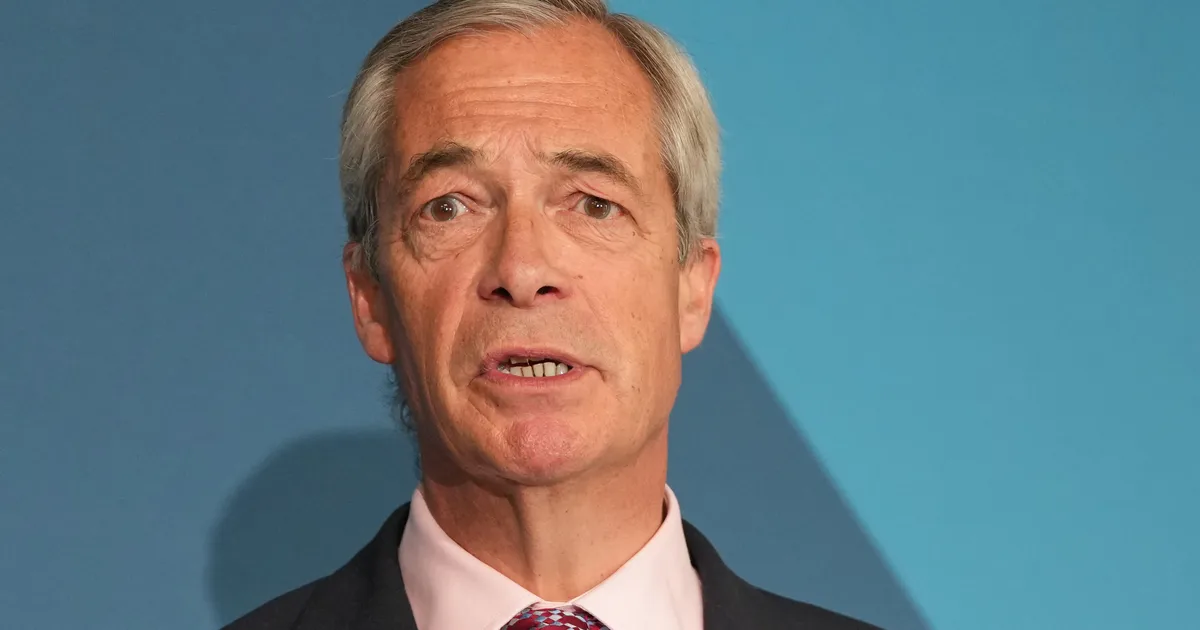
Nigel Farage has been described as “completely unfit for high office” after a fresh report claimed he may have broken parliamentary rules by not declaring benefits from an ally.
The Sunday Times says the Reform UK leader received support, including security and social media staff, from George Cottrell in the year leading up to Farage’s election as the MP for Clacton.
Cottrell was convicted of fraud in the US back in 2017.
The newspaper alleged Farage also used a property rented by Cottrell near Buckingham Palace.
All MPs must declare gifts or benefits worth over £300 to parliament dating back to the year before they are sworn into the Commons.
The guidelines add that purely personal gifts or benefits do not need to be registered.
The revelation comes as the Clacton MP is already facing a parliamentary sleaze probe for failing to declare a £5 million donation from a crypto-billionaire shortly before he decided to run for parliament.
Farage has offered differing explanations for the lump sum. He initially claimed it was to fund security, then alleged it was a reward for Brexit campaigning and finally told the media it was “none of your business” and he could spend the money on “Ferraris” if he wanted to.
His team have argued “no parliamentary rules have been broken” over Farage’s association with Cottrell, either.
Responding to the new report, a Labour Party spokesperson said: “Nigel Farage and Reform are engulfed in a huge and growing scandal.
“It’s not going to go away, and trying to take the public for fools by saying it’s ‘none of your business’ won’t help.
“These new allegations of secret payments from a wealthy convicted criminal are on top of the ongoing scandal of his secret £5 million gift from a crypto billionaire.
“How much money has he been given, what did his donors get in return, and why has he tried to cover them up and avoid legitimate questions?
“Time and again Farage pretends to be on the side of working people.
“In reality he’s just in it for himself and can be bought by the highest bidder. He’s completely unfit for high office.”
Farage did register a £9,253 trip to Belgium in April 2024 donated by Cottrell, and added later a £15,276 donation for a US domestic flight from December 2025.
A spokesman for Farage hit back at the report, claiming: “It comes as no surprise that the Sunday Times has chosen to publish this baseless and contrived story, covering a period of time when Nigel Farage was not even an active politician let alone an elected one, given that the newspaper backed the Labour Party at the last general election.
“Contrary to the story’s tone, no parliamentary rules have been broken.”
Listen to Commons People, the podcast that makes politics easy. Every week, Kevin Schofield and Kate Nicholson unpack the week’s biggest stories to keep you informed. Join us for straightforward analysis of what’s going on at Westminster.

In a recent report about the “fibre gap,” the British Nutrition Foundation (BNF) said that only about 4% of us eat the recommended 30g of fibre a day.
They added that the report identified “several priority areas for action,” including a “health by stealth” approach to improving people’s diets.
But what does that mean, and how can we achieve it?
Here, HuffPost UK spoke to Bridget Benelam, a nutrition scientist with BNF, about the term.
What is “health by stealth”?
It’s a way of making your diet better for you without you really noticing.
Benelam told us, “It’s mostly used to talk about industry reformulating products – e.g. reducing salt and sugar, or adding extra fibre to things like bread or pasta so that people get healthier food without having to change their habits”.
One example might be zinc added to breakfast cereals or flour enriched with folic acid.
These aren’t individual choices consumers consciously opt for – they come from policies or industry changes many of us never realise have been made.
But, the nutrition expert continued, “it’s a concept that could be applied at home by making small, manageable changes”, too.
If you want to consume more fibre, for instance, she said you could take barely-noticeable steps like “adding beans or lentils to every day dishes like bolognese sauce or curry, adding brawn to your usual white rice, [or] swapping white for 50:50 bread”.
You might be surprised by how far little changes can go. One study found that eating a meagre half-portion more of fruits or vegetables a day, when combined with minutes more sleep or exercise, could add a year to our life.
And while eating the recommended 30g of fibre a day is linked to an impressive array of health benefits, advantages start much sooner.
For every 7g of fibre you eat daily, you may enjoy an 8% reduction in bowel cancer risk, a 9% reduction in heart disease and heart attack risk, a 7% reduction in stroke risk, and a 6% reduction in type 2 diabetes risk.
That’s the equivalent of two slices of wholemeal toast.
Try “choice editing,” too
“Health by stealth” can involve adding nutrients to your diet you wouldn’t have otherwise. But it might also mean taking some foods away from easy reach, Benelam said.
“You can also do something that scientists call ‘choice editing’, where you make healthier choices more obvious and available – e.g. having veg ready prepared for snacks, having a fruit bowl in reach and either not having or putting less healthy foods out of sight/reach,” she suggested.
“It’s also something that parents could think about with kids meals to encourage extra fibre/veg.”

Keir Starmer has issued a warning to his expected successor Andy Burnham over his approach to foreign policy.
The outgoing prime minister, who was dubbed “never here Keir” by his critics due to his frequent trips abroad, reminded the new MP for Makerfield that he will have to put the same effort into international relations.
He claimed internal issues, like the rising cost of living, are linked directly to the UK’s standing on the world stage.
Burnham, who is currently running uncontested to be the next PM, is expected to focus more on his domestic agenda when he gets into No.10 on July 20.
Speaking to the BBC, Starmer said: “If you’re prime minister and you care about what bills are going to be like in any part of the country, you have to care about finding a lasting solution to the situation in Ukraine, you have to care about what happens in the Strait of Hormuz.”
Vladimir Putin’s illegal invasion of Ukraine meant European allies stopped buying Russia’s cheap oil exports.
Meanwhile, the US-Israeli strikes on Iran saw Tehran close the Strait of Hormuz, a major shipping lane which transports a fifth of the world’s oil supply.
A strain on international fossil fuels subsequently pushed prices up all over the world, including in the UK.
Starmer said he is “proud” that the UK has been a crucial part in dealing with both of these crises.
“I’m proud that the UK is now regarded as a leader, that other countries look to and want to engage with, and that is in our best interests here at home,” he said. “It’s not sensible to think we can just separate these two things out.”
He added: “The suggestion that in the modern era you could simply split up international and domestic… it just doesn’t make sense, it isn’t true, it isn’t right.”
“Whoever’s my successor is going to face the same global conflict,” Starmer continued. “We keep saying, and it’s true, we’re in a more dangerous and volatile world than we’ve been in for probably most of my lifetime. That’s not just a phase, that’s reality.
“That’s not going to change. And the domestic challenges aren’t going to change.”
Burnham has dodged a lot of scrutiny since winning a seat in parliament by not holding any press conferences.
He invited the public to ask him anything during a Reddit forum on Friday, where he said he would “100%” give the same amount of support to Ukraine as Starmer and wanted to continue his efforts to broker a closer EU relationship.
However, he did not answer any questions about his approach to Donald Trump.
Starmer has committed to staying on as MP for Holborn and St Pancras but promised to “keep my mouth shut” when his replacement takes over, adding that he has “always got on” with Burnham.
The outgoing prime minister had vowed to stay in post after Burnham won the Makerfield by-election last month, but – amid growing pressure from his party – U-turned three days later.
He told the BBC that it was a “really, really tough” decision, adding: “Taking the decision that your political career is over, it is an intensely personal matter, or at least it was for me. I wanted to do that with [my wife] Vic, and that’s what I did.”
Listen to Commons People, the podcast that makes politics easy. Every week, Kevin Schofield and Kate Nicholson unpack the week’s biggest stories to keep you informed. Join us for straightforward analysis of what’s going on at Westminster.

President Donald Trump on Friday railed against communism during a bizarre speech at Mount Rushmore.
But as critics were quick to point out, his definition of what “communists” do sounds a lot like what he, his family and his associates have been accused of doing since he returned to the White House last year.
“Our American ancestors did not shed their blood at Concord and Trenton, Gettysburg and Shiloh, Midway and Normandy, just so that a band of thieves, radicals and lunatics could come in and loot, pillage our nation,” Trump said days after financial filings showed he earned more than $2 billion last year.
The Wall Street Journal editorial board this week accused Trump and his family of “profiting off the presidency in ways that demean the office.”
Trump’s windfall includes more than $1 billion from his crypto businesses ― money he pocketed, while The New York Times reported that some 764,000 other crypto wallets suffered massive losses.
The president has also struck gold by buying stocks in companies just before his administration announces decisions favourable to those firms.
“The Trump clan is cashing in on the Presidency in big and sketchy ways,” the Journal said.
Meanwhile, Americans have been struggling with a spike in the inflation rate ― something Trump dismissed only last month.
“I love the inflation,” the president insisted.
Trump’s speech was full of other lines about supposed “communists,” a word he is turning to with increasing frequency. The president has been falsely calling everyone who disagrees with him a “communist” as he tries to drum up Red Scare tactics. The move comes amid a deep plunge in his approval ratings and an increasing likelihood that his party will lose the House and possibly even the Senate in November’s midterm elections.
But it was his line about looting and pillaging ― which comes amid his own massive increase in wealth ― that had everyone pointing the finger right back at the president:
Listen to Commons People, the podcast that makes politics easy. Every week, Kevin Schofield and Kate Nicholson unpack the week’s biggest stories to keep you informed. Join us for straightforward analysis of what’s going on at Westminster.

Saylor says Bitcoin’s four-year cycle is losing control

Is Sullivan’s Crossing a Real Place? Filming Location, Town Explained

HOW DOES DMO AFFORD ALL THOSE SUPERCARS? #automobile #motivation #cars #lifestyle #money #fyp

No Jackpot Winner as $257 Million Prize Rolls Over to $269 Million Monday Draw

Renter of Home in Anne Heche Crash Denies Settlement With Son

Weekend Open Thread: Staud – Corporette.com
HOW DOES DMO AFFORD ALL THOSE SUPERCARS? #automobile #motivation #cars #lifestyle #money #fyp

Trump’s cryptocurrency gains#shorts #shortvideo #trending #actress #celebrity

Trump Responds To Questions On $1.4 Billion Financial Disclosure | APT
-

 Fashion2 days ago
Weekend Open Thread: High Hopes
-

 Politics2 days ago
The House | “Reframing the debate from a binary discussion of winners and losers”: Yuan Yang reviews ‘We Are Not Machines’
-

 Crypto World5 days ago
Strategy authorizes up to $1.25B in Bitcoin sales under new capital plan
-

 News Videos7 days ago
MAJOR BITCOIN & MARKET UPDATE!!!! (MUST WATCH ASAP!!!)
-

 Tech5 days ago
Anonymous researcher drops 0-day ‘exploitarium’ repo
-

 Business5 days ago
Australia treasurer says alleged access of prime minister’s bank data ’incredibly concerning’
-

 News Videos5 days ago
How to Build INSANE Live Financial Dashboards With Claude
-
 NewsBeat8 hours ago
Taylor Swift and Travis Kelce wedding staffer hilariously struggles to keep her cool while checking in megastars
-
 Business6 days ago
The AI boom won’t burst all at once. It will pop in ‘rolling bubbles’: Macquarie
-

 Sports4 days ago
Broncos roster: OL Ben Powers (No. 74) entering final year of contract
-

 NewsBeat5 days ago
Presenter Caroline Flack’s brother Paul Flack dies aged 55
-

 Crypto World3 days ago
Binance stock trading tops $1B in first month after launch
-

 Crypto World3 days ago
Alibaba-affiliate Ant Group enters the humanoid robot market with 12 deals
-
 NewsBeat3 days ago
New exhibition reflects five decades of movement between island of Ireland and GB
-
 Crypto World4 days ago
Airdrop Registration Becomes Key Focus For Remittix As RTX Launch Updates Approach
-

 Business2 days ago
What a 10 Percent Drop Means for Buyers, Sellers and Renters
-

 Business4 days ago
Meta Platforms Stock Jumps 7% Today as Bloomberg Reports Company Plans to Enter the Cloud Business
-

 Crypto World3 days ago
Binance Re-Enters Philippines As EU MiCA Rules Restrict Access
-

 Crypto World2 days ago
Standard Chartered Secures MiCA License as ESMA Adds 37 New Crypto Firms
-

 Tech6 days ago
The attack that hijacked Claude Code came through Sentry. Datadog, PagerDuty, and Jira have the same exposure.
You must be logged in to post a comment Login