LG’s 2026 ART TV push is not just about making a television look prettier when nobody is watching Slow Horses. The bigger shift is bringing art focused display modes and gallery friendly design to higher performance models like the OLED evo AI W6 Wallpaper TV, OLED evo AI G6, and Mini LED Gallery TV AI with frame, without forcing buyers to settle for lifestyle first hardware.
Built on more than a decade of OLED development, these models are designed to blend into living spaces while presenting artwork with strong color accuracy and contrast. LG’s design approach has already earned recognition as well, with the Wallpaper TV receiving both the iF Design Award and Red Dot Design Award.
LG is not just chasing the “TV as décor” trend. It is trying to do it without compromising what made people buy OLED in the first place.
Designed for More Than Watching
LG’s ART TV lineup rethinks how a screen should live in a room. These select models are not treated as conventional black rectangles, but as displays designed to suit different spaces, whether that means reducing their visual footprint, sitting tight to the wall, or presenting the TV as a framed design element.
Advertisement
The goal is simple: give customers more control over how the TV looks in the home, how it fits into the room, and how artwork is displayed when nobody is actually watching television.
Pro Tip: LG’s designated ART TVs are still real TVs. They are built for movies, TV shows, gaming, and everyday streaming, with LG’s webOS smart TV platform included.
LG OLED evo W6 Wallpaper TV
2026 LG W6 Wallpaper TV
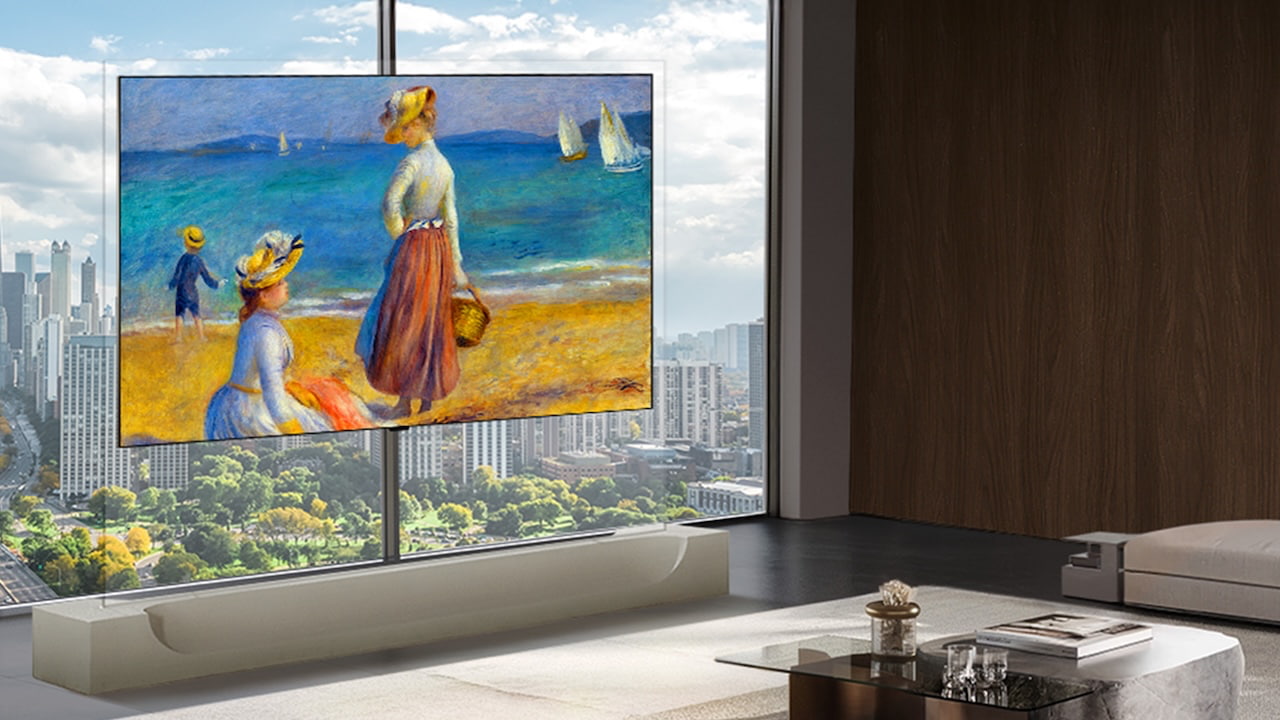
With its 9mm range ultra thin profile and certified True Wireless connectivity through LG’s Zero Connect Box, the OLED evo AI W6 Wallpaper TV is designed to reduce cable clutter and visual distractions. The point is not subtle: make the screen sit on the wall like wallpaper, then let the art do the talking.
That makes the W6 a natural fit for LG’s ART TV push, especially for buyers who want the display to disappear into the room when it is not being used for movies, shows, or gaming. The W6 is available in 83 and 77-inch screen sizes.
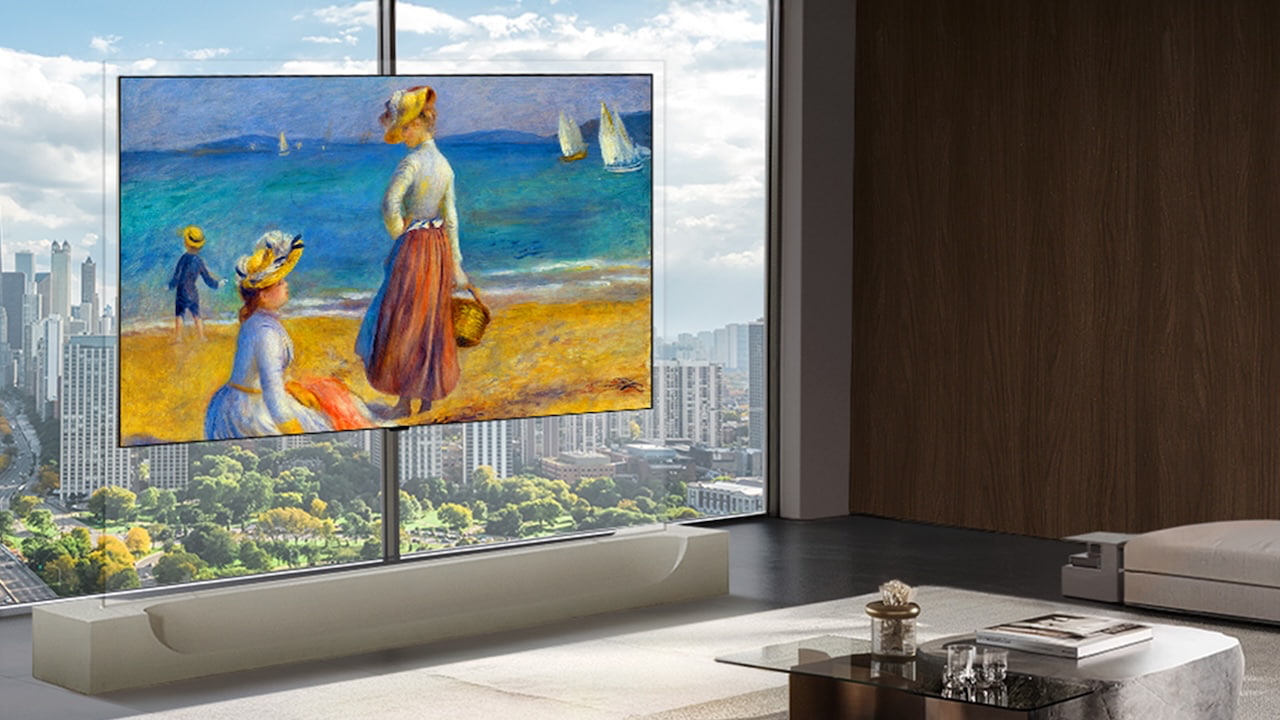
The flush-fit Gallery design of G6 aligns precisely with the wall surface, creating a clean, minimal presence that fits naturally into the space.
The LG OLED evo G6 Series provides Hyper Radiant Color technology built around the new Primary RGB Tandem 2.0 OLED panel, which LG says delivers up to 20% higher brightness than the 2025 G5 series. The G6 also incorporates enhanced color processing and a Reflection Free Premium screen coating designed to improve visibility in brighter rooms while maintaining the deep contrast OLED is known for. The G6 series is available in 97, 83, 77, 65, and 55-inch screen sizes.
With attachable frames and a gallery style presentation, the Gallery TV treats the screen as a decorative object that becomes part of the room rather than something you try to hide.
Under the surface, it is still built like a proper TV. The Gallery TV uses Mini LED backlighting with Dynamic QNED Color and LG’s α7 AI Processor to deliver full 4K resolution with AI assisted picture processing. When it is time to stop admiring the artwork and actually watch something, it does not fall apart.
Advertisement
The design stays consistent with the concept. A slim flush mount form factor keeps the panel tight to the wall, while customizable magnetic frames let users match different interior styles without overthinking it.
LG’s ART TV lineup pairs design with display technology that actually matters for showing art on a screen. The point is not just to make the TV look less like a TV. It is to preserve color, contrast, detail, and visibility as room lighting changes throughout the day.
Color and Depth: On LG’s OLED ART TV models, Perfect Black, Perfect Color, and advanced color processing help artwork appear richer and more accurate, with stronger contrast and subtle tonal detail intact. The Mini LED based Gallery TV cannot produce perfect black like OLED, but LG has optimized black levels and color performance around what that display technology can actually deliver.
Advertisement
Brightness and Real World Viewing: Artwork needs to remain believable in bright daylight, evening light, and everything in between. On the Wallpaper TV and G6 OLED models, Hyper Radiant Color Technology, powered by LG’s α11 AI Processor Gen3, is designed to improve brightness while maintaining accurate color reproduction. On the Mini LED based Gallery TV, LG’s α7 AI Processor handles color and brightness optimization.
Reflection Reduction: Glare is the enemy of both art and television, because nobody bought a premium display to admire a lamp reflection. Reflection Free Premium on select OLED models helps reduce glare and preserve the visual texture of artwork under changing lighting conditions. The Mini LED based Gallery TV approaches the same goal with a specialized screen developed with input from museum curators.
LG Gallery+
LG’s Gallery+ allows customers to turn their TV into a personalized art display, creating the experience of a premium gallery at home. The service offers more than 4,500 regularly refreshed visuals, spanning fine art, cinematic landscapes, animation, and ambient motion pieces.
Users can also generate custom imagery using Generative AI, display personal photo libraries, and layer the visuals with background music — either from built-in selections or streamed via Bluetooth.
Advertisement. Scroll to continue reading.
To celebrate the rollout of the 2026 Art TV lineup, LG OLED evo W6 Wallpaper TV, LG OLED evo G6, and LG Gallery TV include a complimentary three‑month LG Gallery+ subscription, giving customers in select markets access to over 5,000 curated artworks at no additional cost.
Advertisement
The Bottom Line
LG is not pretending Samsung’s The Frame does not exist. That ship left port in 2017, and Samsung has been steering the ART TV conversation ever since. But LG’s 2026 strategy is different because it is not limiting the idea to one lifestyle TV concept.
By pushing ART TV features across select OLED and Mini LED models, LG is giving buyers more choice: ultra thin Wallpaper TV design, premium OLED picture quality from the G6, or a framed Mini LED Gallery TV for rooms where OLED may not be the obvious fit. That is the real point of difference.
This makes sense for buyers who want the TV to look better in the room without giving up serious movie, sports, streaming, or gaming performance. Samsung still owns the category mindshare, and Hisense, TCL, and Skyworth are now crowding the space. LG has work to do. But bringing ART TV functionality to better display hardware is a smart move, and one that could make the lifestyle TV category a lot more interesting.
Price & Availability
The LG OLED evo W6 Wallpaper TV is available for pre-order at the following prices:
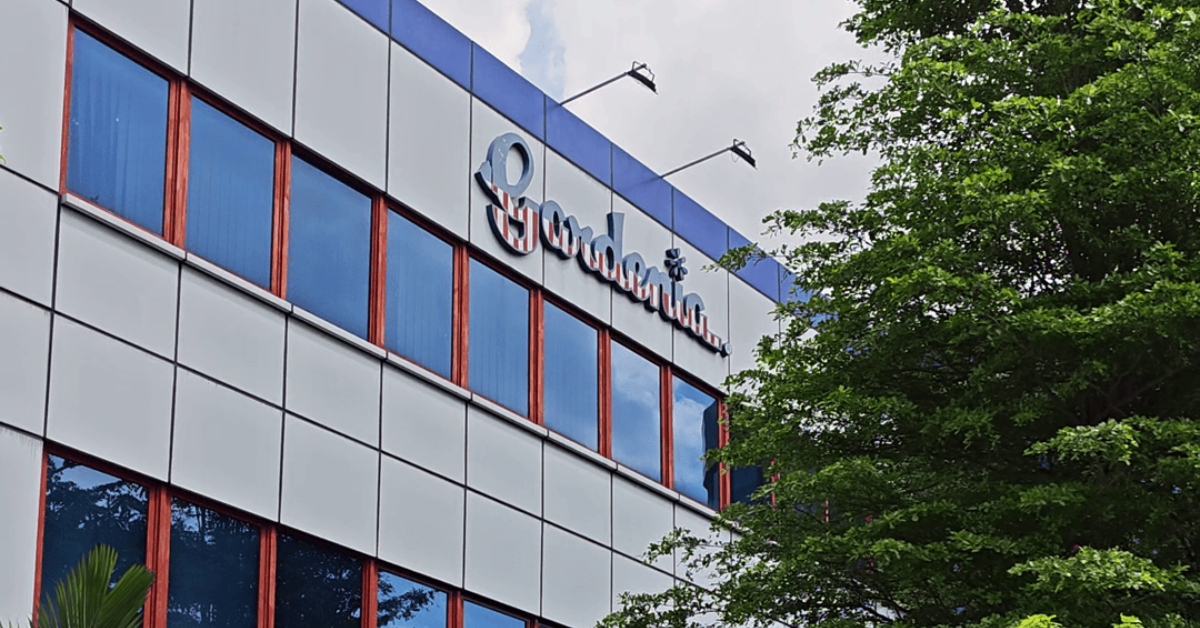
Production at Gardenia’s Pandan Loop manufacturing facility will end on Jun 30
Home-grown bread manufacturer Gardenia is shifting its bakery production from Singapore to Johor Bahru, Malaysia. As a result, it will lay off 141 employees at its Pandan Loop facility, Channel News Asia reported on Wednesday (May 20).
The company cited ongoing efforts to improve operational efficiency and remain competitive amid an increasingly challenging global environment as the reason for the move.
Production at the Pandan Loop manufacturing facility will end on Jun 30.
“Gardenia informed employees of the decision at an internal meeting this morning and said affected staff will receive the appropriate notice period and support in line with local regulations and guidelines,” the company said in a media release.
Advertisement
“The company is also considering eligible employees for suitable roles within the group’s network of operations where possible.”
Singapore will remain Gardenia’s central hub for brand management, product development, quality and regulatory oversight, distribution, and supply chain—retaining about 250 employees post-transition.
Its Singapore team will also continue to oversee quality governance and ensure compliance with requirements set by the Singapore Food Agency and the Health Promotion Board.
Gardenia said that the Food, Drinks and Allied Workers Union (FDAWU) was informed in advance about the layoffs.
Advertisement
“This enabled the union to quickly mobilise support such as training, job placement assistance, and discussions on fair retrenchment terms. FDAWU was also able to quickly tap on its network of unionised partners to identify suitable vacancies for affected workers,” it added.
“The union worked closely with Gardenia to ensure fair compensation and transition support for affected employees.”
Nearly five decades ago, Gardenia started as one small bakery in Bukit Timah Plaza in 1978. Today, it operates across Malaysia, the Philippines, and Australia.
Gardenia’s decision comes after similar moves by other food and beverage manufacturers.
Asia Pacific Breweries Singapore, which brews Tiger Beer, also said recently that it would cut about 130 roles as it shifts production to other regional markets such as Malaysia and Vietnam.
Read more stories we’ve written on the latest job trends here.
Featured Image Credit: National Trades Union Congress
On a balmy, 86-degree day in Mountain View, just outside Google’s sprawling campus, I sought refuge from the glaring California sun in a Volvo EX60 — or so I thought. The air conditioning wasn’t working.
To mitigate the heat even slightly, we opted to darken the transparent sunroof. And all we had to do was ask Gemini.
Advertisement
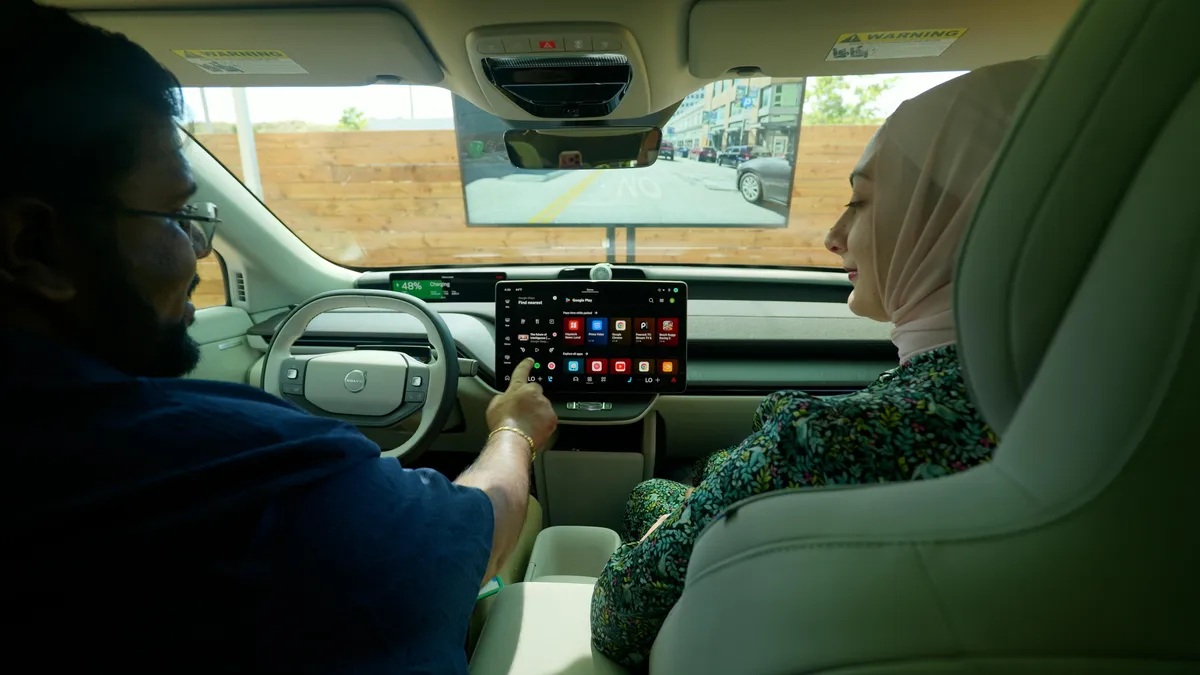
“Can you make the sunroof opaque?” Vivek Radhakrishnan, a technical program manager at Google, asked the car via voice command. Like magic, the electrochromic window stretching over us blocked the light beaming in from above. We didn’t have to rummage through the car’s settings to find the right button.
At Google’s I/O developer conference on Tuesday, I got an early look at a handful of new features coming to cars supporting Google Built-in and Android Auto. The upcoming capabilities, rolling out later this year, are designed to help you keep your eyes on the road while offering useful information. You can lean on Gemini AI to handle tasks like sharing your ETA, describing that landmark that caught your eye and even helping you order dinner.
Watch this: Google’s Car Update Helps You Keep Your Eyes on the Road
The Volvo EX60 comes equipped with Google Built-in, a native operating system for car infotainment systems that lets you tap directly into Google’s services. We could ask Gemini to identify a dashboard warning light, for example, or have it gauge whether a 65-inch TV we just bought would fit in the back.
Advertisement
Although we were technically parked outside of Shoreline Amphitheater, a giant TV in front of us simulated driving along a San Francisco road toward one of the city’s signature skyscrapers. We asked Gemini, “What’s that tall building in front of me, and can you tell me something interesting about it?”
Using the car’s front-facing camera, Gemini identified the Transamerica Pyramid, “which stood as the tallest building in San Francisco for 45 years.” We got some bonus information, too, as Gemini said, “Nearby, on your right, you’ll find the historic copper-clad Sentinel Building, a landmark that miraculously survived the 1906 earthquake and later became home to Francis Ford Coppola’s film studio.” It was neat to get that much detail and learn something new.
Afterward, we hopped over to the Kia EV9 (which thankfully had functioning A/C) to get a look at upcoming Android Auto features, which are available by connecting your phone to the vehicle. They include a more personalized dashboard design built on Google’s Material 3 Expressive, so you can display a picture of your cat alongside custom widgets, for instance.
While still parked, we then opened up YouTube and watched videos in 4K resolution at 60 frames per second, which can make the time you spend charging your vehicle a little more entertaining. Once you start driving, those videos automatically shift to audio-only so they’re not distracting.
Advertisement
Magic Cue can pull information from your email, calendar or other apps to quickly respond to texts asking for your ETA or other event details. In our demo, an incoming text asked, “What time is the pottery class?” and Gemini found the date and time automatically: June 1 at 2 p.m. Google Product Manager Alanna Veiga just had to tap to send it as a reply.
If you want to make sure your dinner arrives home when you do, you can also ask Gemini to place an order through a food delivery app. Using voice commands, we asked it to order two fish tacos from Pacific Catch on DoorDash. Gemini then pulled up the DoorDash app on the connected phone and added those items to the cart, tapping through the steps as if it were a human. Once it was time to check out, all Veiga had to do was tap to confirm the order.
On vehicles with both Google Built-in and Android Auto compatibility, you’ll be able to use the new Immersive Navigation for Google Maps, which shows a 3D view of buildings, overpasses and surrounding terrain, as well as details like lanes, traffic lights and crosswalks. That can help you get a better understanding of your surroundings and make navigation clearer and easier.
The updates are part of a wider expansion of Gemini into cars, phones, wearables and smart glasses. And while the supercharged AI features might not be able to fix your broken A/C, they can simplify menial tasks and help you stay focused on the road.
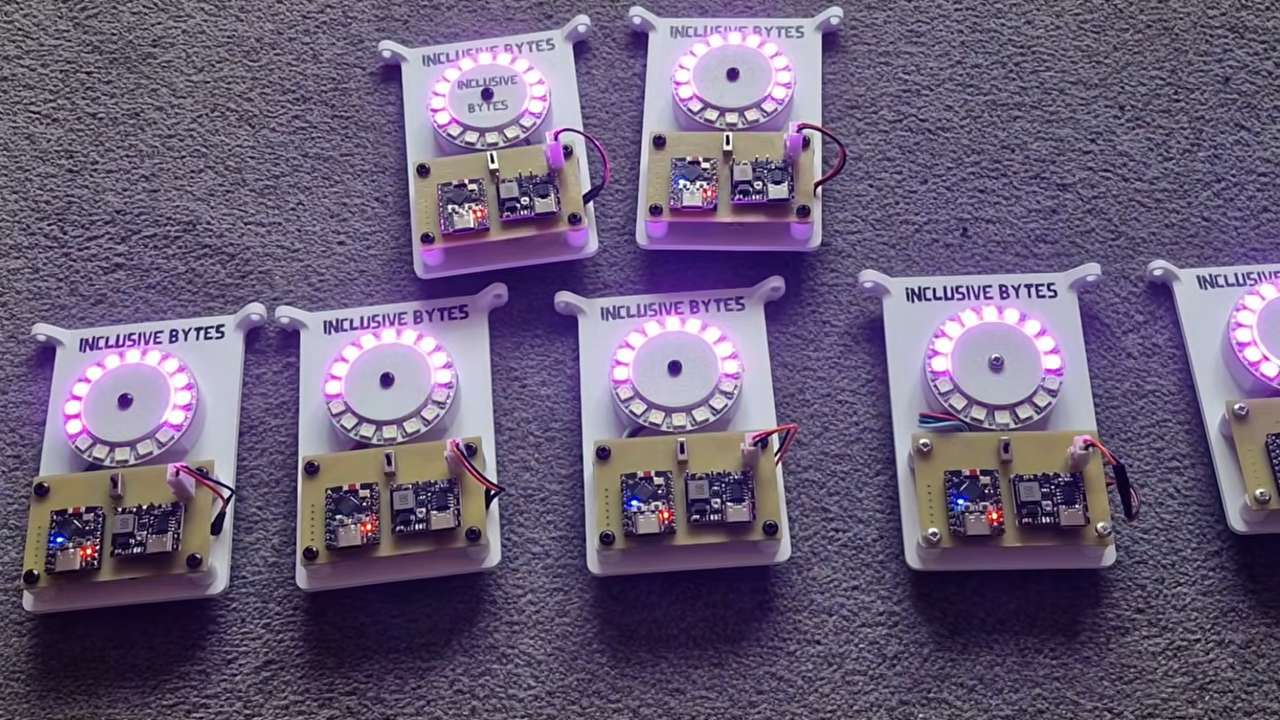
The CrowdClock badges each feature a ring of 16 addressable RGB LEDs. Running the LEDs is an ESP32 microcontroller, which has lots of neat wireless capability baked in from the factory. [Tony] decided to leverage the ESP-NOW wireless communication protocol to enable each badge to broadcast its current local clock tick. Each device also listens out for clock ticks from other badges in the area, and updates its current clock tick value if it receives a higher one from another badge. This behaviour allows a bunch of badges within radio range to all sync up automatically in short order, and then run their LED sequences in sync. There’s no need for a master designation or anything, the devices just all sync to whichever badge has the highest clock value and go from there.
It’s a really neat way to create propagating self-syncing behaviour in distributed wireless nodes. Files are on Github for those curious to learn more. Meanwhile, if you’ve ever wondered how those concert wristbands work, we’ve looked at that too. Video after the break.
Here’s an uncomfortable thought for every academic institution currently using AI detectors to police student and researcher submissions: the tools don’t work as reliably as institutions assume.
A paper presented at this week’s 2026 IEEE Symposium on Security and Privacy by researchers at the University of Florida concludes that commercially available AI-generated text detectors are “poorly suited for deployment in academic or high-stakes contexts.”
That’s a polite way of saying universities are making career-altering decisions based on results from tools that are essentially unreliable.
Google
What did the research actually find?
Patrick Traynor, Ph.D., professor and interim chair of UF’s Department of Computer & Information Science & Engineering, led a team that tested the five most popular commercially-available AI text detectors.
Using roughly 6,000 research papers submitted to top-tier security conferences before ChatGPT even arrived, they had LLMs create clones of those same papers, and then ran both sets through the AI detectors.
Advertisement
The results showed false positive rates ranging from 0.05% to 68.6%, and, even more surprising, false negative rates between 0.3% and 99.6%. That upper figure is close to 100%, meaning the worst-performing detector missed virtually all AI-generated text.
While two of the five detectors performed well initially, they were rendered largely useless after the researchers asked the LLM to rewrite its outputs using more complex vocabulary (the paper calls this a lexical complexity attack).
Claude
Why does this matter beyond academic integrity?
Traynor put it plainly: “We really can’t use them to adjudicate these decisions. People’s careers are on the line here.” An accusation of AI-generated writing in a submission can permanently damage a researcher’s reputation, but we can’t put blind trust on tools making those accusations.
The argument is that the evidence about widespread AI use in academic writing is itself unreliable. “For as many studies as we see claiming that a certain percentage of academic work is AI-generated, we actually don’t have tools to measure any of that,” Traynor added.
His research doesn’t just critique the tools; it exposes a systemic failure of due diligence by every institution that adopted these tools without demanding evidence whether they are accurate.
US lawmakers plan to introduce an amendment Thursday at a House committee markup hearing that would prohibit any recipient of federal highway funding from using automated license plate readers for any purpose other than tolling—a sweeping restriction that, if adopted, would bring an immediate end to state and local ALPR programs across the United States.
The amendment, obtained first by WIRED, is sponsored by Representative Scott Perry, a Pennsylvania Republican and Freedom Caucus member, and Representative Jesús “Chuy” García, an Illinois progressive whose state has become a flash point in the national fight over ALPR misuse.
The House Transportation and Infrastructure Committee will mark up the underlying bill—a $580 billion, five-year reauthorization of federal surface transportation programs—at 10 am ET on Thursday.
Neither Perry nor García’s offices immediately responded to WIRED’s request for comment.
Advertisement
The amendment runs a single sentence: “A recipient of assistance under Title 23, United States Code, may not use automated license plate readers for any purpose other than tolling.”
The amendment is brief, but its reach would be vast. Title 23 funds roughly a quarter of all public road mileage in the US, including most state and county arteries and many city streets where ALPR cameras are becoming ubiquitous. Conditioning that funding on a ban of the technology would, in practical effect, force any state, county, or municipality that takes federal highway money (essentially all of them) to either remove the cameras or restructure their use around tolling alone.
The amendment’s cosponsors, Perry and García, represent opposite ends of the House’s ideological spectrum but converge on a surveillance concern that has gathered momentum in legislatures and city halls across the US as ALPR networks have quietly become a pervasive layer of American road infrastructure.
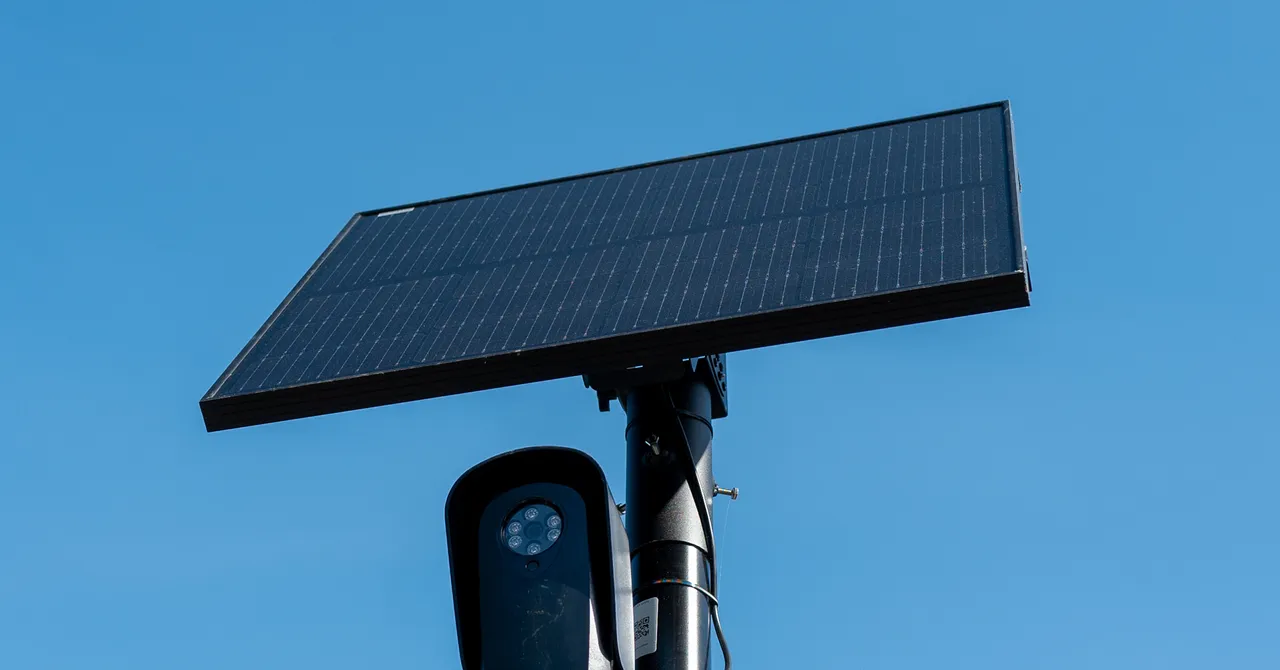
ALPR cameras—mounted on poles, overpasses, traffic signals, and police cruisers—photograph every passing license plate, log times and locations, and feed data into searchable databases shared across agencies and jurisdictions.
Advertisement
In Illinois, where García’s district sits, Secretary of State Alexi Giannoulias announced last August that an audit by his office had found Flock Group—the Atlanta-based company that operates the country’s largest ALPR network—in violation of state law for giving US Customs and Border Protection access to Illinois ALPR data. Giannoulias ordered the company to cut off federal access.
Flock said at the time that it would pause federal pilots nationwide, arrangements the company had previously denied existed in what Flock CEO and founder Garrett Langley said were public statements that “inadvertently provided inaccurate information.”
Flock did not immediately respond to WIRED’s request for comment.
Privacy advocates have long warned that the aggregation of license plate data amounts to a de facto warrantless tracking system. New York University School of Law’s Brennan Center for Justice has documented the integration of ALPR feeds into police data-fusion systems that combine plate data with surveillance and social media monitoring. And the Electronic Frontier Foundation, a digital rights nonprofit, has documented a range of police misuse, including the past targeting of mosques and the disproportionate deployment of the technology in low-income neighborhoods.
Advertisement
Court records obtained by the EFF and reported by 404 Media last year revealed that a Texas sheriff’s deputy has queried Flock’s nationwide network—roughly 88,000 cameras at the time—to track a woman because, he wrote, she “had an abortion.”
“Flock cameras are easily abused and have already been banned in many municipalities across the nation for their failure to keep our data safe,” says Hajar Hammado, senior policy adviser at Demand Progress, who believes the Perry-García amendment is “commonsense” and says that the country has become a “mass surveillance dystopia”
The ex-chief of Samsung’s semiconductor business has made a more optimistic prediction about the RAM crisis
The memory situation will improve thanks to a surge in RAM production from Chinese companies, and some deflation in the AI bubble
Due to those factors combined, we’re told, “There is a possibility that the market will change starting from the second half of next year or the first half of 2028.”
Could the RAM crisis be over sooner than you thought — and maybe even in not much more than a year? An ex-Samsung exec has stated that this could be a possibility.
In a keynote at the National Academy of Engineering of Korea in Seoul, Kyung observed that “Chinese companies are aggressively expanding their production capacity” for making RAM.
Latest Videos From
He then added: “There is a possibility that the market will change starting from the second half of next year or the first half of 2028, when memory supply surges.” (Bear in mind that this is translated from Korean).
Advertisement
The ex-Samsung boss further noted that there was also a chance that the “return on investment for Big Tech” could decrease relative to the capital ploughed into AI, and that this could lead to a weakening of the AI boom. This, combined with the mentioned surge in RAM production in China, could mean a swifter than expected correction in the balance of supply and demand.
Or at least swifter than the predictions up until now, in which no one has stuck their neck out to forecast that the RAM crisis could be over before 2028.
Analysis: some welcome optimism — but it goes against the grain
(Image credit: Getty Images)
Granted, Kyung has only indicated that we may see the beginning of the end (as it were) of sky-high RAM pricing when the second half of 2027 comes around, but that’s still a more optimistic line of thinking than we’ve seen before. And I’ll take that sentiment, certainly.
Advertisement
Sign up for breaking news, reviews, opinion, top tech deals, and more.
I’m not convinced that the currently booming AI industry is going to start to turn into a nosedive anytime soon, mind, but the observation about the amount of money being slung at AI heavily outweighing any profits that are made is a fair point.
Other feedback we’ve had this month on the RAM crisis has been distinctly gloomier. Indeed, we’ve witnessed warnings of one kind or another from all three big memory chip makers — including Samsung — which are predicting the crisis will last until at least 2028, and in one case, possibly until 2030. And they should be in a pretty good position to know.
So for now, talk of a recovery sparking off in just over a year feels like gazing through rather rosy-tinted spectacles, but I’m happy to entertain the thought — and to hope that other more positive forecasts may be imminent.
Airbnb started as a place to find someone’s spare bedroom, but twelve years later, it’s trying to be the only travel app you need.
With the 2026 Summer Release update announced today, you can not just book a bedroom or a house, but also order groceries, schedule airport pickups, car rentals, boutique hotels, access the AI planning tools, and access the FIFA World Cup experiences, all within the Airbnb app.
Airbnb
What new services can you book on Airbnb now?
Airbnb has already launched two new services today. The first one is airport pickups (through Welcome Pickups), which, as the name suggests, lets you book a ride from airports in 160+ cities worldwide, with 20% off on all bookings.
Then there’s luggage storage (via Bounce), which is also live now, offering you 15% off at 15,000+ locations across 175 cities for the time before check-in and after check-out.
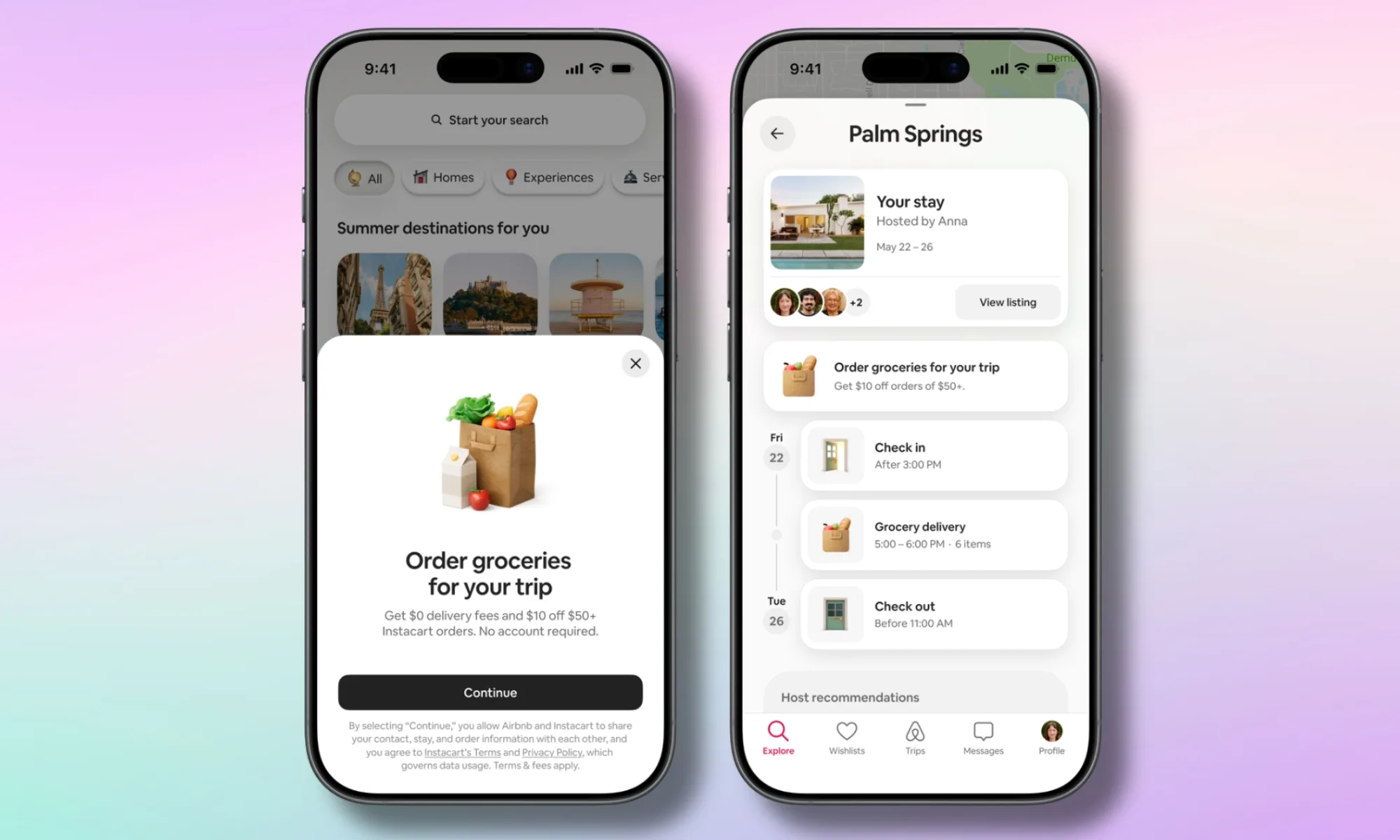
One of the biggest updates, grocery delivery (via Instacart) is coming this summer, bringing food to your rented location before you even arrive or any time during the stay, with $0 delivery fee and $10 off on orders of $50 or more, in 25+ cities in the US.
Advertisement
In fact, hosts can even pre-stock the home before you check in, which might reflect in their review later.
Airbnb
Can you book hotels on the Airbnb app?
Car rentals are also arriving later this summer. The app suggests a vehicle based on your group size, and first-timers get 20% credit toward a future Airbnb stay.
In a surprising move, the platform has also started accepting bookings for boutique and independent hotels in 20 cities, including New York, Paris, London, Rome, Singapore, and Madrid, among 14 others.
What’s good is that the company is hand-picking properties that complement the neighborhood. You also get a price match guarantee and up to 15% credit toward a future home booking. While Booking.com has mixed hotels and rentals for a decade, it’s good to see Airbnb catching up.
As for the FIFA World Cup 2026, Airbnb, being the official Tournament Supporter, is offering exclusive experiences across six host cities, including a watch party with Abby Wambach and Julie Foudy and pitch training with Javier Mascherano.
Kansas City Public Schools have procured more than 4,500 MacBook Neos as part of its transition to an “All-Apple District”
More than 30,000 Windows PCs and Chromebooks are getting the boot as Kansas City prepares to transition its public school students exclusively to Apple devices.
On Wednesday, Kansas City Public Schools elaborated on its decision to become an “All-Apple District.” The district says the move reflects its commitment to providing the highest quality education to its students.
“Students are now proud of their schools because they have the best products,” KCPS Chief Technology Officer Scott Jones said in a statement. The district believes that Apple devices have an edge over the competition, calling them “secure, durable, and reliable.”
Advertisement
This isn’t the first time we’ve heard the news, either. Apple’s own CFO, Kevan Parekh, made mention that the school would be making the switch during Apple’s 2026 Q2 earnings call.
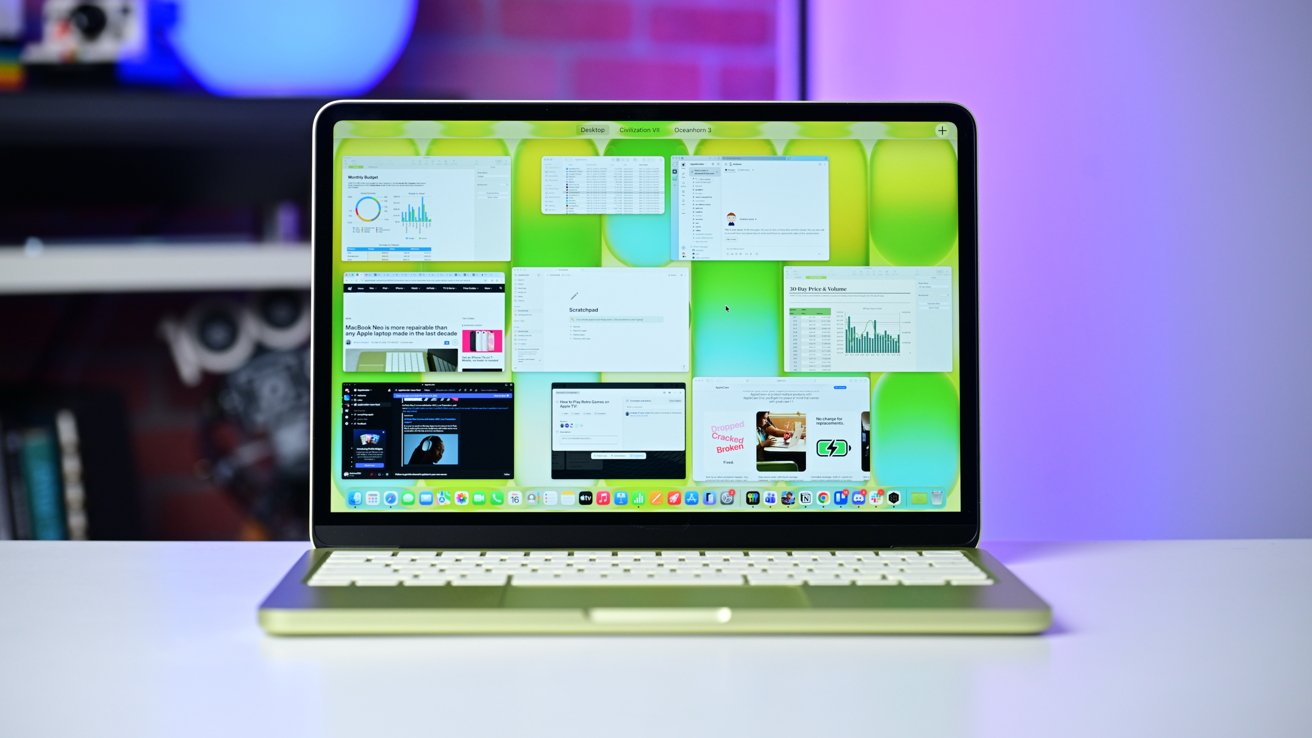
More than 4,500 MacBook Neos have been procured for students in 8th grade and up. Lower grades will have access to the district’s existing iPad and MacBook Air collection.
We may see more school districts make similar leaps in the future. Apple’s new MacBook Neo, which made its debut in March, has already become the darling of the MacBook lineup.
Its lower price point, $599, makes it a tempting purchase for casual users, students, and enterprise solutions. While many scoffed at the idea that the A18 Pro chip would be enough to lure in prospective buyers, Apple initially had difficulties keeping it on shelves.
Curiosity Stream offers unlimited access to thousands of films, series, and shows to satisfy your thirst for knowledge. Whether you’re a science enthusiast, history buff, or technology geek, Curiosity Stream has something for everyone. Unleash the power of on-demand streaming that allows you to choose what you want to watch, when you want to watch it, and where you want to watch it. From the comfort of your living room to the remote corners of the globe, your favorite documentaries are just a click away. It’s on sale to new users for $127.50 with code STREAM15 at checkout.
Note: The Techdirt Deals Store is powered and curated by StackSocial. A portion of all sales from Techdirt Deals helps support Techdirt. The products featured do not reflect endorsements by our editorial team.
Canva launched its Connected App for Google Gemini at Google I/O, completing its integration across all four major AI assistants. The tool lets users generate on-brand, editable designs from Gemini prompts, with Magic Layers converting AI images into layered files.
Canva has spent the past year quietly embedding itself into every major AI assistant. First came Claude, then ChatGPT, then Microsoft Copilot. Now Google Gemini gets the same treatment, and the strategy is complete.
Advertisement
The company launched its Connected App for Google Gemini at Google I/O, giving Gemini users the ability to generate, edit, and search Canva designs directly from a conversation. The integration started rolling out with limited availability on 19 May and will expand to full availability in the coming weeks.
The pitch is straightforward. Type a prompt in Gemini, and Canva generates a design that arrives not as a flat image but as a fully editable file. If the user has a Canva Brand Kit configured, the output automatically applies stored logos, fonts, and colour palettes from the first prompt.
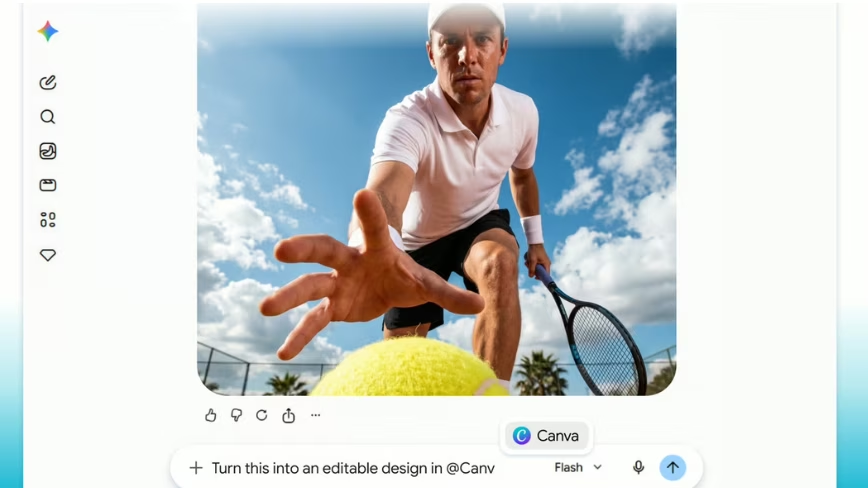
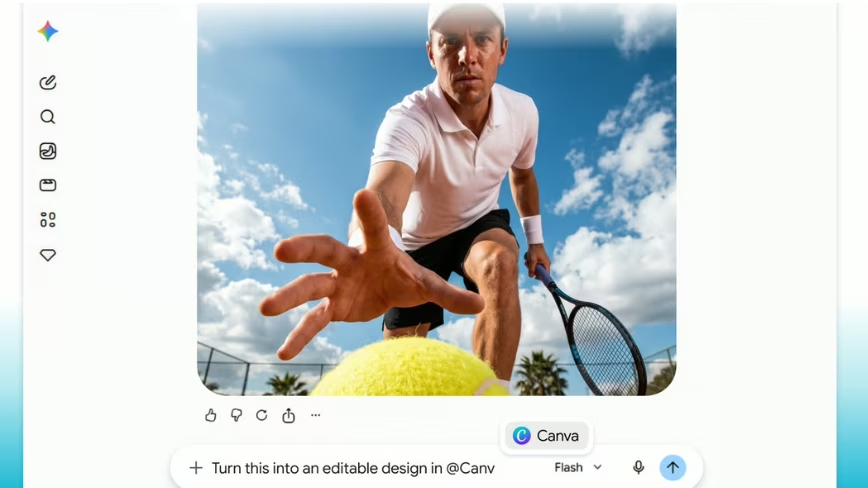
The most technically interesting piece is the integration with Google’s Nano Banana image model. Users can generate an image through Gemini’s native capabilities and then convert it into a layered, editable design using Canva’s Magic Layers tool. That solves a persistent frustration with AI-generated visuals: they are typically flat files that require re-prompting for every small change. Magic Layers analyses the image structure and separates it into individual, movable elements.
“We’re making design accessible wherever people start their work,” said Anwar Haneef, Canva’s head of ecosystem. The implication is clear. Canva no longer sees itself as a destination. It sees itself as infrastructure.
The Gemini launch means Canva’s design engine is now embedded in all four dominant AI assistants: Claude, ChatGPT, Copilot, and Gemini. Each integration works through Canva’s API, allowing the assistant to call design generation, brand kit lookup, and template search without the user leaving the conversation.
Advertisement
The timing matters. Google unveiled Pics at I/O 2026, a competing AI design tool built directly into Workspace that generates graphics from text prompts. Adobe’s Firefly holds 41 per cent business adoption. And Figma just launched its own AI agent that designs on the canvas. Canva’s response is to make its tools available everywhere rather than fight for a single surface.
That approach is paying off commercially. Canva reported that nearly every marketer in its latest survey uses AI for some part of their workflow, though consumers still want the human touch. The company now claims 220 million users globally and has positioned its AI 2.0 platform, launched in March, as a full operating system for visual content creation.
Canva AI 2.0 already connects to Slack, Gmail, Google Drive, Calendar, Notion, Zoom, and HubSpot through six intelligent workflows. It can generate meeting summaries from Zoom transcripts, turn customer emails into personalised sales materials, and build company newsletters. The Gemini integration adds another surface to that network.
The risk for Canva is commoditisation. If every AI assistant can generate decent visuals natively, the value of a dedicated design tool diminishes. Google’s Pics, OpenAI’s image generation, and Adobe’s Firefly are all improving rapidly. Canva’s bet is that brand consistency, editability, and template ecosystems still matter more than raw generation quality, and that being embedded everywhere makes it harder to replace.























































You must be logged in to post a comment Login