The heir to the throne (left) proved he was a bigger fan than the Prime Minister (Picture: Reuters)
Consider these two tweets from famous fans on the biggest sporting stories of the week.
‘Amazing night…special shout out to Boubacar Kamara who has been out injured but is such an integral part of our team and helped lay the foundations of this success.’
‘UTV! VTID’
And ‘22 long years for the Arsenal. But finally, we’re back where we belong. Champions!’
Advertisement
Now, if you had to guess which one of these posts came from a fan who started supporting the club as a poor working class child, who has a season ticket and is bringing up his kids to back the club, following them home and away, you might assume he’d be the one backing Aston Villa.
Likewise, if you had to deduce which tweet came from a man born into a life of unimaginable wealth and privilege, who only chose his team to stand out from the mates at a £45,000 a year private school who all supported Chelsea, and whose net worth is somewhere north of £100 million, you might surmise that was the Arsenal fan.
You’d be wrong on both counts.
Starmer congratulated Mikel Arteta’s men (Picture: CARLOS JASSO / AFP via Getty Images)
Whereas on Tuesday, Keir Starmer, a lifelong Gooner, sent that rather stilted, clipped, by-the-numbers tribute to Arsenal after Man City’s draw with Bournemouth meant his side won their first Premier League trophy since 2004.
Advertisement
And the past few days have been just two of a number of incidents in which the son of a King has shown the son of a toolmaker how things are done when it comes to being a famous fan of a football team.
Advertisement
As footage showed Prince William jumping for joy in Istanbul, ignoring ‘no touching’ royal protocol to hug his fellow fans and looking for all the world like any other supporter, I couldn’t help but contrast his fandom with that of the beleaguered Prime Minister.
Prince William was seen abandoning protocol to hug fellow fans (Picture:Getty Images)
It’s trivial of course, and there are far more pressing issues, but that kind of keening insincerity that makes Starmer sound like a robot when discussing his undeniable love for the game is arguably one of the reasons he’s struggled to cut through a British public that, according to polling, ranks him even lower than Liz Truss.
Football fandom is a complicated thing, but there’s something about the spontaneous outpouring of happiness from William that meant even those, like me, deeply cynical about the Royal Family, couldn’t help but raise a smile.
Whether that cynicism leads you to eventually conclude that William has been simply advised to embrace football to win over his future subjects, or that he’s merely acting, is immaterial.
The fact is, he looks and sounds like a football fan.
Advertisement
Starmer, for his part, is so afraid of offending anyone by saying anything interesting that he ends up offending everyone.
The Prime Minister is defined by insincerity (Picture: Getty Images)
For what it’s worth, I don’t actually doubt his sincerity. I’m often reminded of a tweet, following a particularly cringey Starmer post about Gareth Bale at the 2022 World Cup, from a Labour activist.
He said ‘it is a great bit that Keir Starmer, a man who genuinely loves football, manages whenever he posts about the sport to come across like he had never heard of it before reading the Wikipedia page this morning.’
It is in stark, and for the Prime Minister, painful contrast to William, and a reminder that if you look out of touch on any subject compared to a literal Prince, that might be part of the reason why 100 of your colleagues want you ‘sacked in the morning.’
And it’s not just this week.
Advertisement
Take the Prince of Wales’ brilliantly received pre-match interview with TNT last year ahead of Villa’s Champions League quarter final with PSG, bantering with Rio Ferdinand and Ally McCoist, and waxing lyrical about the tactical challenge of navigating a high press.
Who is a more authentic football fan?
Sign up to Metro’s Puzzles Newsletter and get your favourite puzzles sent directly to you every day!
And compare that to Keir Starmer’s 2022 appearance on the ‘Football Cliches’ podcast.
Advertisement
For the uninitiated, that’s a show that could not be more niche, it is for the absolute anaroks, when the fine details, quirks, and minutiae of football are praised and every bit of punditry dissected.
Given the chance to show himself as a real football fan on this forum, Keir Starmer said that his favourite thing about the game was ‘goals’.
I reckon Prince William’s youngest son Louis, who is 8, could have come up with a more niche answer than that, never mind the heir himself.
It’s no secret that public figures try to use sport to get some of the rub from top stars, and, whether authentic or not, William is reaping the benefits.
Advertisement
Videos of him celebrating are going viral, and Villa players are praising him for joining their post-match party for a beer.
Arsenal fans wouldn’t be shocked to see Starmer suddenly ditching them (Picture: Getty Images)
You can hardly picture a bleary-eyed Bukayo Saka at 5am giving a shout out to Keir Starmer as he makes his way back from toasting the title win.
The Prime Minister’s lack of authenticity bleeds into his every decision, paralyses him from showing any personality, and exposes the hollowness at the heart of his political operation.
In trying to be serious, Stamer comes across not as bland, but as cold and calculating.
Like the time he, presumably scared of appearing too cultured or fearful, said he didn’t have a favourite poem, had no phobias even as a child, and doesn’t even dream.
Advertisement
Or the time he was pressed on his favourite film, and instead talked about how much he loved The Traitors (which is brilliant, of course, but quite obviously not a film).
It is that kind of panic at rocking the boat that led this fan to once celebrate a late Arsenal goal by tweeting ‘right in the 86th minute’ – a collection of words no supporter has ever used, and even ChatGPT would probably sniff out as insincere.
No one is asking Starmer to pretend to be a more passionate fan than he is, or to try and one-up Prince William in the ‘limbs’ stakes. But we like our politicians to be authentic.
Ed Miliband’s Lazarene comeback from bacon-bothering national joke to borderline national treasure status was boosted by his embracing of his inner geek, and he never seemed more real to me than when he stayed up until 4am livetweeting the World Series, as he’s a huge Boston Red Sox fan.
Advertisement
The Prime Minister’s love for the game is sincere, if noy obvious (Picture: Paul Childs/Action Images via Reuters)
Baseball’s not my game (nor that of many people in the UK) but it’s far preferable to a politician trying and failing, like David Cameron getting Villa and West Ham mixed up, or more recently, Scottish Labour leader Anas Sarwar, saying he wanted ‘one’ of the Glasgow teams to win – seemingly ignorant that the Old Firm don’t do much equivocating.
The frustrating thing is, unlike Cameron or Sarwar, Starmer doesn’t have to pretend to be a passionate football fan. He is one.
But his entire cynical approach to politics means that he can’t show it. And that is to his detriment. Much like the policies Starmer jettisoned when they became inconvenient, no one would have trouble believing that he would suddenly back Tottenham if he thought it would keep him in Downing Street a few months longer.
And whatever you think about Prince William, no-one expects to see him celebrating with Tom Brady at a Birmingham City game.
Yet again, the Prime Minister was shown up by the heir to the throne.
Both the carrier and the plane maker were convicted of corporate manslaughter in connection with the tragedy. The aircraft, Air France flight 447, was en route from Rio de Janeiro in Brazil to Paris when it plunged into the Atlantic Ocean.
Within five days of the disaster, the Brazilian Navy retrieved the first two victims’ remains along with debris from the aircraft. It is believed the passenger jet went into a stall during a storm, resulting in the loss of everyone on board.
Among the deceased were three young Irish women. Jane Deasy, Eithne Walls, and Aisling Butler from Ireland were all passengers on the flight. The women, all medical professionals, were returning home following a holiday in Brazil.
Family members of some of those who perished, including French, Brazilian and German citizens, assembled as the appeals court ruling was delivered on Wednesday, reports Belfast Live.
Advertisement
Air France chief executive Anne Rigail had previously stated the tragedy is “forever engraved in our memories”, while Airbus chief executive Guillaume Faury informed judges that “any accident is a failure”.
Both corporations have been instructed to pay the maximum penalty of €225,000 ($261,720; £194,500) each. Nevertheless, certain families of the victims described the sum as a symbolic sanction.
The ruling marks the latest development in a 17-year legal battle between two of France’s most prominent companies, with the case leaving an indelible mark on the aviation industry.
In its wake, regulations governing airspeed sensors and pilot training procedures were overhauled. An official inquiry concluded that a combination of factors contributed to the catastrophic crash.
Ice had rendered the aircraft’s pitot tubes inoperable, cutting off vital speed and altitude data. With the autopilot disengaged, the crew assumed manual control, but were working with faulty navigational information, according to The Mirror.
This caused the aircraft to enter an aerodynamic stall, its nose tilting upwards before it plummeted into the ocean. The wreckage and the flight’s black box recorders, lying at depths exceeding 13,000 feet (approximately 4,000 metres) beneath the ocean’s surface, took nearly two years to locate.
Ensure our latest news and sport headlines always appear at the top of your Google Search by making us a Preferred Source. Click here to activate or add us as Preferred Source.
The teenagers, now aged 15, carried out the attack in an underpass in Fordingbridge, Hampshire
14:23, 21 May 2026Updated 14:36, 21 May 2026
Two teenagers have avoided prison sentences after being found guilty of raping a girl in a horror 90-minute ordeal during which she was forced into a “threesome”.
A trial at Southampton Crown Court heard that two girls were raped in two separate incidents in Fordingbridge, Hampshire, with the first attack taking place on November 26, 2024, and the second on January 17, 2025.
A 15-year-old boy was sentenced to a youth rehabilitation order (YRO) for three years with 180 days of intensive supervision and surveillance (ISS) for the rape of each of the two girls and two indecent images charges. The court heard that he had been diagnosed with ADHD as well as “long-standing anxiety”.
Advertisement
A second 15-year-old was given the same sentence for three charges of rape against each of the two victims and four counts of taking indecent images in relation to filming of the incidents.
The court was told that he had an IQ of the “bottom 1% of his contemporaries” and had been diagnosed with ADHD. A third boy, aged 14, was given a YRO for 18 months for two charges of rape in the January incident by encouraging the second defendant and an offence of indecent images. He was described as having “mild cognitive impairment”.
The court previously heard that the victim of the November attack, who was 15 at the time, met one of the defendants on Snapchat. The girl then travelled from her home to visit him, and after he bought her a bottle of Lucozade they had been chatting in the park.
Advertisement
She agreed to go to an underpass where she agreed to perform sex acts on the boy, who was then 14, until they were disturbed by passers-by, the court heard.
Jodie Mittel KC, prosecuting,said the girl was “nervous” but “comfortable” when alone with the boy because she was feeling “some love towards” him. But she became “scared and anxious” when a second defendant, who was 14 at the time, and a third boy who is not the third defendant, arrived and began “pressuring her and they recorded her” and they were “laughing”.
She told jurors the boys suggested they had a “threesome” which the girl “felt disgusted” by but went along with because she felt it was “the three boys against just her”. The prosecutor said: “The word she used to describe how she was feeling was petrified. (She) says she did agree but only because she didn’t know what would happen if she didn’t say yes.”
Ms Mittel said the boys and the girl went back to the underpass where the girl said she felt “cornered and trapped” as the two defendants raped her and the second defendant filmed. Ms Mittel said the girl described how she felt “numb” and added: “She says she was shaking and saying the boys were just laughing and recording what happened.” The incident lasted around 90 minutes, she added
Advertisement
Judge Nicholas Rowland told the defendants: “I have to remember that you are not small adults. I have to think how likely you are to do serious things again and I need to make sure you do not do serious things again in the future.”
Explaining his sentence, he added: “I should avoid criminalising these children unnecessarily and understand the effects of their behaviour and support their reintegration into society.”
He added that “peer pressure played a large part in what went on”.
The victim of the first incident came to the court for the sentencing hearing and, screened from the view of the boys, read her victim impact statement as well as a poem she had written directed towards her attackers.
Advertisement
She described how her mental health had deteriorated since the incident leading her to isolate herself from her friends.
She said: “I was caught off-guard, I never want that to happen again, I will never get that innocence back again.”
The poem included the line: “All I want to do is die, I no longer have fear for when that comes.”
She added: “No one deserves the trauma of being raped.”
Advertisement
In a statement read on behalf of the second victim, she said her school attendance had suffered and added: “I often feel overwhelmed, anxious and emotionally exhausted to the point where sitting in a classroom becomes unbearable.
She described suffering nightmares and struggling to sleep and added: “I feel ashamed, insecure and uncomfortable in my own body.”
She added: “The person I was before the incident has completely gone and sometimes I feel like I am grieving the person I used to be.”
The judge praised the bravery of the two girls for providing their statements and giving evidence and said to the first victim: “I hope when you look back on today’s date you will take some comfort from the fact you have shown that courage in coming along to court.
Advertisement
“You and (the second girl) have shown great courage in coming along to the trial and speaking as you did.”
He added: “The sentence I am going to pass cannot possibly undo what happened to you.”
The boys were also made subject to a three-month curfew and given a restraining order for 10 years not to contact their victims.
The complainant in the January incident, who was 14 at the time, was raped in a field near to Fordingbridge recreation ground while the incident was also filmed.
The tours conclude in the sitting room where the late Queen would work, reviewing the papers and documents presented in the Government red dispatch boxes, as well as using the room for private audiences or resting between engagements, often while watching horseracing on television.
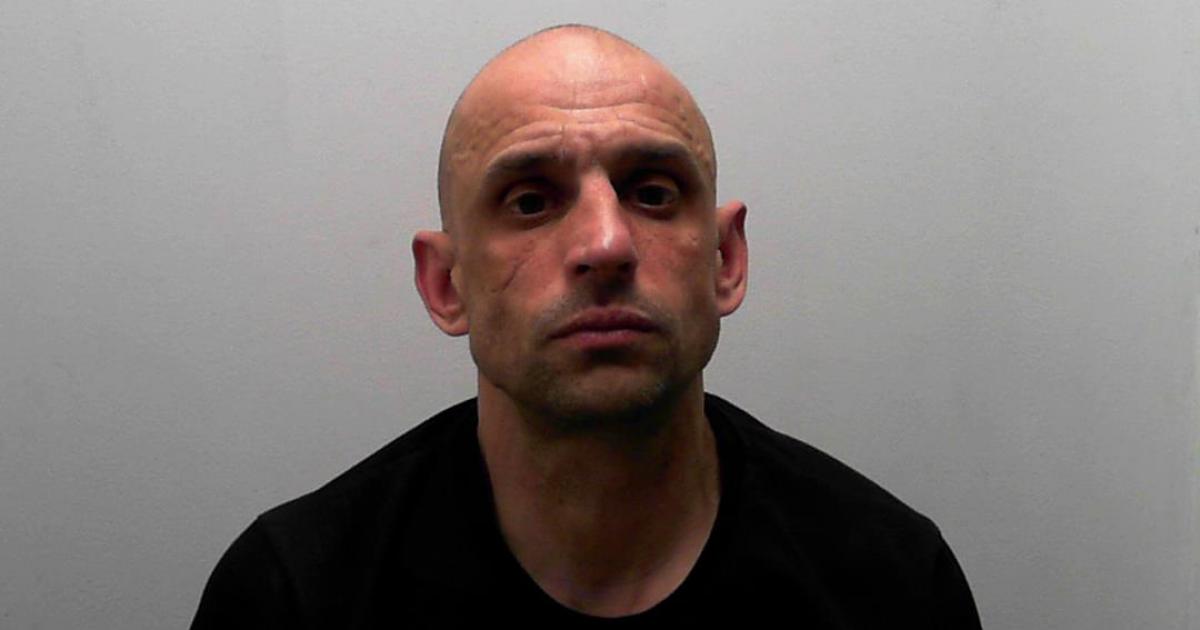
Stephen Ashes, 44, has links to York and North Yorkshire Police believe he may still be in the area.
He is described as white man, who is bald with a beard.
Recommended reading:
Advertisement
Ashes was last seen wearing a green t-shirt and black jeans.
A force spokesperson said: “Extensive enquiries are ongoing to locate Ashes and we are now appealing for your help to find him.
“If you have an immediate sighting of Ashes, please call 999. If you have information about his current whereabouts, please call North Yorkshire Police on 101.
“Alternatively, you can pass on information anonymously through the independent charity Crimestoppers by calling 0800 555 111 or via their website.
Advertisement
“Please quote reference number 12260091300 when passing on any information.”
What might a sixth-century monastic rulebook have to say about how we live today? Living by the Rule: Contemporary Meets Medieval, the centrepiece of this summer’s exhibitions at the Sainsbury Centre in Norwich, takes up that question. As curators, we bring present-day habits and assumptions into dialogue with a seemingly distant counterpoint: medieval monasticism, and in particular the Rule of St Benedict, written in sixth-century Italy.
Benedict was born into a noble Roman family around 480, shortly after the fall of the Roman empire. It was a period in which the political and economic certainties that had structured society for centuries were rapidly unravelling.
As a young man, he abandoned his studies and set out to live differently. He experimented with forms of withdrawal from society, including years of living as a cave-dwelling hermit, before eventually founding a large religious community at Monte Cassino, halfway between Rome and Naples.
The Rule was written towards the end of his life, a direct product of his reflections and experiences. It offered a framework for a radically different kind of life, explicitly set apart from the social hierarchies and economic imperatives of the wider world. Benedict imagined a life of stability, community and measure; one devoted to the care for souls and, ultimately, to spiritual salvation.
Many of Benedict’s rules were pragmatic rather than ideological: who should be served their dinner first, how to make sure everyone wakes up on time for night prayers, when to schedule toilet breaks. His Rule is preoccupied with all the gritty detail of creaturely routines, because these habitual concerns were fundamental to the smooth running of a community. Benedict believed that if a community functioned well, it made space for its members to engage with the meaning of life beyond the everyday.
Living by the Rule
Curating Living by the Rule: Contemporary Meets Medieval, we were aware that the idea of “living by the rule” might sound off-putting to some visitors – too close to simply doing what you’re told. It also sits uneasily with the individualism of our age, in which meaning is often framed in terms of personal fulfilment or even “optimisation”. Rules, by contrast, point to our dependence on others and the obligations that come with it.
Advertisement
It is important, though, not to confuse Benedict’s “Rule” with modern laws or regulations. The term comes from the Greek kanon, via the Latin regula, meaning a pattern, model or yardstick: something to guide judgment rather than dictate behaviour. Unlike modern faith in impersonal rules, Benedict’s approach is strikingly flexible. Nothing is so fixed that it cannot be adapted, or even set aside, in light of different people and circumstances.
Translating these ideas into an exhibition was far from straightforward.
At the heart of our work was the conviction that something fascinating emerges when medieval objects are brought into dialogue with contemporary artworks. Rather than organising the exhibition around a single theme or subject, we were interested in something more fundamental: art’s relationship to lived experience and how it shapes, and is shaped by, the forms of life around it.
This also required taking the radical break between the medieval and the modern seriously. There are, of course, points of deep resonance between monastic life and today’s world – in the shaping of institutions, for example, or in how we structure time. Yet the rise of modern mass societies also introduced conditions that make any straightforward translation of Benedict’s Rule into contemporary social life far from simple.
Importantly, the monks were experimenting with a different way of living – and of living together. As Benedict puts it, this way has to differ from the world’s way.
Modern artists, too, have often tried to operate at a distance from the world – its priorities, habits and ways of seeing. For a long time, art has not been tied to any clearly shared social function or agreed purpose. Instead, it has come to exist at a remove from everyday life, a shift that brings both losses (in stable purpose and patronage) and gains (in new creative and entrepreneurial freedoms). Modern art, in this sense, becomes an experiment in another way of doing things – though one that remains entangled with the very world it seems to resist.
So what happens when the medieval monastery meets contemporary art? The sections of the exhibition and its accompanying book explore principles that are both attractive and repulsive to us now.
British Benedictine monk Dom Sylvester Houédard. Dom Sylvester Houédard Archive/John Rylands Research Institute and Library/University of Manchester/Prinknash Abbey Trustees
These include stabilitas – the expectation that monks remain within their monastery for life; obedience, expressed in submission to the authority of the abbot; the renunciation of private property in favour of shared ownership based on use and need; and a life oriented above all towards prayer. Together, these demanding and remarkably enduring principles offer a striking way to view the present, unsettling some of our basic assumptions about how life is organised and what it is for.
We invite visitors to leap from the medieval to contemporary and back again, without knowing exactly what they will find. We hope the results are vivid and unexpected, throwing up questions and offering plenty of food for thought – unfamiliar ideas and experiences to be chewed over and digested.
The rules we live by today – whether chosen or inherited – are the product of historical forces. Art reminds us that life is never fixed, and that it can always be organised differently.
The mother of a teenage boy who was stabbed to death in the street hit out at knife crime, telling his killers that the ‘death of my son should not just be another statistic’.
Mohanad Goobe, 15, was set upon, dragged to the floor and kicked before being stabbed through the heart in Moss Side last September. Three boys have today (May 21) been sentenced at Bolton Crown Court in connection with his death.
Boy A, 16, who stabbed Mohanad, and Boy B, 15, who sourced the combat knife used in the killing, were found guilty of murder. Boy C, 14, who ‘lent active support’, was found not guilty of murder, but guilty of manslaughter.
Click here to hear the latest from Manchester’s courts in our newsletter
Advertisement
Boy A and Boy B were both handed the youth equivalent of a life sentence, and ordered to serve 19 years and 18 years respectively. Boy C was handed a determinate six year sentence. The defendants cannot be named for legal reasons.
Mohanad’s mother, Amaley Ahmed, told of her and her family’s devastation at their loss. She said: “Why has it become the norm for our youths of today to think it is cool to carry knives?
“While this is becoming acceptable, all our child’s lives are at risk, and as a family, we are living with the consequences. I want people hearing this statement to understand that Mohanad was taken from us without a thought for the consequences, and his death should never have happened.
“Knife crime, sadly, is becoming prevalent among our children, but the death of my son should not just be another statistic. Mohanad was a living, breathing, larger than life, lovable, sometimes cheeky, 15-year-old boy, whose life ended when another child made a choice to take a knife out with them, and chose to use that knife on my son.
Advertisement
“A choice that killed my son, and ended our lives as we knew it. I feel many emotions, including anger, for the boys responsible for my son’s death, but I also feel pity, for they too will have to live with the consequences of what they have done and I hope they see Mohanad’s face for the rest of their lives.”
She added: “Our lives will never be the same again and we will never come to terms with what has happened and the senselessness of it all. Mohanad was the centre of our family, a typical teenager, who loved hanging out with his friends and spending far too long on his gaming station.
Advertisement
“He wasn’t in a gang, and he had never been in trouble with the police. A fall out between a group of boys resulted in Mohanad losing his life.”
‘You took it to another level, and murdered him in the street’
The court heard that Mohanad’s murder, on September 15 last year, followed a series of street fights in the weeks prior.
Sentencing, Mr Justice Griffiths said: “He [Mohanad] had got into arranged fights which were sometimes shared with boys from several schools on social media. No weapons were used.
“There were no serious injuries. This was jockeying between schoolboys for status and bragging rights, the winners and the losers changing places from fight to fight, and not much damage done except injured pride.
Advertisement
“But you, [Boy A] and [Boy B}, took it to another level, got a combat knife, and murdered Mohanad in the street. You, [Boy C], lent active support to the joint attack, guilty of manslaughter.”
The fights were discussed on social media, including on TikTok and Instagram. Following one fight in Alexandra Park about two weeks prior, Boy A had been left ‘humiliated’ after it appeared he had lost. Mohanad had been present in support of Boy A’s rival.
The judge said that Boy A then ‘decided to raise the stakes and start fighting dirty by introducing ambush tactics and knives’. Despite being only 15, the judge said Boy B had begun ‘dealing in knives for money’. In the intervening period, there was ‘feverish chatting and speculation’ about what would happen next, until September 13 when Boy A and Boy B began plotting a ‘group, surprise attack, with knives’.
They suggested to Mohanad and his friends that it would actually be a ‘fair fight between one or two on each side without weapons’. Boy C said he did not expect it to be a knife fight.
Advertisement
Boy A and Boy B ‘did not let on to the rest of the group the full extent of their real plan’, the judge said. They arranged to meet after school on Monday, September 15 in Whitworth Park. Mohanad had been pressured to agree to a ‘fair, arranged fight against his better judgment so as not to lose face’. The two groups came together for about an hour, without any fighting taking place.
“[Boy A] and [Boy B] did not want a fair fight,” the judge said. “The boy who was expected to fight on their side had not been brought with them. If there had been a fair fight, their side might have lost again, and they weren’t going to risk that.”
As Mohanad and two of his friends began to leave, they were followed by a group of boys with the other side, and Boys A, B and C led the charge. Boy B threw Mohanad to the floor, Boy C kicked him ‘as hard as he could’ as he lay prone. Mohanad got back up and threw some punches in self-defence, before Boy A stabbed him with ‘deliberate, lethal force’.
Mohanad was able to get up, but seconds later he collapsed. He died in the street. Speaking before sentencing was passed on her son’s killers, Mohanad’s mum said: “Mohanad brought out something special in everyone he met, such was his way. I will be forever grateful for the time I had with him.
Advertisement
“I, on behalf of my family, can only request that the persons responsible are given a sentence that reflects the devastating effect this has had on our family, and will continue to do so. Whatever sentence they are given, the sentence we will live, without Mohanad, will far outweigh it.”
The owner of the music used in “Peanuts” television specials has filed lawsuits against several defendants, including the Trump administration, alleging that it illegally used the tunes in social media posts and a game.
Lee Mendelson Film Productions, which owns the copyright to “A Charlie Brown Christmas” and other shows, filed the suits in federal courts in New York and Washington, D.C. Wednesday.
One lawsuit argues the Interior Department did not have permission to use pianist Vince Guaraldi’s arrangement of “O Tannenbaum” from “A Charlie Brown Christmas” in a digital holiday card posted to social media.
A spokesperson for the Interior Department told The Independent that it does not comment on litigation.
Advertisement
Lee Mendelson Film Productions, which is based in California, was founded by and is named for the producer who collaborated with “Peanuts” creator Charles Schulz and director Bill Melendez to create the TV specials based on Schulz’s iconic comic strip.
This began starting with “A Charlie Brown Christmas” in 1965.
The owner of the music used in ‘Peanuts’ television specials has filed lawsuits against several defendants, including the Trump administration, alleging that it illegally used the tunes in social media posts and a game (Local Library)
Mendelson, who died in 2019, hired the jazz pianist Guaraldi to provide the mellow, often melancholy music, including “Christmas Time Is Here” and “Linus and Lucy.”
According the company’s lawyers, the suits were filed in response to persistent unfair overuse of the music online.
In a statement shared with The Associated Press, attorney Marc Jacobson said that Lee Mendelson Film Productions “will no longer tolerate companies using their property without a license, especially in this era of instant digital sharing.”
Advertisement
Jacobson added that “the rights of creators and the protection of iconic cultural assets must be vigorously enforced.”
Peanuts Worldwide LLC, which owns the rights to Charlie Brown, Snoopy and the other characters, is not a party in any of the lawsuits.
Wayne Clarke, 32, passed away after a gastric bypass at Sunderland Royal Hospital – with his devastated family claiming the operation left him suffering a deadly stomach “leak”.
The 6ft golf-loving footie fan from Seaham had battled obesity and type 2 diabetes before going under the knife on December 3 last year.
But his loved ones say his condition spiralled after the op and he endured “undignified and demeaning” care, including being left in his own faeces.
Despite multiple surgeries to fix the leak in his stomach, Wayne’s health rapidly deteriorated and he died on January 7.
Advertisement
Wayne Clark died following NHS weight loss surgery. // (Image: SWNS)
Now his family are demanding answers, and say they’ve been left broken by his death.
Sister Mel said: “I don’t know how we will get over this as a family.
“My mam and dad are fading away, and our daughter absolutely adored her Uncle Wayne, she is only nine and it has been so hard to explain this to her.”
She told how Wayne repeatedly raised fears he was dying but felt ignored.
Advertisement
Wayne Clark who died following NHS weight loss surgery, pictured with dad Billy. (Image: SWNS)
Mel said: “The fact Wayne suffered so much is something that I’ll never forget, and we do want accountability for that.
“While he was in hospital, there were so many really upsetting incidents, and it’s so hard to live with knowing Wayne was treated so poorly.
File photo of Sunderland Royal Hospital. (Image: SWNS)
“He wasn’t taken seriously, he told me he was scared and he thought he was dying, but they’d just brush it off.
“There were times his machines were flashing and we’d get help and they’d tell us everything was normal.
Advertisement
“My mam would say there was something wrong, she knows her son better than anyone, but they wouldn’t listen.
“We even saw the water by his bedside was discoloured – I can’t really describe how bad his experience was in there.
Wayne Clark who died following NHS weight loss surgery, pictured with niece Maggie. (Image: SWNS)
“There was one absolutely awful instance where they accused him of recording them on his phone, Wayne was devastated with how they spoke to him and treated him about this.
“It was a very distressing situation when Wayne was declining really quickly, and raised a lot of questions.”
Advertisement
Mel’s husband Stu slammed the care Wayne received in intensive care.
He said: “The lack of any compassion or empathy was unbelievable really.
“The way they spoke to Wayne, even from what we saw ourselves, was unacceptable.
“Me and Mel both work in care and we were shocked at what we saw.
Advertisement
“You’d get staff sitting outside of patients’ rooms in ICU, playing on their phones – these are desperately ill people who deserve a lot better.
“Visitors aren’t even allowed their phones when they come into the unit.
“Having read through Wayne’s medical records, there was an instance where Wayne was supposedly rude to them, after being left on his own for at least half an hour in his own faeces.
Wayne Clark (L) who died following NHS weight loss surgery, pictured with brother-in-law, Stu (R). (Image: SWNS)
“This is a young man who was in pain, desperate because he couldn’t do anything for himself and who was declining fast – and all they can say is that he shouldn’t have spoken to them as he did?
Advertisement
“He deserved to be treated with kindness and dignity, and what he received was far from that.”
The family also say they were “robbed of precious hours” with Wayne in his final hours.
Mel said: “We were robbed of precious hours with Wayne.
“They knew during the night he had got so much worse, and when your son or brother is in intensive care, you don’t sleep properly anyway with the trauma and worry – we would’ve been there instantly if we had known anything had changed.”
Advertisement
A spokesperson for South Tyneside and Sunderland NHS Foundation Trust, said: “We send our sincere condolences to Mr Clark’s family following their loss.
Wayne Clark who died following NHS weight loss surgery, pictured with sister Mel. (Image: SWNS)
“We have shared an in-depth response with them to help answer the questions they have around his surgery, the complications he suffered and his time in hospital.
“An inquest will now be held into his death and we will support the coroner fully in this process.”
Lawyers have now lodged a 26-point complaint over his care.
Advertisement
Rebecca Hall, of Slater and Gordon who is representing the family, said: “Wayne hoped this surgery would be life-enhancing and transformative, but the tragedy that ensued has rightly caused his family to ask questions about what went wrong.
File photo of Sunderland Royal Hospital. (Image: SWNS)
“Too often, we hear of families who are not listened to and feel dismissed by medics, and that is absolutely unacceptable.
“The way Wayne was treated only compounds his family’s devastation.”
An inquest into Wayne’s death is expected to take place later this year.
The side will play Dunfermline at Hampden in the final game of the domestic season, but it comes after hundreds of fans invaded the pitch after Celtic won the league on Saturday, with thousands then descending on the Trongate area of Glasgow, where some clashed with police and officers were injured.
A woman planted a tiny wisteria against her house wall and three years later the climbing plant has transformed her home, leaving people amazed at the gorgeous sight
Alice Sjöberg Social News Reporter
13:23, 21 May 2026
Spring brings with it a spectacular array of floral displays, and few are more eagerly awaited than the enchanting wisteria plant, which can frequently be spotted adorning houses, pergolas, or simply thriving in a garden pot.
Wisteria typically blooms in mid-to-late spring, between April and June. The exact timing depends on your local weather and the specific variety, but peak blooms usually last for a beautiful, vibrant two-week window. It looks stunning in full bloom, draping across the front of a house, cascading over a pergola or climbing along a sun-drenched wall.
Advertisement
Now, one homeowner has shared their remarkable wisteria growth, which occurred just three years after planting — well ahead of the typical seven or eight year wait.
The TikTok video initially showed a photograph of the modest wisteria plant, positioned along one of the walls of their white property. And while wisteria is renowned for taking considerable time to flower, it clearly took to its new surroundings.
A mere three years on, the wisteria had flourished beyond the first-floor windows and spread wide enough to extend between the windows on each floor.
Content cannot be displayed without consent
“Worth every year of waiting,” read the text overlaid on the video.
Advertisement
The homeowner elaborated in the post’s caption: “3 – 4 years ago we planted a tiny wisteria with a vision for our little white cottage. Now it’s everything we imagined and more. Favourite decision we ever made.”
In a separate post, they disclosed that they had fastened string along the exterior wall of the house to support the wisteria as it climbed upwards.
Viewers were immediately impressed by the rapid growth, with many heading to the comments section to express their astonishment.
“We’re buying a house on wisteria lane and that will be the first plant I add to our yard,” one person said, while another shared: “Defo worth it, mines being trained to go round my pergola this year.
Advertisement
“Stunning wisteria, probably the prettiest vines out there,” a third person said.
How to grow wisteria
Wisterias thrive in well-drained, fertile soil with plenty of sunlight. The ideal time for planting wisteria is between October and April. Container-grown wisterias can be planted throughout the year, though they are simpler to maintain during autumn or winter. Plant them in fertile, well-drained soil.
Wisterias produce the best blooms in full sun, so opt for a south- or west-facing wall or pergola. They will grow in partial shade, though this will result in fewer flowers.
The three most prevalent species, Wisteria floribunda (Japanese wisteria), Wisteria sinensis (Chinese wisteria) and Wisteria brachybotrys (silky wisteria), are vigorous growers capable of reaching around 10m (33ft) in trees or spreading up to 20m (66ft) against a wall. Wisteria can also be trained as a free-standing standard in a border or large container.
Advertisement
Given their climbing characteristics, wisterias require support structures such as wires or trellis fixed to a wall, or garden features like a pergola or arch.






















![DO NOT Watch This BITCOIN Video In Public... [this is EXTREMELY BIG]](https://wordupnews.com/wp-content/uploads/2026/05/1779371664_maxresdefault-80x80.jpg)








































You must be logged in to post a comment Login