

Crypto World
Morgan Stanley Updates Ethereum and Solana ETF Filings With Staking Plans

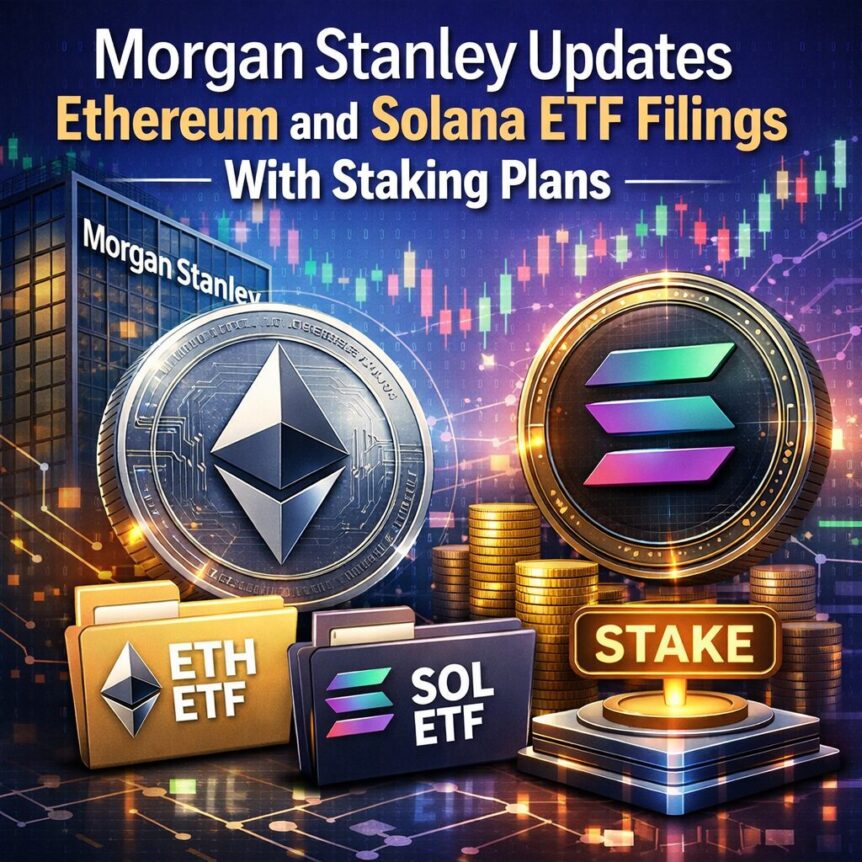
Morgan Stanley expanded its cryptocurrency exchange-traded fund plans after submitting revised S-1 filings to United States regulators. The bank updated registration documents for proposed Ethereum and Solana investment products on May 20. The amended filings outlined trust structures, staking plans, and operational procedures for both proposed exchange-traded funds.
Ethereum Trust Filing Adds Staking Structure
Morgan Stanley identified MSSE as the proposed ticker symbol for its planned Ethereum Trust product. The filing stated that the trust would track Ethereum spot prices through direct holdings of ETH tokens. The document also described plans to stake part of the trust’s Ethereum holdings through approved staking arrangements.
The filing stated that the trust would operate as a passive investment vehicle without active portfolio management activities. However, the trust would seek additional returns through staking rewards linked to Ethereum network participation. Morgan Stanley also outlined creation and redemption procedures involving authorized participants and cash settlement mechanisms for shares.
The revised filing arrived as competition increased across the United States cryptocurrency exchange-traded fund market. Several financial firms have recently updated filings for alternative digital asset products beyond Bitcoin funds. Morgan Stanley already offers spot Bitcoin and Ethereum trading services through institutional platforms.
Solana Trust Filing Highlights Network Risks
Morgan Stanley also revised registration documents for its proposed Solana Trust under the ticker symbol MSOL. The filing stated that the trust would track spot Solana prices through direct ownership of SOL tokens. Additionally, the document confirmed plans to stake part of the trust’s Solana holdings for network reward generation.
The filing described Solana’s Proof of History system and referenced operational risks connected to the blockchain’s architecture. Morgan Stanley included disclosures covering network reliability, validator participation, and transaction processing issues affecting Solana operations. The trust would also rely on authorized participants for cash creations and redemption activities involving issued shares.
The revised filing reflected broader institutional interest in cryptocurrency investment products tied to alternative blockchain networks. Several asset managers have pursued approvals for funds connected to Ethereum, Solana, and other digital assets recently. Regulatory discussions surrounding staking structures have also shaped updated filing language across pending cryptocurrency fund applications.
Crypto ETF Competition Continues to Expand
Morgan Stanley did not disclose management fees or operating expense ratios for either proposed cryptocurrency exchange-traded fund. The revised filings also omitted launch timelines for both investment products despite growing market competition. However, the documents confirmed that delegated sponsors would oversee several operational responsibilities linked to the proposed trusts.
The filings appeared alongside rising activity among firms seeking approval for alternative cryptocurrency investment products in the United States. Grayscale Investments recently submitted revised registration documents connected to a proposed exchange-traded fund tracking Binance Coin holdings. Asset managers continue adjusting applications during recent regulatory policy discussions as authorities review cryptocurrency fund structures.
Morgan Stanley’s latest amendments marked another development within the expanding United States market for digital asset investment products. Large financial institutions continue introducing cryptocurrency services alongside broader exchange-traded fund expansion strategies across regulated markets.
Regulatory approval decisions for pending cryptocurrency funds could influence future institutional participation within digital asset investment products. Those decisions could also affect several major financial markets globally.

Harvard University's endowment reduced its exposure to Bitcoin and Ethereum spot ETFs during the first quarter of 2026, according to SEC filings. Harvard Management Company cut its holdings in BlackRock's spot Bitcoin ETF (IBIT) by approximately 43% and completely liquidated its position in… Read the full story at The Defiant
Crypto World
5 Cryptos for Massive May Gains – Why Waiting Until Monday Will Cost You More on $DOGEBALL

May is heating up to be an absolute thriller for the digital asset market. With institutional interest solidifying and decentralized ecosystems scaling at record speeds, finding the best crypto to invest in May requires looking past pure speculation. Investors are shifting focus toward concrete utility, making this month the perfect time to evaluate projects that solve real-world problems. Today, we are diving deep into the breakout DOGEBALL crypto presale 2026, alongside market heavyweights Stellar (XLM), Bitcoin Cash (BCH), Hedera (HBAR), and Litecoin (LTC) to see which assets deliver genuine technical value.
Exploring DOGEBALL: The Best Crypto to Invest in May
DOGEBALL ($DOGEBALL) is building a dual-engine crypto ecosystem on its own custom Ethereum Layer 2 blockchain called DOGECHAIN. By merging GameFi and PayFi into a singular platform, it addresses major pain points in cross-border remittances and interactive entertainment. Instead of relying on traditional financial intermediaries, the platform allows users to send digital assets globally while enabling receivers to collect local fiat currency directly into their bank accounts. It supports over 30 global currencies with zero FX fees, near-instant settlement finality, and complete removal of traditional banking delays.
This crypto presale stands out because the $DOGEBALL token sits at the absolute center of this infrastructure. It acts as the exclusive utility token used to power all transaction fees on DOGECHAIN, sparking organic buy pressure as global payment volumes grow. For investors searching for the best crypto to invest in May, the project delivers audited security with a 100% smart contract score, multi-platform gaming integration featuring a $1M prize pool, and immediate staking rewards, providing clear utility metrics rather than empty speculative promises.
Unpacking the DOGEBALL Presale Mechanics and Math
The DOGEBALL crypto presale 2026 is moving at an incredibly rapid pace, having already secured 292K+ in funding from over 1000+ distinct global participants. The momentum structural design shifted on Monday 11th May 2026, when the development team executed a massive burn of 4bn tokens—wiping out 20% of the initial presale supply to enhance scarcity. The project is currently at Stage 4 with a token price sitting at just $0.0006. Since the launch price is mathematically locked at $0.015 via a tier-one Web3 launch partnership, securing tokens at today’s $0.0006 entry point unlocks a projected 2400% ROI. A baseline investment of $600 at the current rate yields 1,000,000 tokens, which would hold an implied value of $15,000 upon exchange listing. The presale now utilizes a timed 22-stage structure where each stage lasts a maximum of 7 days, ending every Sunday. New stages launch every Monday at 21:00 UTC with an automatic price bump, meaning today’s entry point disappears fast.
Stellar (XLM): Driving Institutional Asset Tokenization
Stellar continues to anchor its position as a dominant infrastructure layer for cross-border financial networks. Built inherently to move money quickly and cheaply, XLM operates as the friction-reducing medium for global enterprises and central banking pilots.
Recent network upgrades have expanded Stellar’s smart contract capabilities through its Soroban platform. This allows institutional entities to build compliant decentralized applications directly on top of Stellar’s high-throughput architecture, significantly increasing the long-term utility demand for XLM.
Bitcoin Cash (BCH): Scaling On-Chain Peer-to-Peer Payments
Bitcoin Cash remains focused on fulfilling the original vision of decentralized digital cash by prioritizing block size scalability and minimal transaction fees.
The network’s recent technical upgrades have introduced enhanced smart contract functionality, enabling token creation directly on the BCH chain without sacrificing transaction speed. This technical improvement bolsters its competitive positioning against other payment-centric networks, drawing renewed interest from merchants seeking reliable transactional utility.
Hedera (HBAR): Enterprise-Grade Consensus Innovation
Hedera utilizes a unique hashgraph consensus mechanism rather than a traditional blockchain structure, offering unparalleled security, asynchronous Byzantine Fault Tolerance, and predictable, micro-cent transaction fees.
The network is experiencing heightened transaction volumes driven by its massive enterprise steering committee, which includes major global tech corporations. The ongoing expansion of Hedera’s asset tokenization frameworks makes HBAR a core asset to monitor as real-world asset deployment accelerates across corporations.
Litecoin (LTC): The Network of Pure Transactional Liquidity
Litecoin maintains an immaculate uptime track record, positioning itself as one of the most reliable networks for daily digital asset transactions. Its structural integration with global payment processors keeps liquidity high.
The recent surge in Litecoin processing volumes is heavily supported by the growing adoption of MWEB (MimbleWimble Extension Block) privacy features, giving users optional transactional confidentiality. LTC remains a premier choice for cost-effective asset transfers across exchanges globally.

The Final Verdict: Finding Your Best Crypto to Invest in May
Navigating the market this month requires balancing the reliable, enterprise-focused architectures of Stellar, Bitcoin Cash, Hedera, and Litecoin with high-growth token models. While major networks offer established safety, the DOGEBALL presale introduces unmatched structural upside by combining Layer 2 scalability with zero FX global cross-border payments. With the timed weekly price increases resetting every Monday at 21:00 UTC, entering the DOGEBALL crypto presale 2026 during its current low-priced stage represents an asymmetric growth opportunity for forward-thinking portfolios.

Find Out More Information Here
Website: https://dogeballtoken.com/
X: https://x.com/dogeballtoken
Telegram Chat: https://t.me/dogeballtoken
FAQs for Best Crypto to Invest in May
Is May a good month for crypto?
Yes, May historically acts as a pivotal month for market adjustments and volume consolidation. It is a fantastic time to discover early-stage utility assets like the DOGEBALL presale before widespread institutional exchange listings drive up entry prices.
Which crypto is best to invest now?
DOGEBALL represents the strongest risk-to-reward investment right now. Unlike legacy assets, its custom Layer 2 payment architecture and current low presale pricing of $0.0006 provide a clear mathematical route to high-multiple returns upon launch.
Which crypto coin will give 1000x?
While no project can guarantee 1000x returns, DOGEBALL holds the fundamental infrastructure to achieve explosive exponential growth. Its combination of zero FX fee payments, GameFi microtransactions, and aggressive token-burning mechanisms builds genuine, long-term asset scarcity.
Which crypto is growing fast?
The DOGEBALL crypto presale 2026 is expanding rapidly, securing 292K+ from 1000+ investors. Coupled with a recent 4bn token burn and ramped-up global marketing campaigns, its community momentum is outpacing standard market averages.
Which crypto will reach $1?
While large-cap tokens struggle with high circulating supplies, DOGEBALL’s systematic token burns and locked $0.015 launch price position it for an aggressive upward trajectory toward major dollar milestones as global payment adoption scales.
Disclaimer: This is a Press Release provided by a third party who is responsible for the content. Please conduct your own research before taking any action based on the content.


A SpaceX Falcon 9 rocket is displayed outside a Space Exploration Technologies Corp. facility in Hawthorne, California, on March 26, 2026.
Patrick T. Fallon | Afp | Getty Images
A slew of tech mega-IPOs are ahead and traders expect they’ll push Warren Buffett aside on their first day of trading.
SpaceX on Wednesday officially filed to go public on the Nasdaq. On the same day, reports circulated that OpenAI will file for an IPO confidentially as soon as Friday.
After the OpenAI reports, traders on prediction market platform Kalshi now see a 92% chance that the ChatGPT owner files for an IPO this year. Traders also think its chief private rival, Anthropic, has 69% odds it will officially go public this year.
And according to traders on Polymarket, all are expected to trade on their first days at valuations north of $1 trillion, which would be records for a public debut.
SpaceX was valued at $1.25 trillion in February, and Polymarket traders think there’s a 56% chance it closes its first trading day above $2.2 trillion. OpenAI was last valued at $852 billion, and traders think there’s a 65% chance it ends its first public trading day above $1.4 trillion.
Meanwhile, traders place 47% odds that Anthropic on its first day of public trading will close above $1.8 trillion. The company reportedly is in talks for a new funding round at a $900 billion valuation.
Those valuations would place the companies firmly in the $1 trillion club, and likely above Berkshire Hathaway’s market cap, currently at $1.03 trillion. They’d even challenge Meta and Tesla’s around $1.5 trillion market caps.
Deutsche Bank analyst Adrian Cox pointed out in a Thursday note that Berkshire Hathaway had over $350 billion in revenue last year. That compares to SpaceX’s $18.67 billion in revenues during 2025. OpenAI reportedly generated $13.1 billion of revenue last year.
Anthropic’s revenues for 2025 aren’t as clear, but reports Wednesday said that the company is pacing for a second-quarter profit, a first for the Claude owner, at nearly $11 billion in revenue. SpaceX and OpenAI are unprofitable companies, despite their massive valuations.
The massive valuations come as companies have stayed private for longer, partially thanks to the growing number of ways to raise capital outside of public markets. But the rush of these IPOs in a row have created concerns there won’t be enough buyers to sustain these high valuations.
Cox threw cold water on those fears.
“While there may be concerns about the capacity of the market to absorb a number of IPOs valued at several hundred billion dollars this year, they would slot into an US stock market worth about $70trn overall,” he wrote. “That is five times larger in nominal terms than it was even at the peak of the dot-com bubble in the late 1990s. At that time, there was an average of almost 500 IPOs a year, compared with about 120 this decade.”
Disclosure: CNBC and Kalshi have a commercial relationship that includes a CNBC minority investment.

Strategy weighs Bitcoin sales with equity and credit funding options
STRC dividend changes aim to strengthen digital credit stability goals
Michael Saylor projects long-term Bitcoin growth despite market pressure
Michael Saylor signaled a shift in Strategy’s capital management approach as Bitcoin traded near $79,000 on Thursday. The company may sell part of its Bitcoin holdings before year-end while continuing equity and credit financing activities. Meanwhile, Strategy maintained its focus on increasing Bitcoin per share and long-term enterprise value.
Strategy Adjusts Treasury Structure With Flexible Funding Methods
Strategy reviewed multiple funding options during a retail investor discussion hosted by Natalie Brunell. The company assessed cash reserves, equity issuance, credit products, and selective Bitcoin sales. Management said mixed funding structures produced stronger long-term results than single-source financing models.
Saylor explained that the company evaluates liabilities continuously and responds quickly to market conditions. He said Strategy studies credit risks, shareholder value, and balance sheet efficiency before making funding decisions. The company also intends to maintain flexibility while expanding its Bitcoin-focused financial structure.
Strategy currently holds Bitcoin purchased across different market cycles and price levels. Saylor noted that some holdings carry cost bases between $10,000 and $125,000 per coin. Therefore, the company could sell higher-cost holdings if market conditions support that strategy.
STRC Remains Central to Strategy’s Digital Credit Business
Strategy executives also discussed plans to strengthen STRC, the company’s preferred credit product known as Stretch. The company proposed changing dividend payments from monthly schedules to semimonthly distributions. Management believes the move could support STRC’s target trading level near $100.
Saylor described STRC as the company’s flagship digital credit product with lower volatility than common equity. He added that Strategy raised dividends, expanded dollar reserves, and repurchased senior debt to improve product stability. The company also seeks shareholder approval for the revised dividend structure.
Phong Le said Strategy reviewed similar adjustments for other preferred products but prioritized STRC first. He stated that STRC remains the company’s largest and most innovative financial product. Meanwhile, Strategy plans to keep other preferred securities, including STRF, STRD, and STRK, within its capital structure.
Bitcoin Outlook Supports Strategy’s Long-Term Expansion Plans
Saylor maintained a bullish stance on Bitcoin despite recent market weakness and macroeconomic pressure. He said institutional demand and digital credit products could absorb future Bitcoin supply for decades. The company also expects long-term growth in tokenized finance and regulated digital asset markets.
During a CNBC interview, Saylor stated that Bitcoin entered a new market recovery phase after stabilizing near $60,000 earlier this year. He argued that long-term interest rates, geopolitical tensions, and miner selling created temporary pressure across digital assets. However, he believes market conditions will improve as regulation advances.
Saylor also highlighted the proposed Clarity Act and regulatory discussions around tokenized securities in the United States. He said these developments could strengthen digital asset adoption and support broader market activity. Additionally, he stated that Strategy may continue acquiring mined Bitcoin through 2140 under its long-term treasury model.
The company also addressed concerns surrounding quantum computing and Bitcoin network security. Saylor said Bitcoin developers could upgrade the network if credible technological risks emerge in the future. He compared potential upgrades with software updates commonly used across financial and technology systems.

TLDR
- Strategy may sell some Bitcoin before the end of the year as part of its capital management plan.
- Michael Saylor said the company evaluates equity, credit, cash, and Bitcoin sales continuously.
- The firm aims to increase Bitcoin per share, total holdings, and enterprise value over time.
- Saylor said a mixed funding approach performs better than relying on a single method.
- Strategy could sell Bitcoin with a higher cost basis depending on market conditions.
Strategy may sell some Bitcoin before the end of the year, according to Executive Chairman Michael Saylor. He said the company evaluates multiple funding options, including equity, credit, and Bitcoin sales. Strategy aims to increase Bitcoin per share and overall enterprise value over time.
Strategy Considers Bitcoin Sales in Capital Planning
Michael Saylor said Strategy may sell Bitcoin as part of a broader capital management plan. He explained that decisions depend on market conditions and financial obligations.
“I think it’s not unlikely that we’ll sell some Bitcoin,” Saylor said during a retail investor Q&A. He added that the company has not finalized the amount.
Strategy reviews funding options using a data-driven approach. It evaluates whether liabilities should be covered by cash, equity, credit, or Bitcoin.
Saylor said models relying on one funding method tend to underperform. He stated that a mixed approach often produces better outcomes.
The company holds Bitcoin with cost bases ranging from $10,000 to $125,000. Saylor said Strategy could sell higher-cost coins if needed.
He also noted that Bitcoin sales would not necessarily affect dividend tax treatment. Strategy expects return-of-capital treatment for preferred dividends.
Executives said decisions can be made quickly when conditions change. However, they emphasized a long-term focus on Bitcoin per share growth.
STRC Dividend Changes and Broader Strategy Focus
Strategy addressed investor questions about STRC, its flagship credit product. Saylor said the firm may adjust dividends to support trading near the $100 target.
The company plans to shift STRC dividends from monthly to semimonthly payments. This change remains subject to shareholder approval.
Saylor said Strategy is not legally required to defend the $100 price. However, he described it as a central business objective.
The company has taken steps to strengthen STRC performance. These include raising dividends and building a U.S. dollar reserve.
Strategy also repurchased senior debt to improve its balance sheet. Executives said STRC stability remains a key performance measure.
CEO Phong Le said the firm considered changes for other preferred products. However, Strategy chose to focus on STRC first.
Saylor confirmed the company will not retire other preferred securities. These include STRF, STRD, and STRK.
He added that convertible bonds remain senior liabilities. Strategy plans to retire them over time.
In a separate CNBC interview, Saylor said Bitcoin could reach $1 million eventually. He linked this outlook to institutional demand and digital credit products.
Strategy executives said their long-term focus remains on Bitcoin yield and digital credit growth. They continue to educate investors on the company’s model.
TLDR
- A U.S. lawmaker introduced a bill to establish a strategic Bitcoin Reserve under federal law.
- The proposal aims to formalize a March 2025 executive order on Bitcoin reserves.
- The bill has gained bipartisan support with more than a dozen co-sponsors in Congress.
- The Treasury Department would manage the reserve and oversee its operations.
- The legislation allows the government to acquire up to 1 million BTC over five years.
Rep. Nick Begich introduced legislation to establish a strategic Bitcoin Reserve under U.S. law. The proposal aims to formalize an earlier executive order issued in March 2025. Lawmakers from both parties have joined as co-sponsors, signaling growing support.
Lawmakers Move to Formalize Strategic Bitcoin Reserve
Begich unveiled the American Reserve Modernization Act on Thursday. The bill seeks to give the strategic Bitcoin Reserve a permanent legal framework.
The legislation builds on a prior proposal known as the BITCOIN Act. Begich introduced that measure earlier with Sen. Cynthia Lummis.
The new bill directs the Treasury Department to oversee the reserve. It also creates a separate stockpile for other federally held crypto assets.
https://x.com/BitcoinMagazine/status/2057482381427163465?s=20
Begich compared Bitcoin to gold during a Fox Business interview. He said markets have identified both as dominant stores of value.
“When you look at bitcoin, it represents about 60% of all market cap,” Begich said. He added that markets have chosen it as a primary asset.
The proposal allows Treasury to acquire up to 200,000 BTC annually. This plan would run for five years and target 1 million BTC.
The holdings would remain locked for at least 20 years. That structure aims to preserve long-term value within the reserve.
U.S. Bitcoin Holdings and Broader Crypto Policy Push
The U.S. government currently holds about 328,372 BTC. Authorities obtained these assets through law enforcement seizures.
These include funds from the Silk Road case and the 2022 Bitfinex recovery. Officials have not outlined a unified management strategy.
Rep. Pat Harrigan addressed this issue in a statement. He said the government holds billions in seized bitcoin without a clear plan.
“The United States government already holds billions in seized bitcoin,” Harrigan said. He added that the situation requires change.
The bill arrives during increased legislative activity around crypto regulation. The Senate Banking Committee recently advanced a major digital asset framework.
Lawmakers approved the Digital Asset Market Clarity Act in a 15-9 vote. Two Democratic senators supported the measure alongside Republicans.
Sen. Lummis said the bill could reach the Senate floor soon. She noted that a mid-June timeline remains possible.
Meanwhile, the Treasury has increased enforcement actions tied to crypto finance. Operation Economic Fury led to nearly $500 million in Iranian asset seizures.
A White House official said an announcement on reserve operations is near. The official confirmed that a key legal hurdle has been resolved.
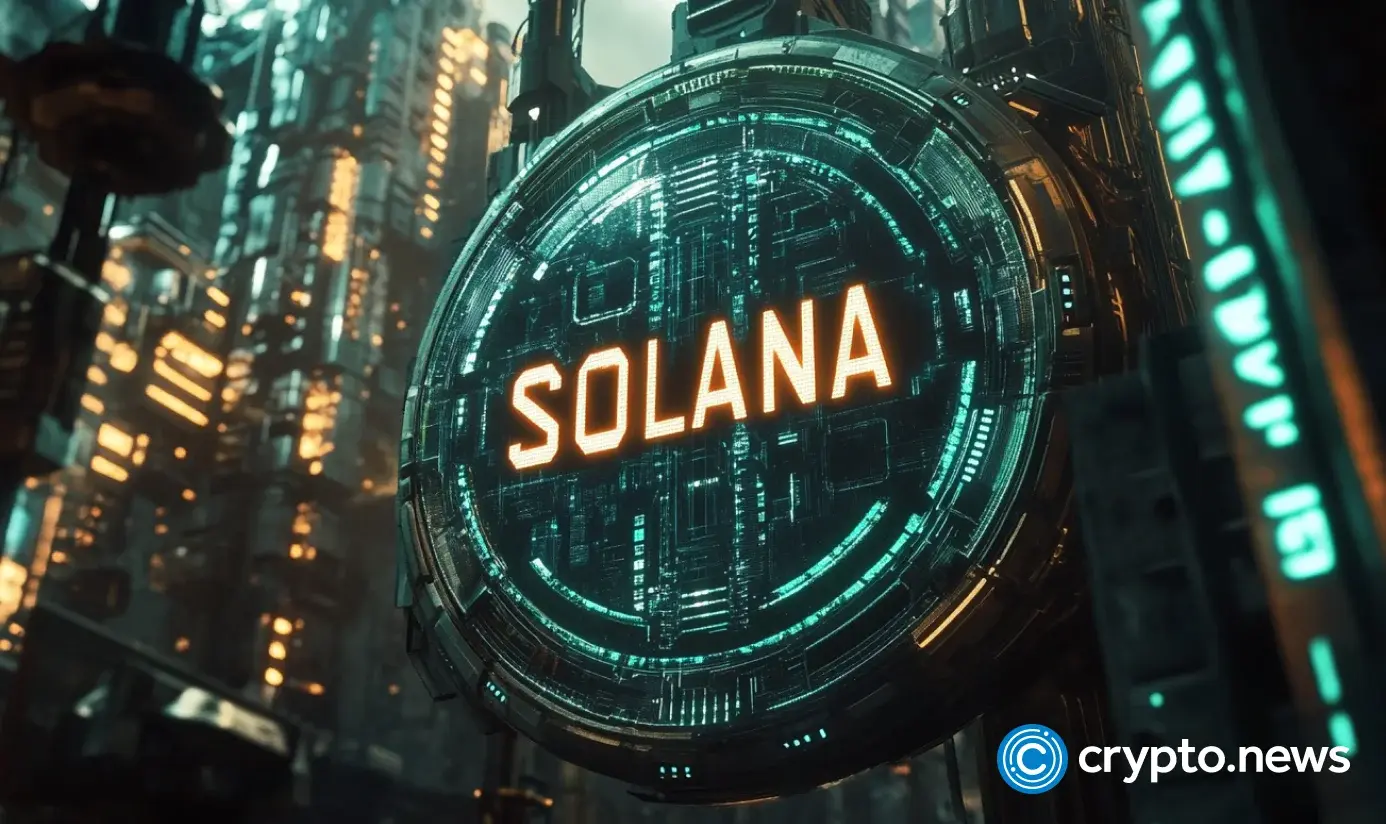
Amundi Solana UCITS fund SAFO launches as Europe’s largest asset manager brings €2.4 trillion AUM to the chain.
Summary
- Amundi, Europe’s largest asset manager, and Spiko Finance launched SAFO, a UCITS-compliant fund on Solana, making it the eighth chain in their strategy.
- SAFO is a tokenized sub-fund under the SPIKO SICAV structure, backed by total return swaps with BNP Paribas as a Tier 1 banking counterparty.
- The launch coincides with US Solana spot ETFs crossing $1 billion in assets under management and Goldman Sachs reducing its SOL exposure.
Amundi, managing €2.4 trillion in assets, and Spiko Finance announced the launch of SAFO on Solana, bringing their UCITS-compliant tokenized fund to its eighth blockchain. Spiko Finance acts as transfer agent, tokenization platform and broker, while CACEIS, Amundi’s custody affiliate, handles depositary and fund administration.
SAFO is formally constituted as a tokenized sub-fund under the legal entity of SPIKO SICAV and subject to French regulatory oversight by the AMF. The fund implements total return swap contracts with full backing from Tier 1 banking entities including BNP Paribas. Subscriptions and redemptions are denominated in EUR, USD, GBP, and CHF, with a minimum investment of one unit per currency class.
Why Amundi’s Solana entry signals a structural shift
The launch arrives as US Solana spot ETFs have crossed $1 billion in assets under management, compressing the institutional adoption narrative from US-only to transatlantic. Crypto.news has tracked about 30 institutions holding roughly $540 million in Solana ETF exposure as of March 2026, a figure that the Amundi move now supplements from the European side.
The timing creates a notable divergence. Goldman Sachs recently reduced its SOL exposure while Amundi is going long, creating the kind of two-sided institutional narrative that tends to build structural demand over time. Crypto.news has also noted institutional endowments adding Solana ETF positions as regulated wrappers lower the barrier for conservative allocators.
What SAFO adds to the existing UCITS product landscape
The UCITS framework allows SAFO to be distributed across all EU member states under a single regulatory structure, removing the cross-border compliance friction that has historically kept European institutional allocators from on-chain products. At the March 2026 expansion, the fund had roughly $100 million in committed AUM across its existing seven blockchain deployments.
Solana was chosen for its transaction throughput and growing institutional infrastructure base. Crypto.news has reported on Morgan Stanley refiling its own staked Solana ETF application, with the Amundi UCITS entry now representing simultaneous pressure from both the US and European institutional channels.
Crypto World
From Swaps to Super Apps: How ChangeNOW Is Building Crypto’s One-Stop Financial Platform


Cryptocurrencies have changed heavily since the introduction of Bitcoin as a peer-to-peer payment system. For some, Bitcoin is better used as an investment rather than as a currency to spend.
New cryptocurrencies are adapting to payment needs. And crypto users have thousands of options to choose from. That’s where crypto wallets can come into play, allowing someone to buy, sell, or save across a variety of cryptocurrencies.
At Consensus 2026 in Miami Beach, BeInCrypto recently met up with Tim Stanyakin, Head of Growth at ChangeNOW, about the company’s latest wallet offerings – including an expansion into areas such as sports betting.
ChangeNOW’s Infrastructure Base
While many users may simply think of a crypto in terms of its end use, there’s often significant code to make a crypto work. And combining multiple cryptocurrencies via a wallet can be a substantial challenge.
ChangeNOW has been able to build up a substantial infrastructure to provide a one-stop shop for cryptocurrencies across radically different use cases.
“We have an ecosystem. We have a branch called NOWPayments. We provide cryptocurrency, even gateway for different companies, starting from retail to gambling to iGaming. Moreover, we have our own non-custodial wallet, NOW Wallet. We have an infrastructure provider called NOWNodes. It’s like the basement for almost every company on the market.”
NOWNodes provides a scalable crypto node platform. That includes blockchain APIs and full-node infrastructure, with flexibility for developers, enterprise solutions, and even Web3 projects.
The International Regulatory Environment
Regulatory concerns remain at the forefront of the crypto market right now.
The Clarity Act, which could lead to massive growth in stablecoin adoption in the U.S., appears to be moving towards a vote in the U.S. Senate.
But that’s just one country’s legislation. ChangeNOW’s global footprint requires a nuanced approach for each country and region.
“We work worldwide in the U.S., Canada, Europe. Now we’re trying to conquer the APAC region. That’s a lot of different regulatory frameworks. You choose the approach [in each region] not because of the mindset of the people, but mostly because of the different requests from the government and from taxes and forms.”
Combining Crypto With Prediction Markets and Sports Betting
Amid the crypto winter, soaring speculative interest has shifted towards areas such as prediction markets and sports betting.
These can offer some prospective quick wins. Crypto assets can provide funding, as ChangeNOW is fully integrating sports betting into their wallet – and is moving this market on-chain.
“We did a deep research and we understood that the whole market right now, the previous main highlight, I mean the 2024, 2025 was AI. Now it’s perps, prediction, prediction, perps. And as we would like to satisfy all of our customers, we decided to do that on-chain. We integrated Asper, we integrated PolyMarket, HyperLiquid, and it’s natively right now inside the app.”
The addition of prediction markets on top of other features creates a killer app – a one-stop financial platform for not just buying and holding crypto, but for staking and other financial activities such as gaming.
“When you use a non-decentralized platform for doing perps, prediction, any yield products and using your own keys and private keys from your non-custodial wallet, it makes sense for almost the whole audience.”
Meeting TradFi In Other Asset Markets
ChangeNOW is one of a growing number of platforms providing more than just one site for crypto investing.
It’s also integrating a substantial number of traditional assets that might normally require a traditional brokerage account – or may be difficult to access for many individuals in some countries.
“We’ve integrated, I think, around 50 assets from traditional finance, including gold, silver, Nvidia stocks, Exodus stocks, Crossforce, everything. We have everything in the top 10. And we increase that almost every month. That’s similar to how brokerages are introducing crypto.”
To some extent, many of the tradfi companies attending Consensus were looking to integrate cryptocurrencies to their platforms. Both tradfi and defi are now adding features that will substantially overlap.
Looking Ahead
Like many companies at Consensus, it’s a time to showcase the work that’s going on, rather than celebrate the path traveled so far. ChangeNOW is no exception. Its integration of traditional assets, alternative areas such as prediction markets and sports betting, all combine to make a killer app.
The real question is, what does the future hold? Here’s where ChangeNOW expects to be able to include for its users by the end of Q4 2026:
“NOW Wallet will be in a path of transformation to a kind of super app, where there will be everything available, starting from regular payments in the physical world. There will be AI engines… there will be new yield products, so you will be able to gain income from staking. There will be some more complicated products.”
The post From Swaps to Super Apps: How ChangeNOW Is Building Crypto’s One-Stop Financial Platform appeared first on BeInCrypto.
- Harvard sold its entire Ethereum ETF position after holding it for only one quarter.
- The Q1 2026 SEC filing confirmed the sale of $87 million in ETH-linked ETF shares.
- Harvard reduced its Bitcoin exposure by selling about 2.3 million ETF shares.
- The endowment still holds over 3 million shares of a Bitcoin ETF valued at about $117 million.
- Ethereum has dropped more than 50% from its August 2025 peak of nearly $5000.
Harvard has exited its entire Ethereum exposure after holding it for just one quarter. The move appeared in its Q1 2026 SEC filing, which showed the sale of all ETH-related ETF shares. Harvard also reduced its Bitcoin holdings during the same period while retaining a large BTC position.
Harvard exits Ethereum ETF holdings in Q1 filing
Harvard Management Company disclosed the sale in its latest United States Securities and Exchange Commission filing. The endowment no longer holds its $87 million stake in an Ethereum exchange-traded fund.
The fund previously owned shares in BlackRock’s iShares Ethereum Trust ETF during Q4 2025. However, the Q1 2026 filing showed a complete exit from that position. Harvard sold the ETH-linked shares after holding them for only one quarter. The filing did not provide a specific reason for the decision.
The endowment also reduced its Bitcoin exposure during the same reporting period. It sold about 2.3 million shares of a Bitcoin ETF. Despite the reduction, Harvard still holds more than 3 million shares of BlackRock’s iShares Bitcoin Trust ETF. Those holdings are valued at nearly $117 million.
Ethereum price decline and foundation changes
Ethereum has faced a challenging year, with its price falling over 50% from its August 2025 peak. The asset had reached nearly $5,000 before declining. The price drop occurred alongside internal changes at the Ethereum Foundation. Several researchers and staff members have left the organization in 2026. Julian Ma and Carl Beek recently announced their departures from the foundation. Their exits brought the total number of departures this year to eight.
Josh Stark, a longtime researcher and former project manager, also left in April. These changes followed leadership adjustments that began in January 2025. In March, the Ethereum Foundation released a new mandate outlining its priorities. The document emphasized decentralization, privacy, open-source code, and censorship resistance.
The mandate received mixed responses from members of the crypto community. Some observers supported the focus on core principles. Journalist Laura Shin commented on the foundation’s direction in public remarks. She said the core pillars were “great” and “worth fighting for.”
However, she added that the foundation should also focus on token economics and price performance. “The Ethereum Foundation seems to want to sit back on its laurels,” Shin said. Harvard’s Q1 2026 filing reflects these broader developments in the Ethereum ecosystem. The endowment continues to maintain a reduced but still large Bitcoin ETF position.

Syndicate Labs, an on-chain development startup backed by Andreessen Horowitz, announced that it is winding down operations after five years of building infrastructure for on-chain developers.
It cited major shifts in the rollup market as the primary reason behind the decision.
EVM Rollups No Longer the Standard
In a statement on X, Syndicate Labs said its main focus had been giving developers better tools to build and scale on-chain apps. But according to the company, the rollup market has changed sharply in recent years. It noted that fewer new rollups are entering the space, while several older projects have slowly disappeared.
The company said the market had moved away from the type of technology it was building, and added that EVM rollups are no longer viewed as the industry standard. Instead, it said developers are increasingly choosing to build custom chains from scratch through consulting teams, which has resulted in less reusable infrastructure and reduced network effects across the ecosystem.
Syndicate Labs said it had spent years trying to support the growth of on-chain applications and wished the outcome had been different. Despite the shutdown of the development company, the group stressed that the broader Syndicate ecosystem will continue to exist separately through the Syndicate Network Collective, a Wyoming-based DUNA that holds governance authority over SYND tokens.
The company also clarified that the collective operates independently from Syndicate Labs, which essentially means that governance over the SYND token is not immediately impacted. It explained that a successor organization could continue maintaining the DUNA structure, though it also outlined plans for an orderly wind-down if no successor emerges.
The Syndicate Commons Bridge on Base was compromised in late April after attackers gained access through a leaked private key, which eventually drained 18.5 million SYND tokens worth nearly $330,000. However, Syndicate Labs stated that the shutdown decision was unrelated to the incident.
The affected customer and all SYND holders on Commons Chain have already been reimbursed using treasury reserves specifically set aside for such events. The company further stated that team members and investors remain subject to token lockups and that no affiliated individual has been able to access allocations for short-term benefit. Syndicate Labs said its vesting structure was designed around long-term incentives.
Two DeFi Projects Falter
Syndicate Labs is not the only crypto project to struggle after security incidents and changing market conditions this year. This year, two DeFi projects moved toward shutdowns after struggling with the fallout from major security and financial problems. In February, Solana-based DeFi aggregator Step Finance, along with SolanaFloor and Remora Markets, ceased operations after a wallet compromise led to roughly $30 million in losses. The teams said fundraising and acquisition talks failed to produce a recovery plan.
A month later, Balancer Labs proposed restructuring the Balancer protocol after months of financial strain, declining TVL, and a November exploit that accelerated liquidity outflows across the platform.
The post a16z-Backed Syndicate Labs Blames Shrinking Rollup Ecosystem for Shutdown Decision appeared first on CryptoPotato.

Vertiv Holdings Co (VRT) Discusses Strategic Direction, Innovation, and Financial Performance at Investor Conference Transcript

Harvard Endowment Cuts Bitcoin ETF Holdings by 43%, Exits Ethereum Fund Entirely

10 Best Film Noir Movies That Are Pure Cinema, Ranked


-

 Crypto World6 days ago
BloFin War of Whales 2026 Grand Prix opens registration for $5M trading championship
-

 Fashion6 days ago
Weekend Open Thread: Theory – Corporette.com
-

 Crypto World6 days ago
E-Estate Announces 1 Year Live: Washington DC Summit as Real Estate Tokenization Enters Its Next Phase
-

 Tech7 days ago
Tech Moves: Microsoft AI leader jumps to OpenAI; former AI2 exec joins Meta; and more
-

 Tech6 days ago
Google reimburses Register sources who were victims of API fraud
-
 Business6 days ago
H&R Real Estate Investment Trust (HR.UN:CA) Q1 2026 Earnings Call Transcript
-

 Sports6 days ago
Napoleonic enters 2026 Doomben 10,000 field via Abounding withdrawal
-
 Crypto World6 days ago
BeInCrypto 100 Institutional Awards Nomination: KAST for Best Digital Assets Neobank and Best Digital Assets Fintech
-
 Crypto World6 days ago
Bitcoin Battles US Bond Nerves With BTC Price Dip Toward New May Lows
-

 Crypto World6 days ago
ICE and CME urge US regulators to curb Hyperliquid energy trading
-
 Crypto World6 days ago
Wall Street’s Boldest Gold Prediction Has Russians Rushing to Buy
-

 Fashion5 days ago
On the Scene at Gucci’s Cruise Show in New York City: Mariah Carey, Kim Kardashian, Lindsay Lohan, Iman, and More!
-

 Entertainment6 days ago
David Letterman Returns to Late Show, Blasts Cancellation
-

 Crypto World6 days ago
IREN closes $3 billion convertible notes deal amid AI infrastructure expansion
-

 Fashion5 days ago
Trending Western Style Vests Perfect for Summer
-

 Politics7 days ago
DWP PIP Timms review continues to be an absolute farce
-

 Politics6 days ago
Watch: far-right flag-fanatics run over victim, attack locals – Setup By the Left wing for your entertainment
-
Crypto World7 days ago
Lido Finance Selects Chainlink CCIP as the Official Cross-Chain Infrastructure for wstETH Security
-

 Fashion6 days ago
Creative Ideas for Custom T-Shirts
-

 Fashion5 days ago
Amazon Sundays: Memorial Day Hosting
You must be logged in to post a comment Login