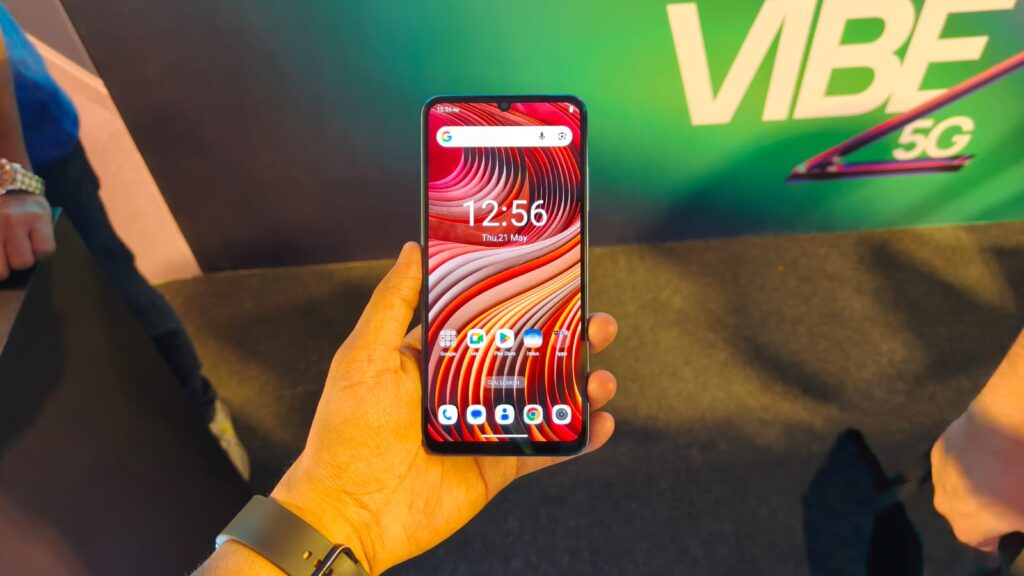
With AI ballooning memory prices, it seems like the budget segment in India has been abandoned by almost all brands. All you can find these days are older models. HMD, the brand behind Nokia’s resurrection, has decided to change that notion up with the launch of the new HMD Vibe 2 5G. The phone arrives as the successor to last year’s Vibe 5G, focusing heavily on battery life and basic everyday performance.
HMD Vibe 2 5G Specifications
The new Vibe 2 5G features a 6.7-inch HD+ display with a 120Hz refresh rate. While the resolution stays at HD+, the higher refresh rate should still make scrolling and general navigation feel smoother compared to traditional 60Hz panels.
Under the hood, the phone runs on an octa-core Unisoc processor clocked at up to 2.3GHz paired with 4GB RAM and up to 128GB storage. On the camera side, HMD has added a 50MP AI-backed primary rear camera along with an 8MP selfie shooter. The phone also carries an IP64 rating, meaning it should survive basic dust exposure and light splashes.
The biggest selling point here is probably the battery. The HMD Vibe 2 5G packs a massive 6,000mAh battery with support for 18W wired charging, and HMD is including the charger inside the box as well. That honestly matters more than ever now, especially as many brands have started removing chargers entirely. For connectivity, the phone supports 5G, Bluetooth 5.0, Wi-Fi 5, and USB Type-C. There’s also a side-mounted fingerprint scanner for biometric authentication.
The HMD Vibe 2 5G starts at Rs. 10,999 for the 4GB RAM + 64GB storage variant. Meanwhile, the 4GB + 128GB version costs Rs. 11,999.
After all, pictures are only worth a thousand words.
Instagram just added a long-requested feature. The platform now lets users add unique captions to each carousel slide. Previously, all slides fell under the same caption, which certainly got in the way of telling a coherent multi-image story.
This is accessible via a toggle when tapping the caption area. This way, it’s up to users if they want to put in the extra effort to think of a bunch of new captions.
Advertisement
It’s rolling out right now, but it could take a week or so to reach every Instagram user. This follows an update from a couple of years ago in which the platform doubled the number of photos that can be used in a carousel from 10 to 20. Mixing 20 photos with 20 captions should certainly allow for some novel content.
Spotify has launched Reserved by Spotify, a ticketing feature that holds concert tickets for Premium subscribers based on their streaming habits. The service runs on a multi-year exclusive deal with Live Nation, with Ticketmaster processing all transactions.
Spotify on Wednesday launched Reserved by Spotify, turning the concert ticketing concept it unveiled last month into a live product. The feature automatically holds up to two concert tickets for Premium subscribers based on their listening habits, making Spotify the first audio streaming platform to offer dedicated pre-sale ticket access.
Advertisement
The first artist to participate is indie-pop singer Role Model, according to Music Business Worldwide. Eligible fans will receive notifications with a roughly 24-hour purchase window opening on 23 June.
How it works
Reserved analyses a subscriber’s streaming data, including how often they listen to an artist, how long they have followed them, and whether their behaviour appears organic rather than bot-driven. There will reportedly be more superfans than available seats for any given tour, so not everyone who qualifies will receive an offer.
The 💜 of EU tech
The latest rumblings from the EU tech scene, a story from our wise ol’ founder Boris, and some questionable AI art. It’s free, every week, in your inbox. Sign up now!
Advertisement
The tickets come from a dedicated inventory that is not carved from any other presale pool. Spotify is positioning this as an alternative to the bot-infested public sale process that has frustrated concertgoers for years.
Location also matters. Spotify checks that a user is near a show before extending an offer, filtering out fans who are unlikely to attend.
The Live Nation deal
Reserved runs on a multi-year exclusive partnership with Live Nation, with all ticket transactions processed through Ticketmaster. Spotify is reportedly paying tens of millions of dollars for the exclusivity, outbidding Apple and Amazon, according to Bloomberg.
The exclusivity means Reserved only covers shows promoted by Live Nation, not all concerts. Spotify itself collects no fees on ticket sales, betting instead that tying concert access to Premium subscriptions will reduce subscriber churn.
Spotify says it monitors for bot activity and artificial listening patterns, and will not reward users who inflate their play counts through passive or automated streams. The company has not disclosed the specific thresholds or algorithms it uses to distinguish genuine fans from gamers of the system.
Spotify has previous form in policing its platform for fraudulent activity, having removed hundreds of thousands of AI-generated songs over suspicious listening patterns. Reserved applies a similar detection philosophy to ticketing, treating organic fandom as a credential that unlocks real-world access.
What it means for artists
For artists, Reserved offers a way to ensure their most engaged fans get into the room rather than scalpers. Spotify’s relationship with musicians has been contentious, particularly over royalty payments, but a feature that directs concert revenue toward performers could shift the dynamic.
Advertisement
The feature is US-only at launch, with no confirmed timeline for international expansion. Whether Reserved can meaningfully dent the secondary ticketing market will depend on how many artists and tours opt in, and whether Live Nation’s competitors build their own streaming-linked presales in response.
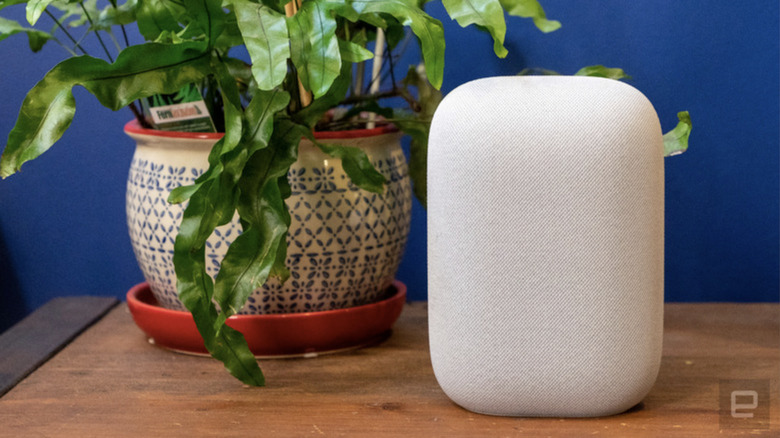
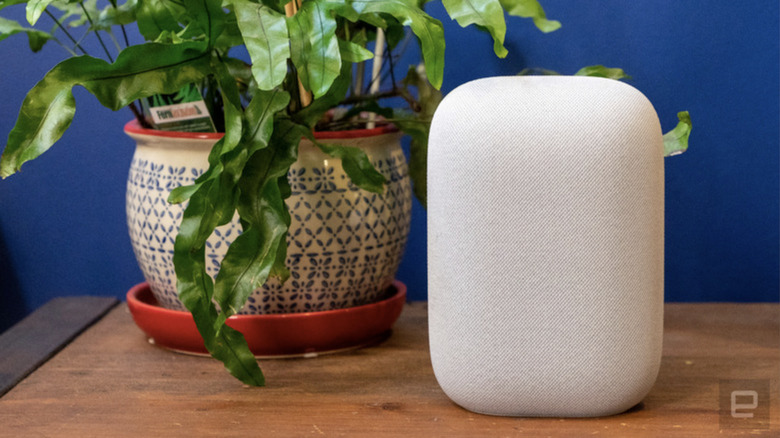
Google just introduced a new smart home speaker yesterday, but the arrival of a new product heralds the end of others. The company has confirmed that it will end production of the Nest Home Mini and Nest Audio. These Nest devices have been on the market for around five years (or longer, if you count 2017’s Google Home Mini) and it seems logical for Google to prioritize the newer generation given the current strategy of putting its Gemini chatbot everywhere it possibly can.
Although the pair of speakers has been discontinued, any of the two smart home products in the wild will remain operational. “Existing Nest Mini and Nest Audio devices will continue to be fully supported with regular software updates, security patches and customer care,” a rep from Google told Engadget. The new Google Home speaker is priced at $100, the same as the outgoing Nest Audio, but significantly more than the Nest Home Mini, which retailed at $50 and could often be found for cheaper.
We spend hours testing every product or service we review, so you can be sure you’re buying the best. Find out more about how we test.
Circular Ring 2: One minute review
The Circular Ring 2 is an ambitious smart ring. On paper, it has almost everything you need. Alongside standard health, recovery and sleep tracking, it offers features you won’t find on many rivals, including electrocardiogram (ECG) readings and atrial fibrillation (AFib) detection. Circular is also promising blood pressure and blood glucose trend monitoring in future updates.
At first glance, it feels like a genuine challenger to the likes of Oura, RingConn and Samsung. The ring itself looks good, feels lightweight on the finger and comes with a charging case, which is a welcome upgrade over the previous Circular model. Battery life is solid too, lasting around six days during my testing.
Advertisement
But unfortunately, the day-to-day experience doesn’t live up to that impressive spec sheet.
Latest Videos From
(Image credit: Future / Becca Caddy)
The biggest issue is the software. Smart rings don’t have screens, which means the app is incredibly important. That’s where the Circular Ring 2 struggles the most.
Advertisement
Syncing regularly took several minutes, occasionally failed altogether and often required multiple attempts. Several times I opened the app to check my data, waited for it to sync, gave up and closed it again.
The app itself feels cluttered and unintuitive. Health data is scattered across multiple screens, navigation can be confusing and the language often feels strangely robotic.
One morning, for example, I was told my sleep was “Incorrect” and the next my wellness summary informed me: “Your sleep was correct. Your energy seems low. Your body and mind are unbalanced.” Rather than helping me understand my health, experiences like this often left me more confused.
Sign up for breaking news, reviews, opinion, top tech deals, and more.
Advertisement
Some of the ring’s most exciting features also failed to impress. ECG and AFib monitoring never fully worked during my testing, while promised blood pressure and glucose tracking features have yet to arrive.
What makes all of this especially frustrating is that when I revisited my Circular Ring Slim review from back in 2024, I found many of the same complaints. The hardware has definitely improved, but the software experience still feels a step behind the competition.
The Circular Ring 2 isn’t a bad smart ring. It has a good design, respectable battery life and an ambitious feature set. But in a market increasingly dominated by the best smart rings from polished competitors like Oura, RingConn and Samsung, ambition alone isn’t enough. Right now, Circular still feels like a company with great ideas struggling to execute them.
Titanium body, hypoallergenic interior with a PVD coating
Battery life
Up to 8 days (power mode); 5 days (performance mode)
Advertisement
Sensors
ECG, PPG, temp sensor, 3x accelerometer
Connection
Bluetooth
Advertisement
Water resistance
Fully waterproof (rating not specified)
(Image credit: Future / Becca Caddy)
Circular Ring 2: Price and availability
Pricing starts at £280 / $349 / AU$497
Rolled out after a Kickstarter release in late 2025 / early 2026
No subscription needed, but premium features expected soon
Rather than arriving as a traditional retail release, the Circular Ring 2 began life as a Kickstarter project in 2025 before gradually rolling out to customers through late 2025 and into 2026.
Pricing starts at £280 / $349 / AU$497 for the black version, rising to £360 / $449 / AU$639 for the silver model I tested. The gold and rose gold finishes sit at the top of the range at £440 / $549 / AU$782.
Advertisement
At first glance, the Circular Ring 2 looks competitively priced. One of its biggest selling points is that it doesn’t require a mandatory subscription to access core features, unlike the Oura Ring 4, which starts at £349 / $349 / AU$534 and also requires an additional monthly membership fee of £5.99 / $5.99
However, the picture becomes a little more complicated when you look closer. Circular is already promoting upcoming premium features, including blood pressure and blood glucose trend monitoring, which aren’t available but are expected soon. The company says these features will either require a subscription or can be unlocked using Circular Coins, which are earned through regular use, but details remain limited and pricing has yet to be confirmed.
Looking across the wider smart ring market, the Circular Ring 2 sits in a crowded middle ground. It’s cheaper than the Samsung Galaxy Ring, which starts at £399 / $399 / AU$699, but more expensive than the RingConn Gen 2 at £299 / $299 / AU$460. There are also budget-focused options now, like the Amazfit Helio Ring, which costs significantly less at £149.90 / $149.99 / AU$269.
The problem isn’t necessarily the asking price here but more that the performance doesn’t justify it. While the Circular Ring 2 undercuts some of the biggest names in the category, like Oura, Samsung and RingConn, they all currently offer a more polished experience. That makes the Circular Ring 2 difficult to view as good value, even before any future premium features are brought into the equation.
Advertisement
(Image credit: Future / Becca Caddy)
Circular Ring 2: Design
Lightweight, slim design
Silver color doesn’t scratch
Nice new charging case included
I liked the design of the Circular Ring 2. The fit was very comfortable throughout testing, even when I was sleeping, and at just 2g it felt light on my finger. The silver finish also looks fairly premium.
Circular offers a wide range of sizes here, from 6 to 14, which beats most rivals. I tested a size 8 on my left index finger, which matched the recommendation from Circular’s new digital AI sizing tool.
While the company still offers a traditional sizing kit as well, it’s nice to see a less wasteful digital alternative that actually proved accurate in my case. Especially considering you’ll need to pay an extra £5 / $5 for Circular’s traditional sizing kit.
The Circular Ring 2 has softer, more rounded edges than rivals like the RingConn Gen 2 or previous Circular Ring Slim. Whether that’s a positive or negative will come down to personal preference, but it does make the ring feel slightly chunkier than some competitors despite it being one of the slimmest choices available at 2.5mm thick. A small circular logo on the outer edge makes it easy to get the right way round so that the sensors are where they need to be.
Advertisement
I tested the silver model, which I’d recommend over the black version. Black smart rings tend to show scratches more easily, and that was one of the big problems on the previous Circular Ring Slim. After two weeks of wear, my ring had picked up a few minor scuffs but was in good condition overall.
Another welcome improvement here is the charging case. Unlike the Circular Ring Slim, which relied on a charging cable and small plinth, the Ring 2 ships with a compact clamshell charging case that’s easy to carry and use.
Overall, the ring’s design is one of the Circular Ring 2’s biggest strengths. The company has clearly refined the hardware. Unfortunately, as we’ll see later, the software hasn’t evolved at the same pace.
(Image credit: Future / Becca Caddy)
Advertisement
Circular Ring 2: Features
Lots of features
ECG and AFib
Glucose and blood pressure readings on the way
The Circular Ring 2 has an ambitious set of features. Alongside standard health, sleep and activity tracking, it measures metrics like heart rate, heart rate variability (HRV), blood oxygen saturation (SpO2), skin temperature and breathing rate.
There are also women’s health features designed to track hormonal shifts and fertility, plus stress monitoring, guided breathing exercises, medication reminders and an AI assistant called Kira.
The headline features are ECG measurements and AFib detection, both of which are rare in smart rings. Circular is also promising blood pressure and blood glucose trend monitoring in future updates, though neither feature was available during testing and both will sit behind a premium-ish model when they arrive. Blood pressure is not easy to measure with LED-based optical heart rate sensors, without an inflatable cuff for calibration: it will be interesting to see what form the blood pressure feature eventually takes, and whether it will be accurate.
On paper, it’s an impressive package that rivals, and in some cases actually exceeds, what you’ll find from bigger names in this space.
(Image credit: Future / Becca Caddy)
Advertisement
Circular Ring 2: Performance
Disappointing app
Slow to sync and update
Battery life is improved
The Circular Ring 2 made a good first impression. Basic metrics like steps, heart rate and sleep tracking all seemed reasonable during the first few days of testing. But the longer I wore it, the more problems started to emerge.
The biggest issue is the app. Smart rings don’t have screens, which means if you think about it, the app effectively is the product, much like a Whoop band. That’s where the Circular Ring 2 falls behind rivals.
Syncing is frustratingly slow. Pulling data from the ring often took several minutes and occasionally failed altogether, forcing me to try again. That might sound like a small complaint, but it adds unnecessary friction. Several times I found myself opening the app, waiting for data to sync, then simply closing it again. If I owned this ring long-term, I suspect I’d eventually stop checking the app altogether.
The app itself feels cluttered and unintuitive. Health insights, scores, charts and features are scattered across multiple screens, while the home page is filled with circles, cards and widgets competing for attention. Even as someone who tests wearables for a living, I often found it harder than it should be to locate specific information.
The language doesn’t help either. As mentioned above, the app kept telling me my sleep was “Incorrect”, or my body was “unbalanced”, which left me confused rather than enlightened.
Advertisement
The AI assistant, Kira, wasn’t much better, largely repackaging existing data in a confusing format with tiny fonts and a huge chunk of text with generic recommendations, like “stay hydrated”. Some of the ring’s most exciting features also failed to deliver. ECG and AFib monitoring never fully worked during my testing, repeatedly getting stuck on a loading screen.
Sleep tracking was generally accurate when I followed a conventional sleep schedule, but it struggled with fragmented sleep and occasionally recorded inaccurate sleep times. On several occasions I woke up for a few hours before going back to sleep, only for the ring to record the entire period as one continuous sleep session.
Workout tracking isn’t what smart rings do best. But here it still feels like an afterthought. Sports Sessions are hidden away, must be started manually and there’s no automatic workout detection, unlike competitors like the Oura Ring 4 and Samsung Galaxy Ring. I also experienced a handful of smaller bugs, including random disconnections and occasional time zone changes despite not travelling anywhere.
Battery life is one area where the Circular Ring 2 performs well. Circular promises up to five days in Performance Mode and I managed six days during testing. That’s competitive with most major rivals and a significant improvement over the Circular Ring Slim.
Advertisement
Overall, the Circular Ring 2 feels like a smart ring with excellent ideas but inconsistent execution. Yes, the hardware is good, the feature list is impressive and the battery life is solid. But the software experience remains frustratingly rough around the edges, and in an increasingly competitive smart ring market, that’s difficult to overlook.
(Image credit: Future / Becca Caddy)
Circular Ring 2: Scorecard
Swipe to scroll horizontally
Category
Comment
Advertisement
Score
Value
There’s no subscription, which makes it seem like good value. But once you factor in the inconsistent performance and the strength of the competition, it’s difficult to justify the price.
2.5/5
Advertisement
Design
Lightweight, comfortable to wear and I liked the charging case. It doesn’t stand out against the best-looking smart rings on the market, but the hardware feels thoughtfully designed with minimal signs of wear.
4/5
Features
Advertisement
An impressive range of health, wellness and sleep tracking features, including ECG and AFib monitoring. The challenge isn’t the breadth of features available, but the fact that some are still missing despite being promised.
4/5
Performance
The feature set is promising, but it’s held back by slow syncing, buggy behavior and an app that feels cluttered and unfinished. Battery life is good, but an overall lack of polish makes it difficult to recommend.
Advertisement
2.5/5
Circular Ring 2: Should I buy?
Buy it if…
Advertisement
Don’t buy it if…
Also consider
How I tested
(Image credit: Future / Becca Caddy)
I tested the Circular Ring 2 for 2 weeks. I wore it 24/7 and only took it off to charge it and when I was lifting weights — I learned the hard way testing smart rings over the years that they’re very easy to scratch. It was on throughout workouts, working, socializing, relaxing on an evening and sleeping at night.
I’ve been reviewing smart rings since the very first iteration of the Oura ring came out in 2017 and have tested almost every generation from every smart ring brand since. Which puts me in a great position to compare models, tell you which is right for you and bring you that all important context about the smart ring industry.
Even as technology continues to push humanity forward in virtually every facet of modern life, it is often still fun to keep at least one eye trained on days of yesteryear. To that end, even some more forward-thinking companies have been known to indulge in a little shameless nostalgia in their product lines. Volkswagen went that route with its retro-inspired re-imagining of its iconic VW Bus.
While the all-electric ID Buzz wasn’t exactly a smashing success for VW, it was nothing if not a stylishly rendered slice of nostalgic automotive Americana. British company Morris Commercial is taking a similar approach with its Morris JE Van. And yes, that van is dramatically outdoing the electric VW retro appeal by taking inspiration from a much older vehicle, the Morris Commercial J-Type Work Van.
Advertisement
That van made its U.K. debut in the late-1940s, and became an instant hit with folks in need of a workhorse type van that still delivered on looks. It soon earned the nickname “The Big Little Van” due in part to its spacious interior and deceptively small exterior. That design also made it a big hit with government offices, as the J-Type was utilized by drivers in the Royal Mail and Post Office Telephone fleets. It would seem that Morris Commercial is not trying to re-invent the wheel with the new version of the J-Type, which it has dubbed the JE. In fact, the new models look almost identical to the old. Looks, however, are where the similarities end.
Advertisement
What to know about the Morris Commercial JE Van
We should linger at least a minute on the looks of the Morris Commercial JE Van, as it was one of the most distinctively unique vehicles on the road upon its debut, and remains just as unique in its modern form. That being said, much like the SlashGear approved VW ID Buzz, you can probably still file this vehicle firmly under the “niche” section of the automotive market, as some drivers may not be ready to go full retro with their everyday cargo driver.
They might, however, still be tempted if they are looking for what looks to be a spaciously functional van that is fully electric. Yes, the Morris Commercial JE is eschewing the petrol-based engine of J-Type’s past in favor of battery power. It’s doing so without shorting drivers on power, with Morris Commercial claiming it boasts a 1-ton payload capacity. The vehicle also boasts a unique body design, with its fully recycled carbon monocoque body and aluminum skateboard chassis reportedly ranking it among the lightest commercial vehicles in the world.
As a cherry on top, Morris Commercial is also making the JE Van available in a range of unique color designs so you can make the interior and exterior all your own. The interior will also feature more modern fixtures like an infotainment screen. Now for the bad news, which is that the Morris Commercial JE is not yet available for purchase. In fact, it’s not yet in production, with the company claiming it’s eyeing 2028 for full-scale production status.
Liberty Bank launched an AI Center of Excellence with Flare AI to deploy secure, compliant AI across personal, commercial, and digital banking operations.
The partnership is structured around outcomes rather than software licences, according to David Hadd, Liberty Bank’s head of Business Transformation. “Flare’s role is to design, build, and help deploy AI systems on Liberty Bank’s behalf, compressing what has historically been a multi-year technology buildout into weeks, with the security, compliance, and governance controls regulated institutions require,” Hadd said.
Liberty Bank has over $9 billion in assets, 51 retail banking offices across Connecticut and Massachusetts, and more than 900 employees. It is the oldest and among the largest mutual banks in the United States. The bank says the initial focus will be on deploying secure AI systems to enhance productivity and customer experience, automating complex core processes, and building reusable AI capabilities.
Advertisement
The 💜 of EU tech
The latest rumblings from the EU tech scene, a story from our wise ol’ founder Boris, and some questionable AI art. It’s free, every week, in your inbox. Sign up now!
“For a bank our size, the challenge has never been ambition. It has been the time it takes to translate strategy into execution,” said David Glidden, President and CEO of Liberty Bank. The bank expects the AI Centre of Excellence to drive measurable impact across customer experience, operational efficiency, and growth. Large banks have warned that scaling AI in production is more expensive and error-prone than pilot programmes suggest, making governance and quality control critical from the start.
Flare AI CEO Scott Killoh said the company takes a different approach from platform vendors. “Most banks have been sold AI platforms and left to figure out the rest,” Killoh said. “We partner with institutions to deliver working AI systems that are secure, compliant, and tailored to their business.” Flare AI’s new President and Chief Strategy Officer, David Mitchell, previously spent six years as an executive at Liberty Bank, giving the partnership an unusual level of institutional familiarity.
Advertisement
The announcement reflects a broader shift in how regulated industries are adopting AI, moving from experimental chatbots toward structured, governed deployments with audit trails and compliance guardrails built in. For community banks competing against institutions with far larger technology budgets, the speed of deployment matters as much as the technology itself.
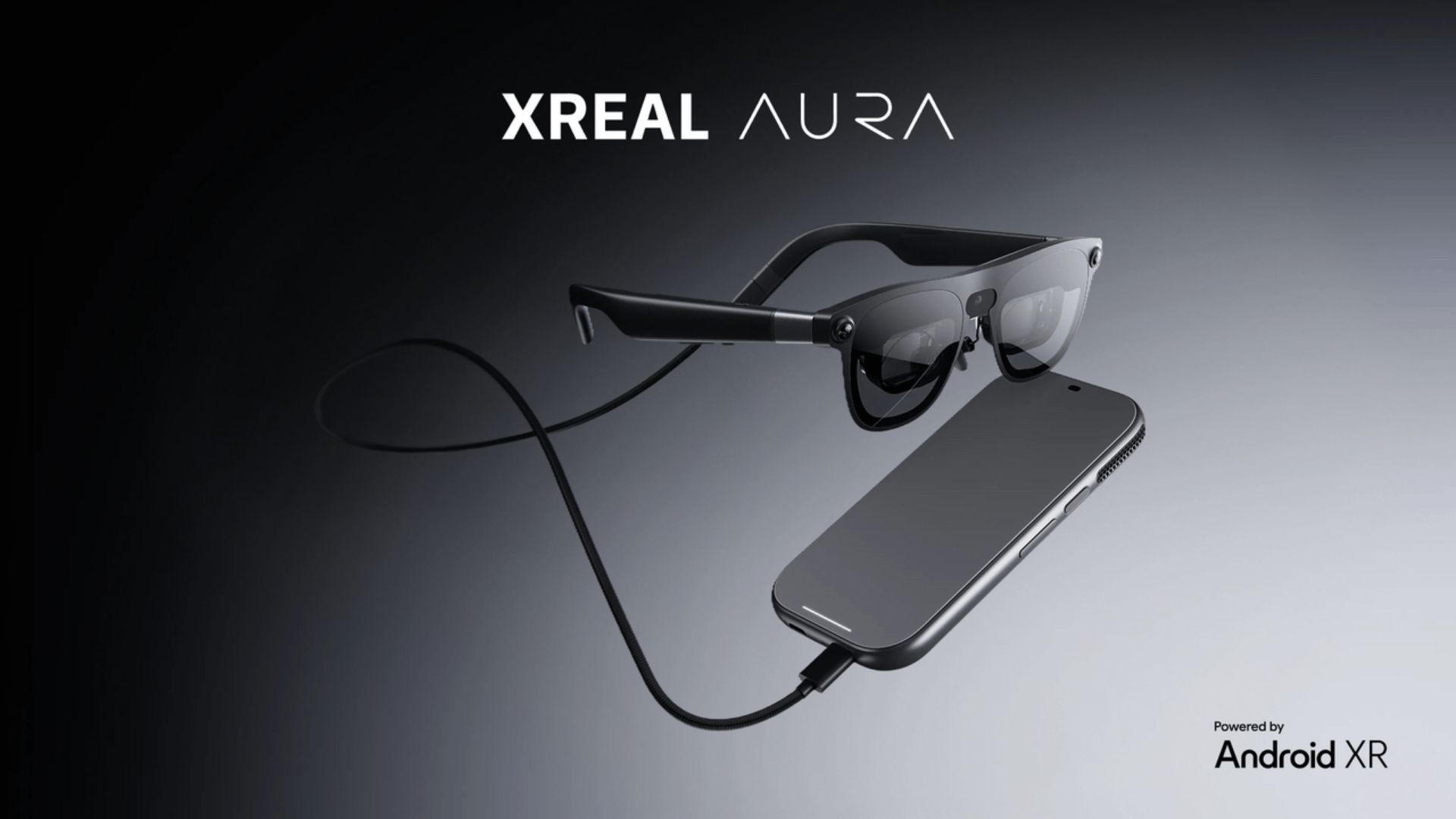
Xreal has officially unveiled its new Aura smart glasses. While they certainly won’t be cheap, they’ll still cost considerably less than Snap’s recently announced Specs.
The Aura runs Android XR, Google’s operating system for mixed reality devices, giving users access to a growing ecosystem of apps right out of the box.
Xreal hasn’t revealed exact pricing yet. However, the company says the Aura will launch for under $1,500 before tax when it arrives later this year. That’s a notable contrast to Snap’s Specs, which rely on proprietary software and are currently up for pre-order at $2,195.
The glasses feature an Optical See-Through (OST) display with a 70-degree field of view. They are powered by dual Sony Micro-OLED panels with a resolution of 1,920 x 1,200 per eye and a 120Hz refresh rate. Since the displays are transparent, users can still see their surroundings, though electrochromic dimming is included for moments when greater immersion is needed.
Advertisement
One of the Aura’s biggest selling points is its support for up to five floating app windows at once, with Google’s Gemini AI assistant built directly into the experience.
Advertisement
Rather than placing all of the hardware inside the glasses themselves, Xreal has opted for a split design. Processing is handled by a separate compute puck powered by the newly announced Snapdragon Reality Elite chipset, while an onboard X1S spatial co-processor manages low-latency tracking and display tasks.
The compute puck also houses a 4,455mAh battery, helping reduce the weight carried on the user’s face. Two configurations will be available, offering either 12GB of RAM and 256GB of storage or 16GB of RAM and 512GB of storage.
Advertisement
The Aura supports 6DoF tracking, hand-tracking controls, voice commands through Gemini, and onboard cameras with a visible LED indicator that activates when recording.
Xreal says the Aura will launch this autumn. Those interested can either reserve a standard spot for $100 and receive $200 in launch credit, or secure one of the company’s limited Founder Passes, which include a $300 discount.
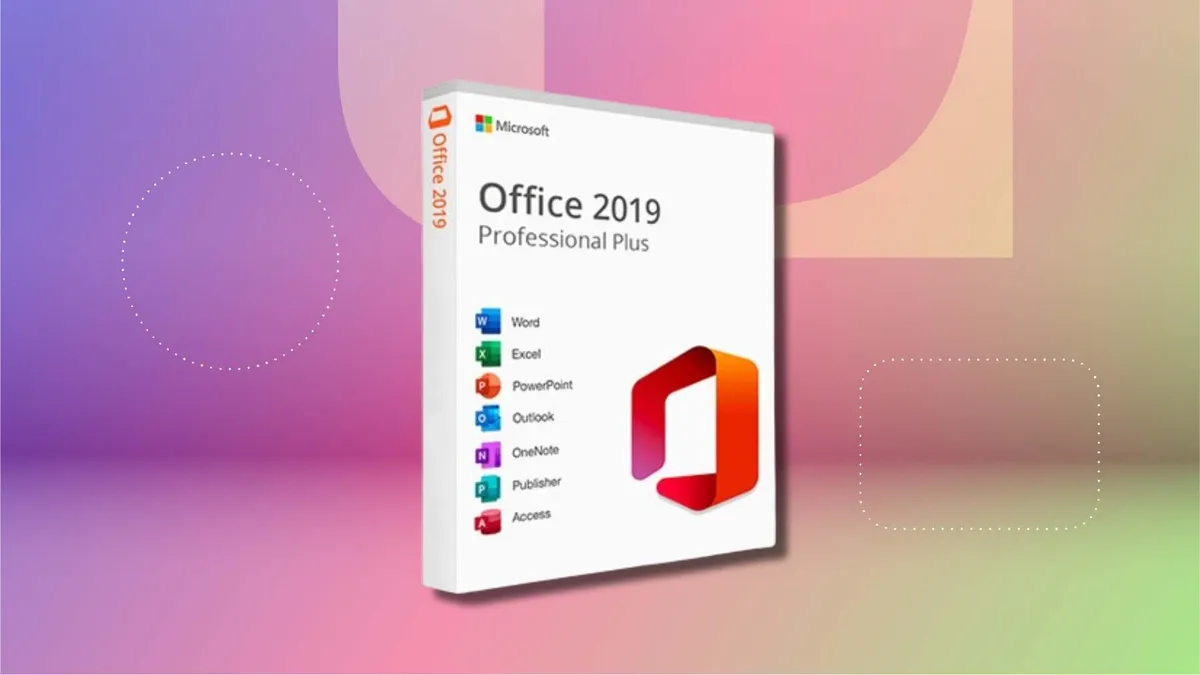
If you want to edit your Microsoft Office 2019 files on your Mac, you’ll only be able to do so until next month.
Starting July 13, Office 2019 apps for Mac — including Word, Excel, PowerPoint, Outlook and OneNote — will enter a “reduced functionality mode” that disables editing, saving or creating new files, while allowing only viewing and printing. This restriction also affects outdated iPhone and iPad applications, according to Microsoft.
That’s because Microsoft Office 2019 stopped being officially supported in October 2023, and the version no longer receives software or security updates.
Advertisement
Subscribers of Microsoft 365 on newer supported versions of Office on MacOS, as well as customers of the nonsubscription Office 2021, will need to update their software before July to avoid the same fate.
The heart of the issue is an expiring security certificate that validates Office licenses. Microsoft renewed the certificate and updated other versions of Office to properly recognize it, but not the 2019 version for Mac. Microsoft Office versions for Windows aren’t affected by this security certificate.
Pulling the plug on Office 2019
Microsoft’s end-of-support notice for Office 2019 cites a five-year support lifecycle for the software bundle. Office 2019 was released in September 2018, making it nearly 8 years old.
With software updates, that’s not unreasonable. But this certificate issue doesn’t appear to be due to broken code that would pull resources from other newer projects to fix. Office 2019, which was sold as a one-time purchase, still works just fine.
Advertisement
The problem is that Microsoft won’t provide an update that would activate the renewed certificate. The expiration of security certificates is a standard industry practice designed to limit the risk of compromised cryptographic keys.
But some critics argue Microsoft’s deadline is self-imposed. Compounding the backlash, Microsoft quietly removed a previous online promise that the software would “continue to function.”
When reached for comment via email, a Microsoft spokesperson replied: “Microsoft is not intentionally limiting or changing Office 2019; the product cannot receive the renewed certificate because no update path exists for an out-of-support product.”
Minimum OS Version Requirements
Advertisement
Platform
Minimum OS Version
Minimum App Version
MacOS
MacOS 12 (Monterey) or later
16.83
iOS
iOS 17.0 or later
2.93
iPadOS
iPadOS 17.0 or later
2.93
The last full-purchase version of Office for Mac is Office 2024, which will continue to be supported. Its predecessor, Office 2021, will also continue to work but will enter end-of-support mode in October 2026.
Office 2019 existed in the not-so-distant past, before Microsoft started bolting artificial intelligence features into all its products. It’s safe to assume that some customers are holding onto their apps because they want the core word processing, spreadsheet and presentation features without today’s distractions.
If you do decide to upgrade to a newer version from Office 2019, you’ll need to download and run a License Removal Tool, open an Office app and then go to Help > Check for Updates to activate it.
Microsoft says it has detected new self-propagating malware that spreads through USB drives in search of cryptocurrency credentials, which it then sends to attacker-controlled servers.
The company named the worm Crypto Clipper because it monitors the contents of device clipboards for patterns consistent with wallet addresses or seed phrases. When found, the malware also takes five screenshots over a 10-second period. Both the credentials and the screenshots are then sent to the attacker through Tor, a network protocol that provides anonymous routing by sending traffic through redundant nodes so logs can’t capture both the sending and receiving IP addresses. Crypto Clipper establishes the Tor connection by using a SOCKS5 proxy, a network protocol that sends traffic through a proxy server, which then forwards it to its final destination.
A lightweight backdoor
“The execution of this clipper is notable because it does not depend on a traditional installer or exposed IP-based C2 infrastructure,” Microsoft said Thursday. “Instead, it deploys a portable Tor client, routes traffic through a local SOCKS5 proxy, and blends data theft with remote code execution, turning a financially motivated stealer into a lightweight backdoor.”
Microsoft said it observed Crypto Clipper spreading through .lnk file on a USB drive. These files store executable code. When an infected USB drive is plugged into a device, the code checks whether it is already installed on the machine. If it isn’t, the malware downloads it through the Tor proxy. To better conceal evidence of the worm, the malware scans the infected USB drive and names the .lnk files with similar names.
California’s proposed “billionaire tax” has gathered enough signatures to qualify for the November ballot, setting up a major fight between labor unions and some of Silicon Valley’s richest figures. From the report: The California Billionaire Tax Act, colloquially known as the billionaire tax, would levy a one-time 5% tax on any California resident worth more than $1bn. The proposal is backed by the Service Employees International Union-United Healthcare Workers West as a means of funding California’s strained healthcare and education programs. The proposal has become one of the state’s biggest political flashpoints as it gained momentum throughout the year, with prominent billionaires, such as the Google co-founder Larry Page, making moves to cut ties with the state and Newsom vowing to block it from going to a vote. Although it has gained enough signatures for the ballot, the groups backing the measure have until June 25 to decide whether to move forward or potentially strike a deal with the state.
While unions backing the group have framed the proposal as a way of getting the ultra-rich to pay their fair share, many of the state’s tech elites have condemned the tax and spent millions attempting to crush it. The Google co-founder Sergey Brin has spent $82m alone on efforts to fight the tax, while joining other Silicon Valley billionaires in declaring he will leave California if it goes through. The Palantir co-founder Peter Thiel, crypto billionaire Chris Larsen and Ring founder James Siminoff are among the other tech moguls who have made huge political donations to groups opposing the tax. California has the most billionaires out of any state, many of whom have increased their wealth in recent years amid the AI boom.










































You must be logged in to post a comment Login