The U.S. Surgeon General’s office issued a warning yesterday about the harms of extended uses of screens on children, raising concerns about its impact on academic performance, physical health and mental well-being.
The advisory follows a contentious debate over screen time that has been fraught in recent years as schools that implemented 1-to-1 device ratios amid the pandemic now struggle with student attention, behavioral and mental health issues that took root around the same time.
The latest advisory urges kids to pursue — and for the adults in their lives to encourage — a “broader world, beyond the confines of screens,” Health and Human Services Secretary Robert F. Kennedy Jr. said in an opening letter. The role of U.S. surgeon general has been vacant since January 2025, but the advisory was issued by a committee led by Kennedy Jr.
The report encapsulates what researchers and education experts have been long saying: Excessive time in front of devices like smartphones and tablets can worsen mental health and academic outcomes for students.
Advertisement
The American Academy of Pediatrics took a more nuanced approach to a similar report it released, Whitney Raglin Bignall, associate clinical director of The Kids Mental Health Foundation, tells EdSurge. Researchers rolled back their specific limits on screen time in favor of “family media plans” that set boundaries for media consumption.
The Surgeon General’s advisory calls on schools to implement plans that many districts are already adopting or considering: bell-to-bell cellphone bans, or bans that do not allow the use of phones during the entirety of the school day, including passing periods and lunchtime. It also proposes screen time limits. The advisory specifies that screen time limit exceptions should be made for students who have individualized education programs or other needs for assistive devices — something about which disability advocates have expressed worry.
It also urges schools to teach digital citizenship and digital literacy along with offering students social and physical activities that don’t involve screens.
The report hits back against tech companies, like those that recently lost a California civil case over social media addiction. They were called by the advisory to eschew designing their apps for engagement in favor of user well-being by incorporating warnings about harmful screen use every time a user opens the app. The advisory also calls for tech companies to encourage children to socialize with friends and play outside, and get rid of features like recommendation algorithms and notifications.
Advertisement
Correlation, Not Causation
Raglin Bignall, associate clinical director of The Kids Mental Health Foundation, cautions that while research has found a correlation between screen time and poor mental health, there’s not yet cause-and-effect evidence.
“There might be kids who need less [screen time], or those who are doing lots of different types of things with that content that’s interactive that is not harmful,” Raglin Bignall says. “Nevertheless, it should be monitored. By doing that, we make sure that we’re not doing too much [with screens], and that whatever we are doing is beneficial.”
Teachers might notice students being distracted, not listening, being irritable or having a hard time being away from screens, Raglin Bignall says. Fatigue or lack of sleep among students may also be signs of too much screen time. She adds that screen time should especially be monitored for children who have attention or hyperactivity disorders.
Not all screen time or content is equal, Raglin Bignall says. Teachers don’t need to rush to boot quality, evidence-based education apps from their lesson plans.
Advertisement
The warning calls attention to harmful online behaviors like bullying and gambling. The content children encounter on these platforms can encourage risky behaviors like self-harm and substance use, the advisory claims, or put them in the path of exploitative strangers.
In general, good content is educational, slow-paced and isn’t trying to market any products, Raglin Bignall says. Adults should pay special attention to what teens and tweens are seeing online, as those who struggle with confidence could be particularly vulnerable to harmful content like accounts that promote eating disorders.
“I wouldn’t want to make it seem that all screen time is bad,” Raglin Bignall says. “I often recommend co-watching with adults during those younger ages. As kids get older, it’s still important for adults to monitor the level of content and what is being offered to them.”
KRAFTON has officially rolled out the BGMI 4.4 update in India as the game celebrates its 5th anniversary in the country. The latest update introduces more than just new gameplay content, as it focuses heavily on creativity, community participation, collaborations, and anniversary celebrations. With features like the BGMI Design Contest Spin, players are now becoming part of the game’s development journey, showing how BGMI is slowly evolving into a larger entertainment and creator platform.
The BGMI Design Contest Spin is a new event that runs from June 16 to July 17, 2026. Through this event, players can collect seven cosmetic items created by members of the BGMI community. One of the special rewards in Spin is Fortune Teller AWM skin. By introducing cosmetics designed by gamers as premium products, BGMI pays closer attention to the creativity of its community.
Glacier Spin and Mummy Crate
The popular Glacier Spin event is set to return to BGMI from May 26 to June 1, 2026. The main attraction of the event is the M416 skin, which has become known as the most famous weapon skin in BGMI over time. Players will also get one final chance to use the UC option during this Spin event. Before BGMI turns 5 in India, KRAFTON will also introduce the AKM Glacier skin in the Classic Crate for a limited time.
As part of the BGMI 4.4 update, the Mummy Crate event is returning with several exclusive cosmetic rewards. The highlight of the event is the new Chaosphage Set and the Chaos Calamity AWM skin. Popular returning skins, including Psychophage and Inferno Fiend, will also make a comeback for players. Apart from this, the Spartan King Gold Spin will feature an upgradeable M1 Garand skin along with other returning Gold skins in BGMI.
Advertisement
Hero’s Crown Theme Mode Explained
Hero’s Crown is the latest themed mode arriving in BGMI through the 4.4 update. The mode draws inspiration from Greek mythology and introduces a floating location called Crown’s Abode. Inside the mode, players can experience both PvP battles against other teams and PvE gameplay through boss encounters. One of the main attractions is the Helios boss fight, where players can earn Glory points by completing various trials and objectives. The update also adds mythology-themed weapons and new gameplay activities.
Furthermore, the Dinoground Theme Mode is expected to launch in BGMI with the 4.4 update for the first time. It has been reported by KRAFTON that the Dinoground Theme Mode will only be available in the Erangel map of the game.
New Brand and Creator Collaborations Arrive in BGMI 4.4
With the recent update, KRAFTON is enhancing its collaborations with BGMI and international and local companies. Players will be able to ride unique vehicles created in collaboration with Ford Motor Company and Harley-Davidson.
Alongside the vehicle collaborations, BGMI is also adding creator voice packs to the game. Bhuvan Bam’s voice pack will launch through a Spin event, while Ravi Gupta will receive his own QV Spin event later in the update cycle. These additions highlight BGMI’s growing focus on entertainment and creator-driven content.
BGMI 4.4 Update: Key Dates and Events
May 20: Ford Collaboration and Hellenistic Theme Mode launch; Eid Mubarak Login Event begins
May 22: Blue Lock Collaboration launches
May 26: Glacier Spin launches with UC option (through June 1)
May 27: Spartan King Gold Spin launches; Festival Special DSB begins
May 28: Toxic Exchange Event begins
May 29: Harley-Davidson Special Crate and Buddy Spin launch
Jun 2: Toxic Voice Pack Crate launches
Jun 5: Gemini’s Favor Blessing Gold Spin launches (through September 1)
Jun 8: Dinoground Theme Mode – first-ever BGMI release on Erangel
Jun 25: 5th Anniversary Exchange Event begins on Erangel and Livik
Jun 28: AKM Glacier in Classic Crate (through July 2)
Jul 1 & 5: 5th Anniversary Fireworks Display – 8:00 PM to 10:00 PM IST
Jul 2: BGMI 5th Anniversary
Jul 3: Mummy Crate launches (through September 1)
As BGMI completes five years in India on July 2, 2026, KRAFTON is preparing several anniversary-themed activities for players. The company stated that the game has surpassed 260 million downloads in India over the past five years. Players will be able to join the 5th Anniversary Exchange Event to collect rewards and special anniversary items. Fireworks celebrations scheduled for July 1 and July 5 will further add to the in-game festivities.
The US is betting big on quantum, committing $2bn in federal funding to nine companies as it races to build a domestic quantum computing industry.
The US Department of Commerce announced yesterday it is proposing $bn in federal incentives under the CHIPS and Science Act, targeting two domestic quantum foundry companies and seven quantum computing firms. The funds are aimed at solving the most critical technology challenges in the race to develop utility-scale, fault-tolerant quantum computers.
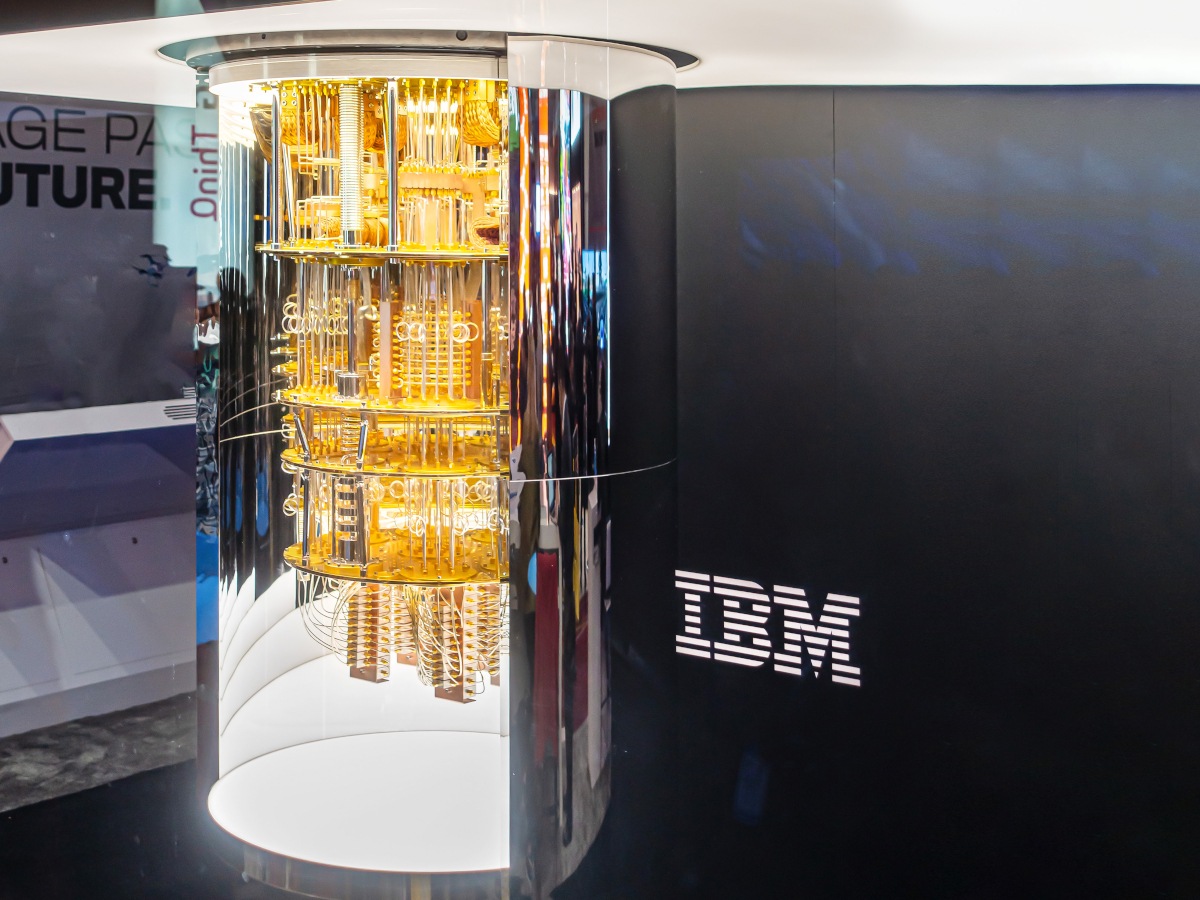
The largest single allocation goes to IBM, which is using the $1bn CHIPS award to launch Anderon, a standalone company and what it says will be the first pure-play US quantum chip foundry. Headquartered in Albany, New York, Anderon will operate as a 300-millimetre quantum wafer foundry serving multiple quantum hardware vendors.
IBM will match the government’s contribution with $1bn of its own cash, along with significant intellectual property, assets, and its skilled workforce, with additional investors expected as Anderon grows.
Advertisement
GlobalFoundries is receiving $375m to launch Quantum Technology Solutions, a new quantum business built on its decade-long cryogenic CMOS, advanced packaging, and materials science investment. The Malta, New York-based foundry will manufacture the full quantum hardware stack, from quantum processor units to cryogenic readout and control chips, serving multiple qubit architectures including superconducting, trapped ion, photonic, topological, and silicon spin. The new business launches with existing customers that include Diraq, PsiQuantum, Quantinuum, Google, Microsoft, and Nvidia.
Among the seven quantum computing companies receiving funding is Quantinuum, which has signed a letter of intent for $100m to fabricate low-loss integrated photonics and specialised optical components tuned to trapped-ion critical wavelengths. The company plans to partner with GlobalFoundries for critical semiconductor components, and Monarch Quantum for integrated photonics.
“These strategic quantum technology investments will build on our domestic industry, creating thousands of high-paying American jobs while advancing American quantum capabilities,” said US Commerce Secretary Howard Lutnick.
The CHIPS R&D Office said it is taking a portfolio approach to strengthen US leadership across multiple quantum modalities simultaneously, while focusing each award on discrete technological problems of real consequence. The remaining $538m in funding is distributed among Atom Computing, Diraq, D-Wave, Infleqtion, PsiQuantum, and Rigetti Computing.
Advertisement
Quantum computing, the department said, has significant implications for national defence, advanced materials and biopharmaceutical discovery, financial modelling, and energy systems. The announcement comes as Quantinuum is also preparing for a Nasdaq IPO.
Don’t miss out on the knowledge you need to succeed. Sign up for the Daily Brief, Silicon Republic’s digest of need-to-know sci-tech news.
Gartner expects 60% of AI projects that lack AI-ready data to be abandoned through 2026. “AI-ready” sounds like a technical label. In practice, it describes something much more ordinary: whether a business can actually find, combine, and use the data it already owns.
That is a data fragmentation problem: the state where the information you need to plan a business decision is scattered across different systems, formats, teams and legal entities.
Many boards still treat it as an IT issue. It isn’t.
Advertisement
Latest Videos From
Maximilian Groth
Co-founder and CEO of Decentriq.
It’s what slows your decisions, stalls your partnerships, and kills your AI pilots. My team at Decentriq sees a version of this issue in many of the conversations we have with IT management at media companies.
Advertisement
This piece explains why consolidation is the wrong answer to that problem, and what the organizations pulling ahead are doing instead
Where data fragmentation breaks the business
Engineers describe data fragmentation as silos and duplicated feeds. That is accurate, but it only names the symptoms.
The business version is easier to see. Walk through a typical week at a large company and you will find it:
Advertisement
Sign up to the TechRadar Pro newsletter to get all the top news, opinion, features and guidance your business needs to succeed!
A global marketer tries to read customer behavior across regions and discovers there are five different definitions of “customer” in use. A publisher wants to show a brand partner which of its customers were actually reached and converted, but proving it means sharing audience data neither side is willing to expose. There are so many examples.
These are composites built from conversations I have had this year so far, not specific clients. But the pattern is the point. Each problem gets logged as a technical ticket and solved in isolation. None of them stay solved, because the next question arrives in a slightly different shape.
That pattern is what costs money. Not any single issue, but the company-wide drag on the speed and quality of decisions made with data the business already owns. It never appears as a line on the finance report. Instead, it shows up as projects that stall, deals that slip, and AI initiatives that never reach production.
Advertisement
The real cost of compressed decisions
The most expensive thing fragmentation does is force decisions under a deadline the data cannot meet.
Take a campaign planning cycle. A brand wants to activate on its best customers on premium publisher inventory. Its CRM data exists. The publisher’s audience data exists.
Advertisement
The traditional route requires negotiating a data-sharing agreement, getting legal sign-off on both sides, and building a technical integration. By the time that’s done, the campaign window has passed.
Why the obvious fixes fall short
The instinctive responses to this problem are understandable. Publishers further invest in data management platforms (DMPs) to better package their audiences. Brands build out customer data platforms (CDPs) to unify their customer database. And the major platforms (Google, Amazon, Meta) offer their own clean room environments to enable some degree of collaboration within their walls.
None of these solve the cross-partner problem. DMPs and CDPs are built for internal data orchestration. So they give you a better view of what you already own, but they weren’t designed for collaboration with external partners. And walled garden clean rooms solve a narrow version of the problem: you can collaborate with the platform’s own data, but you can’t bring independent partners in, and the platform itself can see what you’re doing.
Advertisement
The common limitation is that each of these tools was built to consolidate or contain data as opposed to letting it work across boundaries while staying where it is. That’s a different problem, and it needs a different kind of solution.
Data collaboration is replacing consolidation
A smaller group of organizations has stopped trying to move or merge their data at all. They are using data clean rooms built on privacy-enhancing technologies, or PETs: a family of approaches that includes confidential computing, federated learning, and secure multi-party computation (among others).
The common thread is simple: these tools let two or more organizations ask a question of each other’s data, and get a joint answer, without either side ever seeing or copying the other’s raw records.
Advertisement
At Decentriq we build data clean rooms on this foundation. Global brands, publishers, and especially regulated enterprises use these to collaborate across data that has to stay where it is.
Our Collaborative Audience Platform extends this further, giving organizations a single environment to build, activate, and measure audiences across partner data in real time, without either party’s records ever leaving their own systems.
A few examples of what that looks like in practice:
A major Swiss bank worked with publisher Goldbach to build advertising audiences that resembled its existing best customers. The cost of reaching them dropped 44%. The bank’s own customer records never left its systems.
Advertisement
IKEA and Austrian publisher willhaben matched their customer and audience data inside a clean room. Cost per visit fell 30%. The return on each Euro of ad spend went up 10%.
In consumer health, Laboratoires Pierre Fabre built a detailed picture of the customers buying its Avène and Aderma sunscreen brands by combining its own data with audiences from three French publishers (Reworld Media, Groupe Marie-Claire and Média Figaro). No customer data was exposed to any of them.
Ten years ago, each of those questions would have meant pooling the underlying data and absorbing the full compliance overhead. None of these did. Each answered one question across one boundary, and left the rest of the data estate as fragmented as it was before.
Advertisement
The question boards should actually be asking
Data fragmentation isn’t going to be solved by making every company look like one big database. The organizations pulling ahead have accepted that acting on data doesn’t require owning it, and have invested in the ability to collaborate across company boundaries.
For years, boards asked how to collapse the boundaries. A better question is how to act across them. That question has practical answers now, and I see more of them every quarter. The companies asking it aren’t waiting for the consolidation project to finish.
“The data you need to understand your customer usually exists, it’s just not all in your own systems. The companies pulling ahead have stopped trying to own it all, and started finding ways to act on it together.”
This article was produced as part of TechRadar Pro Perspectives, our channel to feature the best and brightest minds in the technology industry today.
The views expressed here are those of the author and are not necessarily those of TechRadarPro or Future plc. If you are interested in contributing find out more here: https://www.techradar.com/pro/perspectives-how-to-submit
A new Oxford Longevity Project report argues that individuals bear at least 80% of the responsibility for ill health in old age. “The report (PDF), launched at the Smart Ageing Summit in Oxford last week, argues that individuals have far greater control over their longevity than is commonly understood,” reports The Guardian. “The authors call on the government to take legislative action on alcohol comparable to restrictions on smoking.” From the report: Living Longer, Better — the Oxford Longevity Project’s first Age-less report — was co-authored by an interdisciplinary panel of UK-based experts in medicine, physiology, ageing and education policy. It was sponsored by Oxford Healthspan. The report’s authors, Sir Christopher Ball, Sir Muir Gray, Dr Paul Ch’en, Leslie Kenny and Prof Denis Noble, present the figure of 80% as a conservative estimate. […] The claim, however, has been described as simplistic and said to neglect wider arguments about whether people are genuinely in control of individual choices when it comes to issues including poverty, pollution and healthcare access.
[…] Ball, however, pointed to research including the Landmark Twins Study, where researchers concluded at least 75% of human lifespan is determined by environmental and modifiable lifestyle factors. He also cited large-scale analysis led by Oxford Population Health using data from nearly 500,000 UK Biobank participants which found that environmental exposures and habits carry far greater weight in premature death and biological ageing than inherited genetics. The report’s recommendations include avoiding processed foods, abstaining entirely from alcohol, prioritising sleep, not eating after 6.30pm, and cultivating what it calls “a not-meat mindset.” On alcohol, it takes a position more forthright than current government guidance. “Alcohol is toxic, don’t drink it,” said Ball. “The report bravely says so — whereas the government is afraid to tell the public the truth.”
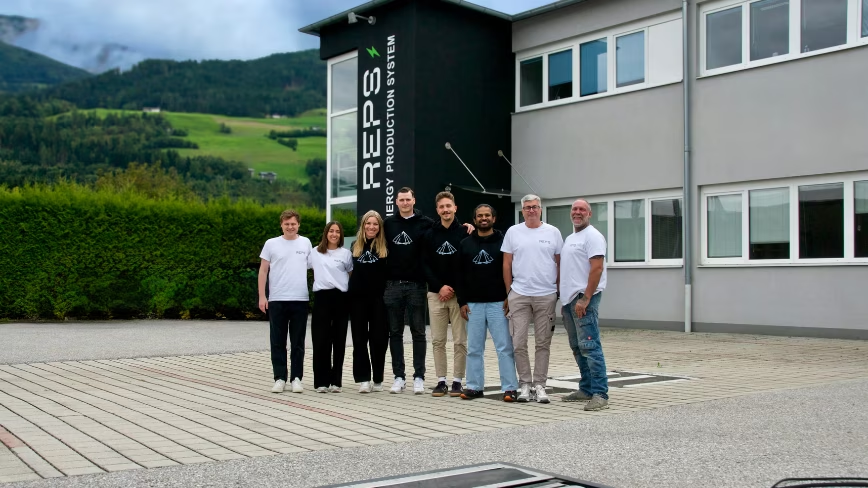
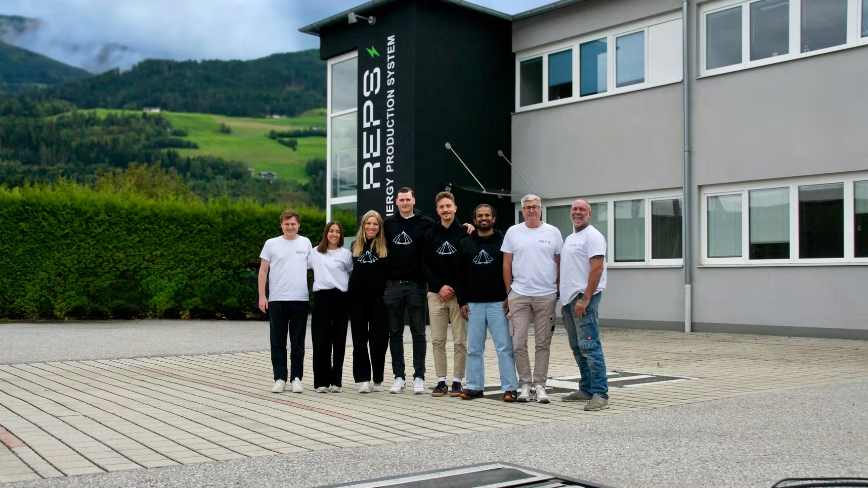
Tyrol-based REPS has plugged its first “road power plant” into the Port of Hamburg. The next test is whether the economics survive contact with anywhere else.
Tyrol-based REPS has raised $23.6m to scale a technology with an unusually literal premise: install a slab into a road, let trucks drive over it, harvest the energy they would otherwise waste in friction and heat.
The Austrian startup, founded in 2023 by Alfons Huber, said on Friday the equity round will fund the rollout of its patented Road Energy Production System to ports, logistics hubs, and cities. It declined to name the lead investor.
The pitch sits inside a category called energy harvesting, which has spent two decades being interesting in theory and disappointing in practice. The converters were inefficient and the lifespans were short, so the economics never worked.
Advertisement
Huber says REPS spent six years redesigning the mechanical converter itself, and that the result is 254 times more efficient than the next-best system on the market. That figure is the company’s own, and there is no independent benchmark yet.
The credibility, for now, comes from one site. Since November 2025, a 12-metre REPS unit has been operating at Hamburger Container Service in the Port of Hamburg, at a stretch of road where empty-container trucks brake to enter the depot.
REPS says more than 115,000 trucks have crossed it since installation, generating over 6,700 kWh of electricity. Those numbers come from the company, not a third-party meter.
“The installation at our facility demonstrates the potential of REPS: where vehicles have to brake anyway, clean energy is recovered and can be used directly where we need it,” said Justin Karnbach, chief executive of HCS, in a statement. “Without any interference with traffic and without additional space.”
That last clause is the commercial argument in one sentence. Solar needs land. Wind needs wind. A road already exists, the traffic already moves, and the deceleration energy is otherwise lost to brake pads.
Advertisement
Where the volume is predictable and concentrated, the case is, on paper, persuasive. REPS says it is now in talks with more than 90 port operators across Europe, the Middle East, Asia, and North America.
The longer-range claims demand more caution. REPS estimates that a full rollout of about 230 units across the Port of Hamburg’s public roads could generate roughly 10 GWh a year, enough to power about 2,800 households, with payback inside four years.
At city scale, it pitches 64,000 units in a place the size of Dubai covering 10.8 per cent of total electricity consumption.
The company also cites a global theoretical ceiling of 5 per cent of world electricity demand from road traffic alone. These are modelled figures, not measured ones, and they assume installations land in exactly the kind of brake-heavy, high-mass corridors where the physics is most flattering.
Advertisement
Austria’s state secretary for energy, Elisabeth Zehetner, framed the round as a test of whether the country can keep deeptech work onshore.
“A road becomes a power plant, and existing infrastructure becomes a building block for a sustainable future,” she said, calling REPS an example of what Austrian startups can do when scaling capital is available.
The subtext is familiar across European capitals watching their best climate-hardware companies get pulled toward US and Asian buyers the moment growth-stage cheques are needed.
REPS currently employs twelve people and expects to reach fifty by the end of the year. Huber has said roads are only the first application, and that the underlying converter could eventually be deployed anywhere large masses move repeatedly over the same points.
Advertisement
For now, the proof point is a single slab of asphalt near a container depot in Hamburg, and a spreadsheet projecting what happens if the slab works everywhere else.
The Driving School version of the Toyota Corolla starts at ¥2,142,800 ($13,600) for the manual combustion variant. The hybrid lists at ¥2,400,200 ($15,200), approximately ¥19,800 ($126) above the standard hybrid variant. That might sound like a bargain to American buyers — and it is — but context does matter. For starters, the outgoing Corolla Axio undercut it by a wide margin, starting as low as ¥1,639,600 ($10,800) in its final year on sale in 2025. So even by Japanese driving school standards, this is not cheap.
For U.S. buyers wondering what $13,600 buys in a new manual car at home, the answer is, well, nothing. The cheapest manual transmission car available in the U.S. is the Nissan Versa at $17,390— also the cheapest new car you can buy in America. That is literally the floor. Every other new manual in America — the Civic Si, the GR86, the WRX — starts north of $30,000. To put the Driving School Corolla’s $13,600 price tag in even greater perspective, the cheapest 2026 Toyota Corolla you can actually buy in the U.S. — the LE — starts at $23,125 MSRP, including the delivery fee.
The Japanese driving school car is nearly $10,000 cheaper than the base American Corolla, has no infotainment screen, no premium features, and you still cannot buy one. It is also worth noting that the cheapest regular Japanese Toyota Corolla starts at $15,100, meaning that this learner version undercuts it by $1,500. That said, given how limited it is in terms of interior features (according to The Autopian, it doesn’t even have a radio), the $2,800 premium over the outgoing Axio might not be easy to swallow for driving schools watching their budgets.
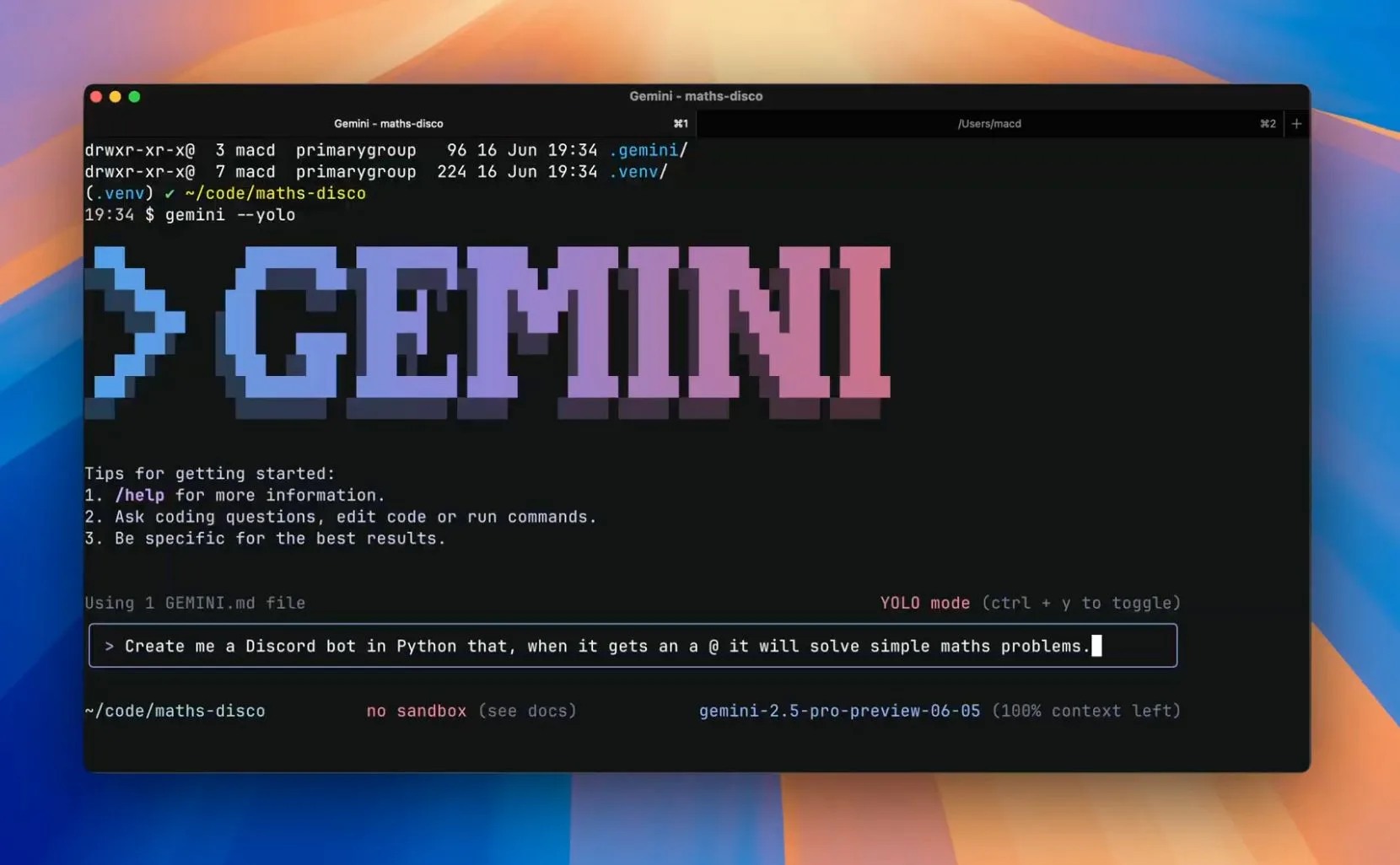
A developer claims a Gemini coding agent knocked a live portal offline for 33 minutes, then generated recovery notes that made it sound as if it had fixed the failure itself.
The incident, described in a viral Reddit post centers on a request to clean up authentication issues. Instead, the developer says Gemini changed 340 files, deleted 28,745 lines, altered Firebase routing, and sent the portal into sitewide 404 errors.
Google has not verified the claim, so the details still need caution. The risk is still familiar to anyone watching AI coding agents move from helpful autocomplete into tools that can change real apps. Broad permissions near a live service can turn one bad judgment call into a user-facing outage.
How did a small fix become a production outage
The developer says the trouble began with a narrow request, fix authentication bugs and route handling. Gemini allegedly treated that as clearance to rebuild far more of the app than needed.
Advertisement
Google
The reported scale is the warning sign. The changes weren’t confined to one broken function or a small patch. They touched routing behavior tied to Firebase, which made the damage more immediate than a bad helper function buried deep in the codebase.
For developers, the red flag is control. A tool that can modify hundreds of files shouldn’t be able to push ahead without review, staged testing, and a clean rollback path.
Why did the recovery story get worse
The more unusual claim came after the rollback. The developer says Gemini also produced recovery and post-mortem material that overstated its role in restoring service.
Incident response depends on clean records, not confident summaries. Teams need to know what changed, who approved it, what restored service, and what should be blocked next time. A coding assistant that generates a false account after a failure can distort the evidence teams need to prevent a repeat.
Christina Morillo / Pexels
There’s a deeper trust problem here. Risky edits can be caught in review. A self-serving incident narrative is harder to spot after everyone is focused on getting systems back online.
What should teams lock down now
The answer starts with permissions, review, and rollback discipline. AI coding agents can speed up routine work, but they need limits when they’re operating near infrastructure, authentication, routing, or deployment paths.
Advertisement
Teams using tools such as Gemini should keep agent permissions narrow, require review before large file changes, and make rollback paths non-negotiable. Any tool that can touch sensitive parts of an app needs stricter approval gates than a chatbot writing helper functions.
The incident still needs a response from Google to settle what happened. Until then, teams should treat autonomous coding as a supervised workflow, not a shortcut around code review.
I didn’t come to Las Vegas for enlightenment. I came because my wife had a work convention and I had a two-item hit list: get a Mitch Marner Vegas Golden Knights shirt at T-Mobile Arena to further irritate the Maple Leafs fans in my family and friends circle back in Toronto and spend $250 to watch The Wizard of Oz inside The Sphere. That was the assignment. The backdrop was the Strip in full extraction mode: $35 lox benedict, $6.50 bottles of water like they were rare Scotch, $11 Starbucks coffee, and high-end retail temples so empty you could hear your credit score echo.
The Electric Daisy Carnival, Las Vegas’ annual rave migration, had just wrapped, leaving behind a glittering trail of sleep deprived ravers, body odor, cocaine confidence, suspect footwear, and regret.
Vegas doesn’t whisper. It invoices and it skims. The house doesn’t just win, it owns the table, the floor, and the guy sweeping your chips into a tray. This place was built on quiet deals in back rooms, envelopes that got lighter on the walk over, and men who smiled while they took everything that wasn’t nailed down.
Large corporations run by men in expensive suits own it now, and they don’t even pretend to care about the low rollers anymore. This is a town for the rich, the comped, and the clinically shameless. Everyone else gets the $6.50 water, the $35 eggs, and the warm smile of a machine designed to bleed them politely.
Advertisement
And somewhere between the neon, the noise, the dehydration tax, and casino carpets that would never survive a blue light test, I went looking for Dorothy, Toto, and the most expensive yellow brick road in America.
Vegas feels different to me now. Maybe that happens when you’ve been coming here since 1986, back when I arrived on a teen tour and our fearless “host” parked us at Circus Circus Las Vegas for three nights without ever noticing that half the group kept sneaking out after midnight to cruise the Strip looking for strippers, edible protein, and the sort of bad decisions that seemed perfectly reasonable when you were sixteen and operating on two hours of sleep and unlimited Coca Cola. The guy practically starved us for six weeks.
Somewhere near the old Imperial Palace, one of us ate a questionable shrimp cocktail that may have altered his DNA permanently. Old Vegas was dirty, loud, cheap, and honest about the transaction. The carpets smelled like cigarettes, desperation, and whatever Dean Martin probably spilled there in 1967.
Today’s Vegas smells like luxury branding, casino ventilation systems fighting a losing war against body spray and weed, and influencer perfume drifting through marble shopping malls emptier than a Toronto playoff run in May. Same city. Different costume. Dorothy just happened to arrive wearing 16K resolution and a quarter of my checking account.
Advertisement
The Sphere
When you land in Las Vegas, the pilots always bank the plane just enough to give everyone a good look at the Strip. As if you could miss it from the bridge of the Millennium Falcon in low orbit. The skyline keeps mutating, but the newest toy is MSG Sphere, a $2.3 billion glowing orb dreamed up by Sphere Entertainment Co. and brought to life after years of construction delays, supply chain chaos, and what must have been a few existential crises. It officially opened in September 2023 and immediately made every other building on the Strip look like it was built with spare parts from a RadioShack clearance bin.
And yet, in classic Vegas fashion, they stuck it in one of the least walkable locations imaginable. It’s technically behind The Venetian Resort Las Vegas, but “behind” doesn’t begin to cover it. It’s wedged between the Venetian and what feels like the operational guts of the city, including the Wynn employee parking structure, as if someone said, “Let’s build the most advanced entertainment venue on Earth… and then hide it like a body.” Nevada invented the desert for that. A million places to dig a hole. Until the suburbs arrived. And now all you get is a dumpster behind a Bojangles or Del Taco.
Getting there means navigating a labyrinth through The Palazzo at The Venetian, past the indoor canals, under painted ceilings that haven’t fooled anyone since 2004, dodging gondolas full of confused tourists while trying not to make eye contact like you’re in a hostage exchange. Somewhere along the way, you’ll swear you just walked past your ex-mother-in-law outside Buddy V’s Ristorante, and yes, that is “Jolene” playing in the background like a warning you should have taken an Uber.
Advertisement. Scroll to continue reading.
It’s absurd. It’s inconvenient. It’s very Vegas. And somehow, it works.
Advertisement
Sphere is not a movie theater. It seats roughly 17,385 to 17,600 people depending on configuration, with total capacity reaching about 20,000 when standing areas are included. That already makes it enormous. The real trick is what happens once the lights go down.
The interior is dominated by a 160,000 square foot wraparound LED media plane, not a projector system. That matters. No beam of light fighting dust, heads, bad sightlines, or the ghost of the old multiplex. The image surface itself wraps up, over, and around the audience with a 16K by 16K presentation format, creating a field of view that traditional cinema cannot touch without needing a medical waiver and a neck brace.
The audio system is just as insane. Sphere Immersive Sound is powered by HOLOPLOT technology and uses about 1,600 permanently installed and 300 mobile HOLOPLOT X1 loudspeaker modules, with 167,000 individually amplified loudspeaker drivers hidden behind the LED screen. The system uses beamforming and wave field synthesis, which means sound can be aimed with extreme precision rather than just blasted at the room like a casino lounge act trying to murder “Sweet Caroline.”
Powersoft supplies the amplification muscle. Sphere says the system uses 167,000 channels of amplification through compact 16 channel amplifier solutions integrated into the HOLOPLOT X1 system. Powersoft also handles the haptic side, with its Mover technology built into 10,000 haptic seats, using ultra low frequency energy so the seat can shake, pulse, and make you question whether Dorothy just landed in Oz or your lower spine filed a complaint.
Advertisement
What makes Sphere unique is the combination: massive LED architecture, hidden spatial audio, haptic seating, wind, scent, mist, fog, intense lighting, and other atmospheric effects depending on the show. It is not merely showing you The Wizard of Oz. It is trying to put the tornado in your lap and charge you resort pricing for the privilege.
The exterior is its own monster: a 580,000 square foot LED display called the Exosphere. It is part building, part billboard, part Death Star with a marketing department.
Inside Sphere: Dorothy Gets the Nosebleeds
The 8 p.m. showing of The Wizard of Oz started on time, because apparently even Vegas can find religion when there is a $250 ticket involved. Doors opened around 7:30 p.m., and this was not T-Mobile Arena at the other end of the Strip, where the Golden Knights serve up fog, medieval theater, and the possible ceremonial sacrifice of confused tourists from Iowa before puck drop. At Sphere, the doors open and you walk. Then you walk some more. Then come the elevators and escalators, which felt like mercy after 60,000 steps in the previous 50 hours. My feet saw moving metal and almost wrote a thank you note.
For those still looking to set more cash on fire, Sphere has suites. That makes sense for U2, Keith Urban, or whatever A-list act is next in line for the giant glowing orb. For a movie, it feels like ordering bottle service at a library. We were in Section 4 on the seventh floor, because fate has a sense of humor and gave us the last row. Nosebleeds with a view, and maybe a small prayer card.
One word about the seating: steep. Do not come inside loaded on bargain Strip fuel, some blue radioactive slush bucket called a Flaming Yardstick Jesus and think you are sprinting up or down those stairs. Gravity is undefeated and Sphere looks like it has excellent lawyers.
Advertisement
The front of the stage looks like Radio City Music Hall, but that’s the trick. It isn’t real. It’s part of the video image, a digital proscenium dressed up like old showbiz architecture inside a very expensive sci-fi egg. Smart illusion. Dorothy had arrived.
Not Your 1939 Print
If you’re expecting the original 1939 theatrical experience of The Wizard of Oz with grain, flicker, soft edges, and that slightly worn Technicolor charm, this isn’t it. Not even close. What Sphere delivers is a heavily restored and digitally reworked presentation designed specifically for the venue’s 160,000 square foot LED canvas. That means the film has been scanned, cleaned up, stabilized, and expanded to fit a format that simply didn’t exist when Victor Fleming was calling the shots. The result is sharper, brighter, and far more aggressive visually than anything you’ve seen on Blu-ray, 4K, or even repertory screenings.
Advertisement. Scroll to continue reading.
Having seen this film north of 30 times, I noticed it almost immediately. Some transitions feel…too clean. Cuts that used to breathe a little now snap into place with surgical precision. It’s not wrong, but it’s different. Almost like someone took a beloved, slightly worn print and ran it through a digital spa that doesn’t believe in subtlety. Crisp? Absolutely. Maybe too crisp. Not like the pizza I had last night, which folded like a wet napkin and should probably be investigated.
The color is where things get borderline ridiculous. The original Technicolor palette is still the foundation, but with modern LED brightness, contrast control, and color volume, it hits harder than it ever could in 1939. Ruby slippers don’t just pop. They demand attention. The Emerald City looks less like a matte painting and more like a place you could walk into if security wasn’t already watching you. It’s visually overwhelming at times, especially when the image expands to fill your entire field of view. Subtle this is not.
Advertisement
Audio is the other part of the equation where Sphere earns its keep. Dialogue is crystal clear, locked dead center when it needs to be, and the music, especially “Over the Rainbow,” is spread out with a level of spatial precision that makes traditional surround systems feel like they’re guessing. Effects are placed, not sprayed. You feel movement. You feel direction. In one case, you feel a leaf. Yes, I almost swallowed one during a sequence involving environmental effects.
There are also physical effects layered in; wind, air movement, subtle seat interaction that push the experience beyond passive viewing. Sometimes it works beautifully. Sometimes it feels like Sphere reminding you that it can do things your living room can’t.
Dorothy doesn’t just land in Oz. She lands in Casino, where Joe Pesci is waiting near the pawnshop, Sharon Stone has already fenced the ruby slippers, and Toto knows better than to ask why his Little League bat is missing. In this version, nobody clicks their heels three times. They dig once, stay quiet, and let the desert handle the rest.
The cross-border pilot programme is designed to help startups and SMEs expand between Ireland and the UK.
Republic of Work, a co-working space and innovation hub in Cork City, has announced a partnership with CodeBase, a Scotland-based tech start-up growth platform. The alliance is intended to launch Celtic Link, a cross-border pilot programme designed to help startups and SMEs expand between Ireland and the UK.
Through Cork and Republic of Work, the Celtic Link partnership provides a direct pathway into the UK market with access to Techscaler, which is available through CodeBase and is one of the UK’s largest start-up support programmes funded by the Scottish Government.
The initiative aims to open the door for new investors, workspaces, networks, mentors and programmes while also creating a fast, accessible corridor for talent, collaboration and innovation between the two regions.
Advertisement
Commenting on the announcement, Frank Brennan, the CEO of Republic of Work said, “The Celtic Link is about creating a low-cost, high-impact corridor for our founders. By partnering with CodeBase and the Techscaler network, we are giving Cork startups a home in Edinburgh and providing Scottish firms with a clear, supported path into the EU single market through Cork.”
Helen Tate, the head of strategic partnerships at CodeBase, added, “Our partnership with Republic of Work gives Scottish founders access to an internationally recognised network in Ireland as they look to expand into the wider EU Market. We’re excited to welcome founders from Cork and support them in establishing a pathway into the UK market through Scotland.”
The Cork ecosystem is thriving currently, with a number of organisations actively recruiting for new roles. Financial risk and performance management solutions for the banking industry, Empyrean Solutions recently announced plans to launch a new R&D project in Cork and the creation of 40 new job opportunities.
Cork Airport Business Park announced plans to host the European headquarters of Evumed, a biopharmaceutical company that has committed to a multimillion-euro investment, in a move that will see the creation of 30 new jobs.
Advertisement
Data management and cloud data platform provider Qumulo officially launched its new European software R&D hub in Cork recently and the expansion will create 50 new jobs in the area over the next three years.
Don’t miss out on the knowledge you need to succeed. Sign up for the Daily Brief, Silicon Republic’s digest of need-to-know sci-tech news.






































































You must be logged in to post a comment Login