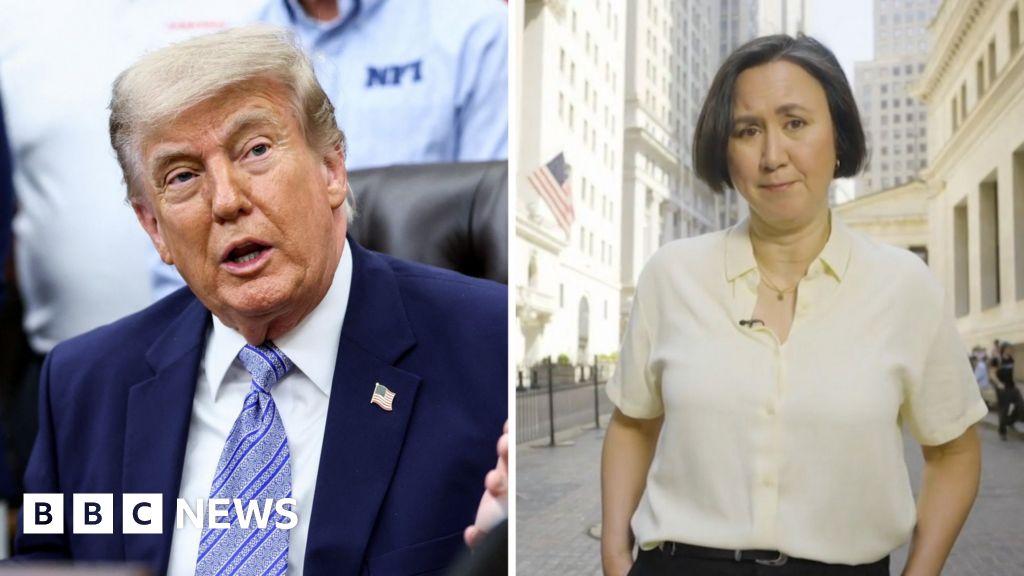
The BBC’s Michelle Fleury reports from Wall Street on recent government filings showing that in the first three months of this year thousands of stock market trades were made on behalf of President Donald Trump.
The trading includes shares in some of America’s biggest companies.
A spokesperson for the Trump Organization said that neither the president, his family or the company played any role in selecting or approving investments. They receive no advance notice of trading activity and provide no input regarding investment decisions or portfolio management, the statement said.
Shares of defence company MTAR Technologies gained 6% to their day’s high of Rs 8,448 on the BSE on Friday to extend gains for a third session in a row and rallying 24% over the same period.
The latest surge comes after the company secured Rs 467.30 crore order from an international company. The company said it is unable to disclose the customer’s name due to confidentiality obligations. It added that the order is a continuation of regular business from an existing customer.
As per the execution timeline, 50% of the order value is scheduled to be completed by March 20, 2027, while the remaining 50% is expected to be executed by June 20, 2027, MTAR said in a regulatory filing.
This is the company’s second order win in quick succession. Last week, MTAR announced it bagged an order worth Rs 2,279 crore from an international company. The renewed buying also stems from robust FY27 growth guidance following an impressive Q4 earnings.
Advertisement
In the Q4 earnings call, the management of MTAR Technologies said the outlook for the next financial year remains highly positive, supported by strong confidence in the execution of the current order book. The company said it has revised its FY27 revenue growth guidance upward from 50% to more than 80%, with a possible variation of 5%, while expecting margins of around 24% for the year.
Live Events
The management attributed the stronger outlook primarily to the initial expansion of capacities in the clean energy segment, which has already been commissioned. It added that the oil and gas plant is expected to be commissioned by the end of September and become fully operational thereafter. According to the company, the nuclear and aerospace businesses are also expected to contribute significantly higher revenues in FY27, driven by the execution of nuclear projects backed by a strong order book and the commencement of volume production in the aerospace division for certain customers.The Hyderabad-based precision engineering company posted a consolidated net profit of Rs 44.28 crore for the March quarter, sharply higher than Rs 13.72 crore reported in the same period last year, reflecting a growth of about 223%.
Revenue from operations for the quarter rose nearly 67% to Rs 306 crore from Rs 183 crore a year earlier. The increase was mainly driven by higher product sales, which rose to Rs 303 crore from Rs 179 crore in the corresponding quarter last year.
For the full year FY26, the company reported consolidated net profit of Rs 94.03 crore, compared with Rs 52.89 crore in FY25, translating into growth of close to 78%. Annual revenue from operations rose 31% to Rs 876.21 crore from Rs 675.99 crore in the previous financial year.
MTAR Technologies shares have witnessed a sharp rally this year, turning into a multibagger with gains of nearly 244% in 2026 so far.
Advertisement
(Disclaimer: Recommendations, suggestions, views and opinions given by the experts are their own. These do not represent the views of The Economic Times)
Morrisons is preparing to pull down the shutters on 100 loss-making convenience stores in a move that places hundreds of shop-floor jobs in jeopardy, with the Bradford-based grocer pointing the finger squarely at Labour’s tax and wage agenda for tipping the sites into terminal decline.
Britain’s fifth-largest supermarket said the shops, all of them legacy outlets from its 2022 rescue of collapsed convenience chain McColl’s, had been “challenged for a number of years” despite remedial action. The closures will be phased in over the coming months, with affected staff entering consultation.
In an unusually pointed statement, a spokesman for the group said the situation had been “exacerbated in more recent years by significant cost increases resulting from Government policy choices, which have made returning these stores to profitability even more difficult”. While bosses stopped short of naming specific measures, the timing leaves little room for ambiguity.
From 1 April, the National Living Wage rose by 50p to £12.71 an hour for those aged 21 and over, with the 18-to-20 rate climbing 85p to £10.85 and the apprentice rate up 45p to £8. Layered on top is last year’s increase in employer National Insurance contributions, which lifted the headline rate from 13.8 per cent to 15 per cent and dragged the secondary threshold down from £9,100 to £5,000 — a double whammy that has fallen most heavily on retailers reliant on part-time labour.
The British Retail Consortium has warned that the combined hit added some £5bn to industry wage bills last year alone, and that as many as 160,000 retail roles could be lost over the next three years as employers re-engineer their cost base. Morrisons’ announcement is the latest data point in that grim arithmetic.
Advertisement
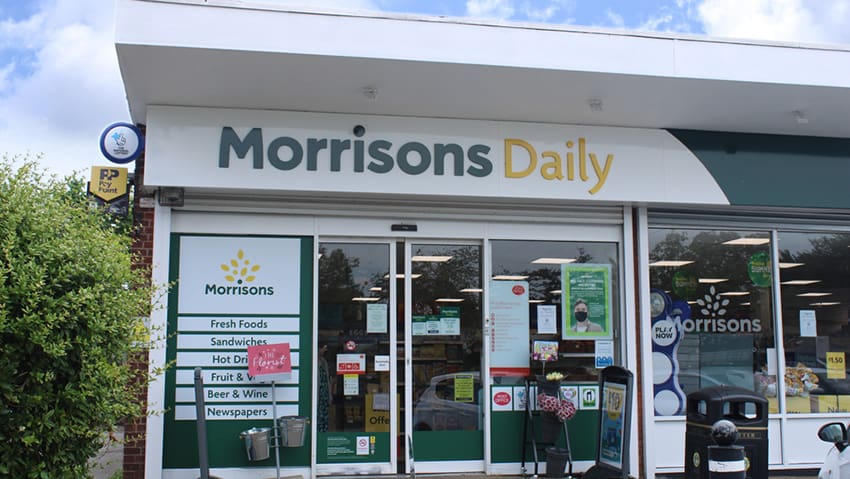
The McColl’s portfolio has proved a persistent thorn in chief executive Rami Baitiéh’s side. Morrisons paid roughly £190m to take the chain out of administration in May 2022, and almost immediately moved to shutter 132 of the worst-performing sites while converting the remainder to its Morrisons Daily fascia. The latest round of closures suggests that conversion alone has not been enough to fix the unit economics on a stubborn rump of stores.
It is also the third significant restructuring announcement from the grocer in recent months. Earlier this year, Morrisons confirmed it was closing 103 cafés, florists, pharmacies and Market Kitchens in a sweeping shake-up of in-store services, and last month staff were told the company was consulting on up to 200 head office redundancies at its Bradford headquarters as part of an artificial intelligence-driven productivity drive.
Despite the closures, Morrisons was at pains to stress that its convenience strategy is far from in retreat. The group still operates around 1,700 convenience stores alongside 497 supermarkets and employs roughly 95,000 people. It said it remained on the front foot when it came to opening “hundreds more” franchise convenience stores in the coming years, arguing that pruning the underperforming tail and bolting on capital-light franchise sites would leave its convenience estate “stronger overall”.
For SME owners watching from the sidelines, the message is sobering. When a £20bn turnover supermarket cannot make the numbers stack up on stores carrying its own brand, smaller independents operating on slimmer margins will be feeling the squeeze even more acutely. The Treasury’s own minimum wage uplift, unveiled in last autumn’s Budget, was billed as a pay rise for the lowest earners; for many small employers, it has become a stress test of their viability.
Advertisement
The Department for Business and Trade has been approached for comment.
Amy Ingham
Amy is a newly qualified journalist specialising in business journalism at Business Matters with responsibility for news content for what is now the UK’s largest print and online source of current business news.
The retailer said the former McColl’s shops have been loss-making for years, with Morrisons claiming ‘Government policy choices’ have made returning the stores to profitability even more difficult
(Image: PA)
Morrisons is set to close approximately 100 loss-making convenience stores as the supermarket grapples with cost pressures it attributes to “Government policy”.
The stores earmarked for closure are said to have been unprofitable for several years and were formerly McColl’s outlets, which the chain took over in 2022.
The proposals would see the stores shuttered within the coming months, with hundreds of shop workers understood to be facing redundancy.
A spokesman for Morrisons said: “The performance of all company owned stores across our convenience business is subject to continuous review.
Advertisement
“This process has identified a number of stores, which were part of the McColl’s acquisition, whose performance has been challenged for a number of years and which are loss making, despite remedial action.
“This situation has been exacerbated in more recent years by significant cost increases resulting from Government policy choices, which have made returning these stores to profitability even more difficult.
“Having completed the review, we are now proposing to take the tough but necessary decision to close a number of these stores over the next few months.”
The specific Government policy choices were not given, though the announcement comes amid a period in which many retailers have been contending with mounting business costs, including higher minimum wages and last year’s national insurance rate increase.
Advertisement
Morrisons runs about 1,700 convenience stores alongside approximately 500 supermarkets, and has a workforce of some 95,000 staff. However, alongside the latest round of closure announcements, Morrisons emphasised that it continues to identify opportunities to launch hundreds more franchise convenience outlets in the coming years.
The supermarket chain also maintained that the proposed closures combined with its strategy for new locations would be “improving the quality of our convenience estate and making it stronger overall”.
Last month, Morrisons informed employees it was beginning a consultation process regarding redundancies at its Bradford head office, affecting fewer than 10% of positions at the site.
The grocer has also recently closed a number of its cafés, convenience shops, florists and fresh food counters as part of a restructuring programme which resulted in several hundred job losses.
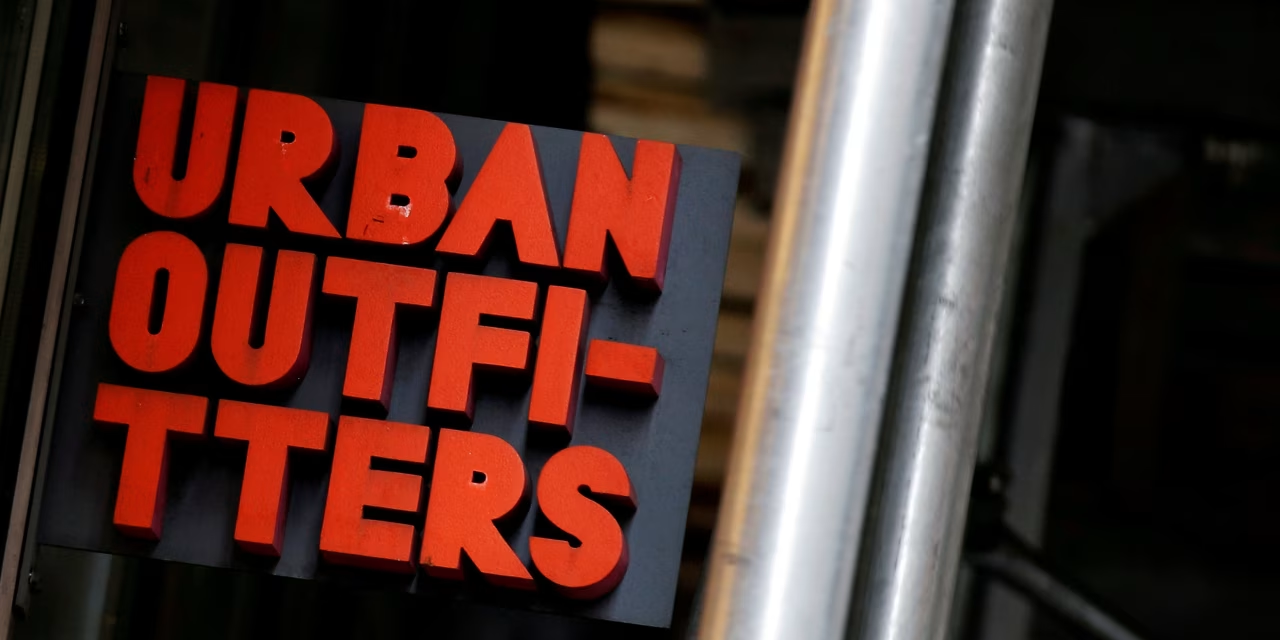
The company’s Free People group, which includes its namesake apparel brand as well as its activewear division FP Movement, recorded 17% sales growth in the latest quarter. The growth helped Urban Outfitters’s top line climb 11% overall.
I am mostly a trader engaging in both long and short bets intraday and occasionally over the short- to medium term. My historical focus has been mostly on tech stocks but over the past couple of years I have also started broad coverage of the offshore drilling and supply industry as well as the shipping industry in general (tankers, containers, drybulk). In addition, I am having a close eye on the still nascent fuel cell industry.I am located in Germany and have worked quite some time as an auditor for PricewaterhouseCoopers before becoming a daytrader almost 20 years ago. During this time, I managed to successfully maneuver the burst of the dotcom bubble and the aftermath of the world trade center attacks as well as the subprime crisis.Despite not being a native speaker, I always try to deliver high quality research to followers and the entire Seeking Alpha community.
Analyst’s Disclosure: I/we have no stock, option or similar derivative position in any of the companies mentioned, and no plans to initiate any such positions within the next 72 hours. I wrote this article myself, and it expresses my own opinions. I am not receiving compensation for it (other than from Seeking Alpha). I have no business relationship with any company whose stock is mentioned in this article.
Seeking Alpha’s Disclosure: Past performance is no guarantee of future results. No recommendation or advice is being given as to whether any investment is suitable for a particular investor. Any views or opinions expressed above may not reflect those of Seeking Alpha as a whole. Seeking Alpha is not a licensed securities dealer, broker or US investment adviser or investment bank. Our analysts are third party authors that include both professional investors and individual investors who may not be licensed or certified by any institute or regulatory body.
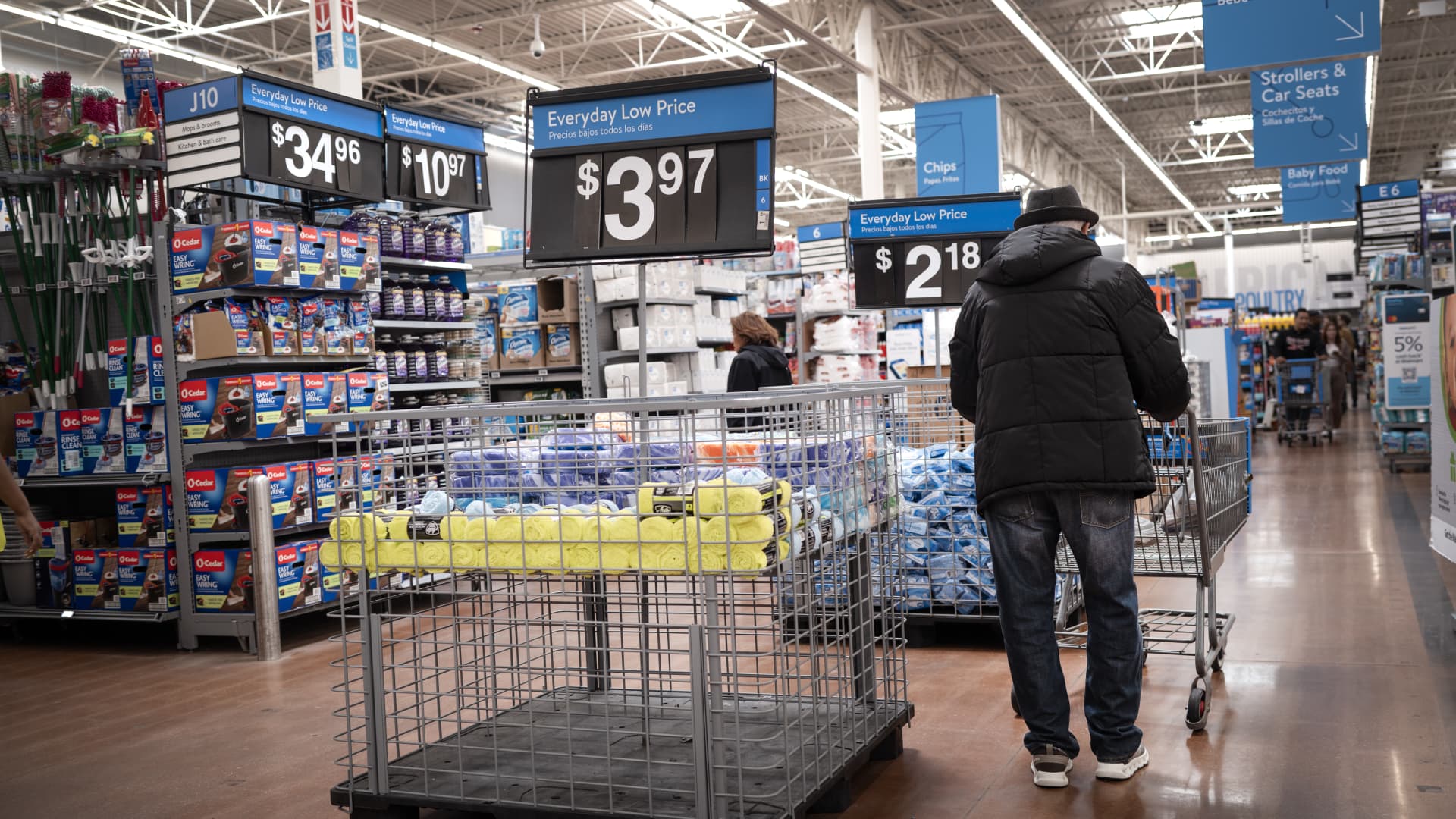
Customers shop at a Walmart store on May 13, 2026 in Chicago, Illinois.
Scott Olson | Getty Images
President Donald Trump suggested last month he would look out for companies that didn’t seek tariff refunds after the Supreme Court struck down his wide-ranging global duties.
Advertisement
At first, some major firms like Amazon appeared to be holding off on asking for money back over concerns they’d offend the often transactional president and end up in his crosshairs, CNBC reported earlier this year. But now some of the largest U.S. companies from Walmart to Apple have confirmed they’re seeking what they’re owed — regardless of the consequences.
Home Depot, General Motors, John Deere, FedEx and Costco are among the other major U.S. corporations that have said they are trying to get refunds. The moves may not represent a sea change in how companies handle their relationships with Trump. Even so, they show key examples of when they’re willing to publicly break with the president, after he told CNBC he would “remember” if companies decided not to seek refunds.
There’s a strong business incentive to apply — as well as, for many, a fiduciary responsibility. Major companies have a chance to regain potentially billions of dollars and maximize returns for shareholders.
More than $35 billion in refund money has already been processed and is on its way to businesses’ bank accounts, U.S. Customs and Border Protection said in a court filing earlier this month. The government owes roughly $166 billion in refunds overall.
Advertisement
‘I’ll remember them’
When Trump appeared on “Squawk Box” last month, CNBC’s Andrew Ross Sorkin said that at the time, Apple was among the companies that had held off on applying for a refund over apparent concerns it would upset the president. In response, Trump said it was “Brilliant if they don’t do that.”
“Actually, if they don’t do that, they’ve got to know me very well,” he said. “I’m very honored by what you just said.”
“If they don’t do that, I’ll remember them,” Trump said.
The comments made waves around Washington, where lobbyists and business groups say it initially gave some importers pause over whether to apply for the money they were due. Companies have been trying to parse what exactly the president might have meant with his remark, and whether and how the administration could retaliate against them for moving through the process.
But the threat has not deterred the largest U.S. companies from trying to claw back what they paid in tariffs. Take the largest U.S. retailer Walmart, which drew Trump’s ire last year when it said it could have to raise prices in response to the duties, sparking Trump to tell the retailer to “eat the tariffs” and warn he would be “watching.”
Advertisement
In an interview with CNBC on Thursday, Walmart finance chief John David Rainey confirmed that the company applied to get back the money it paid for so-called IEEPA tariffs, but doesn’t expect a major windfall if and when it is paid back.
“We have availed ourselves of the option to participate in those refunds. For us, it’s a relatively small part of our overall business,” said Rainey when discussing the company’s fiscal first-quarter results. “To be eligible for those refunds, you need to be the importer of record, and for us, where we are the importer of record, it’s about half of 1% of our U.S. sales.”
In its most recent full fiscal year 2026, Walmart U.S. saw $483 billion in net sales, so half of 1% would total about $2.42 billion. While that total is larger than many companies’ annual revenue, Rainey said it’s hardly material for a business that saw more than $713 billion in total revenue last fiscal year.
Still, “every little bit matters,” he said.
Advertisement
“We’re going to prioritize those refunds if and when we get them towards investing in price for our customers,” he said. “We recognize that given where we are right now with both the stress on the consumer as well as the retention of the share gains that we’ve seen, the best ROI on that dollar of capital is to invest in price for our customers.”
Walmart is among the companies that have said they could try to use the money to benefit customers, even in indirect ways. Deploying the refunds to keep prices low for consumers has become a theme among companies applying for them.
“What we have heard most of all in terms of uses is, this is going to help us avoid raising prices as quickly as we thought we were going to have to,” said Neil Bradley, chief policy officer with the U.S. Chamber of Commerce. “That’s a hard thing to telegraph, but it’s real.”
Walmart confirmed it was seeking money back Thursday after Target CFO Jim Lee said on Wednesday the company was “working through the process” of getting a refund. Home Depot finance chief Richard McPhail also said Tuesday the retailer had applied for and had “received an immaterial amount to date.”
Advertisement
“We have assumed that that could provide a significant offset to those costs,” he told analysts.
Some firms have sought to find ways to spend any refund money in ways that would appease both the White House and their customers, one representative of an influential business group said. For example, Apple has said since Trump’s comments that it is applying for a tariff refund.
It plans to reinvest any money it gets back into “U.S. innovation and advanced manufacturing,” a major priority for Trump, Apple CEO Tim Cook said on a call with analysts last month.
Meanwhile, other major companies have stayed quiet about whether they’ll try to claw back their tariff payments.
Advertisement
Amazon, which was sued in a class action lawsuit last week over its decision not to pursue a refund, hasn’t responded to requests for comment on whether it’ll apply to get money back.
Others aren’t ready to admit their refund plans one way or another. On Wednesday, Lowe’s CEO Marvin Ellison would not say whether the retailer is applying.
“We’re just monitoring the situation,” said Ellison. “We haven’t talked publicly about whether we filed or not, but what we have done is paid really close attention to the situation, understanding that when tariff refunds go out, they go out to everybody, and so we’re right now trying to determine if and when those refunds happen.”




















































You must be logged in to post a comment Login