

Politics
How To Sleep In A Heatwave 2026: Expert Tips To Lower Your Core Temperature And Stay Cool At Night

We hope you love the products we recommend! All of them were independently selected by our editors. Just so you know, HuffPost UK may collect a share of sales or other compensation from the links on this page if you decide to shop from them. Oh, and FYI — prices are accurate and items in stock as of time of publication.
If you’re anything like me, you’ll agree that having to change your sheets is probably the most arduous house task there is.
So, even though I hate not sleeping with the duvet on (that’s just a personal thing) I’ll do anything to make sure I don’t have to change my sheets every night as I sweat through the summer.
We all know the value of a good night’s sleep at this point, and while you might be spending more hours out of the comfort of your bed during summer than you do in winter, you still want to know your sleep setup won’t let you down at the end of the day.
To help you keep cool and collected during the warmer months, Sammy Margo, physiotherapist and in-house sleep expert at Dreams has shared her tips for upgrading your sleep setup.
1. Mattress matters
All these years, I falsely assumed what goes on top of you matters more than what you’re on top of at night.
“Your mattress has a huge impact on how well you sleep in warmer weather,” advises Margo. Who knew? A mattress with a cooling layer will do a lot of heavy lifting to stop you feeling suffocated by your bed.

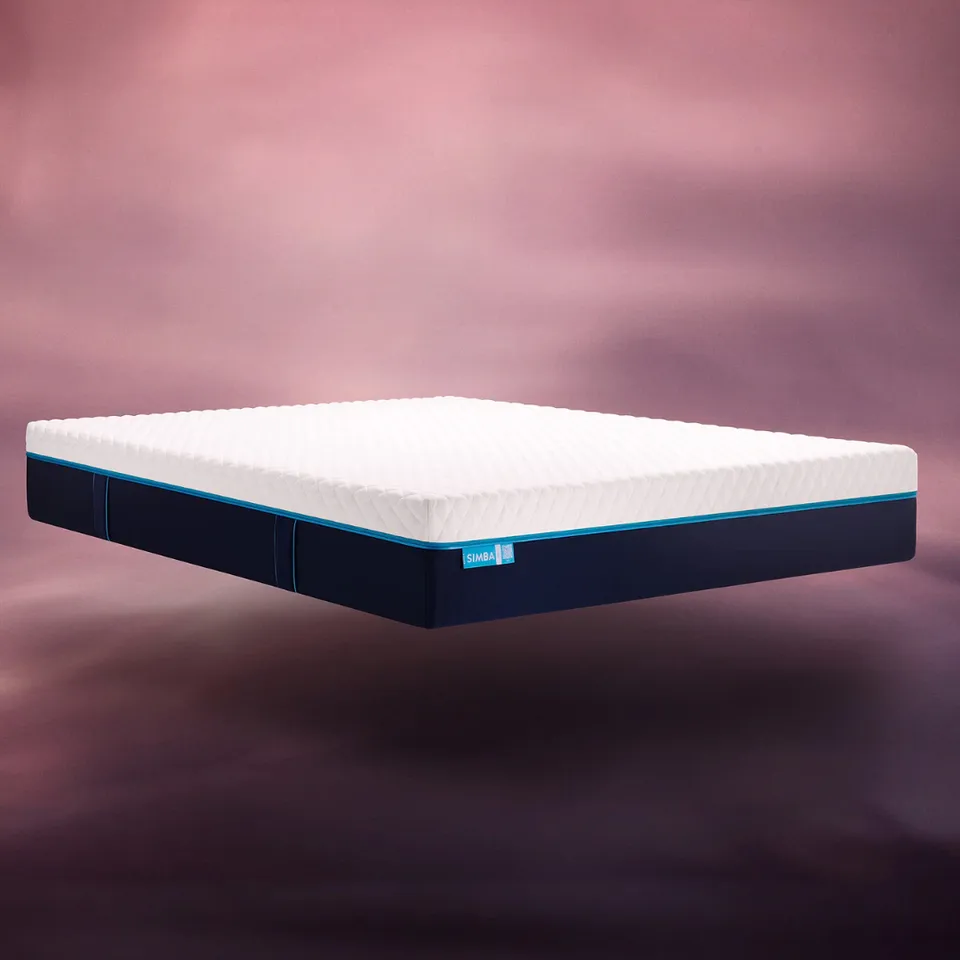
As well as being the perfect firmness (no, really, science says so) for optimal sleep positioning, Simba mattresses contain a layer of graphite-infused Simbatex to keep you cool at night. And, if that wasn’t enough, the HybridPro is covered in a layer of cool-touch Stratos fabric, so you won’t feel like you’re crawling onto muggy mattress at the end of the night.

“I recommend this mattress because it’s designed to help sleepers stay cool, comfortable and supported,” says Margo. “It features TheraPur’s coolest ever graphite-infused ActiCool+ which feels 1.5 degrees cooler than standard mattresses.”
But don’t just take her word for it, one five-star reviewer also had only good things to say about this mattress: “Absolutely fabulous! Genuinely was skceptical on how good nights sleep i could have with this mattress, but definitely recommend.”
2. Wear protection
Not the kind you’re thinking of (but that too, obvs). “A mattress protector is often the unsung hero of a cooler night’s sleep,” Margo says.
“It’s a simple swap, but one that can make a real difference during a heatwave.”

Thanks to its Simbatex foam layer, this mattress topper has five times more airflow than a regular memory foam one. And, because its literal purpose is to protect your mattress from spills and stains, it has a removable cover that can easily be chucked in the washing machine.

“The TheraPur Cool Mattress Protector from Dreams is great because it helps wick moisture away from the body while promoting airflow, with a cool-touch cover for that fresh-sheet feeling as soon as you get into bed,” Margo says.

I’ve had this mattress topper for a year and, safe to say, I love it. Not only can you choose between soft and firm back support by simply flipping it over, but it adds 6cm to your mattress for extra support. To keep things cool, it uses Point Elastic Airgocell technology to boost airflow, and again the top layer is removable so you could even pop that in the freezer for a cold blast.
3. Duvet
The same goes for your duvet. “Lots of people still like the comfort of a duvet, even when it’s warm,” Margo says (glad I’m not the only one!).
Choosing a duvet that promotes airflow can sidestep the issue of a warm layer of heat, she adds.

Not sure about buying a completely new mattress for spring? Made of temperature-regulating microfibres, this duvets adapts to the season so you won’t have to worry about storing an extra one to switch out when the weather gets warm.

For those who don’t want to feel trapped by their duvet, Margo recommends this one from Dreams. “It combines cosy comfort with cooling technology, using soft hypoallergenic fibres to encourage airflow and help regulate temperature,” she says.

Unfortunately for my fellow allergy sufferers out there, warm weather can also come with an increase in the pollen count. Thankfully, this duvet is lightweight and coated in a microfibre cover that’s been treated with anti-allergy properties (backed by the British Allergy Foundation, no less).
4. Rest your head
“A cool pillow can be one of the quickest ways to feel more comfortable on a hot night,” Margo says.

Luckily for you, Emma has created an adjustable pillow with plenty of layers to make sure there’s air flowing through it the whole night, and you don’t have to flip it. You can adjust its height, for optimum positioning under your head, and its silky-smooth outer layer is formulated using micro-elastic materials for a cool-to-the-touch feel.
5. Keep the heat out
It might seem like a given, but to not feel sticky at night, you’ll need to keep heat out during the day.
“Blackout curtains or blinds help keep bedrooms cooler and reduce heat build-up,” Margo adds.
“It’s also best to keep windows closed during the hottest parts of the day, only opening them later in the evening once temperatures begin to drop.”

If you’re not one to add dark materials to your room, this white blackout blind keeps your space feeling fresh and open, while still blocking out the light. Blinds2Go lets you order custom-sized blinds for your room and, even better, these ones are designed specifically to help you sleep.
6. Shower temperature matters
While all you want to do after a long day of being in the sun is to clamber into a cold shower, that might have the opposite effect to what you intend to do before bedtime.
“It might sound strange, but a lukewarm shower can help gradually lower core body temperature and trigger the body’s natural cooling process, helping people relax and drift off more comfortably,” Margo explains.
Personally, I find ThisWorks’ body wash and a lukewarm shower is all I need to help me wind down for bed – it smells lush and it doesn’t dry my skin out even more than it already has been by the sun.

7. Ice, ice, baby
If you’re longing for something cool, freezing your bedding before you climb in can help keep you comfortable all night long.
“Placing pillowcases or bedsheets in the freezer for a few minutes before bed can provide temporary relief from the heat and make it easier to fall asleep,” Margo says. “For added comfort, pyjamas or eye masks can also be chilled beforehand.”

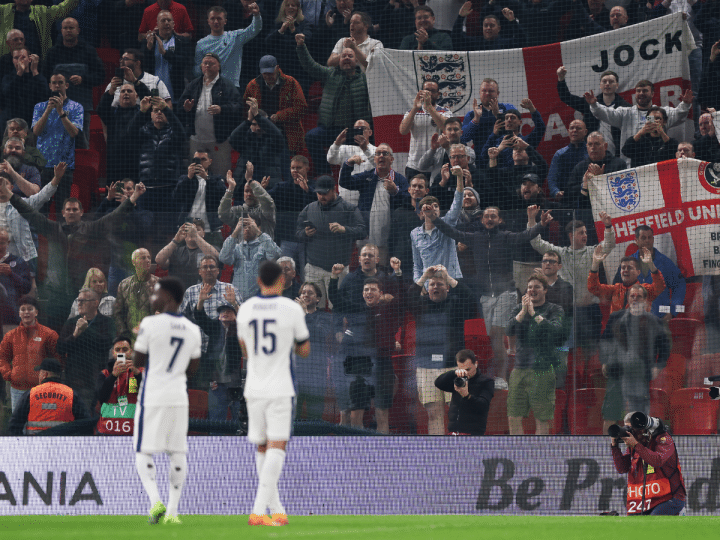

Two years can feel like a lifetime in football, and none more so than for Cole Palmer and Phil Foden who were firmly at the top of the England pecking order after Euro 2024. They were winners of major individual awards, fixtures in Gareth Southgate’s big-game plans, and widely tipped to be central to England’s future. Fast forward to the present and both are conspicuously absent from Thomas Tuchel’s World Cup squad. The shift is stark, and it’s driven by one brutal truth: form matters more than pedigree under Tuchel.
Palmer and Foden’s trajectories were once parallel. Both came through Manchester City’s academy, both collected domestic and individual honours, and both looked like automatic selections for tournament football. But football’s calendar is unforgiving. A dip in output, a few underwhelming displays and one coach’s clear preference for current performance over past glories have reshaped the selection map.
England squad selection: decline in output
Palmer’s first seasons at Chelsea were explosive, 37 Premier League goals across his opening two campaigns set expectations sky-high. This season, though, the edge has dulled. Nine goals in 25 league appearances is respectable, but it lacks the consistent flash that once made him look like the next elite player. The moments that once defined him, sudden, decisive interventions, have been fewer and far between.
Foden’s slide has been longer and more jagged. After a purple patch before Christmas that produced six goals in five games, he has not scored since. That’s a sharp fall from the 2023–24 campaign when he hit 19 league goals and 27 in all competitions. Sporadic moments, a clever backheel assist here, a bright touch there, have not been enough to convince Tuchel that he offers the kind of reliable, match‑shaping influence the manager demands.
The Uruguay test that mattered
If there is a single turning point for Phil Foden, it was the friendly against Uruguay in March. With Harry Kane absent, Tuchel tried Foden in the central number 10 role. The experiment failed. Foden drifted, struggled to impose himself and was substituted early in the second half, replaced by Palmer. That substitution, and the lack of impact that preceded it, felt decisive. Tuchel’s selection philosophy is clear: give players a chance, but don’t let reputation override what you see on the pitch. Foden’s performance in that match looked to have closed the door.
Palmer, meanwhile, had his own opportunities but could not force a reappraisal. Moments of brilliance that once made him a must‑pick were not frequent enough to dislodge Tuchel’s growing conviction that other options offered more immediate value.
Tuchel’s ruthless pragmatism
Tuchel has shown little patience for reputational inertia. He has repeatedly picked players on the basis of current form and tactical fit rather than name recognition. Jude Bellingham’s place was never in doubt; Tuchel has picked Morgan Rogers from Aston Villa and rewarded consistent club performances. That approach leaves little room for players whose recent output is patchy.
Tuchel’s selections have also highlighted a preference for variety and unpredictability in the attacking midfield slots. He wants players who can change the tempo, add pace and create different angles of attack, attributes that have become decisive in his thinking.
The replacements
Eberechi Eze is the clearest beneficiary. His season at Arsenal, seven league goals and two assists in a title-winning campaign may not leap off the stat sheet, but his performances for Tuchel in qualifying have been persuasive. Three goals in six qualifiers and a style that offers pace, unpredictability and directness have made him a compelling alternative to the more familiar names.
Morgan Rogers has also earned trust through consistent displays, while other contenders have shown enough to convince Tuchel that they can slot into the system and deliver. Even Morgan Gibbs‑White, despite a late scoring surge at club level, has not done enough in Tuchel’s eyes to force selection, underlining how selective the coach has been.
Reality check for Palmer and Foden
Once predicted as guaranteed starters, Palmer and Foden now face the humbling reality of being judged on present form. That is a hard lesson for two players who have already achieved so much so young. But it is also a reminder of the merciless nature of elite international selection: past awards and promise count for little when a manager is building a squad for a specific tournament and a specific tactical plan.
For both players the path back is straightforward in theory: rediscover the consistency and cutting edge that made them indispensable. In practice it will require sustained excellence at club level, adaptability to Tuchel’s tactical demands, and the kind of decisive performances that force a manager to rethink his plans.
Tuchel’s message to England players is unambiguous, the plane to the World Cup is for those who are delivering now. For Palmer and Foden, the challenge is to make sure the next selection window tells a different story.
Featured image via Getty/Alex Pantling
By Faz Ali

The government has released its first tranche of documents charting Andrew Mountbatten-Windsor’s previous appointment as a trade envoy.
It comes after the Liberal Democrats applied pressure in the Commons via a binding parliamentary procedure called a humble address.
They called for the government to publish sensitive documents around any vetting of the former prince and his appointment to the role.
The former prince was appointed as the UK’s trade envoy in 2001, and held the job until the UK’s special representative until 2011.
The significant title meant he had access to senior government and business contacts globally.
Andrew stepped down amid backlash over his ongoing friendship with convicted sex offender Jeffrey Epstein after they were pictured together.
The former prince then had to give up his royal status and titles in more recent years amid growing scrutiny and the US Department of Justice’s release of the Epstein files.
Andrew has categorically denied any wrongdoing linked to Epstein’s crimes.
Here’s a look at the main takeaways in the first batch of documents around the ex-royal’s historic appointment.
1. Late Queen Pushed For Andrew To Get The Job
Elizabeth II asked for her second son to receive the UK trade envoy role, according to letter from the chief executive of British Trade International.
Writing in 2000 to the UKs foreign and trade secretaries, David Wright said: “The Queen’s wish is that the Duke of Kent should be succeeded in this role by the Duke of York.
“The Duke of Kent is to relinquish his responsibilities around April next year. That would fit well with the end of the Duke of York’s active naval career.
“The Queen is very keen that the Duke of York should take on a prominent role in the promotion of national interests.
“No other member of The Royal Family would be available to succeed the Duke of Kent. The Duke of York’s adoption of his role would seem a natural fit.”
The Duke of Kent, the Queen’s cousin, had often represented British trade interests overseas before Andrew.
2. Andrew Preferred ‘Sophisticated Countries’
The former royal’s private secretaries allegedly told diplomat Kathryn Colvin in January 2000 that he preferred some visits over others.
“I asked what were The Duke’s preferences for activity during his visits,” her letter said.
“Captain Blair [principal private secretary] said that The Duke of York was particularly good on high-tech matters, trade, youth (including primary schools and outward bound projects), cultural events, with a preference for ballet rather than theatre, the Commonwealth and military and foreign affairs.
“He tended to prefer the more sophisticated countries, particularly those in the lead on technology.”
3. Andrew Did Not Want To Play Golf
Mountbatten-Windsor tried to avoid playing the sport when in other countries.
“The Duke of York should not be offered golfing functions abroad. This was a private activity and if he took his clubs with him he would not play in any public sense,” Colvin’s letter read.
4. No One Else Was Approached For Envoy Role
A briefing note for the media announcement of Mountbatten-Windsor’s appointment showed that no one else was approached for the job, even though he was not experienced.
One question asked: “Did we approach anyone else?”
The note says: “No – the importance of the Duke’s involvement lies in the high profile and commitment he is able to give this work as a Member of the Royal family. It is a continuation of the Royal Family’s involvement in the promotion of British trade and investment following HRH the Duke of Kent’s decision to relinquish his duties in April.”
The briefing confirms the ex-royal was unpaid.
5. Shadowing Suggestion
A memo from David Wright, written in February 2000, suggested the royal might need more training before he took on the high-level lobbying job.
He wrote: “If the arrangement went ahead on this basis, we would want to do some induction work with The Duke of York from Spring 2001 onwards.
“He might even do some ‘shadowing’ of work in our offices and our activities both in the regions and overseas. It would be important for him to be aware of our general strategy and approach.”
What Happens Next?
Another batch of files on Mountbatten-Windsor’s job will come soon.
A No.10 spokeswoman told reporters: “We are complying with the humble address and we’re publishing those documents as quickly as possible.
“We’re also supporting the police investigation as you would expect.
“And we’ll provide the House with any other substantive documents we find in the course of that work.”
Asked if it was acceptable that no vetting was taken into Andrew prior to his appointment, she said: “We have found no evidence that a formal due diligence or vetting process was undertaken, and there’s no evidence that this was considered.
“And this is due to the fact that the role was a continuation of the royal family’s involvement in trade and investment promotion work following the Duke of Kent’s decision to relinquish his duties as vice chairman of British Trade International.”
Subscribe to Commons People, the podcast that makes politics easy. Every week, Kevin Schofield and Kate Nicholson unpack the week’s biggest stories to keep you informed. Join us for straightforward analysis of what’s going on at Westminster.
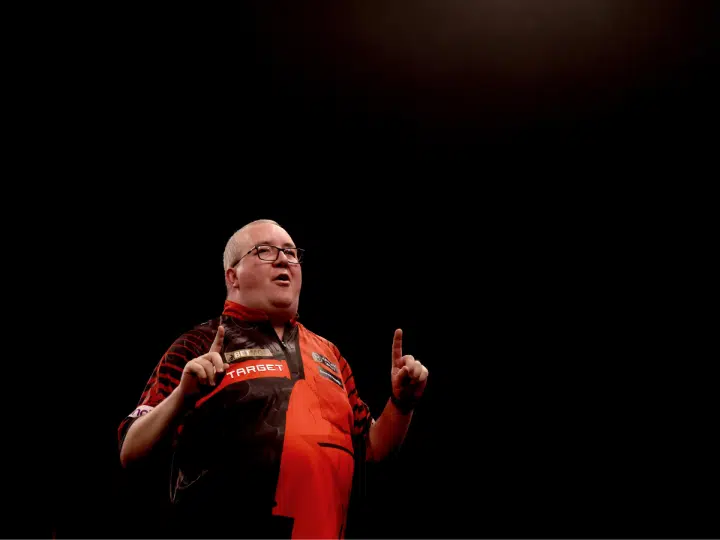

Stephen Bunting closed the Premier League darts stage in style in Sheffield, beating Luke Humphries 6-3. Meanwhile, Humphries’ run to the final means he will avoid a semi-final against Luke Littler at Finals Night in London.
Bunting’s night was more than a single result. He averaged north of 106 and landed seven 180s across his matches, producing a high-quality display that lifted him to fifth in the final table. A finish that secures his place among the season’s top performers and underlines his consistency. His Sheffield run included a 161 checkout and a string of 100-plus finishes that swung momentum in his favour.
Darts: key results
- Quarter-finals: Bunting beat Jonny Clayton; Gerwyn Price beat Gian van Veen; Luke Littler edged Josh Rock; Luke Humphries beat Michael van Gerwen.
- Semi-finals: Humphries dismantled Littler 6-1; Bunting overcame Price 6-3.
- Final: Bunting 6–3 Humphries.
Humphries’ semi-final win over Littler was decisive: a 6-1 scoreline that not only booked his place in the Sheffield final but also rearranged the Finals Night draw. Instead of facing world No 1 Luke Littler in a semi, Humphries will meet Jonny Clayton at The O2; Littler will play Gerwyn Price. That switch matters because it changes matchups and tactical approaches for the four qualifiers.
Humphries: form and positioning
Humphries leaves Sheffield with mixed takeaways. He reached his fourth consecutive nightly final and moved up the standings to third overall, confirming his spot at Finals Night. His route there featured strong scoring and a 100-plus average in key matches, but the final exposed vulnerabilities that Bunting exploited. Humphries’ ability to peak at the right moments keeps him a live threat in London.
Meanwhile, Littler scraped past Josh Rock in the quarters but was well short of his best in Sheffield. The 19-year-old’s form dipped enough that he missed the chance to extend his nightly-win tally, leaving him to regroup before Finals Night. The four qualifiers for The O2 are now set: Littler, Humphries, Jonny Clayton and Gerwyn Price, a compact, high-stakes field where small margins will decide the title.
Sheffield closed the league phase with a clean result: Bunting’s best night of the season, Humphries’ tactical success in avoiding Littler in the semis, and a Finals Night draw that sets up tight, high-quality semis at The O2 next week.
Featured image via Getty/Carl Recine
By Faz Ali
We hope you love the products we recommend! All of them were independently selected by our editors. Just so you know, HuffPost UK may collect a share of sales or other compensation from the links on this page if you decide to shop from them. Oh, and FYI — prices are accurate and items in stock as of time of publication.
We’ll hold our hands up and admit we’ve been complaining about the lack of heat a little too aggressively over the past few months. So, of course, our karma is that the heat is coming at us full force this weekend.
In case you hadn’t heard, we’re heading for a heat wave. That’s right, 30 degree heat, out of pretty much nowhere.
And while we wouldn’t dare complain, things are about to get sweaty – with not much warning, might we add.
In that case, we’ll forgive you for feeling somewhat unprepared for the sweatiness that is to come.
It looks like there’s a long and hawt summer ahead of us, so to help you gird your loins, we’ve rounded up nine of the best fans to stay cool this summer.
There’s something for everyone, from air purifier combos, to budget options, and even a portable pill.

Best bladeless fan
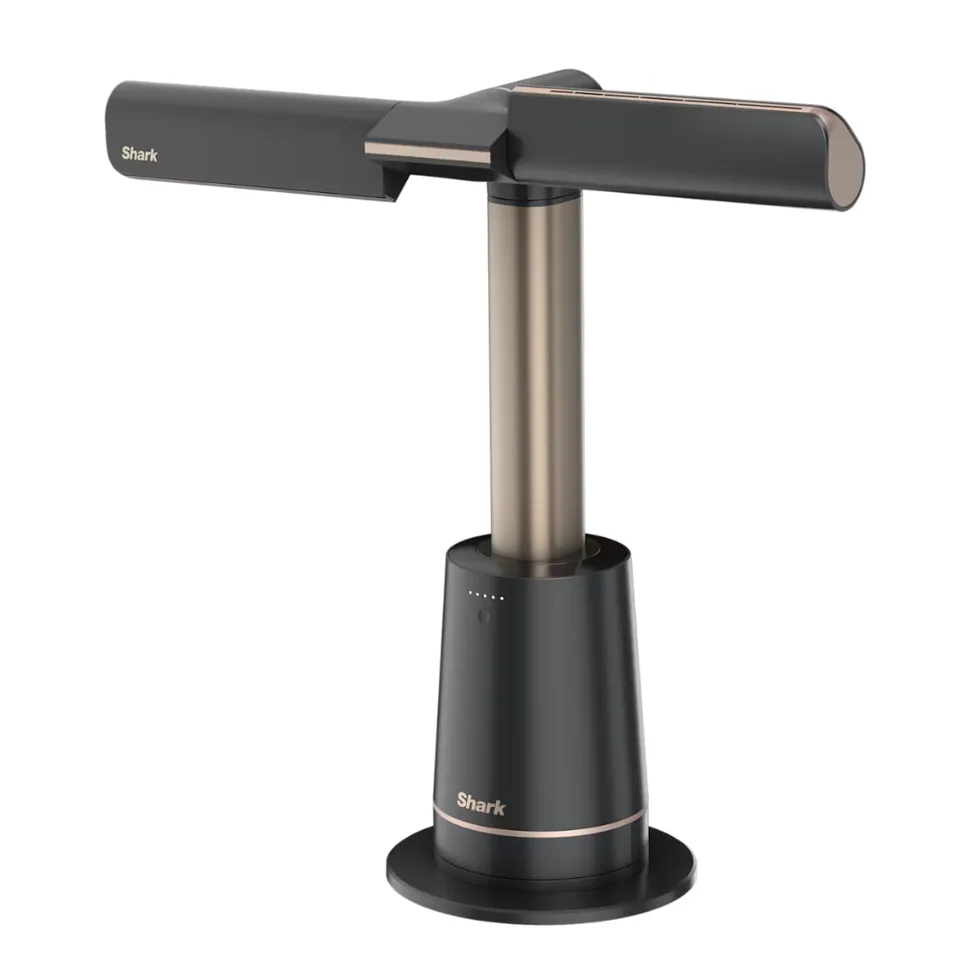
If you’re not already struggling to sleep in the heat, there’s nothing like the sound of a whirring blade to keep you up at night. Should you be particularly sensitive to sound, this fan from Shark is bladeless, at its lowest setting, is as quiet as a whisper. It even has an ‘Air Blanket’ setting for sleep that can be controlled by its remote control that’s magnetic to stop you from losing it!
Completely customisable, you can adjust the height and rotate it any which way, so it can be vertical for more direct cooling, or vertical to cool a whole room. Plus, those blades on both sides rotate a full 180 degrees if full coverage gets a bit much. And – here’s the kicker – it comes in black and brass, white, or… pink. Yup, pretty special.
“Best Turbo Fan we have ever bought,” says one five-star reviewer. “It’s silent and has a range of speeds, a remote control that has a magnetic attachment to connect to the fan when not in use. The blades can be set in different positions and height for the best distribution of cool air. Awesome!”

Best fan and purifier overall
When the weather ramps up, often so does the pollen count. Add something that blows pollen-filled air around your house, and you have yourself a recipe for allergy disaster. So trust Dyson to come up with the solution in the shape of this dual fan and air purifier. It might be spenny, but remember: you’re getting two products in one.
Dyson has formulated technology specifically to filter air (using HEPA technology to filter out small particles of dust and pollen) before projecting it, and it can be controlled by an app on your phone. For a more hands-off approach, pop it on auto mode, and it’ll turn on the second it detects pollutants to keep you home clean, with minimal energy.

Best window fan (and purifier)
This serious-looking piece of gear “cools the room down a treat” according to our parenting editor. It’s fairly heavy, but you can easily move it around the room thanks to it coming on wheels. Like the Dyson, you can set a timer for when you want it to turn on and off, and it’s on the quieter side, at 52dB. While it’s designed for rooms between 16 and 26 square metres, it comes with two types of window kits, so you can also stop warm air from outside coming into the room at all. Should anything go wrong, it comes with a two year warranty.
“Excellent, works very well at cooling the bedroom,” says one five-star reviewer. “Easy to operate, the app control is brilliant.”

Best for year-round use
Admittedly, it can feel a little redundant buying a fan in the UK. You get about two weeks of use out of it (or at least it feels that way) before you have to put it back into hiding. If you’re after something a little more versatile, Dyson’s latest release both cools and heats, meaning it’s the perfect companion to leave out year-round. So it doesn’t get in your way too much, it’s smaller than its original tower fans, and is the brand’s quietest design yet, meaning you’ll barely notice it’s there. Like the Purifier Cool, it has a magnetic remote that sticks to the top so you’ll always know where it is.
“We got our new Dyson hot and cool for our bedroom,” one reviewer explains. “It’s a large space but the Dyson heated it up to the required temperature in a few minutes. It is very quiet to run and economical (we have a smart meter and were impressed by the amount of energy it took to keep the room at a comfortable temperature). The design is sleek and attractive and went well with our decor.”

Best for noise control
Huge props to the engineers doing the most to make sure fans are quieter than they used to be. This tower fan is praised for being almost silent, using TurboWind and HyperSilent technology to make sure it projects cold air up to 40 feet without that annoying whirring sound. If you want to come home to a cool house while you’re out and about, you can control the fan via its connecting app. And it might be a tiresome job, but when it comes time to clean it you can do so by simply twisting a simple screw to take the blades.
As for the power? That won’t be a problem, according to one reviewer: “The power of the fan is superb, especially because you have 12 levels which means you can go from an extremely quiet and low breeze at level 1 to a strong gust at level 12.”

Best desk fan
Not bothered by a fancy high-tech fan? With over 2,600 five-star reviews, this classic desktop fan comes highly rated. At just £100, it’s excellent value for money, especially considering it’s as quiet as a whisper. It might be on the smaller size, but it’s loaded with vertical and horizontal oscillation, so it’s able to cool from 360 degrees to cool the entire room down.
“Whisper quiet and has cooled down the room just using the lowest setting,” says one reviewer. Impressive, huh?

Best portable fan
This pill from Shark is ideal for hot days on the move. Despite being the perfect size to chuck in your every day bag, it packs plenty of power and versatility. Choose between a high-speed fan, cooling system, or switch to an ultra-fine mist for some light refreshment of a summer’s day. But don’t worry, this isn’t the kind of thing that you’ll spend all night charging, only for it to run out after five minutes. Whether you’re on holiday, sweating through the daily commute, or at the gym, it’ll hold its power, and it even comes with a handy travel case for added protection.
A happy reviewer says: “The battery life was really good and it held its charge well throughout the day. It also didn’t take too long to charge back up, which was handy while we were away It feels really well made and sturdy, and the carry case is great quality too, so it was easy to pack and take around with us without worrying about it getting damaged.”

Best on a budget
You shouldn’t have to fork out a ridiculous chunk of your money to stay cool this summer. If you’re not in a place to invest in one of the pricier options on this list, this £32 option from igenix gets the job done. It’s not only easy to assemble, but is fairly unobtrusive, has a 7.5 hour timer, and comes with a remote. Most importantly, it cools you down.
“Very neat looking and doesn’t take up a lot of space,” says one reviewer. “Easy to assemble, easy to use and the remote control is handy. Not at all noisy and does the job!”

Best easy to use fan
If the near-8,000 five-star reviews on this fan don’t tell you everything you need to know, then I don’t know what I’m here for. While many of the fans on this list are pretty high tech, this small fan has just three speeds, and that’s all it needs, according to reviewers. This is another of those deceptively small but powerful blowers, as it’s able to cool the whole room via its 34cm height. It might not give you the feeling of being in a wind tunnel that other fans do to cool you down but, if you couldn’t tell by its price, it does so just as successfully.
Just ask this one reviewer: “You can have this Vornado aimed directly at you on high speed and although your hair will gently blow back, it won’t whip around your face in a tangled mess,” she says. “Within 10 minutes, I could sit just about anywhere in my living room and feel comfortable. There were some dead spots, but for the most part the entire room felt fresh.”


(Timon Schneider/Alamy)

7 min read
News of an AI system too powerful for public release has raised fears it could be weaponised for cyber-attacks. How much of a threat could it pose? Noah Vickers reports
It was neither just a savvy marketing move nor simply a selfless act of corporate responsibility. Instead, most informed observers agree, it was a bit of both.
On 7 April, AI firm Anthropic announced that its latest model, Claude Mythos Preview, was “strikingly capable at computer security tasks”. So capable, in fact, that they were not releasing it to the public.
Through an initiative they dubbed Project Glasswing, Mythos has been made available to America’s biggest tech giants and financial institutions. By giving them privileged access to it, Glasswing’s participants are using Mythos to find ‘zero-day’ – that is, undiscovered – vulnerabilities in their systems and patch them up.
Anthropic still intend to publicly release “Mythos-class” AI models at some stage. They just aren’t saying when. And in the meantime, experts warn that the UK’s critical national infrastructure could be vulnerable, built as much of it is on legacy systems in urgent need of modernisation.
While Mythos is said by Anthropic to have “already found thousands of high-severity vulnerabilities, including some in every major operating system and web browser”, it is only a matter of time before other AI developers devise models with similar or superior capabilities – including in China.
“I think the Chinese are not too far behind,” says Joyce Hakmeh, an associate fellow at Chatham House. While China has made public pronouncements emphasising the need for AI safety, the actions of hackers tell a different story.
“Publicly, they’re saying they want responsible AI, but we also know that the capabilities the Chinese have are quite sophisticated. We know they’ve infiltrated critical infrastructure in the US.”
Groups like Volt Typhoon, sponsored by the Chinese state, have targeted power grids and pipelines across the US, she points out. The prospect of these hackers gaining the ability to search out zero-day vulnerabilities with Mythos-class technology is therefore “really worrying”.
But a more fundamental issue, Hakmeh suggests, may be the fact that the US, UK and others are for the moment relying on the goodwill of AI firms to act responsibly.
“We’re basically expecting the AI developer to police its own products – and this can only go so far,” she says. (Although the White House last week signed a deal with Google’s DeepMind, Microsoft and xAI to conduct “pre-deployment evaluations” of their upcoming AI models, with the aim of ensuring they do not pose national security threats.)
Nevertheless, as rival AI models are developed over the coming months, not all of Anthropic’s competitors may be so cautious.
“I think there’s a concern about competitive pressures and how that drives frontier AI model producers to not always implement the same care that Anthropic has taken in this instance,” says Connor Attridge, a visiting researcher at the Alan Turing Institute.
There is already a substantial time lag between vulnerabilities being exposed and then patched, he says. A 2025 report found that even in large global businesses with more than 1,000 employees, on average, 45 per cent of vulnerabilities discovered in a 12-month period remain open.
“I think that gap between the two is going to increase and become exacerbated,” says Attridge. “The risk, there, is in UK Civil Service legacy infrastructure. There’s a tail of legacy infrastructure in places that deal with really critical data of citizens. NHS trusts, for example, have quite [a lot of] legacy software and from my understanding, pretty small IT teams. That’s a concern.”
A government review found that, on average, 28 per cent of systems in central government departments in 2024 were composed of “legacy technologies”, an increase from 26 per cent in 2023. The figure ranged from 10 to 50 per cent in NHS trusts and 10 to 70 per cent in police forces.
As far as access to Mythos for British high street banks and businesses is concerned, the UK is still in talks with Anthropic. In the meantime, large companies are exploring alternative options to secure their systems.
Katharina Sommer, director of government affairs at cybersecurity firm NCC Group, says clients at “the more mature end” of their market have been asking NCC if they can “replicate a similar level capability” to Mythos, on which they can test their IT estates against.
Behind these requests, she says, is a desire to check whether the patches they’ve put in place are sufficient and to reduce the risk of “something completely unknown being unearthed” by a Mythos-class model in future.
Experts also warn that, even before Mythos arrived, the rush from businesses to incorporate AI systems into their workflows over the last few years could itself be creating new vulnerabilities for conventional hackers to exploit.
“Everyone’s worried about the attacks from the outside, but not how they’re making themselves more vulnerable, perhaps, by rapidly deploying AI technologies in the business,” says Rafe Pilling, director of threat intelligence at cybersecurity firm Sophos.
We’re basically expecting the AI developer to police its own products – and this can only go so far
Pilling says there is “plenty of scope” for large language models to be used both for social engineering and for exfiltrating data from organisations.
“It really depends what that [AI model] is connected to and what access it has,” he says. “So, in a rush to provide a great experience for the customer and plug it into your order management system, financial databases and customer information systems, you may inadvertently provide a route in to access all that stuff.”
So far, Whitehall’s response to Mythos has been well-received by the cybersecurity sector. The government has written an open letter to businesses across the country, urging them to plan and rehearse their responses to critical incidents. Security minister Dan Jarvis has meanwhile invited technology firms to “partner with” the government “to co-develop AI” for a “national cyber defence” project – though the details of this remain unclear.
Following some delay last year, the government has also been progressing its Cyber Security and Resilience Bill through Parliament. The legislation will bring ‘managed service providers’ – the technology firms who provide core IT services to businesses – within the scope of existing regulations.
This will place a legal duty on them to have “appropriate and proportionate measures” to guard against cyber-attacks, while also tightening the requirements to ensure that breaches are swiftly reported to regulators.
The bill is yet to reach the Lords, but many in the cybersecurity sector argue it is an important statement of intent from ministers.
“The proof will be in the pudding,” says Sommer. “On the whole, there is very clear signposting from government to say ‘This is what you have to do’.
“The way in which regulators will be empowered and resourced to do the enforcement properly, I think, will be a really important part of the success of the legislation.

“If it’s a piece of paper that’s ultimately toothless, it might not have the desired effect, but I think the way in which it has changed the conversation has already made a really positive impact… The level of maturity and informedness by parliamentarians scrutinising the legislation is miles ahead of where we were five or six years ago.”
The fact that the UK is the only known government, other than the US, to have been granted direct access to Mythos – and for the UK’s AI Security Institute to then publish the world’s only independent assessment of Mythos’ capabilities – has also been positively remarked on.
“It speaks to the relationship that the UK has developed with these [AI] companies,” says Hakmeh, who adds that news of Anthropic expanding their London office is another boon for Britain.
If the right steps are taken over the coming months, tools like Mythos could be used to ensure software is “secure by design” at the development stage, she points out.
“If you are producing systems which are much more secure, because AI is letting you do that cheaply, then that starts changing the equation quite considerably.
“It’s not all gloomy. This is a dual-use technology: use it for good, you do brilliant stuff. Use it for bad, you have a big problem. It’s basically a question of who gets there first.”

Andy Burnham has launched his by-election campaign in Makerfield with a “clarion call for change”.
The mayor for Greater Manchester is widely expected to formally challenge Keir Starmer’s leadership if he wins this parliamentary seat.
The soft-left politician’s launch is therefore seen as both a campaign to win Makerfield and a promise to offer a different kind of government.
“Hope is in the air, can you feel it?” Burnham said.
“This is not business as usual. This is not more of the same,” he continued. “British politics is tired. It needs a new script.
“And over the next four weeks, the people of Makerfield are going to write that script.”
He added: “I know my own party needs to change. We need to be better than we’ve been. We’ve not been good enough. And I want to leave people in no doubt today, a vote for me in this by-election campaign is a vote to change Labour.”
The by-election was triggered by Labour MP Josh Simons, previously a junior minister, who stood down earlier this month to offer Burnham a path back to Westminster.
The resignation came amid rising calls for Starmer to quit following Labour’s shocking defeat in the local elections on May 7.
However the prime minister has ignored such pleas and insisted no one has initiated a contest against him.
If Burnham wins this by-election, he will need the support of 81 MPs to formally trigger a leadership race.
His popularity within the parliamentary Labour Party means that he is almost certainly going to win any such contest.
However, he must win over voters in Makerfield first, a pro-Leave constituency which voted for Reform in all eight of its wards during the local elections.
During his launch, Burnham also focused on his local links as his home was just two miles from where he currently lives.
“I love it so much that I brought my own family up here, I live here, I have lived here for 25 years. My home is two miles over there. I could walk to this campaign centre,” he said.
He listed his successes since become Greater Manchester mayor in 2017, noting that he has worked with Liverpool to “build a new politics” which is on a “place first basis rather than party first”.
Burnham also pointed out that the Makerfield constituency has struggled with the cost of living, poverty and unemployment.
He said: “We’ve had 40 years of policies that have hurt the high streets of this constituency, 40 years of policies that have left people struggling to afford the everyday basics of their lives.
“Policies that took away the good jobs that were once in these communities and have not done anything to replace them or put them back.”
The by-election is set to take place on June 18. Burnham will be up against Reform candidate Robert Kenyon, the Liberal Democrats’ Jake Austin and the Tories’ Michael Winstanley.
The Greens’ Chris Kennedy stood down after less than 12 hours in the post and the party is on the hunt for a new candidate.
Subscribe to Commons People, the podcast that makes politics easy. Every week, Kevin Schofield and Kate Nicholson unpack the week’s biggest stories to keep you informed. Join us for straightforward analysis of what’s going on at Westminster.


Israeli military commander Meir Biderman has been “seriously wounded” by Hezbollah during Israel’s war of aggression on Lebanon: he commanded a unit during the Gaza genocide that murdered 6-year-old Hind Rajab, her family, and two paramedics sent to try to help them. Palestinian despatchers had agreed safe passage for the ambulance.
The Hind Rajab Foundation have filed a case with the International Criminal Court over the brutal murder of Hind.
Hind Rajab murderer now the one who is ‘severely weakened’
In April, Biderman announced on Israeli TV that he and his unit has “severely weakened” Lebanese resistance. Since then, Israel has suffered heavy casualties from armed Lebanese ‘FPV’ drones. Despite initial reports that the attack involved an improvised roadside bomb, one of the drones has now injured Biderman and two other occupation troops. The explosion inflicted serious head wounds on Biderman. His condition was critical, but Israeli media now claim he has been stabilised.
It’s safe to say Biderman is not receiving much sympathy in responses on social media to news of his injury.
Featured image via Getty/Amir Levy
By Skwawkbox


Southampton held its hands up, admitting to spying charges after it was caught red-handed covertly filing opponents. For this clear violation of the rules, they have received more than a light slap on the wrist despite protesting the severity of the sanctions against it.
The saga, known as Spygate, exposes colossal leadership failures under Tonda Eckert’s management, which cost the team its Championship play-offs. Middlesbrough will take their place.
Golf course loiterer
Recovering from the reputational damage will take more than a points deduction. It remains to be seen if Eckert will remain at the helm or lose his job, having accepted responsibility for covert spying operations against Oxford, Ipswich and Middlesbrough. The damage is clear. Southampton have now slid down the league table and will start the next season with a reduced points penalty, as the Football Association (FA) continue their separate investigation.
It is true that English football allows competing teams to observe each other. That said, tactical training sessions are off-limits as is secret filming. Southampton clearly crossed that line and chose to act in bad faith, an independent English Football League commission found.
These practices were well hidden up until Middlesbrough spotted unusual movements by a camera-wielding bloke loitering around the golf course adjacent to the football pitch where they’d been training. This prompted an internal investigation, steered by none other than high-profile sports lawyer Nick De Marco KC.
The death knell was the evidentiary trail they uncovered. The golf course loiterer was found to be Will Salt, a Southampton analyst intern.Middlesbrough’s lawyer identified credit card transactions linking Salt to payments made at the golf club.
Bad-faith espionage
The event triggered a wider look at Southampton’s scouting practices. As investigations widened, further evidence implicated Southampton in similar surveillance operations against Ipswich and Oxford. It was a act of bad-faith espionage — systematic and planned. Footage was captured, stored and circulated within Southampton’s analysis unit.
Aware this was no ‘it wasn’t me’ (shaggy) moment, Southampton admitted filming closed trainings while arguing that material hadn’t produced a decisive on‑field advantage. The independent commission was more interested in the intent than the outcome of actions which the EFL panel concluded had breached of competition rules and dented trust.
Findings and sanctions
The EFL commission concluded filming operation was “contrived” and “deliberate,” directed from senior levels. They expelled Southampton from the play‑off final and imposed a points deduction for the next season. The original penalty was reduced after mitigation was accepted, but the expulsion stood.
The panel’s reasoning rested on three pillars:
- Deliberate intent — filming was not accidental nor a case of a rogue employee acting alone. The operation was planned and authorised.
- Pressure on staff — junior employees were reportedly instructed to take actions they felt were wrong, treated as an aggravating factor.
- Integrity of competition — even if the footage did not influence match results, the act of covertly filming private training sessions undermined the fairness of the play‑offs.
Reports and speculations bubbling on social media, and the sports media landscape more broadly, capture the extent of the reputational damage. Spygate calls into question Southampton’s professional integrity and reputation. It may also result in more suspensions or dismissals once the FA has concluded its separate probe.
Is recovery possible?
The drama underscores that in elite sports, governance matters. Clubs must have clear, enforceable boundaries around scouting and analysis. What analysts may view as a “competitive edge” can at the same time be illegal and unethical. Eckert was the man responsible for drawing and policing that line, and ultimately failed to protect his team.
The road to recovery will be long. Southampton must manage player morale, reassure sponsors and supporters, and prepare for the FA’s disciplinary process. In the long term, the club needs clearer compliance structures, independent oversight and a culture reset to abandon the “winning at any cost” mentality. Time will tell if Eckert can weather the storm.
Featured image via the Canary
By Faz Ali
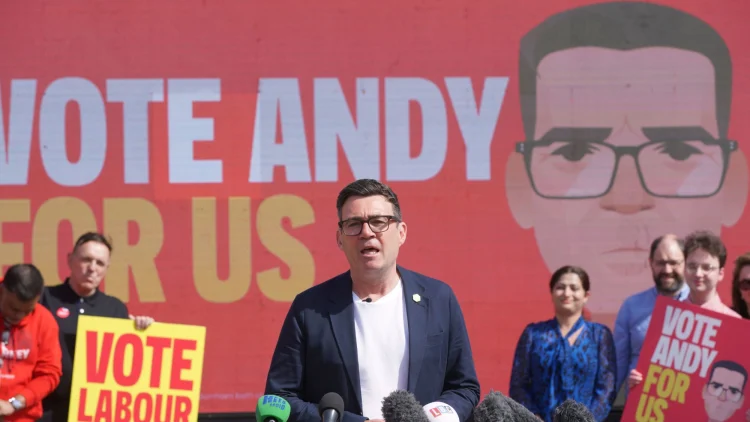

Andy Burnham launched his Makerfield by-election campaign on Friday (Alamy)

4 min read
Andy Burnham said he is running a by-election campaign for “change” in politics, the economy, housing, transport, and care, as he launched his bid to become the new Labour MP for Makerfield.
Last week, Labour MP and former minister Josh Simons announced he would give up his Makerfield constituency – after being elected for the first time just two years ago – to allow Greater Manchester Mayor Burnham a shot at re-entering Parliament via a by-election.
With Burnham now having been selected as the Labour candidate, the by-election will go ahead on 18 June. If he wins, the mayor is expected to challenge Prime Minister Keir Starmer for the Labour leadership.
“British politics is tired,” Burnham said, addressing a crowd of supporters at the Labour campaign launch in Makerfield on Friday morning.
“It needs a new script. And over the next four weeks, the people of Makerfield are going to write that script.”
He repeatedly tapped into a sense of Westminster politics not working for people around the country.
“This by-election will force Westminster to focus on the places it usually looks past,” he said.
“I love this place, I love the people of this place, but what I have inside is a burning sense of injustice that the proud communities of this place face a Westminster system that puts them at the bottom of the list. They should be at the top of the list.”
He called for “change to Westminster politics so that it works for people”.
“This by-election is a clarion call for change, change for people, a place I love so much,” Burnham continued.
“Change to the economy, change to education, change to housing, change to transport, change to care, and yes, to make it all possible, change to politics.
Summarising his campaign in three words, Burnham said: “I’m for us.”
He also said he recognised that the Labour Party “needs to change”.
“We need to be better than we’ve been,” he said.
“We’ve not been good enough, and I want to leave people in no doubt today. A vote for me in this by-election campaign is a vote to change Labour. It is a vote to give the people here in these communities who supported us through the years their party back. This is a vote for a party that is solidly on the side of working-class people and working-class communities.”
On transport, Burnham said “I like my buses”, referring to the scheme he oversaw which brought Greater Manchester buses back under public control in 2023. However, he highlighted ongoing concerns about the cost of rail journeys.
“£364 is the cost of an anytime return from Wigan North Western to London Euston,” he said.
“So how can people here connect with the capital and all of the opportunities it’s got, if they cannot afford those train fares? We need to use rail re-nationalisation to reduce those train fares and make them affordable to people again.”
He also brought Liverpool Mayor Steve Rotheram to stand alongside him, and praised the successes of Greater Manchester and Liverpool since they both left Westminster as MPs to become mayors.
“In those ten years we have built a new politics,” Burnham said.
“We’ve worked on a place-first basis, rather than party first. We’ve focused on problem-solving rather than point scoring. And you know what? When you do that and you work differently, it’s amazing what you can achieve, isn’t it?”
Burnham also pointed to the need to change education and advocated for an education system “that doesn’t just focus on the university route”, but “focuses on the kids who want technical pathways to those new industries”.
He said he was feeling “emotional” about the campaigning bringing him “back to where it all began” in Westminster, and batted away accusations that he is using this by-election as a “stepping stone” to power.
“How can it be a stepping stone if it takes you back to where it all began?” he said.
“Surely it can’t, and the reason it comes back to is because I’ve never stopped what I started 25 years ago. I fought for these people in these places as a member of Parliament, I fought for them as a minister… We fought for people in the North West of England, fought for people here, we fought for them as mayors together…
“I would carry that fight forward if I am lucky enough to be elected as the MP for Makerfield. I’ll take that fight as high as I can possibly take it, and that’s the journey I’ve always been on. And it’s not a new journey for me, it’s the same journey, just in a different phase, and that’s what this is all about.”


Jeremy Corbyn has written to Andy Burnham, reminding him that in October 2023 the Manchester mayor spoke out against the “widespread suffering” caused by Israel in Gaza, and has called on Burnham to back a Gaza genocide inquiry into the UK’s role in the conflict.
He also asked whether Burnham would end all military cooperation with Israel, including arms sales, the supply of F-35 components, and intelligence sharing.
I have written to Andy Burnham to ask whether he would establish an independent public inquiry into the British government’s complicity in genocide. pic.twitter.com/vBUkmcGicC
— Jeremy Corbyn (@jeremycorbyn) May 21, 2026
Corbyn presses Burnham
Burnham is standing as the Labour candidate in the Makerfield by-election, hoping to return to parliament to challenge Keir Starmer for the Labour leadership.
Your Party also questioned Burnham’s position on Gaza, asking whether it would differ from Starmer’s.
15% of every F-35 jet bombing Gaza is made in Britain. Lancashire. Edinburgh. Brighton.
Even when his government admitted F-35s could be used for war crimes, Starmer kept selling the parts.
What would Burnham do? Jeremy Corbyn has put the question to him.
— Your Party (@thisisyourparty) May 22, 2026
Burnham has not specified his position on arms sales to Israel or other issues like the proscription of Palestine Action. He has, however, been a member or supporter of the Labour Friends of Israel group since at least 2015.
Matt Kennard called Burnham “Starmer with a Scouse accent.” He noted that during the Labour leader elections in 2015, he stated that the first trip as Labour leader would be to Israel.
During 2015 Labour leadership election, @AndyBurnhamGM promised the Israel lobby his first trip as Labour leader would be to the apartheid colony
Keir Starmer with a scouse accent pic.twitter.com/QgKekMdls8
— Matt Kennard (@kennardmatt) May 19, 2026
Private Members Bill
In June 2025, Corbyn introduced a Private Member’s Bill in Parliament calling for an independent public inquiry into Britain’s involvement in Israel’s genocide in Gaza.
The Bill had the support of more than 50 MPs, including Labour MPs Richard Burgon, Nadia Whittome, Ian Byrne, Bell Ribeiro-Addy, and several human rights organisations.
Starmer’s government rejected the need for an inquiry, claiming:
there is no confusion about UK military operations in Gaza.
Then, Corbyn’s independently convened Gaza Tribunal in September, with two international law specialists, which concluded that the British government had been an active participant in one of the “greatest crimes of our time.”
We held The Gaza Tribunal to expose the full scale of Britain’s complicity in genocide.
Our conclusion: the British government has been an active participant in one of the greatest crimes of our time.
Read the full report below. https://t.co/ygDHNka1Ay
— Jeremy Corbyn (@jeremycorbyn) March 16, 2026
Burnham – pick a side quickly! Now that Starmer is campaigning for you, are you going to choose his policies too?
Featured image via Alishia Abodunde/Getty Images
By The Canary

Paxton touts Trump’s endorsement against Cornyn for Senate in Texas

MTAR Tech shares soar 24% in just three sessions. What’s triggering this renewed buying spree?

XRP Ledger Activity Surges, But What Is Stopping Price Breakout?


-

 Crypto World6 days ago
BloFin War of Whales 2026 Grand Prix opens registration for $5M trading championship
-

 Fashion7 days ago
Weekend Open Thread: Theory – Corporette.com
-

 Crypto World7 days ago
E-Estate Announces 1 Year Live: Washington DC Summit as Real Estate Tokenization Enters Its Next Phase
-

 Tech6 days ago
Google reimburses Register sources who were victims of API fraud
-

 Business7 days ago
H&R Real Estate Investment Trust (HR.UN:CA) Q1 2026 Earnings Call Transcript
-

 Entertainment7 days ago
David Letterman Returns to Late Show, Blasts Cancellation
-

 Sports7 days ago
Napoleonic enters 2026 Doomben 10,000 field via Abounding withdrawal
-
 Crypto World7 days ago
BeInCrypto 100 Institutional Awards Nomination: KAST for Best Digital Assets Neobank and Best Digital Assets Fintech
-
 Crypto World6 days ago
Bitcoin Battles US Bond Nerves With BTC Price Dip Toward New May Lows
-

 Crypto World7 days ago
ICE and CME urge US regulators to curb Hyperliquid energy trading
-
 Crypto World6 days ago
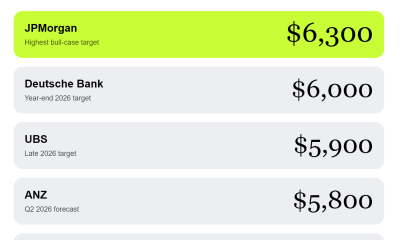
Wall Street’s Boldest Gold Prediction Has Russians Rushing to Buy
-

 Fashion5 days ago
On the Scene at Gucci’s Cruise Show in New York City: Mariah Carey, Kim Kardashian, Lindsay Lohan, Iman, and More!
-

 Crypto World7 days ago
IREN closes $3 billion convertible notes deal amid AI infrastructure expansion
-

 Fashion6 days ago
Trending Western Style Vests Perfect for Summer
-
 Politics6 days ago
Watch: far-right flag-fanatics run over victim, attack locals – Setup By the Left wing for your entertainment
-

 Crypto World18 hours ago
Blockchain.com files with SEC for U.S. IPO
-

 Fashion7 days ago
Creative Ideas for Custom T-Shirts
-

 Fashion5 days ago
Amazon Sundays: Memorial Day Hosting
-

 Crypto World7 days ago
Crypto Market Structure Bill Clears Committee; Senate Vote in Focus
-

 Entertainment5 days ago
Off Campus Easter Eggs Explained: Characters, Stories, More
You must be logged in to post a comment Login