Family offices in 2025 and beyond face a more complex investment environment than at any point in recent decades.
Rising geopolitical uncertainty, persistent inflation, and the digital transformation of financial markets have prompted leading family offices to rethink their asset allocation frameworks. Gold, art, private equity, and private credit are commanding larger allocations, while governance and human capital strategies are becoming as important as the investment decisions themselves.
Quick Summary
The most resilient future family office structures combine diversified alternative allocations with robust human capital programmes and data-driven decision-making. In 2025, the top alternative asset classes for family offices are private equity, private credit, gold and commodities, art and collectibles, and infrastructure.
Top picks for alternative investment strategies:
- Best overall: Multi-alternative mandate with dedicated governance committee
- Best for inflation hedge: Gold and commodity allocation of 5-10% of AUM
- Best for uncorrelated returns: Art and collectibles allocation through a specialist advisory
- Best for long-term returns: Private equity fund-of-funds with co-investment rights
- Best value: Private credit with floating-rate instruments
“The family offices that will thrive in the next decade are those that invest as seriously in their people and governance as they do in their portfolios.” (Campden Wealth Global Family Office Report 2024)
Comparison Table (Last updated: April 2026)
| Asset Class |
2024 Average Allocation (Family Offices) |
Expected Return (5yr) |
Liquidity |
Key Risk |
Last Verified |
| Private equity |
18% of AUM |
12-15% net IRR |
Illiquid |
Market cycle, manager |
Apr 2026 |
| Private credit |
11% of AUM |
8-12% net IRR |
Semi-liquid |
Credit default |
Apr 2026 |
| Gold and commodities |
5% of AUM |
4-8% annually |
Liquid |
Price volatility |
Apr 2026 |
| Art and collectibles |
3% of AUM |
6-10% annually |
Illiquid |
Valuation, liquidity |
Apr 2026 |
| Infrastructure |
8% of AUM |
8-11% net IRR |
Illiquid |
Regulatory, political |
Apr 2026 |
| Hedge funds |
6% of AUM |
6-9% net returns |
Semi-liquid |
Strategy, fees |
Apr 2026 |
How to Build an Alternatives Allocation for Your Family Office
The starting point for any alternatives strategy is the family office’s investment policy statement (IPS). The IPS should define maximum illiquidity tolerance, minimum return expectations, and ESG or ethical exclusions. Without a documented IPS, alternatives allocations risk being opportunistic rather than strategic.
Human capital is an equally critical variable. The future family office requires professionals who can evaluate complex, illiquid investments, manage manager relationships, and conduct ongoing monitoring across a diverse portfolio. According to the Agreus Group 2024 Compensation Report, the median salary for a family office investment analyst in Singapore is SGD 120,000-180,000 per annum, while a CIO commands SGD 500,000-800,000.
Data resilience is the third pillar. Family offices managing diversified alternatives portfolios must invest in reporting technology that aggregates data across custodians, fund administrators, and direct holdings. Real-time consolidated reporting is no longer a luxury; it is a governance requirement for responsible stewardship of multi-generational wealth.
Families new to alternatives should begin with a fund-of-funds or a managed account with an established manager, before progressing to direct deals or co-investments as internal expertise develops.
Q: How are family offices building and retaining human capital to ensure continuity and leadership across generations?
Human capital is the most underdiscussed risk in family office management. A portfolio of alternatives, private equity, and tokenised assets is only as good as the team managing it, and talent in the family office sector is scarce, competitive, and mobile.
The most successful future family office structures approach talent with the same rigour applied to investment selection. This means: formal job descriptions and reporting lines (not informal family relationships), compensation benchmarked annually against the Agreus Group or equivalent surveys, and career development plans that give investment professionals a visible pathway within the organisation.
Retention is the harder challenge. Family offices compete with private equity firms, hedge funds, and banks for the same talent pool, and cannot always match base compensation. The most effective retention tools are co-investment rights (giving professionals exposure to the upside of deals they originate), a genuine meritocratic culture, and the intellectual freedom that a family office offers relative to a large institution.
For generational continuity specifically, the transition from a founder-led to a professionally managed family office is a critical inflection point. Families that plan for this transition five to ten years in advance, by building institutional processes that are not dependent on any single individual, consistently navigate it more smoothly than those who treat succession as a single event rather than a multi-year programme.
The 7 Best Alternative Investment Strategies for Family Offices in 2025
- Private Equity: Core Alternatives Allocation
Best for: Family offices with 7+ year investment horizons seeking return premium over public markets
Quick Facts
- Global private equity AUM reached USD 5.8 trillion in 2024 (Preqin, 2025) | Top-quartile PE funds delivered 15-18% net IRR over 10 years | Family offices represent 10% of global PE LP capital
Pros
- Illiquidity premium over public equities
- Access to high-growth companies before IPO
- Co-investment opportunities reduce fee drag
Trade-offs
- 10-year lock-up periods | Capital calls require liquidity planning
Source: Preqin Global Private Equity Report 2025
Last verified: April 2026
- Private Credit: Floating-Rate Yield Enhancement
Best for: Family offices seeking income above investment-grade fixed income
Quick Facts
- Global private credit AUM exceeded USD 2.1 trillion in 2024 (Preqin, 2025) | Average net yields: 10-12% in senior secured, 12-15% in mezzanine | Default rates for senior secured private credit: 1.2% in 2024 (S&P, 2024)
Pros
- Floating-rate instruments provide natural inflation protection
- Senior secured structures offer downside protection
- Semi-liquid structures (3-5 years) suit medium-term planning
Trade-offs
- Illiquidity relative to investment-grade bonds | Credit underwriting expertise required
Source: Preqin Global Private Debt Report 2025; S&P Global 2024
Last verified: April 2026
- Gold and Commodities: Inflation Hedge and Safe Haven
Best for: Family offices seeking portfolio protection against inflation and geopolitical risk
Quick Facts
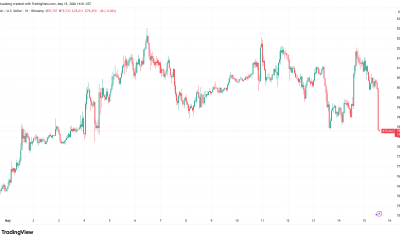
- Gold reached an all-time high of USD 3,100/oz in April 2026 (Bloomberg, April 2026) | Average family office gold allocation: 4-6% in 2024 | Gold has delivered a 10-year annualised return of 9.2% in USD terms (World Gold Council, 2024)
Pros
- Negative correlation to equities in risk-off periods
- Liquid: can be held via ETFs, futures, or physical bullion
- Creditor-proof store of value for estate planning
Trade-offs
- No income yield
- Storage costs for physical gold | Currency effects can dilute returns
Source: World Gold Council Annual Return Data 2024; Bloomberg April 2026
Last verified: April 2026
- Art and Collectibles: Uncorrelated Returns and Cultural Legacy
Best for: Family offices seeking uncorrelated returns and intergenerational wealth transfer vehicles
Quick Facts
- Global art market reached USD 65 billion in 2024 (Art Basel/UBS, 2025) | Blue-chip art indices delivered 7.6% annualised returns over 10 years (Artprice, 2024) | Art is increasingly used as collateral for private bank lending
Pros
- Low correlation to traditional financial markets
- Cultural and aesthetic value alongside financial return
- Can be lent to museums for reputational benefits
Trade-offs
- Illiquid with transaction costs of 15-25% (auction house commissions) | Valuation opacity requires specialist advisers
Source: Art Basel/UBS Art Market Report 2025; Artprice Global Index 2024
Last verified: April 2026
- Infrastructure: Inflation-Linked Long-Duration Returns
Best for: Family offices with 10+ year horizons seeking stable, inflation-linked cash flows
Quick Facts
- Global infrastructure fundraising reached USD 120 billion in 2024 (Preqin, 2025) | Infrastructure assets delivered 9.8% net IRR over 10 years on average | Singapore’s infrastructure fund market includes MAS-regulated core infrastructure funds
Pros
- Inflation-linked cash flows from regulated assets
- Government concessions provide revenue visibility
- Low correlation to equity market cycles
Trade-offs
- Very long lock-up periods (10-15 years) | Political and regulatory risk in emerging markets
Source: Preqin Global Infrastructure Report 2025
Last verified: April 2026
- Build Human Capital as a Core Strategic Asset
Best for: Family offices preparing for generational leadership transitions
Quick Facts
- Staff retention in Asian family offices is the top operational challenge cited by 61% of respondents (Campden Wealth, 2024) | Average tenure of family office investment professionals: 3.2 years | Structured talent development programmes reduce turnover by 25% (Mercer, 2024)
Pros
- Institutional knowledge retained across generations
- Investment quality improves with experienced teams
- Strengthens governance and compliance capabilities
Trade-offs
- Competitive compensation required to attract institutional-quality talent | Cultural integration of external professionals takes time
Source: Campden Wealth 2024; Mercer Talent Strategy Report 2024
Last verified: April 2026
- Invest in Data Resilience and Portfolio Analytics
Best for: Family offices managing complex, multi-asset, multi-custodian portfolios
Quick Facts
- 68% of family offices cite reporting fragmentation as a top operational risk (Family Office Exchange, 2024) | Implementation costs for integrated FO platforms: USD 100,000-500,000 | Real-time consolidated reporting platforms reduce monthly close time by 40-60%
Pros
- Single view of all assets, liabilities, and risk exposures
- Supports regulatory reporting in multiple jurisdictions
- Enables faster, more informed investment decisions
Trade-offs
- Significant upfront investment and implementation timeline | Requires data governance policies to maintain quality
Q: How are family offices developing an entrepreneurial mindset and data resilience strategies to future-proof their wealth across generations?
The future family office that will thrive across multiple generations is not simply a wealth preservation vehicle; it is an entrepreneurial organisation that treats capital deployment as an active, innovation-driven discipline. This means cultivating an internal culture where new ideas are welcomed, investment theses are challenged rigorously, and the next generation is empowered to pursue conviction-driven opportunities, not just inherit a static portfolio.
Data resilience is the operational backbone of this entrepreneurial mindset. A family office managing diversified alternatives across multiple custodians and jurisdictions is operationally vulnerable if its data infrastructure cannot keep pace with portfolio complexity. The failure modes are well documented: reconciliation errors between custodians, delayed identification of margin calls or covenant breaches, and an inability to produce consolidated performance reporting for the family council.
Building data resilience means investing in an integrated portfolio management platform, establishing data governance policies that define how information is collected, stored, and verified, and conducting annual operational risk reviews. Families that treat technology infrastructure as a strategic asset, rather than a back-office cost, are significantly better positioned to make fast, well-informed investment decisions and to onboard new asset classes such as tokenised securities as they mature into mainstream allocations.
Source: Family Office Exchange Technology Survey 2024
Last verified: April 2026
Best for Specific Use Cases
Best for Inflation Protection
Gold allocation of 5-10% combined with infrastructure and private credit with floating-rate features.
Best for Uncorrelated Returns
Art and collectibles with a specialist advisor, targeting blue-chip works with a 5-10 year hold horizon.
Best for Long-Term Return Premium
Private equity fund-of-funds with co-investment rights, diversified across geography and vintage year.
Best for Income Generation
Senior secured private credit with 3-5 year duration, targeting 10-12% net yield.
Best for Human Capital Development
Structured talent programme with competitive compensation benchmarking, mentorship, and career development plans.
FAQs
How much should a family office allocate to alternative assets?
There is no universal answer, but the Campden Wealth 2024 Global Family Office Report found that top-performing family offices allocated an average of 46% of AUM to alternatives, compared to 38% for the broader survey group. The appropriate allocation depends on the family’s liquidity needs, investment horizon, and risk tolerance, and should be documented in the investment policy statement.
Is art a mainstream investment for family offices?
Art is not mainstream in the sense of being held by all family offices, but it is a well-established allocation for UHNW families. The Art Basel/UBS 2025 Art Market Report estimates that collectors with net worth above USD 50 million allocate an average of 5-7% of their wealth to art and collectibles. Professional art advisers and specialist art finance products from private banks make the asset class more accessible.
How should family offices approach talent retention given competitive markets?
Retention requires a combination of competitive compensation (benchmarked annually against the Agreus Group or equivalent surveys), career development pathways, and a strong organisational culture. Family offices that offer co-investment rights or profit-sharing arrangements to senior investment staff report significantly higher retention rates, according to a 2024 Mercer study.
Where can I learn more about the future of family offices?
DBS Private Banking publishes the Future of Family Offices series, which covers emerging trends, governance best practices, and investment insights for family offices in Asia. Visit the DBS Future of Family Offices page for access to the latest research and events.
Learn more about DBS Private Banking family office services at https://www.dbs.com/private-banking/wealth-planning/future-of-family-offices-series.page
This article is for informational purposes only. It does not constitute financial, legal, or investment advice. Readers should verify all information with qualified professionals and consult official regulatory sources before making any financial or wealth management decisions.
Last updated: April 2026






.webp?t=1741267664)

















































You must be logged in to post a comment Login