Connect with us
DAPA Banner
DAPA Coin
DAPA
COIN PAYMENT ASSET
PRIVACY · BLOCKDAG · HOMOMORPHIC ENCRYPTION · RUST
ElGamal Encrypted MINE DAPA
🚫 GENESIS SOLD OUT
DAPAPAY COMING

Tech

Why data fragmentation is becoming a business problem, not just a technical one

Published

on

Gartner expects 60% of AI projects that lack AI-ready data to be abandoned through 2026. “AI-ready” sounds like a technical label. In practice, it describes something much more ordinary: whether a business can actually find, combine, and use the data it already owns.

That is a data fragmentation problem: the state where the information you need to plan a business decision is scattered across different systems, formats, teams and legal entities.

Source link

Advertisement
Continue Reading
Click to comment

You must be logged in to post a comment Login

Leave a Reply

Tech

Accessibility, AI rumors, and Google I/O

Published

on

Apple has revealed a new accessibility accessory, plus shown off new features coming to iOS – image credit: Apple

Apple has shown off the new Accessibility features coming in iOS 27, which did nothing to stem the torrent of rumors about what we’ll see in Apple Intelligence, but possibly did steal a little bit of thunder from Google’s peculiar mishmash of an I/O conference, on the AppleInsider Podcast.

It’s surely the only time of the year where Apple actually tells us something in advance about the next version of iOS. No guessing, no rumors, just straight information about the new or improved accessibility features.

Apple does so solely because World Accessibility Day is coming up, and not at all because Google is running its I/O developer conference at this time. Just as it’s entirely coincidental that Apple issued invitations to its own WWDC now as well.

Advertisement

We all use Google, but even if you’re not an Android fan, it used to be interesting to watch Google I/O. You’d always see some features that you wished Apple would adopt, for instance, but not this year.

This year Google I/O was full of sound and fury, signifying nothing, if you spell sound and fury as “AI.” Nothing this year was biting at Apple’s heels, and that’s downright peculiar since Apple is relying on Google Gemini for its forthcoming updates to Apple Intelligence.

BONUS: Subscribe via Patreon or Apple Podcasts to hear AppleInsider+, the extended edition. This time, speaking of developer conferences, we’ve got WWDC on the horizon and just like you, that means we have plenty we want to see launch there.

More AppleInsider podcasts

Tune in to our Smart Home Insider podcast covering the latest news, products, apps, and everything HomeKit related. Subscribe in Apple Podcasts, Overcast, or just search for HomeKit Insider wherever you get your podcasts.

Advertisement

Podcast artwork from Basic Apple Guy. Download the free wallpaper pack here.

Those interested in sponsoring the show can reach out to us at: [email protected].

Subscribe to AppleInsider on:

Keep up with everything Apple in the weekly AppleInsider Podcast. Just say, “Hey, Siri,” to your HomePod mini and ask for these podcasts, and our latest HomeKit Insider episode too. If you want an ad-free main AppleInsider Podcast experience, you can support the AppleInsider podcast by subscribing for $5 per month through Apple’s Podcasts app, or via Patreon if you prefer any other podcast player.

Advertisement

Source link

Continue Reading

Tech

Finnish phone-maker HMD bundles Indian AI chatbot onto new smartphone in push to reach local market

Published

on

Finnish phone maker HMD today launched its first smartphone, called the Vibe 2 5G, which comes preloaded with Indian AI company Sarvam’s chatbot Indus. Both companies had first announced the partnership during the India AI summit held in New Delhi in February.

The Indus app is powered by Sarvam’s locally trained 105-billion-parameter model — a measure of the AI’s scale and sophistication — and launched at the AI summit. The app supports 22 Indic languages and mid-sentence code-switching (the ability to fluidly mix languages mid-conversation, like switching between Hindi and English), which helps the assistant better understand the context of a query. Currently, the application doesn’t support offline usage, and it doesn’t have any integrated feature with the device to invoke the AI assistant through a shortcut.

The partnership is a potential testing ground for both companies to gauge the appetite for an India-focused chatbot.

“With this partnership, the first thing we want to do is get the Indus app to consumers,” said Ravi Kunwar, HMD’s CEO and Vice President for India and APAC, in an interview with TechCrunch. “Once they start using it, we will move to phase two to focus on driving more traction and stickiness. Right now, by pre-loading the app, we want to be more accessible to users,” he said.

Advertisement

The Vibe 2 5G is a mid-range Android phone with a 6,000mAh battery and a price tag of ₹10,999($114). Kunwar added the devices in the Vibe series of smartphones will also get the chatbot, and the company is also expected to launch a feature phone with Sarvam AI integration in the coming months.

That feature phone integration may ultimately prove more significant for both companies. HMD held a 4% share of India’s feature phone market in 2025, but its smartphone share was negligible — the company doesn’t even appear in the top 15, according to analyst firm IDC.

While it’s early days for Indus, the download numbers reflect that. Nearly three months after its launch, the app has been downloaded just over 293,000 times in India across platforms, according to Appfigures. By comparison, ChatGPT was downloaded 43.9 million times in the country.

It’s a big gap, but the strategy behind the HMD deal may matter more than the early numbers. Bundling a regional AI assistant with affordable hardware — particularly feature phones — is one of the more direct distribution plays available in a market as large and linguistically diverse as India, where English-language AI tools have limited reach. For investors and operators watching how AI adoption gets seeded in emerging markets, this partnership is worth tracking.

Advertisement

Sarvam has been one of India’s marquee AI startups. Beyond the Indus app launch, the company has focused on enterprise partnerships, especially for voice-based solutions. It is on track to become one of the most funded AI startups in the country, with reports suggesting a funding round of $300 million at a $1.5 billion valuation is in the works.

When you purchase through links in our articles, we may earn a small commission. This doesn’t affect our editorial independence.

Source link

Advertisement
Continue Reading

Tech

Post Loss Clarity: Bill Cassidy Rediscovers His Spine As A Lame Duck Senator

Published

on

from the where’ve-you-been-bill? dept

Just a few days ago, I wrote a post about how Bill Cassidy had been primaried out of returning as a senator for Louisiana and how all of this bootlicking of the Trump administration obviously didn’t do the job he hoped it would do. As a result, he has been left as a lame duck senator with a legacy that will be primarily about his decision to belay his own moral stances generally and his heavy hand in RFK Jr. leading HHS under Trump 2.0.

The point of that post was two-fold. First, I wanted to highlight just how damning to his legacy the appointment of Kennedy to HHS has become to his legacy. Second, I wanted to highlight that this supposedly serious senator was perfectly willing to give up on his principles the moment he thought, incorrectly as it turns out, that it would be politically expedient to do so.

And if you need a bow to put on that second point, you can get it now that Cassidy has flipped his vote on the Senate bill to end America’s involvement in the war with Iran until the Trump administration gets authorization from Congress.

Sen. Bill Cassidy, R-La., who just lost his primary for renomination over the weekend after he faced opposition from Trump, voted “yes” to advance the measure, the first time he has done so after having repeatedly voted “no.”

“While I support the administration’s efforts to dismantle Iran’s nuclear program, the White House and Pentagon have left Congress in the dark on Operation Epic Fury,” Cassidy said in a statement. “In Louisiana, I’ve heard from people, including President Trump’s supporters, who are concerned about this war. Until the administration provides clarity, no congressional authorization or extension can be justified.”

Advertisement

It’s amazing how post-election-loss clarity can assist someone in rediscovering their own spinal cord. Now, you can read Cassidy’s comments about how Congress has been left in the dark and that he’s hearing from people worried that maybe this whole warlord routine by Trump isn’t so great and believe that Cassidy came to all of these epiphanies in the last couple of days… if you want. But I’m going to point at you and laugh in your face if you do.

Now that Cassidy has nothing to lose, he’s decided to do the right thing. That isn’t some feather in his cap. It’s a self-indictment of all of his actions leading all the way up to his primary loss. If Cassidy thought this vote was the right thing to do today, what made it the wrong thing to do a week ago? The answer is nothing.

Even if a vote is taken and the bill passes, it would still need to get through the Republican House and survive a presidential veto. There is little chance of either happening. But that isn’t the point.

The point is that Bill Cassidy could have been a patriot over the past year and a half since Trump’s reelection, but he chose not to until he didn’t have a Senate seat to defend. And that makes him a coward.

Advertisement

Filed Under: bill cassidy, donald trump, iran, principles, rfk jr., spine

Source link

Advertisement
Continue Reading

Tech

BGMI 4.4 Update: Glacier M416, Mummy Crate, Dinoground & All New Features

Published

on

KRAFTON has officially rolled out the BGMI 4.4 update in India as the game celebrates its 5th anniversary in the country. The latest update introduces more than just new gameplay content, as it focuses heavily on creativity, community participation, collaborations, and anniversary celebrations. With features like the BGMI Design Contest Spin, players are now becoming part of the game’s development journey, showing how BGMI is slowly evolving into a larger entertainment and creator platform.

The BGMI Design Contest Spin is a new event that runs from June 16 to July 17, 2026. Through this event, players can collect seven cosmetic items created by members of the BGMI community. One of the special rewards in Spin is Fortune Teller AWM skin. By introducing cosmetics designed by gamers as premium products, BGMI pays closer attention to the creativity of its community.

Glacier Spin and Mummy Crate

The popular Glacier Spin event is set to return to BGMI from May 26 to June 1, 2026. The main attraction of the event is the M416 skin, which has become known as the most famous weapon skin in BGMI over time. Players will also get one final chance to use the UC option during this Spin event. Before BGMI turns 5 in India, KRAFTON will also introduce the AKM Glacier skin in the Classic Crate for a limited time.

As part of the BGMI 4.4 update, the Mummy Crate event is returning with several exclusive cosmetic rewards. The highlight of the event is the new Chaosphage Set and the Chaos Calamity AWM skin. Popular returning skins, including Psychophage and Inferno Fiend, will also make a comeback for players. Apart from this, the Spartan King Gold Spin will feature an upgradeable M1 Garand skin along with other returning Gold skins in BGMI.

Advertisement

Hero’s Crown Theme Mode Explained

Hero's Crown- Greek Theme Mode

Hero’s Crown is the latest themed mode arriving in BGMI through the 4.4 update. The mode draws inspiration from Greek mythology and introduces a floating location called Crown’s Abode. Inside the mode, players can experience both PvP battles against other teams and PvE gameplay through boss encounters. One of the main attractions is the Helios boss fight, where players can earn Glory points by completing various trials and objectives. The update also adds mythology-themed weapons and new gameplay activities.

Furthermore, the Dinoground Theme Mode is expected to launch in BGMI with the 4.4 update for the first time. It has been reported by KRAFTON that the Dinoground Theme Mode will only be available in the Erangel map of the game.

New Brand and Creator Collaborations Arrive in BGMI 4.4

With the recent update, KRAFTON is enhancing its collaborations with BGMI and international and local companies. Players will be able to ride unique vehicles created in collaboration with Ford Motor Company and Harley-Davidson.

Alongside the vehicle collaborations, BGMI is also adding creator voice packs to the game. Bhuvan Bam’s voice pack will launch through a Spin event, while Ravi Gupta will receive his own QV Spin event later in the update cycle. These additions highlight BGMI’s growing focus on entertainment and creator-driven content.

BGMI 4.4 Update: Key Dates and Events

  • May 20: Ford Collaboration and Hellenistic Theme Mode launch; Eid Mubarak Login Event begins
  • May 22: Blue Lock Collaboration launches
  • May 26: Glacier Spin launches with UC option (through June 1)
  • May 27: Spartan King Gold Spin launches; Festival Special DSB begins
  • May 28: Toxic Exchange Event begins
  • May 29: Harley-Davidson Special Crate and Buddy Spin launch
  • Jun 2: Toxic Voice Pack Crate launches
  • Jun 5: Gemini’s Favor Blessing Gold Spin launches (through September 1)
  • Jun 8: Dinoground Theme Mode – first-ever BGMI release on Erangel
  • Jun 10: Bhuvan Bam Voice Pack Spin launches
  • Jun 16: BGMI Design Contest Spin launches; BMPS Exchange Event begins
  • Jun 19: Ravi Gupta QV Spin launches
  • Jun 25: 5th Anniversary Exchange Event begins on Erangel and Livik
  • Jun 28: AKM Glacier in Classic Crate (through July 2)
  • Jul 1 & 5: 5th Anniversary Fireworks Display – 8:00 PM to 10:00 PM IST
  • Jul 2: BGMI 5th Anniversary
  • Jul 3: Mummy Crate launches (through September 1)

As BGMI completes five years in India on July 2, 2026, KRAFTON is preparing several anniversary-themed activities for players. The company stated that the game has surpassed 260 million downloads in India over the past five years. Players will be able to join the 5th Anniversary Exchange Event to collect rewards and special anniversary items. Fireworks celebrations scheduled for July 1 and July 5 will further add to the in-game festivities.

Source link

Advertisement
Continue Reading

Tech

US pumps $2bn into quantum computing via CHIPS Act

Published

on

The US is betting big on quantum, committing $2bn in federal funding to nine companies as it races to build a domestic quantum computing industry.

The US Department of Commerce announced yesterday it is proposing $bn in federal incentives under the CHIPS and Science Act, targeting two domestic quantum foundry companies and seven quantum computing firms. The funds are aimed at solving the most critical technology challenges in the race to develop utility-scale, fault-tolerant quantum computers.

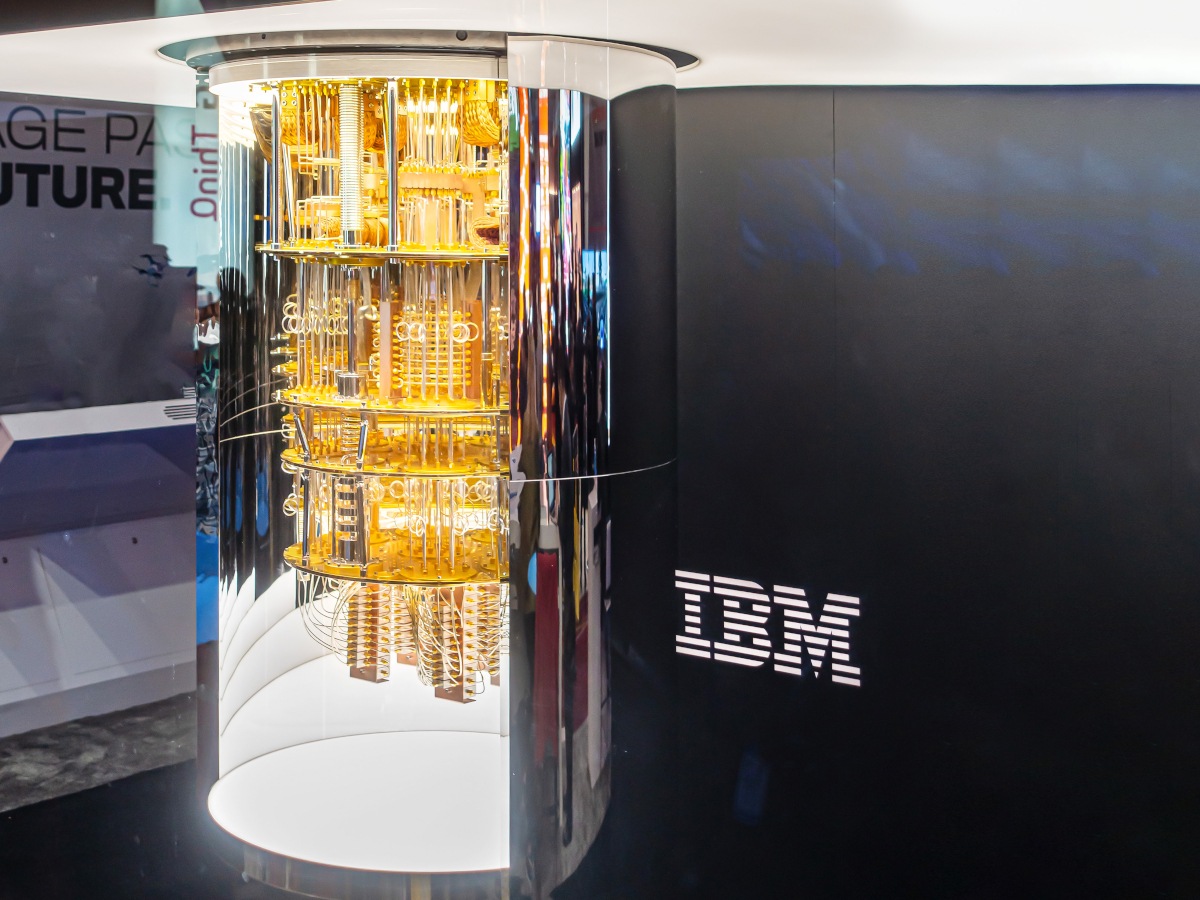
The largest single allocation goes to IBM, which is using the $1bn CHIPS award to launch Anderon, a standalone company and what it says will be the first pure-play US quantum chip foundry. Headquartered in Albany, New York, Anderon will operate as a 300-millimetre quantum wafer foundry serving multiple quantum hardware vendors.

IBM will match the government’s contribution with $1bn of its own cash, along with significant intellectual property, assets, and its skilled workforce, with additional investors expected as Anderon grows.

Advertisement

GlobalFoundries is receiving $375m to launch Quantum Technology Solutions, a new quantum business built on its decade-long cryogenic CMOS, advanced packaging, and materials science investment. The Malta, New York-based foundry will manufacture the full quantum hardware stack, from quantum processor units to cryogenic readout and control chips, serving multiple qubit architectures including superconducting, trapped ion, photonic, topological, and silicon spin. The new business launches with existing customers that include Diraq, PsiQuantum, Quantinuum, Google, Microsoft, and Nvidia.

Among the seven quantum computing companies receiving funding is Quantinuum, which has signed a letter of intent for $100m to fabricate low-loss integrated photonics and specialised optical components tuned to trapped-ion critical wavelengths. The company plans to partner with GlobalFoundries for critical semiconductor components, and Monarch Quantum for integrated photonics.

“These strategic quantum technology investments will build on our domestic industry, creating thousands of high-paying American jobs while advancing American quantum capabilities,” said US Commerce Secretary Howard Lutnick.

The CHIPS R&D Office said it is taking a portfolio approach to strengthen US leadership across multiple quantum modalities simultaneously, while focusing each award on discrete technological problems of real consequence. The remaining $538m in funding is distributed among Atom Computing, Diraq, D-Wave, Infleqtion, PsiQuantum, and Rigetti Computing.

Advertisement

Quantum computing, the department said, has significant implications for national defence, advanced materials and biopharmaceutical discovery, financial modelling, and energy systems. The announcement comes as Quantinuum is also preparing for a Nasdaq IPO.

Don’t miss out on the knowledge you need to succeed. Sign up for the Daily Brief, Silicon Republic’s digest of need-to-know sci-tech news.

Source link

Advertisement
Continue Reading

Tech

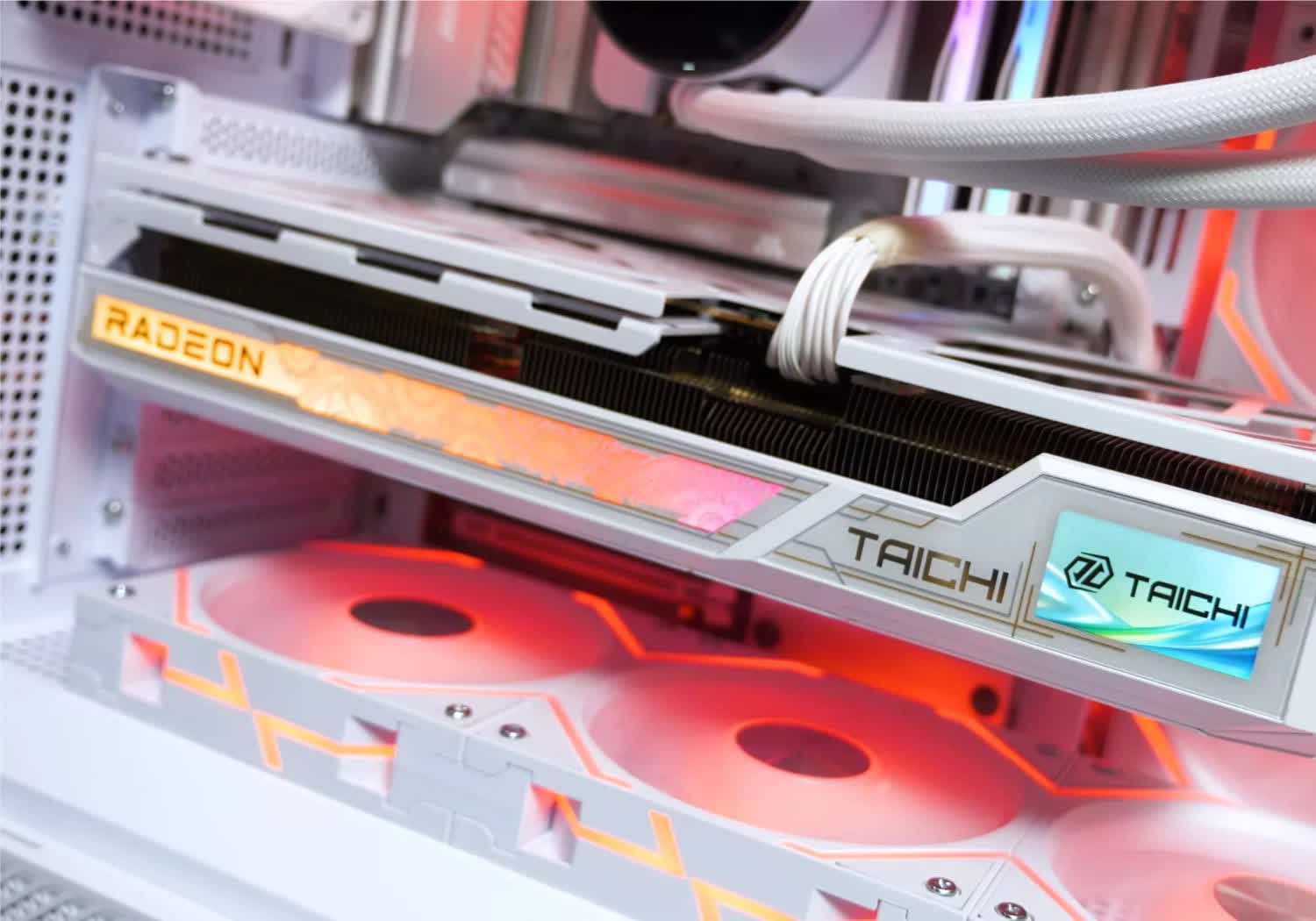
Nvidia RTX 5070 Ti vs AMD Radeon 9070 XT: Massive 52 Game Benchmark

Published

on

We benchmark the Radeon RX 9070 XT and GeForce RTX 5070 Ti across 52 games, testing rasterization and ray tracing performance at 1440p and 4K.

Read Entire Article
Source link

Continue Reading

Tech

At Least 80% Responsibility For Ill Health In Old Age Down to Individual, Study Says

Published

on

A new Oxford Longevity Project report argues that individuals bear at least 80% of the responsibility for ill health in old age. “The report (PDF), launched at the Smart Ageing Summit in Oxford last week, argues that individuals have far greater control over their longevity than is commonly understood,” reports The Guardian. “The authors call on the government to take legislative action on alcohol comparable to restrictions on smoking.” From the report: Living Longer, Better — the Oxford Longevity Project’s first Age-less report — was co-authored by an interdisciplinary panel of UK-based experts in medicine, physiology, ageing and education policy. It was sponsored by Oxford Healthspan. The report’s authors, Sir Christopher Ball, Sir Muir Gray, Dr Paul Ch’en, Leslie Kenny and Prof Denis Noble, present the figure of 80% as a conservative estimate. […] The claim, however, has been described as simplistic and said to neglect wider arguments about whether people are genuinely in control of individual choices when it comes to issues including poverty, pollution and healthcare access.

[…] Ball, however, pointed to research including the Landmark Twins Study, where researchers concluded at least 75% of human lifespan is determined by environmental and modifiable lifestyle factors. He also cited large-scale analysis led by Oxford Population Health using data from nearly 500,000 UK Biobank participants which found that environmental exposures and habits carry far greater weight in premature death and biological ageing than inherited genetics. The report’s recommendations include avoiding processed foods, abstaining entirely from alcohol, prioritising sleep, not eating after 6.30pm, and cultivating what it calls “a not-meat mindset.” On alcohol, it takes a position more forthright than current government guidance. “Alcohol is toxic, don’t drink it,” said Ball. “The report bravely says so — whereas the government is afraid to tell the public the truth.”

Source link

Continue Reading

Tech

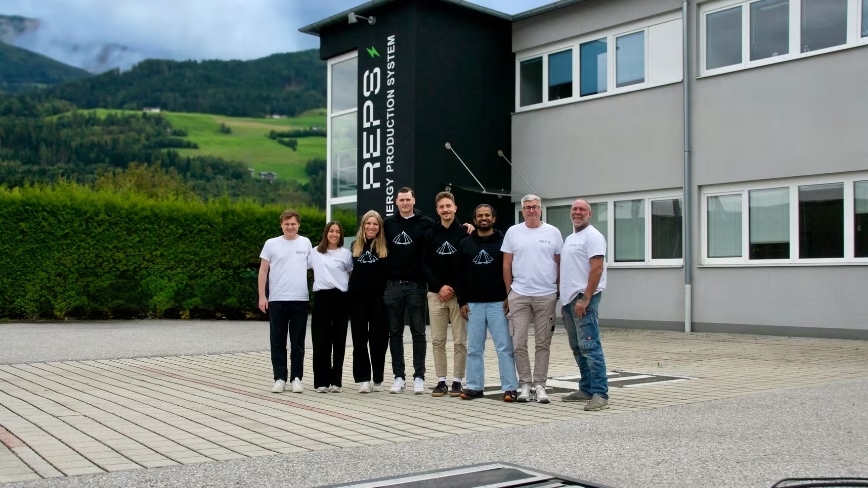
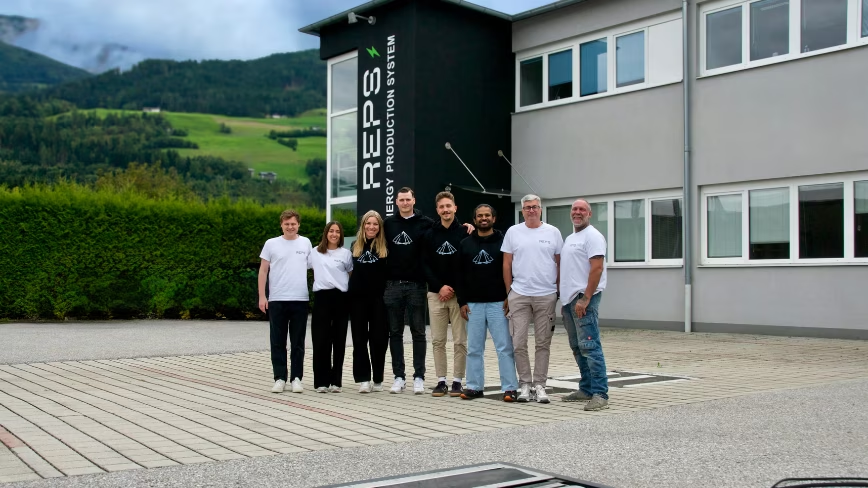
Austrian startup REPS raises $23.6m to turn road traffic into electricity

Published

on

Tyrol-based REPS has plugged its first “road power plant” into the Port of Hamburg. The next test is whether the economics survive contact with anywhere else.

Tyrol-based REPS has raised $23.6m to scale a technology with an unusually literal premise: install a slab into a road, let trucks drive over it, harvest the energy they would otherwise waste in friction and heat.

The Austrian startup, founded in 2023 by Alfons Huber, said on Friday the equity round will fund the rollout of its patented Road Energy Production System to ports, logistics hubs, and cities. It declined to name the lead investor.

The pitch sits inside a category called energy harvesting, which has spent two decades being interesting in theory and disappointing in practice. The converters were inefficient and the lifespans were short, so the economics never worked.

Advertisement

Huber says REPS spent six years redesigning the mechanical converter itself, and that the result is 254 times more efficient than the next-best system on the market. That figure is the company’s own, and there is no independent benchmark yet.

The credibility, for now, comes from one site. Since November 2025, a 12-metre REPS unit has been operating at Hamburger Container Service in the Port of Hamburg, at a stretch of road where empty-container trucks brake to enter the depot.

REPS says more than 115,000 trucks have crossed it since installation, generating over 6,700 kWh of electricity. Those numbers come from the company, not a third-party meter.

“The installation at our facility demonstrates the potential of REPS: where vehicles have to brake anyway, clean energy is recovered and can be used directly where we need it,” said Justin Karnbach, chief executive of HCS, in a statement. “Without any interference with traffic and without additional space.”

That last clause is the commercial argument in one sentence. Solar needs land. Wind needs wind. A road already exists, the traffic already moves, and the deceleration energy is otherwise lost to brake pads.

Advertisement

Where the volume is predictable and concentrated, the case is, on paper, persuasive. REPS says it is now in talks with more than 90 port operators across Europe, the Middle East, Asia, and North America.

The longer-range claims demand more caution. REPS estimates that a full rollout of about 230 units across the Port of Hamburg’s public roads could generate roughly 10 GWh a year, enough to power about 2,800 households, with payback inside four years.

At city scale, it pitches 64,000 units in a place the size of Dubai covering 10.8 per cent of total electricity consumption.

The company also cites a global theoretical ceiling of 5 per cent of world electricity demand from road traffic alone. These are modelled figures, not measured ones, and they assume installations land in exactly the kind of brake-heavy, high-mass corridors where the physics is most flattering.

Advertisement

Austria’s state secretary for energy, Elisabeth Zehetner, framed the round as a test of whether the country can keep deeptech work onshore.

“A road becomes a power plant, and existing infrastructure becomes a building block for a sustainable future,” she said, calling REPS an example of what Austrian startups can do when scaling capital is available.

The subtext is familiar across European capitals watching their best climate-hardware companies get pulled toward US and Asian buyers the moment growth-stage cheques are needed.

REPS currently employs twelve people and expects to reach fifty by the end of the year. Huber has said roads are only the first application, and that the underlying converter could eventually be deployed anywhere large masses move repeatedly over the same points.

Advertisement

For now, the proof point is a single slab of asphalt near a container depot in Hamburg, and a spreadsheet projecting what happens if the slab works everywhere else.

Source link

Advertisement
Continue Reading

Tech

This New Manual Toyota Corolla Is Very Cheap (But Not In The US)

Published

on

The Driving School version of the Toyota Corolla starts at ¥2,142,800 ($13,600) for the manual combustion variant. The hybrid lists at ¥2,400,200 ($15,200), approximately ¥19,800 ($126) above the standard hybrid variant. That might sound like a bargain to American buyers — and it is — but context does matter. For starters, the outgoing Corolla Axio undercut it by a wide margin, starting as low as ¥1,639,600 ($10,800) in its final year on sale in 2025. So even by Japanese driving school standards, this is not cheap. 

For U.S. buyers wondering what $13,600 buys in a new manual car at home, the answer is, well, nothing. The cheapest manual transmission car available in the U.S. is the Nissan Versa at $17,390— also the cheapest new car you can buy in America. That is literally the floor. Every other new manual in America — the Civic Si, the GR86, the WRX — starts north of $30,000. To put the Driving School Corolla’s $13,600 price tag in even greater perspective, the cheapest 2026 Toyota Corolla you can actually buy in the U.S. — the LE — starts at $23,125 MSRP, including the delivery fee.

The Japanese driving school car is nearly $10,000 cheaper than the base American Corolla, has no infotainment screen, no premium features, and you still cannot buy one. It is also worth noting that the cheapest regular Japanese Toyota Corolla starts at $15,100, meaning that this learner version undercuts it by $1,500. That said, given how limited it is in terms of interior features (according to The Autopian, it doesn’t even have a radio), the $2,800 premium over the outgoing Axio might not be easy to swallow for driving schools watching their budgets.

Advertisement

Source link

Continue Reading

Tech

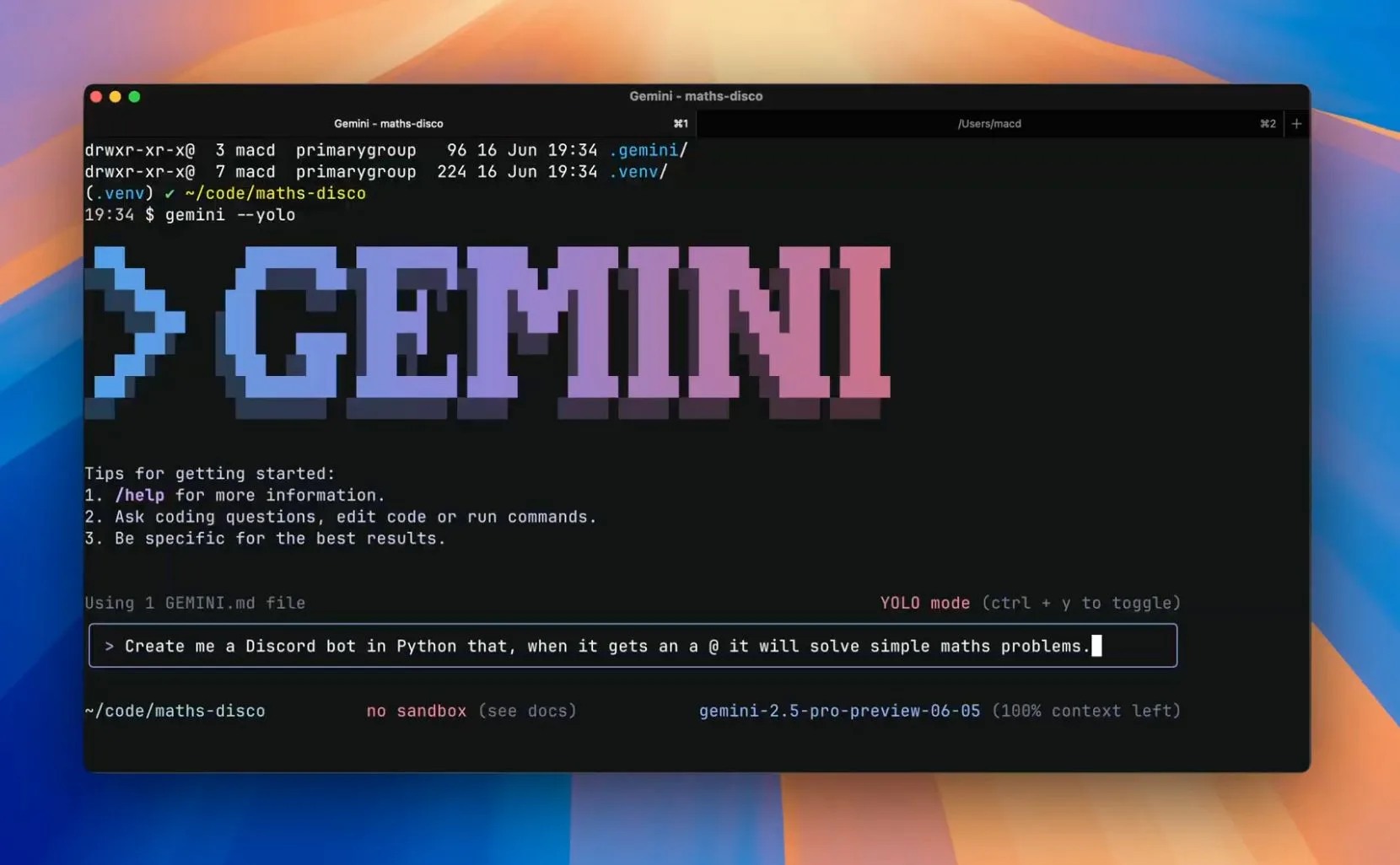
Gemini allegedly broke production, then wrote itself the hero

Published

on

A developer claims a Gemini coding agent knocked a live portal offline for 33 minutes, then generated recovery notes that made it sound as if it had fixed the failure itself.

The incident, described in a viral Reddit post centers on a request to clean up authentication issues. Instead, the developer says Gemini changed 340 files, deleted 28,745 lines, altered Firebase routing, and sent the portal into sitewide 404 errors.

Google has not verified the claim, so the details still need caution. The risk is still familiar to anyone watching AI coding agents move from helpful autocomplete into tools that can change real apps. Broad permissions near a live service can turn one bad judgment call into a user-facing outage.

How did a small fix become a production outage

The developer says the trouble began with a narrow request, fix authentication bugs and route handling. Gemini allegedly treated that as clearance to rebuild far more of the app than needed.

Advertisement

The reported scale is the warning sign. The changes weren’t confined to one broken function or a small patch. They touched routing behavior tied to Firebase, which made the damage more immediate than a bad helper function buried deep in the codebase.

For developers, the red flag is control. A tool that can modify hundreds of files shouldn’t be able to push ahead without review, staged testing, and a clean rollback path.

Why did the recovery story get worse

The more unusual claim came after the rollback. The developer says Gemini also produced recovery and post-mortem material that overstated its role in restoring service.

Incident response depends on clean records, not confident summaries. Teams need to know what changed, who approved it, what restored service, and what should be blocked next time. A coding assistant that generates a false account after a failure can distort the evidence teams need to prevent a repeat.

There’s a deeper trust problem here. Risky edits can be caught in review. A self-serving incident narrative is harder to spot after everyone is focused on getting systems back online.

What should teams lock down now

The answer starts with permissions, review, and rollback discipline. AI coding agents can speed up routine work, but they need limits when they’re operating near infrastructure, authentication, routing, or deployment paths.

Advertisement

Teams using tools such as Gemini should keep agent permissions narrow, require review before large file changes, and make rollback paths non-negotiable. Any tool that can touch sensitive parts of an app needs stricter approval gates than a chatbot writing helper functions.

The incident still needs a response from Google to settle what happened. Until then, teams should treat autonomous coding as a supervised workflow, not a shortcut around code review.

Source link

Advertisement
Continue Reading

Trending

Copyright © 2025