KRAFTON has officially rolled out the BGMI 4.4 update in India as the game celebrates its 5th anniversary in the country. The latest update introduces more than just new gameplay content, as it focuses heavily on creativity, community participation, collaborations, and anniversary celebrations. With features like the BGMI Design Contest Spin, players are now becoming part of the game’s development journey, showing how BGMI is slowly evolving into a larger entertainment and creator platform.
The BGMI Design Contest Spin is a new event that runs from June 16 to July 17, 2026. Through this event, players can collect seven cosmetic items created by members of the BGMI community. One of the special rewards in Spin is Fortune Teller AWM skin. By introducing cosmetics designed by gamers as premium products, BGMI pays closer attention to the creativity of its community.
Glacier Spin and Mummy Crate
The popular Glacier Spin event is set to return to BGMI from May 26 to June 1, 2026. The main attraction of the event is the M416 skin, which has become known as the most famous weapon skin in BGMI over time. Players will also get one final chance to use the UC option during this Spin event. Before BGMI turns 5 in India, KRAFTON will also introduce the AKM Glacier skin in the Classic Crate for a limited time.
As part of the BGMI 4.4 update, the Mummy Crate event is returning with several exclusive cosmetic rewards. The highlight of the event is the new Chaosphage Set and the Chaos Calamity AWM skin. Popular returning skins, including Psychophage and Inferno Fiend, will also make a comeback for players. Apart from this, the Spartan King Gold Spin will feature an upgradeable M1 Garand skin along with other returning Gold skins in BGMI.
Advertisement
Hero’s Crown Theme Mode Explained
Hero’s Crown is the latest themed mode arriving in BGMI through the 4.4 update. The mode draws inspiration from Greek mythology and introduces a floating location called Crown’s Abode. Inside the mode, players can experience both PvP battles against other teams and PvE gameplay through boss encounters. One of the main attractions is the Helios boss fight, where players can earn Glory points by completing various trials and objectives. The update also adds mythology-themed weapons and new gameplay activities.
Furthermore, the Dinoground Theme Mode is expected to launch in BGMI with the 4.4 update for the first time. It has been reported by KRAFTON that the Dinoground Theme Mode will only be available in the Erangel map of the game.
New Brand and Creator Collaborations Arrive in BGMI 4.4
With the recent update, KRAFTON is enhancing its collaborations with BGMI and international and local companies. Players will be able to ride unique vehicles created in collaboration with Ford Motor Company and Harley-Davidson.
Alongside the vehicle collaborations, BGMI is also adding creator voice packs to the game. Bhuvan Bam’s voice pack will launch through a Spin event, while Ravi Gupta will receive his own QV Spin event later in the update cycle. These additions highlight BGMI’s growing focus on entertainment and creator-driven content.
BGMI 4.4 Update: Key Dates and Events
May 20: Ford Collaboration and Hellenistic Theme Mode launch; Eid Mubarak Login Event begins
May 22: Blue Lock Collaboration launches
May 26: Glacier Spin launches with UC option (through June 1)
May 27: Spartan King Gold Spin launches; Festival Special DSB begins
May 28: Toxic Exchange Event begins
May 29: Harley-Davidson Special Crate and Buddy Spin launch
Jun 2: Toxic Voice Pack Crate launches
Jun 5: Gemini’s Favor Blessing Gold Spin launches (through September 1)
Jun 8: Dinoground Theme Mode – first-ever BGMI release on Erangel
Jun 25: 5th Anniversary Exchange Event begins on Erangel and Livik
Jun 28: AKM Glacier in Classic Crate (through July 2)
Jul 1 & 5: 5th Anniversary Fireworks Display – 8:00 PM to 10:00 PM IST
Jul 2: BGMI 5th Anniversary
Jul 3: Mummy Crate launches (through September 1)
As BGMI completes five years in India on July 2, 2026, KRAFTON is preparing several anniversary-themed activities for players. The company stated that the game has surpassed 260 million downloads in India over the past five years. Players will be able to join the 5th Anniversary Exchange Event to collect rewards and special anniversary items. Fireworks celebrations scheduled for July 1 and July 5 will further add to the in-game festivities.
AI agents forget. Every time a coding assistant loses track of a debugging thread, or a data analysis agent re-ingests the same context it already processed, the team pays in latency, token costs, and brittle workflows. The fix most teams reach for — expanding the context window or adding more RAG — is increasingly expensive and still doesn’t reliably work.
To address this, researchers from Mind Lab and several universities proposed delta-mem, an efficient technique that compresses the model’s historical information into a dynamically updated matrix without changing the model itself. The resulting module adds just 0.12% of the backbone model’s parameters — compared to 76.40% for one leading alternative — while outperforming it on memory-heavy benchmarks. Delta-mem allows models to continuously accumulate and reuse historical data, reducing the reliance on massive context windows or complex external retrieval modules for behavioral continuity.
The long memory challenge
The conventional solution is to simply dump all the information into the model’s context window.
But as Jingdi Lei, co-author of the paper, told VentureBeat, current systems treat memory merely as a context-management problem. “Either we keep expanding the context window, or we retrieve more documents through RAG,” Lei explained. “These approaches are useful and will remain important, but they become increasingly expensive and brittle when agents need to operate over long-running, multi-step interactions, and they don’t really [work] like human memory since they are more like looking up documents.”
Advertisement
In enterprise settings, the bottleneck is not just whether the model can access history, but whether it can reuse that history efficiently, continuously, and with low latency. Standard attention mechanisms incur a quadratic computational cost as the sequence length increases. Furthermore, expanding the context window does not guarantee the model will actually recall the information effectively. Models often suffer from context degradation or context rot as they become overwhelmed with more (and often conflicting) information, even if they support one million tokens in theory.
The researchers argue for advanced memory mechanisms that can represent historical information compactly and maintain it dynamically across interactions. Existing solutions come with heavy trade-offs and generally fall into three paradigms:
Textual memory: stores history as text injected into context — constrained by window limits and prone to information loss under compression.
Outside-channel (RAG): encodes and retrieves from external modules — adds latency, integration complexity, and potential misalignment with the backbone.
Parametric: encodes memory into model weights via adapters — static after training, can’t adapt to new information during live interactions.
Inside delta-mem
To achieve a compact and dynamically updated memory, delta-mem compresses an agent’s past interactions into an “online state of associative memory” (OSAM). This state is maintained as a fixed-size matrix that preserves historical information while the underlying language model remains frozen.
For enterprise workflows, this translates directly to resolving operational bottlenecks. Lei noted that a persistent coding assistant, for example, “may need to remember project conventions, recent debugging steps, user preferences, or intermediate decisions across a workflow.” Similarly, a data analysis agent might “need to maintain task state, assumptions, and prior observations while iterating over multiple tool calls.”
Advertisement
Delta-mem architecture (source: arXiv)
Rather than repeatedly retrieving and re-inserting all relevant history for these tasks, the delta-mem matrix provides a low-overhead way to carry forward useful interaction states inside the model’s forward computation.
During generation, the system does not retrieve raw text segments to add to the prompt. Instead, the backbone LLM’s current hidden state is projected into the matrix to retrieve old memory. This operation extracts context-relevant associative memory signals from delta-mem. These signals are then transformed into numerical corrections that are applied to the computations of the model. This steers the model’s reasoning at inference time without altering its internal parameters.
Following each interaction, delta-mem updates the online state using “delta-rule learning.” When new information arrives, the previous state makes a prediction about the resulting attention values. It then compares this prediction to the actual value and corrects the memory matrix based on the discrepancy.
Advertisement
This update mechanism relies on a “gated delta-rule.” Basically, the memory module has different knobs that control how much previous memory is kept and how much of the new memory is applied. This error correction with controlled forgetting allows the matrix to evolve over time, holding onto stable historical associations without being derailed by short-term noise.
The researchers explored three strategies for determining when and how the matrix updates:
Token-state write captures fine-grained changes but is vulnerable to short-term noise.
Sequence-state write averages tokens within a message segment, smoothing updates at the cost of some localized detail.
Multi-state write decomposes memory into sub-states for different information types like facts or task progress.
Delta-mem in action
The researchers evaluated delta-mem across three LLM backbones: Qwen3-8B, Qwen3-4B-Instruct, and SmolLM3-3B. They configured the framework with a compact 8×8 matrix. The system was tested on general capability benchmarks, including HotpotQA, GPQA-Diamond, and IFEval. It was also evaluated on memory-heavy tasks such as LoCoMo, which tests long-term conversational memory, and Memory Agent Bench, which assesses retention, retrieval, selective forgetting, and test-time learning over extended interactions.
The framework was compared against representative models from the three existing memory paradigms: textual memory baselines (e.g., BM25 RAG, LLMLingua-2, and MemoryBank), parametric systems (Context2LoRA and MemGen), and the outside-channel approach MLP Memory.
Advertisement
Delta-mem improves performance on key industry benchmarks (source: arXiv)
Across the board, delta-mem outperformed the baselines, according to the researchers. On the Qwen3-4B-Instruct backbone, the token-state write variant achieved an average score of 51.66%, easily surpassing the frozen vanilla backbone at 46.79% and the strongest baseline, Context2LoRA, at 44.90%. On the memory-heavy Memory Agent Bench, the average score jumped from 29.54% to 38.85%. Performance on the specific test-time learning subtask nearly doubled from 26.14 to 50.50.
However, the most compelling takeaways are the system’s operational efficiency. The researchers tested the framework in a no-context setting where the historical text was entirely removed from the context. Even without explicit text replay, delta-mem successfully recovered context-relevant evidence in multi-hop tasks. The researchers argue that the model remembers past interactions without needing to ingest massive amounts of prompt tokens.
The framework also adds only 4.87 million trainable parameters, representing just 0.12% of the Qwen3-4B-Instruct backbone. By comparison, the MLP Memory baseline required 3 billion parameters, scaling up to 76.40% of the backbone’s size while delivering inferior results. When prompt lengths scaled up to 32,000 tokens during inference tests, the framework maintained almost the exact same GPU memory footprint as a standard, unmodified model. It sidesteps the heavy memory bloat that affects other advanced memory systems like MemGen and MLP Memory.
Advertisement
Different update strategies proved beneficial depending on the underlying model capacity. The sequence-state write strategy was the most effective for stronger backbones like Qwen3-8B. These more capable models use the segment-level writing to smooth out updates and mitigate token-level noise. Conversely, the multi-state write strategy drove massive performance leaps for smaller backbones like SmolLM3-3B. For these lower-capacity models, separating memory into multiple states proved critical to minimizing information interference.
Implementing delta-mem in the enterprise stack
The researchers have released the code for delta-mem on GitHub and the weights for their trained adapters on Hugging Face. For AI engineering teams looking to integrate this framework into their existing inference stack, the process requires minimal computing resources.
“In practice, an engineering team would start from an existing instruction-tuned backbone, attach the Delta-Mem adapter modules to selected attention layers, train only the adapter parameters on domain-relevant multi-turn or long-context data… and then run inference with the memory state updated online during interaction,” Lei said. Crucially, teams do not need a massive pretraining corpus. The training data only needs to reflect the target memory behavior, such as multi-turn dialogues, agent traces, or domain workflows where earlier information must influence later decisions.
While compressing interaction history into a fixed-size mathematical matrix creates immense efficiency, it does come with trade-offs. Delta-mem is not a lossless replacement for explicit text logs or document retrieval. Because different pieces of information compete inside the same limited state, there is a risk of memory blending.
Advertisement
“Delta-Mem is useful when the system needs fast, online, continuously updated behavioral state,” Lei said. “RAG is better when the system needs exact factual recall, citation, compliance, auditability, or access to a large external knowledge base.” Remembering a user’s working style or a multi-step reasoning trajectory is a perfect fit for delta-mem, while retrieving a legal contract or a medical guideline should remain in a vector database.
This means the most realistic enterprise architecture moving forward is a hybrid approach. Delta-mem acts as a lightweight internal working memory, reducing the need to retrieve or replay everything all the time, while RAG serves as the explicit, high-capacity memory layer.
“Looking ahead, I do not think vector databases will become obsolete,” Lei said. “Instead, I expect enterprise AI stacks to become more layered. We will likely see short-term working memory inside the model, longer-term explicit memory in retrieval systems, and policy or audit layers that decide what should be stored, retrieved, forgotten, or exposed to the user.”
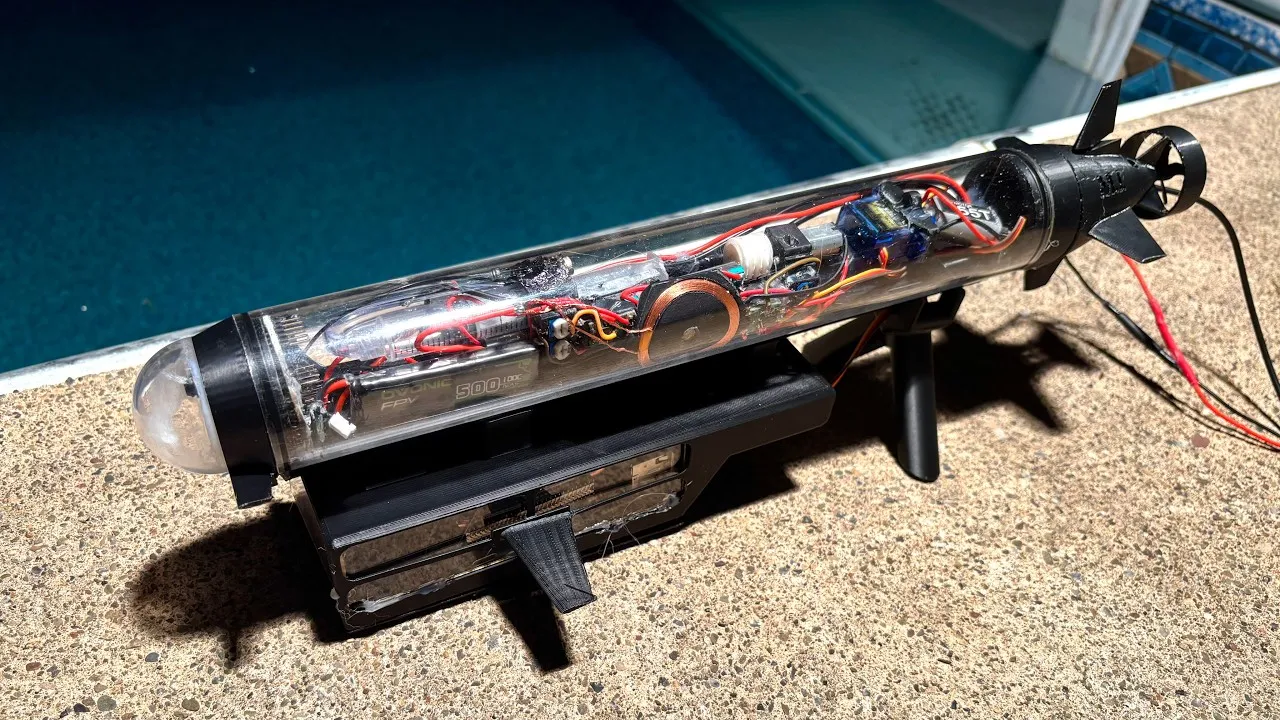
The build uses typical construction techniques for DIY subs of this size, with a clear acrylic tube serving as the body of the craft. It’s carefully sealed to ensure water ingress doesn’t send it to the bottom, using nifty tricks like a magnetic coupling for the prop. Inside, there’s a Raspberry Pi 4, kitted out with an Arducam IMX708 camera with a wide angle lens. It’s joined by a BNO085 inertial measurement unit, along with two BMP280 pressure sensors for keeping track of motion and the sub’s vital signs, while a DRV8833 motor controller runs the main drive motor.
There’s also an ESP32 which helps out with motor and servo control for steering, and ballast control. Sinking and floating the sub is handled with a pair of two ballast tanks constructed out of 5 mL syringes that are driven in and out with high-torque output gear motors. The build uses an antenna buoy so that communication can be maintained with the sub when it’s within a certain range of the surface.
Advertisement
A neat addition to the sub is its autonomous navigation code. [Ayman] whipped up some simple object avoidance routines, which rely on the Raspberry Pi’s camera. The code uses HSV values to track specific colored objects and avoid them, which proves more reliable than RGB as it allows tracking color in a largely brightness-independent manner.
The United States Air Force Special Operations Command (AFSOC) announced that the first 18 of 75 OA-1K Skyraider IIs have been delivered, according to Task and Purpose. The Skyraider, of course, carries on the namesake of the Vietnam War-era A-1 Skyraider.
Looking at the Skyraider II, you might have a lot of questions. What makes it so special? And why does it look like a cropduster? To answer the second question, the Skyraider II is based on the AT-802U from Air Tractor and then modified for combat by L3Harris. Air Tractor also manufactures, you guessed it, cropdusters.
Advertisement
The Skyraider II is a little hard to classify, and Air Tractor very explicitly notes that it is not a light attack plane like the Super Tucano. The Air Force says the Skyraider II is suited for “close air support, precision strike, or armed intelligence, surveillance, and reconnaissance,” which is why it’s sometimes referred to as a “Swiss Army Knife.” It’s also powered by a turboprop engine, rounding out the oddball factor.
Advertisement
Go anywhere, do anything
The OA-1K Skyraider II has only been with the Air Force since last year, making it one of the newest planes to join the fleet. It’s powered by a Pratt and Whitney PT6A-67F turboprop that gives it 1,600 horsepower and a top speed of just over 245 miles per hour. The PT6A is a very common engine that’s been used in dozens of small passenger and cargo planes, making maintenance and service inexpensive and straightforward.
For armaments, it has a total of 10 hard points to carry anything from rocket pods, machine guns, sensors, or surveillance equipment, for a total of 6,000 pounds. It can also be outfitted with a communications suite to interface with other friendly forces.
This week, the OA-1K Skyraider II demonstrated to officials that it can be loaded into other planes like the C-17 Globemaster III or C-5 Galaxy for deployment anywhere that has a runway long enough.
Apple has revealed a new accessibility accessory, plus shown off new features coming to iOS – image credit: Apple
Apple has shown off the new Accessibility features coming in iOS 27, which did nothing to stem the torrent of rumors about what we’ll see in Apple Intelligence, but possibly did steal a little bit of thunder from Google’s peculiar mishmash of an I/O conference, on the AppleInsider Podcast.
It’s surely the only time of the year where Apple actually tells us something in advance about the next version of iOS. No guessing, no rumors, just straight information about the new or improved accessibility features.
Apple does so solely because World Accessibility Day is coming up, and not at all because Google is running its I/O developer conference at this time. Just as it’s entirely coincidental that Apple issued invitations to its own WWDC now as well.
Advertisement
We all use Google, but even if you’re not an Android fan, it used to be interesting to watch Google I/O. You’d always see some features that you wished Apple would adopt, for instance, but not this year.
This year Google I/O was full of sound and fury, signifying nothing, if you spell sound and fury as “AI.” Nothing this year was biting at Apple’s heels, and that’s downright peculiar since Apple is relying on Google Gemini for its forthcoming updates to Apple Intelligence.
BONUS: Subscribe via Patreon or Apple Podcasts to hear AppleInsider+, the extended edition. This time, speaking of developer conferences, we’ve got WWDC on the horizon and just like you, that means we have plenty we want to see launch there.
Links from the show:
More AppleInsider podcasts
Tune in to our Smart Home Insider podcast covering the latest news, products, apps, and everything HomeKit related. Subscribe in Apple Podcasts, Overcast, or just search for HomeKit Insider wherever you get your podcasts.
Those interested in sponsoring the show can reach out to us at: [email protected].
Subscribe to AppleInsider on:
Keep up with everything Apple in the weekly AppleInsider Podcast. Just say, “Hey, Siri,” to your HomePod mini and ask for these podcasts, and our latest HomeKit Insider episode too. If you want an ad-free main AppleInsider Podcast experience, you can support the AppleInsider podcast by subscribing for $5 per month through Apple’s Podcasts app, or via Patreon if you prefer any other podcast player.
The Indus app is powered by Sarvam’s locally trained 105-billion-parameter model — a measure of the AI’s scale and sophistication — andlaunched at the AI summit. The app supports 22 Indic languages and mid-sentence code-switching (the ability to fluidly mix languages mid-conversation, like switching between Hindi and English), which helps the assistant better understand the context of a query. Currently, the application doesn’t support offline usage, and it doesn’t have any integrated feature with the device to invoke the AI assistant through a shortcut.
The partnership is a potential testing ground for both companies to gauge the appetite for an India-focused chatbot.
“With this partnership, the first thing we want to do is get the Indus app to consumers,” said Ravi Kunwar, HMD’s CEO and Vice President for India and APAC, in an interview with TechCrunch. “Once they start using it, we will move to phase two to focus on driving more traction and stickiness. Right now, by pre-loading the app, we want to be more accessible to users,” he said.
Advertisement
The Vibe 2 5G is a mid-range Android phone with a 6,000mAh battery and a price tag of ₹10,999($114). Kunwar added the devices in the Vibe series of smartphones will also get the chatbot, and the company is also expected to launch a feature phone with Sarvam AI integration in the coming months.
That feature phone integration may ultimately prove more significant for both companies. HMD held a 4% share of India’s feature phone market in 2025, but its smartphone share was negligible — the company doesn’t even appear in the top 15, according to analyst firm IDC.
While it’s early days for Indus, the download numbers reflect that. Nearly three months after its launch, the app has been downloaded just over 293,000 times in India across platforms, according to Appfigures. By comparison, ChatGPT was downloaded 43.9 million times in the country.
It’s a big gap, but the strategy behind the HMD deal may matter more than the early numbers. Bundling a regional AI assistant with affordable hardware — particularly feature phones — is one of the more direct distribution plays available in a market as large and linguistically diverse as India, where English-language AI tools have limited reach. For investors and operators watching how AI adoption gets seeded in emerging markets, this partnership is worth tracking.
Advertisement
Sarvam has been one of India’s marquee AI startups. Beyond the Indus app launch, the company has focused on enterprise partnerships, especially for voice-based solutions. It is on track to become one of the most funded AI startups in the country, with reportssuggesting a funding round of $300 million at a $1.5 billion valuation is in the works.
When you purchase through links in our articles, we may earn a small commission. This doesn’t affect our editorial independence.
Just a few days ago, I wrote a post about how Bill Cassidy had been primaried out of returning as a senator for Louisiana and how all of this bootlicking of the Trump administration obviously didn’t do the job he hoped it would do. As a result, he has been left as a lame duck senator with a legacy that will be primarily about his decision to belay his own moral stances generally and his heavy hand in RFK Jr. leading HHS under Trump 2.0.
The point of that post was two-fold. First, I wanted to highlight just how damning to his legacy the appointment of Kennedy to HHS has become to his legacy. Second, I wanted to highlight that this supposedly serious senator was perfectly willing to give up on his principles the moment he thought, incorrectly as it turns out, that it would be politically expedient to do so.
And if you need a bow to put on that second point, you can get it now that Cassidy has flipped his vote on the Senate bill to end America’s involvement in the war with Iran until the Trump administration gets authorization from Congress.
Sen. Bill Cassidy, R-La., who just lost his primary for renomination over the weekend after he faced opposition from Trump, voted “yes” to advance the measure, the first time he has done so after having repeatedly voted “no.”
“While I support the administration’s efforts to dismantle Iran’s nuclear program, the White House and Pentagon have left Congress in the dark on Operation Epic Fury,” Cassidy said in a statement. “In Louisiana, I’ve heard from people, including President Trump’s supporters, who are concerned about this war. Until the administration provides clarity, no congressional authorization or extension can be justified.”
Advertisement
It’s amazing how post-election-loss clarity can assist someone in rediscovering their own spinal cord. Now, you can read Cassidy’s comments about how Congress has been left in the dark and that he’s hearing from people worried that maybe this whole warlord routine by Trump isn’t so great and believe that Cassidy came to all of these epiphanies in the last couple of days… if you want. But I’m going to point at you and laugh in your face if you do.
Now that Cassidy has nothing to lose, he’s decided to do the right thing. That isn’t some feather in his cap. It’s a self-indictment of all of his actions leading all the way up to his primary loss. If Cassidy thought this vote was the right thing to do today, what made it the wrong thing to do a week ago? The answer is nothing.
Even if a vote is taken and the bill passes, it would still need to get through the Republican House and survive a presidential veto. There is little chance of either happening. But that isn’t the point.
The point is that Bill Cassidy could have been a patriot over the past year and a half since Trump’s reelection, but he chose not to until he didn’t have a Senate seat to defend. And that makes him a coward.
The US is betting big on quantum, committing $2bn in federal funding to nine companies as it races to build a domestic quantum computing industry.
The US Department of Commerce announced yesterday it is proposing $bn in federal incentives under the CHIPS and Science Act, targeting two domestic quantum foundry companies and seven quantum computing firms. The funds are aimed at solving the most critical technology challenges in the race to develop utility-scale, fault-tolerant quantum computers.
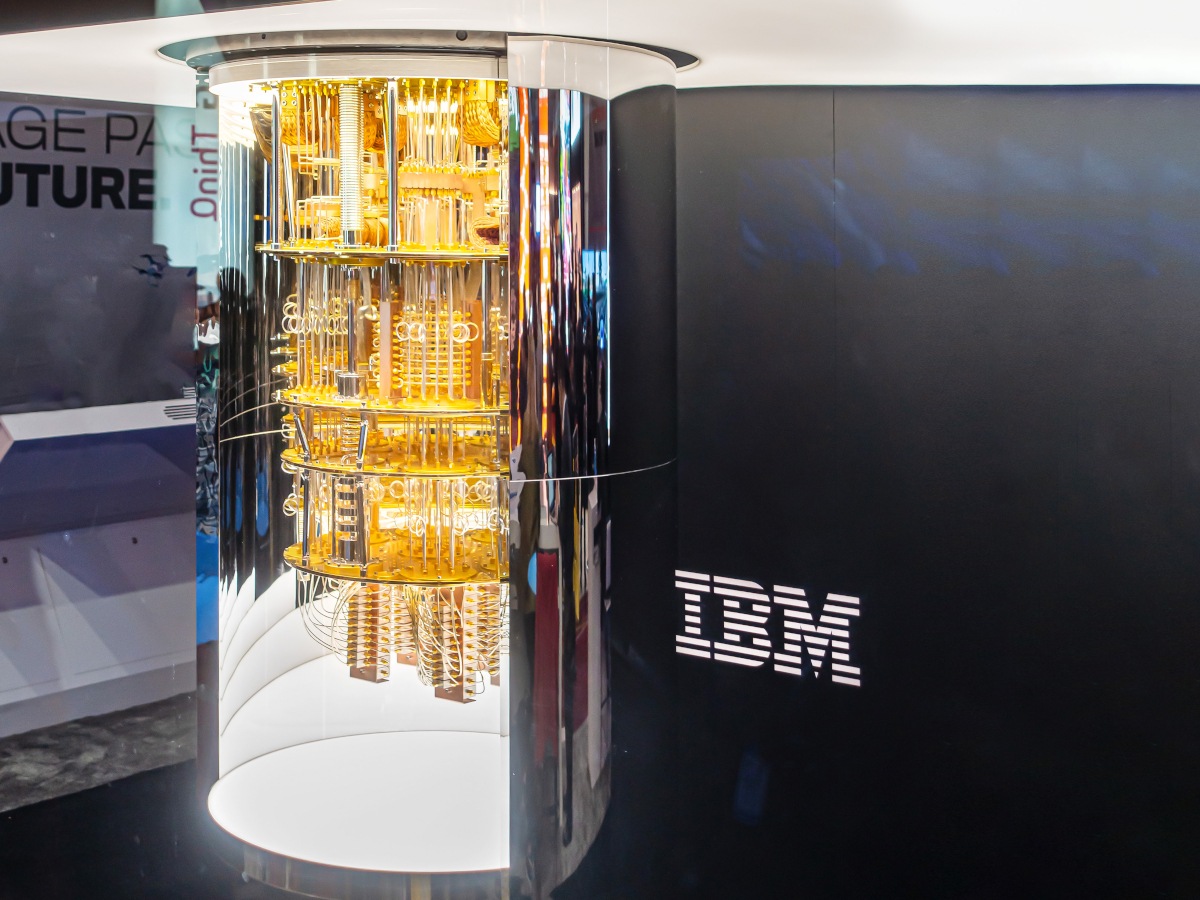
The largest single allocation goes to IBM, which is using the $1bn CHIPS award to launch Anderon, a standalone company and what it says will be the first pure-play US quantum chip foundry. Headquartered in Albany, New York, Anderon will operate as a 300-millimetre quantum wafer foundry serving multiple quantum hardware vendors.
IBM will match the government’s contribution with $1bn of its own cash, along with significant intellectual property, assets, and its skilled workforce, with additional investors expected as Anderon grows.
Advertisement
GlobalFoundries is receiving $375m to launch Quantum Technology Solutions, a new quantum business built on its decade-long cryogenic CMOS, advanced packaging, and materials science investment. The Malta, New York-based foundry will manufacture the full quantum hardware stack, from quantum processor units to cryogenic readout and control chips, serving multiple qubit architectures including superconducting, trapped ion, photonic, topological, and silicon spin. The new business launches with existing customers that include Diraq, PsiQuantum, Quantinuum, Google, Microsoft, and Nvidia.
Among the seven quantum computing companies receiving funding is Quantinuum, which has signed a letter of intent for $100m to fabricate low-loss integrated photonics and specialised optical components tuned to trapped-ion critical wavelengths. The company plans to partner with GlobalFoundries for critical semiconductor components, and Monarch Quantum for integrated photonics.
“These strategic quantum technology investments will build on our domestic industry, creating thousands of high-paying American jobs while advancing American quantum capabilities,” said US Commerce Secretary Howard Lutnick.
The CHIPS R&D Office said it is taking a portfolio approach to strengthen US leadership across multiple quantum modalities simultaneously, while focusing each award on discrete technological problems of real consequence. The remaining $538m in funding is distributed among Atom Computing, Diraq, D-Wave, Infleqtion, PsiQuantum, and Rigetti Computing.
Advertisement
Quantum computing, the department said, has significant implications for national defence, advanced materials and biopharmaceutical discovery, financial modelling, and energy systems. The announcement comes as Quantinuum is also preparing for a Nasdaq IPO.
Don’t miss out on the knowledge you need to succeed. Sign up for the Daily Brief, Silicon Republic’s digest of need-to-know sci-tech news.
Gartner expects 60% of AI projects that lack AI-ready data to be abandoned through 2026. “AI-ready” sounds like a technical label. In practice, it describes something much more ordinary: whether a business can actually find, combine, and use the data it already owns.
That is a data fragmentation problem: the state where the information you need to plan a business decision is scattered across different systems, formats, teams and legal entities.
Many boards still treat it as an IT issue. It isn’t.
Advertisement
Latest Videos From
Maximilian Groth
Co-founder and CEO of Decentriq.
It’s what slows your decisions, stalls your partnerships, and kills your AI pilots. My team at Decentriq sees a version of this issue in many of the conversations we have with IT management at media companies.
Advertisement
This piece explains why consolidation is the wrong answer to that problem, and what the organizations pulling ahead are doing instead
Where data fragmentation breaks the business
Engineers describe data fragmentation as silos and duplicated feeds. That is accurate, but it only names the symptoms.
The business version is easier to see. Walk through a typical week at a large company and you will find it:
Advertisement
Sign up to the TechRadar Pro newsletter to get all the top news, opinion, features and guidance your business needs to succeed!
A global marketer tries to read customer behavior across regions and discovers there are five different definitions of “customer” in use. A publisher wants to show a brand partner which of its customers were actually reached and converted, but proving it means sharing audience data neither side is willing to expose. There are so many examples.
These are composites built from conversations I have had this year so far, not specific clients. But the pattern is the point. Each problem gets logged as a technical ticket and solved in isolation. None of them stay solved, because the next question arrives in a slightly different shape.
That pattern is what costs money. Not any single issue, but the company-wide drag on the speed and quality of decisions made with data the business already owns. It never appears as a line on the finance report. Instead, it shows up as projects that stall, deals that slip, and AI initiatives that never reach production.
Advertisement
The real cost of compressed decisions
The most expensive thing fragmentation does is force decisions under a deadline the data cannot meet.
Take a campaign planning cycle. A brand wants to activate on its best customers on premium publisher inventory. Its CRM data exists. The publisher’s audience data exists.
Advertisement
The traditional route requires negotiating a data-sharing agreement, getting legal sign-off on both sides, and building a technical integration. By the time that’s done, the campaign window has passed.
Why the obvious fixes fall short
The instinctive responses to this problem are understandable. Publishers further invest in data management platforms (DMPs) to better package their audiences. Brands build out customer data platforms (CDPs) to unify their customer database. And the major platforms (Google, Amazon, Meta) offer their own clean room environments to enable some degree of collaboration within their walls.
None of these solve the cross-partner problem. DMPs and CDPs are built for internal data orchestration. So they give you a better view of what you already own, but they weren’t designed for collaboration with external partners. And walled garden clean rooms solve a narrow version of the problem: you can collaborate with the platform’s own data, but you can’t bring independent partners in, and the platform itself can see what you’re doing.
Advertisement
The common limitation is that each of these tools was built to consolidate or contain data as opposed to letting it work across boundaries while staying where it is. That’s a different problem, and it needs a different kind of solution.
Data collaboration is replacing consolidation
A smaller group of organizations has stopped trying to move or merge their data at all. They are using data clean rooms built on privacy-enhancing technologies, or PETs: a family of approaches that includes confidential computing, federated learning, and secure multi-party computation (among others).
The common thread is simple: these tools let two or more organizations ask a question of each other’s data, and get a joint answer, without either side ever seeing or copying the other’s raw records.
Advertisement
At Decentriq we build data clean rooms on this foundation. Global brands, publishers, and especially regulated enterprises use these to collaborate across data that has to stay where it is.
Our Collaborative Audience Platform extends this further, giving organizations a single environment to build, activate, and measure audiences across partner data in real time, without either party’s records ever leaving their own systems.
A few examples of what that looks like in practice:
A major Swiss bank worked with publisher Goldbach to build advertising audiences that resembled its existing best customers. The cost of reaching them dropped 44%. The bank’s own customer records never left its systems.
Advertisement
IKEA and Austrian publisher willhaben matched their customer and audience data inside a clean room. Cost per visit fell 30%. The return on each Euro of ad spend went up 10%.
In consumer health, Laboratoires Pierre Fabre built a detailed picture of the customers buying its Avène and Aderma sunscreen brands by combining its own data with audiences from three French publishers (Reworld Media, Groupe Marie-Claire and Média Figaro). No customer data was exposed to any of them.
Ten years ago, each of those questions would have meant pooling the underlying data and absorbing the full compliance overhead. None of these did. Each answered one question across one boundary, and left the rest of the data estate as fragmented as it was before.
Advertisement
The question boards should actually be asking
Data fragmentation isn’t going to be solved by making every company look like one big database. The organizations pulling ahead have accepted that acting on data doesn’t require owning it, and have invested in the ability to collaborate across company boundaries.
For years, boards asked how to collapse the boundaries. A better question is how to act across them. That question has practical answers now, and I see more of them every quarter. The companies asking it aren’t waiting for the consolidation project to finish.
“The data you need to understand your customer usually exists, it’s just not all in your own systems. The companies pulling ahead have stopped trying to own it all, and started finding ways to act on it together.”
This article was produced as part of TechRadar Pro Perspectives, our channel to feature the best and brightest minds in the technology industry today.
The views expressed here are those of the author and are not necessarily those of TechRadarPro or Future plc. If you are interested in contributing find out more here: https://www.techradar.com/pro/perspectives-how-to-submit
A new Oxford Longevity Project report argues that individuals bear at least 80% of the responsibility for ill health in old age. “The report (PDF), launched at the Smart Ageing Summit in Oxford last week, argues that individuals have far greater control over their longevity than is commonly understood,” reports The Guardian. “The authors call on the government to take legislative action on alcohol comparable to restrictions on smoking.” From the report: Living Longer, Better — the Oxford Longevity Project’s first Age-less report — was co-authored by an interdisciplinary panel of UK-based experts in medicine, physiology, ageing and education policy. It was sponsored by Oxford Healthspan. The report’s authors, Sir Christopher Ball, Sir Muir Gray, Dr Paul Ch’en, Leslie Kenny and Prof Denis Noble, present the figure of 80% as a conservative estimate. […] The claim, however, has been described as simplistic and said to neglect wider arguments about whether people are genuinely in control of individual choices when it comes to issues including poverty, pollution and healthcare access.
[…] Ball, however, pointed to research including the Landmark Twins Study, where researchers concluded at least 75% of human lifespan is determined by environmental and modifiable lifestyle factors. He also cited large-scale analysis led by Oxford Population Health using data from nearly 500,000 UK Biobank participants which found that environmental exposures and habits carry far greater weight in premature death and biological ageing than inherited genetics. The report’s recommendations include avoiding processed foods, abstaining entirely from alcohol, prioritising sleep, not eating after 6.30pm, and cultivating what it calls “a not-meat mindset.” On alcohol, it takes a position more forthright than current government guidance. “Alcohol is toxic, don’t drink it,” said Ball. “The report bravely says so — whereas the government is afraid to tell the public the truth.”



























































You must be logged in to post a comment Login