

Crypto World
Ark Invest buys $12.5 million of Bullish stock in four days



Ark Invest bought $5 million worth of Bullish (BLSH) stock on Thursday, the fourth day in a row it has added BLSH shares to its exchange-traded funds (ETFs).
Cathie Wood’s investment manager has purchased $12.5 million worth of shares in the crypto group, which is also CoinDesk’s parent company, since Monday based on the stock’s closing prices, according to emailed disclosures.
BLSH shares closed 0.2% lower at $35.96 on Thursday, having fallen more than 17% in the last two weeks, a period in which bitcoin struggled to break above the $80,000 resistance.
Ark frequently uses broader digital asset downturns, which tend to pull crypto equities lower, as an entry point into cryptocurrency companies.


A suspected laundering run pushed part of a $120.2 million USDT haul into Monero (XMR), pumping the privacy coin 27%. The buyer hid its identity but broadcast its activity on every price chart.
Tether froze $72 million of the funds within a day. However, the sharper lesson sits in Monero’s order books, where size proved impossible to hide.
A $120 Million Sprint That Left Tracks on the Chart
On-chain investigator ZachXBT traced the flow from a Tron address that received 120.2 million USDT on June 11.
More than $17.5 million went to KuCoin deposit addresses, while $8 million flowed to instant exchanges.
“The entity created Monero orders which caused the XMR price to spike from $330 -> $420. Another $8M+ was bridged from Tron to Bitcoin / Ethereum via Near Intents,” ZachXBT published the trace on Telegram.
The playbook has a precedent. In April 2025, a $330 million theft fueled a similar XMR rally when the thief swapped stolen bitcoin into Monero.

The XMR price was $380 as of this writing, up nearly 10% in the last 24 hours, after recording an intra-day high of $475.
Follow us on X to get the latest news as it happens
Why Monero Laundering Gets Loud and Expensive at Scale
Monero ranks 16th by market cap at $7.1 billion, yet its books stay thin. Binance and other major exchanges delisted XMR in 2024 under compliance pressure, shrinking the venues where size can hide.
Global XMR turnover sat near $303 million over the past 24 hours. Against books that shallow, one entity’s buying drove the price from $330 to $420 within hours.

The move punished the buyer. Each fill landed higher than the last, and late orders cost up to 27% more than early ones. Thin liquidity worked like a tax on the operation.
The spike also served as a public alarm. Traders saw the move before they knew its cause, and the footprint reached far beyond blockchain sleuths.
The dynamic suggests a ceiling. Privacy networks may absorb only so much illicit volume before the market itself gives the game away.
Tether still moved fast. It blacklisted the linked address early Friday, freezing 72,030,295 USDT within 30 seconds of detection.

The issuer froze $344 million in April with OFAC, an action US officials tied to Iranian networks.
Yet those cases targeted pre-identified, slower-moving funds.
This entity moved roughly $48 million out of reach within a day, paying Monero’s liquidity premium as its exit fee.
The frozen $72 million may never move again.
Meanwhile, the chart evidence cuts both ways. Privacy coins offer an exit from issuer control, and liquidity depth, not blacklists, sets the price of using it.
The post Monero Jumps 27% in a Suspected $120 Million Laundering Run: Too Loud to Hide? appeared first on BeInCrypto.

Bitcoin (BTC) has fallen nearly 15% since Strategy disclosed on June 1 that it sold 32 BTC between May 26 and May 31 for about $2.5 million. MSTR stock, on the other hand, has lost 24% of its value during the same period.
But the company chairman, Michael Saylor, has now defended the sale and pushed back against criticism.
Saylor Defends Strategy Move
Speaking at the BTC Prague conference, Saylor said he had only advised individuals not to sell their Bitcoin and never claimed the company itself would avoid doing so. He added that Strategy has consistently disclosed over the past five years that it could sell Bitcoin if necessary.
“By the way, I said to you never sell your Bitcoin. I never said the company wouldn’t sell Bitcoin. And anybody who is listening to our earnings call or reading our disclosure or has half a brain knows, for the last five years, we’ve been very clear that of course we sell the Bitcoin if we have to.”
Strategy’s BTC sale was its first in years. The units were sold at an average price of $77,135 each, slightly above the firm’s acquisition cost of $75,699 per BTC. Although Saylor had previously hinted at the possibility of a sale in early May, the move still rattled parts of the crypto market. Strategy’s previous Bitcoin sale took place in December 2022 during a severe bear market that followed aggressive interest rate hikes, the collapse of FTX, and broader contagion across crypto lenders and hedge funds.
The move also sparked backlash from some industry figures, including Jim Cramer, who tweeted, “Saylor murdered Bitcoin.”
Backlash
While Saylor blamed last week’s Bitcoin sell-off on the growing excitement around artificial intelligence stocks, crypto investment firm Arca strongly rejected that explanation. In a weekly investor note, Arca Chief Investment Officer Jeff Dorman said the market weakness was primarily caused by Strategy’s BTC sale.
Dorman wrote that the selling pressure was “clearly due to the Saylor/MSTR news,” despite what he described as “gaslighting” from the firm and other Bitcoin bulls.
Despite the controversy, Strategy has continued buying the crypto asset. It recently added 1,550 BTC for just over $100 million. The company now holds 845,256 BTC purchased at an average price of $75,680 per coin.
The post ‘I Never Said the Company Wouldn’t Sell’: Michael Saylor Fires Back After Bitcoin Drop appeared first on CryptoPotato.
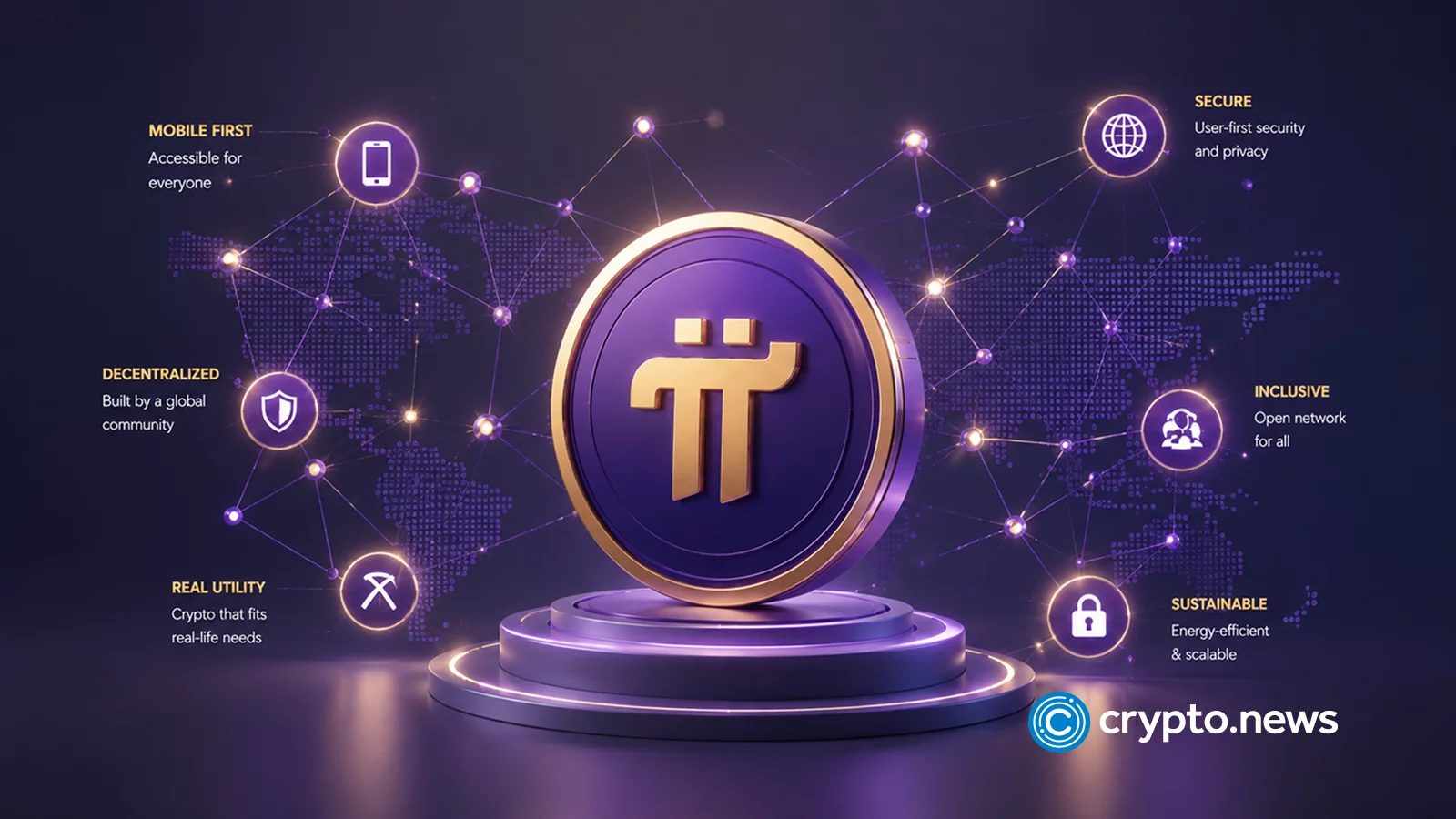
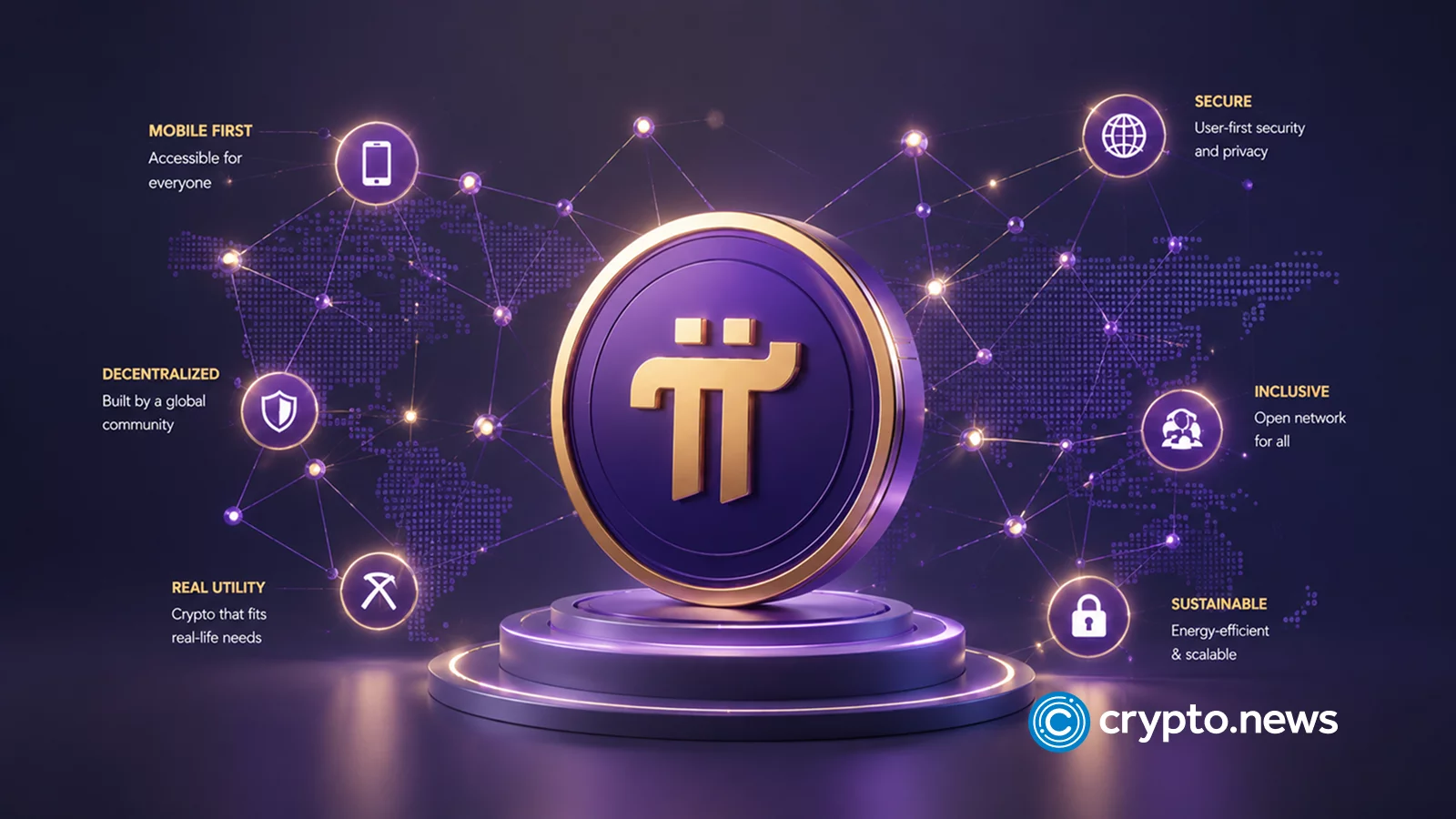
Thirteen months ago, Pi Network announced a Silicon Valley-style venture fund to seed its ecosystem.
Summary
- Pi Network Ventures was announced as a $100 million ecosystem fund, but only one investment has been publicly disclosed.
- The fund’s PI-token component makes its real dollar value unclear after PI’s sharp decline since the announcement.
- OpenMind is a credible robotics and AI infrastructure bet, but it does not solve Pi’s near-term token demand or unlock pressure.
- The biggest issue is disclosure: portfolio, check sizes, denomination, custody, criteria, and governance remain unclear.
One disclosed investment later, the questions have compounded faster than the portfolio. In May 2025, with its token still trading above half a dollar and its open mainnet barely three months old, Pi Network announced the kind of initiative that signals a project graduating into seriousness: Pi Network Ventures, a $100 million fund to back startups that would bring real-world utility to the ecosystem. The fund would be denominated in a mix of PI tokens and U.S. dollars, drawn from the network’s ecosystem reserves, and aimed at AI, fintech, gaming, e-commerce, and robotics. The pitch borrowed Silicon Valley’s vocabulary deliberately, promising portfolio companies capital plus something rarer: access to tens of millions of KYC-verified users.
Thirteen months later, the public record of that fund consists of one disclosed investment, a robotics software startup named OpenMind, announced at the end of October 2025, with the check size never stated.
There is no published portfolio page, no deployment report, no disclosure of how much of the hundred million has moved, in what proportion of tokens to dollars, or at what valuation of a token that has since lost most of its dollar value. For an ecosystem whose community measures hope in announcements, the fund’s first year invites a journalistic accounting. This piece attempts one: what the fund said it would do, what it can be shown to have done, what the OpenMind bet actually involves, and what the gaps in between mean.
What was announced, precisely
The founding claims matter, because accountability starts with the original language. Pi Network Ventures launched in May 2025 as a $100 million initiative of the core team and foundation, with the capital sourced from ecosystem reserves, the pool that exists inside Pi’s 100 billion token allocation for community and ecosystem building. The mandate named its sectors broadly and stated three core objectives, the last of which was bringing Pi into real-world use cases. Coverage at the time noted the fund’s hybrid denomination in PI tokens and USD, and the team framed the distinctive asset as distribution: a startup taking Pi money would gain access to one of the largest verified user bases in crypto.
Three structural facts follow from that design, and each one shapes everything that came after. First, the fund is corporate venture capital in the most concentrated sense: no outside limited partners, no independent governance, capital and decisions both belonging to the team that issues the token. Second, the denomination in PI tokens makes the fund’s headline size a moving target, since the dollar value of the token portion falls with the chart, and the chart has fallen hard. Third, sourcing from ecosystem reserves means the community’s allocation funds the bets, while the choosing of the bets sits entirely with the core team, a structure other ecosystems route through grant DAOs, councils, or at minimum published criteria.
None of these facts is improper. Corporate venture funds are common, token treasuries are volatile by nature, and early-stage discretion has its defenders. But together they make disclosure the only available check, which is why the disclosure record is the right thing to audit. The fund’s problem is not that it exists; the problem is that the public cannot see enough of it to judge whether it is functioning.
What the distribution pitch is really worth
Before the deployment record comes the fund’s most distinctive founding claim, which was never primarily about money. Pi Network Ventures marketed itself as offering startups something venture dollars cannot buy: access to one of the largest KYC-verified user bases in crypto, tens of millions of identity-checked accounts a portfolio company could, in theory, acquire as customers for free. On paper the claim has real weight. Customer acquisition is the dominant cost for most consumer startups, identity verification is its most expensive component in fintech, and a partner who delivers pre-verified users at scale would be worth taking below-market terms to work with.
This is the legitimate version of the pitch, and it is presumably what a robotics company with no consumer product saw value in when it accepted the association. The audited version is less generous. The user base’s headline numbers, 60 million claimed accounts at peak messaging, more than 17 million KYC-verified, nearly 16 million migrated to mainnet, sit beside a harder figure from the same ecosystem reviews: fewer than 100 mainnet-ready applications, despite a generative tool that let more than 51,000 creators spin up apps. A funnel that converts tens of millions of verified accounts into double-digit working applications is telling you something about the difference between an audience and a market.
Users who arrived to tap a mining button are not, on the evidence so far, converting into customers of anything at rates that would make the distribution pitch bankable, and a startup weighing a Pi Ventures term sheet can read the same funnel this piece can. The fund’s unique asset is real, unproven, and shrinking in credibility with every month the application layer stays thin. That makes the fund’s slow public pace partly self-explaining: the easiest capital to deploy is capital whose sweetener works. When the sweetener is still unproven, deployment becomes harder to explain and harder to sell.
What the fund can be shown to have done
Public evidence of the fund in action amounts to the following. OpenMind, announced October 29, 2025, is the fund’s first and only named investment. The Silicon Valley startup, founded by Stanford professor Jan Liphardt, builds OM1, an operating system pitched as Android for robots, and FABRIC, a protocol letting machines identify, verify, and cooperate. OpenMind had closed a $20 million round led by Pantera Capital in August 2025, with Coinbase Ventures, Ribbit Capital, Topology, and Pebblebed participating; Pi’s investment arrived after that round, building on it, with the amount undisclosed.
Before investing, the two teams ran a proof-of-concept using Pi’s node network for distributed AI processing.
Beyond OpenMind, the record thins fast. A partnership with CiDi Games to thread Pi into in-game economies has been described in ecosystem roundups, though whether it involved fund capital or a commercial agreement is not public. Pi App Studio, the generative AI tool that the team credits with letting more than 51,000 creators build apps, is a product launch rather than a fund deployment. Year-end ecosystem reviews cite the fund’s existence as an achievement in itself, which is the kind of citation that confirms the announcement rather than the activity.
Set that record against the fund’s own clock. Thirteen months at a stated $100 million implies, at typical early-stage check sizes, somewhere between a handful and a few dozen investments for a fund intent on deploying. One disclosed deal of unstated size is consistent with several stories: a deliberately patient fund, a fund whose other deals are unannounced, a fund whose capital was always more notional than committed, or a fund constrained by the collapse of its own denomination. The public record cannot distinguish among them, and that inability is itself the finding.
The denomination problem nobody has answered
Hovering over every question about deployment is the arithmetic of what $100 million means when part of it is PI. When the fund launched in May 2025, PI traded in the range of 60 to 70 cents. The token now trades near $0.12, a decline of more than 80% from the announcement window. If, hypothetically, half the fund’s capital was held in PI at launch valuations, that portion’s dollar value has fallen by four fifths, taking the real fund size down with it.
If most of it was PI, the fund’s purchasing power today is a fraction of its name. The team has not published the split, the custody arrangement, or whether the $100 million figure is marked to market, fixed in tokens, or backed by an off-chain dollar commitment. The question is not pedantic, because the answer determines what the fund can actually do for the ecosystem. A fund holding dollars can write dollar checks to startups regardless of the chart, while a fund holding PI faces an ugly choice every time it invests.
It can pay startups in a token they will likely need to sell, adding the fund’s own deployments to the very sell pressure the ecosystem already struggles with, or it can liquidate PI into thin order books itself before writing dollar checks, with the same effect one step removed. Every venture fund denominated in its own ecosystem’s token carries this loop, and the projects that handle it credibly do so by disclosing the mechanics. Pi has disclosed none of them, which leaves community members defending a number that may no longer describe anything. This is why the fund’s headline size cannot be treated as the same thing as available firepower.
What the OpenMind bet actually is
A single named investment merits a closer look, because it is both more interesting and stranger than the headline suggests. OpenMind is a serious company by the standard signals: a Stanford robotics founder, a round led by Pantera with Coinbase Ventures and Ribbit on the sheet, and a thesis, open infrastructure for machine intelligence in the physical world, that sits squarely inside the most funded narrative in technology. For Pi, association with that syndicate is itself a form of validation the project has rarely had. The same venture firms that would never list PI’s chart in a deck were comfortable sharing a cap table with its foundation.
The strategic logic the two teams describe runs through Pi’s node network. The proof-of-concept tested distributed AI processing across Pi’s globally scattered nodes, and the stated vision has Pi’s infrastructure serving as decentralized compute for machine workloads while Pi the token serves as a payment rail for autonomous agents, machine-to-machine transactions in a future where robots buy services from each other. The team has floated compensating node operators for contributing computing power to AI training, which would give the node network its first economic function beyond consensus. The node angle is the part with measurable nearer-term stakes.
Pi’s network of user-run nodes has always been the project’s most underused asset, thousands of machines contributing consensus to a chain with modest transaction demand. Renting that idle capacity to AI workloads would create the first revenue-shaped flow in the ecosystem’s history: external demand paying, in some denomination, for a service Pi infrastructure performs. The economics are unproven, distributed consumer hardware competes badly with data centers on most AI workloads, and the proof-of-concept has not been followed by published throughput or earnings data. But it is at least a testable proposition, and testable propositions are scarce in this ecosystem.
A fair assessment holds two thoughts at once. As a thesis, machine payments and distributed compute give Pi’s idle infrastructure a plausible future job, and betting early on a credible team in that space is what an ecosystem fund exists to do. As a present-day matter, the investment does nothing for the questions Pi holders actually face this year: it adds no token demand, no burn, no user-facing utility, and no revenue. Its payoff horizon is measured against the robotics industry’s adoption curve, which is to say in many years, making the fund’s first bet defensible and almost perfectly orthogonal to the ecosystem’s emergency.
What the ecosystem needed while the fund was quiet
Accountability includes opportunity cost, so place the fund’s quiet year against the year its ecosystem had. Between the May 2025 announcement and this writing, PI fell from the 60-cent range to roughly 12 cents, the community absorbed an unlock schedule running at hundreds of millions of tokens monthly, exchange access stayed frozen at the second tier, and the protocol upgrade ladder consumed the team’s public attention. Through all of it, the single most common community demand was not venture investment at all. It was anything that supported the token’s market structure: liquidity programs, market making, exchange listings, and transparency on supply.
A $100 million pool of ecosystem reserves is one of the few tools that could have addressed any of those, and the team chose, defensibly, to point it at multi-year utility bets instead. That choice should be stated as a choice, not discovered later. Venture deployment and market support draw from the same reserves, and a fund that invests in robotics operating systems is a fund that has decided the token’s 2026 chart is not its problem. There are good arguments for that decision, the same arguments every builder makes for ignoring price, and the team is entitled to them.
What the community is entitled to, in exchange, is knowing the decision was made. That returns, as every thread in this piece does, to the absence of anyone saying anything on the record about what the fund is for now, as opposed to what it was for at announcement. If the fund is a long-horizon utility vehicle, the team can say that. If it is also meant to support token-market structure, the team can say that too, but silence leaves the community to infer strategy from absence.
How other ecosystem funds handle this
Context sharpens the audit, because Pi did not invent the ecosystem fund, and the genre has norms. Major precedents disclose. Solana’s ecosystem investments, the Avalanche Blizzard fund, Near’s enormous ecosystem program, and the Ethereum Foundation’s grant machinery all publish portfolios, recipients, and in most cases amounts, not from regulatory obligation but because the disclosure is the point. An ecosystem fund’s announcements are marketing for builders, signaling where capital flows and inviting the next application.
A fund that does not publish its deals forfeits that flywheel, which is why silence in this genre usually indicates either inactivity or deals too small to flatter the headline number. Cautionary tales run through the genre too, and they rhyme with Pi’s structure. Token-denominated war chests announced at cycle tops have repeatedly shrunk into irrelevance as their treasuries fell, with the announced figure surviving in marketing long after the purchasing power went. Corporate funds without independent governance have a documented tendency to drift into strategic spending that serves the parent, conference sponsorships, ecosystem marketing, insider-adjacent deals, none of which is fraud and all of which is invisible without reporting.
Pi’s fund may be avoiding every one of these failure modes. The point of norms is that observers should not have to guess. If Pi Network Ventures wants to function like an ecosystem institution rather than a one-time headline, it needs the disclosure habits of an ecosystem institution. Until then, its structure invites the same questions that have followed every token-funded war chest through a down market.
The shape of the accountability gap
Assembled in one place, the gap has a precise shape. The community knows the fund’s announced size, its sectors, its stated objectives, and one portfolio company. It does not know the token-dollar split, the custody, the amount deployed, the OpenMind check size, whether other investments exist, who decides, against what criteria, or how the fund’s value has tracked the token’s decline. Every unknown on that list is a routine disclosure elsewhere in the industry.
Fixing it would cost the team a webpage. A portfolio list with amounts, a quarterly deployment note, a sentence on denomination and custody, and named criteria for what the fund backs: this is the disclosure floor for ecosystem funds run by far smaller teams, and publishing it would convert the fund from a recurring question into the credibility asset it was announced as. The choice not to publish, thirteen months in, communicates in the other direction. A community that has spent a brutal year being asked for patience notices what is and is not shared with it.
There is also a harder structural question that disclosure alone does not settle: whether community-allocated reserves spent at core team discretion should acquire governance at all. Pi’s roadmap gestures at decentralized governance through a future PiDAO, and no test of that promise will be cleaner than whether the ecosystem’s checkbook eventually answers to the ecosystem. A fund that spends in the community’s name should eventually show the community more than a headline. That is especially true when the funding pool comes from reserves whose economic burden is ultimately carried by the same holders waiting for utility.
The questions a single webpage would answer
For the record, and for anyone from the project reading, the open questions compiled across this audit fit in one place, and none requires revealing a trade secret. How much of the $100 million has been deployed to date, in how many investments? What was the size of the OpenMind check, and in what denomination was it paid? What proportion of the fund is held in PI versus dollars, and is the headline figure marked to market or fixed at announcement pricing?
Where is the capital custodied, and who controls it? What are the published criteria a startup must meet, and where does one apply? Were the CiDi Games arrangement and similar partnerships fund investments, commercial deals, or neither? Does the fund take equity, tokens, or both, and on what standard terms?
Who, by name or at least by role, makes the investment decisions, with what process for conflicts when a portfolio company’s interests and the core team’s diverge? Every ecosystem fund of comparable ambition answers most of this list as a matter of routine, and several answer all of it. The questions are printed here not as gotchas but as a checklist, because the fastest way for the fund’s second year to differ from its first is for someone to treat the list as a publishing plan. Thirteen months of silence has made the questions sharper, not the answers harder.
What “first investment” timing reveals
One detail of the chronology rewards a second look before the verdict: the gap between the fund’s announcement and its first deal. Pi Network Ventures launched in mid-May 2025. The OpenMind announcement came at the end of October, five and a half months later, and described itself explicitly as the fund’s first investment. That retroactively confirmed that the splashy launch had preceded any committed deal.
In institutional venture, that sequencing is unremarkable; funds raise first and deploy over years. In ecosystem marketing, it reads differently, because the announcement was consumed by the community, and visibly intended, as evidence of present momentum during the token’s first post-listing slide. The fund functioned as a narrative instrument for five months before it functioned as a financial one, and the narrative use arrived precisely when the chart needed it. That observation is not an accusation; announcing initiatives before executing them is how most organizations work.
It does, though, calibrate how much weight future fund announcements should carry on arrival. An ecosystem that has watched the gap between announcement and execution once should price the next announcement at execution value, which in this fund’s case has so far meant one deal, two hundred days, and a number nobody outside the building can verify. That is the same difference between announcement and mechanism that has shaped several token markets this year. The question is not whether Pi can announce utility, but whether it can show utility arriving with numbers attached.
What it means for the token
For PI holders, the fund’s first year teaches a smaller and a larger lesson. Start with the smaller one, about expectations. At any plausible deployment pace, a $100 million fund is not a price mechanism. Spread over years and paid into startups whose products mature slowly, the capital is a rounding error against an unlock schedule adding close to 200 million tokens to circulation every month.
Holders who priced the announcement as a catalyst learned the same lesson XRP holders learned about corporate milestones this year: treasury activity and token demand live on different timelines, when they connect at all.
The larger lesson is about what the fund could still become. An ecosystem fund that published its activity, denominated transparently, deployed into builders who give the token actual jobs, and eventually answered to community governance would be a genuine asset, the institutional spine of the utility era the project keeps promising. The raw materials exist: real capital by any accounting, a first investment whose co-investors are unimpeachable, and a community desperate to fund things. What stands between the current fund and that version of it is not money; it is paperwork, and the will to show it.
A fund that turned ecosystem activity into recurring demand would matter more than a headline fund size. That is why revenue-linked mechanics anchored another token so powerfully elsewhere: they connected usage to standing token demand instead of asking holders to trust a narrative.
For PI, the question is whether the fund can help create real token sinks before the cycle backdrop and unlock pressure do more damage. That matters because the cycle backdrop pressuring small caps has left little room for ecosystem promises without visible execution.
The full Pi coin price outlook still depends on recurring demand, exchange depth, unlock absorption, and whether utility can grow fast enough to offset supply.
Until the paperwork appears, the strictly accurate answer to this piece’s title is the unsatisfying one: one robotics startup, undisclosed millions, and a balance nobody outside the team can see. In venture capital, that answer would be unremarkable for a private firm and disqualifying for a fund that spends a community’s allocation in a community’s name. Pi Network Ventures has spent its first year being judged by the first standard. Its second year should be judged by the other.
As of June 11, 2026. Fund and ecosystem figures reflect public disclosures available at publication; verify current data before trading. This article is information, not investment advice.
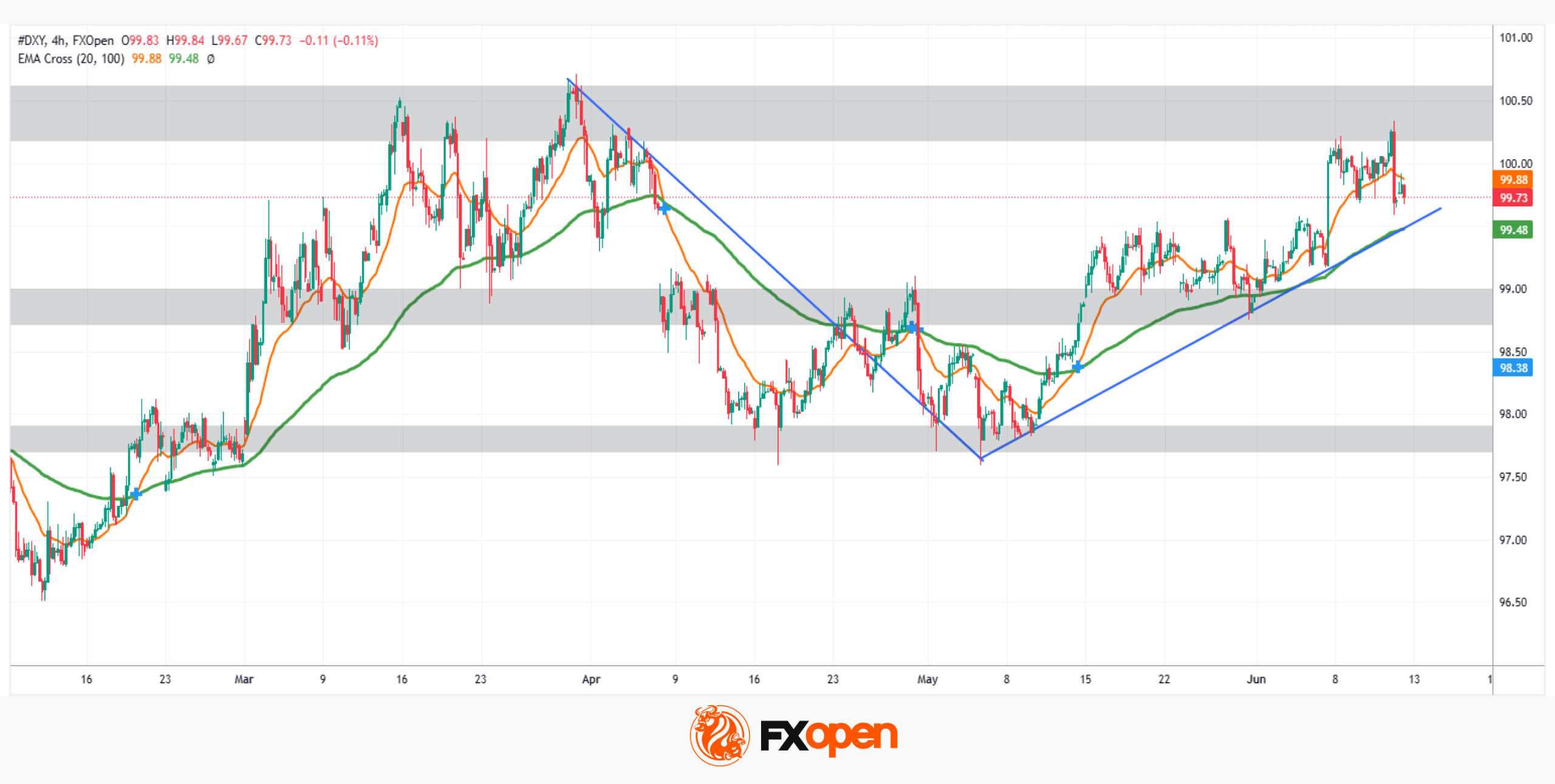
As the chart shows, the US Dollar Index (DXY) has gained more than 4% from its January lows, with the move accelerating from February 2026 onwards. Today, the dollar finds itself at a technically and fundamentally critical point, one that could define the near-term direction not only of the greenback itself, but of equity indices, dollar-paired currencies, commodities, and cryptocurrencies alike.
What Has Been Driving Dollar Strength?
The primary driver behind the dollar’s recent appreciation has been geopolitical uncertainty in the Middle East, with the US dollar and crude oil (XBR/USD and WTI/USD) being the natural beneficiaries.
The most recent example came on 11 June, when President Trump stated his intention to bomb Iran and seize its oil resources — echoing the approach taken with Venezuela. Within hours, however, the statement was walked back, with officials indicating that negotiations were in their final stages. The dollar initially surged on hawkish rhetoric, then surrendered the entire gain as tensions appeared to ease, with traders reducing so-called safe-haven exposure. Should Middle East tensions escalate further and a near-term agreement fail to materialise, the dollar could find renewed buying interest and potentially challenge the key level it currently faces.
Technical Analysis of the DXY
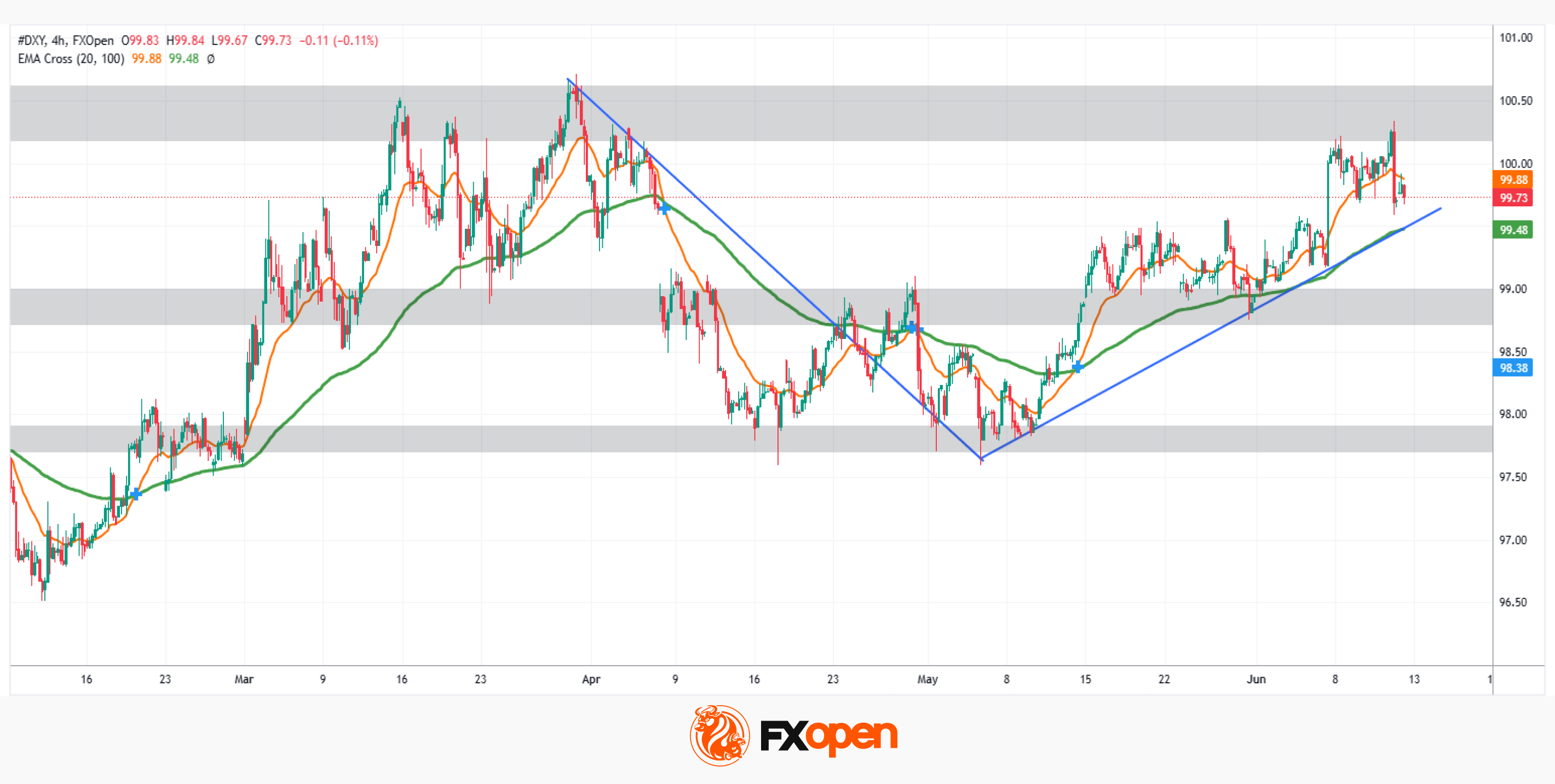
From a technical standpoint, the DXY is trading around the 100.00 level, a zone that carries both psychological and structural significance. Historically, this area acted as a major support; it now functions as a key resistance. The index has tested and rejected this zone on multiple occasions — in March, April, and again in recent sessions — yet the broader bullish structure remains intact.
On the bullish side, the immediate levels to consider are 100.31, yesterday’s high, and 100.64, the 2026 high. A decisive break above these levels could open the door towards 102.00 and 103.50, where the next significant resistance areas sit.
On the bearish side, a rejection at current levels followed by a break of the ascending trendline, which has acted as reliable support for approximately two months, would also coincide with a break of the 100-period EMA, a level the DXY has historically respected. The key area to monitor in this scenario is the 98.90–98.70 zone: a confirmed break below this support could trigger a structural shift, forming lower lows and potentially opening the door to a broader bearish phase.
The dollar is walking a tightrope. Highly sensitive to both geopolitical headlines and macroeconomic data, the question remains: will the DXY finally clear the 100.00 threshold or continue to stall beneath it?
Trade global index CFDs with zero commission and tight spreads (additional fees may apply). Open your FXOpen account now or learn more about trading index CFDs with FXOpen.
This article represents the opinion of the Companies operating under the FXOpen brand only. It is not to be construed as an offer, solicitation, or recommendation with respect to products and services provided by the Companies operating under the FXOpen brand, nor is it to be considered financial advice.
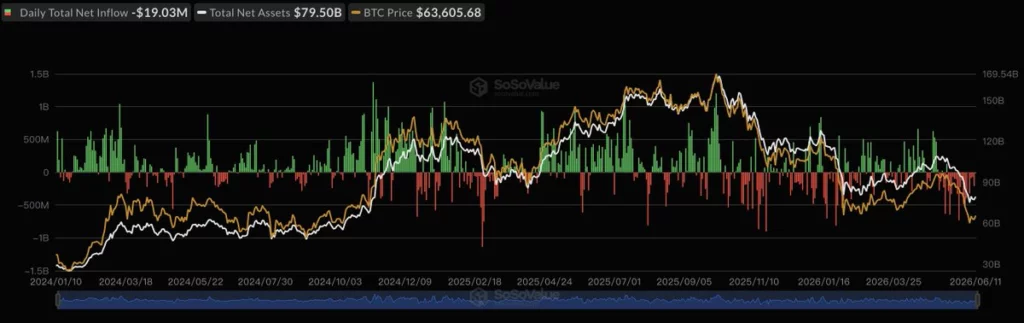
Bitcoin returned to positive territory on June 12 as risk appetite improved after signs of possible U.S.-Iran de-escalation.
Summary
- Bitcoin rebounded near $63,430 as Iran de-escalation helped reverse this week’s risk-off crypto pressure.
- Glassnode data showed options fear eased after one-week implied volatility briefly jumped toward 65%.
- Spot Bitcoin ETFs saw $19.03 million in outflows, extending redemptions for five straight sessions.
Bitcoin traded near $63,700 on June 12, up about 1% over 24 hours, according to crypto.news market data. The asset also gained 1.66% over seven days, showing a recovery from the recent move below $60,000.
The bounce came after traders reacted to signs that U.S.-Iran tensions may ease. President Donald Trump canceled planned strikes on Iran and said a deal could be reached soon, according to reports.
Oil prices fell after the news. Brent crude dropped toward the mid-$80s, easing concern that higher energy prices would keep inflation pressure high.
That shift matters for crypto because oil-driven inflation can keep the Federal Reserve hawkish. Lower geopolitical stress can reduce pressure on risk assets, including Bitcoin and major altcoins.
Bitcoin and major crypto prices turn higher
Ethereum traded near $1,671, up about 0.97% over 24 hours. The token stayed close to the $1,650 support area after a weak week for spot Ethereum ETFs.
BNB traded near $605, while Solana hovered around $66.69 after a 1.95% daily gain. XRP also traded near $1.14, up 3% on the day.
Dogecoin moved near $0.086, while Hyperliquid rose to around $59.17. HYPE was among the stronger major tokens, although it remained weaker over the weekly window.
TRON was the clear laggard among the listed majors. TRX traded near $0.312, down 2.86% over 24 hours and 3.79% over seven days.
The broad rebound shows that traders reduced some risk-off positioning. Still, the move remains early and has not yet erased the damage from the June selloff.
Options data shows fear cooled
Glassnode said Bitcoin broke below the February low before bouncing from the June low. The firm tracked how options traders reacted during the move.
“Selloff Triggers a Temporary Volatility Spike,” said Glassnode.
According to Glassnode, at-the-money implied volatility jumped as BTC broke below the February low. One-week implied volatility briefly reached 65% before the spike faded.
Front-end volatility then moved back near 40%. That showed options traders did not keep pricing an extended panic move after the bounce.
“Markets still view the selloff as a contained move,” said Glassnode.
Protection demand also rose quickly before fading. One-week skew jumped from 12% to 28% as BTC fell, showing a rush for downside hedges.
That skew later moved back near 12%. The reversal suggests traders bought protection during the break lower, then reduced hedging as price stabilized.
ETF outflows keep pressure on Bitcoin
Spot Bitcoin ETFs recorded $19.03 million in net outflows on June 11, per SoSoValue data. That marked the fifth straight day of outflows and showed that institutional demand remained cautious.
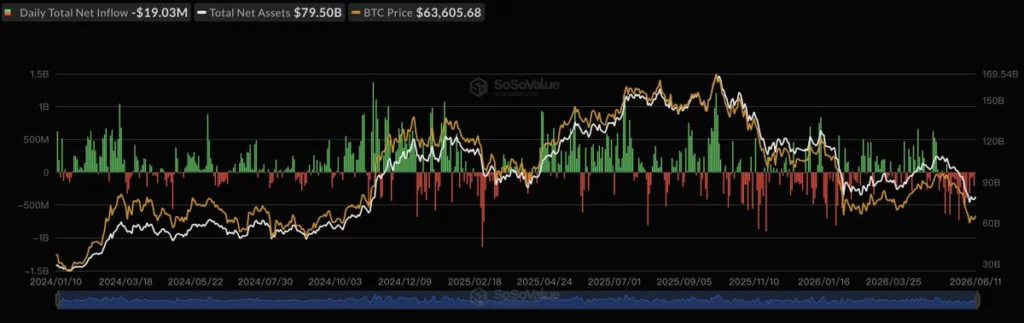
Spot Ethereum ETFs also saw $15.89 million in net outflows on the same day. That marked the third consecutive day of withdrawals from ETH funds.
As previously reported by crypto.news, the June crypto crash came from several pressures arriving together. The market faced a hawkish Fed, Iran escalation, ETF outflows, and a leverage unwind.
SpaceX IPO interest also created a background drain on speculative capital, as previously reported. That report said the IPO wave did not cause the crash alone, but it weakened crypto’s buyer base.
Bitcoin’s latest rebound therefore has to compete with ongoing ETF weakness. If ETF flows turn positive again, the recovery could gain firmer support.
If withdrawals continue, the bounce may struggle to move beyond the next resistance areas.
Traders watch FOMC and $60K support
Several analysts still warned that Bitcoin’s rebound may face another test. Crypto Rover said the four-year cycle remains on schedule, with cycle bottoms historically arriving around September to October of the fourth year.
“The 4-year cycle is running on schedule,” said Crypto Rover.
Kaz said Bitcoin has reacted poorly around most FOMC events during the bear market. The analyst pointed to June 17 as a possible date for another lower high if price fails to extend.
CryptoQuant analyst Darkfost also said both whales and retail traders increased BTC inflows to Binance as price fell below $60,000. Whale inflows rose to an average of 5,280 BTC over 90 days, while retail inflows reached about 410 BTC.
Those exchange inflows can show fear because coins moving to exchanges are often easier to sell. Darkfost compared the behavior with early February, when similar inflows appeared during another move below $60,000.
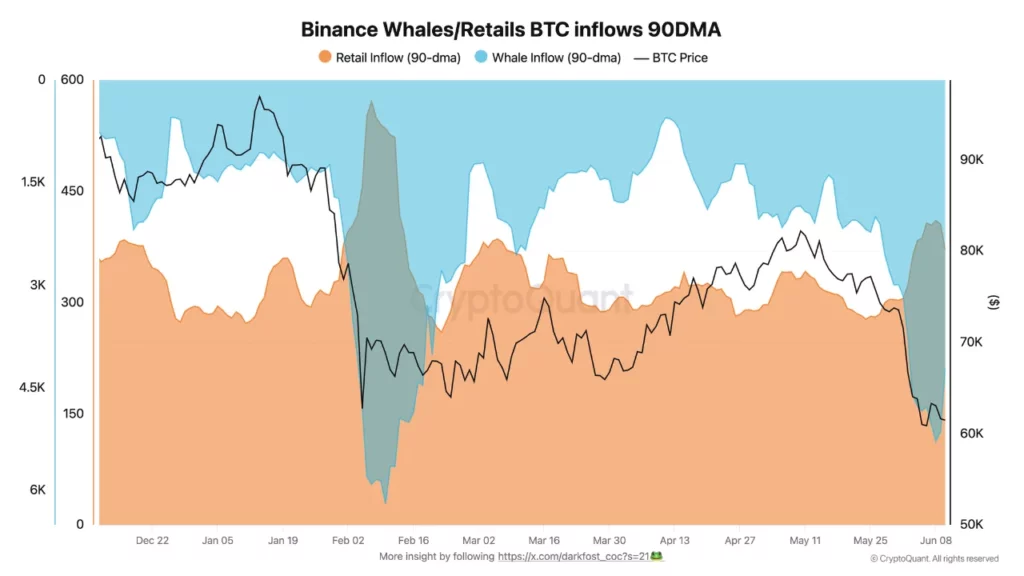
For now, the key market level remains the $60,000 area. Holding above that zone would support the view that the latest selloff was contained.
A stronger recovery would require Bitcoin to reclaim $65,000 and then build momentum toward $68,000 to $70,000. Until then, the bounce remains a relief move inside a fragile market.
Disclosure: This article does not represent investment advice. The content and materials featured on this page are for educational purposes only.
The months of waiting have ended, and SpaceX is set to begin trading on Nasdaq today after investors pumped $75 billion into the largest IPO in history. What happens next could ripple across financial markets, including crypto.
One theory making the rounds is that recent outflows of over $5 billion from bitcoin ETFs, which dragged the price of the largest cryptocurrency below $60,000, were partly driven by investors pulling funds to participate in the IPO. If so, some of that capital could find its way back into crypto in the coming days, providing a lift to valuations.
The IPO cuts both ways. On one hand, a blockbuster debut signals broad market confidence, potentially drawing fresh capital and sustaining the risk-on mood that tends to lift bitcoin and the wider crypto market alongside equities.
On the other hand, there’s a note of caution. Pseudonymous analyst Doctor Profit, who correctly called bitcoin’s selloff since October, argues that record IPOs are often a hallmark of excess optimism and market tops rather than new beginnings.

An international law enforcement operation spanning 11 countries has shut down AudiA6, a crypto-laundering network that processed 336 million euros in illicit funds between 2022 and 2025. Authorities arrested two administrators—one Russian and one Ukrainian—during raids in Georgia, while investigators seized 25 domain names, more than 30 servers, and 80 vehicles. About $900,000 in cryptocurrency was frozen as part of the coordinated action.
Eurojust confirmed the takedown, describing AudiA6 as a “mixer-as-a-service” that enabled cybercriminals to cash out stolen crypto and obscure the movement of funds by offering to “clean” crypto within roughly an hour for commissions ranging from 3% to 10%. Chainalysis traced the network’s activity to wallets that received approximately 10,333 BTC, valued at around $389 million at the time those transactions occurred. The operation also implicated a separate dark-web marketplace forum known as Dark2Web, used to advertise illicit services and connect cybercriminals worldwide, according to Eurojust.
The investigation drew in law enforcement agencies from the United States, Australia, France, Poland, Georgia, Iceland, Canada, Germany, Japan, Switzerland and the United Kingdom, coordinated through Eurojust and Europol. This level of cross-border cooperation underscores how crypto-enabled crime now operates with integrated, multinational networks rather than isolated cells.
Key takeaways
- AudiA6’s crypto-laundering network was dismantled across 11 countries, with 25 domains seized, more than 30 servers taken offline, and 80 vehicles confiscated; two administrators were arrested in Georgia.
- Between 2022 and 2025, the scheme processed approximately 336 million euros in illicit funds; roughly 10,333 BTC flowed through AudiA6 wallets, valued at about $389 million at the time.
- The operation relied on thousands of fake KYC identities and “money mule” accounts tied to Russian-speaking intermediaries moving funds through exchanges.
- AudiA6 served as a conduit for ransomware proceeds and is linked to Dark2Web, a forum used to connect cybercriminals and advertise illicit services.
- The crackdown comes as ransomware activity in Q1 2026 shows growing concentration among a handful of operators, with the United States accounting for the largest share of victims and a small cadre of groups driving most incidents.
Global crackdown dismantles a sophisticated crypto-laundering operation
The European Union Agency for Criminal Justice Cooperation—Eurojust—announced that the operation involved a coordinated, multinational effort to disrupt what prosecutors described as a high-volume laundering pipeline. The seizure of a broad digital infrastructure—domains and servers—was paired with physical seizures and arrests, reflecting the blend of cyber and traditional-law-enforcement methods now common in crypto-crime prosecutions. The case highlights how virtual assets can be moved, masked, and cashed out across borders, often leveraging services that promise rapid “cleaning” of funds for a fee.
Europol, which coordinated the multinational action, said the operation targeted both the on-chain and off-chain components of the crime network, including the services that enable criminals to convert digital assets into fiat while attempting to obscure provenance. The alliance of agencies underscores the increasingly joint nature of crypto-crime disruption and the importance of shared intelligence across jurisdictions.
How AudiA6 operated and what it moved
At the center of the scheme was AudiA6’s “mixer-as-a-service,” a kind of digital laundering facility that offered to launder cryptocurrency within about an hour. The service was described as taking a commission of 3% to 10% for turning tainted coins back into usable funds. The scale of operation is underscored by the wallet data: since 2021, AudiA6 wallets received more than 10,333 BTC, which Chainalysis estimated as about $389 million in value at the time those transactions occurred.
The operation extended beyond a single platform. Investigators identified a parallel dark-web marketplace ecosystem centered on Dark2Web, which prosecutors said facilitated illicit services and connected criminals worldwide. By taking advantage of both regular and dark-web channels, AudiA6 was able to route funds through a variety of digital ingress routes, complicating tracing and enforcement efforts.
Europol’s public materials show that the cross-border nature of the work required a broad investigatory umbrella, with agencies from multiple continents contributing to the case. The collaboration reflects how law enforcement methods now blend traditional asset seizure with digital forensics and international information-sharing, all aimed at disrupting entire laundering pipelines rather than isolated transactions.
Fraudulent identities, KYC abuse, and money mules
The AudiA6 investigation also shone a spotlight on the abuse of Know Your Customer processes. Eurojust said the ring facilitated thousands of fraudulent accounts constructed from stolen or purchased identities, enabling “money mule” activity that carried illicit proceeds through crypto exchanges. The investigation identified more than 6,000 KYC records tied to money-mule accounts, illustrating how criminals exploit identity data to blend criminal flows with legitimate activity.
Intermediaries—predominantly Russian-speaking—were recruited to execute the laundering flows, helping to route funds and avoid detection. The use of compromised identities and mule networks has emerged as a recurring theme in cross-border crypto-crime, complicating compliance efforts at exchanges and custodians alike.
In a related note, Australian Federal Police confirmed that AudiA6 was involved in laundering at least part of a ransom paid in 2024 following a ransomware incident targeting an Australian business. The AFP described the operation as a key component of the broader takedown, illustrating how ransom payments can feed into multilayered laundering schemes across jurisdictions.
Both the standard and dark-web versions of AudiA6 and Dark2Web domains have since been replaced with seizure banners, signaling the seizure of operational capability and the removal of the laundering infrastructure from active use.
Ransomware dynamics: consolidation among a few operators
The AudiA6 case arrives amid a broader trend in ransomware activity. Data indicates that ransomware incidents persisted across 97 countries in the first quarter of 2026, but the attack footprint is increasingly concentrated. The United States accounted for 64.7% of all victims in Q1 2026, a signal that a relatively small number of operators are driving most campaigns, according to Emsisoft’s quarterly assessment. Check Point Research, in its May briefing, likewise observed that the top 10 ransomware groups were responsible for about 71% of victims in the period.
The consolidation pattern matters for defenders and policymakers because it suggests that disruptors’ success hinges on interdicting a core set of operators, rather than chasing a broad, diffuse threat landscape. It also underscores the importance of cross-border cooperation and rapid information-sharing to hit the most consequential actors in the ecosystem.
For readers tracking crypto-crime trajectories, the AudiA6 takedown demonstrates how enforcement is evolving—from piecemeal takedowns to coordinated, multi-jurisdictional seizures that target the infrastructure, the networks, and the identities that enable laundering flows. The case also highlights the ongoing risk posed by KYC abuse and mule networks, which remain a persistent vulnerability for exchanges and FinTechs alike.
As authorities continue to map and dismantle these networks, observers should watch for how exchanges, wallet providers, and borderless payment rails adapt their compliance controls, and whether new collaborative efforts emerge to tackle the transnational scale of such operations.
What remains uncertain is how quickly the remaining strands of AudiA6’s ecosystem will be fully disrupted and what downstream effects this may have on ransomware operators’ ability to cash out. With cross-border enforcement now more tightly coordinated, investigators may have a clearer path to tracing flows that leap across jurisdictions and technologies.
For now, the headlines reflect both a successful disruption of a sophisticated laundering pipeline and a reminder of how quickly malicious actors adapt to evolving crypto-financial infrastructures. Watch closely how the investigation’s lessons translate into improved enforcement tools, tighter KYC controls, and broader industry cooperation in the coming months.
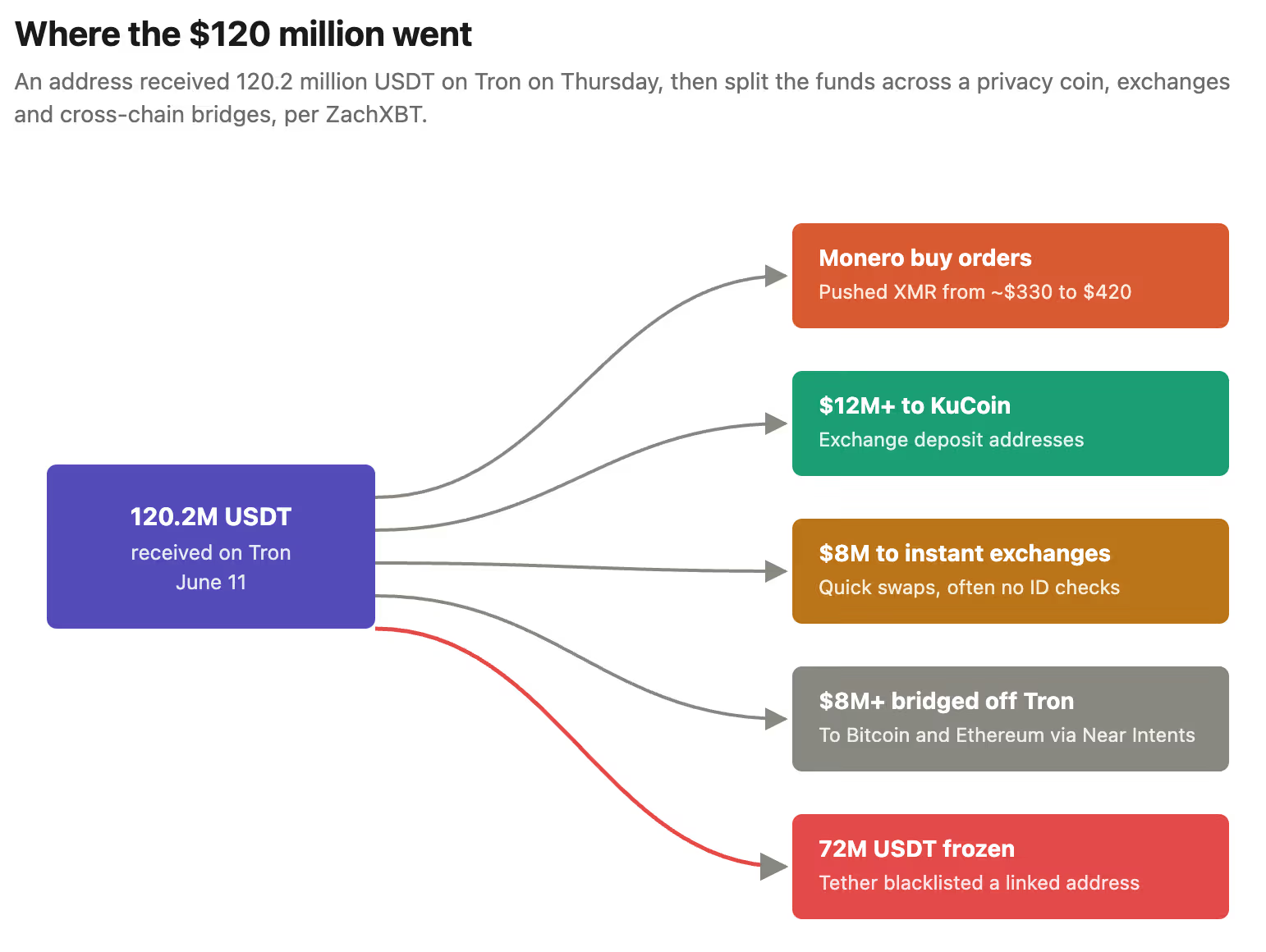
The rest was scattered. ZachXBT traced more than $12 million to deposit addresses at the KuCoin exchange and about $8 million to instant swap services, which convert one coin into another quickly and often without identity checks.

Another $8 million was moved off Tron onto the Bitcoin and Ethereum networks through Near Intents, a cross-chain swap tool. Spreading funds across coins, exchanges and blockchains is a common way to break the trail.
Then Tether stepped in. The company can freeze USDT held at a specific address, and ZachXBT said it blacklisted an address tied to the entity holding 72 million USDT. Once frozen, those tokens cannot be moved or cashed out.
It is unclear where the $120 million originally came from. But the pattern, fast movement into a privacy coin, instant swaps and cross-chain hops, is the kind used to launder illicit funds, and Tether’s freeze suggests it reached the same conclusion.

Visa has formulated a two-pronged vision for the future of digital commerce by emphasizing artificial intelligence (AI) as the driving force behind the transformation of consumer experience at the front end, while stablecoins will revolutionize payments infrastructure at the back end. The announcement was made via a social media post on the official page of CoinMarketCap, where Visa was quoted saying, “AI is changing the front end of commerce while stablecoins are changing the back end.”
x.com/CoinMarketCap/status/2065339110898765917
According to Visa’s statement, AI and stablecoins serve different roles: AI handles customer interaction, product discovery, and purchases, while stablecoins focus on settling payment operations.
The announcement comes amid growing interest among financial organizations in both technologies.
AI Expands Across Consumer-Facing Services
There has been an increase in the use of AI software by financial organizations across many service areas. Firms have integrated AI for customer service, fraud detection, recommendation engines, and automated transactions.
Another application attracting attention is virtual AI agents that carry out tasks for customers. In commerce, these agents help consumers search for, select, and complete purchases.
Visa’s emphasis on AI changing the front end of commerce reflects these industry trends.
Stablecoins Gain Ground in Payment Infrastructure
The concept of stablecoins has emerged as an important area in digital assets amid efforts by payments firms to create blockchain settlement systems. Stablecoins maintain a stable value relative to traditional currencies and can be used for transactions and payments.
Several financial institutions have pursued stablecoin projects in recent years. Companies are actively working to use blockchain settlement systems for cross-border payments, merchant settlements, and treasury functions.
When Visa referred to stablecoins creating a new back-end system for commerce, it signaled a trend toward modernizing payments infrastructure. Time efficiency and 24/7 transaction availability have been key drivers.
Financial Firms Explore Converging Technologies
The combination of AI and stablecoins is a topic of discussion among fintech experts. AI can assist in transactions and customer engagement, while stablecoins can be used to move money within digital networks.
Visa’s announcement suggests a future where both technologies operate together in commerce. As more companies develop AI-driven software and blockchain payment solutions, market participants will watch how the two technologies work together in practice.
Crypto World
While BTC price holds near $63,000, some data points to pain ahead for bulls: Crypto Markets Today


Bitcoin is trading near $63,000 after dipping to about $59,000 earlier this week, and some data points to pain ahead for bulls, with a possible drop to levels last seen in early 2024.
The largest cryptocurrency is now only 9% above its realized price of about $53,600, according to onchain analysis firm CryptoQuant. Realized price is the average of the prices at which the coins last moved. When the market price gets close, the average holder is barely in profit. That level has marked major bear-market floors in past cycles.
The problem, however, is demand.
Total bitcoin demand fell by 652,000 BTC last week, the largest contraction since January 2022, CryptoQuant said. Demand from ETFs is also shrinking at the fastest pace since U.S. spot bitcoin funds debuted in January 2024, showing the institutional bid that powered this cycle has turned into selling.
Sellers crystallized 187,000 BTC of losses over the past 30 days. That is painful, but still well below the 400,000 BTC loss spike in February and the 1.2 million BTC seen around the November 2022 cycle bottom.
Wings Over Scotland | Response Level Upgrade

Cash’s Mom Has a CRAZY STALKER! (Minecraft)

Former New Zealand captain Kane Williamson retires from international cricket


-

 Fashion7 days ago
Weekend Open Thread: Evereve – Corporette.com
-
 Entertainment5 days ago
The Best Mystery Series of All Time Is Surging on Streaming 30 Years After It Ended
-

 NewsBeat4 days ago
Alexander Zverev wins the French Open to finally earn a 1st Grand Slam title
-
 Crypto World7 days ago
Jensen Huang Approves Samsung, SK Hynix, and Micron for NVIDIA (NVDA) HBM4 Memory Supply
-

 Crypto World4 days ago
Anatomy of the June crypto crash: Fed, Iran, Saylor
-

 Tech6 days ago
Suspicious Polyfill login prompts pop up on Toshiba, Muji websites
-
 Crypto World6 days ago
Senator Cynthia Lummis Calls CLARITY Act the Most Consequential Financial Legislation of This Generation
-

 Tech5 days ago
Microsoft unveils seven homegrown AI models in new bid for ‘long term self-sufficiency’
-
 NewsBeat5 days ago
Alexander Zverev conquers demons and outlasts Flavio Cobolli to win French Open for first major title
-

 Tech6 days ago
Von der Leyen’s AI envoy pick draws conflict-of-interest fire
-

 Business4 days ago
High Stakes for Wembanyama as New York Pushes for 3-0 Lead
-

 Tech6 days ago
Hackers now exploit SolarWinds Serv-U flaw to crash servers
-
 Business5 days ago
The Pain Points Taking a Fragile Tech Rally Down a Notch
-

 Tech7 days ago
Meta steals a tactic from Tesla and builds data centers in tents
-
 Crypto World4 days ago
Eli Lilly (LLY) Stock Surges 4% Following Breakthrough Sleep Apnea Trial Results
-

 Crypto World20 hours ago
Oppenheimer backs SpaceX as $70 billion retail frenzy builds
-

 Tech4 days ago
Notion restores access to Anthropic after service disruption
-

 Crypto World5 days ago
Trump’s AI Ownership Plan Could Benefit Anthropic at OpenAI’s Expense
-
 Sports3 days ago
Bangladesh beat Australia after 20 years in ODIs, register only their second win over six-time world champions | Cricket News
-

 Crypto World19 hours ago
Markets Rally as SpaceX IPO Looms Amid Iran Tensions and Inflation Surge
You must be logged in to post a comment Login