

Connect with us
DAPA Banner
DAPA Coin
DAPA
COIN PAYMENT ASSET
PRIVACY · BLOCKDAG · HOMOMORPHIC ENCRYPTION · RUST
ElGamal Encrypted MINE DAPA
🚫 GENESIS SOLD OUT
DAPAPAY COMING

NewsBeat

Rubio sees slight progress in Iran talks amid war uncertainty

Published

on

Rubio sees slight progress in Iran talks amid war uncertainty

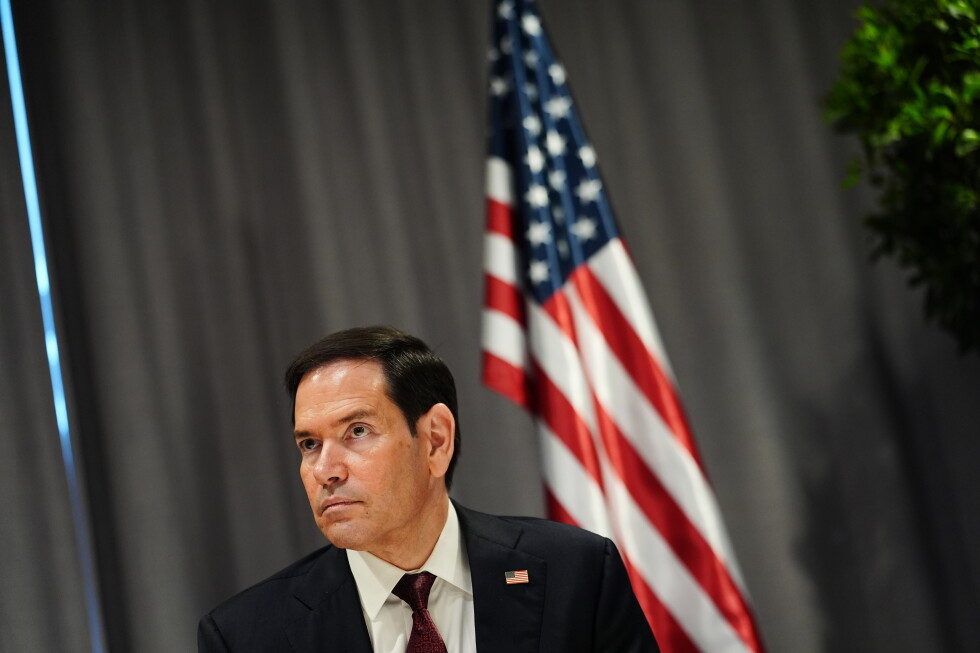
TEL AVIV, Israel (AP) — U.S. Secretary of State Marco Rubio said Friday there was “slight progress” during talks with Iran amid uncertainty about whether a deal will be reached or war will resume.

He spoke days after U.S. President Donald Trump said he was holding off on a military strike against the Islamic Republic because “serious negotiations” were underway. Trump has been threatening for weeks that the ceasefire reached in mid-April could end if Iran does not make a deal, with shifting parameters for striking such an agreement.

Rubio spoke ahead of a meeting of NATO foreign ministers in Helsingborg, Sweden, where the military alliance is expected to discuss what role it could play in helping police the Strait of Hormuz once the war is over.

Rubio said he did not want to exaggerate the progress, saying there had been “a little bit of movement and that’s good.” He said the conversations were ongoing. In recent weeks there have been repeated claims of progress, but a deal has stayed out of reach.

Advertisement

Trump has repeatedly set deadlines for Tehran and then backed off. But he’s also previously indicated he would hold off on military action to allow talks to continue — only to turn around and launch strikes. That’s what happened at the war’s outset, when he ordered strikes in late February shortly after indicating he would let talks play out.

He said he called off attacks on Iran this week at the request of allies in the Middle East, including the leaders of Qatar, Saudi Arabia and the United Arab Emirates, who have been targeted by Iran and its allied militias.

But Trump’s decision to give the talks a chance sparked tension with Israeli Prime Minister Benjamin Netanyahu.

An official who spoke on the condition of anonymity because they were not authorized to speak to the media said Thursday that Trump and Netanyahu had a “dramatic” phone conversation Tuesday about the status of the Iranian negotiations and that Israel is angry with Trump’s efforts to strike a deal with Iran.

Advertisement

Trump later told reporters that Netanyahu “will do whatever I want him to do.”

The comments are some of the first public signs of daylight between the leaders since they launched the war.

Pakistan continues peace efforts

Pakistan’s army chief was traveling Friday to Tehran for a third round of talks with Iranian leaders this week, two Pakistani officials said. They spoke on condition of anonymity because they were not authorized to speak to reporters.

Field Marshal Asim Munir will be joined by Pakistan’s interior minister, who has already met with Iranian leaders twice this week. Pakistan has worked to mediate a peace deal between Iran and the U.S. since Munir facilitated face-to-face talks between the two countries in Islamabad last month.

Advertisement

Pakistan’s mediation efforts are also expected to be discussed when Prime Minister Shehbaz Sharif travels to China this weekend for a four-day visit, said Foreign Ministry spokesperson Tahir Andrabi.

Still, major sticking points remain.

Iran has effectively closed the Strait of Hormuz, a vital waterway for the shipment of oil, gas, fertilizer and other petroleum products. The U.S. is blockading Iranian ports and has redirected 94 commercial vessels and disabled four others from mid-April through Thursday, U.S. Central Command said in a social media post.

Rubio blasted Tehran’s efforts to use its chokehold on the strait to “create a tolling system” that forces ships to pay for passage.

Advertisement

“I don’t know of a country in the world that’s in favor of it except Iran,” Rubio said, “but there’s no country in the world that should accept it.

The U.S. and Israel have said Iran can never have a nuclear weapon. While Iran was said to include some nuclear concessions, Trump has said he wants to remove highly enriched uranium from the country and prevent it from developing nuclear weapons. Iran says its nuclear program is for peaceful purposes.

Officials say Saudi Arabia and the UAE separately struck Iran

Two regional officials and a Western diplomat told The Associated Press that Saudi Arabia and the UAE separately launched multiple attacks on Iran and Iranian-backed Shiite militias in Iraq during the war. An Israeli military officer with knowledge of the situation also confirmed that the UAE proactively struck Iran at least once.

All of them spoke on condition of anonymity due to the sensitivity of the information.

Advertisement

The regional officials said the strikes on Iran targeted military facilities, including missile and drone launchers.

One of the regional officials said the strikes by Saudi Arabia targeted hideouts of Iraqi militias, mainly Kataib Hezbollah, after Riyadh assessed that most of the drone attacks on Saudi Arabia came from neighboring Iraq. He said Saudi Arabia has repeatedly briefed Baghdad about the Iraqi-originated attacks before deciding to strike.

The Western diplomat and one of the regional officials said the UAE had pushed for a collective military response from the Gulf Arab countries since the onset of the war.

Asked for comment, the UAE referred to a May 16 statement by its foreign ministry that “all measures undertaken by the UAE have been within the framework of defensive actions aimed at protecting its sovereignty, civilians, and vital infrastructure.” Saudi Arabia did not immediately respond to a request for comment.

Advertisement

Iran has also not publicly addressed being targeted by the UAE and Saudi Arabia.

___

Magdy reported from Cairo, Egypt. Associated Press writers Melanie Lidman in Tel Aviv, Israel; Munir Ahmed in Islamabad; Geir Moulson in Berlin; and Russ Bynum in Savannah, Georgia, contributed to this report.

Advertisement

Source link

Continue Reading
Click to comment

You must be logged in to post a comment Login

Leave a Reply

NewsBeat

Piadina, Italian flatbread recipe

Published

on

Piadina, Italian flatbread recipe

Diana Henry is the Telegraph’s much-loved cookery writer. She shares recipes each week, for everything from speedy family dinners to special menus that friends will remember for months. She is also a regular broadcaster on BBC Radio 4, and her journalism and recipe books, including Simple and How to Eat a Peach, are multi-award-winning. A mother of two sons, Diana can satisfy even the fussiest of eaters.   

Source link

Advertisement
Continue Reading

NewsBeat

New Sunderland Mayor, Mayoress and Deputy appointed

Published

on

New Sunderland Mayor, Mayoress and Deputy appointed

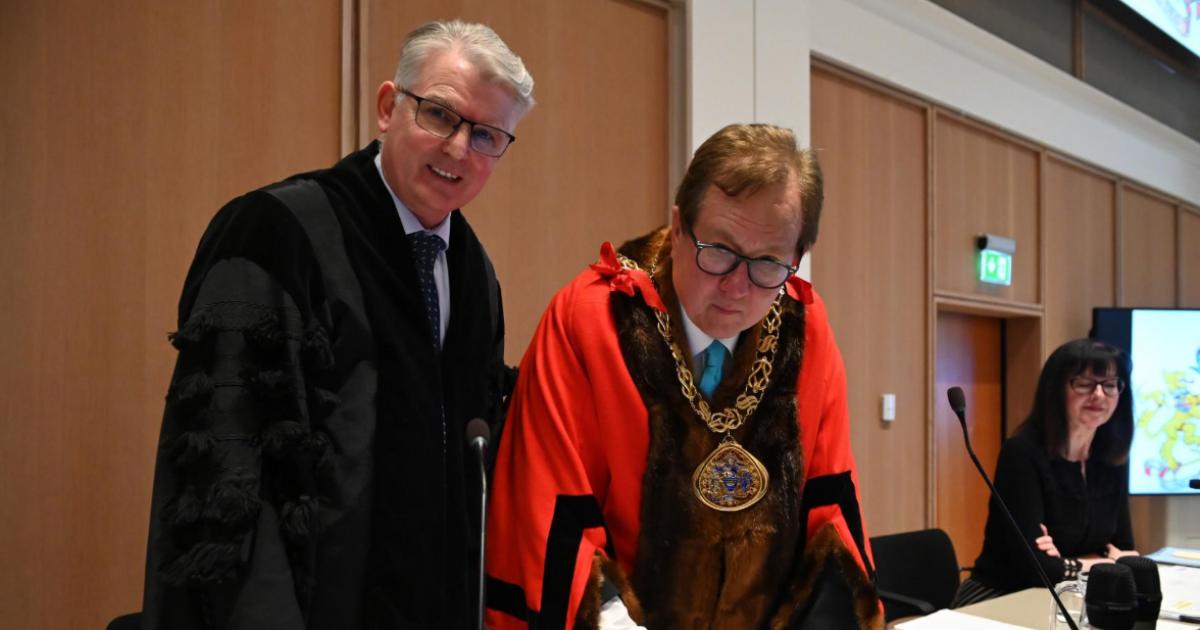
Councillor Robert Hutchinson was officially sworn in as Mayor of Sunderland on Wednesday, May 20, taking over the chains of office from Councillor Ehthesham Haque.

Councillor Glenda Hall was also sworn in during the ceremony and will serve alongside him as Mayoress.

Cllr Hutchinson, who represents the Farringdon and Silksworth ward, said: “In Sunderland, we have a beautiful coastline, great heritage, and above all, the friendliest people in the world.

Advertisement

“Being Mayor is the honour of my life, and I will not let you down.”

He began his first business, Optic Innovation, at just 17 years old.

Cllr Hutchinson also worked with the late Geoff Docherty, who brought major bands to Sunderland in the 1960s and 70s.

He is a member of the Sunderland Antiquarian Society and was elected to Sunderland City Council earlier this month.

Advertisement

Cllr Hall, who represents the Tunstall and Humbledon ward, was also elected to the council in May.

Cllr Hutchinson and Cllr Hall will select Wearside charities to support during their year in office.

Southwick ward councillor Jannine Morrow was sworn in as Deputy Mayor for 2026-2027, alongside her husband Mr George Morrow, who will serve as Deputy Consort.

Cllr Morrow is a retired Customer Services Officer who previously worked for Durham County Council.

Advertisement

Cllr Haque, the outgoing Mayor, reflected on his year in office and wished his successor well.

He said: “It has been the honour and privilege of my life to serve as the Mayor of this great and ancient city.

“I have had the great privilege of meeting the most incredible people.

“There are so many memorable occasions I will remember forever.

Advertisement

“To mention a few, the opening of the Women’s Rugby World Cup, the opening of the Keel Crossing footbridge, and supporting our military with flag-raising ceremonies and the Remembrance Day parade.

“Unfortunately, it would be impossible to mention every single one, but I can honestly say being Mayor will always be one of the most special times – and the best memories – of my life.

“I’d like to say congratulations to our new Mayor and Deputy Mayor, I wish you both all the best and of course, the same goes to all of our newly elected members.”

During his term, Cllr Haque raised £26,600 for his chosen charities.

Advertisement

Source link

Continue Reading

NewsBeat

‘We shot ourselves in foot, but things are looking rosy’ says Northern Ireland legend

Published

on

Belfast Live

Keith Gillespie believes Northern Ireland can “punch above our weight” again and return to tournament football at Euro 2028.

The 86-time capped star admitted it was disappointing that the tournament would not be co-hosted in Belfast, as per the original bid that had a redeveloped Casement Park as one of the venues along with stadiums in Dublin, and across England, Scotland and Wales.

But he insisted that under Michael O’Neill, the team was going in the right direction – and that O’Neill’s decision to turn down a permanent deal at Blackburn was good news for Northern Ireland.

“Fingers crossed,” he told Belfast Live. “We are a small nation so we are not going to qualify for every single major tournament.

Advertisement

“But looking back at (Euro) 2016, qualifying for that, going close in 2020, close again and then obviously the (World Cup) play-offs this time, you want to play in every big tournament.

“I think these players have really improved over the last few years. It’s a young squad and they’ve gained so much experience playing international football.

“That will stand them in good stead coming into qualifying.”

Gillespie, who was speaking at Wembley as BT unveiled a new fan-inspired poem featuring comedian and lifelong football fan Frank Skinner, reflected on Northern Ireland’s recent World Cup woes.

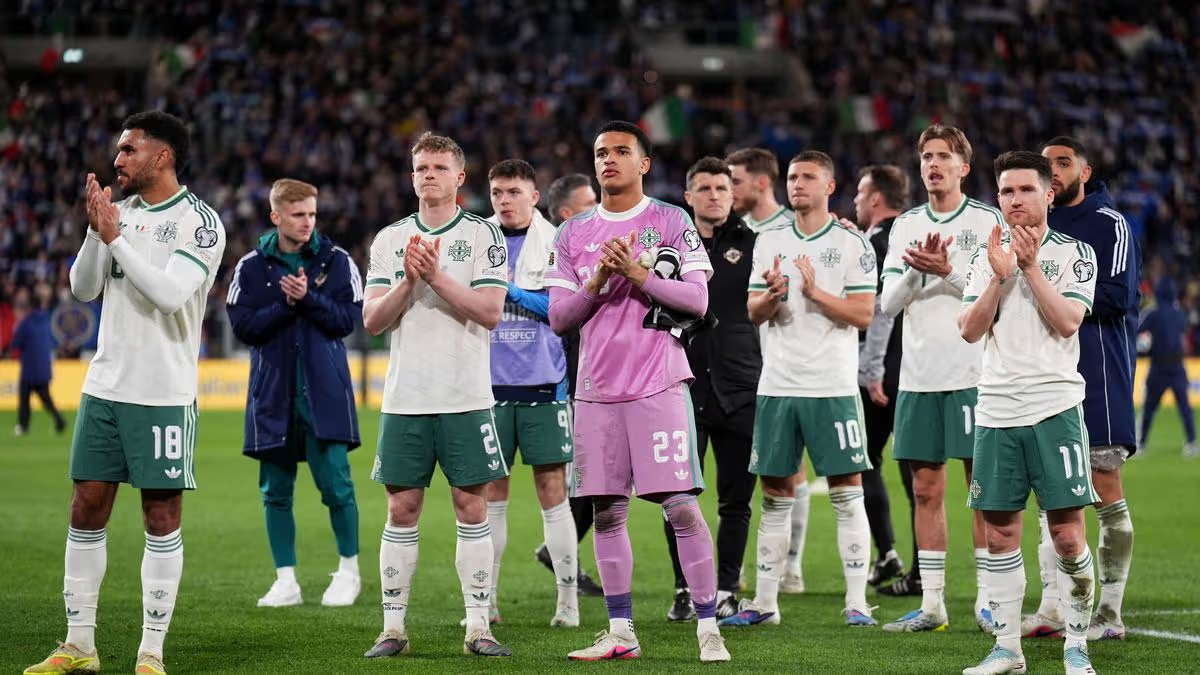
O’Neill’s side clinched a play-off place through the Nations League, but were handed one of the most difficult draws when they were paired away to Italy.

Two second-half goals in Bergamo in March sent the Azzurri through to the play-off decider, where they lost away to Bosnia and Herzegovina.

Advertisement

“It was (disappointing),” said Gillespie of the defeat, “but I think you’ve just got to remember that we’re a small nation and it’s very difficult to compete at times against those bigger nations.

“We probably couldn’t have gotten a worse draw for the play-offs, getting Italy.

“I think with the way it is in terms of the way it all works, it favours the bigger nations, as opposed to the smaller nations, because ultimately I think they want the bigger nations there.

“So for us to get Italy away, it’s very difficult when you’ve only got that one game.

Advertisement

“It might have been different if it was played over two legs. But win that game and you were going to play another team away – Bosnia or Wales – so it is always very difficult.

“But looking back we probably shot ourselves in the foot when we conceded in the last minute against Slovakia (in November), because we might have had an easier draw.

“But we are a very young squad, improving all the time, and I think things are looking rosy.

Advertisement

“It’s great news that Michael O’Neill has decided to stay as well, because the job he has done, bringing that young side through, has been remarkable.”

Looking ahead to Euro 2028, a failure to agree funding to redevelop Casement Park cost Northern Ireland co-hosting rights.

Asked if that was a disappointment, Gillespie replied: “Yeah, of course. It just didn’t work out in the end.

“It would have been great if we could have been (co-hosting). It’s something that doesn’t come around all the time, so to be a part of that would have been great for Northern Ireland in a sense to be hosting something like that.

Advertisement

“Unfortunately it didn’t. But that’s just the way it is.”

But with the tournament being played so close to home, he said: “Certainly if Northern Ireland were to qualify they would be travelling in their thousands, without a doubt.”

* BT has become the Official Telecommunications Partner of Euro 2028 and the poem brings together voices from across the UK to capture what football means now. Thirty years on from co-writing Three Lions, Frank Skinner collaborated on the poem using fan responses and insights from across England, Scotland, Wales and Northern Ireland to inspire the final piece

Click here to sign up to our sport newsletter, bringing you the latest sports news, headlines and top stories

Advertisement

Source link

Continue Reading

NewsBeat

Could sodium replace lithium as the dominant ingredient in batteries?

Published

on

Could sodium replace lithium as the dominant ingredient in batteries?

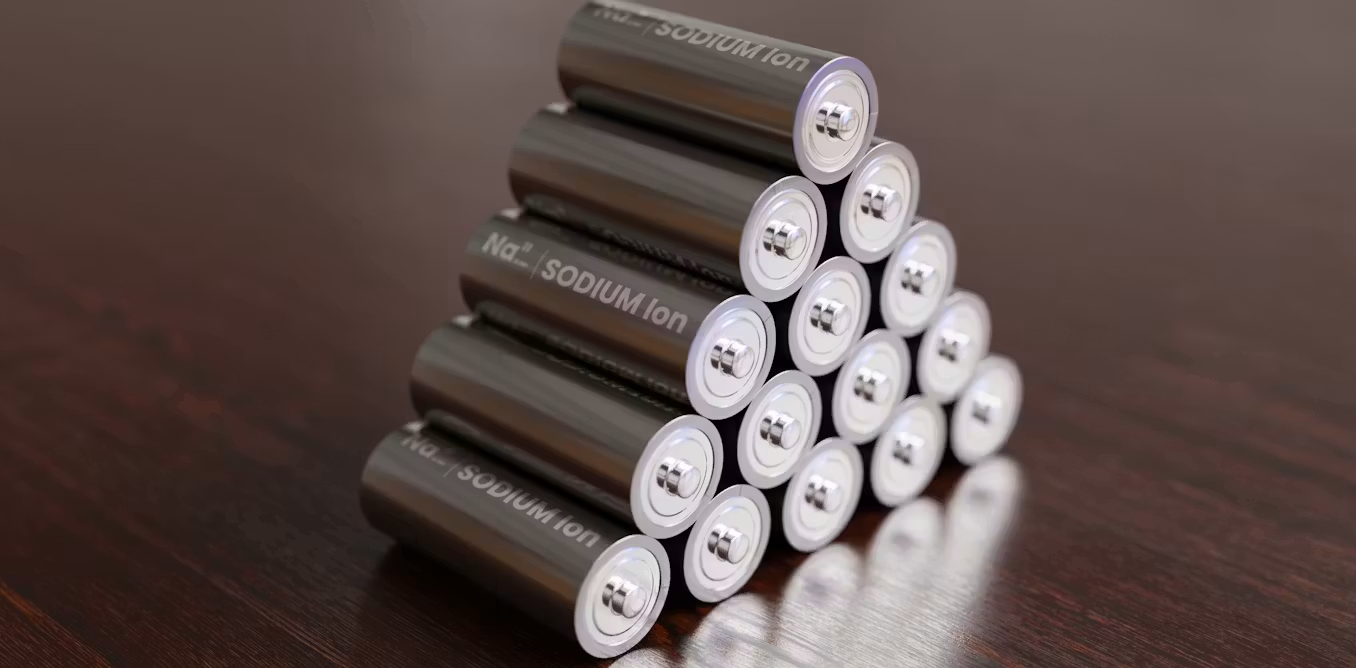
The world we live in today runs on batteries. But the lithium ion batteries that dominate the market are expensive and environmentally demanding to extract. The raw materials for lithium ion batteries are scarce and concentrated in a few geographical regions. This places continued pressure on supply chains.

Sodium-ion batteries are a promising alternative because they use abundant materials. But sodium has shortcomings that have blocked it from being used as a replacement for lithium.

In work carried out at the University of Limerick’s Bernal Institute, my team has now produced a battery that combines the strengths of sodium and lithium. This could lead to more sustainable batteries that reduce the supply chain pressures associated with lithium. The results have been published in the journal Nano Energy.

Sodium-ion batteries lag behind lithium ones in their energy density. Energy density is the amount of energy stored in a battery relative to its weight or size. Lower battery energy densities have an impact on the devices and machines they power.

Advertisement

If electric vehicles used battery modules with lower energy densities, it would limit the distance they could travel before needing to be recharged. Lowering the energy densities of batteries would also make tablet devices and laptops heavier.

As an energy storage researcher, this paradox gnawed at me. How could we harness sodium’s sustainability without sacrificing performance? The tension feels like the ancient philosophical concept of yin and yang. This idea describes how seemingly opposing forces are actually complementary and connected.

In this case, sodium is abundant but weak, while lithium is powerful but scarce. Inspired by this dichotomy, I wondered whether the two technologies could work in harmony rather than competing.

This led us to produce the first full cell battery with two electrodes – one positive, one negative – that uses two charged atoms or molecules (ions). In this case the charged atoms are sodium and lithium. Batteries that use different positively charged ions to store and transfer energy are known as dual cation batteries.

Advertisement

Why sodium ions fall short

A standard battery is made up of one or more cells. The cell converts chemical energy into electrical energy. In the cell are two electrodes, or terminals: a positive terminal called a cathode and a negative terminal called the anode.

When the battery is used to power an electronic device, negatively charged electrons flow through the circuit and reach the battery’s positive terminal. The chemical medium between the anode and cathode is called the electrolyte.

I decided to combine lithium and sodium in a half cell, which has one electrode immersed in an electrolyte rather than two. Just a modest amount of lithium salt added to a sodium-dominant electrolyte radically changed the way the battery behaved.

Syed Abdul Ahad (L) and Hugh Geaney are shown with the experimental set-up.
University of Limerick

It roughly doubled the storage capacity of our half cell compared with an equivalent state-of-the-art sodium based battery. It was also stable up to 1,000 charge-discharge cycles at higher charging currents. Charge-discharge cycles measure how many times a battery can drain from 100% to 0% and recharge to 100% before its capacity degrades.

Advertisement

For someone who had previously watched sodium-ion batteries fade after a few dozen cycles, these results felt like witnessing a miracle.

Behind the scenes, a fascinating chemical ballet between lithium and sodium was taking place. Lithium ions are smaller than sodium ions, so they can move more easily through the anode material. Their movement helps open smoother pathways for sodium, lowering the “diffusion barrier” – resistance at the anode that normally slows sodium batteries down. This allowed more ions to enter the anode, allowing it to store more charge.

Just as importantly, sodium helped prevent lithium from getting trapped inside the material after discharge. This back-and-forth exchange kept the reaction reversible, giving the battery both higher capacity and better cycle stability. In this yin–yang interplay, neither ion dominated; instead, they worked in harmony.

Powering clean energy

Half-cell tests are the first step towards real world applications. For the next step, I demonstrated how a mixture of lithium and sodium worked in a full battery cell.

Advertisement

Battery capacity retention measures the percentage of the energy originally stored in a battery that remains available after a given period of usage. The full cell delivered a battery capacity retention of 70% after 200 cycles. This is far better than the sodium-only electrolyte, which started to fail after about 50 cycles.

The full cell performance was particularly satisfying, as sodium remains the dominant charge carrier. This ensures that the battery is still fundamentally a sodium-ion system.

This breakthrough could help power the world’s clean-energy transition by reducing reliance on cobalt- and nickel-rich cathodes, which are common, but expensive, supply-constrained and linked to environmental concerns. Our design keeps sodium as the main working ion and pairs it with a more sustainable iron sulphide cathode.
Because sodium and iron are more abundant than many conventional battery metals, the chemistry could be cheaper and easier to scale.

The small amount of lithium acts mainly as a performance booster rather than the main resource. That makes the battery both higher performing and potentially less dependent on costly critical materials. Furthermore, it represents a new route to storing renewable energy on the grid, which can help communities and industries transition to a greener future.

Advertisement
Electric car being charged
Switching to sodium-ion batteries could make electric vehicle batteries more sustainable.
Unai Huizi Photography

Despite the success of our prototype, much work remains to be done. The anode in our cell and half-cell was made of germanium, which is expensive. The next challenge is to replace germanium with cheaper anode materials. One candidate is silicon, which can reversibly host both lithium and sodium ions during charging and discharging, but also provide the battery with a higher storage capacity.

This boost would increase the energy density of sodium-dominated batteries. We also need to pair the anode with a cathode capable of producing higher voltages than we currently have.

I have already been exploring alternative and sustainable pairings of different ions, such as lithium–magnesium and potassium–sodium. I am also experimenting with new electrolyte formulations.

My team’s research shows that by embracing the yin-yang of lithium and sodium, we can move towards batteries that show both high performance and sustainability. This raises the prospect of a world where your phone, car and even the grid will draw power from cheap, abundant sodium ions – gently assisted by a whisper of lithium.

Advertisement

Source link

Continue Reading

NewsBeat

SEND- York council unveils reforms amid national changes

Published

on

SEND- York council unveils reforms amid national changes

York Council’s SEND Reform Plan, which is backed by £3.6 million in Government funding, is set to go before the authority’s executive on Tuesday, June 2.

It includes proposals to create a new team of professionals including speech and language therapists, psychologists and others to provide early support to children.

Cllr Bob Webb, the council’s Labour children’s spokesperson, said the plan aimed to ensure that all children are valued, included and supported to fulfil their own potential.

It follows the unveiling of national SEND reforms by the Government in February.

Advertisement

RECOMMENDED READING:


Education Secretary Bridget Phillipson said the current SEND system was broken and left families fighting for entitlements on paper that did not get them additional support.

She added the Government’s new plans would see SEND children go from being sidelined and excluded to being seen, heard and included.

National reform proposals include digitising Education, Health and Care Plans (ECHPs) and Individual Support Plans (ISPs), updating the school complaints process and putting special schools under a new regulatory regime.

Advertisement

City of York Council stated the reforms represented the most significant change for children’s services and education in more than a decade.

Plans for York include using funding to support mainstream schools to be more inclusive while working alongside specialist provision.

A new £1.3 million Experts at Hand service would see professionals provide support in mainstream schools.

There are also plans to support staff across early years, schools and post-16 to complete a national training programme which includes identifying children who need support early.

Advertisement

York’s plans would be subject to checks from the Department for Education before their final approval.

Cllr Webb said they wanted to make improvements for SEND children happen.

Cllr Bob Webb, Labour executive member for children, young people and education on York Council (Image: City of York Council)

The executive member said: “School should be a place where all children and young people feel that they belong and this is something that we want to make happen.

“This draft Local Reform Plan sets out how we, along with schools, can ensure that they are valued, included, and supported to achieve their full potential.”

Advertisement

Speaking after the unveiling of national reform proposals, Education Secretary Ms Phillipson said how a child grows up should not dictate where they end up.

The secretary of state said: “The SEND system designed 10 years ago for a small number of children is now broken.

“Parents end up fighting tooth and nail for entitlements on paper that don’t see them getting additional support, children’s educations and lives have suffered.

“Today’s plans will see every child get the brilliant support they deserve, when they need it, as routine and without a fight.”

Advertisement

Source link

Continue Reading

NewsBeat

West Ham vs Leeds: Prediction, kick-off time, TV, live stream, team news, h2h results, odds

Published

on

West Ham vs Leeds: Prediction, kick-off time, TV, live stream, team news, h2h results, odds

West Ham head into the final game of the Premier League season against Leeds hoping for a miracle in order to stave off relegation.

The Hammers know that victory over Daniel Farke’s Leeds might not even be enough to stay in the Premier League.

Source link

Continue Reading

NewsBeat

Apricot and almond tart recipe

Published

on

Apricot and almond tart recipe

Diana Henry is the Telegraph’s much-loved cookery writer. She shares recipes each week, for everything from speedy family dinners to special menus that friends will remember for months. She is also a regular broadcaster on BBC Radio 4, and her journalism and recipe books, including Simple and How to Eat a Peach, are multi-award-winning. A mother of two sons, Diana can satisfy even the fussiest of eaters.   

Source link

Advertisement
Continue Reading

NewsBeat

weaving an island tale of secrets that lie beneath repression and shame

Published

on

weaving an island tale of secrets that lie beneath repression and shame

Fifty pages into John of John, Douglas Stuart’s atmospheric third novel, you can almost feel the cold, damp air of the fictional Hebridean village of Falabay, and come to recognise its brooding and eccentric inhabitants like old friends and neighbours.

Through a microcosm of everyday island life, Stuart demonstrates his finely honed skill in exploring the fundamental tensions of the human condition that have preoccupied men and women for centuries.

An omniscient narrator presides over John of John as we follow John-Calum Macleod – Cal – returning home to the Isle of Harris after student life in Edinburgh. Recently graduated from art school, Cal has been studying fashion and textiles, in an echo of the author’s own history.

It is clear Cal’s academic sojourn to the “mainland” has not been as abundant as he had dreamed of – both financially (he’s been working as a cleaner and sofa surfing) or in his experiences (we’re told Cal’s had less sex than he’d hoped for, and even that was disappointing).

Advertisement

A vein of shame

A young gay man hailing from a strict and repressive Free Presbyterian background, Cal has grown up learning about the Aids epidemic through the disapproval of the church and images of young men dying on the news. It’s the late 1990s, a pre-internet age when gay networks existed below the radar. Still in the closet as far as his island is concerned, the torment and guilt of his sexuality weigh heavily on Cal throughout the novel.

Learning that his maternal grandmother Ella is ill, Cal is persuaded to return home by his lay-preacher father, John, during one of their weekly phone calls. Ever since Cal left home, these calls have involved the Gaelic “sing-back” tradition of Salmadaireachd, with his father reciting lines from the New Testament in their native language – testing his son’s knowledge by his responses, ever reminding him of where he really belongs.

Once home, we’re witness to the claustrophobic dysfunction of the Macleods’ home, a small croft where John rears sheep, weaves tweed, and has strong connections to the “Wee Free” church. John struggles to show anything other than contempt towards his son, who has come home with growing debt and orange hair.

Advertisement

Depressed and lonely, Cal seems to regress into teenage immaturity, bleaching his hair white and cutting it into a bob to regain some control and further irritate his father.

Ella, the not-actually-ailing grandmother, provides comedic relief for the reader at times, but is ultimately as heartbroken and tragic as the rest of the book’s characters. John is hateful and bitter towards Ella, whose daughter Grace left him for his own brother when Cal was a child.

Believing Ella does not speak or understand Gaelic, John insists on speaking to Cal in their native tongue in front of her, in an act of deliberate exclusion. Cal and Ella share a close and at times warm connection, despite being rude and crude with one another in a way that only people who connect can.

Their relationship, which is the closest Cal has to a maternal influence, is challenged when he discovers that Ella plans to sign the tenancy of the house and croft over to his mother, Grace, rather than his father, who has toiled over the land for decades.

Advertisement

For much of the novel, Grace is the point of blame for the breakdown of the Macleod household, with John left feeling emasculated by the act of his wife leaving him for his brother.

Unravelling

However, as the threads of Stuart’s intricately woven story start to unravel, we discover that Grace left her husband (and her son and mother) when she discovered a secret that seems to be at the centre of John’s hatred of the world and himself.

Once some of the key revelations emerge, the drama unfolds at an almost relentless pace. The simmering volatility between Cal and John erupts into violence when John beats Cal so badly that Ella is forced to stitch her grandson’s eyebrow with a needle and thread.

Advertisement

Further revealing the stultifying repression and frustrations that blight island life, Cal’s childhood friend Doll – with whom he shared youthful sexual encounters – is an alcoholic. Meanwhile, Doll’s academically gifted sister Isla becomes an unwed teenage mother, and is considered a ruined woman by her zealously religious family and community.

The drama and (sometimes verging on implausible) twists of this novel make it feel like a soap opera, in the traditional sense of the term: small, interconnected characters and high melodrama, with domestic spaces as scenes of desire, revelation and unpredictability.

But this is not a criticism. Stuart’s lyrical prose and atmospheric narrative elevate the genre – reimagining the domestic and familial tropes by focusing on the unrequited affections of the men in the story.

John of John is about the secrets and lies that fester under an oppressive atmosphere that is thick with damp and shame. While the novel ends with a sense of hope, a gloom lingers. We leave the characters knowing that repercussions are yet to unravel, like those unspooling skeins of wool the Macleod men desperately weave.

Advertisement

Source link

Continue Reading

NewsBeat

M4 crash causes long delays and air ambulance called to separate collision – live updates

Published

on

Wales Online

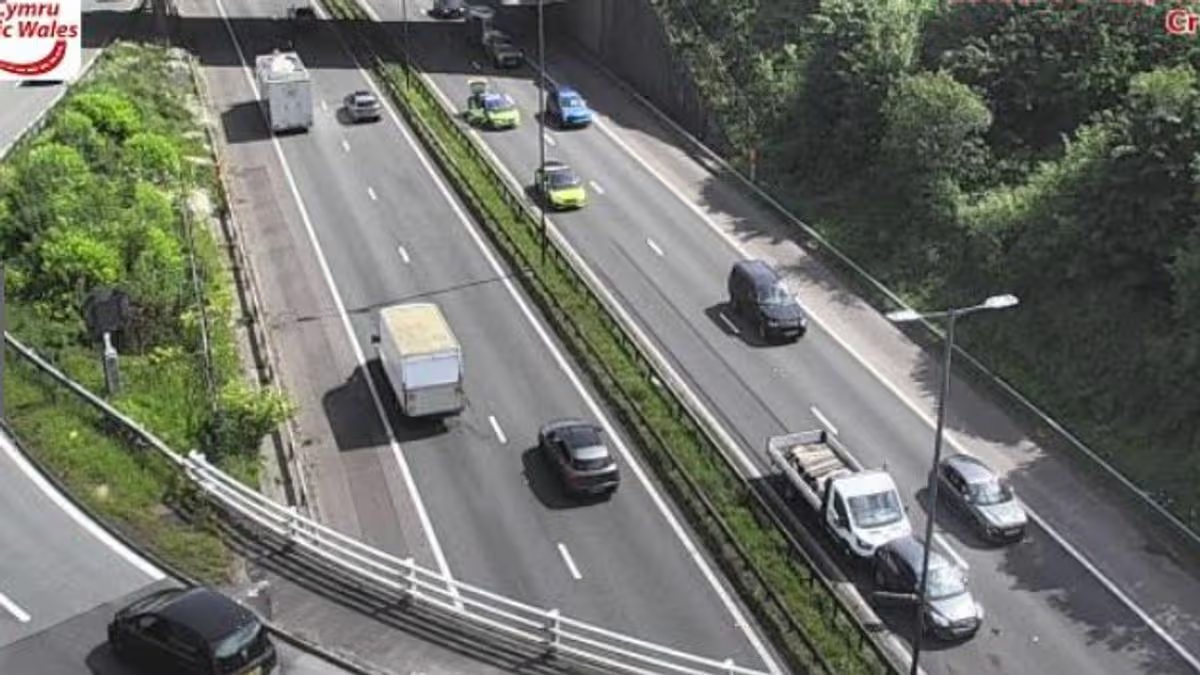
Those looking to get away for the bank holiday weekend and make the most of the warm weather are facing delays and transport disruption. The roads are starting to get busier and there are already some delays at the usual traffic hotspots on the M4.

The AA has estimated 23.4 million car journeys will take place on Friday. It highlighted that the M4 from London towards Wales will be a likely traffic blackspot.

A crash is already causing disruption on the M4. The two-vehicle collision has taken place on the westbound carriageway at Junction 44 for Lon Las.

Advertisement

Elsewhere, a serious crash has closed Wick Road at St Brides Major, with an air ambulance at the scene. A South Wales Police spokesperson said: “We’re at the scene of a serious collision on Wick Road, St Brides Major (B4265).

“The road is currently closed in both directions between St Brides Major and Wick.

“It is expected to remain closed for some time; please avoid the area and use alternative routes where possible. We’re grateful for your patience.”

As well as congestion on the roads, significant train delays are expected in Wales this weekend.

Advertisement

Transport for Wales is encouraging passengers to plan ahead as essential rail improvements take place across the Cardiff and valleys network.

Planned infrastructure improvements will close all lines through Cardiff Queen Street between Sunday, May 24 and bank holiday Monday, May 25.

To keep passengers moving, a combination of rail replacement buses and service diversions will operate across the local Cardiff and Valleys network.

Elsewhere, Network Rail has confirmed it is set to undertake work on the Severn Tunnel that the company says will “make the route more reliable for years to come”. The railway between Newport and Bristol Parkway or Filton Abbey Wood will be closed from Saturday.

Advertisement

Get daily breaking news updates on your phone by joining our WhatsApp community here. We occasionally treat members to special offers, promotions and ads from us and our partners. See our Privacy Notice

Follow all the latest traffic and transport updates below:

Source link

Advertisement
Continue Reading

NewsBeat

Charing Cross tube station becomes fake wartime HQ to prepare for Europe’s fight again Putin’s Russia

Published

on

Daily Mirror

UK military launches major wartime exercise, launching attack and surveillance drones after imaginary Kremlin attack on Baltic states as tensions between east and west worsen daily

British forces have war-gamed launching ‘deep-strike’ missions to face off a Russian attack on Europe – from inside a London underground tube station.

They were war-gaming what would happen if they had to help defend the Baltic states in the opening shots of a Europe-wide conflict. In the emergency nightmare the year would be as soon as 2030 as UK forces led a NATO HQ in Estonia after Kremlin forces assaulted the Baltic states.

US forces joined the UK troops in a disused part of Charing Cross Tube station, pretending it is a bunker somewhere in Estonian capital Tallinn.

Advertisement

In the imaginary exercise, they hunch over laptops and observe big screens, using Artificial Intelligence quickly to identify Russian targets to be hit in response. Among their arsenal are drones and missiles plus hi-tech jamming equipment and they have requisitioned city infrastructure to be used in wartime.

The UK-led side faked dealing with 5,000 surveillance and attack drones daily in a bid to beat off attack from a battle-experienced Russian enemy. Codenamed Operation Arcade Strike the force was led by the UK-led Nato Allied Rapid Reaction Corps (ARRC).

READ MORE: Russian troops shoot each other in chaotic scenes after Ukraine cripples communicationsREAD MORE: Ukraine spies uncover major Kremlin smear campaign against Zelensky

It is thought the British military has enough drones to fight at pace for a week, although Ukraine is believed to get through thousands every day. US general Christopher Donahue, head of Nato’s Land Command, warned NATO must move swiftly to prepare for the possibility in real life.

He said: “Legacy forms of mobilisation and movement are no longer a given Nato advantage, and a lack of protection in depth will be used against us.”

Advertisement

British ARRC commander Lt Gen Mike Elviss said that the exercise was needed for NATO practise finding and destroying Russian forces heading into war. He explained: “In this and every scenario we rehearse for, Russia has two critical advantages.

“First, they can mass combat power at the point of their attack, whereas we have an obligation to defend everywhere, all the time. Second, if an attack is to happen, it will be launched by them, so they will have the initial momentum. Our answer to this lies, in part, in our concept of fighting by recce-strike.

Advertisement

“Today’s deployment is a mission rehearsal. We rehearse this not just to be good at it, but because the adversary is watching and we want him to know that we are ready for the challenge.” It comes in an alarming week when Vladimir Putin’s troops carried out a war exercise in Belarus using their nuclear forces on land, sea and in the air.

And the UK MoD revealed two Russian jets had come within yards of hitting an RAF spy plane containing a crew of British troops over the Black Sea. US President Donald Trump has repeatedly threatened to weaken NATO by withdrawing troops from Germany, whilst saying he will send thousands more to eastern Europe.

Advertisement

His erratic threats on NATO have emboldened the Kremlin and worried European countries into stepping up defence spending.

Source link

Continue Reading

Trending

Copyright © 2025