

Politics
Unions welcome ‘Summer Savings’ plan but want it to go further



Trade unions have offered a guarded welcome to the government’s ‘Summer Savings’ plans. These include several measures which aim to ease summer holiday expense for families with children.
Labour affiliated transport union TSSA has welcomed as an ‘important first step’ the government’s introduction of free bus travel for under-16s in England across August.
This was part a series of measures that chancellor Rachel Reeves outlined, called ‘Great British Summer Savings’. It also includes a temporary reduction in VAT across Scotland, England and Wales from June to September. The reduction applies to admission tickets for family shows and attractions and children’s menu meals.
In April, TSSA called on ministers to tackle the cost of living crisis by making public transport free for a year.
Commenting, TSSA general secretary Maryam Eslamdoust said:
It’s good to see the government taking this important first step by providing free bus travel for young people for the summer months, along with other assistance.
We have been clear that action needed to be taken quickly to help the many people who are struggling simply to pay for the basics in life.
Undoubtedly measures like those which have been announced can make a real difference and this is what a Labour government should be doing.
However, the chancellor should now look at extending support as part of a wider package of help, well beyond the summer months. Not only would doing so assist those most in need, it will help the wider economy.
Performers should share in Summer Savings boost
Meanwhile, performing arts and entertainment trade union Equity has welcomed the announcement of government help for family days out over the summer school holidays. It wants to ensure that any increased revenue from the ‘Summer Savings’ scheme passes on to performers and creatives.
Equity points out that the industries in scope are responsible for employing or engaging large numbers of performers and creatives. It says many of them are in precarious, insecure and low-paid work. So, while a boost to ticket sales would be welcome, the union wants workers to share in the uplift.
An Equity spokesperson said:
We welcome government measures to boost the live performance, theatre and cinema sectors and promotions to help families become audiences at these events.
We want to see workers share in the uplift in sales and expect Society Of London Theatres, UK Theatre, theme park operators and others engaging performers and creatives to ensure increased sales and profits are passed on to the performers and creative workforce who are the heart of this industry.
Featured image via Getty Images
By The Canary

Politics
Ex-immigration minister Robert Jenrick still hasn’t provided evidence to the Manston inquiry
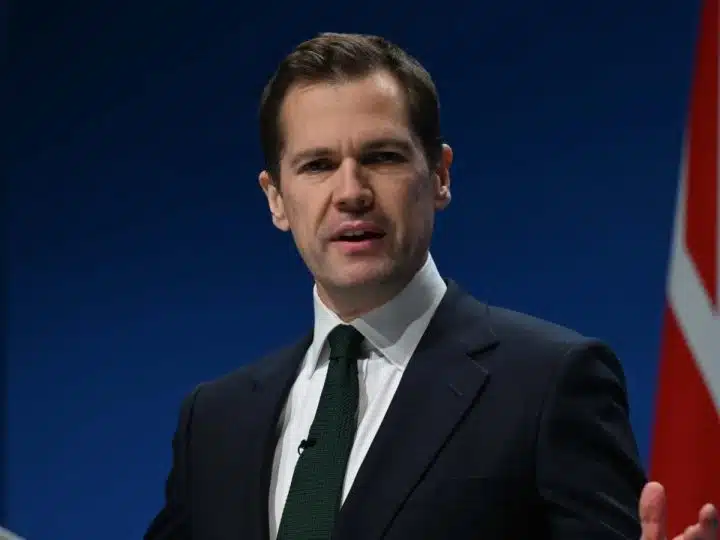
Sophie Cartwright KC, chair of the ongoing inquiry into the infamous Manston Short-Term Holding Facility, has rebuked ex-Tory ex-immigration minister Robert Jenrick over his utter failure to provide evidence on the squalid conditions at the site.
The immigrant detention centre, built on a former military base, opened its doors back in February 2022. Whilst it was intended to hold 1000-1600 people, it was holding around 4,000 people by the end of the year. The Canary‘s Sophia Purdy-Moore noted that:
The Home Office is only supposed to hold people on the site for up to 24 hours. However, a prison watchdog warned that authorities are detaining people on the site for a much longer period, without beds, proper healthcare, or access to fresh air and exercise. The watchdog noted reports of cases of contagious diseases such as scabies, diphtheria and MRSA within the centre.
The Home Office denied that detainees were catching the diseases at the centre. However, on 19 November, an Iraqi man – Hussein Haseeb Ahmed – died of diphtheria contracted at Manston.
Labour commissioned what, again?
In March 2024, the Home Office announced plans to launch a statutory inquiry into the Manston scandal. However, Jenrick has, to date, failed to provide so much as a draft statement to the investigators. A Reform UK representative for Jenrick, who now acts as the far-right party’s Treasury spokesperson, stated that:
Robert’s written statement will be with the inquiry in due course. It is telling that Labour commissioned an inquiry into the detention of illegal migrants, and not into the daily harm illegal migration is inflicting on the British people.
The ruling party at the time of the inquiry’s launch was the Conservatives, Jenrick’s own party, as he will no doubt be aware.
The announcement of the inquiry itself was the product of a lengthy legal battle. In December 2023, the High Court gave permission for former to seek a judicial review over the Home Office’s failure to hold an inquiry into conditions on the site.
However, in September 2024, newly-appointed Labour Home Secretary Yvette Cooper downgraded the statutory inquiry to a far weaker independent inquiry. She argued that the former would cost £26m, whereas the latter would cost just £2.6m.
Given that an independent inquiry focuses on reviewing documents, rather than compelling ministers to testify, Labour undoubtedly did Jenrick a massive favour. Again, the ex-immigration minister is likely aware of this fact.
‘The inquiry is non-statutory’
Jenrick, during his tenure, ordered that colourful childrens’ murals a Kent detention centres – including one in Manston – should be painted over. He stated that they were “too welcoming” towards the immigrant children.
The current inquiry is investigating the actions the Home Office took to alleviate the squalid conditions at the detention centre, along with its handling of Ahmed’s death.
Inquiry chair Sophie Cartwright stated that the inquiry first requested a draft statement from Jenrick back in October 2025. The Reform MP has since received several extensions on the deadline for that statement.
At the end of April 2026, Cartwright stated that:
As at the date of this update, the inquiry has not received a statement nor any update. The inquiry is non-statutory and so relies on those with relevant information and evidence cooperating by providing witness statements and oral evidence.
All thanks go to Yvette Cooper for that “non-statutory” downgrade – clearly Labour had more important places to spend its money.
‘No accountability’ from Jenrick
Seema Syeda, speaking for the Joint Council for the Welfare of Immigrants, joined Cartwright her condemnation:
As former Minister for Immigration, Robert Jenrick was at the head of a Victorian-era system responsible for the cruel detention and death from diphtheria of Hussein Haseeb Ahmed.
Hussein, like hundreds of others, came here seeking safety, but instead was imprisoned in conditions fit for neither humans nor animals. Robert Jenrick showed no accountability for this horrific incident and now seeks to return to government, shapeshifting from Tory to Reform, but bringing the same inhumane governing record.
It stands to reason that Jenrick has refused to show accountability or remorse. In Reform UK, he has found a party even more hellbent on the demonisation of immigrants than his former home among the Tories. Likewise, the far-right party’s standard reaction to difficult questions is to hide and run for cover.
Meanwhile, Yvette Cooper has succeeded in pinching her pennies, saving Jenrick’s hide in the process.
Of course, we’re sure that Labour’s little exercise in fiscal responsibility has nothing to do with the fact that it continues to use the Manston facility to this day. The lack of real scrutiny merely happens to line up nicely with that fact that Home Office is currently looking to “reduce operating costs” on the site.
Featured image via the Canary
By Grace
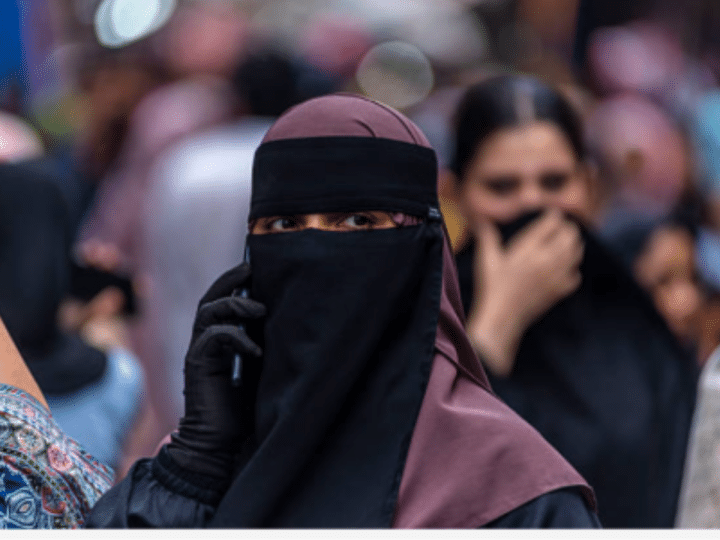
In its newest avatar, Islamophobia in India is being accelerated by using AI to produce sexualised propaganda, deepfake harassment and “digital lynching” to target Muslim women.
A recent investigation by Al Jazeera reveals that Muslim women’s bodies in India have become battlegrounds for communal dominance.
Al Jazeera spoke with multiple Muslim women who have experienced such attacks, including a freelance model named Samreen Ayoub, whose deepfake video falsely labeled her brother as her ‘pimp’.
Ayoub called it a “digital lynching”.
Most other women contacted declined to speak on the record.
This dynamic was already present, most visible in the Sulli Deals and Bulli Bai controversies, mock-auction apps that targeted Muslim women in India.
Citing researchers, Soma Basu and Sahana Udupa, the investigation shows that Basu links these apps to support from BJP officials and their digital volunteers.
At the same time, Udupa argues that right-wing digital cultures use humour, memes, and sexualised imagery to normalise abuse.
Fascism and Hindu supremacy are on the rise in India, led by Modi’s BJP, whose loyalties lie with US-backed Israel.
Muslim women face misogynist violence
In 2018, Indian Muslim journalist, Rana Ayyub, was targeted with a deepfake porn video that aimed to stifle her.
Ayyub’s crime was being a persistent critic of the Modi government and a Muslim woman.
The right wing in India frequently targets her. In 2022, the UN called on the Indian government to “stop the relentless misogynistic and sectarian attacks” against Ayyub, including death and rape threats.
In 2024, the Committee to Protect Journalists called upon Indian police to ensure her safety and take immediate action against the perpetrators.
#India: CPJ condemns the escalating harassment of journalist @RanaAyyub, who has received death and sexually-explicit threats, and was targeted by deepfake content since being recently doxxed by a right-wing account. The journalist said her social media and email passwords were… pic.twitter.com/7Us4yIAkkr
— CPJ Asia (@CPJAsia) November 16, 2024
But Ayyub is far from alone. Between 2021 and 2022, two explicitly Islamophobic mobile apps — Sulli Deals and Bulli Bai — allowed users to upload photos of Muslim women, list them for “auction” or “sale”, and add derogatory captions.
Hundreds of Muslim women, including journalists, activists, and students, found their images scraped from social media and posted on these platforms without their consent.
AI boosts sexual harassment
Last year, an investigation by India’s Quint found:
The emergence of Artificial Intelligence (AI)-powered image generation tools in the recent past, has led to a massive proliferation of pages posting semi-pornographic images of Muslim women on the internet.
Such pages have been around for some time now on platforms like Facebook and Instagram, posting memes and crudely photoshopped images containing such fantasies. However, AI tools have made these images more sophisticated and easy to produce, thereby helping increase the volume of such content manifolds.
Similarly, the Center for the Study of Organized Hate (CSOH)’s Zenith Khan told Al Jazeera:
Generative AI has made the transformation of sexual fantasy into imagery possible at speed and at no cost. Image generators and deepfakes allow individuals to convert hostile narratives into highly realistic visual material with minimal technical expertise.
A CSOH report also quantifies this trend.
Researchers analysed 1,326 AI-generated images and videos from 297 public accounts on X, Facebook, and Instagram in India for two years, between May 2023 – 2025. The analysis found that sexualised depictions of Muslim women generated the highest engagement — more than 6.7 million interactions across the platforms.
Digital violence to real violence
The CSOH report also draws a direct line between AI-generated hate content and the potential for real-world violence.
Anti-Muslim sentiments have manifested themselves in various forms, including targeted sectarian violence, mob lynchings, inflammatory hate speeches, forced evictions of Muslims, destruction of Muslim properties and places of worship, economic exclusion and marginalization, and the normalization of conspiratorial rhetoric that depicts Muslims as outsiders, security threats, or a demographic danger to the Indian nation.
Rising mob lynching in India is alarming.
Maktoob’s editor, Aslah Kayyalakkath, calls it the cruelest form of violence, ripping the person of their faith and dignity. He shared many of Maktoob’s stories covering Indian men being lynched.
Mob lynching is one of the cruellest forms of violence because it strips a person of everything before taking their life. It begins by asking their name. Then they are forced to chant the slogans of those attacking them, words that deny their faith and dignity. Their money is… pic.twitter.com/9cR9VwllZr
— Aslah Kayyalakkath (@aslahtweets) January 16, 2026
Kayyalakkath said:
What is happening to Muslims in India through Hindutva mob violence is not just crime; it is the normalisation of public cruelty. It shows how easily a society can be trained to look away while human beings are humiliated, broken, and erased.
By The Canary
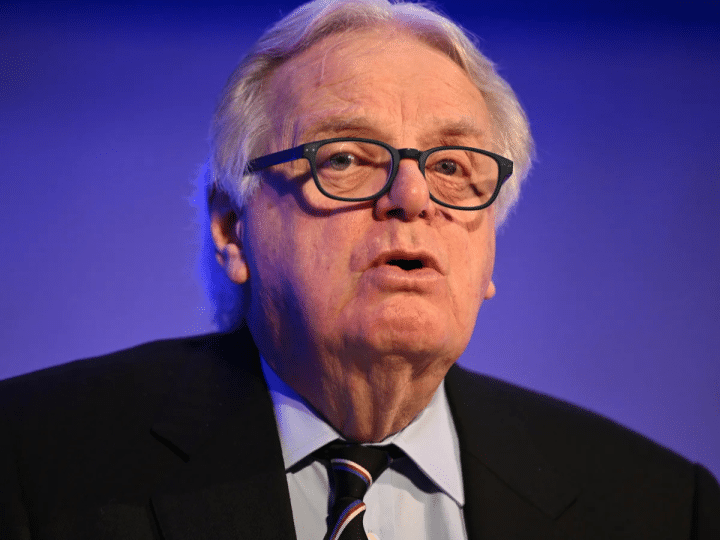
Michael Grade, the former chairperson at Ofcom, has defended the media watchdog’s (lack of) handling of GB News under his leadership.
He lionised the far-right propaganda outlet as “giving voice to a strong body of opinion in this country which has been ignored for years”.
As part of an interview with the Guardian, Grade tried to argue that critics of GB News feared contrasting viewpoints.
He said:
The fact is, what people don’t like is the fact that there is a television station giving voice to a strong body of opinion in this country which has been ignored for years. They just don’t like the idea that there’s any voice or any agenda, news agenda, which is different from the kind of liberal, Islington consensus.
GB News failed impartiality rules under Grade
Former prime minister, Boris Johnson, appointed Grade, a Tory life peer, to the Ofcom role in May 2022. Grade had previously held high-ranking roles across the BBC, ITV and Channel 4.
However, Grade’s tenure at the head of the UK’s media regulator has been dogged by accusations of his utter failure to apply impartiality rules to GB News.
The channel frequently platforms (and pays) right-wing politicians to deliver segments which cross the line between news and discussion.
The receipts on GB News
GB News launched in June 2021. From the outset, it showed clear right-wing bias, with many members of the public arguing that it violates the laws of due impartiality in UK broadcasting.
Broadcast news has a massive power to shape public opinion. As such, broadcasting regulations require that it shows no favour to one political side over another. Alongside this, the news must also maintain public trust by reporting with due accuracy.
However, in March 2026, a New World investigation found:
GB News routinely – you might almost say systematically – disregards these requirements. Asked to score the programmes on a scale of 0-5 (0 being not at all compliant with Ofcom’s Broadcasting Code and 5 being wholly compliant), the overall score from our reviewers was just 1.5. Each reviewer came up with detailed reasoning.
The channel’s reporting on the white riots in Belfast on 9 June is typical of GB News’ disregard for due accuracy in action.
Far-right agitators targeted the homes and businesses of people of colour, setting fire to vehicles and houses. However, GB News host, Bev Turner, claimed this was fiction, despite people being charged for rioting.
There was no riot. There was no riot. There was no riot. There is not a house that has been burnt down. There are no riots. The police aren’t even reporting riots.
What is ‘news’ anyway?
However, when the Guardian asked about his kid-glove treatment of GB News, Grade argued that the channel wasn’t a news channel.
Just because it’s called GB News doesn’t mean that all their programmes are news. They’re discussion programmes, they’re political chat shows. We could argue this forever, but we’re dancing on the head of a pin. It’s irrelevant really. The real point is…you don’t get any politicians delivering the news.
Ofcom’s own code states that its approach to due impartiality may vary according to “the extent to which the content and approach is signalled to the audience”.
However, apparently putting ‘news’ in the name of the channel doesn’t qualify as signalling a news channel.
As an example of Ofcom’s arbitrary decision making in action, we might look at its treatment of the GB News show, Saturday Morning with Esther and Phil, in 2023. It was presented by sitting Tory MPs, Esther McVey and Philip Davies.
The pair interviewed Jeremy Hunt, then Conservative chancellor, about the Spring Budget, and economic and fiscal policies.
However, the regulator only scolded the far-right media outlet over it not airing differing views. Ofcom failed to rule against the fact that two sitting Conservative MPs were posing as journalists interviewing a sitting Conservative minister.
Grade: We must ‘give the white majority a voice’
When Grade’s chat with the Guardian explored the topic of ethnicity, Grade’s mask truly fell and shattered.
The ex-Ofcom chief cited a recent interview with Tony Sewell. Sewell, a fellow Tory peer, penned a widely-criticised government report that claimed that the UK was not an institutionally racist country.
Grade told the Guardian:
If you want integration, which we all do, and we want everybody to live happily ever after, irrespective of their background or their race or religion or anything, [Sewell] said that you have to give the white majority a voice in that debate.
I hung on to that and I thought: ‘That is so brilliant. That’s why Reform is doing well in the polls.’ Of course it’s right.
He went on to add that the white majority “certainly hasn’t” been heard in recent years on channels like the BBC. Of course, it’s a specific subset of the “white majority” that Grade is actually talking about — white supremacists and ethnonationalists who flock to vote for Reform.
Even under that definition, the BBC has hardly been lacking in bias favouring the far-right party. But, reading Grade’s ‘voice of the white majority’ as meaning ‘racist zealots’ makes far more sense of GB News’ segments.
For example:
- The channel platformed Thomas Corbett-Dillon claiming that a genocide is being waged against white people in the UK.
- It completely failed to challenge Donald Trump in an interview last year. The US dictator made a series of wildly bigoted claims about Islam, immigration and the climate crisis. Grade merely said it “wasn’t journalism’s finest hour”.
- Presenter Carole Malone falsely claimed that Doria Ragland, Meghan Markle’s mother, had spent time in jail.
- It published an article by ex-presenter Colin Brazier complaining that there aren’t enough white people in adverts.
Well, so long as you look impartial…
Grade finished his utter car crash of an interview by stating:
Impartiality is a state of grace to which you aspire. And as long as you’re aspiring and seem to be trying to be impartial, that’s fine. One person’s impartiality is another person’s bias.
Oh, well that’s fine then, so long as we “seem to be trying to be impartial”, whatever that means.
Meanwhile, Reform UK clearly recognises that GB News is its propaganda arm. Only last month, the party told its councillors to ignore local journalists, ordering them to speak only to GB News.
Remind us again what ‘impartiality’ actually looks like there, Grade?
Featured image via Leon Neal/ Getty Images

A Bulgarian man has been found guilty of making sexual remarks to a 12-year-old girl in Dundee, Scotland, before grabbing and pushing her to the ground. His accomplice – namely, his sister – had previously admitted to assaulting the girl’s 13-year-old friend by pulling her hair, dragging her to the ground and hitting her.
The court’s verdict is vindication for the girl dubbed ‘Sophie of Dundee’ when footage of part of the incident went viral last autumn. Infamously, it shows ‘Sophie’ (she is too young to have her real name revealed) briefly brandishing an axe and a knife. One of the girls can also be heard referring to their assailants as ‘kid bashers’. Don’t fucking touch my little sister’, the older girl says. ‘She’s fucking 12!’
We now know for certain that these girls had every reason to be terrified and to want to defend themselves. As Ilia Belov walked past the two girls, he said, ‘Hello sexy, I’ll show you a good time’. They dismissed him as a creep. He then sought out his sister, Nadjedzha Belova, and they returned as a pair to confront the girls. While Belov claimed that the children had racially abused him, the judge rejected that he had any grounds for ‘self-defence’.
Since the verdict, my email inbox, X mentions and WhatsApp have been full of people reminding me about a piece I wrote on spiked last year, in which I’ll happily admit I got several things wrong, based on the information that was available at the time.
My mistake was being insufficiently sceptical towards what the police were saying. Usually, in high-profile, contentious cases like this (especially those involving a migrant or ethnic-minority perpetrator), the police tend to withhold information and say as little as possible. Instead, Police Scotland not only arrested one of the girls on suspicion of possession of an offensive weapon – they also stated clearly and unequivocally that she was the aggressor and the Bulgarian pair were the victims. We now know that to be totally false.
Police in Dundee declared in no uncertain terms that, having reviewed the CCTV, they had found ‘no evidence’ that the Bulgarians had committed any offences or posed a risk to the girls. Thanks to the court case, we now know that the CCTV evidence actually showed the girls being physically assaulted. One girl’s mother spoke of her distress at having to watch her daughter being ‘dragged about’ on film during the trial.
The police even got the most basic facts wrong, including falsely describing the assailants as husband and wife, when they were in fact brother and sister. A police spokesman has since acknowledged that this ‘initial information… did not fully reflect the situation’, which feels like the understatement of the century. We now know this ‘information’ bore no resemblance to reality at all.
Nevertheless, Police Scotland seemed so confident of their version of events – or perhaps, so determined to push a predetermined narrative – that they had the nerve to warn social-media users to stop spreading ‘misinformation’ that contradicted their statements. SNP first minister John Swinney backed the cops up, warning that online interest in the case threatened to undermine ‘community cohesion’. Statements like this ought to have alerted me sooner that something was amiss. After all, what is now abundantly clear is that the police, the media and the political class were, by far, the worst purveyors of ‘misinformation’ about this case.
However, I do not accept the charge of my fiercest critics that I maligned the two girls in any way. I did not call them – or imply that they were – liars, racists or feral brutes, as some seem to imagine I did. (Perhaps they are thinking of some of the other commentary at the time.)
The target of my spiked piece – as the headline makes clear – was not the girls, but the online right and the BS it so often peddles. ‘Sophie’ and her friend have undoubtedly been vindicated by the courts, but many of the claims about her case made by online shit-stirrers have not. The Bulgarian man was not an Islamist, an illegal immigrant or part of a grooming gang, as was widely suggested at the time.
What’s more, there is nothing about the facts of the case that can justify turning a scared young girl into a social-media meme. What could well have been the worst day of her life has now been immortalised online. Neck-bearded bedwetters in their bedrooms used AI to reimagine her as some sort of female Braveheart for the 21st century, fighting off the hordes of migrant paedos who are supposedly invading Scotland. The exploitation of this incident, recasting a terrified teen as a frontline soldier in an imaginary race war – whether for clicks, for cash or for political gain – was and is shameful.
While I should undoubtedly have been more sceptical towards the ‘official’ narrative around ‘Sophie of Dundee’, I make no apologies for being sceptical of what viral X videos appear to show. The rogues’ gallery of bullshitters who leapt on the case, proclaiming to know the truth from 44 seconds of out-of-context footage, gave me every reason to doubt their version of events. Not least as, in a climate as febrile as 2020s Britain, a misconstrued, misunderstood piece of cameraphone footage can and has led to innocent people being tarnished.
Only a week before Tommy Robinson shared the Sophie of Dundee clip, a post of his on X had baselessly implied that two black men were child abusers – their only ‘crime’ was to have been filmed playing in the park with one of their granddaughters, who has lighter skin. More recently, Robinson tweeted a video which he claimed showed the victim of the Belfast knife attack in his hospital bed (it showed someone else entirely). In both cases, the posts were simply deleted without apology or explanation. Most notoriously, he devoted a feature-length documentary to defaming a teenage Syrian refugee as a violent, knife-wielding monster. When sued for libel, Robinson was unable to defend any of his film’s most lurid claims.
Around the same time as the Dundee incident, Restore Britain leader Rupert Lowe had alerted the coastguard to a small vessel off the coast of Norfolk that he believed to be containing illegal migrants, only to later discover they were charity rowers. And in the months since, Epsom in Surrey erupted in protest over a rape by an alleged migrant that it now appears did not take place (although the authorities could, of course, be wrong again). False allegations, including innocent mistakes, have consequences and must be guarded against.
Bullshit is being sprayed from all directions. From the establishment that crows about online ‘misinformation’ while spreading its own. From self-styled ‘truth-seekers’ and ‘free-thinkers’ who repost any old rubbish that confirms their priors. Nobody should be trusted by default.
If there is a lesson from the Sophie of Dundee incident, it is surely to keep questioning everything.
Fraser Myers is deputy editor at spiked and host of the spiked podcast. Follow him on X: @FraserMyers.
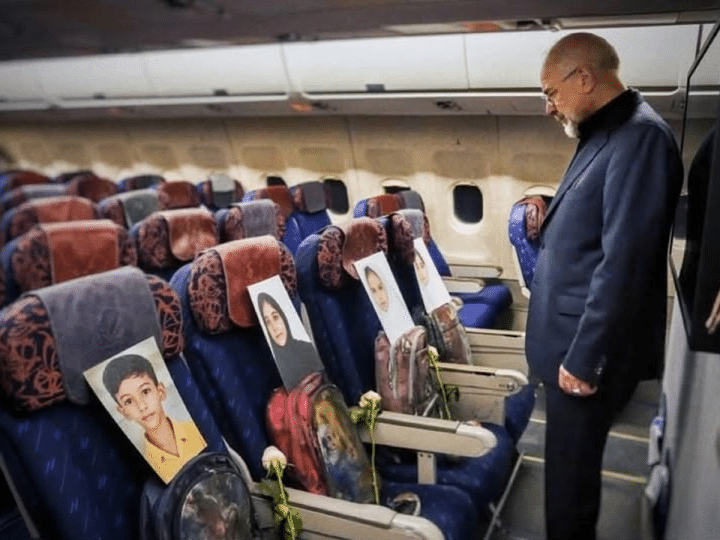
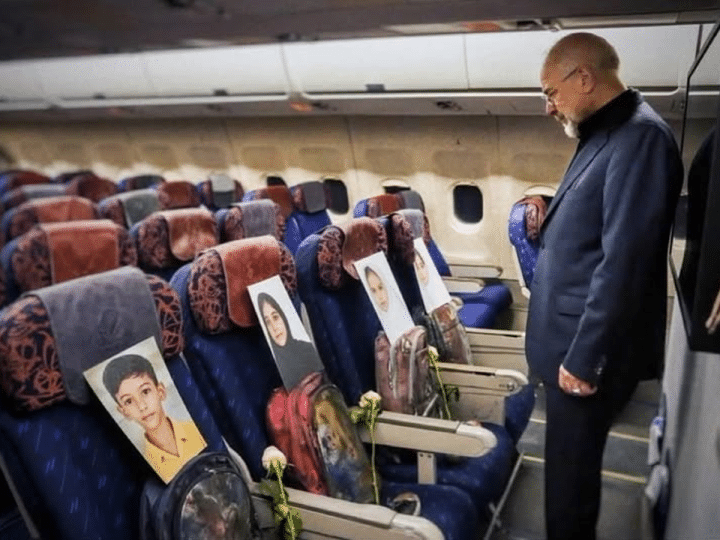
On 28 February, the US bombed a school in the opening stages of its unprovoked attack on Iran, killing more than 150 people, many schoolchildren.
The UN condemned the attack:
A strike on a school represents a grave assault on children, on education, and on the future of an entire community. There is no excuse for killing girls in a classroom.
Now, Sky News and Forensic Architecture prepare to debut their documentary about the tragedy that shocked the world.
Iran: Children of Minab film
The US tried to deny it had bombed the Shajareh Tayyebeh girls’ elementary school at the time. US president, Donald Trump, said:
No. In my opinion and based on what I’ve seen, that was done by Iran.
They’re very inaccurate, as you know, with their munitions.
However, the US has since admitted to the atrocity and may have used military AI to carry out the attack.
The one-hour documentary, Children of Minab, will air in July and shed light on the “devastating US missile strike”.
…on the first day of Operation Epic Fury, one of the US military’s largest civilian casualty incidents for decades.
It will examine:
The factors behind the high death toll, including the building’s collapse onto the boys’ school below and a missile strike on the area where many children were sheltering.
Death toll contested
Iran maintains that 168 people died in the attack. The national football team, which is playing in the 2026 World Cup, has renamed the team after those killed.
Iran National Football Team with the name "Minab 168" plays in the World Cup 2026 on US soil; in memory of the fallen angels of Minab School. pic.twitter.com/Er1AIlzdgP
— I. R. Iran Embassy in Serbia (@IraninSerbia) June 15, 2026
Sky News‘ data and forensics team has managed to confirm the identities of 152 victims — “the highest verified number of victims identified so far”.
This includes 120 students (73 boys and 47 girls, aged from six to 13) and 26 teachers.
Confirmation that significantly more boys were killed than girls, despite it being widely reported as a strike on a girls’ school.
The news outlet was given “exceptional access” to Iran for the documentary.
International affairs editor, Dominic Waghorn, said:
It is incredibly important to ensure that accurate reporting on this devastating moment continues to be at the forefront of the news agenda.
He added that Sky News will “continue to demand answers and justice for the people of Minab”.
Featured image via the Canary
By Joe Glenton

5 min read
It is time for political parties to be brave and honest. Our welfare spending is not sustainable.
Britain’s finances are not sustainable. Our debt levels are the highest they have been for over 60 years, our taxes are at record levels, and we cannot currently find the resources necessary to protect our national security. Something has to give.
A serious analysis of the situation will conclude that we need to look again at welfare expenditure.
According to the Office for Budget Responsibility (OBR), total welfare spending is forecast to rise from £314.7bn in 2024-25 to £406.2bn in 2030-31. As a share of GDP, total welfare spending is forecast to increase from 10.8 per cent in 2024-25 to 11.2 per cent by 2030-31. If we look only at spending on health and disability benefits, it will rise from £76.8bn in 2024-25 to £109bn in 2030-31. This increase in health and disability benefits alone is broadly similar to the entire Home Office budget. Or, to put it another way, it is comparable with the revenue raised by 3 or 4p on the basic rate of income tax.
Pointing this out is easy, however. The hard task is identifying precisely what to do about it. In that context, Prosper UK has set out detailed proposals as to how we can control the welfare bill.
Prosper UK is a centre-right political movement that believes in facing up to the real choices the country faces. This means accepting the trade-offs and being transparent about the tough decisions that need to be made. Labour failed to do that in opposition, and the populist right – in the shape of Reform UK – is doing that today.
So what would Prosper UK do? We have set out a series of proposals that would control public spending but still provide support for those most in need. We would tighten up access to health benefits with more face-to-face assessments and a greater focus on a “work first” approach; bring back a reformed two-child benefit cap; raise the savings cap in universal credit so that this system is not unduly harsh on those who have a relatively small amount of savings; increase the sharing of data across DWP and HMRC; and use data analytics and AI to reduce fraud and improve personalised support.
All of this can make a difference in controlling spending on working-age benefits (for example, we think we can save net £6.4bn on health and disability benefits while providing substantially more support in getting claimants back into work). But none of the political parties is brave enough to confront any aspect of the £150bn we spend on one very large part of the welfare budget – and that is the state pension. That is an approach we can no longer afford.
In truth, our proposal is very modest. It is not to cut the state pension. Indeed, we are making the case that the state pension should not only be protected in real terms (ensuring that it always increases at least in line with inflation), but that over time it will increase in line with average earnings, which is generally higher than inflation. In other words, this is still a system for increasing the state pension that is more generous than what was in place from 1980 to 2011, when it increased merely in line with inflation.
What could be more reasonable than that? But, at present, no party is prepared to commit to the policy because it means the end of the triple lock through which the state pension increases by the higher of inflation, earnings or 2.5 per cent. It has a ratchet effect that is particularly strong in periods of economic turbulence and, since its introduction in 2010, has been far more expensive than anyone had expected. One cannot be certain how much it might cost (because it depends on what happens with inflation and earnings in future years), but the Institute for Fiscal Studies estimates that it might be as high as £40bn by 2050. That is additional expenditure we simply cannot afford.
Would it be politically brave to abandon the triple lock? It is all too tempting for those seeking office to go round making easy but expensive promises (just as Andy Burnham did last week, promising compensation for the entirely unmeritorious case of the WASPI women), but it is time for politicians to be brave and honest. We need to find savings, and a government with the capability and determination to do so would be rewarded by the bond market that currently prices our debt more expensively than other countries because of that failure to face up to the realities. Deliver savings in one area, and the credibility won should result in a fall in our debt interest bill as well.
All the political parties have to get serious about our public finances. That means controlling our welfare bill and, in doing that, scrapping the triple lock must be part of the plan.
David Gauke is Vice Chair of Prosper UK and a former cabinet minister
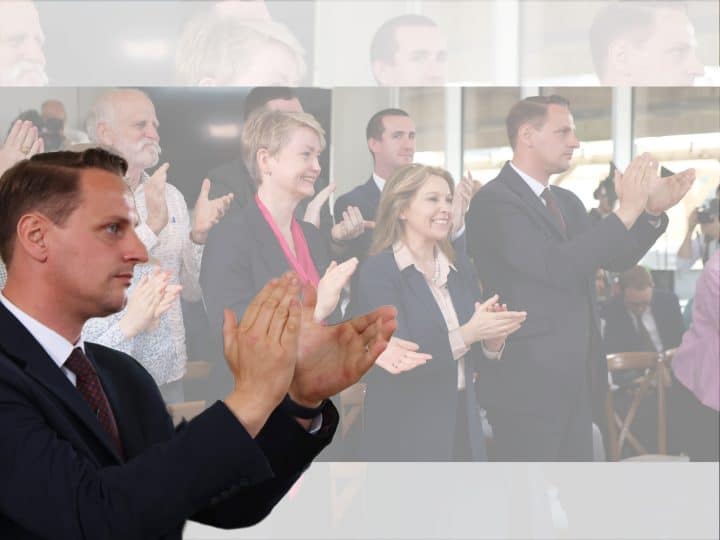
Mike Tapp is the Labour parliamentary under-secretary of state for migration and citizenship. On 15 June, he put out a celebratory post after a court ruled that the government was okay to brand Palestine Action a ‘terrorist’ group:
Supporting Palestine Don’t support terrorists.
— Mike Tapp MP (@MikeTappTweets) June 15, 2026

Supporting Palestine Action 
Well, Labour – what should a terrorist look like?
As Skwawkbox reported for the Canary:
The Court of Appeal has ruled in favour of home secretary Shabana Mahmood’s appeal against the High Court’s ruling that the ‘terrorism’ ban on Palestine Action was unlawful. The appeals court decided that the ban was a proportionate infringement on UK human rights and did not exceed the government’s powers.
The judge in question ruled that Palestine Action cannot be compared to the suffragettes because they caused serious damage. As Skwawkbox noted, though, the suffragettes literally used bombs – something which is markedly more extreme than anything Palestine Action did.
When Zack Polanski pointed out that the ruling will mean branding peaceful old women ‘terrorists’, scumbag Tapp asked the following:
Tell me, Zack, what should someone who is convicted of a terror related offence look like? I’m intrigued.
— Mike Tapp MP (@MikeTappTweets) June 15, 2026
To be fair, the above isn’t an unfair question. Once you have terror laws, the state gets to decide what is or is not a terror offence. And as we’ve long warned, this can lead to the sort of authoritarian creep we’re now seeing.
All that aside, I think we can agree that if we do have to have terrorism laws, then a terrorist should look like someone who just committed an act of extreme and murderous violence – not someone who was sat down holding a piece of cardboard with words written on it.
A government of cowards
It says a lot that Tapp is terrified of the older woman pictured above. Tapp is an ex-soldier, too, which explains a lot. And while we’ve nothing against cowards living full and wholesome lives, they shouldn’t be dictating government policy.
Featured image via Dan Kitwood (Getty Images)
By Willem Moore
FIFA’s discrimination monitoring team has called for World Cup VAR official Shaun Evans to be removed from duty after he appeared to make a hand gesture resembling a white supremacist sign during Germany’s 7-1 win over Curacao.
The moment was captured on the official broadcast when cameras cut to the VAR booth. Evans, an Australian official assigned to the match, briefly formed an “OK” gesture with his right hand near his leg, a symbol that has been co‑opted by white extremist groups.
The gesture was quick, but it was enough to trigger immediate concern from FIFA’s anti‑discrimination unit, which monitors all matches for offensive behaviour. The monitor formally requested that Evans be stood down from further involvement in the tournament pending review.
FIFA response
FIFA has not yet announced disciplinary action, but the governing body confirmed that the incident is under assessment. The organisation’s discrimination monitoring system, expanded for the 2026 tournament.
This is what it was designed to flag, any behaviour that could undermine the sport’s commitment to inclusivity. The call for Evans’ removal came directly from this unit, which has the authority to recommend sanctions or suspensions.
The match in question, Germany’s emphatic opening win over debutants Curacao, had already drawn attention for its lopsided scoreline. But the focus quickly shifted from the pitch to the VAR booth once the footage circulated.
The broadcast clip showed Evans standing alongside fellow officials as the camera panned across the VAR team. His right hand formed the “OK” sign this is the thumb and forefinger touching, three fingers raised.
The discrimination monitor’s concern centred on the potential interpretation of the gesture rather than any confirmed intent. There has been no public comment from Evans as yet, and FIFA has not indicated whether he has been interviewed as part of the review.
Wider context at the World Cup
The 2026 World Cup has already seen several officiating‑related talking points, including the use of advanced VAR technologies such as connected ball data and waveform detection, systems that played a role in other matches across the opening days.
But this incident has added a different layer of scrutiny. FIFA’s anti‑discrimination protocols were strengthened ahead of the tournament, with monitors assigned to every match and empowered to escalate concerns immediately. Their recommendation to remove Evans underscores the seriousness with which the organisation treats any gesture that could be interpreted as discriminatory or extremist.
The footage spread quickly among fans and analysts, prompting debate about intent, context and the responsibilities of match officials on the world stage.
While some argued the gesture may have been innocuous, others stressed that officials must avoid any action that could be misinterpreted, especially during a global event watched by billions.
Sky Sports’ reporting emphasised that the discrimination monitor acted swiftly, reflecting FIFA’s zero‑tolerance stance. The request for Evans’ removal is not a final ruling but a procedural step designed to protect the integrity of the tournament while the matter is reviewed.
Will FIFA do the right thing?
FIFA’s next move will determine whether Evans continues in his role. The organisation typically reviews broadcast footage, interviews involved parties, and consults its anti‑discrimination experts before issuing a decision. If the monitor’s recommendation is upheld, Evans could be replaced for the remainder of the tournament.
The incident also raises broader questions about training and awareness for officials. With global audiences and heightened sensitivity around discriminatory symbols, governing bodies face increasing pressure to ensure that all match personnel understand the implications of gestures, language and behaviour.
The World Cup is built on the idea of global unity, and FIFA has repeatedly emphasised its commitment to combating discrimination in all forms. Any incident that threatens that image, especially one based on a gesture openly declares ‘white power’ becomes a real risk.
By moving quickly, the discrimination monitor has signalled that vigilance is non‑negotiable. The coming days will reveal whether FIFA agrees that Evans’ continued involvement poses a risk to the tournament’s integrity.
The call to remove Shaun Evans marks one of many major off‑field controversies of the 2026 World Cup. While the investigation continues, the incident highlights the intense scrutiny placed on officials and the importance of maintaining clear, unambiguous standards of conduct.
FIFA now faces a decision that will set the tone for how it handles similar issues throughout the tournament, a reminder that, in the modern game, you won’t be accepted for being racist.
Featured image via Ian Walton/Getty Images
By Faz Ali
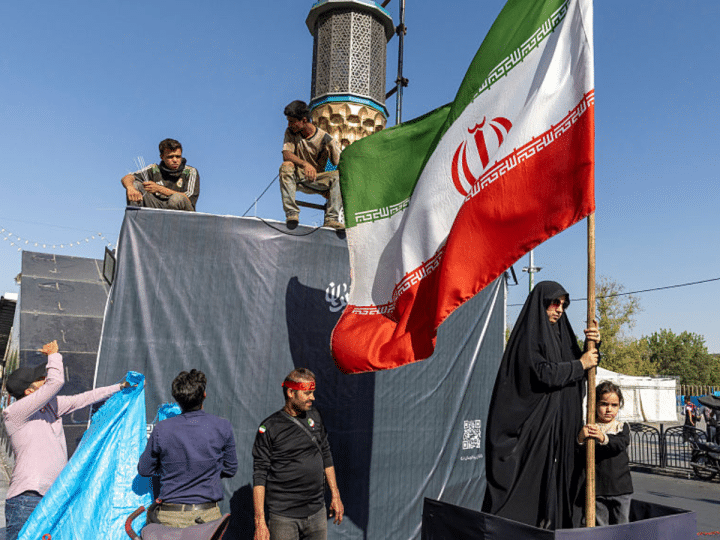
The UAE has denied it paid Iran to stop bombing the country as the Iran-US ceasefire began, calling allegations “false and unfounded”.
The UAE’s payments may point to another US humiliation if found to be true.
Last week, Reuters reported:
The United Arab Emirates has agreed to unlock billions of dollars for Iran, four sources said, in a tactical shift after weeks of Iranian attacks on the wealthy Gulf Arab state during the U.S.-Israeli war with the Islamic Republic.
***
Word of the move, which has not been previously reported, coincides with the final stages of broader negotiations between Tehran and Washington on ending the war, talks that diplomats say could involve the release of tens of billions of dollars in Iranian oil revenues frozen in foreign banks under U.S. sanctions.
The UAE released a statement denying the claims:
The United Arab Emirates has categorically denied reports published by certain international media outlets alleging the transfer of funds from the UAE to the Islamic Republic of Iran, including allegations concerning USD 3 billion.
In a statement, the Ministry of Foreign Affairs affirmed that these allegations are entirely false and unfounded, stressing that no frozen Iranian funds have been released, transferred, or facilitated through the UAE.
The Ministry also called on media outlets to exercise accuracy, rely on official sources, and refrain from publishing or circulating unverified information and unfounded allegations.
UAE wrangling and declining US influence
However, an unnamed UAE official told Reuters:
The UAE’s foreign policy is guided by promoting de-escalation and reducing tensions across the region, while advancing lasting peace and stability.
The UAE supports efforts, including those undertaken by the United States, to protect the peoples of the region from the repercussions of conflict.
The outlet could not establish:
…whether the funds earmarked for the transfers belong to the UAE or originate in long-blocked Iranian accounts in the UAE banking system, or elsewhere.
The White House did not comment and an Iranian source said the transfer was “directly linked to ensuring safe passage through the Strait of Hormuz”.
One source told Reuters that the agreement would be a way for Iran to obtain the payoff it sought in return for a ceasefire, while allowing the Trump administration to claim it did not pay.
This would tally with Trump’s (very optimistic) goal of ending hostilities without admitting to having failed.
Details of UAE’s behind-the-scenes wrangling as the war intensified have also emerged.
Middle East Eye reported:
The UAE joined the US and Israel in conducting dozens of strikes on Iran during the war. It also tried to prevent Pakistan from mediating an end to the conflict.
Saudi Arabia had to supply a fresh loan to Islamabad after the UAE called in its debt obligations as punishment for hosting talks.
Peace deal with a side of US failure
A peace deal has now been announced by the US, Iran and peace-broker, Pakistan. Legacy media reported that the terms were finalised and would be signed on 19 June.
The US and Israel attacked Iran first on 28 February without provocation. Iran was offering unprecedented concessions in negotiations at the time.
The Pentagon has since stated there was no imminent threat from Iran, Meanwhile, the UN’s atomic watchdog, the IAEA, has said there is no evidence Iran was developing a nuclear weapon.
The US has achieved none of its original war aims. Iran predictably closed the Strait of Hormuz, a vital oil channel which once attacked,k created a global energy crisis.
Far from being defeated, Iran has said the war will continue until “the enemy’s inevitable and permanent humiliation, disgrace, regret, and surrender”.
Donald Trump came to power on an anti-war ‘America First’ ticket. He now faces worldwide humiliation.
Much is unclear, but whatever security umbrella the US once offered to its Gulf dictator allies seems much less credible in the wake of the failed US-Israel attack on Iran. Not least because one of those dictatorships may have cut its own deal with Iran in the interest of self-preservation.
Featured image via Majid Saeedi/Getty Images
By Joe Glenton
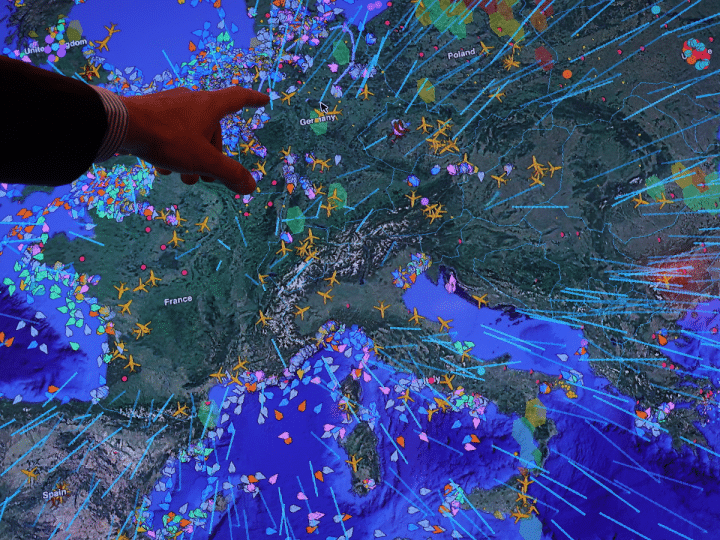
Digital rights group Access Now have published an open letter demanding AI is removed from military kill chains. Hundreds of activist and human rights organisations have signed up. They oppose the rapid penetration of AI technology into the military killing machine.
Access Now is an NGO which:
defends and extends the digital rights of people and communities at risk.
A kill chain is described as:
the military process of finding, fixing, tracking, targeting, engaging, and assessing a threat — abbreviated F2T2EA.
Their new joint statement, signed by hundreds of groups, expressed deep alarm at:
the rapid militarization of artificial intelligence (AI) technologies.
Access Now warned:
AI systems embedded into military kill chains are accelerating the speed and scale of military assaults in a manner that creates significant new risks for accountability in conflict and risks facilitating violations of international criminal, human rights, and humanitarian law.
The UK state has become deeply entangled with AI firms, including the far-right AI corporation Palantir, in recent years.
The UK should divest from military AI
As the Canary has reported:
The UK military is currently locked into a multi-billion pound contract with Palantir. The statement makes no mention of Palantir, despite the genocide-linked firm’s role being the source of most controversy.
The UK military, police, NHS and, allegedly, the Telegraph have started using Palantir technology. The firm maintains a permanent desk in southern Israel, and is deeply involved in Israel’s genocide in Gaza, as well as Trump’s paramilitary immigration operations, ICE, whose officers use the firm’s gear.
The firm’s founders are open about their far-right politics. Palantir’s vision was exposed as fascistic in a 22-tweet ‘manifesto’ posted on X.
Access Now called:
for tech companies and states to halt the provision of AI systems for use in the military kill chain and to take all steps to ensure that other AI systems they provide do not cause or contribute to violations of international humanitarian law (IHL) and international human rights law (IHRL).
The group said their call applied to all:
AI decision-support systems, including target generation systems, remote biometric surveillance, and multimodal AI models, including large language models (LLMs).
AI-accelerated warfare is rapidly becoming a means of rubber-stamping killing at speed and at scale, and currently no technical or procedural fixes can effectively prevent the lethal and devastating consequences that stem from the fundamental challenges it poses to international law.
Access Now is correct. AI is a new frontier of imperialist warfare and state repression. The UK and other states have wholeheartedly embraced AI in their military, security and even civilian infrastructure. The UK should pause this process. At best, as the UK commons technology committee has argued in the case of Palantir, it should be divested from.
Featured image via Getty/Sean Gallup
By Joe Glenton

BANKS HAVE DONE IT!!! XRP = NEW WORLD ORDER?!?!

Ex-immigration minister Robert Jenrick still hasn’t provided evidence to the Manston inquiry
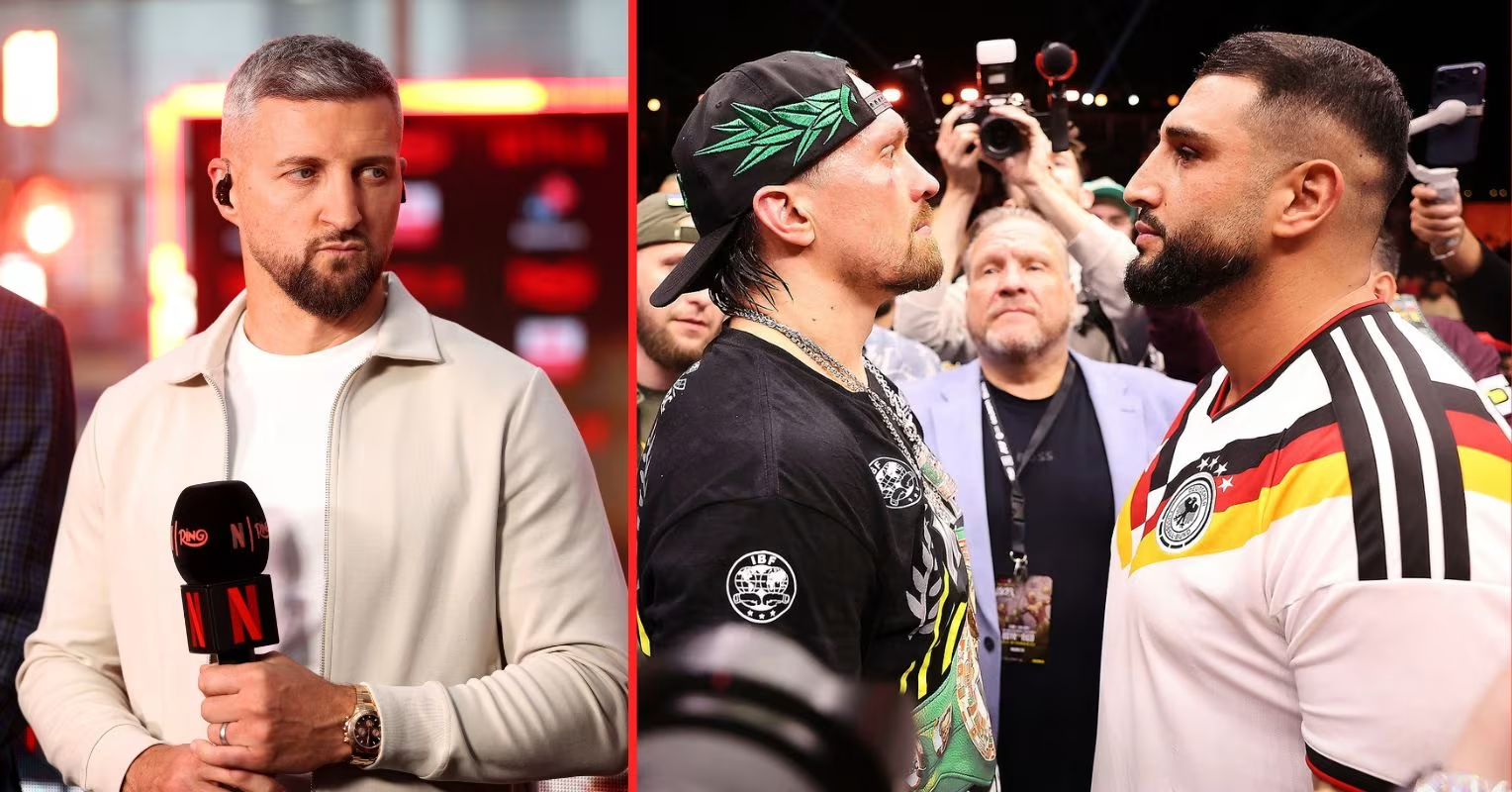
Carl Froch delivers honest verdict on Usyk vs Agit Kabayel: “He’s past his best”


-

 Business2 days ago
No Jackpot Winner as $257 Million Prize Rolls Over to $269 Million Monday Draw
-

 Crypto World5 days ago
Oppenheimer backs SpaceX as $70 billion retail frenzy builds
-

 Fashion4 days ago
Weekend Open Thread: Tuckernuck – Corporette.com
-

 Crypto World5 days ago
Markets Rally as SpaceX IPO Looms Amid Iran Tensions and Inflation Surge
-
 Crypto World2 days ago
Zimbabwe Requires Crypto Businesses to Register Annually Under New FIU Regulations
-

 Tech3 days ago
NanoClaw integrates JFrog registries to secure AI agent downloads
-
 Sports7 days ago
Bangladesh beat Australia after 20 years in ODIs, register only their second win over six-time world champions | Cricket News
-

 Tech4 days ago
This Week In Security: Microsoft On Microsoft, Register Your Domains, Linux On ARM, And FreeBSD Joins The File Cache Club
-

 Crypto World3 days ago
Bitget enters Argentina’s regulated crypto market through PSAV registration
-
 Tech5 days ago
Dutton Ranch star claims they ‘didn’t see any disruption’ on set following Chad Feehan’s exit from Yellowstone spinoff fueled by Taylor Sheridan clash rumors
-

 NewsBeat5 days ago
El Nino has formed in the Pacific and could set records, forecasters say
-

 Business6 days ago
Thailand Ranks Second Worldwide for AI Adoption Growth, Microsoft Reports
-

 Tech6 days ago
‘This is Seattle’s position on AI’: City Council votes unanimously to pause big new data centers
-

 Politics5 days ago
Politics Home | Healey Resignation Is “Colossal Failure Of Government”, Says Former Labour Defence Secretary
-
 Entertainment5 days ago
Donnie Wahlberg & More Heat Up Las Vegas at Circa’s Barry’s Downtown Prime
-
 Tech5 days ago
Opendoor Ends India Operations, Fueling a Bigger Conversation About AI and Outsourcing
-

 Sports5 days ago
First Time Since 1971: Australia Register Historic Low In ODI Cricket
-

 Politics5 days ago
Belfast burns, while Met chief points finger at Iran and Russia
-

 NewsBeat4 days ago
FBI searches office of Ohio voter registration group
-

 Business5 days ago
AT&T: Verizon's 27% Outperformance Sets Up A Solid Entry Point
You must be logged in to post a comment Login