

Crypto World
US House Probes Kalshi and Polymarket for Insider Trading


The U.S. Congress is intensifying its scrutiny of prediction-market platforms Polymarket and Kalshi, demanding internal records to understand how each platform handles insider trading. The move comes after public disclosures and media reports suggested traders might be using nonpublic information tied to government actions to place bets.
In a post on X, Rep. James Comer, chair of the House Oversight and Reform Committee, said he had sent letters to Polymarket CEO Shayne Coplan and Kalshi CEO Tarek Mansour, requesting internal documents that detail the firms’ procedures for detecting and mitigating insider trading. Comer warned that lawmakers are concerned about elected officials leveraging “basic insider knowledge” to profit from government actions, a practice he described as unacceptable.
Comer cited reports of more than 80 suspicious trades that appeared to be timed ahead of Iran-related military operations, a finding he linked to concerns that politicians and other officials with access to nonpublic information could place favorable bets and cash out. The reference traces to a New York Times article published May 13, which detailed bets surrounding Israel’s actions in the Iran conflict, a Trump ceasefire announcement, and other event contracts tied to U.S. politics. The Times report underscored how market activity can reflect sensitive real-world developments before they unfold.
Both Polymarket and Kalshi have faced ongoing scrutiny over insider-trading risks. Polymarket said in March that it had updated its approach to potential insider trading on the platform, while Kalshi announced in April that it had banned three U.S. politicians from wagering on their own races. The developments come as investors and users weigh how these markets should be regulated and safeguarded against abuse. Cointelegraph reached out to Polymarket and Kalshi for comment but did not receive an immediate response.
Key takeaways
- House Oversight Committee Chair James Comer says he has sent formal requests to Polymarket and Kalshi for internal records on handling insider trading, signaling intensified congressional oversight.
- A New York Times report cited by Comer details at least 80 suspicious trades timed around Iran-related military actions and other political events, highlighting potential insider-fueled profits.
- Polymarket and Kalshi have each introduced policy responses—Polymarket updating its approach to insider trading and Kalshi banning several U.S. politicians from certain bets—indicating industry reform under pressure.
- Separately, a U.S. Justice Department indictment connects a military figure to profits from Polymarket contracts tied to Maduro’s capture, illustrating potential national-security risks linked to these markets.
Congressional inquiry and industry response
The letters from Rep. Comer reflect a broader concern in Congress about whether prediction markets—designed to aggregate information and forecast outcomes—could be hijacked by insiders with government access. Comer’s public statements emphasize that lawmakers view insider trading as a threat to market integrity and a potential conflict of interest for public officials.
Beyond the committee’s actions, the media narrative points to concrete episodes in which insiders might have exploited timely, sensitive information. The Times report described bets around Israel’s military actions against Iran, a ceasefire announcement from the U.S. government, and other events that could plausibly be influenced by nonpublic information. While such events attract broad attention, the question remains: do current platform safeguards suffice to deter misuse, and how should regulators weigh further requirements?
Polymarket has acknowledged certain limitations and responded by updating its governance around potential insider trading. Kalshi has taken a different route by restricting participation of specific U.S. officials in bets related to their roles, action that signals a willingness to enforce stricter rules even as it navigates regulatory expectations for-compliant markets. As these platforms adjust, investors and users should monitor not only policy shifts but also how responsive the platforms are to inquiries from Congress and the public.
Linkage to broader legal cases and implications for users
Meanwhile, a parallel case involving Polymarket intersects with national security considerations. In April, the U.S. Department of Justice announced a criminal indictment against Master Sergeant Gannon Ken Van Dyke, a servicemember involved in the operation to capture Venezuelan President Nicolás Maduro. Prosecutors alleged that Van Dyke used Polymarket event contracts tied to Maduro’s capture to profit by more than $400,000 by relying on classified information. Van Dyke has pleaded not guilty to charges that include commodities fraud and unlawful use of confidential government information for personal gain. He was released on $250,000 bail and restricted to travel among North Carolina, California, and New York while the case proceeds. The charges and the related market activity underscore how insiders in and around government actions can intersect with digital prediction markets in ways that raise both legal and ethical questions for participants, platforms, and observers alike.
These developments come as the market for event-based contracts continues to evolve, with ongoing debates about what constitutes acceptable use, how to detect manipulation, and what safeguards are necessary to protect users and the integrity of the markets. The DoJ matter, in particular, highlights a potential warning sign for participants: even intra-government or government-linked actors may see opportunities in these markets, complicating the assessment of risk and reward for ordinary users.
What to watch next
As Congress seeks more transparency, expect continued inquiries into how Kalshi and Polymarket monitor for insider trading, what internal controls exist, and what remedies are in place when anomalies are detected. Watch for any formal regulatory guidance or updated compliance requirements that emerge from both congressional action and platform responses. The interplay between national-security concerns, market integrity, and user trust will shape how these platforms evolve and how investors approach prediction-market participation in the coming months.
The evolving story — including any formal responses from Polymarket and Kalshi and the progression of the Van Dyke case — will illuminate whether the market’s promise as a tool for price discovery and information aggregation can be preserved in a landscape increasingly scrutinized by policymakers and law enforcement. For readers, the key remains: how robust are the safeguards, and who bears the burden when safeguards fail?

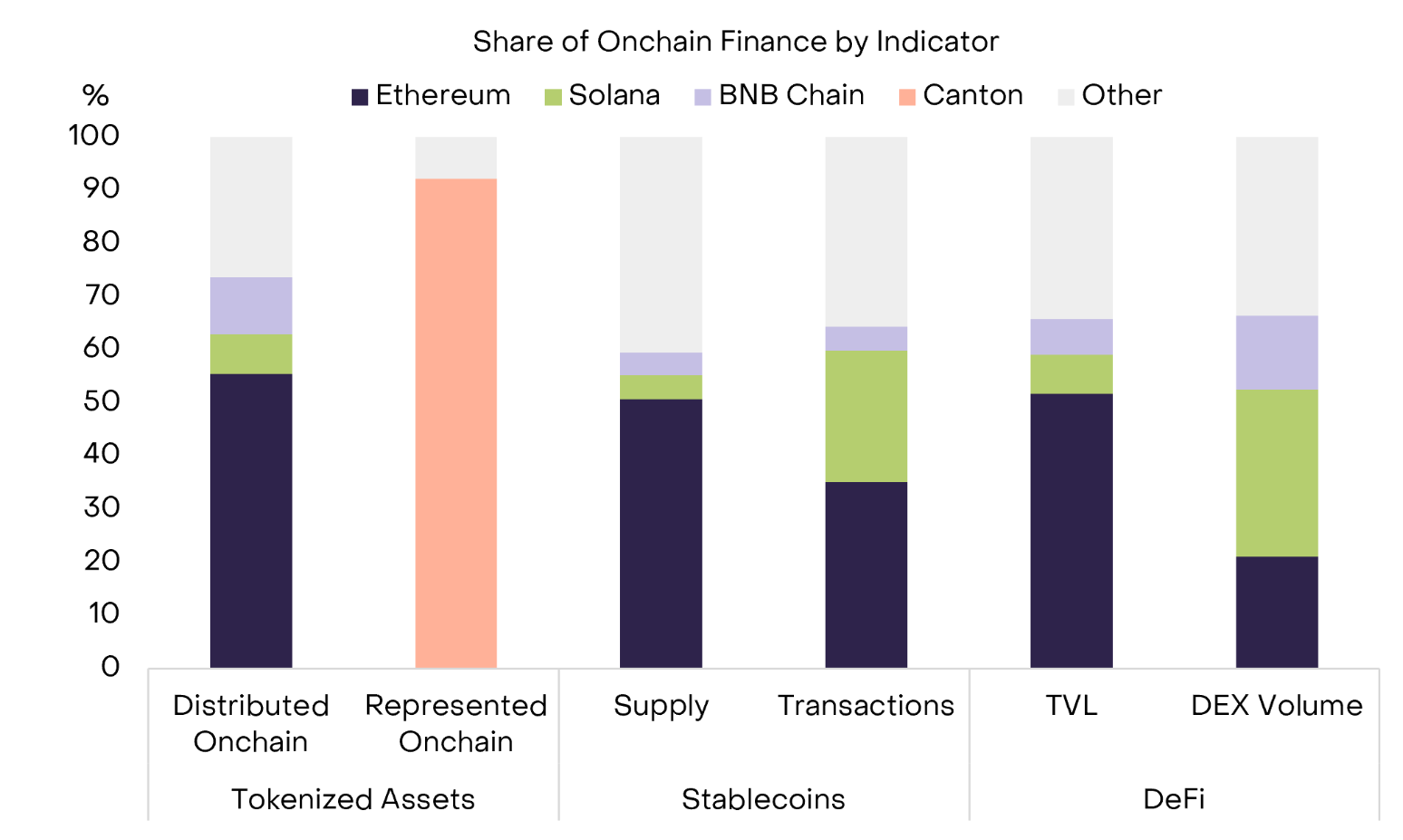
Asset manager Grayscale named four blockchains best placed to absorb institutional flows after the CLARITY Act passes. The list pairs Ethereum and Solana with BNB Chain and Canton Network.
The Digital Asset Market Clarity Act cleared the Senate Banking Committee on a 15-9 vote on May 14. The bill would split crypto oversight between the SEC and CFTC, and now heads to the full Senate floor.
Why Grayscale Picked These CLARITY Act Beneficiaries
Ethereum (ETH) leads the field for assets with full on-chain functionality, Grayscale wrote. BNB Chain and Solana (SOL) follow in second and third place.
The same three networks rank highest by stablecoin supply and DeFi total value locked, the firm said.

The four chains were also part of Grayscale’s broader tokenization megatrend picks earlier this year. The firm sees regulated capital flowing toward networks with the deepest on-chain finance footprints.
That dynamic favors incumbents already wired into traditional finance pipes.
“Regulatory clarity is coming, and a rising tide will likely lift digital assets broadly. It’s targeting the chains already leading tokenized assets, stablecoins, and DeFi: $ETH, $SOL, $BNB, and $CC,” Grayscale wrote in a post.
Follow us on X to get the latest news as it happens
Canton Network Takes a Different Route
Canton Network (CC) sits apart from the other three. The privacy-focused Layer-1 was built specifically for regulated institutions, and a recent Canton Network ETF launch gave retail investors exposure.
It now hosts DTCC’s tokenized U.S. Treasury pilot, with J.P. Morgan, HSBC, and Visa among its validators.
“Wall Street is already onchain. $350B settles daily on Canton, with over $6T in tokenized real-world assets and institutions like JPMorgan and DTCC building in production,” the network said recently.
Grayscale also flagged Avalanche, Base, Arbitrum, Hyperliquid, and Tron as altcoins set to benefit from the new framework.
The next Senate floor vote will test how quickly capital follows policy. The Senate Banking Committee vote cleared the first major hurdle on May 14.
With 60 votes needed for final passage, the bill’s path depends on Democratic support.
Subscribe to our YouTube channel to watch leaders and journalists provide expert insights
The post Grayscale Names 4 Altcoins Likely To Benefit From the CLARITY Act appeared first on BeInCrypto.


Gold fell below $4,500 per ounce on Friday as both spot prices and New York futures dropped about 0.94 percent, extending a sharp pullback from this year’s record highs.
Summary
- Spot and New York gold futures fell roughly 0.94 percent, breaking below $4,500
- Contracts traded in a rough $4,497 to $4,536 range as the US dollar hit a six week high
- Rising oil above $97 per barrel revived bets on another Federal Reserve rate hike this year
Early on May 22, gold slipped below $4,500 as spot and New York futures fell 0.94 percent, after the metal broke a key psychological level during New York trading.
Why did gold fall below $4,500 today?
In a widely cited follow up post, market watcher OnChainHutan said gold “slipped below $4,500, closing around $4,497.29 – $4,535.60 depending on the contract,” adding that the drop came as the US dollar hovered near a six week high and oil pushed above $97 per barrel.
That combination reinforced a familiar macro squeeze for bullion, since a stronger dollar makes gold more expensive for buyers in other currencies while higher energy costs fan inflation fears and push traders to price in the risk of tighter policy rather than imminent cuts.
According to OnChainHutan, futures markets are now “fueling bets the Fed may hike rates later this year,” with markets “pricing in a roughly 58 percent chance” of another move, a shift that directly undermines the appeal of a non yielding asset that earlier soared on expectations of aggressive easing.
The pullback lands just months after gold repeatedly punched through records above $4,900 per ounce, driven by central bank buying, geopolitical stress and wagers that Federal Reserve chair would have to slash borrowing costs into a slowing US economy.
In April, analysts surveyed by Investing.com still projected a median 2026 gold price of about $4,916 per ounce, underscoring how far sentiment has swung in a matter of sessions as spot now tests the lower edge of a $4,300 to $4,700 trading corridor highlighted in prior rate cut driven rallies.
What does the gold slide signal for risk assets and crypto?
Reactions on X captured the emotional whiplash, with one user noting that “gold drops 1 percent and suddenly everyone becomes a long term investor again,” while another user quipped that a “tiny red candle creates more panic than ten green ones create excitement.”
OnChainHutan argued that “gold pulling back while risk assets stay strong says a lot about current market sentiment,” pointing to an environment where equities and high beta plays have held up despite renewed Iran war risks, a dynamic also visible in recent crypto market outlook coverage of how traders fade geopolitical headlines.
Earlier this month, gold briefly fell back toward $4,500 per ounce on “heightened inflation fears” after a three percent intraday drop wiped out two weeks of gains, a move that foreshadowed today’s breach of the same level as investors reassessed whether bullion had outrun its macro narrative.
Analysts have warned that if the Fed leans more hawkish into the summer, bullion could spend extended time below $4,500 before any renewed push toward the $4,700 to $5,000 band that technical strategists previously mapped out once prices cleared $4,300 and $4,400.
For crypto traders, the move matters because this year’s record breaking gold surge above $4,900 per ounce ran alongside a powerful rally in Bitcoinm (BTC), as both assets traded like alternative macro hedges on US policy risk and Middle East tension.
If the market now believes the Federal Reserve is more likely to hike than cut, that same macro repricing could pressure high flying digital assets, just as it has started to bleed some air from bullion’s record run, something earlier crypto market outlook and ceasefire reports have highlighted whenever rate expectations flip.
Security exploits are weighing on institutional appetite for decentralized finance (DeFi), even as broader crypto adoption continues through stablecoins and tokenized assets.
In an April research note, JPMorgan analysts said that bridge security remains a challenge for the industry, raising questions on whether DeFi can grow to support further institutional adoption.
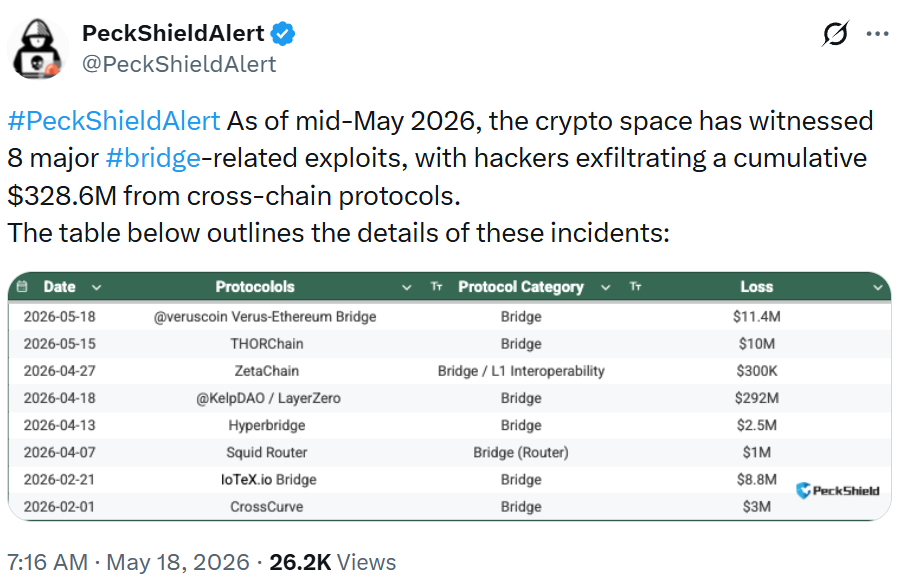
The recent exploit on the Versus-Ethereum bridge was the eighth major attack against DeFi bridges in 2026 so far, with cumulative losses totalling $328.6 million.
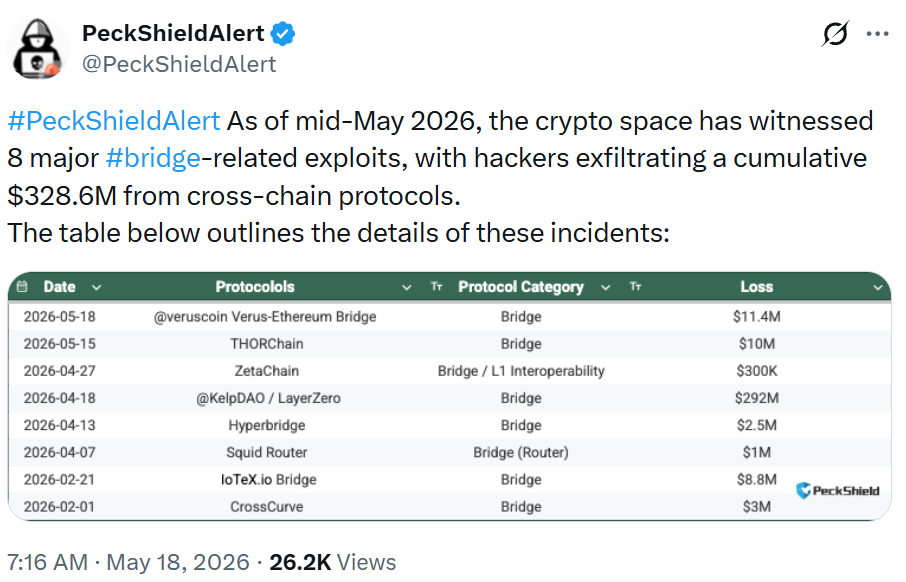
DeFi bridges remain prime targets for hackers seeking to steal millions of dollars. Source: PeckShield
Misha Putiatin, CEO of smart contract security firm Statemind and co-founder of DeFi protocol Symbiotic, said he regularly fields calls from major traditional institutions exploring DeFi exposure, often with bad timing.
“Five minutes before I have a call with a big traditional institution, another big hack,” he told Cointelegraph.
“They sit there looking at me like, ‘Is this normal? Is this every day for you?”
Still, institutions may get into DeFi, but the terms on which they arrive could reshape it into something that looks a lot more like traditional finance than the open, permissionless system its builders envisioned.
DeFi has become too complex for DYOR
At the beginning of April, North Korea’s Lazarus Group was implicated in the $285 million Drift Protocol exploit, carried out through a months-long social engineering campaign in which infiltrators approached Drift contributors at an in-person crypto conference.
The same actors were blamed for the KelpDAO breach a few weeks later, which drained about $290 million from the protocol’s cross-chain bridge.
Total value locked across DeFi fell to around $86 billion from just under $100 billion in two days following the KelpDAO hack in April. The outflows came from pools with no direct exposure to compromised assets, said JPMorgan analysts.
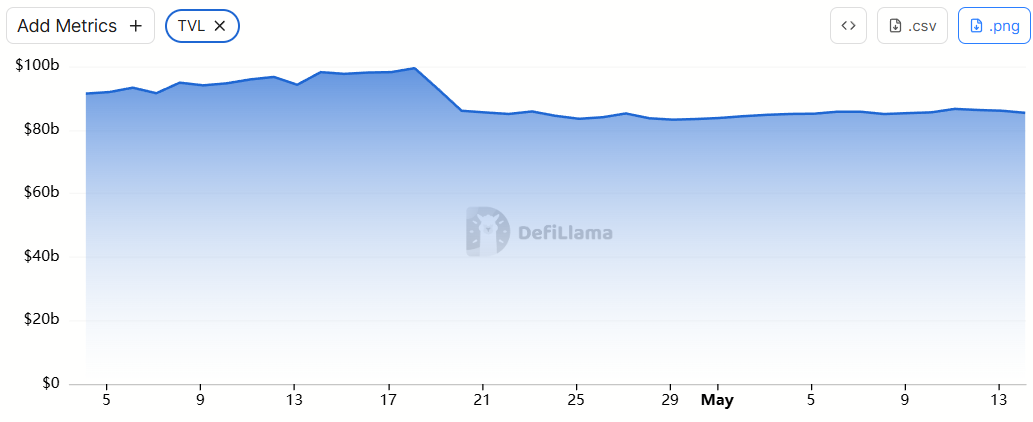
DeFi pools lost around $14 billion following the attack on KelpDAO. Source: DefiLlama
Related: Wall Street’s tokenization boom has a liquidity problem: Axis CEO
Putiatin said the complexity of modern DeFi makes it nearly impossible for ordinary users to know where their risk actually sits. “Do your own research doesn’t work anymore,” he said. “It hasn’t been working for a really long time.”
He explained that the system has become too interconnected and complex to trace.
For example, when a user deposits Ether (ETH) to earn yield while never touching any other token, they can still get hit by a breach on a bridge connected to a token they’ve never even heard of.
Do your own research, or DYOR, is an industry mantra born in the early days of Bitcoin, when protocols were simple enough that a user could read a whitepaper and make an informed decision.
Today, with smart contracts running up to tens of thousands of lines of code, protocols layered on top of one another, and new services and tokens launching at breakneck speed, that expectation has become almost impossible to meet.
“I’m not ever expecting people that just want to invest their money to ever figure out every part of the stack themselves,” Putiatin said.
“I’m not going to spend the next two years of my life trying to figure out how to get a 6% yield,” he added, claiming that traditional finance alternatives are close enough in return that the DeFi’s security risk rarely makes sense for most investors.
A shrinking premium for an unquantifiable risk
Tether (USDT), the world’s largest stablecoin, offers a supply APY of 2.74% on Aave’s Ethereum market, the biggest DeFi lending protocol. That’s below the 3.57% available on a three-month US Treasury bill. Circle’s USDC (USDC) fares better at 4.14%.
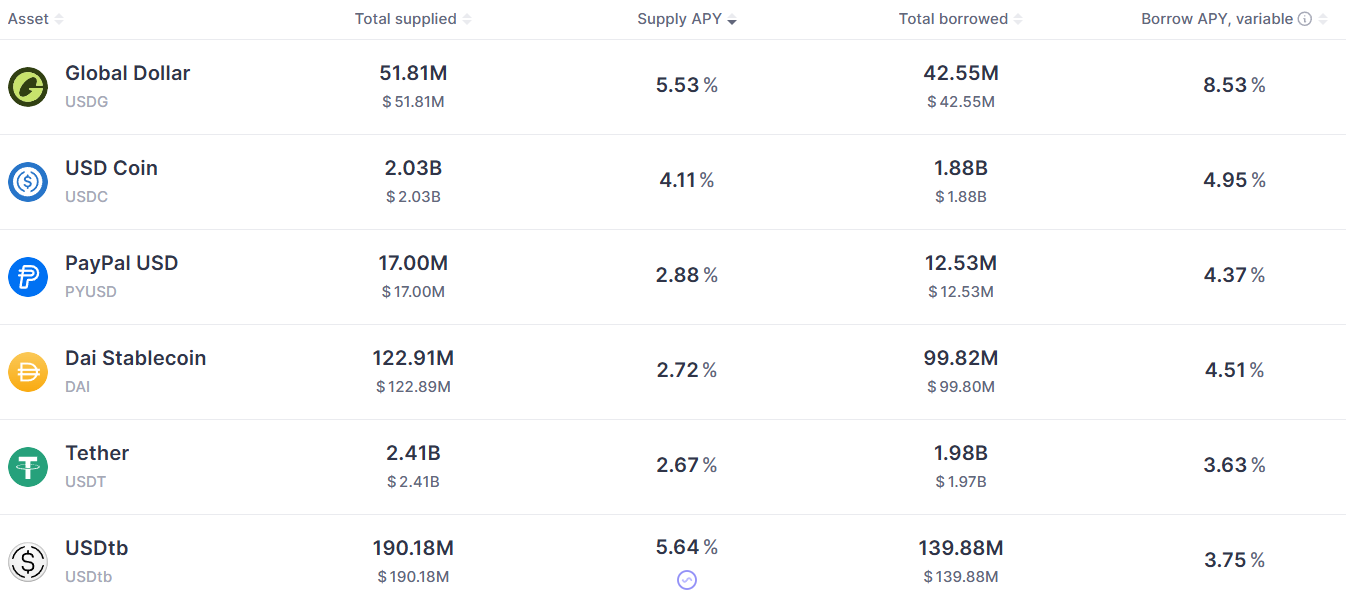
Supply and borrow APY on Aave’s Ethereum market. Source: Aave
Related: Why stablecoins and SWIFT may have to coexist
Putiatin said institutions see this clearly, even if they struggle to quantify it precisely. The problem is that institutions have no reliable framework for pricing the hack risk sitting underneath them.
“They can’t price risk properly,” he said. “So they discount the yield we provide by a lot.”
DeFi yields have compressed as the market has matured, eroding the premium that once justified the risk.
At the same time, the hacks have not slowed down. For investors used to underwriting risk with actuarial precision, shrinking upside and unquantifiable downside is a hard sell.
The cost of DeFi’s seat at the table
Putiatin’s benchmark for when DeFi has genuinely turned a corner is an onchain insurance system capable of underwriting hack risk across the entire ecosystem and pricing it with the kind of actuarial precision that institutions require.
“When we have circuit breakers, curators that can do due diligence, and a framework for that — we will get the fourth one that we desperately need as an industry,” he said. “We will get insurance.”
DeFi has lost over $7.76 billion to exploits, according to DeFiLlama data tracing back to 2016. Though DeFi insurance providers exist, their capacity remains too small to backstop anything approaching institutional scale.
Without that infrastructure, institutions that do come in will do so on their own terms, demanding full know-your-customer checks, custodial controls and tokens that can be frozen at any time.
The open, permissionless architecture that made DeFi worth building gets stripped to satisfy compliance requirements.
“All of the benefits that we have as an industry, they kind of go away,” he said. “Blockchain becomes just a database.”
It is an outcome Putiatin finds more troubling than the hacks themselves. The hacks, at least, are a problem the industry can work on. A version of DeFi that institutions have hollowed out to make it safe enough for their mandates is a surrender of everything the technology was supposed to change.
Magazine: 5 tech predictions the mainstream media got horribly wrong
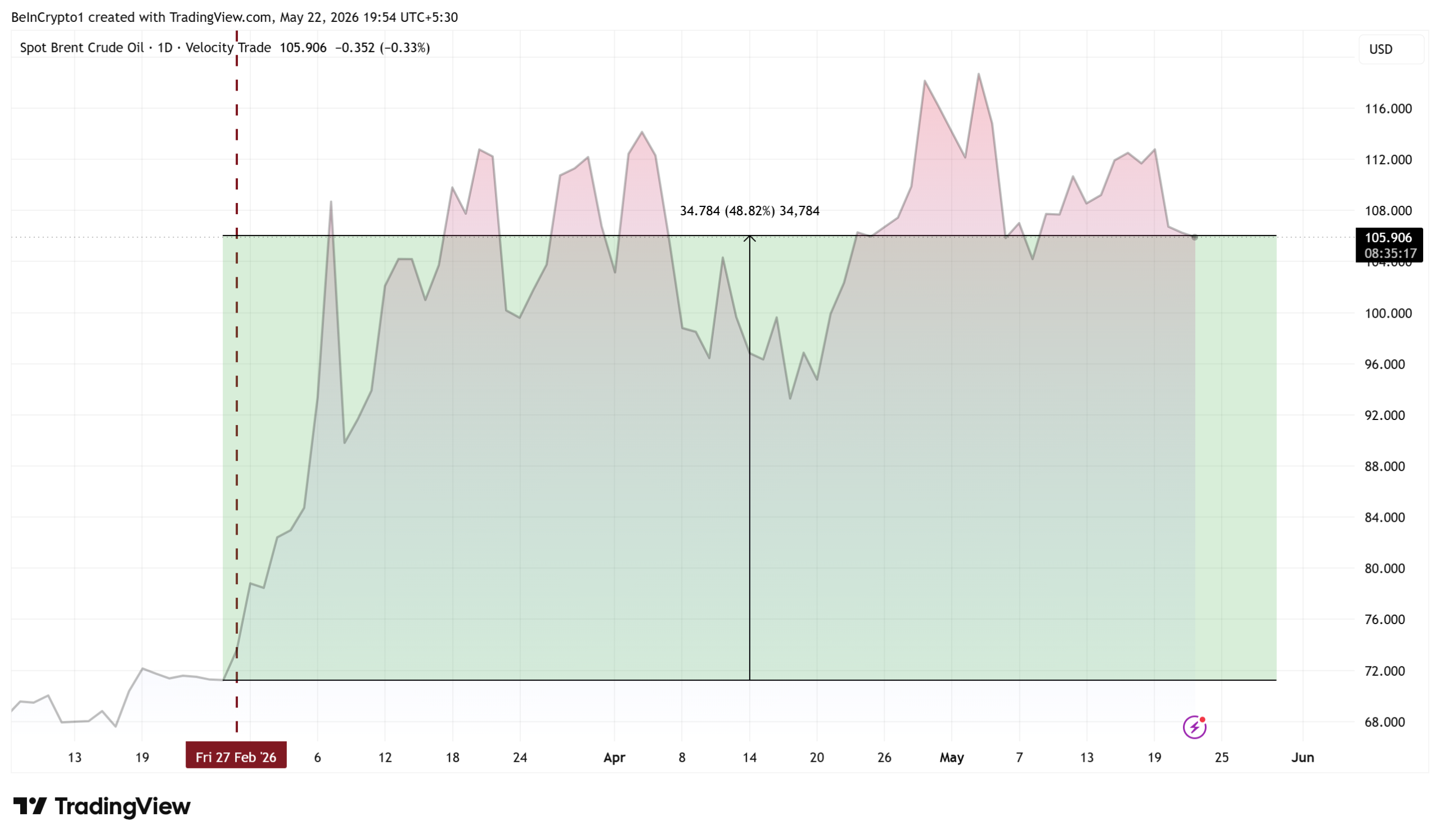
NYSE parent Intercontinental Exchange (ICE) and crypto exchange OKX announced plans to launch perpetual oil futures tied to Brent and WTI benchmarks. The contracts will never expire and will roll out where OKX holds licenses to offer perpetuals.
The product is the first joint launch since the March investment, which valued OKX at $25 billion. The Iran war has kept oil prices elevated and trading desks stretched in recent months.
ICE Moves From Strategic Stake to Shared Product with OKX
ICE Brent and WTI futures prices will anchor the new perpetual contracts, the companies said in a joint statement.
OKX serves more than 120 million customers worldwide, giving ICE distribution into crypto-native markets traditional exchange infrastructure rarely reaches.
The launch follows ICE’s March OKX investment, which secured a board seat at the crypto exchange. The deal also outlined plans to license OKX spot crypto prices and route tokenized NYSE securities through the exchange.
ICE Chair Jeffrey Sprecher said the March deal aimed to bring on-chain infrastructure to trading, settlement, and capital formation.
Friday’s product is the first concrete delivery on that roadmap, with ICE Senior Vice President Trabue Bland noting the new contracts open the company’s regulated oil markets to OKX users.
“These new OKX perpetual contracts, based on ICE’s deep, liquid, transparent, and global oil markets, allow OKX’s customer base of 120 million retail traders to access energy benchmark products,” said ICE Senior Vice President Trabue Bland.
Follow us on X to get the latest news as it happens
By wrapping Brent and WTI in a perpetual futures contracts structure, ICE pushes its core energy franchise into a crypto-native format.
The move also fits the broader real-world asset (RWA) tokenization trend that has pulled treasuries, equities, and commodities onto blockchain rails this year.
Why Perpetual Oil Futures Fit the Iran War Era
Brent crude rose to about $105.90 a barrel on Friday, nearly 50% above pre-war levels. The 2026 Iran conflict and the Strait of Hormuz standoff continue to feed the move.

“Energy markets are becoming global, digital, and 24/7. Bringing ICE Brent and WTI to OKX is another step toward that future,” commented Star Xu, founder and CEO of the OKX Exchange.
Tehran has even demanded crypto tolls from tankers passing through the chokepoint. The waterway carries close to a fifth of global oil flows.
Traditional Brent and WTI futures close on weekends and force traders to roll positions before expiry. Perpetual futures avoid both.
They use a recurring funding payment between long and short holders to keep the price near the underlying benchmark
“Oil markets are critical to the world economy. ICE’s Brent and WTI futures markets provide the benchmark prices that energy traders everywhere rely on. Bringing them into regulated perpetual futures is exactly the kind of bridge between traditional and digital markets that market participants have been asking for,” OKX Global Managing Partner Haider Rafique noted.
OKX had already listed USDT-margined oil perpetuals tied to Brent and WTI-linked benchmarks earlier this year.
Trading volume on Hyperliquid silver perpetuals hit roughly $1.1 billion in a single day this year. That figure showed strong appetite for commodity products on crypto rails.
What Traders Should Watch
Contract size, leverage tiers, fees, and the precise launch date were not disclosed Friday. Availability will be limited to OKX licensed regions.
Those today include the European Economic Area, the UAE, Singapore, Australia, and select other markets.
OKX also holds US licenses, although perpetual futures remain restricted for most US retail traders.
For ICE, the project tests whether its energy franchise holds pricing power once retail traders gain a simpler entry point.
For OKX, it is another step toward becoming a distribution layer for traditional benchmarks, but that bridge being able to hold will depend on launch volumes.
Price discovery may also shift once retail flows can react around the clock to tanker and ceasefire headlines. The first weekend after launch may matter more than the first weekday.
The post NYSE Owner ICE Brings Perpetual Oil Futures to OKX as Iran War Drives Demand appeared first on BeInCrypto.
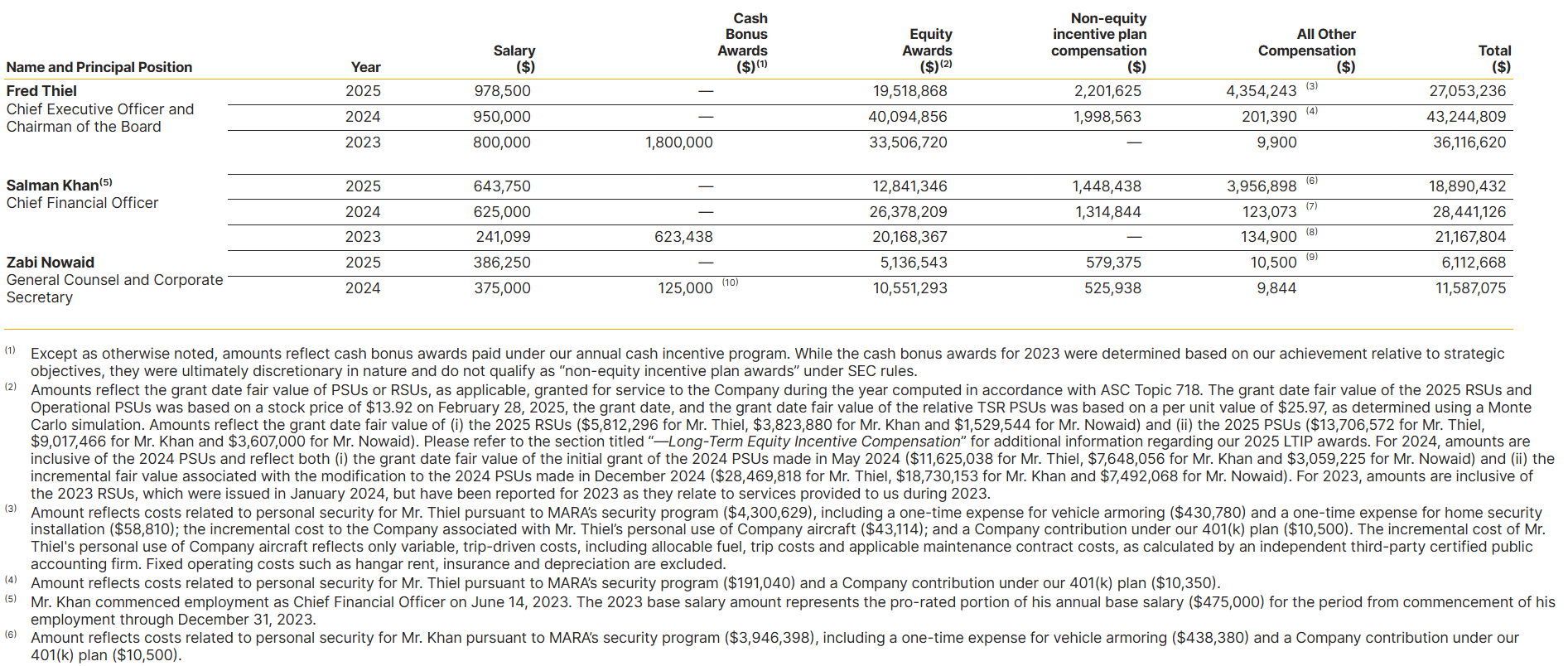
Bitcoin miner MARA Holdings spent $4.3 million on personal security for CEO Fred Thiel in 2025, including $430,780 to armor a vehicle, as crypto companies respond to rising physical attacks on industry executives and investors.
MARA, the seventh-largest Bitcoin mining company worth more than $5 billion, also spent about $58,810 on Thiel’s home security installations and reported additional expenses related to the security measures of other executives, according to its DEF 14A filing with the US Securities and Exchange Commission on April 30.
The filing shows that MARA spent a total of $4.3 million on Thiel’s security during fiscal year 2025, including the armored vehicle, bodyguards and home security fortifications.
Thiel’s security costs rose sharply from 2024, when MARA reported $191,040 in personal security costs for the CEO. His total “All Other Compensation” rose to $4.4 million in 2025 from $201,390 a year earlier.
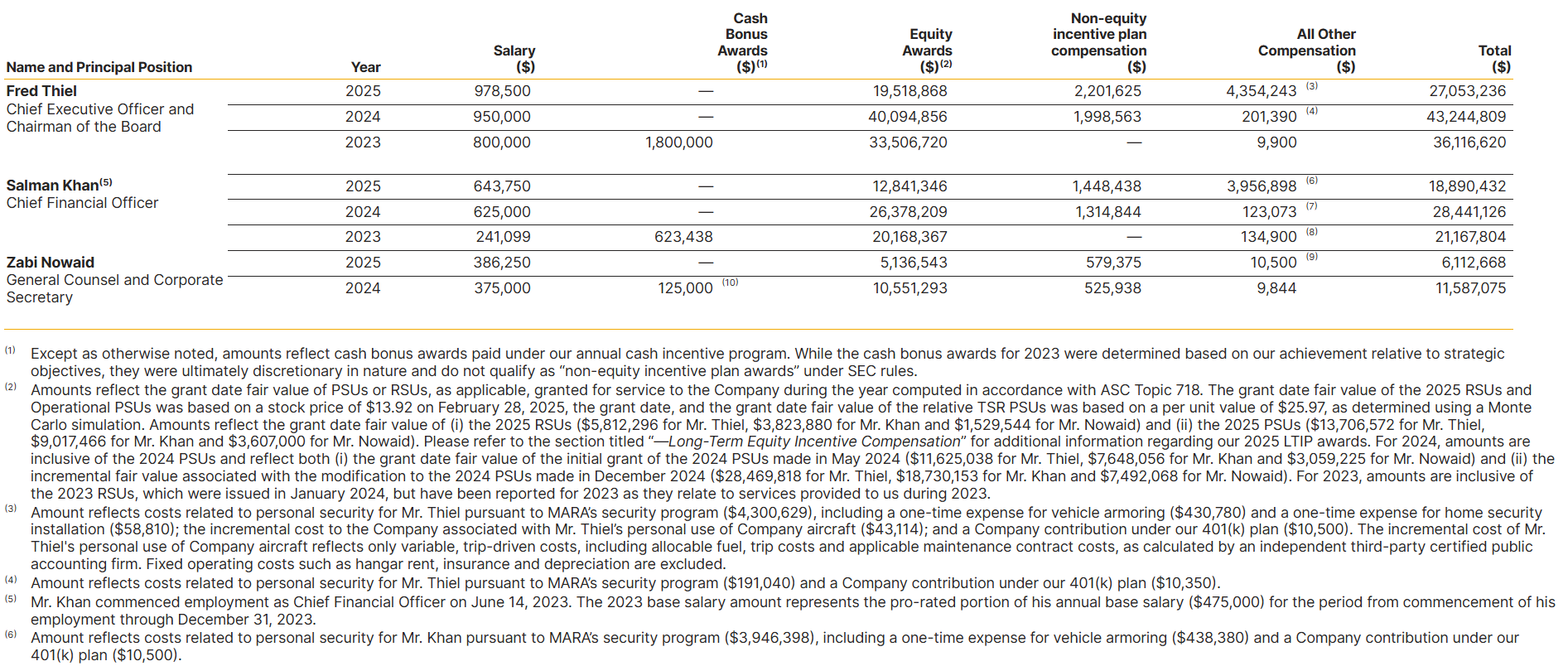
MARA Holdings DEF 14A filing for fiscal year of 2025 with the Securities and Exchange Commission. Source: SEC.gov
The disclosures come as crypto-linked physical attacks, often called wrench attacks, have increased globally. The spending shows how physical security has become a material corporate cost for some crypto companies as executives face threats tied to the public visibility and portability of digital assets. Unlike traditional financial theft, wrench attacks use coercion, kidnapping or violence to force victims to surrender private keys, passwords or account access.
The filing also shows that MARA spent $3.9 million on personal security for chief financial officer Salman Khan in 2025, including $438,380 to armor a vehicle.
Cointelegraph has approached MARA for comment on the growing security spending.
Related: Polymarket team says user funds safe as exploit losses climb above $600K
Wrench attacks targeting crypto investors see alarming rise
Cybersecurity firm CertiK reported 72 verified physical coercion incidents in 2025, up 75% from a year earlier.
France saw the biggest number of such incidents in 2025, with 19 confirmed wrench attacks. In response, Jean-Didier Berger, minister delegate to the interior minister of France, promised to implement new “preventative measures” against these threats.
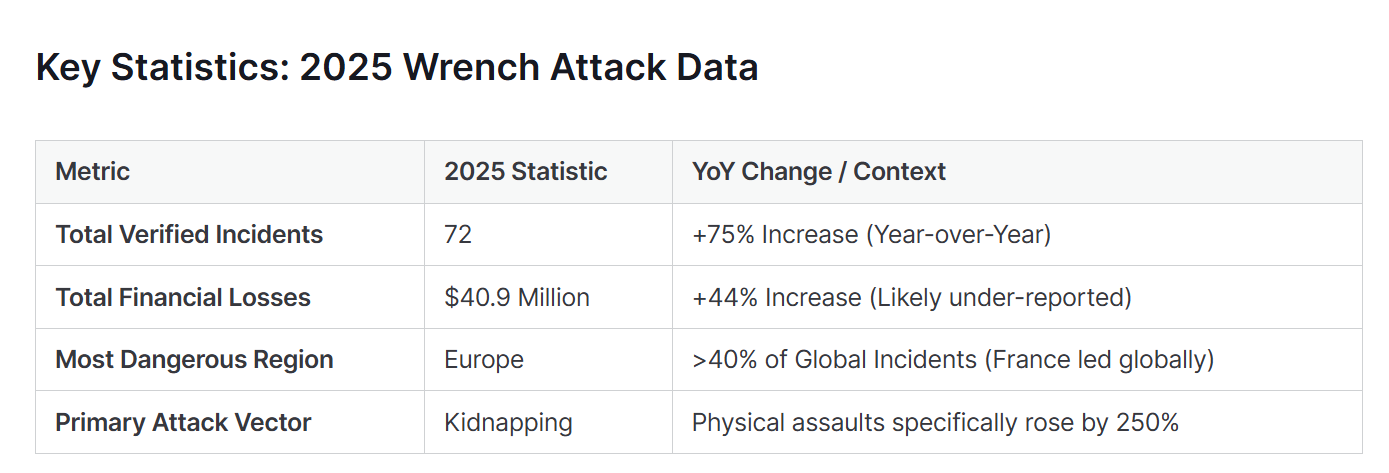
Crypto wrench attacks, key stats for 2025. Source: CertiK
At least 88 people, including 10 minors, have been reportedly indicted in connection with alleged wrench attacks against crypto owners in France, leading up to April 27.
Earlier in February, a senior employee at Binance’s French unit was the victim of an armed home invasion. French authorities arrested three suspects hours after the break-in, Cointelegraph reported on Feb. 13.
Magazine: The legal battle over who can claim DeFi’s stolen millions

After operating for around 1.5 years, the Ethereum Layer 2 project Zero Network announced that it is shutting down its standalone chain and pivoting toward expanding the Zerion API and wallet products.
The team said the network was originally launched with the belief that gas fees remained one of the biggest barriers to mainstream crypto adoption, according to a statement shared on X.
Full Shutdown Timeline
Zero Network described itself as the first fully gasless, EVM-compatible rollup, which offered zero gas fees for Zerion wallet users through an open paymaster system. However, after running the network, the team said it concluded that maintaining a separate chain was no longer the best way to pursue that goal.
It plans to direct its resources toward products already being used daily by its customers. As part of the wind-down process, the project urged all users holding ETH, tokens, or NFTs on Zero Network to bridge their assets out before July 31, 2026.
The team asserted that all funds remain safe and fully accessible, and instructed users to move assets either to the Ethereum mainnet or another preferred chain before the deadline.
According to the announcement, bridging into Zero Network has already been disabled, while bridging out will remain available until July 31. After that date, the network will be completely shut down, and block production will stop. The team also thanked early users, builders, and partner projects that supported the ecosystem from its launch, including Matter Labs, Caldera, Relay Protocol, and Highlight.
Zero Network added,
“The vision we set out to build hasn’t changed. How we deliver it is evolving. The team, the talent, and everything we learned from ZERϴ is being channeled into building the best wallet and data API experience in crypto, across every chain.”
Crypto Closures
A number of crypto companies announced shutdowns this week. Syndicate Labs, an Ethereum infrastructure startup backed by Andreessen Horowitz, said it was closing down after operating for five years. The company explained that it had focused on building tools to help developers create and scale on-chain applications, but added that the rollup sector had changed significantly over time.
The firm stated that EVM rollups are no longer widely treated as the default industry approach. Syndicate Labs said it spent years trying to support the expansion of on-chain apps and wished the results had turned out differently.
Meanwhile, crypto trading card platform Fantasy.top said it would shut down in June after two years because trading activity was not large enough to support long-term operations. The company reportedly experimented with other products, including prediction markets, but failed to find market demand.
Pantera-backed cross-chain infrastructure firm Everclear also announced it was pulling the plug on Everclear Foundation and Everclear Labs, after the business failed to generate sustainable revenue or sufficient commercial traction.
The post Ethereum Layer 2 Zero Network Pulls the Plug After Just 1.5 Years appeared first on CryptoPotato.


Jeremy Sturdivant, the 19 year old who received 10,000 Bitcoin for two pizzas in May 2010, spent almost all of it long before BTC crossed even $1, let alone today’s five figure levels.
Summary
- In 2010, 10,000 BTC was worth about $40 to $41 and bought two Papa Johns pizzas for Laszlo Hanyecz in Jacksonville.
- Sturdivant later said he spent the coins on travel and goods as Bitcoin’s price climbed from fractions of a cent to under $1.
- At Bitcoin’s November 2021 peak near $69,000, that same 10,000 BTC would have been worth around $690 million.
Jeremy Sturdivant, known as “jercos” on the Bitcointalk forum, was the counterparty to Laszlo Hanyecz’s now legendary 10,000 BTC pizza purchase on May 22, 2010.
How did Jeremy Sturdivant end up with 10,000 BTC for pizza?
The deal that turned into Bitcoin Pizza Day began on the Bitcointalk forum on May 18, 2010, when Florida programmer Laszlo Hanyecz offered 10,000 BTC to anyone willing to get him “a couple of pizzas” delivered to his home.
Four days later Hanyecz posted, “I just want to report that I successfully traded 10,000 bitcoins for pizza. Thanks jercos!” confirming that forum user Jeremy “jercos” Sturdivant had stepped in, paid for two large Papa Johns pizzas with his credit card, and received 10,000 BTC in return.
At the time, those 10,000 BTC were valued at roughly $40 to $41, while the pizzas themselves cost less than $50, underscoring how informal and experimental the trade really was.
Crypto traders now commemorate that transaction every May 22 as Bitcoin Pizza Day, a tradition crypto.news highlighted in a 15th anniversary feature looking back at how both Hanyecz and Sturdivant view the deal years later.
Today Bitcoin (BTC) trades in the tens of thousands of dollars per coin, with the asset topping $76,000 in recent market cap data tracked by crypto.news.
What did Sturdivant do with the 10,000 BTC and where is he now?
Sturdivant did not become a Bitcoin billionaire because he never held the coins for long.
In a 2016 interview titled “A Living Currency: An Interview With ‘Jercos’,” he explained that he treated the 10,000 BTC as spending money and cycled it back into the small Bitcoin economy as its price crept up, saying he used the windfall on goods and travel rather than hoarding it.
That posture fit his broader view of Bitcoin at the time. In the same interview he argued that Bitcoin only made sense as something used, not idolized, saying he wanted to see it behave as “a living currency” rather than a speculative trophy locked away forever.
The contrast with the asset’s later trajectory is stark. By the 2021 bull market peak, the original 10,000 BTC would have been worth about $690 million at roughly $69,000 per coin, while more recent rallies have pushed Bitcoin above $76,000 with a market capitalization over $1.5 trillion.
Crypto historians have since noted that Hanyecz went on to spend tens of thousands more BTC on pizzas that year, while Sturdivant’s role receded as he moved on with his life away from the spotlight, resurfacing mainly in retrospective pieces about Bitcoin Pizza Day.
Crypto.news has revisited the episode repeatedly in coverage of Bitcoin Pizza Day, including reporting on how the community uses the anniversary to reflect on price discovery, early adoption, and the tension between using Bitcoin as money versus treating it as a long term store of value.
One recent explainer on Bitcoin’s evolution from novelty payment method to major asset also situates the pizza trade as a key moment in its price discovery history and links it to later phases where BTC broke above $100, $1,000, and eventually five figure territory.
As of today there is no evidence that Sturdivant accumulated a significant new stash of BTC after spending the original 10,000 coins, which means the teenager who once held what would later be hundreds of millions of dollars worth of Bitcoin cashed out of his position long before the asset reached those levels.

Bitcoin slipped below the $77,000 mark as bearish momentum resurfaced, sparking renewed debate about whether the recent bounce was a fleeting relief rally or the start of a broader downside regime. Analysts point to a blend of on-chain signals and macro-style price action that suggests traders remain focused on the risk of a renewed bear phase unless key levels hold.
As the price tests crucial thresholds, observers are watching whether the market can defend the line around the 20-day exponential moving average or if sellers will push toward a fresh swing low. Glassnode has highlighted a specific threshold—the true market mean near $78,300—that has historically acted as a dividing line between bear and bull regimes. A sharp drop below that level is widely cited as a potential signal that last week’s rally could be a local top within the ongoing bear market. According to Glassnode, the true market mean around $78,300 has historically marked a regime boundary.
On the broader narrative, institutional flows appear to be skewing toward the sell side. The premium for bitcoin on Coinbase has slipped to multi-week lows, a pattern LVRG research director Nick Ruck says signals heavier selling pressure from large holders and could weigh on near-term momentum across major crypto assets. The decline of the Coinbase premium signals selling from institutional holders.
Market chatter also circles around the idea that the last two bear markets culminated after a notable weekly candle and a break of a long-running trend line. Independent analyst Filbfilb noted that a sustained breakout above a defined “super trend” level—historically a marker of a trend reversal—has been required to mark the end of a bear phase. The current setup suggests that a rise above the “super trend” around $88,000 would be seen by some as a necessary precondition for bulls to reassert control. Filbfilb’s note on break above the weekly super trend frames the subsequent moves traders will be watching in the weeks ahead.
Key takeaways
- Bitcoin remains perched under key resistance near the 20-day EMA around $78,280, with a close below $76,000 potentially shifting the balance decisively toward bears.
- The shrinking Coinbase premium is interpreted as a sign of renewed institutional selling pressure, potentially dampening near-term upside for Bitcoin and other majors.
- Historically, a sustained breach of the weekly super trend at around $88,000 has preceded major bear market resets; the current setup makes that level a critical watchpoint for bulls.
- Across the top altcoins, several assets show divergent setups—some testing resistance while others defending essential supports—signaling a mixed risk environment for risk-on assets.
Bitcoin price outlook: defending or rolling over?
Bitcoin’s struggle to sustain above the 20-day EMA suggests the bears are probing for control. The immediate downside target sits near the $76,000 zone, with a daily close below that level seen as increasing the odds of a deeper move toward the next support line. Market participants will look for evidence that buyers can reassert themselves above the moving average to avert a subsequent leg lower.
Beyond that, the path toward resistance at approximately $82,000 remains conditional on sustaining momentum, with a possible runway to the $84,000 level if bulls can establish a foothold above the immediate hurdles. Traders will be parsing on-chain signals, macro liquidity conditions, and any shifts in institutional demand as the market decides whether the current rally is a genuine trend change or a bear-market pause.
Altcoin roundtable: three stories from the charts
The rest of the market is painting a more nuanced picture, with several heavyweights showing mixed signals as they approach their own pivotal levels. Here is a snapshot of notable setups across major assets:
Ether price setup: bulls chase a reclaim above the moving averages
ETH remains pressed below a key moving-average cluster, with bulls needing a sustained push above those averages to re-energize the upside. A successful breakout could open the door toward the $2,465 level and then the upper end of the current ascending channel around the $2,465–$2,600 area. Conversely, a reversal below the $2,077 mark would intensify downside pressure toward roughly $1,916, highlighting the fragile balance between buyers and sellers in the near term.
BNB eyes higher ground but faces overhead resistance
BNB recently cleared the 20-day EMA near $650, setting the stage for a potential run toward $687. If bulls can push past that resistance, the next targets sit around $730 and then $790, implying a possible bottoming process for the pair. However, a failure to sustain above the EMA and a move back below the 50-day simple moving average near $631 could trap the asset in a broader $570–$687 range for longer.
XRP still wrestling with the midrange
XRP remains under the influence of the moving averages, with bears aiming to break below the $1.27 support. A break could accelerate toward $1.11, where buyers are expected to step in. Should bulls regain control and close above the downtrend line, XRP could target $1.61 and, if momentum persists, approach the $2.40 resistance band.
Solana shows a cautious recovery path
SOL’s relief rally has carried it to the vicinity of the 20-day EMA around $87. If buyers push above that line, SOL could challenge the $98 resistance and then eye a move toward $117 as a fresh up leg begins. A slide below $82.65 would likely shift momentum back toward the bears, with a test of the $76 support possible.
Dogecoin edges higher but faces a firmer ceiling
DOGE has nudged up from the 50-day moving average near $0.10, yet resistance at the 20-day EMA around $0.11 remains a hurdle. A clean break above that level could open the way to $0.12 and beyond, with a possible climb toward $0.14 and $0.16 if buyers maintain the momentum. On the downside, a break below the 50-day SMA could push toward the $0.09 area.
Hyperliquid stitches a higher high, but a defining test remains
HYPE extended its uptrend to a fresh high near $62.65, with immediate support around $53.29. A rebound from that level could resume the rally toward $77, while a drop below $53.29 would raise questions about the durability of the uptrend and could see a deeper pullback toward the 50% retracement level near $50.41 and the 20-day EMA around $46.97.
Cardano and the rest: watching critical seams
ADA remains near its moving averages, with a sustained close above the 20-day EMA near $0.25 needed to target $0.29 and ultimately $0.31. Failing that, support near $0.24 could come under pressure, potentially dragging ADA back toward the lower end of its recent range around $0.22 to $0.31.
Zcash and Bitcoin Cash: two sides of the risk spectrum
Zcash vaulted above the $643 resistance but is facing signs of momentum fatigue as the RSI shows divergence. A close below $643 would heighten the risk of a correction toward the 20-day EMA around $547, whereas a rebound could keep the uptrend intact and push toward $690 before challenging $750.
Bitcoin Cash has broken above a long-standing breakdown level near $375, yet the rebound has stalled near resistance around $393, with further resistance seen at the 20-day EMA near $414. A failure to sustain above $393 raises the risk of a test of $348 and a renewed downtrend, while a close above the 20-day EMA would provide a more constructive signal for a deeper recovery.
Where the market could go next
The near-term backdrop remains delicate, with a mix of on-chain signals and price action suggesting a bifurcated path for the market. Bitcoin’s fate now pivots on the ability to defend the $76,000 support and sustain a pivot above the 20-day EMA; any decisive break lower could invite a retest of multi-week lows. For the broader market, a decisive move beyond key moving-average thresholds and a breakout above stubborn resistance levels could catalyze a more durable relief rally, while failing to hold these levels may extend the current chop.
Readers should monitor leading indicators alongside evolving institutional sentiment, macro liquidity signals, and any shifts in risk appetite across the crypto ecosystem as the market weighs whether the horizon holds a renewed trend reversal or a renewed phase of consolidation.
What remains unclear is how ongoing macro developments and on-chain dynamics will align with the technicals in the coming weeks. Traders will be watching for clearer directional cues as price action tests the defined resistance and support bands across the largest assets in the ecosystem.


Kevin Warsh was sworn in as Fed chair on Friday as Bitcoin trades near $77,400.
Summary
- Warsh took the oath from Supreme Court Justice Clarence Thomas at a White House ceremony, succeeding Jerome Powell.
- The Senate confirmed Warsh 54-45, with only Democrat John Fetterman crossing party lines to support the nomination.
- Bitcoin held near $77,400 as traders had largely priced in the leadership transition ahead of Warsh’s first FOMC meeting in June.
Kevin Warsh was sworn in as the 17th Federal Reserve chair at a White House ceremony on Friday, becoming the first Fed leader to take the oath at the executive mansion since Alan Greenspan in 1987. Supreme Court Justice Clarence Thomas administered the oath.
Warsh, 56, succeeds Jerome Powell, who held the position since 2018 and will remain on the Fed board as a governor until 2028. The Senate had confirmed Warsh on May 13 in a narrow 54-45 vote, with Democratic Senator John Fetterman as the only crossover.
What Warsh’s arrival means for crypto markets
“Our mandate at the Fed is to promote price stability and maximum employment,” Warsh said after being sworn in. “When we pursue those aims with wisdom and clarity, independence and resolve, inflation can be lower, growth stronger, real take-home pay higher.”
Warsh pledged to lead a “reform-oriented Federal Reserve” and vowed he would never predetermine interest rates at any elected official’s request. President Trump, who had repeatedly attacked Powell over rate policy, told attendees he wants Warsh to be “totally independent.”
Bitcoin (BTC) held near $77,400 during Friday’s session, largely unchanged. Markets have been pricing in the leadership transition for weeks, with traders focused on Warsh’s first FOMC meeting scheduled for June 17.
Why Bitcoin traders are watching the balance sheet
Warsh is widely considered the most crypto-literate Fed chair in history. His financial disclosure revealed indirect holdings across DeFi lending, Layer 1 networks, and prediction markets before he pledged full divestiture.
But his policy instincts may complicate the outlook for risk assets. Warsh has said the Fed’s balance sheet is too large and should shrink, a stance that could tighten liquidity conditions that historically fuel crypto rallies. Markets are currently pricing near-zero odds of a June rate cut, with some traders betting on hikes in early 2027.
Warsh takes over at a moment of persistent inflation above the Fed’s 2% target, elevated oil prices above $100 per barrel, and consumer sentiment near historic lows. His first policy decision will test whether the most crypto-friendly Fed chair can deliver anything beyond symbolic support in a macro environment that leaves little room for easing.


Dankrad Feist, a former Ethereum Foundation researcher, has called on the community to build a new ETH-aligned organization with at least $1 billion in funding, arguing it is the only credible path to putting Ethereum back on a winning trajectory.
His proposal, posted on X, arrives as at least eight senior EF members departed in 2026, with five leaving in May alone.
A Framework for ETH Alignment
Feist sketched out four requirements for the new body. It needs at least $1 billion in credible funding and a competent leader willing to fight for the protocol’s interests. A board explicitly accountable to ether (ETH) holders and a permanent staking revenue stream would complete the structure.
He put his case directly.
“The community needs to create an organisation that’s economically aligned with Ethereum and accountable to it.”
Feist framed $1 billion as a proportionate starting point, noting the figure is “very reasonable for an ecosystem with $250b market cap,” close to Ethereum’s current market capitalization of roughly $257 billion. A governance mechanism, he added, should allow the staking revenue allocation to be adjusted over time.
Routing staking income into the organization permanently would tie its incentives directly to ETH’s price performance, rather than depending on periodic discretionary grants or asset sales.
The Ethereum Foundation’s Shrinking Footprint
The Ethereum Foundation currently holds less than 0.1% of all ETH and collects no share of staking or transaction fee revenues. Its treasury holds roughly 92,548 ETH, a figure that has fallen as the Foundation sold holdings to cover operating costs.
The EF did launch a staking initiative in February 2026 targeting 70,000 ETH, aiming to generate native yield without reducing its treasury balance. Critics argue the move stops well short of the economic alignment Feist envisions.
Feist joined Tempo, Stripe’s stablecoin blockchain, after leaving the EF. His departure was part of a senior exodus that triggered an EF core team overhaul earlier this year.
ETH currently trades near $2,126, down roughly 57% from its peak above $4,900 last year. Feist acknowledged that building consensus around the proposal may take time but described it as “the only way.”
The post Researcher Proposes $1 Billion Plan to Save Ethereum appeared first on BeInCrypto.
Your AI agents need a terminal, not just a vector database

Man City in talks to sign Chelsea star after Enzo Maresca request | Football

Advance Auto Parts Stock Soars After Earnings. 2026 Off to a ‘Solid Start,’ CEO Says.


-

 Crypto World7 days ago
BloFin War of Whales 2026 Grand Prix opens registration for $5M trading championship
-

 Tech7 days ago
Google reimburses Register sources who were victims of API fraud
-

 Sports7 days ago
Napoleonic enters 2026 Doomben 10,000 field via Abounding withdrawal
-

 Crypto World7 days ago
BeInCrypto 100 Institutional Awards Nomination: KAST for Best Digital Assets Neobank and Best Digital Assets Fintech
-
 Crypto World7 days ago
Bitcoin Battles US Bond Nerves With BTC Price Dip Toward New May Lows
-

 Crypto World7 days ago
ICE and CME urge US regulators to curb Hyperliquid energy trading
-

 Fashion6 days ago
On the Scene at Gucci’s Cruise Show in New York City: Mariah Carey, Kim Kardashian, Lindsay Lohan, Iman, and More!
-
 Crypto World7 days ago
Wall Street’s Boldest Gold Prediction Has Russians Rushing to Buy
-

 Crypto World7 days ago
IREN closes $3 billion convertible notes deal amid AI infrastructure expansion
-

 Fashion6 days ago
Trending Western Style Vests Perfect for Summer
-

 Politics6 days ago
Watch: far-right flag-fanatics run over victim, attack locals – Setup By the Left wing for your entertainment
-

 Fashion4 hours ago
Holiday Weekend Open Thread – Corporette.com
-

 Crypto World1 day ago
Blockchain.com files with SEC for U.S. IPO
-

 Fashion6 days ago
Amazon Sundays: Memorial Day Hosting
-

 Entertainment6 days ago
Off Campus Easter Eggs Explained: Characters, Stories, More
-

 Crypto World7 days ago
Crypto Market Structure Bill Clears Committee; Senate Vote in Focus
-

 Crypto World7 days ago
BeInCrypto 100 Institutional Awards Nomination: KuCoin for Leader in Digital Asset Adoption and Best Trading Infrastructure
-
 Crypto World7 days ago
Enphase Energy (ENPH) Stock Rockets 32% This Week: What’s Fueling the Rally?
-

 Politics7 days ago
Voter disenfranchising, bulldozer operations, trampling democracy in India
-

 Business7 days ago
Strategies for Australian Businesses Entering Southeast Asian Markets
You must be logged in to post a comment Login