

Crypto World
Bitcoin Sell Off Poses Risk To Nascent Altcoin Season

Key points:
- Bitcoin has dipped below $77,000, signaling that the bears are poised to seize control.
- Altcoins are a mixed bag, with some attempting to push through the overhead resistance while others struggle to hold on to the support.
Bitcoin (BTC) has dipped below $77,000, indicating that the bears are attempting to seize control. Glassnode said the true market mean at $78,300 has historically acted as a dividing line between bear and bull market regimes. If the price breaks sharply below the level, it suggests that the recent rally may have been a “local top within the ongoing bear market.”
Institutional investors seem to be selling, as evidenced by the sharp decline in the Coinbase premium over the past few days. LVRG research director Nick Ruck told Cointelegraph that the decline of the Coinbase premium signals selling from large holders, which “could weigh on near-term price momentum across major crypto assets.”
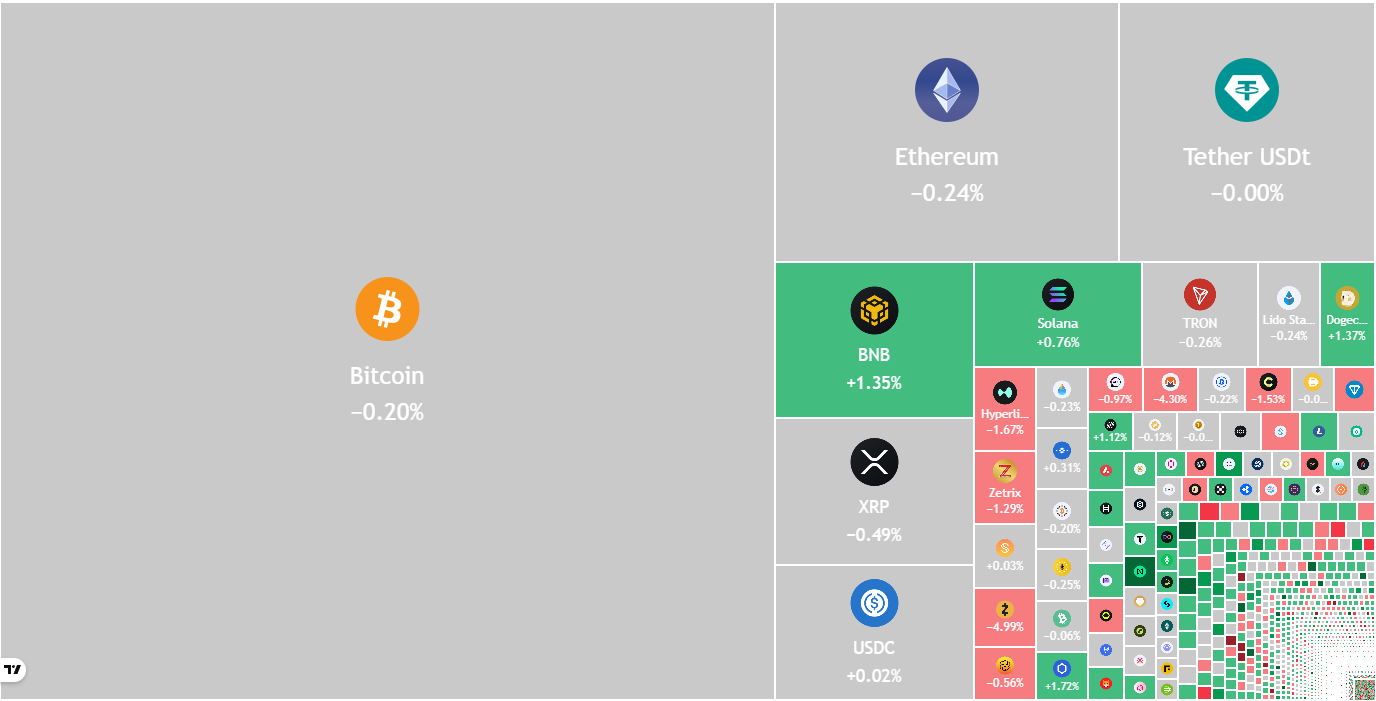
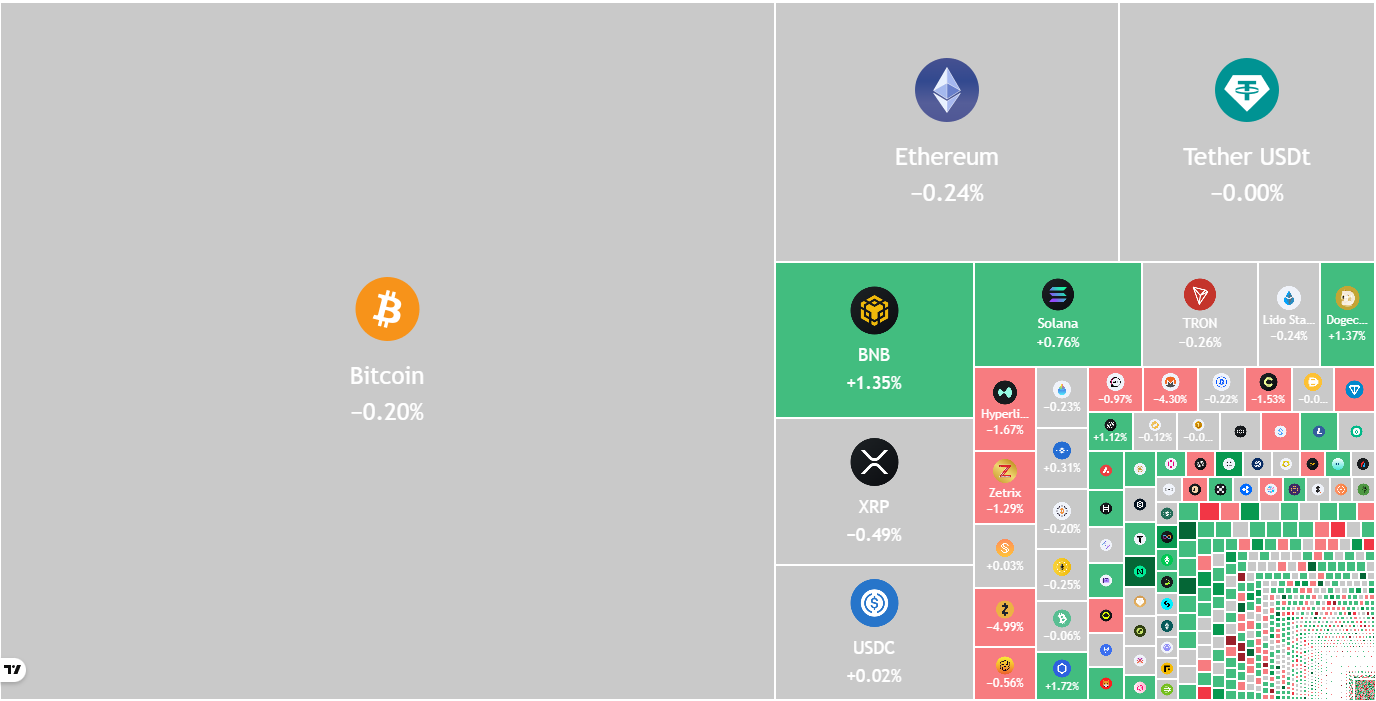
Crypto market data daily view. Source: TradingView
What is the crucial level that suggests the bulls are back in command? Independent analyst Filbfilb said in a post on X that the previous two bear markets had ended after “a >+20% weekly candle and a break of the weekly super trend.” If the current bear trend has to fail, BTC has to rise above the super trend level at $88,000.
Could BTC and select major altcoins hold on to their strong support levels? Let’s analyze the charts of the top 10 cryptocurrencies to find out.
Bitcoin price prediction
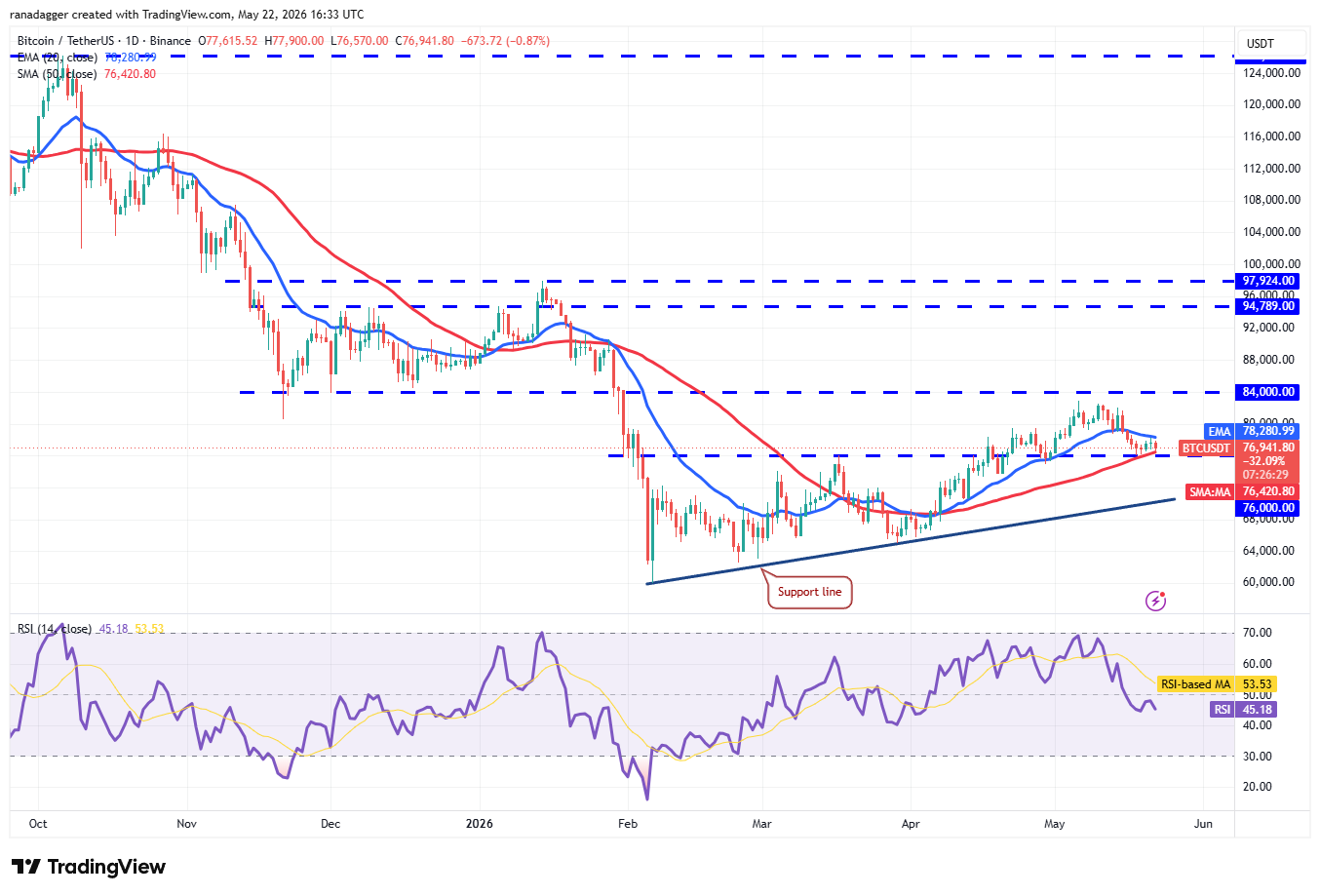
BTC turned down at the 20-day exponential moving average ($78,280), suggesting the bears are attempting to take charge.
BTC/USDT daily chart. Source: Cointelegraph/TradingView
The $76,000 level is the critical support to watch on the downside, as a close below it would signal an advantage to the bears. That increases the risk of a drop to the support line, which is likely to attract buyers.
Time is running out for the bulls. They will have to push and maintain the BTC price above the 20-day EMA to gain the upper hand. If they do that, the BTC/USDT pair may begin its journey toward $82,000 and eventually reach the crucial $84,000 level.
Ether price prediction
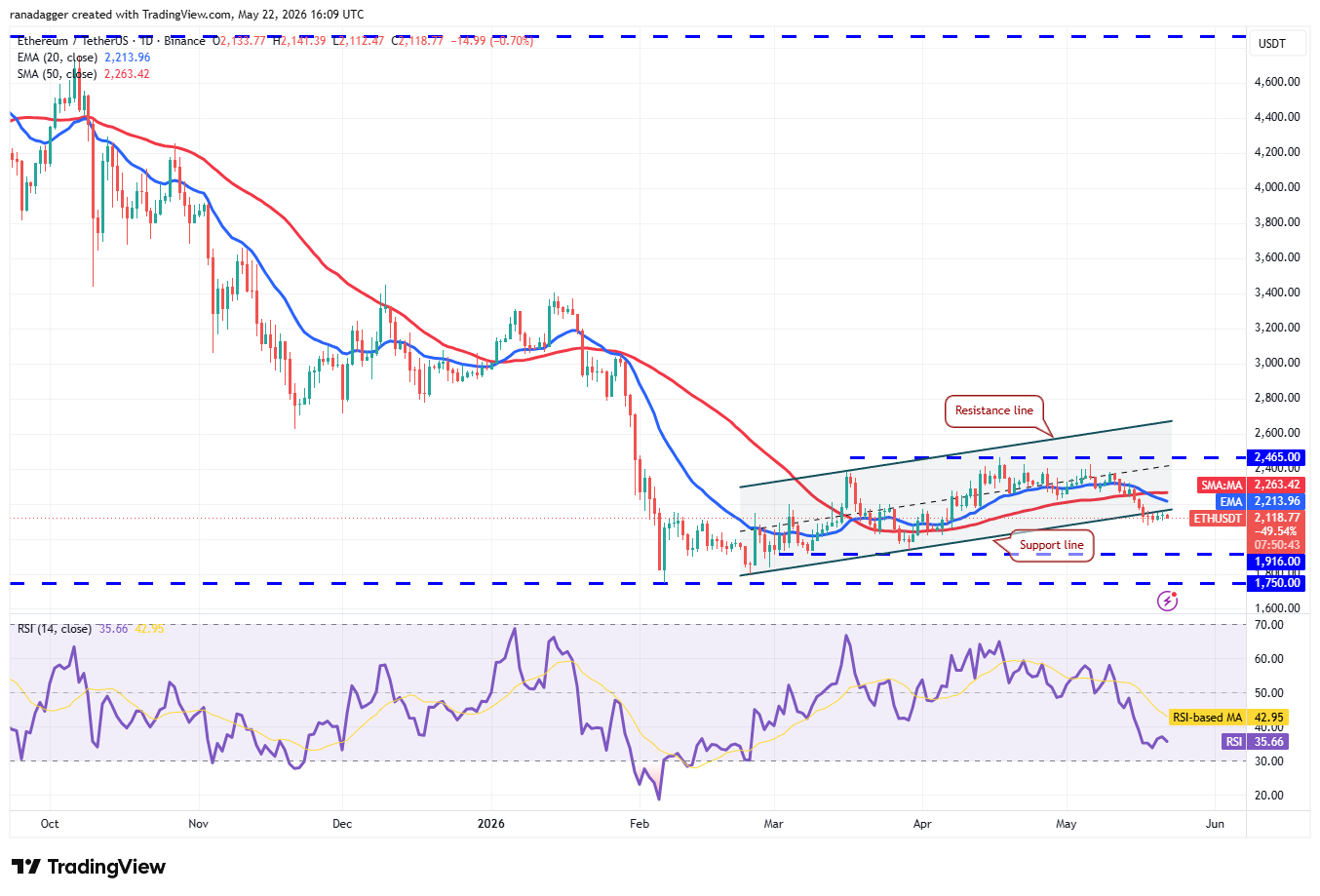
Sellers are attempting to retain Ether (ETH) below the support line, but the bulls have kept up the pressure.
ETH/USDT daily chart. Source: Cointelegraph/TradingView
The bulls will have to drive the ETH price above the moving averages to signal a comeback. If they do that, it suggests that the break below the support line may have been a bear trap. The ETH/USDT pair may climb to $2,465 and then to the resistance line of the ascending channel pattern.
Contrary to this assumption, if the price declines from the current level or the 20-day EMA and breaks below $2,077, it would signal that the bears remain in control. That may sink the pair to the $1,916 support.
BNB price prediction
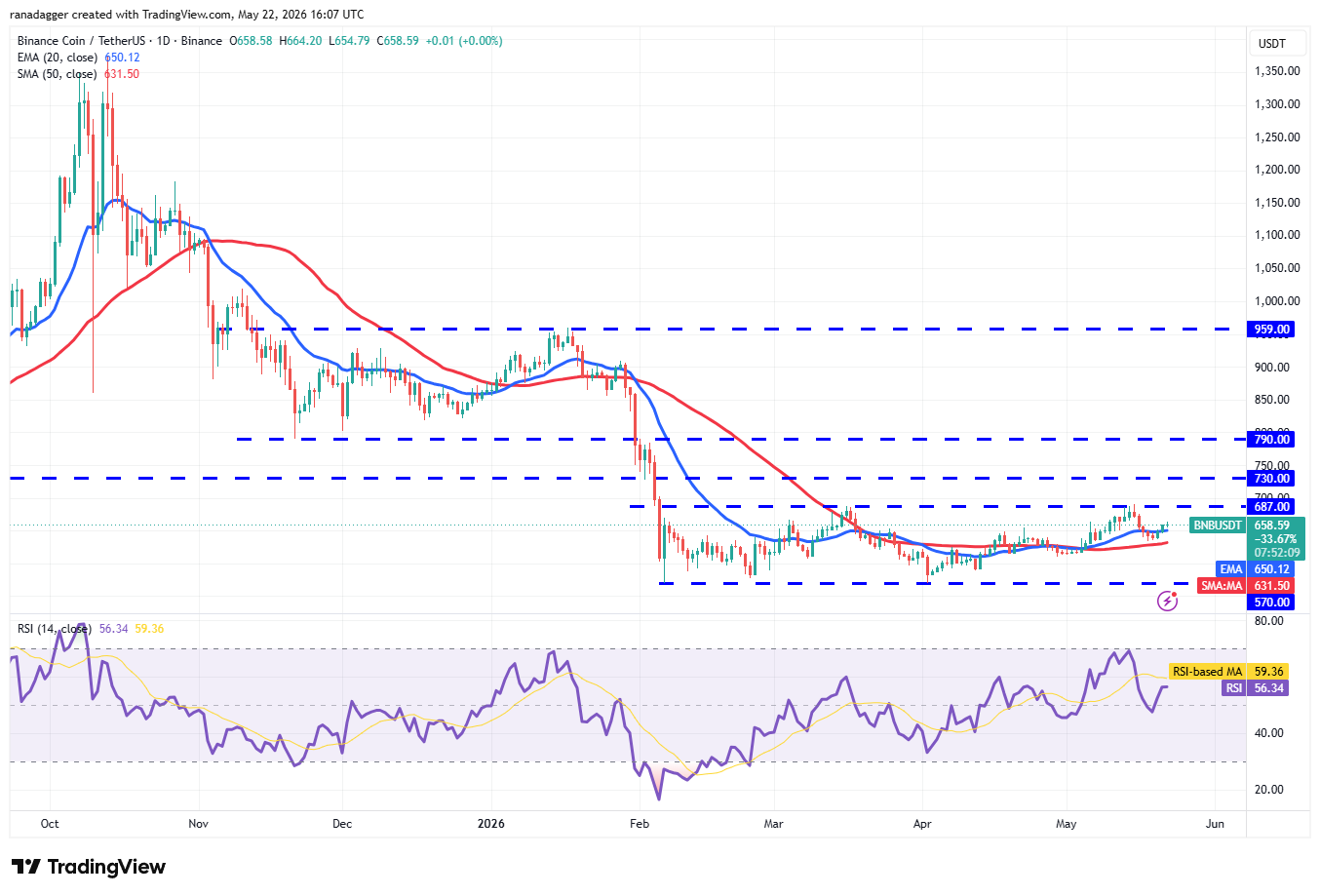
BNB (BNB) rose above the 20-day EMA ($650) on Wednesday, and the bulls are attempting to push the price to $687.
BNB/USDT daily chart. Source: Cointelegraph/TradingView
Sellers will attempt to defend the $687 resistance, but if the bulls prevail, the BNB/USDT pair may march toward $730 and then $790. Such a move suggests that the pair may have bottomed out at $570.
The bears are likely to have other plans. They will attempt to defend the overhead resistance and pull the BNB price below the 50-day simple moving average ($631). If they succeed, the pair may extend its stay within the $570 to $687 range for a while longer.
XRP price prediction
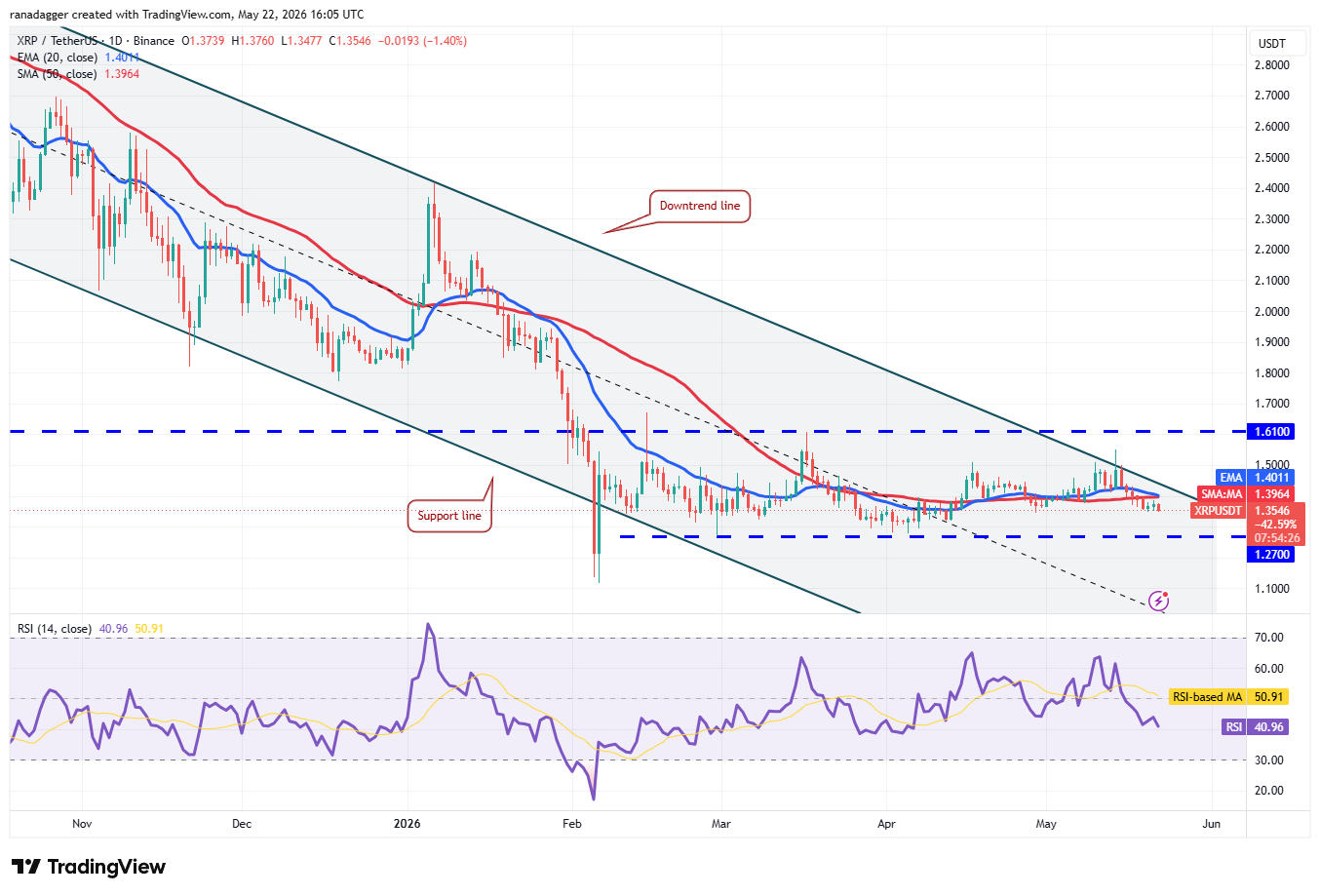
XRP (XRP) remains below the moving averages, indicating that the bears are in no mood to let go of their advantage.
XRP/USDT daily chart. Source: Cointelegraph/TradingView
Sellers will attempt to strengthen their position by pushing the XRP price below the $1.27 support level. If they manage to do so, the XRP/USDT pair may plummet to $1.11, where buyers are expected to step in.
The first sign of strength will be a close above the downtrend line. The pair may then ascend to $1.61, a crucial level to watch. If buyers overcome the barrier, the pair may surge toward $2.40.
Solana price prediction
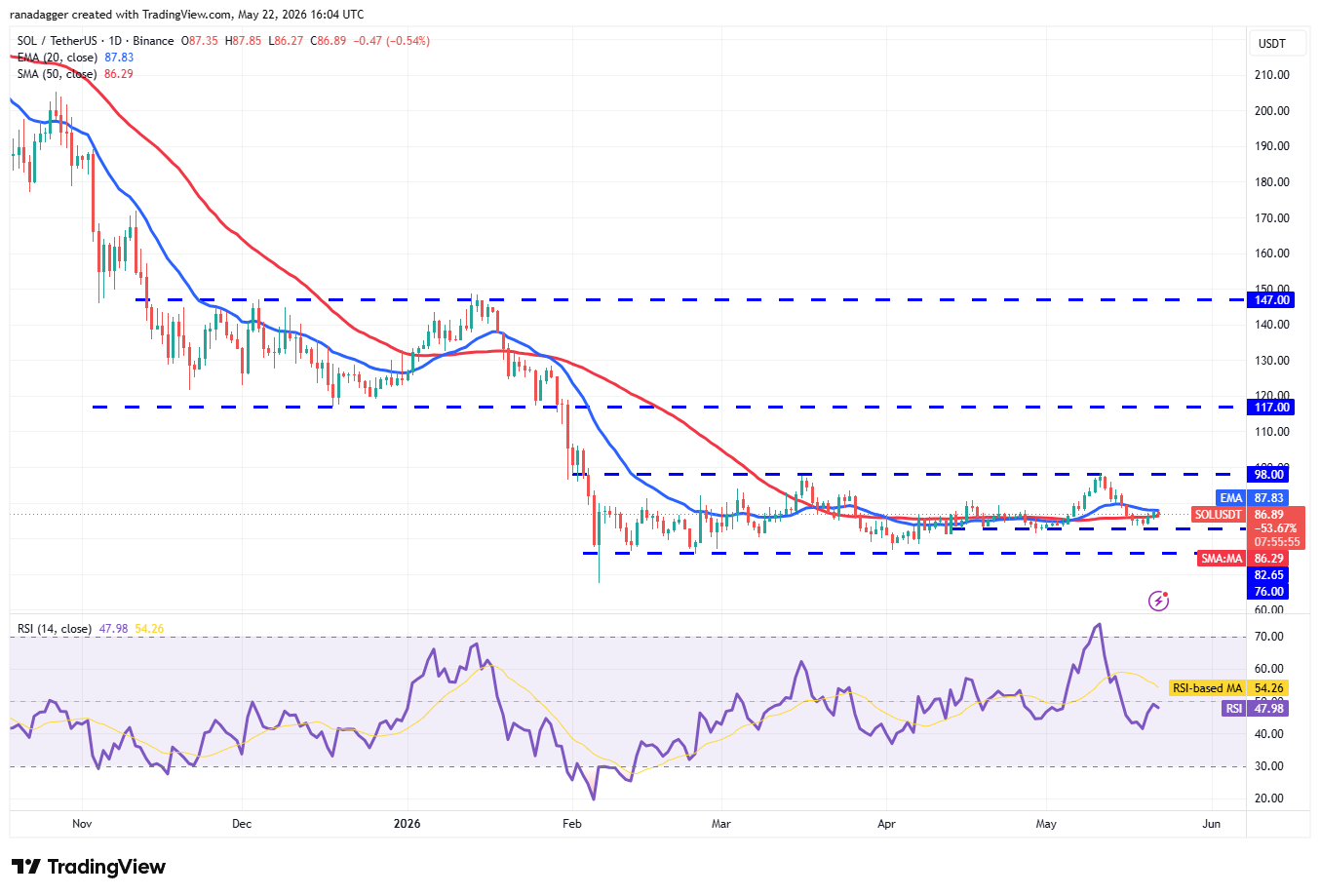
Solana’s (SOL) relief rally reached the 20-day EMA ($87.83), where the bears are expected to pose a strong challenge.
SOL/USDT daily chart. Source: Cointelegraph/TradingView
If buyers propel the SOL price above the 20-day EMA, it suggests demand at lower levels. The SOL/USDT pair may then climb to the $98 overhead resistance. A close above $98 signals the start of a new up move toward $117.
On the contrary, if the price declines sharply from the 20-day EMA and breaks below $82.65, it suggests the bears remain in control. The pair may then tumble to the $76 support.
Dogecoin price prediction
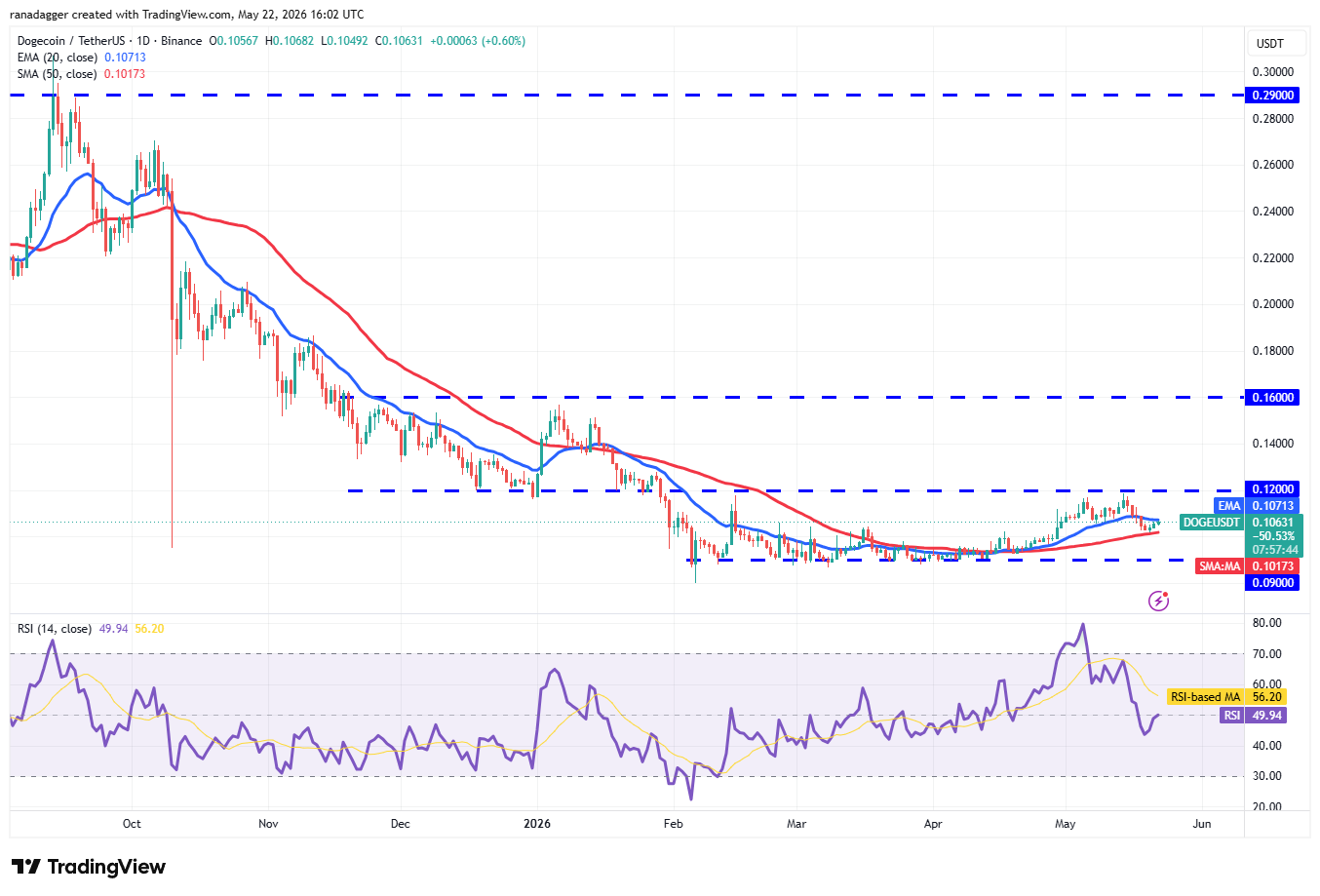
Dogecoin (DOGE) turned up from the 50-day SMA ($0.10) on Wednesday, but the relief rally is facing resistance at the 20-day EMA ($0.11).
DOGE/USDT daily chart. Source: Cointelegraph/TradingView
If buyers pierce the 20-day EMA, the DOGE/USDT pair may rise to the $0.12 overhead resistance. Sellers are expected to defend the $0.12 level, as a close above it would signal a short-term trend change. The DOGE price may then soar to $0.14 and later to $0.16.
The 50-day SMA is the critical support to watch on the downside, as a break below it could sink the pair to the $0.09 level.
Hyperliquid price prediction
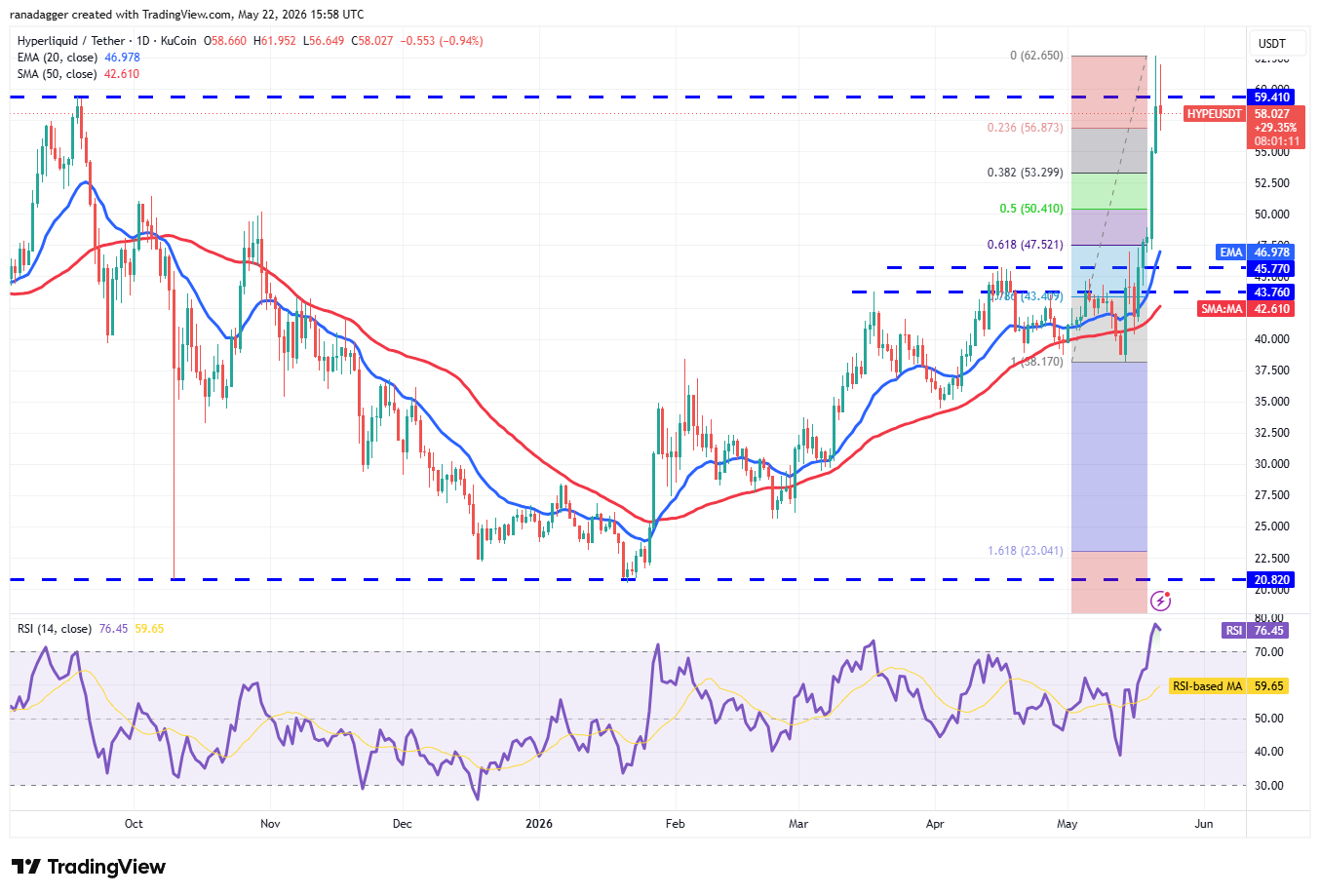
Hyperliquid (HYPE) continued its uptrend, skyrocketing to a new all-time high of $62.65 on Thursday.
HYPE/USDT daily chart. Source: Cointelegraph/TradingView
Sellers are fiercely defending the $59.41 level, as they have not allowed the bulls to close above it. The first support on the downside is the 38.2% Fibonacci retracement level of $53.29. If the HYPE price rebounds off the $53.29 level with strength, the bulls will again attempt to resume the uptrend. A close above $62.65 opens the door to a rally toward $77.
Alternatively, a close below the $53.29 level suggests that the short-term traders are booking profits. The HYPE/USDT pair may then tumble to the 50% retracement level of $50.41 and then the 20-day EMA ($46.97). The deeper the fall, the longer the time needed for the resumption of the uptrend.
Related: XRP adds 4,300 new wallets in 24 hours, but why is price stuck?
Cardano price prediction
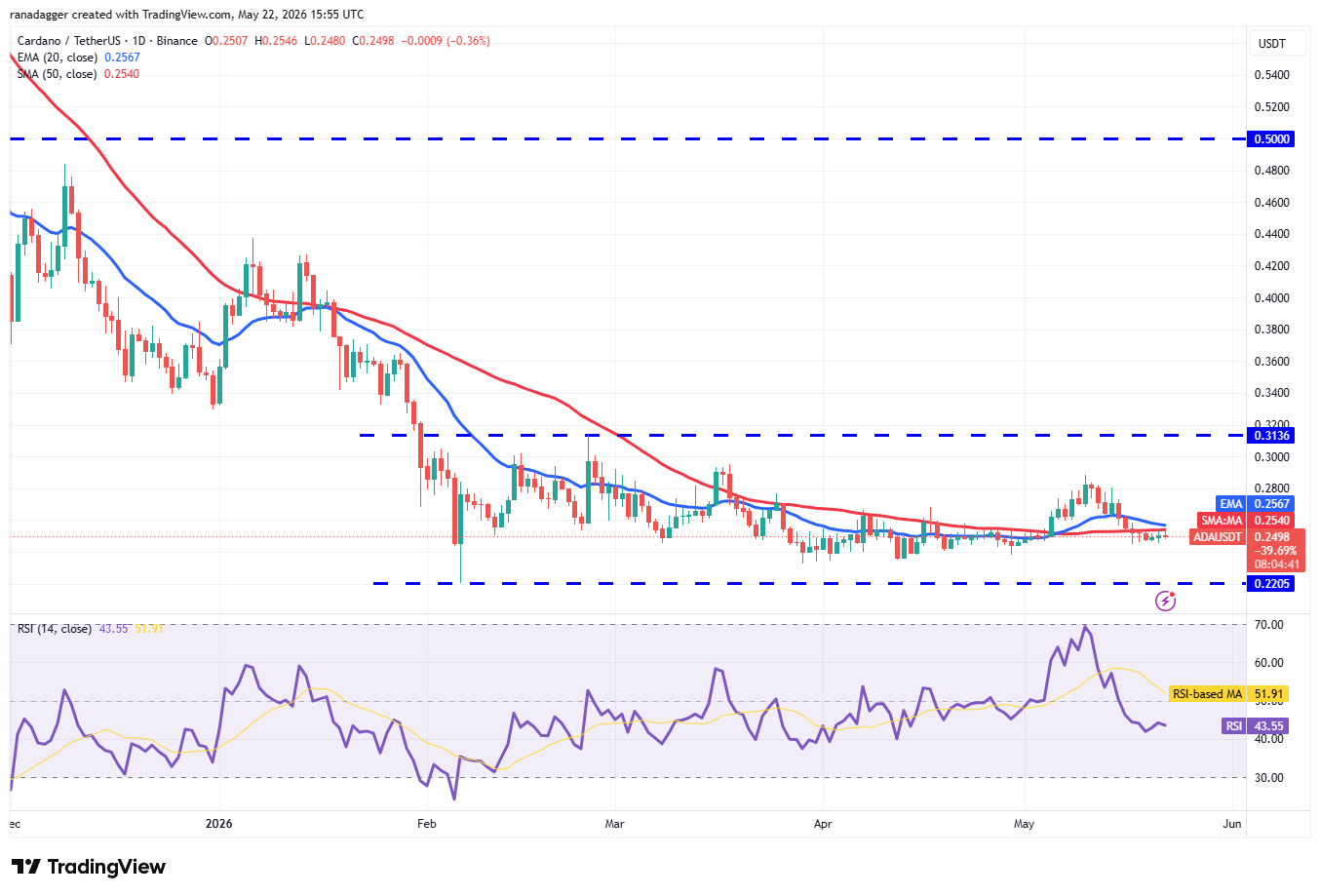
Cardano (ADA) has been trading just below its moving averages, suggesting the bulls have not given up.
ADA/USDT daily chart. Source: Cointelegraph/TradingView
A break and close above the 20-day EMA ($0.25) opens the doors for a recovery to $0.29 and, after that, to $0.31. Buyers will have to clear the $0.31 hurdle to signal the start of a new up move.
Instead, if the ADA price turns down from the moving averages, it suggests that the bears remain in control. There is support at $0.24, but if the level breaks down, the ADA/USDT pair may slump to the bottom of the $0.22 to $0.31 range.
Zcash price prediction
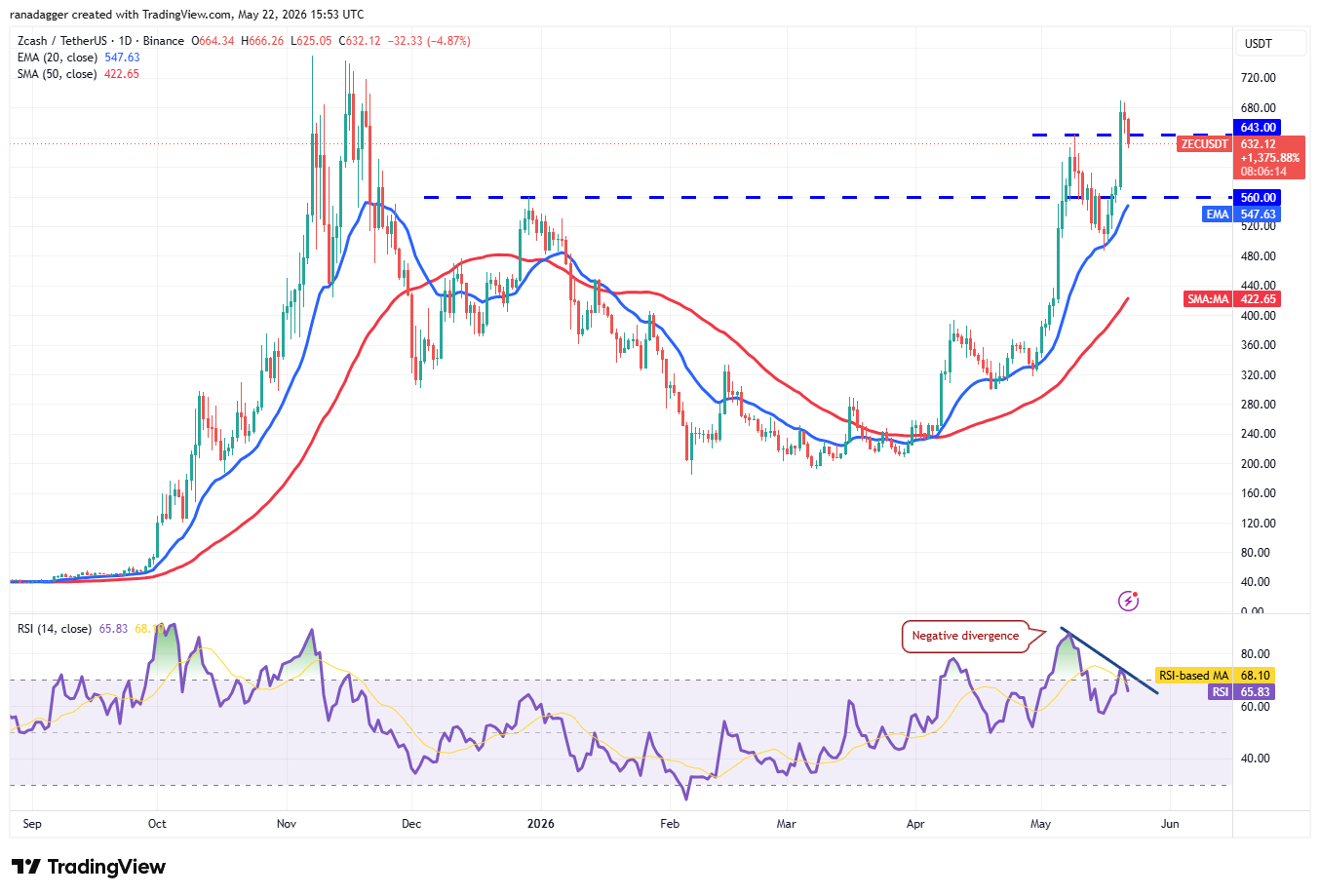
Zcash (ZEC) pole vaulted above the $643 resistance on Wednesday, but the bulls are struggling to sustain the higher levels.
ZEC/USDT daily chart. Source: Cointelegraph/TradingView
The relative strength index is forming a negative divergence, indicating that the bullish momentum is weakening. If the ZEC price closes below the $643 level, it signals the possibility of a deeper correction toward the 20-day EMA ($547).
If the ZEC/USDT pair turns up from the current level or the 20-day EMA, it indicates that the uptrend remains intact. The bulls will then make one more attempt to clear the $690 level, clearing the path for a rally to the $750 resistance.
Bitcoin Cash price prediction
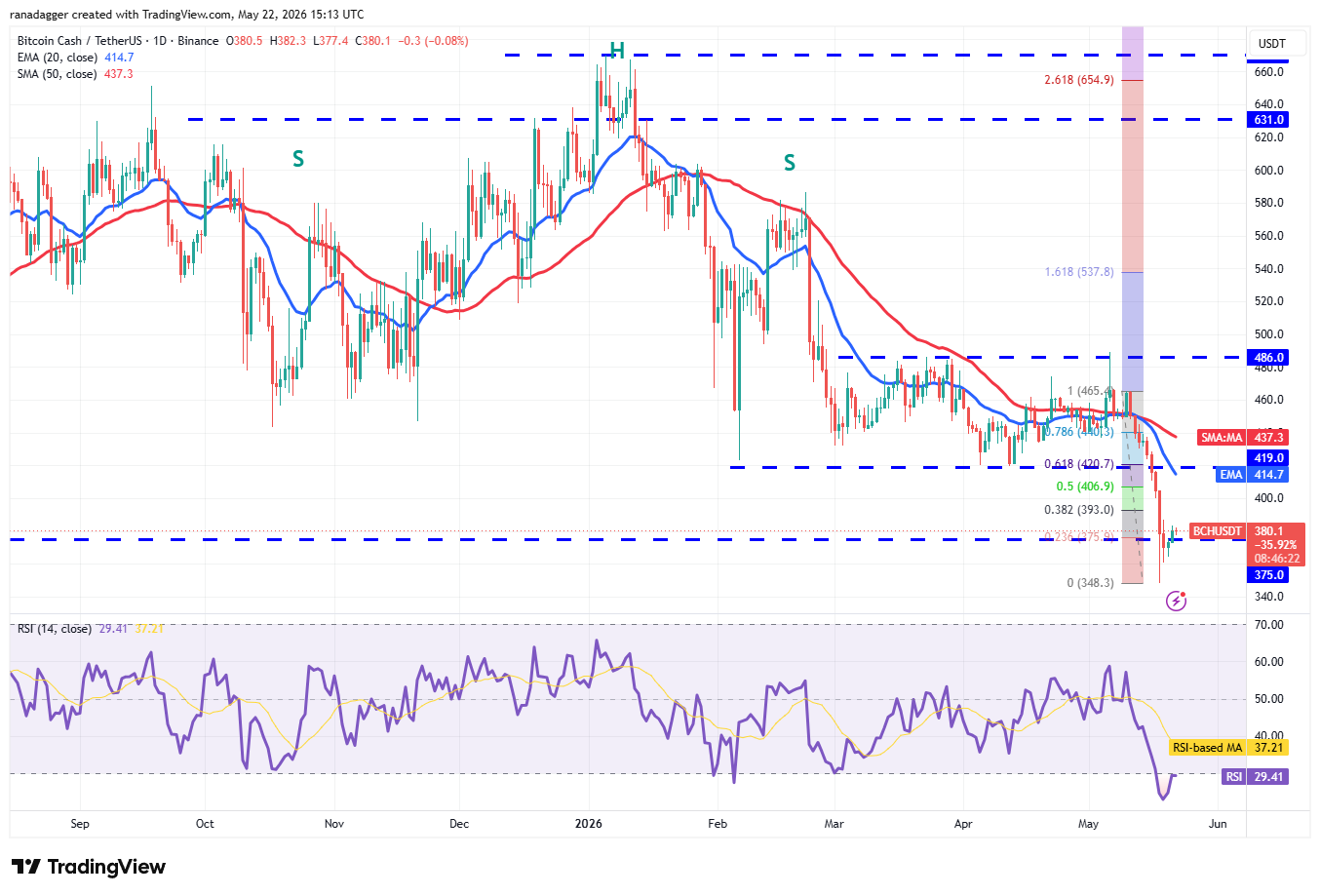
Bitcoin Cash (BCH) has risen above the breakdown level of $375, but the rebound lacks strength.
BCH/USDT daily chart. Source: Cointelegraph/TradingView
The relief rally is expected to face selling at the 38.2% Fibonacci retracement level of $393 and then at the 20-day EMA ($414). If BCH price declines from $393, the risk of a break below $348 increases. The BCH/USDT pair may then resume the downtrend and plunge to $300.
This negative view will be invalidated in the near term if buyers drive and maintain the price above the 20-day EMA.

SpaceX has surged as much as 20% after its record-breaking Nasdaq debut, pushing its valuation above $2 trillion and triggering one of the largest waves of tokenized stock activity seen across crypto markets.
Summary
- SpaceX surged as much as 20% after its Nasdaq debut, lifting its valuation above $2 trillion and fueling demand across crypto-linked stock products.
- Analysts warned the record $75 billion IPO could pull capital from crypto, but Bitcoin, Ethereum, and the broader digital asset market moved higher.
- Binance, Hyperliquid, Backpack, Sunrise, and Velvet emerged among the biggest beneficiaries as traders rushed into tokenized and synthetic SpaceX exposure.
After pricing its initial public offering at $135 per share, SpaceX opened at $150 and climbed to as high as $173.22 during early trading. The company raised approximately $75 billion in the largest IPO on record, valuing the aerospace giant at around $1.77 trillion at listing before the market capitalization crossed the $2 trillion mark.
The rally immediately placed SpaceX among the most valuable companies in the United States, ahead of firms including Meta, Tesla, and Broadcom. Investor demand remained exceptionally strong throughout the offering process, with reports indicating orders exceeded $350 billion before trading began.
Crypto markets became a parallel venue for SpaceX trading
While the IPO dominated Wall Street headlines, it also sparked a frenzy across crypto markets as traders sought exposure through tokenized shares, synthetic assets, and derivatives products.
Earlier reporting by crypto.news noted that Backpack Securities and Sunrise launched SPCX, a Solana-based token backed by underlying SpaceX shares that eligible users can convert into actual stock. Binance Wallet also attracted roughly $557 million in subscription funds for its SpaceX-linked campaign, which offered tokens at an indicative price of 135 USDC before fees.
Interest spread beyond tokenized shares into derivatives markets. Hyperliquid’s synthetic SPCX perpetual contract became one of the most actively discussed products tied to the listing, with implied valuations trading above the IPO price before the debut. The activity coincided with HYPE futures open interest climbing to $2.56 billion, allowing Hyperliquid to overtake XRP in futures open interest.
Elsewhere, Velvet became one of the biggest beneficiaries of the SpaceX narrative. The token rallied more than 1,400% over the past week after the platform promoted synthetic SpaceX exposure through its SPCX market.
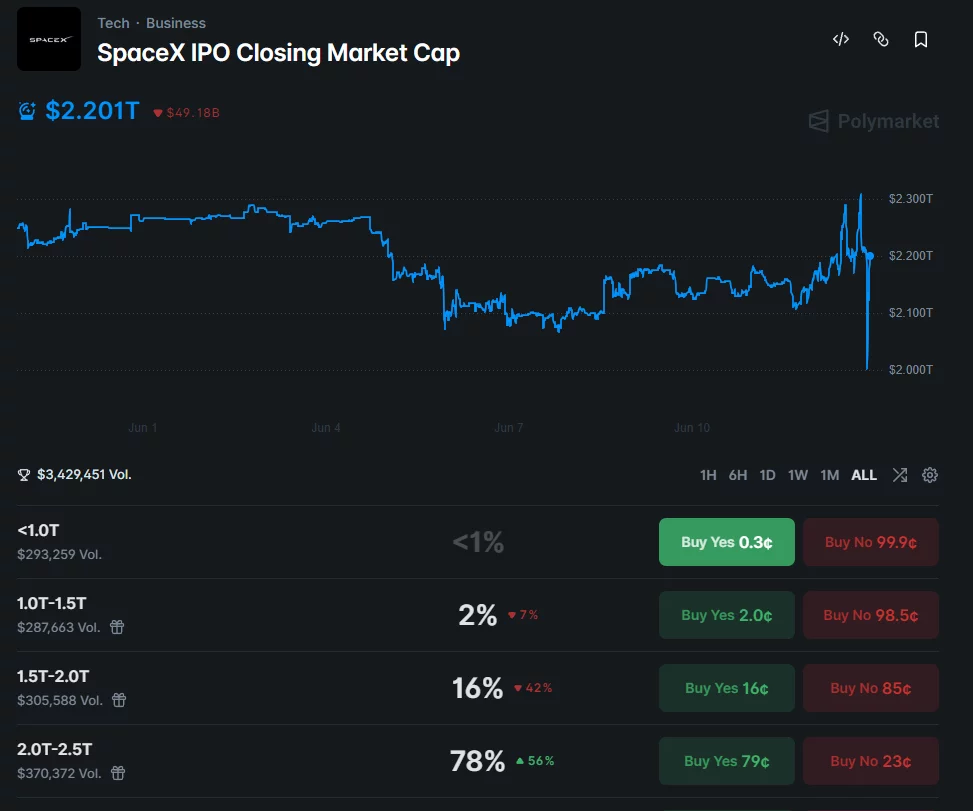
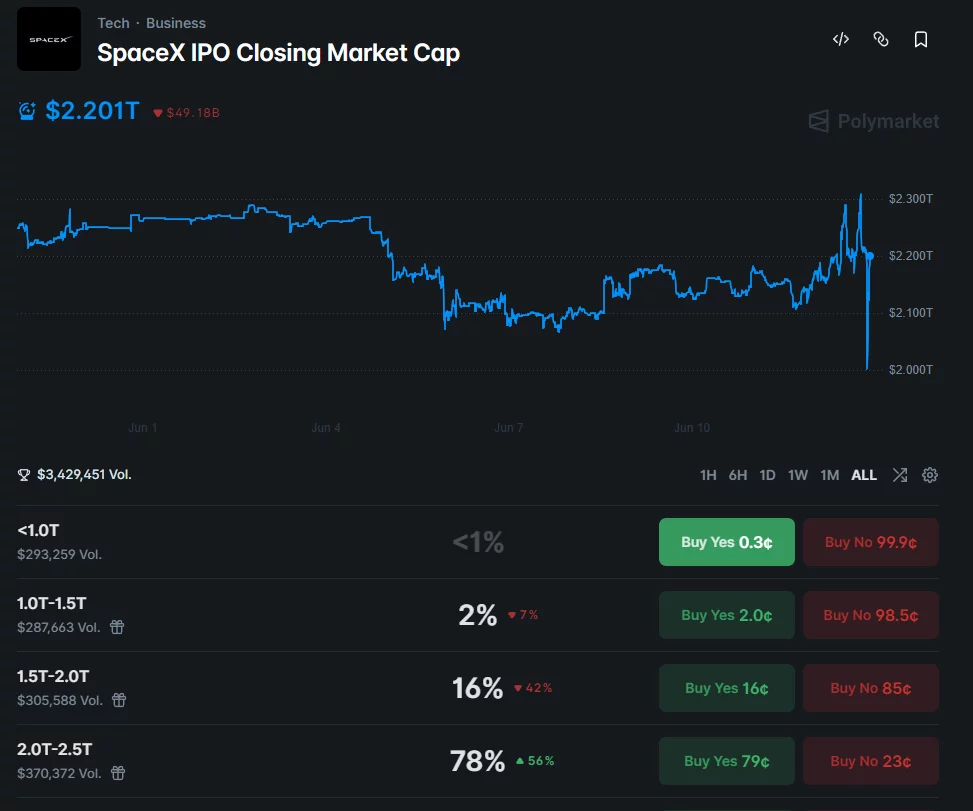
Prediction markets also joined the speculation. A Polymarket contract tracking SpaceX’s closing valuation showed traders assigning roughly 78% odds that the company would finish its debut session with a market capitalization between $2 trillion and $2.5 trillion.
Analysts warned of crypto outflows but markets moved higher
Some market participants had expected the largest IPO in history to divert capital away from digital assets.
Speaking to Reuters, Spencer Hallarn, global head of over-the-counter trading at GSR, said crypto often serves as a funding source for major investments.
“We’ve got to find $75 billion for this IPO, and it’s got to come from somewhere,” Hallarn said.
Thomas Puech, chief executive of crypto firm INDIGO, similarly told Reuters that SpaceX could draw money away from digital assets because both markets compete for the same pool of risk capital. According to Puech, artificial intelligence investments currently represent a more attractive trade for many growth-focused investors.
So far, however, little evidence suggests a broad crypto liquidity drain has materialized. The global cryptocurrency market capitalization rose 1.7% to $2.26 trillion during the session. Bitcoin gained roughly 2%, Ethereum added 1.8%, XRP rose 2.2%, and Solana advanced 3.5%.
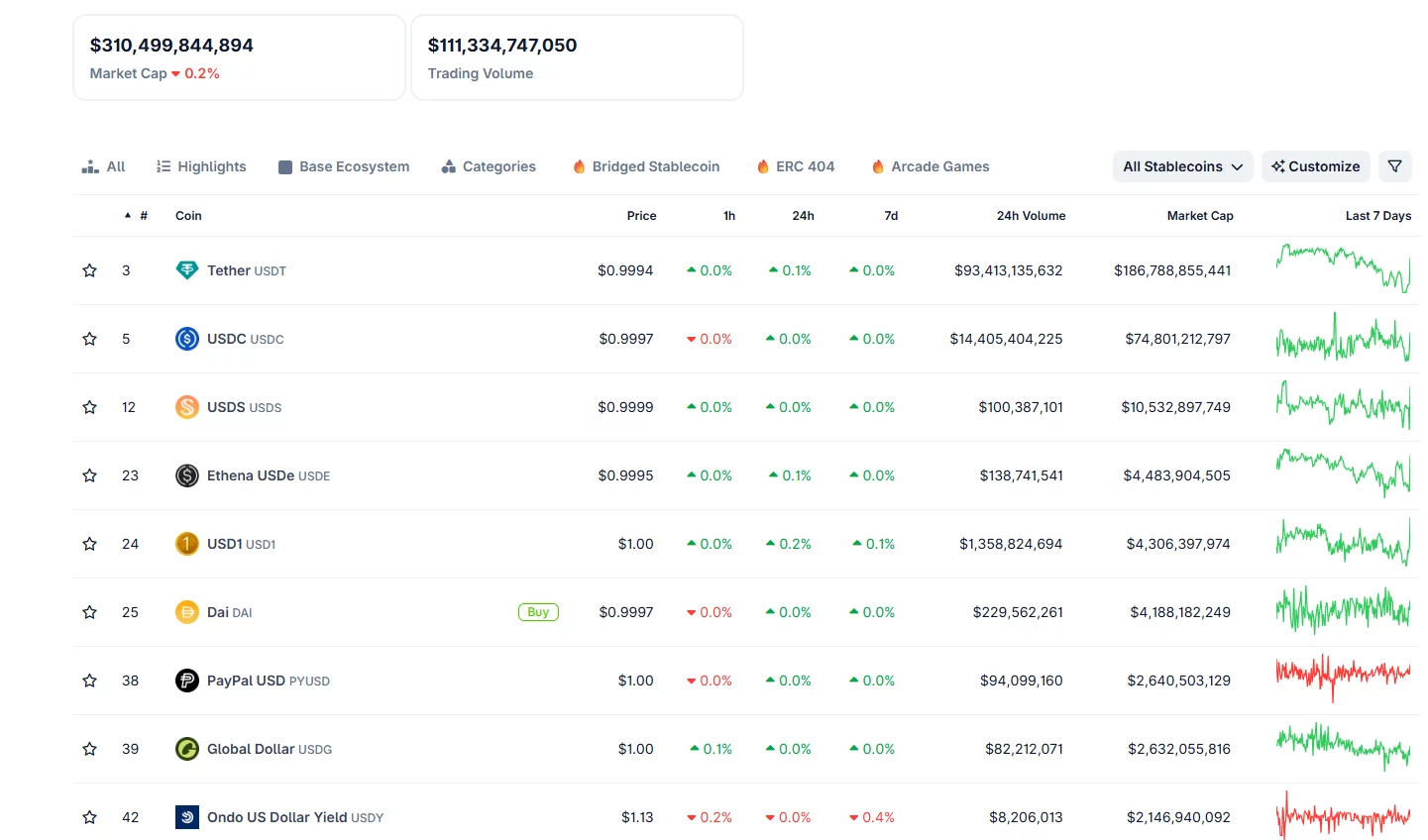
Stablecoins also showed little sign of stress. USDT maintained a market capitalization of roughly $186.8 billion while USDC remained near $74.8 billion, with both assets holding close to their dollar pegs.
SpaceX’s valuation remains a subject of debate despite the strong debut. Morningstar analysts have estimated a fair value of roughly $63 per share, far below the IPO price, while some bullish forecasts have projected a move toward $190.
Senator Elizabeth Warren also urged the SEC to delay the offering, citing what she described as “unprecedented threats to investor protection and market integrity,” while questioning the company’s valuation, governance structure, and reported multibillion-dollar losses.
For crypto markets, the bigger takeaway may be what happened around the IPO rather than the stock itself. Instead of draining liquidity from digital assets, SpaceX helped create a new trading narrative centered on tokenized equities, synthetic shares, and prediction markets.
With options on SpaceX shares expected to begin trading next week and investors already looking toward potential future listings from companies such as OpenAI and Anthropic, market participants are now watching whether the surge in tokenized stock activity can outlast the excitement surrounding the largest IPO in history.
Disclosure: This article does not represent investment advice. The content and materials featured on this page are for educational purposes only.
Bitcoin (BTC) is gaining buyers’ interest after setting a new yearly low at $59,000 last week. Order book data and liquidity suggest a rally is pending and more than $2 billion in short liquidity is concentrated near $65,000. BTC’s bid-ask ratio has remained positive since last Friday.
The shift in positioning and sentiment also aligns with a bullish chart pattern targeting the $67,000–$70,000 range.
BTC bulls attempt to regain control near support
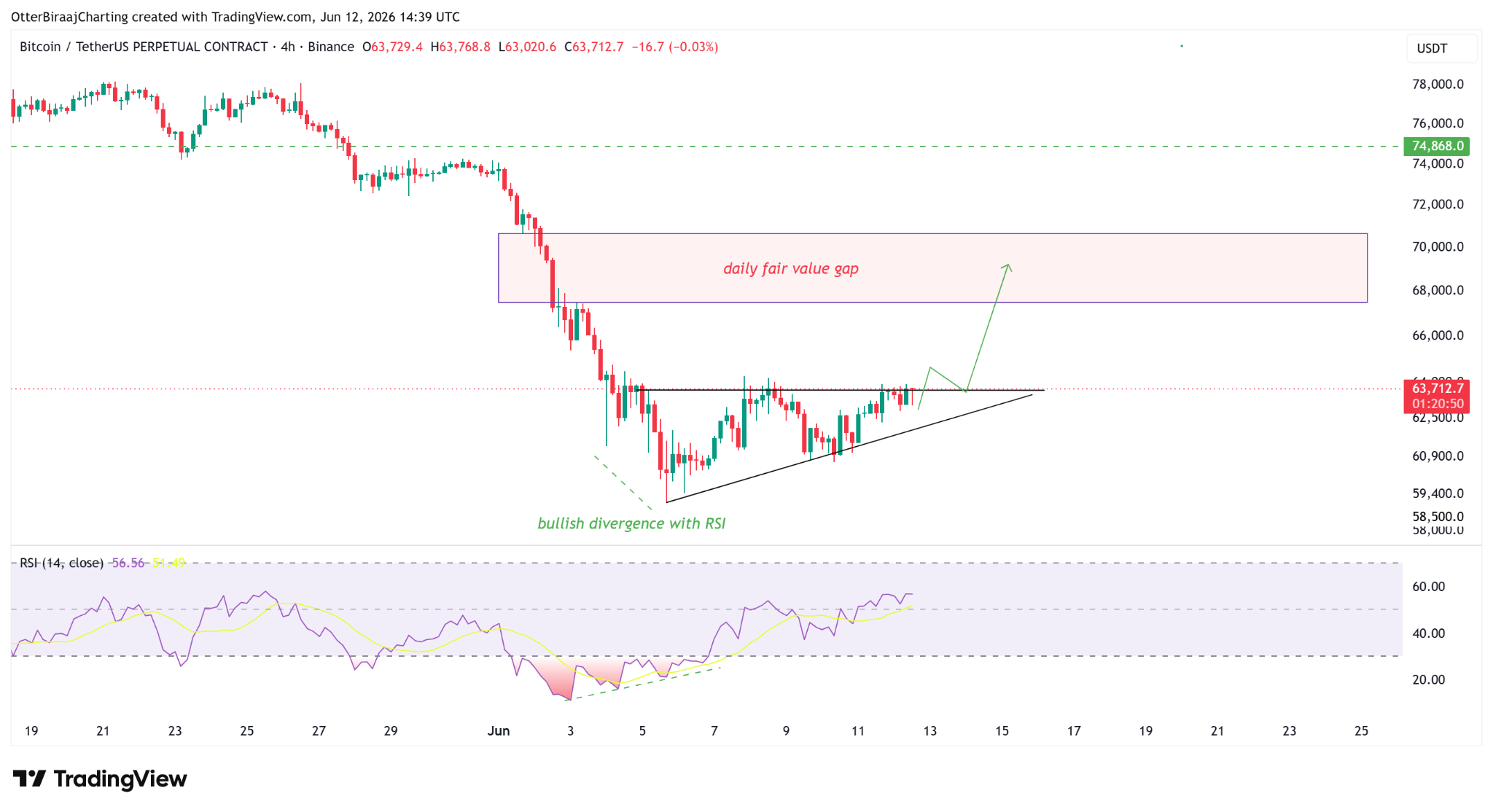
Bitcoin’s recent rebound to $63,500 followed a bullish divergence between the price and the relative strength index (RSI) on the four-hour chart. The price printed a lower low during the early-June sell-off while the relative strength index (RSI) formed a higher low. The signal pointed to fading downside momentum before buyers stepped in.
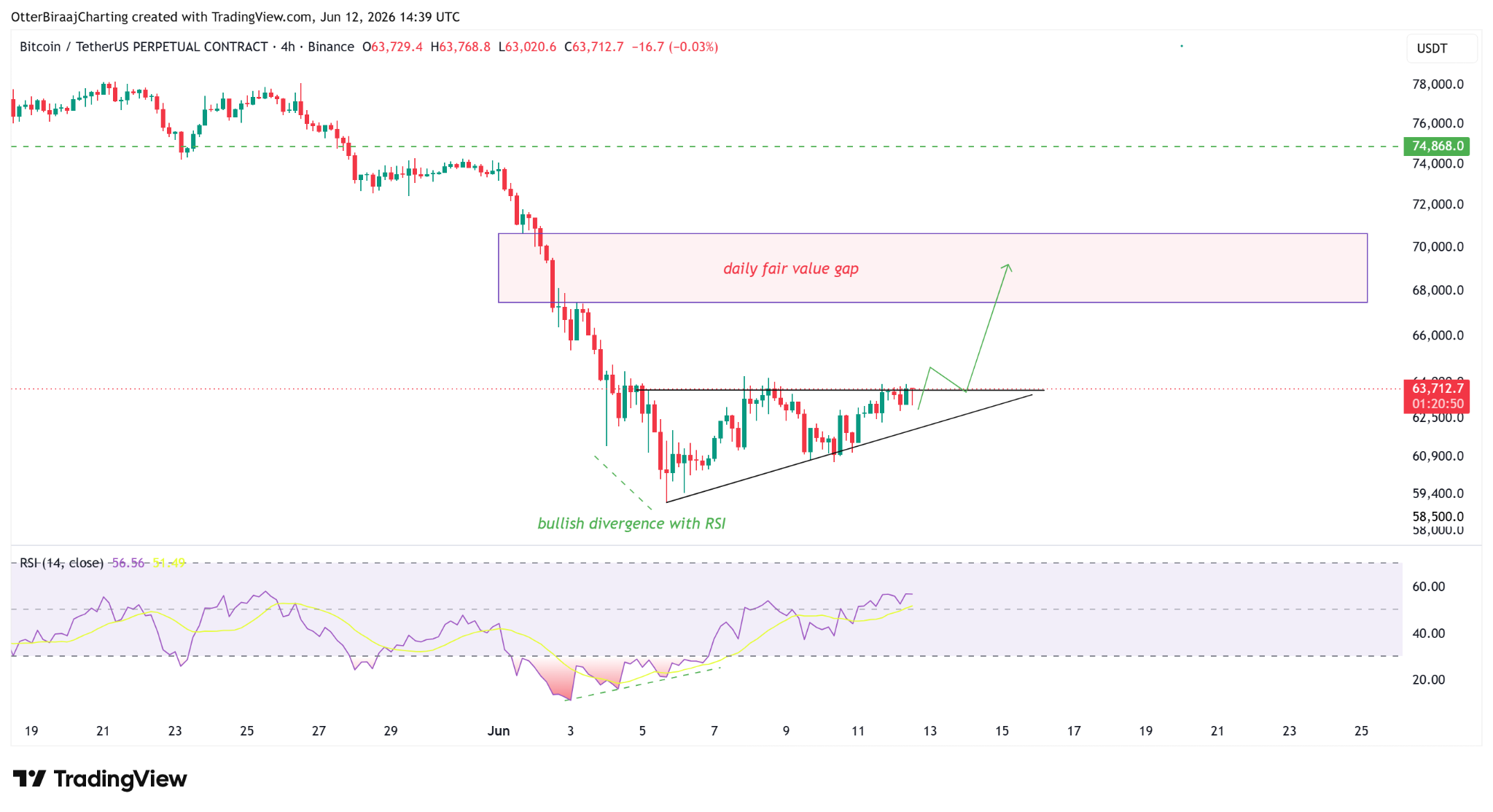
BTC/USD, four-hour chart. Source: Cointelegraph/TradingView
Bitcoin is also trading within an ascending triangle pattern. A confirmed breakout may target the daily fair value gap between $67,500 and $70,500, an area of trading imbalance or liquidity gap left behind during the recent market correction.
The order book activity supports the move. Data from Hyblock shows the bid-ask ratio remained positive at 0.05 after Bitcoin tagged its yearly low at $59,000 last Friday. The metric tracks aggressive buying and selling activity. A positive reading suggests buy-side market orders have been slightly outpacing sell-side orders.
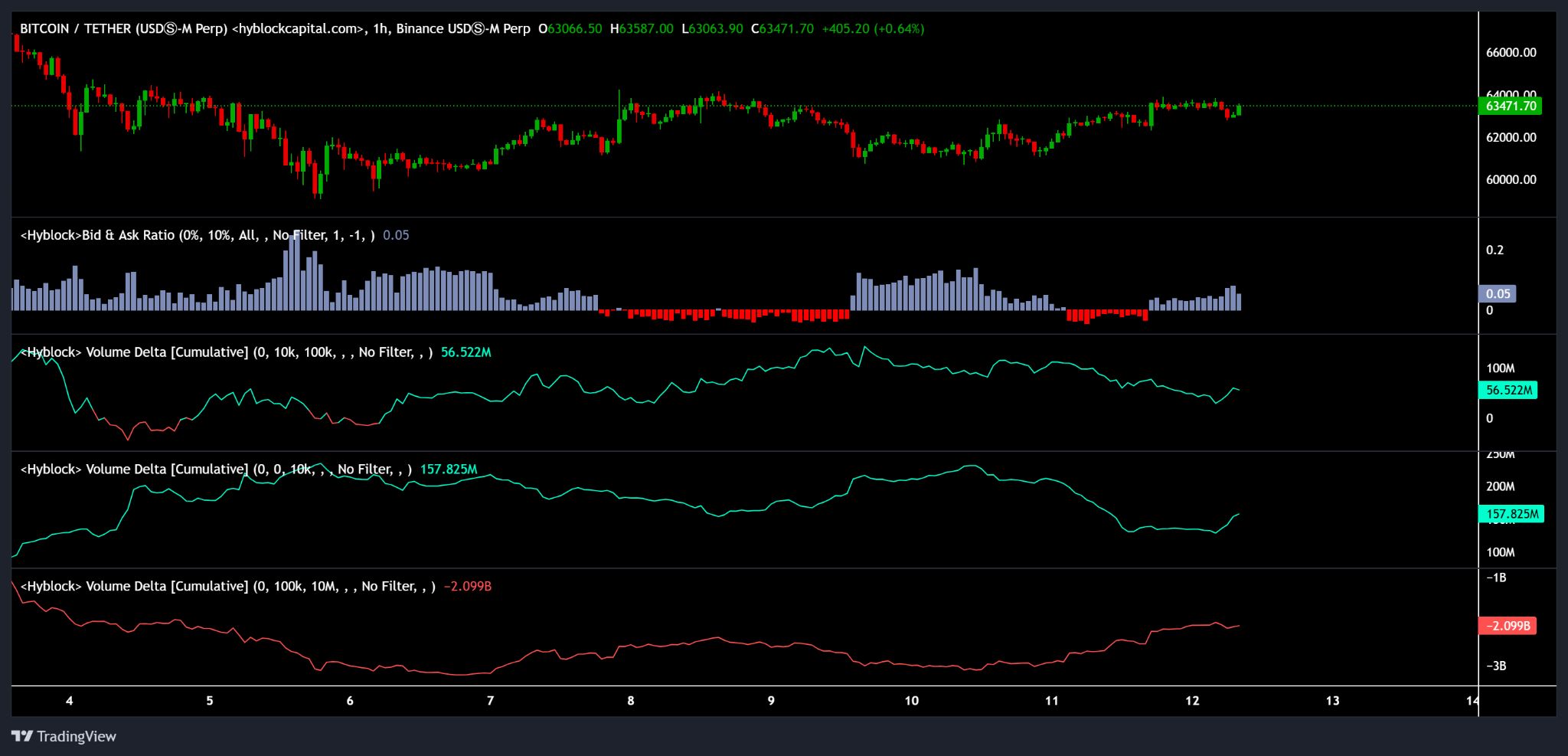
BTC price, bid-ask ratio, spot CVD. Source: Hyblock
The cumulative volume delta (CVD) data adds another layer of support. Smaller cohorts (up to $10,000 and $100,000 orders) have shown improving buying activity with $53 million and $157 million, respectively, while the largest participants ($100,000-$10 million) have significantly reduced net selling pressure by $900 million.
Crypto analyst Kripto Holder highlighted a $2.68 billion short-liquidity cluster near $64,600, calling it the primary upside liquidity pool.
The analyst said Bitcoin’s ability to hold above $63,000 following renewed conflict in the US-Iran war adds weight to the recovery case. Spot CVD inflows also indicate demand from spot buyers.
Related: Metaplanet to form securities arm through Siiibo acquisition
BTC needs to reclaim $66,000 soon: Analyst
Market analyst PILTR noted that BTC’s long exposure has gradually increased over the past five days. The current positioning tracks 237 long levels against 128 short levels, creating an estimated $4 billion positive imbalance.
Those price levels closely align with analysis from crypto trader Ardi, who argued that Bitcoin is still trading within a bear pennant following its decline from $83,000 to $59,000. The analyst identified $64,000 and $66,000 as the two most important levels for the current recovery.
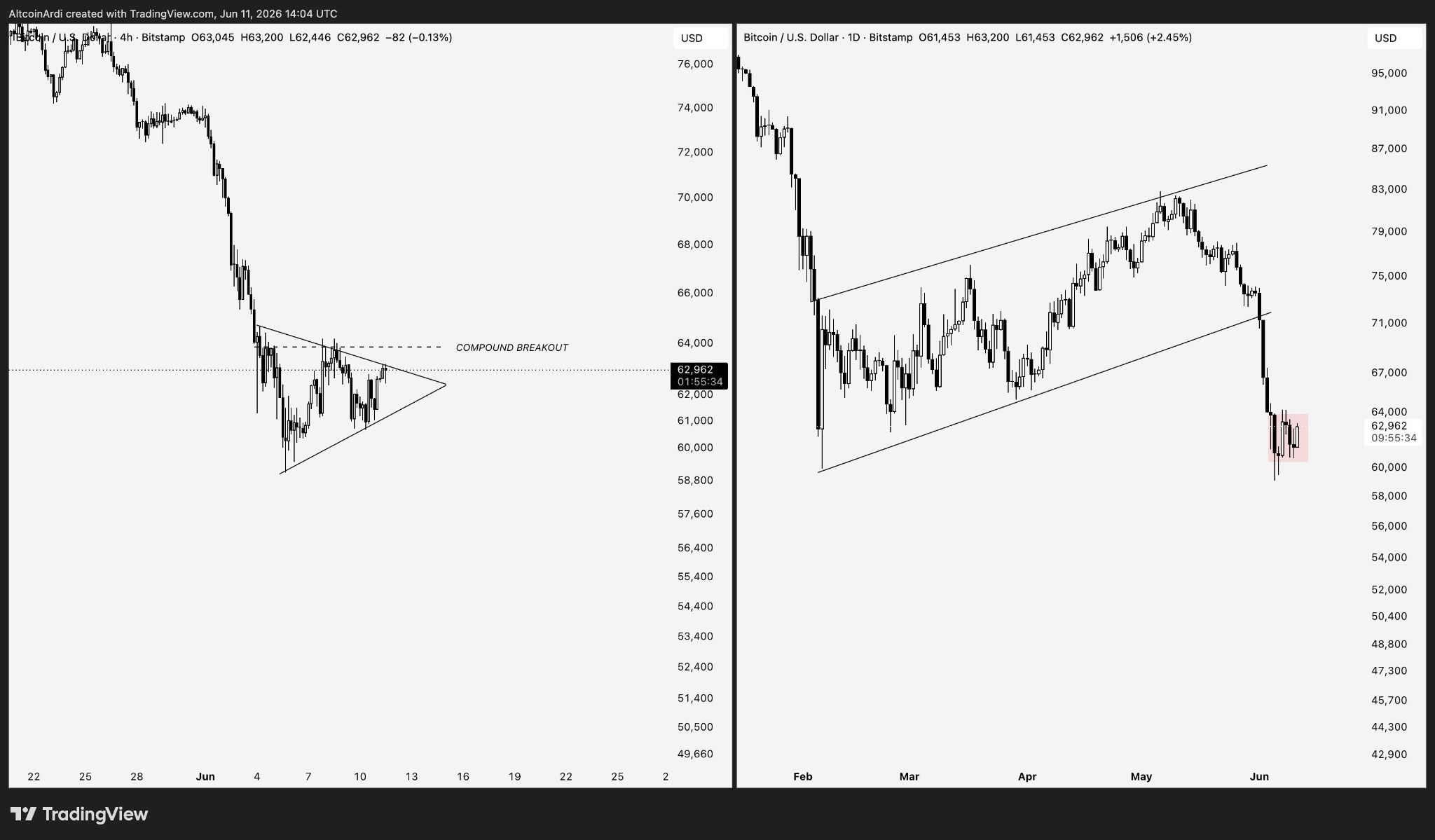
BTC/USD, four-hour analysis by Ardi. Source: X
According to Ardi, a move above $64,000 would clear both horizontal resistance and the pennant structure, giving Bitcoin additional room to the upside. The next hurdle sits near $66,000, a former major range support level that now acts as resistance.
Reclaiming that area would strengthen the case for a move into the liquidity zone above the price and the unfilled fair value gap between $68,000 and $70,000.
However, PLTR also flagged weekend positioning as a near-term variable. The analyst noted that weekly profit-taking often creates opposing flows into weekends, especially after a sustained build-up in long exposure.
Related: Bitcoin miner ‘capitulation’ comes as trader sees later 2026 bear-market bottom
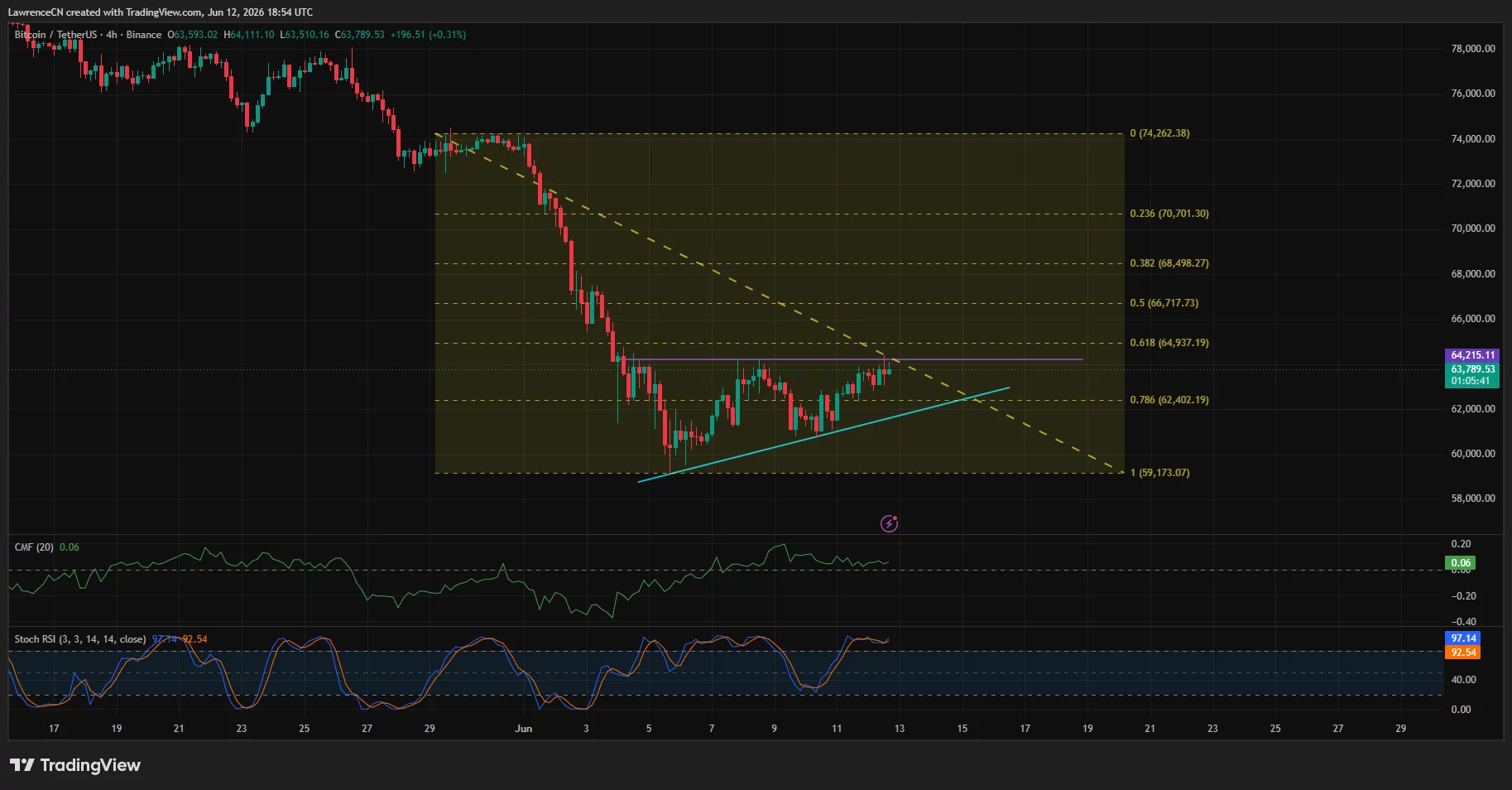
Bitcoin climbed above $64,000 on June 12 as improving market sentiment and bullish technical signals challenged a recent Galaxy Digital forecast that the cryptocurrency may not bottom until the fourth quarter.
Summary
- Bitcoin climbed above $64,000 as traders challenged Galaxy Digital’s warning that the cycle bottom may not arrive until Q4 2026.
- A potential inverse head-and-shoulders pattern, rising open interest, and positive funding rates point to improving bullish momentum.
- ETF outflows and Galaxy’s capitulation metrics suggest downside risks remain despite the recent rebound.
The rebound comes just days after Galaxy Digital’s head of research, Alex Thorn, warned that Bitcoin’s correction may have further to run despite recovering from its June low near $59,000.
In a recent analysis, Thorn argued that historical cycle data suggests the market has yet to experience the type of capitulation typically seen at major cycle bottoms.
“By the way, the ‘4 year cycle’ currently appears to be very, very real,” Thorn wrote on X, adding that if the current drawdown follows previous cycles, “we would expect a bottom to hit in Q4 2026.”
Galaxy’s analysis outlined several possible bottom scenarios. The firm sees a shallow bear market ending around $51,000 to $54,000, a base-case bottom between $40,000 and $46,000, and a harsher washout that could drag Bitcoin into the $30,000 to $39,000 range.
Bitcoin forms bullish reversal pattern near $65k resistance
However, current market data suggests traders are increasingly positioning for a recovery rather than another sharp leg lower.
On the 4-hour chart, Bitcoin has formed a series of higher lows since bouncing from the June trough near $59,173. Price is now pressing against resistance around $64,900, which coincides with the 0.618 Fibonacci retracement level of the recent decline. A breakout above that area could expose the next resistance zones near $66,700 and $68,500.
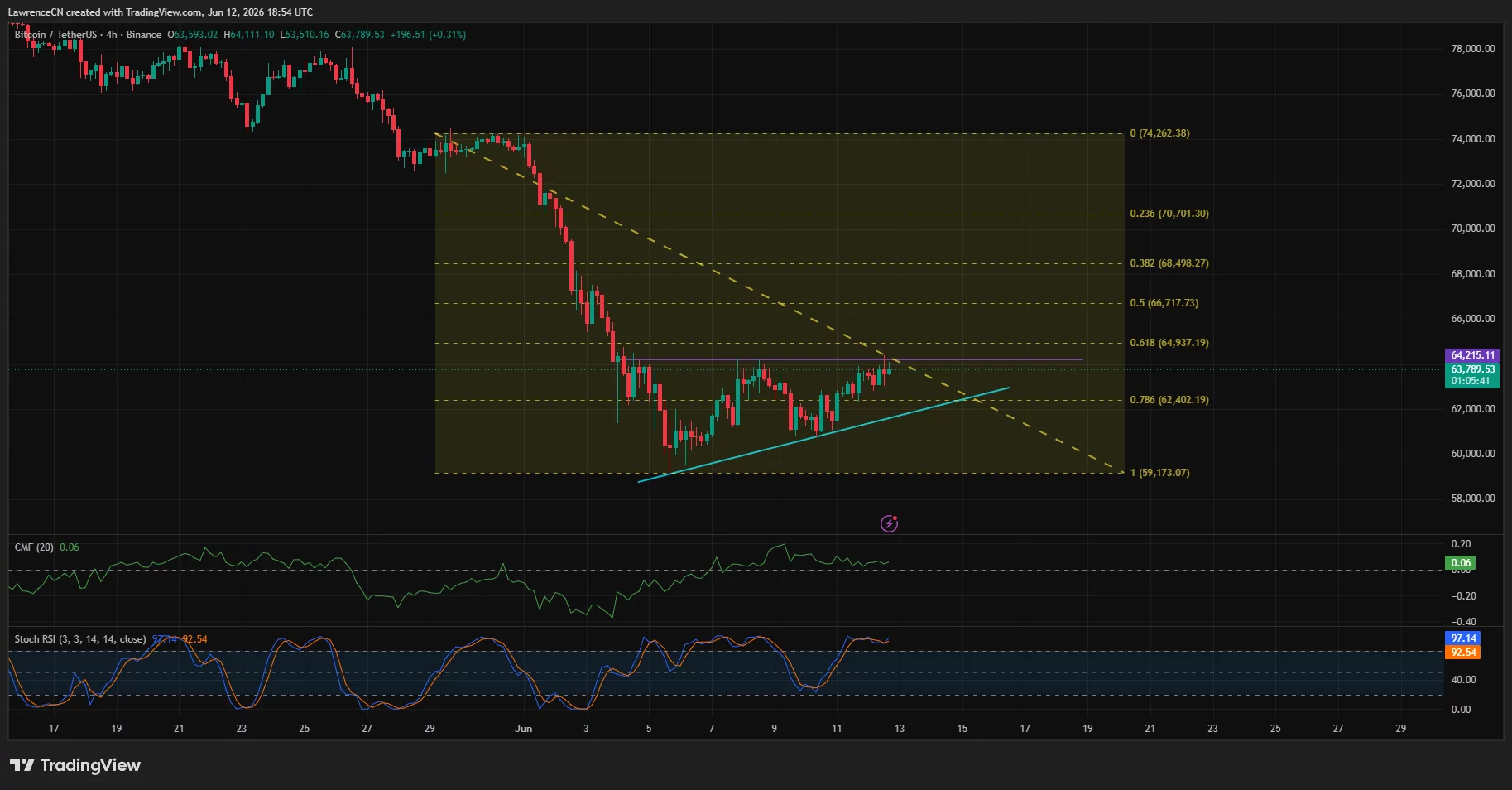
Market commentator BATMAN highlighted the developing setup on X, noting that Bitcoin is forming a “textbook inverse Head & Shoulders beneath descending resistance.” According to the analyst, a breakout above the neckline could trigger the next expansion higher.
Momentum indicators show early signs of stabilization. The Chaikin Money Flow indicator has moved back above zero on the 4-hour chart, signaling renewed capital inflows, while the daily MACD histogram has begun to contract from recent lows, suggesting bearish momentum may be losing strength.
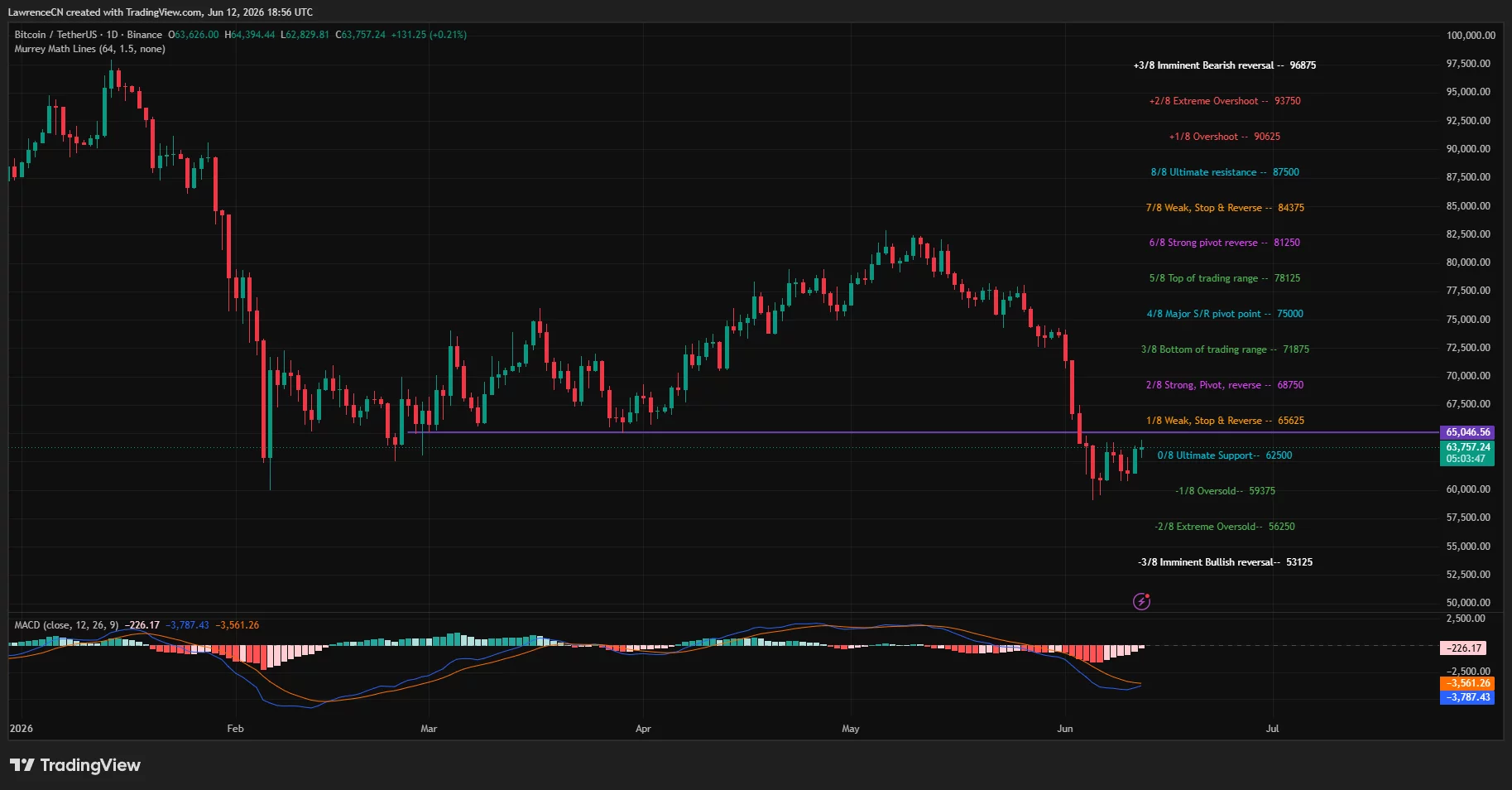
Derivatives markets are also showing growing confidence. Bitcoin’s open interest rose 0.12% over the past day to $46.13 billion, while the weighted funding rate remained positive at 0.0029%. The combination indicates traders are adding positions while maintaining a modest bullish bias rather than aggressively betting on further downside.
ETF outflows and cycle data keep the bearish case alive
Institutional demand remains mixed. According to SoSoValue data, U.S. spot Bitcoin ETFs recorded $19.03 million in net outflows on June 11. BlackRock’s IBIT attracted $30.26 million of fresh capital, but those inflows were outweighed by withdrawals from products managed by Fidelity, Ark Invest, Bitwise, and VanEck.
The ETF data partly supports Galaxy’s cautious stance. Thorn’s report argues that several historical capitulation signals remain absent, including the widespread investor losses and panic selling that often accompany major cycle bottoms.
Yet the market’s recent behavior paints a more balanced picture. Bitcoin has defended the key $59,000 support region, derivatives traders are gradually increasing exposure, and technical indicators are beginning to stabilize after weeks of heavy selling pressure.
For bulls, the immediate level to watch remains the $64,900-$65,000 resistance zone. A decisive breakout could strengthen the case for a move toward $68,500 and potentially the psychological $70,000 level.
However, failure to clear resistance would keep focus on Galaxy’s warning that the correction may not be complete and that the ultimate cycle bottom could still lie months away.
Disclosure: This article does not represent investment advice. The content and materials featured on this page are for educational purposes only.


Binance has canceled its SpaceX IPO campaign and announced full refunds after allocation issues disrupted one of the most anticipated tokenized stock offerings tied to the record-breaking public debut.
Summary
- Binance canceled its SpaceX IPO campaign and refunded all participating users after allocation issues disrupted the offering.
- Bybit also returned 100% of subscription funds, citing xStocks’ failure to deliver the underlying assets.
- Despite the allocation problems, SpaceX shares surged as much as 20% after debuting on Nasdaq, pushing its valuation above $2 trillion.
According to a June 12 announcement, Binance has canceled its SpaceX IPO subscription campaign due to circumstances outside its control and will return all USDC contributed by participating users.
The decision follows similar action from crypto exchange Bybit, which disclosed that it failed to receive any allocations after xStocks was unable to deliver the underlying assets associated with the offering.
Participating Binance users will also receive a share of $1 million worth of SpaceX bStocks tokens as compensation. The exchange said the rewards will be credited by June 18. Binance did not disclose whether it encountered the same allocation issues reported by Bybit or whether any SpaceX-linked shares were ultimately received from xStocks.
The disruption comes after Binance Wallet’s SpaceX IPO campaign attracted approximately $557 million in subscriptions, underscoring the intense demand generated by the aerospace company’s public listing.
Demand for SpaceX shares remains exceptionally strong
Elsewhere in the market, Bybit confirmed that all subscription funds would be returned to users’ original funding accounts after receiving no allocations from the offering.
The exchange stated that eligible participants would also receive an additional reward calculated using a 10% annual percentage rate over a fixed four-day period.
Interest in the IPO remained elevated throughout the allocation process. Investor orders exceeded $350 billion before trading began, while Bybit noted that the offering was oversubscribed by more than four times.
After pricing its initial public offering at $135 per share, SpaceX opened trading on Nasdaq at $150 and climbed as high as $173.22 during its first trading sessions. As reported by crypto.news, the rally pushed the company’s valuation above $2 trillion after it entered public markets with an initial valuation of roughly $1.77 trillion.
The strong debut quickly elevated SpaceX into the ranks of the largest publicly traded companies in the United States, surpassing firms including Meta, Tesla, and Broadcom by market value.
Tokenized stock activity continues despite allocation setbacks
Although some market participants had anticipated that the largest IPO in history could pull liquidity away from digital assets, crypto markets have so far shown little evidence of a significant capital drain.
Instead, the listing has fueled one of the busiest periods for tokenized stock products across crypto trading platforms. Exchanges and blockchain-based investment platforms have moved rapidly to offer synthetic or tokenized exposure to SpaceX as investor demand has extended beyond traditional equity markets.
Commenting on Binance’s decision, founder Changpeng “CZ” Zhao said in an X post, “Protect users when things don’t go as planned.”
Attention is now turning to the next phase of trading activity. With options on SpaceX shares expected to begin trading next week and investors already discussing future public listings involving companies such as OpenAI and Anthropic, market participants are closely watching whether tokenized equity products can maintain momentum after the initial excitement surrounding the historic SpaceX debut.


Crypto data and media company Blockworks has acquired rival research platform Messari, the Wall Street Journal reported Friday. Bloomberg also confirmed the deal. The acquisition joins two of the most prominent names in crypto data and research. Blockworks, cofounded by Jason Yanowitz and Michael… Read the full story at The Defiant


GameStop has extended a Bitcoin options deal with Coinbase after the previous contracts expired worthless, preserving $5.8 million in premium income and resetting the strike at $80,000.
Summary
- GameStop renewed a covered-call Bitcoin strategy with Coinbase, collecting $5.8 million in option premiums.
- Nearly all 4,710 BTC remain pledged under the arrangement, with the strike price lowered to $80,000.
- Most quarterly profit came from interest income and eBay-linked gains, while Bitcoin added about $1 million.
According to the company’s quarterly filing submitted to the U.S. Securities and Exchange Commission on Thursday, GameStop rolled over the Bitcoin-linked contracts with Coinbase after a previous batch expired unexercised on May 29.
The filing showed that nearly all of the retailer’s Bitcoin remains pledged under the arrangement, which allows Coinbase to gain the coins if Bitcoin rises above a predetermined strike price before expiration.
After the original contracts expired, GameStop entered into a new set of agreements with an $80,000 strike, down from the earlier $105,000 to $110,000 range.
As per reports, previous options expired worthless because Bitcoin remained below the strike level through May 29. As a result, GameStop retained the premium income and re-pledged the same Bitcoin under updated terms.
The Bitcoin position no longer appears as a direct holding
Under accounting rules disclosed in the filing, the pledged Bitcoin is no longer recorded as a direct digital asset holding on GameStop’s balance sheet. Instead, the company reports a $369.6 million claim for repayment from Coinbase, a figure roughly $58 million below the original cost of the coins.
A covered call allows an investor to collect an upfront fee by granting another party the right to buy an asset at a fixed price. While the seller keeps the premium, any gains above the strike price are surrendered if the option is exercised.
GameStop first disclosed the strategy earlier this year after moving all but one of its 4,709 BTC into the arrangement. At the time, company filings stated that Coinbase could reuse, sell, or otherwise transfer the pledged Bitcoin during the life of the contracts.
Although Bitcoin formed a central part of GameStop’s treasury strategy, the filing showed the cryptocurrency contributed only about $1 million in gains on digital assets during the quarter.
Most quarterly profit came from cash and eBay-linked positions
Elsewhere in the report, GameStop posted roughly $390 million in net income for the quarter. According to the filing, most of that profit came from interest earned on its large cash reserves and an unrealized gain tied to its eBay options position rather than from its retail operations.
Recent corporate activity surrounding eBay also featured prominently. As crypto.news previously reported, GameStop submitted an unsolicited, non-binding proposal last month to acquire eBay for $125 per share, valuing the marketplace operator at approximately $55.5 billion on an undiluted basis.
The proposal would be funded through a combination of 50% cash and 50% GameStop stock. At the same time, GameStop disclosed a 5% economic stake in eBay through derivatives and common stock ownership.
In its proposal, the company stated that an acquisition could generate about $2 billion in annual cost reductions within twelve months of closing, with savings expected from sales and marketing, product development, and administrative functions.
By the end of the reported quarter on May 2, Bitcoin (BTC) was trading close to the new $80,000 strike level, increasing the value of the options.
More recently, according to crypto.news market data, Bitcoin traded near $63,500 on Friday, around 34% below its yearly high and roughly $43,000 below GameStop’s average purchase price, while spot Bitcoin exchange-traded funds recorded $2.1 billion in net outflows through June.
Crypto World
Bybit, Binance and Bitget Cancel Tokenized SpaceX Allocations as xStocks Fails to Deliver Shares


Binance, Bybit and Bitget canceled their tokenized SpaceX IPO allocation campaigns Friday and refunded subscribers in full after xStocks, the tokenized-equity provider routing the deals, could not source the underlying shares — even as xStocks' own onchain token and competing protocols brought… Read the full story at The Defiant


Canaan has achieved a record fleet efficiency of 17.9 J/TH in North America even as roughly 36% of its installed mining capacity remained inactive at the end of May.
Summary
- Canaan’s North American mining fleet reached a record efficiency of 17.9 J/TH in May, improving 11% year-over-year.
- Despite the efficiency gains, only 6.47 EH/s of its 10.05 EH/s installed capacity was operational at month-end.
- The update comes after Canaan reported an $88.7 million Q1 net loss and guided for weaker-than-expected Q2 revenue.
According to a June operational update from Canaan, the Nasdaq-listed Bitcoin miner and ASIC manufacturer improved the efficiency of its North American self-mining operations to 17.9 joules per terahash in May 2026, setting a new company record and improving 11% from the same period last year.
The latest figure also represents progress from the 18.7 J/TH reported across the company’s North American non-joint venture operations in March and April. Based on Canaan’s disclosed data, the move from 18.7 J/TH to 17.9 J/TH amounts to an improvement of about 4% in two months.
At the same time, company data showed that operational activity remained below installed capacity. Canaan reported an installed hashrate of 10.05 EH/s at the end of May, while its effective operating hashrate stood at 6.47 EH/s. The company attributed the gap to the expiration of a hosting agreement.
Fleet upgrades continue to improve mining performance
Beyond North America, Canaan reported that its global mining fleet reached an average efficiency of 23.7 J/TH during May, representing a 13.5% improvement from a year earlier.
Production figures also moved higher. Company data showed that Canaan mined 90 Bitcoin during the month and received another 24 BTC from customers. As a result, its digital asset holdings increased to approximately 1,867 BTC and 3,952 ETH, the largest treasury balance disclosed by the company to date.
Commenting on the results, Canaan chairman and chief executive Nangeng Zhang described the May performance as evidence of resilience despite difficult market conditions.
The efficiency gains arrive only weeks after Canaan reported weak first-quarter financial results. As crypto.news reported earlier, the company generated $62.7 million in revenue during Q1 2026, down sharply from $196.3 million in the previous quarter. Canaan also posted a net loss of $88.7 million and recorded a gross loss of $22.9 million, which included a $25 million inventory write-down.
In the company’s May 19 earnings release, Zhang said Canaan faced Bitcoin price volatility, compressed hashprice conditions, elevated energy costs, and weather-related disruptions in North America during the quarter.
Capacity expansion offsets hosting-related setbacks
While a portion of the company’s fleet remained offline, Canaan continued adding new infrastructure through acquisitions and partnerships.
According to the company, a transaction with Cipher Mining added a 49% stake in several West Texas projects. The deal contributed approximately 4.4 EH/s of hashrate capacity and 120 megawatts of power capacity to Canaan’s development pipeline.
Investors, however, continue to weigh operational improvements against ongoing financial challenges. As previously reported by crypto.news, Canaan received a second Nasdaq non-compliance notice in January after its share price remained below the exchange’s $1 minimum bid requirement. The company has until July 13, 2026, to regain compliance.
Market expectations for the current quarter also remain subdued. In its first-quarter earnings report, Canaan guided for second-quarter revenue between $35 million and $45 million, substantially below analyst estimates of about $96 million.
The company said it would continue monitoring market conditions and policy developments and could revise its outlook as visibility improves.
“Beyond our mining operations, we continue to advance initiatives that demonstrate the broader potential of our infrastructure platform…As demand for AI and computing infrastructure continues to grow, we believe Canaan’s strengths in hardware innovation and energy-efficient systems make us well-positioned to unlock new opportunities where energy and computing can create value together,” said Zhang.
Disclosure: This article does not represent investment advice. The content and materials featured on this page are for educational purposes only.

Exodus has launched “Exodus Markets,” a new marketplace for trading tokenized real-world assets directly from its self-custody wallet. Through a partnership with Ondo Finance, eligible users can access trading for more than 200 tokenized stocks, ETFs and other real-world assets on Solana, following an app update.
In the company’s announcement, Exodus Markets is described as not granting ownership of the underlying securities and not providing shareholder rights. The firm said availability is limited to select markets, and Cointelegraph reported it had not received a response from Exodus regarding which jurisdictions are eligible by the time the article was published.
Key takeaways
- Exodus Markets brings tokenized stocks, ETFs and other real-world assets into Exodus’ wallet experience on Solana.
- Ondo Finance is the issuer partner behind the initial catalog, covering 200+ tokenized assets.
- No shareholder rights: Exodus says tokenized assets traded on the marketplace do not represent ownership of underlying securities.
- Availability is restricted: Exodus Markets is live only in select markets, though eligible jurisdictions weren’t confirmed at publication.
- Tokenized equities are accelerating, with RWA.xyz data citing rapid growth in total tokenized stock value and holder count.
Inside Exodus’ Solana tokenized asset rollout
Exodus, founded in 2015, is known for its self-custody crypto wallet software. With Exodus Markets, the company is moving beyond a traditional token trading interface by adding exposure to tokenized real-world assets—specifically tokenized equities and similar instruments—settled on Solana.
Exodus said the marketplace is accessible after users update to the latest version of the Exodus app. That matters for investors and active wallet users because it lowers friction: rather than using a separate tokenized asset venue, they can route trades through a single wallet workflow.
At the same time, Exodus’ own framing emphasizes a key legal and structural point: tokenized assets made available via Exodus Markets do not represent ownership of the underlying securities and do not confer shareholder rights. For users, this signals that the products behave more like tokenized claims/representations governed by the issuer’s structure than as direct, conventional equity ownership.
RWA growth continues—xStocks becomes the gravity well
The Exodus launch arrives as tokenized equities continue to expand quickly. According to RWA.xyz data cited by Cointelegraph, tokenized stocks have climbed to $3.5 billion, up more than 139% over the past 30 days. Over the same period, RWA.xyz reported the number of holders increased 37% to roughly 357,000.
The same data points to xStocks as a major driver. RWA.xyz shows xStocks accounts for approximately $2.5 billion in tokenized stock value—more than 69% of the sector—after growing more than 500% over the previous month.
That concentration matters for anyone evaluating tokenized equity adoption: as one platform scales faster than the rest, liquidity, product diversity, and user distribution can become increasingly path-dependent. If xStocks continues to attract issuance and listings, Exodus Markets’ ability to deliver an attractive selection may depend on how much of the tokenized equity “center of gravity” remains concentrated there.
Tokenized pre-IPO momentum—and the first friction signals
Beyond established tokenized stocks, the market has recently broadened into pre-IPO activity. Cointelegraph reported that crypto exchanges have been racing to offer tokenized exposure to SpaceX ahead of the company’s stock debut.
In that wave, Kraken said SpaceX would be the first company available via its xStocks IPO Access platform, while Bybit later announced it would also offer SpaceX through xStocks as the inaugural listing on a new tokenized equity platform. Meanwhile, Binance entered the category in May with perpetual futures tied to SpaceX’s expected pre-IPO valuation, and Coinbase launched pre-IPO markets in June with a SpaceX-linked perpetual futures product for eligible users outside the United States.
Cointelegraph also noted Blockchain.com’s roll-out of a SpaceX-linked perpetual contract through its OTC desk as part of a new 24/7 institutional trading platform.
However, the rollout wasn’t frictionless. Cointelegraph reported that Bybit announced subscribers to its SpaceX IPO offering would receive refunds after xStocks failed to secure the underlying shares needed to fulfill allocations. The episode is a reminder that tokenized pre-IPO products can be constrained by real-world supply and allocation mechanics—an issue tokenized wrappers cannot fully eliminate.
What investors should watch next
With Exodus Markets now live for eligible users, the immediate open questions are regulatory and operational: which jurisdictions are supported, how large the initial catalog becomes over time, and whether the marketplace’s tokenized equity access stays resilient during periods when underlying allocation conditions tighten—as seen in the SpaceX refund episode. Readers tracking the trend should focus on product availability by region and on ongoing issuer/venue coverage as tokenized equities keep scaling.


Coinbase Derivatives is moving its US-regulated gold and silver futures to around-the-clock trading effective Friday evening, the first time these CFTC-registered contracts will not close for weekends. Coinbase Institutional said Friday afternoon the US commodities futures market "just changed… Read the full story at The Defiant

WhatsApp Down? App Suffers Widespread Outages Disrupting Users Globally

SpaceX debut turns tokenized stocks into crypto’s hottest sector
The 50 best crime movies of all time, from hard-boiled detective stories to gritty gangster dramas


-
 Entertainment6 days ago
The Best Mystery Series of All Time Is Surging on Streaming 30 Years After It Ended
-

 NewsBeat5 days ago
Alexander Zverev wins the French Open to finally earn a 1st Grand Slam title
-

 Crypto World5 days ago
Anatomy of the June crypto crash: Fed, Iran, Saylor
-

 Crypto World1 day ago
Oppenheimer backs SpaceX as $70 billion retail frenzy builds
-

 Tech7 days ago
Suspicious Polyfill login prompts pop up on Toshiba, Muji websites
-

 Crypto World1 day ago
Markets Rally as SpaceX IPO Looms Amid Iran Tensions and Inflation Surge
-
 Crypto World6 days ago
Senator Cynthia Lummis Calls CLARITY Act the Most Consequential Financial Legislation of This Generation
-

 Tech6 days ago
Microsoft unveils seven homegrown AI models in new bid for ‘long term self-sufficiency’
-
 NewsBeat5 days ago
Alexander Zverev conquers demons and outlasts Flavio Cobolli to win French Open for first major title
-

 Tech7 days ago
Von der Leyen’s AI envoy pick draws conflict-of-interest fire
-

 Business5 days ago
High Stakes for Wembanyama as New York Pushes for 3-0 Lead
-

 Tech7 days ago
Hackers now exploit SolarWinds Serv-U flaw to crash servers
-
 Business6 days ago
The Pain Points Taking a Fragile Tech Rally Down a Notch
-
 Crypto World5 days ago
Eli Lilly (LLY) Stock Surges 4% Following Breakthrough Sleep Apnea Trial Results
-

 Tech5 days ago
Notion restores access to Anthropic after service disruption
-

 Crypto World5 days ago
Trump’s AI Ownership Plan Could Benefit Anthropic at OpenAI’s Expense
-
 Business6 days ago
The investment to transform historic St Helen’s ground in Swansea
-
 Sports3 days ago
Bangladesh beat Australia after 20 years in ODIs, register only their second win over six-time world champions | Cricket News
-

 Business7 days ago
Forensic Expert Floats Handyman Theory in Disappearance of Savannah Guthrie’s Mother
-

 Tech10 hours ago
This Week In Security: Microsoft On Microsoft, Register Your Domains, Linux On ARM, And FreeBSD Joins The File Cache Club
You must be logged in to post a comment Login