Connect with us
DAPA Banner
DAPA Coin
DAPA
COIN PAYMENT ASSET
PRIVACY · BLOCKDAG · HOMOMORPHIC ENCRYPTION · RUST
ElGamal Encrypted MINE DAPA
🚫 GENESIS SOLD OUT
DAPAPAY COMING

Business

Households to learn of energy bills hike from July amid Iran war impact

Published

on

Business Live

Ofgem will on Wednesday reveal the level of the annual energy price cap for July to September

an online energy bill

An online energy bill(Image: Jacob King/PA Wire)

Households will this week find out how much energy bills are set to increase by from July when the price cap is updated as forecasts point to a rise of more than £200 and a painful winter of sky-high bills ahead due to the Iran war.

Advertisement

Regulator Ofgem will on Wednesday reveal the level of the annual energy price cap for July to September for a typical dual fuel household across England, Scotland and Wales.

Analysts Cornwall Insight predicted last week the cap will rise by £209 a year to £1,850 from July 1 – an increase of 13% on April’s £1,641 annual cap.

It sets a maximum price per unit of gas and electricity used, meaning households only pay for the amount of energy they use.

This means households will be largely shielded over the warm summer months, but concerns are growing over a painful hit when the cap is reviewed in October and energy demand rises as temperatures drop.

Advertisement

Cornwall Insight’s forecasts suggest the cap in October will be at a similar level to July, even if the Middle East conflict were to end soon, due to the physical damage to infrastructure and lingering effect of disrupted supply.

Calls have been mounting for the Government to set out action to support the most vulnerable, but Chancellor Rachel Reeves stopped short of any immediate energy measures in her cost-of-living plan.

She told MPs last week: “We stand ready to act if market conditions worsen significantly later this year and I have been leading cross-Government contingency work on design of potential future targeted and temporary support for businesses.”

Energy costs have been sent rocketing higher by Iran’s move to block the crucial Strait of Hormuz shipping route, through which a fifth of the world’s oil and gas is carried.

Advertisement

But households have yet to feel the impact, as the price cap is reviewed on a quarterly basis, and April saw a 7% drop thanks to Government measures to reduce bills.

This included moving 75% of the cost of the UK’s renewables obligation from household bills on to general taxation, and scrapping the energy company obligation scheme.

Campaigners have warned over an “extremely difficult winter” ahead for the most vulnerable without extra support on bills.

Simon Francis, co-ordinator of the End Fuel Poverty Coalition, said: “Households need reassurance and support, not a summer of suspense. That means the Government must act before winter to spell out what support will be available.”

Advertisement

The Government has insisted that “tackling the affordability crisis is our number one priority”.

Its package of support measures so far includes a cut in the rate of VAT on attraction tickets over the summer holidays, free bus travel for children in England during August, extending the 5p-per-litre fuel duty reduction and lowering import tariffs on more than 100 types of food products.

But the lack of further action on energy bills is seen as holding back spending by cash-strapped consumers.

Economist Martin Beck, at WPI Strategy, said recent official figures showing lower retail sales in April was already a sign that “energy pressures are biting”.

Advertisement

“Higher petrol prices, the prospect of an increase in household energy bills in July and weakening consumer sentiment all point to a more cautious spending backdrop,” he said.


Continue Reading
Click to comment

You must be logged in to post a comment Login

Leave a Reply

Business

AT&T: Verizon's 27% Outperformance Sets Up A Solid Entry Point

Published

on

AT&T: Verizon's 27% Outperformance Sets Up A Solid Entry Point

AT&T: Verizon's 27% Outperformance Sets Up A Solid Entry Point

Continue Reading

Business

Opinion: It’s a jungle out there as car sales go ‘e’

Published

on

Opinion: It’s a jungle out there as car sales go ‘e’

OPINION: Disruption of the US car sales sector by an e-commerce interloper sends a warning to Australia.

Continue Reading

Business

SeaStock granted aquaculture licence

Published

on

SeaStock granted aquaculture licence

Fremantle-based SeaStock has been granted an aquaculture licence to establish WA’s first commercial scale, land-based seaweed production facility in Oakford.

Continue Reading

Business

Novo Nordisk stock rises after UK approves Wegovy pill

Published

on


Novo Nordisk stock rises after UK approves Wegovy pill

Continue Reading

Business

Megara’s $240m North Freo project reaches completion

Published

on

Megara’s $240m North Freo project reaches completion

The North Fremantle apartments are finished after years of battling with rising construction costs, with developer Megara saying attempting the same luxury project now would not be possible.

Continue Reading

Business

Hershey, Bimbo partner on new products

Published

on

Hershey, Bimbo partner on new products

Marks first collaboration between two companies.

Continue Reading

Business

Values set underpins transition at Gerard Daniels

Published

on

Values set underpins transition at Gerard Daniels

Gerard Daniels’ founders believe the firm’s formula is durable as they step back from control after 40 years in charge.

Continue Reading

Business

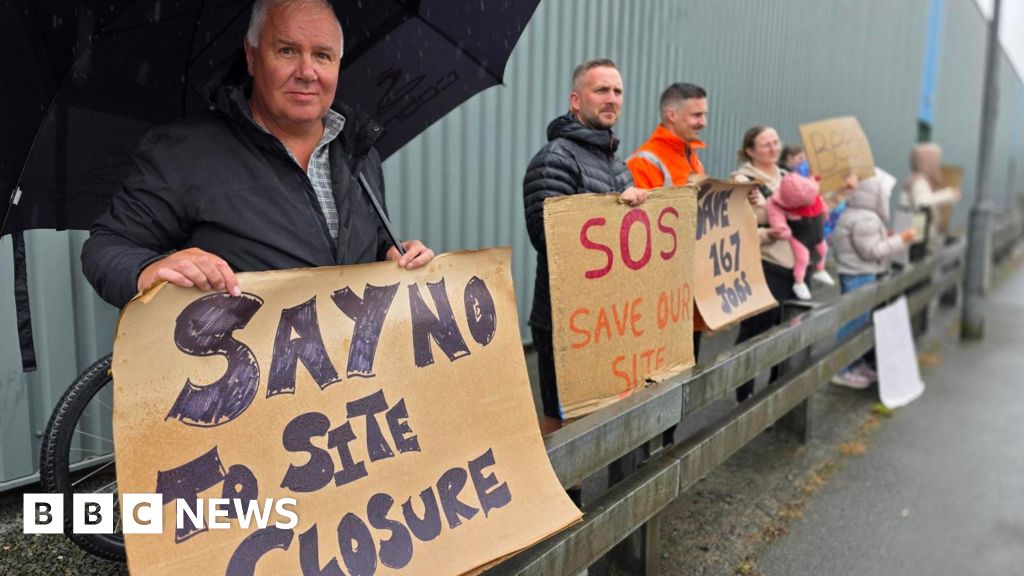
Paper plant closure fears spark community protest

Published

on

Paper plant closure fears spark community protest

Workers and families held a demonstration with 167 jobs at risk at the site in Launceston.

Continue Reading

Business

The future of trade policy is uncertain

Published

on

The future of trade policy is uncertain

Darci Vetter explains how shifting trade policy and tariffs are shaping global commerce and what food businesses should monitor.

Continue Reading

Business

Asia’s currency fight moves offshore as central banks push back

Published

on

Asia’s currency fight moves offshore as central banks push back
Asian central banks are increasingly facing currency pressures originating outside their borders. From South Korea to India and the Philippines, policymakers have ramped up efforts to curb offshore forex speculation as high oil prices, foreign fund exodus and a strong dollar pressure regional currencies.

South Korea’s finance ministry said on Sunday it will step up oversight of offshore currency derivatives. The Philippines has asked banks to ensure non-deliverable forward contracts are limited to economic purposes, while India has tightened limits on banks’ net open position to $100 million.

Indonesia, which unexpectedly raised interest rates on Tuesday, has said its central bank is active in currency markets “around the world, around the clock” to support the rupiah.

The warnings underscore concerns among Asian policymakers that offshore trading is adding to pressure on currencies. The oil-price shock from the US-Iran conflict has worsened the problem, hitting the region’s energy-importing nations. Indonesia’s rupiah breached the closely watched 18,000-per-dollar level, the Korean won has fallen to its lowest since the global financial crisis, while the Indian rupee and Philippine peso have hit record lows.

Advertisement

The efforts to curb offshore forex trading may help ease some pressure, but analysts doubt they can reverse the trend on their own.


“It may have some impact, but ultimately for the measure to be successful there needs to be a shift in the fundamentals as well,” said Michael Wan, senior currency analyst at MUFG Bank Ltd.

1Bloomberg

Non-deliverable forwards are cash-settled derivative contracts that allow investors to hedge or speculate on currencies outside local markets. They make up for about 4% of the global $10 trillion a day FX market, according to Deutsche Bank AG, though they can play an outsized role in Asia where restrictions on convertibility are common.
That means activity driven out of global financial hubs such as Singapore, London and New York can sway local markets.

Authorities across the region have tried to reduce this influence during periods of currency stress.

India allowed local banks to participate in the NDF market in 2020 and has since tried to attract activity onshore to its finance hub at Gujarat International Finance Tec-City, or GIFT City. South Korea has opened its forex market to overseas investors and extended trading hours, while Thailand has allowed non-resident corporates to access onshore baht liquidity and hedge freely.

“The reason the NDF market exists is due to restrictions in the onshore market,” said Khoon Goh, head of Asia research at Australia & New Zealand Banking Group. If those restrictions are eased and there is enough liquidity, the need for NDFs will gradually fade, as seen in the case of the Singapore dollar and Thai baht, he said.

Advertisement

Short-Dollar Book

Yet, the war-induced crisis has left some central banks with little choice but to intervene in those very markets they’ve been warning against. That defense has contributed to the drop in foreign-exchange reserves in the region.

The Reserve Bank of India has been particularly active, selling dollars primarily in shorter maturities, traders say. The central bank’s short dollar book, which includes offshore derivative positions, has likely surged to around $115 billion. Bank Indonesia has also sold dollars overseas to stabilize the currency.

The interventions have helped reduce outsized spillovers from offshore to local markets. In India’s case, the central bank has often been seen intervening just before onshore open to ease pressure on the rupee.

Some investors say currency weakness is the result of economic problems in individual countries rather than offshore trading.

Advertisement

India is facing persistent capital outflows, with global funds pulling a record $30 billion from stocks this year, spurring recent efforts to attract overseas capital. In Indonesia, investors are growing wary of the economic outlook and fiscal trajectory under President Prabowo Subianto.

The Philippines is facing a renewed inflation shock from high oil prices, while South Korea has seen over $78 billion of net foreign investment exit its stock market so far in 2026 despite a rally to record highs earlier this month fueled by retail craze for artificial-intelligence stocks.

The steps central banks have taken, including intervening in offshore markets, are aimed at curbing sharper market moves, said Lavanya Venkateswaran, senior economist at Oversea-Chinese Banking Corp. “We still think that policy rate hikes are on the cards” for India, the Philippines and Indonesia, she said.

Advertisement
Continue Reading

Trending

Copyright © 2025