


Connect with us
DAPA Banner
DAPA Coin
DAPA
COIN PAYMENT ASSET
PRIVACY · BLOCKDAG · HOMOMORPHIC ENCRYPTION · RUST
ElGamal Encrypted MINE DAPA
🚫 GENESIS SOLD OUT
DAPAPAY COMING

Politics

The House | Maritime Chokepoints: It Could Get Worse Than The Strait Of Hormuz Closure

Published

on

Maritime Chokepoints: It Could Get Worse Than The Strait Of Hormuz Closure

Illustration by Tracy Worrall


9 min read

Supply chains have been badly hit by the closure of the Strait of Hormuz, but – as Noah Vickers reports – the worst could still be to come.

Advertisement

The war in Iran and the closure of the Strait of Hormuz has wrought significant harm on the global economy, but for the shipping industry, it is only the latest disruption in a series of damaging episodes.

The Covid pandemic triggered a collapse in maritime trade. Then, in 2021, the Ever Given ship blocked up the Suez Canal for five catastrophic days and, in 2023, Houthi rebels in the Red Sea began attacking ships in the Bab al-Mandab strait. From 2023 into 2024, Panama experienced one of its worst droughts in recorded history, limiting the number and weight of ships which could pass through its vital canal – a situation likely to become more frequent with climate change.

The closure of Hormuz, which normally accommodates roughly a quarter of the world’s seaborne oil trade, has therefore added pain to a system already dealing with multiple headaches. But experts warn the impacts on supply chains could become far worse if the conflict drags on over several months, while concerns grow that it could set a precedent for other maritime chokepoints to be weaponised.

Advertisement

In a recent analysis, maritime research consultancy Drewry found that while a short war would be “manageable” for the container shipping industry, a longer conflict of up to a year would “impose a severe shock that will reverberate for years to come”.

A crucial issue is the supply of bunker fuel used by vessels. Since the start of the war, bunker prices have risen by between 60 and 80 per cent.

Drewry’s senior manager for container research, Simon Heaney, tells The House: “The risk from a fuel perspective goes from being a cost risk, which it currently is, to becoming more of a supply risk.

Advertisement

“At the moment, significant inventories have created a buffer, but as those stocks deplete, there could be an issue in terms of just physically getting these ships to do their job.

“I think we’re a long way off from that, but if it carries on for that duration [of up to a year], you’ll see some panic. It will have an impact in terms of how fast ships go – they will slow down to preserve consumption…

“It will start to move from what is currently a fairly limited network issue – a regional problem, and a slight hike in costs – to something much bigger, and it will have wider effects.”

An analysis by S&P Global Market Intelligence meanwhile warns that fuel shortages will have “implications for agriculture, mining and industry as well as transport”, with parts of Africa and south Asia thought to be most exposed.

Advertisement

Sourcing alternative fuels to gasoline and diesel “may be limited”, it adds, as countries start restricting “exports of their own production to protect domestic markets, as has already been the case with mainland China and South Korea”. The Malaysian government has similarly said it will prioritise its domestic supply.

The analysis also highlights the Middle East’s importance in supplying raw materials, gases, plastics and fertilisers to industries around the world, with the potential to “bring down entire supply networks”.

For instance, it points out that while Taiwan’s imports from the region are equivalent to only 2.39 per cent of its GDP, a loss of helium supplies could cripple its electronics output equivalent to 25.2 per cent of its national output.

Nor would the UK be immune to some of these impacts.

Advertisement

“We’ve got exposure to diesel, sulphur, unwrought aluminium,” says Chris Rogers, S&P’s head of supply chain research. “About a third of our imports of unwrought aluminium come from the region, so there is that economic effect even for the UK, directly.”

He points out that the peak shipping season, which typically starts in July, is still to come, meaning that capacity will soon become more stretched. In addition, due to the length of voyages undertaken on different trade routes, there is a substantial time-lag for the impact of disruptions like Hormuz to be felt.

“If we look, for example, at shipping from the Middle East to the United States, in April, the volumes only fell by 25 per cent year-on-year because the last boats hadn’t yet arrived,” says Rogers.

“The UK is still seeing some of that as well, because it’s a similar kind of journey time. It’s only really over the next few weeks that the boats that should have arrived, won’t have arrived… To a certain extent, we could have peace today and there would still be an impact.”

Advertisement

To substitute some of the lost trade to and from the Gulf, the shipping industry has been forced to rapidly utilise several overland alternatives across and around the Arabian peninsula.

MSC, the world’s largest container shipping line, is using the Red Sea ports at King Abdullah and Jeddah, while CMA CGM, the third-largest carrier, has utilised the Turkish port of Mersin.

“They’re using a variety of avenues – it’s not all being concentrated into a couple of substitute ports,” says Heaney. “There are different ways in, but even with these multi-modal solutions, the amount of goods in and out of the Gulf is going to be drastically lower.”

Bolstering these links and building new ones, he warns, will be “urgent”, as countries on the Gulf were “very ill-prepared” for such disruption to their trade flows.

Advertisement

Could other nations follow Iran’s example by using chokepoints as leverage? At an April symposium in Jakarta, Indonesian finance minister Purbaya Yudhi Sadewa floated the possibility of imposing a toll on ships through the Strait of Malacca – before quickly playing the idea down.

There could be an issue in terms of just physically getting these ships to do their job

“Whether that was a serious suggestion, I doubt,” says Heaney, “but it’s sort of a warning sign: don’t mess with us, because we could do something similar. In the absence of a nuclear deterrent, it’s an economic deterrent they could at least flag, without necessarily needing to deploy.”

Advertisement

Rogers points out that closing either Malacca or Panama would severely hit the economies of the countries in control of those chokepoints. A more realistic threat could come from China.

“The bigger question isn’t ‘Would Singapore or Malaysia feel emboldened to close the Strait of Malacca?,’” says Rogers. The question, he suggests, is: “Does China feel more emboldened to say ‘American sea power ain’t all that, so actually we could blockade Taiwan, and the American navy’s not going to be able to unblockade [it], they’re not going to be able to guarantee shipping’.”

For the shipping industry, the closure of Hormuz has further underscored the need for global trade networks to become more flexible and resilient.

“A lot of talk has gone into resilience and how you make supply chains more robust and able to withstand these shocks that are coming at a far greater speed than ever before,” says Heaney. “You can never eliminate it, but I think we are going to see a recognition that we need to diversify and not put all our eggs in one corridor.

Advertisement

“Even if the Red Sea opens and Suez transits are safe all of a sudden and Hormuz is safe, there needs to be investment and diversification in terms of the routing, just so there is a bit more redundancy in te whole system.”

The Strait or Hormuz
(SpaceEnhanced-New/Alamy)

If cargo distributors can devise “chokepoint-immune supply networks”, says Rogers, with Europe sourcing goods from Turkey and North Africa, and countries in the Americas sourcing more from one another, that could also reduce the scope for severe disruption.

But Jim Hall, an Oxford professor who recently co-authored a research paper on maritime chokepoints, is sceptical about whether this response, known as ‘near-shoring’, would provide much of a solution.

“We know that globalisation is only partially going into reverse, and much as Trump or whoever it may be would wish it away, actually, it brings us a great deal of benefit,” he says.

“I don’t think near-shoring, on-shoring, is going to much reduce our exposure to chokepoint-related disruptions to global trade. Decarbonisation of our economies would do more in that sense.”

Advertisement

The changing climate will also prompt interest from shipping firms in whether more use can be made of the Arctic Sea. The route from north-west Europe to east Asia via Russia’s northern coast is roughly 40 per cent shorter than taking the Suez Canal, but the route is only free of ice during the warmer months of the year and specific vessel types are needed even then.

“They’re smaller [vessels], so you don’t get the economies of scale,” says Heaney. “Even though the climate is making the season that you could use the Arctic a bit longer, it’s debatable how long that is and it’s not necessarily reliable.”

While some Chinese firms have been carrying out test runs along the route, the economics still don’t stack up for large western carriers, he argues – and nor does travelling through Russian waters do any favours for their brand image: “The PR, the optics, from a major carrier perspective are terrible, so none of them really want to touch it with a bargepole.”

Maritime chokepoints show no sign of becoming less critical to the world’s economy, as ships continue to carry about 80 per cent of traded volumes and 50 per cent of traded value worldwide.

Advertisement

Hall’s research, published late last year, found that disruptions at chokepoints affect around $192bn worth of maritime trade each year, which in turn result in estimated economic losses of about $14bn annually, through delays, rerouting, insurance premiums and higher freight costs.

Environmental threats, like tropical cyclones in the Taiwan Strait and droughts in the Panama Canal, account for some of the risk. But Hormuz has demonstrated just how much disruption can be caused when states decide to flout the internationally agreed principle of freedom of navigation.

“It is dawning on smaller nations, who geographically happen to have this leverage,” warns Heaney, “that all of a sudden, here is something you’ve got, that you could potentially use to your advantage.” 

Source link

Continue Reading
Click to comment

You must be logged in to post a comment Login

Leave a Reply

Politics

The House | Regenerate the coast: let development corporations borrow outside the fiscal rules

Published

on

Regenerate the coast:  let development corporations borrow outside the fiscal rules

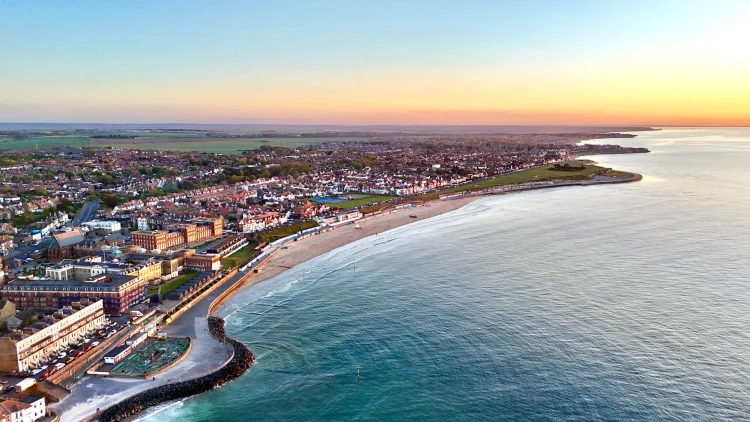
Aerial drone view of Westbrook Bay, Margate Kent (Alice Baddeley/Alamy)


4 min read

Britain under this Labour government faces a major challenge: how can we deliver economic transformation in left-behind communities at a time when money is tight?

Advertisement

As the MP for a coastal constituency that has often been overlooked by Westminster, I believe this question must be central to Labour’s mission in government.

The economic case is clear. Coastal economies have grown at half the national average since the financial crisis, yet they possess enormous potential that is currently being squandered – from port and renewable energy potential, to the creative economy and fantastic people crying out for better opportunities. If we could match that potential with institutions and capital capable of turning it into sustained economic growth, it could be a huge gamechanger for our whole economy.

That is why development corporations deserve far greater attention. Widely used across Europe, these bodies operate outside of short-term political cycles while remaining accountable to local leaders and communities. Their purpose is simple: to bring together public and private capital, assemble land, deliver infrastructure and unlock long-term regeneration.

Advertisement

For many left-behind areas, development corporations could be transformative. They offer a way to move beyond the piecemeal funding competitions and short-term grant schemes that have too often characterised centralised government thinking.

Yet their potential is currently being held back by the way Britain treats borrowing. Under existing arrangements, borrowing undertaken by development corporations is counted as public debt under the Chancellor’s fiscal rules, effectively treating it in the same way as borrowing directly undertaken by the Treasury. This creates a powerful disincentive for ambitious regeneration projects, even when those investments are commercially viable, low-risk and capable of generating substantial long-term returns.

This constraint is increasingly being recognised by investors themselves. Last year, some of Britain’s largest pension funds and insurers urged the government to allow development corporations greater borrowing flexibility for major regeneration schemes. They argue that the current system makes it harder to acquire land, invest in infrastructure and bring forward housing and growth projects that would ultimately strengthen the economy. Giving development corporations the ability to borrow responsibly would unlock a powerful mechanism for growth.

Advertisement

These organisations can capture the increase in land values created by planning decisions and infrastructure investment, then turn those gains into housing, transport improvements, public spaces and further economic development. Rather than relying on repeated injections of central government funding, they can help create a virtuous cycle of regeneration.

This is not an argument for abandoning fiscal discipline. Fiscal rules exist to ensure governments can meet their obligations and maintain market confidence. But those rules should not prevent well-governed investment vehicles from pursuing commercially sound projects that expand the tax base and strengthen local economies.

For many left-behind areas, development corporations could be transformative

Advertisement

We already rightly distinguish between day-to-day spending and capital investment because they have fundamentally different economic effects. The same principle should apply here. If bond investors trust that development corporation borrowing will deliver strong economic returns, this shouldn’t impact government borrowing costs.

Many European countries make far greater use of publicly backed development bodies in this way, but Britain remains unusually centralised, both in how investment decisions are made and how they are financed. Too often, projects that could deliver economic transformation are delayed not because they lack economic merit but because of Whitehall accounting conventions. Imagine what locally accountable development corporations could achieve if given the tools to act.

Britain’s economic future depends both on the success of its cities and on the renewal of places like those at the coast that have too often been left behind. Development corporations offer a vehicle for that renewal. Giving them the ability to borrow outside the fiscal rules, within clear parameters and for clearly defined regeneration purposes, would not weaken our growth strategy – it would strengthen it.

If we are serious about tackling Britain’s regional inequalities, we must stop treating regeneration as a cost and start recognising it as an investment in our country’s future. 

Advertisement

Polly Billington is Labour MP for East Thanet

Source link

Continue Reading

Politics

The 9 Best Early Amazon Prime Day Tech Deals, From Bose To Huawei

Published

on

The 9 Best Early Amazon Prime Day Tech Deals, From Bose To Huawei

We hope you love the products we recommend! All of them were independently selected by our editors. Just so you know, HuffPost UK may collect a share of sales or other compensation from the links on this page if you decide to shop from them. Oh, and FYI — prices are accurate and items in stock as of time of publication.

We’re lucky enough to live in an era where there are endless tech developments being released all the time.

It might be exciting to witness these from afar, but actually participating in them gets expensive pretty fast.

Advertisement

That’s why here at HuffPost, we’re always on the lookout for opportunities to invest in tech for less.

There’s no better time to do that than during Amazon Prime Day, which sees savings across hundreds of brands.

And it’s fast approaching, so ahead of the sale launching next week, we’ve rounded up the best early Amazon Prime Day tech deals to shop now.

Keep reading for the best TVs, tablets, and more to grab at a discount now.

Advertisement

When is Amazon Prime Day?

Amazon Prime Day launches on 23rd June and will run until late on 26th June. While the sale usually lands in July, this year Amazon has moved it forward to June to mark its 20th anniversary.

How can I get involved in Amazon Prime Day?

Ahead of the sale launching on 23rd June, you’ll want to become an Amazon Prime member if you’re not already. That way, you’ll get instant access to the best deals on Amazon when Prime Day starts next week, and you can even start saving some of your favourite products now to prepare.

Advertisement

Best early Amazon Prime Day tech deals to shop now

21% off

Athletes, listen up! If you’re looking for another excuse to get to know your body better, this watch from Huawei will keep you busy. Constantly monitoring your heart rate and blood oxygen levels, it will track your performance and help boost your training, whether you’re swimming, running, golfing, or hiking. It’s fully waterproof for up to 40 metres of submersion, and the battery lasts for three weeks, so you won’t have to worry about missing out on a big work out. Once it arrives, you’ll get a free three month subscription to Huawei Health, which offers workouts and AI fitness advice, while it’s easily synced with third party apps like Clue, FiiT, and Komoot. And of course, it looks supremely sleek, so you won’t have to worry about it ruining your outfits when you’re not in sports mode.

19% off

Best wallet tracker

Always losing your wallet? Thanks to this tracker, you’ll never have to cancel your cards ever again. Simply slide this slimline device into your wallet, sync it with Find My on your iPhone, and you’ll have a built-in tracker for next time you misplace it while out and about. Whether it’s in a bar or at a festival, you’ll be able to find it, as it plays a loud sound, and hopefully you’ll never get far before you realise your mistake, as your phone will send you a ‘left behind’ alert to let you know.

Advertisement

12% off

PC crew, stand up! If you’re looking for an ultra-light laptop, look no further than this one from Samsung that comes in at under 2kg. Whether you’re coding, gaming, or making your latest reel, the AI chip on this laptop is designed to make your workflow completely seamless. It connects to other Galaxy devices in a second, and you can even use your Galaxy phone as your webcam. Plus, it has speedy charging that gets you to 33% in as little as 30 minutes, and the battery provides up to 19 hours of video runtime for endless fun on the go.

39% off

Living your best analogue life? For a reading and note-taking experience with zero distractions, this Kindle has it all. As well as the regular functionality of a Kindle, it has a built-in notepad, so you can draw or write as you would on a pad (but keep it organised) or add your thoughts into the margins of books as you go.

12% off

Whether you’re trying to get a jog in or simply attempting to survive the morning commute, no one wants headphones that fall out every few seconds, so Shockz has created these specifically for premium sound and to make sure you don’t lose one of your precious belongings. Unlike other headphone models, these lightweight clip on buds won’t budge even an inch when you’re running or jumping.

No matter if you’re bingeing the latest season of your favourite show, gaming, or delving into a great book, you want to be able to immerse yourself in it, not just experience it. Set with quad speakers that support Dolby Atmos, this tablet has all the makings of a portable entertainment centre. As well as offering sound that transports you into another world, it has a 2.5k ‘crystal-clear display’ that reviewers praise for its quality, as well as the fact it doesn’t lag during streaming.

25% off

Best charging port

Advertisement

I hate to break it to you, but extension cables are so 10 years ago. Tangled wires and running out of sockets is a thing of the past, because we’ve evolved on to bigger and better things. Namely, this socket that can charge your tablet, phone, and laptop all at once – and fast. Simply plug this port into the wall and insert your cables for speedy charging, so you’re in full control of your charging process. No more wondering how long your phone will take to charge, or if you’re overheating your socket – it’s all built in to that smart display on the back. Phew!

44% off

Best TV for streaming

Gone are the days where a TV is just a TV. This one from Amazon is designed to be part of your digital ecosystem: not only does it come with a Fire TV remote, which is voice-controlled, but it holds every streaming service you could want in one place. If you’re not in the mood to watch, you can also play by downloading games from the App Store, or AirPlay whatever you want to look at from your phone – there are no limits!


Advertisement

Source link

Continue Reading

Politics

Stephen Spielberg Confirms E.T. Is ‘Moist’

Published

on

Stephen Spielberg Confirms E.T. Is 'Moist'

Speaking to the New York Times recently, director Steven Spielberg answered an E.T. question he said he’d never been asked before.

Host of NYT podcast The Daily, Rachel Abrams, said: “The question is not original, and it’s probably only for me, but, was E.T. slimy or dry?”

The Disclosure Day director laughingly replied, “That’s a wild question.

“E.T. was a little moist,” he smiled, “but never slimy”.

Advertisement

He continued, “E.T. was only dry when E.T. got sick, and then E.T was dry…

“When I hear the word ‘slimy’, I think it’s… Ridley [Scott, the director of sci-fi flicks like Alien]’s, you know… alien, when the teeth come out. That’s slimy.

“E.T. never had the tendrils of drool,” Steven added (well, at least that’s… something?). “We didn’t go that far.”

Steven pushed back on Abram’s comment about the question not being original, too.

Advertisement

“I’ve never been asked that question before. Ever,” he stated.

The Standard has previously explained that the on-screen model was made from a metal animatronic base covered in foam latex. Whether Spielberg meant the actual model or the theoretical species to which E.T. belongs remains a mystery.

For those who still have questions about the on-screen alien – we have many – there’s more E.T. trivia.

We’ve written before at HuffPost UK about the fact that E.T. isn’t his real name.

Advertisement

Instead, he’s officially called Zrek.

We know this because of a nine-page treatment that Steven Spielberg and co-writer Melissa Mathison wrote to pitch a sequel for the movie called E.T. II: Nocturnal Fears.

The name Zrek was mentioned three times in the document, referring to E.T..

But alas, Spielberg said it was never meant to be.

Advertisement

“Sequels can be very dangerous because they compromise your truth as an artist,” he shared.

“I think a sequel to E.T. would do nothing but rob the original of its virginity. People only remember the latest episode, while the pilot tarnishes.”

If he were ever to make a follow-up film, though, it looks like he wouldn’t use artificial intelligence (AI) to render E.T.’s “moist” (shudder) skin.

Speaking to ITV recently, he said, “I would never have used AI” to create sounds in Disclosure Day.

Advertisement

He’d previously stated, “I’m not willing to substitute, because I don’t really believe in sentience… I don’t believe there is any substitute for the soul. I don’t think that is an algorithm that is inventible.

“Use AI as a tool, but do not use AI as the final word on anything creative. That’s where I draw the line.”

Source link

Advertisement
Continue Reading

Politics

I’m A Doctor: Shut Down The ‘Manosphere’ Before It’s Too Late

Published

on

I'm A Doctor: Shut Down The 'Manosphere' Before It's Too Late

For the young men of 2026, the internet has become a dangerous soup of misinformation and misogyny repackaged as self-improvement tips peddled by bad actors.

Across all platforms, a growing ecosystem of ‘manosphere’ influencers are promoting harmful and extreme “health” trends to millions of people too young to know the difference between clickbait and genuine advice.

Content in this space normally begins innocently: advice on fitness, dating, and socialising, for instance. However it can quickly spiral into darker themes.

The promotion of unlicensed drugs sold on shady websites, misusing steroids rebranded as ‘biohacking’, starvation diets, and the pernicious “looksmaxxing” trend (where participants have been encouraged to alter their faces using hammers) are all encouraging physical harm in the pursuit of a perfect appearance.

Advertisement

Young men are actively encouraged to partake – and can be either shamed or cast out of the circle if they do not toe the line.

The manosphere as a public health issue

Most of the online personalities promoting such behaviour have no medical qualifications or understanding of the risks involved in what they are encouraging people to do.

They speak, however, as a voice of total authority to vulnerable and insecure audiences who have come to them looking for guidance.

Advertisement

Young men who are struggling with body image, self esteem, and loneliness find themselves particularly susceptible to their promises of quick fixes, instant desirability and success.

The problem is only exacerbated by a social media algorithm which rewards shock and outrage. The more outlandish the content, the more attention it receives, and the more money the creator makes.

Social media has become a dangerous echo chamber in which ludicrous ideas are amplified and go viral long before a qualified professional is able to give their opinion.

Online harm, real world consequences

Advertisement

Increasingly, the young men snared into this world are following through on the advice they receive online and purchasing medications either by deceiving legitimate providers or from the black market.

By taking drugs such as anabolic steroids or weight loss medication from unlicensed sellers, men are putting themselves at real risk from contaminated batches, incorrect dosing, or the drug simply being something else entirely.

Besides the physical dangers, there are psychological risks as well. Toxic online masculinity culture pushes unattainable body standards and encourages shame, anxiety, and obsessive behaviour.

The body is viewed as a project which needs to be worked upon constantly – and the moment it reaches the desired standard, the goalposts are moved so that more ideas and products can be sold to them.

Advertisement

What needs to be done

A coordinated and strong response is urgently needed if we want to keep boys and young men safe.

Schools need to provide better education on how to spot medical disinformation on the internet and to remind people that health information should be coming, first and foremost, from doctors – not influencers.

There must also be tougher action on social media influencers who are found to be spreading this harmful misinformation online.

Advertisement

People should not be allowed to continue to profit from encouraging dangerous behaviour simply because they have worked out that the algorithm rewards scandal.

While the social media ban for under-16s, due to come in next year, will offer some protection from this kind of content; meaningful penalties such as removal from platforms, and thus loss of income, would go some way towards shutting down these dangerous online communities.

The government must also tighten controls on the expanding black market for medications.

It is not acceptable that substances which should only be in the hands of licensed doctors and their legitimate patients are widely available via back door channels and are being taken by those with no medical need.

Advertisement

When vulnerable people are able to access such medication and take it without supervision, they risk coming to real harm.

Dr Zak Zafrani is a GP and Men’s Health Specialist at Numan.

Source link

Advertisement
Continue Reading

Politics

Watercress: Heart, Bone And Eye Health Benefits Explained

Published

on

Watercress: Heart, Bone And Eye Health Benefits Explained

We’ve written before at HuffPost UK about the 41 fruits and vegetables deemed the most nutrient-dense (according to a 2014 paper).

These “powerhouse” items had to provide at least 10% more of 17 nutrients – including potassium, fibre, and protein – per 100 calories than other foods.

Watercress made the top of the list, with a perfect nutrient density score of 100.

Here are four benefits that come from eating it…

Advertisement

1) It could improve your heart health

One study found that eating watercress extract lowered low-density lipoprotein (LDL) cholesterol, or “bad” cholesterol, in rats.

It also counts as a cruciferous vegetable, which has been found to reduce the risk of heart disease by 16% (this time for humans).

Watercress is also high in nitrates, which researchers think could lower blood pressure.

Advertisement

2) It might protect your bones

A paper found that watercress and one of its components, rutin, seemed “beneficial in stimulating the osteoblastic activity that results in bone formation”.

In other words, it might help to strengthen and protect our bones from things like osteoporosis, which makes them less dense and weaker. That loss of strength can make it easier for fractures to form.

3) It could help to balance your blood sugar

Advertisement

Men who ate watercress alongside a high-fat meal (at least 40% of its calories came from fat) had lower post-meal blood sugar levels than those who consumed the same dish without it, a 2021 paper showed.

A four-week trial also found that watercress extract may have lowered blood sugar in diabetic rats, too.

4) It might improve eye health

Watercress contains lutein and zeaxanthin, antioxidants which have been associated with a lower risk of macular degeneration as we age.

Advertisement

The leaf is also rich in vitamin C, which might help to protect our eye health – especially from blue light emitted by devices like our phones and laptops.

Source link

Advertisement
Continue Reading

Politics

Wes Streeting Prepared To Launch Leadership Challenge Against Starmer Next Week

Published

on

Wes Streeting Prepared To Launch Leadership Challenge Against Starmer Next Week

Wes Streeting is prepared to launch a Labour leadership challenge next week to end the “uncertainty and paralysis” over Keir Starmer’s future.

The former health secretary said the prime minister should be given the weekend to decide whether or not he wants to stand down in the wake of Thursday’s Makerfield by-election.

Greater Manchester mayor Andy Burnham appears to be on course to beat Reform UK’s Robert Kenyon to become the new MP for the seat.

Burnham has already said he will join any Labour leadership contest.

Advertisement

Starmer himself reiterated on Monday that he would also stand in an attempt to cling onto his job.

Speaking to the BBC’s Newsnight programme, Streeting said he was ready to bring the situation to a head.

“We can’t carry on with this uncertainty and paralysis, and there will need to be a contest, and I’d be prepared to do that,” he said.

Asked when that might be, he said he did not want to “get into, ‘is it Monday, is it Tuesday’”, but that Starmer should be given “space over the weekend” to consider his position.

Advertisement

At a press conference on Tuesday, Streeting called on the PM to say when he plans to leave No.10 if Burnham wins the by-election.

He said: “When the results are in, I hope the prime minister will at that stage reflect on his own position and set out a timetable.

“I think that would be a better way forward for everyone.”

But speaking at the G7 summit in France, Starmer once again insisted he will not walk away from the job.

Advertisement

“If there is a contest, I intend to be in it and to fight it,” the prime minister told Times Radio.

He added “They said it’s not possible to turn the Labour Party around. It’s not possible to win an election.

“It’s not possible if you do win an election to invest in your public services and stabilise the economy – wrong every time, and that’s why I intend not to walk away from this, but to carry on with what I was elected to do, which is to serve this country, bring back the change that people desperately need in their lives.”

Listen to Commons People, the podcast that makes politics easy. Every week, Kevin Schofield and Kate Nicholson unpack the week’s biggest stories to keep you informed. Join us for straightforward analysis of what’s going on at Westminster.

Advertisement

Source link

Continue Reading

Politics

Russell T Davis Has A ‘Fun’ New Project In 2026

Published

on

Russell T Davis Has A 'Fun' New Project In 2026

Days after his departure from Doctor Who, Tip Toe co-creator Russell T Davies has announced a brand-new project on his Instagram page.

His latest venture? A behind-the-scenes memoir of his most iconic TV hits, named The Queerest of Folk: A Life in Television as a reference to his breakout ’90s Channel 4 series.

In the caption of his post, he said: “A book! By me! And [Heat’s entertainment director] @boydhilton – the story of my life in TV.

“The shows, the people, the job itself, from CBBC to golden days at Granada in the 90s, then how Queer As Folk changed my life, Doctor Who (twice!) all the way up to Tip Toe.”

Advertisement

And, the It’s A Sin writer added, we can expect “Lots of fun, some gossip, stories of shows never made, and I hope insight into the day-to-day life of writing for TV.”

For his part, co-writer Boyd Hilton said working with Russell on the book was “one of the joys” of his life.

“We’ve known each other since the tumultuous launch of Queer As Folk 27 years ago, and for me his subsequent extraordinary body of work is a unique achievement that demands to be celebrated,” he said on Instagram.

The book will be available for purchase on October 8, 2026. Pre-orders are already live; signed editions can be pre-ordered at Waterstones, while unsigned copies can be pre-ordered on Amazon.

Advertisement

Russell said on social media that he’ll be reading the accompanying audiobook, too.

The Penguin synopsis said the book “distils Russell T Davies’s career in television, taking us from his early days working on children’s shows and soaps through to the giddy heights of relaunching Doctor Who and bringing queer relationships onto the mainstream screen″ .

It’s a “memoir fizzing with a love for television and the power it has to draw us together in an increasingly fragmented world,” they ended.

Advertisement

Source link

Continue Reading

Politics

Ian Mc Kellen Roasted Trump In New Avengers Film

Published

on

Ian Mc Kellen Roasted Trump In New Avengers Film

Sir Ian McKellen recently shared that his hatred for Mar-A-Lago, a luxury resort owned by US president Donald Trump, inspired him on the set of upcoming superhero flick Avengers: Doomsday.

Speaking about the project at an open-air Rome cinema, McKellen – whose X-man role has been reprised in the movie – said that during filming, directors Anthony and Joe Russo “got me at one point to destroy New Jersey”.

To make his rage in the scene convincing, the Lord of the Rings star added, the directors “told me to look more furious: make it look as if you hate what you’re destroying.

“So I stood there and I shouted: ‘Mar-a-Lago!’”, The Guardian reported.

Advertisement

It’s not the first time the actor has had a harsh word or two for the two-time American leader.

In 2016, while promoting his film The Dresser, Ian said: “This time last week, I voted for the new mayor of London [Sadiq Khan], who’s a Muslim. And that’s all I need to say about Donald Trump.”

Ian, who, it turns out, had more to say, added: “The most important man in London, the London mayor, is a Muslim, and he got voted in with a huge majority. I think that’s the future … enjoy the fact that we live in a multicultural world and rejoice in it. That’s my feeling.”

Advertisement

HIs new Avengers film comes as part of a busy year for Ian after his 2024 fall during a production of Payers Kings.

This year, though, the actor is back in full force. So far, he has starred in highly-rated movie The Christophers, opened a theatre space in Durham, and spent time marching for LGBT+ rights across the commonwealth.

Speaking to HuffPost UK in 2024 about the issues trans people are facing, he said: “When society disregards a minority – and, worse than that, imposes laws and restrictions on their behaviour, which is really unfair – then that’s when society is going off the rails, and we have to attend to it.”

Advertisement

Source link

Continue Reading

Politics

How Much Parents Can Be Fined for Term-Time Holidays

Published

on

How Much Parents Can Be Fined for Term-Time Holidays

It’s no secret the average cost of a family holiday abroad can be eye-watering.

In 2015, the average family of four spent around £3,000 on a nine-night holiday, according to ONS data analysed by NimbleFins.

Fast forward to 2026 and the average nine-night holiday cost for a family of four is nearer £4,000. This figure can climb up depending on where you’re headed, how you choose to fly, where you’ll be staying and, of course, when you go.

Holiday costs surge dramatically when the kids are off school. “For a family of four, the price per person rises by an average of 9%,” claims Go Compare.

Advertisement

It’s perhaps no surprise then that almost half (45%) of British parents have taken their child out of school for a holiday during term time.

A YouGov poll found lower costs are the biggest motivator, with 53% citing cheaper travel and 42% citing cheaper accommodation as reasons for taking term-time holidays.

Just over a third (36% of) parents say they would seek school approval for a term-time holiday, but travel regardless and accept the risk of a fine.

But it turns out there are only a certain number of times you can do this in a three-year period before more serious legal action is taken.

Advertisement

When do schools issue fines for holidays?

Parents can face fines if they take their children (ages five and up) out of school for a holiday during term time.

Parents are encouraged to write to their school’s headteacher to request permission to take them out of school for a period of time – however their term-time trip is still likely to be marked down as unauthorised absence unless there are “exceptional circumstances”.

UK government guidance states: “Generally, the DfE [Department for Education] does not consider a need or desire for a holiday or other absence for the purpose of leisure and recreation to be an exceptional circumstance.”

Advertisement

Parents might face a fine if a child’s absence is classed as ‘unauthorised’.

All schools are “required to consider a fine when a child has missed 10 or more sessions (5 days) for unauthorised reasons”, reads the guidance. A full day at school – morning and afternoon – is considered two sessions.

A child’s previous attendance counts, too. So, if they’ve had unauthorised absences previously, even if they didn’t go on holiday, these also count towards the five-day tipping point where a fine would be considered.

According to the UK government, 93% of fines issued in 2024-25 were for unauthorised term-time holidays.

Advertisement

How much are the fines?

The fines are issued per parent, per child – so they can soon add up.

If children are off for 5+ days and it’s deemed unauthorised, each parent can be fined £80 (if paid in 21 days), which then rises to £160 (if paid in 28 days). If the fine isn’t paid during this timeframe, parents may be prosecuted.

So, theoretically, if a family of five went away and three children were taken out of school, each parent could be fined £80 per child. That would be £240 per parent and £480 as a whole family (and that’s if it’s paid within 21 days).

Advertisement

If a parent receives another fine for the same child within a three-year period, they are automatically fined £160.

The ‘third strike’ rule parents should know

You can receive up to two fines within a three-year period.

But once that limit has been hit, if you take them out for another unauthorised term-time holiday, you could get a fine of up to £2,500, a community order or a jail sentence up to three months.

Advertisement

Source link

Continue Reading

Politics

When To See A Doctor If You’re Concerned About Prostate Cancer

Published

on

When To See A Doctor If You're Concerned About Prostate Cancer

Jeremy Clarkson has recently announced that he is suffering from an ’agressive prostate cancer in the latest episode of Clarkson’s Farm.

Though roughly 58,000 people get diagnosed with prostate cancer in the UK per year, Dr Jiri Kubes of the Proton Therapy Centre said, “Many men with prostate cancer will have no symptoms until the cancer spreads to other parts of the body”.

The radiation oncologist added that because there are currently no routine prostate screenings, spotting early cases is difficult.

“For this reason,” he explained, “it’s important men pay very close attention to any changes in their urinary habits. While they can often occur for innocent reasons, it still pays to know what’s happening in your body”.

Advertisement

Here are four changes he’d never ignore:

1) Finding it difficult to start peeing

This is also known as “urinary hesitancy” and is most often caused by benign prostatic hyperplasia (BPH), or an enlarged prostate.

This usually harmless issue is most likely caused by factors like ageing, though you should still get it investigated by a GP.

Advertisement

But struggling to start peeing or straining when you do go could also be a sign of prostate cancer, the NHS added.

2) Needing to pee urgently

Feeling like you need to go very urgently or very often can be a sign of prostate cancer.

This might happen a lot at night.

Advertisement

Again, the symptom can also be a sign of BPH, which does not develop into cancer. Still, it’s worth a doctor’s visit.

3) Having a weak flow

Usually, this is another sign of BPH, though it could belie prostate cancer, too.

Cleveland Clinic writes that this can present as a weaker stream of urine than usual, or pee that starts and stops.

Advertisement

4) Feeling like you still need to “go” after peeing

If you’ve started feeling like you haven’t been able to properly empty your bladder, either BPH or, more rarely, prostate cancer could be at play, Dr Kubes said.

You might also have burning or pain when you do urinate.

5) Noticing blood in your urine or semen

Advertisement

This is always worth seeing a doctor about.

You should ask for an urgent GP appointment or call 111 if you notice blood in your pee, the NHS says, even if you have no other symptoms, if it’s happened for the first time, or if you’re not sure it’s blood.

This is because it “can be a sign of cancer. This is easier to treat if it’s found early”.

When should I see a GP?

Advertisement

If you notice any of these changes, speak to a doctor. Even BPH is worth getting checked out.

“Often men will get an enlarged prostate as they age, which can give the same symptoms and is nothing to worry about,” Dr Kubes said.

“But it’s important to know what’s going on in your body and speak to your GP if anything changes, gets worse, or worries you. It can be easy to bury your head in the sand, but don’t wait for things to get worse.

“It’s important to speak up, and there is nothing to be embarrassed about.”

Advertisement

Source link

Continue Reading

Trending

Copyright © 2025