This deal delivers the lowest price we’ve seen on the new 15-inch MacBook Air that was released in March 2026. Equipped with Apple’s M5 chip with a 10-core CPU and 10-core GPU, the standard configuration also has 16GB of unified memory and 512GB of storage.
In our hands-on M5 MacBook Air review, we found that although the 2026 release is an incremental update, it’s still an excellent buy for most.
And for those wanting the extra screen real estate found in the 15-inch model, picking it up at the lowest price ever is always a plus.
If you’re looking for additional power and a larger port selection, Amazon is also knocking $250 off every 2026 16-inch MacBook Pro configuration it sells. You can read more about the sale in our deal article.
This webinar explores how AI‑based virtual sensors can be used to estimate signals that are difficult or costly to measure, such as battery state of charge (SOC) in Battery Management Systems. Using a practical example, the session demonstrates how AI models can be integrated into system‑level design and validated against performance, resource, and deployment constraints.
The workflow shows how to design, verify, compress, and deploy AI‑based virtual sensors to embedded processors within a single environment.
You will learn how to:
Integrate AI models into Simulink® for system‑level simulation and verification
Apply formal verification to assess neural network behavior
Optimize models for memory footprint and execution speed
Generate and profile library‑free C code for embedded deployment
Evaluate design tradeoffs across accuracy, performance, and deployment targets
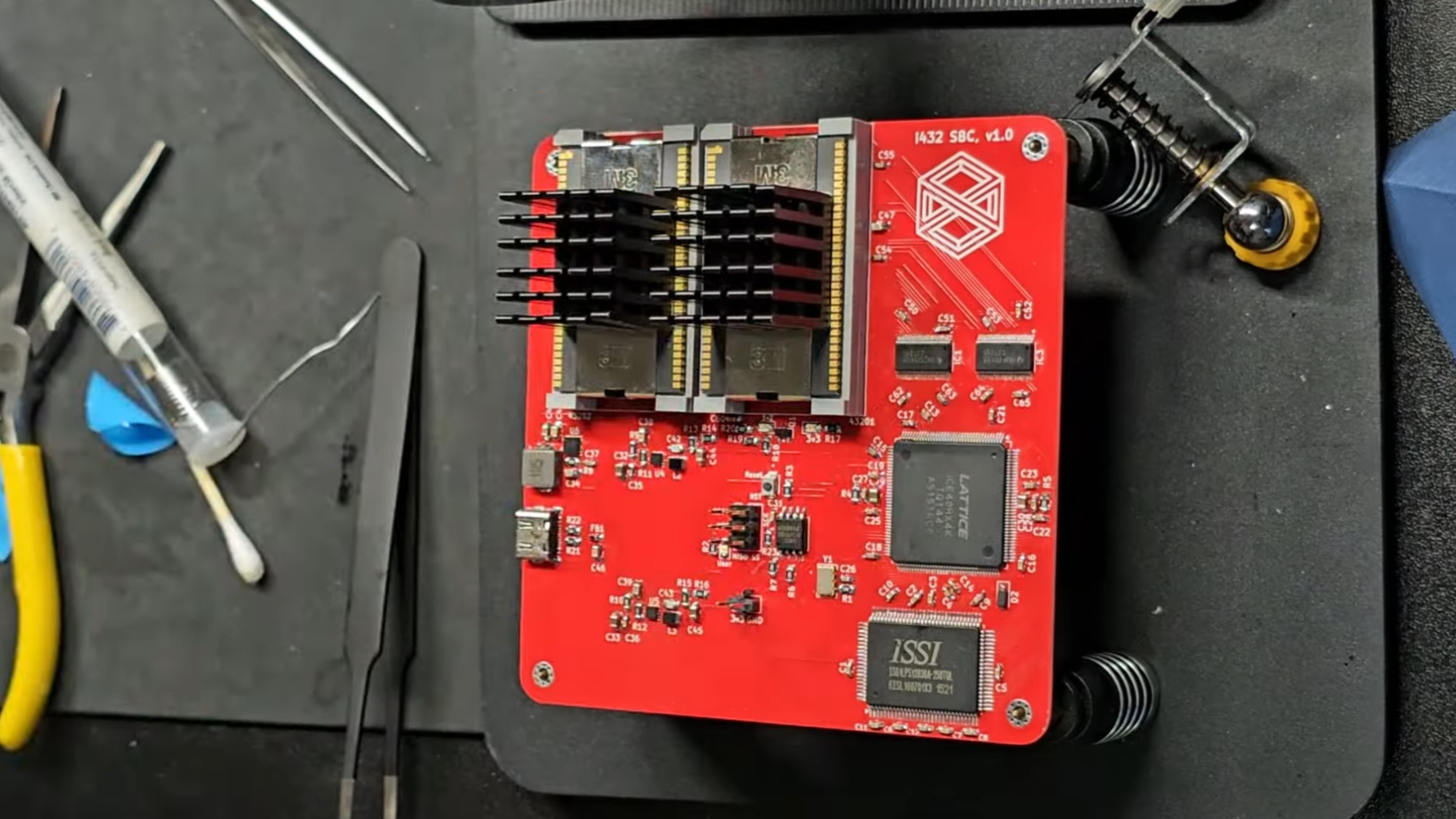
Processor design over the last few decades has moved toward RISC processors that aim to implement a few simple operations very efficiently. For a while, though, the trend was toward ever-more-complex CISC designs that let programmers implement complex behaviors using as few instructions as possible. Few processors took this approach further than the Intel iAPX432. This hyper-CISC processor was a commercial failure, largely due to its notoriously poor performance, but [MarkTheQuasiEngineer]’s benchmark suggests that this notoriety wasn’t totally deserved.
The first step before running a benchmark was to build a computer around the processor. The iAPX432 was implemented in three chips, two of which acted as the general data processor (GDP), and one of which handled input and output. [Mark] built an SBC (design and code here) that houses the two GDP chips and an FPGA for I/O. The 432 did have a well-deserved reputation for efficiently turning electricity into heat, and the original voltage regulator failed rather quickly.
The 432 was designed to use machine code which was almost a high-level language, with built-in object-oriented programming. It had over 200 operators, some of which implemented complex object-oriented operations, and a wide variety of data types, but it had no directly-accessible general-purpose registers. In addition to the lack of registers, it also had a very complex addressing system, allowing both direct and indirect addressing. For better performance, [Mark] used direct addressing.
For the benchmark, [Mark] implemented the Spigot algorithm to calculate the value of Pi. The results were somewhat surprising: calculating 2048 digits, it beat his previous retro-processor benchmarks; an Intel 8086 running the same algorithm took 2.5 times as long. Based on the results of this hand-written code, [Mark] speculates that the 432’s poor performance had more to do with poor compiler optimization than with the fundamental design.
Advertisement
We’ve covered some of the history of this troubled chip before. For a similarly ambitious but ill-fated Intel project, check out the history of Itanium.
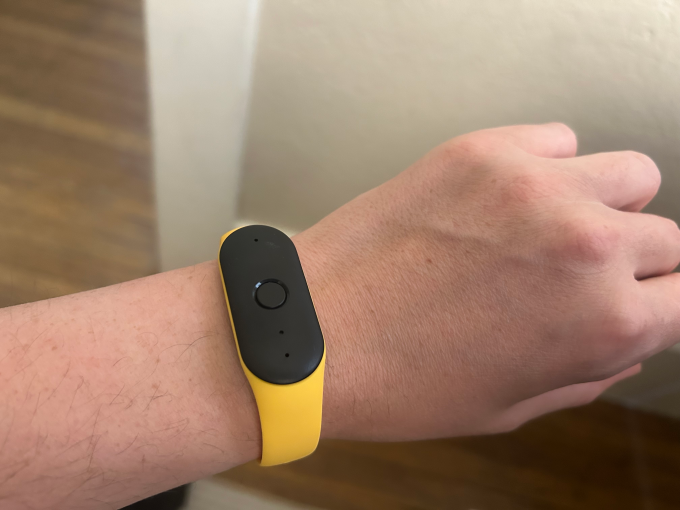
I recently had the opportunity to test out a wearable from Bee, the AI wrist gadget that Amazon acquired last year and has since updated with a number of new features.
Like other AI wearables, Bee is designed as a kind personal assistant: it records, transcribes, and summarizes the user’s conversations throughout the day, providing an ongoing note-taking capability that’s useful if you’re forgetful or just want to be more organized about your life. If you sync it with your calendar, it can also send you alerts and reminders about things you’re supposed to do throughout the day.
TechCrunch has written about Bee before, and the way it works is pretty simple: the user powers it up, puts it on, syncs it with the Bee mobile app, and enters some basic personal information. Bee has a built-in recorder that can be turned on and off by clicking the wearable’s button. When Bee is recording, a green light flashes. When it’s not, that green light goes off. After a conversation has been recorded, the app will create an automated summary that is easy to read, as well as an entire transcription of the conversation.
Your mileage may vary on how exciting (or not) this whole conceit is. The problem for me is that I am something of a privacy enthusiast. In a world where the average person is beset from all sides by constant digital surveillance, I appreciate any opportunity I can get to not be recorded. Therefore, the idea of walking around with an eavesdropping gizmo strapped to my wrist 24/7 was not particularly appealing.
Advertisement
Yet, even I have to admit that — in the right context — Bee could have a lot of potential to help organize your life.
Bee really comes through in the context of professional engagements. If your day is full of meetings and you have trouble keeping it all straight, Bee could be a moderately competent assistant.
During a business-related phone call this week, I activated Bee after getting confirmation that I could record our meeting. Afterward, the app faithfully regurgitated a summary of the conversation, helpfully breaking down each segment of our talk so that I could review it later without having to re-listen to our entire conversation. This was undeniably helpful, although it should be noted that this isn’t something that’s markedly different than those offered by other transcription services, like Otter or Granola and others, which also offer transcriptions and auto-generated summaries.
That said, you could envision a situation in which a professional who has to navigate between various meetings throughout the day would be well-served by this device. You could just keep Bee running throughout the day and, later, review the conversation summaries for anything you’re not clear about.
Advertisement
Image Credits:TechCrunch
Bee does a relatively good job at summarizing conversations, but the actual transcripts offered by the wearable can be a bit of a mess. Previous critics have noted that you usually have to manually enter the names of other speakers, as Bee doesn’t always know who is talking. During my conversation, I noticed that it had also omitted certain sections of our chat — nothing huge, but it wasn’t a complete account of everything that had been said.
I also took Bee to my semi-weekly movie night with my friends and left it running throughout the night. Given the fact that we watched Reservoir Dogs, I was mildly afraid that the wearable would mistake all of the vulgar carnage for real-life bloodshed and potentially trigger some sort of internal alarm. However, Bee knew — basically — what was happening. The wearable figured out that we were watching a movie and, in the summary of events afterward, the wearable labeled the conversation “Tarantino Film Scene Analysis.”
While Bee shows early promise as a professional tool, I would not want this thing recording me in my personal life. Weirdly enough, Bee has largely been marketed as a product for personal use. To be comfortable with that, you have to be comfortable with Bee having access to a majority of both your offline and digital life.
Indeed, to work well, Bee needs expansive mobile permissions — including access to your location, photos, phone contacts, calendar, and mobile notifications. You can also share your health data with it — should you, for whatever reason, want it to know about your sleep patterns or your resting heart rate.
The large accumulation of data Bee collects is stored in the cloud, which — again, for the digital privacy enthusiast — presents its own concerns. In a message to tech YouTuber Becca Farsace, Bee apparently unveiled a demo of the device running entirely locally. Were the company able to produce such a device, I would be thoroughly impressed — and might even consider buying one. That said, Amazon hasn’t offered any update on those plans.
Advertisement
As for Bee’s digital privacy protections, the company says that it offers encryption to protect user data — both at rest and in-transit. In its privacy policy, the company states that it has “implemented technical and organizational security measures designed to protect the security of any personal information” that the company processes. Bee also claims that it undergoes “rigorous third-party security audits” and employs continuous security monitoring. That all sounds quite good, although it’s worth noting that Amazon — like many large tech companies — has been subject to the occasional data security issue or two (not exactly surprising for a company that governs as much of the global cloud environment as it does, but still).
In short, Bee is a curious piece of hardware that, given some time and some tweaking, could have some promising professional applications further down the road. As a digital assistant for your personal life, however, it might prove to be a little too invasive for some users.
When you purchase through links in our articles, we may earn a small commission. This doesn’t affect our editorial independence.
We may receive a commission on purchases made from links.
Milwaukee’s distinctive red tools can be found at jobsites all over the country, and they’re a popular choice among discerning do-it-yourself enthusiasts too. Even if you’re not a keen DIYer, you might still want to keep some Milwaukee tools in your everyday tool kit. A good set of hand tools is arguably the foundation of any good collection, and Milwaukee’s current selection of hand tools covers both the essentials and niche products for a wide array of jobs.
Advertisement
Most homeowners are unlikely to need the brand’s most niche products, but regardless of whether you’re an avid DIY enthusiast or are simply looking for a great basic tool kit, Milwaukee’s best-rated essentials shouldn’t be overlooked. These 15 hand tools have all received consistently strong ratings from reviewers at Home Depot, and they should all be just as useful for homeowners as they are for professionals. Some of these hand tools are also made in the USA, and most are covered by Milwaukee’s generous limited lifetime warranty.
Advertisement
Milwaukee Compact Hack Saw with 10-Inch Blade
You can buy the toughest hack saw with the sharpest blade, but it still won’t be much use if it’s too unwieldy to reach the material you need to cut in a tight workspace. With Milwaukee’s compact hack saw, limited space shouldn’t be a problem, since its extendable blade reaches up to 10 inches while its frame is much more compact than a conventional hack saw. It’s sharp enough to cut through a wide variety of materials too, from metal tubing to wood and plastics.
A tool-free blade change is designed to minimize downtime, while the rubberized handle should help keep the saw comfortable in hand on longer jobs. Like most of the other products here, this compact hack saw is backed by a limited lifetime warranty and can also be returned for up to 90 days if you purchase it from Home Depot. The retailer currently offers the tool for $17.97.
Advertisement
Milwaukee 6 Foot Keychain Compact Tape Measure
If you’re relatively new to the world of Milwaukee tools, you might be surprised to discover just how many different types of measuring devices the brand sells. Out of all of them, the humble tape measure is the device that will appeal to the widest group of homeowners. Even the most DIY-averse family members will probably need to use one sooner or later, but because they’re so useful, they’re also easy to lose.
If you regularly find yourself searching your home for your tape measure after absent-mindedly putting it down and forgetting about it, Milwaukee has the answer. The brand’s 6-foot keychain compact tape measure is designed to be carried around either with a set of keys or attached to a belt loop, making it less easy to misplace than a regular tape measure. It’s available for $6.97 and features both metric and SAE measurements. Of course, carrying around your tape measure with your keys is only useful if you don’t also lose your keys. If you’re prone to losing them too, it might be worth investing in an AirTag or one of the many Android-compatible alternatives.
Advertisement
Milwaukee 17-Key Folding SAE/Metric Hex Key Sets
Tape measures are far from the only hand tools that can easily get lost. Hex keys are also equally easy to misplace, but Milwaukee’s 17-key folding hex key set shouldn’t suffer such problems. Each key is integrated and folds away back into the body of the tool, so there’s no need to worry about losing a loose key. Each can also rotate up to 270 degrees.
Milwaukee’s set includes two tools, one 8-key tool and one 9-key tool, with the body of each tool being made of metal rather than plastic. The keys themselves are also designed to be tough, and are manufactured with heat-treated steel with a black oxide finish.
Advertisement
While the 9-key tool includes SAE hex keys ranging in size from ¼ inch to 5/64 inch, the 8-key metric tool has keys from 8mm to 1.5mm. The set costs $31.97 at Home Depot and is covered by a limited lifetime warranty.
Advertisement
Milwaukee 15-Inch Pry Bar
Tools don’t get much simpler than a pry bar, and Milwaukee offers various sizes of the tool in its current range. A small 12-inch version is available for $10.97 and a large 21-inch variant costs $20.97, but at the middle of the range is the 15-inch pry bar. It’s available at Home Depot for $16.97, and like all the tools here, it has received consistently high review ratings from buyers at the retailer.
The tool features a beveled nail pulling slot next to a sharpened claw at one end, with a shepherd’s hook at the other. In the middle of the tool is a grip made with Milwaukee’s ShockShield technology, which is designed to help cut down the amount of vibration that’s transmitted to the user when the tool is hit with a hammer. Milwaukee makes each pry bar with forged steel then uses induction hardening to keep the claws sharper for longer.
Advertisement
Milwaukee 22 Oz Milled Face Framing Hammer
The Milwaukee 22-ounce milled face framing hammer is just one of many different hammers that the brand sells, but its strong review ratings help it stand out from the crowd. The tool retails for $32.97 and features a milled face, which is sometimes known as a waffle-head hammer. The waffle-like pattern on the face helps make it grippier than a smooth-faced equivalent, which comes in particularly handy for anyone working outdoors in damp conditions.
Even in drier conditions, the milled face is preferable for longer, repetitive carpentry jobs where it doesn’t matter if there’s a mark left on the wood. For finishing jobs, a hammer with a smooth face is a better bet. Regardless of the type of hammer you need and the weight you want it to be, it’s safe to assume that Milwaukee has what you’re looking for. Alongside the milled face hammer, Home Depot also carries a smooth face version of the same tool which retails for $29.97.
Advertisement
Milwaukee 7-Inch Rafter Square
Available in either 7-inch or 12-inch sizes, Milwaukee’s rafter square is a useful tool for many different DIY jobs. The 7-inch version retails for $20.97 at Home Depot, and it’s backed by the same limited lifetime warranty that covers many other Milwaukee hand tools. It’s made from aluminum and features a 1 inch cut-out to prop pipe so it’s simple to cut, as well as featuring scribe notches from 1 inch to 6 inches. The tool’s markings are all laser etched, and so they should remain clear even after the square has been extensively used.
The rafter square is one of a number of Milwaukee hand tools that are made in the USA. Only a few major tool brands still make tools domestically, with Snap-On, Craftsman, and Makita being among them. Milwaukee isn’t shy about showing this off, decorating the rafter square with prominent “USA” lettering as well as etching the brand’s famous logo into the top of the tool.
Advertisement
Milwaukee 8-Inch Long Needle Nose Pliers
Take a dive into Milwaukee’s list of patents and you’ll get a glimpse of the brand’s future plans. In 2025, we covered a number of cool Milwaukee patents that we hoped would become a reality, from a robot mower to a cordless snow blower, with the blower actually launching to customers later that year.
Advertisement
Milwaukee’s hand tools also feature plenty of patented or patent-pending technology, like the 8-inch long needle nose pliers. The tool features unique, patent-pending reaming ridges in the head to help remove burrs from pipes, setting them apart from similar pliers from rival brands. Also included is a built-in fish tape puller and a wire cutter.
The pliers retail for $22.97, making them an affordable addition to any homeowner’s tool kit. Home Depot also offers a slightly cheaper pair of Milwaukee needle nose pliers with a dipped grip instead of a molded comfort grip, but it’s the pricier pair that has achieved bestseller status thanks to its high number of consistently positive reviews.
Advertisement
Milwaukee Phillips/Slotted Flat Head Hex Drive Screwdriver Set
A new set of screwdrivers might not be as much of an exciting addition to your tool kit as a new power tool, but it’ll still be just as useful. Milwaukee offers various individual screwdrivers and combo sets, but the Phillips/slotted flat head hex driver screwdriver set is one of the top rated of the bunch.
It’s available for $24.97 and includes a trio of Phillips #2 screwdrivers and a trio of slotted flat head screwdrivers. Each one features a magnetic tip and a lanyard hole for easy transportation. The tool’s shank is designed to be compatible with wrenches, while the grip features a tri-lobe design to help users apply maximum force with minimal discomfort.
Milwaukee’s familiar limited lifetime warranty covers each tool in the set, with the brand promising to repair or replace any hand tool that it deems to be defective, regardless of when it was purchased. There are a few caveats: Milwaukee’s technicians determine whether or not they think a tool is defective rather than operating a no-questions-asked policy, and the warranty is invalidated if its technicians deem the tools to have been subject to misuse. Buyers looking to take advantage of the warranty will also need to provide proof of purchase when they ship the tool back to Milwaukee’s service center. These caveats aren’t unique to the screwdriver set, but instead are applicable across every Milwaukee hand tool with a lifetime warranty.
Advertisement
Milwaukee 12-Inch Digital Measuring Wheel with 100 Foot Closed Reel Long Tape Measure
A handheld tape measure might be enough for shorter distances, but when it comes to measuring longer runs, Milwaukee’s 12-inch digital measuring wheel is the superior choice. It retails for $130.94 and is bundled with a 100 foot close reel long tape measure to give you multiple measuring options. The 100-foot tape measure includes a system that Milwaukee calls Grime Guard, which stops dirt and debris from getting into the reel.
Advertisement
Pair that with the measuring wheel and the result is a 2-piece set that can generate accurate measurements of both outdoor and large indoor spaces in all weathers. The 100-foot tape measure is the best choice for the worst climate conditions, but the digital measuring wheel’s IP54-rated LCD screen means it’s suitable for showery weather or dusty yards as well. The screen can also display both imperial and metric measurements, and can save measurements so you can reference them later.
Advertisement
Milwaukee 7.75 Inch Combination Electricians 6-in-1 Wire Stripper/Cutter Pliers
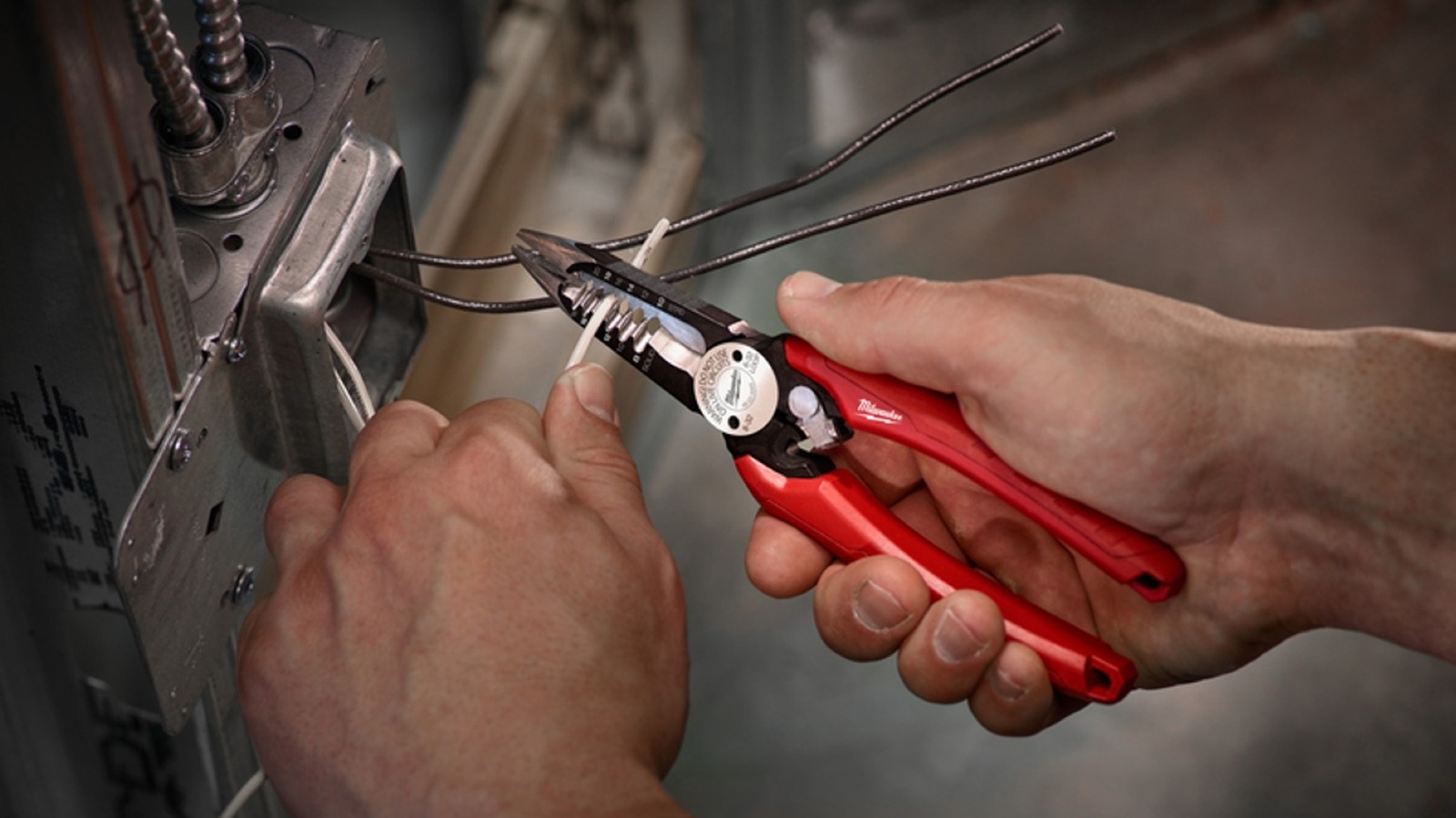
Tools that promise multiple functions in one can run the risk of being a jack of all trades but a master of none. However, the impressively high user ratings accrued by the Milwaukee 6-in-1 wire stripper and cutter pliers prove that it doesn’t promise more than it can deliver. It certainly promises a lot; Milwaukee says that the tool is a reamer, a wire stripper, a wire cutter, a bolt cutter, a loop maker, and a pair of pliers all in one.
It can strip 10-20 AWG stranded wire and 8-18 AWG solid wire, while its built-in bolt cutter can cut #6 and #8 bolts. The tool is made from forged alloy steel for long-term durability, and it’s designed to be corrosion resistant. That’s a whole lot of capability considering that the pliers can be bought for under $20 — specifically, they retail for $19.97 at Home Depot at the time of writing.
Advertisement
Milwaukee 9-Inch Nail Puller
Much like the Milwaukee pry bar, the brand’s 9-inch nail puller is another simple but useful tool. Home Depot sells the unit for $16.97, and like any tool with only one job, it needs to do that job extremely well if it’s going to please buyers. Judging by the very high star rating it achieves from Home Depot reviewers, it does indeed do its core job very well.
Milwaukee claims that part of the tool’s impressive performance comes down to its head design, which is shaped slightly differently to its competition. According to the brand, that unique design helps users pull nails out more quickly and efficiently than nail pullers from other brands. The tool can pull 6D, 8D, 10D, and 12D nails. The same wear-resistant grip that can be found on many other Milwaukee tools is present and correct here, and the brand says that it won’t peel even after long-term use.
Advertisement
Milwaukee 6-Inch and 10-Inch 2-Piece Adjustable Wrench Set
If you’re a professional that frequently needs to use wrenches of various sizes, buying a full wrench set is the most efficient way to ensure you have all the tools you need. If you’re a homeowner and don’t need to use wrenches so frequently, then an adjustable one is a great way to save space in your tool kit. They can adapt to a wide range of nut and bolt sizes, and they’re cheaper than buying a larger traditional set of wrenches.
Home Depot offers a Milwaukee 2-piece adjustable wrench set for $34.97, comprising one 6-inch and one 10-inch adjustable wrench. Both tools are chrome plated, which not only increases their rust resistance but also gives them a premium look that’s befitting of the Milwaukee brand. A unique screw design ensures that the wrench stays at the correct size once it’s been adjusted, while the parallel jaws reduce the chance of marking surfaces. Each wrench features laser-etched markings that won’t fade over time.
Advertisement
Milwaukee 5-Inch Mini Flush Cutting Pliers
You might want to use the Milwaukee 5-inch mini flush cutting pliers to slice through wires, but even if you’re not planning any electrical work, they’re still potentially very useful. They’re just as good at cutting through cable ties, with their small blades able to fit into spaces with tight fits. They’re also one of the cheapest Milwaukee hand tools, retailing for $10.97 after Home Depot permanently dropped its retail pricing permanently, having previously sold the tool for $12.97.
Advertisement
The pliers are built with the same quality that fans of the brand will expect, with molded grips and durable, rust-resistant blades. Just in case any examples of the tool don’t live up to the brand’s usual high standards, Milwaukee’s limited lifetime warranty is also included as standard for extra reassurance. As well as being cheap and durable, the pliers also won’t take up much room in your tool kit, as they’re only 2 inches in width and 5 inches in length.
Advertisement
Milwaukee Fastback Folding Utility Knife and Compact Folding Utility Knife 2-Piece Set
Another Milwaukee product that has undergone a permanent price drop is the Fastback 2-piece utility knife set, which now retails for $15.97. Previously, it retailed for $21.97, with the new price equating to a 27% saving. Yet even at the old price, the set was arguably a good buy; now it’s even better.
One of the two knives included with the set is a more traditional folding utility knife design, while the second knife has some less conventional features. This latter knife also includes a built-in wire stripper, a gut hook, and additional blade storage for up to 5 extra blades. Both tools feature the same tool-free blade change.
Buyers can use the knives with multiple different types of blades, making them useful for many different jobs around the house. Equipping one of the knives with a carton blade makes it particularly useful for opening and dismantling cardboard packaging. Alternatively, equipping it with a drywall blade makes it well suited for cutting both drywall and sheet metal. These additional specialty blades will need to be bought separately.
Most Milwaukee tools are well received by buyers, but there are a few that owners say it’s best to avoid buying. One of those tools that’s best avoided is Milwaukee’s 27-in-1 multi-bit screwdriver, which has been subject to a large number of reviews claiming that the ball bearing inside the tool can fall out. Other similar Milwaukee tools, like its 13-in-1 combination screwdriver, aren’t known to suffer the same problem.
As a result, homeowners looking for a useful multi-bit Milwaukee screwdriver will want to stay well clear of the 27-in-1 tool and head straight for this 13-in-1 version instead. It features slotted, square, Phillips, ECX, and nut driver bits, and it retails for only $19.97. According to the brand, the bits were selected based on demand from professionals, but the large range of sizes and types makes it a good all-in-one tool for homeowners too.
Advertisement
How we picked these useful Milwaukee hand tools
Plenty of hand tools might look useful at first glance, but they also need to perform over the long run in actual working conditions you’re likely to experience every day. To make sure that each of our picks’ real-world performance lived up to their billing, we sourced feedback from reviewers at Home Depot. Each pick has an average rating of 4.5 stars or higher from at least 200 reviews at the time of writing. All prices listed refer to the retail price at Home Depot and do not account for discounts or limited-time promotions.
A French engineer has declared war on AWS, Google and Microsoft using AI-generated sea shanties, satirical poetry, and a multilingual protest campaign
A French SRE has given Amazon, Google, and Microsoft until September to fix cloud lock-in or face an endless barrage of AI-generated protest songs, satirical poetry, and Finnish polka.
Amine Raiti, an infrastructure architect and SRE currently working at a European Central Bank-regulated financial institution, has launched what may be the least conventional anti-cloud campaign in enterprise IT history: a multilingual pressure operation called “Operation Dindon,” complete with satirical poetry, orchestral music, K-pop, and a fictional turkey trapped in cloud dependency.
Advertisement
His demands are fairly simple: let companies cancel multi-year cloud commitments when business tanks, stop charging eye-watering egress fees to move customer data around, and make it possible to leave proprietary cloud services without detonating the IT budget.
Speaking to The Register, Raiti claims one AWS NAT Gateway setup costs roughly €6,700 ($7,777) annually for functionality that Linux admins have been handling with iptables since the late 1990s. He also points to managed Kubernetes pricing he says can exceed €14,000 ($16,251) a year.
Complaints about hyperscaler pricing usually stay confined to conversations between infrastructure teams, the occasional furious LinkedIn post, regulators and Reg readers.
Raiti took a slightly different approach, producing a 14-part satirical series called The Legend of Dindon, centered around a fictional turkey who locks himself into cloud dependency and cannot escape, with each episode targeting a different cloud pricing or lock-in practice.
Advertisement
Episodes include The Managed Mirage, The Highway to Hell (The AWS NAT Gateway Autopsy), and The Turkey Who Plucked Himself in the Cloud, proving that cloud resentment has finally evolved into performance art.
From there, the campaign evolves from LinkedIn storytelling into a formal public ultimatum aimed directly at the hyperscalers.
Earlier this month, Raiti published what he calls an “Iron Ultimatum” in 11 languages directed at the three hyperscalers. If they agree to meaningful reforms, he says he will publish a celebratory “Diwan” praising their wisdom. If not, the AI-generated campaign continues indefinitely.
According to Raiti, Operation Dindon now includes 50 AI-generated songs spanning opera, gospel, K-pop, sea shanties, Finnish polka, Raï, and Chopin nocturnes, all allegedly produced in around two minutes per track for less than €50 a month.
Advertisement
Raiti says the idea for Operation Dindon came from his time in infrastructure leadership roles at a French adtech company. He says the business was tied to multi-year cloud commitments that continued even as revenues fell and staff were laid off.
Raiti does not directly accuse the cloud providers of causing the layoffs and describes the account as his own view of events. But he says that watching cloud costs continue to tick along while jobs disappeared was the point when vendor lock-in stopped sounding like an abstract IT problem.
The hyperscalers haven’t publicly responded. There are still several months remaining before the September deadline, giving the industry plenty of time to prepare for the possibility that the next phase of cloud criticism may arrive in the form of AI-generated sea shanties about vendor lock-in. ®
The internet is now a must-have for streaming movies, shopping for deals online and working. You likely have an opinion about your internet service provider, and we want to hear it — the good and the bad.
We’re bringing back People’s Picks to ask you which internet service provider you can count on. During the month of May, you can take our 2-minute survey to share your thoughts. The top picks will make it to our roundup, so be sure to check back in a few weeks to see if your favorite made the list.
Watch this: 5G From the Sky: New Internet Infrastructure Takes Flight
Why we want to hear from you
Speed test results and price comparisons only tell half the story. How the service holds up during peak hours, reliability and customer service are things you experience, and only you can speak to.
Advertisement
“An internet connection is like electricity or water — an absolutely essential utility, but one you really only notice when it’s not working. I’m excited to learn what real people actually value in their internet providers. It’s simple enough to compare speeds and prices when shopping around, but what is it like to actually live with it every day?” says Joe Supan, CNET’s principal writer and broadband expert.
Whether you live in a big city with lots of options or in a rural area where satellite is your only option, we want to know which provider you use and what you think of it.
Advertisement
How to make your voice heard
The survey is open during May and takes just a few minutes to complete. After we gather enough information, we’ll tally the results and publish the winners.
Looking for a new provider? Check out our list of the best internet providers to see what we think.
GlobalData’s count puts the country well clear of the rest of Europe and inside the global top five, but more than 40% of the total came from just three companies: Nscale, Wayve, and Ineffable Intelligence.
UK-domiciled companies raised $10.5bn of venture capital between January and April 2026, roughly double the figure for the same period last year, according to research published by GlobalData on Monday.
Deal volume was down by about 2% year on year, which is the more revealing of the two numbers; the value increase is sitting almost entirely in the size of a handful of late-stage rounds.
Three of those rounds, the firm says, account for more than 40% of the total. Nscale, the British AI infrastructure operator backed by Nvidia, closed a $2bn Series C in March at a $14.6bn valuation, the largest Series C in European history.
Advertisement
Wayve, the London-based self-driving company, raised $1.2bn in February at an $8.6bn valuation, with Microsoft, Nvidia, Uber, Mercedes-Benz, Nissan, and Stellantis on the cap table.
The 💜 of EU tech
The latest rumblings from the EU tech scene, a story from our wise ol’ founder Boris, and some questionable AI art. It’s free, every week, in your inbox. Sign up now!
Ineffable Intelligence, the AI start-up set up in late 2025 by former DeepMind researcher David Silver, raised $1.1bn at seed in April, at a $5.1bn valuation, in what is now Europe’s largest-ever seed round.
Advertisement
GlobalData counts 14 deals at or above $100m for the four-month period, of which three crossed the billion-dollar line. The matching period in 2025 had none.
Aurojyoti Bose, the firm’s lead analyst, framed the print as a function of compressed timing rather than a broader base widening: “Total funding surpassed the $10bn milestone in just four months this year, a marked acceleration versus 2025, when it took nine months to reach the same level. A major driver for this value surge was the announcement of some big-ticket deals.”
The country sits comfortably ahead of the rest of Europe on both deal count and value, and inside the global top five, GlobalData says. Its share of global VC deal volume is about 7%, and its share of global value about 3%.
The reading is consistent with the wider European pattern over the same period, in which capital has concentrated at the top of the cap-table stack, late-stage AI infrastructure, foundation-model labs, autonomy, and thinned out at the lower-mid market, which is where the year-on-year deal-count decline appears to have come from.
Advertisement
Two of the three billion-dollar deals also drew direct UK state participation. The British Business Bank invested in Wayve alongside Ontario Teachers’ Pension Plan, Baillie Gifford, and Schroders Capital; Ineffable received backing from the UK’s Sovereign AI Fund and the British Business Bank, alongside Sequoia, Lightspeed, Nvidia, DST Global, Index, and Google. The state’s hand in the headline number is, at this point, explicit.
Bose closed with a caution on whether this concentrates or distributes: “The UK’s ability to sustain this funding momentum will depend on whether late-stage capital deployment broadens beyond a handful of outsized transactions into a deeper pipeline of growth-stage companies.”
On the current four-month sample, that has not yet happened. Total value crossed $10bn unusually fast; volume did not. The next two quarters will show whether the second number begins to follow the first.
Conversations about AI governance rarely drift toward children’s soccer games, meditation routines or the pressure of representation in corporate leadership, but then again, Zendesk Chief Legal Officer Shana Simmons isn’t your typical C-suite exec.
Opening up over breakfast at the company’s annual Relate customer conference, our conversation about AI regulation and enterprise governance quickly turned to empathy, authenticity and identity.
In an ever-changing environment in which enterprises continue to explore autonomous agents, Simmons kept returning to the same core idea: (human) culture matters more than ever. Simmons discussed the sense of how people behave when nobody is watching, how teams build trust and how companies embed responsibility into the DNA of their products long before regulators force them to.
Advertisement
Latest Videos From
Governance is no longer just a legal problem
One of the strongest themes throughout the conversation was the idea that governance has quietly overtaken data quality as the biggest blocker to enterprise AI adoption. For an industry that’s spent years obsessing over data quality and infrastructure, that’s a major shift, and in a good direction.
That said, governance and data aren’t totally disconnected. Simmons actually framed governance as an umbrella, beneath which are multiple core pillars spanning privacy, security, AI guardrails, accountability, and of course, data.
But unlike many executives discussing governance in abstract legal language, Simmons spoke about it culturally – as something that’s deeply embedded in company culture. That means product managers, engineers and developers are expected to consider compliance too.
Advertisement
“Some of my product managers and engineers think they’re lawyers,” she joked. “That’s exactly what I want.”
Sign up to the TechRadar Pro newsletter to get all the top news, opinion, features and guidance your business needs to succeed!
That line was a much bigger reflection on the mood of the conversation. Simmons actively wants to break down walls between legal, technical and product teams. Instead, she wants overlap, curiosity and shared accountability.
Zendesk’s European origins during the early rise of cloud computing and privacy regulation helped create what Simmons repeatedly described as a privacy-first mindset.
Advertisement
The industry has entered a phase where almost every vendor can produce a flashy proof-of-concept. Far fewer can explain how those systems behave under pressure and across thousands of customers or industries.
Simmons admitted that, during her early days, she was initially skeptical about adding more and more certifications to prove compliance. It was much clearer that she’s a believer in doing things right from the ground up – recognition can follow. For her, governance is not reactive, but rather a cultural muscle memory.
Advertisement
The future of work looks different, but personality isn’t going anywhere
Like many discussions at Relate this year, the conversation inevitably turned toward automation’s effects on the human workforce.
In one example, Simmons described visiting colleagues in a Manila legal team, where she discovered highly capable professionals wasting enormous amounts of time on repetitive work. Those overseas colleagues, she explained, were filled with fear that the CLO would be arriving to fire them. Rather, Simmons’ approach was to identify how she could support each and every worker to use their best skills.
That perspective has fundamentally changed how she hires. Where legal departments may once have prioritized pure productivity, Simmons now looks for two things above all else – AI literacy (which she recognized can be taught) and agency. A willingness to learn, to explore, to engage.
“Do something about it,” she said while describing employees who identify repetitive processes and build systems to solve them.
Advertisement
The discussion moved on to the high-output, high-value future of work. I asked a question that Shana herself had asked Simone Biles the evening before on stage at Zendesk Relate 2026.
With workers under intense pressure to deliver and today’s always-on state, I wanted to know how a CLO who leads teams of workers, supports other businesses and boards, and makes time for her own family, stays grounded.
Simmons admitted that finding balance is an ongoing process. She grounds herself by dedicating time to family, hobbies like hiking, and attending her children’s soccer games, and relies on a dual support network of peer mentorship from other general counsels and trusted family and friends.
Earlier in her career, she tried mimicking the personalities and communication styles of other executives around her. “I don’t look like what people expect a GC or a CLO to look like at a tech company,” she said.
Advertisement
Simmons eventually stopped viewing empathy as a weakness to be suppressed, realizing it was actually her superpower. This perspective enabled her to better understand customers, engineers, and sales teams, and build more diverse, effective teams by embracing varied communication and work styles.
Character matters when nobody important is watching, she explained in a restaurant full of customers, business leaders and passers-by, hinting at how each of them treated their servers.
When evaluating candidates, she said intelligence and qualifications are often the easy part. What she watches most closely is how people treat others they perceive as ‘less important’.
In fact, she said one of the most influential people in her hiring decisions was often her executive assistant because she observed how candidates behaved when they thought nobody senior was paying attention.
Advertisement
It felt like a fitting way to end a conversation about AI, because beneath all the discussion around governance frameworks, automation, regulation, and enterprise infrastructure was a much simpler recurring idea. The technology may be evolving rapidly, but leadership and jobs as a whole are still fundamentally about people and connections, and while there’s undoubtedly a big shift ahead in the world of labor, it is exactly that – a shift – and not a displacement. To really stand out in an AI-human hybrid world, this discussion made it clear that being oneself and showing very human traits, like respect and engagement, are crucial.
As we get out of the house, the gear-obsessed WIRED Reviews team is writing about our favorite bags and EDCs. Today, reviewer Boutayna Chokraneraves about her love for her Lululemon gym bag. You can also check out other Bag Check stories where WIRED writers share their carryall of choice.
I have long had a soft spot for messenger bags. There’s a retro Silicon Valley vibe to the crossbody that I respect: It implies you move fast, travel light, and keep your world compartmentalized. The unfortunate practical reality of many a messenger bag, though, is chronic neck and shoulder pain. With all of its weight relying on one strap, a single shoulder is left to bear all the burden. After a few blocks adorned with a messenger, you may feel that your style choice has transformed into a full-on punishment. After years of testing various incarnations of messenger bag—including micro slings and cavernous totes—I’d made peace with this trade-off. Beauty is pain, after all.
Then I met the comfort-forward, durable, and compact-yet-cavernous Lululemon 3-in-1 Duffle.
Lululemon
3-in-1 Gym Duffle Bag 30L
Advertisement
True to its name, it’s a multi-use transport system that is easy to reconfigure when my commute demands a different carry. You can grab it by the top handles, sling it across your body when you need your hands, or detach the shoulder strap and wrap it around your yoga mat to use it as a stand-alone mat carrier. No matter how you task it to carry your stuff, rest assured the bag’s design promises utility and comfort: The strap is cushioned enough to spare your shoulder, resilient enough to handle the load of your gym gear, and springy enough to double as a stretching strap. Every component of the duffel has a reason to exist, and some of them even have two.
I’ve been toting this duffel for the gym four days a week since January 2025, which is about as real-world a test as it gets. It has endured Chicago at its most extreme: sleet, wet snow, and torrential rain. The water-repellent nylon shrugs off all elements without any fanfare. The bag dries fast, resists grime, and—most impressively to me—doesn’t hold onto odor. Trust me, I’ve pushed that boundary more than once with sweaty clothes after hot Pilates and have found the included drawstring pouch effectively quarantines everything.
It’s also low-maintenance: After a trip to the beach, a couple of quick shakes cleared out any memory of sand. This duffel requires blessedly minimal upkeep, save for the occasional spot clean, making it a refreshingly low-effort option for commuters who don’t need another chore on their to-do list.
The design is deceptively compact. Externally, it presents as a modest and understated gym bag. But peek inside, and you’ll immediately see that this duffel, with its shocking 30-liter capacity, is Poppins-esque. There’s a dedicated shoe compartment on the side that accommodates up to a men’s size 14, though I prefer to use the bottom section for footwear to keep the main cavity flexible. There’s a slot for a 24-ounce water bottle, interior pockets for keys, AirPods, and other small essentials that tend to disappear into bag voids, and there’s still room for a change of clothes, a Theragun, and a dopp kit. Nothing about this bag feels over-engineered, but nothing feels missing, either.
The 71,000-square-metre Hagastaden campus, signed with Atrium Ljungberg and Castellum, ends more than two decades in the suburb once branded Sweden’s Silicon Valley.
Ericsson is moving its global headquarters out of Kista. The Swedish telecoms-equipment maker said on Monday that, starting in 2028, it will gradually relocate its Stockholm operations, including the HQ, R&D functions, group functions, and the Imagine Studio showcase space, to a new city campus in the Hagastaden district, north of central Stockholm.
The numbers attached to the move are substantial. Across new leases with Atrium Ljungberg and Castellum, plus a Castellum agreement Ericsson signed earlier for the Infinity property, the company will occupy roughly 71,000 square metres in Hagastaden across six buildings.
Atrium Ljungberg’s portion alone, three buildings totalling 58,000 square metres on a 15-year contract, is described by the landlord as the largest office lease in Swedish history and the largest known office deal in Europe so far this year.
Annual rent to Atrium Ljungberg lands at about 360m kronor ($39m) at 2026 levels.
Advertisement
Castellum’s new pieces, the 9,500-square-metre Emerald House and the 3,500-square-metre Jubileumshuset, carry an annual rental value of roughly 80m kronor, according to the company’s release.
That sits on top of the 24,000-square-metre Infinity contract Castellum signed previously, expected to be ready by late 2027.
Börje Ekholm, Ericsson’s chief executive, framed the move in talent terms.
“With a vibrant location in the heart of the city’s technology collaboration and innovation community, including easy access to our changing business ecosystem, partners and decision makers, Hagastaden is clearly best-placed to address our future operations,” he said in the company’s statement.
Advertisement
“A thriving city campus will also strengthen our attraction for the top talent of the future.”
The translation is that the Kista calculation no longer works. The suburb in northern Stockholm has spent thirty years marketing itself as Sweden’s Silicon Valley, with Ericsson’s presence as the central evidence.
That story has been deteriorating for several years. Office vacancy rates in Kista ran at 26.7% in the first quarter of 2026, more than double the central Stockholm rate, according to Colliers data cited by Bloomberg.
The facility-management firm Coor Service Management announced its own departure from Kista in late 2024, citing security concerns; reports of organised-crime activity in the surrounding area have become a recurring feature of Swedish business coverage.
Advertisement
Ericsson’s lease did not name those factors, but the campus calculus is unmistakable.
The deal is a clear positive for the two landlords. Atrium Ljungberg shares rose as much as 5.1% on Monday, the most since April 8, and Castellum gained 2.1%.
Pareto Securities analyst Viktor Byrenius told Bloomberg the agreements were “a sign of strength” for Atrium Ljungberg, which has been working through elevated vacancy across the Stockholm region.
The Hagastaden lease materially shifts that occupancy story for the next decade and a half.
Advertisement
For Ericsson, the move comes against a quieter recent set of financial prints. The company narrowly missed Q1 profit estimates in April, as the North American 5G upgrade cycle that drove 2024 and early 2025 began to unwind.
Headcount in Sweden has been declining; the company cut roughly 1,200 jobs locally last year.
The Hagastaden campus is being designed for a smaller, denser, more central operation than the sprawling Kista footprint it replaces, which is its own form of strategy statement.
Move-in is phased and slow. Ericsson said the process will begin in early 2028 and run for several years.
Advertisement
The Infinity building is due late 2027; the rest of the Hagastaden campus is still under construction, on a deck built above one of the city’s major highways. By the time the relocation is complete, Ericsson’s last fixed link to Kista will, in practical terms, be gone.





























































You must be logged in to post a comment Login