China has overtaken Japan as the dominant force shaping Thailand’s industrial economy, leading Eastern Economic Corridor investment approvals, capturing 42 percent of total foreign investment value, and establishing manufacturing plants for electric vehicles through companies such as BYD, Great Wall Motor, and Changan. Chinese firms also built the EEC’s core digital infrastructure through Huawei and Alibaba Cloud.
Japan’s decades-long role in building Thailand’s automotive and manufacturing base has not been formally displaced, but the direction of new investment has shifted decisively. Chinese EV brands held 89 percent of Thai EV sales in early 2024, while nearly 3,800 Thai manufacturing firms deregistered between 2021 and 2025, coinciding with accelerating Chinese competitive pressure and a record trade deficit.
Walk into a major car dealership strip in Bangkok today and count the badges. A few years ago, you would have found Toyota, Honda, Isuzu, and Mitsubishi dominating every forecourt — the familiar insignia of a five-decade partnership between Thailand and Japan that built one of Asia’s most sophisticated manufacturing ecosystems from scratch. Today, you will find BYD, MG, Great Wall Motor, Changan, and GAC Aion competing aggressively for the same space — and, in many cases, outselling the Japanese brands they sit next to.
That showroom shift is the most visible sign of a transformation that is happening across every layer of Thailand’s industrial economy: in the Eastern Economic Corridor’s investment approvals, in the collapse of Thai manufacturing firm registrations, in the digital infrastructure running underneath Thai e-commerce and logistics, and in the trade flows that define what Thailand imports, from whom, and at what price.
China has not merely become Thailand’s largest trading partner or its biggest source of foreign investment. It has begun replacing Japan as the structural anchor of Thai industry — the country that shapes the manufacturing base, sets the technological standards, and determines which sectors grow and which stagnate. That is a different and more consequential thing. And the remarkable fact is that neither of the two most detailed accounts of China’s manufacturing investment in Thailand — one focused on industrial FDI, one on electric vehicles — names it directly. Read together, however, the scale of what is happening is hard to miss.
The five-decade foundation
To appreciate how significant this shift is, it helps to understand what Japan built.
Thailand’s automotive sector was effectively created by Japanese capital. Toyota, Honda, Isuzu, and Mitsubishi invested collectively tens of billions of dollars in Thai manufacturing over five decades, establishing deep supplier networks, training a skilled workforce, and making Thailand the largest automotive exporter in Southeast Asia. By the early 2020s, the so-called “Detroit of Asia” title was not just a marketing phrase — it reflected a genuinely integrated industrial ecosystem in which Japanese firms occupied the commanding heights and Thai manufacturers supplied the ecosystem around them.
Advertisement
The Eastern Economic Corridor — the 30,000-square-kilometre special economic zone stretching across Chonburi, Rayong, and Chachoengsao that now anchors Thailand’s industrial ambitions — was designed in part to extend that ecosystem into higher-value sectors. Japan was expected to lead that extension, as it had led every previous wave of Thai industrialisation.
That expectation is not being met.
The reversal in the EEC
In the first eleven months of 2025, China led all foreign business approvals in the Eastern Economic Corridor. Japan — which built Thailand’s auto industry and had dominated Thai industrial investment for decades — came second.
That is one data point. But it sits inside a pattern that is hard to explain away as a temporary fluctuation. By 2024, Chinese investors accounted for more than 42 percent of Thailand’s total foreign investment value — a figure that dwarfs any other single country’s contribution. In just two years, Chinese firms registered 588 projects worth nearly $7 billion, targeting the high-value sectors — electric vehicles, digital infrastructure, new energy — that will define Thailand’s industrial economy for the next decade.
Advertisement
Huawei and Alibaba Cloud have built the backbone of the EEC’s digital infrastructure: 5G networks, cloud computing platforms, and industrial AI systems that optimise logistics, port management, and smart grid operations. The Thai-Chinese Rayong Industrial Park alone has attracted $2.5 billion in investment and employs over 20,000 Thai workers. For Chinese manufacturers arriving in the EEC, the digital environment feels familiar. That familiarity reduces friction and accelerates operational ramp-up in ways that, for manufacturers from other countries, it does not.
None of this happened because Japan withdrew. Toyota, Honda, and their tier-one suppliers are still present, still investing, still employing large numbers of Thai workers. What has changed is the direction of gravity: new investment, in the sectors that define the future, is increasingly flowing from China.
The automotive inflection point
The electric vehicle market is where the displacement is most visible and most consequential.
Thailand’s government made a deliberate choice when it launched its 30@30 electrification policy in 2022 — the target of producing 30 percent of all vehicles as EVs by 2030. That choice was, in effect, a bet on a different set of partners. Japanese automakers, dominant in internal combustion engine vehicles, were moving more slowly toward EVs than their Chinese counterparts — a consequence of deep commitment to hybrid technology, reliance on legacy powertrain supply chains, and a corporate culture that historically favours incremental over disruptive change. Thailand decided not to wait for its existing partners to catch up.
Advertisement
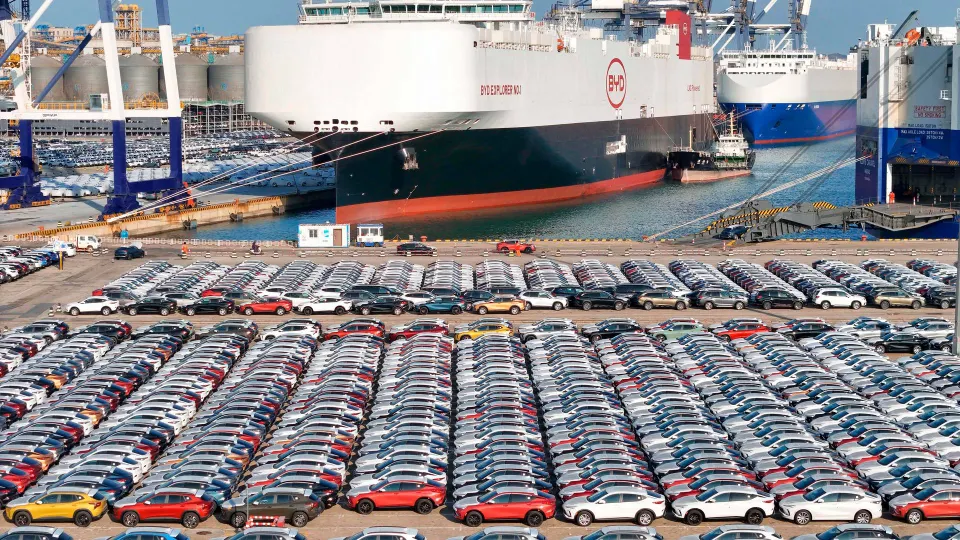
The invitation was accepted quickly. BYD, Great Wall Motors, and Changan have collectively committed over $1.4 billion to Thai EV manufacturing — physical plants, not showrooms. BYD opened a Rayong facility with annual capacity of 150,000 units. Great Wall converted its existing Thai facility from ICE production to EV. Changan committed 9.8 billion baht to a dedicated production plant targeting 100,000 EVs annually.
The consumer market followed. EV registrations in Thailand quadrupled from under 25,000 units in 2022 to nearly 90,000 in 2024. Chinese brands — led by BYD, MG, and NETA — captured 89 percent of all EV sales in the January–April 2024 period. By 2025–2026, 7 of the top 10 EV brands in Thailand are Chinese. That is not a trend. It is a structural realignment.
Toyota remains the overall market leader in total Thai vehicle sales. Japanese brands still dominate the ICE segment. But the ICE segment is the one that is shrinking. The response is now underway — Toyota has announced hybrid expansion investment, Honda is committing to new EV models, Mitsubishi is partnering with Nissan on shared EV platforms. The question is timing. Chinese manufacturers are already at scale in Thailand. They are producing, exporting, and competing on price. The window for Japanese brands to reclaim dominance in the EV segment is narrow, and it will not stay open indefinitely.
What happened in automotive is not a story confined to automotive. It is a demonstration of a dynamic that is replicating across sectors: a technology transition exposes an incumbent’s slowness; a better-capitalised competitor moves into the gap; and a market position built over decades is disrupted in years.
The displacement no one is tallying
The manufacturing FDI data tells the story of what China is building in Thailand. A different number tells the story of what that building is replacing.
Advertisement
Between January 2021 and October 2025, 3,796 Thai manufacturing firms deregistered, while 650 new Chinese firms entered the market. The displacement ratio — roughly six Thai closures for every new Chinese entrant — captures a dynamic that sits largely outside the headline narrative of Chinese investment as opportunity. Some portion of those Thai firm closures reflects normal business attrition. But the correlation with the acceleration of Chinese competitive pressure — cheaper components, lower-priced finished goods, integrated supply chains that Thai SMEs cannot match — is hard to dismiss.
This is where the Japan comparison becomes sharpest. Japanese industrial investment, whatever its limitations, developed deep local linkages over decades. Japanese tier-one suppliers established Thai counterparts. Technology transfer, however incomplete, created Thai manufacturing capabilities. The Thai industrial SME ecosystem that Chinese competition is now eroding was, in significant part, built around and within the Japanese manufacturing ecosystem that preceded it.
Chinese industrial investment is, so far, displaying a different pattern. Many Chinese-owned operations in Thailand import the majority of their components and inputs from China, limiting the supply chain spillover that Thailand’s government hoped would accompany the investment. Thailand’s trade deficit with China hit a record $19.23 billion in just the first four months of 2025, as Thai businesses stocked Chinese machinery, components, and raw materials. A country importing at that scale from its primary investor faces a structural dependency that Japan, even at the peak of its influence, never created in quite the same way.
What the articles don’t say — but show
The two most detailed accounts of China’s industrial surge in Thailand — one on manufacturing FDI, one on the EV transition — both note Japan’s displacement as a data point and move on. Neither attempts to name the broader pattern.
Advertisement
That reticence is understandable. Both articles are written for business executives assessing opportunities in Thailand, not for historians documenting a strategic inflection point. Japan’s displacement is, from that perspective, context rather than thesis.
But context shapes everything. The EEC’s digital infrastructure runs on Huawei’s 5G backbone and Alibaba Cloud’s computing layer — which means that the Japanese manufacturers still operating inside the EEC are doing so on infrastructure built by their competitors’ home-country firms. The automotive ecosystem that Japanese companies spent 50 years constructing is now producing electric vehicles, at scale, under Chinese brand names. The sector-specific incentives Thailand is deploying to attract the next wave of investment — semiconductors, batteries, green energy, digital infrastructure — are structured around Chinese investors’ capabilities and Chinese firms’ capital requirements.
Japan has not lost Thailand. But it is no longer shaping it. That distinction, quiet as it is, may prove to be the defining industrial story of the decade in Southeast Asia.
The lesson that travels
The EV article offers a formulation that applies beyond automotive: a market position built over decades can be disrupted in years when the underlying technology changes and a better-capitalised competitor is willing to move fast.
Advertisement
Japan moved slowly because its legacy strengths — ICE technology, hybrid systems, deeply integrated powertrain supply chains — became liabilities when the market shifted toward electrification. The capital it had invested in those capabilities made it harder, not easier, to pivot. China had no such legacy to defend. Its manufacturers entered the EV era without incumbency costs, moved aggressively on price, and used Thailand’s own policy framework to establish manufacturing positions that are now generating exports to markets from Indonesia to Europe.
The broader question, which neither article quite asks, is whether China’s current position in Thailand creates the same kind of incumbency advantage that Japan once had — and whether, in a decade, another technology shift will find China defending a legacy and a new competitor moving fast into the gap.
For executives making long-term investment decisions in Thailand’s industrial economy, that question may be the most important one to hold alongside the opportunity data.
The bottom line
China has not formally replaced Japan in Thailand. There has been no ceremony, no announcement, no moment of handover. Japan’s companies are still there, still relevant, still employing hundreds of thousands of Thai workers. But the structural facts have shifted: China leads EEC approvals, dominates EV market share, accounts for 42 percent of FDI by value, and has built the digital backbone on which the next generation of Thai industrial activity will run.
Advertisement
The handover is not complete. It may never be, in any absolute sense — Thailand’s multi-alignment strategy is specifically designed to prevent any single partner from becoming indispensable. But it is further advanced than most headlines suggest, and it is moving in one direction.
The factory of the future in Thailand, increasingly, was funded, equipped, and built by China. Japan built the factory of the past. The question for everyone else is which generation of factory they are positioned for.
This article draws on the five-part series “Thailand × China: The Business Opportunity,” which examines the bilateral relationship across trade, manufacturing, electric vehicles, digital infrastructure, and geopolitics.
Flagstar Bank, National Association (FLG) Morgan Stanley US Financials Conference 2026 June 10, 2026 3:15 PM EDT
Company Participants
Joseph Otting – CEO & Executive Chairman Richard Raffetto – Chief Banking Officer, Co-President & Co-COO Lee Smith – CFO, Co-President & Co-COO
Conference Call Participants
Advertisement
Manan Gosalia – Morgan Stanley, Research Division
Presentation
Manan Gosalia Morgan Stanley, Research Division
Advertisement
Okay. Up next, we have Flagstar Bank. We’re delighted to have with us today Joseph Otting, Chairman and CEO; Lee Smith, Co-President, Co-COO and CFO; and Rich Raffetto, Co-President, Co-COO and Chief Banking Officer. Thanks so much for joining us.
Joseph Otting CEO & Executive Chairman
Thank you very much. Honor to be here.
Advertisement
Question-and-Answer Session
Manan Gosalia Morgan Stanley, Research Division
Advertisement
So Joseph, Rich and Lee, I want to extend my congratulations to all of you. Joseph, the Board recently announced for those that don’t know in the room, a 1-year extension of your contract through March 2028. That’s a strong vote of confidence in your leadership. And Rich and Lee, you’re also now serving as Co-Presidents and Co-COOs in addition to your current role. So congratulations to all of you. Joseph, I guess the question for you is, would love to get your thoughts on the new leadership structure and what this means for Flagstar.
Joseph Otting CEO & Executive Chairman
Yes. I think it’s a natural progression of our company. As we came to the organization in March of 2024, we’ve assembled a relatively new management team from people throughout both the banking industry and the Office of the Comptroller of the Currency with my background there. And Rich was one of the people that we recruited to come in and run a big part of our banking operations. Lee was already there running really the most significant and important parts of the Flagstar organization.
SYDNEY — The Australian Socceroos will kick off their 2026 FIFA World Cup campaign on Sunday, June 14, facing Turkiye in Vancouver as part of a challenging Group D that also includes co-host United States and Paraguay. The tournament, co-hosted by the United States, Mexico and Canada, marks Australia’s sixth consecutive appearance on the global stage and offers the team an opportunity to advance beyond the group stage for the first time since 2006.
Australia’s full group schedule features three matches spread across West Coast venues, providing fans with a mix of manageable time zones and high-stakes encounters. The Socceroos, ranked outside the top 20 in recent FIFA listings, enter as competitive underdogs in a pool featuring strong European, North American and South American representation.
Full Group Stage Schedule (Australian Eastern Standard Time)
June 14, 2026: Australia vs Turkiye, 2:00 p.m. AEST, BC Place, Vancouver. This opening fixture gives the Socceroos an early chance to secure points against a physically strong Turkiye side that advanced through the UEFA playoffs.
June 20, 2026: United States vs Australia, 5:00 a.m. AEST, Lumen Field, Seattle. A midday local start in Seattle translates to an early morning game back home, pitting the Socceroos against motivated co-hosts eager to impress on home soil.
June 26, 2026: Paraguay vs Australia, 12:00 p.m. AEST, Levi’s Stadium, Santa Clara (San Francisco Bay Area). The final group match offers Australia the chance to qualify for the round of 32, facing a technically gifted Paraguayan side known for defensive organization.
All three venues are modern, world-class stadiums capable of hosting passionate crowds. BC Place and Lumen Field provide atmospheric settings, while Levi’s Stadium offers excellent facilities for the decisive third match.
Group D Outlook and Qualification Path
Advertisement
Group D presents a balanced but demanding challenge. Turkiye brings European intensity and set-piece threat. The United States benefits from home advantage and passionate support across multiple venues. Paraguay adds South American flair and tactical discipline. Australia must collect at least four points, and likely six, to have a strong chance of progressing as one of the top two teams or among the best third-placed sides in the expanded 48-team format.
Coach Graham Arnold has emphasized preparation and squad depth. The Socceroos feature a mix of European-based stars such as Mathew Ryan, Harry Souttar and Jackson Irvine alongside domestic talents. Recent friendlies have shown improved cohesion, though consistency against top opposition remains a key area for growth.
Strategic Considerations for Australia
Success in Group D will require strong defensive structure and clinical finishing on the counter. Australia has historically performed well in open, high-tempo matches but must improve against organized mid-tier nations. Key players like Jackson Irvine in midfield and forwards such as Mitchell Duke or Kusini Yengi will need to step up in attack.
Advertisement
The travel across time zones and venues tests squad management. The Socceroos benefit from relatively short flights between Canadian and U.S. West Coast cities compared to teams spanning the full host territory. Recovery between matches and adapting to local conditions will be crucial.
Broader Tournament Context
The 2026 World Cup’s expanded format gives more teams a realistic path to the knockout stages, with 32 advancing overall. Australia aims to emulate its 2006 run or better, potentially reaching the round of 16 or further. Strong performances could boost domestic football development and inspire the next generation of players.
Fan support is expected to be significant, with large Australian communities in Vancouver, Seattle and San Francisco likely creating pockets of green and gold in the stands. Broadcast coverage on SBS and other platforms will ensure widespread accessibility back home, with convenient viewing times for the opener.
Advertisement
Historical Perspective and Expectations
Australia qualified convincingly through Asian qualifiers, demonstrating growth since their playoff heroics in previous cycles. The Socceroos have evolved into a more tactically flexible side under Arnold, capable of competing with stronger nations on their day.
Analysts view Group D as winnable but competitive. A positive result against Turkiye in the opener would set an ideal tone, while avoiding defeat against the United States could position Australia well heading into the final match. Paraguay represents a dangerous opponent capable of punishing defensive lapses.
Preparation and Key Storylines
Advertisement
The national team has used recent camps and friendlies to fine-tune tactics and build fitness. Injury management and squad rotation will be vital given the tight turnaround between games. Off-field factors, including fan engagement and commercial opportunities, add to the tournament’s significance for Football Australia.
The Socceroos’ journey symbolizes Australia’s growing place in world football. A successful group stage exit or better would mark a milestone, enhancing the sport’s profile domestically and attracting greater investment.
Fan Guidance and Viewing Tips
Australian supporters should mark their calendars for the June 14 opener at 2 p.m. AEST. Subsequent games require early rising or strategic scheduling. Official FIFA and Socceroos apps provide live updates, while local pubs and fan zones will host watch parties across the country.
Advertisement
Tickets for matches remain available through official channels, though demand is high for games involving co-hosts. Virtual attendance via streaming services offers an alternative for those unable to travel.
Looking Ahead
As the tournament approaches, anticipation builds for Australia’s campaign. The Socceroos carry national hopes into a landmark edition that celebrates football’s global reach. Strong performances in Group D could propel them into the knockout rounds and create lasting memories for players and fans alike.
The schedule offers a balanced mix of challenge and opportunity. With solid preparation and execution, Australia has every chance to make a deep run and write a new chapter in its World Cup history. The June 14 clash against Turkiye serves as the starting point for what promises to be an exciting summer of football for the Socceroos and their supporters.
Advertisement
The expanded tournament format rewards consistency and adaptability. Australia’s ability to secure results across varied conditions and opponents will determine its fate. As the nation rallies behind the team, the focus remains on delivering competitive performances that honor the green and gold on the world stage.
WASHINGTON — U.S. consumer prices accelerated in May, rising 4.2% from a year earlier in the sharpest annual gain since April 2023, as surging energy costs linked to geopolitical tensions in the Middle East pushed inflation higher than many households can comfortably absorb.
The Labor Department reported Wednesday that the Consumer Price Index increased 0.5% for the month, matching economists’ expectations. Energy prices alone jumped 3.9% in May and accounted for more than 60% of the overall monthly increase, highlighting how global events continue to ripple through American wallets at the gas pump and grocery store.
“Today’s CPI data confirmed our expectation that higher energy costs and their ripple effects on the costs of transportation and food would drive May headline CPI higher,” said Atsi Sheth, chief credit officer at Moody’s Ratings.
The report arrives more than three months into heightened conflict involving Iran, which has disrupted energy markets and contributed to volatile fuel prices. Food prices rose modestly by 0.2% in May, with declines in some categories like cheese offset by continued increases in coffee and other staples.
Advertisement
Core Inflation and Underlying Pressures
Excluding volatile food and energy categories, core CPI rose 0.2% for the month and 2.9% year-over-year, in line with forecasts. While core measures remain closer to the Federal Reserve’s 2% target, the headline figure underscores persistent challenges in bringing overall inflation under control.
The data reinforces expectations that the Federal Reserve will hold interest rates steady at its June meeting. Policymakers have emphasized data-dependent decisions, and Wednesday’s report keeps inflation well above the central bank’s long-term goal. Wholesale price data due Thursday will provide additional context for Fed officials.
Impact on Workers and Households
Advertisement
Rising prices are squeezing American families. Real average hourly earnings fell 0.1% in May, meaning wage gains failed to keep pace with inflation. Middle- and lower-income households are feeling the strain particularly acutely on essentials such as gas, electricity, food and medical care.
“Americans are getting squeezed financially,” Heather Long, chief economist at Navy Federal Credit Union, posted on X. “This isn’t just ‘bad vibes’ about the economy. There is real pain, especially for middle-class and lower-income households. It’s tough because so many basic items are seeing sizable price increases: gas, electricity, food, medical care.”
Auto insurance prices provided one bright spot, declining 1.7% from April, while hospital services rose 0.7%. Transportation costs overall climbed alongside energy, affecting everything from commuting to shipping goods.
Broader Economic Implications
Advertisement
The inflation uptick complicates the economic narrative as the U.S. navigates a period of relative stability in growth and employment. Last week’s jobs report showed a labor market that remains broadly balanced, but persistent price pressures keep the Federal Reserve in a cautious stance.
Economists warn that sustained energy-driven inflation could delay rate cuts that many businesses and consumers have been anticipating. Higher borrowing costs continue to weigh on sectors like housing and consumer spending, even as corporate earnings in some areas remain resilient.
The 4.2% annual reading marks the highest since early 2023, when inflation was still cooling from post-pandemic peaks. Progress made over the past two years now faces headwinds from external shocks, particularly in global energy markets.
Sector Breakdown and Trends
Advertisement
Energy remains the dominant driver, with gasoline and electricity costs climbing sharply. Food-at-home prices showed mixed movements, while shelter costs — a major component of CPI — continued their gradual moderation but still contribute significantly to the overall index.
Medical care and transportation services added upward pressure. Apparel and recreation categories were more stable, offering limited relief for household budgets already stretched by higher costs for necessities.
Analysts expect energy prices to remain volatile until greater certainty emerges in the Middle East. Any escalation or resolution in geopolitical tensions could quickly shift the inflation trajectory in coming months.
Federal Reserve and Policy Outlook
Advertisement
Fed officials have repeatedly signaled patience, monitoring incoming data before adjusting policy. The current federal funds rate range leaves limited room for immediate easing, especially with inflation reaccelerating. Markets have pushed back expectations for rate cuts later in the year, reflecting the stickiness of price pressures.
The combination of solid employment and elevated inflation creates a delicate balancing act for policymakers. Strong job numbers reduce the urgency for cuts, while higher prices risk eroding consumer confidence and spending power.
Consumer and Business Perspectives
For American families, the latest CPI print translates into higher costs for daily life. Budgets for groceries, commuting and utilities are under renewed strain, particularly in regions heavily dependent on driving or heating and cooling.
Advertisement
Businesses face their own challenges, with input costs rising and the ability to pass those along to consumers varying by industry. Some sectors report margin compression as price sensitivity limits pricing power.
Longer-term, sustained moderate inflation around 2% remains the goal. The current deviation highlights vulnerabilities in global supply chains and energy dependence, prompting calls for greater diversification and investment in domestic production.
Looking Ahead
June’s inflation data will be closely watched, along with retail sales and other indicators that paint a fuller picture of consumer health. The path of energy prices will likely remain the primary variable influencing headline CPI in the near term.
Advertisement
Economists will continue debating whether the latest uptick represents a temporary blip or a more concerning trend. For now, the data reinforces a narrative of resilient but pressured economic growth, with inflation reemerging as a top concern for households, businesses and policymakers alike.
The May CPI report serves as a reminder of the complex interplay between global events and domestic price levels. As the Federal Reserve and other institutions analyze the numbers, American families continue navigating an environment where wage growth struggles to match the pace of rising costs. The coming months will test the economy’s ability to absorb these pressures while maintaining momentum.

























































You must be logged in to post a comment Login